A custom cable can look simple, but a vague specification often creates compatibility problems, unclear quotations, and expensive sample revisions. I regularly receive requests such as “fast USB-C cable with a logo,” yet that description does not define the cable’s real job. A practical design brief turns an idea into a product that a supplier can quote, test, and manufacture consistently.
Quick Answer
- Define the cable’s devices, use case, length, environment, and expected service life before discussing appearance.
- Separate visual customization from charging performance, data performance, and internal construction.
- Describe “fast charging” and “high-speed data” with specific targets, protocols, test conditions, and required evidence.
- Confirm MOQ, sample cost, tooling, packaging, certification documents, lead time, warranty, and quality standards.
- Request a written specification, sample approval process, and test evidence before placing a production order.
A professional custom cable starts with the job it must perform. I recommend documenting the connected devices, charging and data requirements, connector combination, length, materials, bend resistance, appearance, packaging, testing, MOQ, target cost, and delivery schedule. The supplier should then confirm compatibility and provide samples or test evidence before mass production.
A good brief does more than help a factory calculate a price. It also gives both sides a shared reference when they discuss samples, quality inspection, packaging, and after-sales issues. In the sections below, I will explain the decisions that usually have the greatest effect on product performance and commercial practicality.
How Should I Define the Job of a Custom Cable?
Many buyers begin with color, braiding, or connector shape because those details are easy to visualize. The problem is that appearance cannot tell a supplier how the cable will be used. A cable for a retail charging accessory may face very different demands from a cable supplied with a power bank, vehicle accessory, or office charging kit.
To define a custom cable correctly, I first identify the connected devices, the operating environment, expected handling, required length, and user behavior. These factors guide the conductor, shielding, jacket, connector, strain relief, and durability requirements.
Start with the application
- What is the source device?
- What is the receiving device?
- Which connector is required at each end?
- Will the cable charge, transfer data, or do both?
- Will users connect it occasionally or several times every day?
- Will the cable stay on a desk, travel in a bag, or operate in a vehicle?
- Does the product need a short retail cable, a longer replacement cable, or a special assembly?
- Will the cable be used indoors, outdoors, or in a higher-temperature environment?
These questions may sound basic, but they prevent a common mistake. A buyer may request a USB-C cable because both devices have USB-C ports, while the actual requirement may include a particular charging protocol, data capability, or electronic marking component. Connector shape alone does not establish performance.[1]
Consider mechanical conditions
The cable’s physical design should match how customers handle it. A frequently bent cable may need different reinforcement from a cable that remains permanently installed. A retail buyer may also need a balance between flexibility and abrasion resistance.
- Overall length: Longer cables can create different electrical and handling considerations than short cables.[2]
- Outer diameter: A thicker cable may communicate durability, but it can also be less flexible and more expensive.
- Jacket material: PVC, TPE, nylon braid, and other constructions provide different tactile and mechanical characteristics.
- Strain relief: The transition between connector housing and cable is a critical area for repeated bending.[3]
- Connector housing: The housing can be standard, compact, molded, metal-covered, or customized.
- Bend frequency: The buyer should explain expected use instead of relying on a general claim such as “heavy duty.”
- Storage: A cable that is coiled tightly may require a construction that tolerates repeated winding.
I do not treat any material as automatically superior. The right choice depends on the target price, user expectations, test requirements, and production capability.
Build a use-case table
| Requirement | Example buyer question | Why it matters |
|---|---|---|
| Connected devices | Phone to charger, laptop to monitor, power bank to phone | Determines compatibility and possible functions |
| Cable length | 0.5 m, 1 m, 2 m, or another length | Affects convenience, construction, and quotation |
| Use environment | Home, retail kit, vehicle, travel, office | Influences jacket and mechanical design |
| Handling | Occasional or repeated daily bending | Guides reinforcement and validation |
| Main function | Charging, data, video, or combined use | Determines the technical brief |
| Target user | General consumer, business user, installer | Affects durability and packaging expectations |
In my experience with inquiries from overseas retailers and online sellers, this table often exposes missing information quickly. It is more useful than starting with a product photo because it gives the supplier something practical to evaluate.
Which Custom Cable Features Are Visual and Which Affect Performance?
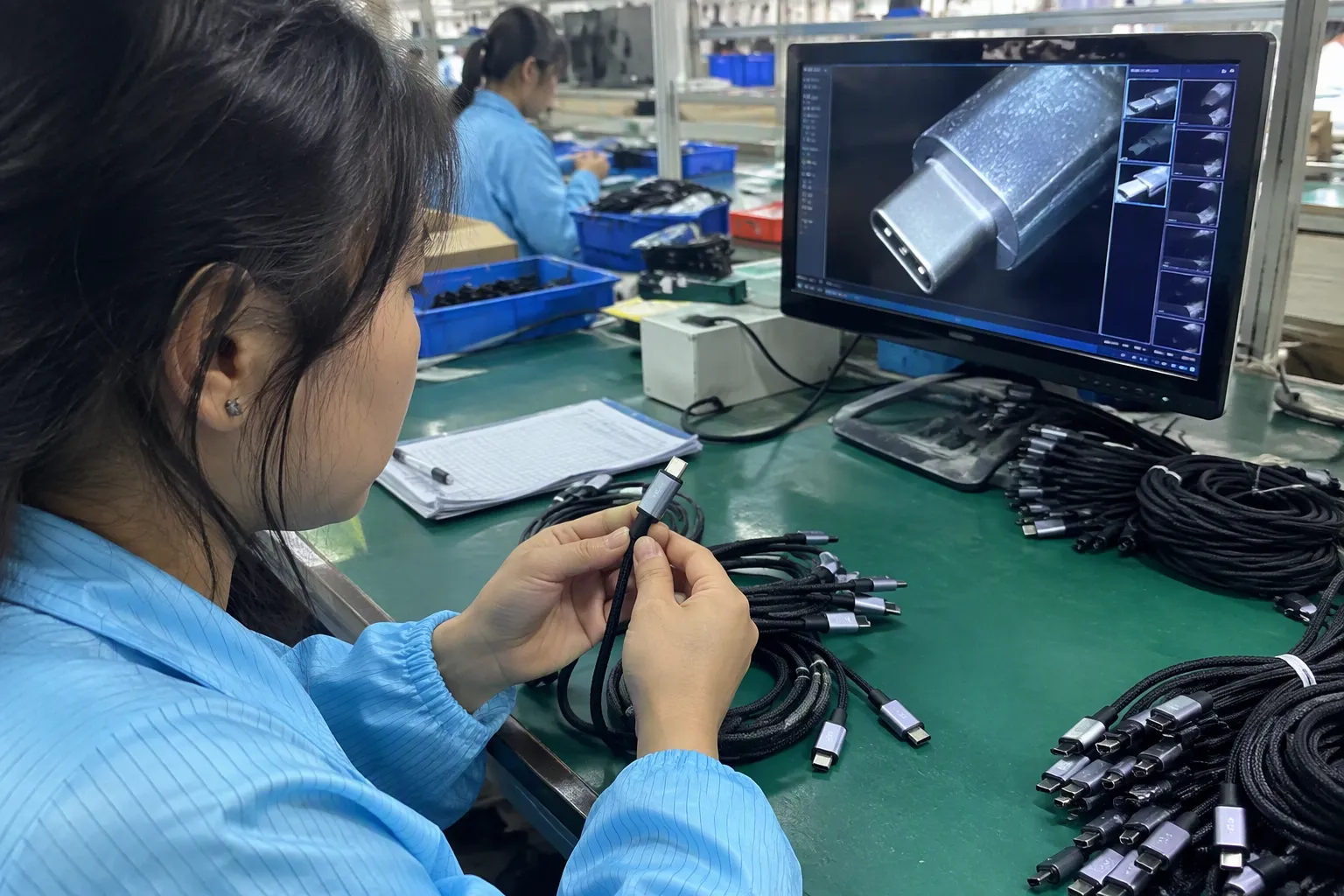
A buyer can customize the outside of a cable without changing its electrical function. A different color or logo may support a retailer’s brand, while a different conductor, shielding design, or identification component may affect performance. These decisions should appear in separate parts of the brief.
Visual customization usually includes color, braid pattern, connector housing, logo, label, and packaging. Performance customization includes charging capability, data transfer, compatibility, shielding, internal conductors, and electronic components. I ask suppliers to quote and verify these categories separately.
Visual options
- Cable jacket color or Pantone reference
- Woven nylon braid color
- Connector housing shape
- Metal or plastic finish
- Printed logo or laser marking
- Brand name on the connector
- Cable tie, storage pouch, or retail packaging
- Hangtag, barcode, and multilingual instructions
A simple color change may be commercially easy if the material is already available.[4] A new connector mold, special logo process, or custom packaging structure may require tooling, minimum order quantities, or additional approval time.
Performance options
- Charging current or power target
- Data-transfer requirement
- USB protocol or other applicable standard
- Cable shielding
- Conductor material and construction
- E-marker or other identification components where applicable
- Connector compatibility
- Signal integrity requirements
- Temperature or environmental conditions
- Required test procedures
I avoid writing “fast charging” as the complete requirement. The phrase means different things to different buyers[5] and may depend on the charger, device, protocol, cable, and test setup. The USB Implementers Forum publishes information about USB specifications and certification programs, so buyers can use its official resources as a starting point: USB-IF official website.
Avoid mixing claims
A cable can have an attractive braided jacket and still fail to meet a buyer’s charging or data requirement. The reverse is also true. A technically suitable cable may need a different housing or package to fit a retail program.
| Customization area | Typical decisions | Verification approach |
|---|---|---|
| Appearance | Color, braid, housing, logo | Artwork approval and visual inspection |
| Mechanical design | Jacket, diameter, strain relief | Sample inspection and agreed mechanical tests |
| Charging | Current, power target, protocol | Supplier test report and application testing |
| Data | Transfer mode, signal requirement | Device testing and applicable test evidence |
| Packaging | Box, bag, label, barcode | Artwork proof and packaging sample |
| Compliance | Required market documents | Review current supplier documentation |
I recommend that buyers approve artwork separately from technical performance. A signed logo proof does not prove that the cable works with the intended devices. Similarly, a supplier’s performance statement does not approve the final brand artwork or packaging.
Use a written change-control process
- Version number and date
- Updated drawing or product photo
- Technical changes
- Packaging changes
- New tooling requirements
- Sample approval status
- Person responsible for approval
How Do I Specify Charging and Data Performance?
“Fast charging” and “high-speed data” are useful sales phrases, but they are incomplete engineering specifications. A professional brief should connect the claim to a device combination, protocol, measurable target, and test method.
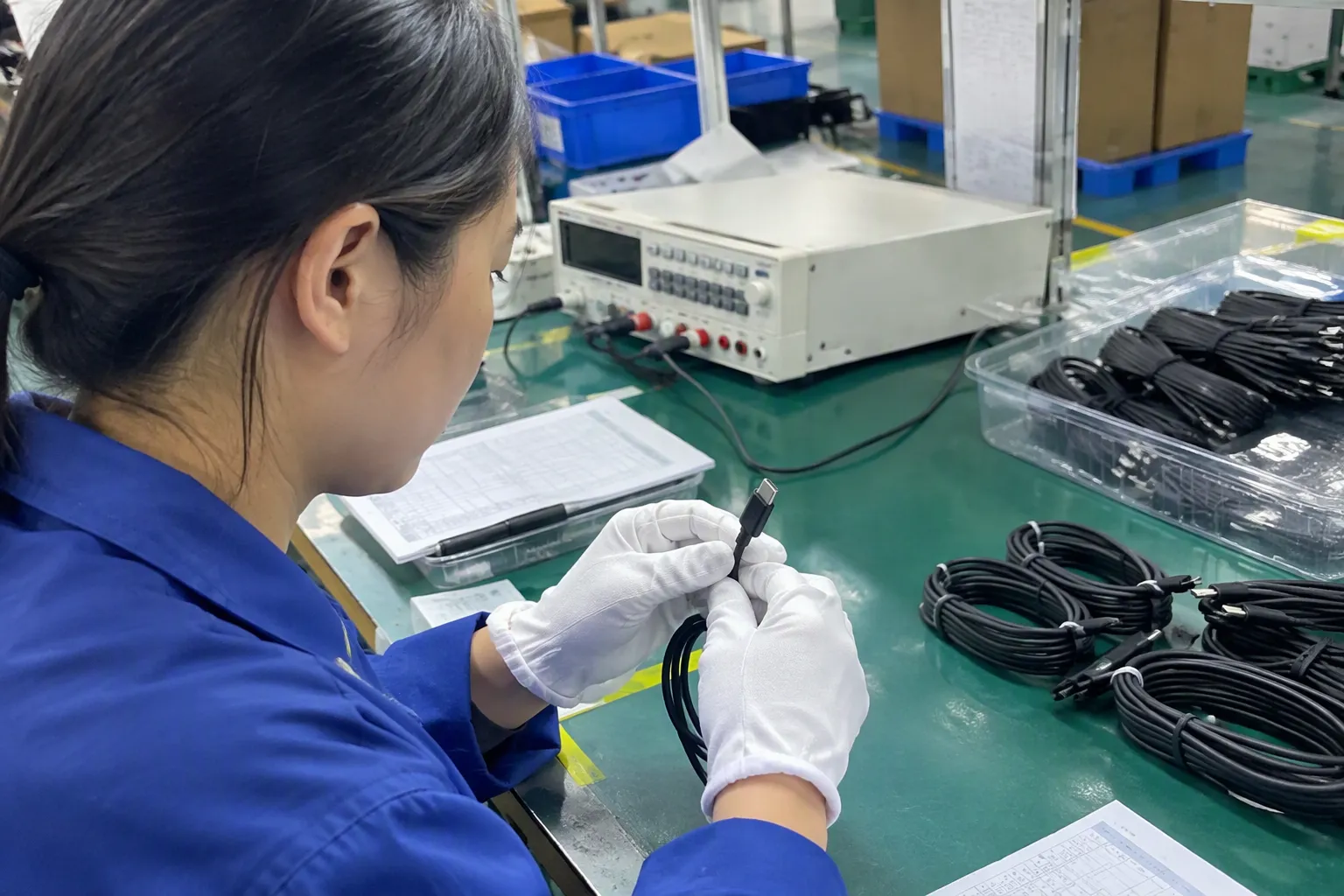
I specify charging and data performance by identifying the source, receiving device, protocol or target, test conditions, and evidence required. I also ask the supplier to confirm whether the claim applies to the cable alone or depends on the charger, host device, software, and connected equipment.
Charging requirements
- Charger or power source
- Device or battery product
- Connector type at both ends
- Intended charging protocol
- Target current or power level
- Cable length
- Expected operating conditions
- Required test equipment or report
- Whether the cable must support data at the same time
The buyer should not assume that a cable advertised for a particular power level will deliver that result in every system. Device negotiation, charger output, cable construction, connector quality, and protocol compatibility can all matter.[6] I ask the supplier to state the test setup clearly.
The official USB Power Delivery information can help buyers understand the terminology, but application-specific decisions still require qualified technical review and supplier evidence.
Data requirements
- Basic synchronization between a phone and computer
- A defined USB data rate
- Connection to a storage device
- Use with a docking station
- Display or other specialized functionality
- Simultaneous charging and data transfer
The exact requirement depends on the devices and relevant standards. A cable that charges a phone may not support every data or display function that a buyer expects.[7] I recommend testing the final sample with representative source and receiving devices instead of relying only on a product description.
Evidence to request
- Product specification sheet
- Internal construction description
- Test conditions and equipment
- Sample test report
- Compatibility test record
- Material or component information
- Relevant certification or compliance documents
- Production inspection plan
A document is not automatically proof that every production unit will perform identically. Buyers should confirm that the document applies to the same model, construction, factory, and revision. Certification marks and reports also require review for scope, validity, and market relevance.
Separate the cable claim from the system result
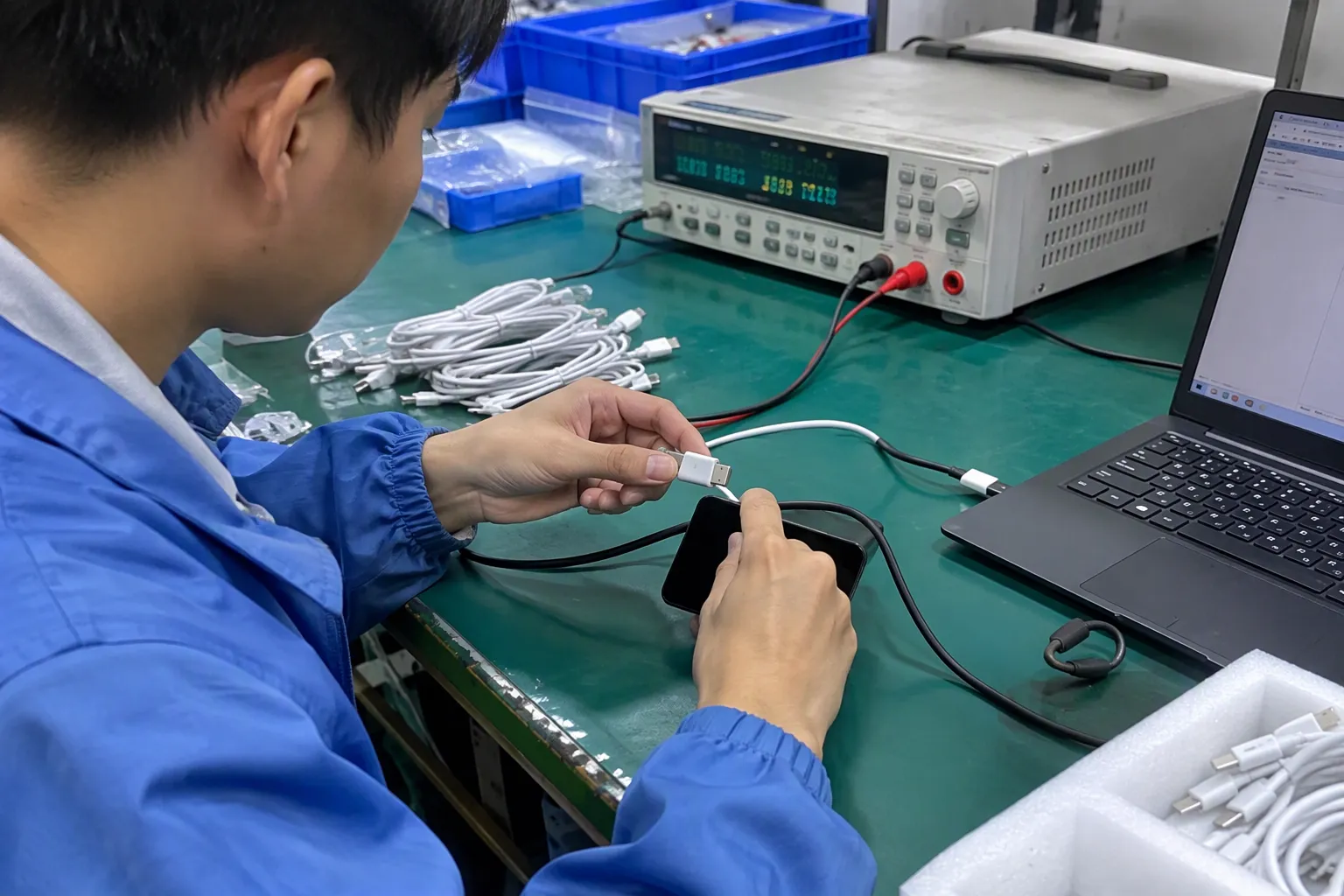
This model helps a buyer avoid overpromising on a product page. If the intended use is important, a qualified engineer or test laboratory should evaluate the complete application. I can help organize supplier communication, but I do not replace independent technical validation.
What Physical Construction Should a Professional Custom Cable Use?
The internal and external construction affects flexibility, durability, safety, signal quality, and cost. Buyers do not always need to specify every manufacturing detail, but they should describe the required outcome and ask the supplier to recommend a construction that can be verified.
A professional custom cable should use conductors, insulation, shielding, connectors, strain relief, and an outer jacket that match its intended application. I ask the supplier to explain the proposed construction and then compare samples against agreed performance and quality requirements.
Main construction elements
Conductors
The conductor design can influence electrical performance, flexibility, and cost. The supplier should clarify the proposed conductor arrangement and material. Buyers should avoid approving a construction only because it looks thick or feels heavy. Outer diameter does not by itself establish electrical capability.
Insulation and jacket
The insulation separates conductors, while the outer jacket protects the assembly. Common commercial options include PVC, TPE, and braided constructions, but the suitable choice depends on the application.
- Flexibility
- Surface feel
- Abrasion resistance
- Color consistency
- Odor expectations
- Temperature conditions
- Flame or compliance requirements where relevant
- Compatibility with the connector molding process
Shielding
Shielding may be relevant where signal integrity or interference control matters.[8] The requirement should be tied to the intended use and verified through testing. A supplier should explain whether the proposed design includes shielding and what test supports the claim.
Connectors
- Connector type and gender
- Housing dimensions
- Plating or finish
- Insertion fit
- Molding quality
- Logo placement
- Compatibility with protective cases
- Plug orientation
- Mechanical retention
The final connector should be checked with the devices that customers are expected to use. A connector that fits one phone case may be inconvenient with another case or accessory.
Construction trade-offs
| Design choice | Possible benefit | Possible trade-off |
|---|---|---|
| Braided jacket | Premium appearance and tactile appeal | Higher cost or different flexibility |
| Thicker outer diameter | May feel more robust | Can be heavier and less flexible |
| Metal housing | Premium visual impression | May add weight and affect cost |
| Slim connector | Better access in tight spaces | May require different tooling or reinforcement |
| Longer length | Greater installation convenience | Can affect handling and technical design |
| Custom mold | Stronger brand identity | Tooling charge and higher MOQ |
I encourage buyers to compare at least two constructions when the target market is not yet clear. A premium retail product may justify a braided or metal design, while a value line may benefit from a simpler molded construction. Neither option is universally better.
Define acceptable quality
- Correct connector type
- Cable length tolerance
- Color and logo position
- Housing scratches or molding defects
- Connector fit
- Continuity
- Charging or data function
- Packaging quantity and labeling
- Visible damage
- Carton and barcode accuracy
The exact acceptance criteria should be agreed before production. If the buyer needs formal sampling standards, the buyer should specify the applicable inspection procedure rather than assuming that “AQL checked” has one universal meaning.
How Should I Prepare a Custom Cable Quotation Brief?
A supplier cannot prepare a meaningful quotation from a product photo alone. The price depends on materials, connector design, tooling, testing, packaging, order quantity, and delivery terms. A complete brief also helps the buyer compare suppliers fairly.
A quotation brief should include technical, visual, quality, and commercial requirements. I recommend sending one structured document that states the expected use, configuration, customization, MOQ, sample plan, packaging, target cost, delivery location, and requested documents.
Information to include
| Brief category | Information to provide |
|---|---|
| Application | Devices, user scenario, environment |
| Configuration | Connector combination, length, function |
| Performance | Charging, data, protocol, test target |
| Construction | Jacket, braid, housing, strain relief |
| Branding | Logo, color reference, artwork format |
| Packaging | Retail box, bag, label, barcode, language |
| Quantity | Sample quantity and first order estimate |
| Commercial | Target cost, MOQ, Incoterm, destination |
| Timing | Sample deadline and required shipment date |
| Quality | Inspection points, tolerance, warranty expectation |
| Documents | Test reports, declarations, certifications, material information |
MOQ and tooling
Custom production often has different minimums for different parts of the project. The cable assembly may have one MOQ, a custom color another, and a special mold or packaging structure a separate requirement. I ask the supplier to identify:
- Standard MOQ
- Custom color MOQ
- Custom connector mold charge
- Logo setup charge
- Packaging MOQ
- Sample cost
- Sample lead time
- Tooling ownership
- Tooling storage and maintenance terms
A low first-order quantity may be possible with standard parts, but it may not be economical for a fully customized product. I do not promise that custom production will automatically reduce cost. The commercial answer depends on volume, complexity, and how many components can use existing tooling.
Lead time and approval stages
- Requirement confirmation
- Quotation and technical review
- Artwork or drawing approval
- Tooling, if required
- Prototype or pre-production sample
- Sample testing
- Sample approval
- Bulk production
- Inspection
- Packaging and shipment
When a buyer gives only a final delivery date, the supplier may not know how much time is available for revisions. I prefer to work backward from the required shipment date and allow time for sample changes and document review.
Certification and market documents
Certification requirements vary by product, market, construction, and claim. I recommend that buyers identify the destination markets early and ask which documents apply. Buyers should verify certificates, reports, declarations, and test records themselves or through a qualified compliance professional.
For European products, buyers can consult official information from the European Commission about CE marking. CE marking is not a universal quality label, and its relevance depends on the applicable product legislation. A supplier’s document should be checked for the correct product, manufacturer, model, and scope.
For electrical and electronic products entering the European market, the European Commission RoHS policy page provides useful background. Buyers should still confirm the exact obligation and evidence for their product. North American requirements may involve different market, retailer, or state-level expectations.
How Can I Select and Control a Custom Cable Supplier?
A capable supplier should do more than accept an order. The supplier should ask clarifying questions, identify technical risks, explain what is standard and what is custom, and provide a realistic approval plan.
I evaluate a custom cable supplier by reviewing technical communication, sample quality, production consistency, documentation, MOQ, lead time, inspection control, and after-sales support. I also ask the supplier to distinguish confirmed capability from claims that still need testing.
Questions I ask suppliers
- Which parts are standard and which parts require customization?
- Can the supplier provide a construction drawing or specification sheet?
- What devices and protocols were used for performance testing?
- Does the sample use the same construction planned for mass production?
- What is the MOQ for the cable, color, connector, and packaging?
- What is the tooling cost, and who owns the mold?
- What quality inspections occur during production?
- Which documents are available for the exact model?
- How does the supplier handle defects or compatibility complaints?
- What changes would affect the quoted price or lead time?
The supplier’s answer is important, but written evidence is more useful than a confident verbal statement. I keep approved drawings, sample photos, specifications, test records, and packaging artwork together in one project file.
Sample evaluation checklist
Production and after-sales control
The purchase order should reference the approved specifications. It should also identify what happens if the supplier proposes a change. A change to conductor design, connector component, jacket material, or packaging may require a new sample or additional testing.
I also recommend agreeing on a defect-handling process before shipment. The process can define notification time, evidence, investigation, replacement, credit, or other commercial remedies. The exact terms depend on the buyer-supplier agreement.
As a Shenzhen-based 3C export company with 15 years of export experience, I support overseas buyers with requirement clarification, product sourcing, quotation discussions, sample coordination, and export communication. I still recommend that buyers use qualified professionals for application-specific electrical, safety, and compliance evaluation.
Frequently Asked Questions
Can I customize only the color and logo of a cable?
Yes, many buyers begin with appearance-only customization. The supplier should still confirm the underlying model, construction, compatibility, and performance. A color or logo change does not automatically change charging or data capability, but custom packaging or components may affect MOQ and lead time.
Is USB-C enough information for a cable quotation?
No. USB-C identifies a connector family, not the complete product specification. The supplier may need to know the opposite connector, length, charging requirement, data function, device combination, construction, packaging, and required documents. Buyers should also confirm whether any special protocol or electronic component is needed.
How do I verify a fast-charging cable claim?
Ask for the exact power or current target, compatible devices, protocol information, test conditions, and supporting test evidence. Then test the approved sample with representative equipment. The charger, device, and protocol can affect the result, so a product-page phrase alone is not sufficient proof.
Is a custom cable cheaper than a standard cable?
Not necessarily. Custom color or branding may be practical at a suitable quantity, while special molds, packaging, materials, and testing can increase the total cost. I compare a customized option with an equivalent stocked product after including tooling, samples, packaging, inspection, and inventory considerations.
What should I ask for before mass production?
I recommend requesting an approved sample, final specification, artwork proof, quotation, production schedule, inspection plan, and relevant supplier documents. The buyer should confirm that the sample and documents relate to the same model and construction planned for mass production.
Conclusion
A professional custom cable begins with a clear application, not only a connector and a color. I recommend separating appearance from electrical and data performance, defining technical claims with measurable requirements, and requesting evidence for compatibility and certification statements. Buyers should also include MOQ, tooling, packaging, lead time, inspection, and warranty expectations in the first brief. If you are sourcing USB Cables or other 3C accessories for European or North American distribution, contact me at 877-522-3779 to discuss your requirements and request a structured quotation.
Sources
- USB Charger (USB Power Delivery)", USB Implementers Forum documentation distinguishes the USB Type-C connector from the USB protocols, power-delivery features, and alternate modes that may be implemented through it, supporting the claim that connector shape alone does not establish overall cable performance
- Why Does Voltage Drop In Long Cable? #electrician ...", Engineering references on cable transmission describe how increased conductor length contributes to resistance and signal attenuation, supporting the general relationship between cable length and electrical design considerations
- Strain Relief in Cable Assemblies", Studies of flexible cable and wire-harness assemblies identify termination and connector-transition regions as common sites of stress concentration during repeated bending, supporting the need to evaluate strain relief in durability design
- Minimum Order Quantity (MOQ): Formula, Tips, & Benefits", Manufacturing studies commonly report that modifications compatible with existing tooling and materials involve fewer development steps than changes requiring new molds or process qualification, providing contextual support for the relative simplicity of some color changes
- Electric Vehicle Charging Stations", USB Implementers Forum materials specify charging capabilities through defined power-delivery and negotiation concepts rather than treating “fast charging” as a single universal technical performance level
- USB Power Delivery", USB Power Delivery specifications describe charging as a negotiated interaction among the source, sink, and cable, supporting the article's systems-level account of why charger, device, cable, and protocol conditions affect charging results
- USB Type-C® System Overview", USB Implementers Forum materials treat USB data transfer, power delivery, and alternate-mode display functions as distinct capabilities, supporting the claim that successful charging alone does not establish support for every data or display function
- Aircraft Electromagnetic Compatibility", Electromagnetic-compatibility research describes cable shields as a means of reducing electromagnetic coupling and interference when appropriately designed and terminated, supporting the conditional relevance of shielding to signal integrity
Related reading: