Quick Answer
A Custom Cables Design Tool can help buyers explain a cable concept, but a simple visual choice rarely answers every purchasing question. When a retailer selects a connector style, color, or length without defining performance and packaging needs, the quotation may remain uncertain. I use the tool as a starting point for clearer supplier communication, not as a complete engineering system.
A Custom Cables Design Tool helps buyers visualize and communicate the intended USB-C or USB cable configuration. It can clarify visible choices such as connector type, cable length, color, branding, and general construction. However, it cannot independently confirm electrical performance, materials, testing, packaging, certification documents, production feasibility, or final pricing. I recommend using the design output as a quotation brief, followed by supplier review, documentation checks, sampling, and qualified technical evaluation before production.
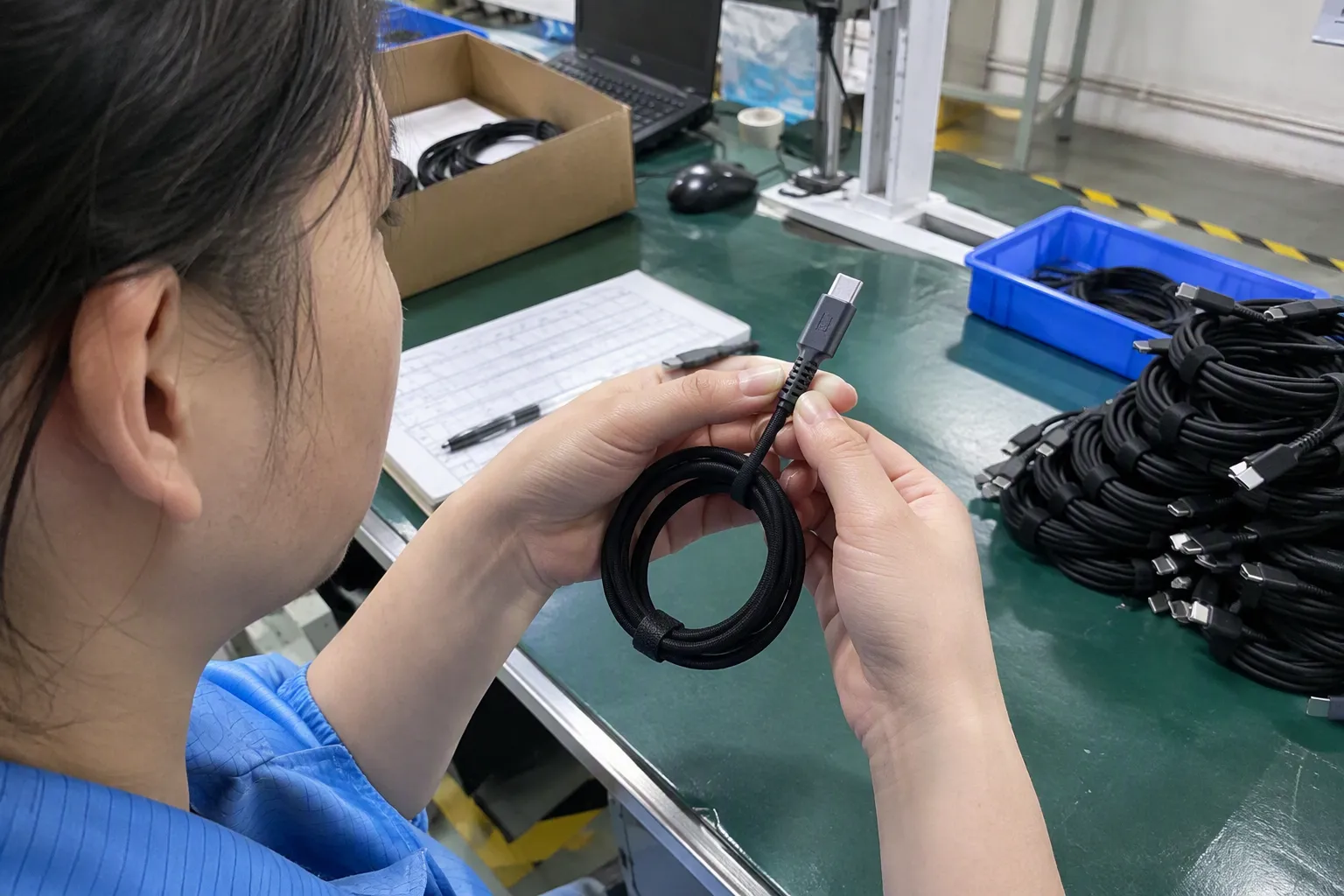
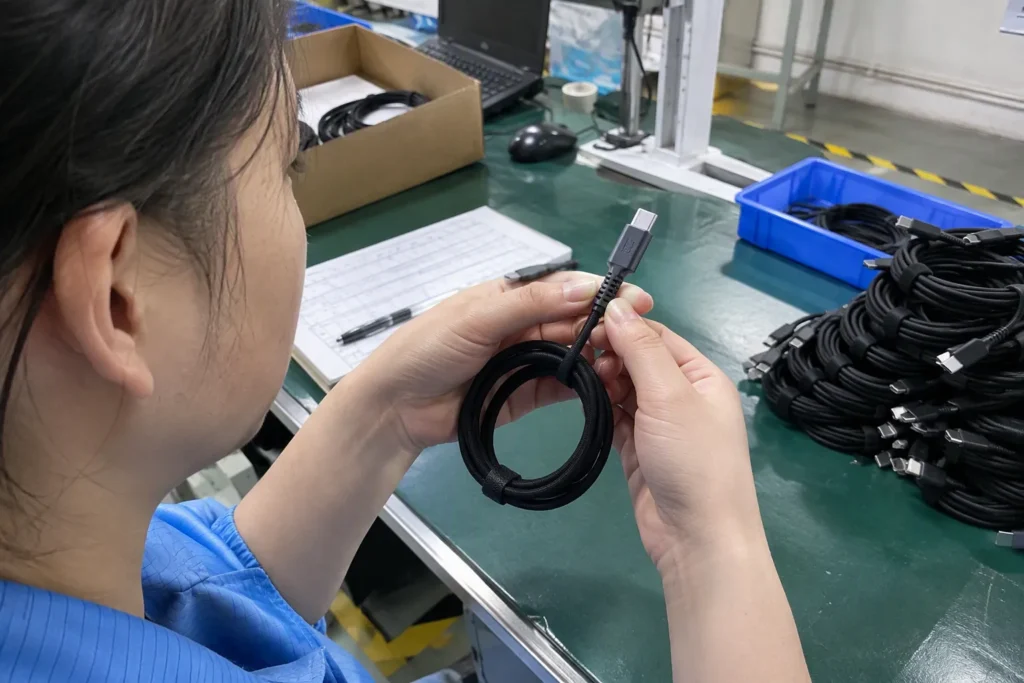
In my work with European and American 3C buyers, many cable inquiries begin with a picture or a short message such as “I need a black braided USB-C cable with my logo.” That information is useful, but it is not yet a complete manufacturing brief. The sections below explain how I turn a visual idea into a more practical request for quotation.
Can a Custom Cables Design Tool Clarify a USB-C Cable Brief?
A vague cable request creates friction for both the buyer and the supplier. I often see the same questions return several times: Which connector is required? What charging performance should the cable support? Does the buyer need data transfer, retail packaging, or a specific compliance document? A Custom Cables Design Tool can organize the visible requirements before those questions delay the quotation.
A Custom Cables Design Tool can clarify the appearance and basic configuration of a USB-C or USB cable, including connector arrangement, approximate length, color, outer material, logo position, and sometimes packaging direction. It cannot replace a detailed specification sheet, supplier confirmation, sample approval, or verification of applicable certifications and test documents.
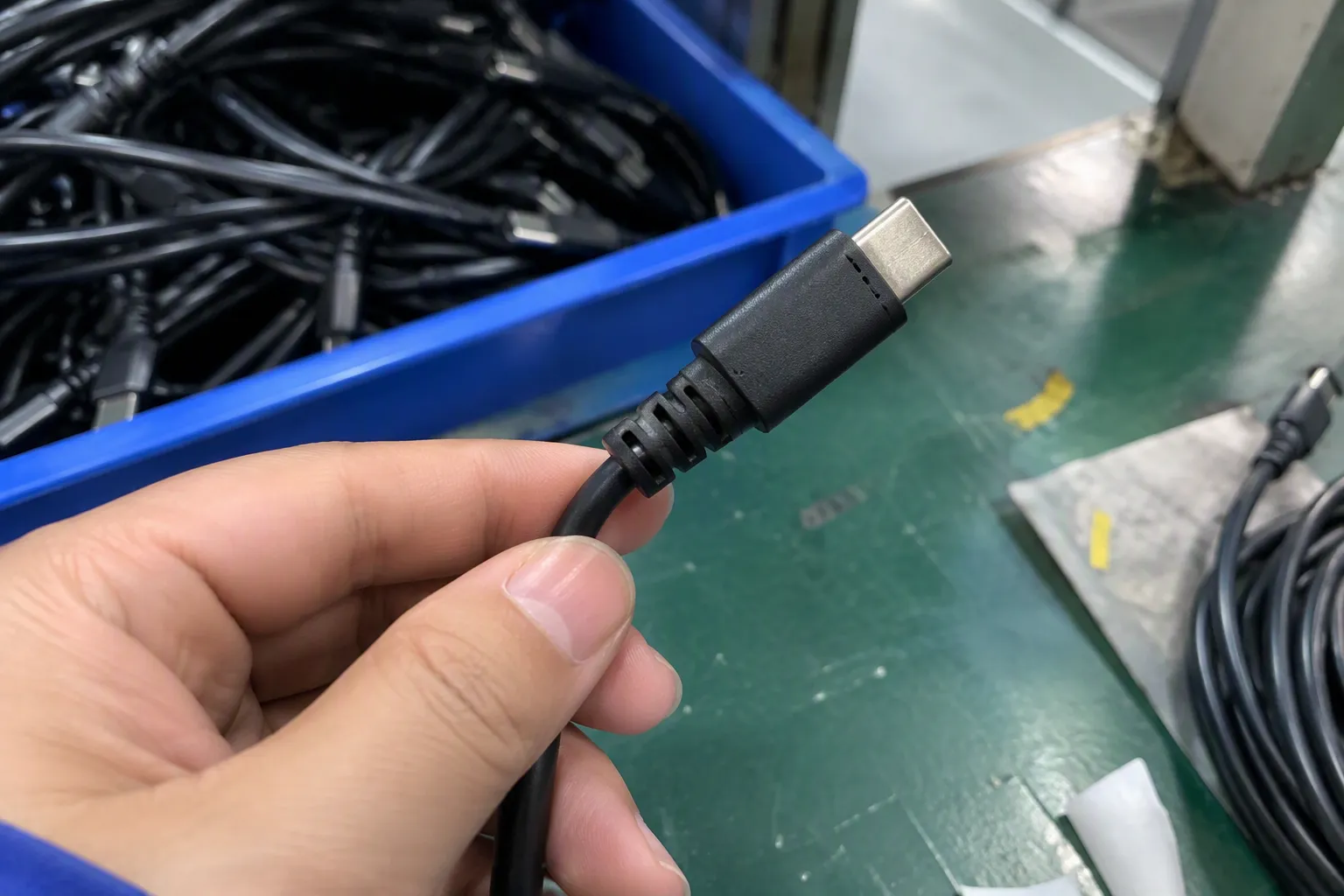
What the visual tool does well
I see the strongest value in the first stage of communication. Buyers may know what they want the product to look like, but they may not know the vocabulary that suppliers use for production.
For example, a buyer might select:
- USB-C to USB-C or USB-A to USB-C construction
- A short, standard, or extended cable length
- A round, flat, braided, or soft-touch outer design
- A straight or angled connector housing
- A color matched to a retail product range
- A logo on one or both connector housings
- A retail box, paper card, polybag, or bulk packing direction
These choices help me understand the commercial concept. They also give the buyer something concrete to review internally. A purchasing team can compare the proposed cable with its existing product range, packaging style, and target customer.
However, visual decisions represent only one part of the product. A cable that looks correct may still have an unclear conductor structure, unsuitable connector components, uncertain data capability, or an impractical branding method.[3] The design tool therefore works best as a communication aid.
From a visual request to a quotation brief
I normally divide the request into five groups. This approach helps prevent a good-looking concept from being sent to a supplier with too many unanswered questions.
| Specification group | Typical questions | Why it matters |
|---|---|---|
| Product configuration | Which connectors are used at each end? Is the cable USB-C to USB-C, USB-A to USB-C, or another format? | The connector combination affects compatibility, construction, and price.[4] |
| Performance | Is the cable intended for charging, data transfer, or both? What performance does the buyer require? | A visual tool cannot confirm the internal design or actual capability. |
| Physical design | What are the length, outer material, color, flexibility, and connector shape? | These details affect appearance, usability, materials, and manufacturing feasibility. |
| Commercial requirements | What is the target quantity, delivery window, market, and packaging format? | Suppliers need commercial context to prepare a useful quotation. |
| Quality and documents | Which inspection criteria, certificates, declarations, or test reports are required? | Buyers need to verify documents and confirm whether they apply to the exact product. |
I do not treat every unanswered question as a problem at the beginning. Early inquiries can remain incomplete. The important point is to identify the missing information before the buyer compares prices or approves a sample.
Why connector selection needs more explanation
Many buyers begin with the connector shape because it is easy to see. A USB-C connector on both ends may appear straightforward, but the buyer still needs to explain the intended use.[2]
I may ask whether the cable will be sold as:
- A charging accessory for phones, tablets, or other consumer devices.
- A general-purpose charging and data cable.
- An in-box accessory for another electronic product.
- A premium retail product with special packaging and branding.
- A replacement or private-label item that must match an existing cable.
These uses can lead to different specification discussions. The buyer may also need to consider the device ecosystem, customer expectations, cable length, bend conditions, packaging claims, and required documentation. I avoid assuming that a connector shape automatically defines the product’s performance.
A buyer should also state whether both ends need the same connector or whether the cable needs a mixed configuration. USB-A to USB-C and USB-C to USB-C cables may serve different existing charger and device combinations. The supplier should confirm the proposed configuration before sampling.
Why length and appearance are not enough
A request for “one meter, black, braided cable” still leaves several details open. I would want to clarify whether the buyer means the total finished length, the cable body length, or an approximate visual length. I would also ask whether the braid must meet a particular appearance standard and whether the buyer expects a soft, flexible, or more rigid feel.
Branding requires similar care. The buyer may want:
- A printed logo
- An embossed or molded mark
- A logo on the connector housing
- A logo on the cable sleeve
- A brand color on the housing
- A custom package rather than a custom cable
Each option can affect tooling, minimum order quantity, sampling, and lead time.[5] I do not present these effects as fixed rules because suppliers and designs differ. I ask the factory to confirm the available process and cost after reviewing the artwork and quantity.
The tool does not complete engineering design
This point is central. A visual configurator may show a cable with a chosen color, connector arrangement, and logo. It does not necessarily define:[6]
- The internal conductor construction
- Shielding or insulation details
- Connector component materials
- Strain relief structure
- Electrical performance
- Compatibility with a specific device or charger
- Test methods or acceptance limits
- Production process controls
- Packaging protection during shipment
I use the tool to make the buyer’s intention easier to understand. I then ask the supplier to convert that intention into a confirmed specification. The supplier’s confirmation should identify which points are standard, which points are customizable, and which points require engineering review or a new mold.
A practical inquiry format
I find that a short table often produces better communication than a long paragraph. A buyer can attach a design image and add the following information:
| Item | Buyer’s initial requirement | Confirmation needed |
|---|---|---|
| Cable type | USB-C to USB-C | Supplier to confirm available construction |
| Finished length | 1 m | Confirm measurement method and tolerance |
| Outer finish | Black braided sleeve | Confirm material, texture, and color matching |
| Connector housing | Custom logo | Confirm printing, molding, artwork, and tooling |
| Main use | Charging and general device connection | Confirm supported product specification |
| Packaging | Retail box | Confirm dimensions, artwork, and packing quantity |
| Target market | Europe and North America | Buyer to identify required documents |
| Quantity | Initial order estimate | Supplier to confirm MOQ and price tiers |
| Delivery | Requested launch date | Supplier to confirm sample and production schedule |
This format does not make the buyer an engineer. It gives both sides a shared checklist. I have found that it also makes internal approval easier because purchasing, product, and marketing teams can see the same information.
A realistic inquiry scenario
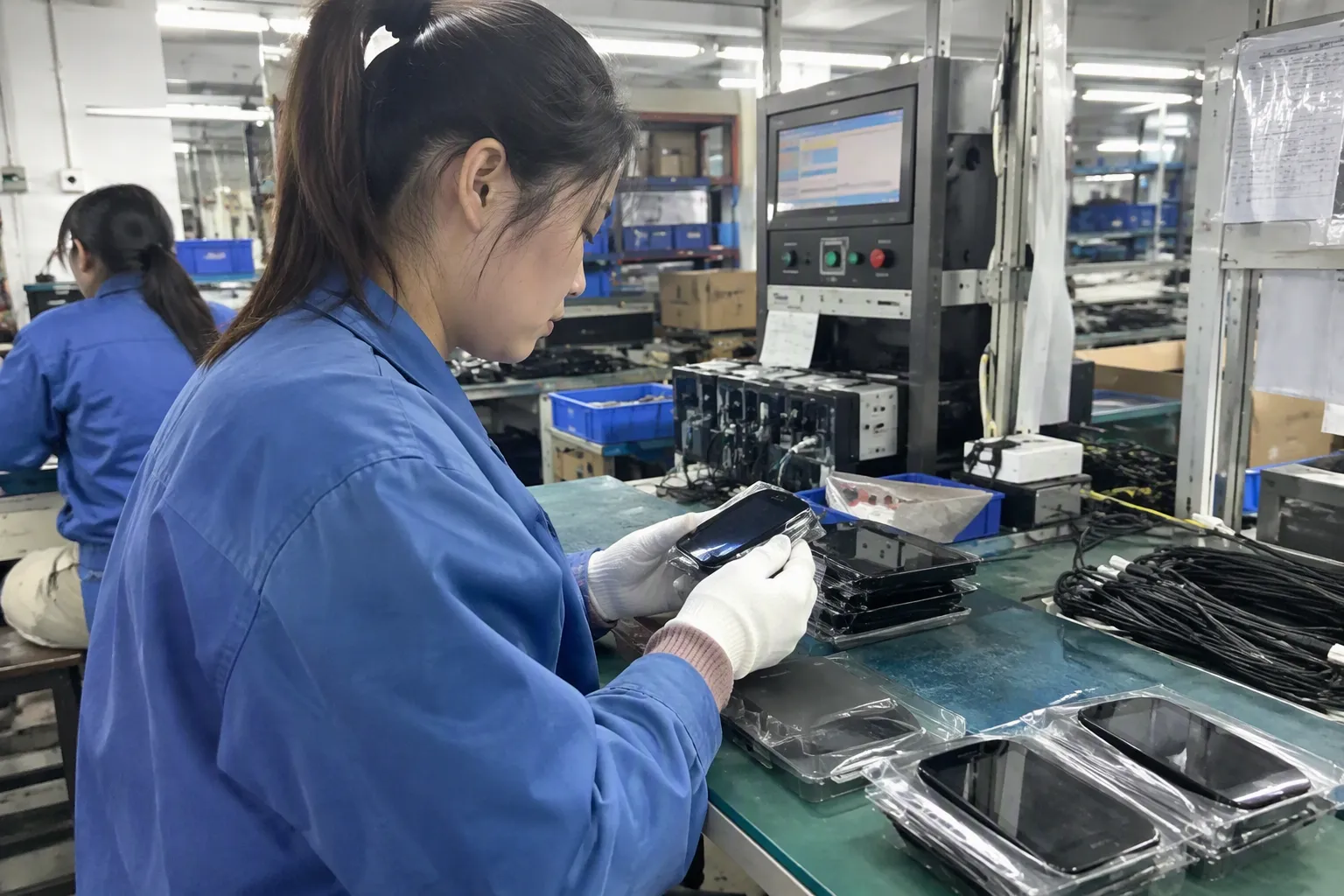
Consider a typical first message: “Please quote a custom USB-C cable, 1.5 meters, white, with our logo. We need a competitive price for retail.”
I would not send this directly to a factory as a final specification. I would first clarify:
- The connector arrangement
- Whether the cable is for charging, data, or both
- The expected quantity and repeat-order potential
- The preferred outer material
- The logo method and artwork format
- The package type
- The target delivery date
- The destination market
- Any required inspection standard or document
- Whether the buyer needs a sample before ordering
The buyer may not have all the answers immediately. That is normal. I can still request an indicative price, but I would label it as provisional. I would not present an early estimate as a final quotation if major technical and commercial variables remain open.
How this improves supplier selection
A clear brief helps a buyer compare suppliers more fairly. Without one, each factory may quote a different product while using the same general product name. One quotation may include simple bulk packaging, while another may assume retail packaging. One supplier may interpret “fast charging” differently from another.
I recommend comparing suppliers against the same written points:
- Product configuration
- Confirmed construction
- Sample policy
- MOQ and price breaks
- Tooling or setup charges
- Packaging scope
- Production lead time
- Inspection process
- After-sales handling
- Certification and test documentation
- Payment and shipping terms
The buyer should ask each supplier to identify assumptions. A supplier that explains what remains unconfirmed may be more useful than one that gives the lowest number without sufficient detail.
How I use the tool in a buying workflow
I treat the design tool as the first checkpoint in a larger process:
-
Visualize the product concept.
I record the connector arrangement, color, length, finish, logo direction, and packaging idea. -
Write the missing questions.
I separate appearance questions from performance, quality, and commercial questions. -
Prepare a quotation brief.
I put the known requirements into a table and mark uncertain points clearly. -
Request supplier confirmation.
I ask whether the proposed construction is standard, customizable, or subject to engineering review. -
Compare quotations on equal terms.
I check whether each supplier has priced the same configuration and package. -
Review the sample.
I compare the sample with the approved visual design and written specification. -
Confirm production controls.
I agree on inspection points, approved artwork, packaging, and change-control expectations. -
Verify documents.
I ask for documents that apply to the exact product and target market. I treat certificates and reports as documents to review, not as automatic proof of every product claim.
This sequence reduces avoidable misunderstandings. It does not remove the need for professional technical review when the application has specific electrical, safety, compatibility, or regulatory requirements.
What buyers should ask before requesting a final price
I recommend that buyers answer as many of these questions as possible:
- What exact cable-to-connector configuration do I need?
- What devices will the product connect?
- What charging and data expectations do I have?
- What finished length and tolerance do I require?
- What outer material and physical feel suit the product?
- Does the color need to match a brand standard?
- Where should the logo appear?
- Do I need a new mold or can I use a standard housing?
- What packaging will reach the retail shelf?
- What is the expected first order and annual demand?
- What is the required sample date?
- What is the required production and delivery date?
- Which quality checks will my team or inspection company perform?
- Which market documents must I review?
- What support will I receive if a production issue occurs?
I do not expect every buyer to know the technical answer to every question. The buyer can state the intended use and commercial goal, then ask the supplier to recommend a suitable construction. The supplier should explain the recommendation and identify what still needs confirmation.
Common mistakes when using a cable design tool
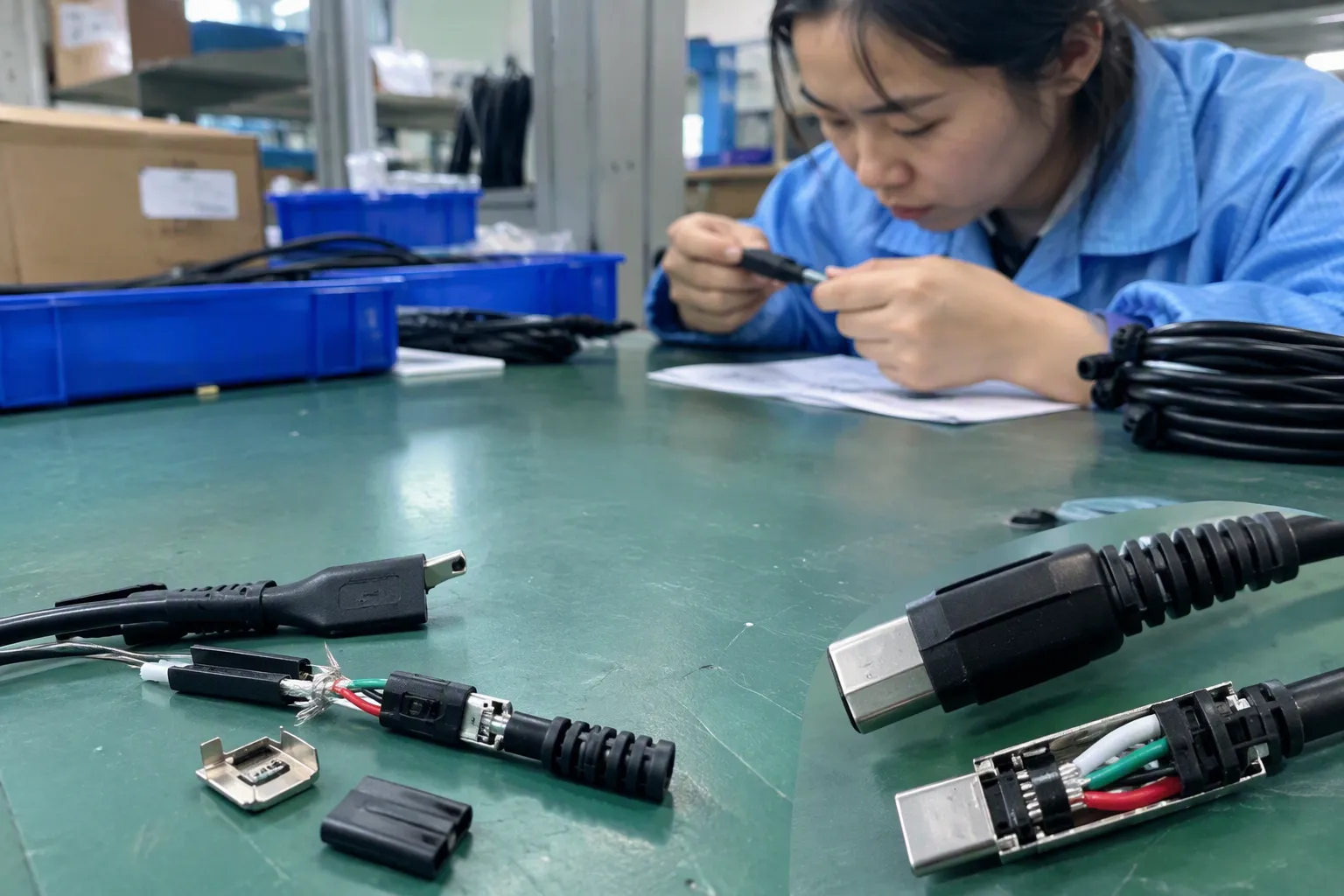
I see several recurring mistakes in early custom cable projects.
Mistake 1: Treating a picture as a specification
A picture communicates appearance, but it usually does not define internal construction, tolerances, or test criteria. I always attach written requirements to the image.
Mistake 2: Assuming “USB-C” describes performance
USB-C describes a connector format and interface ecosystem. It does not, by itself, communicate every charging, data, material, or compatibility requirement.[1] I ask the supplier to confirm the actual product specification.
Mistake 3: Comparing incomplete quotations
A low quotation may exclude custom tooling, retail packaging, inspection, or a different construction.[8] I compare the scope line by line before using price as a selection factor.
Mistake 4: Approving artwork before checking production limits
A logo may need minimum line widths, specific colors, or a suitable surface. I ask the supplier to review the artwork before final approval.
Mistake 5: Leaving the sample standard unclear
The buyer should define what the sample must demonstrate. The standard may include appearance, dimensions, logo position, packaging, and agreed functional checks. I recommend recording approved sample details for production reference.
Mistake 6: Treating documents as universal guarantees
A certificate or test report may apply only to a particular model, configuration, date, or manufacturer.[7] I ask buyers to check the document scope and consult qualified professionals when the product or market requires formal compliance evaluation.
What information belongs in a supplier-ready design file?
I suggest sending two related files instead of relying on a single image.
The first file can be a visual design sheet. It may show:
- Front and side views
- Connector orientation
- Logo location
- Color references
- Approximate dimensions
- Cable length
- Package appearance
The second file can be a requirements sheet. It may include:
- Intended use
- Connector configuration
- Performance expectations
- Materials or finish preferences
- Quantity and price target
- Sample schedule
- Packaging requirements
- Inspection points
- Destination market
- Required documents
- Open questions
This separation helps the factory distinguish what the buyer has already decided from what needs technical confirmation. I also recommend version control. A file name such as “USB-C-Cable-Rev02” is more useful than sending several unmarked images through email or messaging apps.
How should buyers handle changes after sampling?
Changes are common. A buyer may decide that the cable feels too stiff, the logo is too small, or the package does not fit the intended shelf space. I treat each change as a new confirmation point rather than assuming the factory will remember an informal message.
A simple change record can include:
| Change | Reason | Effect to confirm |
|---|---|---|
| Increase cable flexibility | Product feels difficult to coil | Material, construction, cost, and performance |
| Move logo position | Improve shelf presentation | Artwork, mold or printing process |
| Change package size | Fit retail display | Packaging cost, carton quantity, and shipping volume |
| Alter cable color | Match brand range | Color reference, sample approval, and production consistency |
The supplier should confirm whether the change affects price, MOQ, tooling, lead time, or sample approval. This step protects both sides from working to different versions.
Selecting a supplier after the design stage
The design tool cannot tell me whether a supplier is reliable. I still evaluate the supplier’s communication, documentation, sampling discipline, and commercial fit.
For a European or American retail, wholesale, or e-commerce buyer, I would review:
- How clearly the supplier answers technical questions
- Whether the supplier separates confirmed facts from assumptions
- Whether the supplier can support requested packaging and branding
- Whether MOQ fits the buyer’s sales model
- Whether the sample process is documented
- Whether delivery dates are realistic and explained
- Whether quality concerns receive a practical response
- Whether the supplier provides relevant product documents for review
- Whether after-sales responsibilities are stated clearly
- Whether the supplier understands repeat orders and design changes
My own role is to translate an inquiry into a workable quotation discussion. I do not replace a laboratory, compliance specialist, or application engineer. When a buyer has a demanding technical use, I recommend obtaining qualified professional evaluation before committing to a product claim or market launch.
A final checklist before sampling
Before I request a sample, I want the buyer and supplier to agree on the following:
- Product name and revision number
- Connector configuration
- Finished length and measurement method
- Outer material and color reference
- Connector housing design
- Logo method and artwork
- Intended use and stated performance
- Packaging format
- Sample quantity and cost
- Sample delivery date
- Required documents for review
- Inspection or approval criteria
- Expected order quantity
- Indicative production schedule
- Conditions that could change the quotation
The list may look detailed for a simple accessory. In practice, it saves time. A USB cable can be inexpensive compared with a larger electronic product, but incorrect packaging, unsuitable construction, or a missed launch date can still create meaningful commercial loss.
Frequently Asked Questions
Is a Custom Cables Design Tool enough to place a USB-C cable order?
No. A Custom Cables Design Tool can clarify the visible concept, but the buyer still needs a complete specification, supplier confirmation, quotation scope, sample approval, and production agreement. The buyer should also verify relevant quality and compliance documents before making market-specific claims.
What can I customize in a USB-C cable design tool?
A tool may help you define connector arrangement, cable length, color, outer finish, connector housing style, logo position, and packaging direction. The available options depend on the supplier or platform. I recommend asking the supplier to confirm which choices are standard and which require tooling or engineering review.
Does USB-C automatically mean fast charging or high-speed data?
No. USB-C identifies a connector and interface format, but it does not by itself define every charging or data capability. I ask the supplier to state the proposed product specification and provide supporting documentation where applicable. Buyers should avoid using performance claims until they have been confirmed.
What information should I include when requesting a custom cable quotation?
I recommend including the connector configuration, intended use, performance expectations, length, material, color, branding, packaging, quantity, target market, delivery date, and required documents. A reference image from a design tool can support the request, but it should not replace written requirements.
How can I compare two custom USB cable suppliers?
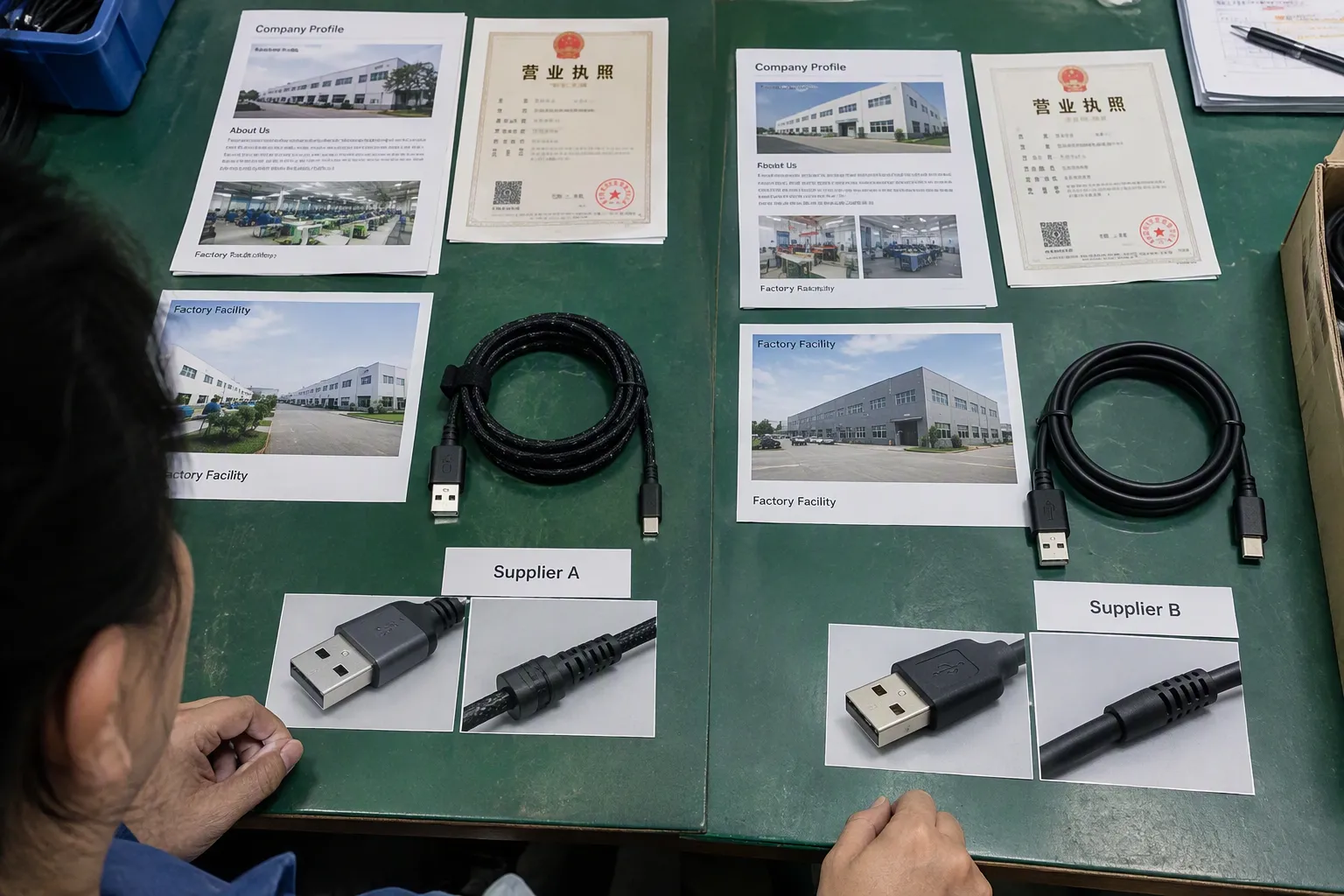
I compare both suppliers against the same specification and ask them to list assumptions. I review construction, sample terms, MOQ, price tiers, tooling, packaging, lead time, quality control, documentation, and after-sales support. A lower unit price may not represent better value if the quotation excludes important requirements.
Conclusion
A Custom Cables Design Tool gives buyers a practical way to express the appearance and basic direction of a USB-C or USB cable. I consider it the beginning of the procurement process, not the end of product design. Buyers still need to define intended use, performance expectations, packaging, quality requirements, documents, quantity, and delivery needs. They should then request supplier confirmation, review a sample, and obtain qualified evaluation for application-specific decisions. If you are preparing a private-label cable brief, I can help turn your visual concept into a clearer quotation request for supplier review.
Sources
- [PDF] Universal Serial Bus Type-C Cable and Connector Specification", The USB Type-C specification defines the connector and receptacle interface, while supported data rates and power-delivery functions depend on the applicable USB specifications and implementation
- Investigating How MacBook Accessories Evolve across Generations ...", USB Type-C systems can support distinct signaling and power functions, so the presence of identical connectors at both ends does not by itself specify the complete operating requirements of the cable assembly
- Design for Manufacturability Research Papers - Academia.edu", Cable electrical behavior and manufacturing feasibility depend on internal conductors, insulation, shielding, connector components, and fabrication processes that are not determined by the external appearance alone
- USB-C, USB-B, and USB-A: What's the Difference?", Different connector interfaces impose different mating, wiring, signaling, and assembly requirements, which can affect device interoperability and the resources required to manufacture the cable
- Manufacturability Assessment of Design Decisions for ... - PMC", Manufacturing process selection can alter tooling requirements, setup costs, economical batch size, prototype procedures, and production scheduling for customized components
- Product Baseline | www.waru.edu", Product configurators commonly represent selectable product variants, whereas verification of materials, performance, testing, process controls, and logistics requires additional engineering and manufacturing information
- ABC's of Conformity Assessment", Conformity-assessment documents are issued within a defined scope and should be matched to the relevant product, model, configuration, issuing organization, and assessment conditions
- Part 6 - Competition Requirements", Comparable procurement offers require a common statement of requirements and explicit treatment of tooling, packaging, inspection, specifications, and other included or excluded cost elements