Quick Answer
Fast and inexpensive custom USB cable assemblies can solve a practical sourcing problem, but vague specifications often create delays, price changes, and quality disputes. I see buyers focus on the lowest unit price first, then discover that connectors, packaging, inspection, and shipping affect the real result. A clear brief and realistic timeline offer a safer solution.
Fast and inexpensive custom USB cable assemblies are possible when the design is straightforward, the specifications are complete, and the order quantity supports efficient production. Buyers should compare the full procurement cost, including sampling, inspection, transport, rework, and after-sales risk, rather than choosing the lowest quotation alone.
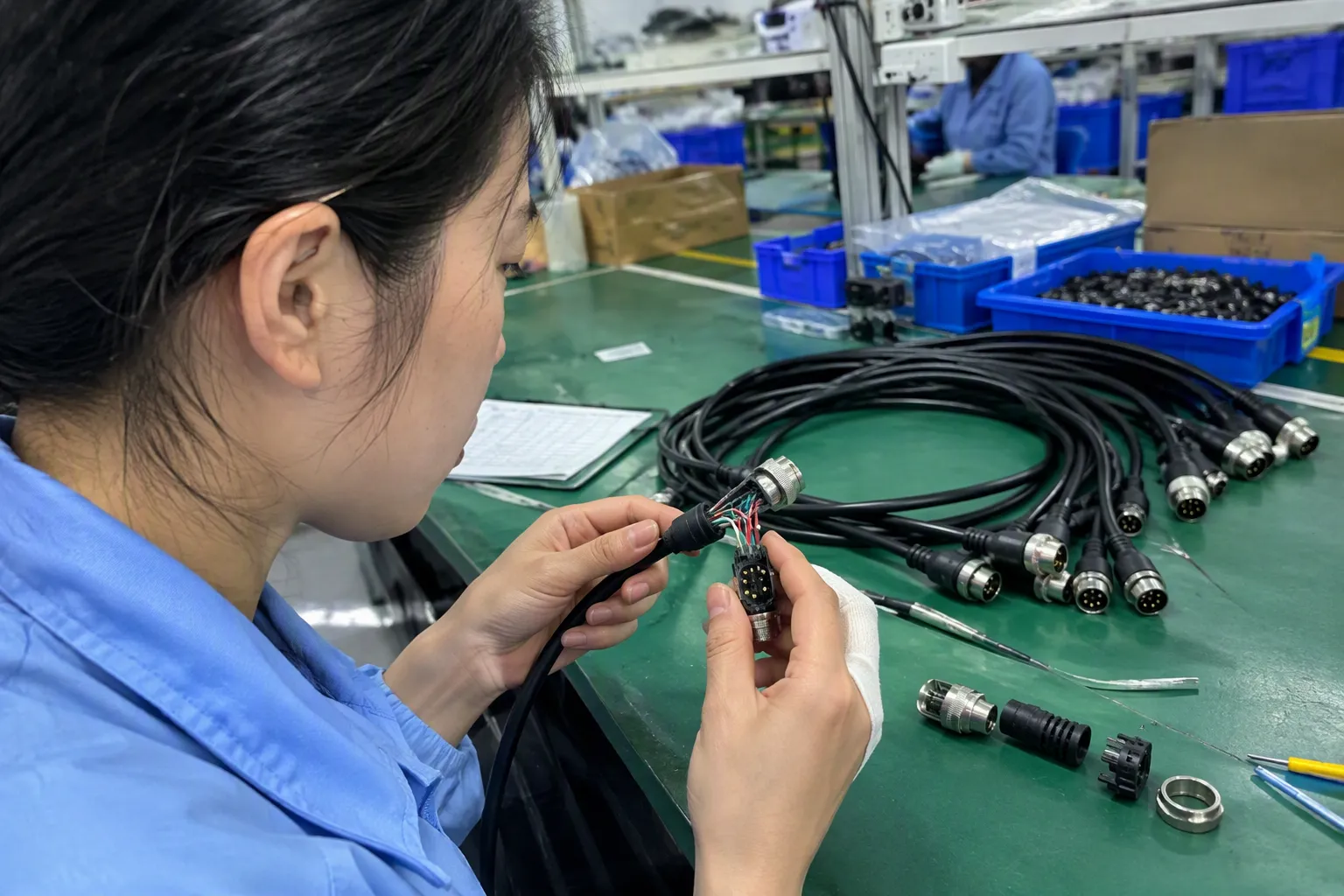
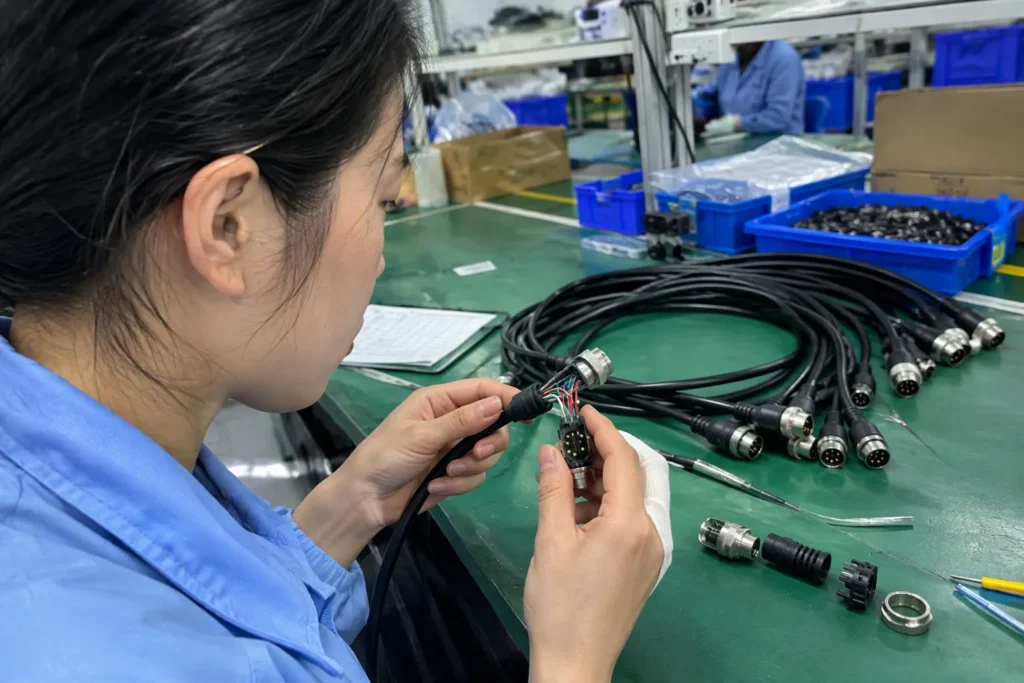
I normally begin with the application, not the target price. A charging cable for retail shelves may need a different construction, package, and inspection plan from a cable supplied as an accessory with an electronic product. The following points explain how I evaluate speed, cost, customization, and supplier risk with international buyers.
Fast and Inexpensive Custom Cable Assemblies: Are They Realistic
Many buyers want a custom cable at a standard-product price and within a short delivery window. That combination may be possible, but it depends on the level of customization, order quantity, material availability, approval process, and destination. I treat “fast” and “inexpensive” as purchasing objectives that must be balanced against technical and supply risks.
Fast, inexpensive custom cable assemblies are most realistic when buyers use available connector combinations and materials, provide complete specifications, approve samples quickly, and order enough quantity for an efficient production run.[1] Special terminals, unusual structures, complex packaging, small quantities, or urgent transport can increase both cost and lead time.
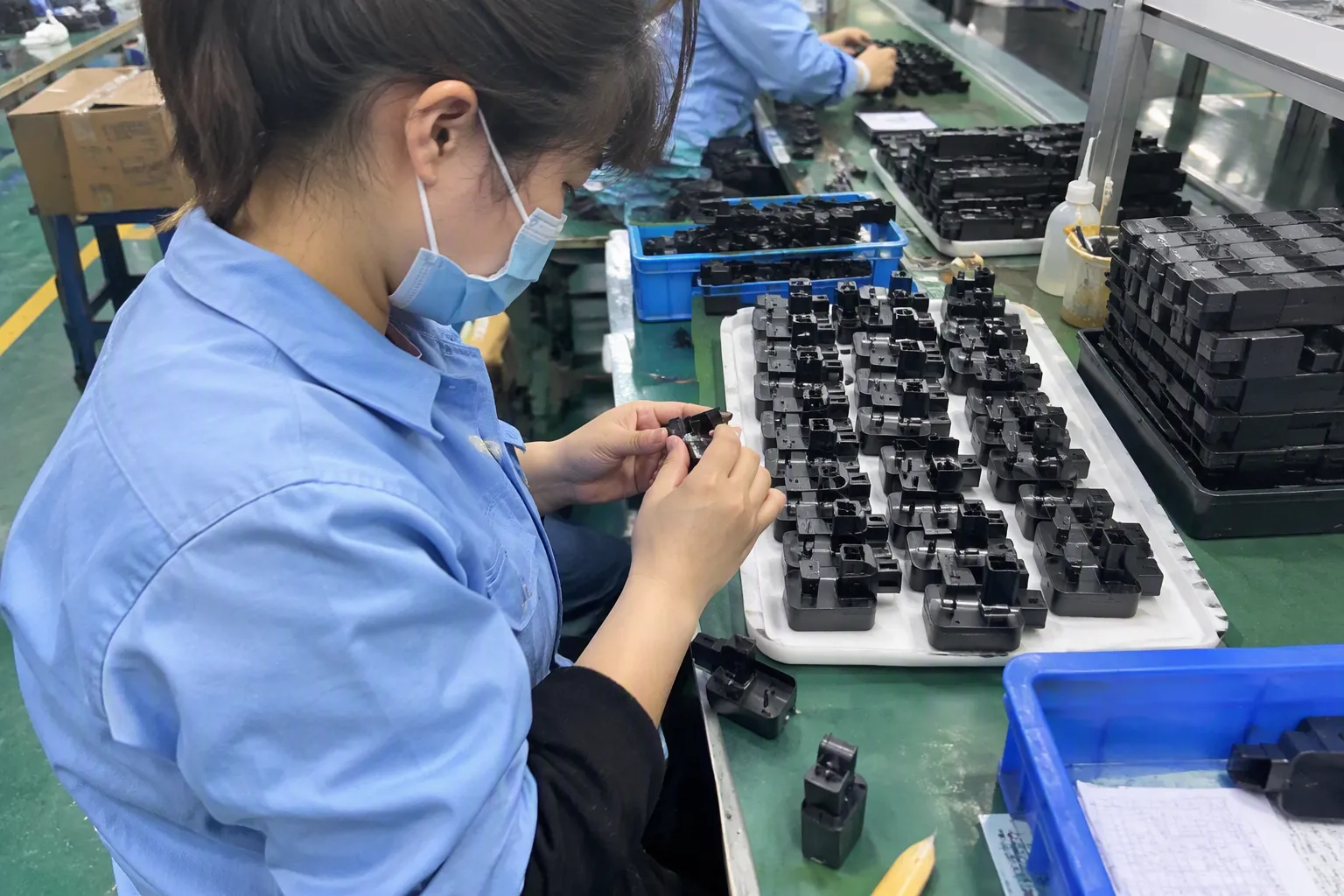
When I discuss a quotation with a European or North American customer, I usually separate three questions:
- Can the supplier make the design?
- Can the supplier make it at the required quality level?
- Can the supplier deliver it at the requested price and date?
A supplier may answer “yes” to the first question while the second and third remain uncertain. A cable can be technically producible but commercially unsuitable because the minimum order quantity is too high, the required connector is not readily available, or the packaging takes longer than the cable production itself.
What does “custom” actually include?
Customization may involve far more than selecting a cable length or adding a logo. I ask buyers to confirm the following points before I request a firm offer:
- Connector types at both ends
- Connector housing color and finish
- Cable length and tolerance
- Conductor construction
- Charging or data application
- Outer diameter and flexibility
- Shielding or insulation requirements
- Strain relief design
- Terminal and overmolding details
- Logo, printing, or color requirements
- Individual packaging and carton configuration
- Label language and barcode requirements
- Inspection expectations
- Compliance documents required by the buyer or destination market
Each point can affect the unit price. Some points can also affect feasibility. For example, a buyer may request a compact connector, a braided outer jacket, a special color, individual retail packaging, and a low MOQ. None of those requests is necessarily difficult alone. Together, they can create a more complex sourcing project.
I once received an inquiry where the buyer described the product as a “standard USB charging cable with custom branding.” During the specification discussion, the requirement expanded to a particular connector shell, a special braided color, a printed retail box, two language versions, and separate barcode labels for several markets. The initial price expectation no longer matched the actual project. This type of misunderstanding is common, so I prefer to confirm the complete product definition before comparing offers.
Production time is not delivery time
A supplier may quote seven or ten working days for production. That number usually does not represent the complete door-to-door schedule. I explain the full sequence to buyers:
| Stage | Typical purchasing question |
|---|---|
| Specification confirmation | Are all technical and packaging details complete? |
| Quotation | Does the offer include tooling, samples, packaging, and inspection? |
| Sample preparation | Is a physical or pre-production sample required? |
| Sample approval | How quickly can the buyer confirm or request changes? |
| Material planning | Are connectors, cable materials, and packaging available? |
| Production scheduling | When can the factory place the order into its production plan? |
| Manufacturing | How long will assembly and packing take? |
| Inspection | Who checks quantity, appearance, labeling, and required functions? |
| Export preparation | Are documents and carton details ready? |
| Transportation | Which shipping method and route fit the deadline? |
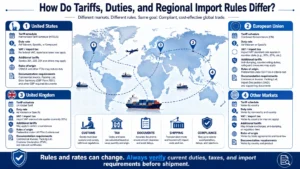
The total calendar time also includes weekends, holidays, approval delays, consolidation, customs procedures, and last-mile delivery.[2] Air freight may shorten transit but raise the landed cost. Sea freight may reduce transport cost but require more planning.[3] I do not present a factory production estimate as a guaranteed arrival date.
Why the lowest unit price may cost more
A low quotation can be useful as a reference, but I do not use it as the only purchasing measure. The buyer should examine the total cost of ownership and the cost of supply disruption.
A very low offer may reflect:
- A different conductor or jacket construction
- A lower level of inspection
- Excluded packaging or labeling costs
- A different connector specification
- A smaller sample or approval scope
- A price based on a higher MOQ
- No allowance for changes after order confirmation
- A production schedule that is not compatible with the sales plan
The direct unit price is only one part of the commercial decision.[6] I encourage buyers to compare:
[ \text{Landed Cost} = \text{Product Price} + \text{Packaging} + \text{Inspection} + \text{Transport} + \text{Duties and Fees} ]
For internal procurement, I also consider a broader risk-adjusted cost:
[ \text{Effective Cost} = \text{Landed Cost} + \text{Expected Rework} + \text{Returns} + \text{Delay Impact} ]
These formulas are not laboratory measurements. They are useful purchasing frameworks. A cable that costs slightly more but arrives consistently and matches the approved sample may be more economical for a retailer or e-commerce seller.[7]
How order quantity affects speed and price
MOQ is often connected to material purchasing, production setup, packaging, and supplier planning. A higher quantity may lower the unit price because the supplier can purchase materials more efficiently and avoid repeated setup work.[4] A small order may still be possible, but the supplier may need to charge more per unit or use existing materials and packaging options.
I usually ask buyers to distinguish between:
- Trial quantity: Used to test sales or customer acceptance
- Initial commercial order: Used for a first market launch
- Replenishment order: Used after demand becomes clearer
- Annual forecast: Used to support better pricing and supply planning
A buyer does not always need to place the full annual forecast as the first order. However, sharing a realistic forecast can help a supplier evaluate material planning and future pricing. I also ask whether the buyer needs one universal SKU or several versions for different markets. Multiple colors, lengths, connectors, or package languages can divide the quantity and make each SKU less efficient.[5]
How buyers can prepare a better RFQ
A complete request for quotation helps me return a more useful offer. I recommend including:
- Product name and application
- Connector configuration
- Required length and acceptable tolerance
- Charging, data, or accessory use
- Visual requirements
- Packaging requirements
- Estimated order quantity by SKU
- Desired sample date
- Target production or arrival date
- Destination country and delivery preference
- Required inspection method
- Compliance documents or declarations that the buyer expects to review
- Target price, if available
- Customization files, drawings, photographs, or reference samples
The buyer does not need to know every engineering detail before making an inquiry. The buyer does need to identify the commercial purpose and any non-negotiable requirements. I can then ask focused questions instead of guessing.
What should a supplier quote include?
A professional quotation should make the assumptions visible. I prefer to list:
- Unit price and currency
- Price basis and Incoterm
- MOQ by model or SKU
- Sample cost and sample lead time
- Production lead time after approval
- Packaging details
- Tooling or setup charges
- Payment terms
- Quotation validity
- Inspection arrangement
- Estimated carton information
- Shipping options
- Documents available for review
The buyer should verify exactly what any certification or compliance statement covers.[8] A supplier may have documents for a factory, a component, or a specific product version. Those documents should not automatically be treated as proof that every custom configuration meets every market requirement. I recommend reviewing current reports, declarations, and scope details with the buyer’s qualified compliance professional where necessary.
How I compare suppliers beyond price
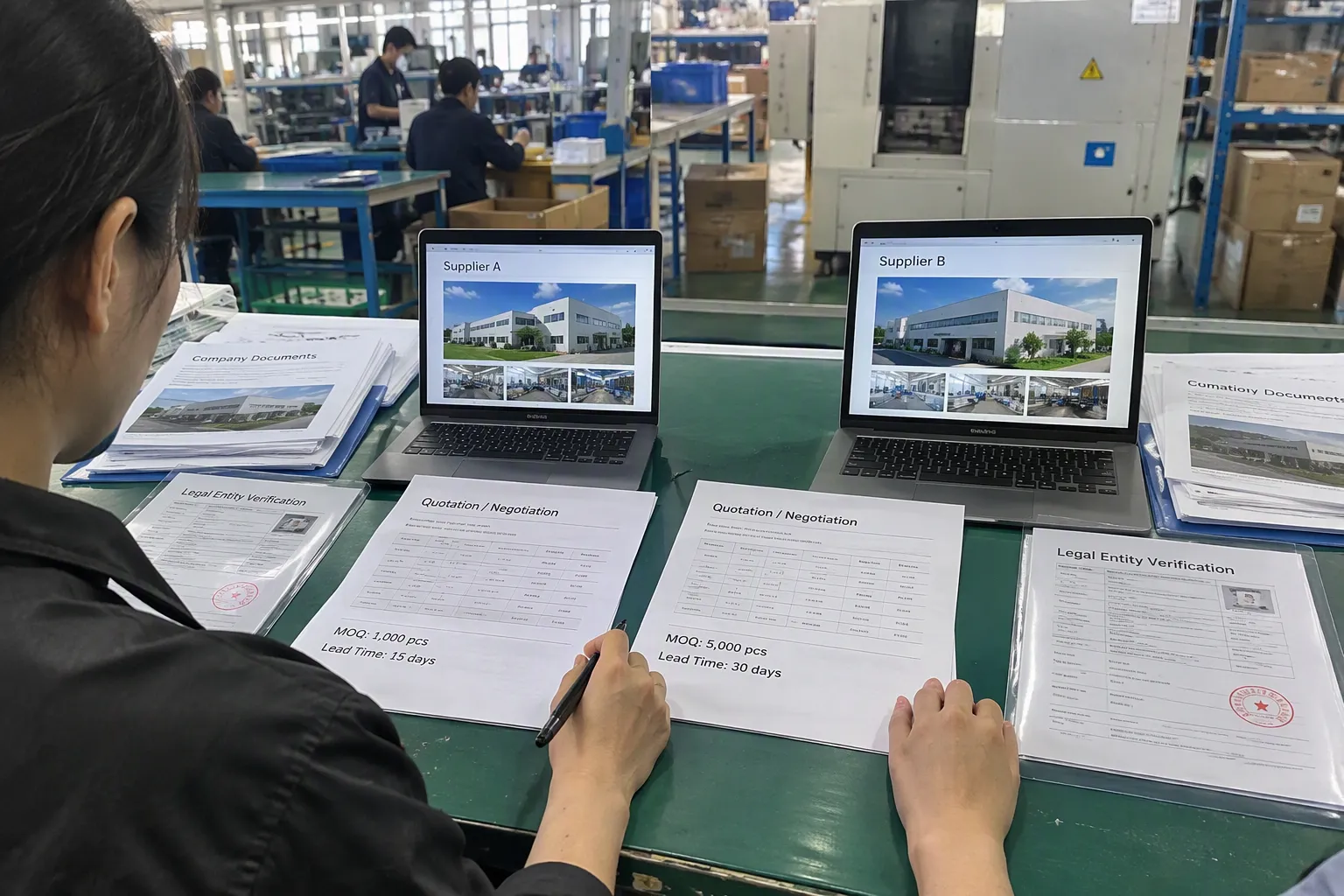
When I evaluate a potential supplier for a customer, I look for clear communication and consistent documentation. I ask whether the supplier can explain the production assumptions in plain language. I also compare how the supplier handles specification changes.
Useful supplier-selection questions include:
- Can the supplier provide a reference sample?
- Can the supplier identify the exact materials and connector version?
- Does the supplier confirm tolerances and packaging details in writing?
- Can the supplier explain the inspection process?
- Does the supplier distinguish production time from shipping time?
- Can the supplier support the required MOQ and replenishment plan?
- Does the supplier have experience with export packaging?
- Can the supplier provide relevant documents for buyer review?
- How does the supplier handle nonconforming goods?
- Can the supplier communicate during production and before shipment?
I do not consider fast replies alone to be proof of manufacturing quality. A supplier must still provide traceable specifications, suitable samples, and a practical quality-control plan.
Quality control for custom USB cable assemblies
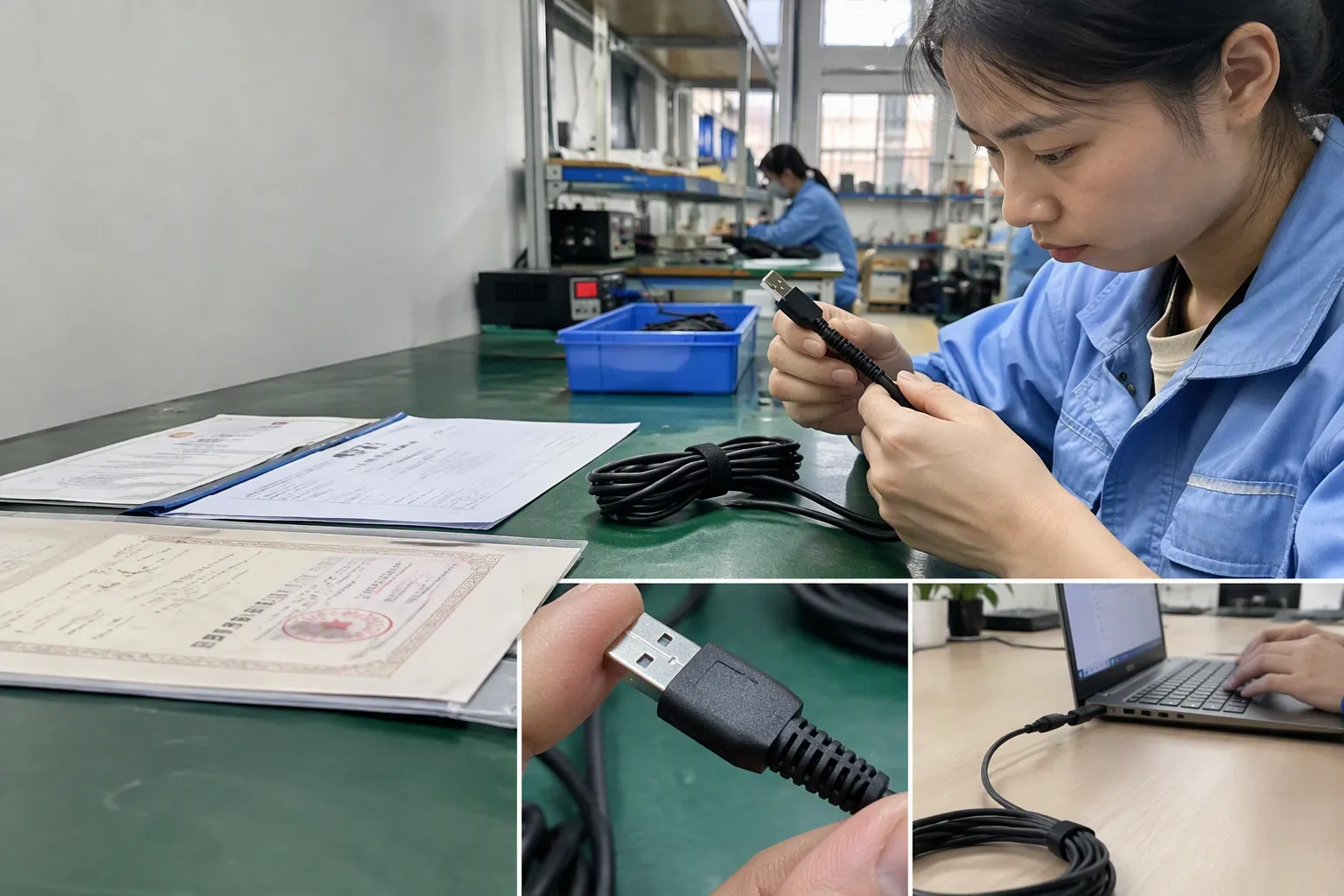
Quality control should begin before production. I recommend creating an approved specification sheet that includes the product drawing, sample photographs, connector details, cable length, packaging artwork, and inspection points.
The inspection plan may include:
- Quantity and carton count
- Connector appearance
- Cable length
- Printing and logo position
- Color consistency
- Packaging and labeling
- Fit or connection checks appropriate to the application
- Visual defects
- Basic continuity or functional checks, when relevant
- Carton condition and shipping marks
The correct inspection scope depends on the product design and application. I do not claim that a visual inspection proves long-term durability or electrical performance. Buyers should define any required technical tests and use qualified professionals or accredited testing providers when the application requires formal validation.
A pre-production sample can prevent many disputes. The sample should not remain an informal reference hidden in an email thread. I suggest identifying it clearly and recording which details the buyer approved. If the buyer changes the cable length, package, material, or connector after approval, the supplier should update the quotation and schedule.
How packaging changes the project
Retail packaging often receives less attention than the cable itself, but packaging can affect both cost and speed. A simple polybag, paper card, or plain carton may be available faster than a printed retail box. A custom box may require artwork approval, color confirmation, printing, die-cutting, and a separate minimum order.
I ask retail and e-commerce buyers to confirm:
- Individual unit package
- Package dimensions
- Language requirements
- Barcode format and placement
- Retail display requirements
- Inner carton quantity
- Master carton markings
- Pallet or container requirements
- Whether packaging must protect the connector during transport
Packaging also affects freight volume. A low-priced cable with oversized packaging can produce a higher landed cost because the shipment occupies more space. I therefore compare both product cost and shipping efficiency.
When standardization is the better choice
Custom USB cable assemblies are not always the best answer. A buyer may reduce risk by choosing a proven standard design and customizing only the branding or packaging. This approach can be useful when the buyer has:
- A short launch deadline
- A small initial quantity
- Uncertain demand
- Several markets to test
- Limited time for engineering review
- A need for quick replenishment
A more customized design may make sense when the cable must fit a specific product, support a particular installation, match a retail system, or meet a defined application requirement. I help buyers compare the cost of customization with the commercial value it creates.
| Procurement approach | Main advantage | Main risk |
|---|---|---|
| Standard cable | Faster sourcing and simpler replenishment | Less product differentiation |
| Branded standard cable | Better retail identity with limited complexity | Branding and packaging minimums |
| Semi-custom cable | Balance between appearance and availability | Some material restrictions |
| Fully custom assembly | Better fit for a defined application | Higher approval, tooling, and supply risk |
How to manage an urgent order
Urgency should lead to better preparation, not fewer checks. If a buyer needs a quick shipment, I suggest using a short decision path:
- Freeze the technical specification.
- Select available connector and material options.
- Confirm the quantity by SKU.
- Approve a reference sample or documented sample standard.
- Confirm packaging artwork early.
- Agree on the inspection scope.
- Separate production and transport dates.
- Keep an alternative shipping method available.
- Confirm the acceptable solution for partial shipment, if appropriate.
- Put all final requirements into the purchase order.
An urgent order may justify air transport, a simpler package, or a standard color. It should not automatically justify removing essential inspection or accepting an unclear specification. I tell buyers that speed achieved through guesswork often creates a slower correction later.
An anonymized quotation misunderstanding
One recurring inquiry begins with a target price and a photograph. The buyer asks for “the same cable, but with our logo, in 10,000 pieces.” A photograph may not show the conductor construction, connector version, packaging, tolerance, or intended application. The supplier can prepare a preliminary estimate, but the estimate should not be treated as a final offer.
In this situation, I normally ask for:
- A physical reference sample if available
- The intended charging or data use
- Exact connector names
- Required length
- Package format
- Quantity by variation
- Destination and delivery expectation
- Any buyer-specific testing or document requirements
The final price may move after these points are confirmed. That change does not necessarily mean the supplier is unreliable. It may mean the first request described an image rather than a complete product specification. I prefer to make that difference clear before the buyer places an order.
A practical decision checklist
Before choosing a supplier, I suggest scoring the offer against five areas:
| Area | Questions I ask |
|---|---|
| Product fit | Does the design suit the real application? |
| Commercial fit | Does the MOQ and price suit the sales plan? |
| Timing | Does the full schedule include approval and transport? |
| Quality control | Are inspection points and acceptance criteria clear? |
| Supplier support | Can the supplier manage changes and replenishment? |
A supplier does not need to offer the lowest price in every category. The supplier should offer a credible balance. For example, a slightly higher quote may include better packaging, clearer inspection, or more reliable communication. The buyer should confirm those advantages in writing instead of assuming them.
What I recommend to international buyers
I recommend starting with a small but meaningful sample process. The buyer can check physical appearance, packaging, fit, and application suitability before committing to a large commercial order. The buyer should also review the sample under the same conditions expected in the sales channel.
For an e-commerce seller, that may include opening the package, checking the customer instructions, scanning the barcode, and reviewing how the product appears in photographs. For a wholesaler, it may include carton handling, labeling, and replenishment planning. For a retailer, it may include shelf presentation and package durability during normal distribution.
I also recommend documenting all changes. A short written confirmation can prevent confusion about a revised cable length, a new package language, or a different connector shell. Clear communication is one of the least expensive ways to reduce procurement risk.
Frequently Asked Questions
Can custom USB cable assemblies really be inexpensive?
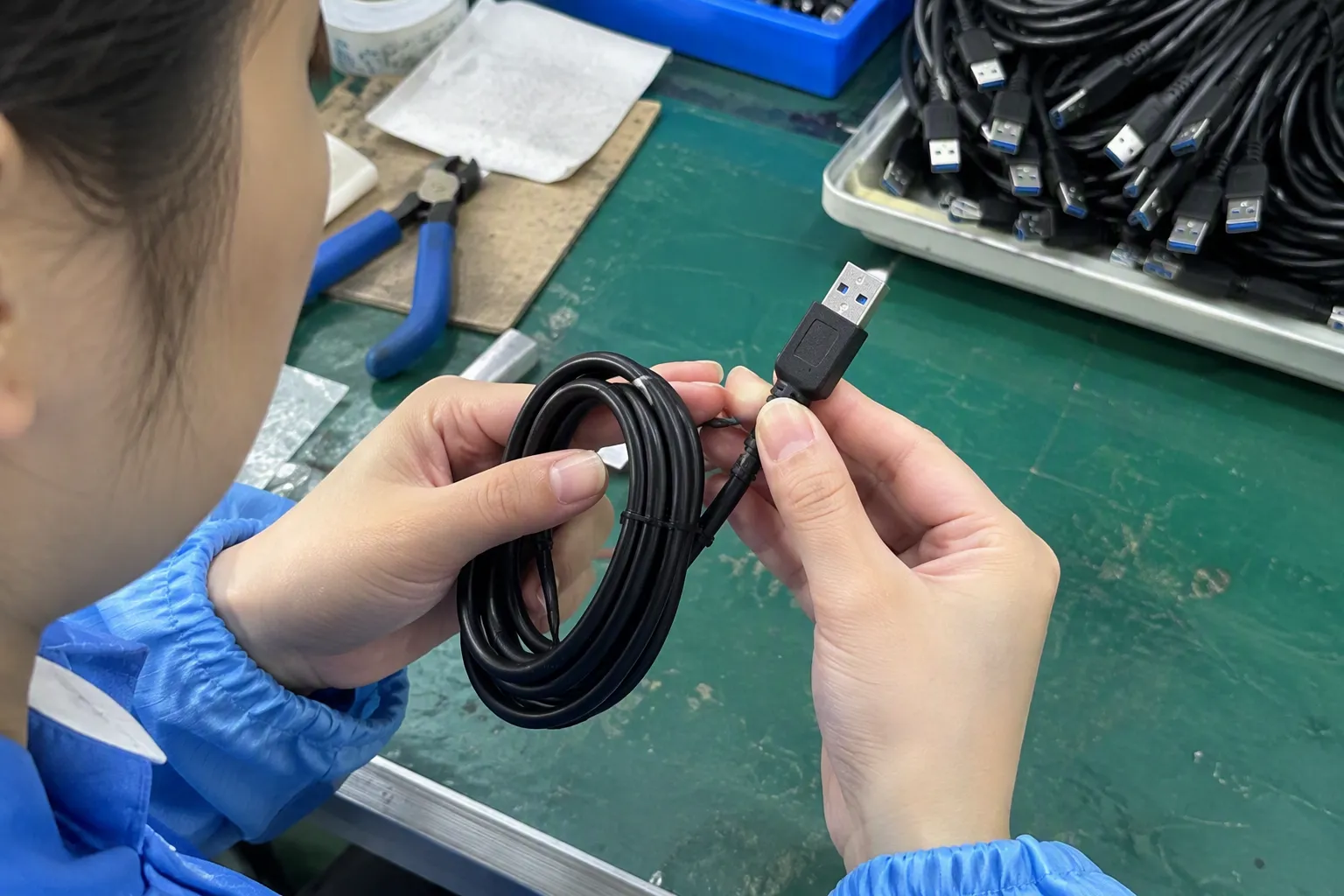
They can be cost-effective when the design uses practical materials, available connectors, efficient packaging, and an appropriate order quantity. However, a fully customized assembly with special tooling, low volume, complex packaging, or urgent shipping may cost more than a standard cable. I compare the total landed cost rather than the unit price alone.
What information should I provide for a custom USB cable quotation?
I recommend providing connector types, cable length, intended use, required appearance, quantity by SKU, packaging, destination, target date, and compliance or inspection expectations. A drawing, photograph, reference sample, or packaging artwork can reduce assumptions. The supplier can then identify missing technical details before issuing a firm quotation.
How long does a custom USB cable order take?
The schedule depends on specification confirmation, sampling, approval, material availability, production, inspection, and shipping. A quoted factory production period is not the same as total delivery time. I ask suppliers to provide separate estimates for sample preparation, production after approval, and transportation to the buyer’s destination.
Should I choose the lowest USB cable quotation?
I do not recommend choosing only by the lowest quotation. The buyer should compare materials, connector construction, packaging, inspection, MOQ, lead time, transport assumptions, and after-sales arrangements. A lower unit price can become more expensive if inconsistent quality causes returns, rework, delayed replenishment, or customer complaints.
Do custom cable assemblies require compliance documents?
The answer depends on the product design, application, destination, and buyer requirements. Buyers should identify the relevant documents before ordering and verify their scope, date, product version, and issuing organization. I recommend qualified compliance advice for application-specific or market-specific decisions rather than relying on an unsupported supplier statement.
Conclusion
Fast and inexpensive custom USB cable assemblies are achievable when I can work from a complete specification, a realistic quantity, and a practical delivery plan. Buyers should define more than length and appearance. They should confirm connectors, construction, packaging, inspection, documents, MOQ, and the full door-to-door schedule. I also recommend comparing total procurement risk instead of accepting the lowest unit price automatically. If you are sourcing USB cables for a European or North American retail, wholesale, or e-commerce business, contact me with your requirements. I can help organize the quotation questions and compare suitable supply options.
Sources
- Why Focusing on Lead Time, Not Just Efficiency and Cost ...", Research on manufacturing economics generally finds that standardized components and larger production runs can reduce setup and per-unit costs, although the magnitude of the effect depends on process design, demand, and supplier capacity
- Logistics performance index - Glossary | DataBank - World Bank", International logistics literature treats delivery lead time as an end-to-end interval that can include order processing, production, transport, border clearance, and final distribution, rather than factory production alone
- The Impact of the COVID-19 Pandemic on Freight ...", Freight-mode comparisons commonly identify air transport as faster and more expensive per unit of cargo, while maritime transport is generally slower and less costly for suitable international shipments
- Analysis of a Production Order Quantity Model With ...", Operations-management models show that fixed setup and ordering costs can be distributed across more units, often lowering average cost as batch size increases, subject to inventory and capacity constraints
- How Competition, Customization, and Niche Markets Have ...", Operations research commonly finds that increased product variety can create additional setup, inventory, and coordination costs, reducing some benefits of scale at the individual-variant level
- Analyzing Costs Using Total Cost of Ownership", Public-procurement guidance defines whole-life or total cost assessment as considering acquisition together with relevant operating, maintenance, disposal, risk, or other downstream costs rather than purchase price alone
- Supply chain disruptions and resilience: a major review ... - PMC", Quality-cost and supply-chain research recognizes that nonconformance, rework, returns, and disruption can impose downstream costs that are not reflected in the initial purchase price
- Conformity assessment", Regulatory conformity guidance distinguishes a product-specific declaration or assessment from general claims about an organization or component, requiring the applicable product and regulatory scope to be identified