Quick Answer
Listening-dose tracking is becoming a common request in TWS product discussions, yet buyers can easily overestimate what the feature means. A vague “hearing wellness” label can create marketing risk when the actual product only shows volume or basic usage time. We recommend treating the feature as a specification that needs careful supplier verification.
Listening-dose tracking is a wellness-oriented capability that may record, accumulate, display, and alert users about aspects of their listening exposure. It is not a hearing-protection promise, medical function, or guarantee that a user will avoid hearing damage.[1] TWS brands should verify the model’s data logic, alerts, app dependence, supported devices, and approved claim language before marketing the feature.
In our 15 years of exporting 3C products from Shenzhen, we have seen feature requests change quickly. Buyers now ask more often about volume controls, safe-listening prompts, app dashboards, and health-related audio functions. The right question is not whether a model has a fashionable label. The right question is what the user can actually see and do.
Is Listening-Dose Tracking a Hearing-Protection Promise?
Buyers often face a difficult problem when they see wellness language in a TWS specification sheet. A supplier may list “hearing protection,” “safe listening,” or “listening-dose tracking” without defining the function. That ambiguity can lead retailers, distributors, and ecommerce sellers to make claims that the actual user experience does not support.
Listening-dose tracking should not be presented as a hearing-protection promise. It is a feature category that may help users become more aware of listening habits by collecting and presenting certain usage information. The available data, calculation method, alerts, and controls can differ widely between TWS models, phone systems, and companion apps.[2]
Why the Feature Name Is Not Enough
A feature name can sound more complete than the real implementation. This is one of the most common points we discuss during pre-sales conversations with European and North American buyers.
For example, one TWS model may show only the current volume level. Another may record listening duration. A third may combine duration and device volume in a mobile app. A fourth may issue a reminder after a user reaches a supplier-defined threshold. These functions are related, but they are not the same product capability.
We recommend that buyers avoid treating any of the following labels as self-explanatory:
- Safe listening
- Hearing wellness
- Volume health reminder
- Listening exposure monitor
- Audio-dose monitor
- Listening-dose tracking
- Hearing care mode
- Volume protection
- Smart volume alert
A label may be commercially useful, but it does not replace a functional description. The real value comes from the user journey behind the label.
For procurement purposes, we treat listening-dose tracking as a set of verifiable functions, not as a medical or protective outcome.
This distinction matters because consumer expectations can drift quickly. A customer may read “hearing protection” and assume that earbuds actively prevent harmful use. However, a model may only provide a notification or basic usage summary. If the retailer’s marketing language is stronger than the product’s confirmed function, the retailer may face returns, negative reviews, customer service pressure, or compliance concerns.
We do not position ourselves as an acoustic laboratory, a medical authority, or an algorithm developer. We work as a sourcing and product-specification partner. Therefore, we advise buyers to request documentation from the supplier and seek qualified professional review for application-specific technical, regulatory, or health-related decisions.
Listening-Dose Tracking Versus Simple Volume Display
A volume display tells the user how loud the audio output is set at a particular moment.[3] Listening-dose tracking, when genuinely implemented, usually involves more than showing a volume bar.
The distinction is important for TWS brands that want to create credible feature comparisons.
| Capability | Simple volume display | Basic listening tracker | Listening-dose tracking implementation |
|---|---|---|---|
| Shows current volume level | Usually | Sometimes | Usually |
| Records listening time | Usually not | Often | May be included |
| Accumulates usage over time | No | Sometimes | Often claimed, but must be verified |
| Presents a daily or weekly summary | No | Sometimes | May be available in an app |
| Sends user reminders | Rarely | Sometimes | Depends on model and settings |
| Requires companion app | Not always | Often | Frequently, but not always |
| Supports a wellness claim | Limited | Limited | Only within verified feature boundaries |
| Provides hearing protection | No | No | No automatic conclusion should be made |
A buyer should not assume that every model with listening-dose tracking has a full dashboard, historical records, or on-device warnings. Some TWS earbuds rely entirely on the smartphone operating system. Others use a brand app. Some may only work with selected phone platforms or software versions. Some models may display information only while the earbuds are actively connected.
This is why the product page should not say, “These earbuds protect your hearing,” unless the buyer has a very specific, professionally reviewed basis for that claim. In most commercial situations, safer wording is more accurate:
- “Supports listening habit awareness features.”
- “May provide listening-time or volume-related reminders, depending on the connected device and app.”
- “Includes a supplier-confirmed listening exposure display function.”
- “App-based wellness feature availability may vary by model and smartphone compatibility.”
These phrases are less dramatic, but they are easier to defend because they describe the feature rather than promise an outcome.
What Data Does the TWS Product Actually Track?
The first supplier-verification question should be simple: What data does this model track?
A supplier should be able to provide a direct answer. If the answer is limited to “it has safe listening,” we recommend asking again with a structured checklist.
The potential data points may include:
-
Listening duration
The system may record how long the user listens during one session, one day, or another period. -
Volume setting information
The feature may use the selected volume level from the earbuds, phone, app, or audio source. -
Accumulated listening exposure
The system may combine time and volume-related information into a cumulative indicator.[4] Buyers should ask how the supplier describes this calculation and whether the description is approved for customer-facing use. -
User-selected limits or preferences
Some apps may let users set reminders or choose a preferred listening range. This does not necessarily mean the system measures real-world listening conditions.[5] -
Notification history
A model may show whether an alert was delivered. Buyers should confirm whether history is stored, where it appears, and how long it remains accessible. -
Device and connection status
The app may use information about whether the earbuds are connected, actively playing audio, or paired with a compatible phone.
Each type of data creates a different user experience. A basic timer is not the same as an accumulated listening record. A current volume display is not the same as a daily wellness summary. A phone-level alert is not necessarily a TWS-earbud feature.[6]
We suggest asking suppliers for screenshots, short demonstration videos, and a written functional flow. A static image is useful, but it does not show what happens when the user reaches a reminder point, switches phones, turns off the app, or uses a different music platform.
Where Does the User See the Result?
The display location is another detail that can change the commercial value of listening-dose tracking. Buyers should know whether the result appears on the earbuds, the charging case, the phone operating system, or a companion app.
In most TWS product categories, the likely display options include:
| Display location | What buyers should verify | Commercial implication |
|---|---|---|
| TWS earbud voice prompt | Trigger conditions, languages, ability to disable | Useful for simple reminders, but limited for detailed data |
| Charging case display | Whether the case has a screen and what it shows | Can support premium positioning if the display is confirmed |
| Companion app dashboard | Supported systems, app availability, screen design, update process | Often strongest for ecommerce images and feature explanation |
| Phone notification | Whether it comes from the brand app or phone ecosystem | May depend on permissions and operating system behavior |
| Phone system wellness menu | Which phones and versions support it | Cannot automatically be marketed as a universal earbud feature |
| Product manual only | Whether users receive active reminders | Weak consumer value if no live display is available |
We often advise buyers to test the intended retail flow before finalizing packaging or listing copy. A feature can look impressive in a supplier presentation, but the customer may need to download an app, accept permissions, create an account, and update firmware before seeing anything useful. That process may be acceptable for a premium TWS range. It may not suit an entry-level impulse-buy product.
A chain-store buyer may also need a quick explanation that store staff can understand. In that case, a complex app-only experience can create training challenges. An ecommerce seller may have more room to explain compatibility in product images and FAQ content, but the seller still needs clear limitations.
How Are Alerts Triggered and Controlled?
Alerts are often the part of listening-dose tracking that buyers find most attractive. They can make the feature feel active rather than passive. However, alert behavior must be confirmed carefully.
A supplier should explain:
- What action triggers an alert?
- Is the trigger based on time, volume-related data, a combined calculation, or user settings?
- Does the alert appear during listening or after a session?
- Does the user receive a phone notification, app message, voice prompt, or visual reminder?
- Can the user turn alerts on or off?
- Can the user adjust the reminder preference?
- Does the alert work when the app is closed?
- Does the alert work with all audio sources?
- Does the alert remain active after firmware updates or app updates?
- Is the logic the same on iOS and Android devices?
We recommend avoiding claim language that implies the alert has a medically validated meaning unless the supplier provides appropriate documentation and the buyer obtains external professional review. A reminder is a reminder. It can support awareness, but it should not be presented as a diagnosis, a personal risk assessment, or a guaranteed safety intervention.[7]
A practical product description may say:
“The companion app can provide supplier-confirmed listening habit reminders when supported conditions are met. Availability and display may vary by connected device, app version, and user settings.”
This wording is not as short as “hearing protection,” but it reduces the risk of overpromising.
Does Listening-Dose Tracking Depend on an App or Phone Ecosystem?
For many TWS brands, this is the most important procurement question. The earbuds may be capable of sending information, but the user may only access the feature through an app or a specific mobile ecosystem.
We have found that buyers often ask about the feature first and compatibility second. We recommend reversing that order.
Ask the supplier to confirm:
- Whether the feature works on iOS, Android, or both
- The minimum supported operating system versions
- Whether the supplier’s app is available in target markets
- Whether the app listing is maintained under the supplier’s brand or another company’s account
- Whether the app requires account registration
- What user permissions are necessary
- Whether all functions remain available without registration
- Whether users need firmware updates
- Whether the feature works with third-party audio apps
- Whether the earbuds support the same function when paired with laptops, tablets, televisions, or other Bluetooth devices
- Whether the function is localized for required languages
- Whether the app’s privacy policy and data handling documents are available for buyer review
This step is especially relevant for European and North American importers. An app-based wellness function can involve product claims, privacy expectations, customer support, software maintenance, and regional availability.[8] The hardware purchase price is only one part of the evaluation.
A buyer should also clarify who owns the post-sale software responsibility. If the supplier changes the app interface, removes a feature, or stops maintaining a version, can the buyer still market the product in the same way? The answer may affect packaging design, retailer listings, and future replenishment orders.
How Should TWS Brands Market the Feature Responsibly?
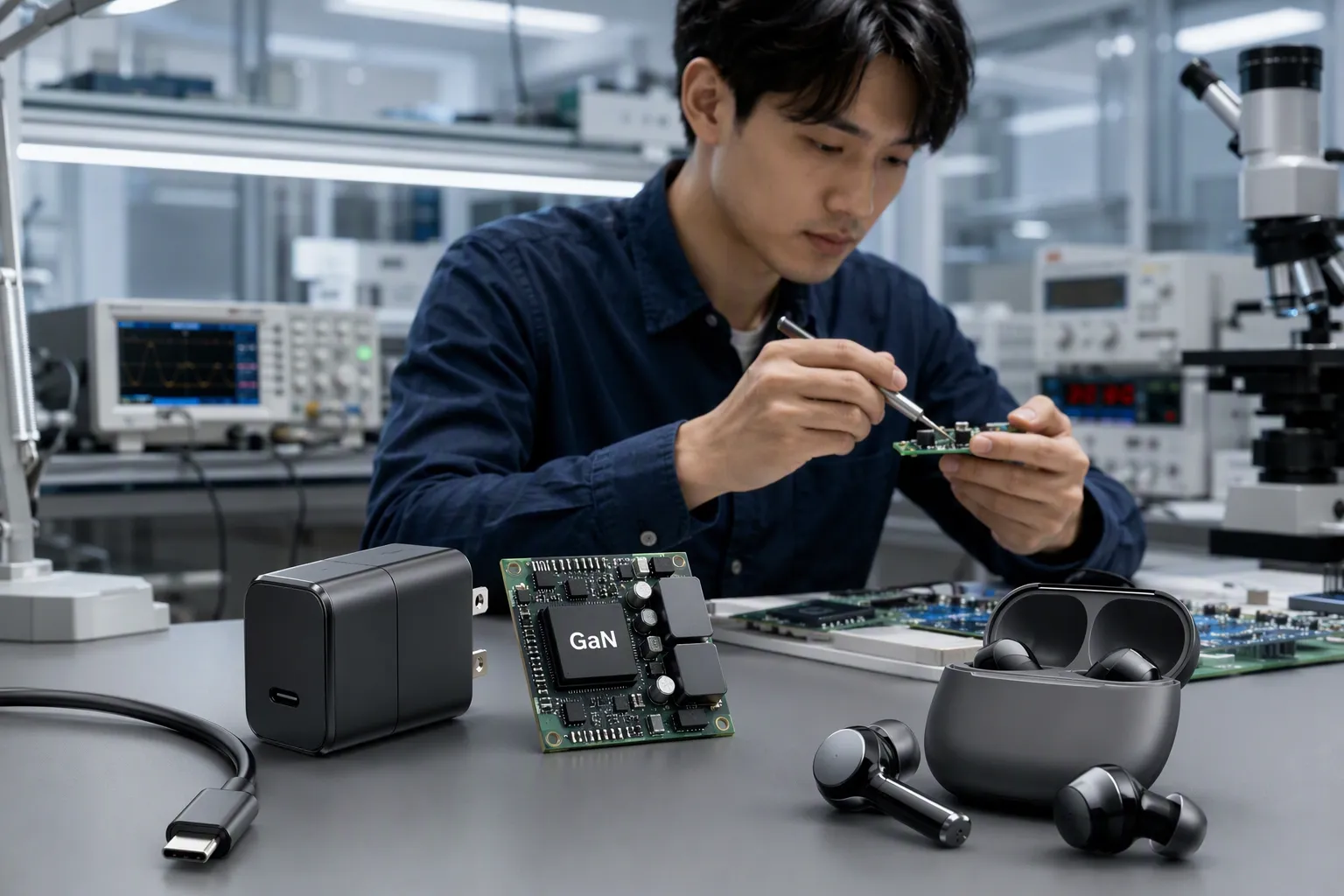
We believe responsible marketing starts with an honest feature boundary. The most credible listings explain what users can do, where they can see the information, and what conditions apply.
A product listing should focus on observable functions:
- Review listening time in the companion app
- View supported listening-use summaries
- Receive configurable reminders where available
- Check current volume-related settings
- Access wellness-oriented usage information on compatible devices
- Manage listening habit notifications through the app
A product listing should avoid unsupported outcome claims:
- “Prevents hearing damage”
- “Protects your hearing automatically”
- “Guarantees safe listening”
- “Diagnoses hearing risk”
- “Medical-grade hearing wellness”
- “Stops unsafe audio exposure”
- “Scientifically protects ears” without verified and reviewed evidence
The same caution applies to packaging. Packaging has limited space, so buyers may prefer a short icon such as “Listening Habit Reminder” or “App-Based Listening Insights.” However, the icon should match the confirmed implementation. If the product only shows a current volume level, “Listening-Dose Tracking” may be too broad.
A Procurement Checklist for Comparing Similar TWS Models
When several suppliers offer the same feature label, buyers should assume the models are non-comparable until the implementation is documented. We recommend using one comparison sheet for every candidate model.
| Verification area | Questions for the supplier | Evidence to request |
|---|---|---|
| Feature definition | What exactly does listening-dose tracking mean on this model? | Written function description |
| Data captured | Does it record time, volume-related data, cumulative use, or something else? | Technical feature sheet |
| Accumulation period | Is information shown per session, day, week, or another period? | App screenshots or video |
| Display method | Where does the user view the result? | Screenshots on supported devices |
| Alerts | What triggers alerts and how are they delivered? | Demo video and user manual |
| User controls | Can users enable, disable, or adjust reminders? | App settings screenshots |
| Compatibility | Which operating systems and device types support the feature? | Compatibility matrix |
| App requirement | Is a companion app mandatory? Is registration required? | App download link and setup guide |
| Localization | Which languages are available in app prompts and manuals? | Localized screenshots |
| Claim language | What wording does the supplier approve for marketing? | Written approval or claim guide |
| Documentation | Are there supporting test reports, certificates, or declarations? | Documents for buyer review |
| Software support | Who maintains the app and firmware? | Update policy or support statement |
We also recommend that buyers include this verification in the sample stage, not after mass production begins. A sample review should cover the full customer journey:
- Pair the earbuds with each target phone platform.
- Install the companion app from the relevant app store.
- Check whether the feature is visible without extra firmware steps.
- Review the labels, menus, languages, and permissions.
- Confirm what information is shown after actual listening use.
- Check whether reminders appear as described.
- Compare the experience with the proposed packaging and listing copy.
- Record any compatibility limits for customer service teams.
This process does not replace professional technical evaluation. However, it helps buyers identify ordinary commercial gaps before they become retail problems.
Frequently Asked Questions
What is listening-dose tracking in TWS earbuds?
Listening-dose tracking is a broad term for TWS functions that may collect and show listening-use information, such as duration, volume-related data, accumulated usage, or reminders. The exact feature varies by model. We recommend requesting a written supplier description instead of relying on the feature name alone.
Does listening-dose tracking protect hearing?
No buyer should assume that listening-dose tracking protects hearing or prevents damage. A wellness-oriented feature may support user awareness of listening habits, but it does not automatically provide a protective, medical, or diagnostic outcome. Any health-related claim requires careful documentation and appropriate professional review.
Is a volume display the same as listening-dose tracking?
No. A volume display usually shows the current setting only. Listening-dose tracking may involve accumulated information, listening duration, app summaries, or alerts. Some products offer only one of these functions. Buyers should ask suppliers exactly what is measured, stored, displayed, and communicated to the user.
Does listening-dose tracking require a mobile app?
Many TWS implementations depend on a companion app or a phone ecosystem, but this is not universal. Buyers should confirm app availability, iOS and Android support, permissions, account requirements, firmware needs, and whether the function remains available when the earbuds are used with other Bluetooth devices.
What should retailers ask before promoting a wellness audio feature?
Retailers should ask what data is tracked, how it is accumulated, where users see it, what alerts exist, which devices are supported, and what claim language the supplier approves. They should also request screenshots, videos, manuals, compatibility details, and any relevant documents for independent review.
Conclusion
Listening-dose tracking can be a useful TWS wellness feature when buyers understand its real limits. We recommend treating it as a combination of data capture, accumulation, display, and reminder functions rather than a hearing-protection promise. Before adding listening-dose tracking to packaging, listings, or retail training materials, verify the specific model’s user journey, compatibility, app dependence, alert behavior, and approved claims. If you are sourcing TWS earbuds for Europe or North America, we can help you compare supplier specifications, MOQ options, delivery expectations, and customization requirements with a practical verification checklist.
Sources
- Making listening safe", WHO safe-listening guidance describes exposure-reduction practices for personal audio use, while FDA general-wellness guidance distinguishes low-risk wellness functions from medical-device claims; neither source establishes that a particular earbud tracker prevents hearing damage
- Guidelines for safe listening devices/systems - ITU", ITU–WHO guidance for safe listening in personal audio systems identifies multiple possible system functions, including exposure monitoring and user notification, supporting the view that implementation details can differ across products and connected platforms
- Understand Noise Exposure | Noise and Hearing Loss - CDC", NIOSH noise-exposure guidance explains that cumulative dose is determined by sound level together with exposure duration; accordingly, a current volume setting alone is not a measure of accumulated listening exposure
- Hearing Care: Safe Listening Method and System for Personal ...", The WHO–ITU safe-listening framework describes estimation of sound exposure using listening level and duration, providing a basis for cumulative listening-dose indicators in personal audio systems
- Guidelines for safe listening devices/systems - ITU", Research on personal-listening-device exposure indicates that sound levels at the ear depend on device output and listening conditions, so a user-selected limit or reminder setting is not by itself a direct measurement of real-world exposure
- Safe listening devices and systems: a WHO-ITU standard", The WHO–ITU safe-listening standard treats personal audio as a system involving source devices and headphones, so an alert delivered by a phone may be a source-device or software function rather than an earbud-specific function
- General Wellness: Policy for Low Risk Devices - Guidance", FDA guidance distinguishes general-wellness functions that encourage healthy habits from products intended to diagnose or assess disease-related risk; a listening reminder may promote awareness without constituting diagnosis or individualized risk assessment
- [PDF] 2021 a guide to data protection in mobile applications - WIPO", European Commission GDPR materials explain that organizations processing personal data through digital services, including mobile applications, must meet data-protection and transparency obligations, making privacy documentation relevant to app-based wellness features