Quick Answer
Consumer electronics cable assemblies often look simple, but the wrong specification can create compatibility complaints, returns, and delayed launches. I regularly see buyers begin with only a connector name and cable length. That approach leaves important questions unanswered.
Buyers can reduce procurement risk by identifying both connected devices, their connection requirements, and the evidence needed before requesting a quotation.
Consumer electronics cable assemblies should be selected according to the devices being connected, the function required, and the conditions of use—not only by connector type and cable length. Before requesting a quotation, buyers should provide both connection ends, device models, expected power or data functions, cable length, packaging needs, target market, and any required compliance documents. The supplier can then confirm whether an existing assembly is suitable or whether customization is necessary.
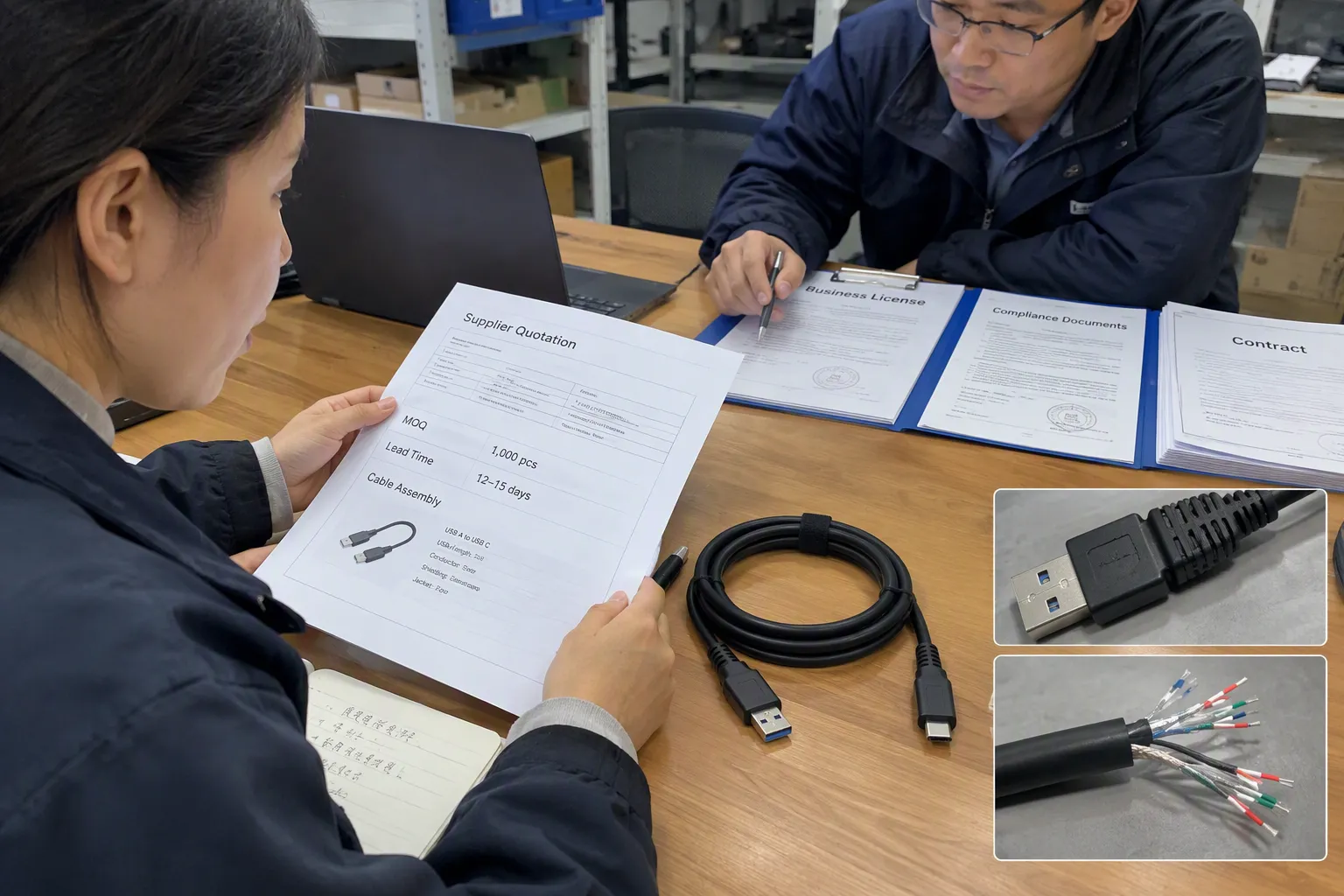
A clear inquiry helps both sides avoid assumptions. A supplier cannot responsibly confirm that a cable is “universal” without knowing the equipment at each end and the required function. In the sections below, I will explain how I turn a general cable request into a more useful procurement specification.
How should buyers define consumer electronics cable assemblies before asking for a quotation?
A vague cable inquiry creates risk because the same-looking connector can support different functions, power conditions, or device requirements. I find that buyers usually save time when they describe the complete connection first and choose the product name second. This gives the supplier a practical basis for evaluation.
Buyers should define consumer electronics cable assemblies by identifying the two devices, the connector at each end, the required function, the cable length, the use environment, and the target market. They should also state whether they need an existing product or a customized assembly. A supplier can then review compatibility and quotation details more accurately.
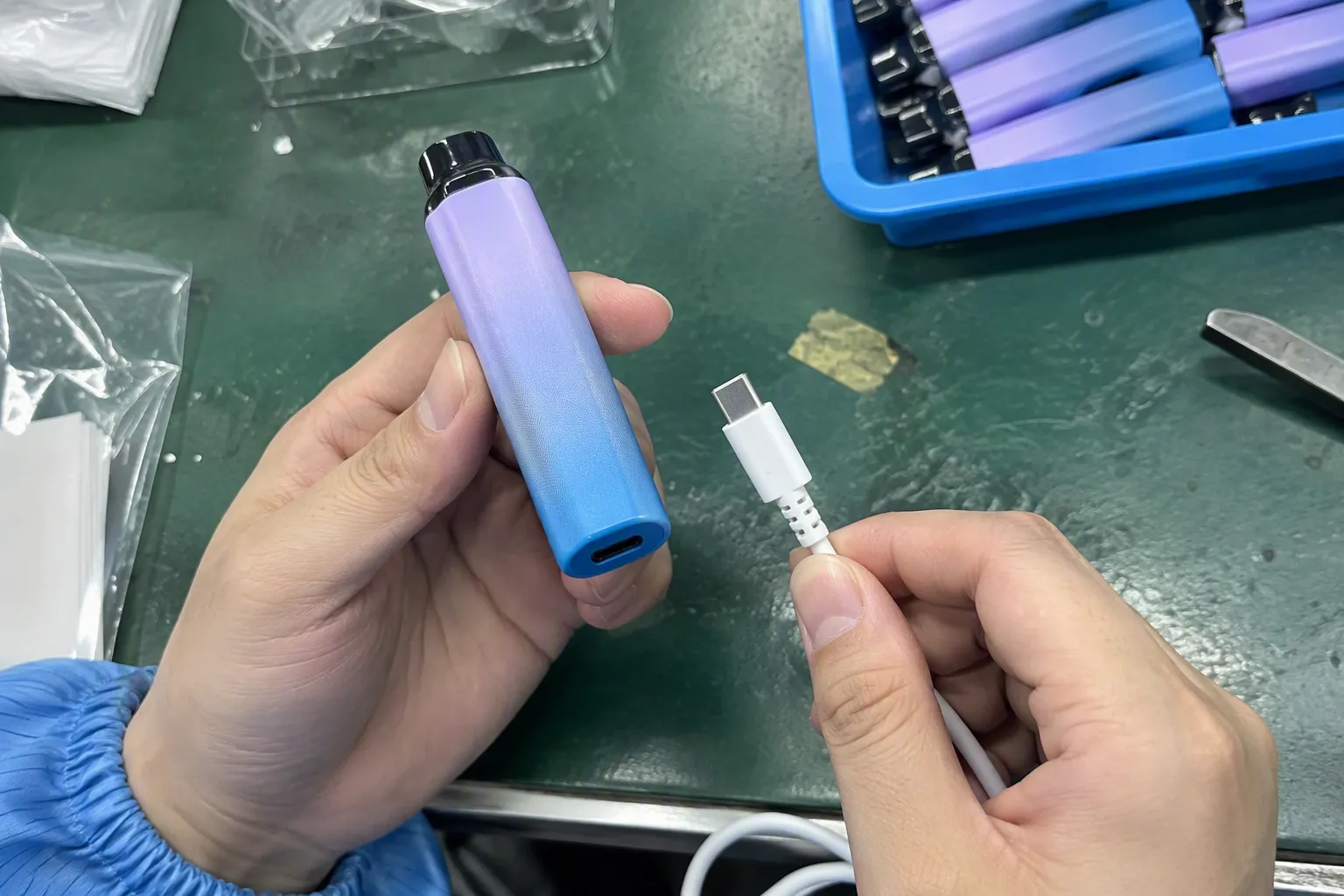
Start with the two devices, not the connector name
When I review customer inquiries, I often see descriptions such as:
- “Please quote a Type-C cable.”
- “We need a one-meter charging cable.”
- “Please offer a universal cable assembly.”
- “We need a cable for a tablet and charger.”
These descriptions may be useful as a starting point, but they are not complete specifications. A connector name describes a physical interface. It does not automatically confirm what the connected devices can do.[1]
I need to know the equipment at both ends. For example, the buyer may connect:
- A wall charger to a smartphone
- A laptop to a docking station
- A power bank to a wearable device
- A gaming controller to a console
- A display source to a monitor
- An internal module to a consumer electronics enclosure
Each connection may require a different product design, even when the connector family appears similar.
I normally ask the buyer to provide the following basic information:
- Device name and model number at end A
- Device name and model number at end B
- Connector type at each end
- Required function
- Approximate or exact cable length
- Expected quantity and target price
- Sales market and packaging requirements
- Any required documents or certifications
A photograph can help, but a photograph should not replace the device model. A connector may look correct while the internal wiring, pin assignment, or supported function differs. If the model number is unavailable, the buyer should provide a clear product datasheet, user manual, or manufacturer specification for review.
Separate physical fit from functional compatibility
I explain this distinction to buyers because it is one of the most common sources of misunderstanding.
Physical fit means that the plug can enter the port and remain connected. Functional compatibility means that the assembly supports the intended electrical or data connection between the two specific devices.
A cable may physically connect but fail to provide the expected result.[2] It may charge slowly, fail to transfer data, fail to support a display signal, or work only in one direction. I do not treat a matching connector shape as proof of performance.[3]
The required function should therefore be written clearly in the inquiry. Buyers can use terms such as:
- Charging only
- Charging and data transfer
- Data transfer at a stated or documented level
- Audio connection
- Video connection
- Power delivery, subject to device and product documentation
- Internal signal connection
- Connection for a specific accessory or replacement application
I recommend avoiding unsupported terms such as all-in-one, universal, or high performance unless the buyer defines what those words mean and the supplier can support them with documentation or testing.
Why “universal” is often an incomplete requirement
A retailer may want one cable assembly that serves several device families. That commercial goal is understandable. However, the word “universal” can hide several separate questions:
- Which device models are included?
- Do all models use the same connection method?
- Do they require the same power function?
- Do they require the same data or signal function?
- Does the assembly need adapters or multiple interchangeable ends?
- Is the buyer selling the cable as a general accessory or as a model-specific item?
- Will the packaging list compatible devices?
I ask buyers to provide a compatibility list instead of asking for a generic universal cable.[4] A compatibility list might include brand, model, connection end, expected function, and any known limitations.
| Information to provide | Example of a useful description | Why it matters |
|---|---|---|
| Device at end A | Charger model or product family | Defines the source equipment |
| Device at end B | Phone, tablet, headset, or accessory model | Defines the receiving equipment |
| End A connector | Specific connector and plug format | Confirms the physical interface |
| End B connector | Specific connector and plug format | Confirms the opposite interface |
| Main function | Charging, data, audio, video, or combination | Prevents assumptions about capability |
| Cable length | Finished length and tolerance if important | Supports production and packaging planning |
| Construction | Jacket, braid, strain relief, color, markings | Supports product and quality requirements |
| Sales market | Country or region | Helps identify documentation and labeling needs |
| Quantity | Trial order and expected repeat volume | Supports MOQ and price discussion |
What I need before preparing a quotation
I usually separate the inquiry into four groups: product, function, commercial terms, and compliance documentation.
Product information
The product section should identify the visible and physical requirements:
- Connector types and housing style
- Plug orientation, if relevant
- Cable length
- Cable color
- Jacket or braid preference
- Connector housing material or finish
- Logo, laser marking, or other branding
- Retail packaging or bulk packing
- Required sample quantity
The buyer does not need to know every manufacturing detail before contacting a supplier. The buyer does need to describe what the customer will see and how the cable will be used.
Functional information
The functional section should explain what the cable must do. Buyers should avoid assuming that a familiar connector supports every possible application.
Useful questions include:
- Is the cable for power, data, audio, video, or a combination?
- Does the buyer need charging only or charging plus data?
- Does the product connect to a particular charger, computer, hub, monitor, or accessory?
- Does the product need to work with a defined device list?
- Does the application require a specific orientation or angle?
- Will the cable be used indoors, in a vehicle, at a retail counter, or inside another product?
- Does the buyer have a customer specification that the supplier must follow?
I can help translate these requirements into a quotation request, but I cannot confirm an application-specific result without relevant product information, samples, documentation, or qualified technical evaluation.
Commercial information
Commercial details influence which production route is realistic. A buyer should state:
- Estimated initial quantity
- Expected annual demand, if known
- Target delivery date
- Target price or price range, if available
- Required MOQ
- Sample deadline
- Destination country
- Shipping preference
- Packaging quantity
- Private-label or branded requirements
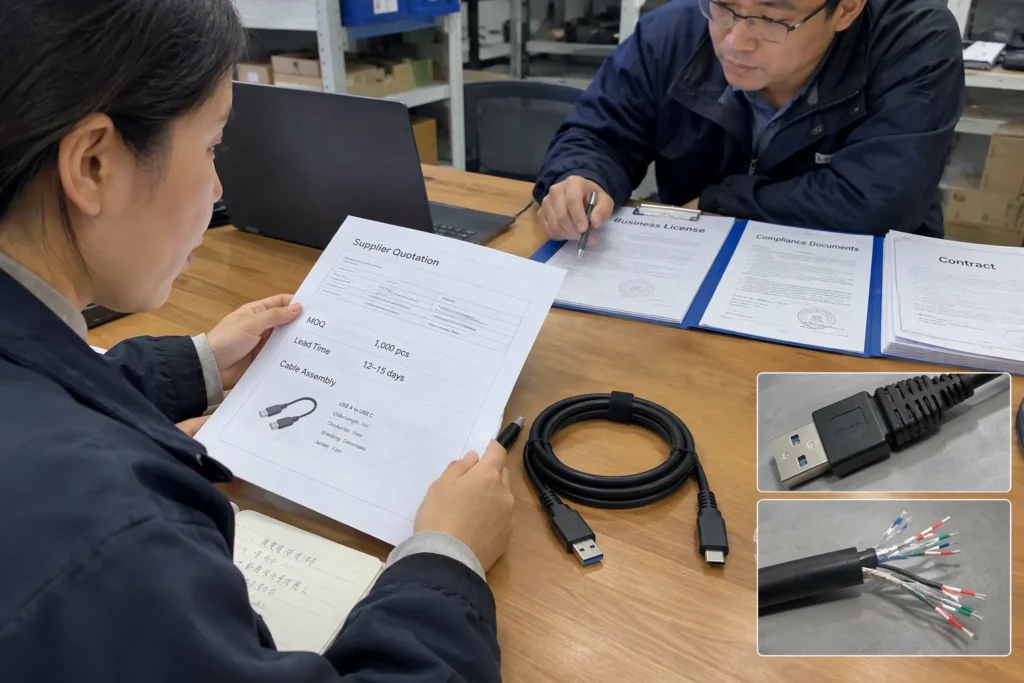
A small trial order and a large chain-store program may require different discussions. A factory or trading supplier may need to confirm tooling, packaging, component sourcing, inspection, and production scheduling before giving a firm price.
Compliance and documentation
European and American buyers often need documentation for internal approval, retail listing, or import procedures. I treat certification and compliance requirements as documents that buyers must verify for the specific product and market.
The inquiry should identify:
- Required market or country
- Applicable product category
- Required labels or markings
- Documentation requested by the retailer
- Test reports or declarations required by the buyer
- Material or packaging restrictions specified by the customer
- Whether the buyer needs documents for the complete assembly or individual components
I do not recommend copying a certification logo into a product listing without checking its scope, validity, issuing body, product model, and applicable market. A document for one cable model does not automatically prove compliance for another model.[8] Buyers should ask the supplier for current documents and have their own compliance professional review them where necessary.
How a supplier converts an inquiry into specifications
My role in an inquiry is often to convert commercial language into a workable product description. A buyer may say, “I need a durable cable for retail customers.” I then need to clarify what durability means in that application.
It might refer to:
- Frequent plugging and unplugging
- A reinforced connector housing
- A braided exterior
- A specific bend area
- Better protection during transport
- A longer service expectation
- A cable used in a store demonstration area
These requirements are not interchangeable. A visible braid may affect appearance and handling, but it does not by itself prove a particular service life.[6] A reinforced housing may improve mechanical protection, but the complete assembly still requires suitable design and quality control.[7]
I normally follow a practical sequence:
- Identify the connection. I record both devices and both connection ends.
- Identify the function. I separate charging, data, audio, video, and other requirements.
- Check available products. I compare the inquiry with existing assemblies and documented options.
- Identify gaps. I note missing device information, unclear functions, or conflicting requirements.
- Discuss customization. I review connector housing, cable construction, branding, packaging, and other changes.
- Confirm samples and documents. I establish what the buyer must approve before mass production.
- Prepare a quotation. I include MOQ, lead time, packaging, price conditions, and assumptions.
This sequence reduces the chance that a low initial price will later change because the original inquiry left out important requirements.
Existing cable assembly or custom development?
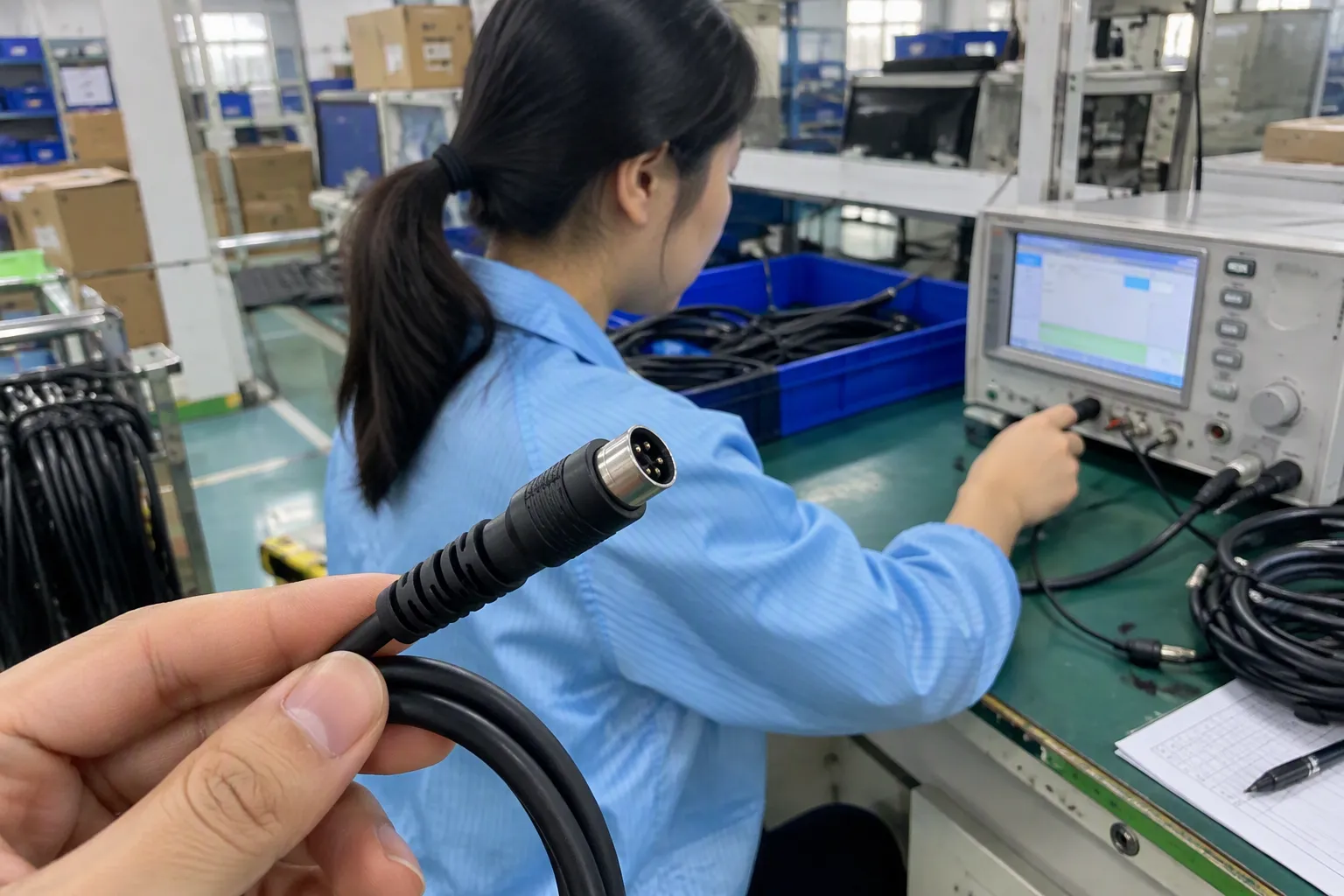
Many buyers want to know whether they should select an existing product or request customization. I use the following general comparison.
| Option | Advantages | Points for buyers to confirm |
|---|---|---|
| Existing assembly | Faster quotation and sampling; lower development complexity | Confirm device compatibility, available colors, packaging, MOQ, and documents |
| Minor customization | Better branding or retail presentation; may use established components | Confirm tooling, MOQ, sample approval, and production lead time |
| New customized assembly | Better fit for a specific device or application | Confirm engineering review, tooling cost, testing, sample schedule, and minimum volume |
An existing product can be commercially attractive, but it still needs application review. A customized product can solve a specific requirement, but customization can affect cost and lead time. I recommend that buyers decide based on the device list and intended use instead of assuming that customization is always better.
A practical inquiry template
I suggest that buyers send a message similar to the following:
We need a cable assembly for [device model at end A] and [device model at end B].
End A uses [connector description]. End B uses [connector description].
The required function is [charging/data/audio/video/other].
The finished cable length should be [length], with [color, jacket, braid, connector, and branding requirements].
The expected quantity is [sample quantity and estimated order quantity].
The product will be sold in [market/country] with [packaging type].
Please confirm whether you have an existing suitable assembly or recommend customization. Please also provide available product specifications, applicable documents, MOQ, sample lead time, production lead time, and quotation conditions.
This format does not guarantee compatibility. It gives the supplier enough information to begin a responsible review.
How buyers should evaluate the supplier’s reply
A useful supplier reply should do more than provide a unit price. I look for a response that repeats the important assumptions and identifies open questions.
Buyers should check whether the supplier has confirmed:
- Both device models
- Both connection ends
- Intended function
- Cable length and tolerance
- Product construction
- Sample availability
- MOQ
- Lead time
- Packaging
- Branding requirements
- Documentation scope
- Inspection or approval process
- Any limitations or items requiring verification
A supplier that immediately calls a product “compatible with everything” without asking about the devices may be moving too quickly. A careful supplier should identify uncertainty instead of hiding it.
Samples, approvals, and production control
I recommend that buyers approve a representative sample before placing a larger order, especially when the product is customized or sold under a private label. The approval record should identify the model, visual appearance, packaging, markings, length, and the functions that the buyer expects to verify.
The buyer and supplier should agree on how the sample will be reviewed. Depending on the product and application, this may include:
- Visual inspection
- Connector fit with the specified devices
- Basic charging or connection checks
- Data or signal checks where applicable
- Cable length and appearance
- Packaging and labeling review
- Documentation review
- Quantity inspection before shipment
The exact test method should come from the product specification, customer requirement, applicable standard, or qualified professional. I do not treat an informal check with one device as proof of compatibility with every model in a product family.
For repeat orders, the buyer should also control changes. A different connector component, cable material, mold, supplier, or packaging method can affect the final product. Buyers should ask how the supplier manages component changes and whether approval is required before a change enters production.
Common procurement mistakes
I see several recurring mistakes in cable assembly inquiries:
-
The buyer specifies only the connector and length.
The supplier lacks the device and function information needed for a meaningful review. -
The buyer assumes the same connector means the same capability.
The physical interface may not define the complete electrical or data function.[5] -
The buyer uses “universal” without a compatibility list.
The product may not meet the expectations of every device the buyer has in mind. -
The buyer requests a low price before confirming specifications.
A later change to cable construction, packaging, documents, or testing can alter the quotation. -
The buyer approves appearance but not function.
A visually correct sample still needs application-specific checks. -
The buyer treats a component document as a complete product certificate.
Documents must be checked for the exact model and relevant scope. -
The buyer does not define after-sales expectations.
Warranty handling, defect evidence, replacement terms, and reporting procedures should be discussed before the order. -
The buyer does not distinguish trial quantity from forecast quantity.
MOQ, tooling, price, and production planning may depend on expected volume.
I believe a good inquiry prevents many of these problems before the purchase order is issued.
Frequently Asked Questions
Are consumer electronics cable assemblies interchangeable when the connectors look the same?
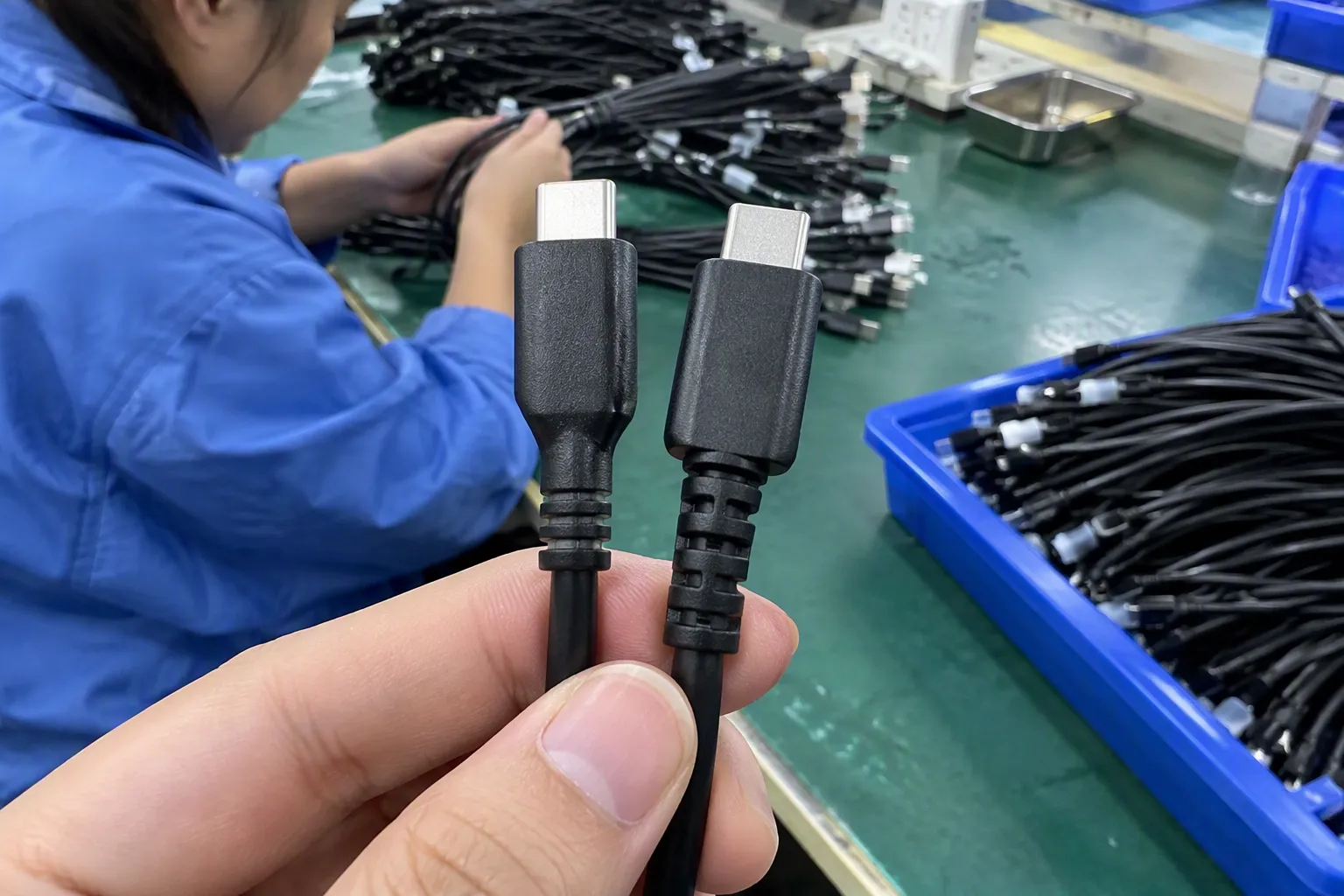
No. A matching connector shape confirms only that the plug may physically fit. The cable may have a different internal configuration or may not support the intended charging, data, audio, or video function. Buyers should identify both connected devices and verify the required function through product documentation or appropriate testing.
What information should I send when requesting a cable assembly quotation?
I recommend sending both device models, both connector ends, required function, finished length, construction preferences, quantity, target market, packaging, branding, and requested documents. Buyers should also explain whether they need an existing product or a customized assembly.
How can I confirm whether a cable supports data or video?
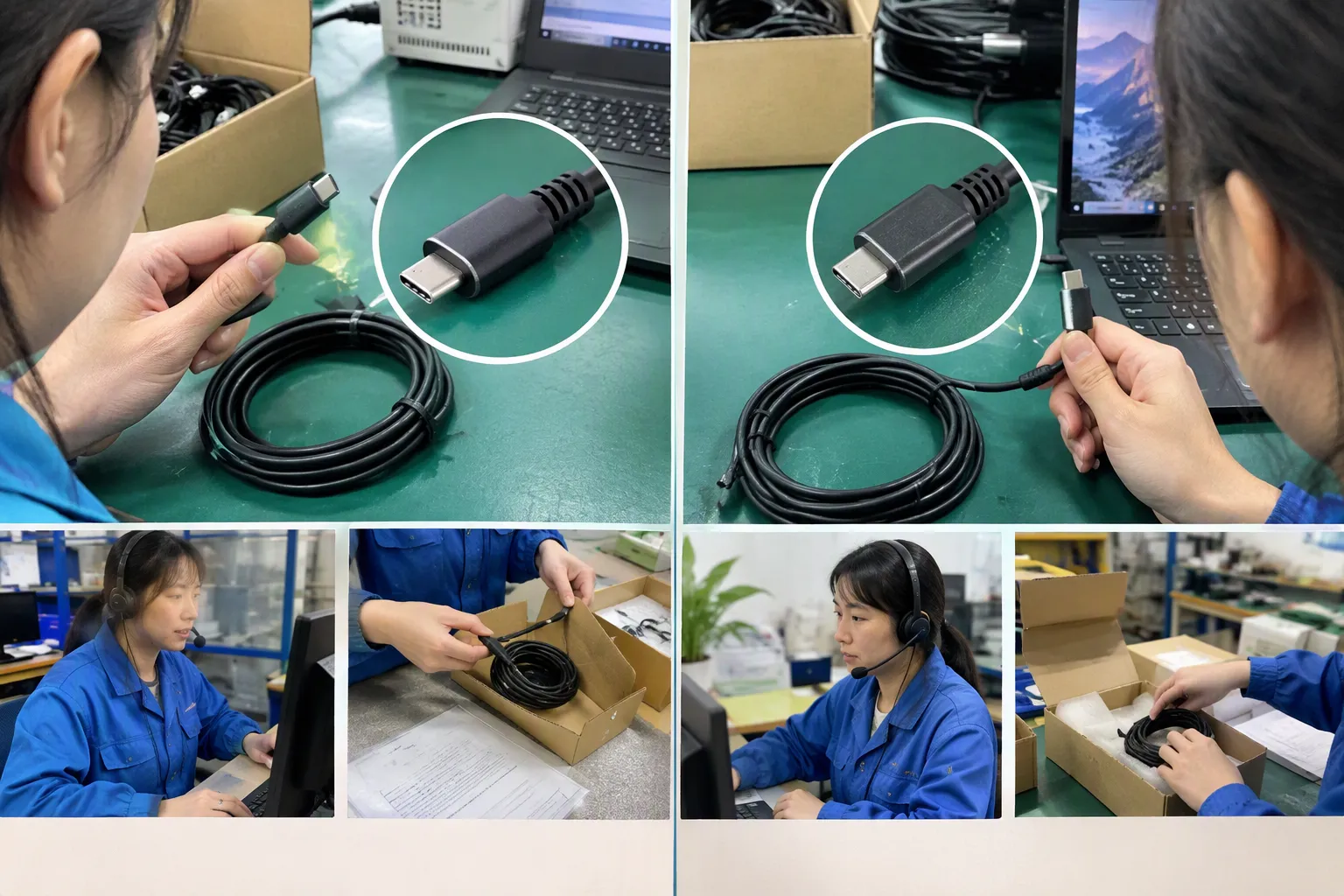
The buyer should identify the exact source and receiving devices, review their documentation, and ask the supplier for product specifications or test evidence relevant to that connection. A qualified technical professional may need to evaluate application-specific requirements. A connector name alone does not confirm data or video capability.
Should I order samples before placing a production order?
I generally recommend samples for new, customized, private-label, or application-specific assemblies. The buyer should approve the physical specification, packaging, documentation, and relevant connection checks before mass production. The sample approval should clearly state what was reviewed and what remains subject to verification.
Can a supplier provide a universal cable assembly for several device models?
A supplier may be able to offer an assembly for a defined list of devices, but the buyer should not rely on the word “universal” by itself. The buyer should provide a compatibility list and confirm the intended functions and limitations for each device model.
Conclusion
Consumer electronics cable assemblies require more than a connector name and a length. I recommend that buyers begin with the two devices, the two connection ends, and the function they need to guarantee. They should then confirm construction, quantity, packaging, documentation, samples, and production controls. This approach gives suppliers a clearer basis for quotation and helps retailers reduce compatibility complaints and costly rework. If you are preparing an inquiry for the European or American market, I can help organize your requirements into a practical specification for supplier review.
Sources
- What is USB-C DisplayPort (DP Alt Mode) and Why it Matters", A USB Type-C specification distinguishes the reversible connector and receptacle from separately negotiated power and alternate-mode capabilities, supporting the distinction between physical fit and functional compatibility
- Cables and Adapters", Technical analyses of USB-C systems report that successful physical connection does not alone establish charging, data-transfer, or alternate-mode operation, because those outcomes depend on cable construction, device capabilities, and protocol negotiation
- Cable Assembly Requirements", Interface standards and certification guidance treat connector dimensions as distinct from electrical ratings, signaling modes, and protocol support; consequently, matching geometry alone is not evidence of the cable's complete performance
- Revised 508 Standards and 255 Guidelines", Consumer-protection guidance generally treats compatibility claims as requiring clear identification of the products and conditions to which they apply, supporting the use of a defined compatibility list rather than an unrestricted universal claim
- A Primer on USB Type-C and Power Delivery Applications ...", Interface architecture references distinguish the mechanical connector from the electrical signaling and communication protocols carried through it, supporting the claim that a physical interface does not by itself define complete function
- Mechanical Response of a Tubular Braided Cable with an ...", Cable durability studies evaluate service life through controlled flexing, bending, abrasion, and strain-relief tests, indicating that a braided outer covering is not by itself a validated measure of endurance
- Strain Relief in Cable Assemblies", Cable and connector reliability literature identifies housing and strain-relief design as contributors to mechanical protection but evaluates reliability at the complete-assembly level through controlled construction and testing
- Equipment Authorization", Government conformity-assessment guidance generally requires technical documentation and declarations to identify the product and applicable configuration, so evidence for one cable model cannot automatically be treated as evidence for a different model