Quick Answer
Capacitor lifetime in chargers is a practical concern for importers because early charger failures can lead to returns, warranty costs, and damage to a retailer’s reputation. A component datasheet may look reassuring, yet the finished charger can face very different heat, load, and usage conditions. Buyers need better questions, not just better headline specifications.
Capacitor lifetime in chargers cannot be converted directly from a datasheet’s rated hours into guaranteed years of product service. The realistic reliability outlook depends on the capacitor’s specified operating conditions, the charger’s internal temperature, ripple-current stress, load profile, assembly consistency, and the supplier evidence available for review. Buyers should assess the complete charger and verify supporting documents in context.
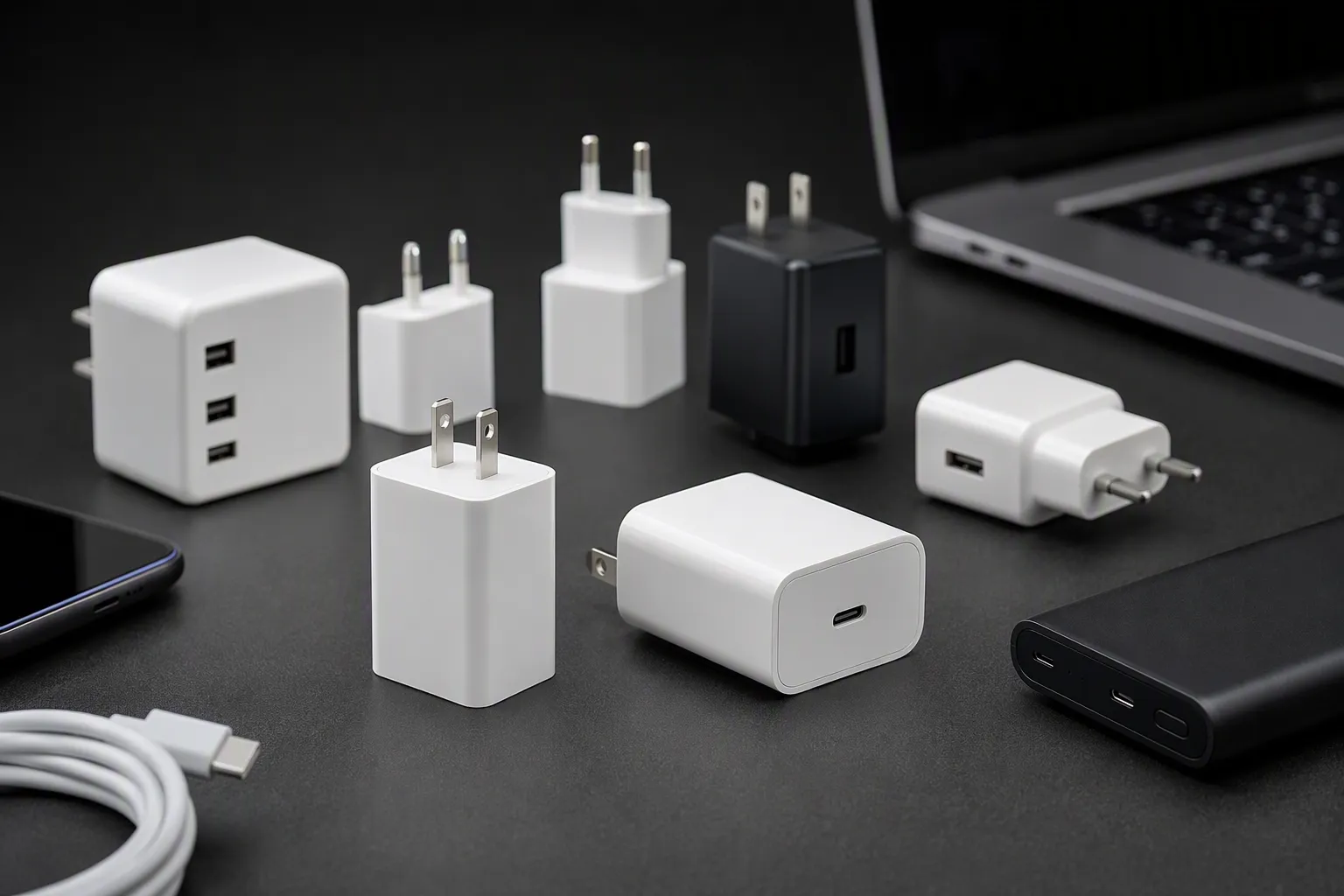
In our pre-sales and supplier-review discussions, we often see buyers compare wattage, USB ports, GaN claims, packaging, and price first. Those factors matter, but they do not answer the reliability question by themselves. The more useful approach is to connect component information with the charger’s actual design, intended use, and quality-control process.
Capacitor Lifetime in Chargers Is Not a Simple “Hours-to-Years” Specification
A supplier may quote a capacitor endurance figure that sounds precise, such as a stated number of operating hours at a given temperature. That number can create false confidence when it is presented without context. Buyers may then assume it represents a finished charger’s service life under every real-world condition.
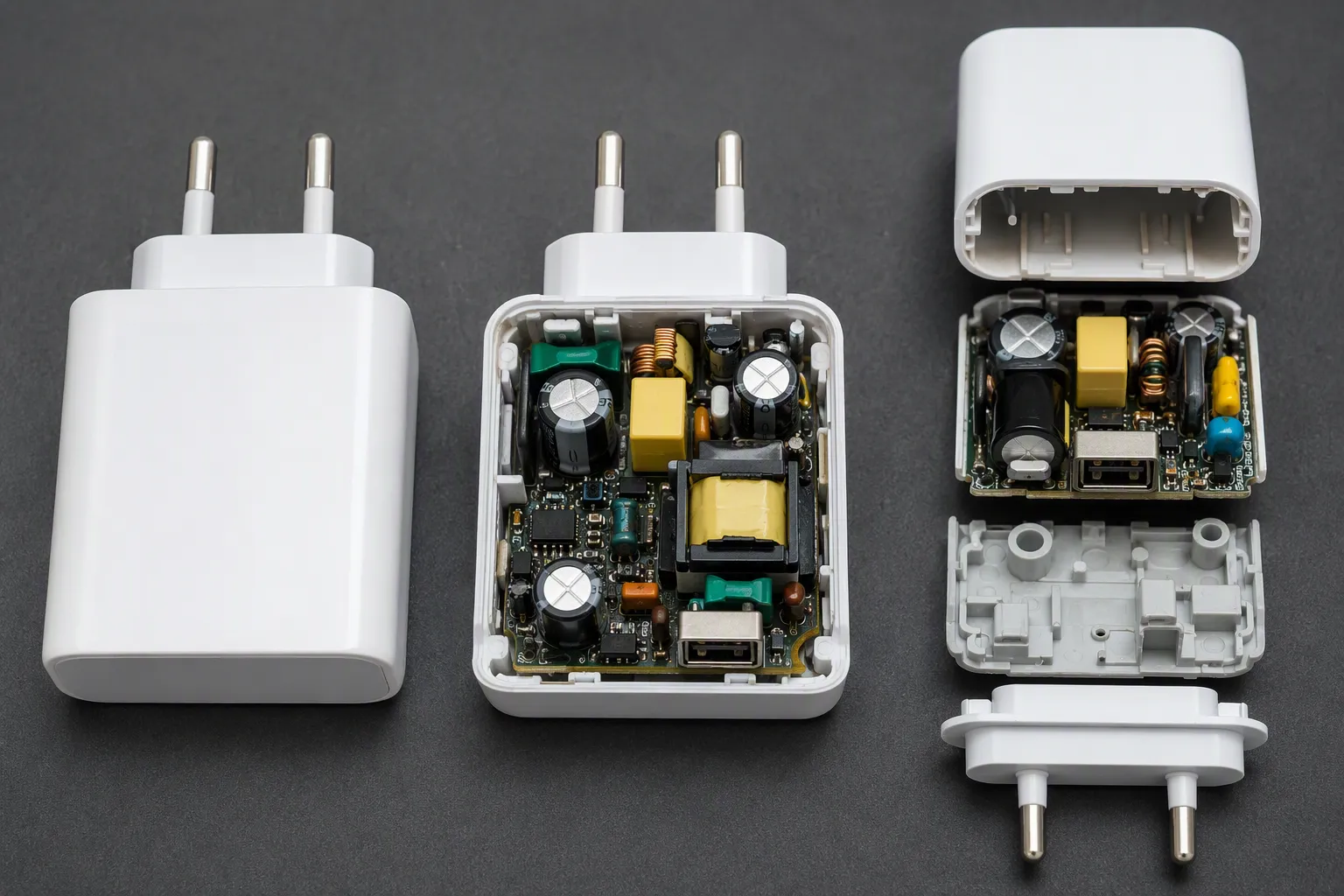
Capacitor lifetime in chargers should be treated as a conditional reliability indicator, not as a universal years-of-use promise.[1] A capacitor’s rated endurance is normally tied to defined test conditions, while a finished charger experiences its own thermal design, output loading, input environment, airflow, and production variation. Buyers should request the conditions behind every lifetime claim.
Why Rated Hours Need Context
A capacitor datasheet can contain valuable information, but it is only one part of the evaluation. The stated endurance value generally relates to a particular test setup.[2] The exact details depend on the component type and manufacturer, but buyers should expect conditions such as:
- Specified ambient or component temperature
- Rated voltage or a defined voltage condition
- Specified ripple-current condition, where applicable
- Defined test duration
- Post-test acceptance criteria
- Capacitance, ESR, leakage, or other parameter limits after testing
That information helps a technical reviewer understand what the component manufacturer has evaluated. It does not, by itself, prove that the charger will operate at the same temperature or electrical stress during everyday use.
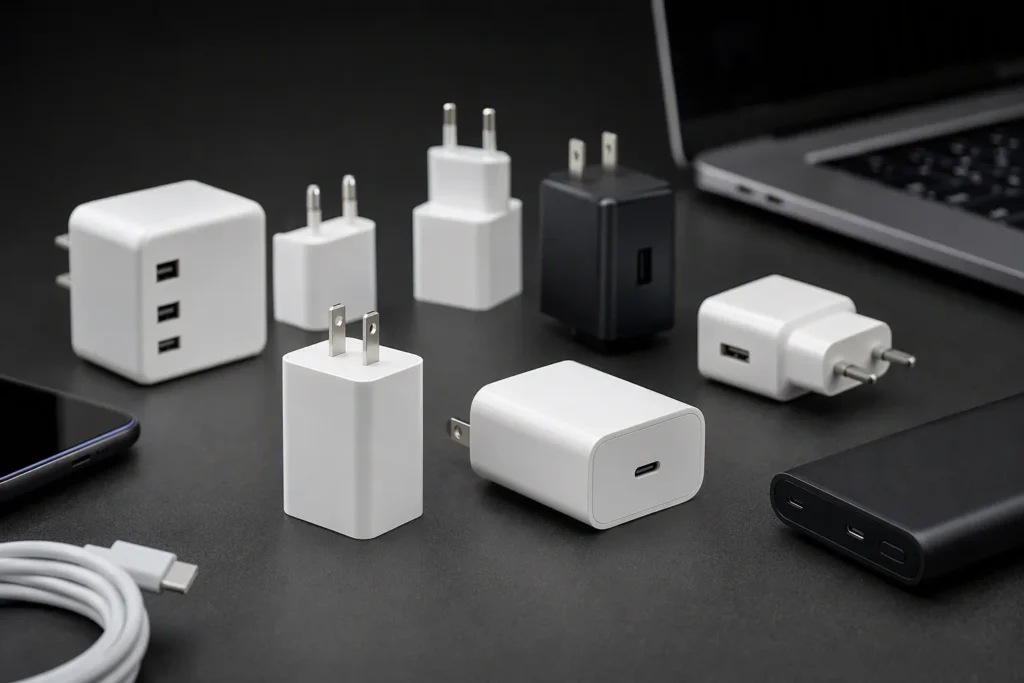
For example, a compact multi-port charger may run differently when one port supplies a low-power device than when several ports operate near the product’s total rated output. A 20 W wall charger, a 65 W GaN charger, and a desktop charging station can have very different internal layouts, ventilation conditions, conversion stages, and user load patterns. Even products with the same output rating may not have the same thermal behavior.
This is why we encourage buyers to avoid asking only, “How many hours is the capacitor rated for?” A stronger question is:
“Please provide the capacitor model and datasheet, the rated endurance conditions, and an explanation of how the charger design and expected operating conditions relate to those conditions.”
That wording does not demand that a trading supplier act as an engineering laboratory. It simply asks the supplier to provide traceable information and to explain the scope of its claim.
Capacitor Lifetime in Chargers Depends on Heat Exposure
Heat is one of the most important issues in any discussion of capacitor lifetime in chargers. Buyers do not need to become component specialists, but they should recognize that a capacitor’s surrounding temperature and internal heating can affect reliability expectations.
A charger’s internal temperature can be influenced by many design and use factors:
| Factor | Why It Can Matter to Reliability | Buyer Question |
|---|---|---|
| Charger wattage | Higher power can create more heat if the design does not manage losses well.[5] | What is the intended continuous output condition? |
| Number of ports | Simultaneous charging may change internal power distribution and heat generation. | Is the product evaluated at combined output load? |
| Housing size | Small enclosures can limit heat dissipation. | What thermal information is available for this enclosure? |
| AC input range | Input conditions may affect operating stress in the power circuit. | Which input range is covered by the product design? |
| Ambient environment | A charger used in a hot room, vehicle, or enclosed socket area may run warmer. | What operating environment does the supplier specify? |
| Cable and device behavior | Real charging demand changes over time and may not match a simple label claim. | What use case is assumed for continuous operation? |
The key point is simple: the temperature printed in a component document is not automatically the temperature inside the finished charger[3]. A buyer should not accept a broad statement such as “high-temperature capacitor, so the charger will last many years” without supporting context.
In our supplier-review discussions, we ask whether the supplier can provide thermal or design information where available. The answer may be limited, especially for standard catalog products, but the response is still useful. A supplier that can identify the product revision, explain the intended load condition, and provide consistent technical documents is usually easier to evaluate than a supplier that relies only on a sales statement.
Ripple Current Is a Workload Question, Not a Marketing Feature
Ripple current is another term that buyers may hear in charger discussions. It relates to changing electrical current in the power circuit. Depending on the circuit position and capacitor type, ripple stress can contribute to heating[4] and affect how demanding the operating environment is for the component.
The practical procurement lesson is not that every buyer must calculate ripple-current margins. Most importers will not have enough circuit information to do that responsibly, and they should involve a qualified engineer or independent laboratory when the application requires it.
Instead, buyers should treat ripple current as a reminder that a component’s workload depends on the actual charger design. A capacitor cannot be evaluated only by its brand name, capacitance value, or voltage marking.
Useful supplier questions include:
- Which capacitor series and model are specified for the relevant production version?
- Can you provide the manufacturer datasheet or a traceable specification sheet?
- What output-load condition is used when the charger’s performance is evaluated?
- Does the product have different component options for different wattages or markets?
- What production controls prevent unauthorized component substitution?
- Can the supplier explain whether the listed capacitor is on the approved bill of materials for the quoted version?
These questions are especially important when buyers compare several suppliers offering chargers that appear almost identical from the outside. The USB-C port count, output label, and housing shape may look similar. The internal component selection, assembly process, and document control may not be similar at all.
Capacitor Lifetime in Chargers Cannot Be Proven by a Brand Name Alone
A named capacitor brand can be relevant information. It may help a buyer identify a component manufacturer and request the right documentation. However, a brand name is not independent proof of the finished product’s long-term durability[6].
The same rule applies to statements such as:
- “Japanese capacitor”
- “Industrial-grade component”
- “Premium capacitor”
- “Long-life design”
- “High-temperature capacitor”
- “Selected components”
- “Top-quality materials”
These phrases may be accurate, incomplete, or used loosely in marketing. Buyers should ask what they mean for the specific charger model, production revision, and order.
A reliable review process separates component identity from whole-product evidence.
| Evidence Type | What It May Help Verify | What It Does Not Verify by Itself |
|---|---|---|
| Capacitor datasheet | Component ratings and stated test conditions | Finished charger temperature or service life |
| Component brand declaration | Claimed component source | Consistent use in every production batch |
| CE-related documentation[7] | Supplier documentation relating to applicable requirements | Long-term durability under all user conditions |
| RoHS documentation[8] | Material-restriction declarations within its stated scope | Electrical reliability or lifetime |
| Product test report | Results for the tested sample and stated conditions | Every future batch or every use case |
| Incoming inspection record | A supplier’s documented inspection process | Full lifetime validation of the charger |
| Production QC record | Defined checks completed during production | Absence of all latent defects |
| Independent inspection | Findings on sampled goods | Full validation of every internal component over time |
This distinction protects both buyers and suppliers. It prevents a purchasing team from over-reading a document, and it helps the supplier understand exactly what evidence is being requested.
What Supplier Evidence Should Buyers Request?
For capacitor lifetime in chargers, the best evidence is usually a package of documents and explanations rather than one “perfect” certificate. The right level of review depends on your product risk, order volume, target market, warranty commitment, and customer expectations.
For a standard retail charger, a buyer may begin with a practical documentation checklist:
- Product specification sheet with model number, output profiles, and input range
- Capacitor specification or datasheet for the stated production version
- Bill-of-material confirmation or a controlled component declaration, if the supplier can provide it
- Product test reports relevant to the destination market and product category
- CE-related and RoHS-related documents, reviewed for model coverage and issuer details
- Factory quality-control flow or inspection records
- Aging or burn-in process description, if the supplier uses one
- Production sample approval process
- Warranty terms and failure-handling procedure
- Packaging and traceability information, including lot or date coding where available
For a higher-risk program, such as a private-label charger for a major retailer, buyers may need more. They may request an independent inspection, sample disassembly by a qualified third party, additional laboratory assessment, or a documented pre-shipment quality plan.
We do not present document review as a replacement for independent technical validation. A supplier document can be helpful, but its meaning depends on who issued it, which model it covers, when it was issued, and whether the production version matches the sample or report.
A Better Procurement Workflow for Charger Reliability

A strong sourcing process turns a vague concern into a sequence of verifiable questions. In our experience supporting overseas buyers, the most productive conversations happen when reliability is discussed before final price negotiation, not after a quality issue appears.
1. Define the real use case
Start with the product’s intended buyer and sales channel.
Ask yourself:
- Will the charger be sold as a low-cost accessory or under a premium private label?
- Is it likely to charge one phone overnight, several devices at once, or a laptop during office use?
- Will customers use it in hotels, travel settings, homes, or commercial environments?
- What warranty period will your business offer?
- What return-rate threshold can your business absorb?
- Does your retailer require a supplier corrective-action process?
A charger intended for occasional low-load travel use should not automatically be evaluated the same way as a high-output desktop unit used daily.
2. Freeze the product version before reviewing documents
Many sourcing problems come from document mismatch. A supplier may share a report for one housing, one PCB revision, or one output configuration while quoting another version to the buyer.
Before document review, confirm:
- Model number
- Rated power
- Port configuration
- Plug type
- Housing material and color
- Cable inclusion, if any
- PCB or product revision, when the supplier uses revision control
- Target sales market
- Branding and packaging version
This step is not bureaucracy. It creates a clear link between the product you are buying and the evidence you are reviewing.
3. Ask for explanations, not only attachments
A folder full of PDFs can look impressive while still leaving critical questions unanswered. We recommend asking suppliers to identify each document’s purpose.
For example:
“Please confirm which document relates to electrical safety, which relates to material compliance, which relates to the capacitor specification, and whether each document covers the exact quoted model.”
This request encourages clarity. It also makes it easier for a buyer’s compliance team, third-party inspector, or external advisor to review the file set efficiently.
4. Compare evidence across suppliers using the same checklist
Price comparisons become more meaningful when every supplier answers the same questions. A lower quote may reflect a different component list, a different QC process, a different warranty scope, or simply less available evidence.
| Comparison Area | Supplier A | Supplier B | Buyer Review Point |
|---|---|---|---|
| Capacitor model identified | Yes / No | Yes / No | Is the information traceable? |
| Datasheet supplied | Yes / No | Yes / No | Are test conditions visible? |
| Product revision confirmed | Yes / No | Yes / No | Does it match the quotation? |
| QC process described | Yes / No | Yes / No | Are incoming and final checks stated? |
| Relevant reports available | Yes / No | Yes / No | Do model details match? |
| Warranty process defined | Yes / No | Yes / No | Who handles failures and how? |
| Sample consistency plan | Yes / No | Yes / No | Can production match approval samples? |
A table like this helps procurement teams avoid making decisions based only on unit price and claimed wattage.
5. Plan verification before mass production
If the project carries meaningful brand, warranty, or safety risk, build verification into the purchasing plan. Depending on the program, that may include:
- Pre-production sample approval
- Packaging and labeling review
- Third-party inspection before shipment
- Batch sampling plan
- Independent laboratory review where appropriate
- Clear defect definitions
- Agreed corrective-action expectations
- Lot traceability requirements
Qualified professionals should evaluate application-specific reliability, compliance, and safety questions. Importers should also verify current regulatory obligations for each destination market rather than relying on general supplier statements.
How We Frame These Questions With Charger Suppliers
As a Shenzhen 3C export trading company with 15 years of export experience, we work between overseas purchasing teams and suppliers. Our role is not to claim laboratory authority or promise a charger’s lifetime from a capacitor datasheet. Our role is to help buyers ask clearer questions and compare supplier responses on a consistent basis.
When discussing capacitor lifetime in chargers, we normally focus on practical points:
- Is the supplier willing to identify the relevant component specification?
- Does the supplier understand the difference between a component rating and a whole-product promise?
- Can the supplier explain the intended output and thermal use conditions?
- Are the provided reports and declarations linked to the quoted model?
- Is there a documented QC process for incoming materials, assembly, and final inspection?
- Can the supplier support reasonable customization, MOQ, lead-time, and after-sales requirements without changing the approved product configuration unexpectedly?
A supplier does not need to have every document immediately available to be a suitable partner. However, the supplier should be transparent about what is available, what is not available, and what each document can verify.
That honesty matters. It gives buyers a better foundation for deciding whether to accept a standard model, request additional verification, or select another supplier.
Frequently Asked Questions About Capacitor Lifetime in Chargers
Can I calculate charger service life from capacitor rated hours?
No. A capacitor’s rated hours are linked to stated test conditions and should not be converted directly into guaranteed charger service years. The finished charger’s operating temperature, electrical stress, load profile, design, production consistency, and user environment all affect the real reliability outlook.
Does a Japanese capacitor guarantee a durable charger?

No. A named capacitor brand may be useful for traceability and datasheet review, but it does not prove the durability of the complete charger. Buyers should also review the exact component model, the charger design, production controls, quality documents, and relevant product-level evidence.
Does CE or RoHS prove capacitor lifetime in chargers?
No. CE-related and RoHS-related documents have specific scopes. They should not be treated as proof of long-term charger durability or capacitor lifetime. Buyers should verify the document issuer, model coverage, date, and stated purpose, then review reliability evidence separately.
What should I ask a charger supplier about capacitor reliability?

Ask for the capacitor model and datasheet, the stated endurance conditions, confirmation that the component applies to the quoted product version, available thermal or design information, quality-control records, relevant reports, and a clear explanation of what each document does and does not verify.
Should I use an independent laboratory or inspector?
That depends on your product risk, order size, warranty exposure, and sales channel. For private-label programs, major retail accounts, or higher-output chargers, independent inspection or qualified professional evaluation can provide added assurance beyond supplier declarations and standard document review.
Conclusion: How to Assess Capacitor Lifetime in Chargers
Capacitor lifetime in chargers is best assessed as part of a wider sourcing and quality-control review. A rated endurance figure, capacitor brand, CE-related file, or RoHS declaration may provide useful information, but none should become a stand-alone durability promise. Buyers should connect component documents with actual operating conditions, product revisions, QC controls, and independent verification where needed. If you are sourcing USB chargers, GaN chargers, cables, or other 3C products for Europe or the United States, we can help you organize supplier questions, compare documentation, and build a more practical purchasing checklist.
Sources
- Aluminum Electrolytic Capacitors - General technical ...", Capacitor endurance ratings are determined under specified test conditions, including defined temperature, voltage, duration, and, where applicable, ripple-current conditions; they therefore do not by themselves constitute a guarantee of service life in a finished electronic product
- Aluminum Electrolytic Capacitors - General technical ...", International capacitor specifications define endurance testing by prescribed conditions and post-test parameter limits, rather than by an unrestricted statement of years of use
- Thermal Design Practices for Electronic Assemblies", Electronic-component operating temperatures depend on power dissipation, thermal resistance, enclosure and airflow conditions, and ambient temperature; a component rating alone does not establish the temperature reached in an assembled charger
- SMASIS2010-3862", Ripple current produces resistive power loss associated with a capacitor's equivalent series resistance, which can increase internal temperature and contribute to electrical and thermal stress
- Waste Heat Recovery Basics", In power-conversion equipment, the portion of input power not delivered as useful output is dissipated as loss, predominantly heat, making efficiency and thermal management relevant to higher-power operating conditions
- On Component Reliability and System Reliability for Space ...", Systems-reliability guidance treats product reliability as a function of component behavior, design integration, manufacturing quality, and operating environment; identification of one component manufacturer is therefore not independent proof of whole-product durability
- Compliance FAQs: CE Marking", The European Commission describes CE marking as the manufacturer's declaration that a product meets applicable EU requirements; it is not a stand-alone certification of long-term product durability
- European Union Reduction of Hazardous Substances ...", The EU RoHS framework addresses restrictions on specified hazardous substances in electrical and electronic equipment; its stated scope is material compliance rather than demonstration of electrical reliability or service lifetime