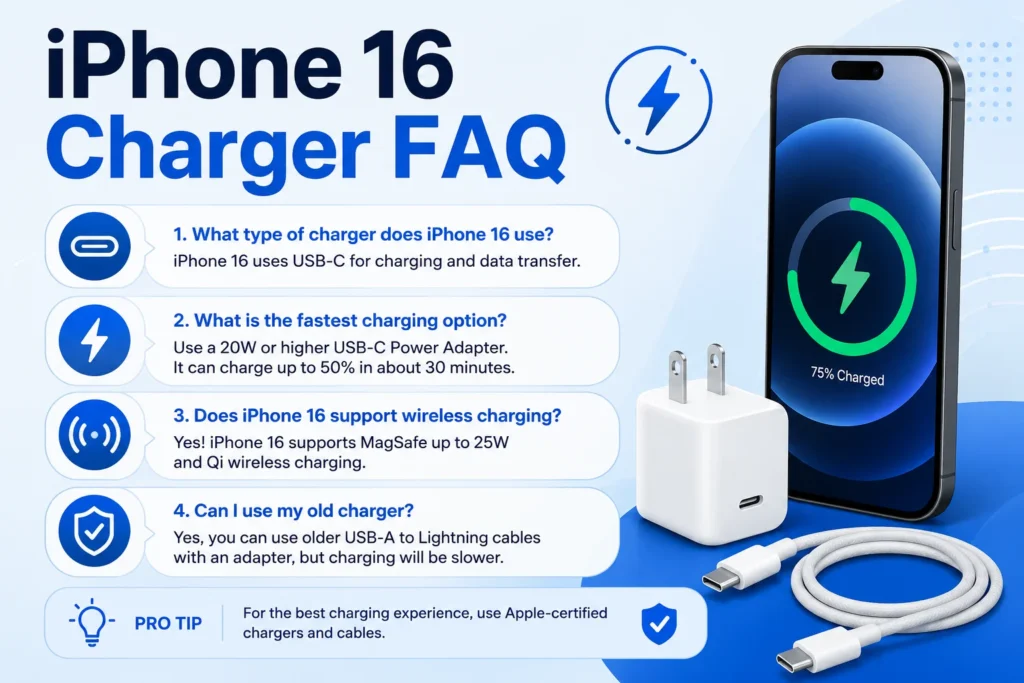
Worried about picking the wrong charger for your new iPhone 16? A bad choice could mean slow charging or even wasted money. Let's find the perfect wattage for you.
For most users, a 20W or 30W USB-C PD charger is best for the iPhone 16. A 20W charger is sufficient for fast charging, while a 30W charger offers the fastest possible speeds and better future-proofing for other devices without any risk.
Choosing the right wattage seems simple, but there's more to it than just a number. In my 15 years of exporting electronics, I’ve seen this confusion trip up so many customers. It's easy to get lost in the specs. So, let’s break down what these watts really mean for your new phone and clear things up together, so you can make a smart choice.
What Charging Wattage Does the iPhone 16 Actually Support?
Confused by all the charger specs? You see 20W, 30W, even 100W, but your iPhone won't use it all. It's frustrating not knowing the real limit. Let's clarify.
The iPhone 16 series is expected to support fast charging up to around 27W1. This means that while you can use higher-wattage chargers, the phone itself will only draw the maximum power it needs, thanks to the smart USB-C Power Delivery (PD) protocol2.
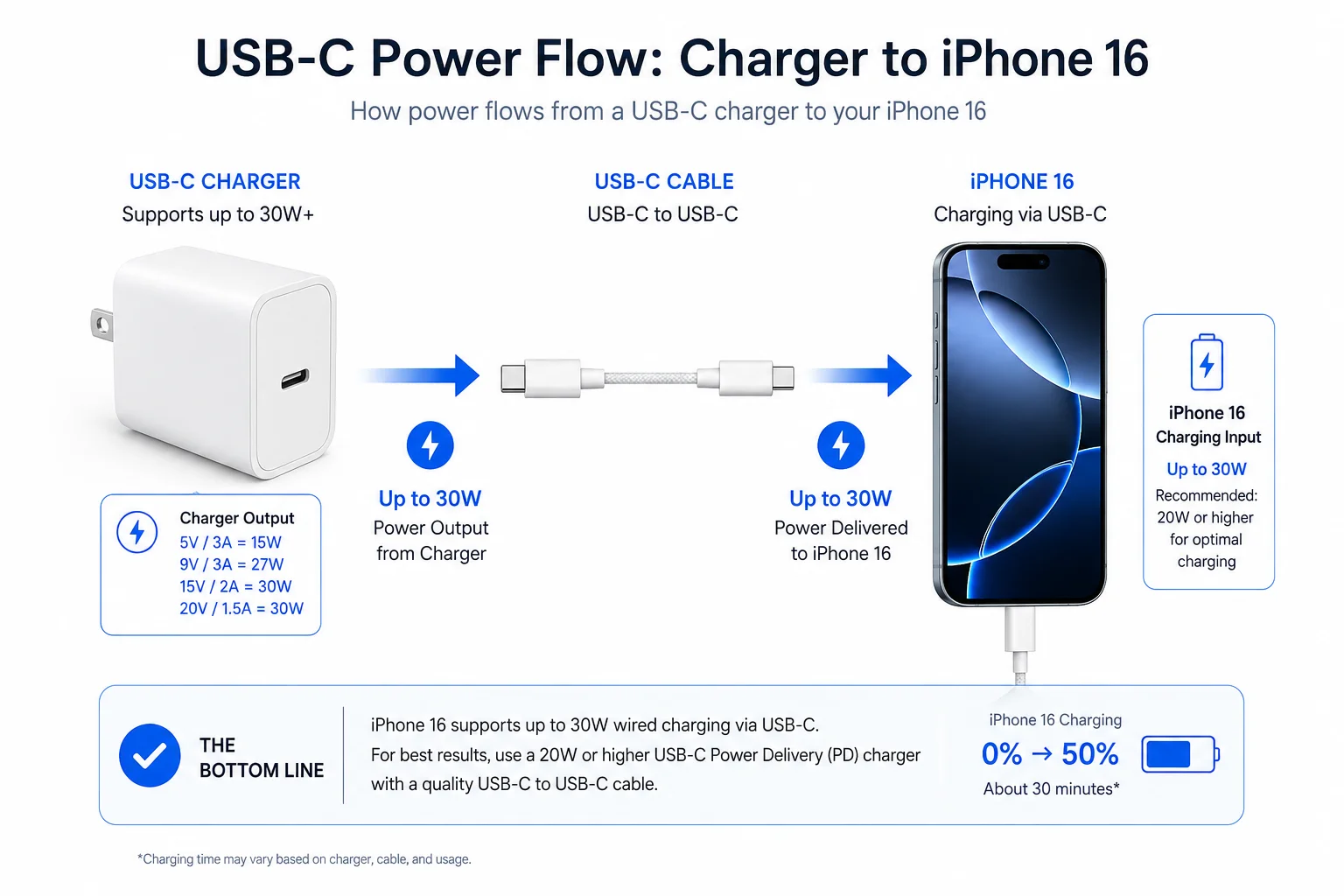
Fast charging works because of a technology called USB-C Power Delivery, or PD. Think of it as a smart conversation between your charger and your iPhone. The charger says what power levels it can offer, and the iPhone chooses the best one for its current battery level. The key thing to know is that your iPhone is in control. Based on previous models like the iPhone 15 Pro, the phone's maximum charging input is likely to be around 25W-27W. So, even if you plug in a powerful 100W laptop charger, the iPhone will simply tell it, "Thanks, but I'll just take about 27W." The charger's advertised wattage is its maximum output, not what it forces into your device. This protects your phone and makes the system incredibly safe and versatile.
Is a 20W USB-C Charger Enough for My New iPhone 16?
Wondering if that small 20W charger is powerful enough? You want fast charging, but you don't want to overspend or carry a bulky brick. Let's see if 20W cuts it.
Yes, a 20W USB-C charger is absolutely enough for the iPhone 16 for most daily use. It enables fast charging, getting your battery to around 50% in about 30 minutes3, and is typically compact, portable, and highly affordable.
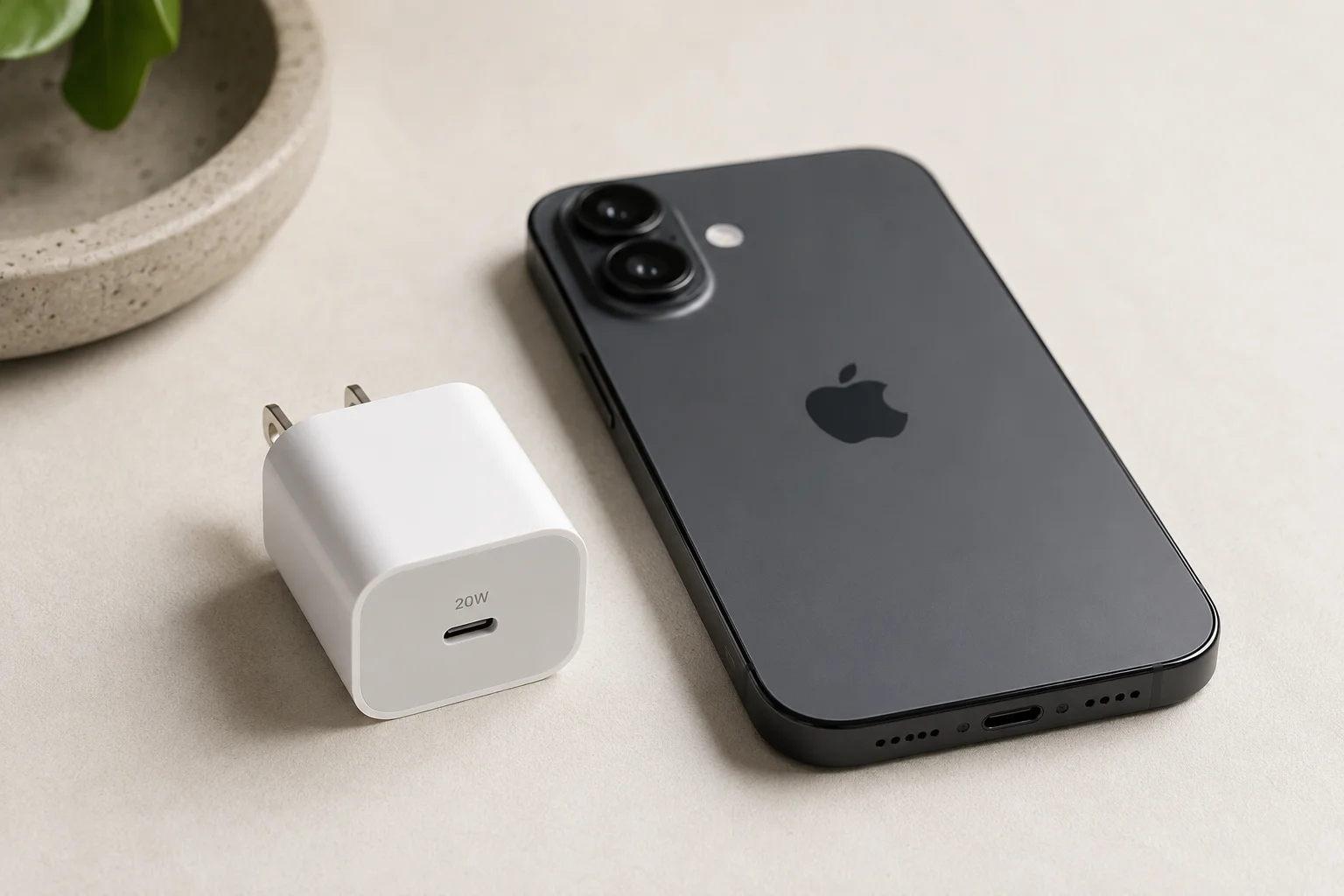
A 20W charger hits the sweet spot for what Apple officially considers "fast charging." It’s designed to deliver a quick power boost when you need it most. For example, if you're getting ready to go out and your phone is low, a 30-minute charge will give you plenty of power to last for hours. In my experience dealing with retailers in Europe and the US, the 20W charger is consistently a bestseller. Customers love it because it’s a huge step up from old 5W chargers, it's usually the smallest and lightest option, and it's very budget-friendly. It’s perfect for everyday situations like charging at your desk, by your bedside overnight, or throwing in a bag for a day out. It delivers on the promise of fast charging without any extra cost or bulk.
So, Is a 30W Charger a Better Choice for the iPhone 16?
You've heard that 30W might be better. But is the extra speed noticeable, or is it just a marketing gimmick? Let's figure out if the upgrade is worth your money.
A 30W charger is arguably a better overall choice for the iPhone 16. It allows the phone to charge at its absolute maximum speed (around 27W) and offers greater versatility for charging other devices like an iPad or MacBook Air, making it more future-proof.
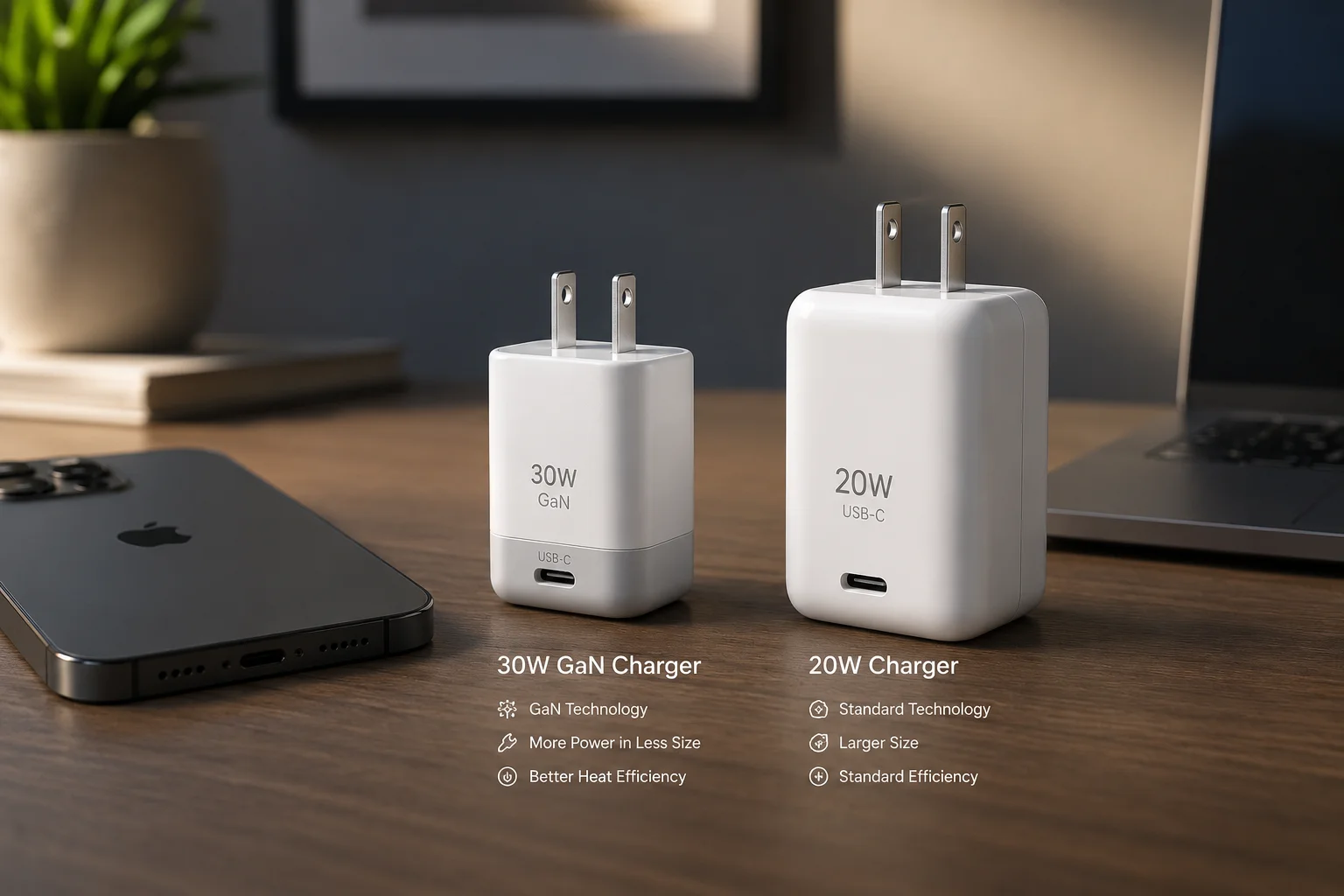
While a 20W charger is "enough," a 30W charger is "optimal." Because the iPhone 16 can likely draw up to 27W, a 30W charger allows it to reach that peak speed. This might only shave 10-15 minutes off a full 0-100% charge4, but the real benefit is versatility. A 30W charger is also powerful enough to fast-charge an iPad and even power a MacBook Air. It becomes a single, do-it-all charger for your most common Apple devices. Furthermore, a quality 30W GaN charger isn't much larger than a 20W one, and because it isn't running at its maximum capacity to charge an iPhone, it often operates cooler5. This slight overhead makes it a more efficient and robust choice for the long term.
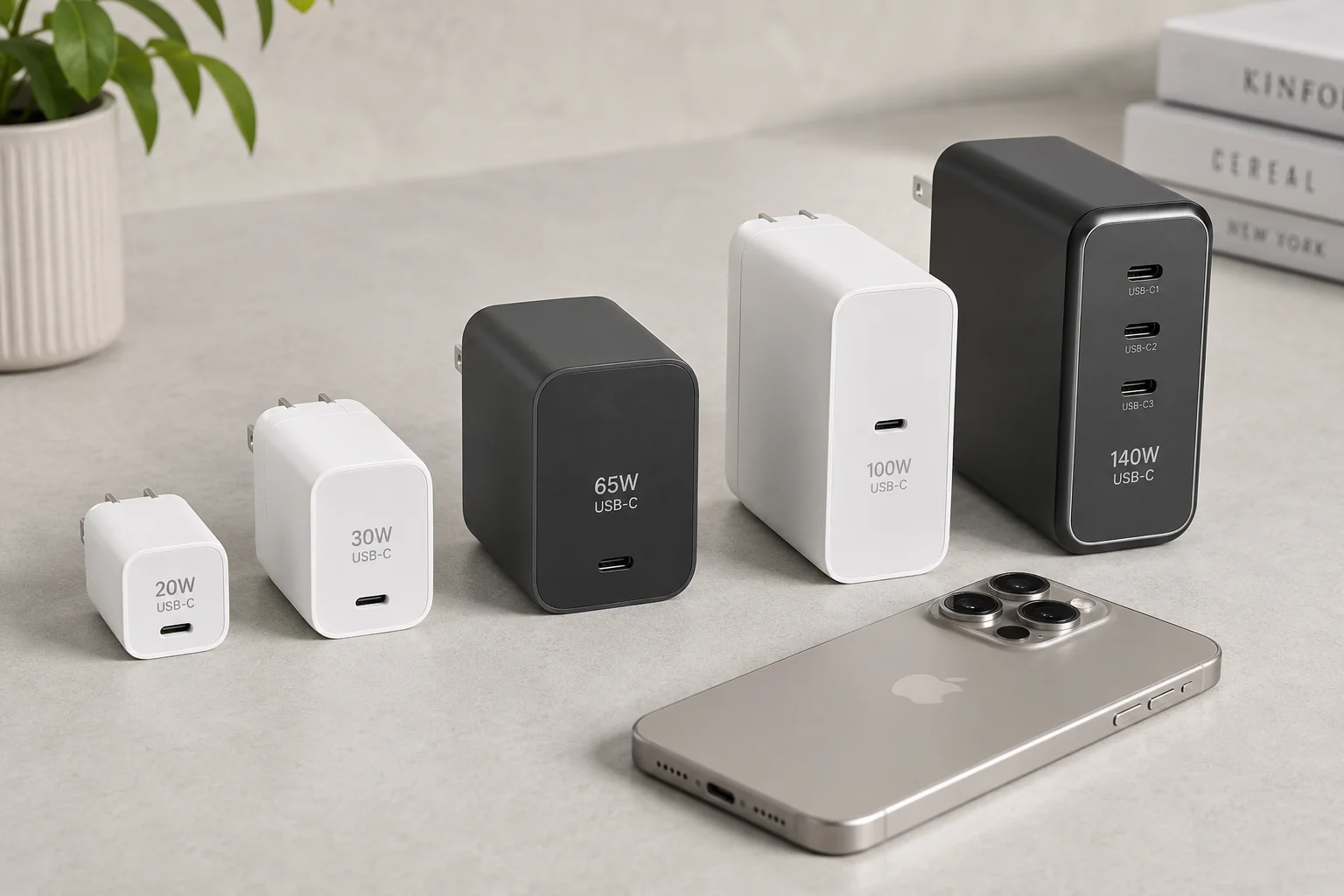
How Do 20W, 30W, and 45W Chargers Compare for the iPhone 16?
Stuck deciding between 20W, 30W, or even 45W? The options are confusing, and a wrong choice feels like a waste. Let's break down the real-world differences clearly.
For an iPhone 16, a 20W charger is the value baseline, 30W offers the best balance of speed and versatility, and a 45W charger gives no extra speed for the iPhone itself6 but is great if you also need to charge a compatible laptop.
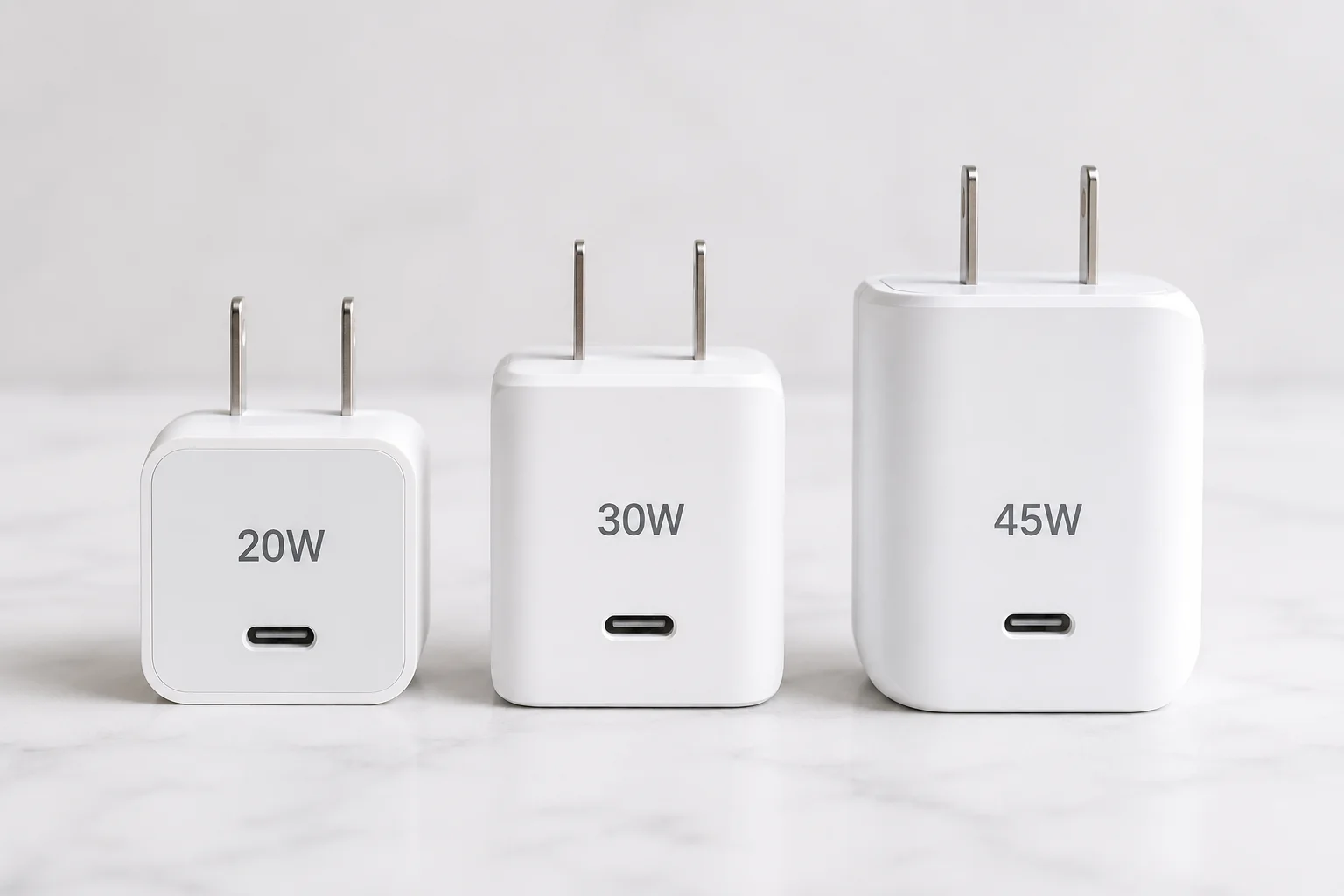
Choosing between these wattages is really about balancing your needs and your budget. There is no single "best" one for everyone. Let’s compare them directly to help you decide.
| Feature | 20W Charger | 30W Charger | 45W Charger |
|---|---|---|---|
| Charging Speed (iPhone) | Good (0-50% in ~30 min) | Excellent (Max possible speed) | Excellent (Same as 30W, no extra benefit) |
| Charger Size | Smallest | Very Small (especially GaN models) | Small to Medium |
| Heat Generation | Low to Medium | Low (often runs cooler than 20W) | Very Low (highly underutilized) |
| Device Compatibility | Phones, Accessories | Phones, iPads, MacBook Air | Phones, iPads, most Ultrabooks & MacBooks |
| Price and Value | Best value for iPhone only | Best overall value & versatility | Good value if you also own a compatible laptop |
| Travel Convenience | Excellent (most portable) | Excellent (one charger for multiple devices) | Very Good (can replace your laptop brick) |
As you can see, the 30W charger often emerges as the sweet spot. It unlocks the iPhone's top speed and covers other devices without adding much size or cost. A 45W charger only makes sense if you have a laptop that specifically benefits from that power level. For your iPhone alone, it’s overkill.
Is It Safe to Use a Powerful 65W USB-C Charger with My iPhone 16?
Have a 65W laptop charger and worried it will fry your new iPhone? The fear of damaging your expensive device is real. Let me put your mind at ease.
Yes, it is perfectly safe to use a 65W USB-C charger with the iPhone 16. The charger and phone communicate via USB Power Delivery (PD) to select the correct power level7, ensuring the phone never draws more power than it can handle.
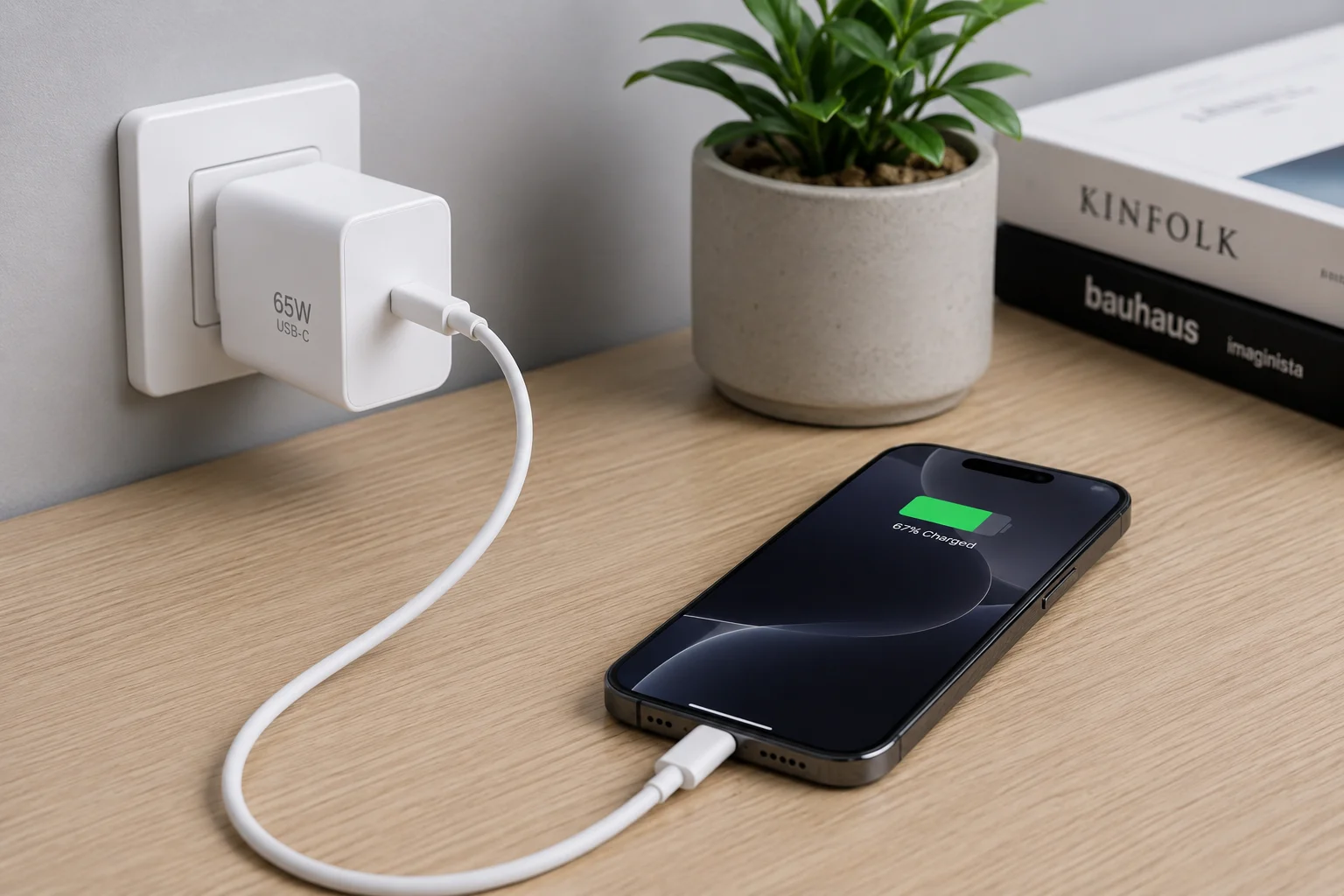
This is one of the most common questions my B2B clients ask. They worry that a high-wattage charger will act like a firehose and overwhelm the phone's battery. Thankfully, that’s not how USB-C PD works. The technology is built on a "negotiation." The 65W charger essentially tells the iPhone, "I have a lot of power available, up to 65W." The iPhone then responds, "Great, but I'm designed to take a maximum of about 27W, so that's all I'll pull." The system is smart and safe by design. Using a 65W charger for your iPhone is like driving a Ferrari in a 30 mph zone—the car has a lot more power, but it will only go as fast as the limit allows. So, feel free to use that laptop charger. It's a great way to carry one adapter for all your gear.
What Specific Type of USB-C Charger and Cable Do I Need for the iPhone 16?
It's not just about watts. PD, PPS, GaN, certified cables... the terminology is overwhelming. Buying the wrong type means you won't get the fast charging you paid for.
For optimal fast charging, you need a USB-C charger that supports the Power Delivery (PD) protocol. Pair it with a certified USB-C to USB-C cable. For the best performance, choose a charger with at least 20W and a cable rated for 60W or 100W8.
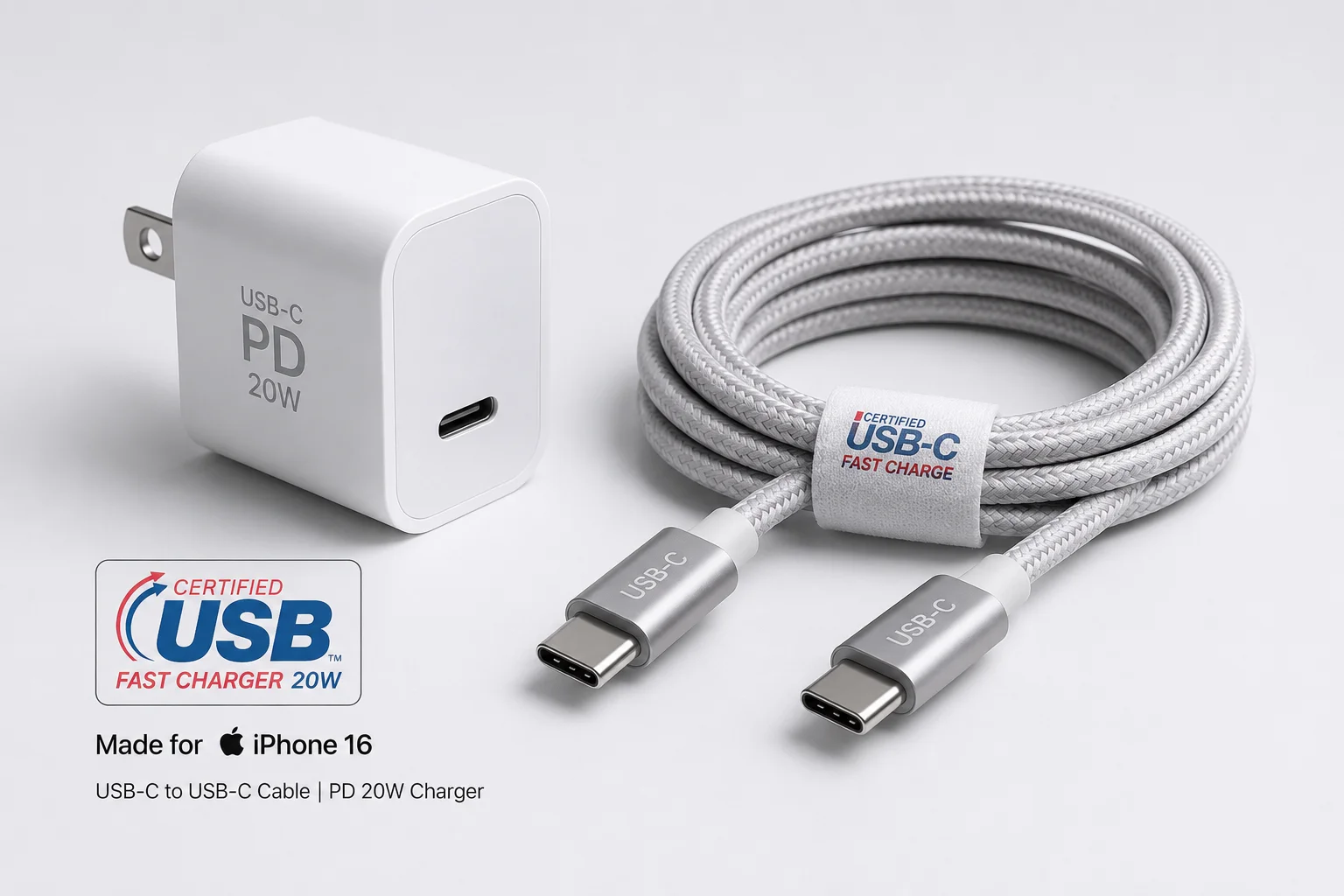
Let's quickly decode the key features to look for. First, USB-C Power Delivery (PD) is non-negotiable. This is the fast-charging technology that Apple uses. A charger without PD will charge your iPhone very slowly, like an old 5W brick. Second, you'll need a USB-C to USB-C cable. Since the iPhone 16 has a USB-C port, the old USB-A cables won't work for fast charging. The cable that comes in the iPhone box is perfect, but if you buy a new one, make sure it's from a reputable brand. Most standard USB-C cables are rated for at least 60W of power, which is more than enough. Finally, always look for safety certifications like UL, CE, or FCC on the charger. As an exporter, we live by these certifications. They guarantee the product has been tested for safety and won't damage your devices.
So, How Do I Actually Choose the Best USB-C Charger for My iPhone 16?
You know the specs, but how do you pick a specific product? With so many brands and features, choosing the right one can feel like a lottery. Here's a simple checklist.
Look for a charger with USB-C PD, at least 20W-30W, and GaN technology for a smaller size. Prioritize safety certifications (like UL, CE), consider the number of ports you need, and ensure you have a compatible USB-C to USB-C cable.
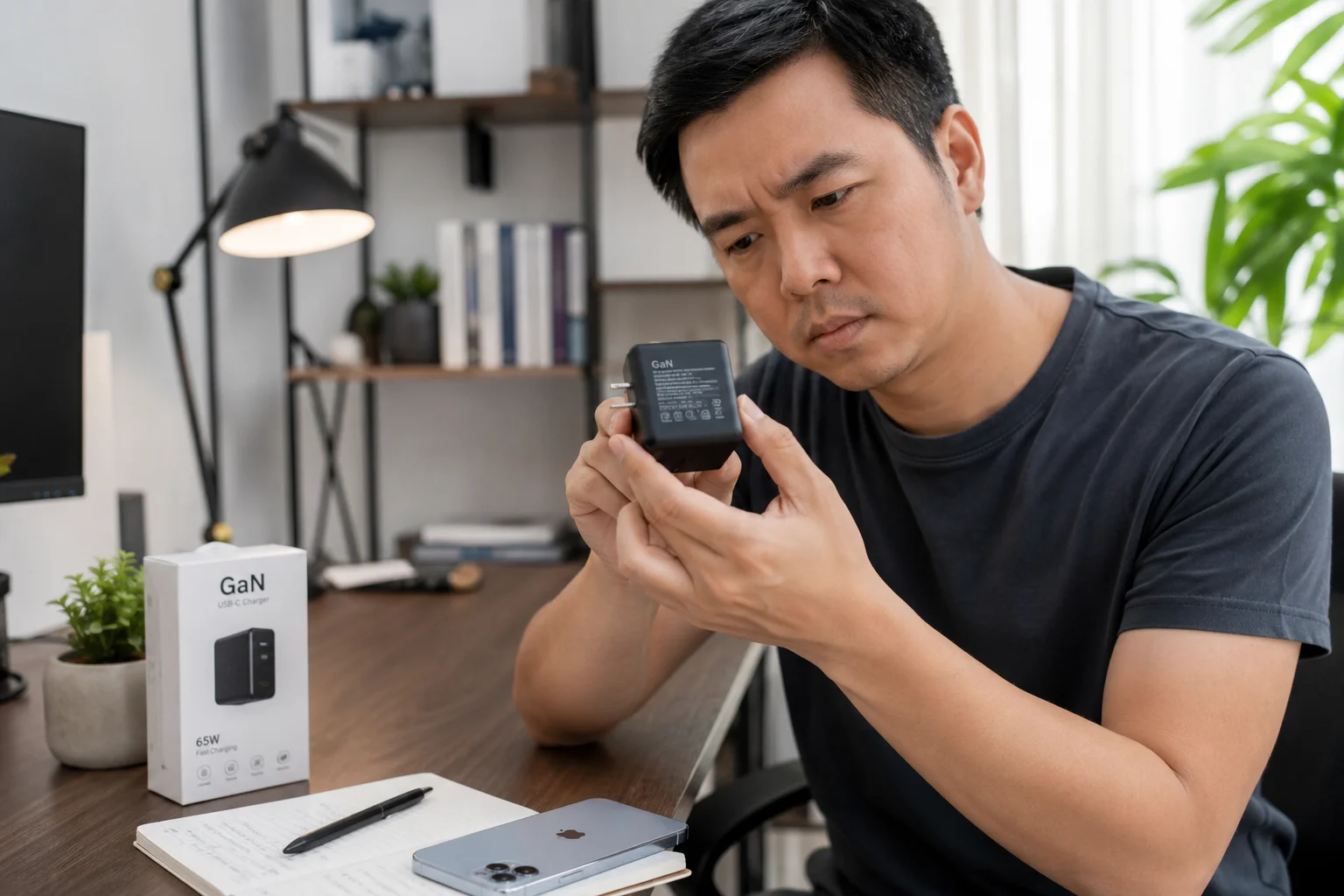
When you're ready to buy, just run through this mental checklist. It’s the same one I give to my clients who are sourcing chargers for their stores.
- USB-C PD Support: Make sure "Power Delivery" or "PD" is written on the box or in the product description. It's essential.
- Suitable Wattage: 20W is good, but 30W is the sweet spot for speed and versatility.
- GaN Technology: Look for "GaN" or "Gallium Nitride." These chargers are smaller, run cooler, and are more efficient than older silicon ones9. They are the modern standard.
- Safety Protections: A good charger will list protections against over-voltage, over-current, and short-circuiting. This is your device's insurance policy.
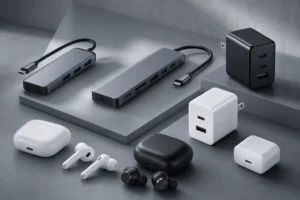
- Number of Ports: Do you only need to charge your phone, or your watch and headphones too? Multi-port chargers are incredibly convenient for reducing clutter.
- Plug Design: Consider a charger with a foldable plug if you travel often. It's a small detail that makes a big difference in a bag.
- Product Certification: Never buy a charger without safety marks like UL, CE, or FCC. It’s a major red flag.
- Cable Compatibility: Don't forget you need a good USB-C to USB-C cable to go with it!
Still Have Questions About Your iPhone 16 Charger?
You've learned a lot, but maybe some specific questions are still on your mind. Doubts can lead to hesitation or buying the wrong thing. Let's tackle them head-on.
A 30W charger is ideal for balancing speed and versatility. Higher wattages like 45W or 65W are safe but offer no extra speed for the iPhone itself. Always use a certified USB-C PD charger and a USB-C to USB-C cable.
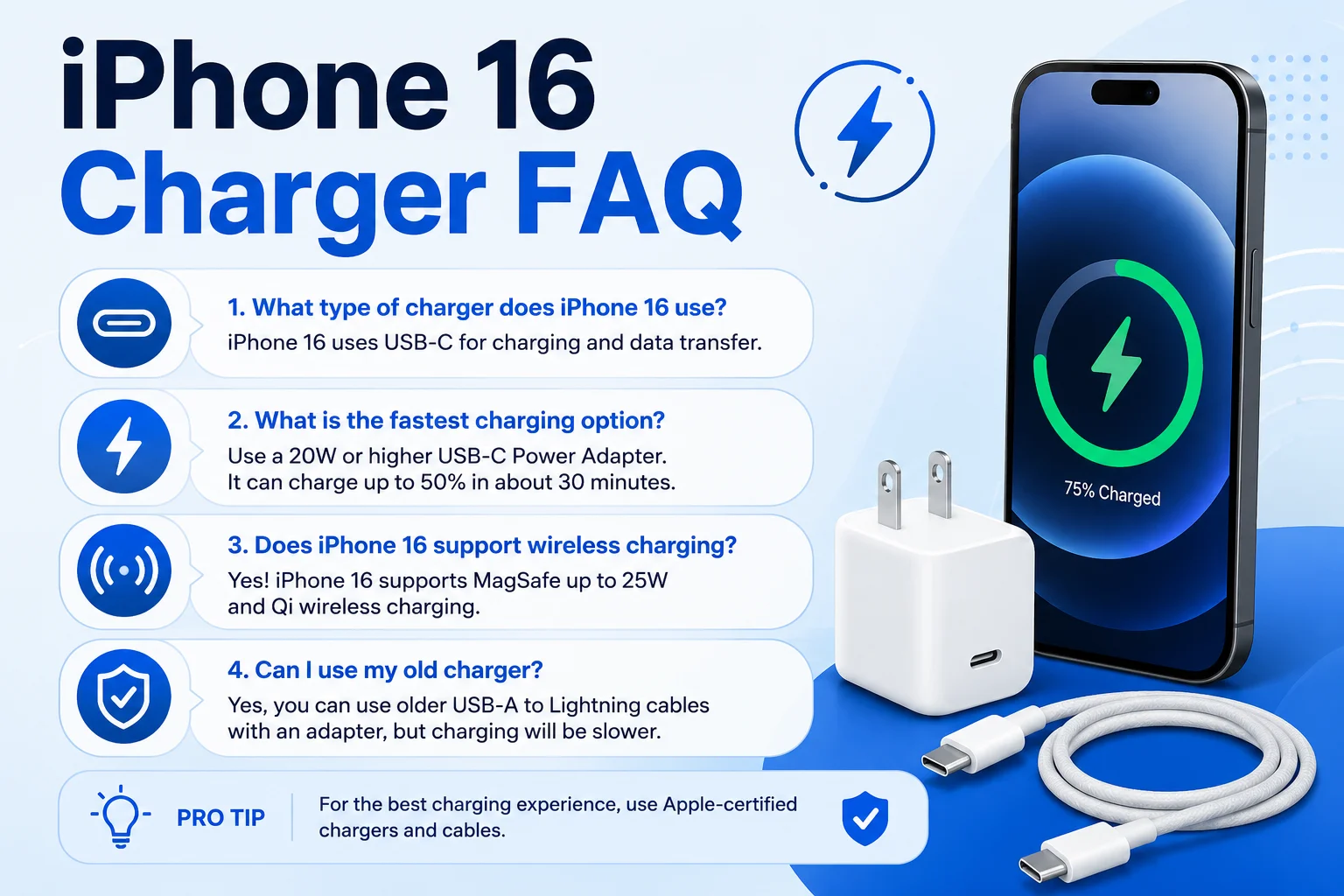
Here are quick answers to the most common questions I hear.
What watt charger is best for the iPhone 16?
A 30W USB-C PD charger is the best all-around choice. It provides the fastest possible charge for the iPhone and can also power other devices like an iPad.
Is 20W or 30W better for the iPhone 16?
30W is technically better as it allows the iPhone to reach its maximum charging speed. However, a 20W charger provides a very similar experience for daily use and is more budget-friendly.
Can I charge an iPhone 16 with a 45W charger?
Yes, it's 100% safe. The phone and charger will communicate to ensure the phone only draws the power it needs (around 27W max), so the extra wattage is simply ignored.
Is a 65W charger safe for the iPhone 16?
Yes, absolutely safe. The USB-C PD protocol is designed to prevent overcharging. A 65W charger is great if you want one adapter for your phone and laptop.
Does a higher-watt charger damage an iPhone battery?10
No. The phone's internal battery management system, not the charger, controls the charging speed and protects the battery's health. It slows down charging as the battery gets full to prevent stress.
Does the iPhone 16 come with a power adapter?
Almost certainly not. Following recent trends, Apple is expected to only include a USB-C to USB-C cable in the box11, requiring you to buy a charger separately.
What cable supports iPhone 16 fast charging?
Any quality, certified USB-C to USB-C cable will support fast charging. The one included with the iPhone will work perfectly.
Is a GaN charger better for the iPhone 16?12
Yes. GaN chargers are smaller, more energy-efficient, and generate less heat than older chargers. They are the superior technology and are highly recommended.
Conclusion
For your iPhone 16, a 20W or 30W USB-C PD charger is your best bet. Just ensure it's certified, and you'll have safe, fast charging every time.
"iPhone 15 Pro Max Charge Test: 35W vs 30W vs 20W vs ... - YouTube",
. A source that tests the charging performance of recent iPhone models, such as the iPhone 15 Pro, can show that they draw a peak power of approximately 26-27W from a compatible USB-C PD charger. Evidence role: statistic; source type: research. Supports: The claim is that the iPhone 16 will likely support ~27W charging. A source should provide evidence of the maximum charging wattage for a recent iPhone Pro model, which serves as the basis for this prediction.. Scope note: This evidence is based on previous models, as the iPhone 16's final specifications are not yet released. The actual performance of the iPhone 16 may differ. ↩"USB-C - Wikipedia", https://en.wikipedia.org/wiki/USB-C. A source from the USB Implementers Forum (USB-IF) or a technical encyclopedia can define the USB Power Delivery (PD) specification, which enables a flexible and safe power negotiation between a source (charger) and a sink (device). Evidence role: definition; source type: institution. Supports: The claim is that USB-C PD is a smart protocol. A source should define the USB Power Delivery standard and explain its role in managing power transfer between devices.. ↩
"About iPhone charge speeds", https://support.apple.com/en-us/120619. An official Apple support document or a third-party test can confirm that using a 20W or higher USB-C power adapter allows recent iPhone models to reach up to a 50% charge in approximately 30 minutes. Evidence role: statistic; source type: education. Supports: The claim is that a 20W charger achieves ~50% charge in 30 minutes. A source should confirm this fast-charging performance metric for a recent iPhone model.. Scope note: The exact time can vary based on the specific iPhone model, battery health, and ambient temperature. ↩
"charging Iphone 14 with 20w or 30w charger - Apple Communities", https://discussions.apple.com/thread/254935058. A source from a tech publication that has conducted comparative charging tests on a recent iPhone can show the time difference for a full charge cycle using 20W and 30W adapters, often demonstrating diminishing returns as the battery fills. Evidence role: case_reference; source type: research. Supports: The claim is that the time saved by using a 30W charger over a 20W one is minimal for a full charge. A source should provide comparative data from charging tests.. Scope note: The exact time saved depends on the iPhone's charging algorithm, which throttles speed as the battery approaches full capacity. ↩
"PSU: Efficiency Ratings Explained - Corsair", https://help.corsair.com/hc/en-us/articles/14641912717453-PSU-Efficiency-Ratings-Explained. A technical source on power supply efficiency can explain that many switching power supplies operate most efficiently (and thus generate less waste heat) when running at a fraction of their maximum rated load, rather than at 100% capacity. Evidence role: mechanism; source type: paper. Supports: The claim is that a less-stressed, higher-wattage charger can run cooler. A source should explain the efficiency curve of power supplies.. Scope note: This is a general principle; the actual thermal performance depends on the specific design and quality of the chargers being compared. ↩
"Does using 65W or any higher than 30W charging brick damage ...", https://www.reddit.com/r/iphone/comments/1di50l6/does_using_65w_or_any_higher_than_30w_charging/. A comparative test from a reputable tech site can demonstrate that while an iPhone can be safely charged with a 45W or higher-wattage adapter, its internal charging system limits the power draw to around 27W, resulting in no speed increase over a 30W charger. Evidence role: case_reference; source type: research. Supports: The claim is that chargers over ~30W offer no speed benefit for an iPhone. A source should provide test data to support this.. ↩
"USB-C - Wikipedia", https://en.wikipedia.org/wiki/USB-C. A technical document from an organization like the USB-IF or an engineering publication can explain the USB Power Delivery handshake, where the charger advertises its power capabilities and the device requests a specific voltage and current profile that it can safely accept. Evidence role: mechanism; source type: institution. Supports: The claim is that USB PD involves a communication process for safety. A source should explain this power negotiation.. ↩
"USB hardware", https://en.wikipedia.org/wiki/USB_hardware. A source on USB-C specifications can clarify that standard, non-e-marked USB-C to USB-C cables are required to support at least 3A of current, which allows for up to 60W of power delivery at 20V, well above the needs of an iPhone. Evidence role: definition; source type: encyclopedia. Supports: The claim is that standard USB-C cables are rated for high power. A source should explain the power standards for these cables.. ↩
"Trouble understanding GaN charger benefits : r/UsbCHardware", https://www.reddit.com/r/UsbCHardware/comments/zx1ht7/trouble_understanding_gan_charger_benefits/. A source from a university, research institution, or reputable science publication can explain that Gallium Nitride (GaN) has a wider bandgap than silicon, allowing it to handle higher voltages and frequencies in a smaller space with less energy loss as heat, leading to more compact and efficient power adapters. Evidence role: mechanism; source type: education. Supports: The claim is that GaN technology enables smaller, more efficient chargers. A source should explain the material science behind this.. ↩
"iPhone battery and performance - Apple Support", https://support.apple.com/en-us/101575. A source from Apple or a battery research expert can confirm that a device's battery management system (BMS) is responsible for regulating the charging current and voltage to protect the battery's health and longevity, regardless of the charger's maximum wattage. Evidence role: expert_consensus; source type: government. Supports: The claim is that a high-wattage charger is not harmful to the battery. A source should explain how the device, not the charger, manages battery health.. ↩
"iPhone 15 - Wikipedia", https://en.wikipedia.org/wiki/IPhone_15. An official product page or support document for a recent model like the iPhone 15 on Apple's website shows that the device ships with a USB-C Charge Cable but no power adapter, a practice that began with the iPhone 12 series. Evidence role: historical_context; source type: other. Supports: The claim is that Apple no longer includes chargers with iPhones. A source should confirm the box contents of a recent model.. Scope note: This is based on past behavior; Apple's decision for the iPhone 16 is not officially confirmed until its release. ↩
"How does fast charging with GaN compare to traditional chargers?", https://www.reddit.com/r/UsbCHardware/comments/1kaobrz/how_does_fast_charging_with_gan_compare_to/. A technical review or article from an electronics-focused publication can provide an analysis of Gallium Nitride (GaN) technology, concluding that its higher efficiency and power density make it a superior choice for compact, high-power consumer chargers compared to older silicon technology. Evidence role: general_support; source type: research. Supports: The claim is that GaN chargers are a better technology. A source should provide an expert analysis supporting this.. ↩