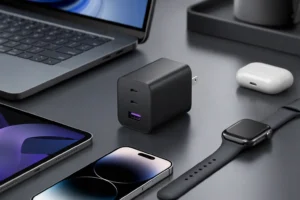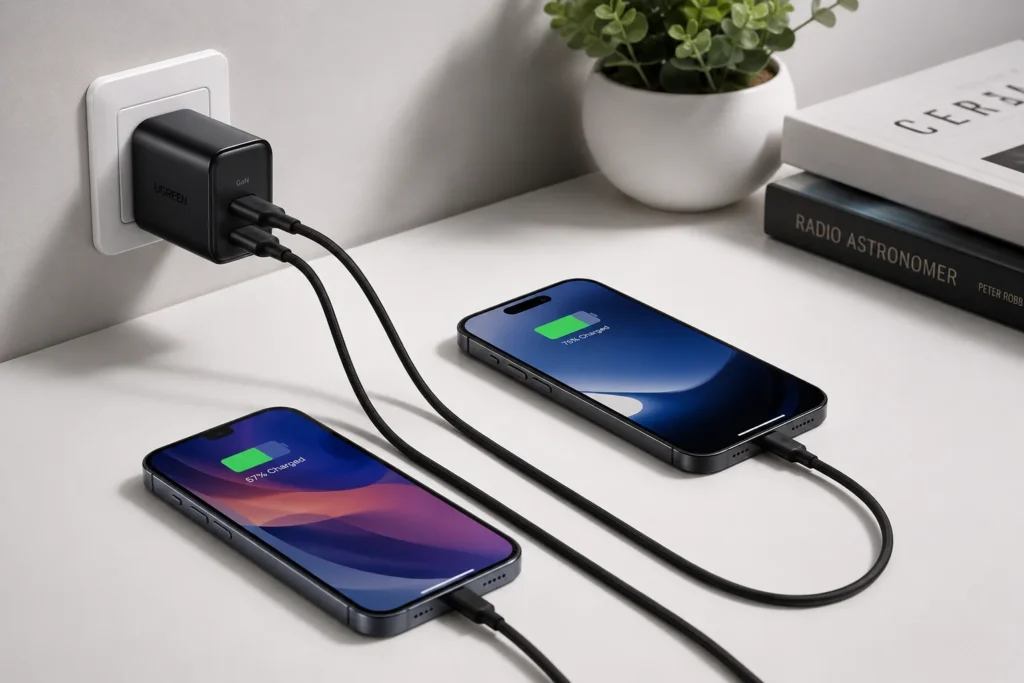
Tired of carrying multiple chargers for your and your partner's iPhones? This clutter is frustrating and leads to slow charging. A single, powerful GaN charger1 is the solution.
A 45W or 65W dual USB-C GaN charger is your best option for two iPhone 16s. A 45W model is compact and perfectly capable of fast charging both. A 65W charger provides more stable power, runs cooler, and can also charge an iPad or MacBook.
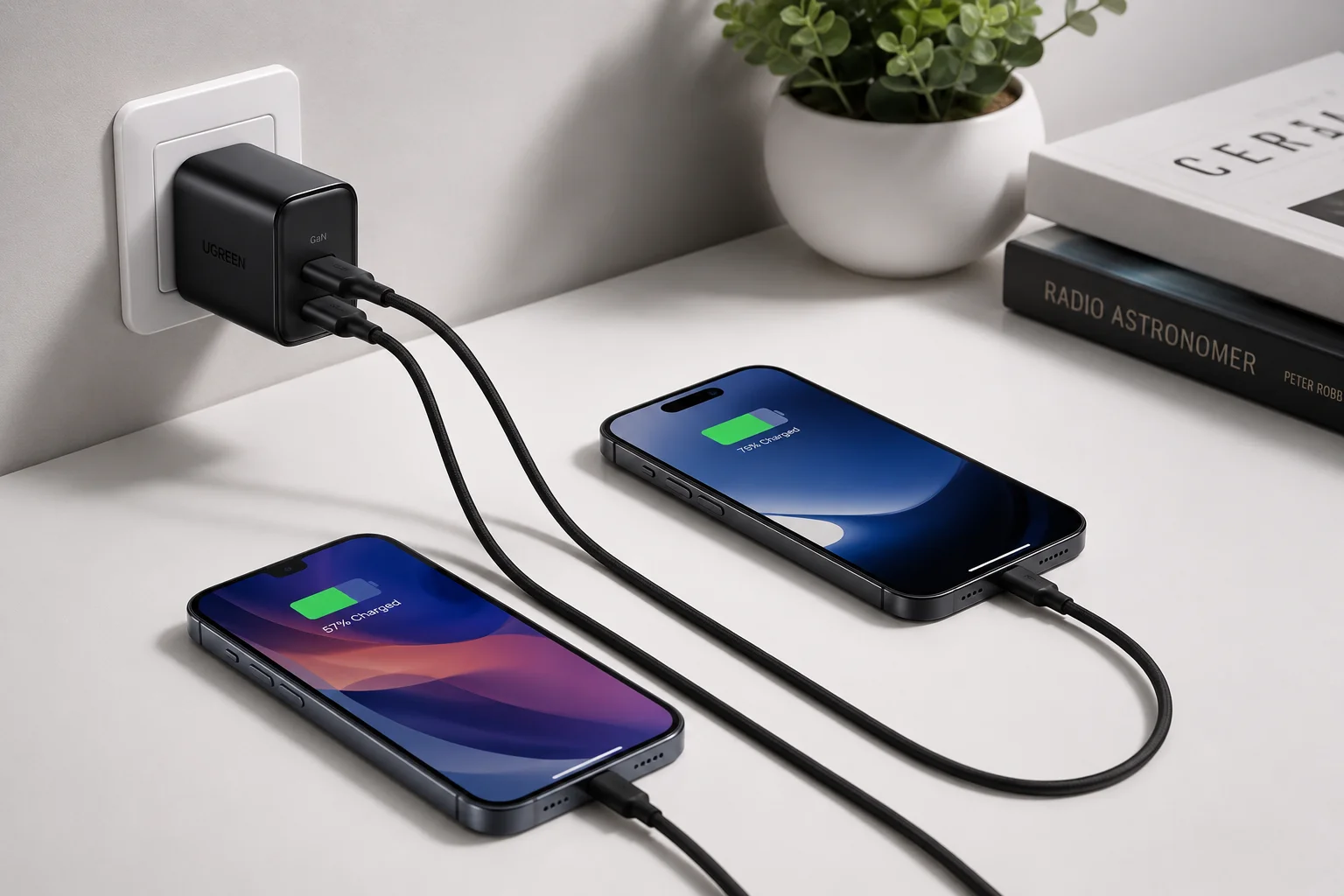
Choosing the right charger seems easy, but the details matter. Wattage, power distribution, and even the cable you use can make a huge difference. I've been in the 3C accessory business for over 15 years, and I've seen how a small mismatch can lead to a bad charging experience. Let's break down exactly what you need to look for to find the perfect charger for your two new iPhones.
What Wattage GaN Charger Do You Need for Two iPhone 16 Devices?
Confused about how much power you really need? It is not as simple as adding two numbers together. Choosing the wrong total wattage means slow charging for one or both phones.
You need a dual-port charger with a total output of at least 40W. An iPhone 16 requires about 20-27W to fast charge2. Since dual-port chargers split their total power, a 40W minimum ensures both devices can receive enough power to fast charge simultaneously.
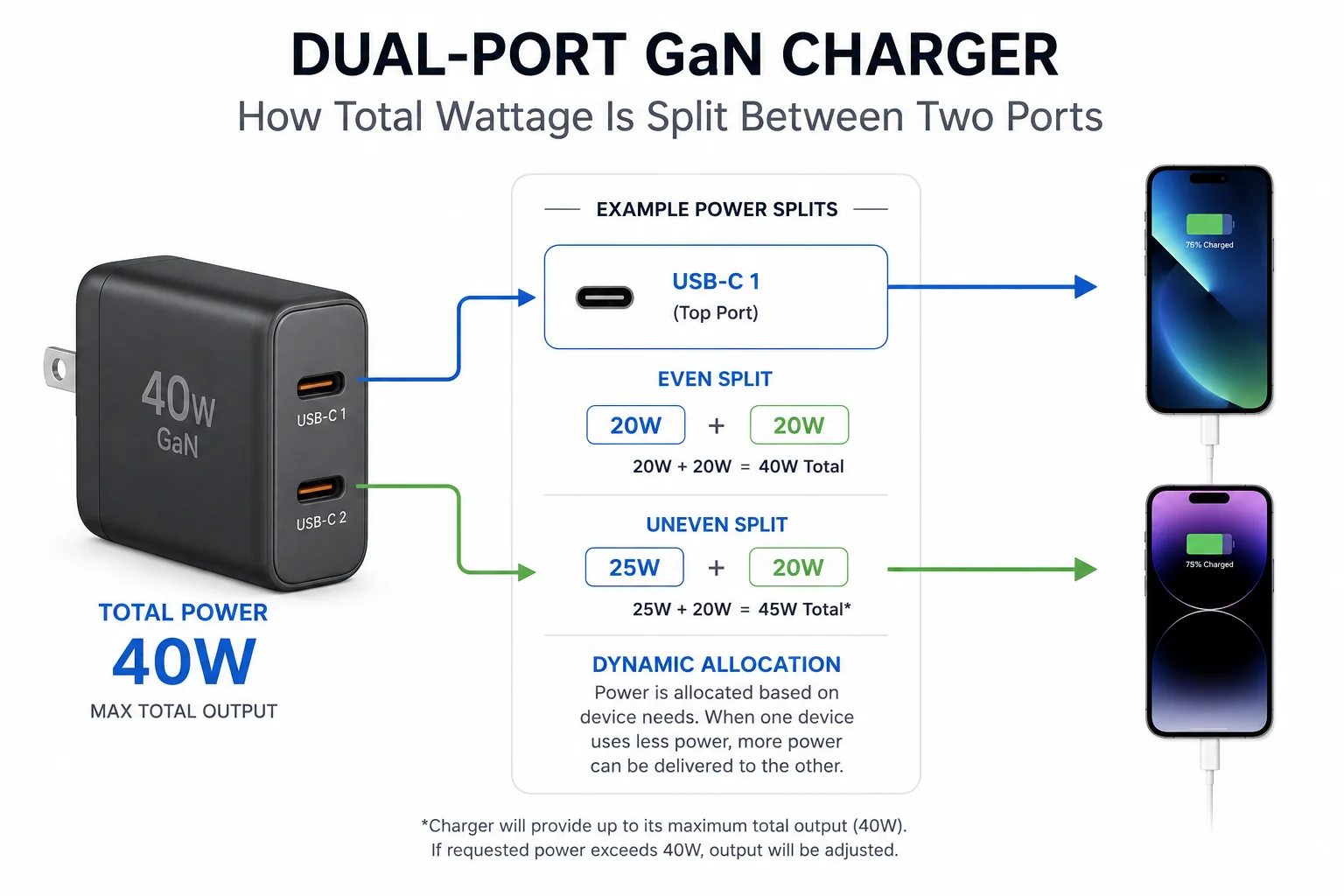
When we talk to our wholesale clients, a common point of confusion is total output versus single-port output. A charger labeled "65W" doesn't necessarily mean it can provide 65W to two devices at once. That 65W rating usually refers to the maximum power it can deliver from a single port when used alone.
When you plug in a second device, the charger's internal smart chip re-distributes the power. For example, a 65W charger might switch from delivering 65W to one port to delivering 45W to the first port and 20W to the second.
Here's a simple way to think about it:
- Single iPhone 16 Fast Charging: Needs ~27W for maximum speed.
- Two iPhone 16s Fast Charging: Each needs at least 20W to activate fast charging.
- Total Required Power: You need a charger that can reliably output 20W + 20W = 40W at the same time.
Therefore, the "total output" wattage is the most important number to look for, followed by how that power is split between the ports.
Is a 40W or 45W GaN Charger Enough for Two iPhones?
You see a compact 45W charger and think it's perfect. But will it actually fast-charge both your iPhones at the same time? Sometimes the power split can fall just short.
Yes, a 40W or 45W GaN charger is enough. Most 40W models split power evenly into 20W + 20W. A 45W charger often provides a 25W + 20W split. Both configurations are sufficient to fast-charge two iPhone 16 devices at the same time.
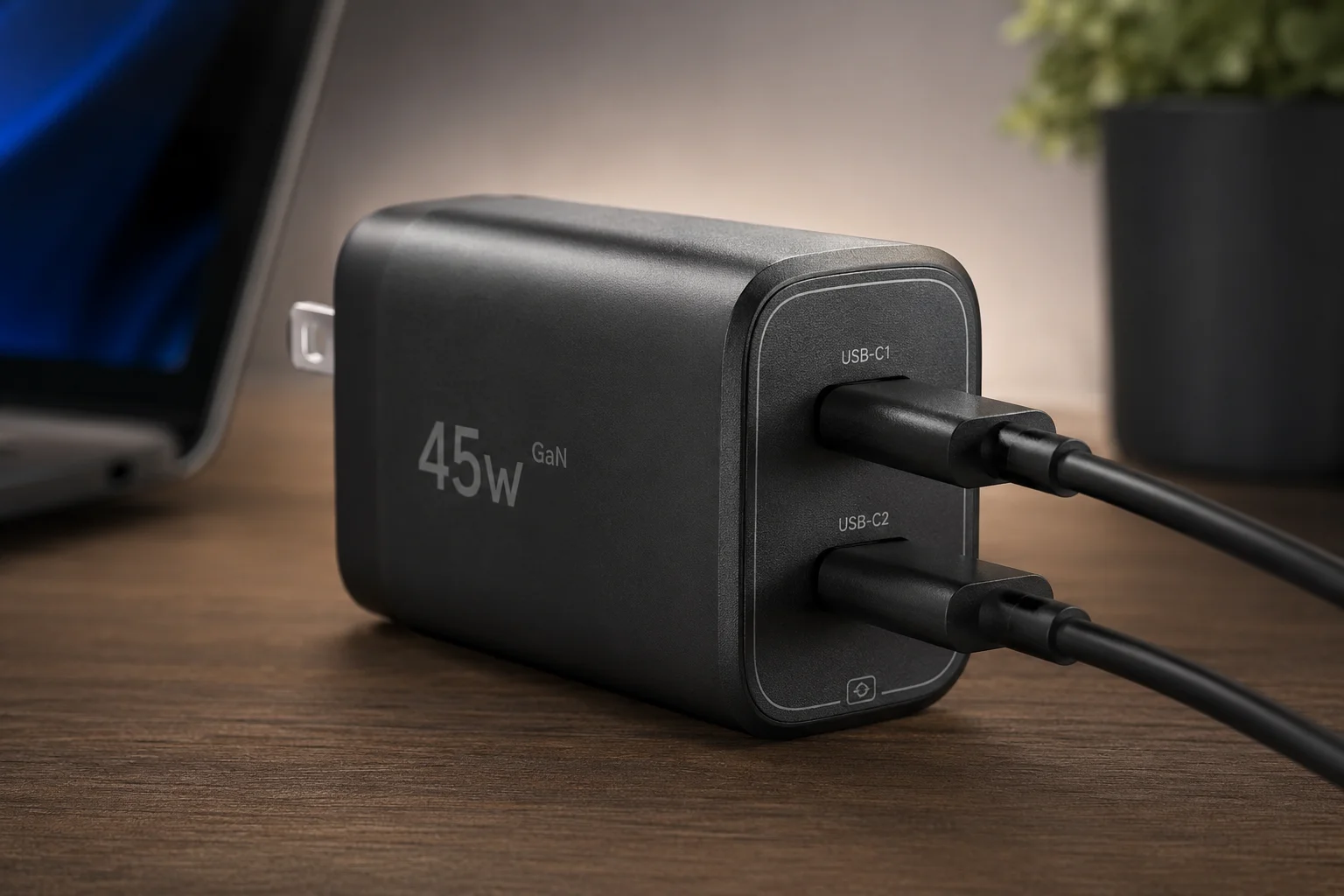
A 45W GaN charger is one of the most popular options we export to European and American retailers, and for good reason. It hits the sweet spot between size, power, and cost. While it might not deliver the absolute maximum charging speed to both iPhones simultaneously (which would require closer to 27W each), it easily provides enough power to trigger Apple's fast-charging protocol.
Let's break down the common power splits:
- 40W Charger: Typically splits power 20W + 20W. This is great. Each iPhone gets a solid fast charge.
- 45W Charger: Often splits power 25W + 20W. This is also excellent. One phone gets a slightly faster charge, but both are well into the fast-charging zone.
I remember a client from an online store in Germany who was worried that a 45W charger wasn't "max speed" for two phones. We explained that going from a 5W charger to a 20W input is a massive difference. You'll still get to 50% battery in about 30 minutes3. For everyday use, a 45W charger provides a fantastic balance of performance and portability.
Should You Choose a 65W GaN Charger for Two iPhone 16 Devices?
Is a 65W charger just overkill for two iPhones? You might feel like you're paying for power you don't need. However, this extra power offers some hidden benefits you shouldn't ignore.
Yes, choosing a 65W GaN charger is an excellent, future-proof decision. It guarantees stable, full-speed fast charging for both iPhones, runs cooler under load, and is versatile enough to power an iPad or MacBook Air, making it a true all-in-one travel solution.
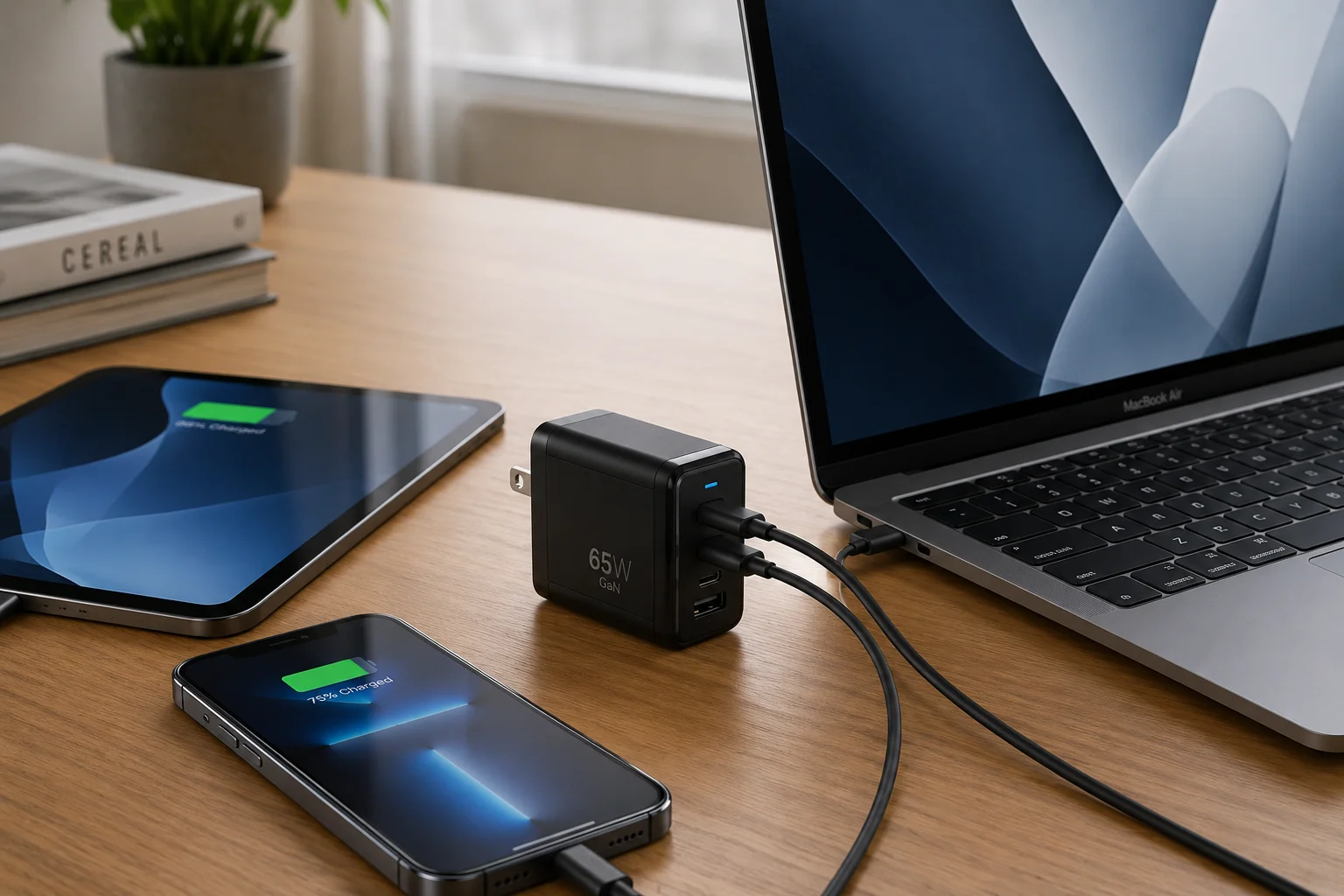
While a 45W charger is enough, a 65W charger is better. In our experience, customers who buy 65W chargers are often thinking beyond just their phones. They want a single power brick that can handle everything. This is why we see strong demand for 65W models from our B2B partners who market them as the "one charger for all your Apple devices."
Here are the key advantages of going with 65W:
- More Powerful Distribution: A 65W charger can offer more flexible and powerful splits, such as 45W + 20W.4 This means you can fast charge an iPhone and also power a more demanding device like an iPad Pro or MacBook Air at the same time.
- Lower Operating Temperature: A 65W charger providing 45W of power is running at about 70% capacity. A 45W charger providing 45W is running at 100%. The less-stressed 65W charger will generate less heat, which is better for the charger's longevity and safety.5
- Future-Proofing: Devices are always getting more power-hungry. A 65W charger ensures you're ready for future phones or other gadgets that might require more than 20-30W to fast charge.
45W vs 65W GaN Charger for Two iPhones?
Stuck deciding between a 45W and a 65W charger? It feels like a small difference. But this choice affects charging speed, size, and how you'll use it in the future.
A 45W charger is compact and perfectly sufficient for charging two iPhones. A 65W charger provides faster, more stable dual charging, runs cooler, and can power laptops. For a small price increase, the 65W model offers far more versatility and value.
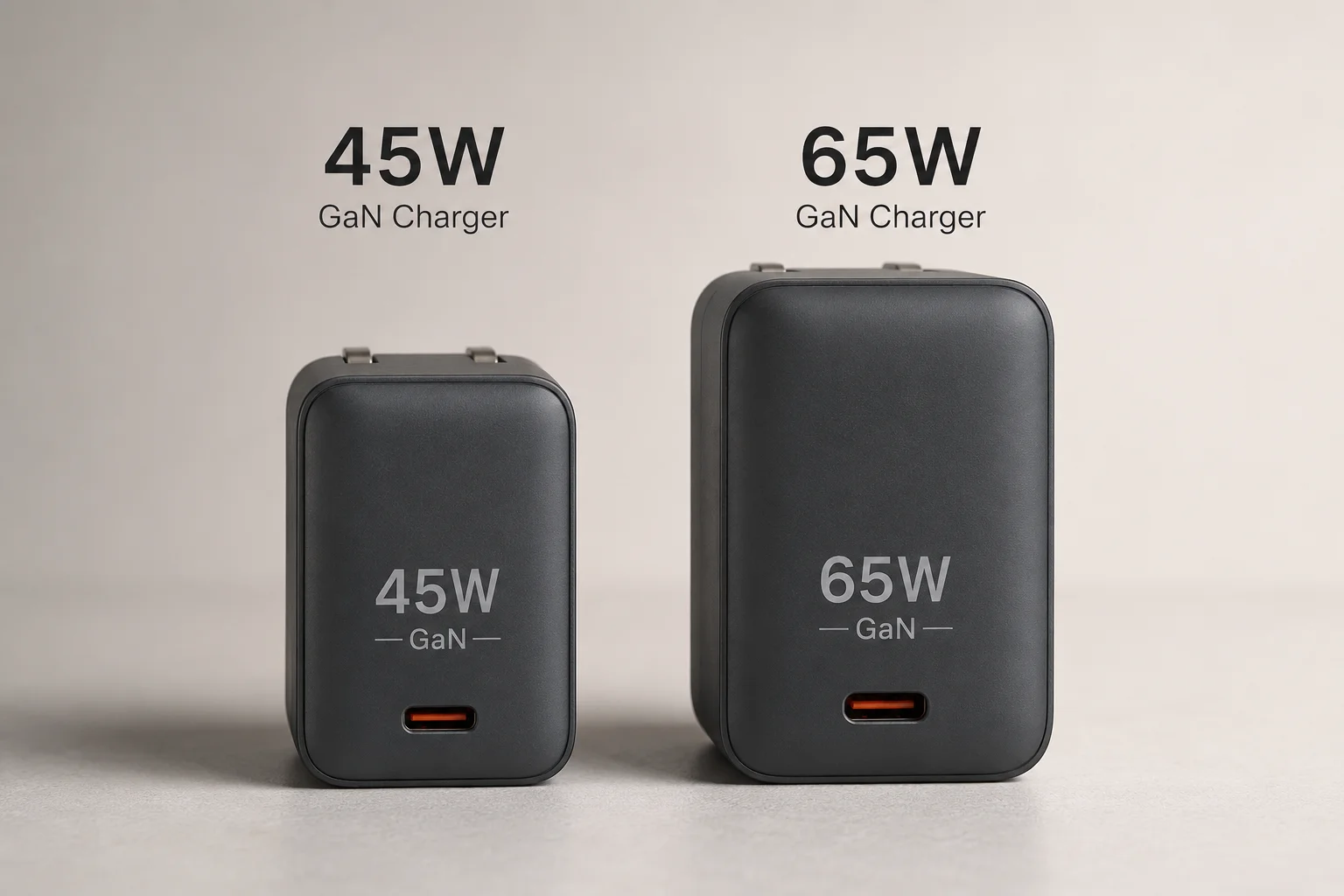
When our clients, who are mostly retailers and e-commerce sellers, ask for a recommendation, I usually frame it as a choice between "good enough" and "future-proof." The 45W is a great, cost-effective product that meets the immediate need. The 65W is a premium, more versatile solution that customers are often willing to pay more for.
Let's compare them directly:
| Feature | 45W GaN Charger | 65W GaN Charger |
|---|---|---|
| Dual-Device Speed | Good. (e.g., 20W+20W or 25W+20W). Both iPhones fast charge. | Excellent. (e.g., 45W+20W or 30W+30W). More power available. |
| Power Distribution | Sufficient for two phones. Limited for larger devices. | Flexible. Can charge a phone and a laptop (e.g., MacBook Air). |
| Charger Size & Weight | Very compact and lightweight. Ideal for pockets. | Slightly larger and heavier, but still very portable due to GaN. |
| Heat Management | Runs warmer as it operates closer to max output. | Runs cooler as it's under less strain when charging two phones. |
| Number of Ports | Usually two (USB-C x2). | Often two or three (e.g., USB-C x2, USB-A x1). More options. |
| Future Compatibility | Good for current and next-gen phones. | Excellent. Ready for more power-hungry phones, tablets, and laptops. |
| Price and Value | Lower upfront cost. Great value for phone-only users. | Higher upfront cost, but better long-term value due to versatility. |
For most people, the small increase in size and cost for a 65W charger is easily worth the huge gain in flexibility.
How Dual-Port GaN Chargers Distribute Power?
You plug in a second phone, and suddenly your first one seems to charge slower. It's frustrating and confusing. This isn't a defect; it's how modern smart chargers work.
Dual-port chargers use dynamic power allocation6 to safely split power. When you plug in a second device, the charger momentarily cuts power, renegotiates with both devices, and assigns a specific wattage to each port, such as 25W to one and 20W to the other.
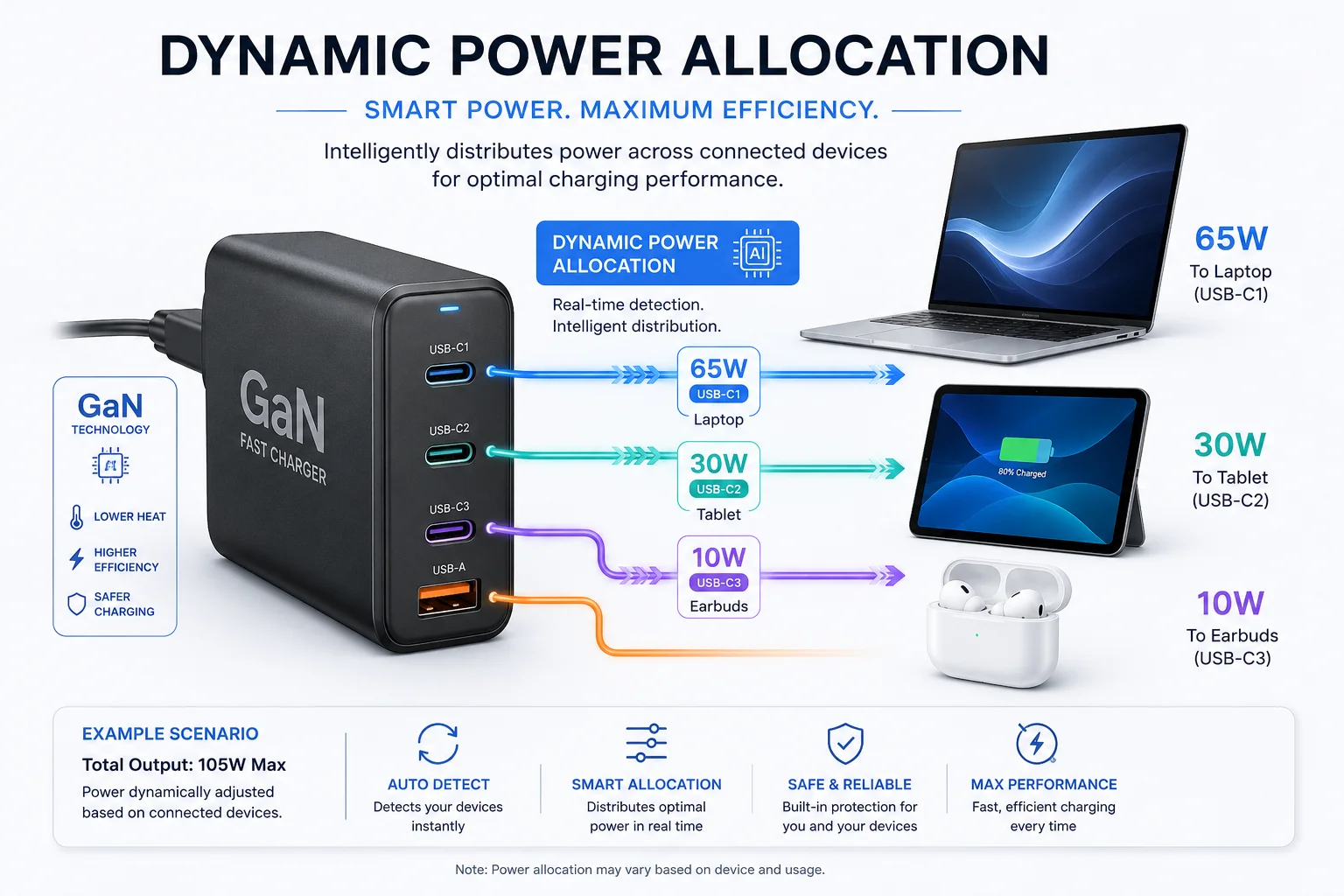
I often have to explain this "power reset" to customers. When you plug in one phone to a 45W charger, it gets the full 45W (though the iPhone will only draw what it needs, about 27W). The moment you plug in a second phone, the charger's smart chip does a quick "handshake." It re-evaluates and splits the total 45W between the two ports. The first phone's charge might drop from 27W to 25W or 20W to give power to the second one.
Here are the key concepts:
- Dynamic Power Allocation: This is the smartest system. The charger adjusts wattage on the fly based on the number of devices and their needs. Most quality GaN chargers use this.
- Fixed Power Allocation: Less common today. A charger might have one port permanently fixed at 30W and another at 15W. It's less flexible.
- USB-C Port Priority: On many chargers, the first port you use (often the top one) is designated as the primary port and gets more power when used alone. This priority is re-assessed when other ports are used.
Think of it like a water pipe in your house. If you're taking a shower and someone flushes a toilet, the water pressure in the shower might drop for a moment. The charger does the same thing with electricity to ensure everything is balanced and safe.
What Features Should a Dual iPhone 16 Charger Have?
Buying a charger seems simple, but the market is flooded with options. Many of them lack key safety or performance features. You don't want to risk your expensive new iPhones with a cheap, subpar charger.
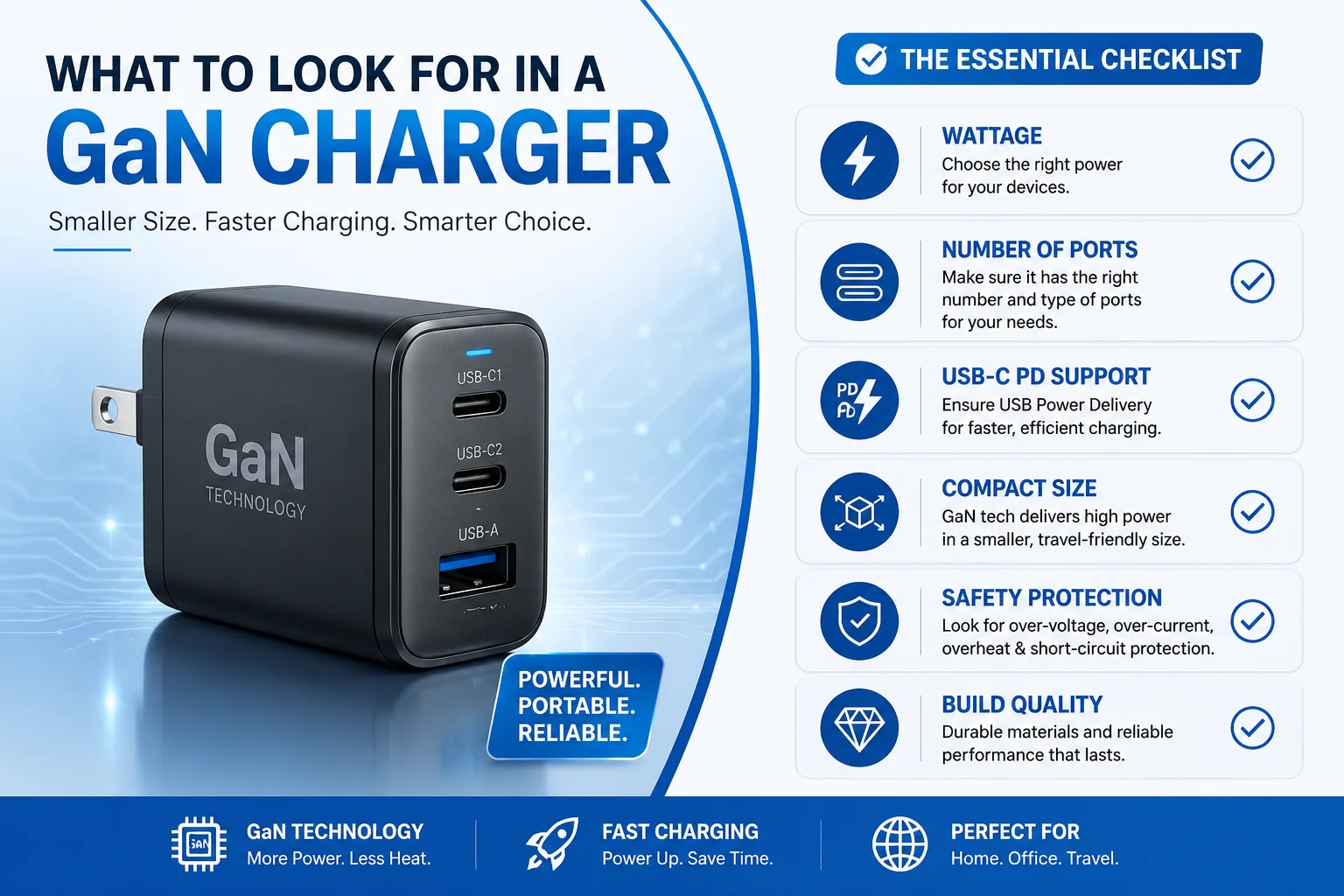
Look for a GaN charger with at least 40W total output, two USB-C ports, and USB Power Delivery (PD)7. It must have safety certifications (CE, FCC), built-in protections, and dynamic power allocation for smart, efficient, and safe charging.
As an exporter dealing with strict international standards, safety and quality are non-negotiable. For our B2B clients in Europe and the US, the first thing they check is the list of certifications. No certs, no deal. It's that simple. You should apply the same logic when buying for yourself.
Here is your essential checklist:
- Two USB-C Ports: The iPhone 16 will use USB-C8, so you need the right ports.
- USB Power Delivery (PD): This is the fast-charging technology that Apple uses. Without PD, you won't get fast-charging speeds.
- At Least 40W Total Output: As we've discussed, this is the minimum to fast charge two iPhones.
- Dynamic Power Allocation: Ensures the charger intelligently distributes power.
- GaN Technology: This is what allows powerful chargers to be so small and efficient.
- Overheating and Overvoltage Protection: This is a critical safety feature that protects both the charger and your phones from damage.
- Safety Certifications (e.g., CE, FCC, RoHS)9: This is your proof that the charger has been tested by third parties and meets safety and environmental standards.
Which USB-C Cables Are Best for Charging Two iPhones?
You bought a great new charger, but your phones are still charging slowly. The problem might not be the charger at all. A low-quality charging cable can be the bottleneck, wasting your money and time.
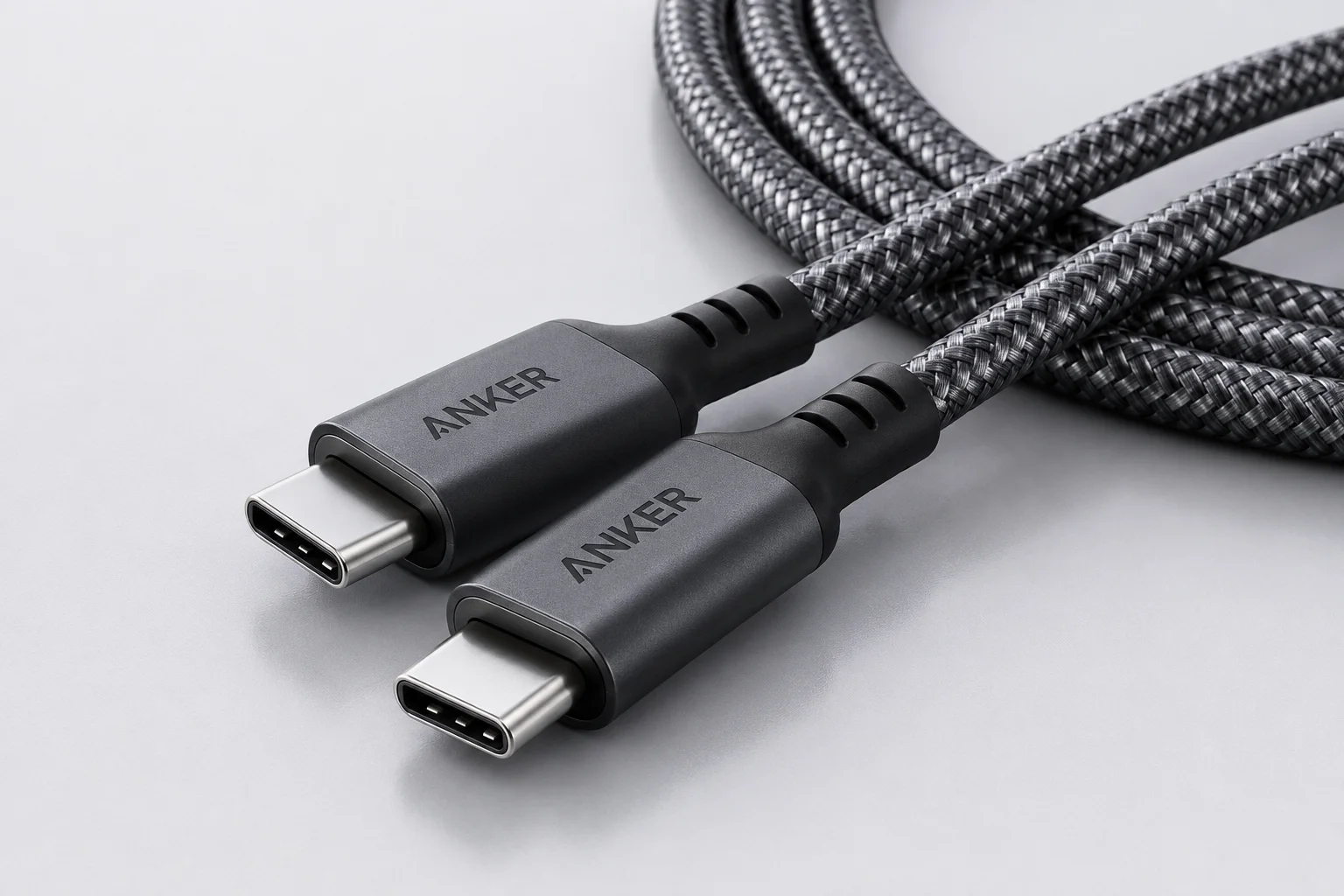
Use high-quality USB-C to USB-C cables rated for at least 60W10. A 60W rating ensures the cable can handle the full power from a 45W or 65W charger. Also, prioritize cables with durable construction and from reputable, certified brands.
In our business, we often bundle certified cables with our chargers. A bad cable can not only perform poorly but can also be a safety hazard, potentially damaging the charger or the phone. It's a support headache that we—and you—should avoid at all costs.
Here's what to look for in a good USB-C cable:
- Power Rating (60W or 100W): For charging two iPhones with a 45W or 65W charger, a 60W-rated cable is perfect. You don't need a 100W cable unless you plan to charge a powerful laptop like a MacBook Pro.
- Length: A 1-meter (3-foot) cable is great for desktops, while a 2-meter (6-foot) cable offers more flexibility for use on a couch or in bed.
- Durability: Look for features like a braided nylon exterior and reinforced connector joints. These cables last much longer than basic plastic ones.
- Certification: While MFi was for Lightning, for USB-C, look for cables that are USB-IF certified or come from a well-known brand that you trust. This ensures they meet performance and safety standards.
Frequently Asked Questions About Charging Two iPhone 16 Devices?
Still have some questions? You're not alone. Many people are unsure about the specifics of dual charging. Let's clear up the most common points of confusion for good.
Yes, a single dual-port GaN charger (40W or higher) can fast-charge two iPhone 16s. A 65W model is perfectly safe and more versatile. Charging speed may be redistributed when a second device is plugged in, but both will continue to fast charge.
Here are quick answers to the questions we get asked all the time.
Can one charger charge two iPhone 16 devices?
Yes, absolutely. A dual-port USB-C charger with at least 40W total output is designed specifically for this purpose.
Is a 40W charger enough for two iPhones?
Yes. It will typically provide 20W to each phone, which is enough to activate Apple's fast-charging feature for both devices simultaneously.
Can a 45W charger fast-charge two iPhones at once?
Yes. It usually splits the power into 25W and 20W, ensuring both iPhones get a fast charge.
Is a 65W charger safe for the iPhone 16?
Yes, it is 100% safe.11 Your iPhone will only draw the amount of power it needs. The extra wattage provides flexibility for other devices and does not harm the phone.
Will both USB-C ports provide the same wattage?
Not always. Due to dynamic power allocation, one port might get more wattage than the other, especially on 45W or 65W chargers.
Does charging two phones at once reduce charging speed?
It redistributes the speed.12 A single phone might charge slower than when it's the only phone plugged in, but both will still be fast-charging compared to an old 5W brick.
Is a dual-port GaN charger better than two separate chargers?
Yes. It's more convenient, portable, and efficient. It takes up only one wall outlet and is much easier to pack for travel.
Can the same charger power an iPhone and an iPad?
Yes, this is a major benefit of a 65W charger. It can easily fast-charge an iPhone (e.g., with 20W) and an iPad (e.g., with 30-45W) at the same time.
Conclusion
Choosing the right GaN charger, from 45W to 65W, simplifies your life. Pair it with good cables to keep your two new iPhones powered up and ready to go.
"Trouble understanding GaN charger benefits : r/UsbCHardware", https://www.reddit.com/r/UsbCHardware/comments/zx1ht7/trouble_understanding_gan_charger_benefits/. A source can explain that Gallium Nitride (GaN) is a semiconductor material that allows for the creation of smaller, more energy-efficient, and cooler-running power adapters compared to traditional silicon-based chargers. Evidence role: definition; source type: encyclopedia. Supports: The claim that GaN chargers are a powerful and effective solution.. ↩
"I Tested iPhone 15 Pro Max Fast Charging with Different Power ...", https://www.reddit.com/r/iphone/comments/178om0u/i_tested_iphone_15_pro_max_fast_charging_with/. Independent testing of recent models like the iPhone 15 shows they can draw up to 27W, and Apple's fast charge protocol is initiated with a charger of 20W or more. Evidence role: statistic; source type: other. Supports: The claim that iPhones require a specific wattage range to fast charge.. Scope note: This data is based on current iPhone models (e.g., iPhone 15), as official specifications for the iPhone 16 are not yet available. ↩
"Fast charge your iPhone - Apple Support", https://support.apple.com/en-us/102574. Apple's official support documents state that users can charge their iPhone battery up to 50 percent in around 30 minutes when using a 20W or higher adapter. Evidence role: case_reference; source type: government. Supports: The claim that fast charging can achieve a 50% charge in approximately 30 minutes.. Scope note: The exact time can vary depending on the iPhone model, battery health, and environmental factors. ↩
"USB hardware - Wikipedia", https://en.wikipedia.org/wiki/USB_hardware. The USB Power Delivery specification allows for complex power distribution rules in multi-port chargers, enabling a 65W charger to allocate power dynamically, for instance by providing 45W to one port and 20W to another, based on the connected devices' needs. Evidence role: mechanism; source type: institution. Supports: The claim that a 65W charger can provide specific power splits like 45W + 20W.. Scope note: The exact power split configuration is determined by the charger manufacturer's implementation and is not universal across all 65W chargers. ↩
"[PDF] The Impact of Output Capacitor Aging under Constant and Cycled ...", https://www.energy.gov/documents/ssl-rd2020-gunawardena-posterpdf. Engineering principles show that operating electronic components, such as those in a power adapter, below their maximum rated load (a practice known as derating) reduces thermal stress and can significantly increase their operational lifespan and reliability. Evidence role: mechanism; source type: education. Supports: The claim that running a charger below its maximum capacity reduces heat and improves longevity.. ↩
"Understanding USB-C power delivery: A developer's guide to Smart ...", https://dev.to/elyvora_us/understanding-usb-c-power-delivery-a-developers-guide-to-smart-chargers-and-why-wattage-4kgm. A source from an organization like the USB Implementers Forum (USB-IF) can explain that dynamic power allocation is a feature of the USB Power Delivery (PD) standard, where a charger can negotiate and adjust the power supplied to each port in real-time as devices are connected or disconnected. Evidence role: definition; source type: institution. Supports: The definition and function of dynamic power allocation.. ↩
"Fast charge your iPhone - Apple Support", https://support.apple.com/en-us/102574. Apple's official support documentation confirms that to fast charge an iPhone, users must use a USB-C power adapter that supports the USB Power Delivery (PD) specification. Evidence role: expert_consensus; source type: other. Supports: The claim that Apple uses the USB Power Delivery standard.. ↩
"Radio Equipment Directive (2022) - Wikipedia", https://en.wikipedia.org/wiki/Radio_Equipment_Directive_(2022). This is based on the European Union's revised Radio Equipment Directive, which mandates that new smartphones sold in the EU, including iPhones, must use the USB-C port for wired charging by the end of 2024. Evidence role: historical_context; source type: government. Supports: The claim that the iPhone 16 will use USB-C.. Scope note: While this EU law makes a USB-C port on the iPhone 16 a near certainty, Apple has not officially confirmed the specification for this unreleased model. ↩
"Equipment Authorization | Federal Communications Commission", https://www.fcc.gov/engineering-technology/laboratory-division/general/equipment-authorization. A source from a regulatory body can clarify that FCC certification relates to electromagnetic interference in the U.S., CE marking indicates conformity with health, safety, and environmental standards in the European Economic Area, and RoHS restricts the use of specific hazardous materials. Evidence role: definition; source type: government. Supports: The claim that certifications indicate compliance with safety and environmental standards.. ↩
"USB C actual power limit? : r/UsbCHardware - Reddit", https://www.reddit.com/r/UsbCHardware/comments/16ks6j4/usb_c_actual_power_limit/. According to the USB Implementers Forum (USB-IF), standard USB-C cables are rated to carry up to 3 Amps of current. At the 20V supported by USB Power Delivery, this translates to a power rating of 60W, making it a common and sufficient standard for chargers in the 45W-65W range. Evidence role: general_support; source type: institution. Supports: The claim that a 60W-rated cable is a standard and sufficient choice.. Scope note: Cables supporting more than 60W (up to 100W or 240W) require an internal 'E-Marker' chip to advertise this capability. ↩
"[PDF] USB PD Power Negotiations - Texas Instruments", https://www.ti.com/lit/an/slva842/slva842.pdf. The USB Power Delivery (PD) protocol involves a negotiation or 'handshake' between the charger and the device. The device (the iPhone) requests the amount of power it can safely handle, and the charger supplies only that amount, preventing damage from an oversized power adapter. Evidence role: mechanism; source type: paper. Supports: The claim that a higher-wattage charger is safe for a lower-wattage device.. ↩
"Normal for USB C multi-port chargers to temporarily cut power when ...", https://www.reddit.com/r/UsbCHardware/comments/r9r1nf/normal_for_usb_c_multiport_chargers_to/. When a second device is plugged into a multi-port USB-PD charger, the charger must re-negotiate power contracts with all connected devices. This often involves a brief interruption of power and results in a new distribution of the charger's total wattage capacity among the ports. Evidence role: mechanism; source type: institution. Supports: The claim that power is redistributed when a second device is connected.. ↩