Worried about placing a huge order with a new supplier? A single wrong choice can cost you thousands1. Small wholesale orders let you test products and partners safely, protecting your investment.
Small wholesale orders reduce risk2 by letting you test a supplier's product quality, communication, and reliability with a low financial commitment. It's a real-world sample order before you invest heavily in inventory, ensuring they are a good partner for your business.
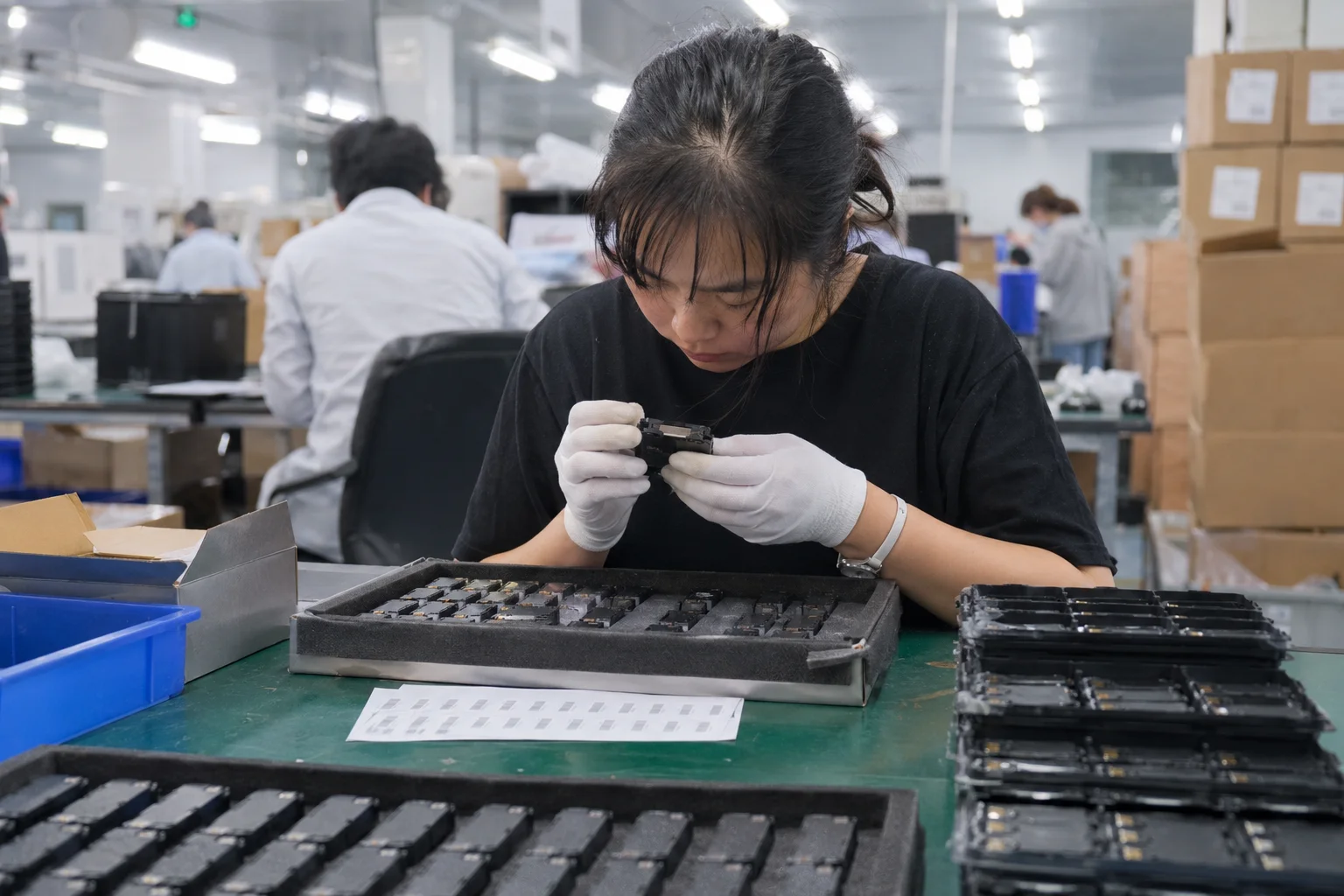
Starting small seems simple, but it's a powerful strategy that many importers overlook. In my 15 years of exporting 3C electronics from Shenzhen, I've seen many new buyers jump straight to large, custom orders. They focus only on getting the lowest unit price. They often forget about the hidden risks of quality, communication, and shipping. A small test order is the best way to avoid these expensive surprises. It tells you everything you need to know about a potential partner before you commit serious money. Let's break down how you can use this strategy to build a safer, more successful import business.
How can I tell whether a supplier is really reliable?
So many suppliers look professional online, but how do you spot a truly reliable one? Picking the wrong partner leads to production delays, poor quality products, and unhappy customers for you.
A reliable supplier has clear communication, verifiable certifications (like CE, FCC3), and a transparent business history. They answer technical questions well and encourage you to start with a small trial order. These are signs of a confident, long-term partner.
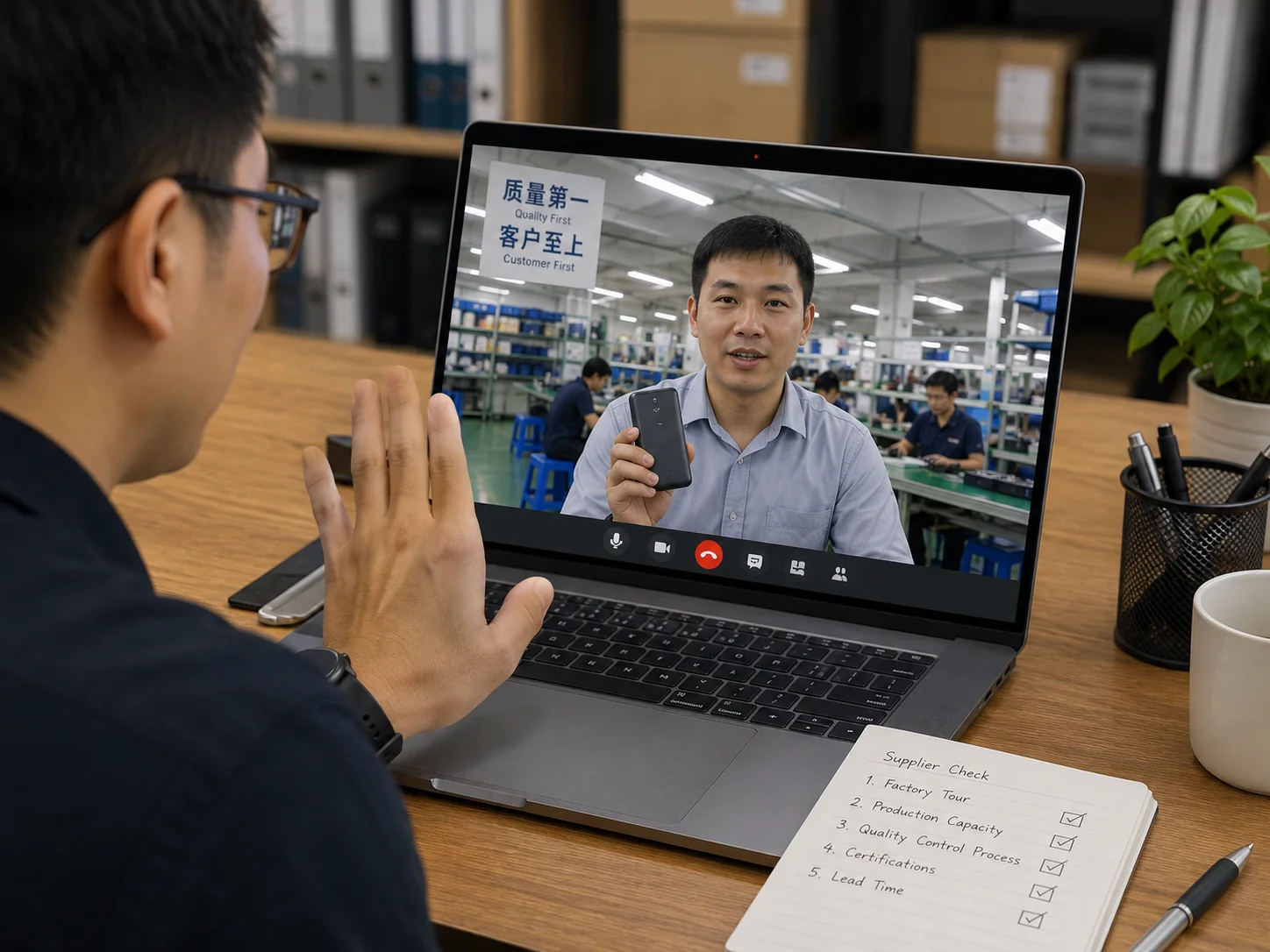
Over the years, I’ve learned that a fancy website means very little. You need to dig deeper. A reliable partner is built on trust, and trust is built through actions, not just words. When a new client from Europe asks me how to vet a supplier, I always tell them to focus on these practical steps.
Communication is Key
How quickly do they respond to your emails? Are their answers clear and helpful, or are they vague? A good supplier's sales team understands your questions and provides detailed answers. Ask for a video call. It’s a simple way to see their office and meet the person you're talking to. If they refuse or make excuses, that’s a red flag. A reliable partner is happy to show you they are a real business with real people.
Check the Paperwork
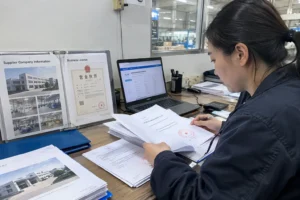
Ask for their business license and any product certifications like CE, RoHS, or FCC. For products like chargers and power banks, these are not optional; they are required for import into Europe and the US4. A serious supplier will have these documents ready to share. If they hesitate or can't provide them, they might not be compliant, which puts your entire shipment at risk of being seized by customs5. This is a simple check that saves you from huge headaches later.
What is the difference between a manufacturer and a trading company6?
You see "manufacturer" and "trading company" on every supplier profile. It's a common question, and choosing the wrong one can mean higher costs and less flexibility, which hurts your bottom line.
A manufacturer makes products in their own factory, often offering lower prices but requiring high order quantities (MOQ)7. A trading company, like us, sources from multiple factories, providing more product variety, lower MOQs, and dedicated service, acting as your local sourcing team.
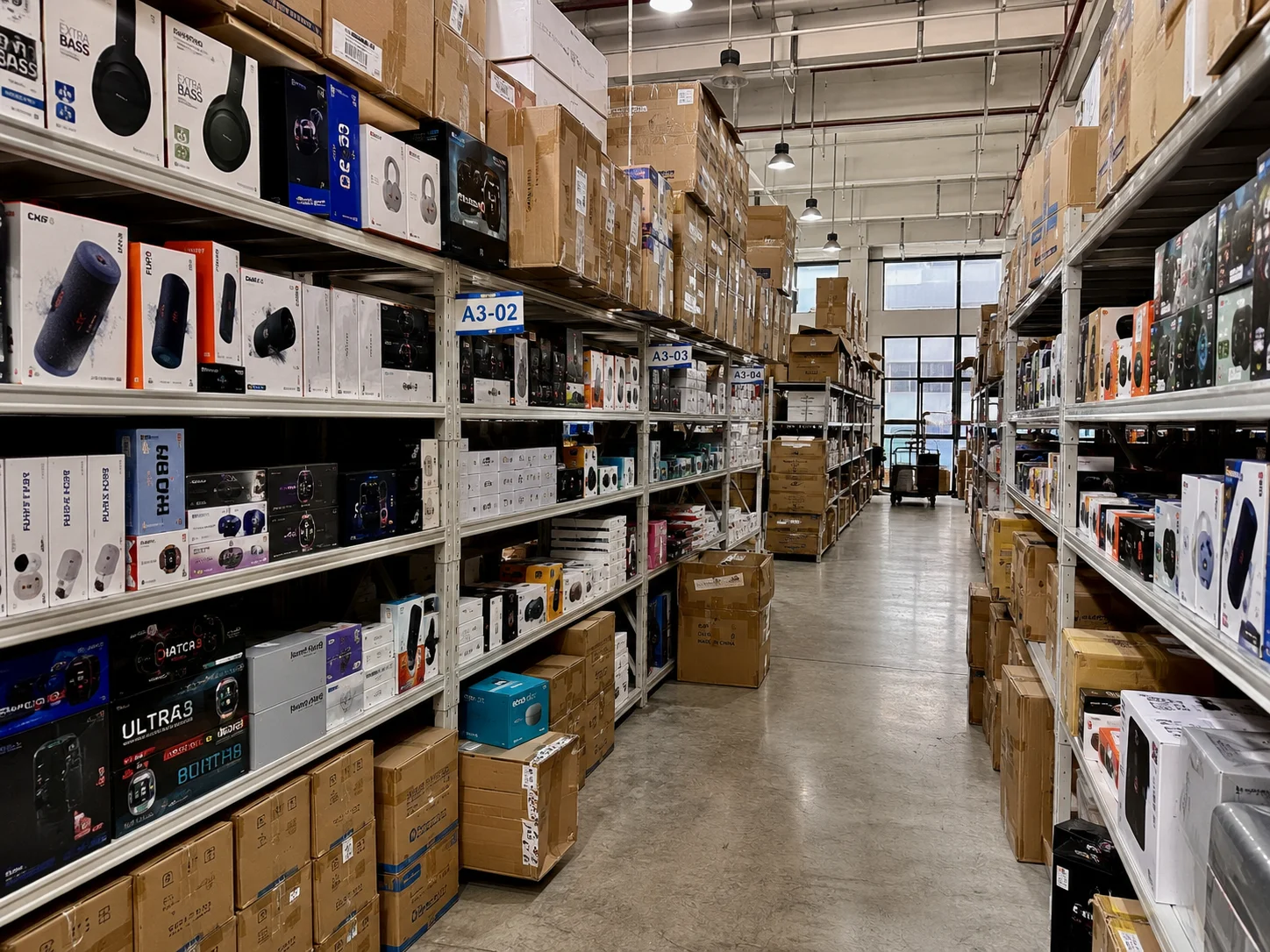
The right choice really depends on your business model. There is no single "best" option; it’s about finding the right fit for your specific needs. I often explain this to e-commerce sellers who are just starting out. They need flexibility above all else.
When to Choose a Manufacturer
Going direct to a factory is a good idea if your business is scaled. If you need 20,000 units of a single smartwatch model and have the technical team to manage production details, a factory can give you the best possible price. However, you'll have to deal with very high MOQs, and their communication might be more focused on engineering than customer service.
When a Trading Company is Better
A trading company is the better partner for most small to medium-sized importers. We work with dozens of vetted factories. This allows us to offer you a wide catalog of products—like TWS earbuds, GaN chargers, and smartwatches—all in one shipment. You can’t do that with a single factory. We handle the communication, quality control, and logistics, which saves you an incredible amount of time and reduces complexity. The table below breaks it down simply.
| Feature | Manufacturer | Trading Company (like us) |
|---|---|---|
| Price | Usually lower | Slightly higher (includes service) |
| MOQ | Very High | Low and Flexible |
| Product Variety | Specialized, one product type | Wide range from many factories |
| Communication | Can be technical and slow | Professional, fast sales team |
| Service | Basic production | Consolidation, QC, logistics |
How do low MOQ trial orders reduce risk?
You've found a promising supplier, but a big first order feels like a huge gamble. What if the product quality isn't what you expected when it arrives? Your money could be gone.
Low MOQ orders reduce risk in four key ways: they limit your financial exposure, let you test the actual product quality, allow you to check the supplier's process and reliability, and help you test your own market before buying in bulk.
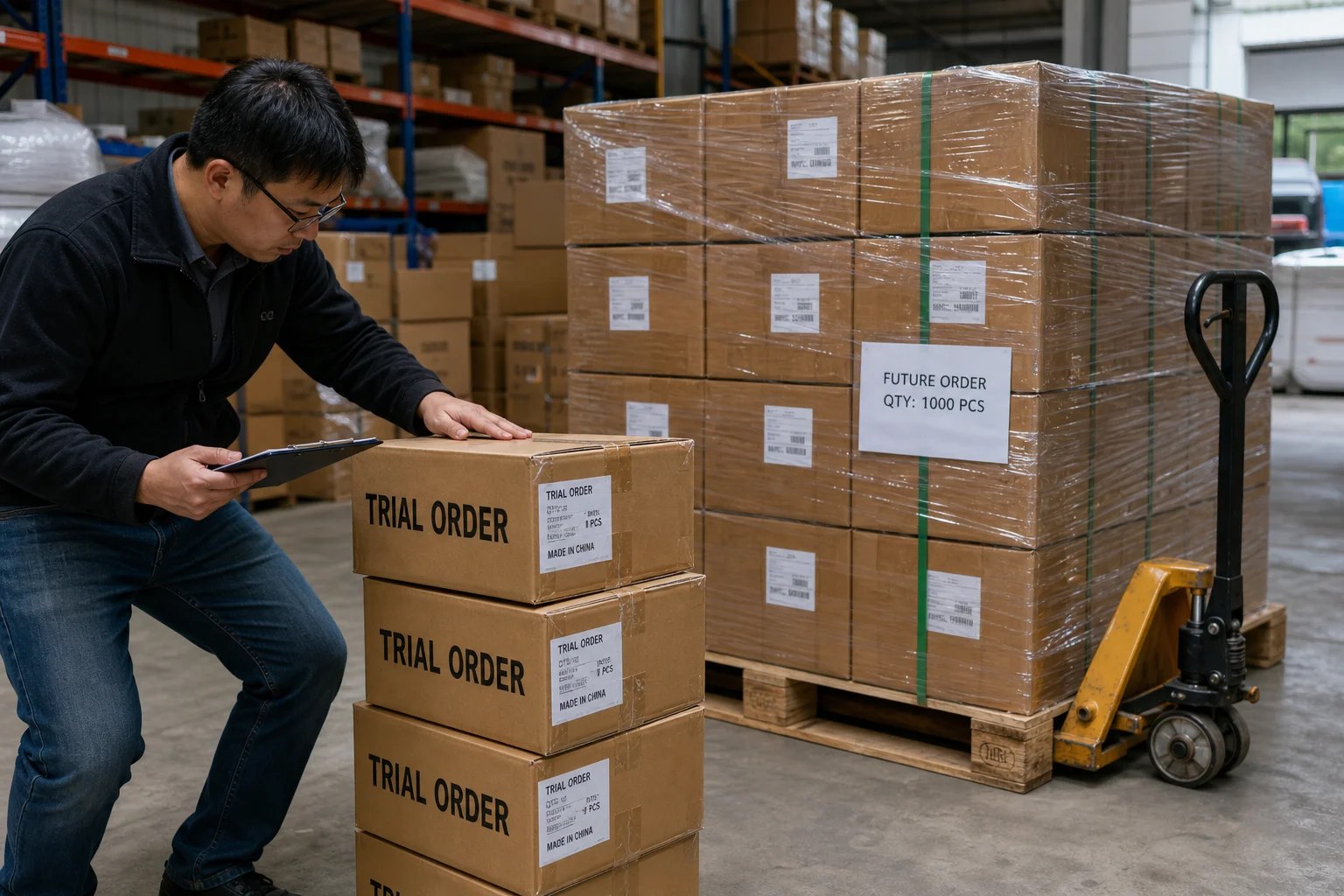
A trial order is the single most important step you can take to protect your business. It turns a risky guess into a calculated business decision. I always tell new buyers to think of their first order as an investment in information, not just an investment in inventory. You learn so much from a small transaction.
Financial Safety Net
This is the most obvious benefit. Instead of risking $15,000 on an unproven supplier, you might risk only $1,500. If something goes wrong—the quality is poor or the shipment never arrives—it’s a small, manageable loss. It’s a business lesson, not a disaster. This simple step protects your capital for when you find the right long-term partner.
Real-World Quality Check
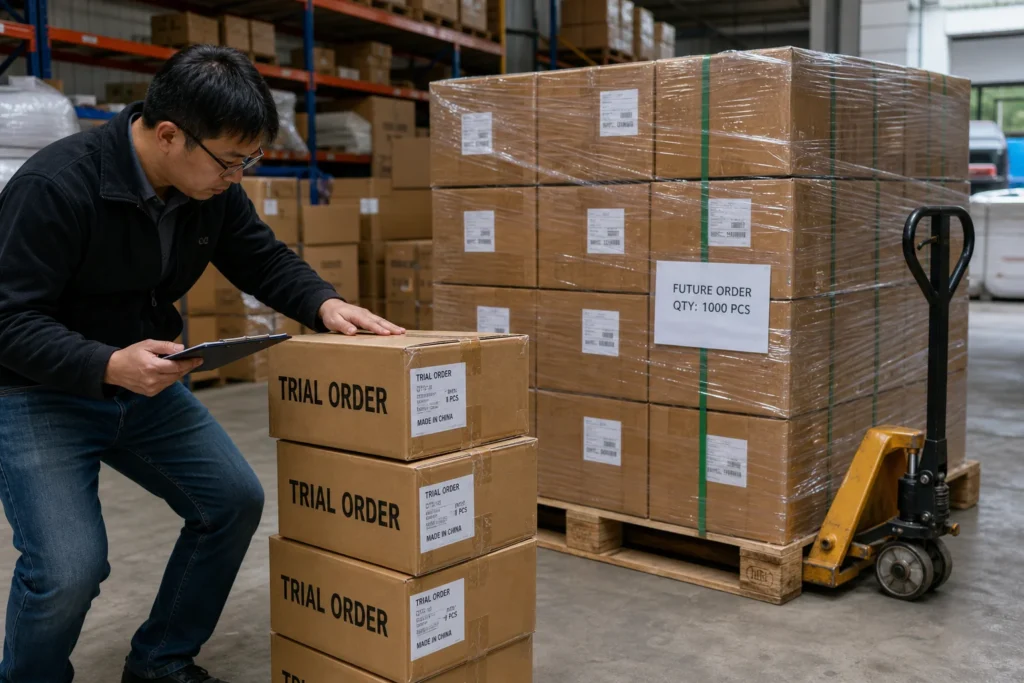
Golden samples sent by courier can be perfect, but they don't represent what you'll get in a mass production run8. A trial order of 100 or 200 units forces the supplier to run a small batch on their actual production line. This shows you the real quality, consistency, and packaging you can expect on a larger order. It’s your chance to check for defects before you've committed thousands of dollars.
Market Validation9
A trial order also allows you to test the product with your own customers before you invest in a container load of inventory. You can use the units for product photography, send them to reviewers, or sell them to a small group of customers to get feedback. Does the product sell? What do people like or dislike? This market data is priceless and helps you make a much smarter decision about placing a larger order.
What should I verify before payment?
You're ready to pay the deposit. This is a critical step, and a single mistake here can lead to losing your money with no way to get it back. A quick final check is essential.
Before paying, always verify the Proforma Invoice (PI) details: product specs, pricing, shipping terms (like FOB/EXW)10, and lead time. Most importantly, confirm the beneficiary bank account details match the company's registered name exactly11. Any mismatch is a major red flag.
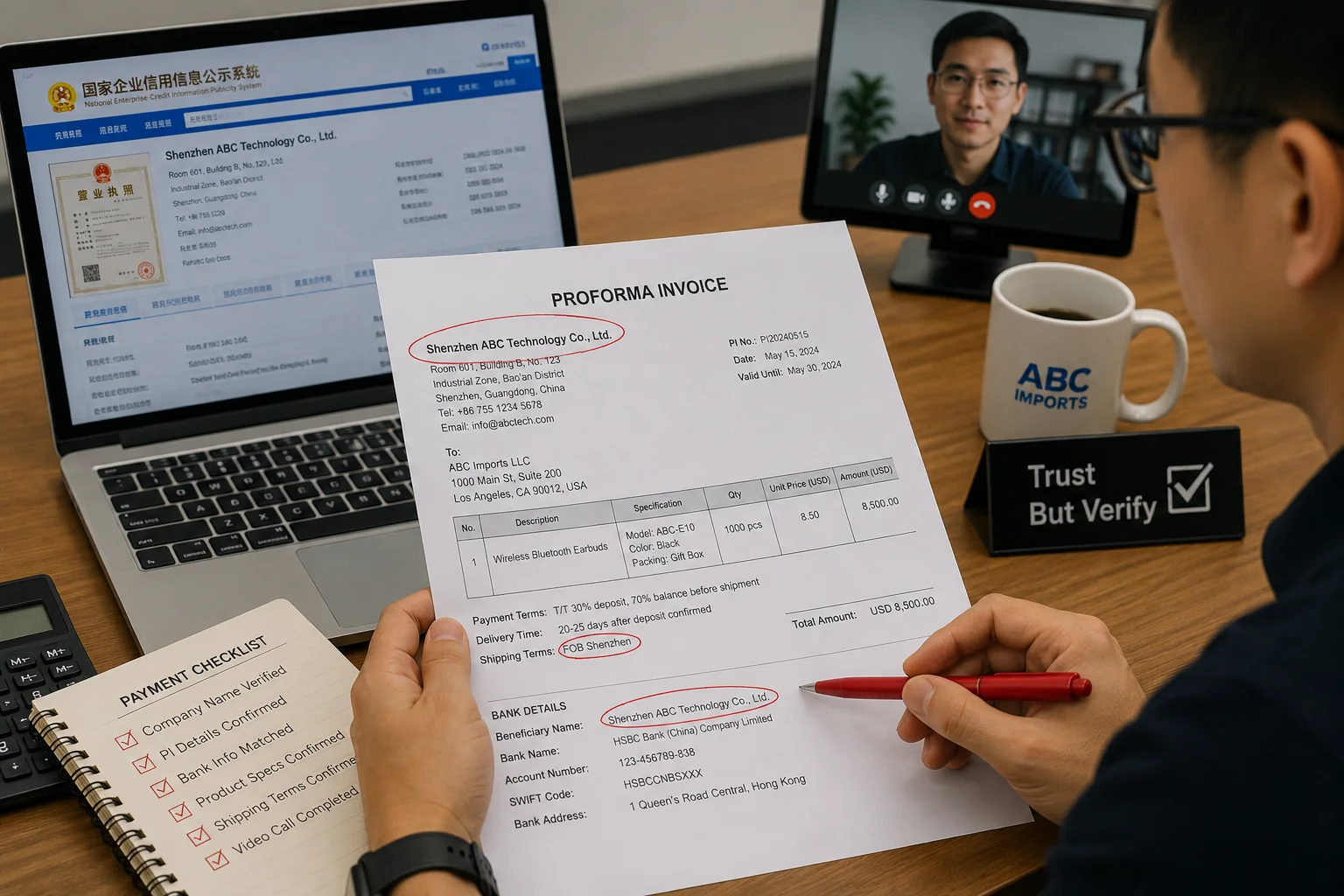
This is the final checkpoint, and it's where you need to be the most careful. I have heard horror stories from buyers who sent money to the wrong account after an email was hacked. Taking five extra minutes to verify everything can save you from a complete loss.
The Proforma Invoice (PI) is Your Contract12
The PI is the preliminary bill of sale that outlines the terms of your order. Treat it like a contract. Before you send any money, read every line and make sure it matches what you agreed on. Here’s a quick checklist:
- Product Details: Exact model numbers, colors, specs, and quantities.
- Pricing: The unit price and total amount are correct.
- Payment Terms: It should clearly state the deposit amount (e.g., 30%) and the balance payment terms (e.g., 70% before shipment).
- Incoterms: Shipping terms like FOB Shenzhen or EXW Factory must be clearly stated so you know who is responsible for shipping costs.
- Lead Time: The promised production time should be written on the PI.
Double-Check the Bank Details
This is the most critical part. The company name on the bank account beneficiary MUST match the company name on the Proforma Invoice. Do not send money to a personal account or a "sister company" with a different name. If a supplier changes their bank details suddenly, stop and verify. Call your sales contact or have a quick video chat to confirm the change is legitimate. It's a simple step that ensures your money is going to the right place.
Conclusion
Starting with small wholesale orders is not about being cheap; it's about being smart. It lets you test suppliers, products, and your market, building a safer, more profitable business.
"Fraud & Improper Payments | U.S. GAO", https://www.gao.gov/fraud-improper-payments. Reports from international trade organizations and business associations often quantify the financial impact of supplier-related risks, with losses from issues like invoice fraud and poor quality control frequently amounting to thousands or even millions of dollars per incident. Evidence role: statistic; source type: institution. Supports: The financial scale of losses incurred by businesses due to supply chain fraud, quality control failures, and other supplier-related issues.. ↩
"Supply Chain Risks and Mitigation Strategies - Purdue Business", https://business.purdue.edu/master-of-business/online-masters-in-business-administration/posts/supply-chain-risks-mitigation-strategies.php. Supply chain management literature supports the use of phased procurement, starting with small trial orders, as a key strategy to mitigate financial, operational, and quality risks before committing to large-scale contracts. Evidence role: general_support; source type: education. Supports: The use of trial orders or pilot programs as a fundamental step in mitigating risk during supplier selection and onboarding.. ↩
"CE marking - Wikipedia", https://en.wikipedia.org/wiki/CE_marking. CE (Conformité Européenne) marking indicates conformity with health, safety, and environmental protection standards for products sold within the European Economic Area, while FCC (Federal Communications Commission) certification is required for electronic devices sold or manufactured in the United States. Evidence role: definition; source type: government. Supports: The official definitions and purposes of CE marking and FCC certification for electronic devices.. ↩
"Equipment Authorization – Importation | Federal Communications ...", https://www.fcc.gov/oet/ea/importation. Official guidance from the European Commission and the U.S. Federal Communications Commission outlines the legal requirements for CE marking and FCC compliance, respectively, for electronic products being placed on the market. Evidence role: general_support; source type: government. Supports: The legal mandate for specific certifications on electronic goods imported into the European Union and the United States.. ↩
"CBP officers seize more than $150000 worth of fake electronics", https://www.cbp.gov/newsroom/local-media-release/cbp-officers-seize-more-150000-worth-fake-electronics. Customs agencies, such as U.S. Customs and Border Protection (CBP), have the legal authority to inspect, detain, and seize imported goods that fail to comply with federal regulations, including product safety and certification standards. Evidence role: general_support; source type: government. Supports: The authority of customs agencies to seize goods that do not meet national regulatory and certification standards.. ↩
"7 Reasons Trading Companies Can Be Better Than Factories", https://guidedimports.com/blog/7-reasons-trading-companies-are-better-than-factories/. International trade resources define a manufacturer as the entity that produces goods, while a trading company acts as an intermediary that sources products from one or more manufacturers to sell to its own customers, often providing additional services like consolidation and logistics. Evidence role: definition; source type: institution. Supports: The distinct operational models and roles of manufacturers versus trading companies within a global supply chain.. ↩
"Economic order quantity - Wikipedia", https://en.wikipedia.org/wiki/Economic_order_quantity. The practice of requiring high MOQs is rooted in the principle of economies of scale, where the cost per unit of production decreases as the volume of output increases, making small production runs financially unviable for many factories. Evidence role: mechanism; source type: education. Supports: The economic principles that lead manufacturers to impose high Minimum Order Quantities (MOQs).. ↩
"Statistical process control - Wikipedia", https://en.wikipedia.org/wiki/Statistical_process_control. Quality management principles recognize that variability is inherent in any manufacturing process; therefore, a 'golden sample' represents an ideal, while a mass production run is subject to statistical variations in materials, machinery, and operations that can affect final quality. Evidence role: mechanism; source type: research. Supports: The concept of production variance and its impact on quality consistency between pre-production samples and mass production.. ↩
"Lean Validation: The Fundamental Guide - Bundl", https://www.bundl.com/guides/lean-validation-a-fundamental-guide. This approach aligns with the concept of a Minimum Viable Product (MVP) and market validation, central to the Lean Startup methodology, which advocates for iterative product releases to test business hypotheses with real customers. Evidence role: general_support; source type: education. Supports: The business principle of using small product batches to test market demand and gather feedback before scaling production.. ↩
"Know Your Incoterms - International Trade Administration", https://www.trade.gov/know-your-incoterms. FOB (Free On Board) and EXW (Ex Works) are part of the Incoterms rules published by the International Chamber of Commerce (ICC), which define the responsibilities of sellers and buyers for the delivery of goods under sales contracts. Evidence role: definition; source type: institution. Supports: The official definitions of Incoterms like FOB and EXW.. ↩
"Business Email Compromise", https://www.fbi.gov/how-we-can-help-you/scams-and-safety/common-frauds-and-scams/business-email-compromise. Law enforcement agencies like the FBI regularly issue warnings about Business Email Compromise (BEC) schemes, where criminals impersonate suppliers to divert payments to fraudulent accounts, and recommend strict verification of any changes to payment instructions. Evidence role: case_reference; source type: government. Supports: The importance of verifying beneficiary account details to prevent common forms of wire transfer fraud.. ↩
"Pro Forma Invoice - International Trade Administration", https://www.trade.gov/pro-forma-invoice. While not always a legally binding contract in the same way as a purchase agreement, a proforma invoice is a declaration of commitment from the seller to provide specified goods at certain prices and terms. It is a foundational document upon which the transaction is built. Evidence role: definition; source type: institution. Supports: The role and typical legal weight of a proforma invoice in international trade transactions.. Scope note: The precise legal enforceability of a proforma invoice can vary depending on the jurisdiction and the specific terms agreed upon by the parties. ↩