Are you confused by all the compliance marks needed for electronics? A mistake here can lead to seized goods and huge fines1. Use these rules not as a problem, but as your best tool.
Think of these compliance marks as your first line of defense. They prove a product meets the safety, health, and environmental standards2 for your target market. Checking them properly helps you filter out bad suppliers and avoid massive legal and financial risks from day one.
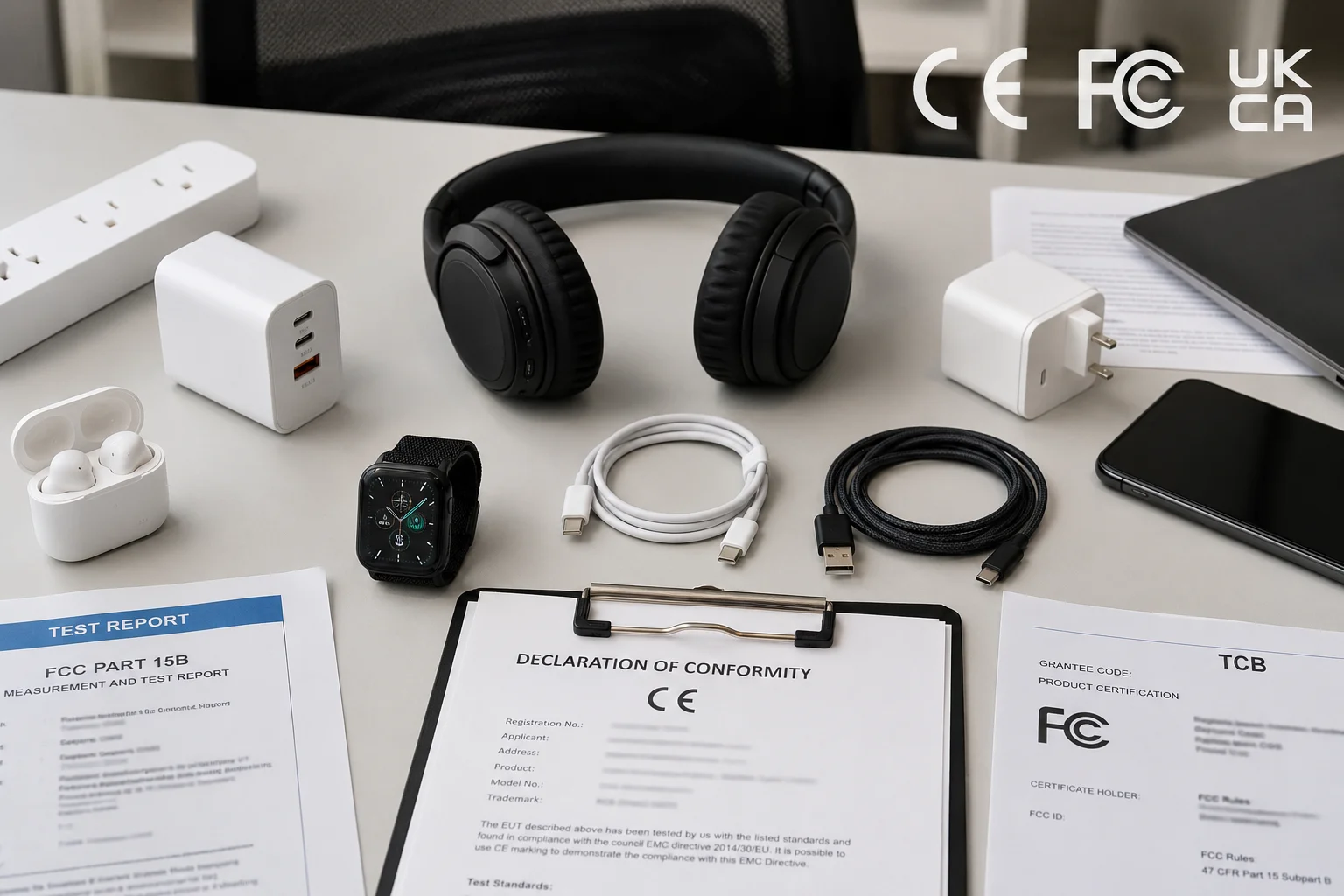
I've been in the 3C electronics export business for 15 years. I talk to importers every day. Many buyers see compliance as just another piece of paper. But the smart ones know it's much more than that. It’s a powerful way to judge a supplier's quality and professionalism. Let's break down how you can use this mindset to protect your business and find great long-term partners.
Why does compliance really matter for importers and distributors?
Do you think compliance is just the factory's problem? Imagine your container being stopped at customs. A simple certification check could have prevented this expensive delay and saved your investment.
For you as an importer, compliance is everything. It guarantees you can legally sell in your market3. It protects your business from fines and lawsuits4. It also builds your brand's reputation as a seller of safe, quality products. Getting this wrong can destroy your business.
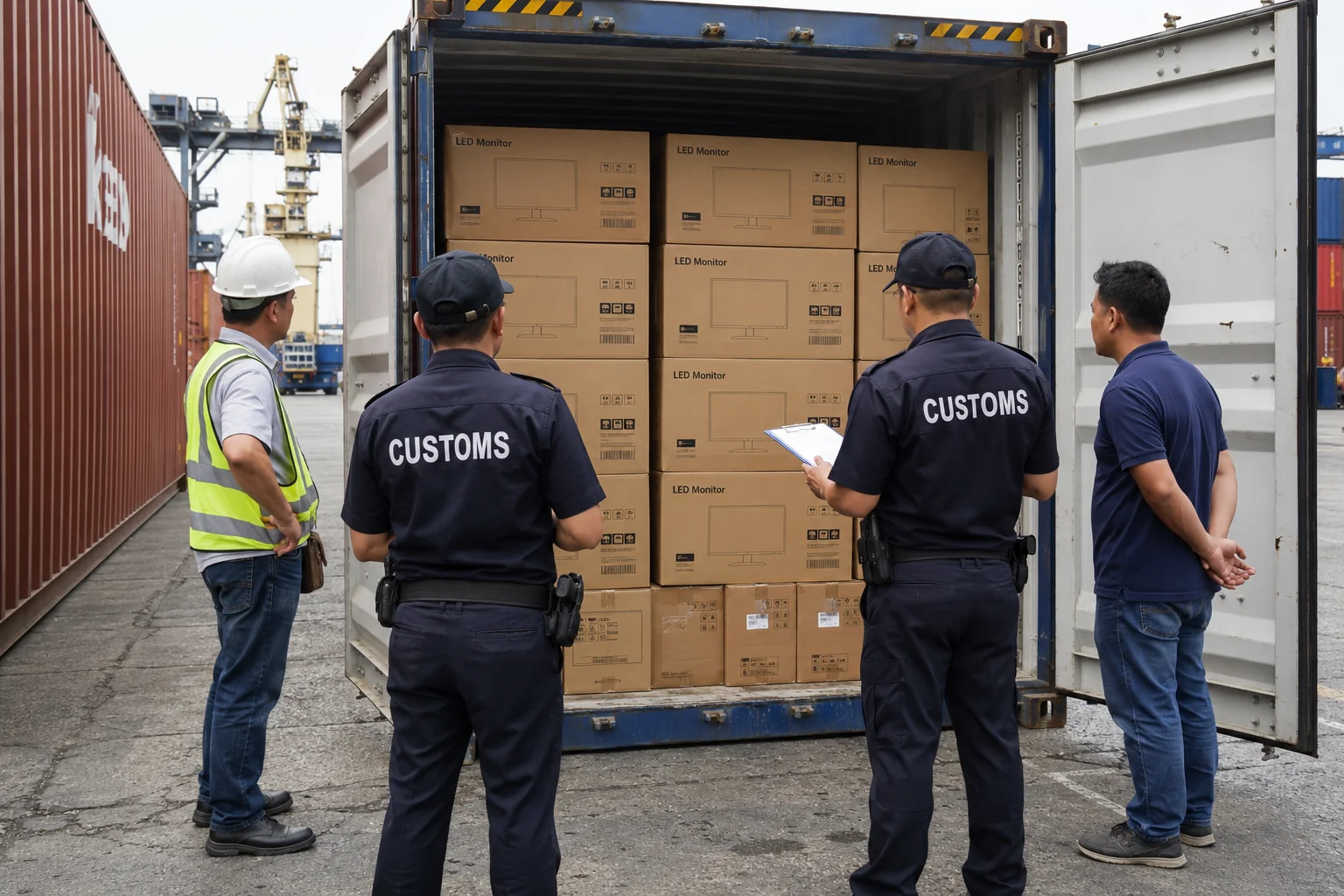
In my experience, the consequences of ignoring compliance are brutal. I remember a client from Germany who was new to importing. He ordered 10,000 TWS earbuds. The supplier gave him a CE certificate. He didn't check it closely. When the goods arrived in Hamburg, customs found the supporting test report was outdated5. The entire shipment was held. He had to pay for new testing in Germany and daily storage fees at the port. It turned a profitable order into a big loss. This isn't just about a piece of paper; it's about real money and your business's future. Compliance failures show that a supplier cuts corners, and if they cut corners on paperwork, they are definitely cutting corners on product quality, too.
Here is a simple breakdown of the risks:
| Aspect | Compliant Product | Non-Compliant Product |
|---|---|---|
| Market Access | Smooth entry through customs. | Goods seized, returned, or destroyed. |
| Financial Risk | Secure investment, clear path to profit. | Total loss of investment, fines, storage fees. |
| Legal Liability | Protected from lawsuits if a product fails. | Personally liable for damages or injuries. |
| Brand Reputation | Seen as a trustworthy, quality seller. | Brand is associated with unsafe, cheap goods. |
What are the main supplier risks behind compliance claims?
A supplier sends you a PDF of a CE certificate. It looks official. Problem solved, right? Not so fast. Fake, expired, or irrelevant documents are common traps6 that catch new importers all the time.
The biggest risk is a supplier using fake or invalid certificates. They might show you a document for a different product, or one that has expired. This is a huge red flag about their honesty. It tells you everything you need to know about their business practices.
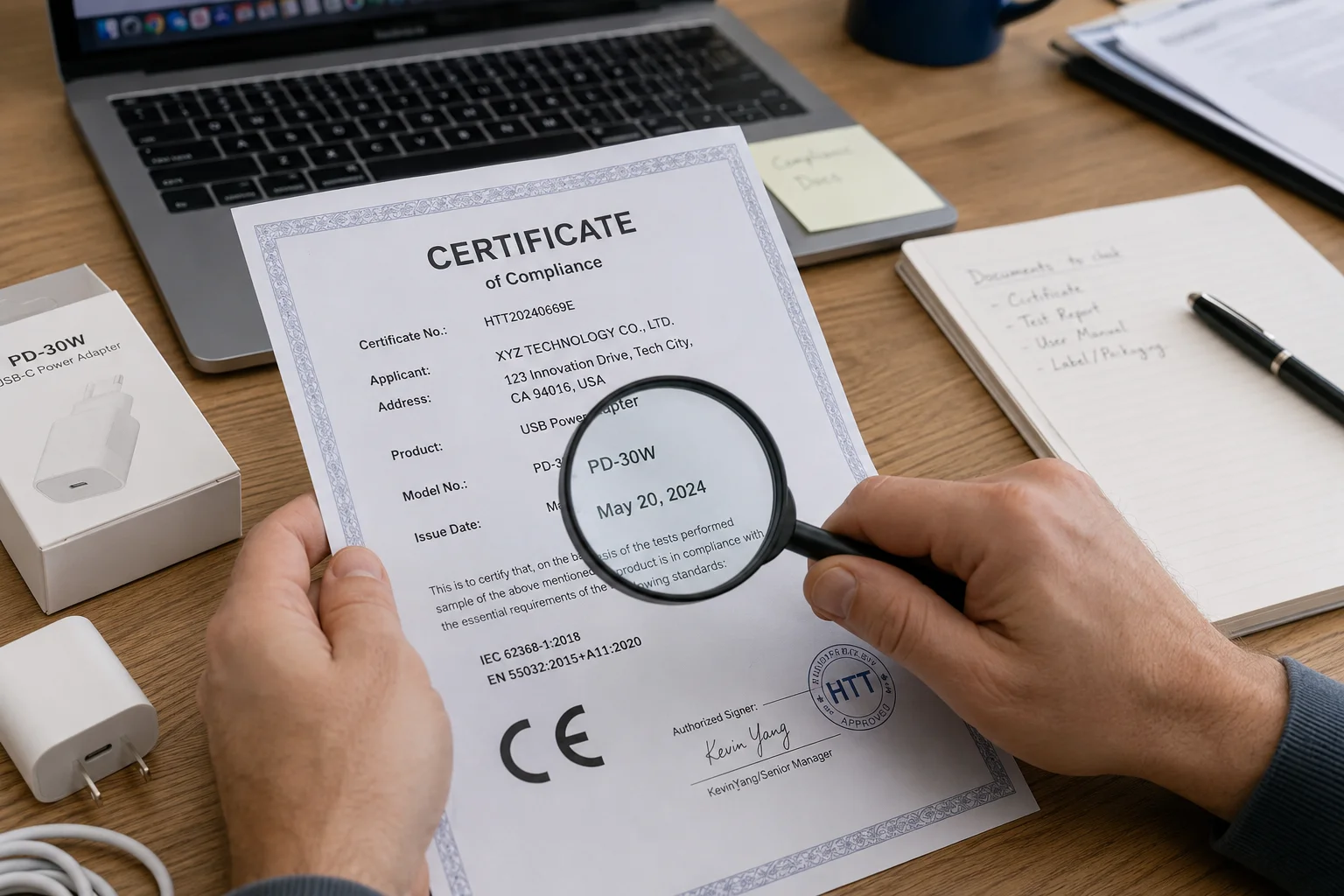
I see this almost every week. A buyer forwards me a certificate from another potential supplier and asks if it looks good. Often, I can spot the problems immediately. The most common tricks are easy to miss if you don't know what to look for. One supplier might use a CE certificate for their "Model A" charger when you are buying "Model B." They look similar, but legally, that certificate is useless for you. Another trick is using a report from a lab that isn't accredited or recognized by your country's authorities. The paper isn't worth anything. This isn't just a mistake; it's a deliberate attempt to mislead you. A supplier who does this is not a partner you can trust with your money or your brand.
Here are the main traps to watch out for:
- Fake Certificates: It's very easy to edit a PDF. Always ask for a way to verify the document with the lab that issued it.
- Expired Certificates: Standards for electronics are updated every few years7. A certificate from 2018 might not be valid today. Check the issue date.
- Mismatched Model Numbers: The certificate must be for the exact product model you are buying. Check every letter and number.
- Irrelevant Standards: A CE certificate might only cover safety (LVD) but not electromagnetic interference (EMC). You need both8.
What should serious buyers ask a supplier before ordering?
You found a supplier with a great price on a new smartwatch. But asking the wrong questions now can cost you thousands of dollars later. Don't let a low price blind you to the huge risks.
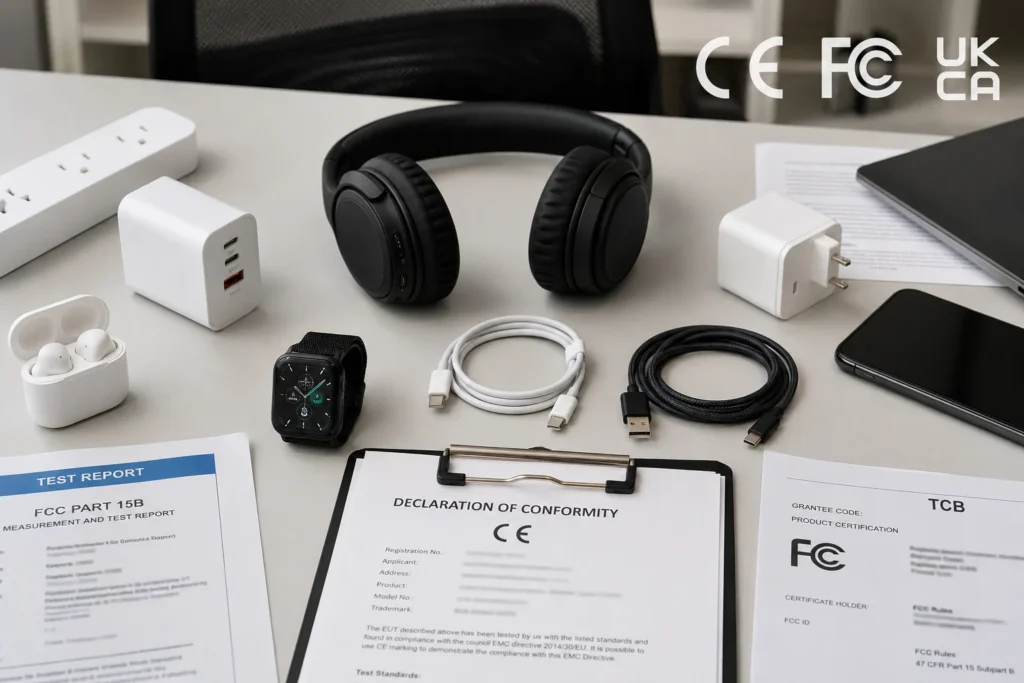
Go beyond the simple question, "Do you have CE?" Instead, ask for the full, original test reports and the Declaration of Conformity9. Ask which accredited lab issued them. This signals that you are a serious buyer who understands the process and cannot be easily fooled.

When a potential client asks us for "the certificate," we know they are probably new. When they ask for the "full EN 55032 test report for the TWS-X8 model," we know they are a professional. Your questions change the entire dynamic of the conversation. You are no longer just a price shopper; you are a potential long-term partner who requires a certain level of professionalism. A good supplier will welcome these questions. They have invested in proper testing and are proud to show the results. A bad supplier will get defensive. They might say, "Don't worry, it's fine," or "All our other customers don't ask for this." That is your signal to walk away. Your questions are the best filter you have.
Here are the questions that will protect you:
- "Can you provide the full Declaration of Conformity (DoC) and all supporting test reports for this exact model?" The certificate is just a summary. The reports have all the data.
- "Which laboratory issued these documents?" You can then research the lab to see if they are accredited and legitimate10.
- "Do these certifications also cover the included accessories, like the USB cable and power adapter?" Accessories are a common point of compliance failure11, especially for RoHS (hazardous substances).
- "Are you aware of the new UKCA mark requirements12 for the UK market?" This tests their knowledge of current and future compliance rules.
How can I tell whether a supplier is really reliable?
Every supplier's website says they are "reliable," "professional," and "experienced." But how can you separate the marketing talk from the reality? Words are cheap. Their actions and documents tell the true story.
A truly reliable supplier is transparent and proactive about compliance. They provide documents quickly and answer detailed questions with confidence. They treat compliance as a shared responsibility to build a safe and successful business together. They are your partner, not just a vendor.

I believe communication is the key. When we work with a new buyer from the US, we don't just send them an FCC certificate. We send them the certificate, the test reports, and a short summary explaining what was tested and how it applies to their product. We want to empower them with knowledge. This builds incredible trust. A risky supplier, on the other hand, makes things difficult. They might delay sending documents, give vague answers, or try to charge you extra for "certification." This is a clear sign that they don't have it or that their documents can't stand up to scrutiny. How a supplier handles your compliance questions tells you exactly how they will handle your production, your quality control, and any problems that come up later.
Here’s how to spot the difference:
| Trait | Reliable Supplier (Partner) | Risky Supplier (Vendor) |
|---|---|---|
| Transparency | Shares full test reports willingly. | Hides behind a simple certificate. Hesitates to share details. |
| Knowledge | Understands your market's specific needs (e.g., UKCA). | Gives generic answers like "CE is fine for everything." |
| Communication | Answers questions clearly and professionally. | Is vague, defensive, or says "nobody else asks for this." |
| Attitude | Sees compliance as part of the product quality. | Treats compliance as an annoying extra cost or hurdle. |
Conclusion
Compliance isn't a barrier; it's your best tool for finding great partners. Use it to vet suppliers, reduce your risk, and build a successful and sustainable import business.
"Penalties Program - U.S. Customs and Border Protection", https://www.cbp.gov/trade/programs-administration/penalties. Governmental bodies, such as the U.S. Customs and Border Protection and European Union market surveillance authorities, have the power to seize, detain, and issue fines for imported products that do not meet mandatory safety and compliance standards. Evidence role: general_support; source type: government. Supports: The claim that non-compliant electronics can be seized and lead to fines.. ↩
"Equipment Authorization | Federal Communications Commission", https://www.fcc.gov/engineering-technology/laboratory-division/general/equipment-authorization. For example, the CE marking indicates that a manufacturer has assessed the product and it meets EU safety, health, and environmental protection requirements, as outlined by the European Commission. Evidence role: definition; source type: government. Supports: The claim that compliance marks certify adherence to specific standards.. ↩
"EU Legislation and CE Marking - International Trade Administration", https://www.trade.gov/country-commercial-guides/eu-eu-legislation-and-ce-marking. In many jurisdictions, such as the European Economic Area, specific compliance marks (like the CE mark) are a mandatory legal prerequisite for placing a product on the market, without which sales are prohibited. Evidence role: general_support; source type: government. Supports: The claim that compliance is a legal requirement for selling products in certain markets.. ↩
"products liability | Wex | US Law | LII / Legal Information Institute", https://www.law.cornell.edu/wex/products_liability. Under product liability laws, importers are often considered manufacturers and can be held liable for damages caused by defective products. Adherence to recognized safety standards is a key part of demonstrating due diligence and can be a defense in legal proceedings. Evidence role: mechanism; source type: institution. Supports: The claim that compliance helps protect against legal liability.. ↩
"CPSC Withdraws Rules That Are Outdated, Fail to Advance Safety", https://www.cpsc.gov/Newsroom/News-Releases/2025/CPSC-Withdraws-Rules-That-Are-Outdated-Fail-to-Advance-Safety-New-Leadership-Focuses-on-Hazards-That-Pose-Real-Risks. Technical standards for electronics are regularly reviewed and updated to adapt to new technologies and safety findings. A test report is only valid if it demonstrates conformity to the current, harmonized version of the relevant standard. Evidence role: mechanism; source type: institution. Supports: The claim that test reports can become outdated due to evolving standards.. ↩
"CBP seized more than $190000 in counterfeit products", https://www.cbp.gov/newsroom/local-media-release/cbp-seized-more-190000-counterfeit-products. Reports from market surveillance authorities in regions like the EU frequently highlight issues of non-compliance, which can include missing, forged, or incorrect technical documentation provided by manufacturers and importers. Evidence role: statistic; source type: government. Supports: The claim that invalid compliance documents are a common issue.. Scope note: Sources may provide general statistics on non-compliance rather than specifically on the prevalence of fake documents. ↩
"ISO/IEC 15288 - Wikipedia", https://en.wikipedia.org/wiki/ISO/IEC_15288. International and regional standards bodies, such as the IEC and CENELEC, follow systematic review processes that typically result in standards being reaffirmed, amended, or revised every five to seven years to reflect technological and safety advancements. Evidence role: mechanism; source type: institution. Supports: The claim that electronics standards are updated on a recurring basis.. ↩
"The Blue Guide on the implementation of the product rules 2022 is ...", https://single-market-economy.ec.europa.eu/news/blue-guide-implementation-product-rules-2022-published-2022-06-29_en. Regulatory frameworks like the European Union's New Legislative Framework specify that if a product falls within the scope of two or more directives, it must meet the provisions of all applicable ones. For many electronics, this includes both the Low Voltage Directive (LVD) and the Electromagnetic Compatibility (EMC) Directive. Evidence role: definition; source type: government. Supports: The claim that a product may need to comply with multiple directives (e.g., LVD and EMC).. ↩
"Compliance FAQs: CE Marking | NIST", https://www.nist.gov/standardsgov/compliance-faqs-ce-marking. The EU Declaration of Conformity is a mandatory, legally binding document in which the manufacturer or their authorized representative formally declares that a product complies with all applicable EU requirements. It must be drawn up before the CE mark is affixed. Evidence role: definition; source type: government. Supports: The claim that the Declaration of Conformity is a critical legal document.. ↩
"License Verification - Laboratory Field Services - CDPH - CA.gov", https://www.cdph.ca.gov/Programs/OSPHLD/LFS/pages/verify.aspx. Accreditation, often to standards like ISO/IEC 17025, confirms a laboratory's technical competence and impartiality. Importers can often verify a lab's accreditation status through online databases maintained by national or international accreditation bodies. Evidence role: definition; source type: institution. Supports: The claim that verifying a lab's accreditation is an important step.. ↩
"Recalls & Product Safety Warnings | CPSC.gov", https://www.cpsc.gov/Recalls. Market surveillance studies and product recall data often show that accessories, such as power cords and chargers, are a significant source of non-compliance, particularly for regulations restricting hazardous substances like RoHS, due to materials used in cables and solder. Evidence role: case_reference; source type: research. Supports: The claim that accessories are a frequent source of compliance failures.. ↩
"United Kingdom - Labeling/Marking Requirements", https://www.trade.gov/country-commercial-guides/united-kingdom-labelingmarking-requirements. Following its departure from the European Union, the United Kingdom introduced the UK Conformity Assessed (UKCA) marking as a new product marking requirement for goods being placed on the market in Great Britain (England, Wales, and Scotland). Evidence role: general_support; source type: government. Supports: The claim that there are new UKCA mark requirements for the UK market.. ↩