Are you worried about picking the wrong supplier in China? A bad choice can mean lost money and poor quality. I'll show you what truly matters beyond the factory versus trader debate.
The real difference isn't just who makes the product. It's about risk management, communication, and flexibility. A good trading company often provides better service, lower MOQs, and a wider product selection1, which can be more valuable than direct factory prices, especially for new importers.
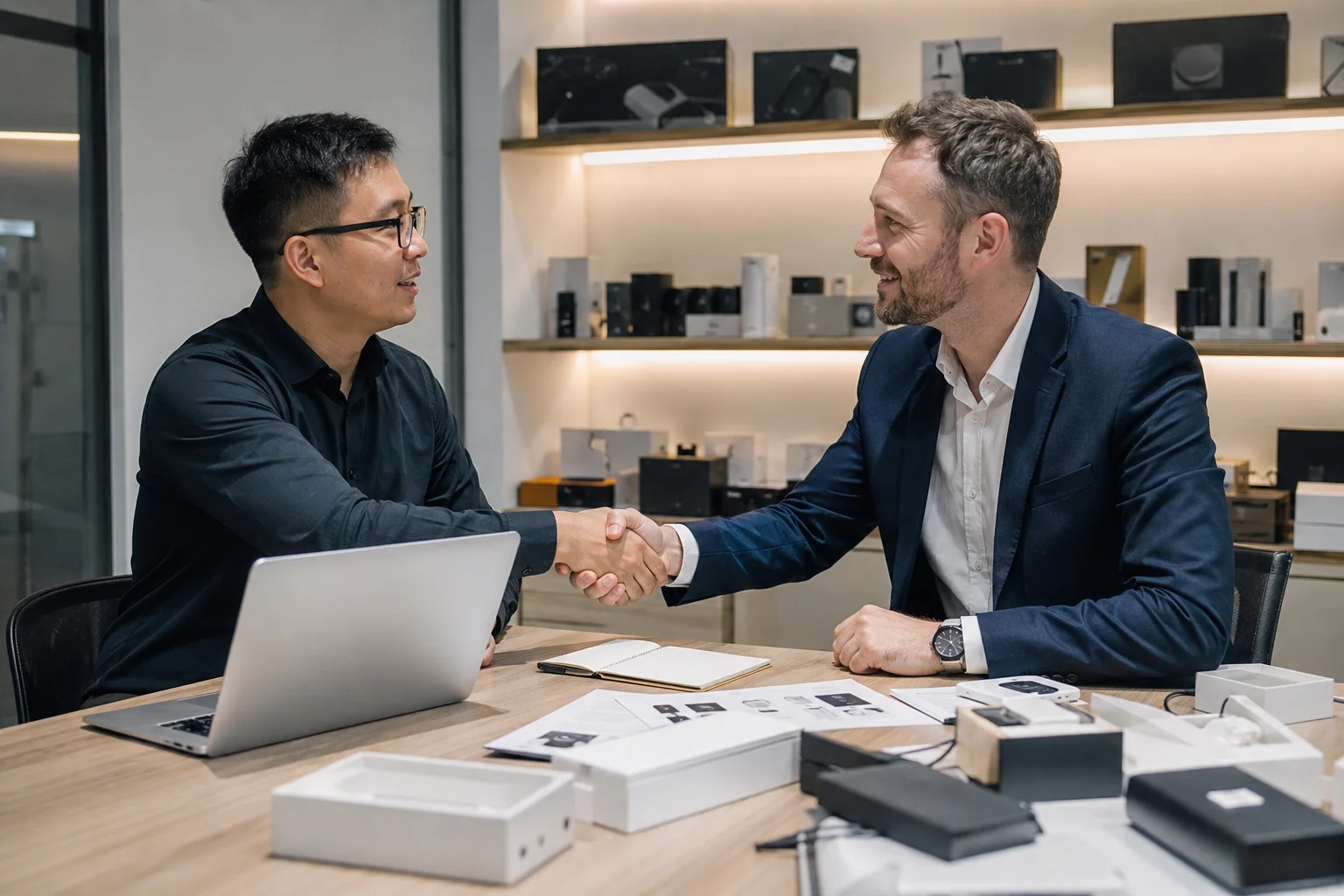
After 15 years in this business, I've seen countless importers get stuck on one question: "Should I buy from a manufacturer or a trading company?" They spend weeks trying to find a "real factory," thinking it's the only way to get a good price. But honestly, that's often the wrong question to start with. The right question is about your business and the risks you can handle. Choosing a partner is about finding the right fit for your specific needs, whether that’s a massive factory or a flexible trading company like ours. Let me walk you through what I've learned from thousands of conversations with buyers just like you.
How can I tell whether a supplier is really reliable?
Afraid of sending money to a supplier who might just disappear? Scams are real2, and even legitimate suppliers can be unreliable, causing massive headaches for your business. Focus on these key signals.
A reliable supplier has a proven track record, clear communication, and verifiable business credentials. Look for business licenses, certifications (like CE, RoHS3), and an active online presence. Their willingness to provide details is a huge green flag.
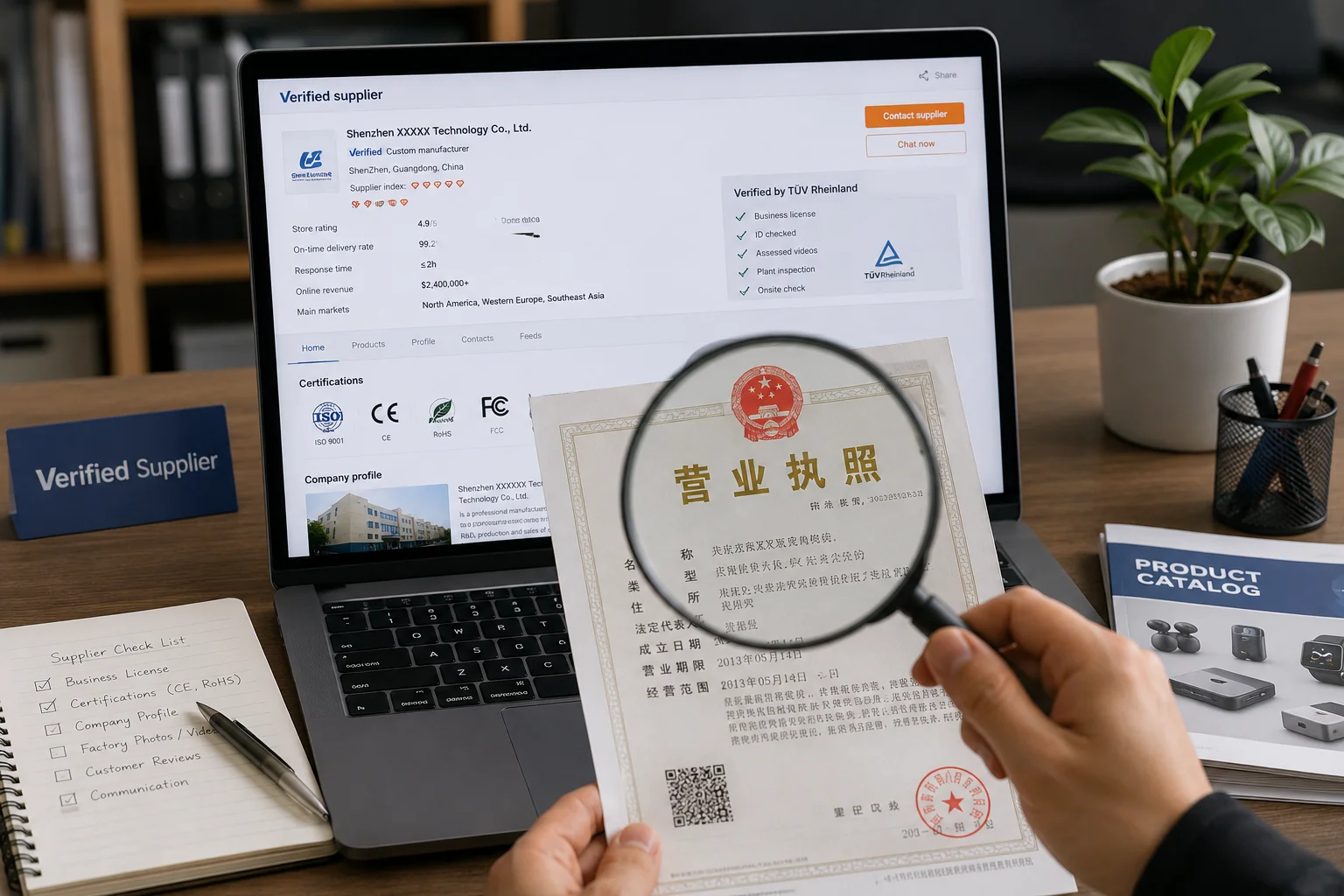
In my experience, reliability goes way beyond just not being a scam. A reliable partner is consistent. They deliver what they promise, when they promise it. A flashy website means nothing if they can't answer your technical questions or if their production quality varies from one order to the next. I always tell my clients to think of it as hiring an employee. You need to do your due diligence before you commit. A serious supplier will not hesitate to provide you with the information you need to feel secure. If they get defensive or vague when you ask for basic documents, that's a major warning sign. Your goal is to build a long-term relationship, and that starts with trust and transparency.
What to Verify for Reliability
- Business License: Ask for a copy. This proves they are a legally registered company in China. You can often verify these online4.
- Key Certifications: For 3C electronics, certifications like CE, RoHS, and FCC are non-negotiable for Western markets5. A reliable supplier will have these ready.
- Video Call: Ask for a quick video call. You can see their office, meet the team, and get a feel for their professionalism. It’s much harder to fake a real-time conversation.
- References or Case Studies: A supplier with experience should be able to share examples of their work or connect you with a current client.
What is the difference between a manufacturer and a trading company?
Are you convinced you must buy directly from a factory to get the best price? This common belief often leads to higher costs, communication nightmares, and totally inflexible terms for importers.
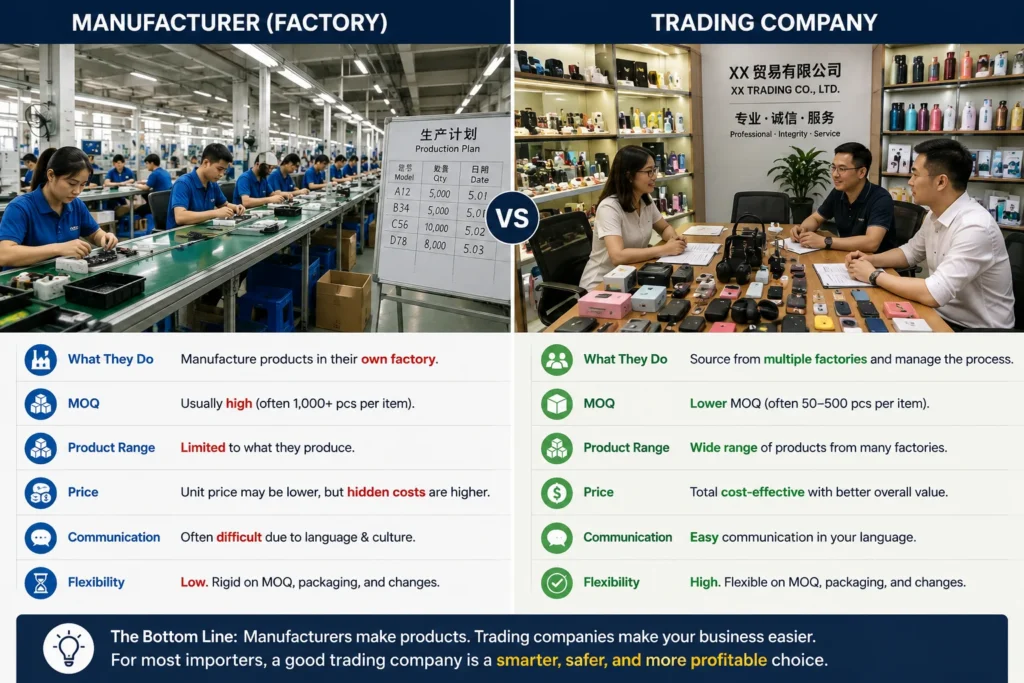
A manufacturer makes the products. A trading company sources and manages them.6 Factories often have high MOQs7 and a limited product range. Trading companies offer flexibility, lower MOQs, and manage multiple suppliers for you, acting as your local boots-on-the-ground team.
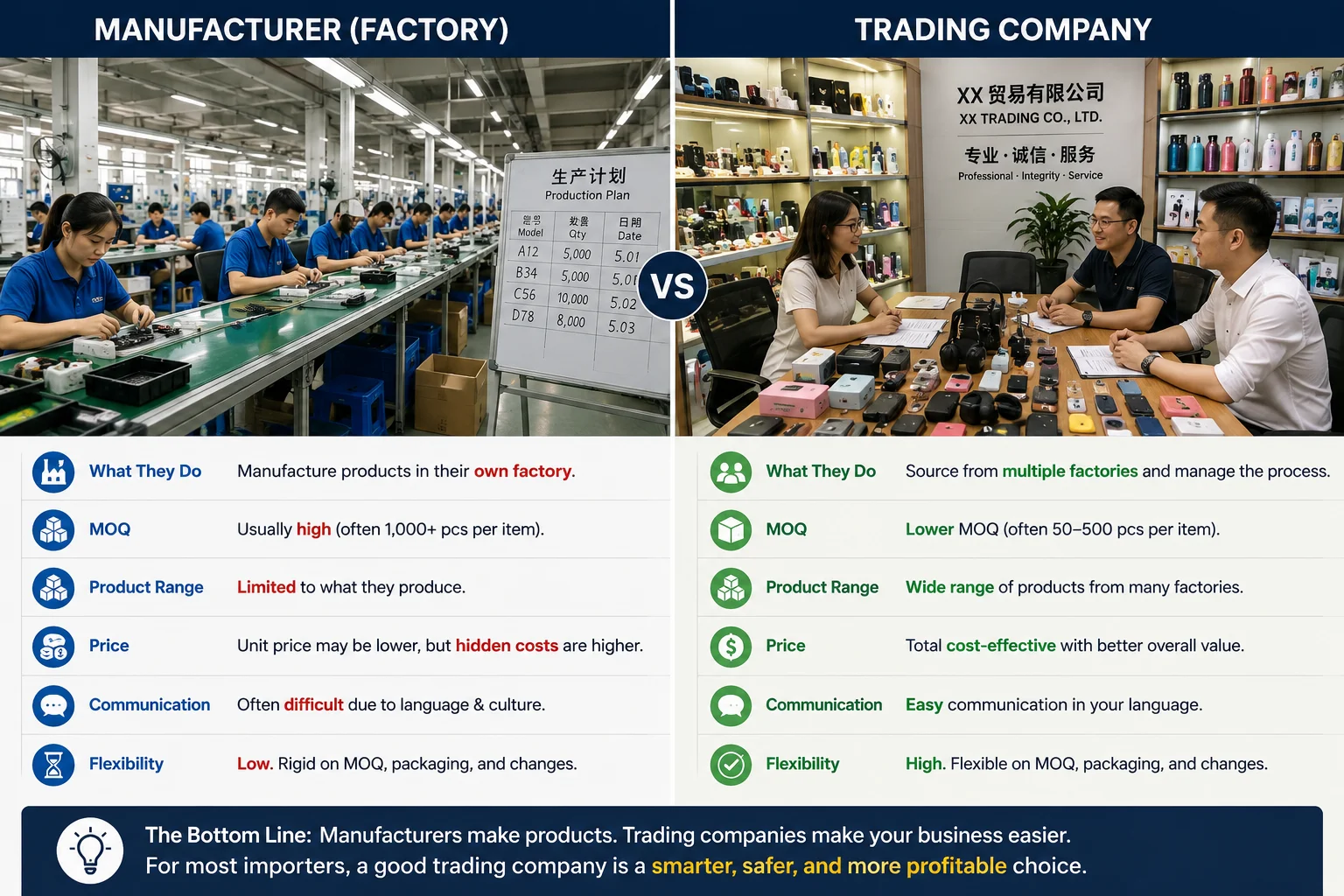
I remember a client from the US who was determined to work only with a smartwatch factory. He spent two months negotiating, but the factory's MOQ was 3,000 pieces per color. His budget couldn't handle that kind of risk on a new product. He came to us, and we were able to source a very similar high-quality product for him with an MOQ of just 500 pieces. He tested the market, sold out, and came back for a larger order. The "slightly higher" unit price from us was nothing compared to the risk and cash he saved. This is the trade-off. It's not just about the unit price. It's about your total investment, your risk, and your speed to market. A trading company’s value is in the service, flexibility, and risk reduction they provide.
Manufacturer vs. Trading Company: A Quick Comparison
| Feature | Manufacturer | Trading Company |
|---|---|---|
| MOQ | High (often 1000s) | Low & Flexible (often 100s) |
| Price | Potentially lower per unit | Slightly higher per unit |
| Product Variety | Very limited, only what they make | Very wide, can source anything |
| Communication | Can be difficult (language, focus) | Excellent (English-speaking, sales-focused) |
| Service | Focused on production | Focused on your business needs |
How do low MOQ trial orders reduce risk?
Are you nervous about placing a huge first order with a brand-new supplier? Tying up all your cash in unproven inventory can sink a new product line before it even starts.
A low MOQ trial order lets you test the product quality, supplier reliability, and market demand without a large financial commitment. It's the smartest way to validate everything—from the product's feel to your sales forecast—before you scale up your investment.
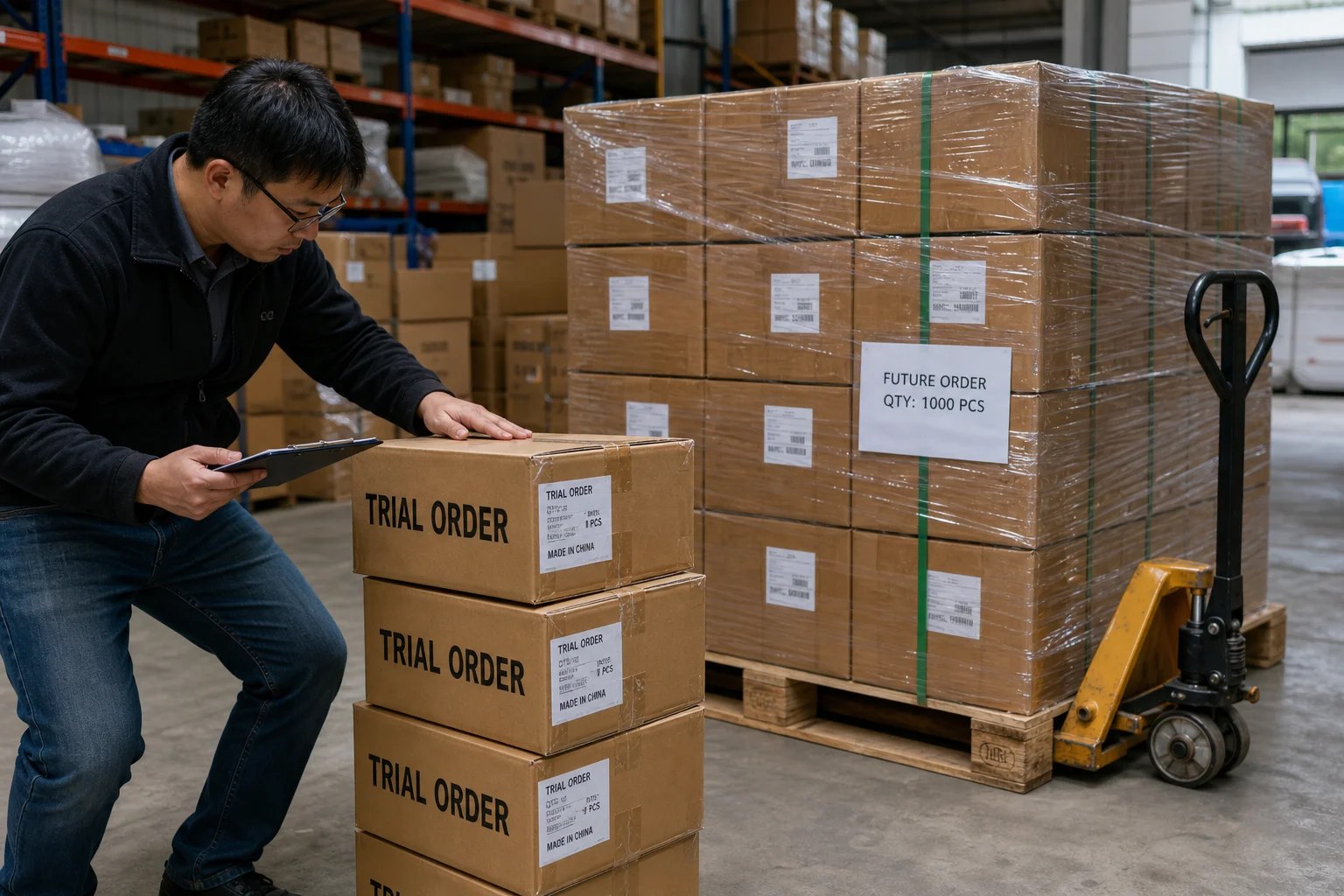
The biggest risk for an importer isn't always a bad supplier; it's a bad product-market fit8. What if you order 5,000 smartwatches and discover your customers don't like the strap material or the user interface? A trial order of, say, 200 or 500 units allows you to get real-world feedback. You can test the product yourself, send samples to influencers, and even sell a small batch to see how customers react. This is market research with real skin in the game, but without betting the entire farm. I always advise new buyers to see their first order as an investment in data, not just inventory. Trading companies are perfect for this. We work with factories to combine smaller orders from multiple clients, allowing us to offer MOQs that factories would never accept from a single buyer.
Key Risks a Trial Order Reduces
- Product Quality Risk: You get to touch, test, and use the product before committing to a huge volume. Is it as good as the sample?
- Supplier Performance Risk: How do they handle the logistics? Is the packaging secure? Do they ship on time? A small order tests their entire process.
- Market Demand Risk: The most important one! Do your customers actually want to buy this product? A trial order gives you a clear answer.
- Cash Flow Risk9: You keep your capital free for marketing and other business needs instead of tying it all up in a warehouse full of unproven goods.
What should I verify before payment?
Ready to send that 30% deposit but have that nagging feeling in your gut? Sending money is the point of no return. Overlooking one tiny detail on the invoice can lead to a total disaster.
Before any payment, triple-check the Proforma Invoice (PI)10 details: company name, bank information, product specs, pricing, and shipping terms. Ensure the bank account name exactly matches the verified company name. A quick video call to confirm is always a good idea.
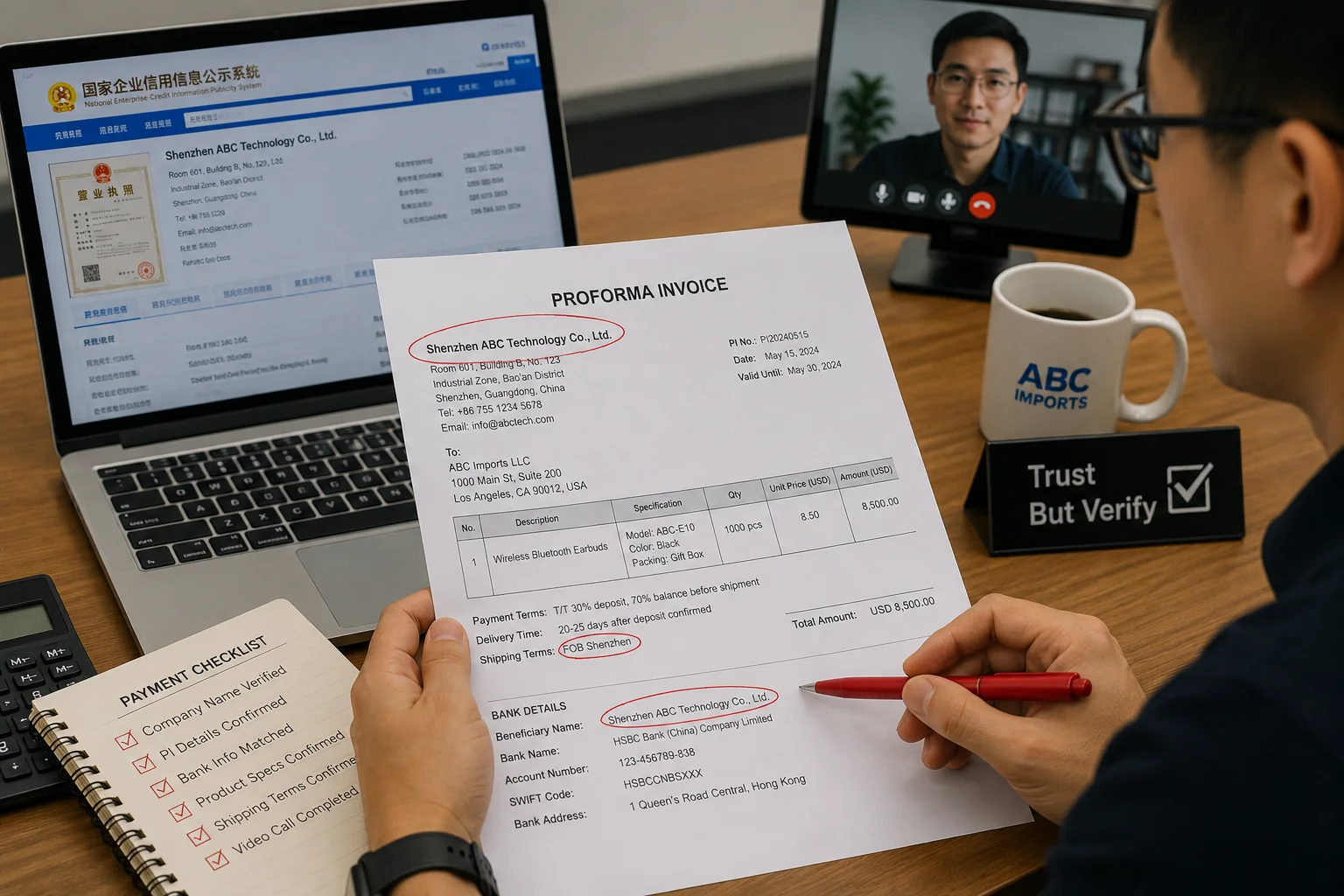
Let me share a quick, scary story. A potential client once forwarded me an email from his "supplier." They were asking him to send the deposit to a new bank account because their primary one was "under audit." The email looked legitimate, but the beneficiary was a personal name, not a company. I immediately told him to stop and call his contact. It turned out the supplier's email had been hacked. He almost sent $15,000 to a scammer. This happens more often than you think11. Always be paranoid before you pay. Never accept changes to payment information via email alone. Pick up the phone or start a video call to confirm any changes directly with the person you've been speaking with. It’s a five-minute call that can save you thousands.
Your Final Pre-Payment Checklist
- Proforma Invoice (PI) Deep Dive:
- Beneficiary Name: Does the company name on the bank account details exactly match the company name on their business license? If not, run away.
- Bank Location: Does the bank's location make sense? A Shenzhen company with a bank account in a different, obscure province is a red flag.
- Product Specs: Are the model number, color, memory, and packaging details 100% correct?
- Incoterms12: Is it clear who pays for what? (e.g., FOB Shenzhen, EXW).
- Final Communication:
- If you have any doubt, ask for a video call to verbally confirm the order details and payment information.
- Trust your gut. If something feels off, pause and ask more questions. A good partner will be patient and help you feel secure.
Conclusion
Choosing the right supplier isn't about factory versus trader. It's about finding a reliable partner who fits your business model, helps you manage risk, and supports your growth.
"The Impact of Global Trade Policies on Supply Chain Strategy", https://businessstories.sandiego.edu/the-impact-of-global-trade-policies-on-supply-chain-strategy. Sources from international trade organizations or business schools often describe the role of trading companies as intermediaries that provide value through supplier consolidation, quality control, communication, and offering lower Minimum Order Quantities (MOQs) by bundling orders from multiple clients. Evidence role: general_support; source type: institution. Supports: The claim that trading companies can offer benefits like lower MOQs, product variety, and consolidated services, which are particularly valuable for smaller importers.. ↩
"Global trade in fake goods reached USD 467 billion, posing risks to ...", https://www.oecd.org/en/about/news/press-releases/2025/05/global-trade-in-fake-goods-reached-USD-467-billion-posing-risks-to-consumer-safety-and-compromising-intellectual-property.html. Reports from law enforcement agencies and international trade bodies document the prevalence of procurement fraud, including scams where suppliers disappear after receiving a deposit or deliver substandard goods. Evidence role: statistic; source type: government. Supports: The claim that supplier scams are a significant and real problem in international trade.. ↩
"CE marking - Wikipedia", https://en.wikipedia.org/wiki/CE_marking. The CE marking is a certification mark that indicates conformity with health, safety, and environmental protection standards for products sold within the European Economic Area (EEA). The Restriction of Hazardous Substances (RoHS) directive restricts the use of specific hazardous materials found in electrical and electronic products. Evidence role: definition; source type: government. Supports: The definition and importance of CE and RoHS certifications.. ↩
"China Company Search - Database of Mainland Corporations", https://www.registrationchina.com/china-company-search/. China's National Enterprise Credit Information Publicity System (NECIPS) is a government-run online portal where foreign businesses can look up and verify the registration status and official details of Chinese companies. Evidence role: case_reference; source type: government. Supports: The claim that Chinese business licenses can be verified online.. ↩
"Equipment Authorization | Federal Communications Commission", https://www.fcc.gov/engineering-technology/laboratory-division/general/equipment-authorization. Regulatory bodies in major Western markets mandate specific certifications for electronic products. For example, the U.S. Federal Communications Commission (FCC) requires certification for devices that emit radio frequency energy, while the European Union requires the CE mark to show compliance with its health, safety, and environmental standards. Evidence role: general_support; source type: government. Supports: The claim that CE, RoHS, and FCC certifications are mandatory for selling electronics in the EU and US.. ↩
"Manufacturing & Trade Inventories & Sales - Definitions", https://www.census.gov/mtis/definitions.html. In international trade, a manufacturer is an entity that produces goods from raw materials, whereas a trading company is a specialized intermediary that connects buyers with various manufacturers, often providing services like sourcing, logistics, and quality control. Evidence role: definition; source type: encyclopedia. Supports: The distinct roles of manufacturers and trading companies in a supply chain.. ↩
"[PDF] Raw Material Minimum Order Quantity Optimization - DSpace@MIT", https://dspace.mit.edu/bitstream/handle/1721.1/121302/1240293813-MIT.pdf?sequence=1. Manufacturers often set high Minimum Order Quantities (MOQs) to cover fixed costs associated with a production run, such as machine setup, tooling, and raw material procurement. Larger orders allow them to achieve economies of scale, reducing the per-unit cost. Evidence role: mechanism; source type: education. Supports: The economic rationale behind why factories often impose high MOQs.. ↩
"Page - Product/Market Fit - Stanford University", http://web.stanford.edu/class/ee204/ProductMarketFit.html. The concept of 'product-market fit,' often attributed to entrepreneur and investor Marc Andreessen, describes the degree to which a product satisfies strong market demand. Business strategists consider achieving it to be a crucial step in reducing the risk of business failure, often more critical than initial supply chain optimization. Evidence role: definition; source type: education. Supports: The concept that market demand (product-market fit) is a primary risk factor for new products.. ↩
"Use Working Capital To Grow Your Business' International Sales", https://grow.exim.gov/blog/use-working-capital-to-grow-your-business-international-sales. Business finance principles state that large inventory purchases tie up working capital, which is the cash available for day-to-day operations. By committing significant funds to unproven stock, a business increases its cash flow risk and reduces its ability to invest in other critical areas like marketing. Evidence role: mechanism; source type: education. Supports: The claim that large inventory purchases pose a significant cash flow risk.. ↩
"Pro Forma Invoice - International Trade Administration", https://www.trade.gov/pro-forma-invoice. A proforma invoice is a preliminary bill of sale sent to buyers in advance of a shipment or delivery of goods. It outlines the goods, their value, and other key information, allowing the buyer to arrange financing, open a letter of credit, or secure import permits. It is a declaration of commitment from the seller, not a formal demand for payment. Evidence role: definition; source type: institution. Supports: The definition and purpose of a proforma invoice.. ↩
"Business Email Compromise - FBI", https://www.fbi.gov/how-we-can-help-you/scams-and-safety/common-frauds-and-scams/business-email-compromise. The FBI's Internet Crime Complaint Center (IC3) consistently reports that Business Email Compromise (BEC) scams, which include payment diversion tactics like the one described, are among the most financially damaging online crimes, costing businesses billions of dollars annually. Evidence role: statistic; source type: government. Supports: The claim that payment diversion scams via email are a common and costly form of fraud.. ↩
"Know Your Incoterms - International Trade Administration", https://www.trade.gov/know-your-incoterms. Incoterms® are a set of globally recognized rules published by the International Chamber of Commerce (ICC). They define the responsibilities of sellers and buyers for the delivery of goods under sales contracts, clarifying who is responsible for shipping, insurance, and customs clearance at each stage of the journey. Evidence role: definition; source type: institution. Supports: The definition and governing body of Incoterms.. ↩