Are you struggling to decide on your next TWS earbud lineup? The new Bluetooth 5.4 standard promises big changes1, but jumping in too early could hurt your bottom line.
Upgrading to Bluetooth 5.4 can be a game changer if it aligns with your market. For retailers, it's about marketing new benefits like Auracast and better battery life. But success depends on balancing innovation with real customer demand and a mature tech ecosystem.
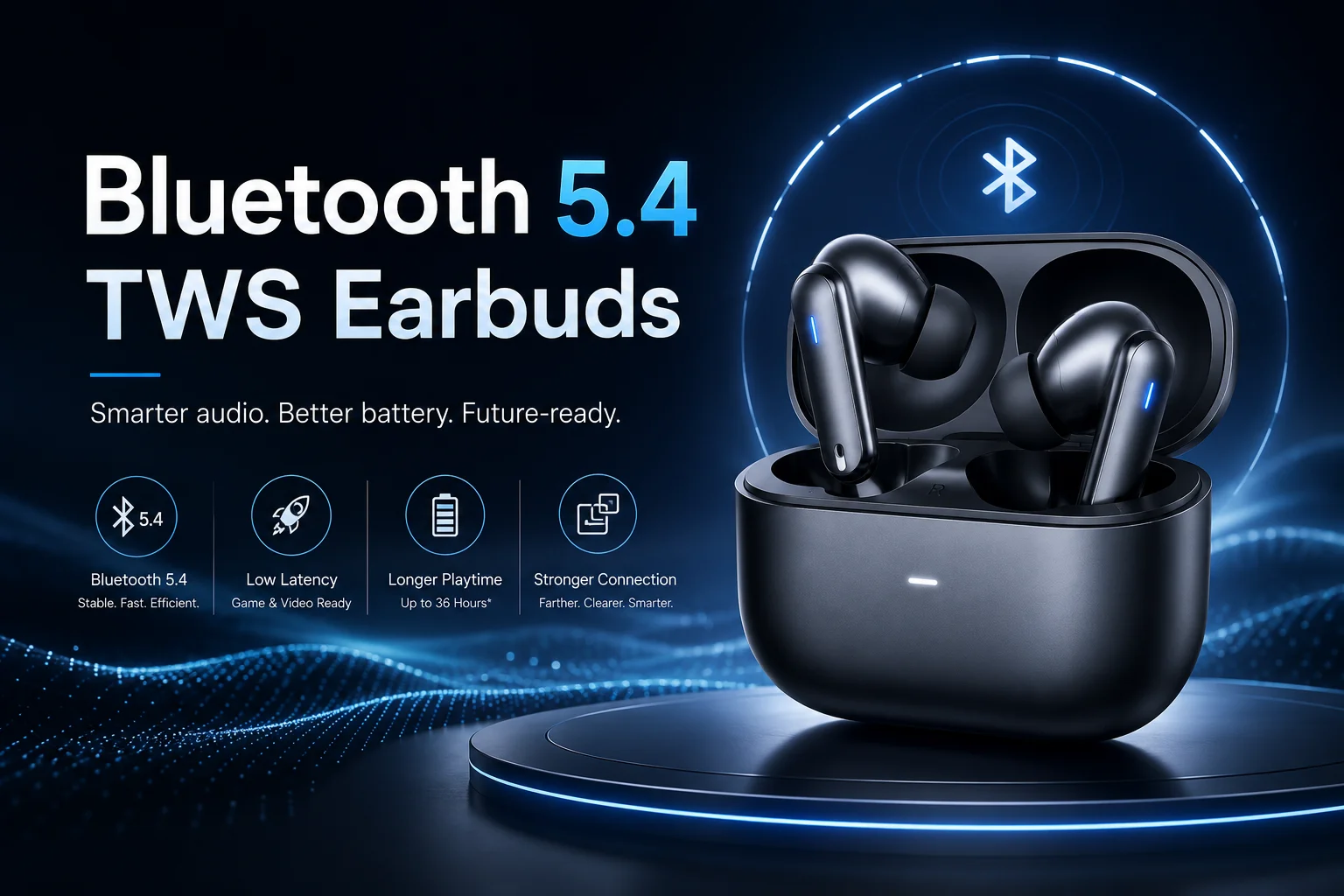
I've been exporting electronics from Shenzhen for over 15 years. I see this question pop up all the time with my clients. Brands and retailers want to know if the latest tech is worth the investment. The truth is, it’s not a simple yes or no answer. It’s a strategic decision that needs careful thought. Let's break down what really matters for your business so you can make a smart choice for your next product line.
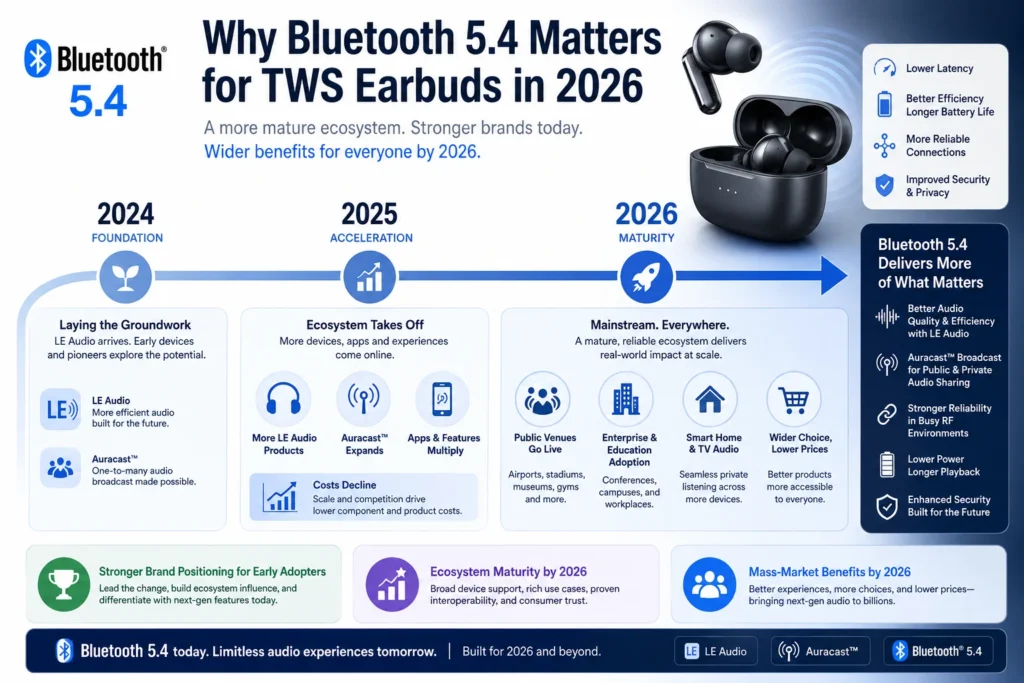
Why Bluetooth 5.4 Matters for TWS Earbuds in 2026?
Are you worried your current TWS stock will be obsolete soon? Bluetooth 5.4 is setting the stage for future audio, but its real impact depends on market adoption.
Bluetooth 5.4 will matter in 2026 because the ecosystem of phones and public venues supporting features like Auracast and LE Audio will be more mature. Early adopters will have established brand recognition, while mass-market retailers will benefit from lower costs and proven demand.
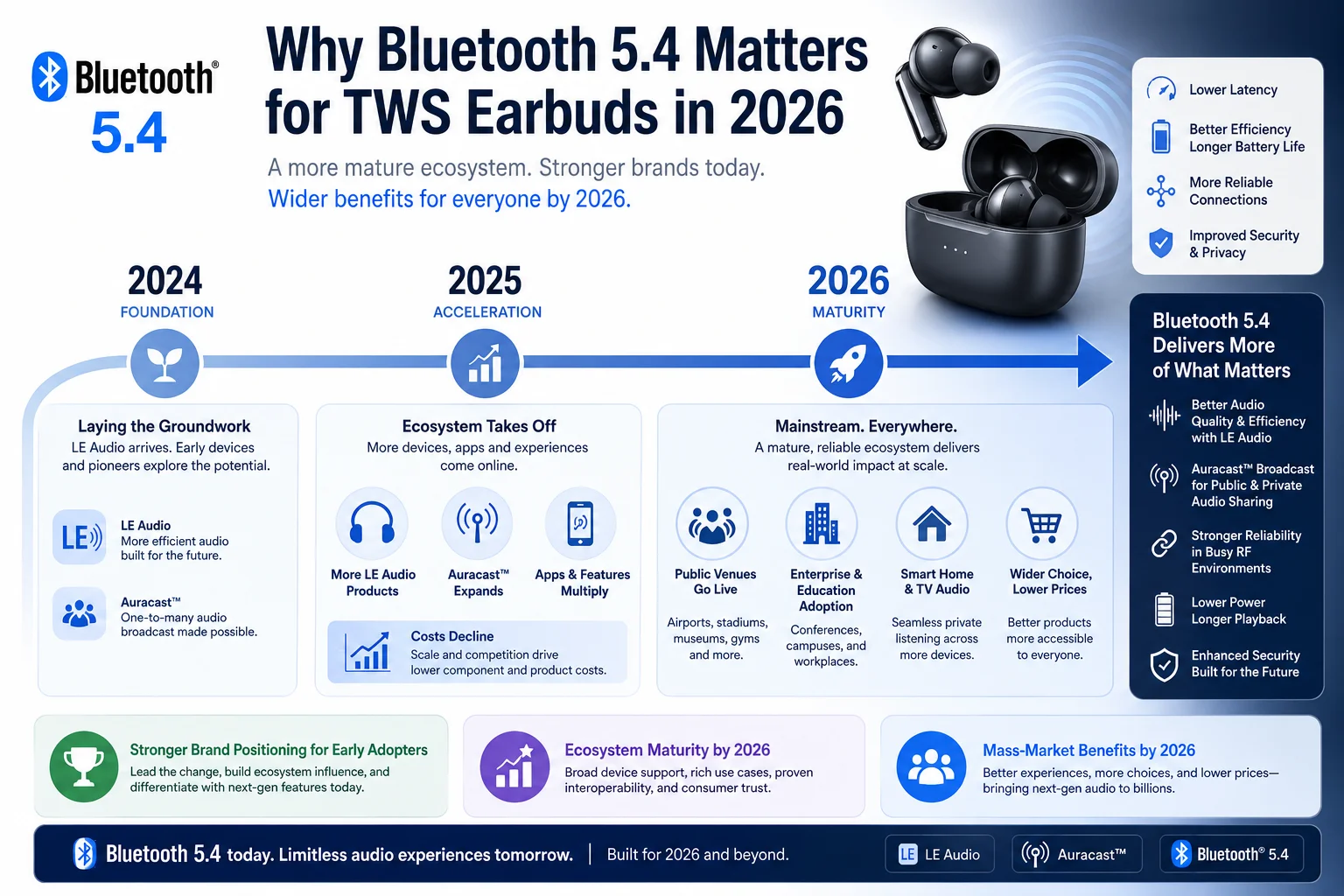
We often get asked by clients whether they should jump on Bluetooth 5.4 now or wait. My answer is always the same: think about your brand and your customer. This isn't just a tech upgrade; it's a risk management decision. You have to balance the risk of being left behind with the risk of investing in a feature that mainstream customers won't pay extra for yet. For a brand that targets tech enthusiasts, being first with Bluetooth 5.4 can be a huge differentiator. But for a retailer serving the mass market, it might be wiser to wait until costs come down and more phones support the new features. The "game-changing" moment is different for every business. It's about planning your product roadmap for the next two years, not just the next two months.
| Strategy | For Brands Targeting... | Key Advantage | Key Risk |
|---|---|---|---|
| Adopt Early (2024-2025) | Tech Enthusiasts, High-End Market | First-mover advantage, brand image | Higher costs, small user base |
| Adopt Later (2026+) | Mass Market, Value-Conscious | Lower costs, proven demand | Increased competition, commodity market |
What Are the Key Bluetooth 5.4 Features Wholesale Buyers Should Understand?
Are you confused by technical jargon like PAwR and EATT? These features directly impact your product's performance and cost, so understanding them is key to a smart purchase.
Buyers should focus on three key features: LE Audio for better efficiency and quality2, Auracast for audio sharing, and Periodic Advertising with Responses (PAwR)3. These translate to better battery life, new use cases, and enhanced connectivity, which are all marketable points.
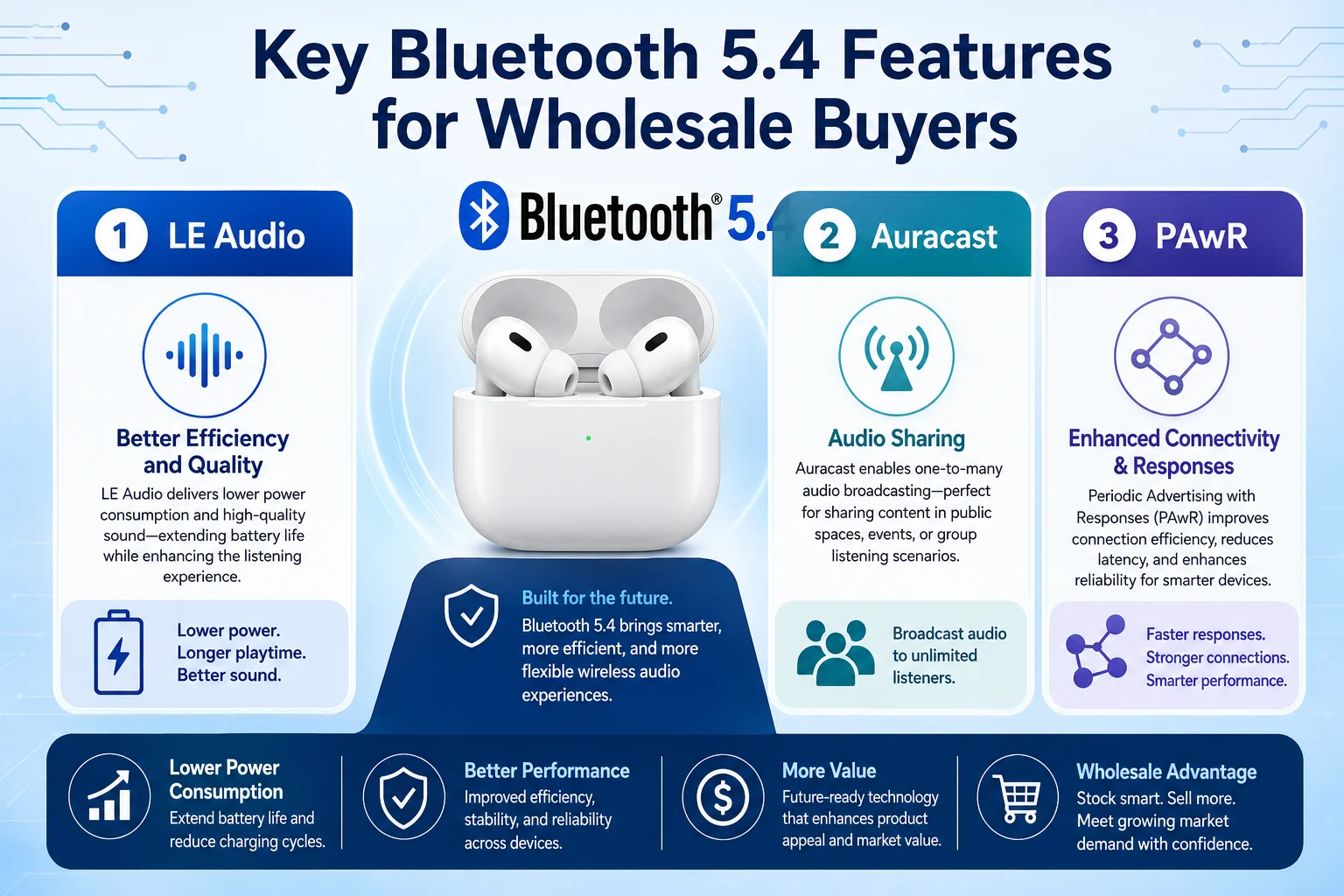
Instead of just checking a box for "Bluetooth 5.4," you need to ask how these features create business value. The tech itself doesn't sell; the story you tell your customers does. A common mistake we see is brands focusing only on the version number. A better approach is to understand what each feature allows you to promise the end-user. LE Audio isn't just a technical term; it means you can credibly market "all-day battery life." Auracast isn't just a feature; it's a new way for friends to share music or for travelers to hear airport announcements. Understanding these benefits helps you decide if they resonate with your target customer and if you can build a compelling marketing story around them.
| Technical Feature | What It Means for Your Business |
|---|---|
| LE Audio (with LC3 Codec) | Market "longer battery life" and "crystal-clear audio." |
| Auracast™ Broadcast Audio | Market "share your audio" and "tune into public broadcasts." |
| PAwR & EATT | Market "rock-solid connection" and "perfect for crowded places." |
What Is Auracast and Why Could It Change the Earbuds Market?
Imagine your customers tuning into public TVs at airports or gyms with their own earbuds. Auracast makes this possible, but is the market ready for it?
Auracast is a new Bluetooth feature allowing a single audio source to broadcast to an unlimited number of earbuds4. It could change the market by creating new public and shared listening experiences, turning earbuds into assistive listening devices5 and opening up new venue-based business models.
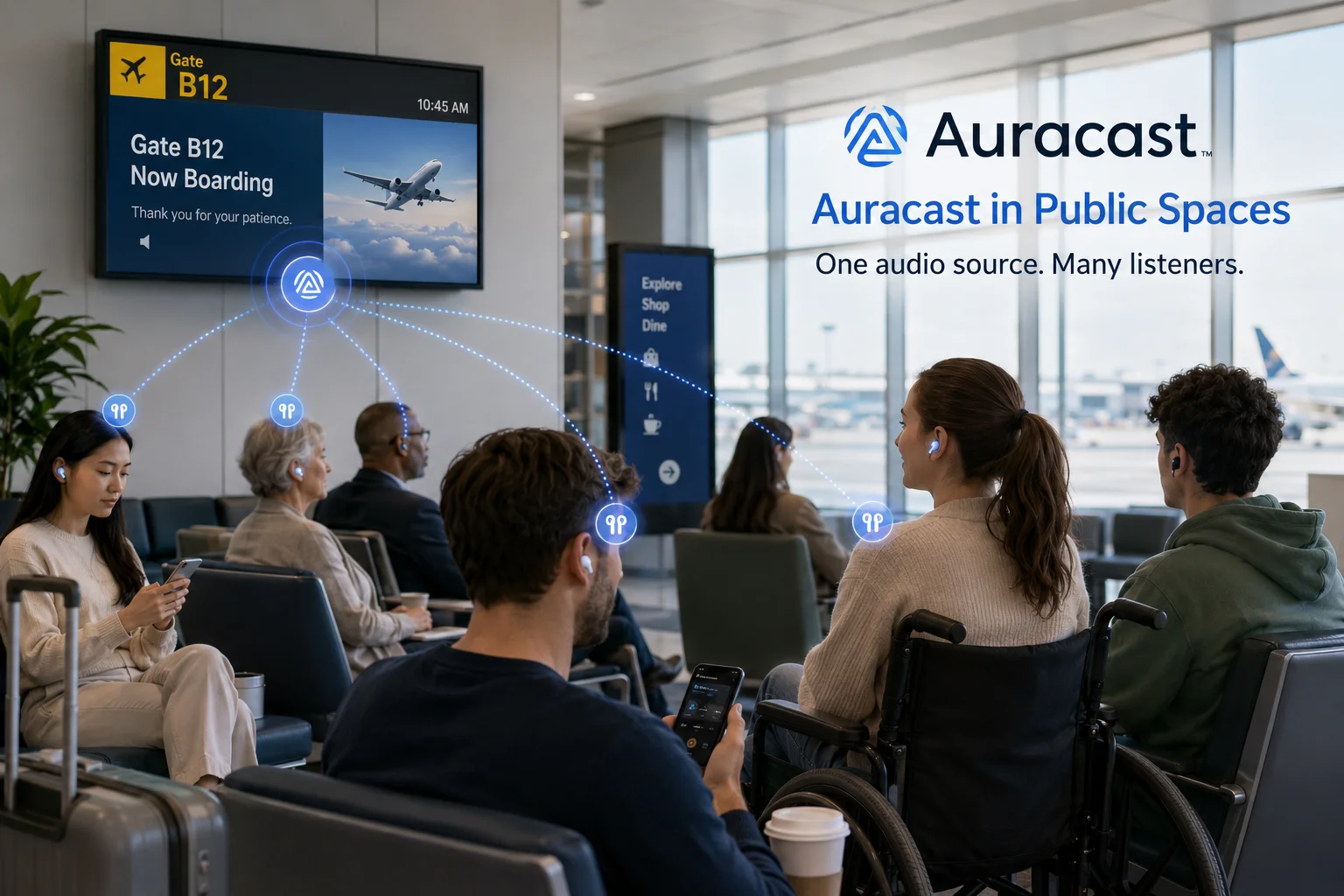
I get a lot of questions about Auracast. It has huge potential. Think about silent conferences, multi-language audio tracks in theaters, or assistive listening in public halls. For your business, this could open up entirely new markets. However, we have to be realistic. Auracast creates a chicken-and-egg problem. It's only useful if public places like airports, museums, and gyms install the transmitters. And those venues will only install transmitters if enough people have compatible earbuds. So, as a retailer or brand, adding Auracast today is a bet on the future. My advice is to ask your supplier about their implementation. Have they tested it? Do they have partners running pilot programs in public spaces? This helps you gauge if the feature is just a spec on a datasheet or a real, usable technology.
How Are Low Latency, Stable Connection, and Better Audio Experience Explained?
Are you tired of customer complaints about audio lag during games or calls? Bluetooth 5.4's improvements promise a fix, but not all solutions are created equal.
Bluetooth 5.4, through LE Audio and the LC3 codec, offers lower latency for synchronized gaming and video6. It also provides a more stable connection in crowded areas and higher-quality audio at lower data rates7. This directly improves the core user experience you can sell.
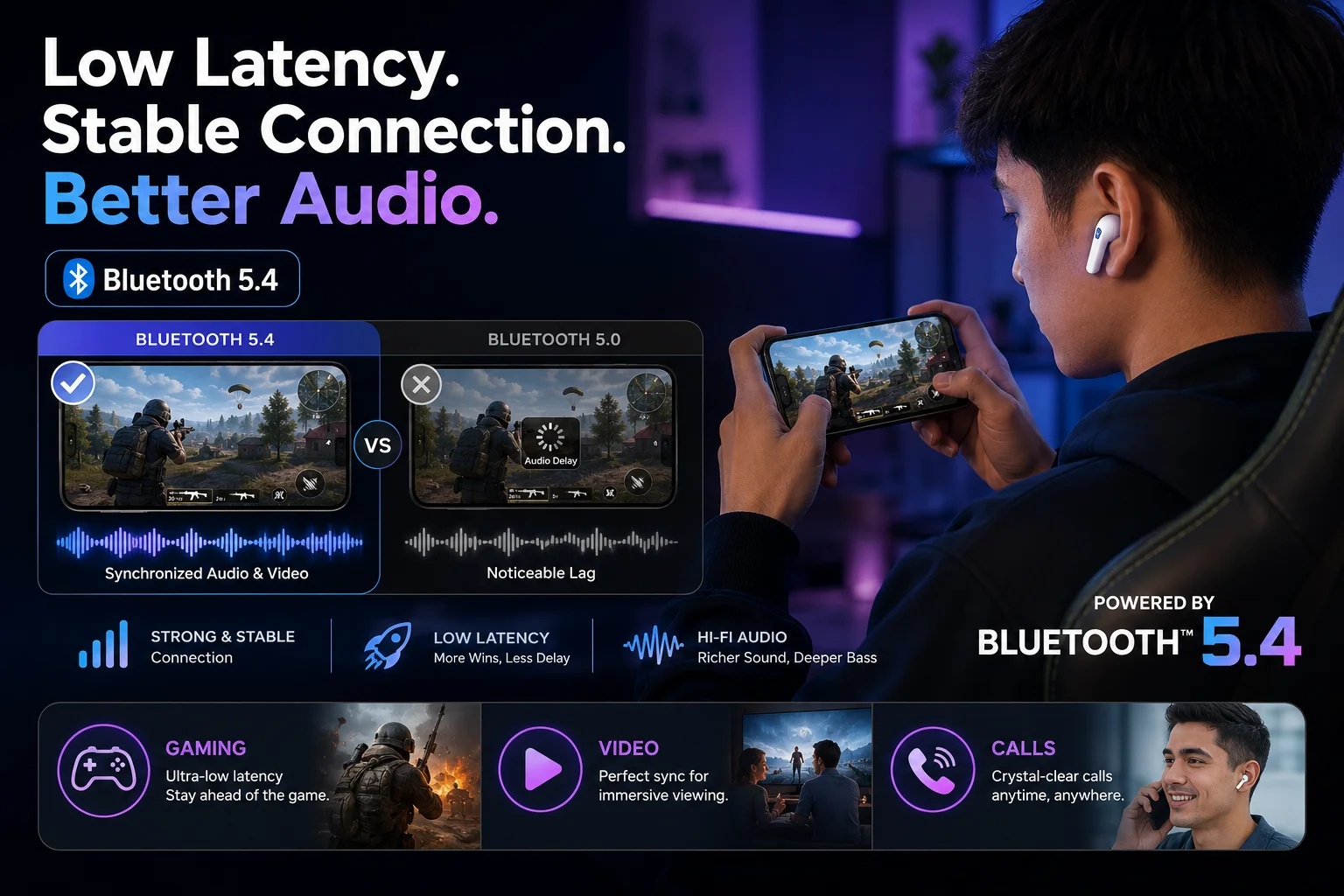
A better audio experience is the core promise of any earbud. Bluetooth 5.4 delivers on this in several ways. The LE Audio standard and its LC3 codec are a big deal. They are much more efficient, meaning you can get audio that sounds just as good, or even better, than the old SBC codec, but with less data. This makes the connection more robust, especially in places with a lot of wireless interference, like a busy office or subway. The lower latency is a huge selling point for gamers and people who watch a lot of videos on their phones. But don't just take a supplier's word for it. The better question isn't "What's the latency in milliseconds?". The question you should ask is, "Can you show me your testing data for latency on a popular game like PUBG Mobile with an iPhone 15?" That's a real-world scenario your customers care about.
How Does Bluetooth 5.4 Help Improve Battery Efficiency and Daily Use?
Is "short battery life" a common negative review for your earbuds? LE Audio in Bluetooth 5.4 is designed to solve this, making "all-day use" a reality.
Bluetooth 5.4's key feature, LE Audio, uses the new LC3 codec. It delivers high-quality audio while using significantly less power than older codecs8. This translates directly to longer battery life in smaller, more comfortable earbuds, a major selling point for everyday users.
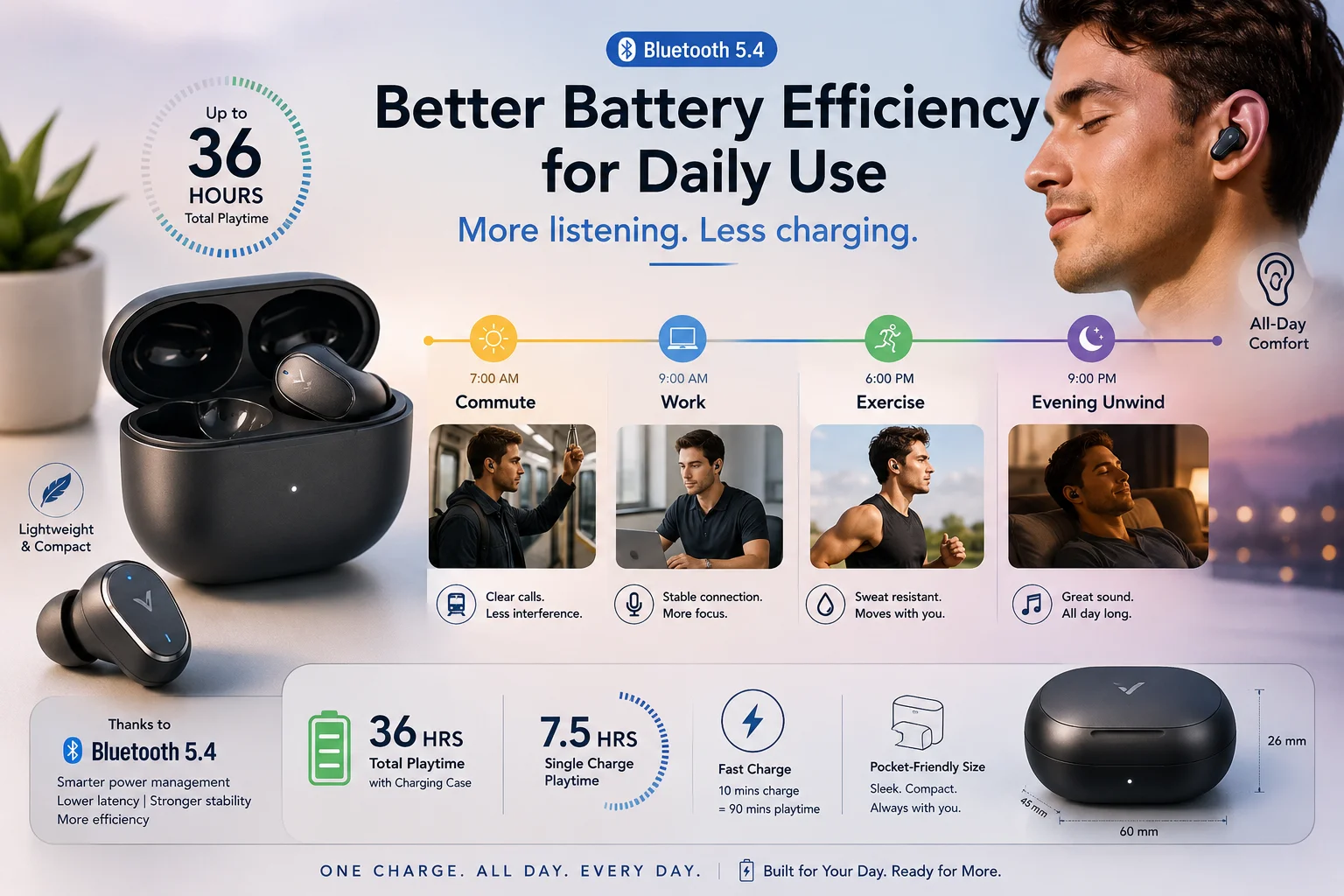
I remember a client who was struggling with a high rate of returns. The number one complaint? Their earbuds died before the end of the workday. This is where LE Audio becomes a hero feature. Because it's so efficient, it gives you, the product manager, two great options. You can either use the same size battery as your old models and market a significantly longer playback time. Or, you can use a smaller battery to design smaller, lighter, and more comfortable earbuds while still offering the same playback time as before. This is a critical product design decision that directly impacts user comfort and satisfaction. For most users, battery life is not a nice-to-have; it's a must-have. LE Audio makes it easier than ever to deliver on that promise.
| Your Design Choice | Impact on Product | Key Marketing Message |
|---|---|---|
| Use Same Size Battery | Product size stays the same | "Go longer with our extended battery life!" |
| Use Smaller Battery | Product becomes smaller and lighter | "So comfortable, you'll forget you're wearing them!" |
Is Bluetooth 5.4 Backward Compatible with Older Devices?
Are you worried that new Bluetooth 5.4 earbuds won't work with your customers' older phones? This is a common fear, but the reality is much simpler.
Yes, Bluetooth 5.4 is fully backward compatible9. Earbuds with Bluetooth 5.4 will connect to older phones and devices using the older Bluetooth standards they support. However, users will only get the new features like LE Audio or Auracast when connected to a compatible source device.
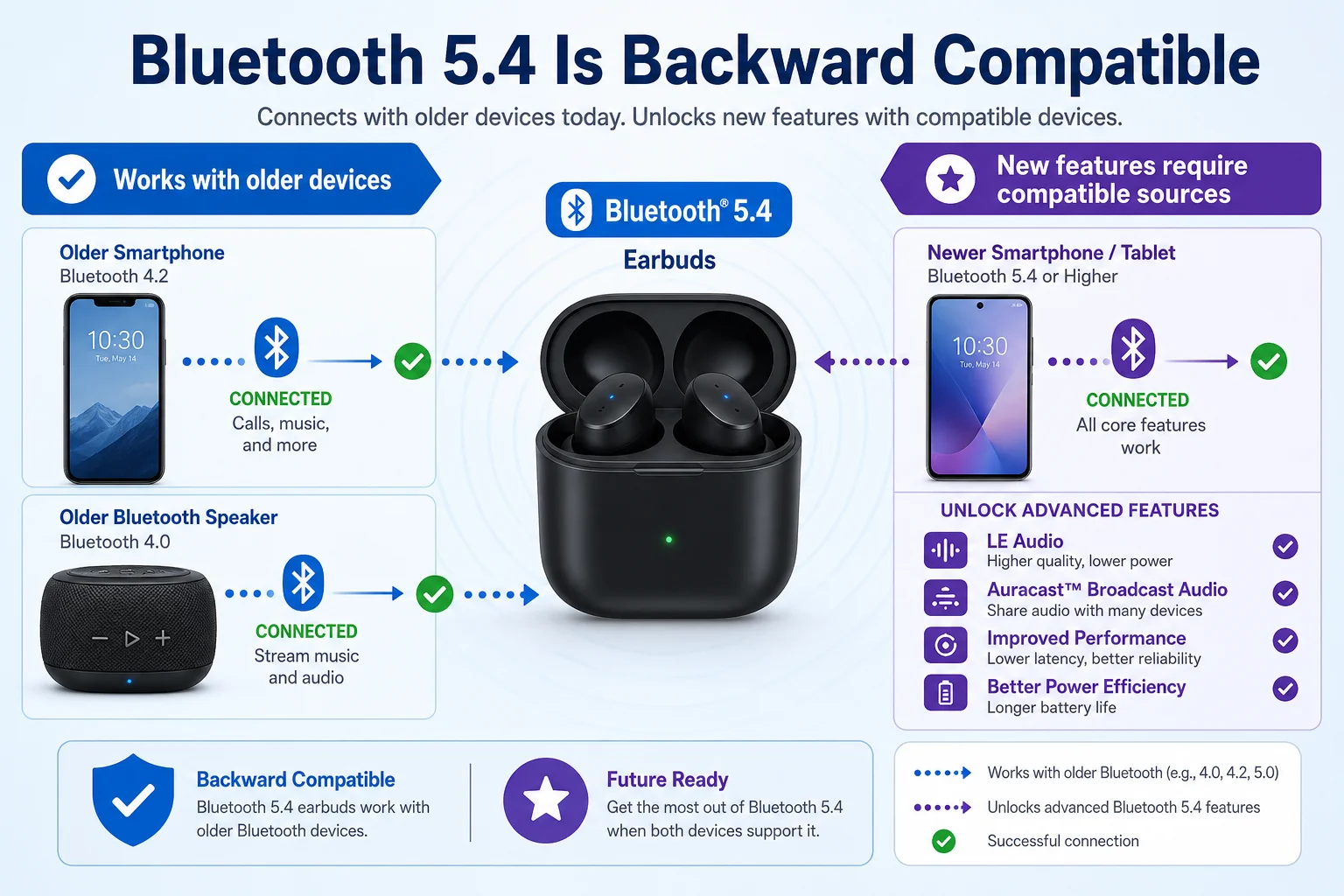
This is one of the most frequent questions we get, and it's a big source of confusion for buyers. Let me make it very clear: you don't need to worry about compatibility. Any earbud with Bluetooth 5.4 will work perfectly fine with a phone that only has Bluetooth 5.0. The two devices will automatically connect using the highest standard they both share. The important thing for your business is to manage customer expectations. You can't market Auracast to someone with a five-year-old phone. Your marketing messages and product descriptions should be clear. For example: "Fully compatible with all Bluetooth devices. Unlock next-gen features like LE Audio and Auracast with a compatible phone." This simple clarification can prevent a lot of customer frustration, negative reviews, and product returns. It’s all about being honest and transparent.
What Chipsets, Certifications, Samples, and Testing Should Buyers Check?
Don't get fooled by a "Bluetooth 5.4" label. The wrong chipset or a lack of testing can lead to a product that fails in the real world.
Buyers must verify the chipset manufacturer (e.g., Qualcomm, Bestechnic, Airoha), check for official Bluetooth SIG certification, and request samples for rigorous testing. Ask suppliers for their internal testing reports on connection stability, latency, and battery life to ensure the claims are backed by data.
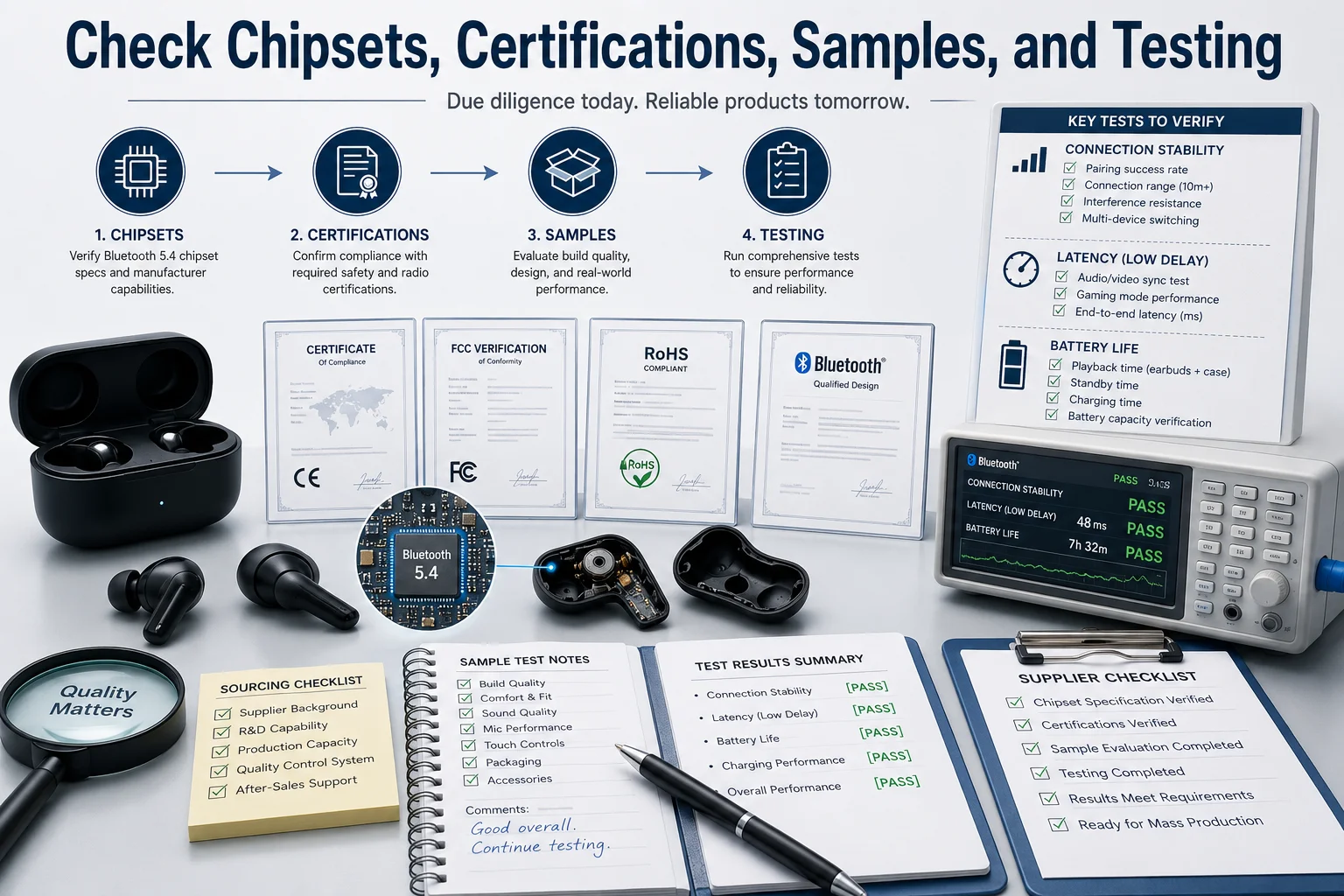
After 15 years in this business, I've seen it all. A factory promises the latest tech, but the final product is unstable. Here’s how you protect yourself.
Ask About the Chipset
Not all Bluetooth 5.4 chipsets are created equal. Different brands like Qualcomm, Airoha, or Bestechnic have different performance characteristics, costs, and levels of stability. Ask your supplier which specific chipset they are using and why they chose it. A good supplier will explain the trade-offs between cost and performance.
Demand Official Certification
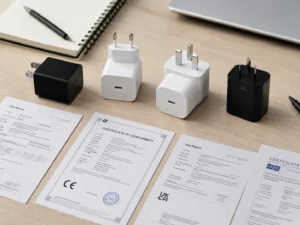
Never, ever skip this. The product must have an official certification from the Bluetooth Special Interest Group (SIG)10. If it doesn't, it might not perform correctly, and you could even face legal issues selling it in markets like the US or Europe11. You can verify this on the Bluetooth SIG website.
Test, Test, Test
Get samples and test them in the real world. Don't just test them in a quiet office. Take them on a crowded bus, use them in a busy cafe, and walk through an area with lots of Wi-Fi networks. This is how your customers will use them. Ask your supplier to share their own testing reports. This shows they are confident in their product's quality.
How Do You Upgrade Your TWS Stock with a Reliable Bluetooth 5.4 Earbuds Supplier?
Are you ready to add Bluetooth 5.4 to your lineup but unsure how to find the right partner? Choosing a supplier is about more than just the product.
Find a reliable supplier by looking for experience, transparency, and support. A good partner will discuss the real-world performance of their BT 5.4 solution, provide full certification, and help you understand the market implications, not just sell you the latest tech spec.
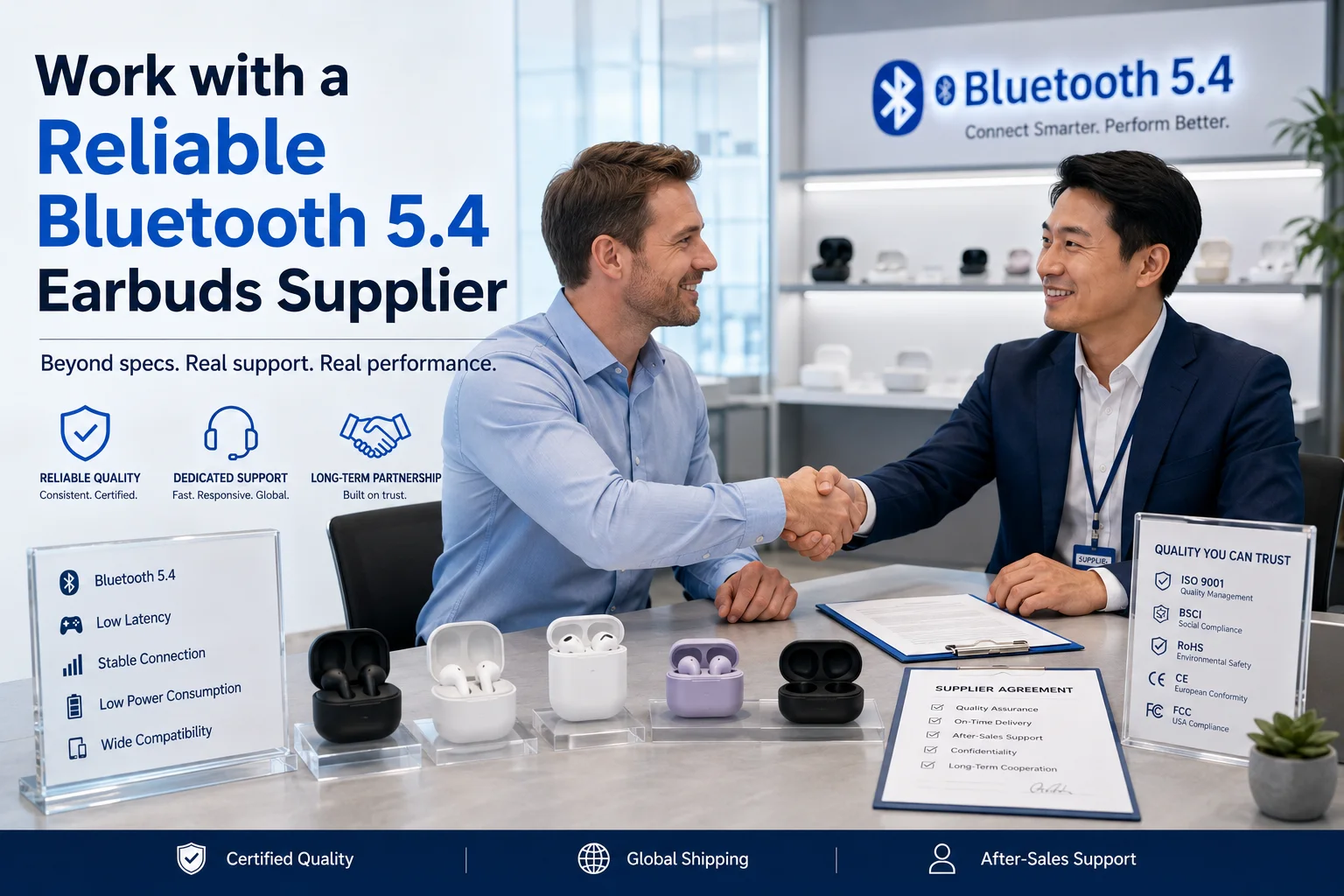
Finding the right product is only half the battle. Finding the right partner is what ensures long-term success. After more than a decade of exporting 3C electronics12, I've learned that a good supplier acts as your partner, not just a vendor. They should be transparent about their capabilities and help you navigate complex decisions, like whether to adopt Bluetooth 5.4 now or wait. When you're evaluating a potential supplier for your next TWS earbuds, don't just focus on the price. Ask questions that reveal their experience and reliability. A strong partner will give you straight answers and work with you to find the best solution for your specific market. This is the approach we've built our business on for the last 15 years.
| Key Questions to Ask a Potential Supplier | What a Good Answer Looks Like |
|---|---|
| What's your experience with this specific BT 5.4 chipset? | "We've used this chipset in three projects. Here are its strengths and weaknesses..." |
| Can you share your testing methodology and reports? | "Of course. We test for connectivity in crowded metros and for battery life with continuous playback..." |
| How do you manage firmware updates and support? | "We provide OTA (over-the-air) firmware updates and have a clear process for support..." |
| What are your MOQ, lead time, and certifications? | A clear, detailed answer with documentation ready to share. |
Conclusion
Upgrading to Bluetooth 5.4 is a strategic move. Focus on real business value, ask the right questions, and partner with a supplier who understands your market, not just technology.
"Bluetooth - Wikipedia", https://en.wikipedia.org/wiki/Bluetooth. A resource from the Bluetooth Special Interest Group (SIG) or a reputable technology publication can provide the official features and enhancements included in the Bluetooth 5.4 core specification. Evidence role: definition; source type: institution. Supports: The source should detail the key features introduced with the Bluetooth 5.4 specification, such as Periodic Advertising with Responses (PAwR) and Encrypted Advertising Data.. ↩
"LE Audio | Bluetooth® Technology Website", https://www.bluetooth.com/learn-about-bluetooth/feature-enhancements/le-audio/. Official documentation from the Bluetooth SIG explains that LE Audio is a new architecture for Bluetooth audio that uses the highly efficient LC3 codec to enable new use cases and improve performance. Evidence role: mechanism; source type: institution. Supports: The source should define LE Audio and explain its architecture, including the role of the LC3 codec, in delivering higher quality audio at lower power consumption compared to Classic Audio.. ↩
"PAwR: Bidirectional Bluetooth LE Advertising - Novel Bits", https://novelbits.io/periodic-advertising-with-responses-pawr/. A technical overview from the Bluetooth SIG or a semiconductor manufacturer can explain that PAwR enables energy-efficient, bidirectional communication with a large number of devices in a connectionless model, suitable for applications like electronic shelf labels. Evidence role: definition; source type: institution. Supports: The source should define Periodic Advertising with Responses (PAwR) and explain its purpose within the Bluetooth 5.4 specification.. ↩
"AuraLink | Bluetooth Auracast Receiver with Qualcomm BT 5.4", https://avantree.com/products/auralink-bluetooth-auracast-receiver?srsltid=AfmBOoq2I_yzDs_i10mfU-hEASQPLKIPxeaKC5Jdsr0SRkMkkH0MTfmM. Documentation from the Bluetooth SIG confirms that Auracast broadcast audio is designed to support an unlimited number of receivers, enabling new public and shared audio experiences. Evidence role: general_support; source type: institution. Supports: The source should confirm that the Auracast specification is designed to allow a single source to broadcast audio to a very large, theoretically unlimited, number of receiving devices within range.. ↩
"Bluetooth Connectivity Guide for Hearing Aids | Devices - UCSF EARS", https://ears.ucsf.edu/en/devices/bluetooth-connectivity-guide. The Bluetooth SIG and various hearing accessibility advocates have promoted Auracast as the next generation of assistive listening technology, intended to provide a universal standard for audio accessibility in public spaces. Evidence role: case_reference; source type: institution. Supports: The source should show that Auracast is being officially positioned and developed as a technology standard for assistive listening in public venues.. ↩
"LC3 (codec) - Wikipedia", https://en.wikipedia.org/wiki/LC3_(codec). Research and technical specifications from organizations like the Fraunhofer Institute, a co-inventor of the codec, show that LC3 can achieve significantly lower latency than the mandatory SBC codec, improving synchronization for video and gaming. Evidence role: statistic; source type: research. Supports: The source should provide technical data or analysis comparing the latency performance of the LC3 codec with that of the legacy SBC codec used in Classic Audio.. ↩
"An Open Benchmark for Evaluating Audio Coding Performance - arXiv", https://arxiv.org/html/2409.08374v2. Double-blind listening tests conducted by the Bluetooth SIG and other bodies have demonstrated that the LC3 codec provides higher perceived audio quality than the SBC codec, even at a 50% lower bit rate. Evidence role: statistic; source type: research. Supports: The source should present results from formal listening tests that compare the perceived audio quality of the LC3 codec against the SBC codec at various bitrates.. ↩
"Bluetooth Low Energy - Wikipedia", https://en.wikipedia.org/wiki/Bluetooth_Low_Energy. Technical documents from the Bluetooth SIG explain that LE Audio's design, which operates exclusively on the low-energy Bluetooth radio, is inherently more power-efficient than Bluetooth Classic Audio for streaming audio. Evidence role: mechanism; source type: institution. Supports: The source should explain how the architecture of LE Audio, including its use of isochronous channels and the efficient LC3 codec, results in lower power consumption compared to Classic Audio.. ↩
"Backwards compatibility : r/bluetooth - Reddit", https://www.reddit.com/r/bluetooth/comments/cii2jh/backwards_compatibility/. The Bluetooth Core Specification, managed by the Bluetooth SIG, ensures that devices with newer versions of Bluetooth are backward compatible with devices using older versions, with the devices negotiating to use the highest common standard they both support. Evidence role: general_support; source type: institution. Supports: The source should confirm that backward compatibility is a core design principle of the Bluetooth standard.. ↩
"Bluetooth SIG Certification & Bluetooth Logo Qualification", https://cetecomadvanced.com/en/certification/bluetooth-sig-certification/. According to the Bluetooth SIG, all products using Bluetooth technology must complete the Bluetooth Qualification Process to ensure global interoperability and to gain a license to use the Bluetooth word mark and logos. Evidence role: definition; source type: institution. Supports: The source should explain that the Bluetooth Qualification Program is a requirement for any product using Bluetooth technology to ensure interoperability and proper use of the licensed trademark.. ↩
"Bluetooth Special Interest Group - Wikipedia", https://en.wikipedia.org/wiki/Bluetooth_Special_Interest_Group. The Bluetooth SIG's brand enforcement program actively monitors the market for uncertified products and can take action for trademark infringement, which may include delisting products from online retailers, customs seizures, and legal proceedings. Evidence role: general_support; source type: institution. Supports: The source should describe the enforcement actions the Bluetooth SIG can take against companies that market uncertified products using the Bluetooth trademark.. ↩
"Tools for Authors: Establishing Your Author Profile", https://beckerguides.wustl.edu/authors/authorname. A professional profile, such as on LinkedIn, or a company's official website can provide background information that substantiates the author's claimed expertise and years of experience in the electronics industry. Evidence role: general_support; source type: other. Supports: The source should establish the author's or their company's background and long-standing experience in the electronics export industry.. Scope note: This type of source supports the author's claimed credentials rather than providing objective, third-party evidence for the article's claims. ↩