Many buyers ask for the lowest GaN charger price first. I understand that. But a cheap wrong charger can create returns, complaints, and slow inventory.
Wholesale GaN chargers in 2026 should be chosen by device coverage, wattage, ports, plug type, certification, MOQ, lead time, packaging, and supplier reliability. I do not suggest buying only by highest wattage or lowest unit price. The best SKU is the one that fits your market and sales channel.
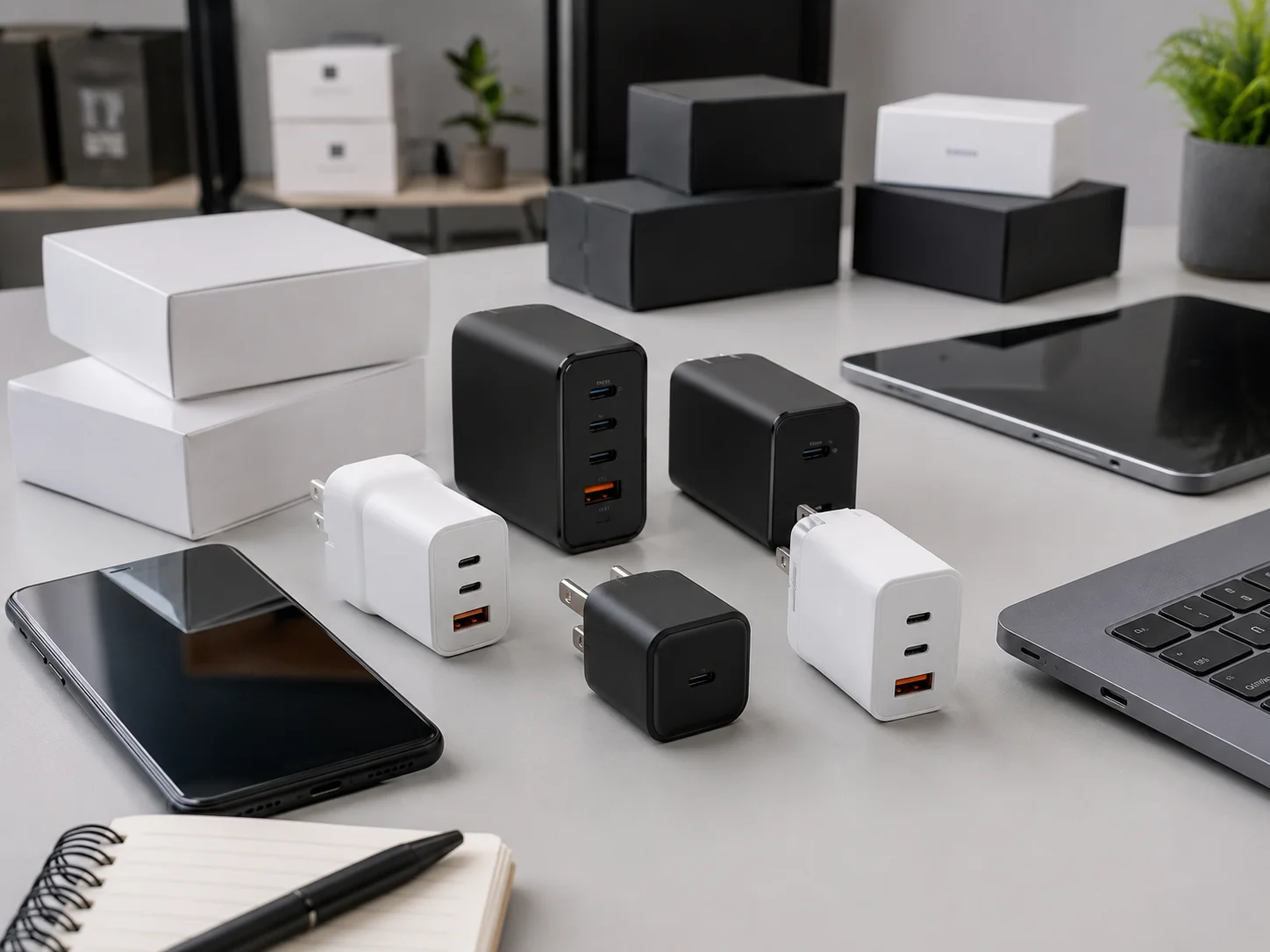
I work with European and American buyers who ask about GaN chargers, samples, bulk prices, private labels, and shipping every week. I have seen one buyer win because he picked a simple 65W USB-C charger with the right certification and clean packaging. I have also seen another buyer struggle because he bought a very cheap multi-port charger with weak after-sales support. So I wrote this guide from a trading and sourcing view. If you sell on Amazon, supply retail stores, import for chain stores, or distribute 3C accessories, the real question is not “Which GaN charger looks best?” The real question is “Which GaN charger can sell, pass checks, and be replenished without trouble?”
1. What Are GaN Chargers and Why Are They Popular in 2026?
Many buyers hear “GaN” everywhere. I see the same issue often. The word sounds advanced, but buyers still need simple buying rules.
GaN chargers are compact fast chargers that use gallium nitride power components1. I see buyers choose them because they are smaller, support higher wattage2, and often work with phones, tablets, laptops, and travel setups. In 2026, buyers should still verify safety, heat performance, and certification3 before placing bulk orders.
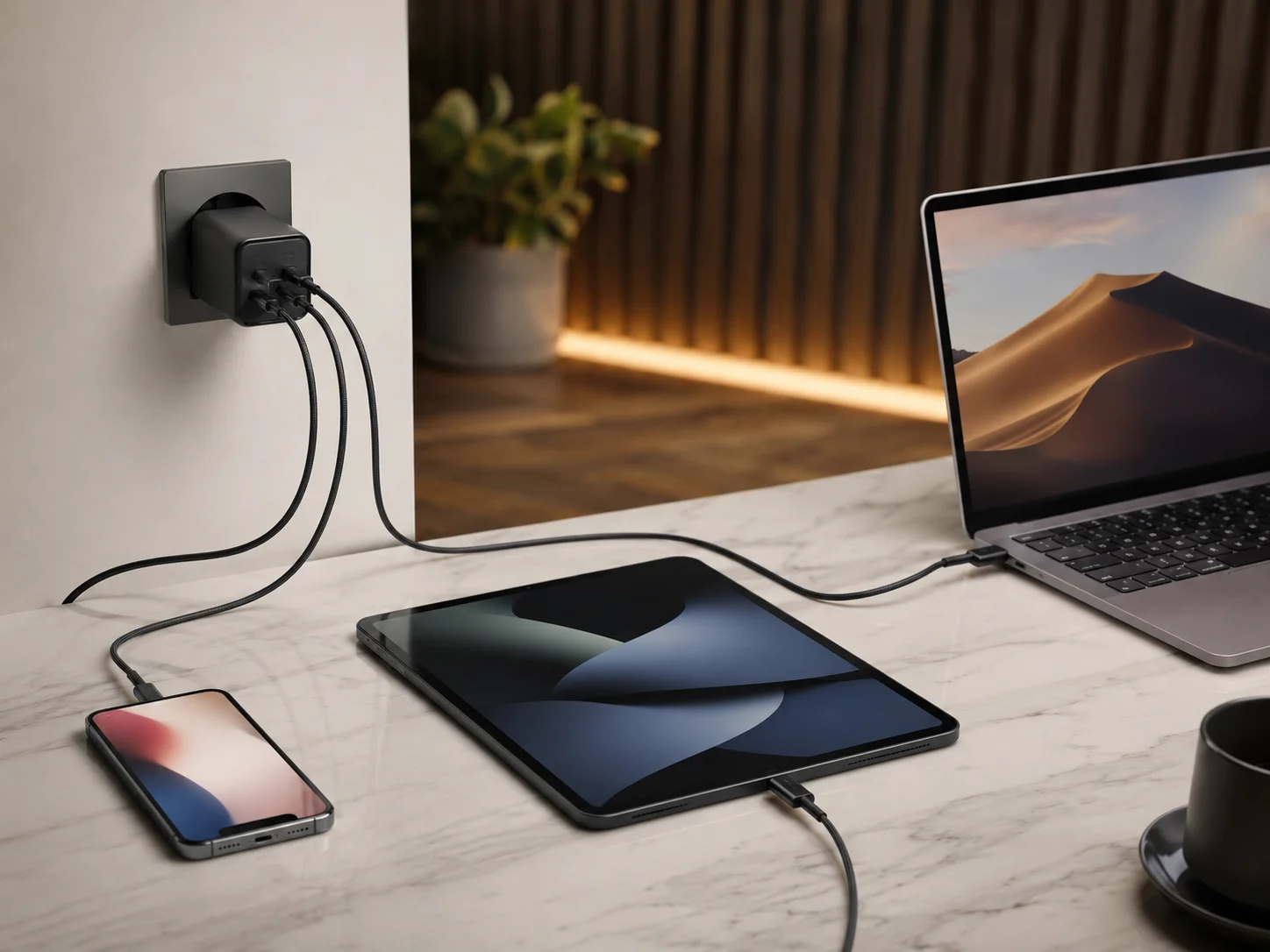
GaN chargers became popular because they solve a real retail problem. Customers want one small charger that can charge many devices.4 I see this demand from phone accessory stores, online sellers, and travel product importers. A good GaN charger can sit in a higher retail price band than a basic 5V charger. It can also look more modern on the shelf. But I do not treat GaN as a magic word. I always ask what device the charger must support, what plug the buyer needs, and what certificate file the channel will check.
| Buyer Question | My Practical Answer |
|---|---|
| Is GaN always better? | I see GaN as better for compact fast charging, but I still verify quality. |
| Is higher wattage always better? | I do not think so. I match wattage with target devices. |
| Can one SKU cover all users? | Sometimes, but a clear SKU mix is usually safer. |
| Is small size enough? | No. I also check heat, plug, ports, labeling, and warranty terms. |
Why I Do Not Buy GaN Chargers by Buzzwords Alone
I have handled many quotations where the product name looked strong, but the details were weak. One supplier may write “65W GaN” with no clear protocol list, no real test report, and no stable lead time. Another supplier may offer a slightly higher price, but the packaging, files, and after-sales process are much cleaner. For wholesale buyers, this difference matters. A retail buyer may face customer returns. An e-commerce seller may face platform complaints. A distributor may face a chain store audit. So I use “GaN” as the starting point, not the final reason to buy.
2. Why Do Wholesale Buyers Prefer GaN Chargers Over Traditional Chargers?
Traditional chargers still sell. But I see many buyers shift to GaN because basic chargers have less story, lower margin, and weaker device coverage.
Wholesale buyers prefer GaN chargers because they are smaller, faster, and easier to position as premium 3C accessories. They can cover phones, tablets, laptops, and travel use with fewer SKUs5. But buyers should compare real total cost, not only unit price.
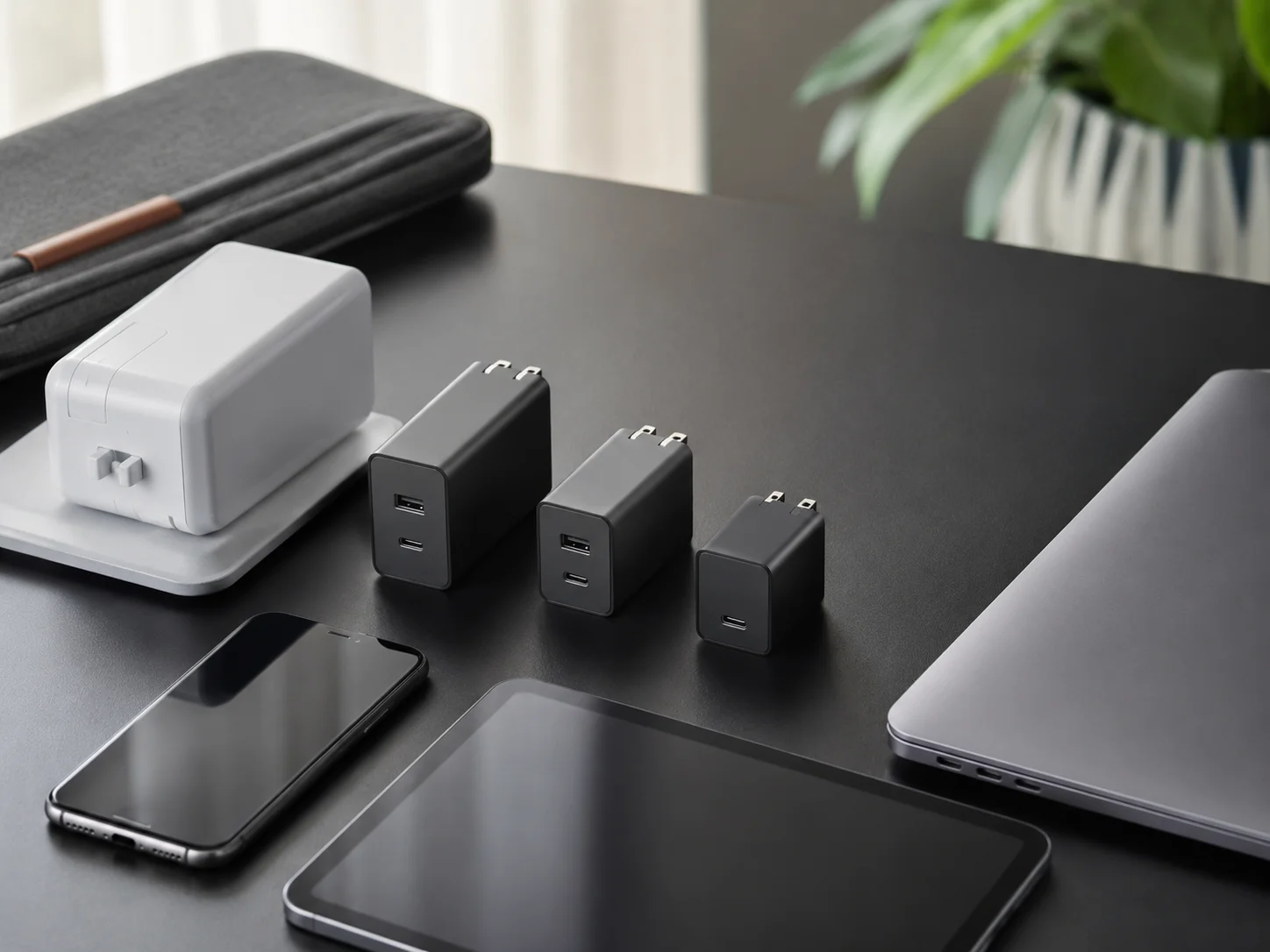
I often compare GaN chargers and traditional chargers for buyers. A normal charger may look cheaper on the quotation sheet. But the GaN charger may create better shelf value and stronger bundling options. For example, a retailer can sell a 65W GaN charger with a USB-C to USB-C cable. An online seller can bundle a 100W charger with a laptop charging cable. A travel importer can sell a compact multi-port charger to business users.
| Buying Point | Traditional Charger | GaN Charger |
|---|---|---|
| Retail image | Basic | More premium |
| Size | Often larger at high wattage | Usually more compact |
| Device coverage | Often limited | Better for phones, tablets, laptops |
| Margin potential | Lower in many channels | Higher if positioned well |
| Risk | Lower price pressure | Higher need for quality checks |
The Cheapest Price Can Become the Most Expensive Order
I have seen buyers focus only on the lowest price. I understand the pressure. Every importer wants a competitive landed cost. But the cheapest quotation can hide costs. The supplier may use weak packaging. The certification files may not match the real model. The charger may have unstable output under heavy use. The after-sales response may be slow. These problems can become returns, bad reviews, chargebacks, or blocked listings. I do not say buyers must choose the highest price. I say buyers should compare the full deal. I check MOQ, payment terms, lead time, carton quality, warranty process, sample consistency, and document support. If two prices are close, I often prefer the supplier who communicates clearly and supports repeat orders.
3. What Are the Main Types of Wholesale GaN Chargers: 30W, 45W, 65W, 100W, and 140W?
Many buyers ask me which wattage is best. I usually change the question. I ask which users and devices they want to cover.
The main wholesale GaN charger types are 30W, 45W, 65W, 100W, and 140W. I use 30W for phones, 45W for tablets and light laptops, 65W for broad daily use, 100W for laptops and multi-port use, and 140W for higher-end laptop users.6
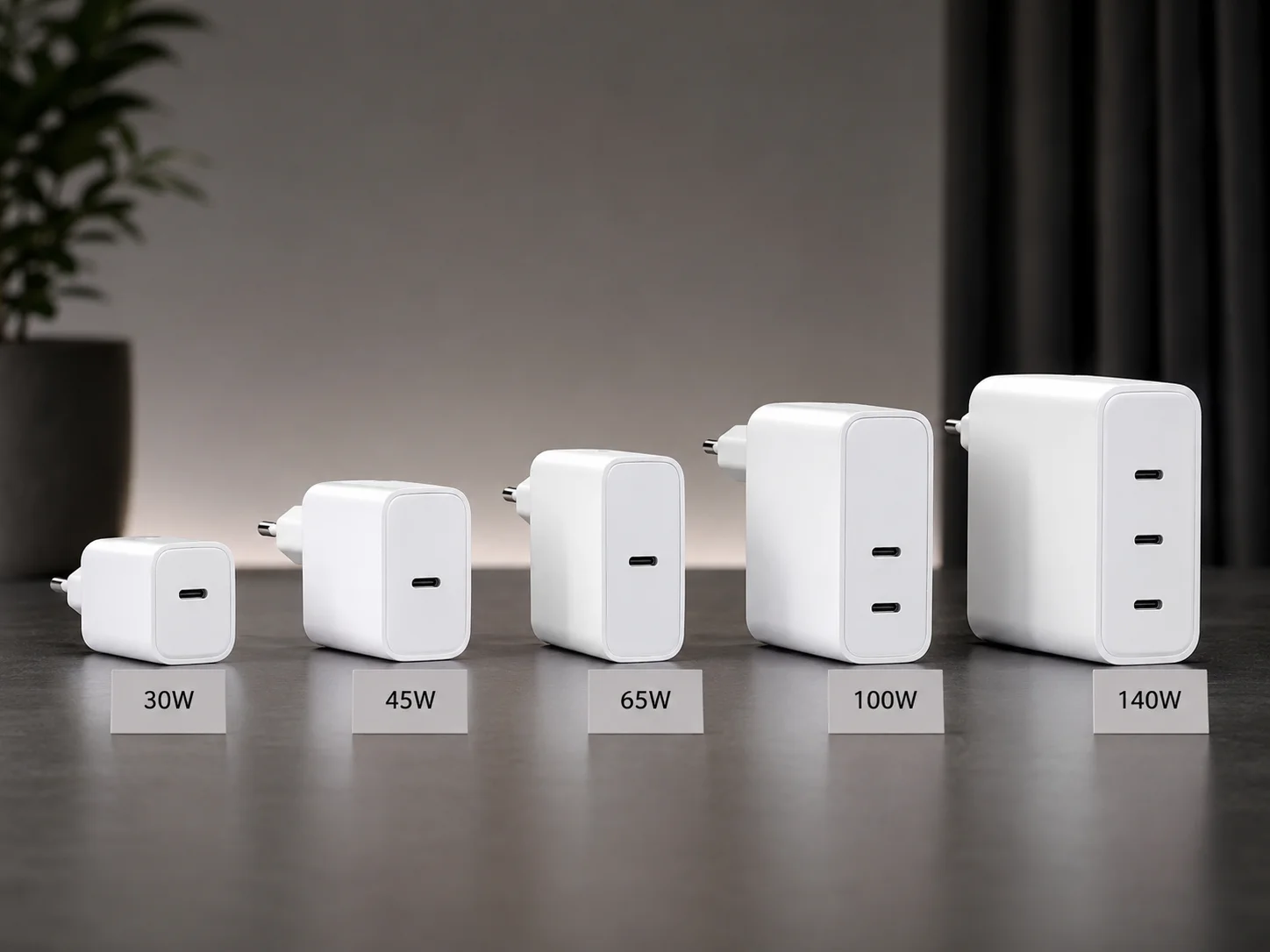
I do not treat wattage as a race. A 140W charger is not always better than a 65W charger. A 30W charger can sell very well if the target buyer wants a compact phone charger at a friendly price. A 65W charger is often a strong middle SKU because it can cover many phones, tablets, and some laptops. A 100W charger can work well for laptop users and multi-device users. A 140W charger can target higher-end buyers, but it needs stronger pricing, better packaging, and careful compatibility communication.
| Wattage | Common Use | Wholesale Position |
|---|---|---|
| 30W | Phones, small tablets | Entry fast charger |
| 45W | Tablets, light laptops | Mid-range travel charger |
| 65W | Phones, tablets, many laptops | Core best-selling SKU |
| 100W | Laptops, multi-port charging | Premium daily work SKU |
| 140W | High-power laptops, pro users | High-end SKU |
How I Build a Better SKU Mix
When a buyer asks me for one “best” GaN charger, I usually suggest a small SKU mix instead. A basic mix may include 30W, 65W, and 100W. This gives the buyer three price bands. The 30W SKU can attract phone users. The 65W SKU can become the main seller. The 100W SKU can serve laptop users and bundle buyers. If the buyer has a strong premium channel, I may add 140W. If the buyer sells in supermarkets or discount chains, I may keep the range simple. A clean SKU mix lowers inventory pressure. It also helps the sales team explain the products. I do not want the buyer to hold five chargers that compete with each other. I want each SKU to have a clear job.
4. How Should I Choose the Right GaN Charger for Phones, Tablets, Laptops, and Travel Use?
Wrong matching creates slow sales. I have seen buyers buy strong chargers for weak channels and cheap chargers for premium customers.
I choose GaN chargers by target device first. Phones usually need 20W to 35W.7 Tablets and light laptops often need 45W to 65W.8 Laptops and multi-device users often need 65W to 140W. Travel buyers also need compact size, plug type, and multi-port design.
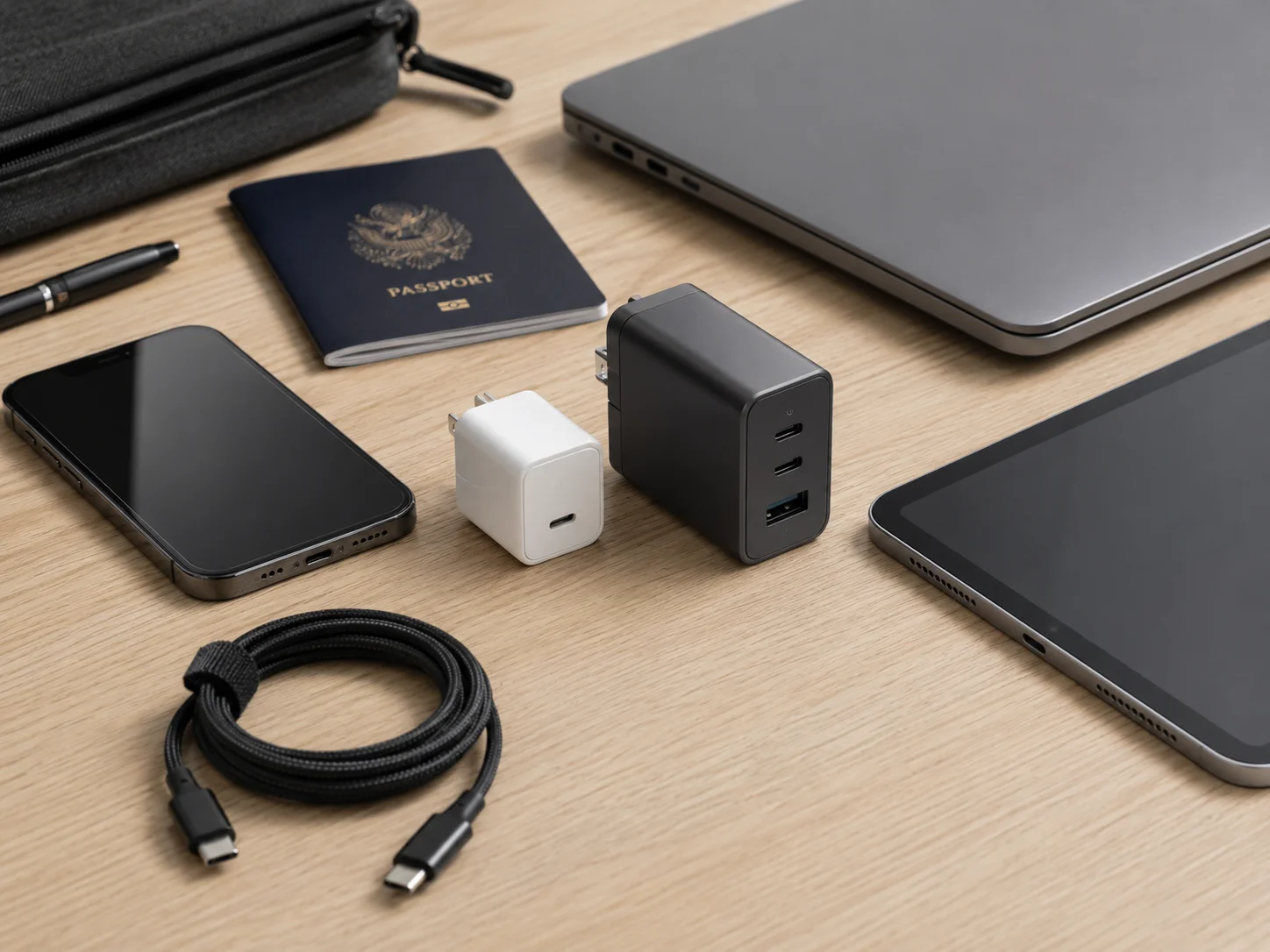
I always start with the end user. A phone accessory shop may not need many 140W chargers. A laptop accessory seller may not want too many 30W chargers. A travel store may care about compact design and plug options more than the highest wattage. An e-commerce seller may need clear product photos and simple feature points. A chain store buyer may focus more on certification, barcode, packaging, and supply stability.
| Target Use | Better Wattage Range | Port Suggestion | Buying Note |
|---|---|---|---|
| Phone users | 20W-35W | 1C or 1C1A | Keep price friendly |
| Tablet users | 30W-65W | 1C or 2C | Check fast charge protocols |
| Laptop users | 65W-140W | 2C or 3 ports | Check cable and device claims |
| Travel users | 45W-100W | Multi-port | Check plug and compact design |
| Retail bundle | 30W-65W | Simple ports | Add cable and clean packaging |
Device Coverage Is More Useful Than Raw Power
I have learned that buyers sell better when they explain device coverage clearly. A product page that says “100W GaN Charger” is not enough. A product page that says “Charge phone, tablet, and USB-C laptop with one compact charger” is easier for customers to understand. But claims must be safe and accurate. I ask suppliers for protocol information, model files, and recommended device examples. I also remind buyers to avoid over-promising. A charger may support one laptop but not another at full speed. A multi-port charger may reduce output when several devices are connected.9 The packaging should explain this in a simple way. Clear communication reduces returns. It also builds trust with retail buyers and platform customers.
5. What Key Features Should I Check Before Buying GaN Chargers in Bulk?
A nice shell does not prove quality. I have seen samples that look perfect but fail in details that affect bulk orders.
Before buying GaN chargers in bulk, I check wattage, port layout, charging protocols, heat performance, plug quality, certification files, labeling, packaging, cable bundle options, warranty terms, sample consistency, and supplier lead time. I also compare after-sales support and replenishment ability.
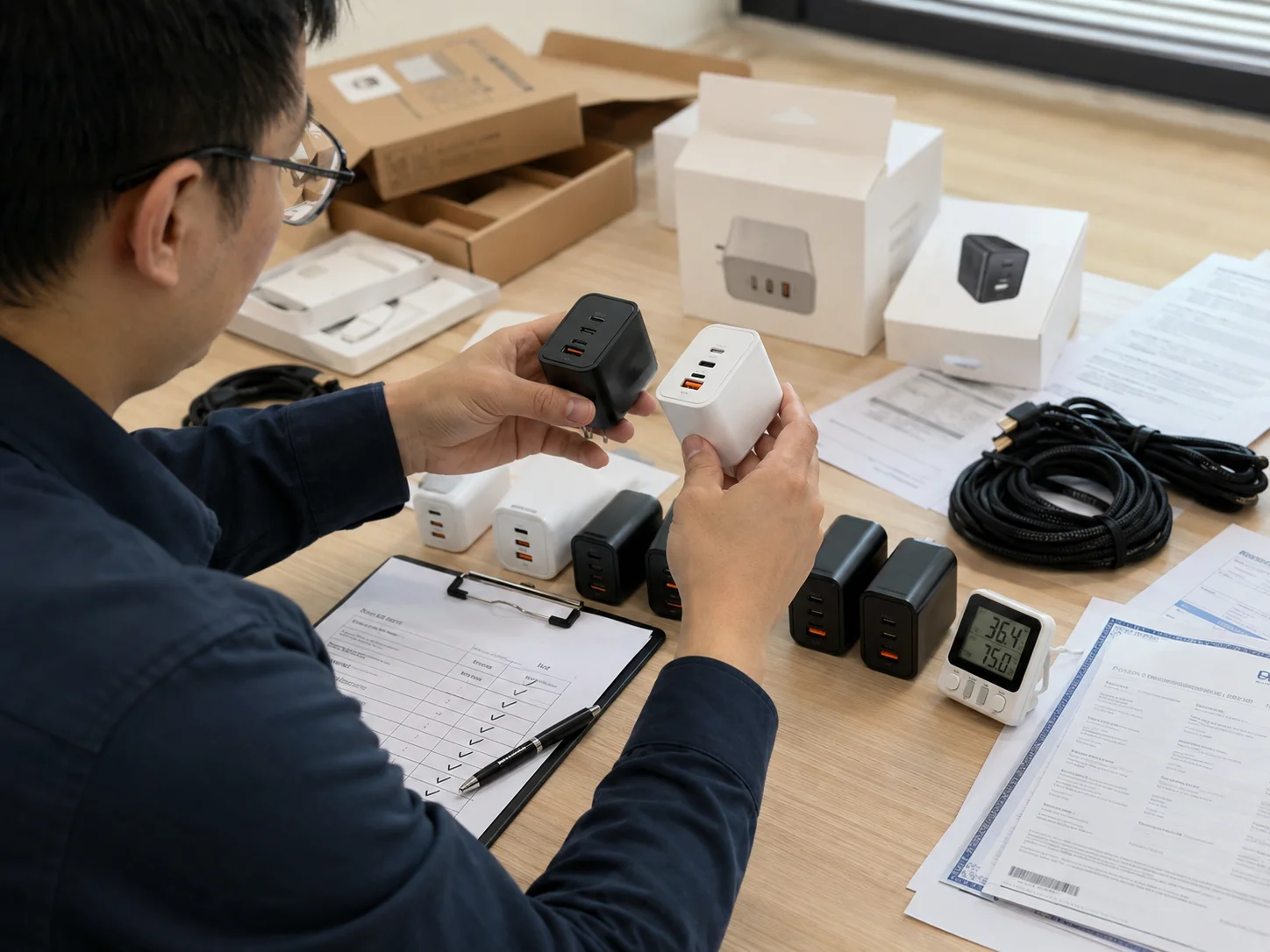
I use a simple checklist when I discuss bulk GaN charger orders. I do not need every buyer to become an engineer. But I do think every buyer should ask direct questions before paying a deposit. The charger must fit the channel. If the buyer sells online, product claims and reviews matter. If the buyer sells to chain stores, packaging and documents matter. If the buyer sells through wholesalers, price bands and carton durability matter.
| Feature | What I Check | Why It Matters |
|---|---|---|
| Wattage | Real output and port sharing | Avoid wrong customer claims |
| Ports | USB-C, USB-A, multi-port mix | Match target devices |
| Protocols | PD, PPS, QC, and others | Support popular devices |
| Heat | Supplier test data and sample use | Reduce return risk |
| Plug | EU, US, UK, AU, or others | Fit market use |
| Packaging | Retail box, barcode, manual | Support sales channel |
| Warranty | Clear process and time | Control after-sales cost |
Samples Must Be Treated Like a Small Order Test
I always suggest buyers test samples before mass production. A sample is not just for photos. It is a small test of the product and the supplier. I check how fast the supplier sends it. I check whether the sample label matches the quotation. I check whether the packaging matches the target market. I also ask the buyer to test the charger with common devices in the sales market. This does not replace lab testing. It only gives a practical first check. If the sample discussion is messy, the bulk order may also be messy. I also ask for a pre-production sample when the buyer wants private label or custom packaging. This step can prevent wrong logo color, wrong plug, wrong manual, or missing barcode.
6. What Certifications, Safety Standards, and Plug Types Do Different Markets Need?
Some buyers ask if CE or FCC is enough. I usually say the logo is not enough. The full file must match the market and channel.
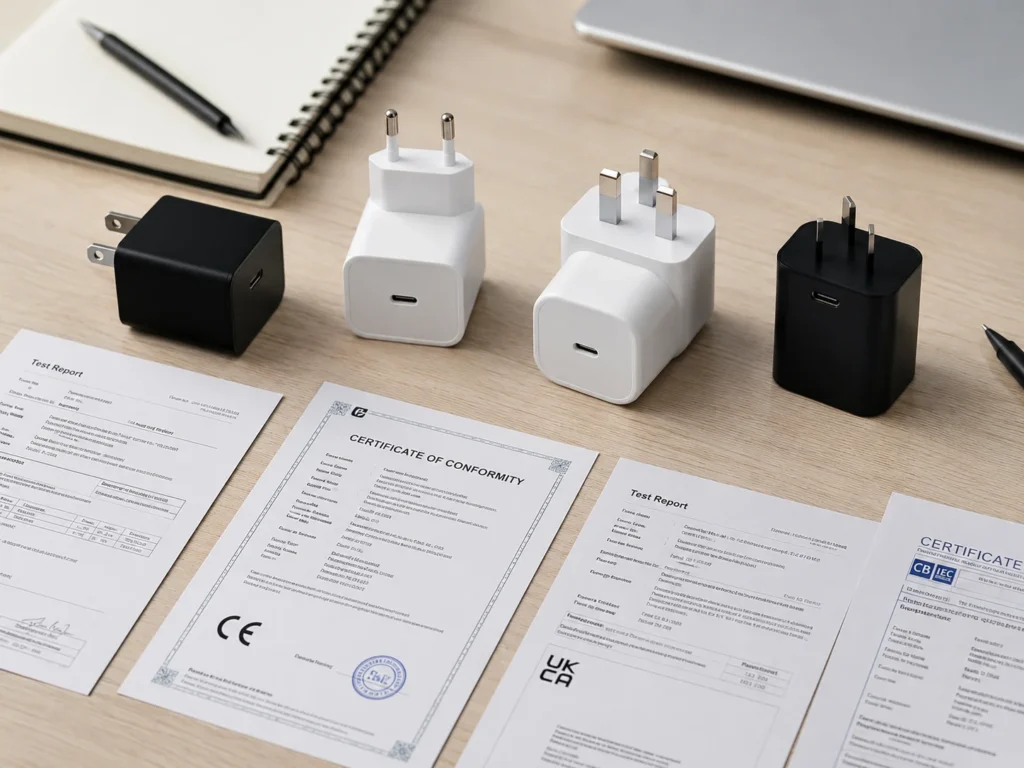
GaN charger compliance should be checked by target market and sales channel. Buyers should verify certificates, test reports, model numbers, labeling, packaging, plug standards, and platform requirements. CE, FCC, UKCA, ETL, UL, RoHS, and other needs may vary by market and product.10
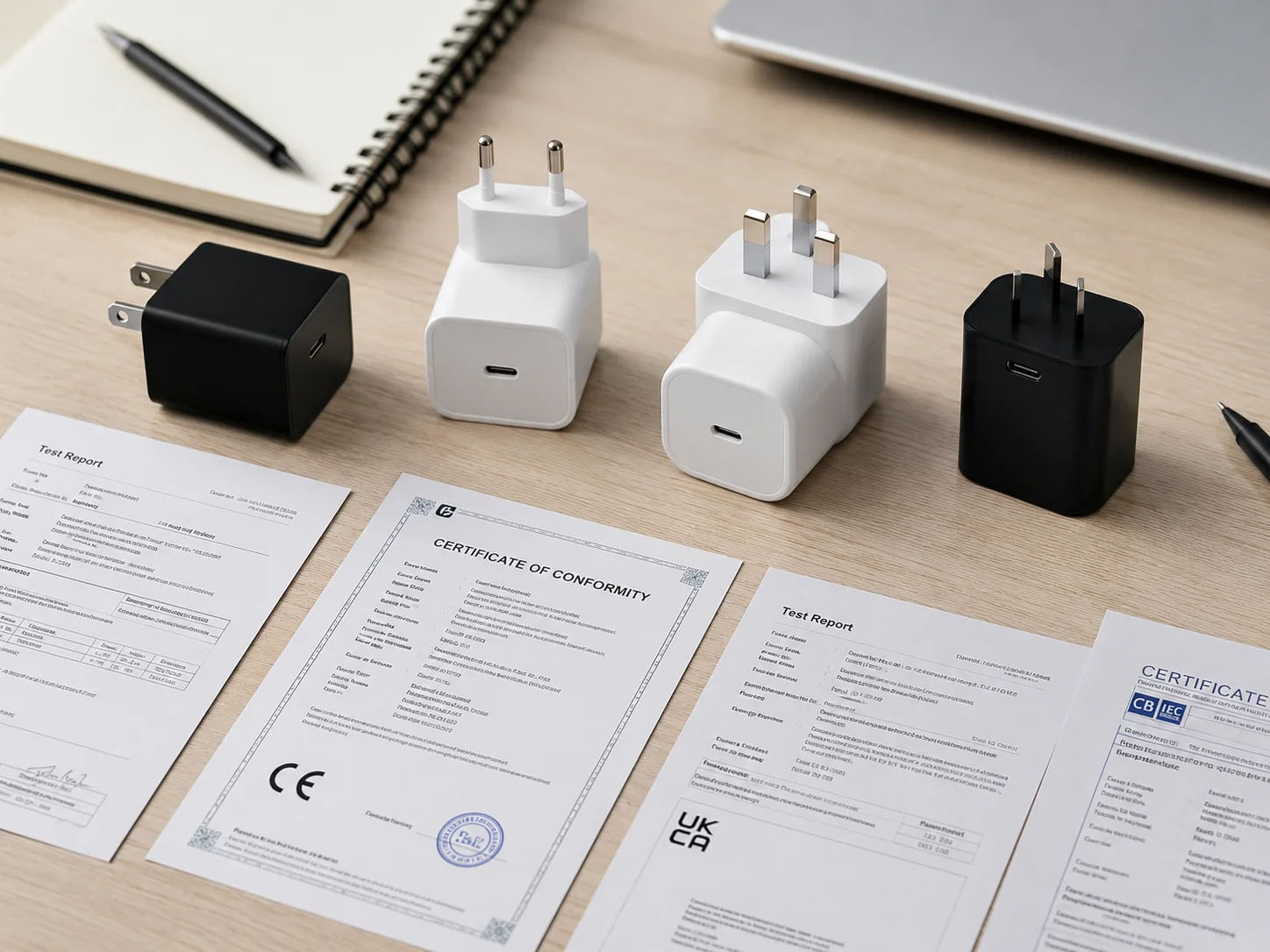
I am not a test lab, so I do not give legal advice. But I do handle export documents and buyer requests. In my experience, compliance problems often come from mismatch. The supplier may have a certificate for one model, but the buyer orders another model. The plug may be correct, but the label may miss required information. The product may have a mark, but the platform may ask for a full test report. The packaging may need warnings, importer information, or language changes.
| Market | Common Plug Type | Common Compliance Points to Verify |
|---|---|---|
| EU | EU plug | CE, RoHS, labeling, packaging language, importer needs11 |
| USA | US plug | FCC, safety files, platform requests, label format |
| UK | UK plug | UKCA, plug standard, label and packaging checks12 |
| Canada | US type plug often used | Safety and marketplace requirements |
| Australia | AU plug | RCM and local plug needs |
Compliance Is a Procurement Checkpoint, Not a Sticker
I have seen buyers feel safe after seeing a CE or FCC mark on a product photo. I do not stop there. I ask for the certificate and test report. I check the model number. I check whether the power rating is the same. I check whether the factory name or applicant name creates any issue for the buyer. I also ask whether the buyer’s platform or retail chain has its own checklist. For example, an e-commerce platform may request certain files after listing. A chain store may need packaging information before approval. A customs broker may ask for specific documents. Requirements can change, so buyers should verify them before ordering. This habit may feel slow, but it is much cheaper than fixing compliance problems after the goods arrive.
7. How Do OEM, ODM, Private Label, MOQ, Packaging, and Bulk Pricing Work?
Customization sounds simple, but it can slow the order if the buyer does not prepare artwork, packaging details, and MOQ expectations early.
OEM and private label GaN charger orders usually include logo printing, custom packaging, barcode, manual, and sometimes color changes. MOQ, lead time, and price depend on the model, certification, packaging, and customization level. Buyers should confirm all details before deposit.
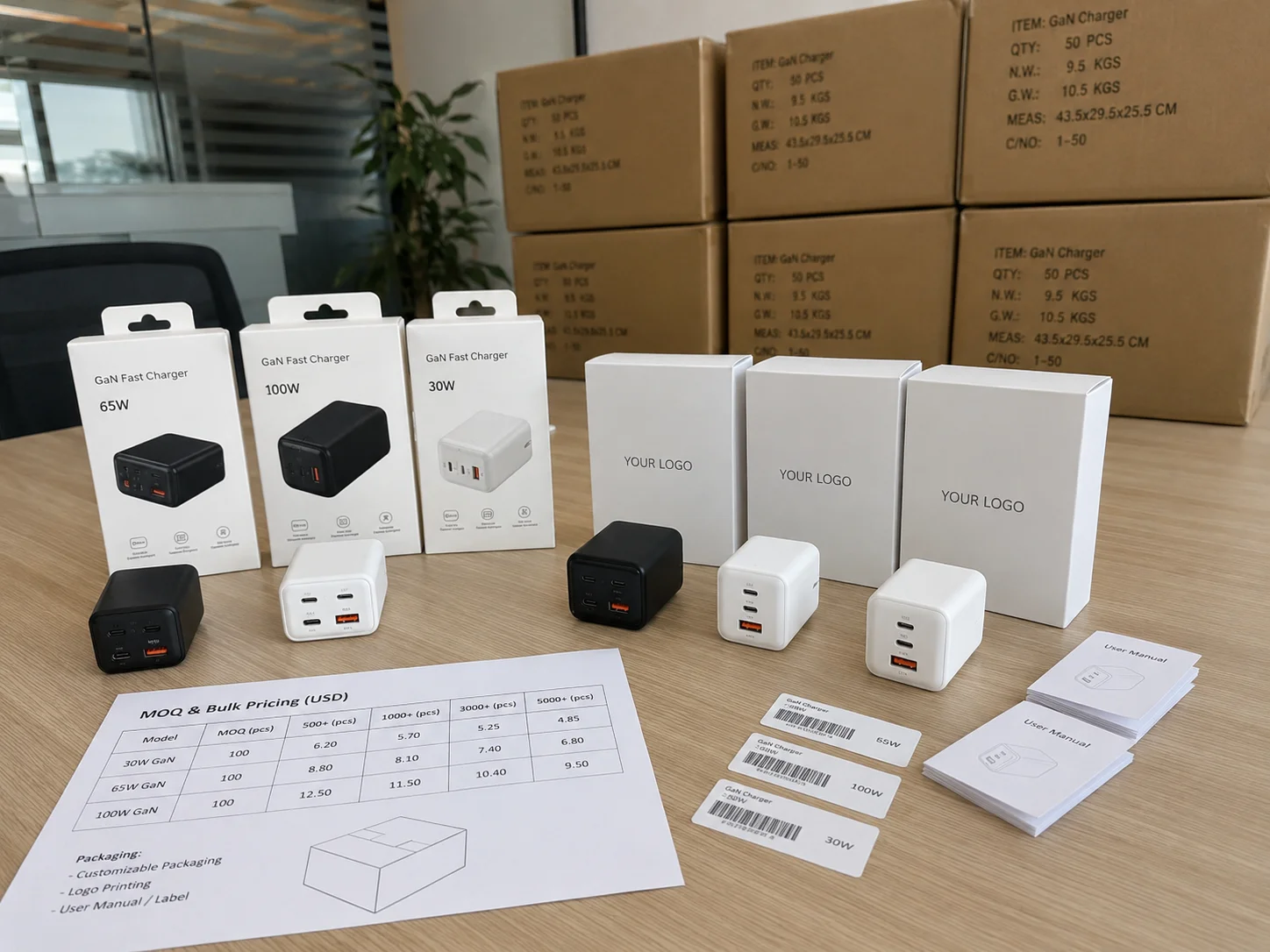
I handle many OEM and ODM discussions. Most buyers want their logo on the charger and box. Some buyers want a full retail package with manual, barcode, product photos, and local language. Some buyers want a special color or shape. The deeper the customization, the more time and cost it may need. A simple logo order is usually easier than a new shell design. A private label box is easier than a new electrical design. I always ask buyers to separate “must-have” changes from “nice-to-have” changes.
| Item | Common Option | Buying Impact |
|---|---|---|
| Logo | Laser, print, or no logo | Affects MOQ and lead time |
| Packaging | Neutral box or custom box | Affects cost and approval time |
| Manual | Standard or local language | Affects compliance and customer experience |
| Barcode | Buyer-provided barcode | Needed for retail and platforms |
| MOQ | Model-based | Affects inventory plan |
| Pricing | Quantity-based | Must compare with full terms |
Bulk Price Is Not Only the Unit Price
When I quote GaN chargers, I try to explain what is inside the price. A lower unit price may not include good packaging, proper files, extra inspection, or stable after-sales support. A higher unit price may include better materials, better packaging, and more reliable support. Buyers should also check freight cost, payment terms, sample cost, mold cost if any, and spare parts policy. MOQ is another key point. If MOQ is too high, the buyer may carry inventory for too long. If MOQ is too low, the price may not be competitive. I usually suggest starting with a focused range and testing sales before adding too many models. Replenishment speed also matters. A product that sells well but cannot be restocked on time can still hurt the buyer’s business.
8. How Can I Find a Reliable Wholesale GaN Charger Supplier in China?
Many suppliers look similar online. I know this problem well. The real difference appears during quotation, sampling, document checking, and after-sales communication.
To find a reliable wholesale GaN charger supplier in China, I check export experience, product range, certification support, sample quality, MOQ, lead time, packaging ability, communication speed, after-sales process, and repeat order stability. I also verify whether supplier claims match real files and samples.

I am based in Shenzhen, and I see how buyers compare suppliers. A good supplier does not only send a low price list. A good supplier asks about the target market, plug type, certification needs, packaging style, and sales channel. A good supplier also explains what can be done and what needs verification. I value clear answers more than big promises. If a supplier says “all certificates available” but cannot send matching files, I become careful. If a supplier says “fast delivery” but cannot give a clear production schedule, I also become careful.
| Supplier Check | What I Ask | Good Sign |
|---|---|---|
| Export experience | Which markets do you ship to? | Clear cases for EU or US |
| Certification | Can files match this model? | Certificate and report are consistent |
| Samples | Can you send samples fast? | Sample matches quotation |
| MOQ | What is MOQ by logo and packaging? | Clear MOQ levels |
| Lead time | What is sample and bulk time? | Clear schedule |
| After-sales | What if defects happen? | Written process |
| Replenishment | Can repeat orders stay stable? | Stable model supply |
My Practical Supplier Selection Process
I usually start by confirming the buyer’s market and sales channel. Then I request models that fit the channel, not the whole catalog. After that, I compare quotations with the same conditions. I do not compare a neutral box price against a custom packaging price. I do not compare one-port chargers with three-port chargers. I ask for certificate files, sample photos, packaging details, and lead time. Then I arrange samples if the buyer is serious. During this process, I watch how the supplier communicates. Slow communication is not always bad, but unclear communication is risky. I also check whether the supplier can support future repeat orders. A wholesale buyer needs stable supply, not only one lucky purchase. A reliable China supplier should help buyers reduce risk, not add confusion.
Conclusion
I choose wholesale GaN chargers by market fit, compliance, SKU mix, supplier support, and real total cost, not by wattage or price alone.
"Gallium nitride - Wikipedia", https://en.wikipedia.org/wiki/Gallium_nitride. A neutral technical source identifies gallium nitride as a semiconductor material used in high-power and high-frequency electronic devices, supporting the description of GaN chargers as chargers using gallium nitride power components. Evidence role: definition; source type: encyclopedia. Supports: Gallium nitride is a semiconductor material used in power electronic components.. ↩
"High-frequency Gallium Nitride Power Devices - ComSenTer", https://comsenter.engr.ucsb.edu/research/themes/devices/high-frequency-gallium-nitride-power-devices. Peer-reviewed reviews of GaN power electronics report that GaN devices can operate at high switching frequencies with high power density, providing a technical basis for more compact high-wattage charger designs; this is contextual support because final charger size also depends on circuit design, thermal management, and enclosure choices. Evidence role: mechanism; source type: paper. Supports: GaN power devices can enable higher switching frequencies, improved efficiency, and higher power density, which can allow smaller high-power charger designs.. Scope note: The source would support the enabling mechanism rather than prove that every GaN charger is smaller or higher wattage. ↩
"CPSC.gov", https://www.cpsc.gov/. Consumer-safety and electrical-safety sources document that power adapters can be associated with overheating, fire, or electric-shock hazards, supporting the procurement relevance of checking safety, thermal performance, and certification documentation before bulk purchase. Evidence role: general_support; source type: government. Supports: Power adapters and chargers can present safety and overheating risks, making verification of safety documentation and thermal performance relevant before procurement.. Scope note: The evidence would support the general risk-control rationale, not a specific defect rate for GaN chargers. ↩
"Common external power supply - Wikipedia", https://en.wikipedia.org/wiki/Common_external_power_supply. Institutional materials on USB-C and USB Power Delivery describe a common charging interface capable of serving phones, tablets, and computers, providing contextual support for consumer interest in a single compact multi-device charger. Evidence role: general_support; source type: institution. Supports: USB-C and USB Power Delivery are intended to support charging across multiple device categories, helping explain demand for one charger for several devices.. Scope note: Such sources support the technical and policy context for multi-device charging, but they may not directly measure retail customer demand. ↩
"USB hardware - Wikipedia", https://en.wikipedia.org/wiki/USB_hardware. USB-IF and public common-charger materials describe USB-C Power Delivery as a charging framework spanning multiple device categories, which supports the claim that fewer charger SKUs can cover phones, tablets, and some laptops. Evidence role: mechanism; source type: institution. Supports: USB-C and USB Power Delivery can support charging across different device classes, which can make a smaller charger assortment plausible.. Scope note: The source would not directly prove SKU reduction in a specific wholesale business; it supports the interoperability mechanism that makes SKU consolidation possible. ↩
"USB Charger (USB Power Delivery) - USB-IF", https://www.usb.org/usb-charger-pd. USB Power Delivery documentation defines standardized voltage and power ranges, including higher-power operation under later specifications, supporting the use of wattage tiers to match chargers with different device classes. Evidence role: general_support; source type: institution. Supports: USB Power Delivery defines power ranges that include common charger wattages used for phones, tablets, laptops, and higher-power devices.. Scope note: The source would support the standards context for these wattages, not the exact commercial categorization of each tier. ↩
"charging Iphone 14 with 20w or 30w charger - Apple Community", https://discussions.apple.com/thread/254935058. Research or standards-based measurements of smartphone charging show that many fast-charging phones operate in the tens-of-watts range, providing contextual support for positioning 20W to 35W chargers for phone users. Evidence role: statistic; source type: research. Supports: Many contemporary smartphones use fast-charging power levels in the tens of watts, often around the 20W to 35W range.. Scope note: Charging power varies substantially by model, battery state, protocol, cable, and thermal conditions, so the range should be treated as a common procurement guideline rather than a universal requirement. ↩
"Type C Power Adapter - Rice University", https://dev-dining.rice.edu/info/type-c-power-adapter-616722. Technical documentation and device-power studies commonly place many tablets and lightweight notebook computers within USB-C charging ranges around 45W to 65W, supporting the article’s practical wattage band for these devices. Evidence role: general_support; source type: research. Supports: Many tablets and lightweight laptops are compatible with USB-C charging adapters in approximately the 45W to 65W range.. Scope note: This support is contextual because individual devices may require lower or higher wattage and may limit charging speed depending on protocol compatibility. ↩
"USB Charger (USB Power Delivery) - USB-IF", https://www.usb.org/usb-charger-pd. USB-C Power Delivery materials explain that sources advertise available power capabilities and negotiate power with connected devices, supporting the mechanism by which a multi-port charger with limited total output may reduce available per-port power when several devices are connected. Evidence role: mechanism; source type: institution. Supports: A charger with a fixed total power budget may allocate different power levels across ports when multiple devices are attached.. Scope note: The exact reduction pattern is product-specific and depends on the charger’s controller design and advertised power profiles. ↩
"Equipment Authorization – RF Device", https://www.fcc.gov/oet/ea/rfdevice. Official regulatory guidance for CE marking, FCC equipment authorization, and UKCA marking shows that conformity obligations depend on jurisdiction and product scope, supporting the statement that charger compliance requirements vary by market and product. Evidence role: definition; source type: government. Supports: Different jurisdictions use different conformity, authorization, and marking systems, and applicability depends on product type and market.. Scope note: The source combination would establish regulatory variation generally, but a specific charger model still requires product-specific legal and laboratory assessment. ↩
"EU - Labeling/Marking Requirements", https://www.trade.gov/country-commercial-guides/eu-labelingmarking-requirements. European Commission guidance on CE marking, RoHS, and product-safety obligations describes conformity marking, restricted substances, labeling or instructions, and importer responsibilities for relevant electrical and electronic products, supporting the EU compliance checklist in the article. Evidence role: definition; source type: government. Supports: EU rules include CE marking, RoHS restrictions for electrical and electronic equipment, and obligations related to labeling, instructions, and economic operators.. Scope note: Applicability depends on the exact charger design, directives involved, distribution role, and member-state language requirements. ↩
"AC power plugs and sockets: British and related types - Wikipedia", https://en.wikipedia.org/wiki/AC_power_plugs_and_sockets:_British_and_related_types. UK government guidance on UKCA marking and electrical-equipment safety describes conformity marking and related labeling obligations, while UK plug and socket rules provide context for plug-standard checks for chargers sold in the UK. Evidence role: definition; source type: government. Supports: UK rules use UKCA marking for many goods and include electrical-equipment and plug-related safety requirements relevant to chargers.. Scope note: The evidence is jurisdictional context; the exact obligations depend on the charger model, plug configuration, and applicable UK regulations. ↩