Are you stuck deciding between a manufacturer and a trading company? You worry that picking the wrong one could cost you time, money, and your reputation. It's a common fear.
The best choice is not about the supplier's label, but about their capabilities. Focus on finding a partner whose product focus, quality control, flexibility, and communication style match your specific business needs. This is what truly determines a successful import business, not whether they are a factory or a trader.
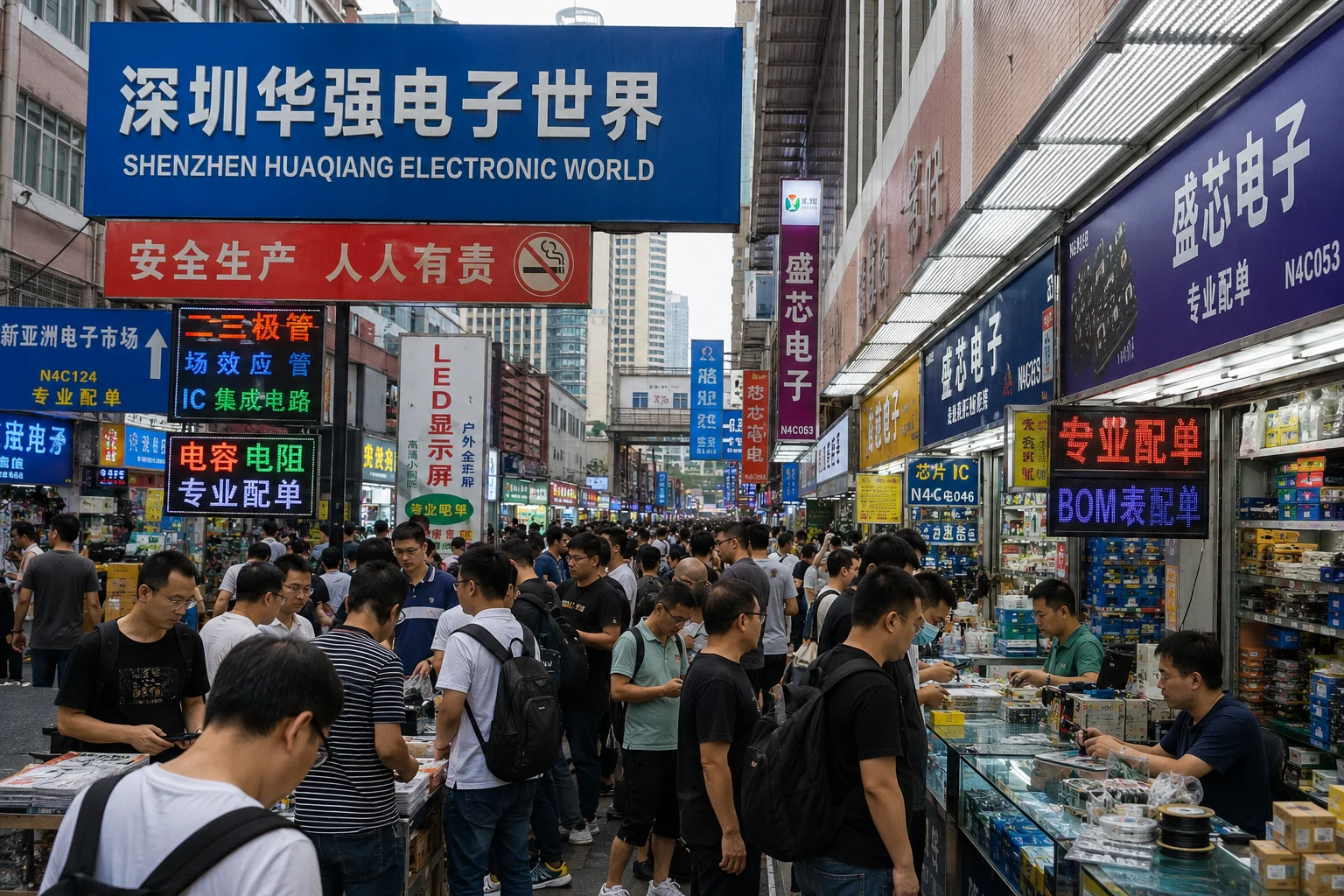
I've been exporting 3C electronics from Shenzhen1 for over 15 years. Every week, I talk to importers from Europe and the US who are trying to make this exact decision. They believe one is "good" and the other is "bad." The truth is, it's not that simple. This debate often misses the point entirely. You're not just buying a product; you're buying a service, a partnership, and a solution to your business problem. In this article, I'll walk you through the questions you should be asking to find the right partner for you, based on hundreds of conversations with buyers just like you. Let's get past the labels and find a partner who will help you grow.
Manufacturer vs Trading Company: What is the real difference?
You think you know the difference between a factory and a trader. One makes things, the other sells things. Simple, right? But this simple view can be misleading.
The real difference is often blurry.2 Many "manufacturers" sell products they don't make, and many "trading companies" have deep factory investments, dedicated quality control teams, and exclusive partnerships. The label is just the beginning of the story, not the end.

I get this question all the time: "Are you a factory?" For 15 years, I've seen buyers fixate on this. They believe a factory price is always lower and a trading company is just a middleman adding cost. In the real world of sourcing in China, it's much more complicated. I once visited a company that called itself a "smartwatch factory." When I got there, it was a small office with a few people assembling parts they bought from other places. On the other hand, my company is a trading company, but we have our own engineers and a dedicated QC team that stays on the factory floor during our clients' productions. We often have more control over quality than a buyer who deals directly with a factory. The lines are so blurred that focusing only on the label will make you miss great partners and walk into bad situations.
Assumed vs. Real-World Differences
| Aspect | The Common Assumption | The Reality in 2024 |
|---|---|---|
| Price | Factory is always cheapest. | Often true only for massive orders. Traders get great prices through volume and relationships.3 |
| Expertise | Factory knows the product best. | Only if they are specialized. Many factories are generalists. A specialized trader knows the market better. |
| Control | Direct factory contact means more control. | You have one point of contact. If they are busy or not good, you have no control. |
| Service | Traders offer better service. | An experienced trader's service (consolidation, communication, problem-solving) is their main product. |
Why should importers not judge by label alone?
You found a supplier listed as a "manufacturer" on a B2B platform. You feel like you've hit the jackpot, bypassing the middleman. But this focus can be a trap.
Judging a supplier only by their "manufacturer" or "trading company" label leads to missed opportunities and hidden risks. A great trading partner could be ignored, while a difficult factory could be chosen for the wrong reasons.
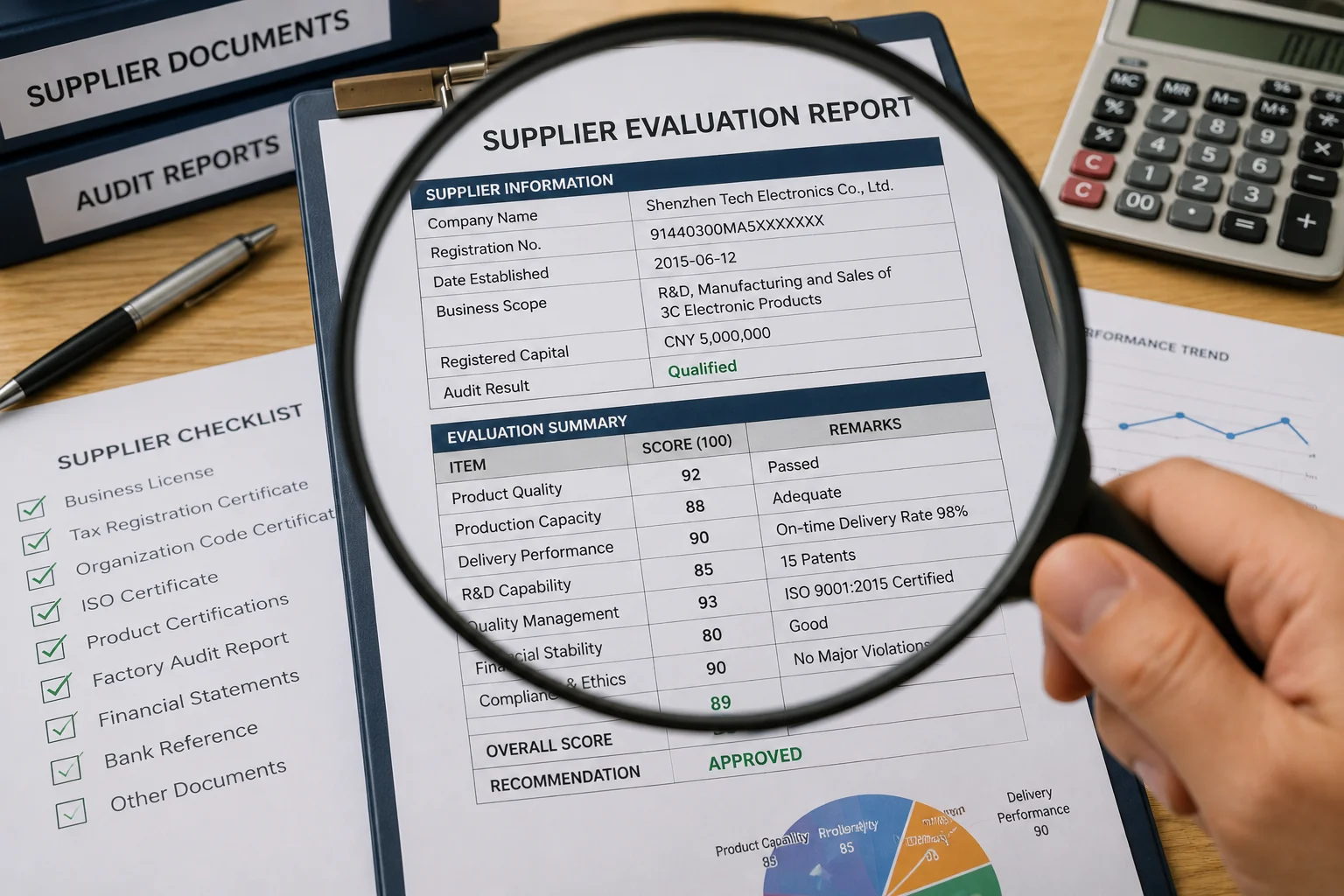
Let me tell you a quick story. A client from Germany, let's call him Klaus, was determined to work directly with a factory for his new line of GaN chargers. He spent weeks vetting factories and finally placed an order. The MOQ was high, 3,000 pieces, and they refused to make any changes to the packaging. He wasn't happy, but he thought, "at least I'm getting the factory price." Six months later, he called me. His sales were good, but he needed to re-order and wanted a new color and custom-branded boxes this time. The factory said no again. He came to us, a "trading company." We sourced the exact same GaN chargers from a different, highly-vetted factory in our network. We got him an MOQ of 1,000 pieces, the new color he wanted, and beautifully designed custom boxes. And the price? It was almost identical to what he paid the first factory. He learned a valuable lesson: the best partner is not always a factory. The best partner is the one who solves your business problem.
Does product focus matter more than company type?
You're looking for TWS earphones. You find two suppliers. One is a massive "factory" that makes power banks, smartwatches, and cables. The other is a "trading company" that only deals in audio products.
Yes, a supplier's specialization is far more important than their business license4. A partner who lives and breathes your product category will understand the technology, market trends, and quality pitfalls better than any generalist, factory or trader.
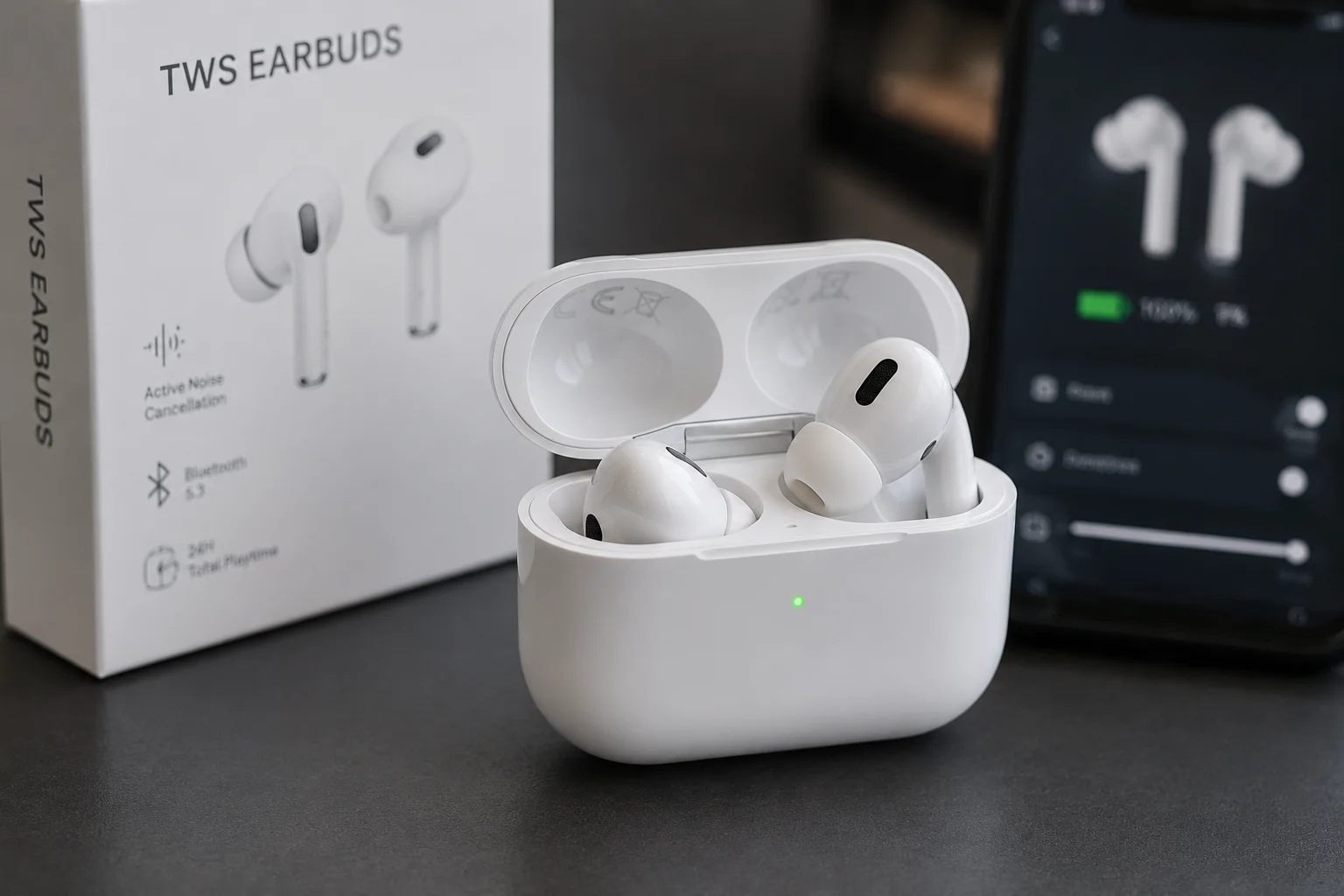
When a client asks me for a product outside our expertise, like furniture, I tell them we can't help. Why? Because we are experts in 3C electronics. We know the right chipsets for TWS earphones, the best battery suppliers for smartwatches, and the necessary certifications for USB-C chargers for the EU market. This is where a supplier's real value is. A specialized supplier, whether they are a manufacturer or a trader, offers deep knowledge that a generalist cannot.
Signs of a Specialized Supplier:
- They Understand Technical Details: They can discuss specific chipsets (like Qualcomm vs. Airoha for earbuds), battery life in real-world usage, and the difference between USB-PD and QC 3.0. A generalist will just read from a spec sheet.
- They Know the Market: They can tell you what's selling well in your region, what new features are coming, and what designs are becoming popular. They help you choose products that will actually sell.
- They Anticipate Problems: A specialist in smartwatches knows the most common failure points are battery drain and connection stability5. Their QC process will focus heavily on these areas. A generalist factory might not even know what to look for.
Choosing a specialist is like hiring an expert for your team. A generalist is just a vendor.
Is quality control the real test of a good supplier?
You received your first big shipment. You open the boxes, and the excitement turns to horror. Scratches, non-working units, and cheap-feeling materials. Who is to blame?
Absolutely. A supplier’s quality control (QC) process is the single most important factor determining your success.6 Their approach to QC, not their company type, protects your money, your customers, and your brand's reputation. It is the ultimate test.
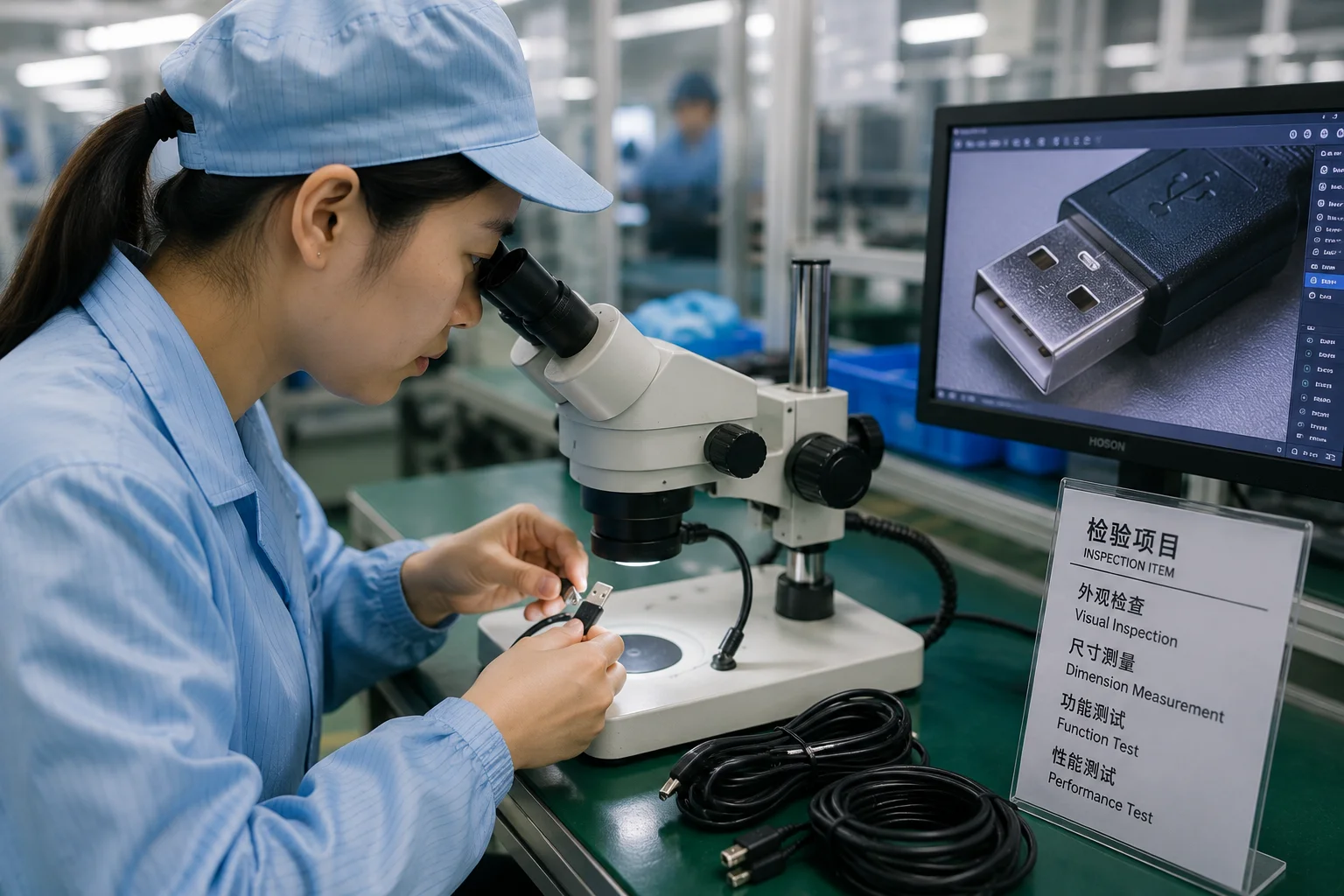
A factory's goal is to ship products. A good partner's goal is to ensure you receive good products. These are two very different things. Many factories have a simple QC process: a quick check at the end of the assembly line to see if the device turns on. This is not enough. After 15 years, I can tell you that true quality control is a system, not a single event. It involves multiple stages. For my clients' orders, my team performs these checks. We are the client's eyes and ears on the factory floor.
A Robust QC System Includes:
- IQC (Incoming Quality Control)7: We check the raw materials before production starts. Are the batteries from a reliable brand? Is the plastic casing the correct grade? Catching problems here saves thousands of dollars later.
- IPQC (In-Process Quality Control): We walk the assembly line while the product is being made. This is where we spot process errors or assembly issues that can cause widespread defects.
- OQC (Outgoing Quality Control): This is the final inspection before shipment, based on an AQL (Accepted Quality Limit) standard8. We check a random sample of the finished, packaged goods against a detailed checklist that includes everything from product function to package barcodes.
When you interview a potential supplier, don't just ask "Do you have QC?" Ask them to describe their IQC, IPQC, and OQC processes. Their answer will tell you everything.
Price, MOQ, and Flexibility: Who fits your order better?
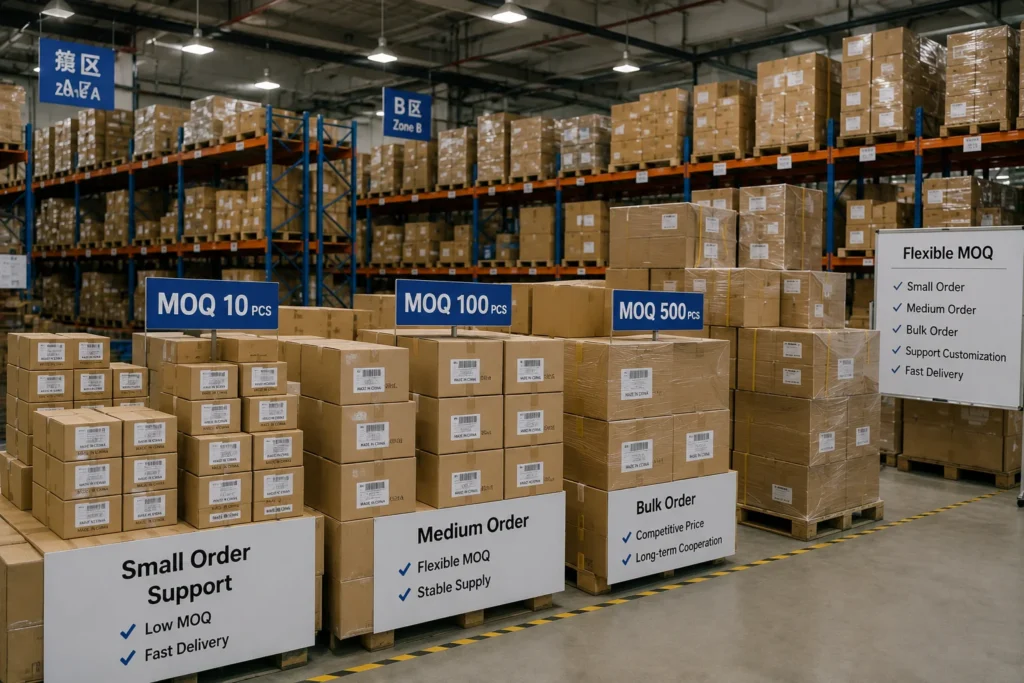
You have a great product idea, but your budget is limited. Factories are quoting you a minimum order quantity (MOQ) of 3,000 pieces, which is more than you can afford or want to risk.
For price, MOQ, and flexibility, the better fit depends entirely on your order size and complexity. Factories are built for scale and repetition.9 Trading companies are built for flexibility and service, often being the better choice for small to medium-sized importers.
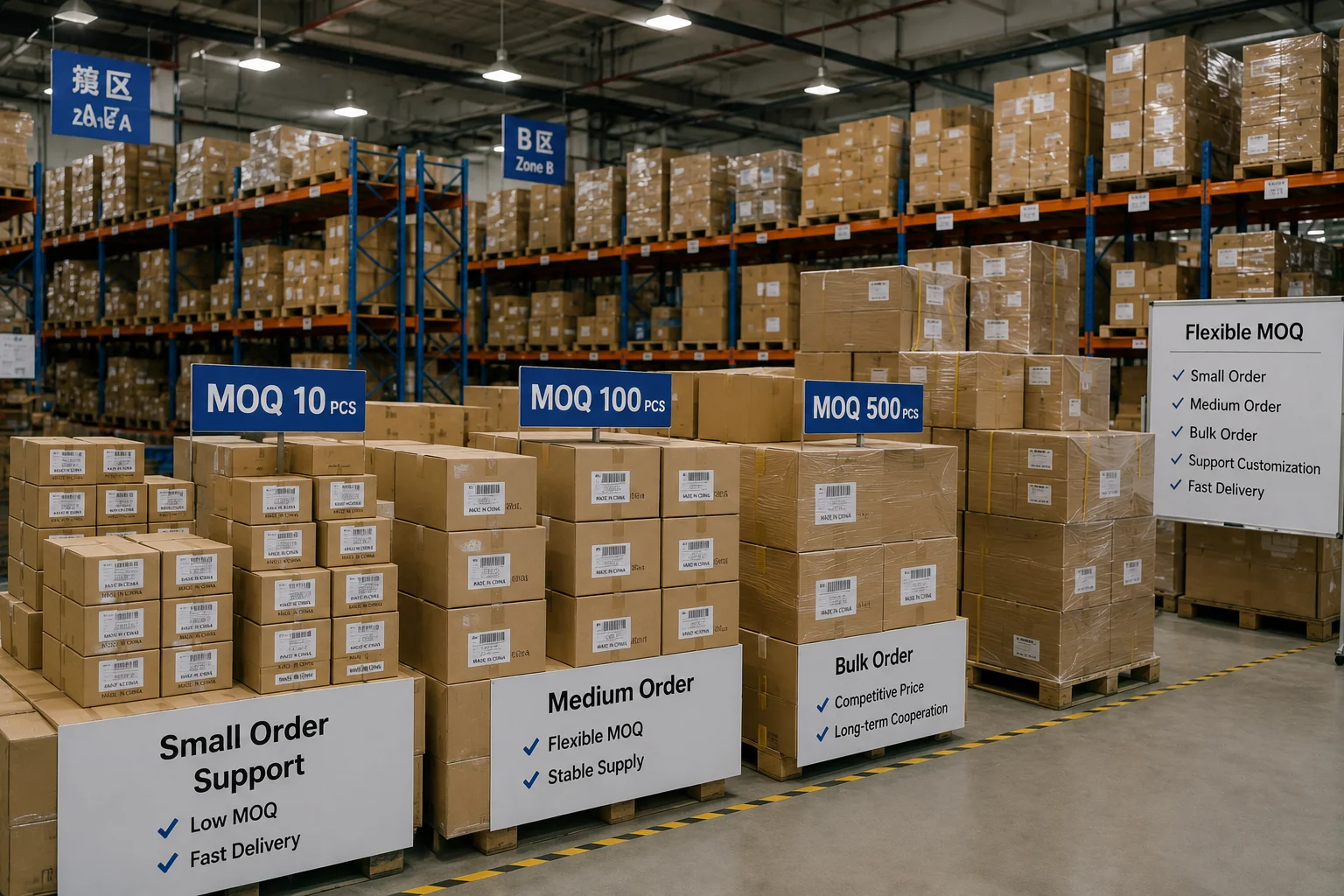
New importers often think price is everything. They hunt for the lowest "factory price" and get frustrated by high MOQs. But the total cost of your product isn't just the unit price. What if you need to order three different products? Say, 500 TWS earphones, 500 smartwatches, and 500 GaN chargers. No single factory makes all three of these well. You would have to manage three different suppliers, three production schedules, and three separate shipments. The complexity and cost would be enormous. This is where a good trading company shines. We can consolidate those three orders from three different specialized factories that we have already vetted. You get one point of contact, one QC standard, and one combined shipment. That's a huge saving in time, money, and headaches.
Manufacturer vs. Trading Company: A Quick Comparison
| Factor | Manufacturer | Trading Company | Who it's for |
|---|---|---|---|
| Price | Potentially lower on massive, single-product orders. | Competitive. Can be lower on smaller, mixed orders due to relationships and consolidation. | Factory for huge brands; Trader for most others. |
| MOQ | High (e.g., 2,000-5,000 pcs) | Low & Flexible (e.g., 500-1,000 pcs) | Trader for startups, e-commerce, and market testing. |
| Flexibility | Low. They make what they make. Customization is expensive. | High. Can mix products, offer custom packaging, and handle smaller modification requests. | Trader for anyone who needs more than a standard product. |
The right question isn't "who is cheaper?" It's "who provides the most value for my specific order?"
Who is better at communication and problem-solving?
There's a problem with your order. You send an urgent email to your factory contact. Days go by with no clear answer. You're stuck 5,000 miles away, completely in the dark.
Experienced trading companies are almost always better at communication. Their business is built on it. They act as a professional bridge between your needs and the factory's world, which is crucial for solving problems quickly.

This is one of the most underrated aspects of sourcing. You might save a few cents per unit with a factory, but what happens when something goes wrong? The salesperson at a factory is often young, has limited English, and no authority to make decisions. The engineers and managers who can actually solve the problem don't speak English at all.10 So you get stuck in a loop of miscommunication and delays. I see this happen all the time. My job, and the job of any good sourcing partner, is to be your project manager on the ground in China. When a client calls me with a problem, I can walk over to the engineer's desk at the factory and talk to them in Mandarin. I can get the production manager on the phone and get a real answer. The client gets one clear point of contact and a solution. A trading company's reputation is built on solving problems. For many factories, you are just one of many orders. For us, you are a client we want to keep for years. That changes everything.
What about after-sales support and responsibility for defects?
Your customers are starting to return products. A small percentage of the units are defective. You contact your supplier for help, but they are slow to respond or deny responsibility.
A good partner takes responsibility. Reputable trading companies often have more leverage and a stronger incentive to solve defect issues11 than a single factory would, making them a safer choice for managing after-sales risk.
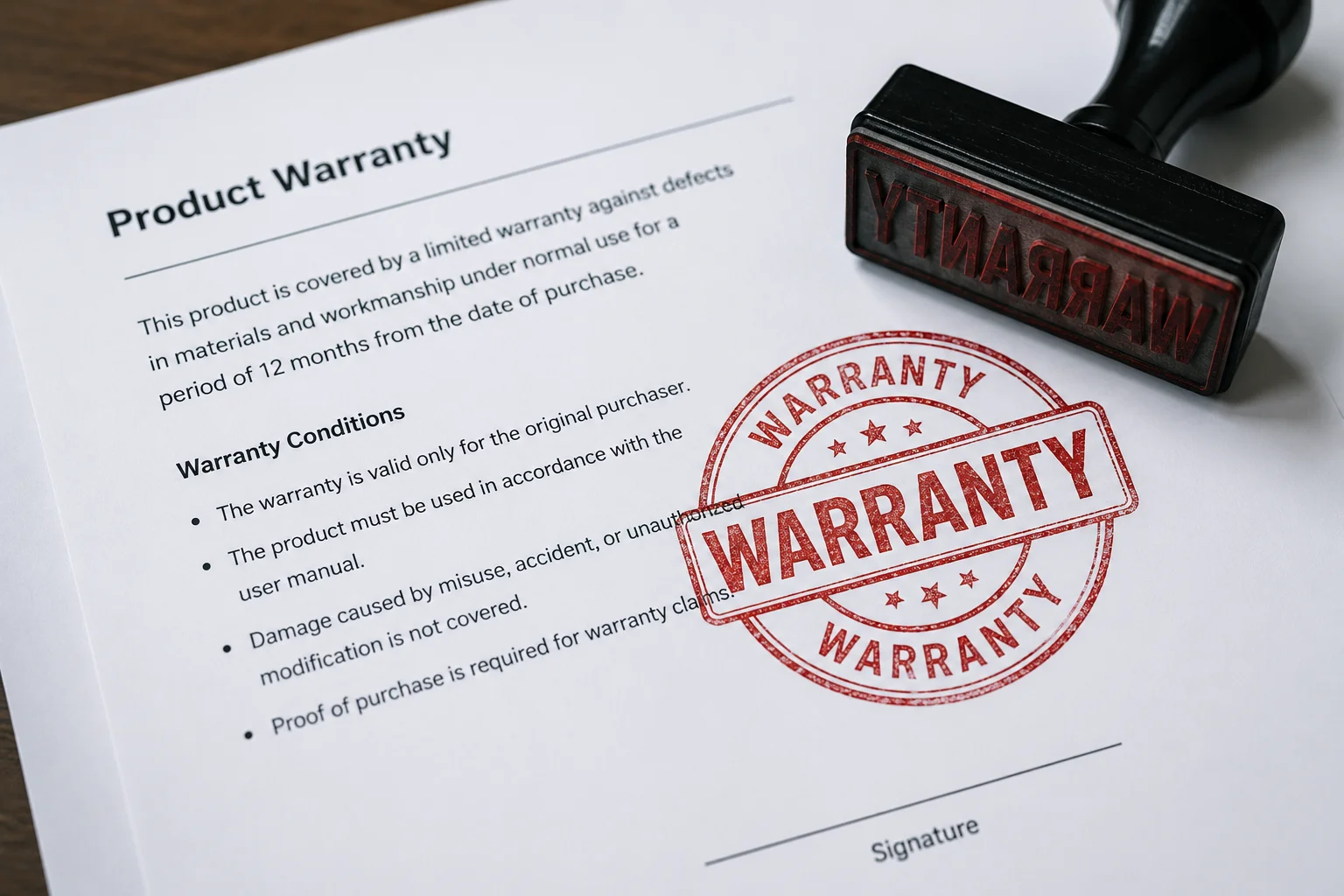
This is the conversation you must have before you place an order. What is the warranty policy? What is the process for handling defective units? A factory might offer a warranty, but enforcing it from another country can be nearly impossible, especially for a smaller buyer. They might claim the damage happened in shipping or that the user broke it. What are you going to do, fly to China to argue? This is where a long-term partnership with a trading company provides real security. Because we place orders with our factory partners all year round, we have significant leverage. They know that if they don't take care of our client's issue, they risk losing a large volume of future business from us, not just from one small client. We build warranty terms and defect allowances into our contracts with the factories. When a client has a problem with defects, we manage the entire process of getting replacements or credit. Our long-term reputation is on the line, so we are highly motivated to make it right.
How do you choose the right supplier for your business stage?
So, how do you put this all together? The answer is not to find the "best" supplier, but to find the right partner for where your business is today.
The best supplier depends on your scale, risk tolerance, and business goals. A startup testing the market has different needs than a large retail chain placing a massive order. Match the partner to your stage.
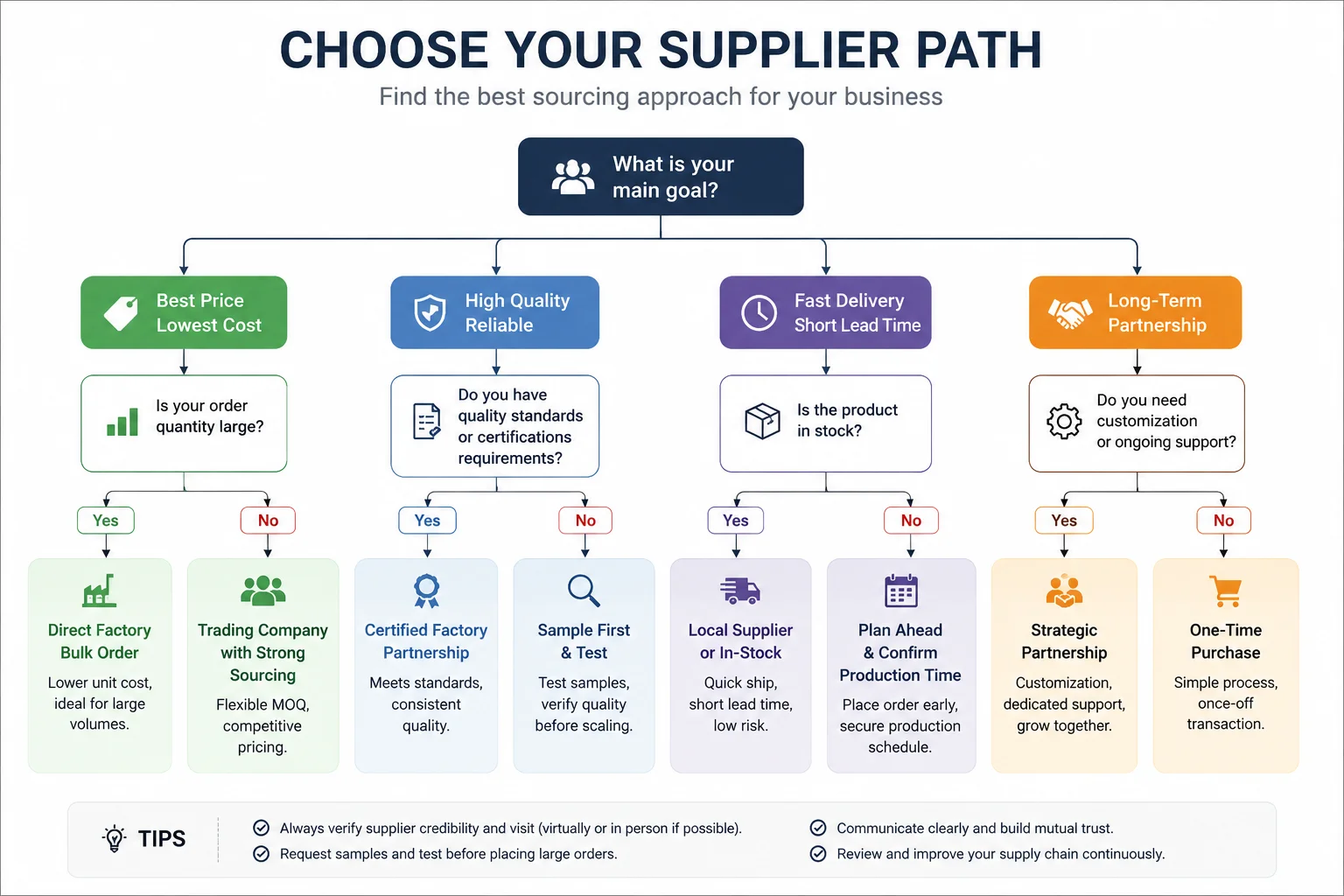
Over the years, I've developed a simple way to help clients figure this out. It's not about the supplier's label; it's about your own business reality. Let's break it down by your business type.
The Right Partner for Your Business Stage:
-
For the Startup / E-commerce Seller:
- Your Goal: Test the market, validate a product idea, and move fast.
- Your Biggest Risk: Tying up all your cash in inventory that doesn't sell.
- What You Need: Low MOQ, speed, ability to order a mix of products.
- Best Partner: A specialized, flexible trading company is almost always the right choice. They are your launchpad.
-
For the Established Retailer / Wholesaler:
- Your Goal: Maintain a reliable supply of quality products, protect your brand reputation.
- Your Biggest Risk: Stockouts, quality issues that damage customer trust.
- What You Need: Consistent quality, reliable delivery, some private label customization.
- Best Partner: A strong trading company with dedicated QC or a very well-vetted, flexible manufacturer. The key is a proven track record.
-
For the Large Brand Doing OEM:
- Your Goal: Create a unique, proprietary product from the ground up.
- Your Biggest Risk: Failed R&D, huge tooling investment losses, IP theft12.
- What You Need: Deep technical partnership, high-volume production capacity, strict IP protection.
- Best Partner: A large, proven OEM factory. Often, an experienced trading company can act as a project manager to help you navigate the complexities of working with these huge organizations.
Before you ask a supplier if they are a factory, ask yourself: "What is my realistic first-order quantity?" and "What is the biggest risk my business needs to avoid right now?" The answers will point you to the right partner.
Conclusion
Stop asking if a supplier is a manufacturer or a trader. Start asking if they are the right partner to help you solve your problems, manage your risks, and achieve your goals.
"Shenzhen - Wikipedia", https://en.wikipedia.org/wiki/Shenzhen. Sources from business publications and economic analyses describe Shenzhen as a global epicenter for electronics, often called the 'Silicon Valley of Hardware,' due to its vast manufacturing ecosystem, supply chain concentration, and role in producing a significant portion of the world's consumer electronics. Evidence role: historical_context; source type: encyclopedia. Supports: The source should describe Shenzhen's status as a major global center for electronics design, manufacturing, and trade, particularly for consumer electronics (3C products).. ↩
"[PDF] hearing on dominance by design: china shock 2.0 and the supply", https://www.uscc.gov/sites/default/files/2025-07/June_5_2025_Hearing_Transcript.pdf. Industry guides on sourcing from China note that the lines between manufacturers and trading companies have become increasingly blurred. Many factories engage in trading to supplement their product lines, while many trading companies have developed deep partnerships, financial stakes, or even their own quality control teams within factories. Evidence role: general_support; source type: other. Supports: The source should discuss how the traditional roles of manufacturers and trading companies in China have evolved, with many companies adopting hybrid models.. ↩
"Sourcing Agents - Experiences? Reasonable Expectations? - Reddit", https://www.reddit.com/r/FulfillmentByAmazon/comments/1eup052/sourcing_agents_experiences_reasonable/. Supply chain management principles indicate that intermediaries can create value through order consolidation. By pooling orders from multiple clients, a trading company increases its purchasing volume, which provides the leverage to negotiate lower prices and better terms with manufacturers. Evidence role: mechanism; source type: education. Supports: The source should explain how intermediaries like trading companies can achieve economies of scale by aggregating demand from smaller buyers, giving them greater bargaining power and access to better pricing than individual buyers could achieve on their own.. ↩
"Assessing the Best Supplier Selection Criteria in Supply Chain ...", https://pmc.ncbi.nlm.nih.gov/articles/PMC9102987/. Research in supply chain management and procurement consistently identifies supplier technical capability and product-specific expertise as critical criteria for selection, often ranking them as more important for product quality and innovation than the supplier's business model alone. Evidence role: expert_consensus; source type: paper. Supports: The source should identify supplier expertise and product specialization as critical factors in supplier selection and risk management.. ↩
"Failure Mode and Effects Analysis | Digital Healthcare Research", https://digital.ahrq.gov/health-it-tools-and-resources/evaluation-resources/workflow-assessment-health-it-toolkit/all-workflow-tools/fmea-analysis. Analyses of consumer reviews and tech journalism reports frequently cite battery drain and inconsistent Bluetooth connectivity as two of the most common complaints and failure points for smartwatches across various brands and price points. Evidence role: case_reference; source type: other. Supports: The source should identify battery life and connectivity as frequent issues or points of complaint among smartwatch users.. Scope note: The prevalence of these issues can vary by brand, model, and price range. ↩
"Supply Chain Risk Management: 6 Critical Areas to Understand", https://www.amu.apus.edu/area-of-study/business-administration-and-management/resources/supply-chain-risk-management/. Literature on supply chain management emphasizes that effective supplier quality control is fundamental to business success, directly impacting costs, customer satisfaction, and brand reputation. Failures in supplier QC are a primary source of risk in global supply chains. Evidence role: expert_consensus; source type: research. Supports: The source should affirm that robust supplier quality management is a cornerstone of successful global sourcing and is critical for mitigating financial and reputational risks.. ↩
"[PDF] Content Sheet 6-1: Process Control—Introduction to Quality Control", https://terrance.who.int/mediacentre/data/ebola/training-packages/LQMS/6_b_contents_intro_qc.pdf. According to quality management standards, Incoming Quality Control (IQC) is the process of inspecting and verifying the quality of raw materials, components, and parts from outside suppliers before they are used in production. This step is crucial for preventing defects from entering the manufacturing process. Evidence role: definition; source type: institution. Supports: The source should provide a standard definition for Incoming Quality Control (IQC) as a stage in the manufacturing quality process.. ↩
"[PDF] ISO 2859-1 - UNT Chemistry", https://chemistry.unt.edu/~tgolden/courses/iso2859-1.pdf. The Accepted Quality Limit (AQL) is a statistical method, often based on standards like ISO 2859-1, used for product sampling inspection. It defines the worst-tolerable quality level as a percentage of defects in a batch, guiding the decision to accept or reject the entire product lot based on the findings in a random sample. Evidence role: definition; source type: government. Supports: The source should define the AQL standard and its use in statistical sampling for quality control.. ↩
"Economies of scale - Wikipedia", https://en.wikipedia.org/wiki/Economies_of_scale. Manufacturing economics demonstrates that factories face significant fixed setup costs for each production run. To amortize these costs effectively, they must produce a large volume of units, leading to high Minimum Order Quantities (MOQs) to ensure each run is profitable. Evidence role: mechanism; source type: education. Supports: The source should explain that high fixed costs associated with production setup (e.g., calibrating machinery, preparing molds) incentivize manufacturers to require large orders to achieve economies of scale and profitability.. ↩
"Breaking Down the Language Barrier in China - Penn Abroad", https://global.upenn.edu/pennabroad/breaking-down-the-language-barrier-in-china/. Guides on doing business in China frequently highlight communication challenges as a key hurdle. It is common for English-speaking sales contacts to act as intermediaries to engineers and managers who do not speak English, which can lead to delays, misunderstandings, and difficulty in resolving complex technical problems. Evidence role: general_support; source type: other. Supports: The source should discuss the common communication gap in Chinese factories between English-speaking sales staff and non-English-speaking technical or management staff.. Scope note: This is a generalization and does not apply to all factories, especially those with a long history of exporting to Western markets. ↩
"Role of supply chain intermediaries in steering hospital product choice", https://pmc.ncbi.nlm.nih.gov/articles/PMC11152204/. In procurement theory, buyer power is a function of purchase volume and importance to the supplier. Intermediaries like trading companies increase their leverage by consolidating orders from numerous smaller clients, making them a more significant customer to the factory and thus giving them more influence in negotiations and dispute resolution. Evidence role: mechanism; source type: paper. Supports: The source should explain the concept of buyer power and how intermediaries can aggregate demand to increase their leverage over suppliers.. ↩
"China - Protecting Intellectual Property", https://www.trade.gov/country-commercial-guides/china-protecting-intellectual-property. Government agencies, such as the U.S. Patent and Trademark Office and the International Trade Administration, regularly issue warnings and guidance for businesses manufacturing abroad, identifying intellectual property theft as a significant risk, particularly in OEM and ODM arrangements. They advise robust legal protections and careful vetting of partners. Evidence role: general_support; source type: government. Supports: The source should confirm that IP infringement and theft are recognized risks for foreign companies manufacturing in China and offer guidance on mitigation.. ↩