Struggling to find a reliable supplier in China? A wrong partner can sink your business with bad quality and delays. Here’s my 15-year guide to finding one you can trust.
To choose a reliable supplier, you must check their product focus, factory experience, and certifications like CE or FCC. Always test samples, compare terms like MOQ and lead time, and verify their quality control process. Starting with a small trial order is also a very smart move.
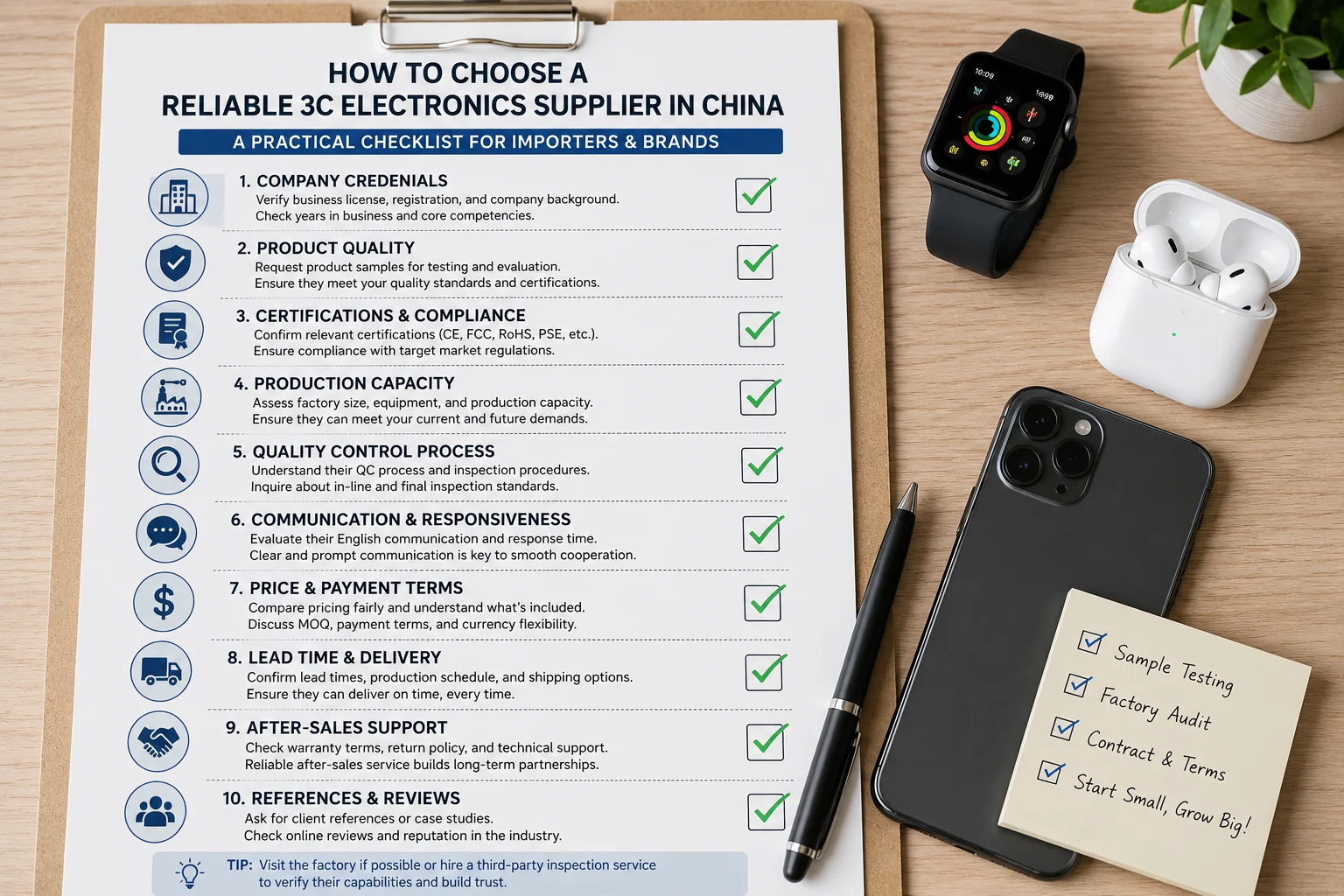
Finding a supplier feels like a huge task. I get it. I've been helping clients do this for over 15 years. It's not just about finding the cheapest price. It's about finding a partner who won't let you down. Many new importers make mistakes that cost them thousands of dollars1. Let's break down the exact steps I walk my clients through. This will help you avoid the common pitfalls and find a partner who can help you grow.
Why Does Supplier Reliability Matter So Much in 3C Electronics Sourcing?
Think the cheapest supplier is the best deal? An unreliable partner can destroy your brand with faulty products and angry customers. True profit comes from reliability, not just a low price.
Reliability means consistent quality, on-time delivery, and good communication. In the fast-moving 3C market, this protects your brand's reputation, ensures customer satisfaction, and prevents costly delays or recalls2. A reliable partner is the foundation of a stable, profitable business.
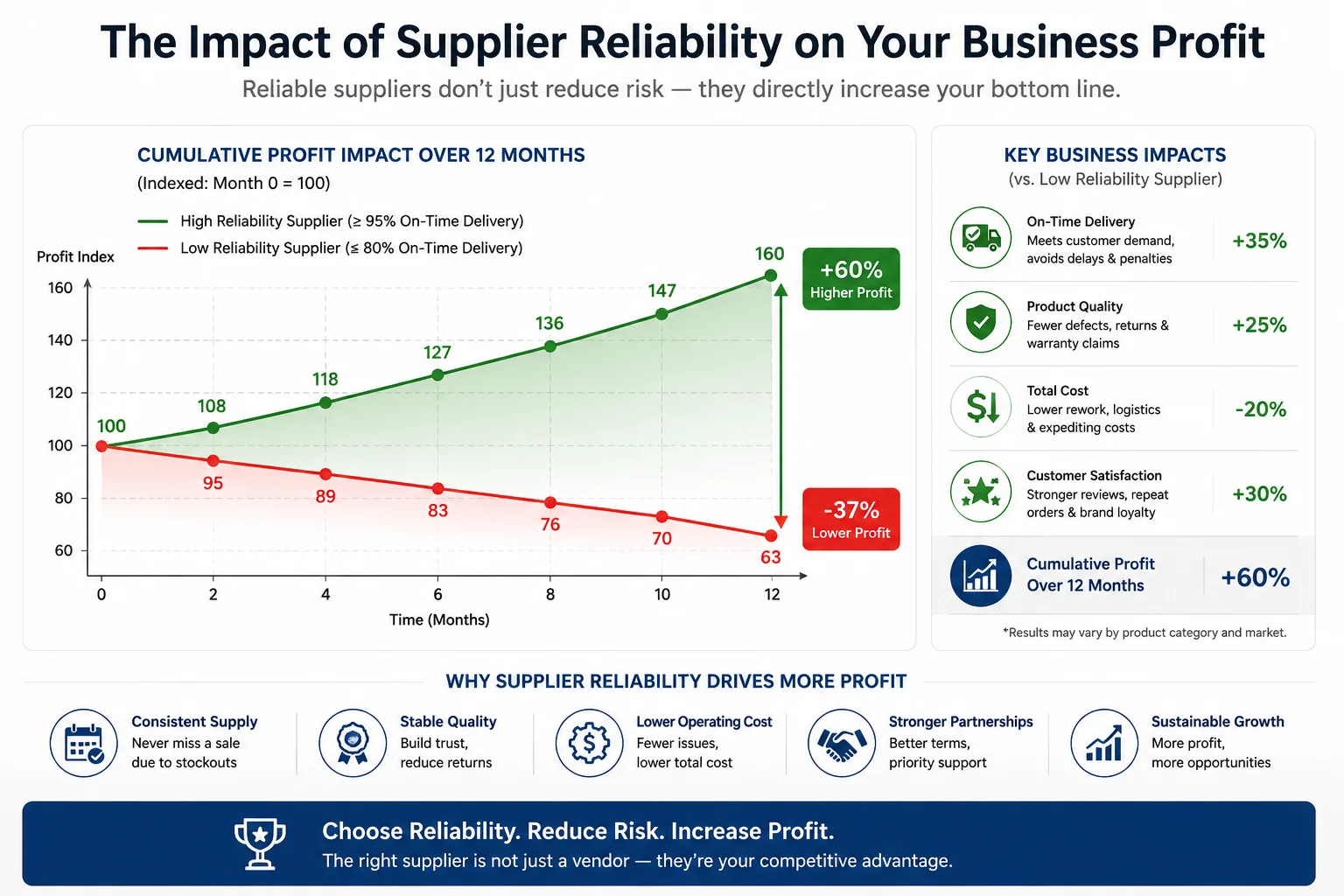
I often see new buyers fixated on saving $0.20 on a charger. They don't see the hidden costs. What happens when a shipment is a month late and you miss the Christmas sales season? What happens when 10% of your TWS earbuds have battery issues3 and you're flooded with bad reviews? That $0.20 you saved is now costing you thousands in lost sales and brand damage. In the world of consumer electronics, trends move at lightning speed. A reliable supplier who delivers a quality product on time is more valuable than a cheap supplier who is unpredictable. Your reputation is your most important asset. An unreliable supplier puts that asset at risk with every single shipment. The goal is to build a long-term, profitable business, not just to make a quick profit on one order.
| Factor | Reliable Supplier | Unreliable Supplier |
|---|---|---|
| Product Quality | Consistent, low defect rate | Inconsistent, high defect rate |
| Delivery Time | On time, predictable | Often delayed, poor communication |
| Brand Reputation | Positive reviews, customer trust | Negative reviews, damaged brand |
| Total Cost | Higher unit price, lower overall cost | Low unit price, high hidden costs |
Why Should You Check the Supplier’s Main Product Focus?
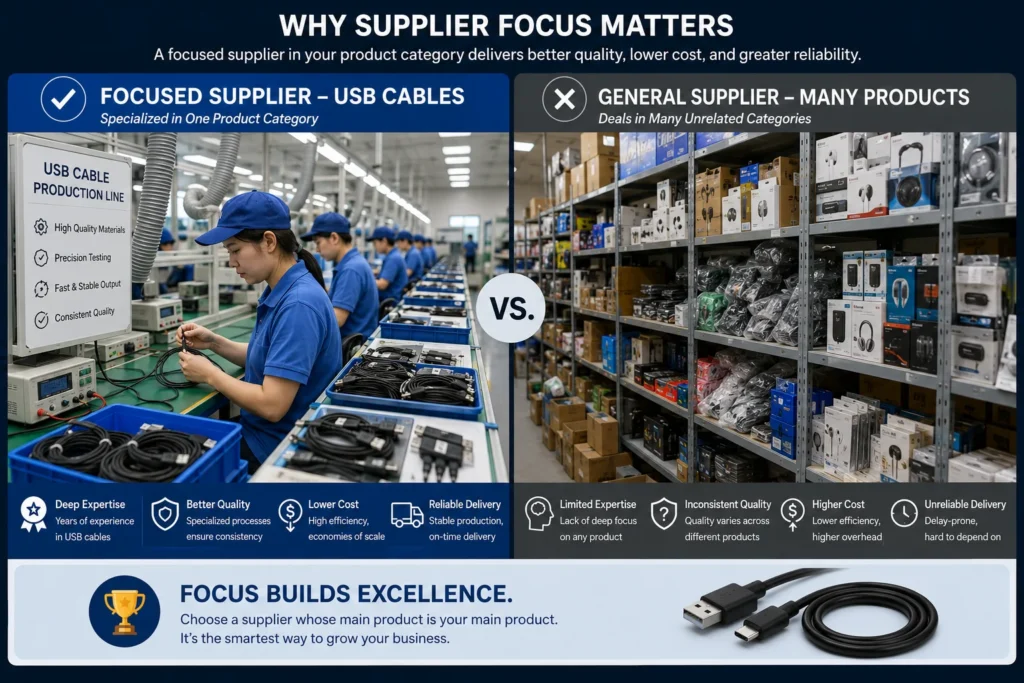
Found a supplier selling everything from chargers to drones? This 'one-stop-shop' often lacks deep expertise, leading to low-quality products. Focus on suppliers who specialize to ensure you get the best.
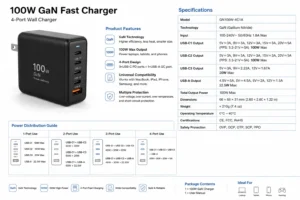
A supplier specializing in one product category, like TWS earbuds or GaN chargers, has deeper engineering knowledge, a more refined supply chain, and better quality control4. This expertise translates directly into a better, more reliable product for you and your customers.
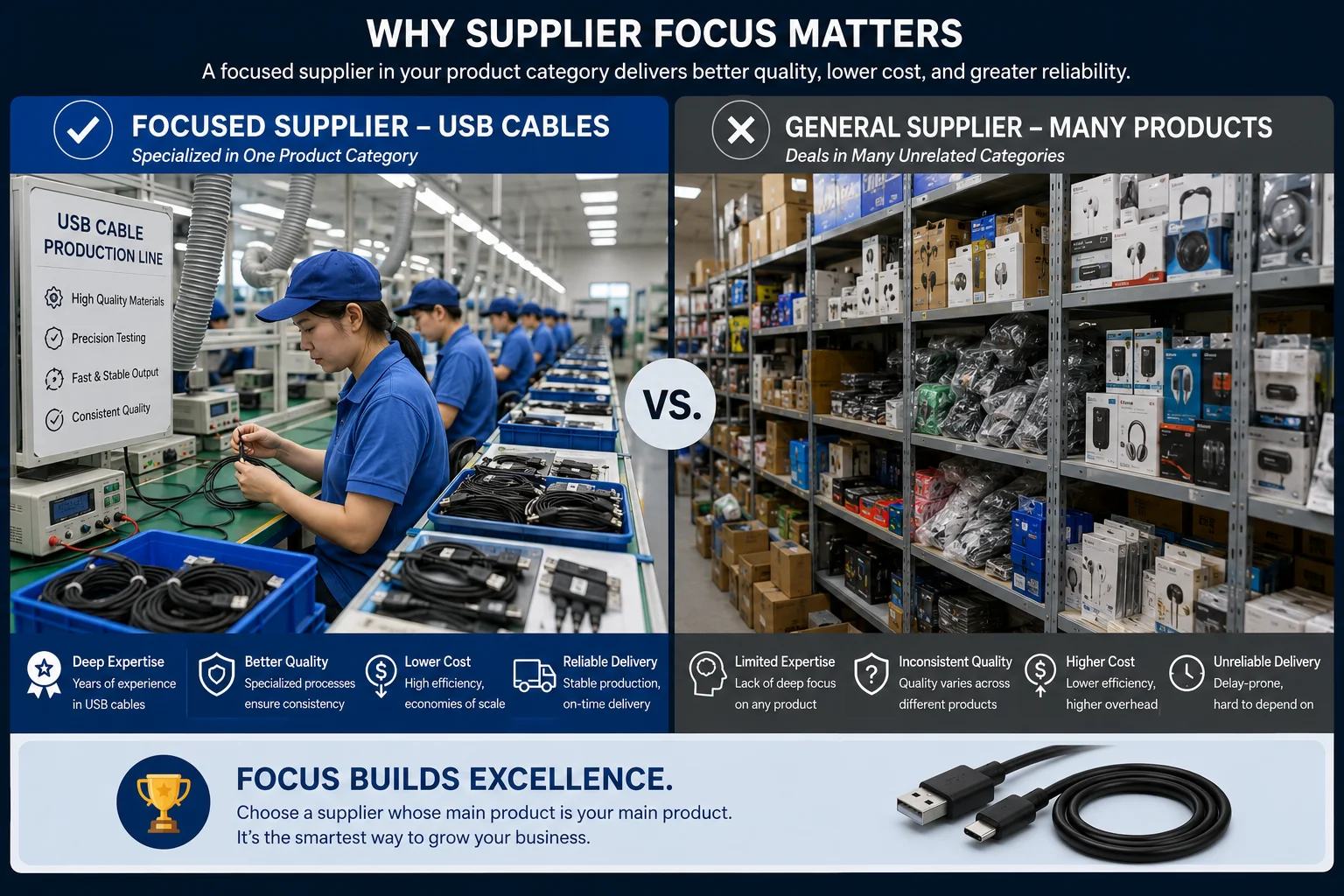
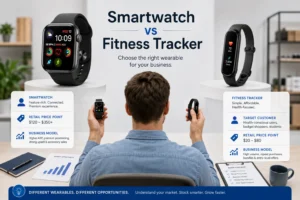
A client once came to me after a bad experience. He bought smartwatches from a supplier whose main business was power banks. The price was great, but the watches had terrible Bluetooth connectivity and the app was a disaster. Why? Because the supplier didn't have the specialized software and hardware engineers for smartwatches. They just outsourced a cheap solution. A specialist knows their product inside and out. If you're sourcing GaN chargers, you want a supplier who understands the different GaN chips, heat dissipation, and safety circuit designs. They have long-term relationships with the best component providers. This means they get better parts, better prices, and access to new technology faster than a generalist. A supplier who tries to be everything to everyone is an expert in nothing.
| Aspect | Specialist Supplier | Generalist Supplier |
|---|---|---|
| Engineering | Deep knowledge in one category | Basic knowledge across many |
| Component Sourcing | Strong ties with key part makers | Buys generic, cheaper parts |
| Problem Solving | Quickly identifies and fixes issues | Slow to react, lacks expertise |
| Product Quality | High, consistent performance | Variable, often low quality |
How Do You Verify Real Factory Experience, Not Just Trading Claims?
Every supplier says they are a "factory with 10 years of experience." But many are just middlemen with no control over production, which puts your order at risk. I'll show you how to tell the difference.
Ask for their Business License to see their registered scope of business. Request a live video call to tour the facility and see production lines. Check if their certifications and audit reports (like BSCI or ISO90015) match the company name and address. Real factories can prove it.
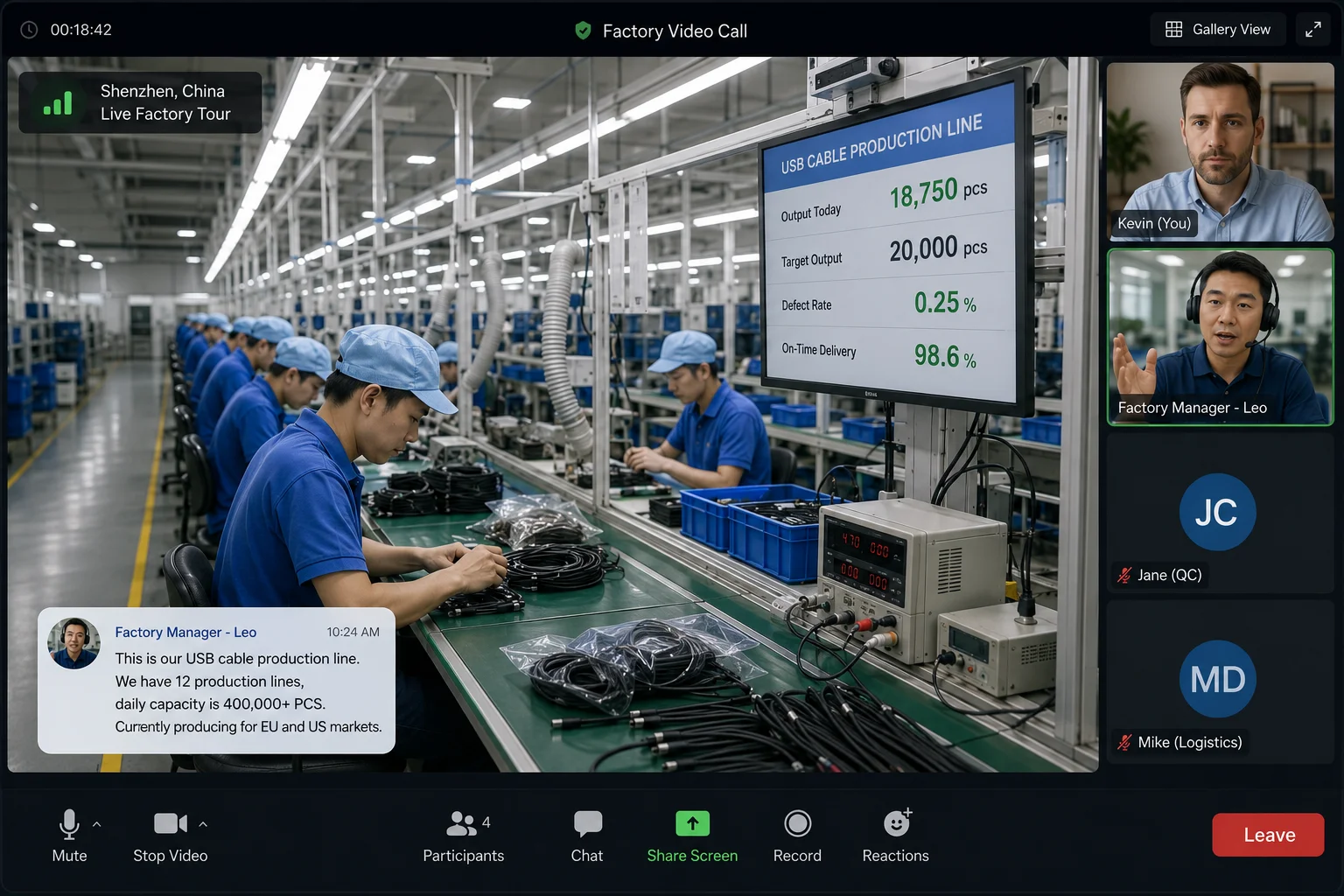
Let me be clear: not all trading companies are bad. Our company is a trading company, and we've been successful for 15 years. Our value is our experience. We vet factories, manage complex supply chains, handle quality control, and bundle products for our clients. We take on the risk so our clients don't have to. The danger is the other type of trading company—the one that has a nice website but no real team or experience. They just find the cheapest quote on the market to make a quick commission. They have no control over quality or lead times. When a problem happens, they often disappear. You need to know who you are dealing with. A real factory or an experienced trading partner will be transparent. They can easily show you their business license, their quality certificates, and even give you a live video tour of the factory floor. If a supplier is evasive about these things, it's a huge red flag.
| Question to Ask | Good Answer (Factory/Pro Trader) | Bad Answer (Weak Trader) |
|---|---|---|
| "Can I see your business license?" | "Of course, here it is." | "That is confidential." |
| "Can we do a video call factory tour?" | "Yes, let's schedule a time." | "Our factory is very busy right now." |
| "Who is your contact on the production line?" | "Our production manager, Li." | "We handle all communications." |
Why Must You Review Product Certifications and Compliance?
You assume a product is safe and legal to sell. But without the right certifications, your shipment could be seized, costing you thousands. Always verify compliance before placing an order.
Certifications like CE (for Europe), FCC (for the US), and RoHS6 prove a product meets safety, health, and environmental standards. They are not optional. Selling without them is illegal and dangerous, and it puts your entire business at risk.
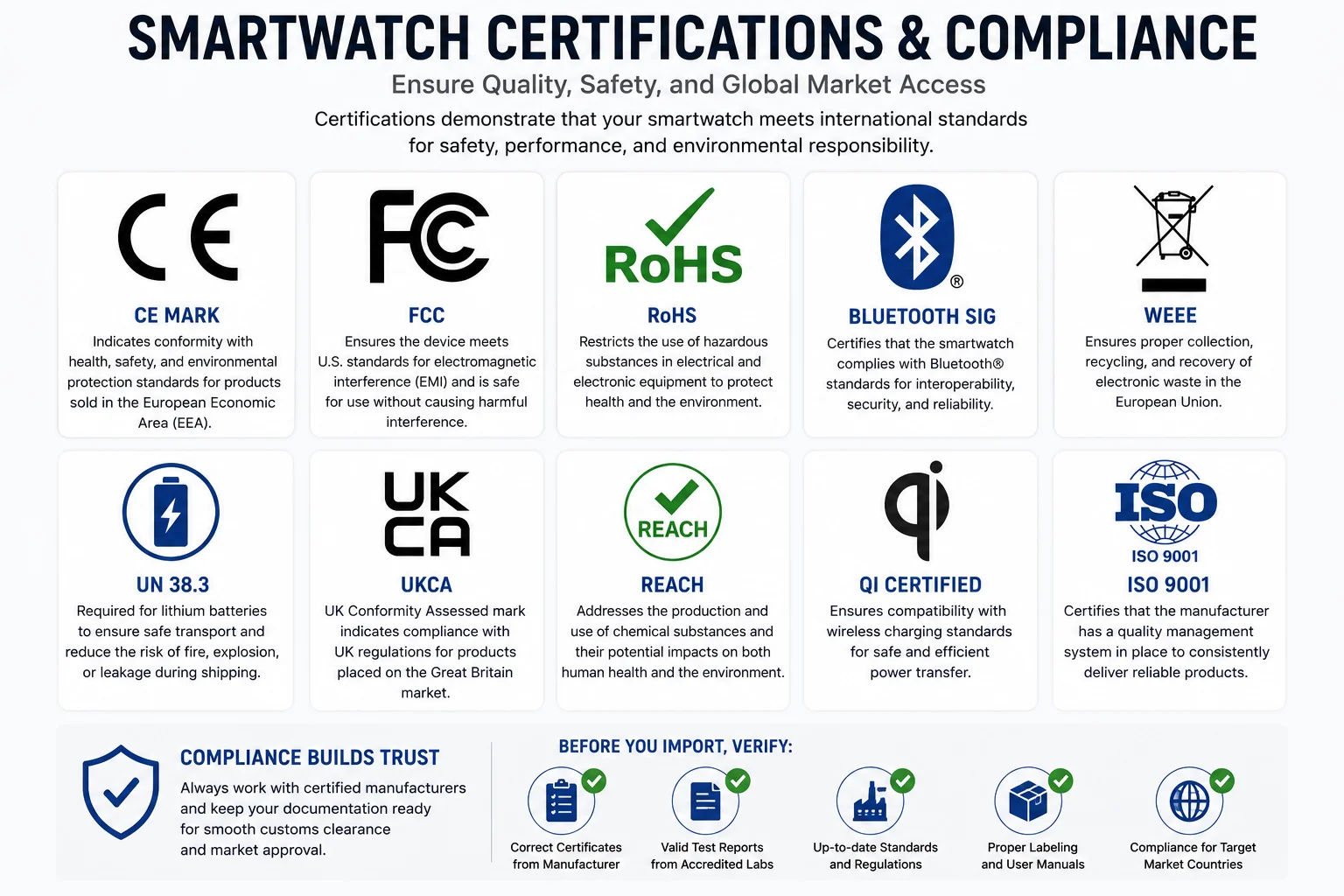
I get this question all the time: "Does the product have CE?" The supplier says "yes," and the buyer moves on. This is a big mistake. You cannot just take their word for it. You must see the proof. Ask for the PDF test report and the certificate. When you get it, check three things: the company name on the document (does it match your supplier?), the product model number (does it cover the exact product you're buying?), and the date (is it still valid?). I've seen suppliers use expired certificates or certificates for a totally different product. Selling a non-compliant product in Europe or the US is a serious issue. Your shipment can be stopped by customs, you can face large fines7, and you could even be sued if a product causes harm. This is not an area where you can afford to cut corners.
| Certification | Region | What It Means |
|---|---|---|
| CE | European Union | Product meets EU safety, health, and environmental standards. |
| FCC | United States | Product's electromagnetic interference is under limits approved by the FCC. |
| RoHS | European Union | Restricts the use of specific hazardous materials in electronics. |
| UKCA | United Kingdom | The new product marking for Great Britain, replacing CE. |
Why is Testing Sample Quality Non-Negotiable Before Placing a Bulk Order?
The product pictures look perfect online. But you might receive a cheap, flimsy product after you've already paid for a bulk order. Never skip testing a physical sample first.
Ordering samples lets you physically evaluate the product's build quality, functionality, user experience, and packaging. It's a small investment to prevent a huge loss. If a supplier refuses to send samples or charges an unreasonable price, consider it a major red flag.
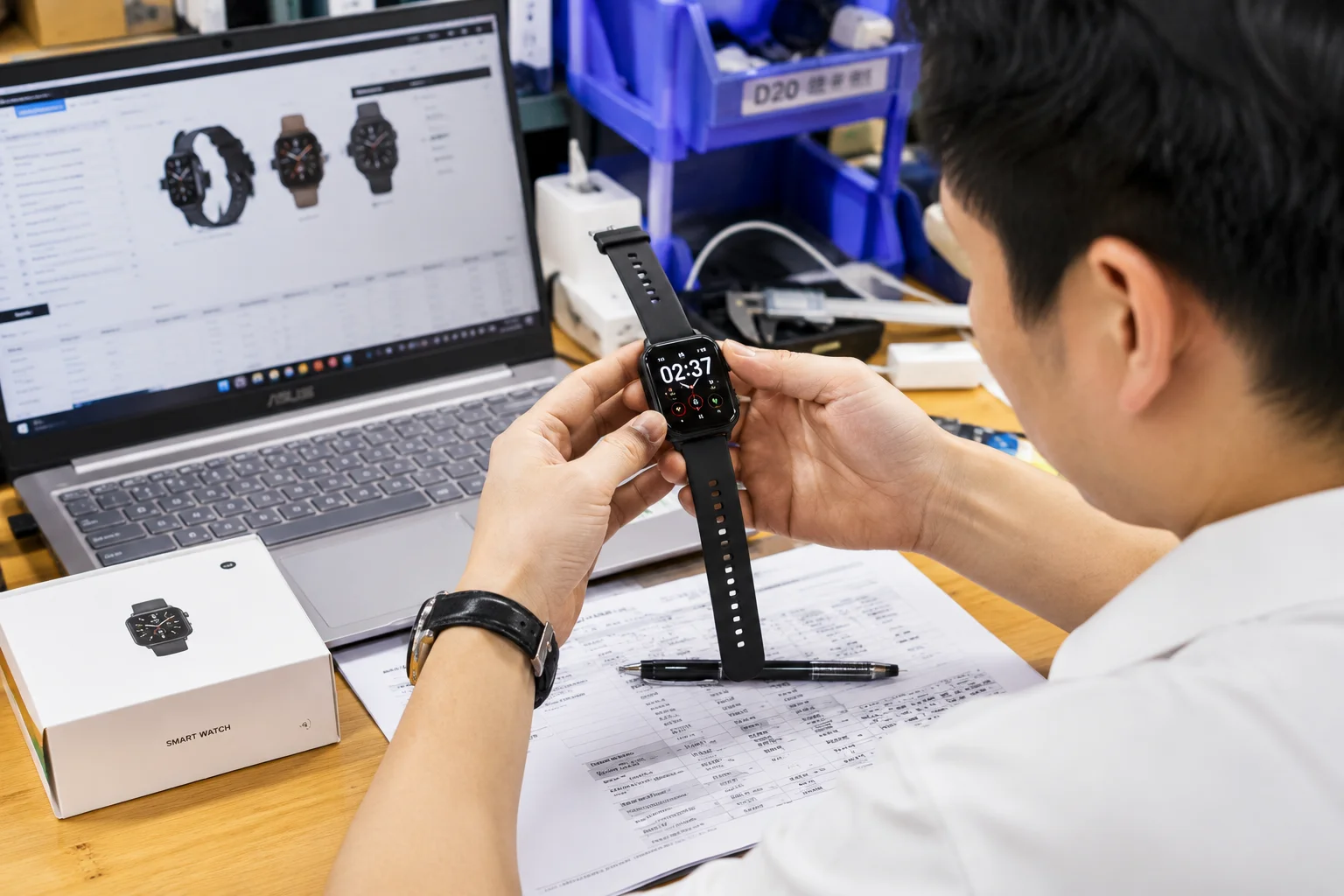
I always tell my clients to use the sample like their own customer would. Don't just look at it for five minutes. Use it for a week. If it's a TWS earbud, carry it in your pocket, listen to music on the bus, take calls with it. How is the sound? Does the connection drop? Is the battery life as advertised? If it's a smartwatch, wear it every day. Does the screen scratch easily? Is the app easy to use? Does it frustrate you? If it frustrates you, it will definitely frustrate your customers and lead to bad reviews. Paying $50 or $100 for a sample and shipping might feel like an expense, but it's really an insurance policy. It is the cheapest and most effective way to protect yourself from ordering thousands of units of a bad product.
| Product: Smartwatch | What to Test |
|---|---|
| Hardware | Screen brightness and responsiveness, button feel, strap comfort, water resistance. |
| Software | Ease of pairing with phone, app stability, accuracy of heart rate/step tracking. |
| Battery | How long does it last with normal use? How long does it take to charge? |
| Overall Feel | Does it feel solid and well-made, or cheap and flimsy? |
How Should You Compare Price, MOQ, Lead Time, and Payment Terms?
Focusing only on the lowest price is a common mistake. High MOQs or bad payment terms can cripple your cash flow before you even start. You need to look at the total deal.
Compare the total cost, not just the unit price. A slightly higher price might come with a lower MOQ (Minimum Order Quantity), faster lead time, or better payment terms (e.g., 30% deposit, 70% before shipping). This balance is crucial for managing your risk and cash flow.
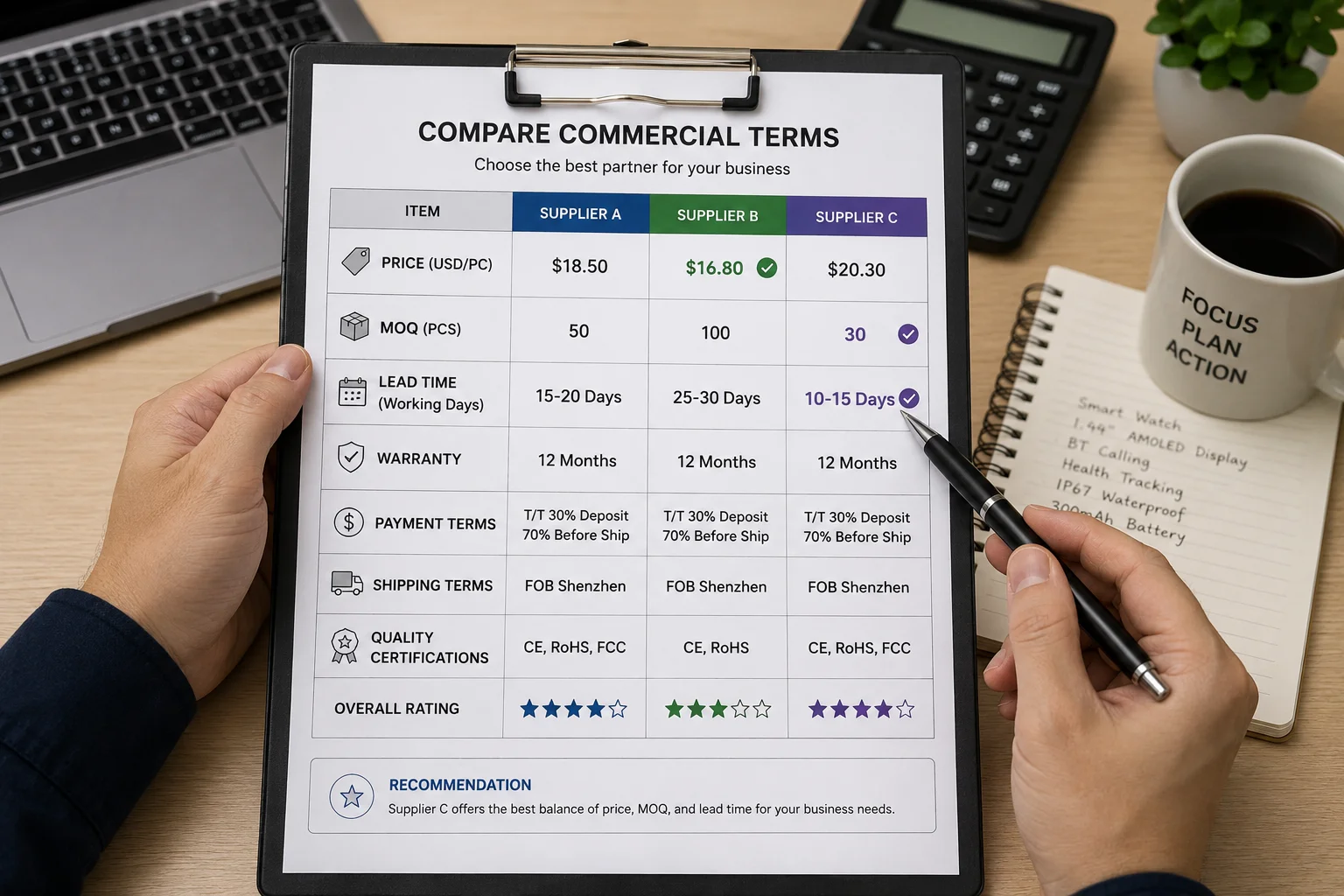
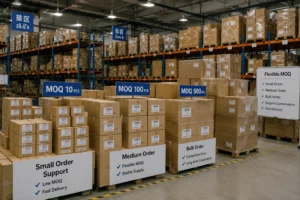
For first-time importers, I always recommend finding a supplier with a flexible MOQ. Tying up all your cash in one big 3,000-piece order is a huge risk, even if the unit price is low. What if the product doesn't sell as well as you hoped? A supplier who offers a 500-piece MOQ allows you to test the market without betting your entire business. Similarly, look at payment terms. The industry standard is a 30% deposit to start production and 70% balance paid after production is finished8 (but before shipping). If a supplier demands 50% or 100% upfront, they are shifting all the risk to you. A good partner is willing to share some of that risk. The "best" offer isn't always the one with the lowest price. It's the one that gives your business the best chance to succeed by protecting your cash flow.
| Term | What to Look For | Red Flag |
|---|---|---|
| Price | Clear terms (FOB, EXW). Is tooling included? | Vague pricing, lots of add-ons. |
| MOQ | A quantity that fits your budget and risk tolerance. | Very high MOQ for a first order. |
| Lead Time | 25-45 days is typical9. Faster is better. | Vague promises like "soon." |
| Payment Terms | 30% deposit, 70% balance is standard. | 50% or 100% deposit required. |
How Can You Check a Supplier's Quality Control and After-Sales Support?
You've placed your order and now you're just hoping it's all good. But what happens when 10% of your products are dead on arrival? A good supplier has a plan for this.
Ask about their QC process. Do they have an IQC, PQC, and FQC system? Ask about their warranty policy and how they handle defective units. Will they replace them or offer credit? A reliable partner will have clear, professional answers to these questions.
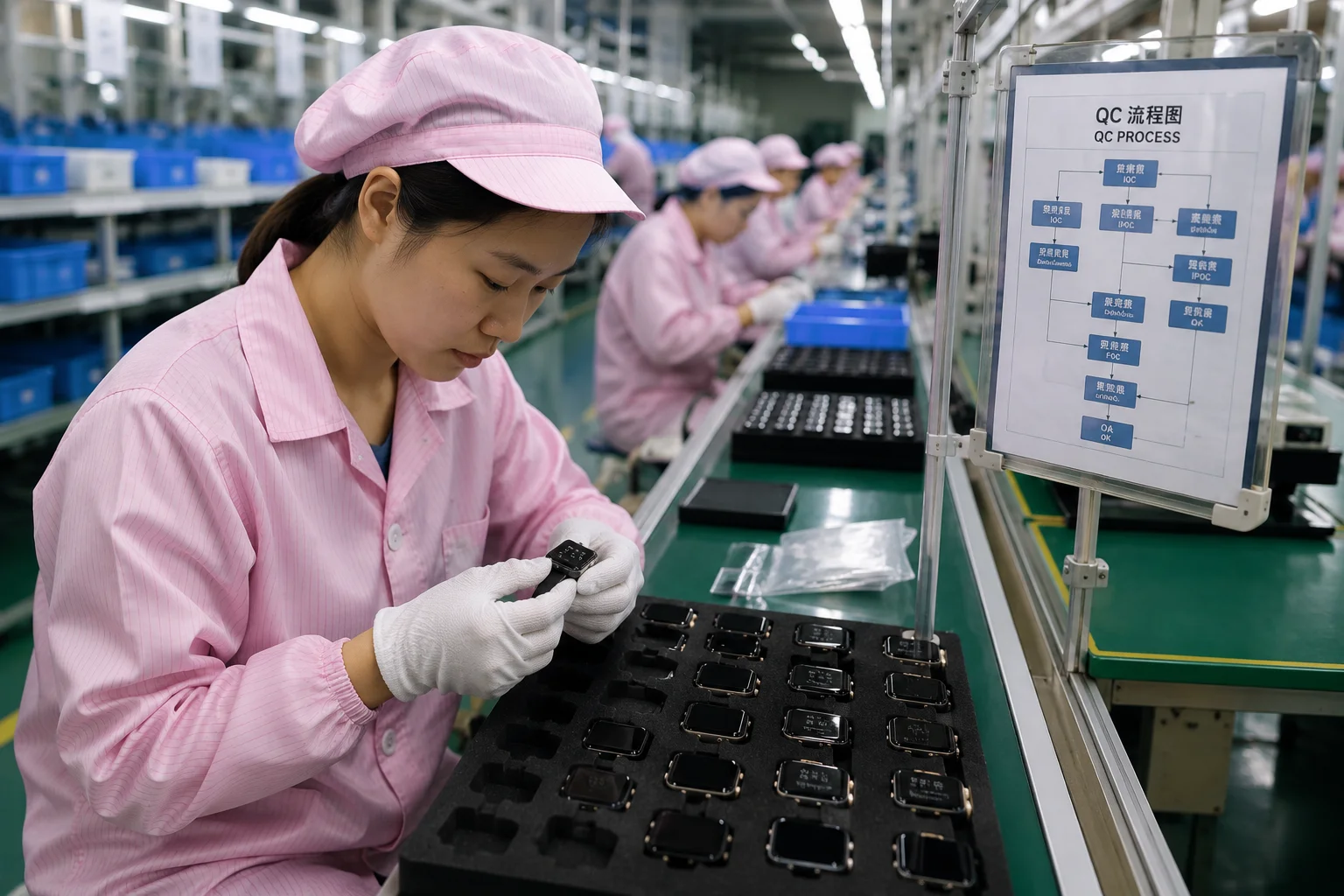
When a potential partner can't explain their QC process clearly, it's a huge warning sign for me. It means they don't have one, or they don't take it seriously. A professional factory will have a system. This includes IQC (Incoming Quality Control) to check the raw materials, PQC (Process Quality Control) to check the products during assembly, and FQC (Final Quality Control) to inspect the finished goods before they are packed. Beyond QC, you need to know what happens if you receive defective products. This is after-sales support. Ask them directly: "What is your warranty policy? If I have a 5% defect rate, how do you handle it?10" A good partner will have a clear policy, like offering to replace the units in your next order or providing a credit. A bad partner will argue, delay, or ignore you. These are conversations you must have before you place an order, not after you have a problem.
| Question to Ask | A Good Supplier's Answer | A Bad Supplier's Answer |
|---|---|---|
| "Can you describe your QC process?" | "We use an IQC, PQC, FQC system and test 100% of units." | "Don't worry, our quality is very good." |
| "What is your warranty period?" | "We offer a 12-month warranty on all our products." | "We will see if there is a problem." |
| "How do you handle defective units?" | "We will replace them or credit your next order." | "Maybe your customers broke them." |
Why Should You Always Start with a Trial Order Before Scaling Up?
You found a great supplier and want to go big. But what if there's a hidden problem? A large first order is a huge gamble. Always start with a smaller trial order.
A trial order isn't just about testing the product; it's about testing the supplier's entire process11. It lets you evaluate their communication, production speed, packaging quality, and logistics handling on a real order. It's the final, real-world test before you commit more capital.
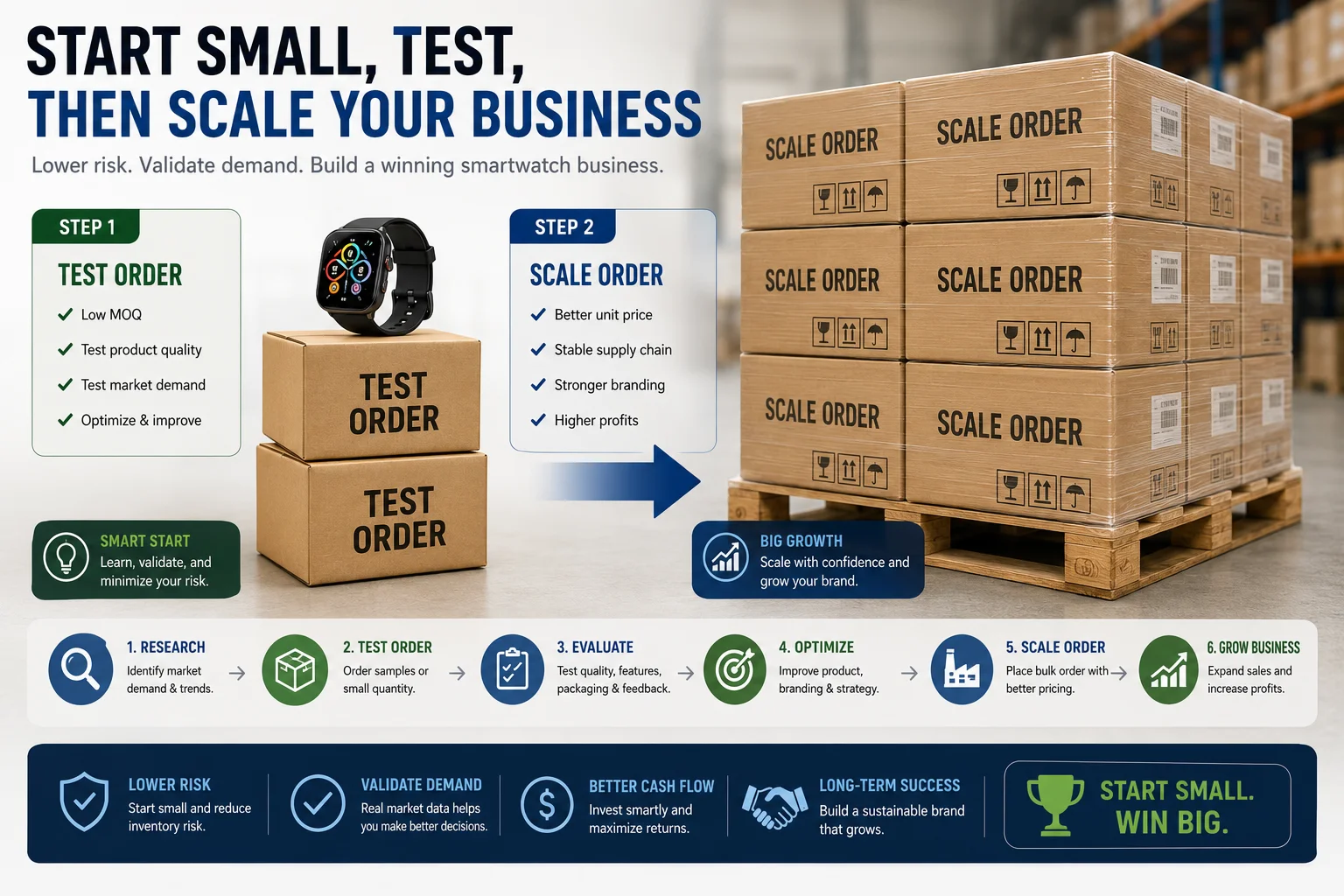
I've seen clients build million-dollar relationships that all started with a simple 500-piece trial order. It is the single smartest way to reduce your risk. This first small order is your chance to see how the supplier performs in the real world. Did their salesperson communicate well during the production process? Did they hit the lead time they promised? When the goods arrived, how was the packaging? Were the products and cartons in good condition? How smoothly did they handle the shipping documents? If they handle a small, less profitable order with professionalism and care, it gives you the confidence to trust them with a much larger order later. But if they are slow, unresponsive, or make mistakes on a small order, you can be sure those problems will be much bigger on a large order.
| Area to Evaluate | Positive Sign | Negative Sign |
|---|---|---|
| Communication | Proactive updates from your sales contact. | You have to chase them for information. |
| Timeline | The order was completed on or before the promised date. | There were unexpected and unexplained delays. |
| Packaging | Products are well-protected in strong cartons. | Flimsy cartons, damaged products on arrival. |
| Problem Solving | They quickly and professionally fix any small issues. | They deny responsibility or ignore problems. |
Conclusion
Choosing the right supplier isn't about luck. It's a step-by-step process of verification. Follow these steps to reduce your risk, build strong partnerships, and grow your 3C electronics business.
"[PDF] Frequently Asked Questions About Small Business, July 2024", https://advocacy.sba.gov/wp-content/uploads/2024/12/Frequently-Asked-Questions-About-Small-Business_2024-508.pdf. A report from a business or trade organization can provide statistics and case studies on the significant financial losses small businesses can incur from common importing errors, such as inadequate supplier vetting, misunderstanding trade terms, and poor quality control. Evidence role: general_support; source type: institution. Supports: The claim that new importers often make costly mistakes.. ↩
"Recalls & Product Safety Warnings | CPSC.gov", https://www.cpsc.gov/Recalls. Research studies and industry reports on product recalls in the consumer electronics sector often show that manufacturing defects are a primary cause, highlighting the financial impact—including direct costs and brand damage—of supply chain failures. Evidence role: statistic; source type: research. Supports: The claim that unreliable suppliers can lead to costly recalls.. ↩
"Acceptable Quality Level, AQL Sampling Chart and Calculator - QIMA", https://www.qima.com/aql-acceptable-quality-limit. Sources on quality management standards, such as those defining Acceptable Quality Limits (AQL), can provide context for what constitutes a high defect rate. In consumer electronics, major defect rates are often expected to be well below 1%, making a 10% rate indicative of a severe quality control failure. Evidence role: definition; source type: encyclopedia. Supports: The idea that a 10% defect rate is unacceptably high.. ↩
"How “Focused Factories” Deal With Disruption - INSEAD Knowledge", https://knowledge.insead.edu/operations/how-focused-factories-deal-disruption. Business management theories, such as the "focused factory" concept first introduced in the Harvard Business Review, support the claim that manufacturing facilities specializing in a narrow range of products tend to achieve higher quality, greater efficiency, and more innovation. Evidence role: general_support; source type: education. Supports: The claim that specialized suppliers offer higher quality and expertise.. ↩
"ISO 9000 family - Wikipedia", https://en.wikipedia.org/wiki/ISO_9000_family. A source from the International Organization for Standardization (ISO) or amfori (which runs BSCI) can define these standards. ISO 9001 is a globally recognized standard for quality management systems, while the Business Social Compliance Initiative (BSCI) is a framework for monitoring and improving social and ethical standards in the supply chain. Evidence role: definition; source type: institution. Supports: The relevance of BSCI and ISO 9001 certifications.. ↩
"Equipment Authorization Procedures | Federal Communications ...", https://www.fcc.gov/general/equipment-authorization-procedures. Official documentation from the European Commission (for CE and RoHS) and the U.S. Federal Communications Commission (for FCC) confirms the legal requirements and technical standards these marks represent for products being sold in their respective markets. Evidence role: definition; source type: government. Supports: The meaning and legal requirement of CE, FCC, and RoHS certifications.. ↩
"EU Legislation and CE Marking - International Trade Administration", https://www.trade.gov/country-commercial-guides/eu-eu-legislation-and-ce-marking. Publications from government bodies like the U.S. Customs and Border Protection or the European Commission's market surveillance authorities detail the enforcement actions for non-compliant products, which can include seizure of goods, mandatory recalls, significant fines, and sales prohibitions. Evidence role: general_support; source type: government. Supports: The claim that non-compliance has severe financial and legal penalties.. ↩
"Methods of Payment - International Trade Administration", https://www.trade.gov/methods-payment. Guides on international trade finance from government export agencies or international banks often describe a 30% deposit via Telegraphic Transfer (T/T) with a 70% balance payment upon completion as a common arrangement when sourcing from manufacturers, though terms can vary based on the relationship and order size. Evidence role: general_support; source type: institution. Supports: The claim that a 30/70 payment split is a common industry practice.. Scope note: The source would likely note that this is a common but not a fixed 'standard,' and other terms exist. ↩
"Made in China 2025: Evaluating China's Performance", https://www.uscc.gov/research/made-china-2025-evaluating-chinas-performance. Industry reports and data from global sourcing platforms can provide statistics on average manufacturing lead times for consumer electronics from China, often showing that a range of 30-45 days for production (excluding shipping) is a common estimate. Evidence role: statistic; source type: research. Supports: The claim that 25-45 days is a typical production lead time.. Scope note: The source would likely note that lead times are highly variable and depend on product complexity, order size, and factory capacity. ↩
"Acceptable Quality Level (AQL): The Ultimate Guide to Quality Control", https://www.6sigma.us/six-sigma-in-focus/acceptable-quality-level-aql/. Sourcing and quality control guides emphasize the importance of establishing clear terms for handling defective products before placing an order. A supplier's response to a hypothetical defect rate reveals their after-sales support policy and willingness to take responsibility for quality issues. Evidence role: general_support; source type: institution. Supports: The importance of clarifying how a supplier handles defect rates.. ↩
"[PDF] Purchasing DIRECTIVES - Florida Courts", https://www.flcourts.gov/content/download/219276/file/purchasingdirectives.pdf. Guides on procurement and supply chain management best practices support the concept that a trial order is a critical tool for supplier validation. It allows a buyer to evaluate a supplier's real-world performance on communication, adherence to timelines, logistics handling, and problem resolution before committing to larger volumes. Evidence role: general_support; source type: education. Supports: The claim that a trial order tests the supplier's overall process.. ↩