Finding a good supplier in China feels like a gamble. You worry about scams, bad quality, and communication problems. A bad choice can ruin your business. But you can source with confidence if you know what to look for.
To choose a reliable supplier, you must verify their business license, check their certifications like CE and RoHS1, and ask for client references. Always start with a small trial order to test their product quality, communication, and reliability before placing a large order.
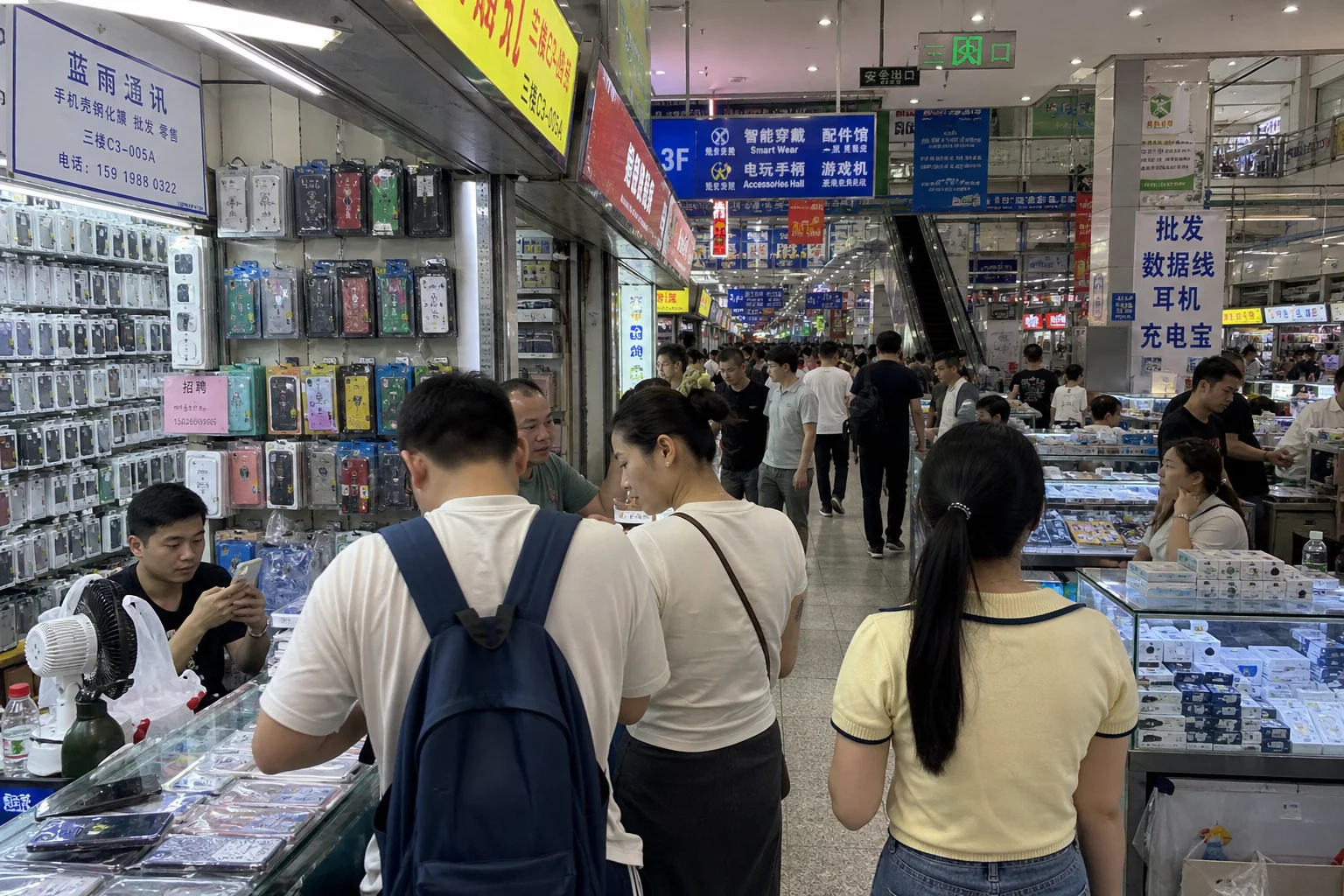
I've been in the 3C electronics export business in Shenzhen for 15 years. I've seen buyers make great choices, and I've seen them make terrible mistakes. Finding a good partner is about more than just checking a few boxes online. It's about understanding what really matters for your specific business.
Let's break down how you can find a supplier who will help you succeed, not hold you back. This is the advice I give my own clients every day.
Why does choosing the right supplier matter so much for importers and distributors?
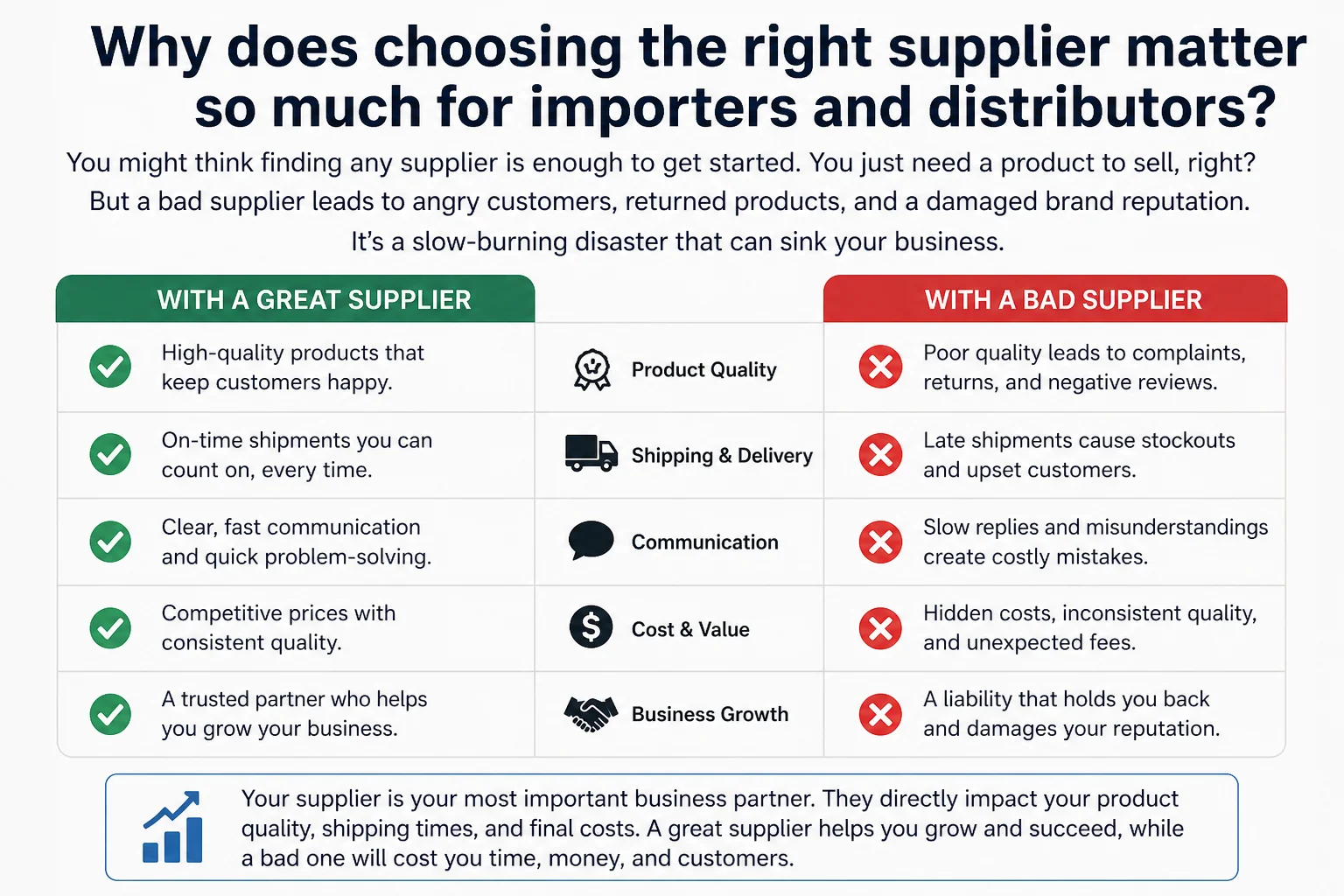
You might think finding any supplier is enough to get started. You just need a product to sell, right? But a bad supplier leads to angry customers, returned products, and a damaged brand reputation2. It's a slow-burning disaster that can sink your business.
Your supplier is your most important business partner. They directly impact your product quality, shipping times, and final costs. A great supplier helps you grow and succeed, while a bad one will cost you time, money, and customers.
The Real Impact of Your Supplier Choice
Based on my experience talking to hundreds of importers, the supplier's impact goes far beyond the product itself. It touches every part of your business. When we vet new factories to work with, we look at it as a long-term partnership, not a one-time transaction.
How a Bad Supplier Hurts Your Brand
Your brand's reputation is your most valuable asset. If you sell faulty TWS earbuds or chargers that break after a week, customers won't blame the factory in China. They will blame you. Bad reviews pile up quickly, and trust is very hard to win back. I had a client in Germany who switched to a cheaper supplier for smartwatches. The failure rate jumped from 1% to 15%. His online store ratings plummeted, and it took him nearly a year to recover.
The Hidden Financial Costs
The cheap price from a bad supplier is never the final price. You have to factor in the hidden costs3. This includes paying for return shipping, spending hours on customer service emails, and the lost revenue from unsellable inventory. A bad batch of 5,000 USB cables isn't just a loss on the product cost; it's a loss on shipping, marketing, and potential profit.
What are the main risks you face when sourcing from a new supplier?
You found a supplier online with a fantastic price. It almost seems too good to be true. You send the deposit, and suddenly, they stop answering emails. Or, even worse, the products arrive, but they are complete junk. Knowing these common risks is the first step to avoiding them.
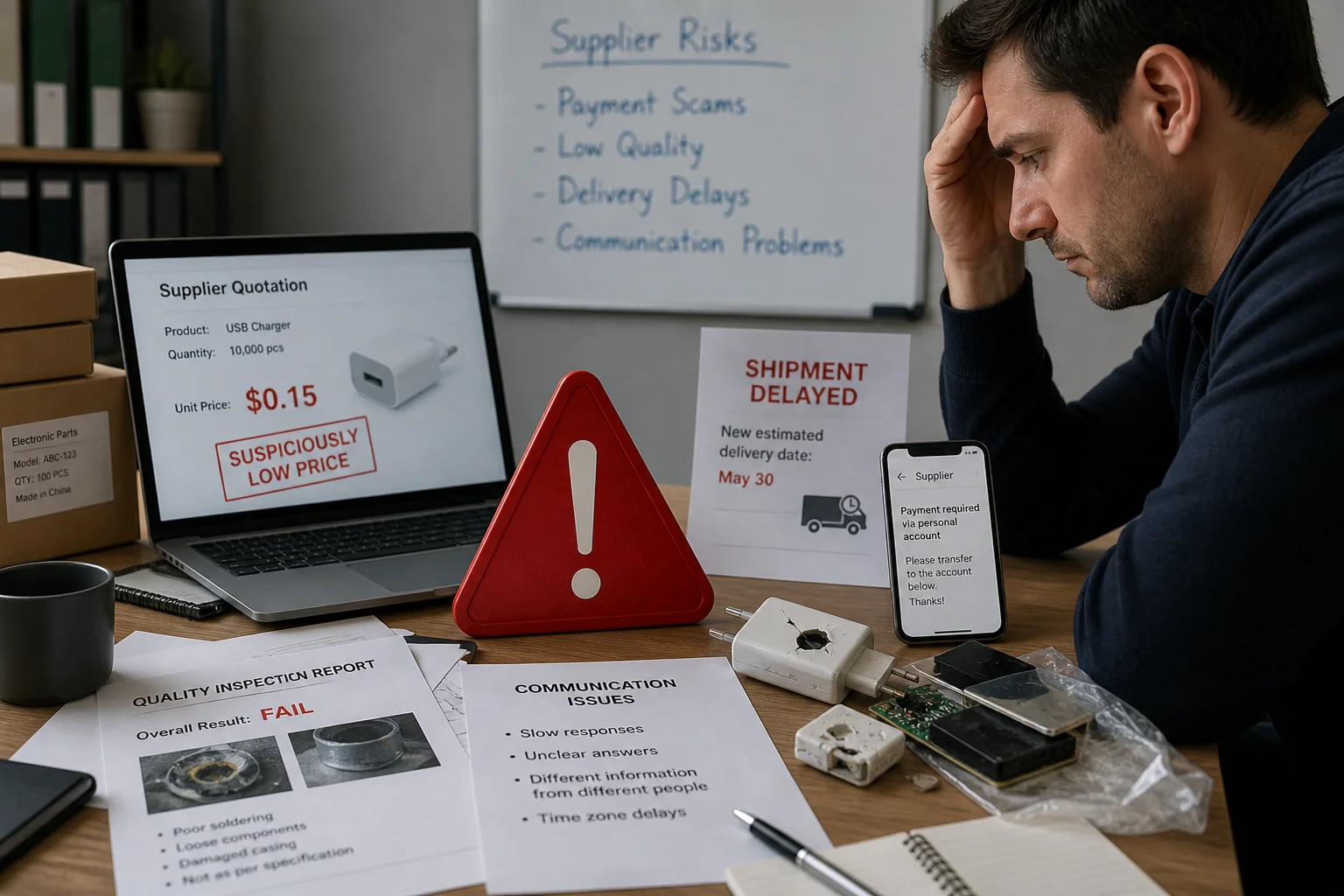
The biggest sourcing risks are payment scams, receiving low-quality products that don't match the sample, major production delays, and poor communication.4 You also risk your intellectual property if you have a unique design5. These can destroy your budget and timeline.
Breaking Down the Sourcing Risks
Over the years, I've heard countless horror stories from buyers who got burned. Most of these problems could have been avoided by understanding the risks from the start. A common question I get is, "How do I protect myself?" It starts with knowing what can go wrong. Here's a simple breakdown of the most common issues I see.
| Risk Category | Example Scenario | How it Hurts Your Business |
|---|---|---|
| Financial Risk | You pay a 30% deposit, and the supplier disappears or claims they never received it. | This is a direct loss of your capital, with little chance of recovery. Your project is dead before it starts. |
| Quality Risk | The "golden sample" was perfect, but the 1,000-piece bulk order has defects, scratches, and a high failure rate. | You end up with angry customers, high return rates, and a warehouse full of inventory you can't sell. |
| Timeline Risk | The supplier promised a 30-day lead time, but 60 days later, the goods still haven't shipped. | You miss your sales season, run out of stock, and lose sales to competitors. This is especially damaging for seasonal products. |
| Communication Risk | Your contact person doesn't reply for days, or there are language barriers causing misunderstandings. | This leads to mistakes in the product specifications, packaging, and shipping documents. You can't solve problems if you can't communicate. |
What serious questions should buyers ask before placing an order?
You are ready to talk to potential suppliers. You already know to ask about price and MOQ. But these basic questions won't tell you if a supplier is truly reliable. You could end up with a partner who can't meet your real needs. Asking smarter questions helps you vet suppliers like a pro.
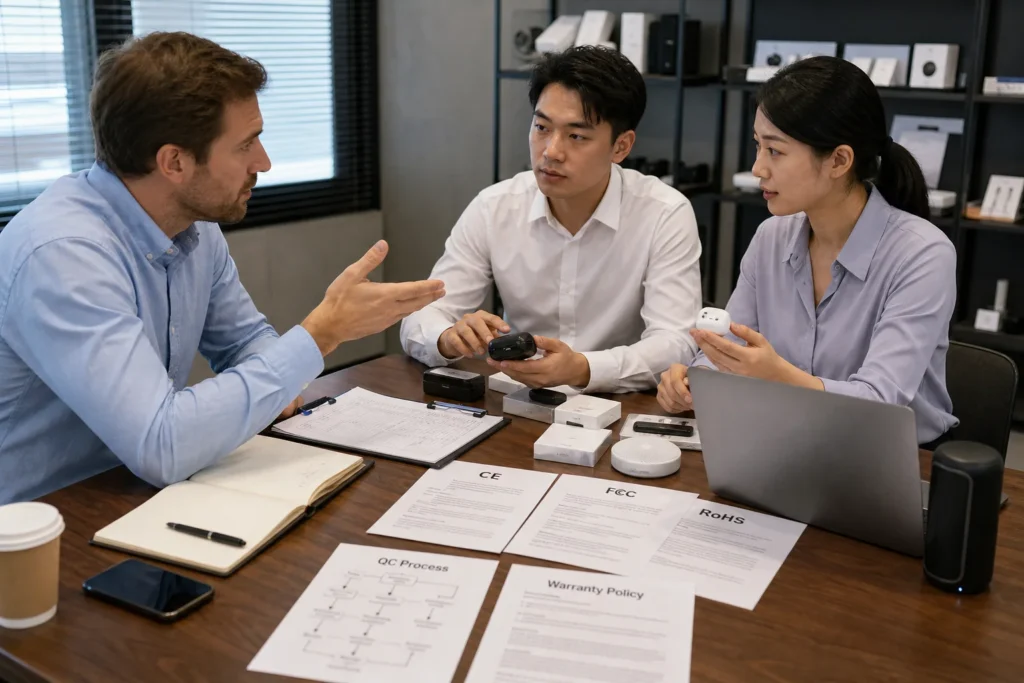
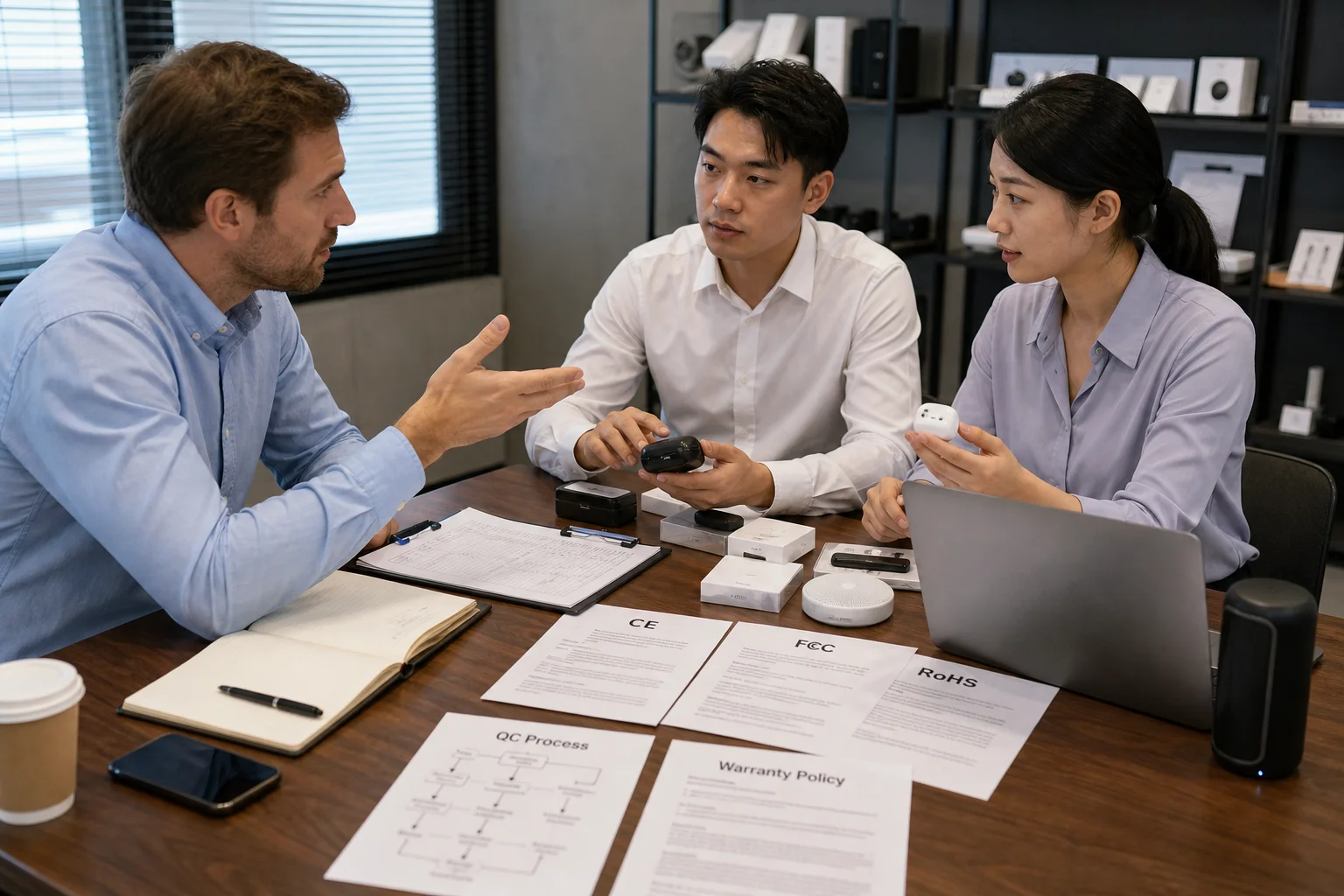
You must ask about their main export markets, their detailed quality control process, and their warranty policy. Also, request copies of their business license and key product certifications (like CE, FCC, RoHS) to prove their legitimacy and experience.
Questions That Reveal the Truth
When our company evaluates a new factory, we have a checklist of questions that go beyond the basics. These questions are designed to uncover a potential partner's true capabilities and professionalism. A good supplier will be happy to answer them in detail. A weak or dishonest one will give vague answers.
1. "What are your main export markets?"
This simple question tells you so much. If you're selling in the EU, you need a supplier familiar with CE and RoHS standards. If they say their main market is South America or Africa, their products might not meet your country's legal requirements. We primarily export to Europe and the US, so we only work with factories that understand and meet these high standards.
2. "Can you walk me through your Quality Control (QC) process?"
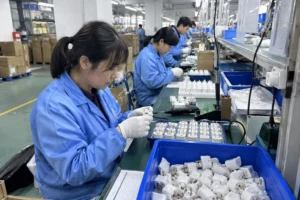
Don't just ask, "Do you have QC?" Ask for the details. How many QC stations are on the production line? Do they inspect every single unit (100% inspection) or just a small sample (AQL6)? What specific tests do they run on GaN chargers or smartwatches? A professional supplier will be proud to show you their process, maybe even with a short video.
3. "What is your process for handling defects or warranty claims?"
This is a critical question. No factory is perfect; defects happen. What matters is how they fix them. Do they offer to replace the units? Do they provide a credit on your next order? A reliable partner has a clear, fair policy. If they avoid the question or say "don't worry, our quality is perfect," it's a major red flag.
How do you compare factory capability, MOQ, and communication quality?
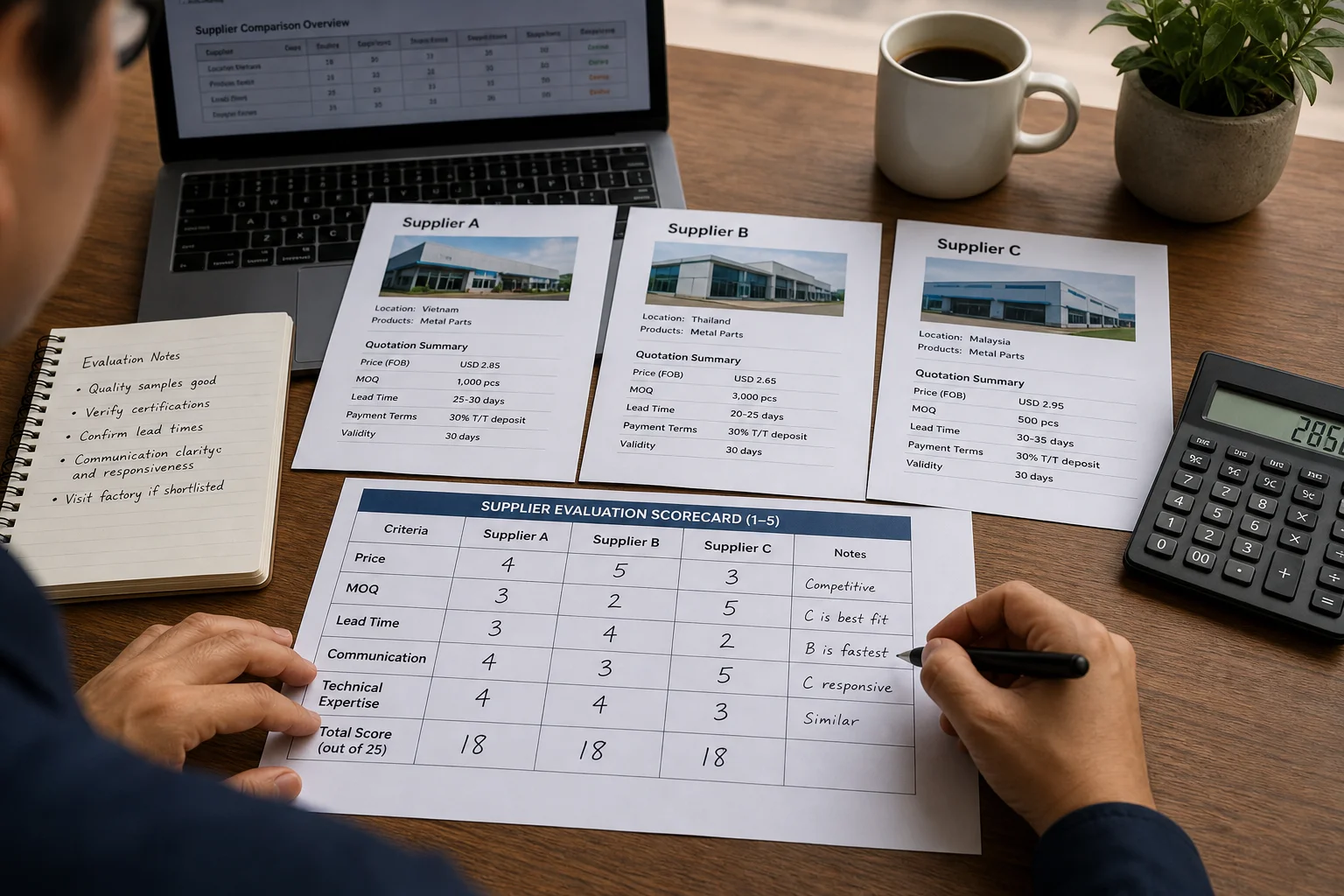
You have quotes from three different suppliers. On paper, they all look pretty similar. But choosing based on the lowest price is a huge gamble. The cheapest option often comes with hidden costs like poor quality, terrible service, and frustrating delays. A simple framework can help you choose the best partner.
Create a simple scorecard to rate each supplier from 1-5 on key factors: price, MOQ, lead time, communication responsiveness, and technical expertise. Don't just pick the cheapest; look for the supplier with the best overall score for your specific needs.
Match the Supplier to Your Business Model
The "best" supplier depends entirely on what you are trying to do. A buyer launching a brand new product has different needs than a large retailer restocking a popular item. I often tell my clients that the first step isn't to look for a supplier, but to understand their own business risk. The key question is: "Which model fits my budget, brand goals, and risk tolerance?"
This reframes the choice from "who is cheapest" to "who is the right partner for me."
| Sourcing Model | Your Main Goal | Ideal Supplier Capability | What to Watch Out For |
|---|---|---|---|
| Wholesale | Test the market quickly with low risk and low investment. | A trading company or large manufacturer with ready-to-ship stock. Look for low MOQ and fast delivery. | You get very little to no customization. The product will not be unique to your brand. |
| Private Label7 | Build a brand with a slightly customized product without huge R&D costs. | A factory with existing models that allows for logo printing, color changes, and custom packaging. Communication is key. | Underestimating the work needed for branding, marketing, and packaging design to make the product stand out. |
| OEM8 | Create a completely unique product that you control from start to finish. | A factory with a strong R&D team, engineering expertise, and project management skills. | Very high MOQs, large investment in tooling and development, and long timelines. This is for scaled businesses. |
How can you reduce risk on your first order?
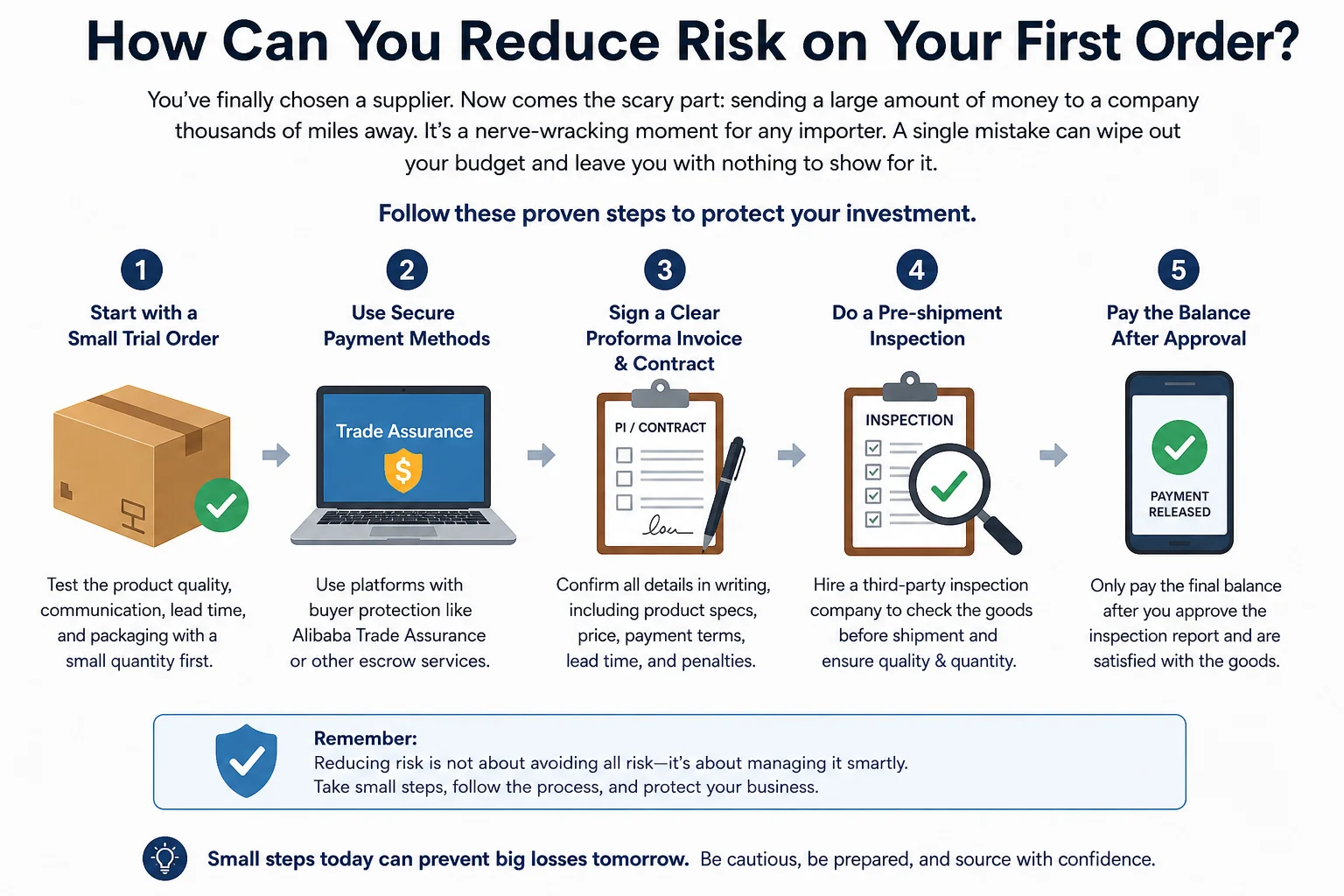
You've finally chosen a supplier. Now comes the scary part: sending a large amount of money to a company thousands of miles away. It's a nerve-wracking moment for any importer. A single mistake can wipe out your budget and leave you with nothing to show for it. But there are simple, proven steps to protect your investment.
Always start with a small trial order to test the whole process. Use a secure payment method like Alibaba Trade Assurance9, and most importantly, hire a third-party inspection company10 to check your goods before you pay the final balance.
Your First-Order Safety Checklist
After 15 years, I can tell you that successful sourcing is all about managing risk. Here are the three non-negotiable steps I advise every new buyer to take to ensure their first order is a success.
1. The Small Trial Order
Don't jump from one sample to an order of 5,000 pieces. Place a small trial order first, maybe 50 to 200 units. This is not for testing the product; it's for testing the supplier's entire process. Does the bulk quality match the sample? Is the packaging correct? Do they ship on time? This small investment can save you from a massive disaster later. It's a full dress rehearsal for your business relationship.
2. Secure Payment Terms
Never, ever pay 100% upfront. A standard and fair payment structure is a 30% deposit to start production and the remaining 70% after the goods have passed inspection11 but before they are shipped. For extra security, use a platform like Alibaba Trade Assurance, which holds your money until you confirm the order is satisfactory. For very large orders, a Letter of Credit (L/C)12 through a bank provides the highest level of protection.
3. Third-Party Inspection
This is the best money you will ever spend when sourcing from China. For a few hundred dollars, a professional inspection company (like QIMA, V-Trust, or SGS) will go to the factory on your behalf. They will check the products against your quality standards, count the quantity, and verify the packaging. They send you a detailed report with photos and videos. This gives you the power to demand fixes before you send the final payment. It's your insurance policy against nasty surprises.
Conclusion
Choosing the right supplier is about managing risk and finding a true partner for your business. Do your homework, ask tough questions, test the process with a small order, and always protect your investment.
"CE marking - Wikipedia", https://en.wikipedia.org/wiki/CE_marking. A source from the European Commission or a related government body can explain that CE marking indicates conformity with health, safety, and environmental protection standards for products sold within the European Economic Area, while the RoHS directive restricts the use of specific hazardous materials in electrical and electronic equipment. Evidence role: definition; source type: government. Supports: A source should define the CE marking and the RoHS (Restriction of Hazardous Substances) directive.. ↩
"The Effect of Product Quality on Brand Loyalty. A Study of MTN", https://www.academia.edu/1766154/The_Effect_of_Product_Quality_on_Brand_Loyalty_A_Study_of_MTN. Research from marketing journals or business analytics firms can provide statistics demonstrating the negative correlation between high product return rates or poor online reviews and key brand metrics like customer trust, loyalty, and future sales. Evidence role: statistic; source type: research. Supports: A source should provide data or analysis showing the connection between product quality, customer satisfaction, and brand reputation.. ↩
"[PDF] Total Cost of Ownership Considerations in Global Sourcing Processes", https://inria.hal.science/hal-01055818v1/document. A source from a business school or a supply chain management publication can explain the concept of Total Cost of Ownership (TCO), which includes not only the purchase price but also all associated costs over the product's lifecycle, such as shipping, repairs, returns, and customer service issues. Evidence role: definition; source type: education. Supports: A source should define the Total Cost of Ownership (TCO) concept in the context of procurement.. ↩
"Global Sourcing: Levels and risks", https://scm.ncsu.edu/scm-articles/article/global-sourcing-levels-and-risks. A report or survey from a business consulting firm, trade organization, or academic institution can corroborate this list by identifying quality control failures, supplier fraud, shipping delays, and communication barriers as primary risks in global procurement. Evidence role: expert_consensus; source type: research. Supports: A source should identify the most common risks faced by businesses when sourcing internationally.. ↩
"WIPO Handbook on Intellectual Property Information and ...", https://www.wipo.int/en/web/standards/handbook. A guide from a government body like the U.S. Patent and Trademark Office or an international institution like the World Intellectual Property Organization (WIPO) can detail the risks of IP theft in global supply chains and outline protective measures such as patents, trademarks, and non-disclosure, non-use, and non-circumvention (NNN) agreements. Evidence role: general_support; source type: institution. Supports: A source should explain the risks to intellectual property when outsourcing manufacturing and provide mitigation strategies.. ↩
"Acceptable quality limit - Wikipedia", https://en.wikipedia.org/wiki/Acceptable_quality_limit. A source from the International Organization for Standardization (ISO) or a quality management resource can define Acceptable Quality Limit (AQL) as a statistical sampling method, specified in standards like ISO 2859-1, used to determine if a batch of products meets a buyer's quality requirements. Evidence role: definition; source type: institution. Supports: A source should define Acceptable Quality Limit (AQL) and its role in quality control.. ↩
"Private label - Wikipedia", https://en.wikipedia.org/wiki/Private_label. A source from a business or marketing resource can define a 'private label' product as one manufactured by a contract or third-party manufacturer but sold under a retailer's own brand name, allowing the retailer to control branding and marketing without investing in product design and development. Evidence role: definition; source type: encyclopedia. Supports: A source should formally define the 'private label' business model.. ↩
"Original equipment manufacturer - Wikipedia", https://en.wikipedia.org/wiki/Original_equipment_manufacturer. A business encyclopedia or dictionary can define an Original Equipment Manufacturer (OEM) as a company that produces goods according to the unique design and specifications provided by the buyer, who then markets the product under their own brand name. Evidence role: definition; source type: encyclopedia. Supports: A source should provide a formal definition of an Original Equipment Manufacturer (OEM).. ↩
"Escrow | BETA - International Trade Administration", https://beta.trade.gov/article?id=Escrow. A source on international trade finance can explain that escrow services, such as those offered by many B2B platforms, enhance security by having a neutral third party hold the buyer's payment until they confirm that the goods have been received as per the agreed terms, at which point the funds are released to the seller. Evidence role: mechanism; source type: other. Supports: A source should explain how escrow services work in the context of international B2B transactions.. Scope note: The source would describe the general mechanism of escrow services, of which Alibaba Trade Assurance is one specific example. ↩
"Pre-shipment inspection", https://en.wikipedia.org/wiki/Pre-shipment_inspection. A source from a quality management or supply chain organization can explain that third-party inspection companies perform on-site evaluations, such as Pre-Shipment Inspections (PSI), to independently verify that a production order conforms to the buyer's specifications for quality, quantity, and packaging before the final payment is made and the goods are shipped. Evidence role: mechanism; source type: institution. Supports: A source should describe the function and procedures of third-party inspection services in global trade.. ↩
"China - Methods of Payment | export.gov", https://legacy.export.gov/article?id=China-Methods-of-Payment. A guide on international trade or sourcing can confirm that a split payment structure, such as a 30% deposit and 70% balance payment, is a common arrangement used to balance risk between the buyer and the supplier. The source would likely note that the final balance is often paid after a successful pre-shipment inspection but before the goods are dispatched. Evidence role: general_support; source type: other. Supports: A source should discuss common payment structures used when sourcing from manufacturers.. Scope note: The source would support this as a common practice rather than a universal standard, as terms are always subject to negotiation. ↩
"Letter of Credit - International Trade Administration", https://www.trade.gov/letter-credit. A source from a government trade body, such as the International Trade Administration, can define a Letter of Credit (L/C) as a formal commitment by a bank on behalf of a buyer to pay a seller a specified sum, provided that the seller submits documents that strictly comply with the terms of the credit, thus offering a high degree of security to both parties. Evidence role: definition; source type: government. Supports: A source should define a Letter of Credit (L/C) and explain its function in securing international payments.. ↩