Sourcing smartwatches feels overwhelming. You see endless options, and choosing the wrong one means wasted money and dead stock. You need to understand the risk of each model first.
The best sourcing model—Wholesale, Private Label, or OEM—depends on your business stage, budget, and risk tolerance. Wholesale is for testing the market, Private Label is for branding proven products, and OEM is for creating a unique product with significant investment.
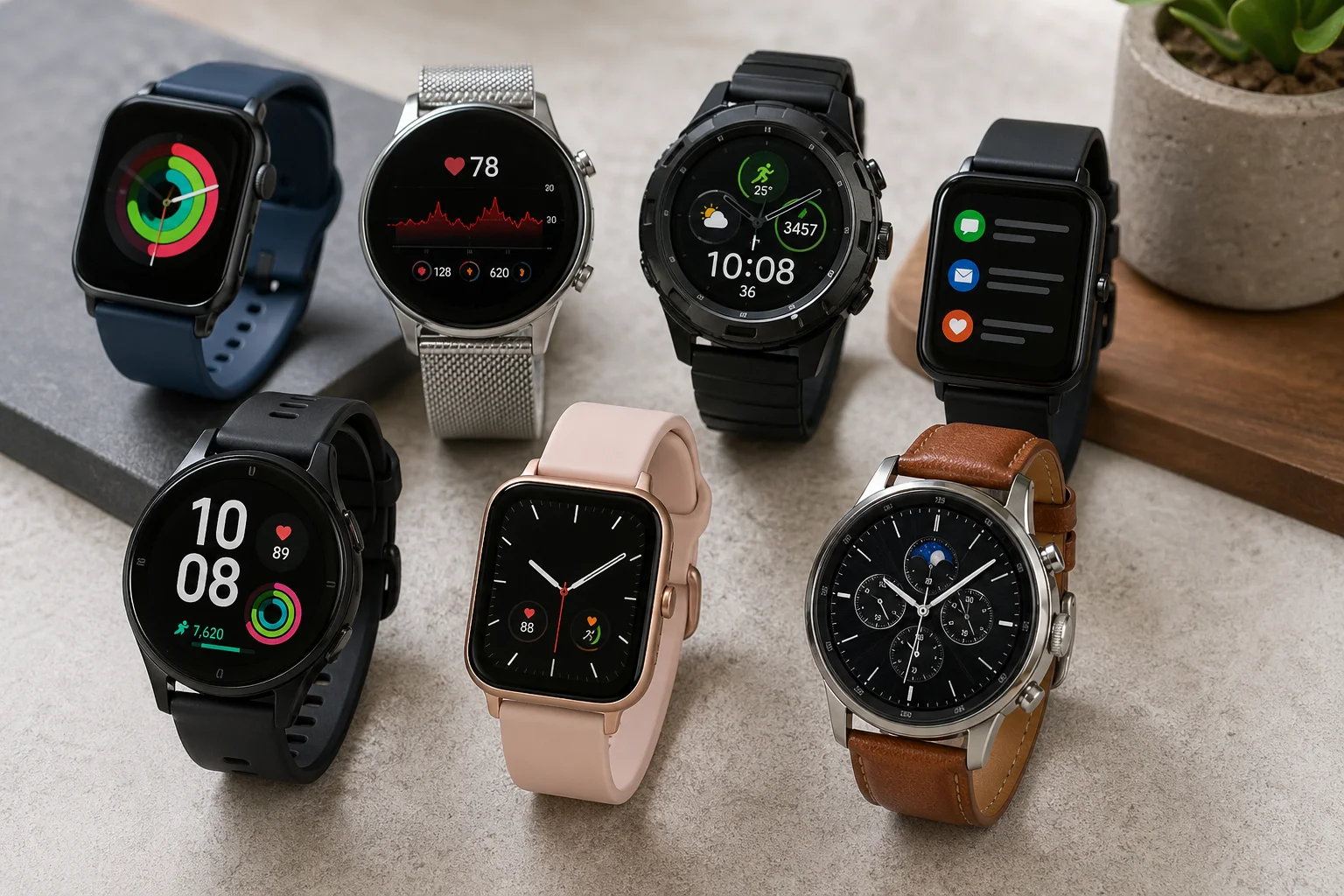
I've been in the 3C electronics export business from Shenzhen for over 15 years. I talk to international buyers every single day. A lot of first-time importers think sourcing smartwatches is like buying USB cables or chargers. They focus on price, looks, and MOQ. But soon, they run into problems they never expected. This guide is built on those real-world conversations. It’s not just about defining terms. It's a framework to help you decide which path is right for your business right now. Let's break down how to make the right choice.
Why is sourcing smartwatches more complex than other electronics?
You're confused by endless smartwatch options. It's easy to focus on price and looks, but the real problems are often hidden and can cause major headaches later on.
Smartwatches are complex systems, not just hardware.1 The app ecosystem, software stability, and overall user experience create hidden risks. Unlike a simple cable, a bad smartwatch experience directly hurts your brand's reputation.
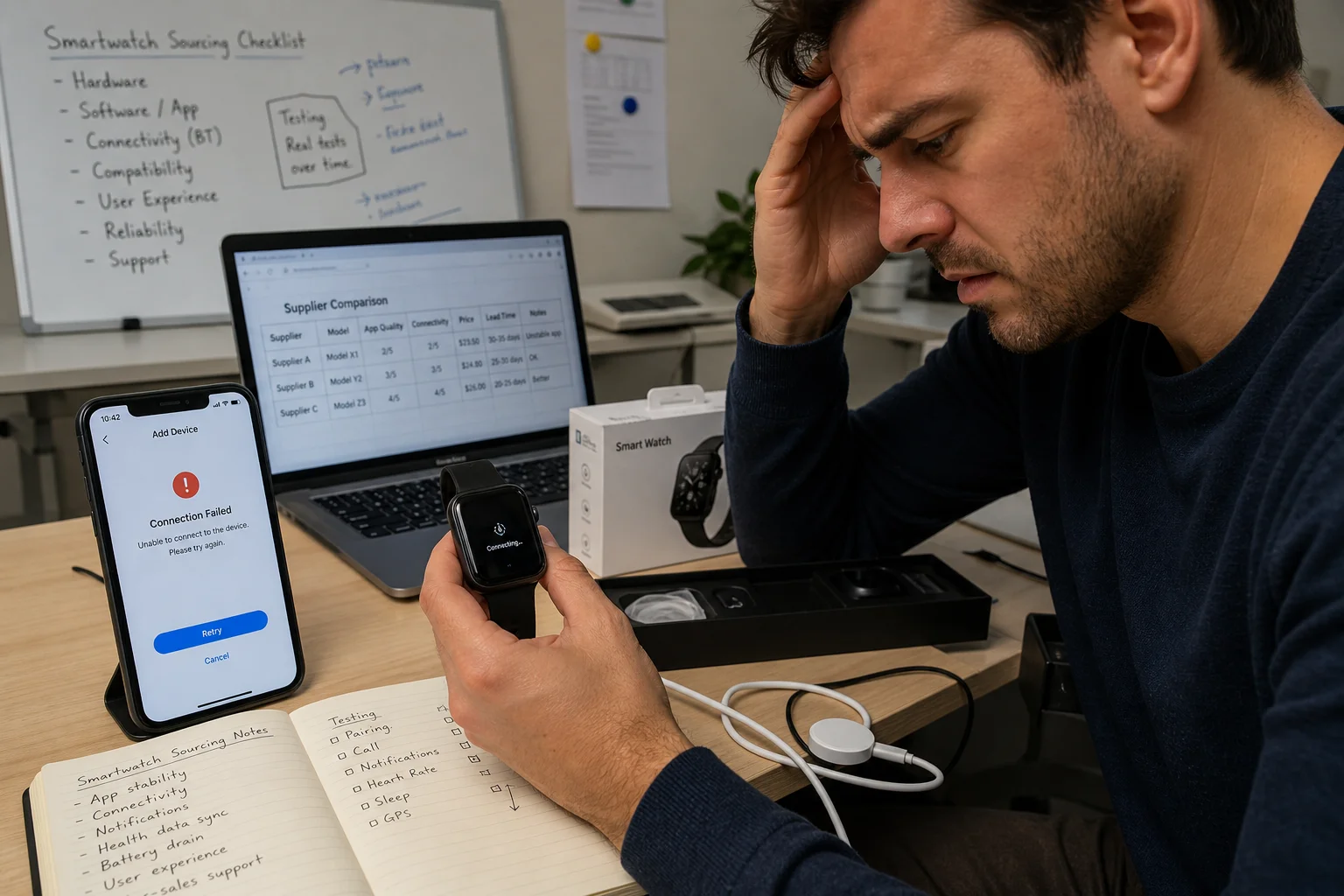
A common question we get from buyers is, "Can you make it like an Apple Watch but cheaper?" This question shows a common misunderstanding. A smartwatch isn't just a physical object. It's a complete product system. Think about it. A USB cable works or it doesn't. A charger delivers power safely or it doesn't. But a smartwatch involves so much more. You are not just buying a watch case and a screen; you are buying a whole user experience.
This system includes:
- The hardware design and feel
- The screen quality and responsiveness
- The battery life in real-world use
- The Bluetooth connection stability
- The mobile app's quality and usability
- Software updates and bug fixes
- Multi-language support
- The accuracy of health and fitness data
Many new buyers overlook this. They find a good-looking watch, print their logo, and start selling. Then the customer complaints roll in: "Why won't my watch connect to my phone?" "The app is full of ads and keeps crashing!" "The battery dies in one day!" These issues turn into after-sales nightmares and damage your brand. That's why this topic is so important. The real challenge isn't finding a supplier; it's choosing the right sourcing model for your business stage. Are you testing a new market? Building a brand? Or developing a unique product? The answer changes everything.
What critical features and app issues should you check before buying?
Your new smartwatch looks great, but customers are complaining. The problem might not be the hardware you can see, but the details you missed during sourcing.
Focus on the core user experience. Prioritize screen quality, real-world battery life, and app stability. A buggy app or a dim screen will generate more customer complaints and returns than a missing niche feature.
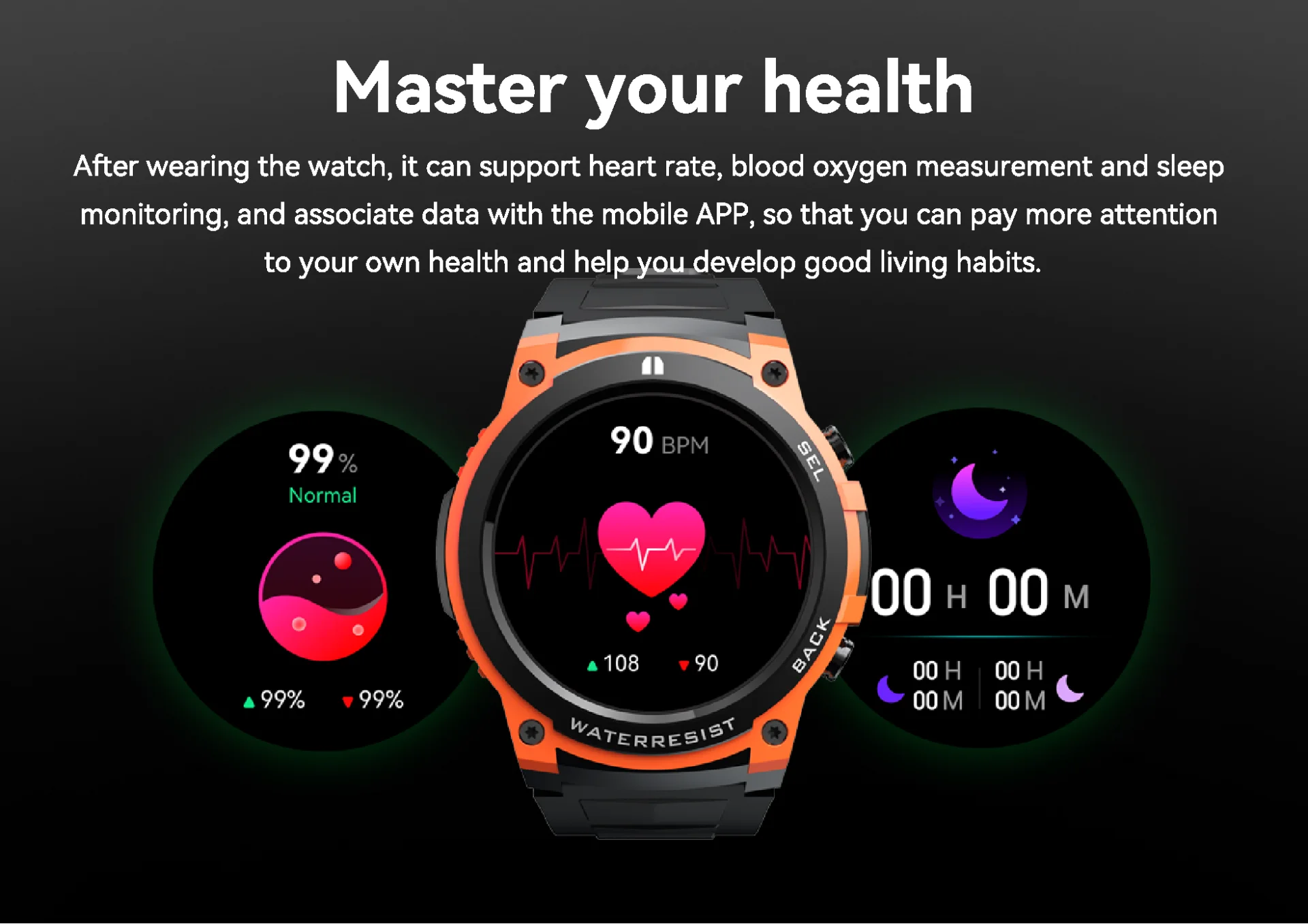
From my experience talking to buyers, the biggest post-sale problems come from a few key areas that are often overlooked. Don't just look at a long feature list. Instead, dig deeper into the things that truly define the daily user experience. When I consult with a client, I tell them to check these things first.
1. Screen Quality is Your Storefront
The first thing a customer notices is the screen. Is it bright and colorful? Is the touch control smooth? A low-quality screen with wide bezels, dull colors, and laggy touch response immediately screams "cheap." No matter how many features you pack in, a bad screen will ruin the first impression.
| Feature | What to Ask Your Supplier | Why It Matters |
|---|---|---|
| Technology | Is it IPS or AMOLED? | AMOLED offers better colors and contrast2, a key selling point. |
| Resolution | What is the pixel resolution? | Higher resolution means sharper text and watch faces. |
| Brightness | What is the nit brightness level? Is it visible outdoors? | A dim screen is useless in sunlight. |
| Responsiveness | What is the screen refresh rate? | A higher refresh rate provides a smoother user experience.3 |
2. Battery Life: Test, Don't Trust
"7-day battery life" is one of the most common exaggerations.4 This claim is often based on very light usage. As soon as your customer turns on notifications, continuous heart rate monitoring, and Bluetooth calling, the battery drains much faster. This gap between advertised and real-world performance is a huge source of customer dissatisfaction. Always buy samples and test them yourself for several days. Wear the watch, connect it to your phone, use its features, and see how long it truly lasts.
3. The App Ecosystem: The Hidden Deal-Breaker
This is the most overlooked part of sourcing smartwatches. A great watch with a terrible app is a terrible product. Many factories use generic, third-party apps that are unstable, poorly translated, or full of ads.5 Before you place an order, ask your supplier which app the watch uses. Then, go to the App Store or Google Play yourself. Check the reviews and ratings. Download it and test its stability and ease of use. If the app has a 2-star rating, that's a major red flag for future customer complaints.
OEM, Private Label, or Wholesale: Which risk can you afford?
You've heard the terms OEM, Private Label, and Wholesale. But choosing the wrong path can sink your investment before you even start selling. This decision is not about which is "best."
This choice is a risk assessment. Wholesale is for market testing with low risk. Private Label is a branding commitment for proven products. OEM is a high-risk, high-reward path for creating a unique product, but only if you have the resources.
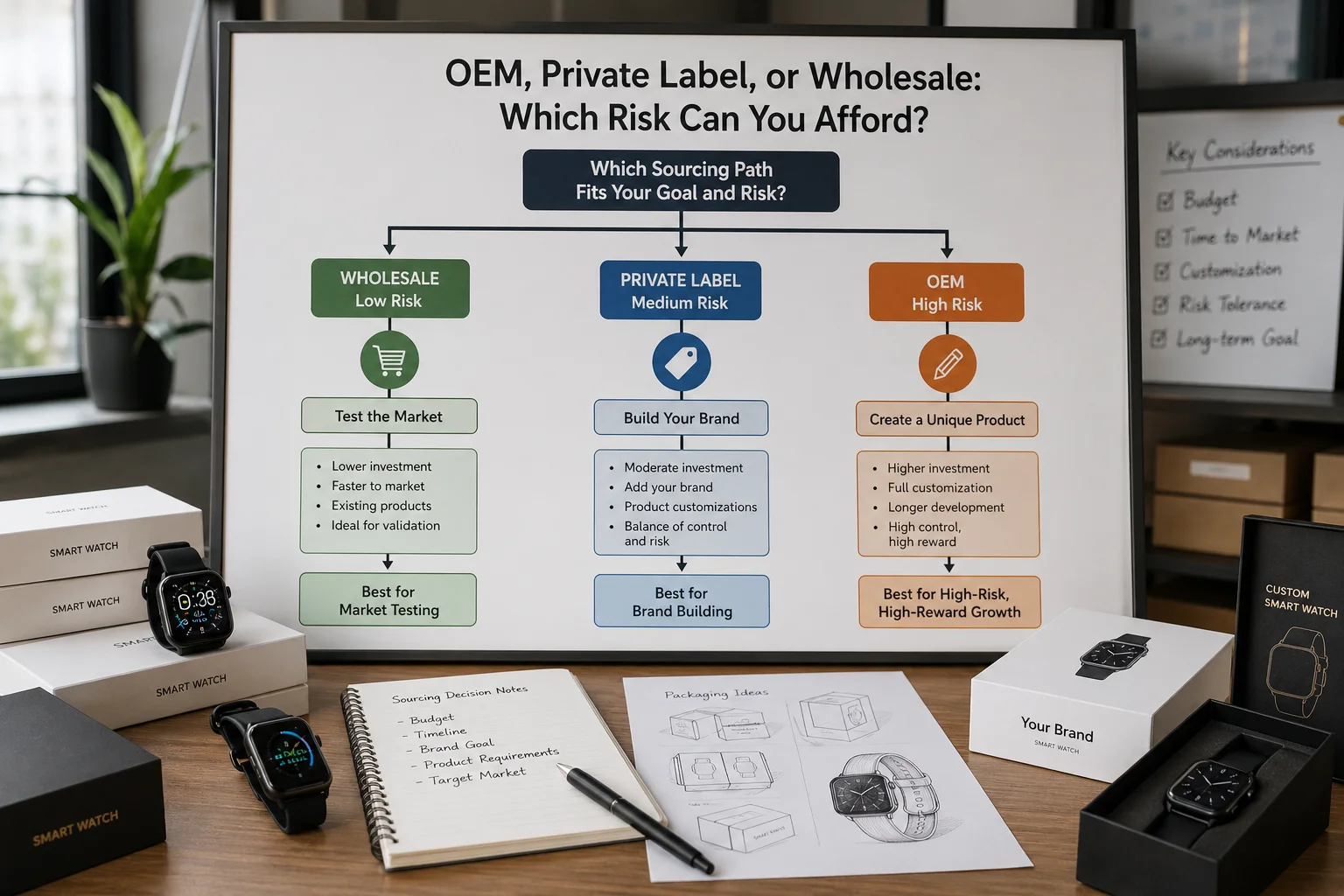
When a client asks me for the "best option," my first question is always about their business, not the product. I ask: "What is your realistic first-order volume?" "Do you have a marketing budget for a brand?" "Do you have technical staff?" The answer isn't about which model sounds most impressive; it’s about which level of risk your business can handle right now.
Wholesale: The Market-Testing Option
Many buyers see wholesale as the "cheap" or "no-brand" option. I see it as the "market-testing" option. If you are new to the smartwatch category or unsure what your customers want, wholesale is the smartest and safest way to start. The main benefit is speed and low risk. You get a low MOQ, fast delivery, and can test different styles without a huge capital investment. The trade-off is that you sacrifice customization. The product will look like everyone else's, and price competition can be tough. Use wholesale to find a winning product first, then worry about branding it.
Private Label: More Than Just a Logo
Once you've tested the market and found a product that sells well with few complaints, it's time to consider private label. This is more than just printing a logo on a watch. It's a branding and marketing commitment. You invest in custom packaging, manuals, and maybe even a startup screen. This creates a brand identity. The risk is that you are now sitting on branded inventory. If the product suddenly stops selling, you can't easily offload it. That's why I always advise clients: test with wholesale first, then private label your proven winner.
ODM & OEM: A Shared Financial and Technical Journey
OEM (Original Equipment Manufacturer) sounds like the ultimate goal—a completely unique product. But it carries the highest risk. This path is a deep partnership that requires shared technical and financial responsibility. You need to be involved in R&D, tooling, certifications, and quality control. It requires a large MOQ, a significant budget for upfront costs like molds, and a long development timeline. A common mistake is for a buyer to say, "I want my own smartwatch model," without having technical staff or a detailed product specification. This is a recipe for failure. ODM (Original Design Manufacturer) is a good middle ground.6 You use the factory's existing platform but can make more significant modifications to the appearance or features than with private label. It offers more differentiation with less risk than full OEM. OEM is for scaled businesses that can afford the financial and human capital to co-develop a product.
| Sourcing Model | Best For | Risk Level | Customization | MOQ |
|---|---|---|---|---|
| Wholesale | Market testing, new buyers, low cash flow | Low | None | Very Low |
| Private Label | Branding a proven product, building a brand | Medium | Low (Logo, Pkg) | Low-Med |
| ODM | Differentiating a product with lower risk | Medium-High | Medium (Case, UI) | Medium |
| OEM | Scaled businesses, creating a unique product | High | Full | High |
What certifications and market-fit questions can't you ignore?
You've found a great product at a good price. But will it get blocked by customs? Or will customers in your country even want it? These details are not minor; they can make or break your business.
Ensure your smartwatches have the right certifications for your market (e.g., CE, FCC, RoHS). Your packaging must be compliant and honest. Most importantly, you must match the product's features and style to your specific audience.
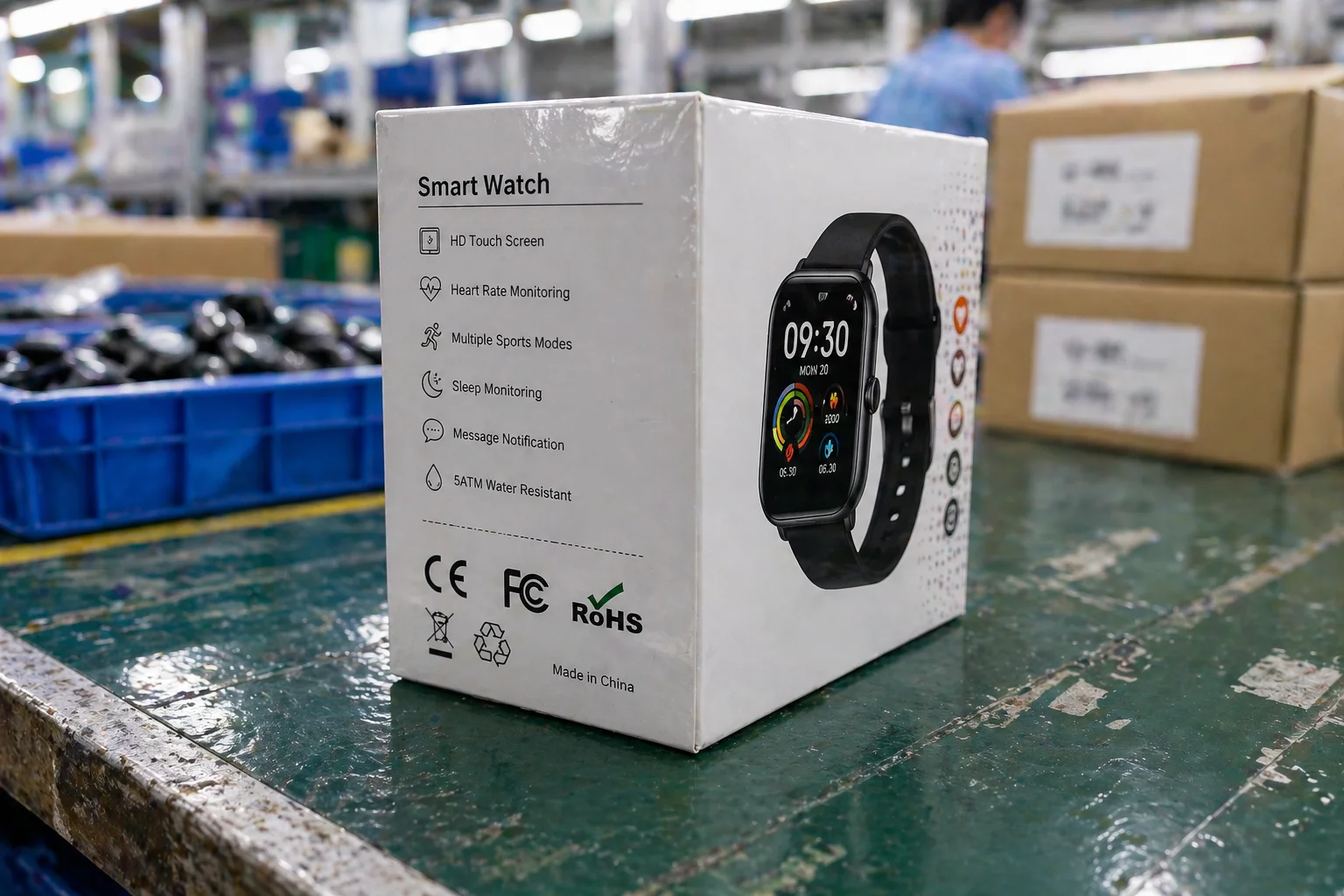
After 15 years in this business, I’ve seen profitable deals get derailed by a missing document or a poorly researched market. A smartwatch is a wireless, battery-powered device that you wear on your skin. This means it falls under several regulations that you cannot ignore. Also, what sells well in one country can be a total failure in another.
Navigating the Certification Maze
Certifications are not optional. Selling non-compliant products can lead to fines, product seizures, and a ban from selling on platforms like Amazon. You must ask your supplier for documentation.
Here are some of the key certifications to look for:
- CE: Mandatory for products sold in the European Economic Area.
- RoHS: Restricts the use of specific hazardous materials. Required in the EU.
- FCC: Required for electronic devices sold in the United States.
- RED: The Radio Equipment Directive for wireless devices sold in the EU.
- Battery Documents: For shipping, you'll need MSDS and UN38.3 reports for lithium-ion batteries.7
Always verify these documents. Don't just take the supplier's word for it.
Packaging That Builds Trust, Not Trouble
Your product packaging is your first direct communication with the customer. It must be clear, honest, and compliant. A common mistake I see is making exaggerated medical claims. Do not market your consumer-grade smartwatch as a "medical device."8 Use phrases like "wellness monitoring" or "health reference," and include a disclaimer that it's "not for medical use." Also, be honest about features like waterproofing. If a watch is only splash-proof, don't say it's "waterproof for swimming." Honesty builds trust and reduces returns.
Finding Your Market Fit
The "best-selling" smartwatch in China might not be the best-seller in your market. You need to understand your specific customers. For example:
- European Customers: Often prioritize data privacy, simple design, and app stability.
- US Customers: Tend to focus on features, app integration, and customer reviews.
- Middle Eastern Customers: May prefer larger screens, luxury designs, and premium gift packaging.
- South American Customers: Often look for a good balance of price, features, and durability.
When a client asks me, "Which model is the best?" I always reply, "Where do you sell?" The answer to that question is far more important than any feature list.
How can small buyers enter the smartwatch market safely?
You want to sell smartwatches but you're afraid of getting stuck with thousands of dollars in unsold inventory. There's a smarter, safer way to start small and build a successful business.
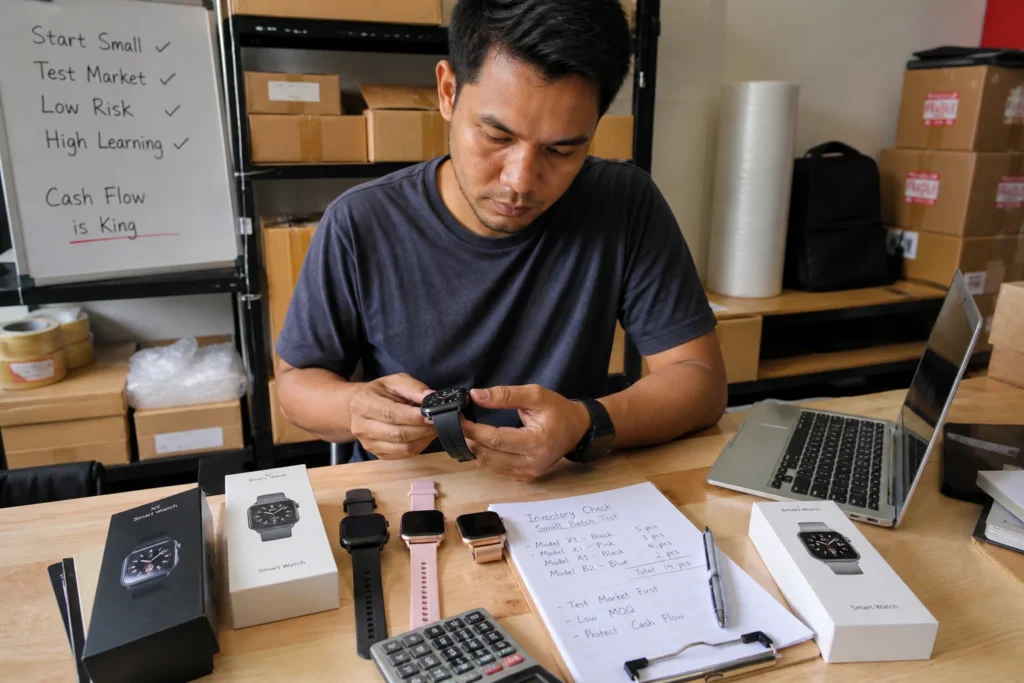
Start with low-MOQ wholesale orders of 2-4 different models to test the market. Focus on real customer feedback before committing to a private label. Always prioritize your cash flow over getting the absolute lowest unit price.
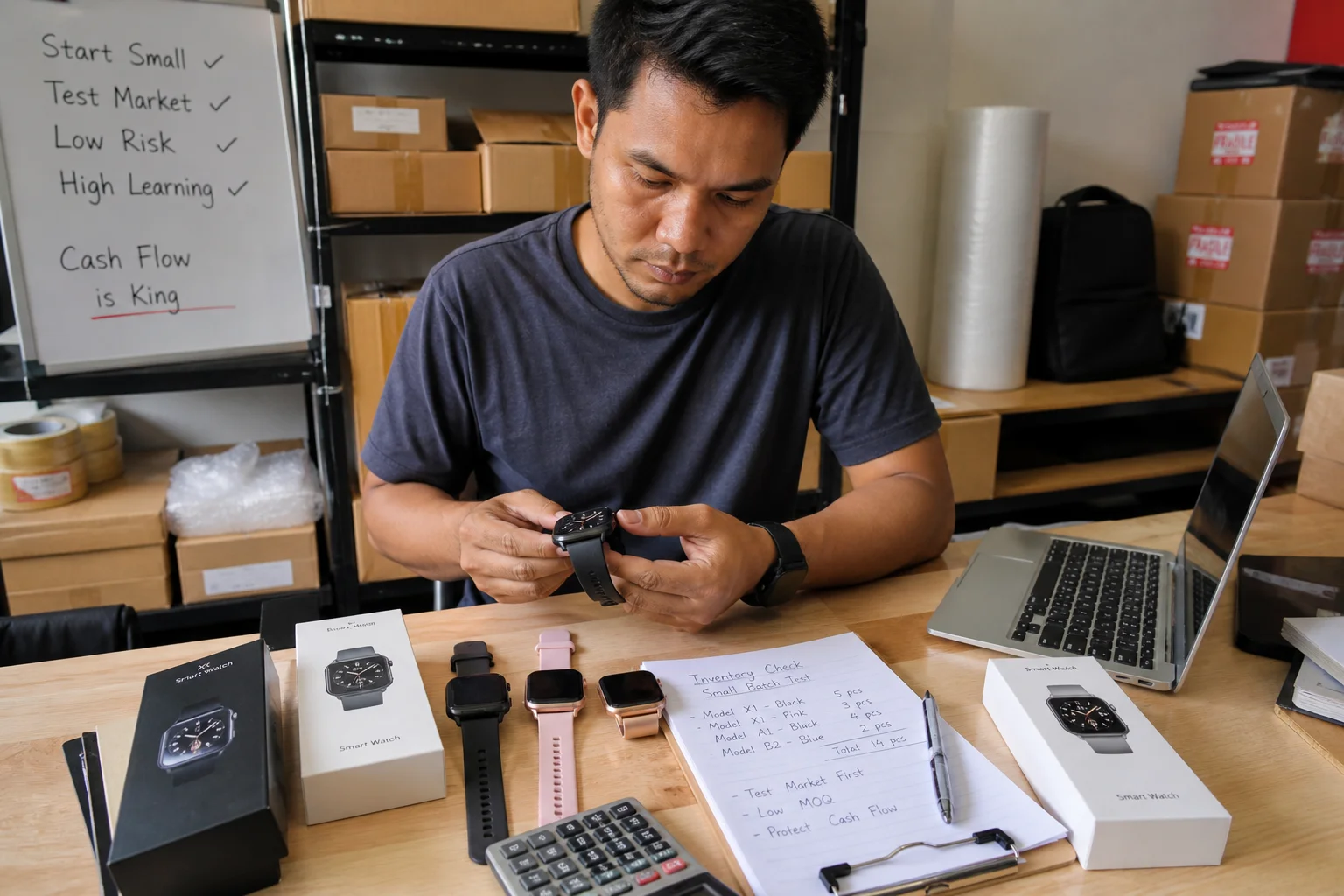
The smartwatch market moves fast. A hot product today can become an old model in six months.9 For a smaller buyer, the biggest risk is inventory. If you buy too much of the wrong product, your cash gets tied up, and you can't adapt. Here’s a simple, low-risk strategy I always recommend to new buyers.
1. Start with Standard Stock to Test
Don't rush into customization. Pick 2 to 4 different models from a supplier's existing stock to test. For example, choose one entry-level sport model, one with Bluetooth calling, one with a premium AMOLED screen, and maybe a smaller model for women. Order a small quantity of each. This allows you to see what your customers actually buy, not what you think they will buy.
2. Listen to Customer Feedback
Once you start selling, the real work begins. Don't just look at sales numbers. Dig into the customer feedback. What are the return rates? What do the reviews say? Are customers complaining about battery life, connectivity, or the app? This data is gold. It tells you which products are winners and which ones will cause problems. A product that sells well but has a high return rate is not a winner.
3. Don't Private Label Too Soon
I see so many new sellers make this mistake. They haven't even sold their first batch, but they are already investing in branded packaging. This is dangerous. You should only move to private label after you have confirmed that a specific model is a reliable seller with good reviews. Otherwise, you are just creating branded dead stock that is even harder to sell off.
4. Protect Your Cash Flow
For a small business, cash flow is everything.10 It's better to sell out and reorder quickly than to have money tied up in slow-moving inventory for months. Don't be tempted by the slightly lower unit price for a huge order. Focus on quick turnover. A healthy business is one that buys and sells inventory rapidly, not one that has the cheapest purchase price.
Conclusion
Choosing a smartwatch sourcing model is about assessing risk. Match the model—wholesale, private label, or OEM—to your current business stage to ensure sustainable and profitable growth.
"Challenges and recommendations for wearable devices in digital ...", https://pmc.ncbi.nlm.nih.gov/articles/PMC9931360/. Research in human-computer interaction and IoT development describes modern smartwatches as complex ecosystems comprising the physical device, an embedded operating system, a companion smartphone application, and often cloud-based data services. The successful integration of these components is critical for user experience and presents a significant engineering challenge. Evidence role: mechanism; source type: research. Supports: The claim that a smartwatch is a complex system, not just a piece of hardware.. ↩
"New Contrast Metric for Realistic Display Performance Measure - PMC", https://pmc.ncbi.nlm.nih.gov/articles/PMC5489230/. Technical explanations of display technology confirm that AMOLED (Active-Matrix Organic Light-Emitting Diode) screens generate their own light for each pixel. This allows for 'true blacks' (by turning pixels off completely) and a significantly higher contrast ratio and wider color gamut compared to IPS (In-Plane Switching) LCDs, which rely on a constant backlight. Evidence role: definition; source type: education. Supports: The claim that AMOLED technology results in better colors and contrast.. ↩
"Effect of multi-refresh-rate method on user experience - PMC - NIH", https://pmc.ncbi.nlm.nih.gov/articles/PMC12356812/. Studies on visual perception and display technology show that higher refresh rates (e.g., 90Hz or 120Hz versus 60Hz) reduce motion blur and decrease latency between user input and on-screen feedback. This creates a perception of smoother animations and more responsive interaction. Evidence role: mechanism; source type: research. Supports: The claim that a higher refresh rate improves the user experience.. ↩
"Batteries for wearables - PMC - NIH", https://pmc.ncbi.nlm.nih.gov/articles/PMC9843125/. Independent testing by technology reviewers and consumer organizations frequently demonstrates a significant gap between the battery life advertised by manufacturers and the performance observed under typical usage conditions, which include features like continuous heart-rate monitoring, GPS, and frequent notifications. Evidence role: general_support; source type: other. Supports: The claim that advertised smartwatch battery life is often longer than what users experience.. Scope note: This support would come from multiple product reviews rather than a single definitive study. ↩
"Rise of wearable fitness devices (WFD): Effects of health technician ...", https://pmc.ncbi.nlm.nih.gov/articles/PMC12066866/. Investigations by technology journalists and user reviews on app stores reveal a common ecosystem of generic 'white-label' companion apps used by numerous budget smartwatch manufacturers. These apps are often criticized for instability, poor localization, privacy concerns, and intrusive advertising. Evidence role: case_reference; source type: other. Supports: The claim that many non-branded smartwatches use low-quality, generic third-party apps.. ↩
"White label, private label, ODM, OEM: which is best for you? - KKAMI", https://www.kkami.nl/white-label-private-label-odm-oem-what-is-the-difference-and-which-is-best-for-you/. Business and manufacturing guides define the Original Design Manufacturer (ODM) model as a collaborative approach where a buyer selects a manufacturer's existing product design and requests modifications. This model serves as a middle ground, offering more product differentiation than private labeling with lower upfront investment and risk compared to creating a unique product from scratch via an OEM model. Evidence role: definition; source type: education. Supports: The claim that ODM is a middle ground between private label and OEM.. ↩
"Lithium Battery Test Summaries (TS) - PHMSA", https://www.phmsa.dot.gov/training/hazmat/new-un-requirement-test-summaries. International and national transport regulations, such as those published by the International Air Transport Association (IATA) for air freight, classify lithium-ion batteries as dangerous goods. Shipping them requires strict adherence to packaging standards and the provision of safety documentation, including a Material Safety Data Sheet (MSDS) and proof of successful UN38.3 testing, which certifies the battery's safety during transport. Evidence role: general_support; source type: institution. Supports: The claim that MSDS and UN38.3 reports are needed for shipping lithium-ion batteries.. ↩
"General Wellness: Policy for Low Risk Devices - Guidance - FDA", https://www.fda.gov/regulatory-information/search-fda-guidance-documents/general-wellness-policy-low-risk-devices. Regulatory bodies like the U.S. Food and Drug Administration (FDA) provide guidance that distinguishes between 'general wellness' products and 'medical devices.' A product is considered a medical device if it is intended for use in the diagnosis, cure, mitigation, treatment, or prevention of disease. Marketing a consumer-grade smartwatch with such claims without undergoing the required, rigorous approval process is prohibited. Evidence role: definition; source type: government. Supports: The claim that consumer smartwatches should not be marketed as medical devices without proper regulation.. ↩
"Re-Engineering the Consumer Product Life Cycle", https://dst.duke.edu/our-work/materials-science/re-engineering-the-consumer-product-life-cycle/. Analysis of the consumer electronics industry by market research firms shows that the wearable technology sector, including smartwatches, is characterized by rapid innovation and short product lifecycles, with major brands often releasing new flagship models on an annual or semi-annual basis. Evidence role: statistic; source type: research. Supports: The claim that the smartwatch market has rapid product cycles.. ↩
"Cash Flow vs. Profit: What's the Difference? | HBS Online", https://online.hbs.edu/blog/post/cash-flow-vs-profit. According to business management and finance experts, managing cash flow is one of the most critical functions for a small business. Studies on business failure consistently identify poor cash flow management, where a company runs out of money to pay its expenses, as a primary reason for insolvency, even for profitable enterprises. Evidence role: expert_consensus; source type: education. Supports: The claim that cash flow is critically important for small businesses.. ↩