Staring at a spec sheet, but worried the real product won't deliver? You fear angry customers and lost profits. You need to know what a feature list doesn't tell you.
To choose a reliable fitness smartwatch manufacturer, you must look past the spec sheet. Check the supplier's reputation, test the build quality and durability, verify real-world battery life, and confirm sensor accuracy. Also, review the companion app, software updates, and their after-sales support.
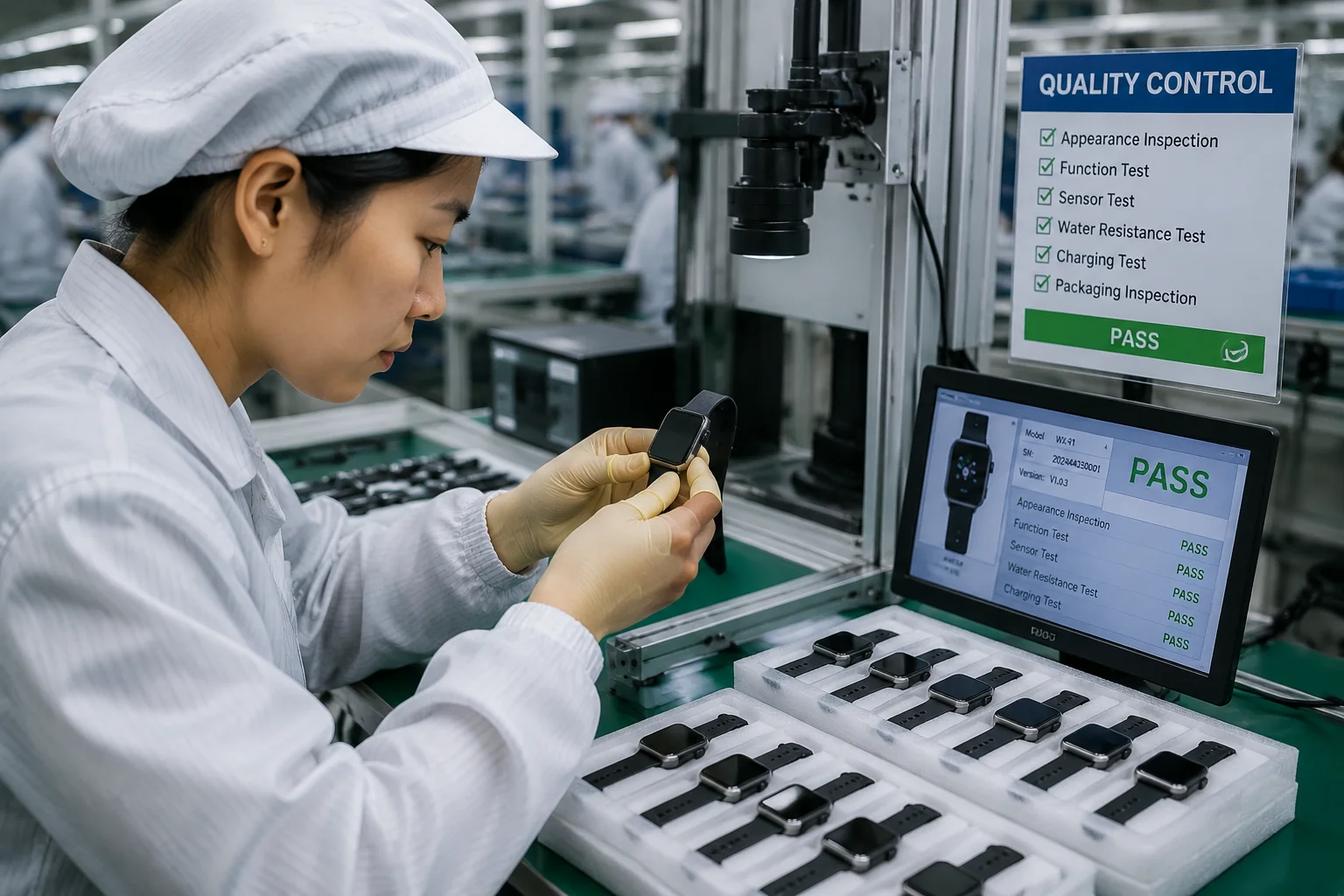
Over my 15 years in exporting electronics from Shenzhen, I've seen many buyers get excited by a long list of features and a low price. But the most successful importers I work with know that the real value—and the real risk—is found in the details the spec sheet leaves out. They've learned that a successful product isn't just about what it can do, but how well it does it and who stands behind it. Let's walk through the critical checks you must perform before placing that big order.
How Do You Verify a Brand's Reputation and Authenticity?
You found a supplier whose products look perfect online. But what if they are a new company with no track record? You risk getting poor quality or no support after payment.
To ensure reliability, you must check the manufacturer’s history, customer reviews, and official certifications. Ask them directly about their warranty policy and after-sales support process. This proves they are a legitimate, long-term partner, not a company that will disappear.
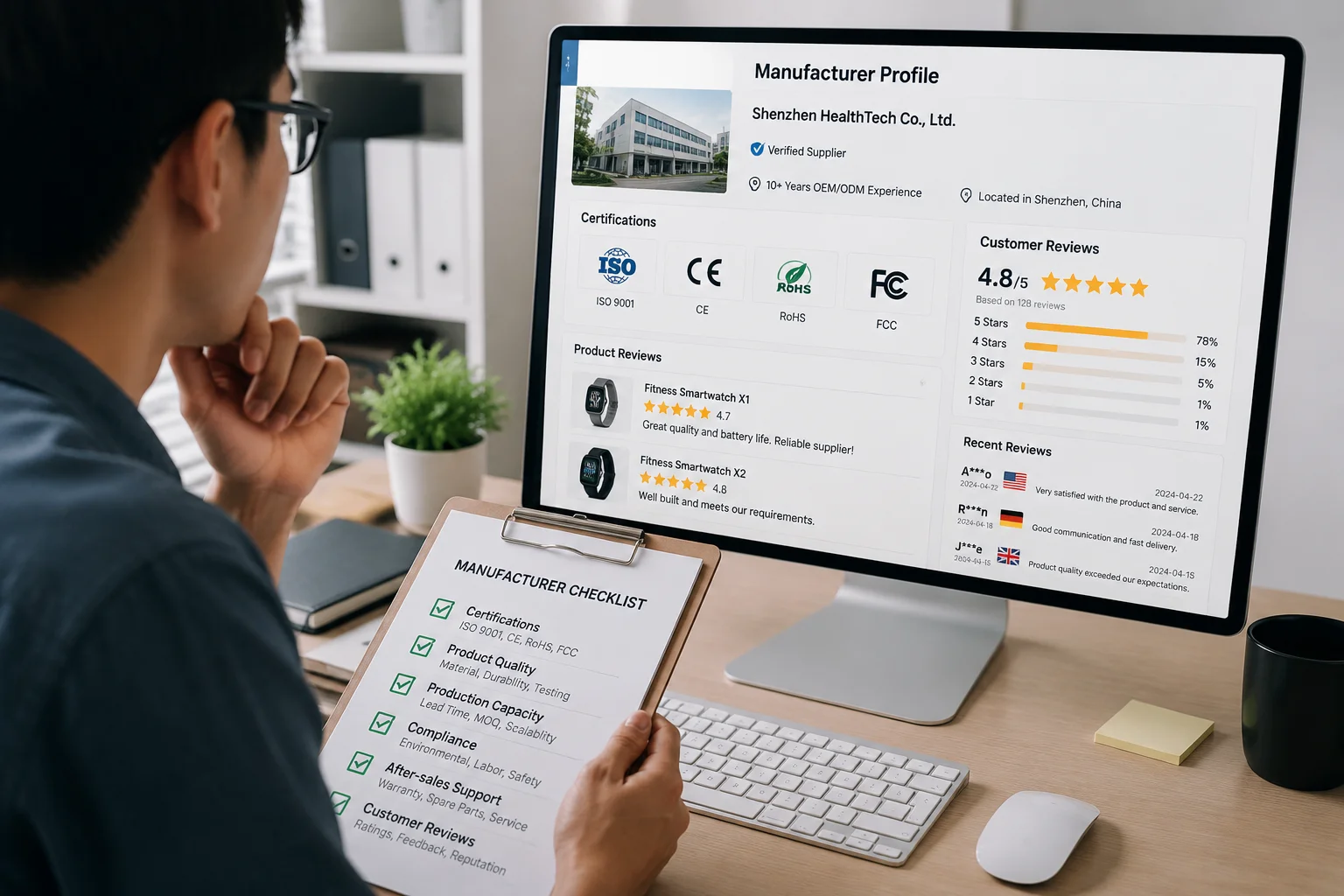
A common question I get from first-time importers is how to tell a good supplier from a bad one. It really depends on what you're buying. Your due diligence changes based on your business model. For example, if you're buying wholesale, you're looking at the public reputation of the existing brand. But for private label, you need to dig deeper into the factory behind the product. You need to know their history, their main markets, and their quality control processes. This is because your brand's reputation will be tied to their manufacturing quality. For an OEM project, it's even more intense. You're entering a partnership. You need to verify their R&D capabilities, their project management experience, and their history with other OEM clients. You're not just buying a product; you're co-developing one.
Here's how I advise clients to think about it:
| Sourcing Model | Key Focus for Reputation Check |
|---|---|
| Wholesale | Public reviews of the existing product and brand. |
| Private Label | Manufacturer's production history, certifications (ISO)1, and QC. |
| OEM | R&D team's experience, project portfolio, and client references. |
Never skip this step. A supplier's reputation is your best insurance against future problems.
How Do You Assess Build Quality and Durability?
The smartwatch looks sleek in photos, but you worry it will feel cheap. If it scratches easily or breaks after a few workouts, your customers will demand refunds, destroying your profit margin.
Look closely at the materials used, like the casing and screen. Check for a water-resistance rating (like IP67 or IP682) and ask if the screen is scratch-resistant. A durable watch that fits your customer's lifestyle is essential.
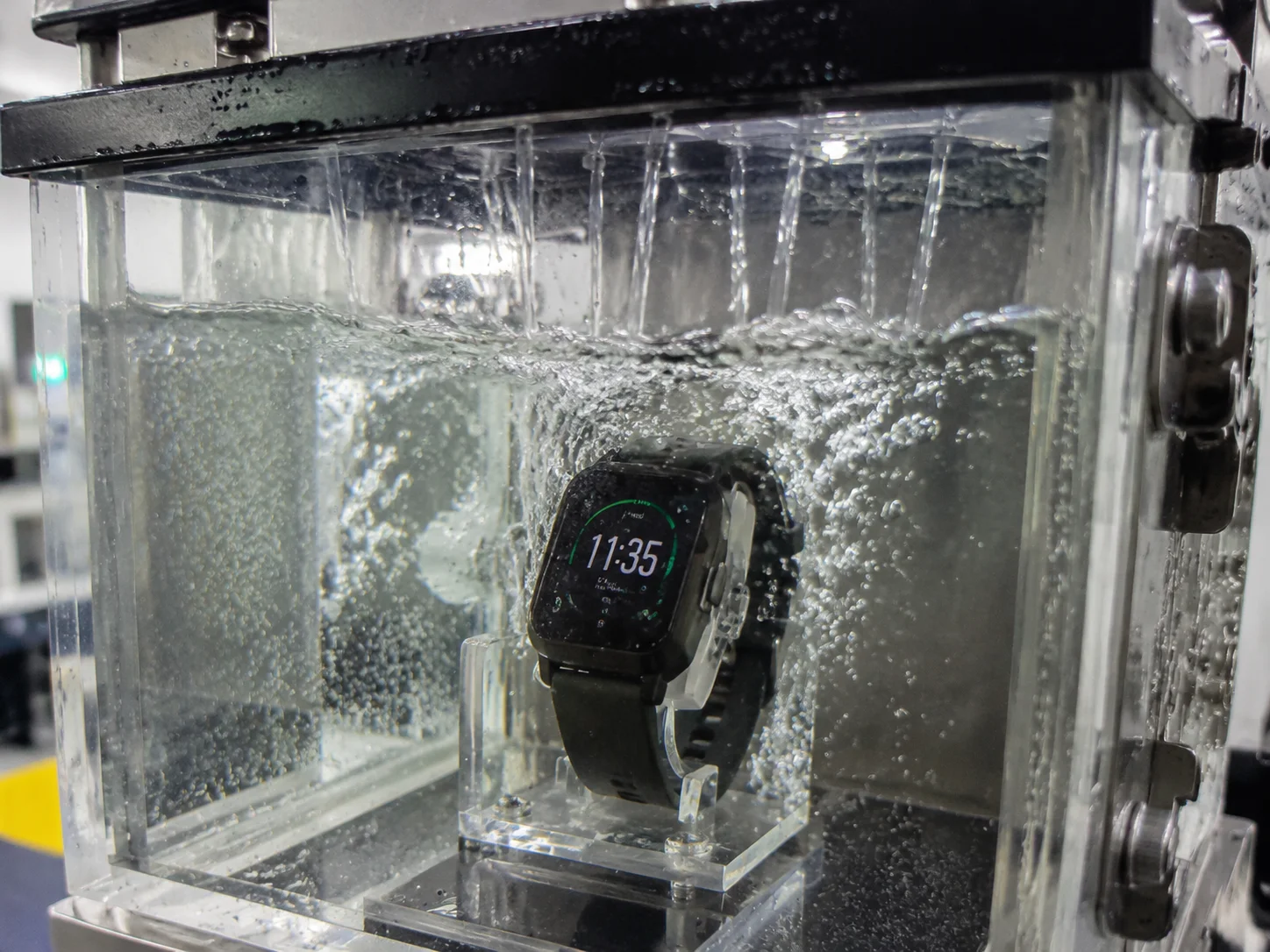
When a client asks for a smartwatch, one of my first questions is, "Who is your end-user?" The answer changes what "good quality" means. For an e-commerce seller testing the market with a low-cost watch, a sturdy polycarbonate (PC) body and a standard glass screen might be perfectly fine. The goal is to offer value at an entry-level price. However, if you're building a premium private label brand, you need to upgrade. Your customers will expect a metal alloy or stainless steel case, and ideally a hardened glass like Corning Gorilla Glass3 on the screen. It has to feel substantial in their hands. For my OEM partners who are creating a unique product, we go even further. We discuss specific alloys, the finish (matte or polished), and IP68 water resistance for swimming. The durability must match the brand promise. I always tell buyers: get samples. Wear the watch yourself. Does it feel solid? Does the button click feel firm, not mushy? These small details signal quality to the end-user.
How Do You Examine Battery Life and Charging Options?
The spec sheet promises 10 days of battery life. But you know that real-world use is often much different. If the battery dies in two days, your product is a failure, and bad reviews will follow.
You must ask for battery performance data based on real-world usage scenarios, not just standby time. Check for modern charging options like fast charging or magnetic wireless charging, which are huge convenience factors for users.
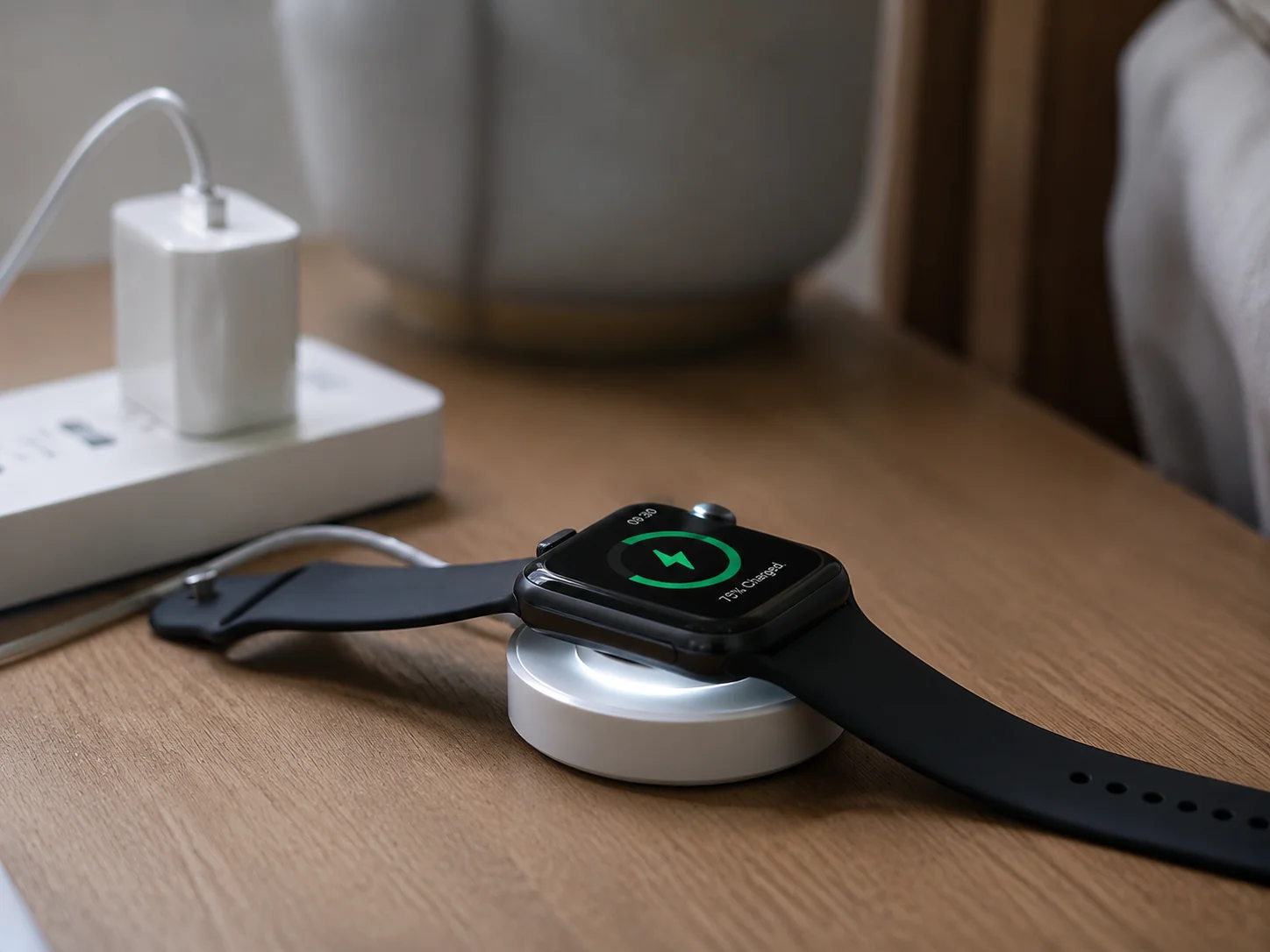
I had a client from Germany who was furious. His supplier promised a 7-day battery life, but his customers were complaining it barely lasted two days. The problem? The spec sheet was based on "lab conditions"4—with notifications off, brightness low, and heart rate monitoring set to manual. His customers, however, used the watch normally! They had Bluetooth always on, received dozens of notifications, and tracked their heart rate continuously. To avoid this, you have to be specific. Ask the manufacturer for the battery test report. It should detail the conditions. A good supplier will provide data for different usage profiles, like "typical use" and "heavy use." For my private label and OEM clients, I strongly recommend testing samples for a full week. Use them as your own watch. Turn everything on. See how long it really lasts. Also, consider the charging experience. A proprietary pogo-pin charger is cheap, but easy to lose. A universal magnetic or wireless charging solution is a much better user experience and can be a key selling point.
How Do You Confirm Sensor Accuracy and Health Tracking?
A fitness smartwatch's main job is to track health data. If the heart rate is wrong or the step counter is off, the product is useless. You risk selling a device that misleads your customers.
To ensure accuracy, ask the manufacturer for data on their sensor validation. How do they test the heart rate, SpO2, and GPS sensors? Reliable sensors are the core of a good fitness watch, so this is not a place to cut corners.
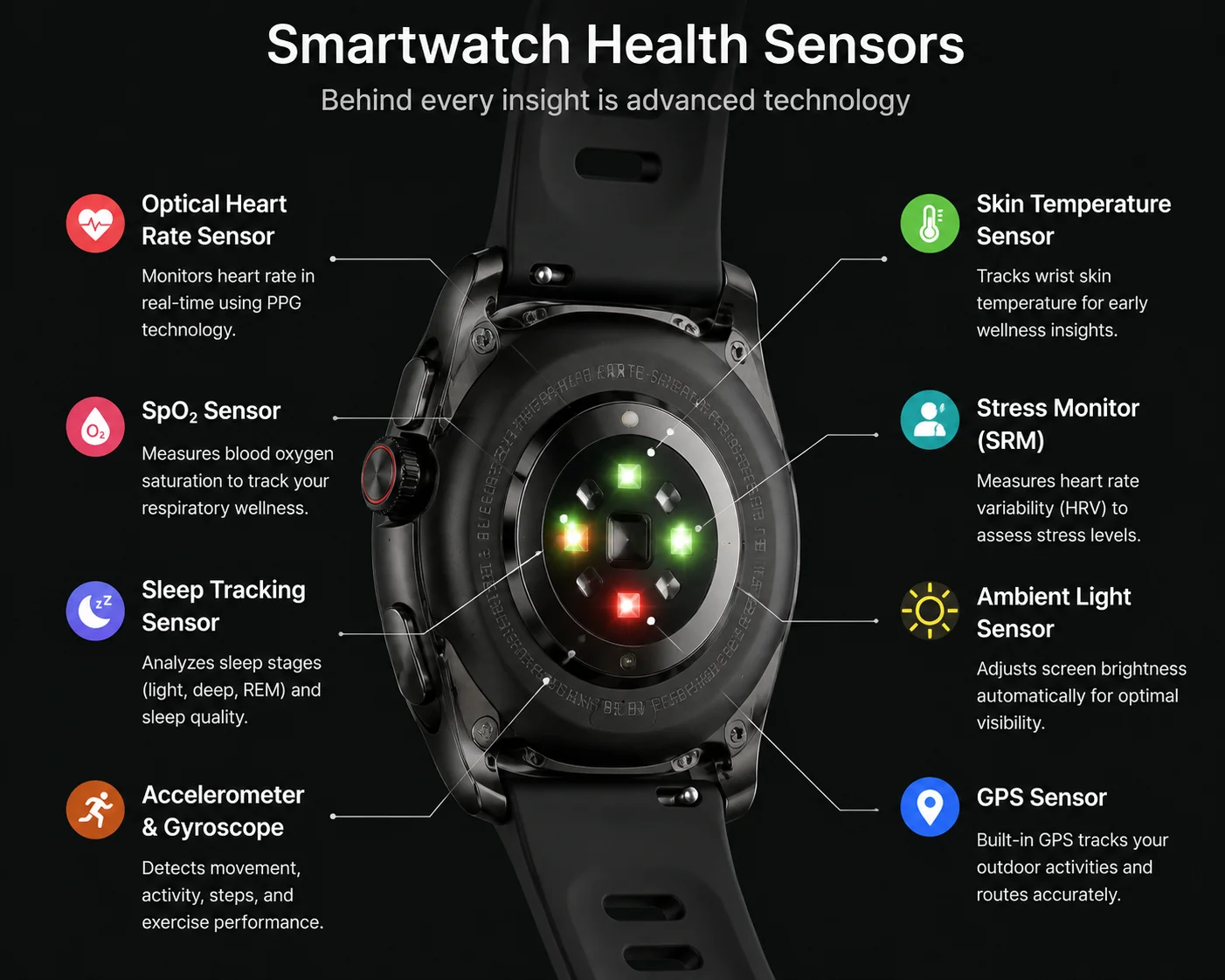
This is one of the most critical points I discuss with buyers. The accuracy of health sensors directly impacts customer trust in your brand. A cheap, inaccurate sensor is worse than no sensor at all. I always advise my clients to ask the supplier what brand of sensor they use. While you may not know every brand, established names like PixArt or Goodix5 are a good sign. Then, ask how they validate the accuracy. Do they test against medical-grade equipment6 or industry leaders like Apple and Garmin? A serious manufacturer will have this data ready. For a recent private label project, my client was focused on the wellness market. We sourced a sample and tested its SpO2 (blood oxygen) readings against a certified fingertip pulse oximeter7. The readings were consistently close, which gave us the confidence to proceed. For GPS, take the watch for a run or drive with your phone's GPS running. Compare the maps later. Are the paths similar? A watch with poor GPS will show you running through buildings. This simple test can save you from a flood of customer complaints.
How Do You Review the App Ecosystem and Software Updates?
You found a watch with great hardware. But what if the companion app is ugly, buggy, or poorly translated? A bad app experience can make even the best hardware feel cheap and frustrating.
Before you commit, download and test the companion app yourself. Check its compatibility with both Android and iOS. Also, ask about the manufacturer's policy for firmware updates. Regular updates are crucial for fixing bugs and improving features.
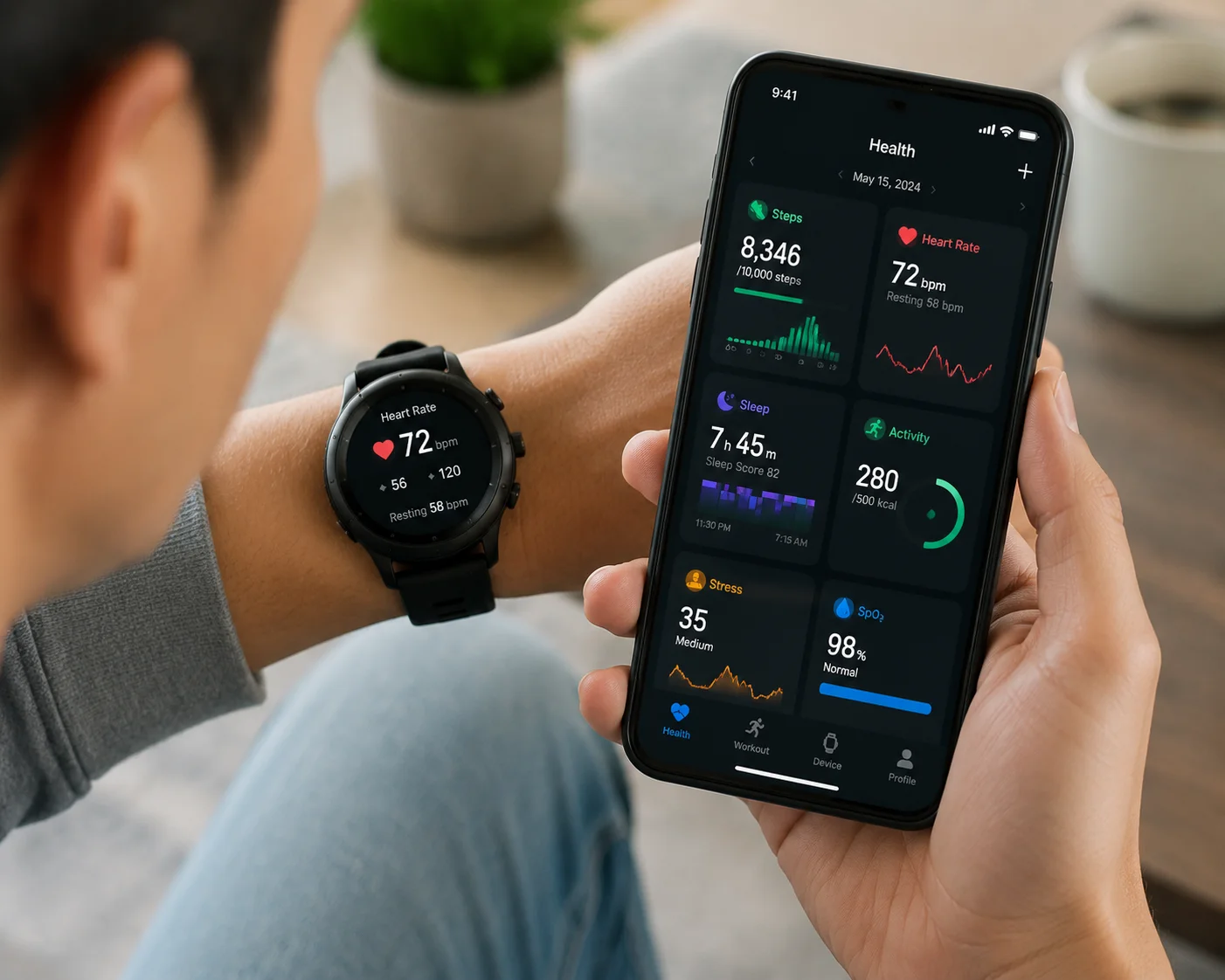
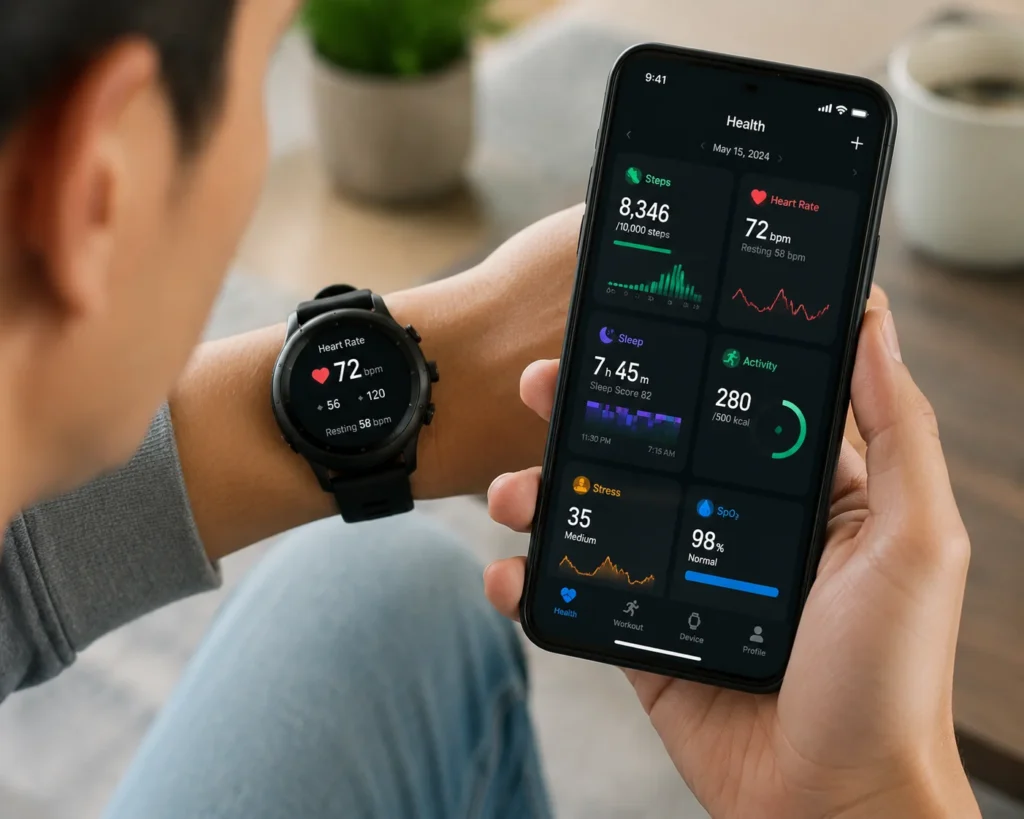
I always tell my customers: the watch is only 50% of the product. The app is the other 50%8. I've seen beautiful watches fail because the app was a disaster. It would crash, fail to sync, or have terrible English translations. My advice is simple: use the app for a week before you make any decisions. Connect it to the sample watch. Does it pair easily? Does your data sync every time? Read the text and menus. Does it sound like it was written by a native speaker, or run through a bad translation tool? For private label and OEM buyers, this is even more important. You need to know if the app can be customized with your brand's logo and colors. And you must ask about software updates. Who is responsible for them? A good partner will have a clear roadmap for firmware updates to fix bugs and add new features. A supplier who doesn't offer updates is a major red flag. They are just selling you a box and will not support the product in the long run.
How Do You Check Connectivity and Smart Features?
The watch has notifications and music control. But you worry the Bluetooth connection will be unstable. If it constantly disconnects from the phone, the smart features become useless and just a source of frustration.
Evaluate the Bluetooth version (5.0 or higher is best for stability and power efficiency). Test the range of the connection and how well it handles notifications and other smart features. A seamless, reliable connection is key to a good user experience.
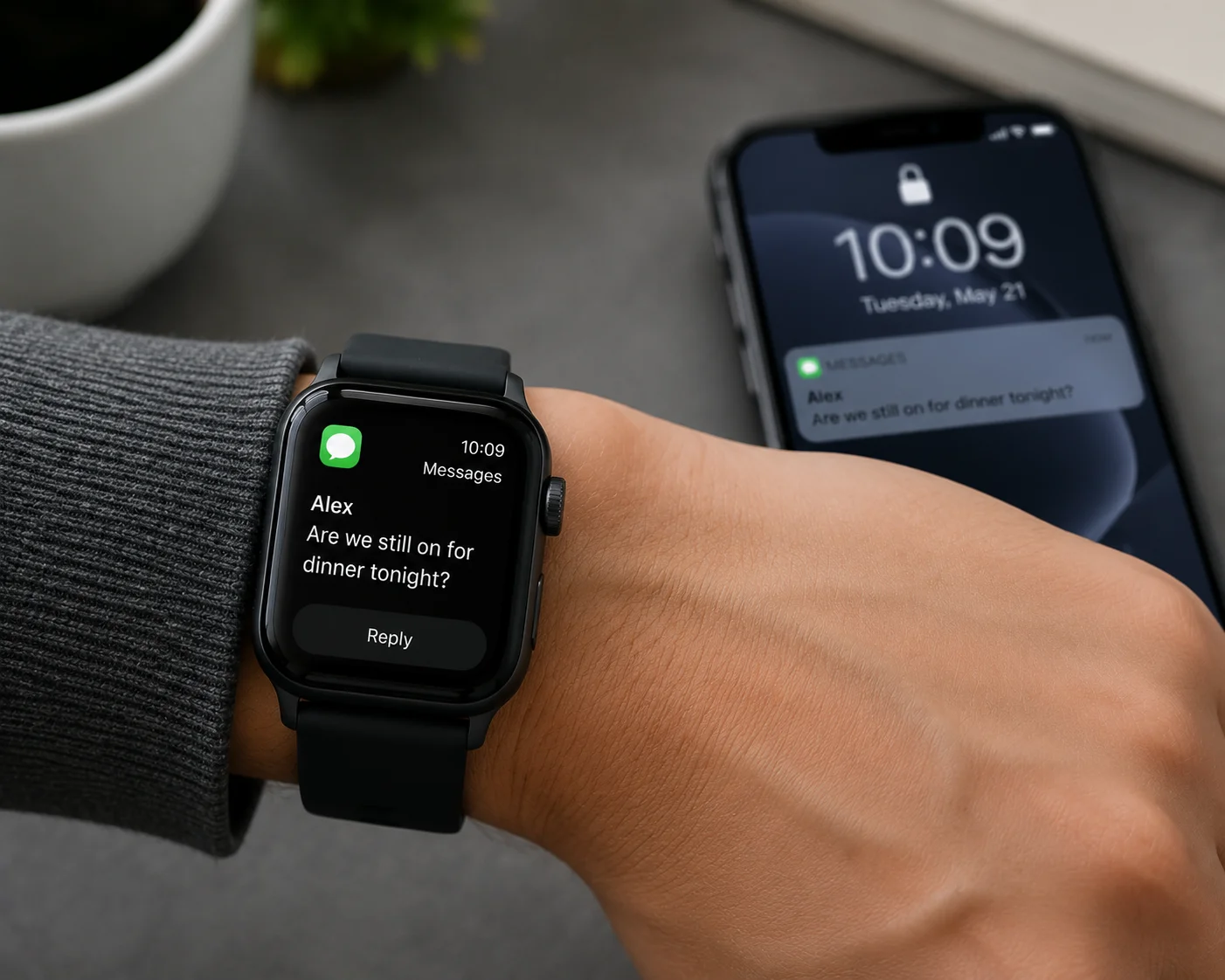
When I review a spec sheet with a client, we always look at the Bluetooth chipset and version. A modern chipset (like one from Realtek or Airoha)9 and Bluetooth 5.0 or higher is a good start. But specs aren't everything. I had a sample watch once that looked great on paper, but if I put my phone in my back pocket, the music controls would start to lag. The connection was just too weak. This is why you must test it in real life. Walk around your house and leave your phone in another room. Does it stay connected? Ask the supplier about their antenna design and testing. A well-designed antenna makes a huge difference. Other features like NFC for payments are a big selling point, but be careful. This often requires local certifications and partnerships with payment providers, which is a complex process. It's typically a feature reserved for larger OEM projects where the buyer has the resources to manage those relationships. For most private label sellers, focusing on rock-solid Bluetooth, notifications, and music control is a much safer bet.
How Do You Evaluate Ergonomics and Comfort?
A watch might be packed with features. But if it's heavy, bulky, or the strap is uncomfortable, people won't wear it. An unworn watch has zero value, no matter how smart it is.
Pay close attention to the watch's weight, dimensions, and the strap material. A good watch should be comfortable enough to wear all day and even while sleeping. Consider if the straps are easily replaceable with standard sizes.

I remember getting a batch of samples for a new sports watch. The watch itself was fantastic—lightweight and powerful. But the silicone strap they included was stiff and didn't breathe. After wearing it for just an hour, my wrist was sweaty and irritated. We immediately told the factory we needed to change the strap material. This is a detail many buyers overlook. You must think about the user experience 24/7. Is the watch light enough to sleep with for sleep tracking? Is the strap made of soft, skin-friendly silicone or a breathable woven nylon? Are the edges of the watch case smooth, or do they dig into your wrist? I advise clients to consider their target audience. A rugged watch for hikers can be bigger and heavier. A watch for a yoga enthusiast should be slim, light, and almost unnoticeable. Also, check if the straps are standard size (e.g., 20mm or 22mm)10. This allows your customers to easily customize the watch with their own straps, which is a great selling point and adds value without costing you extra.
How Do You Inspect Packaging, Certification, and After-Sales Support?
You're ready to order, but what about the final details? Missing certifications can get your shipment stuck in customs. Cheap packaging makes your product look bad, and no after-sales support leaves you helpless with returns.
Ensure the manufacturer can provide all necessary certifications for your market (like CE, FCC, RoHS11). Review the packaging quality and user manual. Finally, confirm their process for handling defects and returns. This is your business's safety net.
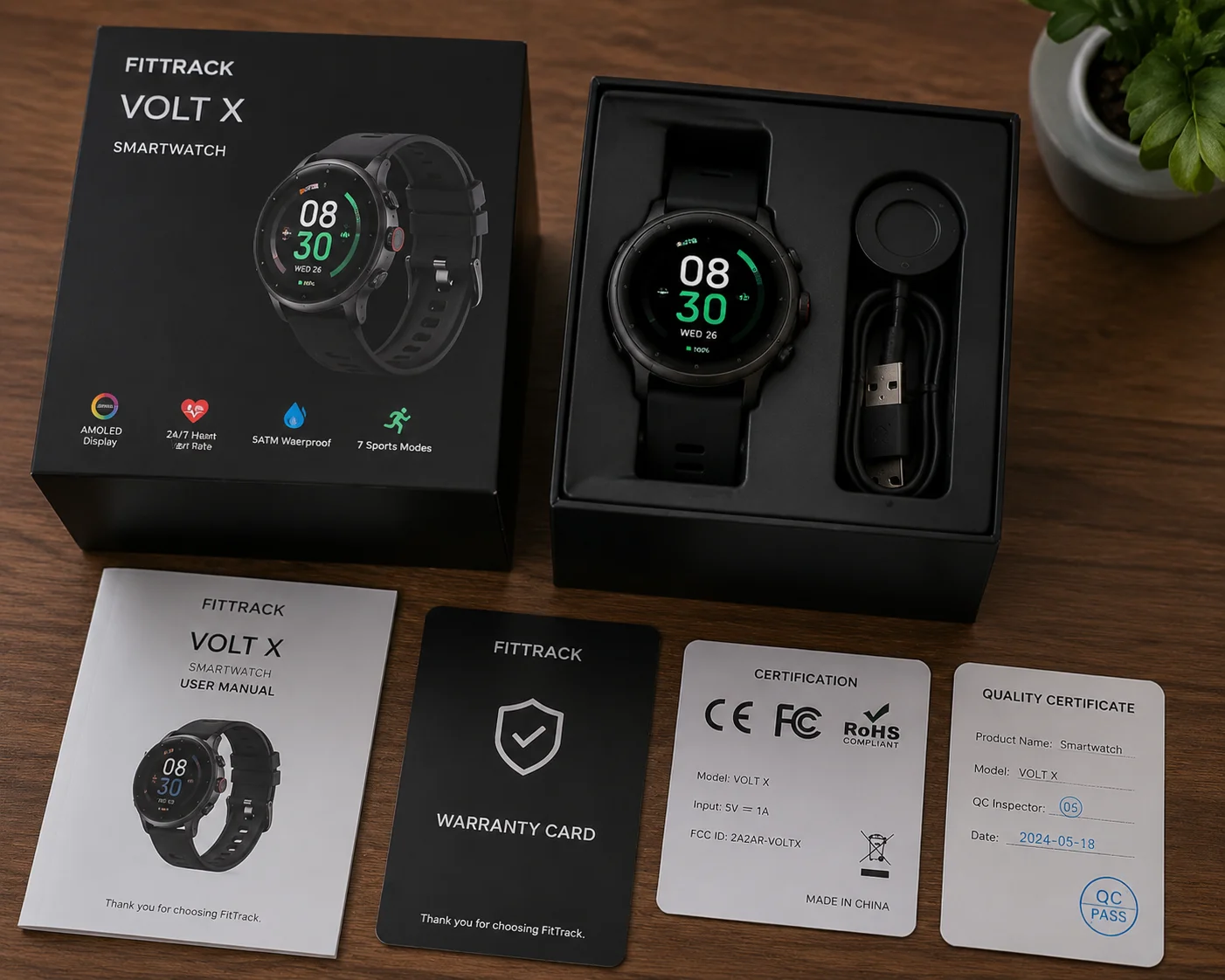
This is the last mile of sourcing, and it’s where many deals can fall apart. I make this a mandatory checklist for all my clients. First, certifications are non-negotiable. If you're selling in Europe, you need CE and RoHS. If you're selling in the US, you need FCC. Ask for copies of the certificates before you even place a sample order. A professional manufacturer will have them ready. Second, packaging. The box is the first thing your customer touches. It should be sturdy, well-designed, and protect the product. I ask my suppliers for a "drop test" video of the packaging to ensure it can survive shipping. Third, and most important, is after-sales support. I always ask suppliers this question directly: "What is your process if my customer receives a defective unit?" A good partner will have a clear policy, whether it's providing replacement units, offering credit, or shipping spare parts. The price of the watch doesn't matter if you have a 5% defect rate and no support from your supplier. Your profit will be gone.
Conclusion
Choosing the right manufacturer means looking beyond features. You must verify their reputation, quality, and support to protect your investment, satisfy your customers, and build a successful brand.
"International Organization for Standardization - Wikipedia", https://en.wikipedia.org/wiki/International_Organization_for_Standardization. Provides an overview from the International Organization for Standardization (ISO) of its quality management standards, such as ISO 9001, which certifies that a manufacturer has implemented a system to ensure consistency and quality in its products and processes. Evidence role: definition; source type: institution. Supports: The source should explain what ISO certification (specifically a quality management standard like ISO 9001) signifies about a manufacturer's processes and commitment to quality.. ↩
"IP code - Wikipedia", https://en.wikipedia.org/wiki/IP_code. Explains the International Electrotechnical Commission's (IEC) standard 60529 for Ingress Protection (IP) ratings. An IP67 rating certifies protection against dust and immersion in water up to 1 meter for 30 minutes, while IP68 indicates protection against continuous immersion under conditions specified by the manufacturer. Evidence role: definition; source type: institution. Supports: The source should define the IP Code (Ingress Protection Code) standard, explaining that the first digit relates to solid particle protection and the second to liquid ingress protection.. ↩
"Gorilla Glass - Wikipedia", https://en.wikipedia.org/wiki/Gorilla_Glass. Describes the chemical strengthening process used to create Corning Gorilla Glass, a brand of aluminosilicate glass known for its high scratch resistance and durability, making it a popular choice for the screens of portable electronic devices. Evidence role: definition; source type: encyclopedia. Supports: The source should define what Corning Gorilla Glass is and describe its properties, such as scratch resistance and durability, which make it a common choice for electronic device screens.. ↩
"Understanding Smartwatch Battery Utilization in the Wild - PMC - NIH", https://pmc.ncbi.nlm.nih.gov/articles/PMC7374306/. Discusses the methodologies used by manufacturers to test battery life, which often involve controlled environments with minimal background processes, low screen brightness, and limited connectivity, resulting in figures that can be significantly higher than what an average user experiences. Evidence role: mechanism; source type: research. Supports: The source should discuss the discrepancy between manufacturer-stated battery life and typical user experience, explaining that official tests are often conducted under optimized, low-power conditions.. ↩
"A review on wearable photoplethysmography sensors and their ...", https://pmc.ncbi.nlm.nih.gov/articles/PMC6426305/. Identifies PixArt Imaging and Goodix Technology as established suppliers of sensor components, including photoplethysmography (PPG) sensors used for heart rate and blood oxygen monitoring in a wide range of consumer wearable devices. Evidence role: general_support; source type: other. Supports: The source should be a market analysis report or tech industry publication that identifies PixArt and/or Goodix as significant suppliers of sensors for the wearable technology market.. Scope note: The source may be a trade publication or market research firm rather than a peer-reviewed paper, and its primary purpose may be industry analysis rather than academic verification. ↩
"Unintended Consequences of Wearable Sensor Use in Healthcare", https://pmc.ncbi.nlm.nih.gov/articles/PMC5171570/. Outlines the scientific consensus on validating consumer-grade biometric sensors, which involves comparative studies against gold-standard medical instruments to quantify the sensor's accuracy, precision, and reliability for tracking physiological metrics like heart rate and blood oxygen saturation. Evidence role: expert_consensus; source type: paper. Supports: The source should be a scientific paper or industry standard document describing the process of validating consumer wearable sensors (like PPG) by comparing their readings to data from certified medical devices (like ECGs or clinical pulse oximeters) under various conditions.. ↩
"Evaluation of Leading Smartwatches for the Detection ... - PMC", https://pmc.ncbi.nlm.nih.gov/articles/PMC10674783/. Explains that while consumer wearables can provide useful blood oxygen (SpO2) estimates for wellness purposes, their reflective sensors are generally considered less accurate than the transmissive sensors used in medical-grade pulse oximeters, and are not intended for medical diagnosis. Evidence role: mechanism; source type: paper. Supports: The source should explain the technical differences between the reflective photoplethysmography (PPG) used in smartwatches and the transmissive technology in medical-grade fingertip oximeters, and discuss the resulting differences in accuracy.. ↩
"Hardware and Software Development | Career Compass", https://careercompass.princeton.edu/career-fields/technology/hardware-and-software-development. Provides analysis showing that for connected devices like smartwatches, the user's overall experience is heavily influenced by the software component, including the ease of use, reliability, and feature set of the companion mobile application. Evidence role: expert_consensus; source type: research. Supports: The source should discuss the critical role of the software user experience (UX), including the companion app, in the overall perceived quality and user satisfaction of connected hardware devices.. ↩
"Wireless IoT Connectivity Chipset Market Report 2025-2030", https://iot-analytics.com/product/wireless-iot-connectivity-chipset-market-report-2025-2030/. Cites market data or industry analysis identifying Realtek and Airoha as prominent suppliers of Bluetooth chipsets for the consumer electronics and Internet of Things (IoT) markets, including for devices such as wireless earbuds and smartwatches. Evidence role: general_support; source type: other. Supports: The source should be a tech industry or market analysis report identifying Realtek and Airoha (a MediaTek subsidiary) as major manufacturers of Bluetooth SoCs (System on a Chip) for the IoT and wearable markets.. Scope note: The source is likely to be a market research firm or trade publication, not a peer-reviewed academic journal. ↩
"NATO Strap", https://www.nato.int/en/about-us/nato-history/history-by-theme/symbols-of-nato/nato-strap. Explains that watch strap compatibility is determined by the lug width of the watch case, and that 20mm and 22mm are highly common, standardized sizes used by numerous traditional watch and smartwatch brands, resulting in a wide aftermarket of compatible straps. Evidence role: general_support; source type: encyclopedia. Supports: The source should confirm that watch straps are measured by the lug width of the watch case and that 20mm and 22mm are among the most common and widely available sizes for men's watches and unisex smartwatches.. ↩
"Equipment Authorization", https://www.fcc.gov/engineering-technology/laboratory-division/general/equipment-authorization. Provides information from regulatory bodies, explaining that the FCC (Federal Communications Commission) mark is required for electronic devices that emit radio frequency energy sold in the United States, the CE (Conformité Européenne) mark indicates conformity with standards for products sold within the European Economic Area, and the RoHS (Restriction of Hazardous Substances) directive restricts specific hazardous materials in electronics for the EU market. Evidence role: definition; source type: government. Supports: The source should be an official government or regulatory body website explaining the purpose of these marks.. ↩