Struggling to choose between OEM and ODM for your smartwatches? The wrong choice can waste your time and money, risking your entire investment. Let's find the perfect fit.
For most mid-sized buyers, ODM (Original Design Manufacturing) offers the best balance.1 It provides customization for branding without the massive investment and technical risk of OEM (Original Equipment Manufacturing). It’s the faster, more affordable path to a unique product.
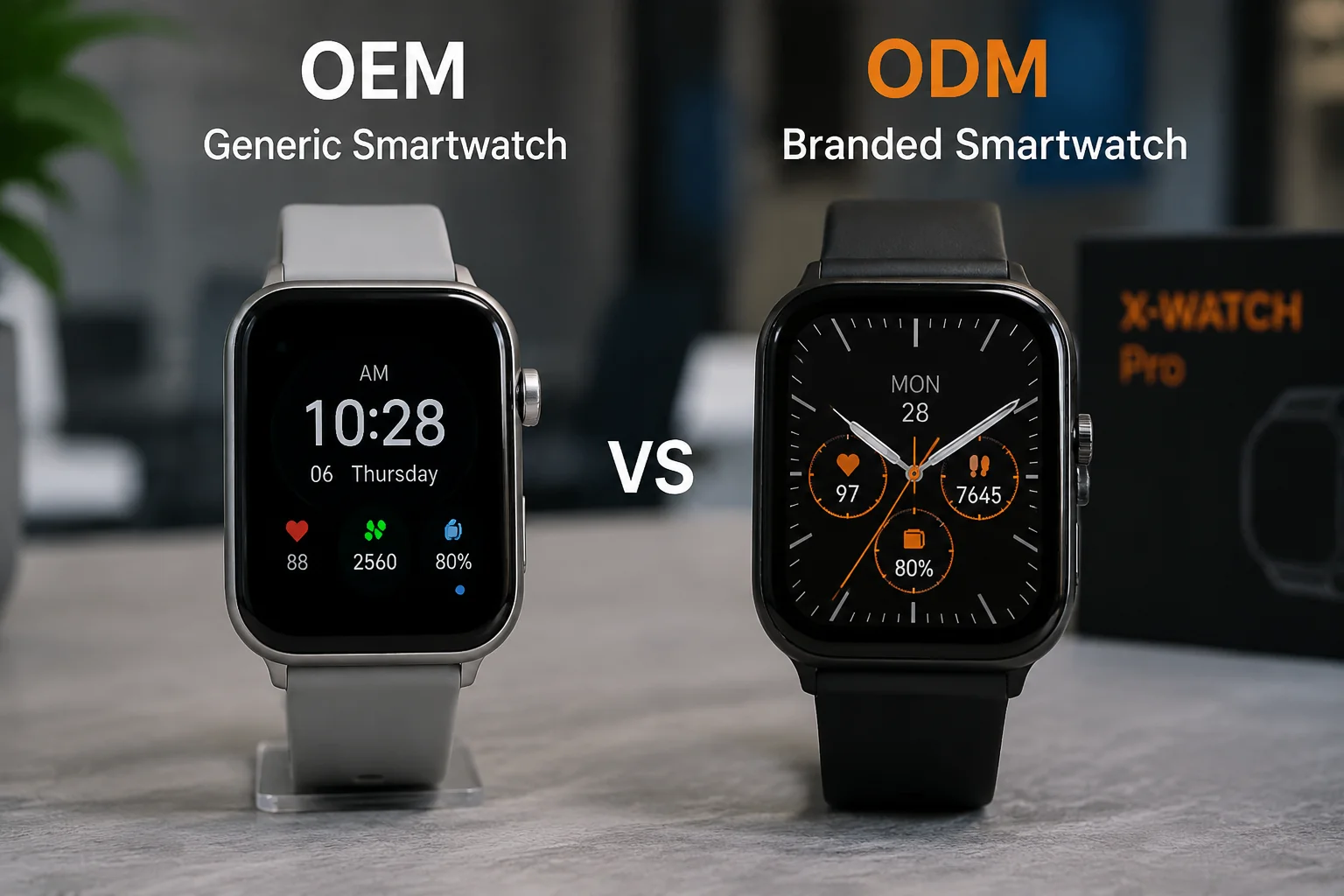
Over my 15 years in this business, I've seen buyers agonize over this decision. They think it's just a technical choice, but it's really about your business strategy and what risks you can handle. Let's break it down together, piece by piece, so you can make the right call for your brand. This isn't just about definitions; it's about your bottom line.
Understanding OEM and ODM in Smartwatch Production?
Do you find the terms OEM and ODM confusing? This confusion can lead to costly mistakes when talking to suppliers. Let's clarify what they really mean for you.
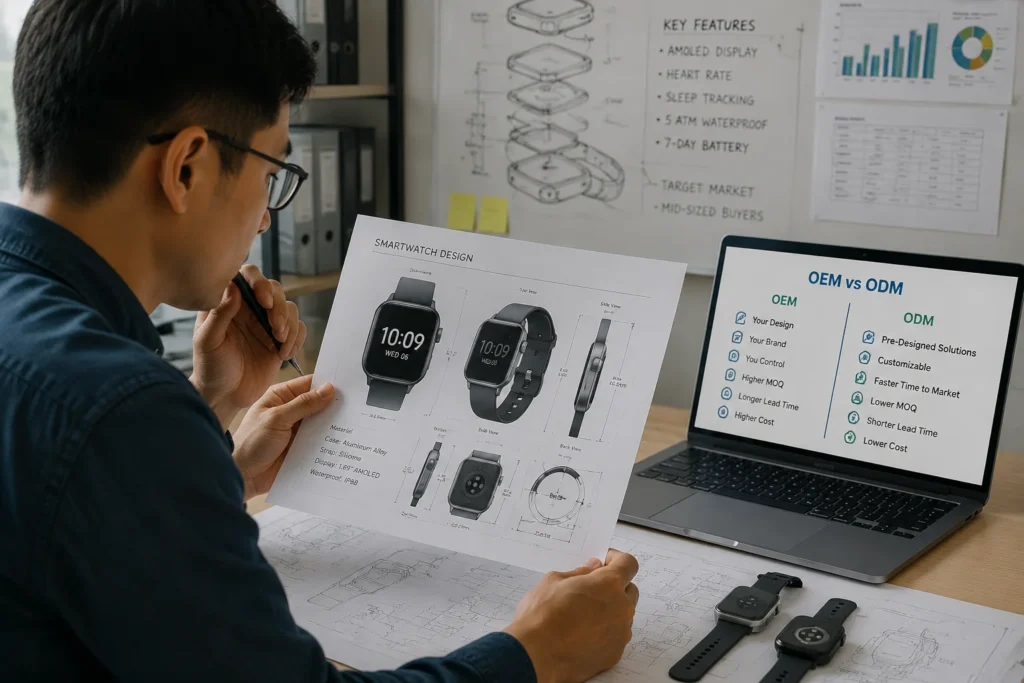
ODM means you choose a factory's existing design and add your brand. OEM means you provide the design, and the factory builds it for you. It's the difference between re-branding and co-creating.
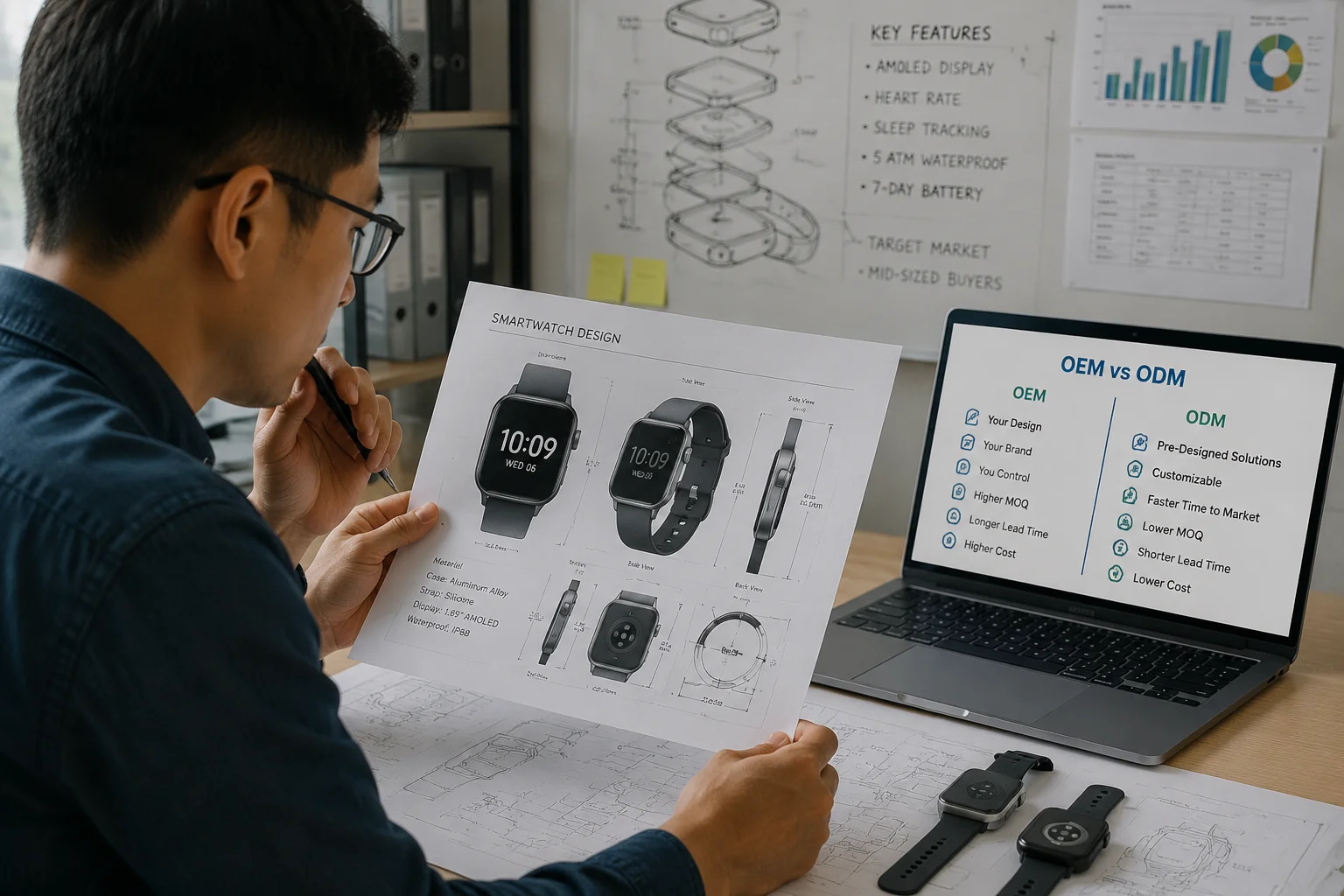
A question I get all the time from new importers is, "So, what's the real difference?" I like to explain it by comparing it to building a house. With ODM, it's like buying a house in a new development. The builder (the factory) has already created the floor plan and structure. You just get to choose the paint colors, maybe upgrade the kitchen, and put your name on the mailbox. It's fast, and you can move in quickly. In the smartwatch world, you pick a watch from our catalog, and we help you add your logo, custom packaging, and change some software features. With OEM, it's like hiring an architect to build a custom home from scratch. You provide the detailed blueprints (your product design and specs), and the factory is your construction crew. You have complete control, but it requires a massive investment of time, money, and your own expertise. It’s for established brands with a unique vision and the deep pockets to fund it.
What Are the Key Differences Between OEM and ODM Models?
Unsure about the real-world differences between OEM and ODM? This uncertainty can make you hesitant to place an order. Let's outline the practical distinctions that matter to you.
The key differences are in design ownership, upfront investment, and time to market. With ODM, the factory owns the design, investment is low, and speed is high. With OEM, you own the design, but investment and time are significant.
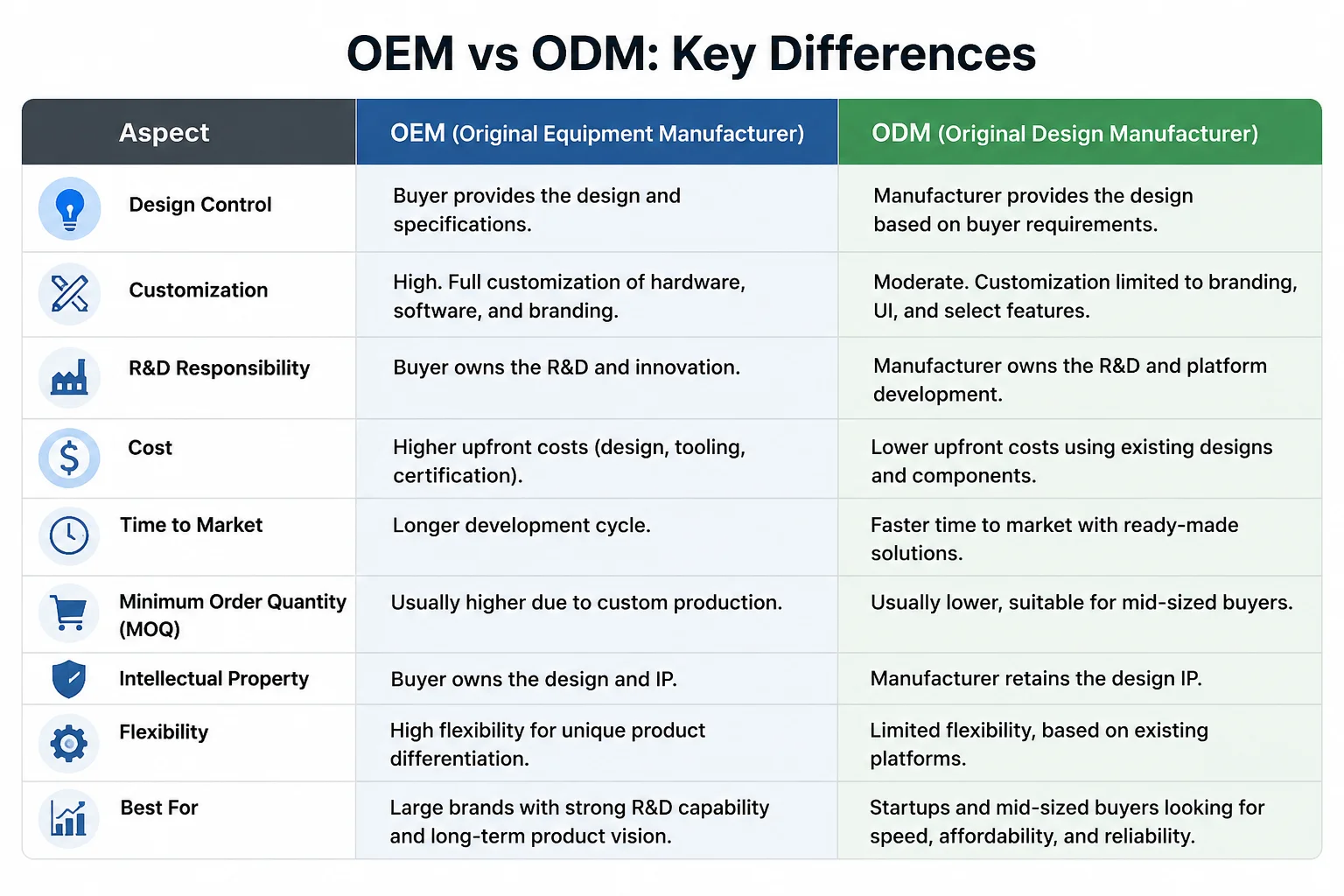
When a client is weighing their options, I don't just list definitions. I show them a table like this to make it real. It helps them see the trade-offs clearly. It’s not about which is "better," but which column fits their business today.
| Feature | ODM (Private Label) | OEM (Original Equipment) |
|---|---|---|
| Design Ownership | The factory owns the core design and tooling. | You (the buyer) own the design and tooling. |
| Upfront Costs | Low. No need to pay for R&D or new molds. | High. You fund R&D, tooling, and molds. |
| Time to Market | Fast. Usually 30-45 days.2 | Slow. Can be 6-12 months or more.3 |
| MOQ | Lower. Often starting from 500-1000 units.4 | Higher. Usually 3000+ units.5 |
| Customization | Limited. Logo, packaging, colors, software UI. | Extensive. Anything you can design and fund. |
| Your Involvement | Low. Mostly marketing and sales decisions. | High. Deep involvement in engineering and QC. |
This table usually clears things up fast. You can see it's a classic business choice: speed and low cost versus control and uniqueness. For most mid-sized businesses trying to grow, the choice on the left is the logical starting point.
What Are the Cost Implications for Mid-Sized Buyers?
Worried about the hidden costs of smartwatch production? A surprise bill for tooling or certification can ruin your profit margins. Let's look at the real costs involved.
ODM has a lower, predictable unit cost with minimal upfront investment. OEM requires a massive upfront payment for R&D and molds, often tens of thousands of dollars, before you even produce a single unit.
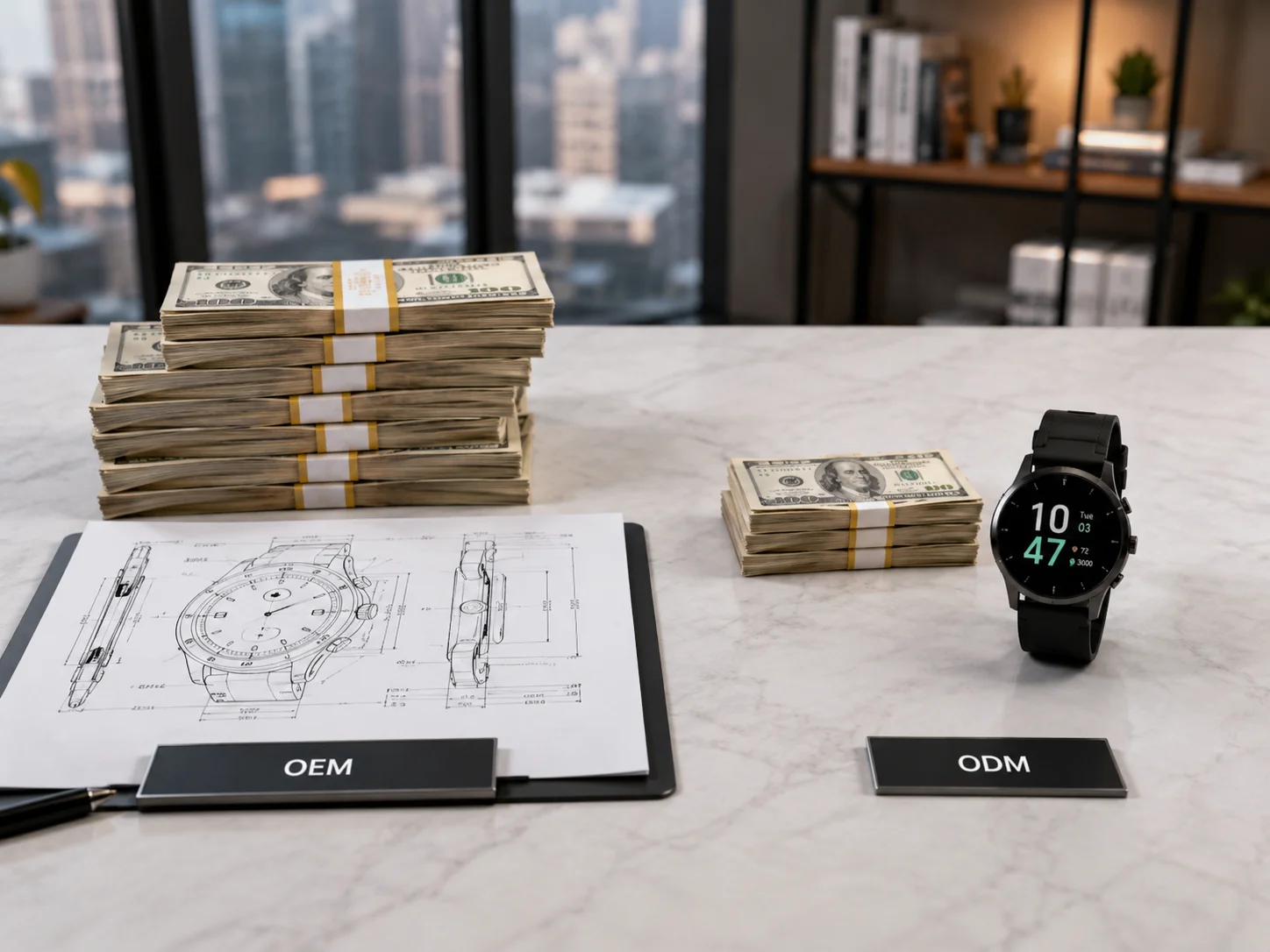
A mid-sized ecommerce seller from Germany called me last month. He said, "I have $50,000 to start my smartwatch line. Should I do OEM?" My answer was a firm "no." Here’s why. With OEM, that $50,000 could be gone before you even get to manufacturing.
The OEM Cost Trap
- Molds/Tooling: A unique watch case needs new molds. This alone can cost $10,000 to $30,000.6
- R&D: You're paying engineers to design the hardware and software. This adds up quickly.
- Certifications: A new product needs new FCC, CE, RoHS, etc., certifications under your name. This can be thousands of dollars.7
The ODM Advantage
With ODM, the factory has already paid for all of this. The molds exist. The R&D is done. The product is likely already certified. Your costs are much clearer:
- Unit Price: The price per watch.
- Customization Fees: Small fees for logo printing or custom packaging design.
- Samples: A small cost for samples. For a mid-sized buyer, putting your capital into inventory (ODM) is much safer than sinking it into non-refundable development costs (OEM).
What Are the Customization Options and Branding Opportunities?
Afraid an ODM watch won't feel like your own brand? You worry it will look generic and fail to stand out. Let's explore how to make an ODM product uniquely yours.
ODM offers more branding power than you think. You can customize the startup logo, watch faces, app, packaging, and user manual. This creates a cohesive brand experience far beyond just a logo on the watch.8
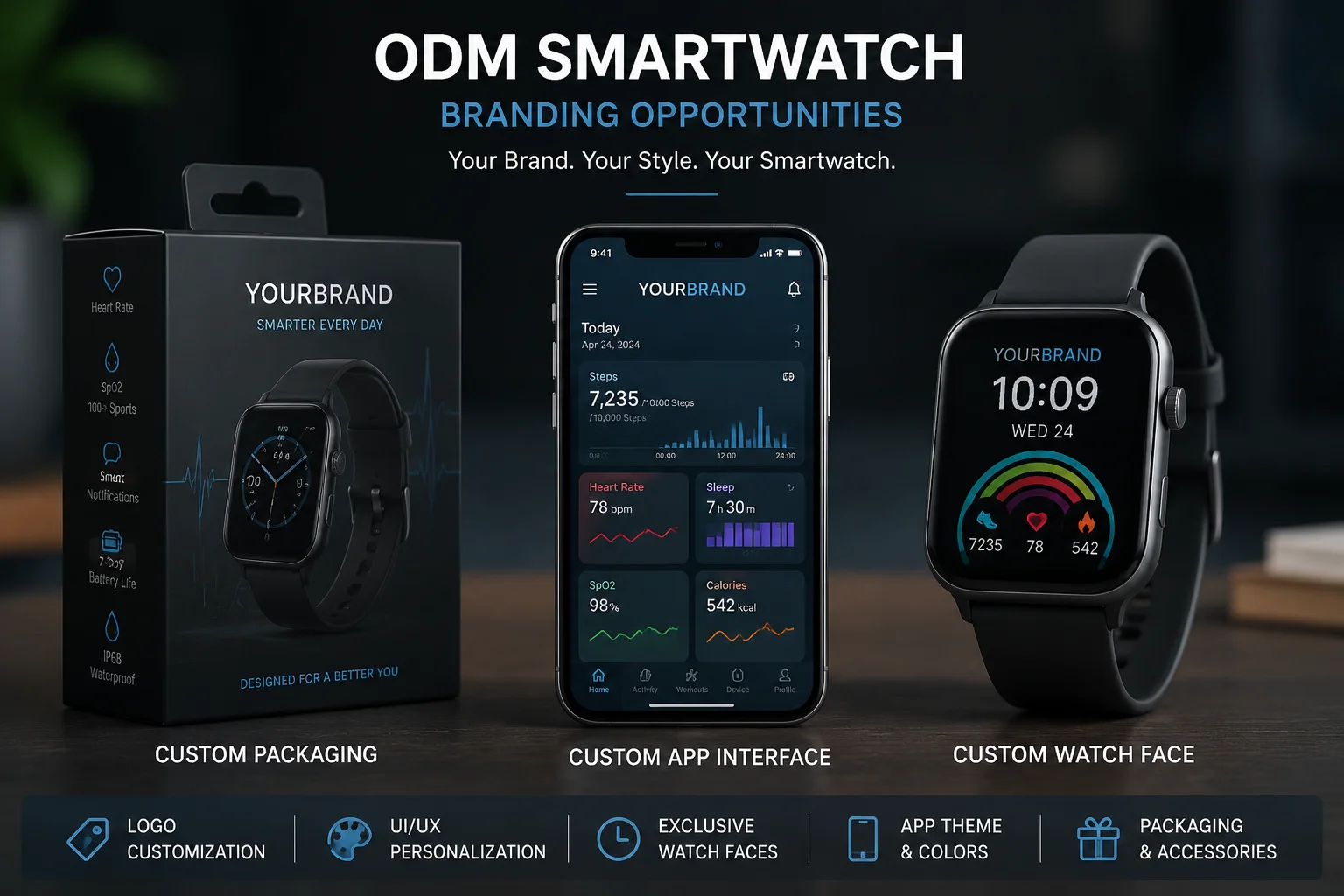
Many buyers think ODM just means stamping a logo on a generic product. They tell me, "I don't want to sell the same watch as my competitor." I get it. But a smart ODM strategy is about creating a unique experience, not just a unique piece of hardware. Here's what we can do with a standard ODM model to make it feel completely yours:
- On the Device: We can change the boot-up screen to show your logo. We can pre-load custom watch faces with your branding. We can even tweak the UI colors to match your brand guide.
- On the App: The companion app can be re-skinned with your logo, colors, and name. When your customer searches the app store, they are looking for your brand, not a generic one.
- On the Packaging: This is your best branding tool. A custom-designed box, insert, and manual makes the product feel premium and builds brand trust from the moment it's unboxed. OEM gives you hardware uniqueness, but ODM allows you to build a strong brand identity through software and presentation, which is often what the end consumer interacts with most.
How Do Production Lead Times and Scalability Compare?
Worried about missing a key sales season due to production delays? Waiting too long for inventory can mean lost revenue and momentum. Let's talk about getting products faster.
ODM is much faster, with typical lead times of 30-45 days for a repeat order. OEM projects can take 6-12 months just for development before mass production even begins. ODM scales faster initially.
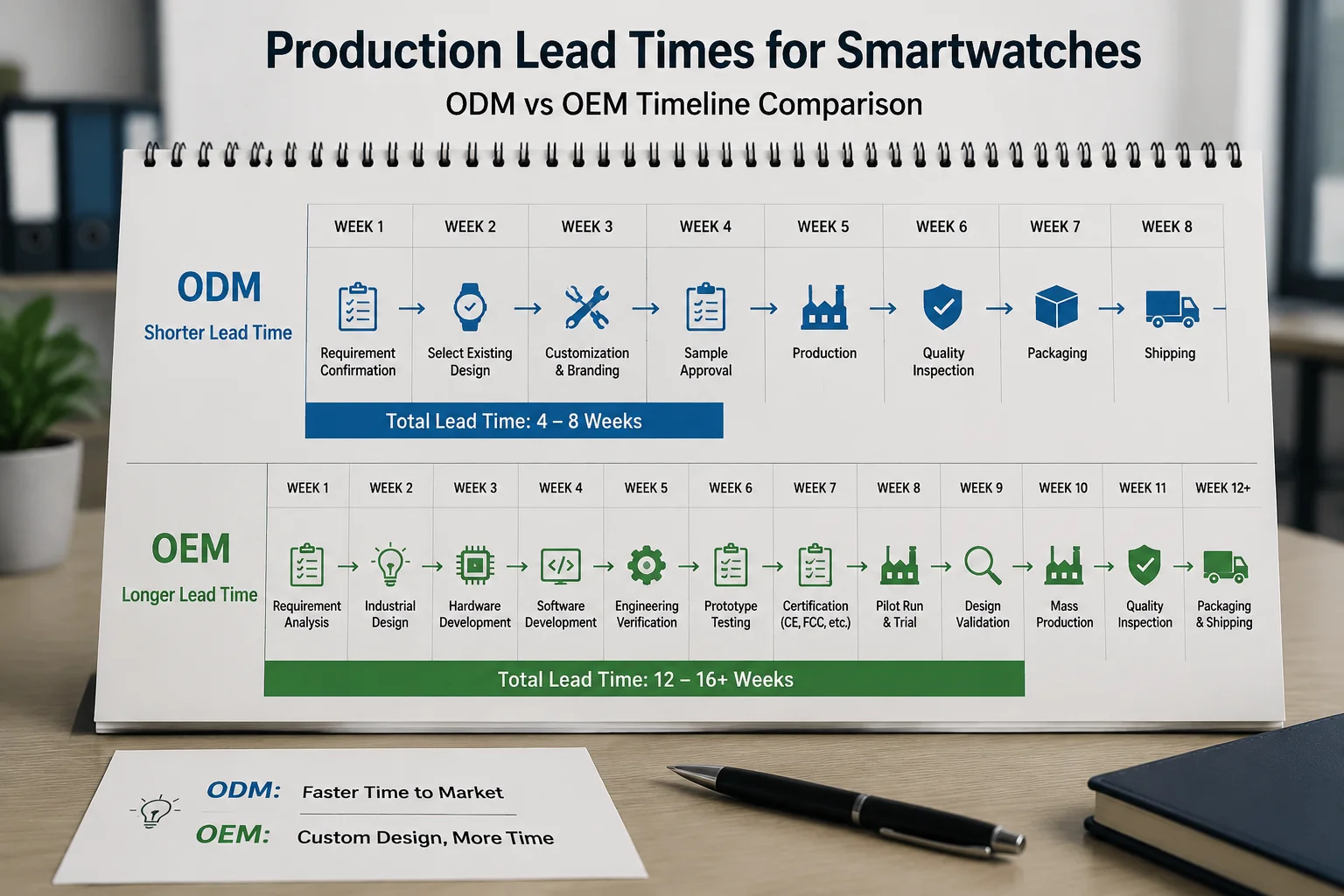
I had a client in the US who wanted a custom smartwatch for the Christmas season. He contacted me in September asking about OEM. I had to be honest with him: it was impossible. An OEM project started in September wouldn't be ready until the next summer. This is a critical point many buyers miss. The time-to-market is a huge factor.
ODM Timeline
- Sample Approval: 1-2 weeks.
- Mass Production: 4-6 weeks.
- Total Time: You can have products shipping in under two months.
OEM Timeline
- Design & R&D: 2-4 months.
- Tooling & Prototyping: 2-3 months.
- Testing & Certification: 1-2 months.
- Mass Production: 1-2 months.
- Total Time: Best case, 6 months. Realistically, longer. For scalability, ODM is great for testing the market and scaling up to tens of thousands of units. If you need to produce hundreds of thousands of a truly unique device, OEM eventually becomes more efficient. But for a mid-sized business, getting to market quickly with ODM is the key to growth.
What Are the Quality Assurance and Warranty Considerations?
Afraid of receiving a container of faulty products? Quality issues can destroy your brand's reputation and your profits. Let's discuss how to ensure quality and handle returns.
With ODM, you are using a proven product, which often means fewer quality issues.9 The factory provides a standard warranty. With OEM, you are co-developing a new product, so quality risks are higher and you are more involved in setting up the QC plan.
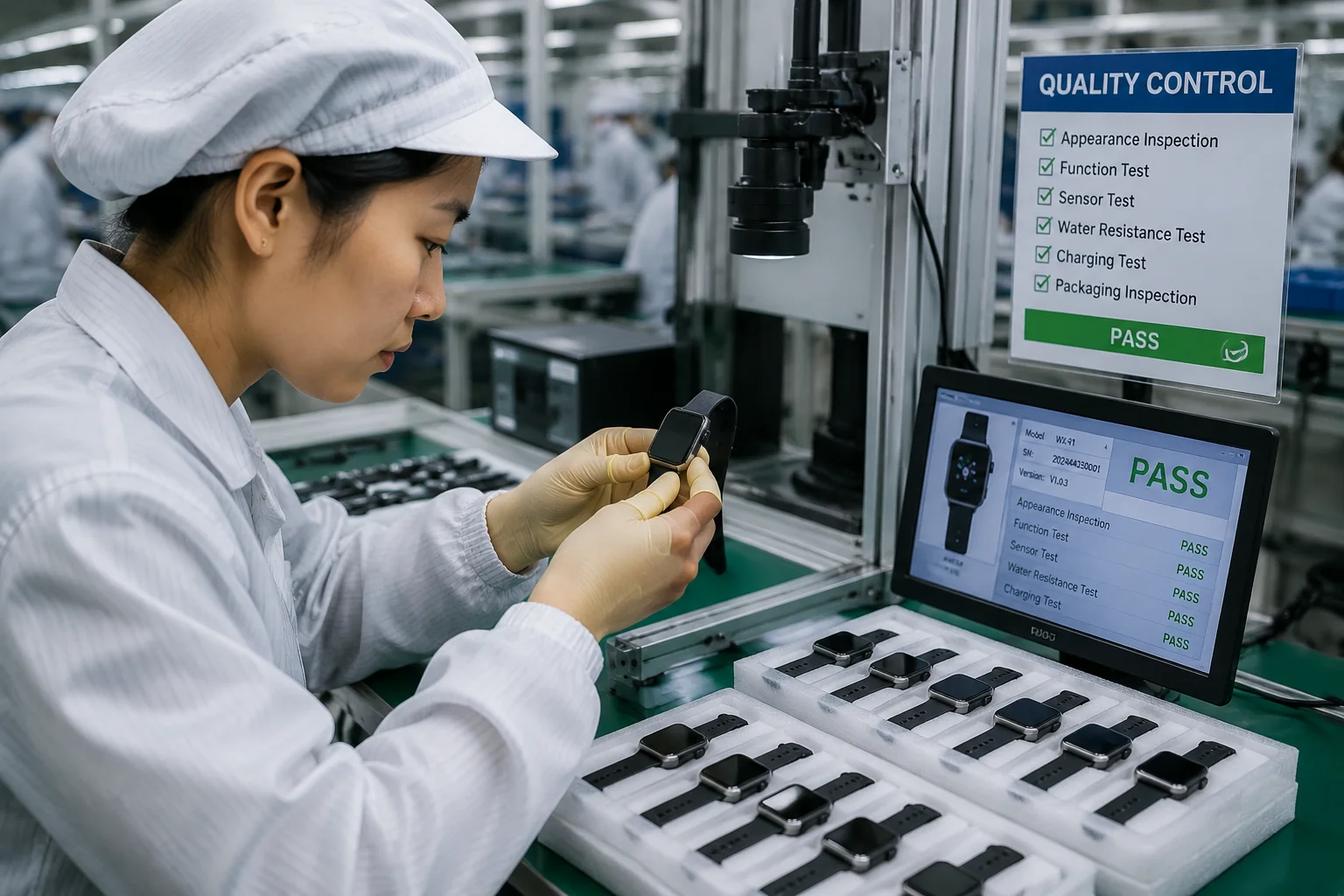
"Who is responsible if the watches have problems?" This is one of the most important questions a buyer can ask. The answer depends on the model you choose.
Quality & Warranty in ODM
Since you're choosing a mature product from a factory's catalog, the design has already been tested and produced many times.
- Proven Design: The kinks have been worked out. We know the common failure points and have processes to prevent them.
- Standard QC: We have a standard quality control process for that model. We check things like battery life, screen brightness, and sensor accuracy on the production line.
- Warranty: We typically offer a standard 1-year warranty. If there's a manufacturing defect, we are responsible for repair or replacement based on our agreed terms. It's straightforward.
Quality & Warranty in OEM
This is a brand-new product. Nobody has ever made it before.
- Shared Risk: Quality is a shared responsibility.10 If your specs are flawed, that's a design issue. If we fail to meet the specs, that's a manufacturing issue.
- Custom QC Plan: You need to be deeply involved in creating the Quality Control plan, defining every test.
- Complex Warranty: Warranty terms must be negotiated in detail. Who pays for returns if the issue is a design flaw you approved? It's much more complicated. For mid-sized buyers, the simpler, more predictable quality process of ODM is a huge advantage.
How Do I Choose the Right Partner for My Business Size?
Finding a supplier is easy, but finding the right partner is hard. Choosing the wrong factory can lead to communication nightmares and project failure. Let's find your perfect match.
Look for a partner who asks about your business, not just your order quantity. A good partner understands your goals, communicates clearly, and has experience working with buyers of your size on the model you choose.
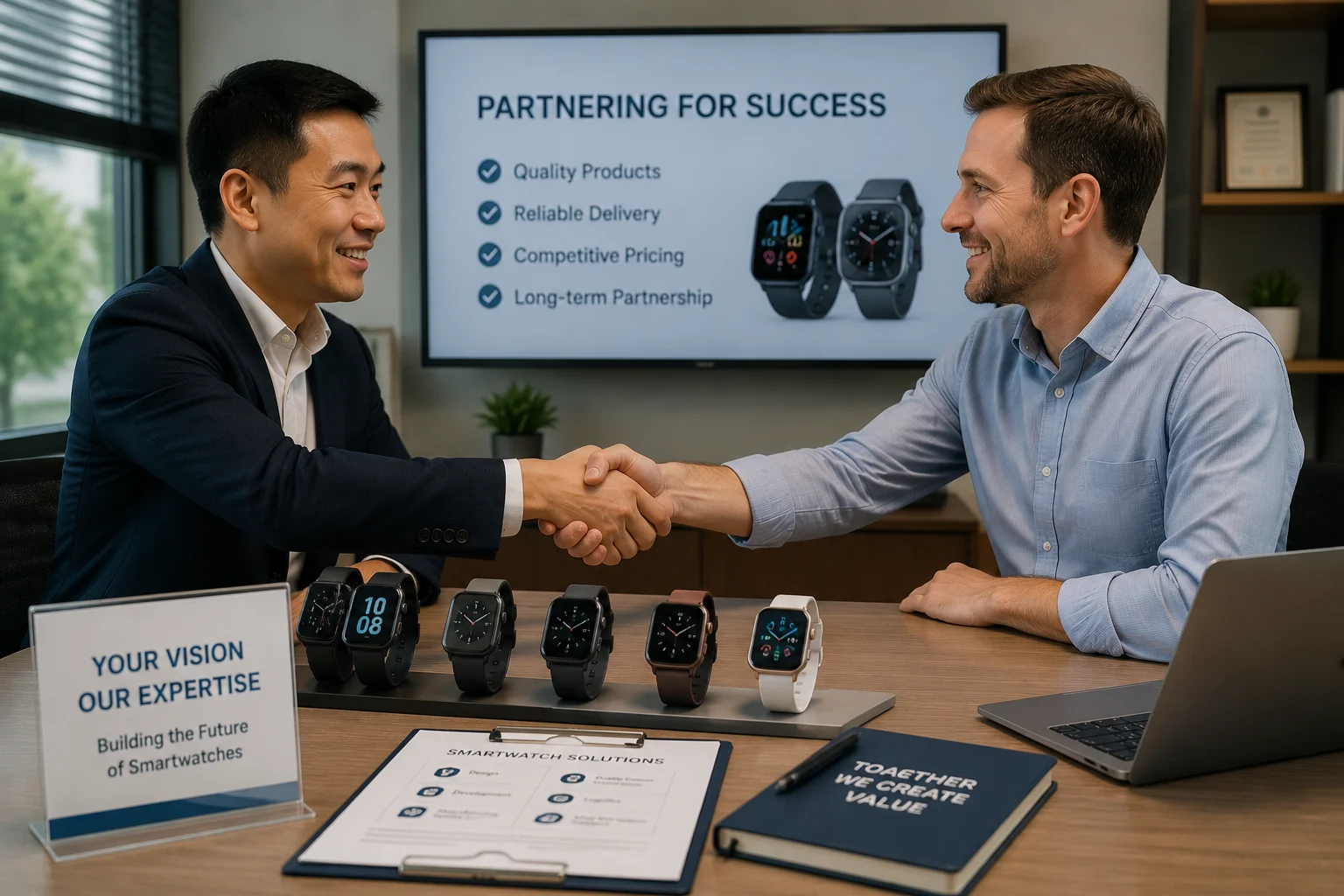
I've seen buyers get excited by a factory that claims to do "everything." But a factory that excels at OEM might be a poor choice for a small ODM order, and vice versa. Here's how I advise buyers to vet potential partners:
- Do they ask "why"? A good partner won't just give you a price for 1,000 units. They'll ask about your sales channels and your long-term goals. They want to help you succeed, not just make a single sale.
- Check their track record. Ask for case studies or examples of projects similar to yours. If you want to do an ODM project, ask to see other ODM projects they have completed for clients in your region.
- Evaluate their communication. Are they responsive? Is their English clear? Do they understand your questions? Communication is key, especially when you are thousands of miles away.
- Start small. Don't jump into a huge order. Start with a sample order, then a small trial order. This lets you test their quality, reliability, and communication before making a big commitment. Your goal is to find a supplier who feels like an extension of your own team.
What Are the Final Recommendations for Mid-Sized Buyers?
Feeling overwhelmed by all the choices? You need a clear, actionable recommendation to move forward with confidence. Here is my final, straightforward advice based on 15 years of experience.
For 9 out of 10 mid-sized buyers, I recommend starting with ODM.11 It's the fastest, safest, and most capital-efficient way to launch a smartwatch brand. Use it to test the market and generate cash flow.
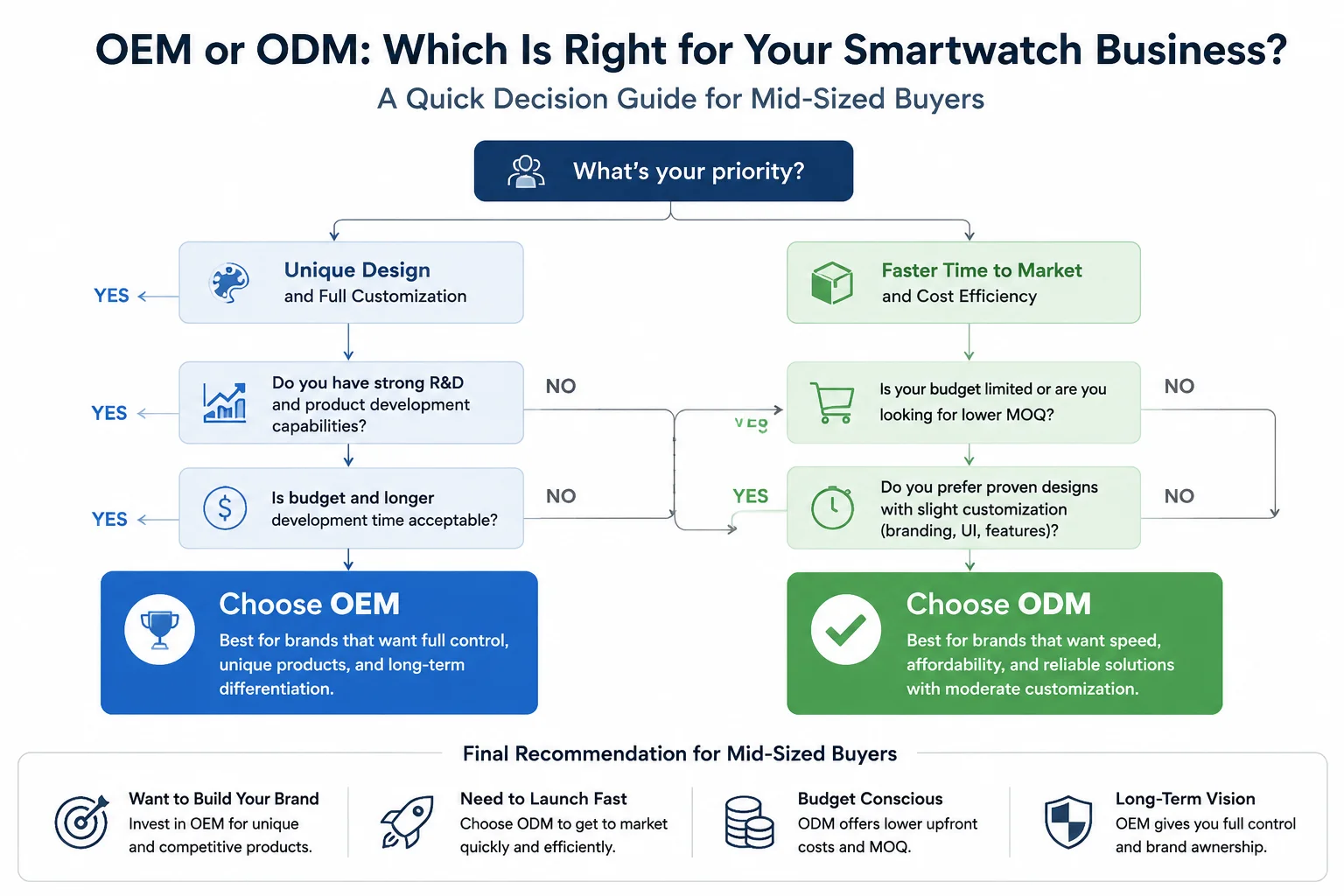
Let's put this all together into a simple decision framework. This isn't about which model is "best," but which risks you are ready to take. Ask yourself these questions:
- Do I have a technical team? If the answer is no, OEM is not for you. Stick with ODM, where the technical work is already done.
- What is my real first-order budget? If it's less than $50,000 for development plus inventory, OEM is too risky. Use ODM to put your money into products you can sell immediately.
- How important is unique hardware to my brand? Be honest. Can you build a strong brand with custom packaging, software, and marketing (ODM)? Or does your entire brand promise depend on a hardware feature that no one else has (OEM)? For most, the answer is the former. My advice is almost always the same: Start with ODM. Prove your concept. Learn your market. Build your brand identity. Once you have a successful business with strong sales, then you can consider using your profits to fund an OEM project. Walk before you run.
Conclusion
Choosing between OEM and ODM is a strategic business decision. Assess your resources and risks, and start with the model that gets you to market safely and quickly.
"ODM, OEM, CM – Type of Manufacturer You Should Pick for Your ...", https://www.komaspec.com/about-us/blog/odm-oem-cm-which-type-of-manufacturer-should-you-pick-for-your-project/. Industry analyses of electronics manufacturing often conclude that the ODM model provides a strategic advantage for small and medium-sized enterprises by minimizing upfront investment in R&D and tooling, thereby reducing financial risk and accelerating time-to-market. Evidence role: general_support; source type: research. Supports: The ODM model is often strategically advantageous for mid-sized companies due to lower capital requirements and faster market entry compared to OEM.. ↩
"Private label - Wikipedia", https://en.wikipedia.org/wiki/Private_label. Manufacturing guides and industry reports on ODM processes for consumer electronics typically place production lead times, especially for repeat orders, in the range of 4 to 8 weeks, depending on customization complexity and component availability. Evidence role: statistic; source type: other. Supports: The typical production lead time for ODM projects, from order confirmation to shipment.. Scope note: The exact timeframe can vary based on the specific product, factory capacity, and level of customization. ↩
"OEM in action: How does electronics manufacturing work? - AIUT", https://aiut.com/us/blog/oem-electronics-manufacturing/. Analyses of the New Product Introduction (NPI) process for OEM hardware show that the total time from concept to mass production often ranges from 6 to 18 months, encompassing stages like design, prototyping, tooling, testing, and certification. Evidence role: statistic; source type: education. Supports: The typical development and production timeline for a new OEM electronics project.. ↩
"Has anyone here built or manufactured a home energy ...", https://www.reddit.com/r/hwstartups/comments/1tge9ji/has_anyone_here_built_or_manufactured_a_home/. Sourcing and manufacturing industry data indicates that Minimum Order Quantities (MOQs) for ODM electronics, such as smartwatches, commonly start in the range of 500 to 2,000 units per order. Evidence role: statistic; source type: other. Supports: The typical Minimum Order Quantity (MOQ) range for ODM consumer electronics.. Scope note: MOQs are highly variable and depend on the factory, product complexity, and component costs. ↩
"What is a typical Minimum Order Quantity (MOQ) for low ... - Orbit", https://orbit-kb.mit.edu/hc/en-us/articles/360039224292-What-is-a-typical-Minimum-Order-Quantity-MOQ-for-low-volume-manufacturing-in-China. For OEM projects, which require dedicated production lines and custom tooling, manufacturers typically set higher Minimum Order Quantities (MOQs), often starting at 3,000 to 5,000 units, to amortize the setup and development costs. Evidence role: statistic; source type: other. Supports: The typical Minimum Order Quantity (MOQ) for OEM electronics projects.. ↩
"How to Estimate Injection Molding Cost? - Formlabs", https://formlabs.com/blog/injection-molding-cost/. Manufacturing industry cost models show that creating new steel injection molds for consumer electronics enclosures, such as a custom smartwatch case, can range from $5,000 for simple designs to over $50,000 for complex, multi-cavity molds, with a common range being $10,000 to $30,000. Evidence role: statistic; source type: other. Supports: The typical cost range for creating new injection molds for a product like a smartwatch casing.. Scope note: Costs are highly dependent on the complexity of the part, the material used, the type of steel for the mold, and the country of manufacture. ↩
"Equipment Authorization – RF Device | Federal Communications ...", https://www.fcc.gov/oet/ea/rfdevice. Compliance testing and certification for electronic devices is a significant cost. For example, FCC certification for a wireless device can cost several thousand dollars, and CE marking for the European market involves a similar investment in testing and documentation, with total compliance costs often exceeding several thousand dollars per product. Evidence role: statistic; source type: government. Supports: The typical costs associated with obtaining required electronic device certifications like FCC, CE, and RoHS.. ↩
"Electronic OEM Versus ODM: What are the Differences? - Anzer USA", https://www.anzer-usa.com/resources/electronic-oem-versus-odm/. The Original Design Manufacturing (ODM) model is defined by the practice of a buyer selecting a pre-existing product design from a manufacturer and customizing it. This customization commonly extends beyond physical branding to include software modifications (such as UI/UX and boot screens), companion app re-skinning, and unique packaging and manuals to create a distinct brand identity. Evidence role: definition; source type: encyclopedia. Supports: The ODM model typically includes options for customizing software, firmware, packaging, and accessories, not just applying a logo to the hardware.. ↩
"Learning curve - Wikipedia", https://en.wikipedia.org/wiki/Learning_curve. Manufacturing research supports the concept of the 'learning curve,' where production processes for a mature product become more refined over time, leading to fewer defects and higher reliability compared to a brand-new product (as in OEM), which carries higher risks of unforeseen design or manufacturing flaws. Evidence role: mechanism; source type: research. Supports: Products manufactured using existing, mature designs and processes tend to have higher initial quality and reliability.. Scope note: This is a general principle; the quality of a specific ODM product still depends heavily on the manufacturer's overall quality control systems. ↩
"Part 46 - Quality Assurance", https://www.acquisition.gov/far/part-46. Legal and business frameworks for Original Equipment Manufacturing (OEM) agreements typically establish a shared responsibility for quality. The buyer is generally responsible for defects arising from the design specifications they provided, while the manufacturer is responsible for defects resulting from failures to adhere to those specifications during production. Evidence role: general_support; source type: other. Supports: OEM agreements typically delineate responsibility, with the buyer liable for design-related flaws and the manufacturer liable for deviations from the approved specifications.. Scope note: The exact allocation of liability is subject to the specific terms negotiated in the manufacturing contract. ↩
"E-Procurement", https://sloanreview.mit.edu/article/eprocurement/. Market analysis and industry surveys indicate that a substantial majority of small and medium-sized enterprises entering the consumer electronics space leverage the ODM model to reduce initial capital expenditure and market entry risk, rather than pursuing more resource-intensive OEM projects. Evidence role: general_support; source type: research. Supports: A large majority of new entrants and mid-sized businesses in the consumer electronics market utilize the ODM model.. Scope note: While supporting the general trend, a source is unlikely to confirm the exact '9 out of 10' figure, which is presented as an anecdotal summary. ↩