Struggling to enter the booming wearable market1? The process seems complex and risky. Here’s a guide from my 15 years of experience to help you launch your smartwatch brand successfully.
To launch a private label smartwatch line, importers must first define a target market. Then, select relevant features, prepare branding materials like logos and packaging, and thoroughly test samples for quality, especially battery life and app stability. Finally, confirm all necessary certifications and plan logistics like MOQ and shipping.
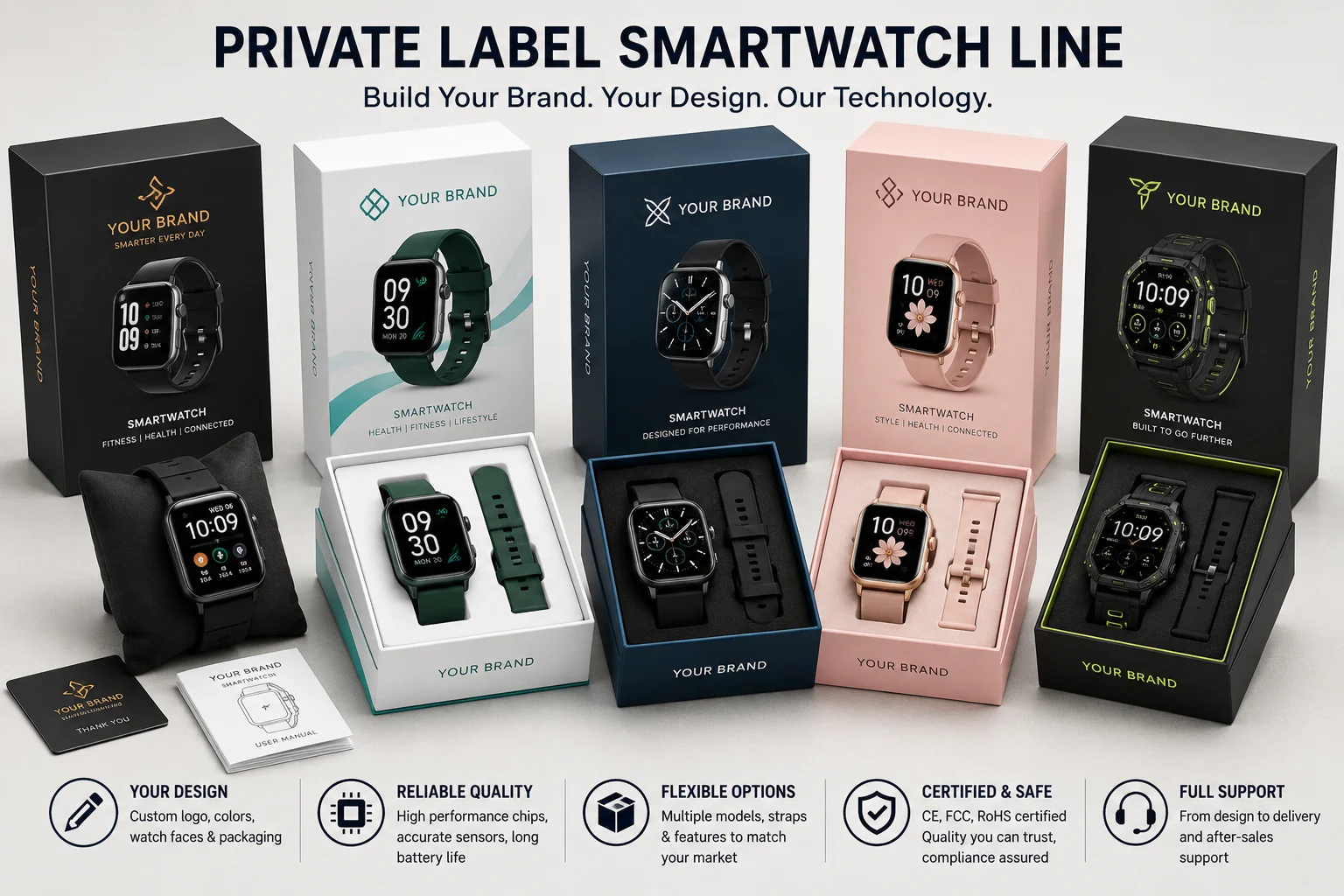
This might seem like a lot to handle. But don't worry. I talk to importers like you every day, and I've helped hundreds of them navigate this process. We can break it down into simple, manageable steps. By the end of this guide, you will have a clear roadmap. Let's walk through it together, starting with why this is such a great opportunity in the first place.
Why are Private Label Smartwatches a Good Entry Point for Importers?
Struggling to find a new product with high demand and good margins? The wearable market seems competitive. But private labeling gives you a special advantage to get in.
Private label smartwatches offer a great balance between brand customization and low startup costs. You can build your own brand identity without the massive investment of developing a product from scratch, making it an ideal entry point.
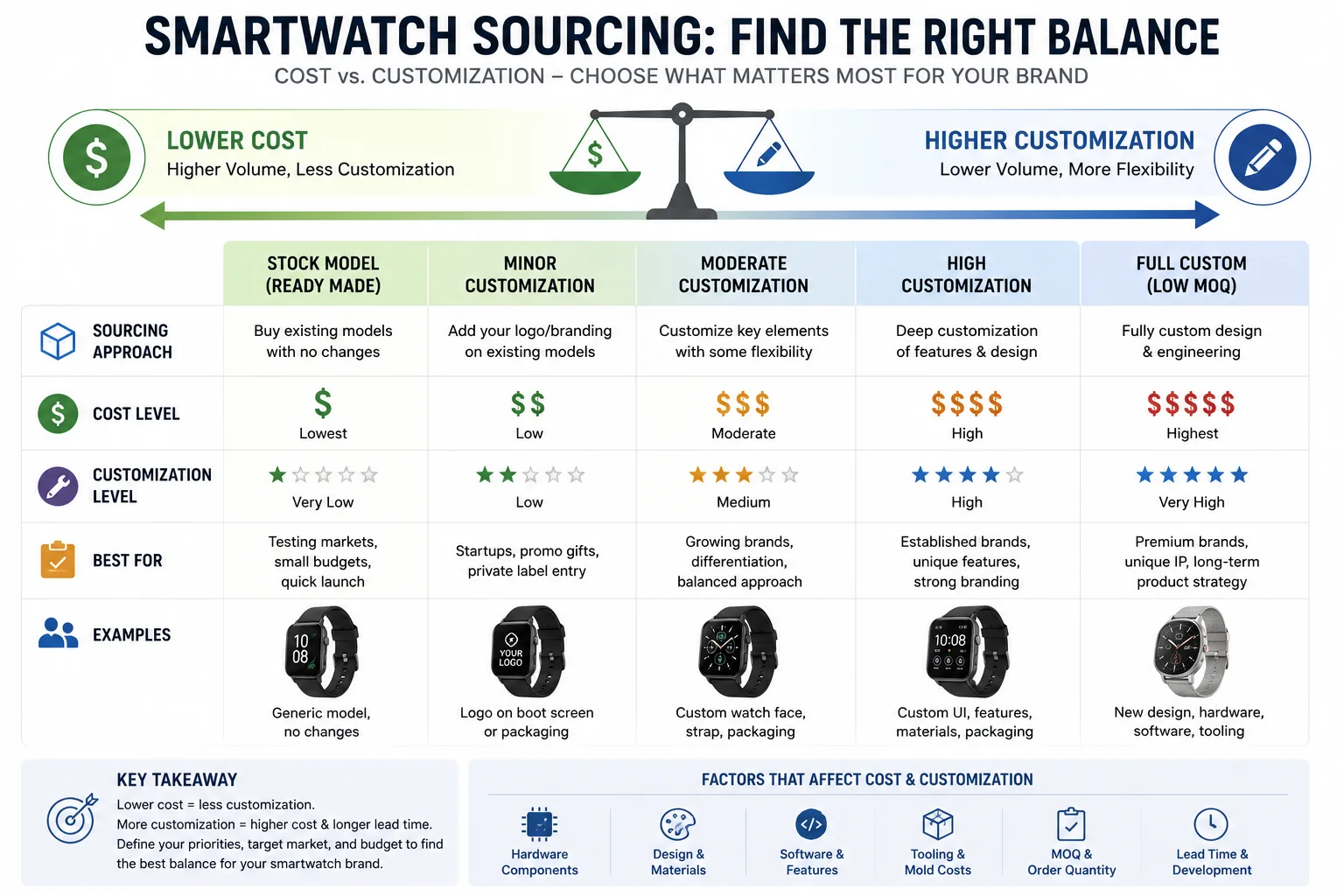
In my 15 years in this business, I've seen many importers face the same choice: wholesale, private label, or full OEM? I always tell them to think about it in terms of risk. Wholesale is the lowest risk. You buy existing products with low MOQs to test the market. But you can't build a brand. Full OEM (Original Equipment Manufacturer) is the highest risk. You co-develop a unique product, which requires huge investment and technical knowledge.
Private label sits perfectly in the middle.2 You select a proven, factory-tested smartwatch model and make it your own. You're not spending money on R&D or tooling for the hardware. Instead, you invest in what matters most for a new brand: marketing and customer experience. Many of my most successful clients started this way. They validated demand with a small wholesale order, then moved to private label to increase their margins and build a loyal customer base. It's a smart, natural progression.
How do you Define Your Target Market Before Choosing a Model?
You see a cool smartwatch and want to sell it. But will your customers actually buy it? Selling a product without a clear audience is a recipe for disaster.
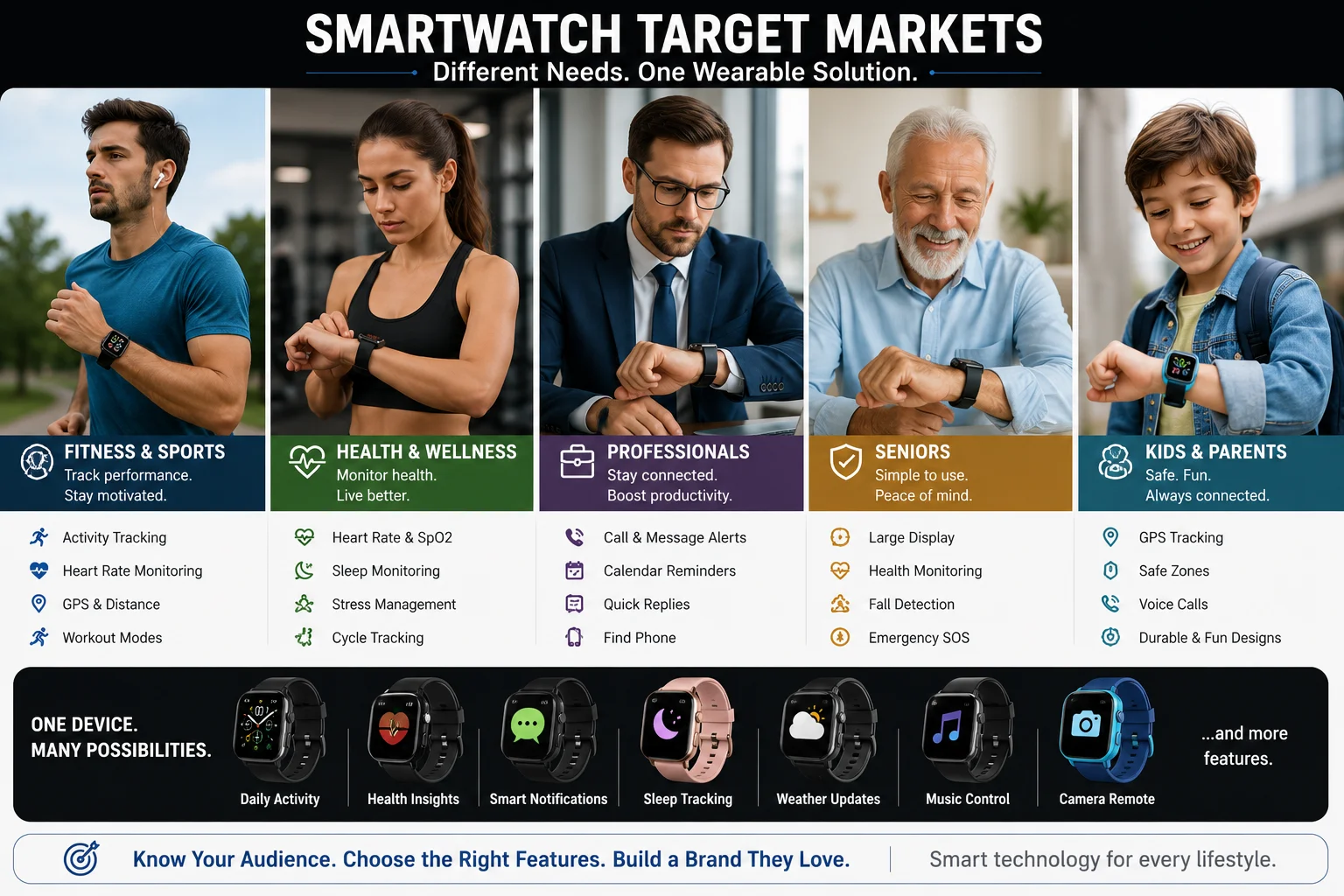
First, you must decide exactly who you are selling to. Are they fitness enthusiasts, busy professionals, older adults, or kids? Your target audience directly determines the features, style, and price of the smartwatch you need to source.
A common mistake I see is importers falling in love with a product's features without thinking about the customer. A client once wanted to order a high-end watch with every feature imaginable. I asked him, "Who is your customer?" He told me they were discount store shoppers. We both realized that his customers wouldn't pay a premium for those advanced features. We switched to a simpler, more affordable model focused on notifications and step counting. It sold out in a month.
Knowing your customer is everything. Before you even look at a catalog, you should be able to answer these questions. This will make your sourcing process much faster and more effective.
| Target Market | Key Features to Look For | Ideal Price Point |
|---|---|---|
| Fitness Buffs | GPS, advanced heart rate, blood oxygen, multiple sport modes | Mid-Range to Premium |
| Busy Professionals | Long battery life, clear notifications, Bluetooth calling, sleek design | Premium |
| Seniors / Health | Fall detection, SOS button, large font, heart rate/BP monitoring3 | Value-Priced |
| Kids | GPS tracking, two-way calling, durable design, simple games | Budget-Friendly |
How do you Choose the Right Smartwatch Features and Specifications?
Are you feeling overwhelmed by spec sheets filled with endless technical terms? Choosing the wrong features means you pay for things your customers don't need, which hurts your profit margin.
Focus on the core specifications that your target market truly values. Prioritize the screen type, real-world battery life, water resistance level, and sensor accuracy. A solid foundation is much more important than a long list of gimmicky features.
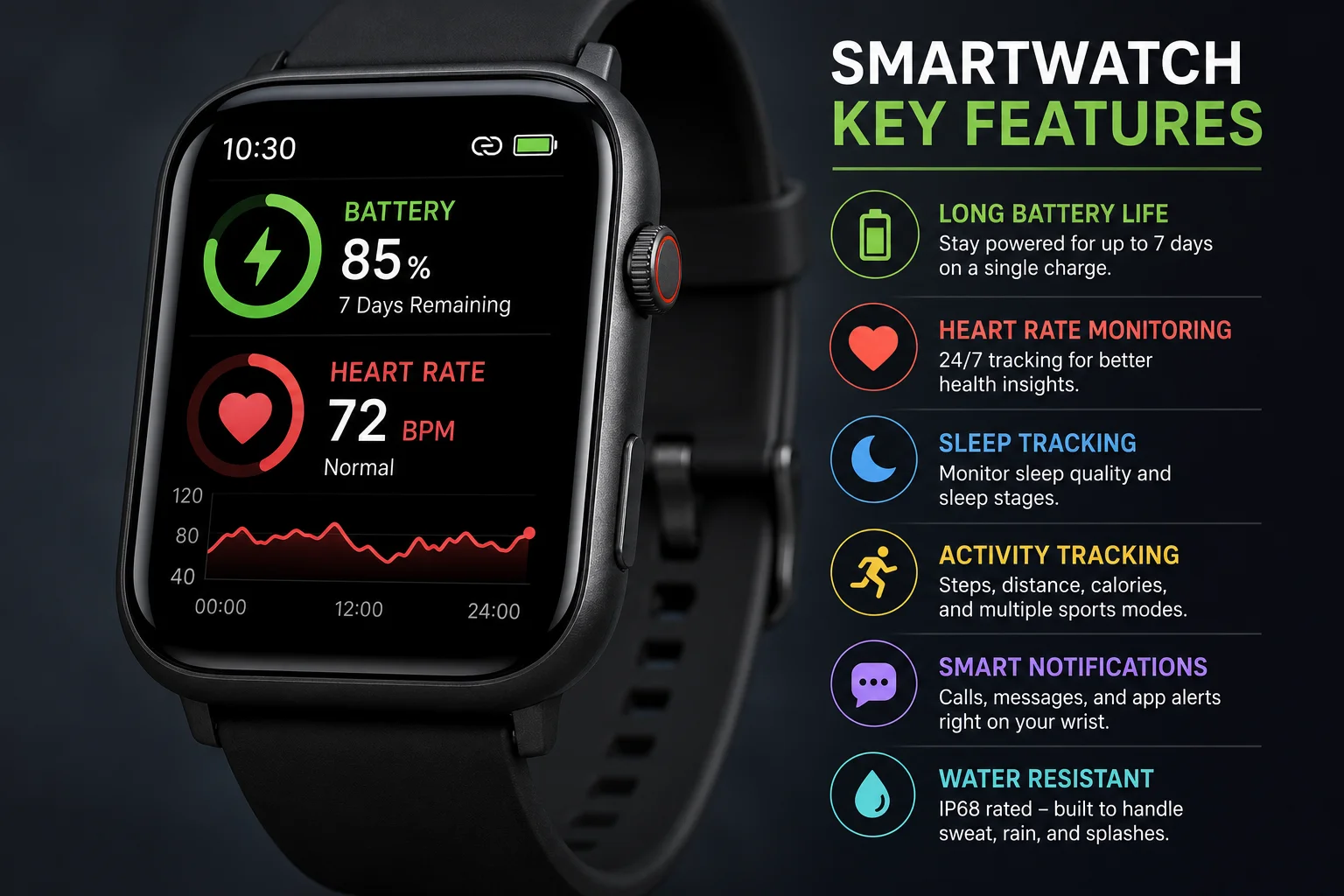
When clients ask me to help them choose a model, we don't start with the bells and whistles. We start with the basics that create a good user experience.
Screen Technology
You'll mostly see two types: AMOLED and IPS. AMOLED screens have brighter colors and deeper blacks but cost more. IPS screens are very good and more budget-friendly. For a premium watch, an AMOLED screen adds a "wow" factor. For a budget or kids' watch, a good IPS screen is perfectly fine.
Battery Life
This is one of the biggest selling points. Don't just look at the "standby time" on the spec sheet. Ask the supplier for the "typical usage" battery life. This means with notifications, heart rate monitoring, and some activity. A watch that lasts 5-7 days with normal use is a great target.4 Anything less than 2-3 days can lead to customer complaints.
Water Resistance
You'll see IP ratings like IP67 and IP68. IP67 means it can be submerged in 1 meter of water for 30 minutes.5 IP68 is for 1.5 meters. For most users, either is fine for rain and sweat. If your audience includes swimmers, you need a watch with a 5ATM rating, which is specifically designed for swimming.
How Should You Prepare Your Logo, Watch Faces, Packaging, and User Manual?
A great product can easily fail with poor branding. Your logo and packaging are the first things a customer sees. An unprofessional look can destroy their trust before they even use the watch.
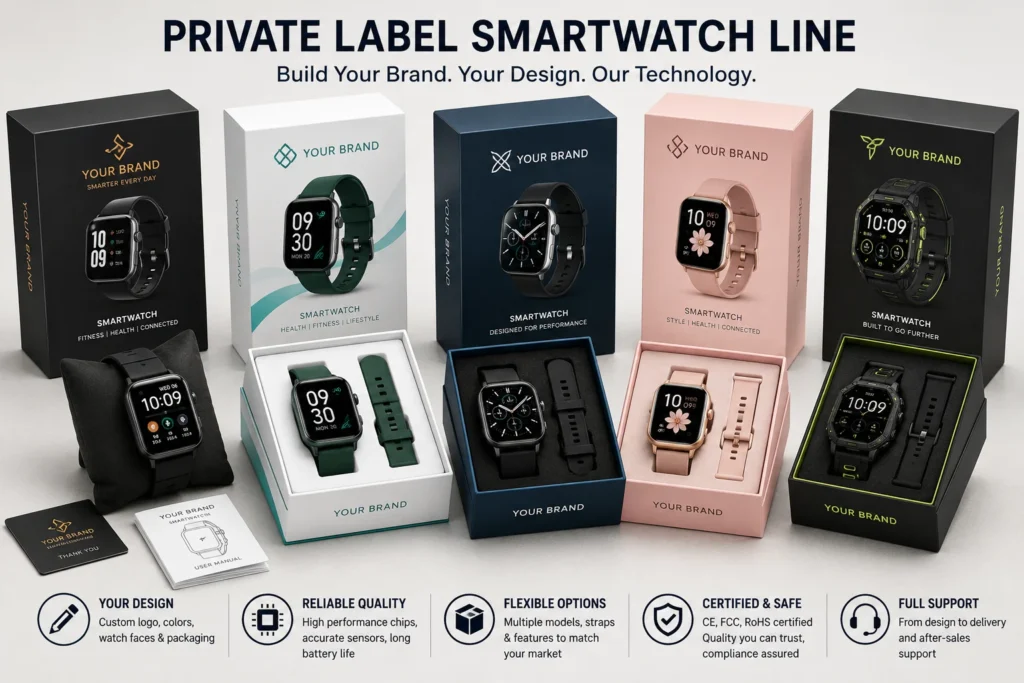
Your brand identity is what sets your product apart from the competition. You need to prepare a high-resolution logo file. For private label, you can often customize watch faces, the startup screen, the packaging, and the user manual. These details create a premium brand experience.
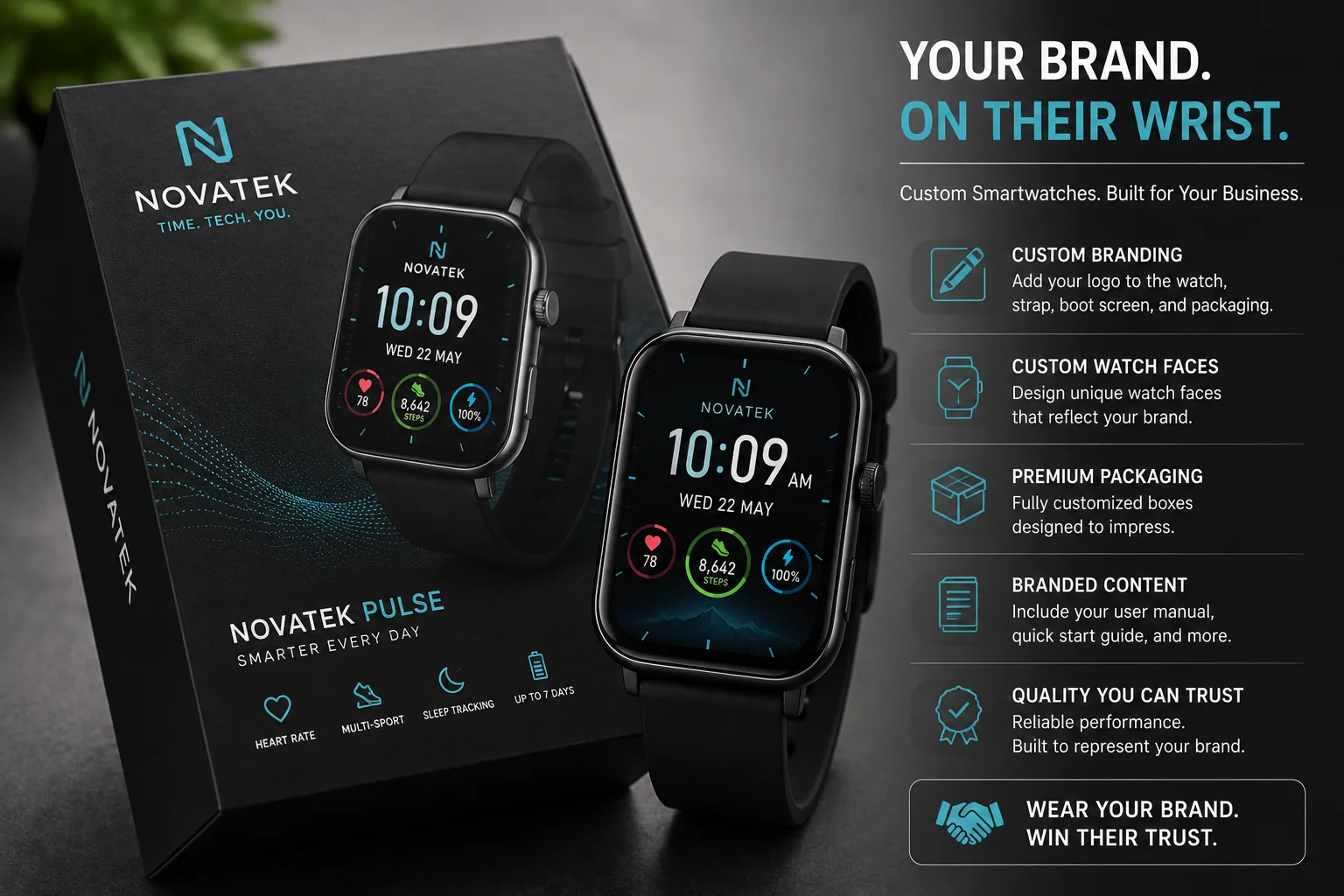
This is where you turn a generic product into your product. It's the most important part of the private label process. From my experience, importers who pay attention to these details see much lower return rates and better reviews.
Logo and Startup Screen
Provide your supplier with a high-resolution vector file of your logo (usually an .AI or .EPS file). Ask them to print it on the product itself (if possible) and, more importantly, to program it into the startup screen. When the user turns on the watch for the first time, seeing your logo makes a huge impact.
Packaging is Everything
Never use the factory's generic white box. Your package is your silent salesperson6 on a retail shelf and the first physical impression for an e-commerce customer. A well-designed, sturdy box makes the product feel more valuable. It doesn't have to be expensive, just thoughtful.
A Clear User Manual
Most factory manuals are poorly translated and confusing. This leads to frustrated customers and bad reviews. Write your own simple, clear user manual in perfect English (or your target market's language). It will save you countless hours of customer support later.
Why Must You Check Samples, Battery Life, App Stability, and Sensor Accuracy?
You found a supplier and the product pictures look amazing. But what if the real product feels cheap or doesn't work well? Skipping the sample testing step is a massive, and surprisingly common, financial risk.
You must always order and test samples yourself before placing a bulk order. Pay very close attention to three things: real-world battery life, the stability of the companion smartphone app, and the accuracy of the health sensors.
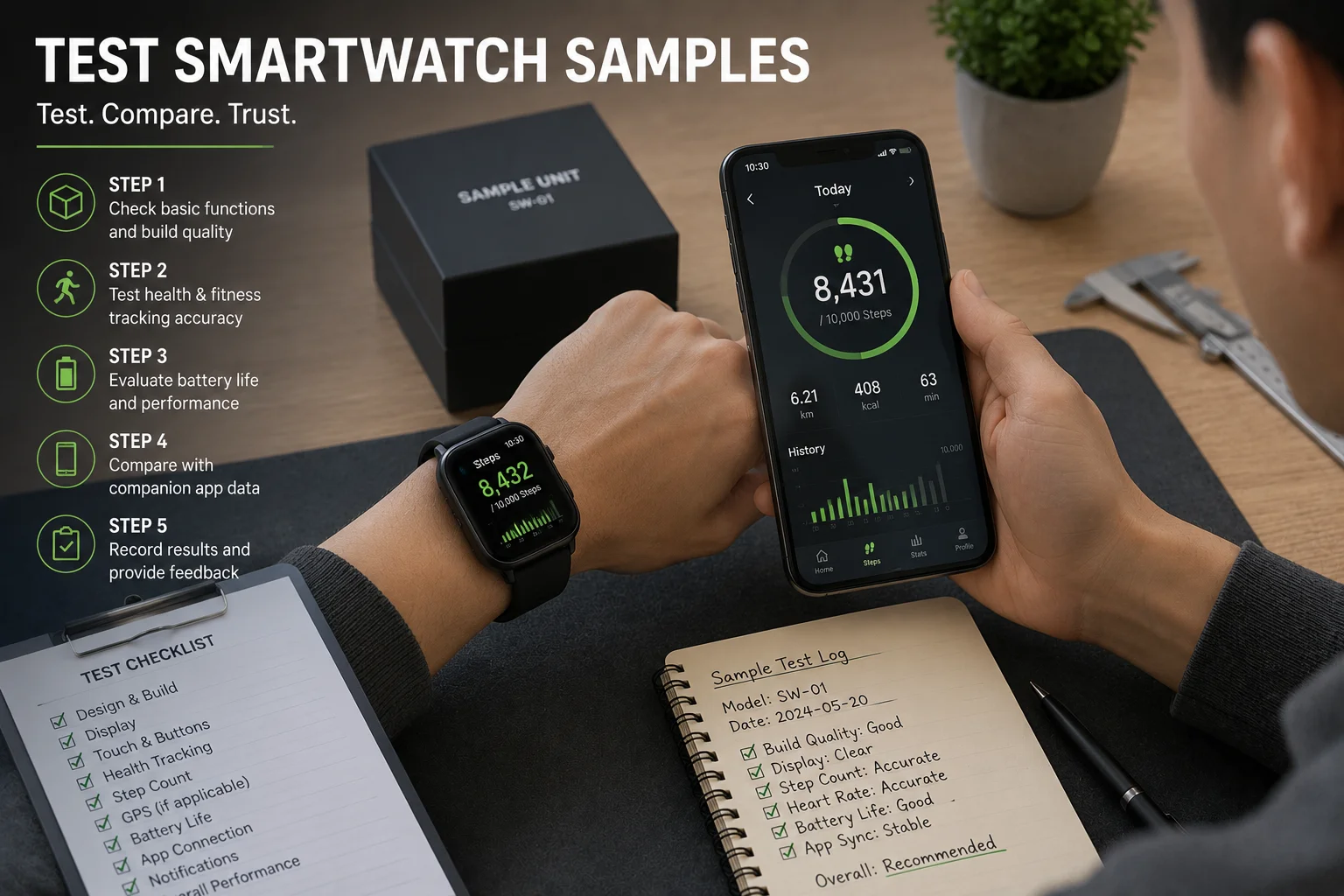
I can't stress this enough. The sample you approve is what the factory will aim to produce for your bulk order. If the sample is bad, your whole inventory will be bad. When my clients get samples, I give them a simple checklist.
Real-World Battery Test
Charge the watch to 100%. Connect it to your phone, turn on notifications and 24/7 heart rate monitoring. Use it like a normal customer would. Don't just let it sit on a table. How many days does it actually last? If the supplier promised 7 days and it only lasts 2, you have a problem.
The App is Half the Product
A smartwatch is useless without a good app. Download the app and use it for a few days. Does it connect easily? Does it crash? Are the menus logical? Is the English translation good? I've seen more new wearable brands fail because of a bad app than a bad watch.7
Sensor Accuracy Check
The sensors don't need to be medical-grade, but they need to be believable.8 Walk 100 steps and see what the watch counts. Compare the heart rate reading to another device you trust. If the numbers are wildly inaccurate, customers will not trust your product.
How do you Confirm Certifications, Compliance, and Import Requirements?
Imagine this: your first container of 1,000 smartwatches has just arrived at the port. But it gets stopped by customs for missing paperwork. This nightmare scenario can cost you thousands in fines and delays.
Before you even pay a deposit, you must ensure your supplier can provide all the necessary certifications for your target market. This includes CE for Europe and FCC for the US9. Also ask for RoHS compliance and battery transport safety reports like UN38.310.
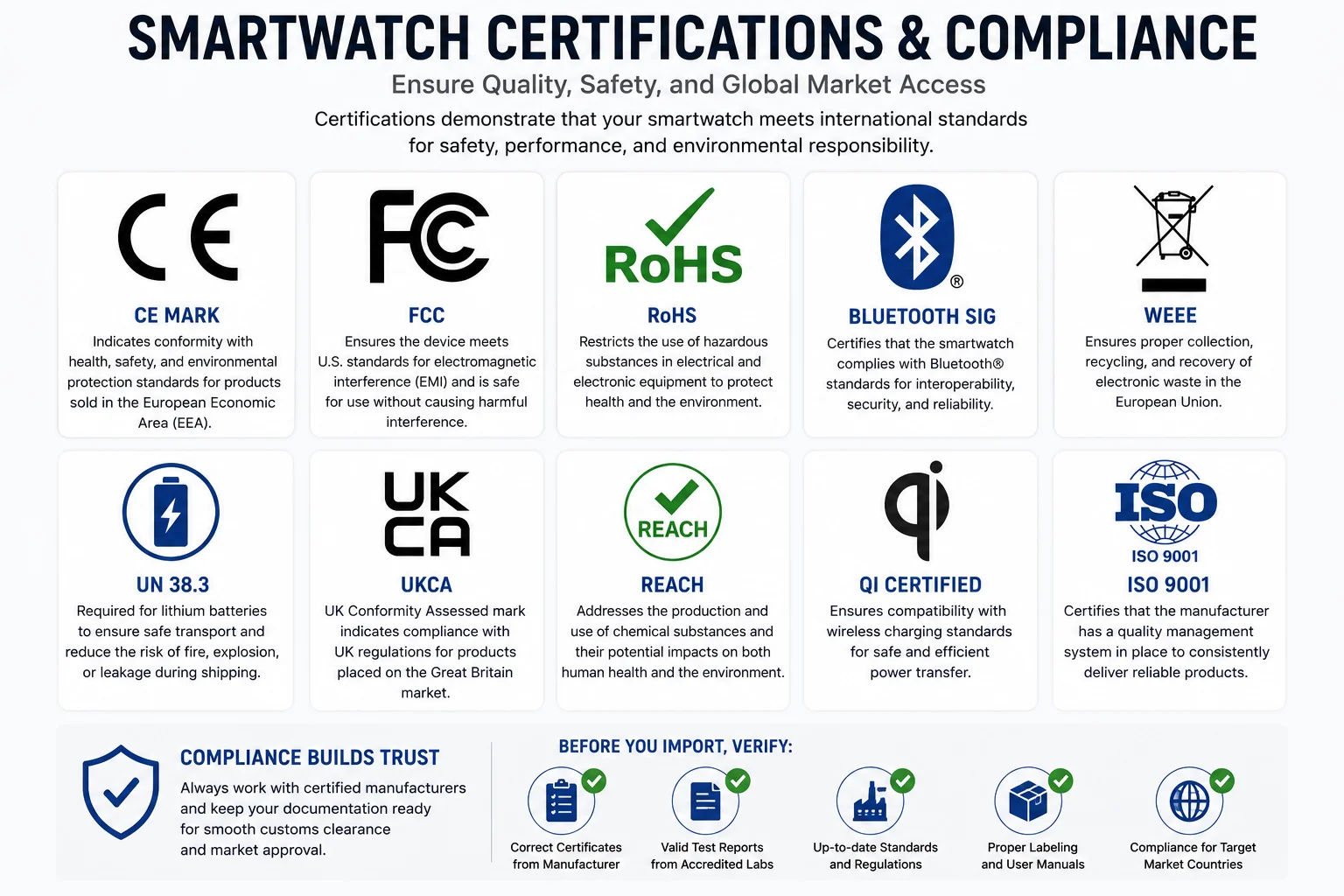
As an exporter with 15 years of experience, this is an area where I see many new importers get into trouble. They assume the factory has everything handled. You must be proactive. A good supplier will have these documents ready and will not hesitate to send them to you. If they seem unsure or make excuses, it is a huge red flag.
Here is a quick reference table I share with my clients:
| Certification | Region | What it Covers | Why It's Important |
|---|---|---|---|
| CE | European Union | Safety, health, and environmental standards. | Mandatory for selling products in the EU. |
| FCC | United States | Regulates radio frequency from electronic devices. | Mandatory for any wireless device sold in the US. |
| RoHS | EU, California, etc. | Restricts hazardous materials like lead and mercury. | Protects consumers and the environment. |
| UKCA | United Kingdom | The post-Brexit version of the CE mark for Great Britain. | Required for selling in England, Scotland, and Wales. |
| UN38.3 | International | Safety testing for lithium batteries during shipping. | Required by all airlines and shipping companies. |
My advice is simple: don't just take their word for it. Ask for the actual certificate files. Check the dates and the company name. Doing this simple check can save you from a potential disaster at customs.
What Should You Plan for MOQ, Lead Time, Shipping, and After-Sales Support?
You have chosen the perfect product and checked the quality. Now you need to handle the business side. Miscalculating these numbers can destroy your profit margin before you even sell a single unit.
Discuss the Minimum Order Quantity (MOQ) and confirm the production lead time. Plan your shipping method—air versus sea—to balance speed and cost. Most importantly, agree on a clear after-sales support and warranty policy in writing.
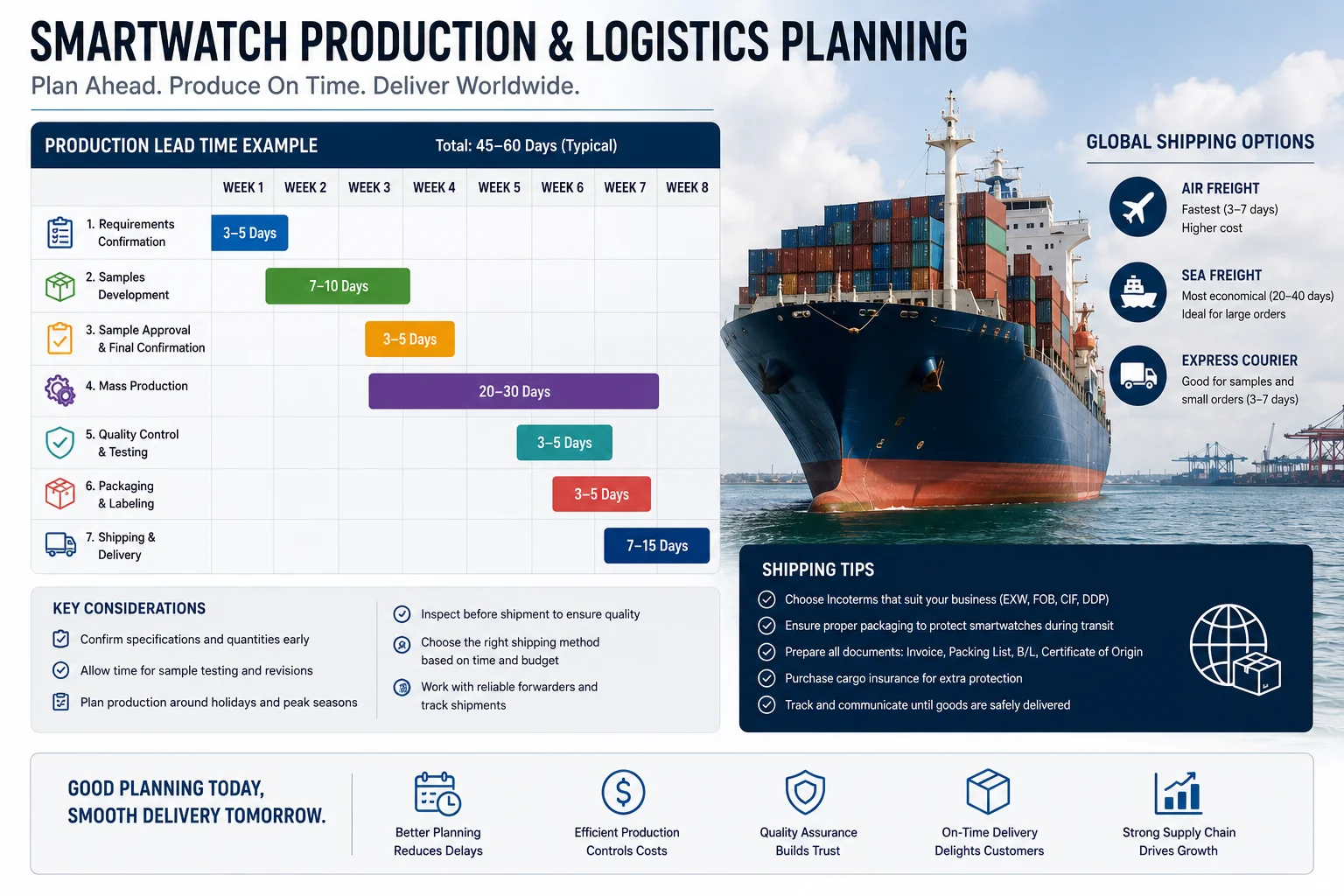
These are the core terms of your purchase order. Let's break down what you need to confirm with your supplier.
MOQ (Minimum Order Quantity)
For most private label smartwatches, the MOQ is typically between 500 and 1,000 units11. This is the smallest quantity the factory will produce with your custom branding. This number is the biggest factor in your initial budget. Sometimes, you can negotiate a slightly lower MOQ for a trial order.
Production Lead Time
This is the time from when you pay your deposit until the goods are ready to ship. It's usually between 25 and 45 days. You need to add shipping time on top of this. Always factor this timeline into your marketing and launch plans.
Shipping and Costs
You have two main options: air freight or sea freight. Air freight is fast (about 7-10 days) but very expensive. It's good for small, high-value orders or your first test batch. Sea freight is much cheaper but slow (about 30-40 days to the US or Europe). This is the best option for restocking inventory.
After-Sales and Warranty
What happens if some units are defective? Agree on a warranty period (usually 1 year) and a clear policy. For example, many factories will offer to replace defective units on your next order. Get this policy in writing to avoid disagreements later.
What is the Final Advice: Test Small Before Scaling Your Wearable Brand?
You are excited and ready to go. You want to order 5,000 units to get a better price. But what if the market doesn't respond as you hoped? A huge first order is a huge risk.
My most important piece of advice is to start small.12 Place an order close to the factory's MOQ to test your product and marketing. Gather real customer feedback and confirm sales before you invest heavily in a large inventory.
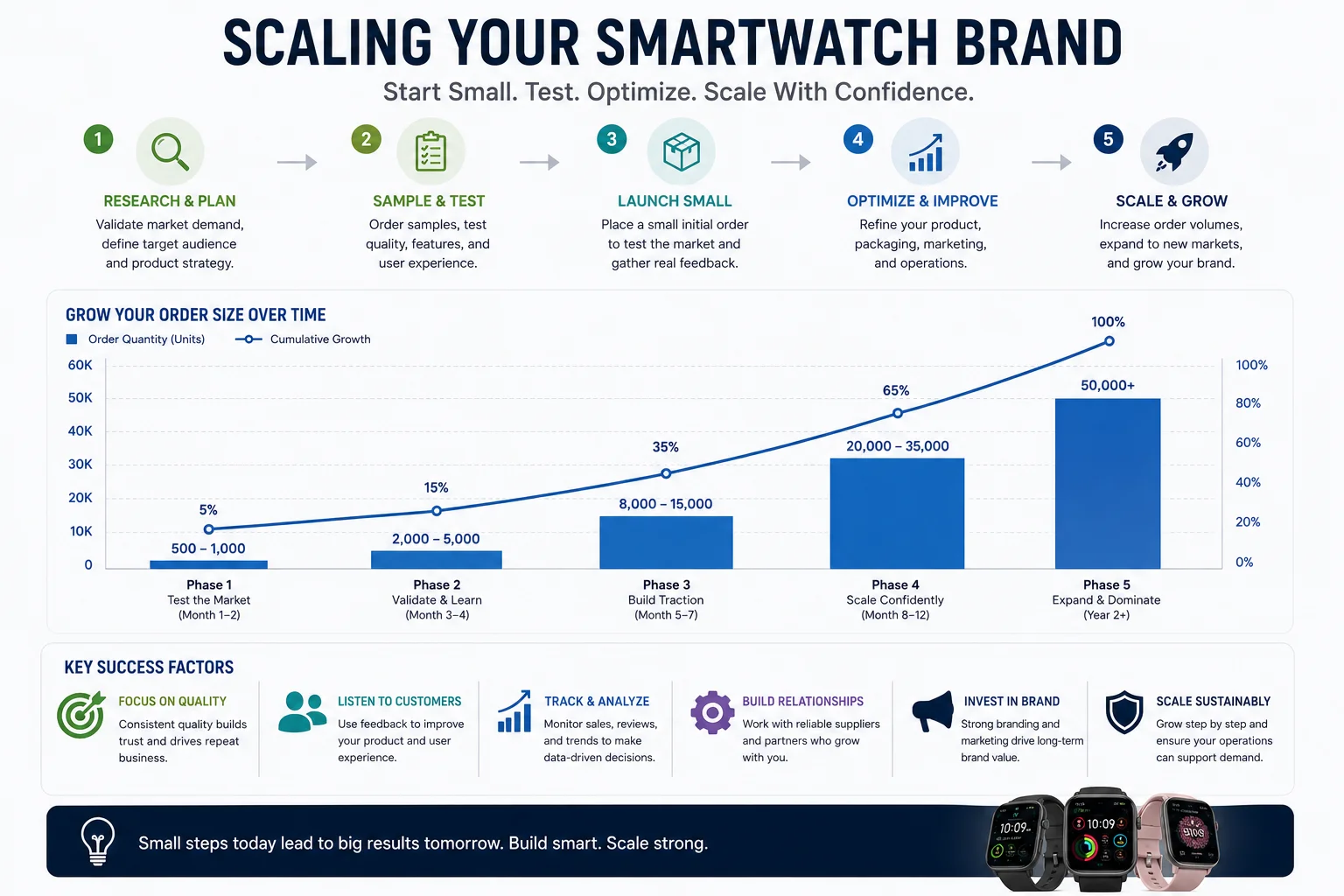
I have worked with hundreds of brands, and the most successful ones follow a "crawl, walk, run" approach. They treat their business like a marathon, not a sprint.
Crawl: Your First Test Order
Place your first order for 500 or 1,000 units. The goal of this order is not to make a huge profit. The goal is to collect data. Does the product sell at your target price? What do the first customer reviews say? What are the common support questions you get? This feedback is more valuable than any profit you can make on this first batch.
Walk: Refine and Reorder
For your second or third order, you can use that data. Maybe you need to create a better video tutorial based on customer questions. Maybe you ask the factory to include a different charging cable. You make small improvements and place a slightly larger order, confident that you are selling a product people want.
Run: Scale Your Business
Now you have a proven winner. You have positive reviews, a smooth process, and predictable sales. Now is the time to scale. You can confidently place a large order for several thousand units to lower your cost and increase your marketing budget. This careful, step-by-step approach is the safest path to building a long-term, profitable brand.
Conclusion
Launching a private label smartwatch line is about making smart, step-by-step decisions. Define your market, test your product thoroughly, and scale wisely to build a successful and profitable brand.
"Privacy in consumer wearable technologies: a living systematic ...", https://pmc.ncbi.nlm.nih.gov/articles/PMC12167361/. Market research reports from firms like IDC or Gartner provide statistics on the global wearable market, including shipment volumes and revenue growth, which characterize it as a rapidly expanding sector. Evidence role: statistic; source type: research. Supports: The claim that the wearable market is experiencing significant growth.. ↩
"Private label - Wikipedia", https://en.wikipedia.org/wiki/Private_label. Business and e-commerce guides often define wholesale, private label, and Original Equipment Manufacturer (OEM) models, explaining the trade-offs between customization, branding control, investment, and risk for each. Evidence role: definition; source type: education. Supports: The claim that private label manufacturing offers a balance between the low customization of wholesale and the high investment of OEM.. ↩
"Older Adults' Experiences With Using Wearable Devices - PMC", https://pmc.ncbi.nlm.nih.gov/articles/PMC8212622/. Studies in gerontechnology and reports from organizations like AARP often highlight the importance of safety features such as fall detection and emergency alerts, as well as usability features like large text, in wearable devices for seniors. Evidence role: case_reference; source type: research. Supports: The claim that features like fall detection and SOS buttons are important for smartwatches designed for older adults.. ↩
"Understanding Smartwatch Battery Utilization in the Wild - PMC - NIH", https://pmc.ncbi.nlm.nih.gov/articles/PMC7374306/. Technology review sites and consumer surveys frequently cite battery life as a critical factor in smartwatch purchasing decisions, with many popular models aiming for a range of several days to a week of typical use to meet user expectations. Evidence role: general_support; source type: other. Supports: The claim that multi-day battery life is a key feature for consumer satisfaction with smartwatches.. Scope note: Specific expectations can vary widely depending on the device's price point and feature set. ↩
"IP code - Wikipedia", https://en.wikipedia.org/wiki/IP_code. The International Electrotechnical Commission (IEC) standard 60529 defines the IP Code, where 'IP67' certifies that a device is dust-tight (6) and protected against immersion in water up to 1 meter for 30 minutes (7). Evidence role: definition; source type: institution. Supports: The definition of the IP67 water and dust resistance rating.. ↩
"Psychology Of Product Packaging, How It Plays Into Profitability", https://www.forbes.com/sites/cherylrobinson/2024/02/28/psychology-of-product-packaging-how-it-plays-into-profitability/. Research in marketing and consumer psychology demonstrates that packaging design elements like color, material, and typography act as key communication tools that can influence brand perception, perceived product quality, and purchasing decisions. Evidence role: mechanism; source type: paper. Supports: The claim that packaging significantly influences a customer's perception of a product.. ↩
"Attributes, Methods, and Frameworks Used to Evaluate Wearables ...", https://pmc.ncbi.nlm.nih.gov/articles/PMC11031706/. User experience (UX) studies on connected devices indicate that the companion app is an integral part of the product, with issues like poor connectivity, confusing interfaces, or instability leading to high rates of user dissatisfaction and product abandonment. Evidence role: general_support; source type: research. Supports: The claim that the software application is a critical component of the overall user experience for a wearable device.. Scope note: The source would support the high importance of the app, but may not directly prove it is a more common failure point than hardware. ↩
"Accuracy of Consumer Wearable Heart Rate Measurement During ...", https://pmc.ncbi.nlm.nih.gov/articles/PMC6431828/. Scientific validation studies have shown that while consumer wearables are not substitutes for medical-grade diagnostic tools, many can provide reasonably accurate measurements for heart rate and step counts for personal fitness and wellness tracking. Evidence role: expert_consensus; source type: paper. Supports: The claim that consumer-grade wearable sensors are not as accurate as medical devices but can be reliable for general wellness tracking.. Scope note: Accuracy can vary significantly between different devices, sensor types, and the activity being measured. ↩
"Licensing - Federal Communications Commission", https://www.fcc.gov/licensing. The Federal Communications Commission (FCC) is the U.S. government agency responsible for regulating interstate and international communications. Its regulations, specifically Part 15, require that electronic devices with the potential to create harmful radio-frequency interference be tested and certified before they can be legally marketed and sold in the United States. Evidence role: definition; source type: government. Supports: The claim that FCC certification is required for wireless devices sold in the U.S.. ↩
"[PDF] Lithium Battery Guide for Shippers - PHMSA", https://www.phmsa.dot.gov/sites/phmsa.dot.gov/files/2024-11/Lithium-Battery-Guide-2024.pdf. The UN Manual of Tests and Criteria, Section 38.3, outlines the testing requirements that lithium cells and batteries must pass to ensure their safety during transport. Compliance is required by international air transport regulations, such as those from IATA, for most shipments of lithium batteries. Evidence role: definition; source type: institution. Supports: The claim that UN38.3 is a required safety standard for transporting lithium batteries.. ↩
"Wholesale Private Label Electronics - Made-in-China.com", https://www.made-in-china.com/products-search/hot-china-products/Wholesale_Private_Label_Electronics.html. Guides from sourcing platforms and manufacturing consultants indicate that Minimum Order Quantities (MOQs) for private label consumer electronics like smartwatches commonly fall in the range of 500 to 1,000 units, though this can vary by supplier and level of customization. Evidence role: statistic; source type: other. Supports: The claim that MOQs for private label smartwatches are often in the range of 500-1,000 units.. Scope note: The exact MOQ is subject to negotiation and can differ based on the factory, product complexity, and customization requirements. ↩
"Lean startup - Wikipedia", https://en.wikipedia.org/wiki/Lean_startup. This approach aligns with the 'lean startup' methodology, which advocates for using a Minimum Viable Product (MVP) to test business hypotheses and gather validated learning from customers before committing to large-scale production or investment. Evidence role: definition; source type: education. Supports: The claim that starting with a small order to test the market is a sound business strategy.. ↩