Struggling to find a reliable 3C supplier? Low prices often lead to quality issues and delays.1 Focus on what truly matters for long-term success, not just the initial cost.
Distributors and importers want more than low prices. They need stable product quality, fast-selling items, clear communication, and flexible MOQs. A reliable partner who understands their market and helps them avoid risks is what truly builds a profitable, long-term business relationship in the 3C industry.
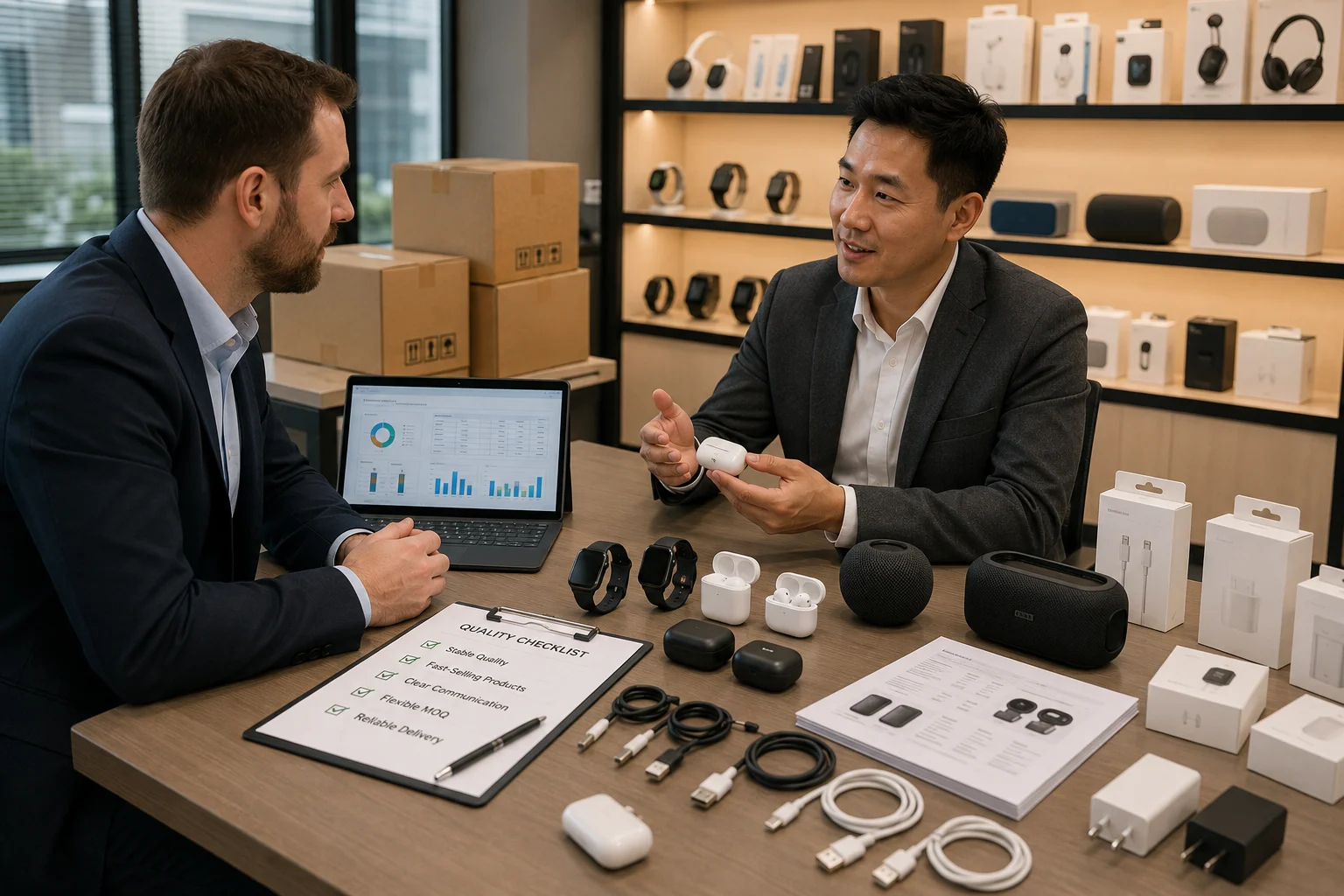
Over my 15 years in exporting 3C electronics from Shenzhen, I have talked to hundreds of buyers. The conversation always moves past the price tag. They have deeper concerns and bigger goals. Let's break down the eight things that successful importers consistently ask for. These are the details that separate a one-time order from a decade-long partnership. Understanding these points will completely change how you source products from China.
Is Stable Product Quality More Important Than Just a Low Price?
Chasing the lowest price feels smart. But receiving a shipment full of faulty products can wipe out your profits and damage your brand's reputation overnight. This is a common trap.
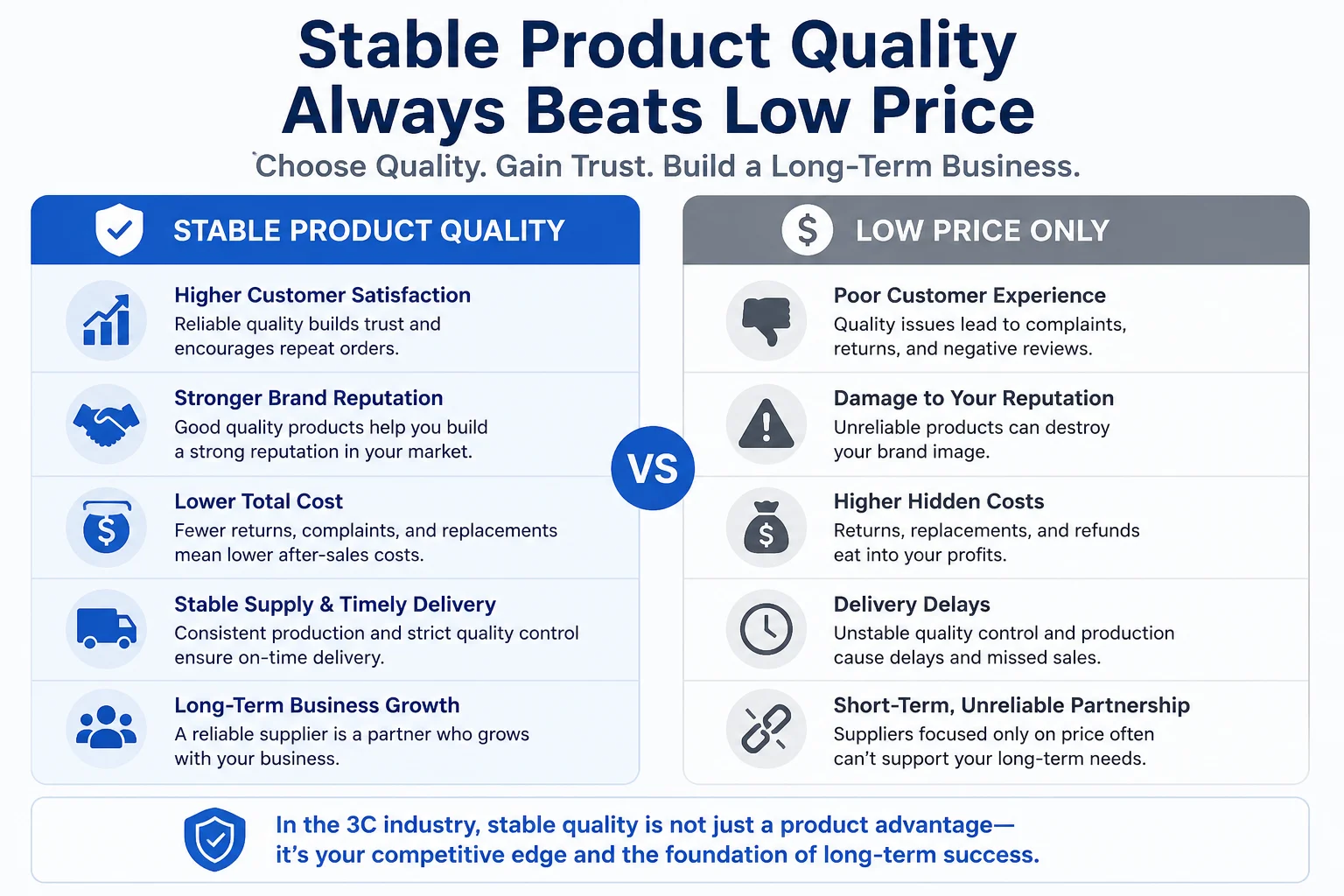
Experienced buyers prioritize stable product quality over the absolute lowest price. Consistent quality means fewer returns, happier customers, and a predictable business. This stability is the real foundation for long-term profit, not just saving a few cents on the unit cost.
I remember a client from Germany who wanted to source TWS earbuds. He pushed hard for a 10% price cut. I explained that to meet his target price, we would have to use a lower-grade battery and a cheaper Bluetooth chip. He insisted, believing the savings were worth it. Six months later, he called me. His customer return rate was over 15%, and his online store reviews were terrible. He learned the hard way that the initial savings were lost many times over.
The True Cost of "Cheap"
A cheap price often hides other costs. These include the cost of handling returns, customer support time, and damage to your brand. A bad reputation is very difficult to fix. A product with a 1% failure rate is much more profitable than a cheaper one with a 10% failure rate.2 This is the math that experienced importers understand well.
How We Focus on Quality
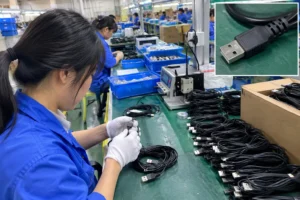
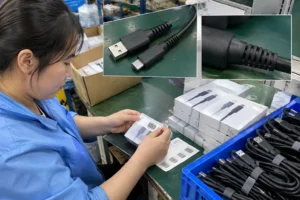
We build quality into the process. It starts with sourcing reliable components from trusted partners. During assembly, we have multiple checkpoints. Finally, every single batch goes through a final quality control inspection before it leaves our facility. This process costs a little more, but it prevents huge problems later. Here is a simple breakdown:
| Focus Area | Low-Price Supplier | Quality-Focused Partner |
|---|---|---|
| Initial Cost | Very Low | Slightly Higher |
| Return Rate | High (5-15%) | Very Low (<1%) |
| Customer Reviews | Negative, Poor | Positive, Excellent |
| Brand Reputation | Damaged | Strengthened |
| Long-Term Profit | Low or Negative | High and Stable |
Do They Want Unique Gadgets or Fast-Moving Products That Are Easy to Sell?
You found a unique gadget no one else sells. But what if it's too niche for your market? The product could just sit on your shelves, tying up your cash.
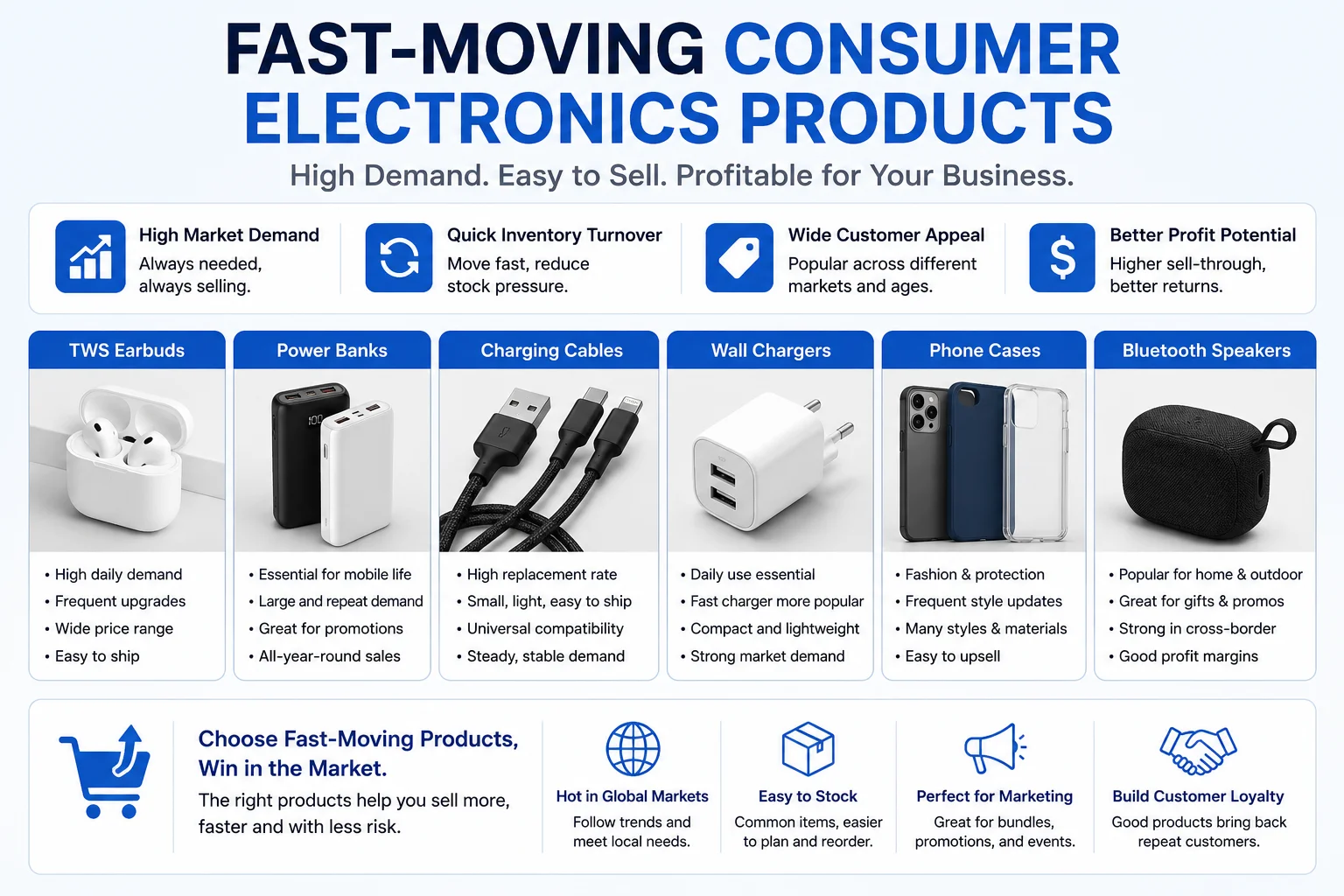
Importers need products that are easy to sell in their local market. While unique items are tempting, the real money is in popular, in-demand products with proven sales records. A good supplier helps identify these trends and provides products that move quickly.
A new customer from the United States was excited about a smartwatch with a special built-in air quality sensor. It was a cool feature, for sure. But my first question was, "Who is going to buy this, and how many?" We looked at market data together. The demand was tiny. Instead, I showed him our sales data for smartwatches with standard health tracking like heart rate, steps, and blood oxygen. These were features people were actively searching for. He decided to switch his focus to a more mainstream model. His first container sold out in just two months. He learned a valuable lesson: it's easier to ride a wave than to create one.
Riding the Trend vs. Creating It
For most importers, especially small to medium-sized businesses, your job is to meet existing demand, not create a new one. Creating demand requires a huge marketing budget and a lot of risk.3 Focusing on proven, fast-moving products gives you a much higher chance of success and a faster return on your investment.
What Makes a Product "Fast-Moving"?
A fast-moving product has a few key traits:
- High Demand: A large number of people are already looking for it.
- Clear Value: Customers instantly understand what it does and why they need it.
- Right Price Point: It's priced affordably for a large segment of the market.
- Good Margins: You can sell it at a competitive price and still make a healthy profit.
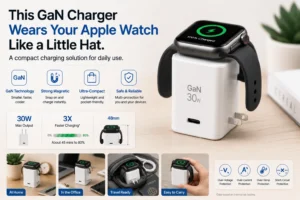
Currently, we see huge demand for products like GAN chargers, TWS earbuds under $50, and smartwatches focused on health and fitness. These are safe bets.
Do They Need Clear Specs, Real Samples, and Honest Product Information?
The product photos look amazing, and the price is right. But when the shipment arrives, the battery life is half of what was promised. Sound familiar? This happens all the time.
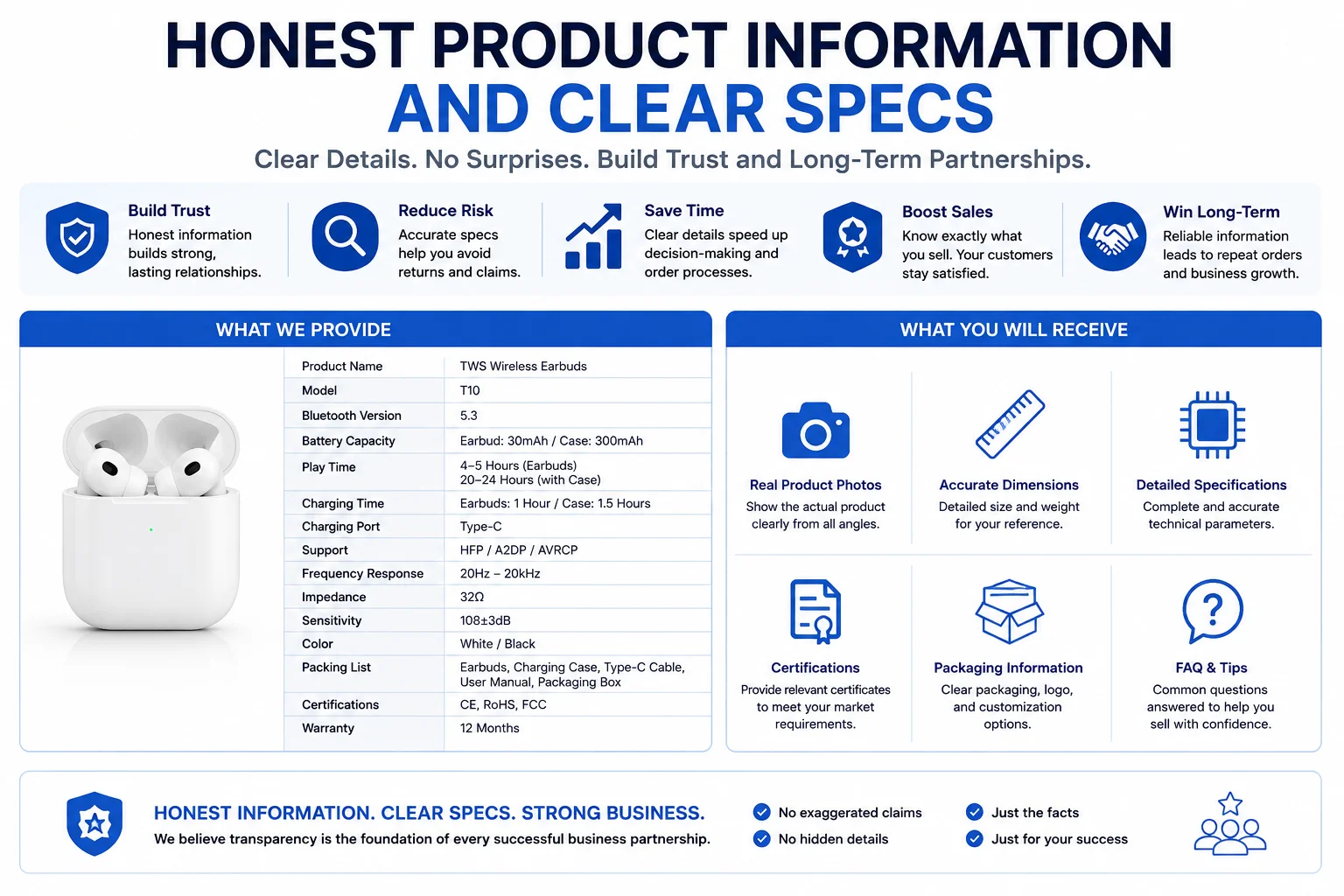
Trust is built on transparency. Buyers absolutely need detailed and honest product information, accurate specifications, and real samples that match the final production. Vague or exaggerated claims are a major red flag that can destroy a partnership before it even begins.4
I once had a potential customer comparing our 100W USB-C cable with a competitor's. The other supplier's price was incredibly low for a 100W cable. It seemed too good to be true. From my experience, I knew they were likely using thinner copper wires that could not safely handle 100W of sustained power5. They might work for a short burst, but they would overheat and fail with continued use.
Instead of just lowering my price, I sent him our sample. I also sent him a cross-section photo of our cable next to a cheaper one. I pointed out the difference in the wire gauge. I explained the difference between "peak" power and "sustained" safe power delivery. He placed the order with us. He said he chose us because we were honest and helped him avoid a potential fire hazard for his customers.
The "Spec Sheet" Trap
Many suppliers exaggerate specifications to win orders. They know that most buyers can't test every single claim. This is why you must be careful.
Building Trust Through Transparency
A good partner provides real data, test reports, and samples that are identical to the bulk production units. We always encourage our clients to test our samples thoroughly. Their trust is more valuable than any single order. Look for clarity in the spec sheet. Here is what to look for:
| Specification | Vague / Red Flag | Clear / Green Flag |
|---|---|---|
| Battery Capacity | "Long battery life" | 400mAh, 5-7 days typical use |
| Charging Speed | "Fast Charge" | PD 65W, charges to 50% in 30 mins |
| Waterproofing | "Water Resistant" | IP67 Rated (submersion up to 1m for 30 mins)6 |
| Casing Material | "High-quality metal" | Zinc Alloy Casing, Silicone Strap |
Is Flexible MOQ for Trial Orders and Market Testing Important?
You want to test a new product, but the supplier demands a minimum order quantity (MOQ) of 5,000 pieces. This high risk can kill a great idea before it even starts.
Buyers need flexible MOQs, especially for trial orders. While every factory has its limits, a good partner is willing to discuss a smaller initial order to help you test the market. This flexibility shows they are invested in your long-term success, not just a single large transaction.
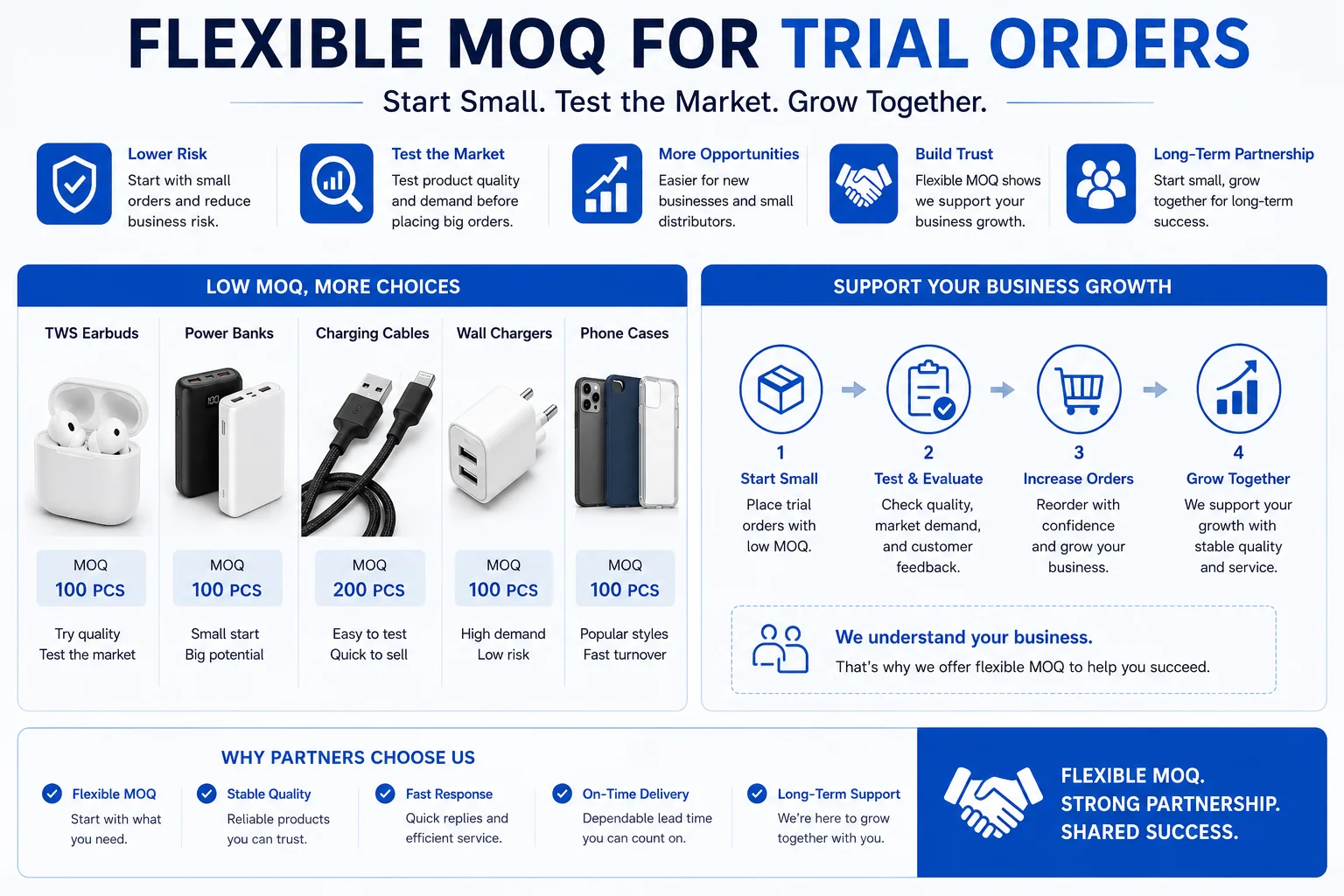
This issue connects directly to risk management. For an importer, a smaller first order is a tool to test the market with less financial risk7. A common question I get is, "What's your MOQ?" My answer is always, "Let's discuss it. What do you need to test your market?" I know that if we support a new customer with a trial order of 500 smartwatches, we are making an investment. We might not make much profit on that first order. But if the product sells well, that customer will come back to us for 5,000 pieces, and then 10,000. It's a shared investment in their success.
MOQ as a Partnership Test
A supplier's willingness to discuss the MOQ tells you a lot about their business philosophy. A factory that refuses to be flexible is often only focused on large, easy orders. They are not interested in building a relationship. A supplier who is willing to help you start small is confident in their product and wants to grow with you.
When to Ask for a Lower MOQ
It's reasonable to ask for a lower MOQ in specific situations:
- When you are launching a brand-new product line.
- When you are entering a new country or sales channel.
- When you are targeting a very specific niche audience.
Of course, there are limits. For a fully custom OEM project, the MOQ has to be high to cover tooling and R&D costs8. But for wholesale or private label products, there is often room for discussion. A reasonable MOQ for a wholesale trial might be 100-200 units, while a private label (logo on product) order might start at 1,000 units.
Is a Low Price Worth It If Delivery Is Always Late?
You got a great price, but the shipment is two months late. Now you have missed the holiday shopping season, and your marketing budget is completely wasted. This is a nightmare scenario.
On-time delivery is non-negotiable. Importers have marketing campaigns, retail store commitments, and sales targets that are all tied to the shipment's arrival date. A reliable supplier has strong production management and communicates proactively about any potential delays.
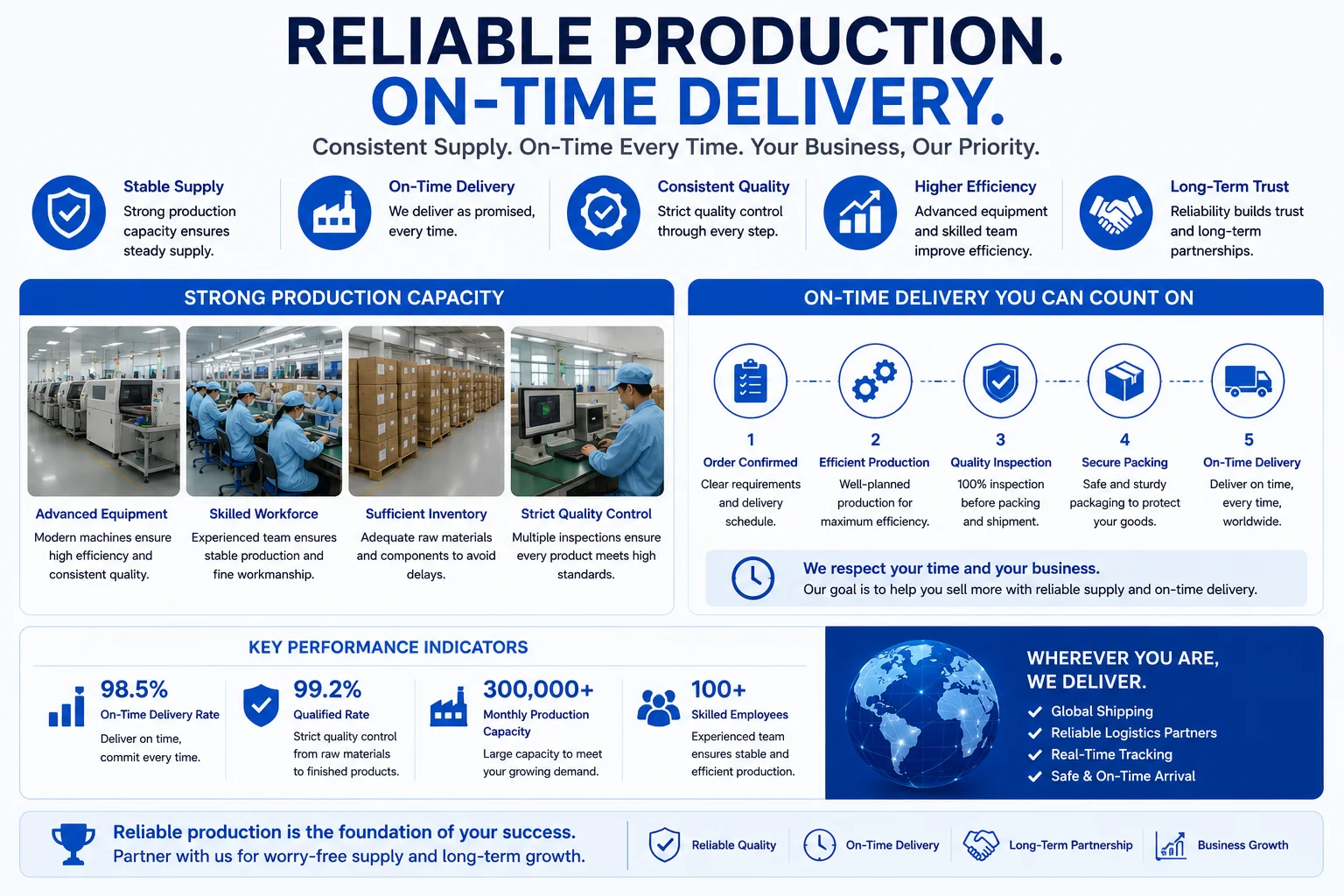
A client in France needed 10,000 custom-branded power banks for a big promotional event. The deadline was very tight. He got quotes from several suppliers. Another factory offered a slightly lower price but gave a vague delivery timeline of "around 4 to 6 weeks." This was too risky for him.
We provided a firm 30-day production schedule. We showed him our plan:
- Week 1: Confirm final design and source all materials.
- Week 2-3: Production and assembly.
- Week 4: Quality control, packing, and arrange shipment.
We gave him weekly photo updates. He chose us because he needed certainty. The small price difference was nothing compared to the cost of missing his event.
The Domino Effect of a Delay
A single delay can cause a chain reaction of problems:9
- Missed Sales: You can't sell products you don't have.
- Wasted Ad Spend: Your marketing campaigns run, but customers can't buy.
- Damaged Retail Relationships: Big retailers will drop you if you can't deliver on time.
- Angry Customers: Pre-orders get canceled, and your reputation suffers.
How to Spot a Reliable Production Partner
Look for suppliers who are transparent about their production process. Ask for a detailed production schedule. A good partner will have a dedicated order manager who can give you clear updates. They are not afraid to tell you bad news early. Honesty is key.
Is It Just About the Product, or Do Packaging and Compliance Matter?
Your products finally arrive in your country, but they are stuck at the customs office. The correct certification documents are missing, and the packaging doesn't have the required symbols. This is a costly disaster.
Safe packaging, compliance support, and export experience are critical. A good supplier doesn't just make a product; they ensure it arrives safely and can be legally sold in your market. This includes providing CE, RoHS, and FCC documents and advising on local packaging laws.
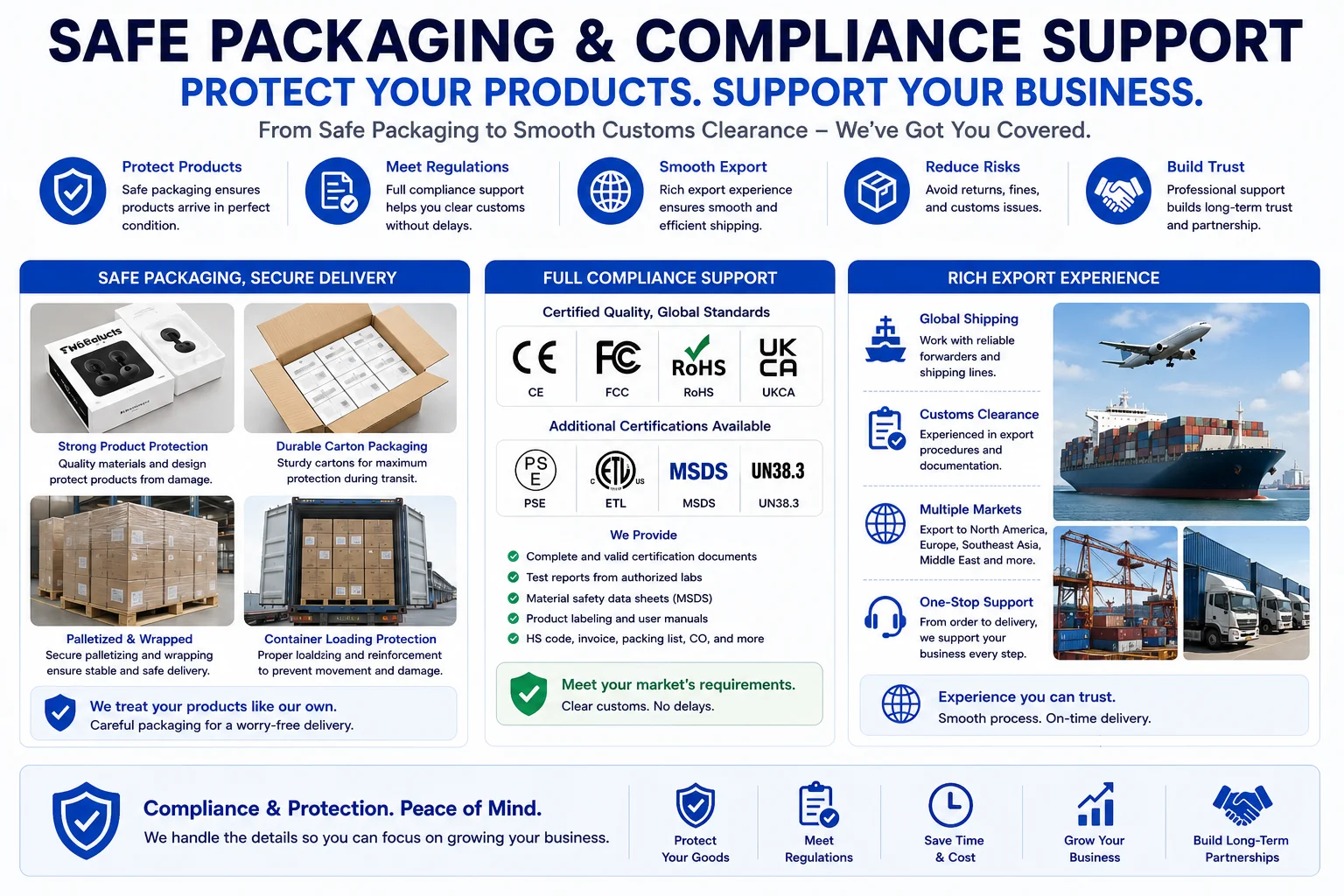
This is where our 15 years of experience really helps our clients. We mainly export to Europe and the US, so we know the rules. A few years ago, a new customer from Italy wanted to order a large batch of TWS earbuds. He mentioned that he needed the "WEEE" recycling symbol on his packaging. We knew exactly what he was talking about. We already had the compliant artwork on file. We sent it to him for approval the same day. He was amazed. He said his previous supplier took three weeks to figure out what that symbol was.
More Than Just a Box
Packaging has three important jobs:
- Protection: It must be strong enough to protect the product during shipping.
- Marketing: It must look good on a retail shelf and represent your brand.
- Compliance: It must have all the legally required logos, symbols, and information for your country.
Navigating the Alphabet Soup: CE, RoHS, FCC
These certifications are not optional for Western markets.
- CE: Required for products sold in the European Economic Area. It shows the product meets health, safety, and environmental standards.10
- RoHS: Restricts the use of specific hazardous materials in electronics. It's also required in the EU.11
- FCC: Required for electronic products sold in the United States that emit radio frequencies.12
An experienced supplier will have these documents ready for their products. They will not be surprised when you ask for them. This expertise saves you time, money, and huge legal headaches.
Is It Okay If a Supplier Disappears After an Order Is Placed?
You have an urgent question about your production status, but your contact at the supplier company is silent for days. The anxiety is overwhelming, and you feel completely powerless.
Fast, clear communication is absolutely essential, especially when problems happen. A professional supplier provides a dedicated contact person who responds quickly, gives honest updates, and works to solve issues proactively. Silence is one of the biggest red flags in this business.
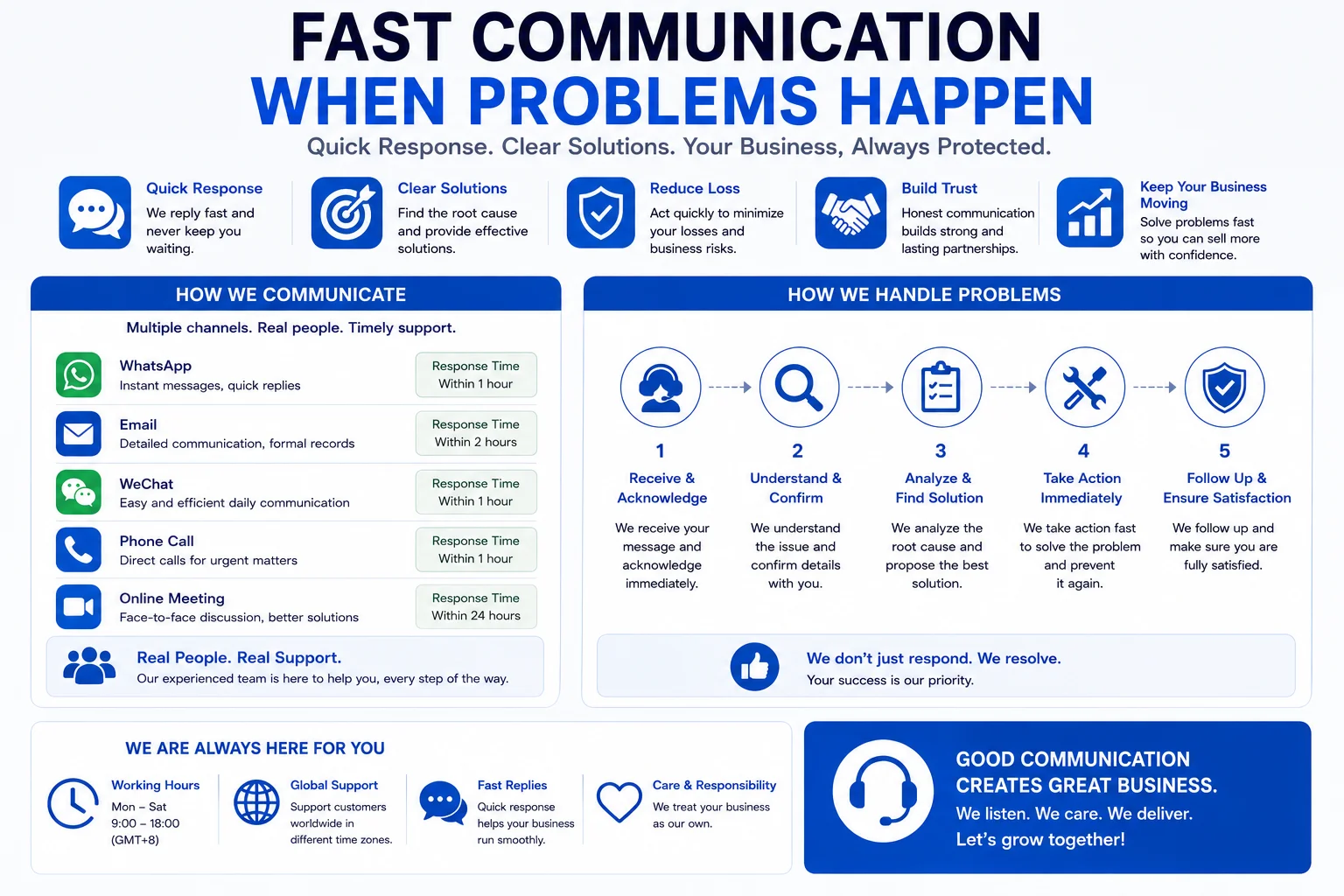
A few years ago, a major typhoon was forecast to hit Shenzhen. At the time, we had about a dozen orders in production for clients all over the world. The first thing we did was contact every single one of them. We sent them a short email explaining the situation. We told them our plan: there might be a 1-2 day delay in the production schedule, but we had already moved all finished goods and raw materials to secure indoor storage to prevent any damage.
Every single client thanked us for the update. They weren't upset about the possible delay. They were happy that we were honest and proactive. They knew what was going on. Communication builds trust faster than anything else.
The Value of a Dedicated Sales Manager
When you work with us, you get a dedicated sales manager. This person is your single point of contact. They speak fluent English, and their job is to be your advocate inside our company. They track your order, answer your questions, and solve your problems. You don't get passed around from department to department.
What "Good Communication" Looks Like
- Replies to emails within 24 hours.
- Proactive updates about your order status.
- Honest information, even when it's bad news.
- Clear answers to technical questions.
If a potential supplier is slow to respond to your initial inquiries, imagine how slow they will be after they have your money.
Are You Looking for a Supplier, or a Long-Term Partner?
Constantly switching suppliers to save a few cents is exhausting. You have to repeat the vetting process, build new relationships, and risk quality issues every single time.
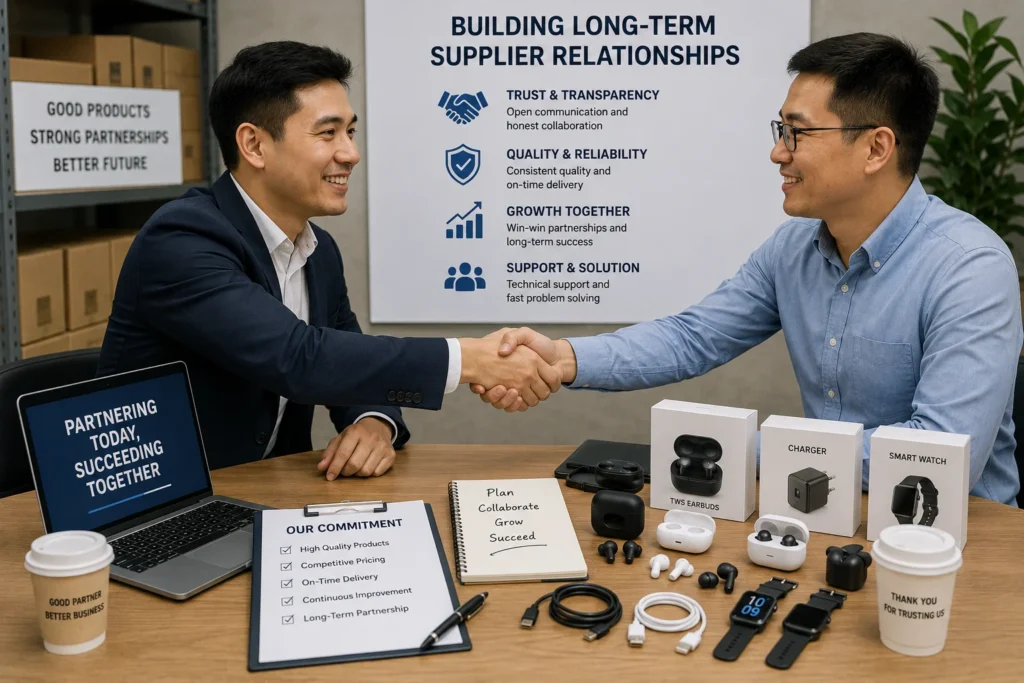
The ultimate goal for a successful importer is to find a long-term partner who understands their market and grows with their business. This partner suggests new winning products, helps you adapt to market trends, and prioritizes your success because it is linked to their own.
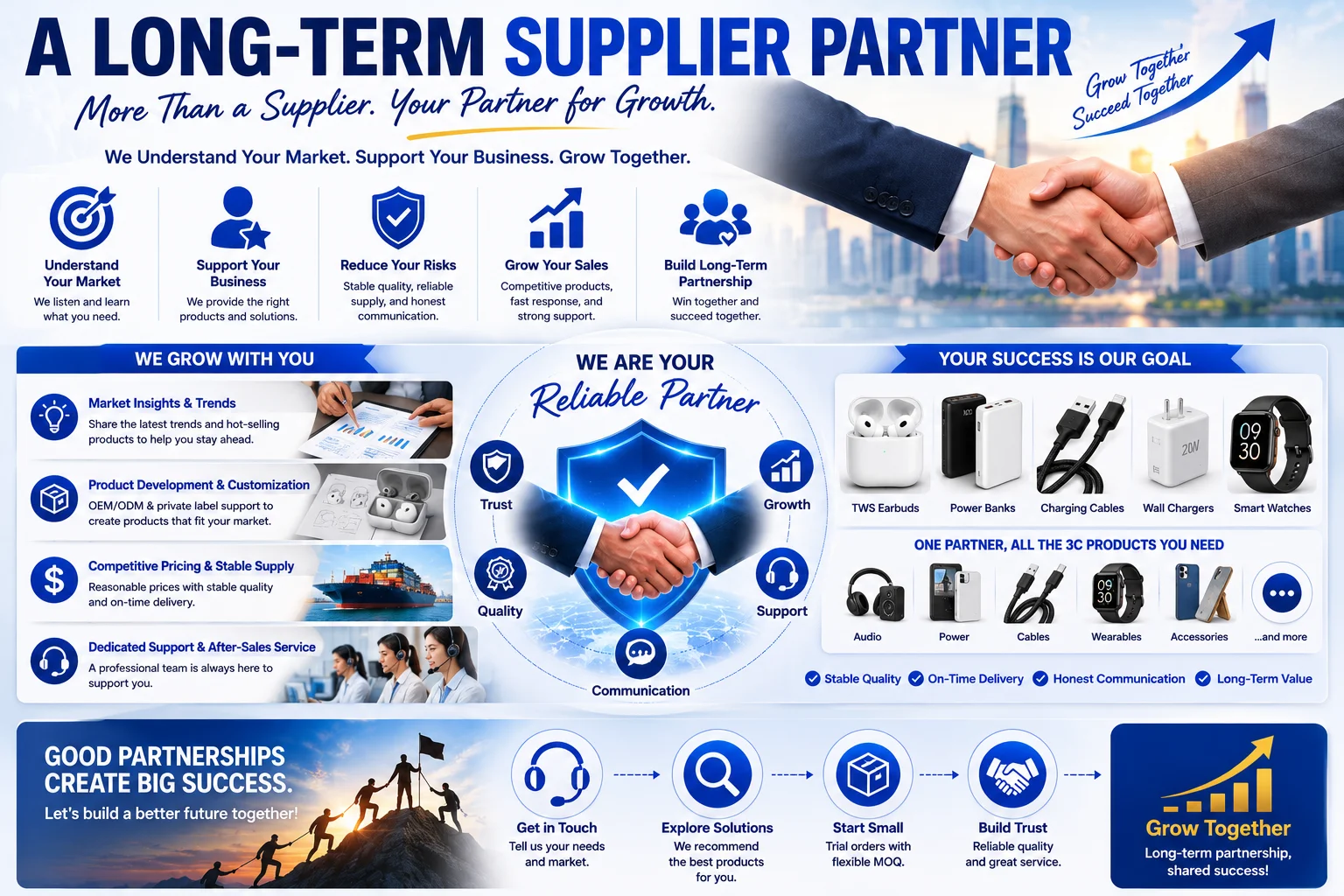
This final point summarizes everything else. A true partner does all the things we've discussed. They provide quality products, help you find fast-sellers, communicate clearly, and support you with flexible terms. They don't just see you as a single transaction.
I have a customer in the UK who runs an e-commerce store. He started with us over 10 years ago, buying just one model of USB cable. We supported his small trial orders. As his business grew, we grew with him. Today, he buys a full range of 3C accessories from us: GAN chargers, TWS headphones, and now smartwatches. We regularly share market trend reports with him and suggest new products for his store. His success is our success.
From Transaction to Relationship
When you are interviewing a new supplier, try to understand their mindset. Are they just trying to close a deal? Or are they asking questions about your business, your customers, and your goals?
The Question We Always Ask
When I talk to a new potential client, one of my first questions is, "Where do you want your business to be in three years?" This question shows that we are thinking about the future. We are not just trying to sell them a box of chargers. We are trying to build a partnership that will last for years. This is the difference between a simple supplier and a real partner.
Conclusion
Finding the right 3C supplier is about finding a partner. Focus on quality, reliability, and communication—not just price—to build a stable, profitable, and long-lasting business.
"Supplier selection and order allocation: a literature review - PMC", https://pmc.ncbi.nlm.nih.gov/articles/PMC8127846/. Procurement research on supplier selection and total cost of ownership treats quality performance and delivery reliability as cost-relevant criteria alongside purchase price. Evidence role: general_support; source type: paper. Supports: Supplier-selection research should support that purchase price is only one factor and that quality and delivery reliability affect total procurement outcomes.. Scope note: Contextual support; it would not prove that every low-price 3C supplier causes quality issues or delays. ↩
"[PDF] Determination of optimal pricing and warranty policies", https://researchrepository.wvu.edu/cgi/viewcontent.cgi?article=4171&context=etd. Quality-cost research shows that defect and failure rates contribute to external failure costs, including returns, warranty claims, and customer-service expenses. Evidence role: mechanism; source type: paper. Supports: Quality-cost literature should support that higher failure rates increase internal and external failure costs such as returns, warranty service, and support handling.. Scope note: Contextual support; the exact 1% versus 10% profitability comparison would depend on product margin, return logistics, warranty policy, and market conditions. ↩
"Diffusion of innovations - Wikipedia", https://en.wikipedia.org/wiki/Diffusion_of_innovations. Research on innovation diffusion and new product development identifies customer-adoption uncertainty and market-education costs as major risks for novel products. Evidence role: expert_consensus; source type: paper. Supports: Research on innovation diffusion or new product development should support that unfamiliar products face adoption uncertainty and require marketing resources to build awareness and demand.. Scope note: Contextual support; it does not quantify the budget needed for any specific 3C product. ↩
"Examining collaborative buyer–supplier relationships and social ...", https://pmc.ncbi.nlm.nih.gov/articles/PMC9434505/. Buyer-supplier relationship studies associate transparent information sharing with trust and identify opportunistic or inaccurate information as a source of relationship risk. Evidence role: general_support; source type: paper. Supports: Supply-chain relationship research should support that accurate information sharing and transparency are linked to trust, while information asymmetry and opportunism weaken buyer-supplier relationships.. Scope note: Contextual support; the source would support the mechanism of trust erosion, not prove that a specific supplier’s claim is exaggerated. ↩
"Wire Gauge Chart and Ampacity | Guide for Electricians", https://www.uti.edu/blog/electrical/wire-gauge-chart-awg-ampacity. Electrical engineering references on conductor sizing explain that thinner copper conductors have higher resistance and may experience greater Joule heating under sustained current. Evidence role: mechanism; source type: education. Supports: An electrical engineering source should explain that smaller conductors generally have higher resistance and can generate more heat under load, limiting safe sustained current.. Scope note: Contextual support; a specific cable’s safety would still require testing against the applicable USB-C and electrical safety standards. ↩
"IP code - Wikipedia", https://en.wikipedia.org/wiki/IP_code. The IEC ingress-protection code defines IP67 as dust-tight protection with protection against temporary immersion in water under specified test conditions. Evidence role: definition; source type: institution. Supports: A standards-body source should define the IP67 ingress-protection code and its dust and water immersion meanings.. ↩
"[PDF] Supply Chain Management and Demand Uncertainty", https://scholarworks.uni.edu/cgi/viewcontent.cgi?article=4890&context=grp. Entrepreneurship and operations research on market experimentation supports using small initial commitments to learn about demand while limiting inventory and capital risk. Evidence role: mechanism; source type: paper. Supports: Research on experimentation, minimum viable products, or small-batch market testing should support that limited initial commitments can reduce uncertainty and financial exposure.. Scope note: Contextual support; it supports the market-testing principle rather than any particular MOQ threshold. ↩
"Economies of Scale: What Are They and How Are They Used?", https://www.investopedia.com/terms/e/economiesofscale.asp. Operations-management texts explain that fixed tooling, setup, and development costs are amortized over production volume, which raises the unit cost of small custom manufacturing runs. Evidence role: mechanism; source type: education. Supports: Manufacturing economics sources should explain that fixed tooling, setup, and development costs are amortized across output volume, making small custom runs more expensive per unit.. Scope note: Contextual support; actual MOQ levels vary by product design, factory capacity, tooling ownership, and supplier pricing policy. ↩
"Supply chain disruptions and resilience: a major review and future ...", https://pmc.ncbi.nlm.nih.gov/articles/PMC7792559/. Supply-chain disruption research describes ripple effects in which a delay at one node can propagate downstream and affect inventory availability, service levels, and sales performance. Evidence role: mechanism; source type: paper. Supports: Supply-chain disruption research should support that delays can propagate across connected operations and affect inventory availability, service levels, and commercial performance.. Scope note: Contextual support; the magnitude of downstream damage depends on buffer inventory, contract terms, seasonality, and customer expectations. ↩
"CE Marking - International Trade Administration", https://www.trade.gov/ce-marking. European Commission guidance states that CE marking indicates a product’s conformity with applicable EU requirements and is required for categories of products placed on the European Economic Area market. Evidence role: definition; source type: government. Supports: An official EU source should state what CE marking means and when it is required for products placed on the EEA market.. ↩
"RoHS Directive - Department of Toxic Substances Control", https://dtsc.ca.gov/universalwaste/rohs-directive/. The EU RoHS Directive restricts specified hazardous substances in electrical and electronic equipment placed on the EU market. Evidence role: definition; source type: government. Supports: An official EU source should confirm that RoHS restricts specified hazardous substances in electrical and electronic equipment placed on the EU market.. ↩
"Equipment Authorization – RF Device | Federal Communications ...", https://www.fcc.gov/oet/ea/rfdevice. FCC equipment-authorization rules require covered radio-frequency devices marketed in the United States to comply with applicable technical and authorization requirements. Evidence role: definition; source type: government. Supports: An official FCC source should explain that RF devices marketed in the United States may require equipment authorization under FCC rules.. Scope note: Applicability depends on the device category and whether the product intentionally or unintentionally emits radio-frequency energy. ↩