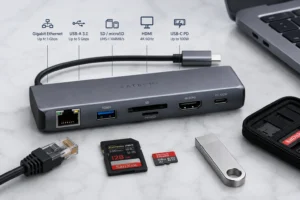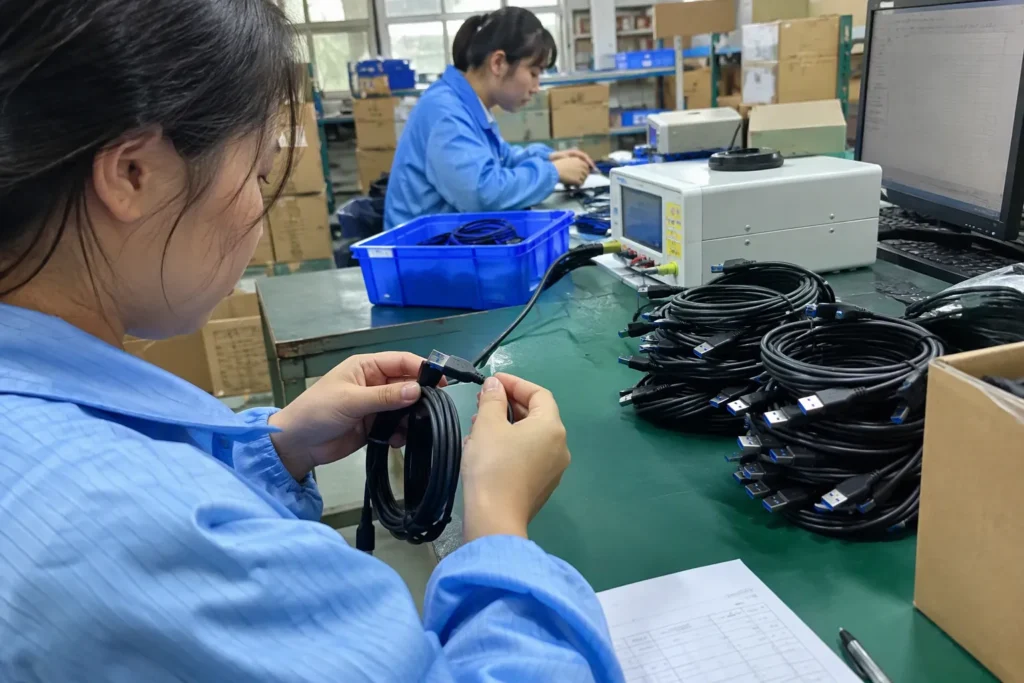
Super Speed USB 3.0 Cables Bulk and Wholesale requests often look simple, but a low-price quote can hide compatibility, consistency, and delivery risks. I have seen buyers ask only for “high-speed USB cables” without naming the devices, connector types, length, or packaging. A better specification and supplier review process helps buyers avoid costly mismatches.
For Super Speed USB 3.0 Cables Bulk and Wholesale purchases, I recommend confirming the application, connector configuration, required data performance, cable length, construction, packaging, MOQ, sample approval process, lead time, and repeat-order controls before comparing prices. The cable label alone cannot guarantee the same result with every device or port.
Quick Answer
- Confirm the device ports, connector ends, length, data-use case, and quantity before requesting a quotation.
- Treat “USB 3.0” or “SuperSpeed” as a starting specification, not a guarantee of identical real-world performance.
- Compare sample quality, MOQ, packaging, lead time, defect handling, and replenishment ability, not only unit price.
- Ask the supplier to identify the cable construction and available product documents clearly.
- Approve a representative sample and define acceptance criteria before placing a large order.
- Verify certifications and compliance documents for the destination market and product configuration.
I have handled USB cable inquiries, quotations, sample confirmations, and export order discussions for European and American buyers for many years. In practice, the most reliable wholesale decisions come from converting a broad marketing phrase into a written purchasing specification. The sections below explain how I would review that decision with a professional buyer.
What Should Buyers Specify Before Ordering Super Speed USB 3.0 Cables in Bulk?
A vague request creates a vague quotation. When a buyer writes only “Super Speed USB 3.0 cable, 10,000 pieces,” I still need to know what the cable must connect, how customers will use it, and how the buyer plans to sell it. These details affect product selection, packaging, price, and production planning.
Before I quote Super Speed USB 3.0 Cables Bulk and Wholesale orders, I ask about the connector combination, intended devices, cable length, data or charging priority, quantity, packaging, target market, and delivery schedule. These questions reduce the risk of approving a cable that looks correct but does not fit the buyer’s actual sales or application requirements.
The first questions I ask
-
Which connector is required?
Common configurations include USB-A to USB-B, USB-A to USB-C, USB-C to USB-C, and other combinations. A buyer may use “USB 3.0 cable” to describe a data cable, but the connector arrangement still determines whether it works with the target device. -
What devices will customers connect?
External storage, printers, cameras, docking equipment, computers, and other peripherals may have different port and performance requirements. The supplier should not assume that one cable configuration fits all of them. -
What length is needed?
Short desk cables, standard retail lengths, and longer cables create different design and verification considerations.[7] The buyer should state the required length, including whether the measurement includes the connectors. -
Is the primary purpose data transfer, charging, or both?
A buyer who wants a data cable should not evaluate it only by charging language. A buyer who wants charging performance should also specify the expected power-related requirements instead of assuming that a data-speed label covers them. -
What quantity and replenishment pattern are expected?
A first order of 500 pieces has a different commercial logic from a first order of 20,000 pieces followed by monthly replenishment.
Why application details matter
USB naming has changed over time[1], and commercial listings do not always use the same wording. The USB Implementers Forum provides official information about USB specifications and branding at usb.org. I treat supplier descriptions as information that must be matched against the buyer’s use case, not as a substitute for product verification.
- A particular connector on each end.
- A certain outer jacket material.
- A specific bend or strain-relief design.
- Reliable operation with a known peripheral.
- Retail packaging in several languages.
- A repeatable wholesale product code.
- Documentation for the buyer’s compliance process.
A practical inquiry template
| Requirement | Example information to provide |
|---|---|
| Cable type | USB-A to USB-C data cable |
| Intended use | Computer-to-peripheral connection |
| Length | 1 m, measured end to end |
| Quantity | Initial order and estimated repeat volume |
| Packaging | Individual retail box or bulk carton |
| Market | European Union, United Kingdom, or United States |
| Branding | Stock product or private label |
| Delivery | Required shipping date and destination port |
| Quality expectations | Sample approval and agreed inspection points |
Can “USB 3.0” Guarantee the Same Cable Performance?
Many buyers use “USB 3.0” as shorthand for a faster data cable. That description is understandable, but it is not enough to predict the result of every connection. Actual performance depends on the devices, ports, protocol support, cable construction, length, and the way the system is used.[2]
“USB 3.0” should be treated as a compatibility and specification reference rather than an automatic performance guarantee.[3] A connected device may limit the result[4], and a supplier’s nominal product description should be verified through the product information, sample evaluation, and application-specific testing when performance is commercially important.
The connected system matters
A cable sits between two devices. If one device or port does not support the expected data mode, the connection may operate at a lower level. A buyer should therefore consider the complete system:
- Source device.
- Peripheral device.
- Port type and protocol support.
- Operating environment.
- Cable length and construction.
- Hub, adapter, or docking equipment in the connection.
- File size and software used for any performance check.
For example, a cable may be physically compatible with a computer and an external drive, but the computer port, drive enclosure, adapter, or hub may determine the practical result. I would not describe a cable as delivering a guaranteed maximum speed unless the relevant specification and test evidence support that statement.
Product labels require careful wording
These phrases can overlap in commercial use, but the buyer should request a clear product specification. The USB-IF’s USB Type-C® Cable and Connector Specification is one useful reference for buyers reviewing Type-C-related requirements. It does not remove the need to verify the actual product being purchased.
- Which specification or product category does the listing refer to?
- Which data functions has the product been designed for?
- What connector configuration is used?
- Is the product intended for a specific application?
- What documents or test information can the supplier provide?
- Can the buyer evaluate a sample with the intended devices?
The supplier should answer these questions directly. If the answer remains a general claim such as “very fast” or “best quality,” I would treat the quotation as incomplete.
Data performance and charging performance are different questions
Some buyers assume that a cable advertised for faster data transfer must also provide the charging performance they need.[6] That assumption can create a product mismatch. Data capability, power capability, connector design, and device negotiation should be reviewed separately.[5]
- Peripheral data transfer.
- Device charging.
- Data transfer and charging together.
- A particular computer or accessory ecosystem.
- General retail use where the product description must remain conservative.
How Should Buyers Compare Super Speed USB 3.0 Cables Wholesale Quotes?
A low unit price can be useful, but it is only one part of the purchasing decision. A cheaper quotation may exclude retail packaging, inspection, documentation, or a realistic production schedule. It may also be based on a different cable length or connector configuration.
I compare wholesale cable quotations by reviewing the complete landed and operational risk: product specification, sample quality, MOQ, packaging, lead time, quality controls, defect handling, payment terms, and future replenishment. The most suitable quote is usually the one that provides reliable value for the buyer’s sales channel, not simply the lowest number.
A quotation comparison table
| Evaluation point | Supplier A | Supplier B | Supplier C |
|---|---|---|---|
| Exact connector configuration | Confirmed / unclear | ||
| Cable length and tolerance | |||
| Sample available | |||
| Sample matches quotation | |||
| MOQ | |||
| Individual packaging | Included / extra | ||
| Production lead time | |||
| Pre-shipment inspection option | |||
| Defect handling process | |||
| Repeat-order commitment | |||
| Required documents | |||
| Unit price |
This approach exposes differences that may be hidden in a short email. A supplier quoting a lower price may be using bulk packaging, a shorter cable, a different connector shell, or a different order quantity.
What creates total procurement cost?
- Product price.
- Packaging and artwork.
- Sample and courier charges.
- Inspection fees.
- Freight and insurance.
- Import duties or taxes.
- Relabelling or compliance work.
- Rework or replacement of defective goods.
- Storage caused by early or late delivery.
- Lost sales caused by stock shortages.
- Cost of changing supplier after inconsistent repeat orders.
I do not claim that every low-price supplier creates these problems. I do recommend that buyers calculate the possible effect before accepting an offer. A small price difference may be reasonable if one supplier provides clearer specifications, stronger communication, and a more dependable replenishment plan.
MOQ should match the buyer’s sales test
A retailer or e-commerce seller may want a small initial order to test demand. A chain store or importer may need a larger production run and stable monthly supply. The right MOQ depends on the buyer’s inventory model.
| Buyer situation | More suitable purchasing approach |
|---|---|
| New product test | Smaller approved sample or pilot order |
| Established retail item | Larger order with repeat-order planning |
| Private-label launch | Confirm artwork, packaging MOQ, and production schedule early |
| Seasonal promotion | Reserve capacity and agree on shipment milestones |
| Multi-store rollout | Use a single approved specification and batch controls |
I often encourage buyers to discuss the second order before placing the first one. The supplier should explain whether the same materials, packaging, and product code can be maintained. That conversation can reveal whether the supplier is prepared for a long-term relationship or only a one-time transaction.
Which Quality Details Should Buyers Verify Before Approval?
Quality language is easy to write and difficult to measure. Terms such as “premium,” “strong,” and “stable” have little value unless the buyer connects them to observable requirements. A professional purchase should define what the supplier will provide and what the buyer will inspect.
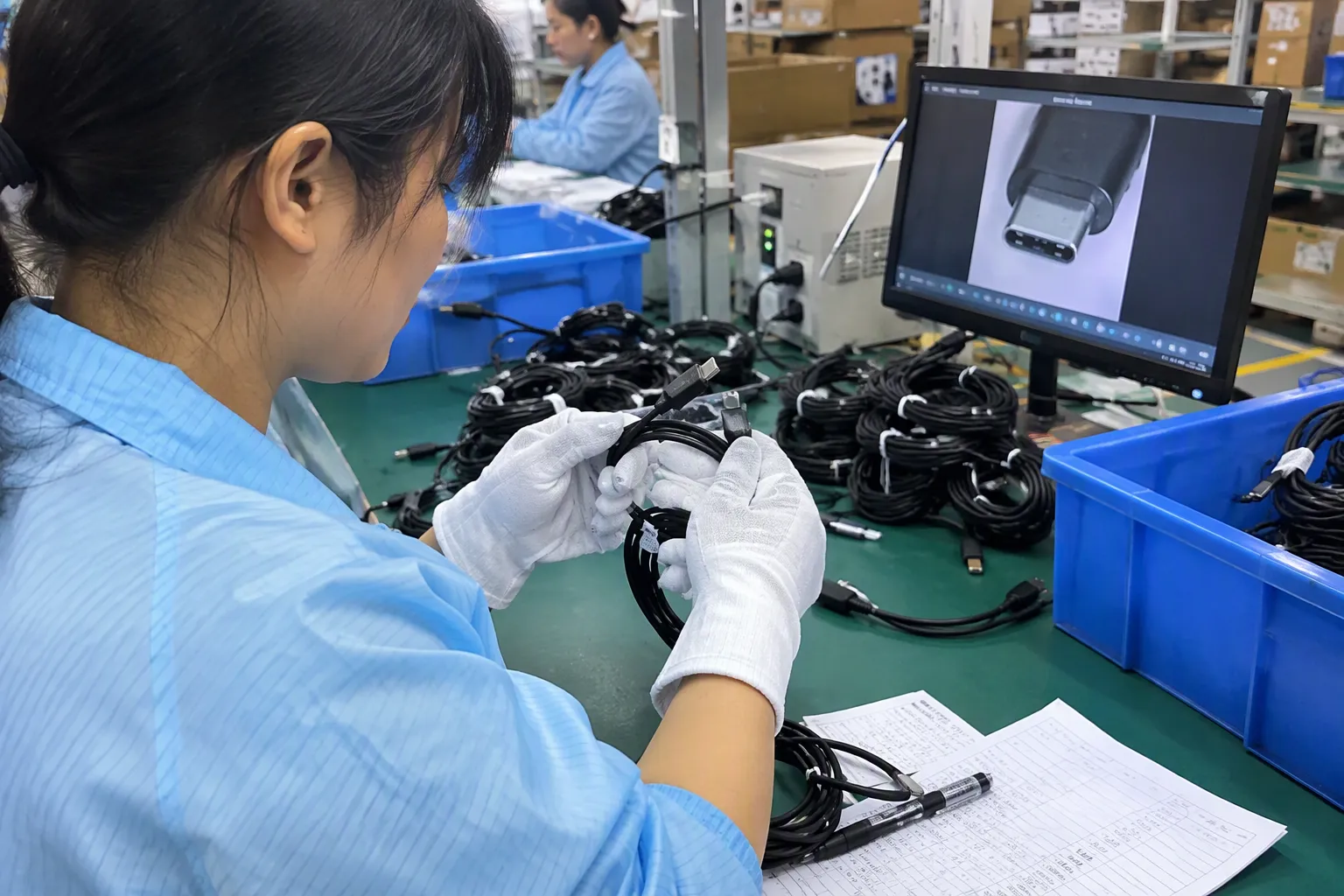
Before approving Super Speed USB 3.0 Cables Bulk and Wholesale orders, buyers should compare the sample with the quotation, confirm dimensions and appearance, review connector fit, examine strain relief and packaging, and define acceptable defects. Performance-related claims should receive application-specific verification rather than relying only on photographs or a product page.
Start with a representative sample
- The sample product code.
- The proposed materials and appearance.
- The cable length and connector configuration.
- The intended packaging.
- Whether the sample is a standard stock product or a custom version.
- Whether the same specification will be used for mass production.
A sample that is made specially for approval may not represent normal production.[8] The buyer should ask whether the production line, materials, and assembly method will remain the same.
Quality points that buyers can document
Appearance and assembly
- Connector shells are clean and correctly assembled.
- Moulding has no obvious cracks, flash, or sharp edges.
- Strain relief is consistent with the approved sample.
- The outer jacket has a consistent finish and color.
- Printing, logo placement, and packaging match the approved artwork.
Mechanical checks
- Connectors fit the specified mating ports.
- The cable does not show visible damage after normal handling.
- The cable length follows the agreed measurement method.
- The plug and cable junction has no obvious looseness.
- Packaging protects the cable during transport.
Functional checks
- The cable connects to the agreed sample devices.
- The intended data function is checked with suitable equipment.
- Charging behavior is checked separately if charging is part of the requirement.
- The buyer records the test setup instead of reporting an unexplained result.
I am careful not to present these checks as a laboratory certification. They are procurement controls. If the cable will be used in a sensitive or application-specific system, a qualified technical professional should define the necessary testing.
Certifications and documents should be verified
Our company works with products for European and American buyers, and we understand that customers may request compliance documents. However, buyers should verify whether a document applies to:
- The exact product model.
- The exact factory or manufacturer.
- The current production version.
- The destination market.
- The relevant material and packaging configuration.
- The claimed standard or regulation.
A document with a similar product name is not automatically sufficient. Buyers can review official guidance from sources such as the European Commission Access2Markets portal and the U.S. Consumer Product Safety Commission when determining market obligations. These sources do not replace legal advice or professional compliance evaluation, but they provide more reliable starting points than informal online claims.
How Can Buyers Evaluate a USB Cable Supplier for Repeat Orders?
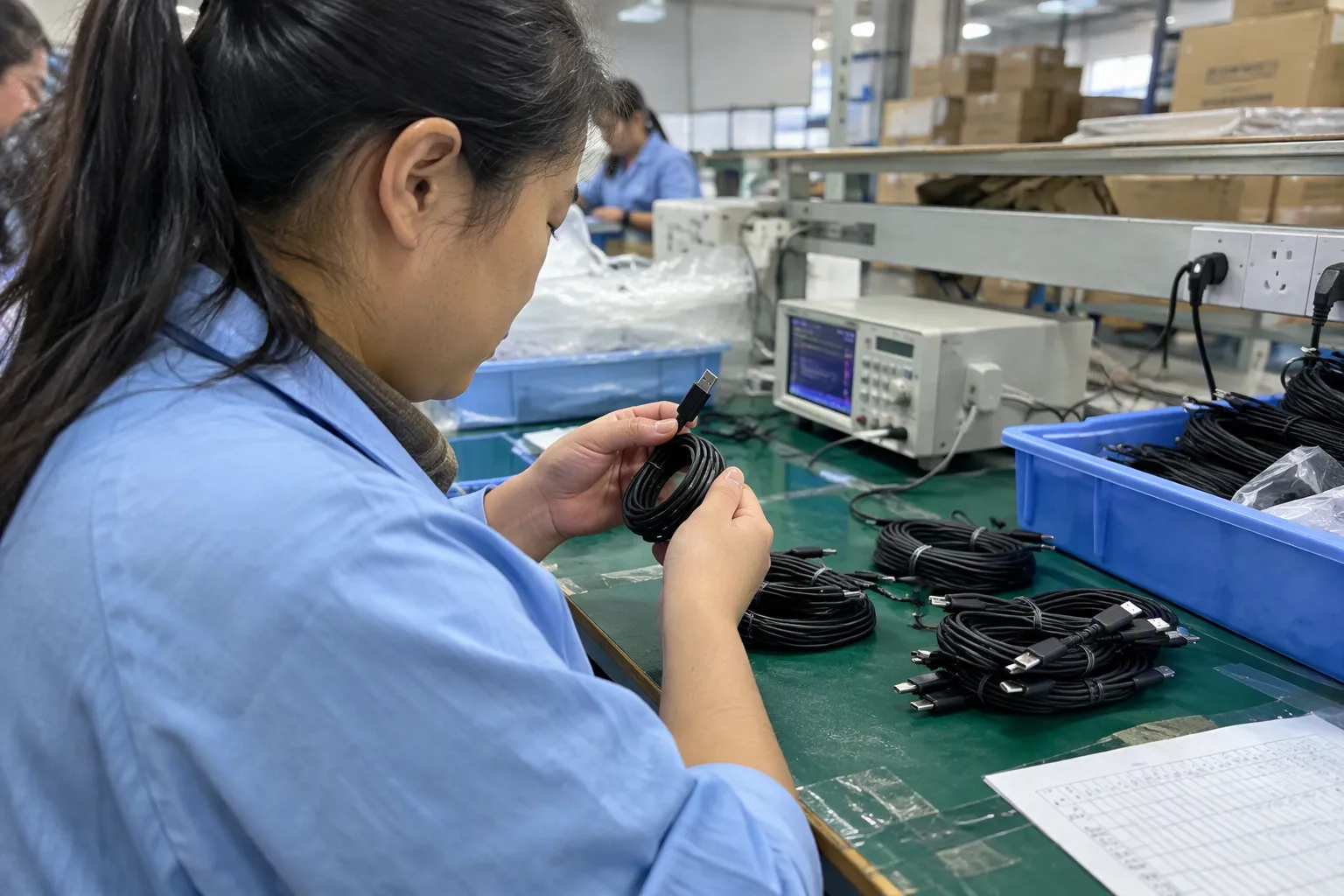
A supplier may provide an attractive sample and still struggle with repeat production. Bulk purchasing requires confidence in communication, quality continuity, documents, and delivery planning. The buyer should evaluate the supplier’s process, not only the sample in hand.
A suitable USB cable supplier should provide clear answers, a traceable quotation, a representative sample, realistic lead times, defined quality expectations, and a practical process for handling defects or changes. Buyers should also confirm whether the supplier can support repeat orders with the same product specification and packaging.
Supplier evaluation framework
1. Specification fit
The supplier should understand the buyer’s application and provide an exact product description. The buyer should avoid approving a quotation that says only “high-speed cable” without connector, length, packaging, and intended function.
2. Product information
The supplier should explain available construction options and provide relevant product documents. The information should be specific enough for the buyer to compare offers.
3. Sample confirmation
4. Production and replenishment control
The supplier should confirm the production schedule, inspection arrangements, shipment documents, and process for repeat orders. The buyer should ask how the supplier controls changes to materials, components, packaging, or subcontracted processes.
Questions I recommend asking suppliers
- Who manufactures the cable?
- Is production performed in one factory or through different facilities?
- Can the supplier keep the same product code for repeat orders?
- What is the standard lead time at the requested quantity?
- What happens if the approved sample and production goods differ?
- How does the supplier record defects?
- Can the supplier provide carton dimensions and packing information?
- What is included in the quoted price?
- Which documents are available for the destination market?
- How will changes be communicated before the next order?
Communication is part of quality control
In my experience with export buyers, communication problems often appear before product problems. If a supplier does not answer basic specification questions clearly, the buyer may face greater difficulty during production or after shipment.
- Written confirmation of key requirements.
- Consistent product terminology.
- Prompt notice of material or schedule changes.
- Clear distinction between confirmed information and information still under review.
- A named contact for quality and shipping questions.
This is especially important for European and American retailers, wholesalers, and online sellers who need accurate product listings and predictable replenishment. A product description that changes between quotation, packaging, and shipment can create customer service and inventory problems.
What Packaging and Private-Label Issues Matter in Wholesale Cable Orders?
Packaging is not a minor detail for a resale product. It affects shelf presentation, shipping volume, product protection, language requirements, and the buyer’s launch schedule. Private-label customers also need to approve artwork and confirm who is responsible for final checks.
For wholesale USB 3.0 cables, buyers should confirm packaging type, artwork, labeling, carton information, language requirements, packing quantity, and packaging MOQ before production. Private-label orders should use an approved artwork file and a written confirmation of which party checks the final packaging.
Common packaging choices
| Packaging type | Advantages | Points to confirm |
|---|---|---|
| Bulk carton | Lower packaging cost and less material | Suitable for warehouse or trade distribution |
| Polybag | Simple and economical | Label content and protection |
| Paper card | Suitable for some retail displays | Artwork, hanging hole, and durability |
| Retail box | Stronger shelf presentation | Box MOQ, artwork, and carton volume |
| Custom private label | Supports brand positioning | Proof approval, lead time, and color consistency |
The best option depends on the buyer’s channel. A professional importer may prefer bulk cartons for local packing. A chain retailer may require a defined retail format. An online seller may need packaging that reduces damage and supports product photography.
Artwork approval should be controlled
- Final artwork version.
- Product name and connector description.
- Cable length.
- Country or market information where required.
- Barcode or SKU.
- Packaging quantity.
- Carton marks.
- Date and name of approver.
The buyer should not assume that a supplier will identify every wording or labeling issue. The buyer should review the final artwork, while the supplier should confirm whether the artwork can be produced as supplied. For regulated or market-specific claims, qualified compliance advice remains appropriate.
How Can Buyers Reduce Risk in a First Bulk Order?
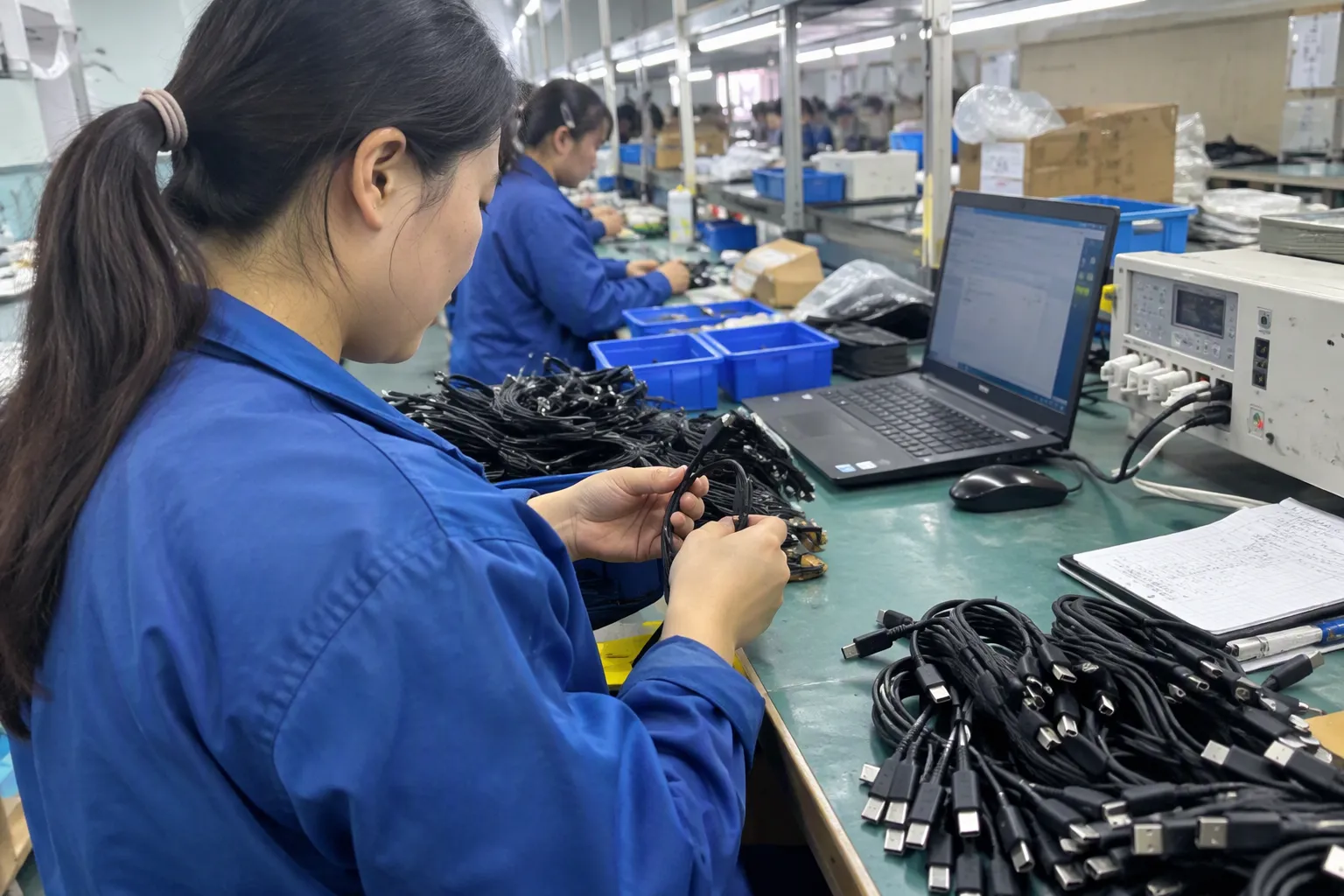
A first order does not need to be unnecessarily large to prove a supplier. A controlled process can provide useful information about product fit, communication, packing, and delivery before the buyer expands the volume.
Buyers can reduce first-order risk by defining the specification, ordering or reviewing a representative sample, using clear acceptance criteria, confirming packaging, checking production timing, and planning a follow-up inspection. A pilot order may be appropriate when the buyer is testing demand or working with a new supplier.
A practical order sequence
Replenishment planning
- Component substitutions.
- Packaging changes.
- Color or mould changes.
- New product versions.
- Factory changes.
- Seasonal production pressure.
- Stock availability for repeat orders.
I recommend that buyers give the supplier a realistic forecast when possible. A forecast is not always a binding order, but it helps both parties plan materials and capacity. It also allows the supplier to explain when a product may need a new MOQ or lead time.
When professional testing is appropriate
If a cable is intended for a specialized system, demanding environment, or important brand program, the buyer should consult a qualified engineer or testing organization. A commercial sample check cannot replace application-specific validation. The supplier can provide product information and production support, but the buyer remains responsible for confirming that the product is suitable for the final use.
Frequently Asked Questions
What does “Super Speed USB 3.0 cable” mean?
It usually describes a USB cable intended for a higher-speed data connection than basic USB generations. However, commercial naming can vary. Buyers should confirm the exact connector configuration, intended specification, and product documentation instead of relying on the phrase alone.
Can every USB 3.0 cable reach the advertised maximum speed?
No. The connected devices, ports, protocol support, cable design, length, adapters, and test conditions can affect actual performance. I recommend testing a representative sample with the intended equipment when data performance is important.
What is a reasonable MOQ for wholesale USB 3.0 cables?
There is no universal MOQ. A stock product in standard packaging may support a smaller order than a private-label cable with custom boxes. Buyers should compare MOQ with expected sales, packaging needs, cash flow, and likely replenishment frequency.
Should I buy USB 3.0 cables based on the lowest price?
I would not use unit price as the only criterion. Buyers should also compare sample consistency, packaging, lead time, defect handling, documentation, communication, and repeat-order support. A slightly higher price may reduce the risk of returns, delays, or inconsistent inventory.
What documents should a buyer request from a supplier?
The request depends on the product configuration and destination market. Buyers may ask for product specifications, available test information, declarations, and relevant compliance documents. They should verify that each document applies to the exact product and market, and they should seek qualified compliance advice when necessary.
Conclusion
Super Speed USB 3.0 Cables Bulk and Wholesale purchasing is a specification-matching decision, not a simple search for the lowest quotation. I recommend confirming the application, connector type, length, data and charging requirements, packaging, MOQ, sample quality, documents, lead time, and repeat-order process. Buyers should verify performance claims with the intended devices and define quality expectations before production. With 15 years of export experience in Shenzhen 3C products, I help European and American retailers, wholesalers, importers, and e-commerce sellers compare suitable USB cable options. Send me your required connector, length, quantity, packaging, and target market so I can prepare a practical quotation for review.
Sources
- The History of USB Standards from 1.0 to USB4", The USB Implementers Forum documents the evolution of USB specifications and associated branding, including the use of “SuperSpeed” terminology for USB 3.x products
- ELI5 What exactly does USB data transfer speed depend ...", USB link performance is determined by the negotiated capabilities of the connected endpoints and by the electrical characteristics of the interconnect, including signal integrity and channel loss
- What are the differences between USB 2.0 and 3.0? In- ...", USB specification terminology identifies the capabilities of an interface category, whereas achieved data throughput depends on the implementation and the connected system
- What are the differences between USB 2.0 and 3.0? In- ...", USB devices are designed to interoperate across specified generations, but a connection operates only at a mode supported by the participating components and negotiated by the link
- USB Charger (USB Power Delivery)", USB documentation treats data signaling and power delivery as related but distinct aspects of a USB connection, with separate requirements for supported data rates, current, voltage, and negotiation
- USB-C Cable Types Explained: Speed, Power and Video ...", USB Type-C requirements distinguish cable data capabilities from power-related characteristics, so a cable’s data-transfer description alone does not establish its supported charging profile
- USB 3.0 Cable Max Length: What You Need to Know", At high signaling rates, increased interconnect length generally increases channel loss and can reduce signal margin, making cable construction and verification relevant to reliable operation
- Monitoring Quality Control: Can We Get Better Data? - PMC", Quality-control practice distinguishes approval or prototype samples from evidence of conformity in ongoing production and therefore emphasizes process control and representative inspection
Related reading: