A micro USB cable Manufacturer & Supplier can offer many similar-looking products, but the wrong specification can create compatibility problems, returns, and delayed sales. I often see buyers begin with only a length and a target price. A better approach is to define the device, use case, construction, packaging, order quantity, and delivery plan before requesting quotations.
Quick Answer
The right Micro USB Cable Manufacturer & Supplier is the partner that can match the cable to your actual devices, charging requirements, construction expectations, packaging, MOQ, and delivery schedule. Buyers should confirm connector type, cable length, conductor and jacket specifications, charging or data requirements, sample approval, quality documents, and batch consistency before placing a production order.
- Identify the target devices and their original cable specifications.
- Treat “fast charging” as a compatibility question, not a universal promise.
- Compare connector construction, cable materials, length, packaging, and testing records.
- Confirm MOQ, lead time, customization, inspection, and after-sales terms in writing.
- Approve a representative sample before accepting a larger shipment.
The interface may look familiar, but visually similar cables can have different practical value[1]. I have found that the most useful supplier discussions start when buyers describe the complete sales scenario instead of asking only, “What is your best price?” The sections below explain how I would prepare that discussion.
What Should You Confirm With a Micro USB Cable Manufacturer & Supplier?
Many sourcing problems begin with an incomplete inquiry. A buyer may request a “standard Micro USB cable” without identifying the devices, market, packaging, or required performance. That wording leaves several important decisions open. I recommend preparing a short product brief before contacting suppliers.
A buyer should confirm the target device, Micro USB connector type, cable length, intended charging or data use, construction, packaging, order quantity, delivery date, and customization requirements. The buyer should also ask which specifications are supplier claims and which documents or test records support them.
Start With the Device, Not the Price
A retail customer may accept a basic cable for occasional use. A business customer who replaces cables frequently may care more about strain relief, jacket flexibility, pull resistance, and consistent fit. An e-commerce seller may need compact packaging and a clear compatibility statement. A wholesaler may prioritize carton packing, stable replenishment, and a competitive landed cost.
A Practical Product Brief
| Requirement | Example information to provide |
|---|---|
| Connector | USB-A to Micro USB, or another defined combination |
| Device type | Speaker, camera, controller, tablet, accessory, or mixed use |
| Main use | Charging only, charging and data, or data-focused |
| Length | Exact target length and acceptable tolerance |
| Cable structure | Standard round cable, braided cable, flat cable, or custom design |
| Jacket | PVC, TPE, nylon-braided exterior, or another specified material |
| Connector housing | Standard plastic, aluminum-look, custom molded, or branded |
| Packaging | Polybag, paper box, blister, retail card, or bulk carton |
| Quantity | Trial quantity, first order, and expected repeat volume |
| Delivery | Required shipping date and destination market |
| Branding | Logo, color, label, barcode, manual, and carton marks |
| Documents | Applicable declarations, test reports, and material information for verification |
Ask for a Written Specification Sheet
- Connector model and shell construction.
- Cable length and measurement method.
- Outer diameter or general cable construction.
- Stated charging and data capability.
- Available colors and tolerance.
- Packaging dimensions and packing quantity.
- Sample lead time and production lead time.
- Inspection method and acceptance criteria.
- Available compliance or material documents.
I do not treat a “high-quality cable” statement as technical evidence. I ask the supplier to state exactly what the claim means and which documents support it. Buyers should independently review certifications, declarations, and test reports before using them in product listings or customer communications.
For general background, buyers can review the USB Implementers Forum resources and then ask the supplier whether the proposed product is relevant to the required USB specification. USB-IF information does not automatically prove that every cable from a particular supplier meets a buyer’s requirements.
How Do Charging and Data Requirements Affect Micro USB Cable Selection?
“Fast charging” is one of the most common phrases in cable inquiries, but it is not a complete technical requirement.[3] A cable’s practical performance depends on the power source, device, cable construction, connector quality, charging protocol, and use conditions.[2] I recommend treating current ratings and charging claims as compatibility questions.
A suitable cable must work with the intended charger and device combination. A current figure printed on packaging does not guarantee the same result with every phone, speaker, camera, or accessory.[4] Buyers should confirm the complete charging path and avoid universal claims unless they have reliable evidence.
Charging Is a System
For example, a customer may ask for a “high-current Micro USB cable” for several products. I would want to know whether those products use the same charging input, whether they are from the same brand, and whether the cable is intended for charging only. A mixed-device bundle may require a more cautious product description than a cable designed for one confirmed model.
Charging-Only Versus Charging-and-Data
| Buyer requirement | Questions to ask the supplier |
|---|---|
| Charging only | Is the product designed and labeled for charging use only? |
| Charging plus data | What data function is claimed, and how is it checked? |
| Device synchronization | Has the sample been checked with the target device? |
| Mixed retail assortment | Which device categories have been verified? |
| Promotional product | Is the simplified specification safe for the intended use? |
I recommend that buyers test a sample with the actual target devices. A cable that charges one product may not provide the expected data function with another.[5] Buyers should also avoid listing a specific transfer performance figure unless the supplier can provide relevant evidence and the buyer’s own evaluation supports the claim.
How to Discuss Current Ratings
- Is the figure a design target, a tested result, or a marketing description?
- What charger and device were used?
- What cable length and construction apply to the figure?
- Does the rating apply to every production batch?
- Is there a test report or internal inspection record?
- Does the packaging use the same wording as the quotation?
Avoiding Unsupported “Fast Charging” Claims
For European and American retail channels, product claims can create customer expectations and compliance concerns. I recommend using precise wording such as “designed for charging compatible Micro USB devices” unless the specific charging performance has been verified. If a listing uses “fast charging,” the seller should define what that means and retain supporting documents.
The European Commission’s product safety information can help buyers understand why product claims and applicable requirements deserve review. A supplier’s general certification statement is not a substitute for checking the product, market, and documentation.
Why Can Similar Micro USB Cables Have Different Quality and Value?
Two Micro USB cables can look almost identical in a catalog while differing in connector fit, internal construction, flexibility, strain relief, and batch consistency. Price alone does not reveal these differences. I compare the cable as a complete product rather than judging the color, braid, or housing design.
Connector Fit Matters
The Micro USB plug has a small physical structure, so dimensional consistency matters.[6] The connector should fit the target device without excessive looseness, unusual force, or intermittent connection. The housing should also provide reasonable support when the cable is inserted or removed.
I ask suppliers how they control connector assembly and whether they inspect fit during production. I also ask for samples from the proposed production source rather than relying only on a showroom sample. A sample made for demonstration may not represent the final batch.
- Ease of insertion and removal.
- Stability during normal movement.
- Contact interruption when the cable is gently repositioned.
- Strain relief at the connector.
- Housing alignment and visible molding defects.
- Compatibility with protective cases around the device port.
Cable Length and Electrical Resistance
Cable length affects handling, packaging, and electrical behavior. A longer cable can be convenient, but it may also introduce more resistance than a shorter cable when the construction is otherwise similar. Buyers should not assume that a longer cable offers the same practical charging experience without evaluation.
Jacket and Reinforcement
| Construction | Possible advantages | Points to verify |
|---|---|---|
| PVC jacket | Familiar, often cost-conscious, simple to package | Flexibility, surface finish, odor, and batch consistency |
| TPE jacket | Can offer a softer feel and flexibility | Material grade, surface durability, and color consistency |
| Braided exterior | Premium appearance and abrasion presentation | Braid tightness, fraying, connector transition, and packaging |
| Flat cable | Easier visual organization in some uses | Bend behavior, connector strain relief, and packaging volume |
I do not describe one construction as automatically more durable. Durability depends on the full design and the actual use.[7] A braided exterior may look premium but still have a weak connector transition.[8] A simple PVC cable may perform appropriately in a low-stress application.
Batch Consistency Is a Commercial Issue
I also recommend keeping an approved sample, specification sheet, packaging artwork, and inspection checklist together. This creates a reference for future replenishment. If the supplier changes a connector, jacket, mold, or packing method, the buyer should receive notice and approve the change where necessary.
How Should Buyers Compare a Micro USB Cable Manufacturer & Supplier?
A quotation comparison can become misleading when suppliers quote different products under the same name. One quotation may cover a basic charging cable in bulk packing, while another includes a braided jacket, retail box, logo printing, and a different length. I compare the commercial offer only after I normalize the specification.
Compare Like With Like
| Comparison point | Supplier A | Supplier B | Supplier C |
|---|---|---|---|
| Connector specification | Confirmed / unclear | Confirmed / unclear | Confirmed / unclear |
| Length and tolerance | |||
| Charging and data claim | |||
| Cable construction | |||
| Packaging included | |||
| Logo or customization cost | |||
| MOQ | |||
| Sample cost and time | |||
| Production lead time | |||
| Inspection terms | |||
| Documents supplied | |||
| Destination shipping basis | |||
| Replacement or claim process |
Questions for Supplier Evaluation
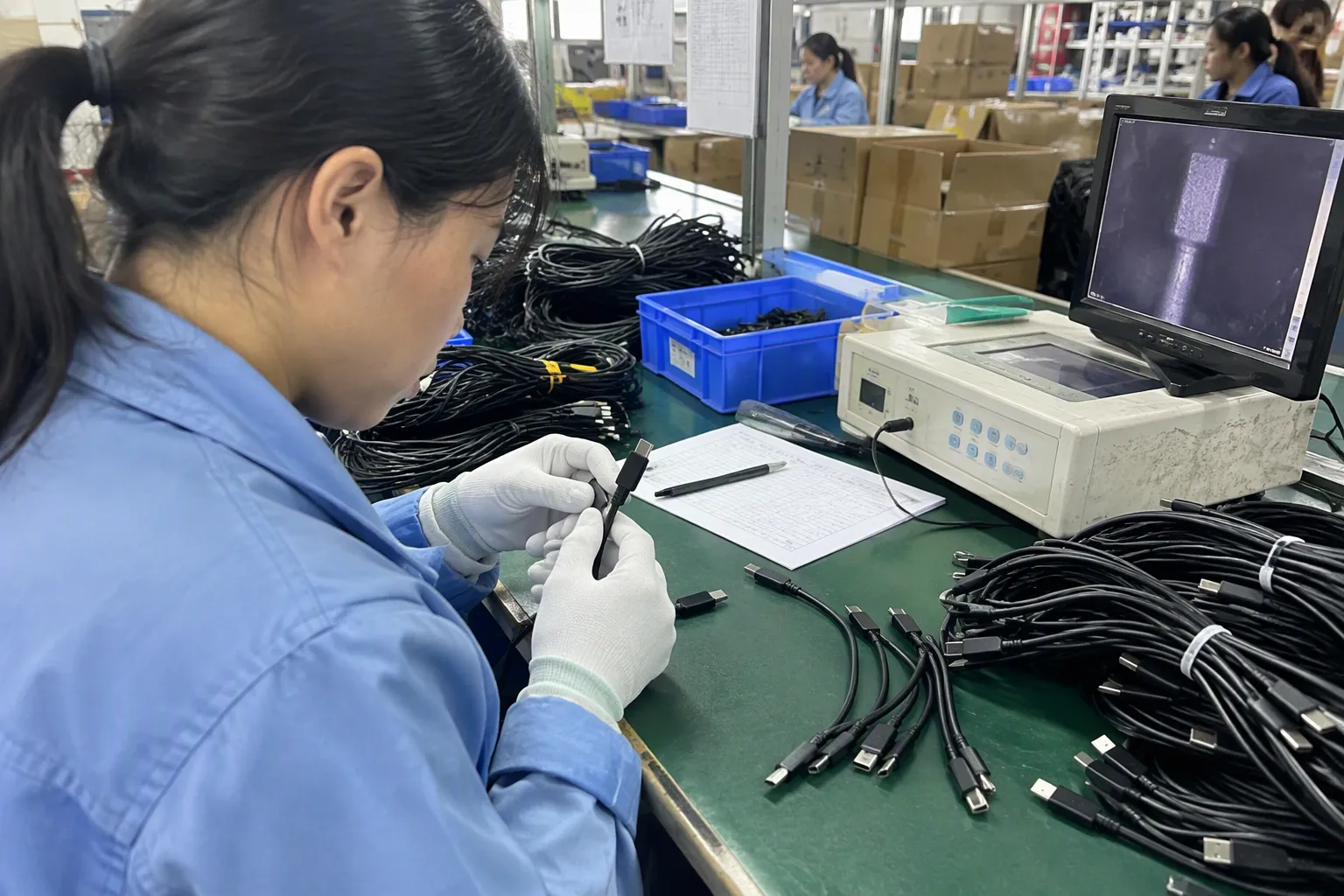
- Who will produce the cable?
- Does the quoted sample come from the same production source?
- Which parts of the specification are standard?
- Which parts require a new mold or custom tooling?
- What is the MOQ for each color and packaging design?
- Can the supplier support a smaller trial order?
- What is the normal production lead time after artwork approval?
- How does the supplier handle material or component changes?
- Which quality records can the supplier provide?
- What is the process for handling shortages, defects, or incorrect packaging?
As a Shenzhen-based 3C trading company, I often focus on communication between the buyer and the supply chain. My role is to translate a buyer’s commercial request into a clear product specification and then confirm what the supply side can actually provide. I do not treat supply-chain experience as proof of factory ownership or laboratory capability.
Documents Buyers Should Verify
- The document holder and issuing organization.
- Product model and specification.
- Test date and scope.
- Manufacturer or production source.
- Applicable market and standard.
- Whether the document covers the actual finished product.
- Whether the document is current and complete.
For materials and restricted substances, buyers can review the European Commission RoHS policy page. The buyer should still determine whether the product falls within the relevant scope and whether the supplier’s documents are sufficient for the intended sale.
Sample Approval Should Be Specific
What MOQ, Lead Time, and Customization Should Buyers Expect?
MOQ and lead time can determine whether a product is commercially suitable even when the technical specification is correct. A retailer may like a cable but lack the sales volume for the supplier’s custom packaging MOQ. An e-commerce seller may accept a standard product but need a faster replenishment cycle.
Separate Standard and Custom Requirements
| Requirement | Standard option | Custom option |
|---|---|---|
| Cable color | Existing color range | Matched or special color |
| Connector housing | Existing mold | New or modified mold |
| Logo | No logo or standard label | Printing, laser marking, or molding |
| Packaging | Bulk bag or standard box | Branded retail packaging |
| MOQ | Often more flexible | Often higher by color or design |
| Lead time | Usually simpler to schedule | Includes artwork and production approval |
| Commercial risk | Lower initial inventory risk | Higher commitment before market feedback |
Build a Realistic Delivery Schedule
- Requirement confirmation.
- Quotation and specification review.
- Sample preparation.
- Sample testing and approval.
- Artwork and packaging approval.
- Material preparation.
- Production.
- Inspection and packing.
- Export documentation.
- Transportation to the destination.
Plan MOQ Around Sales, Not Hope
Ask About Reorders
A first order is only part of supplier selection. I ask whether the supplier can repeat the same product later and how the supplier identifies the approved version. The buyer should retain the SKU, specification, packaging artwork, sample, and order records.
I also ask whether the supplier can support mixed quantities or mixed colors. The answer may affect the true cost more than the unit price. A supplier that offers a competitive price but cannot support the required assortment may not be commercially practical.
How Can Buyers Reduce Returns and After-Sales Problems?
Returns often result from a mismatch between customer expectations and product information. A cable may be physically compatible but unsuitable for a particular charging or data requirement. Customers may also expect a premium appearance or extra durability because of the product title.
Use Accurate Product Descriptions
Create a Pre-Shipment Checklist
Functional testing should match the product claim. If the product is sold for data use, the buyer should include an appropriate data check. If the product is sold for charging compatible devices, the buyer should verify it with representative equipment. A qualified inspection company or technical professional may be appropriate for larger or higher-risk programs.
Define Defect Handling Before the Order
- Short shipment.
- Incorrect model or length.
- Packaging errors.
- Visible damage.
- Failed sample comparison.
- Defects discovered after arrival.
- Replacement, credit, or refund process.
- Evidence required for a claim.
- Time limit for reporting issues.
Learn From Customer Questions
Customer questions can reveal a specification problem. If customers repeatedly ask whether the cable supports data transfer, the product page may be unclear. If customers report loose connections, the buyer should examine device compatibility, connector dimensions, and batch quality rather than assuming every complaint has the same cause.
| Complaint type | Possible investigation area |
|---|---|
| Does not charge | Device, charger, connector, cable, or incorrect expectation |
| Charges slowly | Power source, device limit, cable construction, or use condition |
| Data does not work | Cable design, device compatibility, software, or claim accuracy |
| Connector feels loose | Device port, plug dimensions, case interference, or assembly |
| Cable breaks near plug | Strain relief, handling, construction, or misuse |
| Wrong item received | SKU, label, packing, or warehouse control |
How Can a Buyer Choose the Best Micro USB Cable Manufacturer & Supplier?
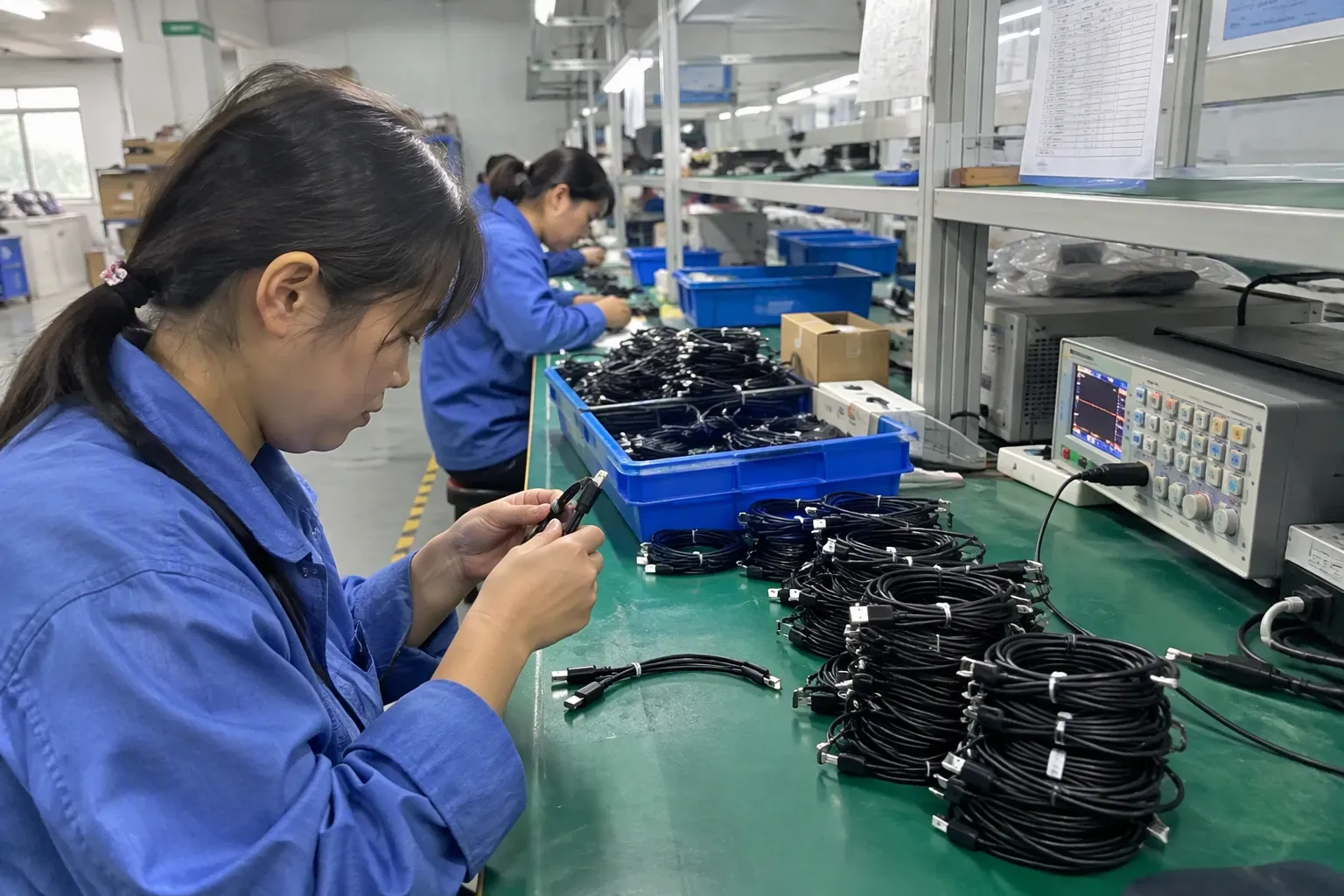
The final decision should combine technical fit, commercial suitability, communication, and risk control. I would not choose a supplier because of a catalog photograph or the lowest first quotation. I would choose the supplier that can clearly understand the product brief and support the buyer’s sales model.
A strong selection process includes specification confirmation, comparable quotations, sample approval, document review, realistic MOQ and lead time, and a written quality and after-sales process. The buyer should use qualified professionals for application-specific technical or compliance decisions.
A Practical Supplier Scorecard
| Evaluation area | Suggested question |
|---|---|
| Product fit | Does the proposed cable match the actual devices and use case? |
| Specification clarity | Are length, construction, charging, and data requirements written down? |
| Sample quality | Does the sample represent the proposed production product? |
| Batch control | Can the supplier explain inspection and change control? |
| Documentation | Are relevant documents available for buyer verification? |
| MOQ | Does the quantity match the buyer’s sales plan? |
| Lead time | Does the schedule fit the launch or replenishment date? |
| Customization | Can the supplier deliver branding and packaging accurately? |
| Communication | Does the supplier answer questions precisely? |
| After-sales | Are claims and remedies defined before purchase? |
| Total cost | Does the quote include packaging, inspection, shipping, and other charges? |
The weighting depends on the buyer. A discount retailer may emphasize cost and speed. A premium electronics brand may place more weight on appearance, packaging, and repeat consistency. A distributor may need several lengths and colors with flexible replenishment.
Warning Signs During Supplier Communication
- Gives a price without asking about the device or use case.
- Uses “fast charging” without defining the product conditions.
- Avoids providing a written specification.
- Changes the sample details during quotation.
- Cannot explain MOQ by color or packaging.
- Sends documents that do not identify the product model.
- Promises universal compatibility.
- Offers an unusually low price without explaining the construction.
- Refuses reasonable sample or inspection discussion.
- Gives inconsistent answers from different contacts.
My Recommended Procurement Sequence
- Define the devices, use, length, construction, packaging, and sales channel.
- Send the same product brief to several qualified suppliers.
- Compare quotations on a like-for-like basis.
- Request samples from the proposed production source.
- Test the samples with representative devices.
- Review relevant declarations, reports, and material information.
- Approve the exact SKU and packaging in writing.
- Confirm MOQ, lead time, inspection, and after-sales terms.
- Conduct pre-shipment inspection when appropriate.
- Keep the approved sample and records for future reorders.
When a Trading Partner Can Help
A trading company can be useful when the buyer needs communication support, product comparison, packaging coordination, or access to several supply options. My company has 15 years of export experience with 3C products, including USB cables, chargers, GaN chargers, TWS earphones, and smartwatches. We mainly serve European and American retailers, wholesalers, importers, and e-commerce sellers.
I present that experience accurately. It helps me interpret buyer requirements, confirm specifications, coordinate suppliers, and organize export details. It does not replace independent laboratory testing, professional compliance advice, or the buyer’s own responsibility to verify documents and claims.
Frequently Asked Questions
Is a Micro USB cable suitable for every Micro USB device?
No. The connector may fit physically, but charging and data performance can differ between devices. Buyers should confirm the device requirements, cable purpose, length, and construction. They should test samples with representative target devices and avoid universal compatibility claims unless those claims have been properly verified.
Does a higher current rating always mean faster charging?
No. Charging depends on the charger, device, cable, charging circuit, and operating conditions. A current figure alone does not guarantee faster charging. I recommend asking how the rating was determined and confirming the complete device-and-charger combination before using a “fast charging” claim.
What should I include when requesting a quotation?
I recommend including the connector combination, target devices, charging or data use, cable length, construction, color, packaging, logo requirements, quantity, destination, required delivery date, and document expectations. A clear brief helps suppliers provide comparable quotations and reduces later specification changes.
How can I check whether a supplier’s certification is relevant?
Review the document holder, issuing organization, product model, test scope, date, manufacturer, and applicable market. Confirm that the document covers the actual product being purchased. Buyers should use qualified compliance professionals for product-specific decisions and should not rely on a generic certification logo.
Is a low MOQ always better for a small buyer?
Not necessarily. A low MOQ can reduce inventory risk, but the unit price, packaging cost, customization limits, and replenishment conditions may be less favorable. I recommend comparing the full landed cost and expected sales plan. A standard SKU may be more practical than a custom product with a large minimum order.
Conclusion
Choosing a Micro USB Cable Manufacturer & Supplier requires more than comparing catalog prices. I recommend confirming the target devices, charging and data requirements, connector construction, cable length, packaging, MOQ, lead time, documents, inspection process, and after-sales terms. Buyers should approve a representative sample and keep a written specification for future orders. If you are sourcing Micro USB cables for a European or American retail, wholesale, or e-commerce business, contact us with your product brief. I can help you compare suitable options and clarify the details before quotation.
Sources
- USB Connector Type Guide", USB technical specifications distinguish cable and connector requirements that are not necessarily observable from a cable’s exterior, supporting the distinction between visual similarity and functional equivalence
- How do devices know how much power draw a usb cable ...", USB charging standards describe charging as an interaction between the source, sink, connection, and applicable protocol, supporting a system-level rather than cable-only account of charging performance
- Understanding the Consumer Legalities of 'Fast Charging'.", Technical charging standards define performance through specified electrical and communication conditions, indicating that the unqualified label “fast charging” does not by itself identify a reproducible charging capability
- How do devices know how much power draw a usb cable ...", Research and charging specifications indicate that the current delivered in a USB charging system is constrained by the capabilities and negotiation of the connected source and device, so a cable label alone cannot guarantee a common result
- Identifying data transfer micro USB cables vs charge only ...", USB interface documentation distinguishes power connections from the differential data path, supporting the possibility that a cable may provide charging without delivering the expected data function
- Universal Serial Bus Micro-USB Cables and Connectors ...", USB connector specifications establish dimensional and mating requirements for Micro USB interfaces, supporting the importance of dimensional consistency to fit and contact reliability
- Tension and fatigue behavior of 316LVM 1×7 multi-strand ...", Cable-reliability studies identify mechanical loading and termination design, in addition to jacket material, as relevant determinants of service life, supporting a whole-design assessment of durability
- Strain Relief in Cable Assemblies", Mechanical reliability research indicates that cable failures can concentrate at terminations and strain-relief transitions, so an exterior braid is not by itself evidence of connector strength