Quick Answer
When buyers ask how to make a micro USB cable, they often focus on the connector and outer jacket first. I have seen this approach create slow charging, unstable data transfer, and avoidable returns. The safer solution is to define the application, specify the construction, and validate samples before approving mass production.
A micro USB cable is made by combining suitable conductors, insulation, shielding where required, connector assemblies, strain relief, and an outer jacket[1], followed by testing for continuity, charging performance, data function, and mechanical quality. For commercial buyers, the key question is not only how to make a micro USB cable, but whether the finished specification matches the intended device, market, and use conditions.
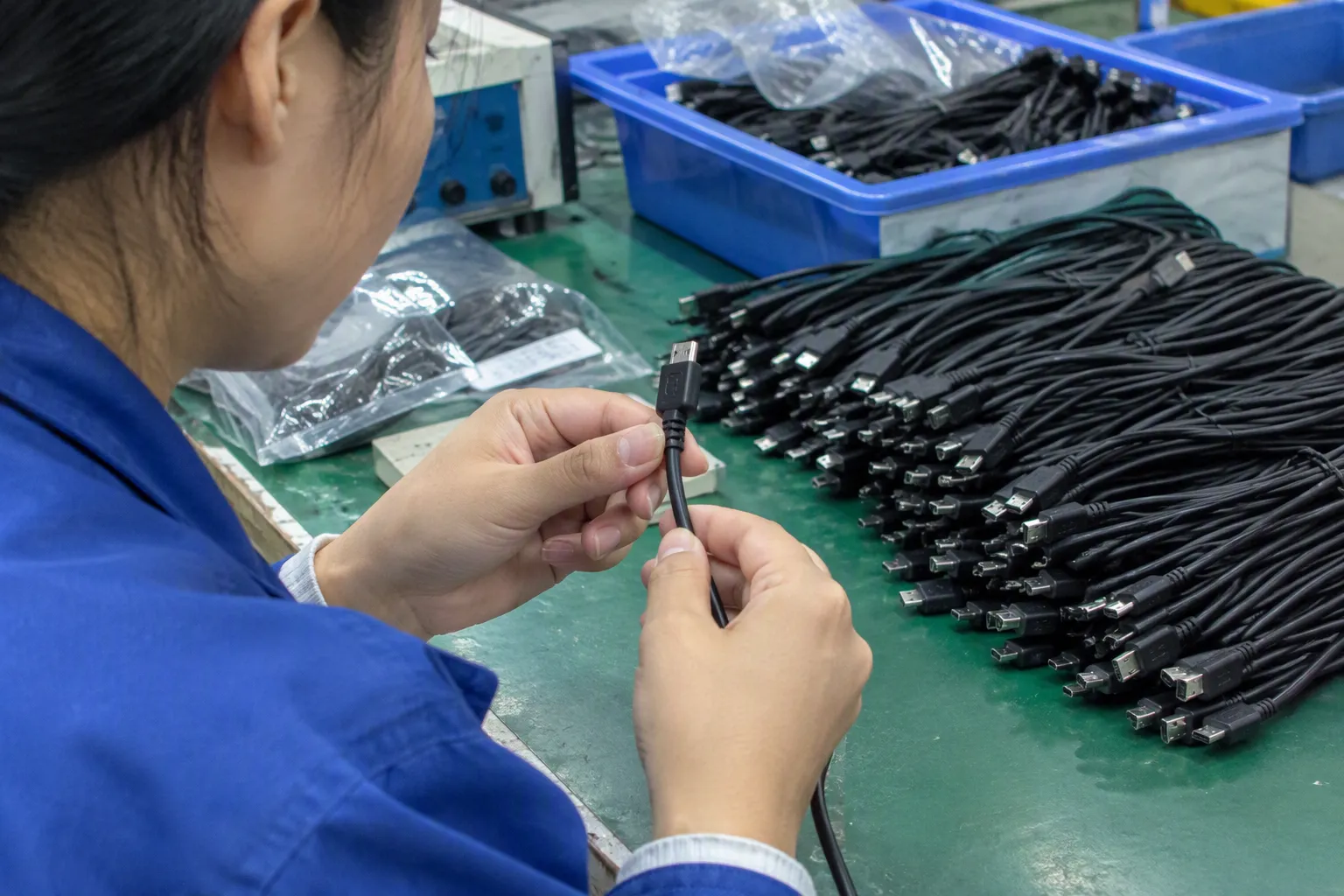
I do not treat a micro USB cable as a simple low-cost accessory. A cable can look correct and still perform poorly because of unsuitable conductor size, weak crimping, inconsistent assembly, or unclear testing. In this guide, I explain how I would evaluate the product and supplier before placing a commercial order.
Should “How to Make a Micro USB Cable” Be Reframed as a Product-Selection Question?
Many buyers begin with a visual reference, a target price, and a product photo. That approach becomes risky when the same-looking cable is expected to charge different devices, support data transfer, survive retail handling, and meet different customer expectations. I start with the application because the application determines the specification.
For commercial purchasing, “how to make a micro USB cable” should be reframed as “how should I define and validate a micro USB cable?” Buyers should first identify the device, use case, length, charging requirement, data requirement, connector design, packaging, and market obligations. They should then compare samples, written specifications, and production controls rather than relying on appearance or price alone.
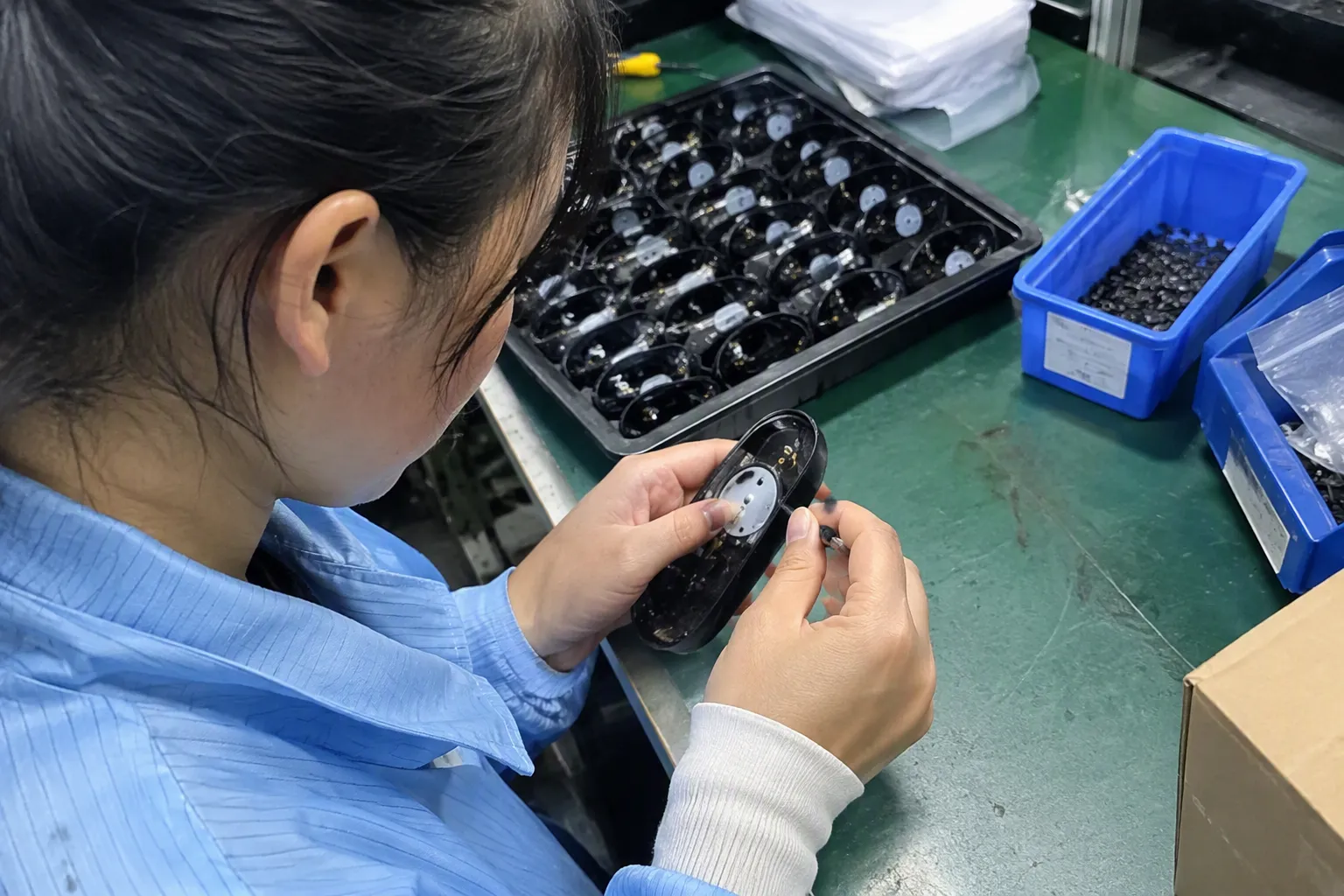
Why does the intended application matter?
A charging cable for a small accessory may not need the same construction as a cable used with a power bank, older tablet, GPS device, camera accessory, or industrial control product. I ask buyers to identify the actual device and usage conditions before I discuss a final model.
A useful starting checklist includes:
- Connector combination: Micro USB to USB-A, Micro USB to USB-C, or another configuration.
- Cable length: The requested length can affect handling, voltage drop, packaging, and customer use.
- Charging-only or charging plus data: A cable that contains power conductors may not provide reliable data transfer.
- Device compatibility: Some devices use Micro USB for charging only. Others require data lines for synchronization, firmware work, or computer connection.
- Expected environment: Home use, retail display, travel, vehicle use, warehouse use, or repeated daily bending can require different construction priorities.
- Packaging and presentation: Retail packaging may need barcode space, language information, material declarations, and clear compatibility wording.
- Target market: European and North American buyers may have different retailer requirements, documentation expectations, and compliance review processes.
I also ask whether the buyer has a known reference sample. A reference sample can help compare dimensions, jacket feel, connector fit, and performance. However, a sample is not a complete specification. A supplier can copy the appearance while changing the internal materials or assembly method.
What is inside a micro USB cable?
A commercial micro USB cable normally includes several functional parts. I prefer to discuss these parts in purchasing language rather than present a factory process that I have not personally engineered or operated.
| Component | What I ask the supplier to clarify | Why it matters |
|---|---|---|
| Conductors | Material, construction, and applicable size specification | Affects resistance, charging stability, and consistency |
| Power wires | Whether the cable is designed for the requested charging use | Helps avoid vague “fast charging” claims |
| Data wires | Whether data transfer is supported and how it is tested | Prevents buyers from assuming every cable carries data |
| Insulation | Material and dimensional control | Supports electrical separation and durability |
| Shielding | Whether shielding is included and what purpose it serves[5] | May matter for signal stability in some applications |
| Micro USB plug | Plug type, housing, fit, and terminal quality | Affects device connection and insertion reliability |
| USB-side plug | Connector type and compatibility | Must match the customer’s devices and chargers |
| Strain relief | Moulded or assembled design and bend support | Reduces stress near the connector |
| Outer jacket | Material, flexibility, color, and surface finish | Affects handling, appearance, and resistance to wear |
| Marking and packaging | Required labeling and retail presentation | Supports accurate sales and traceability |
The important point is that each part needs a defined role. A thick outer jacket does not automatically mean that the conductor is suitable. A metal-looking connector does not prove that the terminal assembly is reliable. A heavy cable does not automatically provide better charging.
Which specifications should a buyer define first?
I usually recommend that buyers create a short product specification sheet before requesting quotations. The sheet does not need to describe every manufacturing detail. It needs to remove the assumptions that cause disputes later.
At minimum, I would define:
- Cable type and connector configuration
- Finished length and acceptable tolerance
- Charging function and requested performance condition
- Data-transfer requirement, if applicable
- Jacket material, color, and flexibility preference
- Connector housing design and logo requirement
- Packaging format
- Sample approval process
- Inspection standard and defect classification
- Required documents and market-specific compliance review
I would also ask the supplier to state the test conditions behind any performance claim. For example, “high-current cable” is not a complete specification unless the buyer knows the test setup, compatible charger and device, cable length, temperature, and acceptance limit. I do not recommend publishing a universal charging figure without a defined method and supporting record.
How do material and construction choices affect quality?
The internal construction can influence resistance, heat behavior, charging stability, and data performance. I use careful wording here because exact results depend on the complete cable design and test method.
A cable with unsuitable or inconsistent conductors may create more voltage loss under load.[2] A poorly assembled terminal may create intermittent contact. Inadequate strain relief may allow repeated bending to damage the connection near the plug.[6] Poor insulation control can create electrical or safety concerns that appearance inspection will not reveal.
I ask suppliers questions such as:
- What conductor material and construction does the approved sample use?
- Does mass production use the same approved material?
- How does the supplier control conductor dimensions and resistance?
- Are power and data lines configured differently between charging-only and data cables?
- How are connector terminals attached to the cable?
- What checks confirm continuity and correct pin assignment?
- How does the supplier control the moulded strain-relief area?
- What happens when a production lot does not meet the agreed result?
I do not expect every supplier to share confidential process details. I do expect clear product specifications, reasonable quality records, and answers that match the approved sample.
What can go wrong when a cable only looks correct?
I remember an anonymized customer situation involving a cable that looked very similar to the requested reference. The customer selected it mainly because the color, connector shape, and packaging concept appeared acceptable. After the product reached the market, some users reported slow or unstable charging with certain devices.
The lesson was not simply that the cable was “bad.” The larger issue was that the application and acceptance criteria had not been defined clearly enough. The customer had not separated appearance approval from performance approval. The supplier had not been asked to document the exact charging test condition in a way that matched the customer’s devices.
This type of problem can increase several forms of commercial risk:
- Customer complaints and negative reviews
- Replacement and refund costs
- Retailer penalties or delisting discussions
- Inventory that needs rework or relabeling
- Emergency air freight for replacement stock
- Loss of confidence in the supplier
- Unclear responsibility between buyer, supplier, and end user
I have found that a written specification is often cheaper than a corrective action after shipment. The buyer does not need to request unrealistic promises. The buyer needs to make the intended use measurable and confirm that the supplier can repeat the result.
How should buyers compare charging-only and data-transfer cables?
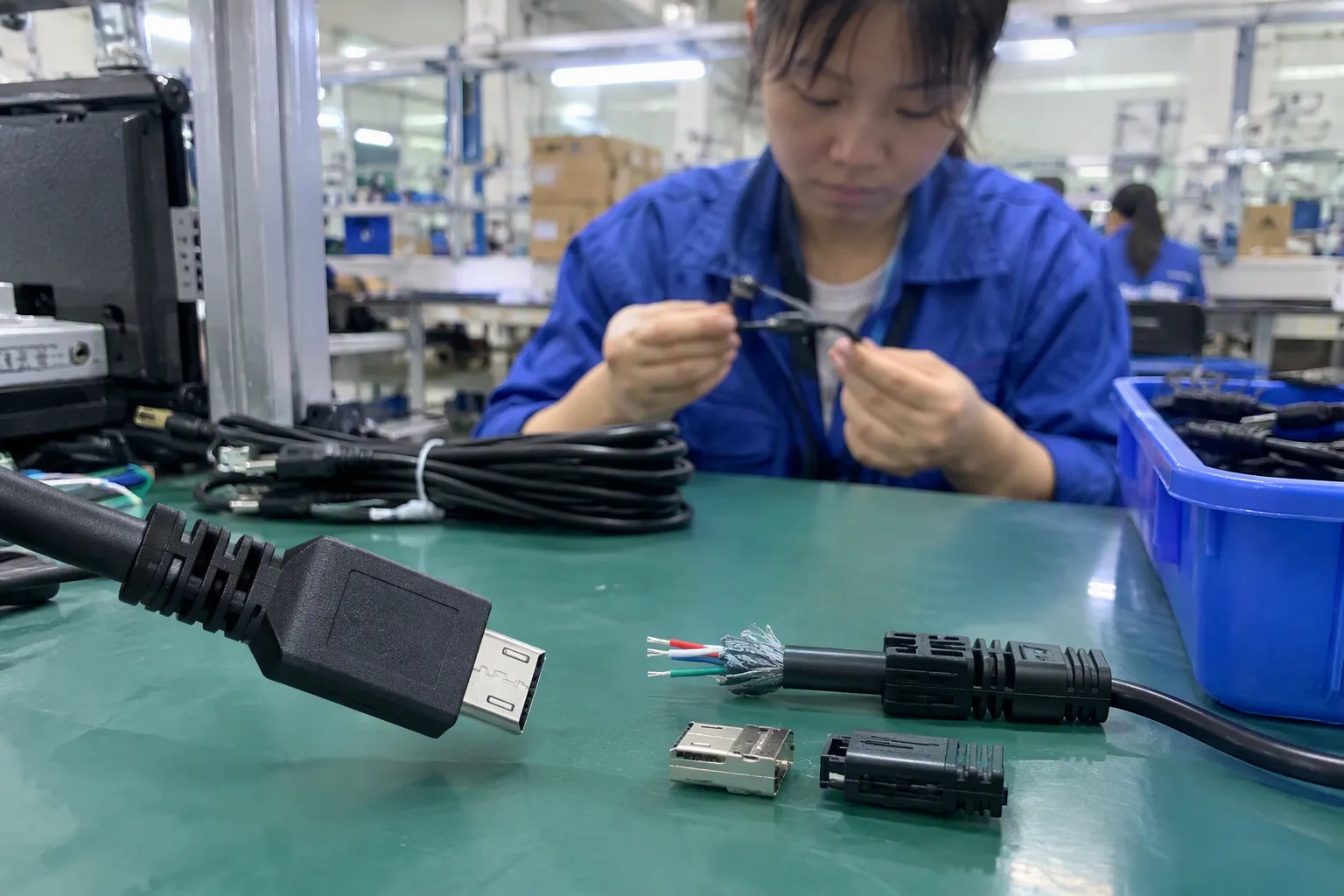
I never assume that a Micro USB cable supports data transfer just because both ends fit the device and computer.[3] A buyer should request this function explicitly and ask how it is checked.
| Requirement | Charging-only cable | Charging and data cable |
|---|---|---|
| Power connection | Required | Required |
| Data conductors | May not be included or may not be functional | Required for the stated data use |
| Device synchronization | Not promised | Must be verified with suitable devices |
| Packaging wording | Should say charging use if relevant | Should identify data function accurately |
| Sample evaluation | Charging test | Charging and data-transfer test |
| Main buyer risk | Slow or unstable charging | Charging problems plus connection or transfer failure |
A data cable can still vary in practical performance. The device, computer, operating system, charger, and test file can affect the result. I recommend that the buyer and supplier agree on a basic test method instead of using a general claim such as “supports data.”
Which tests should be included before approval?
I prefer a layered evaluation because one test cannot cover every failure mode. The exact limits should be agreed by the buyer, supplier, and qualified technical reviewer.
Visual and dimensional checks
These checks can include:
- Connector appearance
- Housing alignment
- Moulding quality
- Jacket color and surface defects
- Finished length
- Marking position
- Packaging accuracy
- Plug fit with approved reference devices
Electrical checks
These may include:
- Continuity
- Pin assignment
- Short-circuit screening
- Resistance or voltage-drop evaluation under an agreed condition
- Charging function with specified equipment
- Data function where required
Mechanical checks
These may include:
- Connector retention
- Controlled insertion and removal checks
- Bend or flex evaluation
- Strain-relief inspection
- Jacket and moulding consistency
I do not recommend treating a sample test as proof that every future batch will be identical. A sample confirms a particular item or small group.[7] A production quality plan should explain how the supplier keeps mass production aligned with that sample.
How can a buyer validate production consistency?
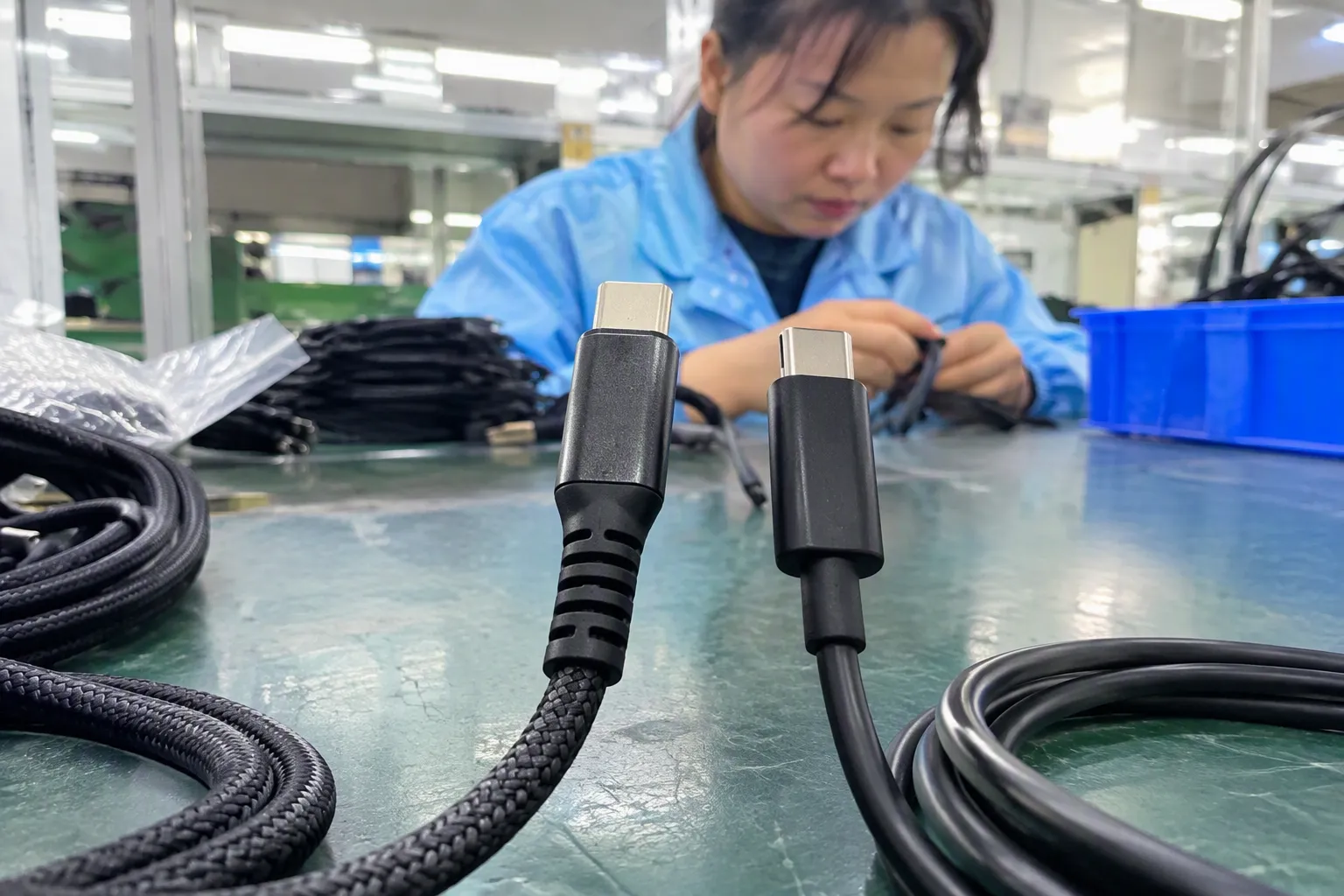
I look for evidence at three points: before production, during production, and before shipment.
Before production, I want the approved sample, final artwork, specification sheet, packaging details, and purchase order requirements aligned. Any change should require written approval.
During production, the buyer can use an agreed inspection plan. The plan might cover incoming materials, connector assembly, line checks, finished cable testing, labeling, and packaging. The buyer can also request photographs, test records, or an independent inspection when the order value and risk justify it.
Before shipment, the inspection should verify:
- Product quantity
- Model and connector configuration
- Appearance and workmanship
- Packaging and labels
- Random electrical checks
- Required functional tests
- Carton quantity and shipping marks
I also pay attention to change control. A supplier may change a material source, connector mould, jacket compound, or assembly method because of availability or cost. The buyer should define which changes require approval. Otherwise, a repeat order may not be equivalent to the original sample.
How should buyers evaluate a micro USB cable supplier?
Price is important, but I do not use price as the first filter. I first assess whether the supplier understands the product requirement and can communicate clearly about what the quotation includes.
I would compare suppliers using a table like this:
| Evaluation area | Questions I would ask |
|---|---|
| Product understanding | Can the supplier explain the difference between charging-only and data cables? |
| Specification control | Will the supplier provide written construction and performance details? |
| Sample process | Can the buyer approve a representative sample before production? |
| Testing | What does the supplier test, under which conditions, and with what records? |
| Production consistency | How does the supplier control repeat orders? |
| MOQ | Does the MOQ fit the buyer’s sales test and inventory plan? |
| Lead time | Does the quoted delivery time include production, inspection, and packing? |
| Customization | Can the supplier manage color, logo, packaging, and labeling accurately? |
| After-sales support | How are complaints investigated and corrective actions documented? |
| Export experience | Can the supplier provide practical shipment and documentation support? |
My company is based in Shenzhen, and I have worked in 3C export coordination for 15 years. I have seen that communication quality can affect delivery almost as much as the product itself. A supplier that answers quickly but vaguely may create more risk than a supplier that asks careful technical questions before quoting.
What should European and North American buyers verify?
I recommend that buyers treat certifications and compliance documents as documents to verify, not as automatic proof of product quality. The correct requirements depend on the product design, packaging, destination, sales channel, and applicable law.
A buyer should check:
- Whether the document names the correct supplier and product
- Whether the model number matches the ordered cable
- Whether the report or certificate is current and traceable
- Whether the test scope covers the actual product
- Whether the issuing organization can be confirmed
- Whether packaging and labeling match the approved information
- Whether the importer or retailer has additional requirements
A general company certificate does not necessarily validate every cable model. A supplier’s statement also does not replace a buyer’s compliance review. I recommend qualified professional evaluation when the product will be sold under a retailer’s private label or alongside regulated equipment.
How do MOQ, lead time, and customization affect the decision?
A technically suitable cable may still be commercially unsuitable if the MOQ is too high, the lead time is too long, or the supplier cannot support the required packaging.
I usually separate the commercial decision into four questions:
-
Can I test the market without excessive inventory?
A lower initial quantity may be useful for an e-commerce seller or a retailer testing a new color or package. -
Can the supplier repeat the approved product?
A small trial order is useful only if the supplier can maintain the same construction later. -
Can customization be controlled?
Logo printing, molded branding, retail cards, multilingual labels, and custom color can add approval stages and affect lead time. -
Can the supplier support the delivery plan?
The buyer should clarify production time, inspection time, packing time, and shipping document preparation separately.
I also advise buyers to confirm whether custom packaging is included in the quoted price. A low cable price can become less attractive when artwork setup, packaging production, inspection, and rework are added later.
What is a practical approval workflow?
I would use the following workflow for a commercial micro USB cable project:
-
Define the application.
Identify the device, connector combination, charging purpose, data purpose, length, environment, and target customer. -
Prepare a written request.
Include specifications, packaging requirements, expected quantity, destination market, and required documents. -
Request samples from suitable suppliers.
Keep the samples labeled so that test results remain traceable. -
Check appearance and fit.
Compare dimensions, connector fit, jacket finish, branding, and packaging. -
Run functional tests.
Use the intended charger, device, computer, and test conditions where possible. -
Record acceptance criteria.
Write down what passed, what failed, and what must be corrected. -
Approve a final sample.
Keep the approved sample as the commercial reference. -
Confirm mass-production controls.
Ask how the supplier will test and inspect the order. -
Inspect before shipment.
Check product, packaging, quantity, and agreed functional points. -
Review early customer feedback.
Monitor returns and complaints by batch or SKU so that problems can be traced quickly.
This process does not remove every risk. It reduces the risk created by unclear expectations.
Frequently Asked Questions
Can I make a micro USB cable by connecting wires to two plugs?
A person may assemble a cable for a private experiment, but commercial production requires controlled materials, correct pin assignment, connector assembly, insulation, strain relief, and functional testing. I do not recommend treating a simple wire-and-plug assembly as a retail-ready product without qualified design and quality evaluation.
Does every micro USB cable support fast charging?
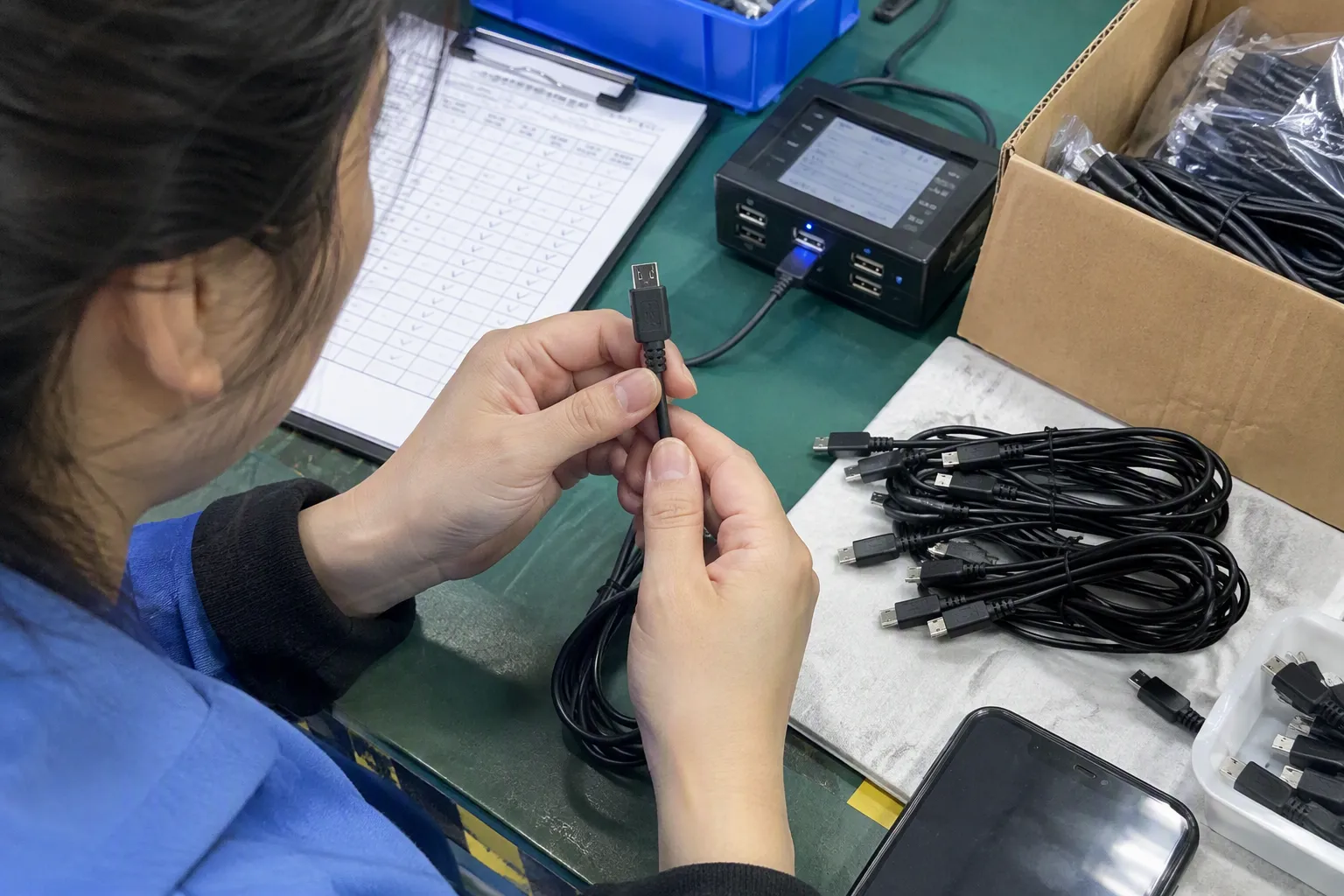
No. Charging performance depends on the cable construction, charger, device, connection, and test conditions.[8] Buyers should avoid the general phrase “fast charging” unless the supplier states the applicable specification, test method, and acceptance result.
How can I tell whether a micro USB cable supports data transfer?
I would request a written data-transfer specification and test the cable with the intended device and computer. Physical compatibility does not prove that the internal data conductors are present, correctly connected, or reliable.
What is more important: cable length or conductor construction?
Both matter, but their importance depends on the application. Longer cables can create different performance requirements[4], while conductor construction and assembly quality affect electrical stability and durability. I recommend evaluating the complete design instead of choosing only by length or outer thickness.
Should I request certifications from a micro USB cable supplier?
You should request relevant documents when your market, retailer, or product policy requires them. You should also verify that each document applies to the exact product and supplier. Certifications do not replace sample testing, production inspection, or a qualified review of applicable requirements.
Conclusion
When I answer how to make a micro USB cable, I start with a different question: what must the cable reliably do for the intended customer? Buyers should define charging and data requirements, confirm materials and construction, test representative samples, and verify that mass production follows the approved specification. Appearance and low price alone cannot control charging stability, compatibility, or after-sales risk. My Shenzhen-based 3C export team can help retailers, wholesalers, importers, and e-commerce sellers compare suitable USB cable options, clarify MOQ and lead time, and develop a documented sample-to-production process.
Sources
- USB Cable Assemblies | stantek Contract Manufacturer", USB technical specifications describe the conductors and connector interfaces used in USB cable assemblies, supporting this component-level description of a Micro USB cable
- What is an acceptable voltage drop/resistance for a USB ...", Basic circuit analysis establishes that current through conductor resistance produces a voltage drop, so conductor material, cross-sectional area, and resistance consistency can affect voltage delivered to a load
- Cables and Connectors | USB-IF", USB interface documentation distinguishes power connections from the differential data pair, supporting the conclusion that a cable’s physical fit alone does not establish data-transfer capability
- LTT Labs Article - USB-C Cable Voltage Drop", USB engineering guidance and signal-integrity literature indicate that cable length can influence resistance, attenuation, and timing margins, thereby changing the conditions under which a cable meets its intended function
- [PDF] A Review of Electromagnetic Compatibility/Interference Measurement", Electromagnetic-compatibility literature supports the contextual role of cable shielding in reducing interference coupling and preserving signal integrity under some operating conditions
- Bending Fatigue Test 1 on a 2-Inch 6x25 Fiber Core Wire ...", Studies of wire and cable flex fatigue show that repeated bending can concentrate stress at terminations, supporting the role of strain relief in reducing damage near a connector
- Statistical Process Monitoring for Autocorrelated Data", Statistical quality-control guidance treats sample inspection as evidence about a lot or process rather than proof that every untested unit is identical, supporting the distinction between sample approval and production consistency
- Don't Let a Drooping USB Voltage Slow Down Your Charger", USB power specifications and charging research indicate that delivered charging behavior is determined by the interaction of the source, cable, sink, and operating conditions rather than by cable labeling alone