Quick Answer
The EU PFAS restriction creates a difficult sourcing question for buyers of USB cables, chargers, and other electronics. A general “PFAS-free” statement may sound reassuring, but it does not identify which parts, coatings, or materials were reviewed. I help European and US buyers turn this broad concern into a practical supplier-evidence checklist.
The EU PFAS restriction should not be treated as an automatic 2026 ban on all USB cables or chargers.[1] Buyers should verify the current legal scope, applicable dates, exemptions, product materials, and supplier evidence for each SKU. RoHS, REACH, CE, or a general certificate does not automatically prove PFAS compliance.[4] The strongest approach combines material disclosure, targeted supplier declarations, and qualified technical or laboratory review where risk justifies it.
The useful question is not simply, “Is this product PFAS-free?” I ask a more specific question: Which components or surface treatments could involve PFAS, and what evidence covers each one? That change in wording helps a purchasing team avoid both unnecessary alarm and unsupported compliance assumptions.
What Do the EU PFAS Restriction and “Forever Chemicals” Rules Mean for Electronics and Cables?
Many buyers hear “PFAS restriction” and immediately worry that every cable, charger, or electronic accessory will become unavailable in Europe. That reaction is understandable because PFAS is a large chemical family, and the public discussion often uses broad language. However, product-level decisions require more detail than the category name.
EU PFAS rules concern the presence, use, placing on the market, or specific applications of certain substances according to the final legal text and applicable conditions.[3] For electronics, buyers need to examine the relevant parts, materials, uses, dates, and exemptions. A finished USB cable or charger is not automatically compliant or non-compliant merely because it is an electronic product.
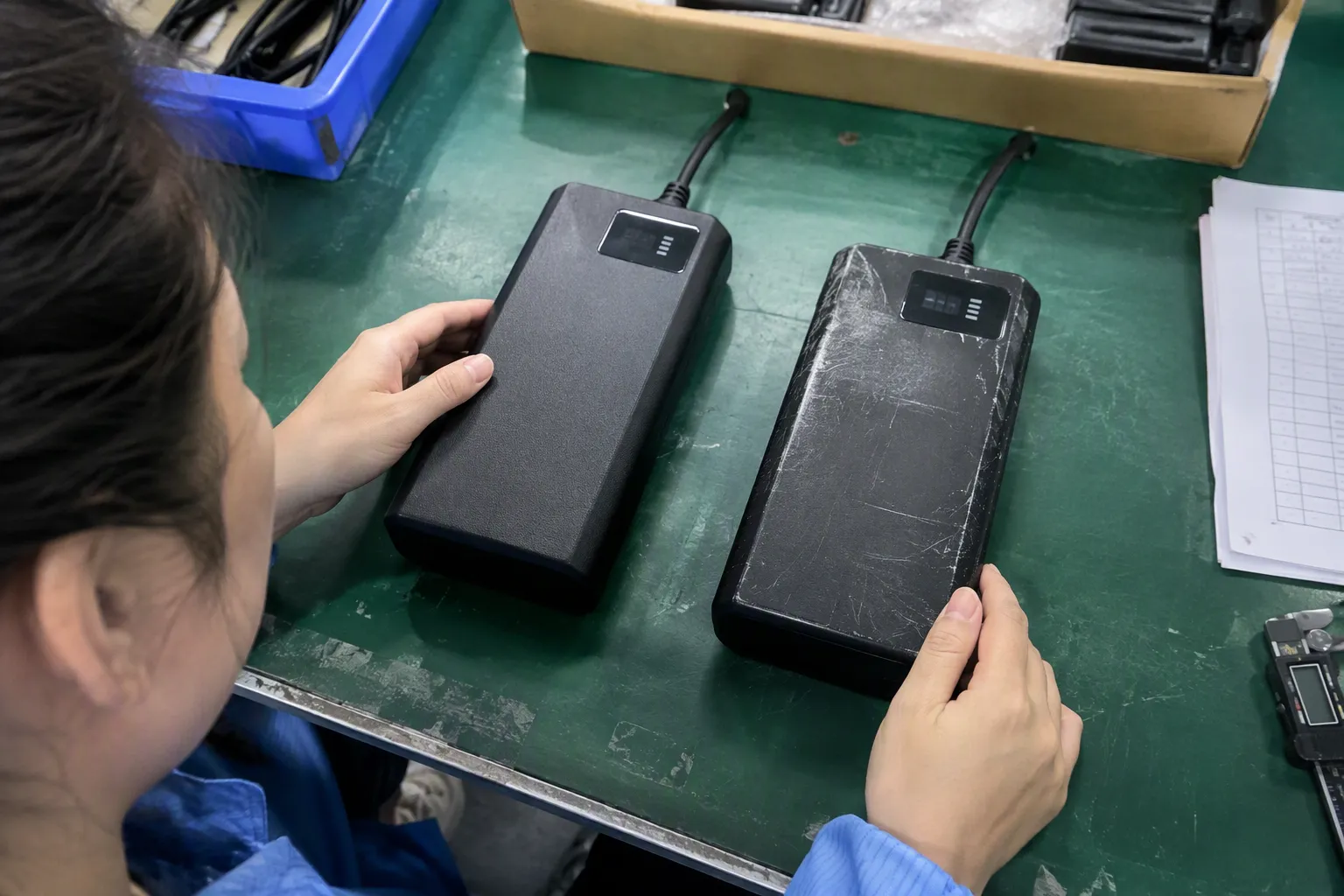
I have handled customer communications for USB cables, chargers, and related 3C products for many years. European and US buyers sometimes send a short request such as, “Please confirm that this item has no PFAS.” I understand why they ask. Their retail customers, internal compliance teams, or marketplace partners may use the same broad wording.
My role is not to act as a PFAS chemist, laboratory, or legal adviser. My role is to help clarify the product and supplier questions behind the request. That distinction matters because a general compliance package may contain several useful documents without answering the specific PFAS question.
Why the term “PFAS” creates a sourcing problem
PFAS refers to a broad group of synthetic substances with different chemical structures and uses.[2] The term “forever chemicals” is useful for public communication, but it is not a complete bill of materials. A charger may contain a housing, internal circuit board, insulation, cable jacket, connector components, labels, adhesives, coatings, and packaging.[5] A cable may include different plastics, metals, overmoulding materials, and surface finishes.
Those parts may not all have the same material composition or compliance risk.
A practical buyer should separate at least four questions:
-
What is the applicable legal requirement?
The buyer should identify the current EU text, implementing measure, restriction, or other applicable rule. The buyer should verify the status and effective dates through official European sources. -
Which product parts could be relevant?
The supplier should identify materials, coatings, finishes, lubricants, seals, and processing aids rather than discussing only the finished product name. -
What evidence supports the conclusion?
A declaration, test report, material disclosure, or supplier statement should show its scope, date, product identity, and basis. -
Who must make the final decision?
The importer, manufacturer, brand owner, or responsible compliance professional may need to assess the product against the applicable market requirements.
These questions prevent a common mistake: treating the presence of one certificate as proof of every chemical requirement.
The difference between general compliance and PFAS evidence
I often see buyers group RoHS, REACH, CE, and PFAS into one general “compliance” request. These subjects can appear in the same supplier file, but they are not interchangeable.
| Document or topic | What it may address | What it does not automatically prove |
|---|---|---|
| RoHS declaration or report | Restricted substances listed under the applicable RoHS requirements | Compliance with every PFAS-related requirement |
| REACH-related statement | Certain REACH duties, substances, or communication obligations, depending on scope | That every PFAS substance or product part has been assessed |
| CE documentation | Applicable product conformity responsibilities for relevant EU legislation | Chemical composition or PFAS absence by itself |
| General product test report | Test parameters stated in that report | Results for substances or materials not included in the method |
| Supplier “PFAS-free” statement | A supplier’s stated position | Complete proof without SKU, material, definition, and evidence scope |
| Material declaration | Listed materials or substances supplied by the manufacturer | Independent verification unless the declaration is supported appropriately |
This table does not replace legal advice. It shows why I read documents by scope instead of by title. A document can be genuine and still be insufficient for a particular question.
Which parts of a USB cable or charger deserve closer review?
The exact risk depends on the design and manufacturing process. I would not assume that every product uses PFAS, and I would not assume that no product uses them. I would ask the supplier to map the product before reaching a conclusion.
Potentially relevant areas may include:
- Cable jacket and insulation materials.
- Connector housing and overmoulding compounds.
- Internal wire coatings or specialty insulation.
- Printed labels, inks, and surface treatments.
- Waterproofing or stain-resistant treatments.
- Lubricants, release agents, or processing aids.
- Adhesives, tapes, gaskets, and seals.
- Coatings on metal parts or decorative surfaces.
- Packaging materials if the buyer’s policy covers packaging as well as the product.
This list is a screening tool, not a finding that these parts contain PFAS. A supplier should confirm which materials are actually used in the approved SKU. A change in cable jacket compound, connector supplier, coating, or production process can also change the evidence position.[7]
Why 2026 requires careful verification
The phrase “in 2026” can make a regulatory discussion sound more settled than it is. European chemical restrictions may involve proposals, scientific evaluation, legal drafting, transitional periods, derogations, and different obligations for different uses.[6] The final scope and dates must be checked against current official sources.
I recommend that procurement teams verify:
- The current status of the relevant EU PFAS measure.
- Whether the rule applies to the substance, mixture, article, use, or market activity in question.
- Any concentration thresholds, reporting duties, or exemptions.
- Transition periods and dates for placing products on the market.
- Whether a particular component has a different treatment from the finished product.
- Whether the customer’s own retailer or marketplace policy is stricter than the legal minimum.
The supplier can provide product information, but the buyer remains responsible for defining the market requirement that the evidence must address. For high-volume listings, private-label products, or products with unusual coatings, I would recommend qualified regulatory or laboratory evaluation before approval.
How I turn a vague customer request into a verification process
I have received customer inquiries asking for confirmation about materials, chemical substances, or compliance evidence. In these cases, I do not want to send a quick “yes” that creates a false sense of security. I first clarify the product and the buyer’s intended use.
My normal communication process looks like this:
-
Identify the exact SKU.
I record the model number, cable length, connector type, charger power, color, housing design, and any private-label version. -
Ask whether the request concerns the product, packaging, or both.
This distinction changes the supplier questionnaire. -
Request a component and material overview.
I ask the factory to identify the cable jacket, connector housing, coatings, adhesives, and other relevant materials. -
Ask how the supplier defines “PFAS-free.”
The term may mean no intentionally added PFAS, no substances above a stated threshold, no listed substances under a particular method, or something else.[8] -
Request supporting evidence.
I ask for a product-specific declaration, material statement, or test documentation. I check whether the document identifies the same SKU and current production version. -
Record open points.
If the factory cannot confirm a coating, compound, or processing aid, I keep that item open instead of treating silence as confirmation. -
Escalate when the commercial risk is high.
A retailer with a strict restricted-substances policy may need independent testing or a specialist review.
This process does not make me a chemical expert. It helps me communicate accurately between the buyer, factory, and compliance professional.
What should a supplier declaration contain?
A useful declaration should be more specific than a sentence on company letterhead. It should normally include:
- Supplier legal name and address.
- Product name, model, and SKU.
- Applicable market or customer requirement.
- Definition or scope of PFAS used for the statement.
- Relevant components and materials reviewed.
- Whether the statement covers intentional use, total content, or a defined list.
- Any thresholds, test methods, or analytical limitations.
- Document date and responsible signatory.
- Change-control or re-evaluation conditions.
- Supporting reports or upstream declarations, where available.
A declaration cannot provide information that the supplier never collected. If the factory relies on upstream material suppliers, the chain of evidence should be clear. I would ask whether the material declaration covers the exact compound used in the approved production batch or only a similar material family.
A buyer should also watch for terms such as “does not contain restricted substances” without a list of restricted substances. That wording may be suitable for one internal policy but not for a PFAS inquiry.
What evidence should buyers compare?
Different evidence types answer different questions. I would compare them rather than rank one document as universally sufficient.
| Evidence type | Strength | Limitation | Useful buyer question |
|---|---|---|---|
| Product-specific supplier declaration | Directly connects the statement to a SKU | May rely on supplier knowledge without independent testing | What materials and definition support this statement? |
| Upstream material declaration | Provides detail for plastics, coatings, or compounds | May not cover assembly, processing, or later changes | Does it identify the exact material grade? |
| Independent laboratory report | Can provide analytical data for defined targets and methods | A test cannot cover substances or parts outside its scope | Which parts and PFAS analytes were tested? |
| Manufacturing bill of materials | Helps map the product | May be incomplete or commercially restricted | Does it include coatings, adhesives, and process aids? |
| Internal restricted-substance procedure | Shows supplier control | A procedure is not proof of a specific SKU result | How was this product checked under the procedure? |
| General certification file | May support other product requirements | It may not address PFAS at all | What exact page or test covers PFAS? |
I would not request an expensive laboratory test before understanding the product. Testing a single finished charger may not answer questions about all colors, cable lengths, suppliers, or coatings. Conversely, a supplier declaration may not be enough when the product has unusual surface treatments or when the customer contract requires independent evidence.
A practical supplier questionnaire
I use straightforward questions because technical language can create confusion across languages and factories:
- Does the product or any component intentionally use PFAS or fluorinated substances?
- Which parts have coatings, treatments, lubricants, seals, or specialty insulation?
- What are the material names and grades for those parts?
- Does the answer cover the cable, charger, accessories, and packaging?
- Does the supplier’s statement cover only intentionally added substances or also residual content?
- Which definition, list, threshold, or legal requirement does the supplier use?
- Does the evidence apply to this exact SKU and current supplier?
- What happens if the factory changes a material or component?
- Can the supplier provide updated documentation before mass production?
- Can the supplier support an independent review if the buyer requires one?
I ask suppliers to answer each point rather than simply sign a broad declaration. A detailed “not applicable because this SKU has no such coating” can be more useful than an unexplained “compliant.”
How procurement teams can manage approval risk
A buyer can create a simple evidence classification:
- Green: The supplier has identified relevant materials, provided a product-specific statement, and supplied supporting evidence appropriate to the customer requirement.
- Amber: The supplier has given a preliminary statement, but one or more materials, definitions, or upstream documents remain unconfirmed.
- Red: The supplier cannot identify relevant materials, uses a vague statement, or refuses to explain the basis of compliance.
This classification is not a legal conclusion. It is an internal purchasing control. I would connect the result to the commercial decision:
| Evidence status | Suggested purchasing action |
|---|---|
| Green | Proceed subject to normal change control and document retention |
| Amber | Hold final approval or limit the order while open points are resolved |
| Red | Do not rely on the statement for a sensitive EU listing without specialist review |
I would also keep records of the approved sample, supplier declaration, material documents, test reports, and production version. A compliance file becomes weaker when the buyer cannot show which document applied to which product.
Why change control matters after approval
A buyer may complete a careful review and still face risk if the factory changes a component later. Cable and charger manufacturers sometimes adjust materials because of cost, supply availability, color matching, molding performance, or production capacity. Those changes may be commercially normal, but they can affect compliance evidence.
My purchase specifications include a request for advance notice of changes to:
- Cable jacket compound.
- Connector housing material.
- Charger housing or coating.
- Adhesive, tape, gasket, or seal.
- PCB supplier or protective coating.
- Factory and critical raw-material supplier.
- Packaging material covered by the customer policy.
The buyer should decide whether a change triggers a new declaration, document review, or laboratory test. I also recommend linking compliance approval to the exact model and revision number. A generic product family name may hide important differences between colorways, power ratings, or production sites.
How buyers should communicate to their own customers
A retailer or importer may need to communicate with a chain store, marketplace, or end customer. I avoid making an absolute claim unless the evidence supports the exact wording.
Safer communication describes:
- The product and SKU covered.
- The requirement or definition assessed.
- The evidence available.
- Any limitations or exclusions.
- The date of the review.
- The process for handling material changes.
For example, a buyer might say that the supplier has provided a declaration covering the listed materials and that the documentation is under review against the buyer’s restricted-substances policy. That wording is more accurate than saying, “This entire product is guaranteed PFAS-free forever.”
The final wording should be reviewed by the company’s qualified compliance or legal team when the statement creates contractual or regulatory exposure.
Frequently Asked Questions
Does the EU PFAS restriction ban all USB cables and chargers in 2026?
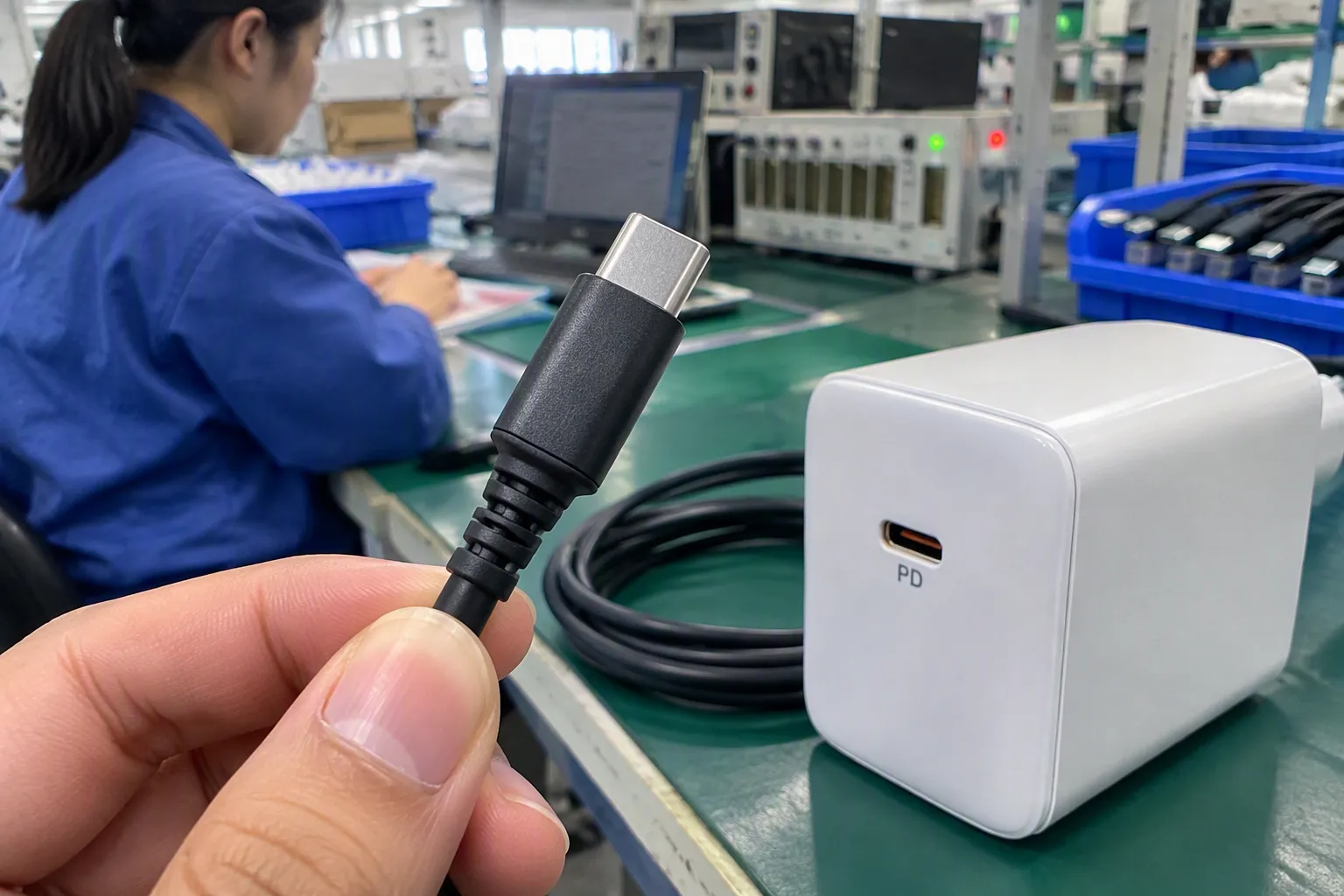
No automatic conclusion should be made that all USB cables and chargers are banned. The buyer must verify the current EU legal text, scope, dates, thresholds, exemptions, and treatment of relevant components or uses. A product decision should be based on its materials and evidence, not only on its product category.
Do RoHS and REACH documents prove that a charger is PFAS compliant?

No. RoHS, REACH-related documents, and CE documentation may address important requirements, but they do not automatically prove PFAS compliance. I check the scope of each document, including the listed substances, product identity, test method, date, and applicable legal basis.
Is a supplier’s “PFAS-free” declaration enough for purchasing approval?
It may be useful, but I would not treat it as conclusive without reviewing its scope. The declaration should identify the SKU, components, materials, definition of PFAS, thresholds or limitations, and supporting evidence. High-risk or high-volume products may justify independent laboratory or specialist review.
Which charger or cable parts should a buyer ask about first?
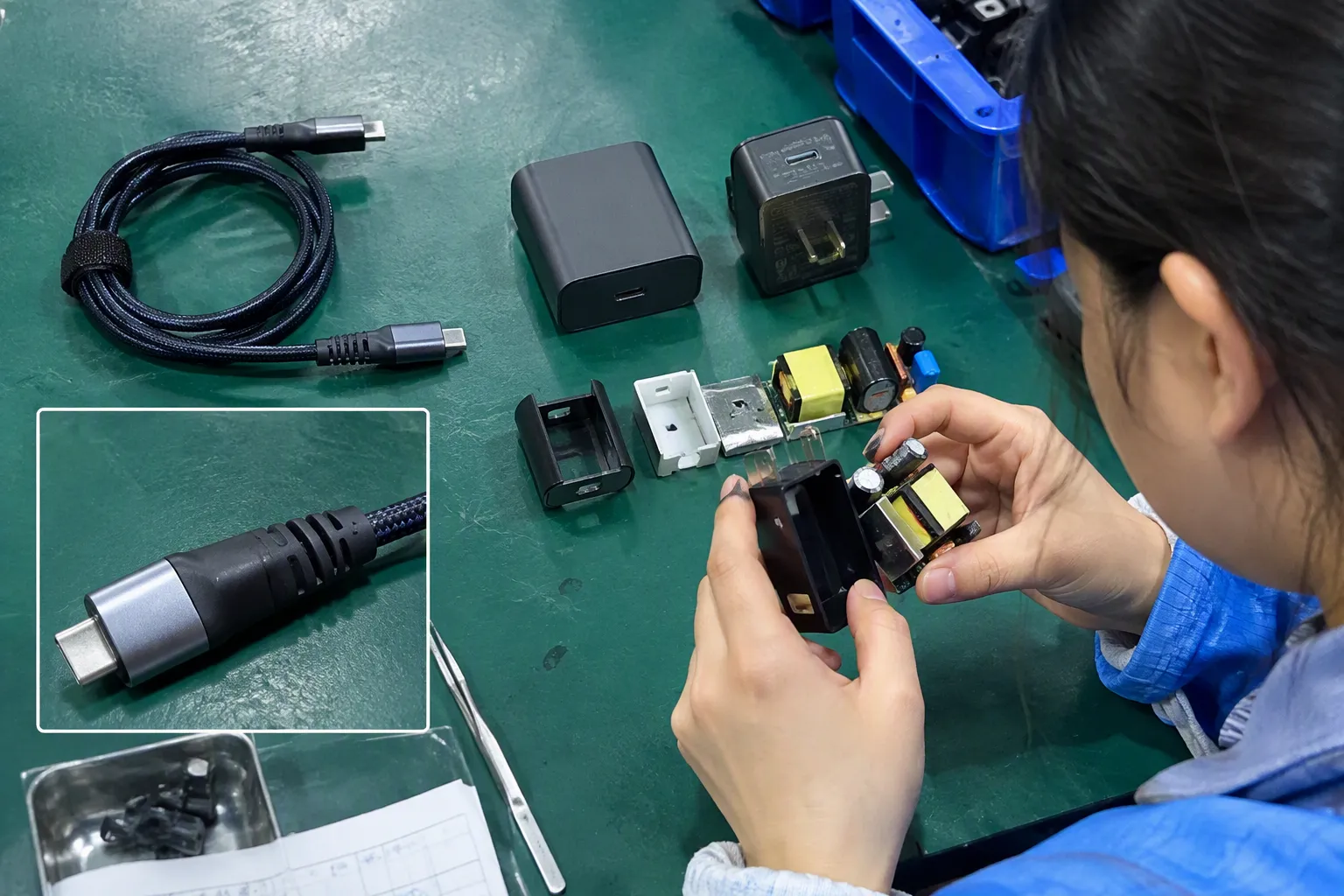
I would start with cable jackets, connector housings, overmoulding, coatings, labels, adhesives, seals, specialty insulation, and processing aids. The supplier should confirm which of these parts the product actually uses. I would also clarify whether the customer’s requirement includes packaging.
Should buyers test every USB cable and charger for PFAS?
Not necessarily. Testing should follow a product and material risk assessment. A buyer may first request material declarations and supplier evidence, then consider targeted independent testing where the product uses unusual coatings, where documentation is incomplete, or where the customer’s policy requires laboratory results.
How often should PFAS documentation be updated?
The buyer should update documentation when the law, customer requirement, product design, material, supplier, or manufacturing site changes. I also recommend setting a review period in the purchasing procedure. The exact interval should reflect product risk and the buyer’s compliance system rather than an arbitrary universal number.
Conclusion
The EU PFAS restriction is a sourcing issue that requires product-level investigation, not a simple 2026 yes-or-no answer for all electronics. I recommend identifying the exact SKU, mapping relevant materials and treatments, checking the current official requirements, and matching each supplier document to the question it actually answers. RoHS, REACH, CE, and general certificates remain useful, but they should not be presented as automatic PFAS proof. When I support a buyer, I focus on clear supplier questions, document scope, and change control. Contact me when you need help reviewing USB cables, chargers, GaN adapters, or other 3C products for a more reliable EU sourcing file.
Sources
- PFAS pollution - European Commission - EU Environment", European Chemicals Agency and European Commission materials describe the PFAS restriction process and its product, substance, use, and timing conditions rather than establishing a categorical ban on every electronic product
- Per and poly-fluorinated chemicals (PFAS) | OECD", OECD and other scientific assessments characterize PFAS as a broad class of fluorinated substances encompassing diverse chemical structures and uses, supporting the distinction between a chemical group and a single substance
- 62015CJ0535 - EUR-Lex - European Union", The REACH restriction framework links legal obligations to the substances, mixtures or articles concerned and to specified uses, market activities, thresholds, and exemptions in the relevant restriction entry
- RoHS Directive - Environment - European Commission", European Union guidance identifies RoHS, REACH, and CE marking as distinct instruments with different scopes and functions; documentation under one instrument therefore does not, by itself, establish compliance with an unrelated PFAS requirement
- [PDF] 1 11/25 DIVISION SIXTEEN ELECTRICAL Section 16010 Electrical ...", Technical descriptions of USB chargers and cables identify these products as multi-material assemblies composed of housings, conductors, insulation, connector parts, circuit-board assemblies, and ancillary materials
- [PDF] Committee for Risk Assessment (RAC) Committee for Socio ...", The EU REACH restriction procedure includes scientific assessment, committee opinions, Commission and legal decision-making, and may provide use-specific derogations or transitional arrangements
- Q7A Good Manufacturing Practice Guidance for Active ... - FDA", Conformity-assessment and quality-management guidance treats material, component, supplier, and process changes as potential changes to the configuration on which product evidence was based, requiring documented impact assessment
- [PDF] risk reduction approaches for pfass – a cross - OECD", Regulatory and scientific guidance distinguishes PFAS definitions and assessment approaches by covered substances, concentration criteria, intentional use, and analytical methodology; consequently, the phrase “PFAS-free” has no reliable meaning without a stated scope