Quick Answer
Custom USB cables can look simple, but I often see buyers focus on the connector shape before confirming performance. That mistake can lead to charging limits, slow data transfer, compatibility complaints, and costly rework. I help customers turn their device combination, technical requirements, branding plans, and purchasing limits into a clear cable specification before quotation.
Custom USB cables should be specified according to the complete use case, not connector appearance alone. Buyers should confirm the device, charger, charging protocol, power requirement, data speed, cable length, construction, testing process, packaging, MOQ, and delivery schedule. Samples should then be tested with the intended device-and-charger combination before mass production.
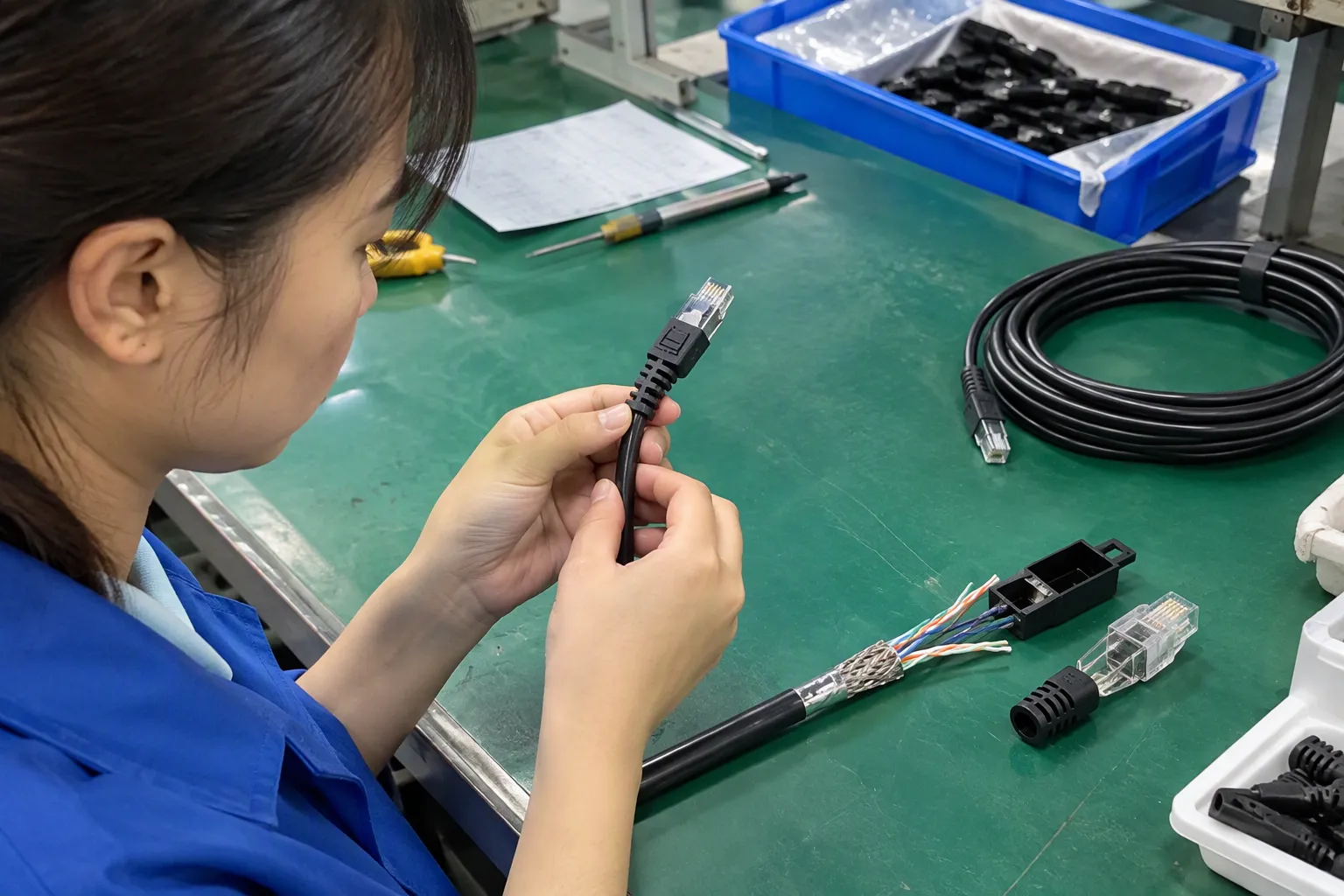
A successful project depends on more than choosing USB-A, USB-C, or another connector. The cable must work with the products that your customers actually use, while the supplier must deliver consistent quality at a commercially workable price. I usually begin with technical questions, then move to appearance, packaging, production control, and after-sales risk.
Custom Cables: What Should I Confirm First
Many custom cable inquiries begin with a short request such as “USB-C fast charging cable with logo.” I understand why buyers start there, but this description leaves important questions unanswered. If the specification is incomplete, different suppliers may quote products that look similar but perform very differently.
I recommend confirming seven areas first: the connected devices, charger, required power, data protocol and speed, cable length and construction, validation method, and commercial requirements. These details help a buyer compare like-for-like quotations and reduce the risk of receiving a cable that looks correct but does not deliver the intended charging or data performance.
Start with the complete product combination
I often ask customers to describe the cable’s full working situation:
- What device will the cable connect to?
- What charger, adapter, computer, hub, or power bank will it use?
- What charging protocol or device requirement must it support?
- What power level does the application require?
- Will the cable transfer data, or will it only charge?
- What data speed is necessary?
- Where and how will the cable be used?
A cable used with a phone and wall charger has a different commercial purpose from one used with a laptop, monitor, external storage device, development kit, or retail charging station. The connector may appear identical, but the internal design, identification components, conductors, shielding, and testing requirements may differ.
Why connector appearance is not enough
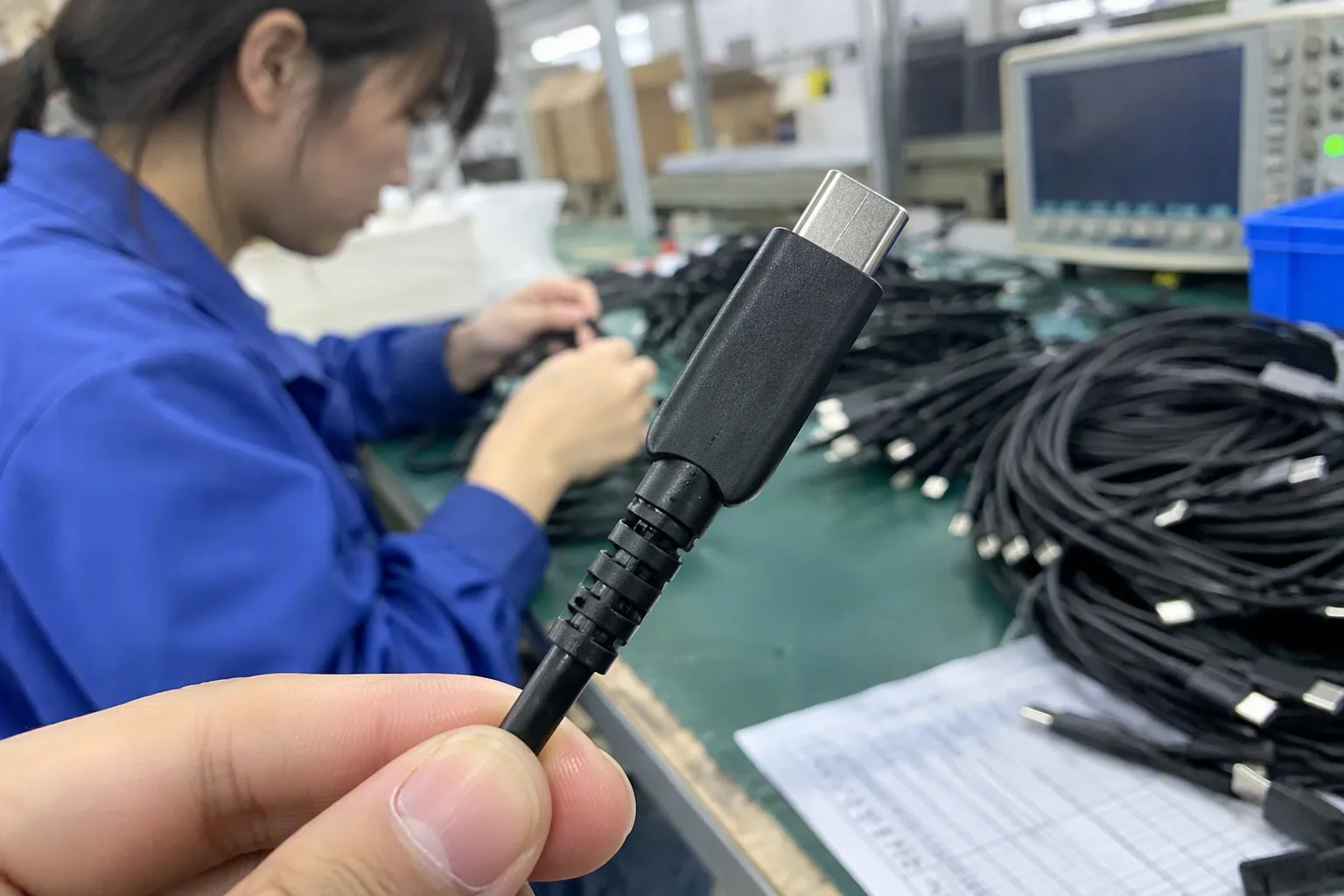
A USB-C connector describes a physical interface. It does not automatically prove a particular charging speed, data rate, power capability, or compatibility result.[1] The same general connector style can appear on products with very different internal specifications.[5]
I therefore treat phrases such as “fast cable,” “high-speed cable,” and “premium USB-C cable” as starting points rather than verified specifications. I ask the buyer and supplier to replace those phrases with measurable or documentable requirements.
| Buyer’s description | Questions I would clarify |
|---|---|
| Fast charging cable | Which device, charger, protocol, and power level? |
| High-speed data cable | What data speed and host-device combination? |
| Durable braided cable | What bending, pulling, connector, and usage expectations? |
| Laptop charging cable | What laptop, charger output, cable length, and operating conditions? |
| Branded cable | Logo method, color, packaging, MOQ, artwork, and approval process? |
| Universal cable | Which specific devices and functions must be supported? |
This process does not mean that every buyer needs a complicated engineering document. It means that the quotation should use clear terms that can be checked later.
Define charging requirements carefully
Charging performance depends on the connected system. I do not advise buyers to specify only a headline wattage without identifying the intended charger and device. The actual result can depend on the power source, device acceptance, protocol negotiation, cable construction, length, and other system factors.[2]
A practical purchasing specification can include:
- Intended device models or device category.
- Intended charger or adapter model.
- Required charging function.
- Target power level, subject to application verification.
- Required cable length.
- Whether the cable is for charging only or charging and data.
- Any visible heating, flexibility, or installation requirements.
- Documents or test records that the buyer expects the supplier to provide.
If the cable will be sold in Europe or the United States, I also recommend that the buyer discuss applicable product, packaging, labeling, and safety obligations with a qualified compliance professional. Certification marks and supplier declarations should be treated as documents to verify, not as automatic proof that every version of a product meets every market requirement.
Clarify data performance separately
A cable can charge a device successfully while failing to deliver the required data function.[3] This is a common source of confusion in product development. A retail buyer may expect file transfer, video output, peripheral connection, or synchronization, while the supplier has quoted a cable intended mainly for power.
I ask customers to state:
- Whether data transfer is required.
- The target data speed or performance class.
- The devices used for validation.
- Whether video, audio, storage, or peripheral functions are involved.
- Whether the cable must work through a hub, dock, or adapter.
- Whether backward compatibility is required for specific equipment.
The buyer should test the sample with the actual host and device combination.[4] A generic test with another computer does not necessarily confirm the intended retail application.
Match construction to the use environment
Customization includes more than color and logo. The outer jacket, conductor arrangement, shielding, connector housing, strain relief, and reinforcement should match the expected use.
For example, a cable for occasional home charging may have different priorities from a cable used in a travel kit, office bundle, vehicle accessory, retail display, or industrial-style installation. I discuss the following points with buyers:
- PVC, TPE, braided, or other jacket preference.
- Flexibility and storage expectations.
- Connector housing material and finish.
- Strain-relief design.
- Cable diameter and bend radius.
- Resistance to twisting and repeated handling.
- Environmental conditions such as heat, moisture, dust, or vehicle use.
- Color consistency across the production batch.
- Logo position and method.
I avoid promising durability from the word “braided” alone.[6] A braided surface can influence appearance and handling, but it does not independently prove the quality of the inner construction or connector assembly.
Connect technical choices to commercial risk
A technically suitable cable can still be a poor purchasing decision if the supplier cannot maintain the agreed specification. I have seen customers pay close attention to unit price while overlooking artwork approval, sample retention, production lead time, and inspection arrangements. Those details can affect the final cost more than a small quotation difference.
Before placing an order, I suggest confirming:
| Commercial point | Why it matters |
|---|---|
| MOQ | Determines inventory exposure and unit economics. |
| Sample charge and timing | Shows how quickly the specification can be reviewed. |
| Tooling or mold cost | May affect small branded projects. |
| Artwork approval | Prevents logo and packaging errors. |
| Production lead time | Supports launch and promotion planning. |
| Inspection method | Defines how batch consistency will be checked. |
| Packaging quantity | Affects warehouse and shipping calculations. |
| Warranty or remedy terms | Clarifies the process if a problem is found. |
| Replacement and spare policy | Helps control after-sales cases. |
| Shipping marks and labels | Reduces receiving and warehouse errors. |
For European and US retailers, wholesalers, and e-commerce sellers, a failed cable can create more than a product complaint.[7] It can cause negative reviews, returns, relabeling, delayed promotions, and customer service costs. I therefore encourage buyers to compare the supplier’s communication quality as carefully as the quoted price.
Use a written specification sheet
I find that a written specification sheet is one of the simplest ways to improve communication. The document does not need to be long. It should identify the version being quoted and separate confirmed requirements from open questions.
A useful sheet can contain:
- Product name and internal model number.
- Connector configuration.
- Cable length and tolerance.
- Jacket material, color, and finish.
- Charging requirement.
- Data requirement.
- Target device and charger.
- Logo and packaging details.
- Required documents.
- Sample approval status.
- Inspection points.
- MOQ and lead time.
- Revision date.
I recommend assigning a revision number to every approved sample and artwork file. If a customer changes the cable length, connector housing, packaging, or internal function after approval, the supplier should record the change before production. This practice helps prevent an old sample from being compared with a new production version without anyone noticing the difference.
Treat samples as part of specification confirmation
A sample is not only a visual reference. I use it as a practical checkpoint between the buyer’s intended product and the supplier’s interpretation.
During sample review, I recommend checking:
- Connector fit with the intended devices.
- Charging behavior with the intended charger.
- Data function with the intended host and device.
- Cable length and visible dimensions.
- Flexibility and strain relief.
- Logo size, location, and finish.
- Packaging, labels, and barcode information.
- Basic workmanship, including molding, stitching, surface finish, and connector alignment.
I also suggest recording which functions were checked and under what conditions. A buyer should not assume that a sample tested only for charging has also been validated for data transfer. Application-specific evaluation may require qualified technical personnel or an independent test laboratory, particularly when the cable is part of a regulated, safety-sensitive, or higher-power product system.
Plan production quality control
A good sample does not automatically guarantee that every later batch will be identical.[8] I ask suppliers how they will control incoming materials, assembly, appearance, function, and packing.
A buyer can request a quality-control plan covering:
- Incoming connector and cable material checks.
- Assembly and soldering or termination controls.
- Logo and color inspection.
- Continuity and basic electrical checks.
- Required charging or data function checks.
- Connector fit and visual workmanship.
- Packaging quantity and labeling.
- Sampling level for finished goods.
- Retention of approved samples and inspection records.
The exact test method should match the product and should be agreed in advance. Buyers should avoid accepting vague statements such as “100% tested” without asking what “tested” means, which functions are included, and whether records are available.
Compare suppliers beyond the first quotation

I have found that the first supplier to provide a low price is not always the easiest supplier to manage. For a branded cable project, I assess how clearly the supplier answers technical questions and whether the supplier identifies missing information.
I would compare suppliers using a simple scorecard:
| Evaluation area | Example buyer question |
|---|---|
| Requirement understanding | Did the supplier repeat the device and charger combination correctly? |
| Technical clarity | Did the quotation separate charging and data functions? |
| Sample process | Can the buyer approve a defined sample version? |
| Documentation | Are specifications and requested documents available for review? |
| Production control | Can the supplier explain batch inspection? |
| Customization | Can the supplier manage logo, color, packaging, and artwork? |
| Delivery reliability | Is lead time stated from approval or from order placement? |
| Communication | Does the supplier identify risks instead of simply saying yes? |
| After-sales support | Is there a clear process for complaints and investigation? |
I believe a supplier who asks precise questions is often reducing project risk, not making the purchase more difficult.
Avoid common specification mistakes
The same problems appear repeatedly in custom cable inquiries. I recommend watching for these warning signs:
- The buyer specifies only “USB-C” and a length.
- The quotation uses “fast” without a power or application definition.
- Charging and data requirements are combined into one unclear sentence.
- The supplier cannot identify the intended device and charger.
- The buyer approves a photo instead of a physical sample.
- The logo artwork is approved, but the cable construction is not.
- The MOQ excludes custom packaging or color limitations.
- Lead time begins before sample and artwork approval is defined.
- A certificate is presented without checking the model, scope, date, or issuing organization.
- No one explains what happens if the production batch differs from the approved sample.
These issues do not always mean that a supplier is unsuitable. They mean that the buyer needs clearer evidence before committing to a commercial order.
Frequently Asked Questions
Are all USB-C cables the same?
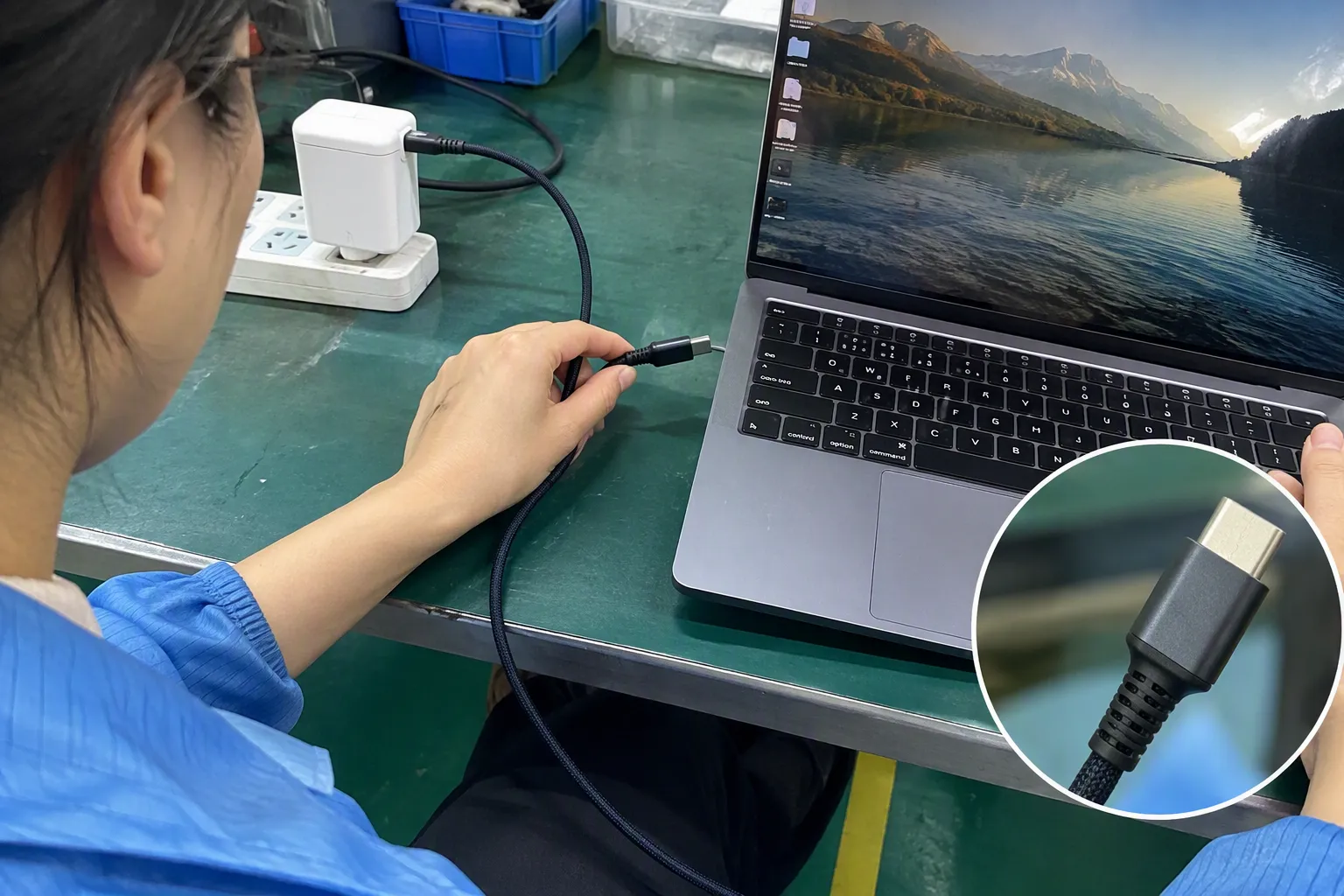
No. USB-C cables can differ in charging capability, data performance, construction, identification components, length, and compatibility. The connector shape alone does not confirm a particular function. I recommend checking the complete device, charger, protocol, power, data, and application requirements.
How do I choose a custom USB cable for fast charging?
I start by identifying the device and charger, then confirming the required charging function and target power level. I also check cable length, construction, and any applicable documentation. The buyer should test an approved sample with the intended device-and-charger combination before mass production.
Can a charging cable also transfer data?
Some cables can transfer data, while others are designed mainly for charging. Buyers should specify the required data function and speed separately from charging. I recommend testing file transfer or other required functions with the actual host and device rather than relying on the connector appearance or product name.
What should I request from a custom cable supplier?
I would request a detailed quotation, product specification, sample, artwork confirmation, MOQ, lead time, packaging information, inspection plan, and relevant compliance documents for verification. I would also ask the supplier to explain which functions were tested and under what conditions.
How can I reduce risk when ordering branded cables?
I reduce risk by using a written specification, approving a numbered sample, testing the sample in the intended application, and agreeing on production inspection points. I also confirm MOQ, lead time, packaging, warranty handling, and change-control procedures before placing the order.
Conclusion
Custom USB cables should be selected as complete product solutions rather than attractive connector accessories. I recommend starting with the device, charger, charging requirement, data function, use environment, and required validation. Then I connect those technical decisions with MOQ, lead time, documentation, inspection, packaging, and after-sales planning. My Shenzhen-based team has 15 years of 3C export experience, and we help European and US buyers turn unclear cable requests into practical specifications. Contact me to discuss your target devices, customization needs, and purchasing requirements before requesting a final quotation.
Sources
- Document Library | USB-IF", USB-IF documentation distinguishes the USB Type-C connector and cable interface from optional USB data-transfer and power-delivery capabilities, so connector geometry alone does not specify the complete performance profile
- [PDF] Source Power Requirements Test Specification - USB-IF", USB Power Delivery specifications describe power as a negotiated interaction among the source, sink, and cable, supporting a system-level account of charging performance rather than a cable-only wattage claim
- Document Library | USB-IF", USB Type-C technical documentation recognizes that cable assemblies may differ in supported USB data and power functions; consequently, charging success alone is not evidence of the required data capability
- Principles of Interoperability of Diabetes Devices - PMC - NIH", USB interoperability and compliance materials evaluate host, device, and cable behavior as a connected system, supporting application-specific validation of a cable sample
- USB Charger (USB Power Delivery) | USB-IF", Technical reference material describes USB Type-C as a connector standard used across products implementing different USB data generations and optional power or alternate-mode features
- Flex Cables in Appliances & Industry: Comprehensive FAQ ...", Cable durability standards assess mechanical and flexing performance, including the cable assembly and termination, indicating that a braided jacket is not by itself a durability qualification
- Recalls & Product Safety Warnings | CPSC. ...", Research on defective consumer products and reverse logistics links product failures with returns, complaint handling, replacement activity, and associated operational costs
- [PDF] NIST SP 800-82r4 ipd, Guide to Operational Technology (OT) Security", Statistical process-control guidance treats production consistency as an outcome of monitored processes and inspections, supporting the distinction between approval of a sample and control of later batches