You want to give your customers the best accessories for their new iPhone. But with so many chargers, choosing the right one is confusing. You risk stocking slow or incompatible products.
The best charger for the iPhone 16 Pro Max is a 30W USB-C Power Delivery (PD) GaN charger.%%%FOOTNOTE_REF1%%% This provides the fastest possible charging speed for the phone, stays cool, and is compact. For wireless charging, a [15W MagSafe-compatible charger is the ideal choice](https://en.wikipedia.org/wiki/MagSafe(wireless_charger))2.
As someone who has been exporting 3C accessories for 15 years, I talk to retailers and e-commerce sellers like you every day. The launch of a new iPhone is a huge opportunity. But you need to have the right products ready. Your customers will ask, "What charger should I buy?" and you need a clear, confident answer. This guide will give you that answer. We will break down everything you need to know to choose and stock the perfect chargers for the iPhone 16 Pro Max. Let's get started.
What Charging Power Does the iPhone 16 Pro Max Support?
Your customers hear big numbers like 65W or 100W and think faster is always better. This leads to confusion and buying the wrong product. You need to stock what actually works best.
The iPhone 16 Pro Max will likely support a maximum wired charging speed of around 27W to 29W3. Apple doesn't advertise this number, but real-world tests on previous models confirm it. A 30W charger is therefore the perfect match to deliver this top speed efficiently.
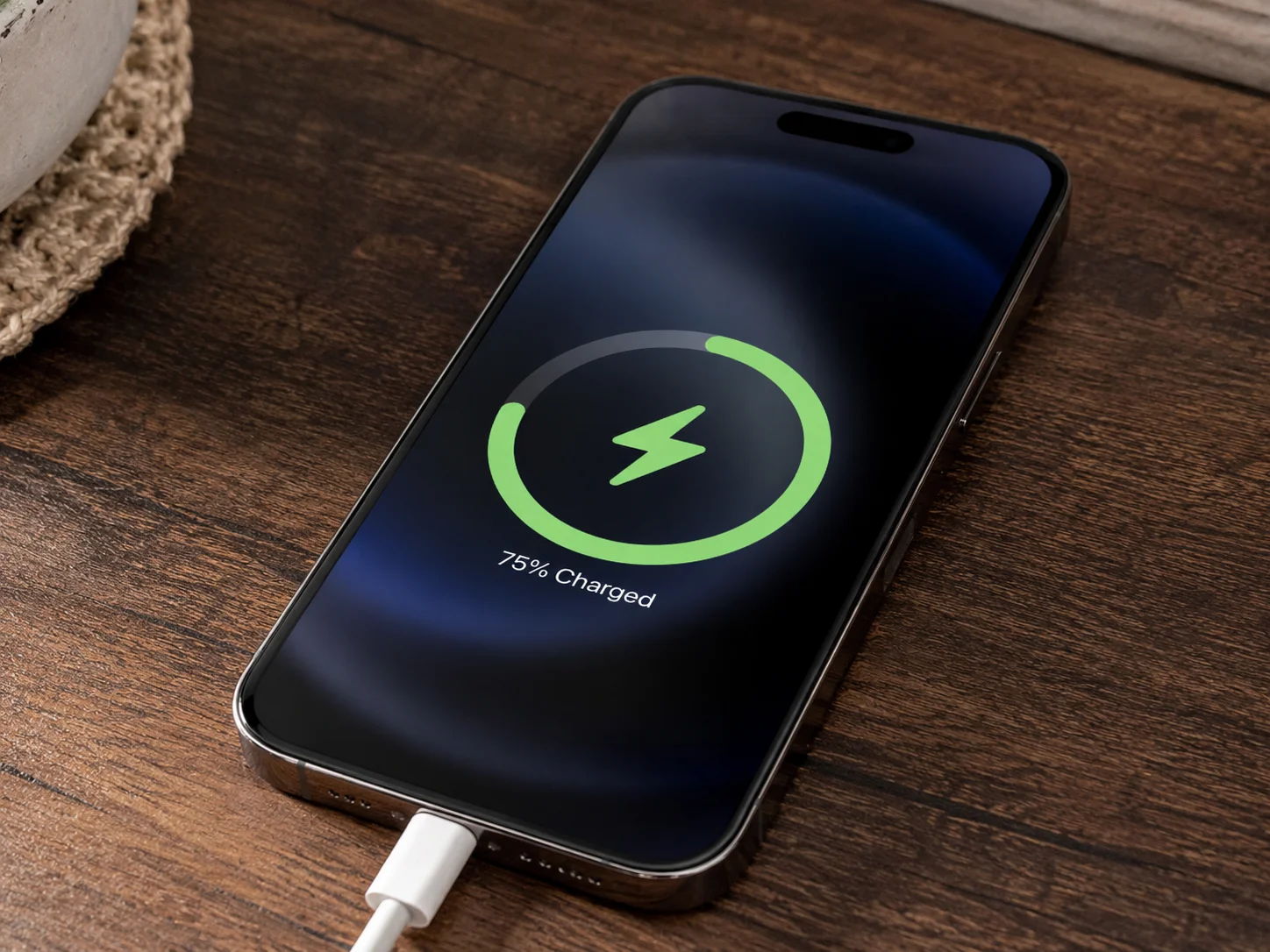
I get this question all the time from my clients: "Should I stock 45W or 65W chargers for the new iPhone?" It's a logical question. But the phone's internal software decides how much power to accept. The iPhone 16 Pro Max will not charge faster with a 100W charger than with a 30W one.
Think of it like a car's gas tank. You can use a pump that flows very fast, but the car's tank inlet is only so wide. The iPhone is the same. It has a built-in limit to protect the battery from heat and degradation4.
Here's what this means for your business:
- Focus on the Sweet Spot: 30W is the key number for fast charging the iPhone 16 Pro Max.
- Educate Your Customers: Tell them that a 30W charger gives them the fastest speed safely.
- Avoid Misleading Claims: Don't market a 100W charger as "super-fast for iPhone." It's misleading. Market it for its true benefit: charging multiple devices or laptops.
Stocking quality 30W USB-C PD chargers is your safest and most profitable strategy for the iPhone 16 launch.
Is a 20W, 30W, or 45W Charger Best for iPhone 16 Pro Max?
Your shelf space is valuable. You cannot stock every type of charger. Choosing between 20W, 30W, and 45W can feel like a gamble, but there is a clear winner for your customers.
For the best balance of speed, efficiency, and value, a 30W charger is the best choice for the iPhone 16 Pro Max. A 20W charger is slightly slower, while a 45W charger offers no extra speed for the iPhone itself but adds versatility for other devices.
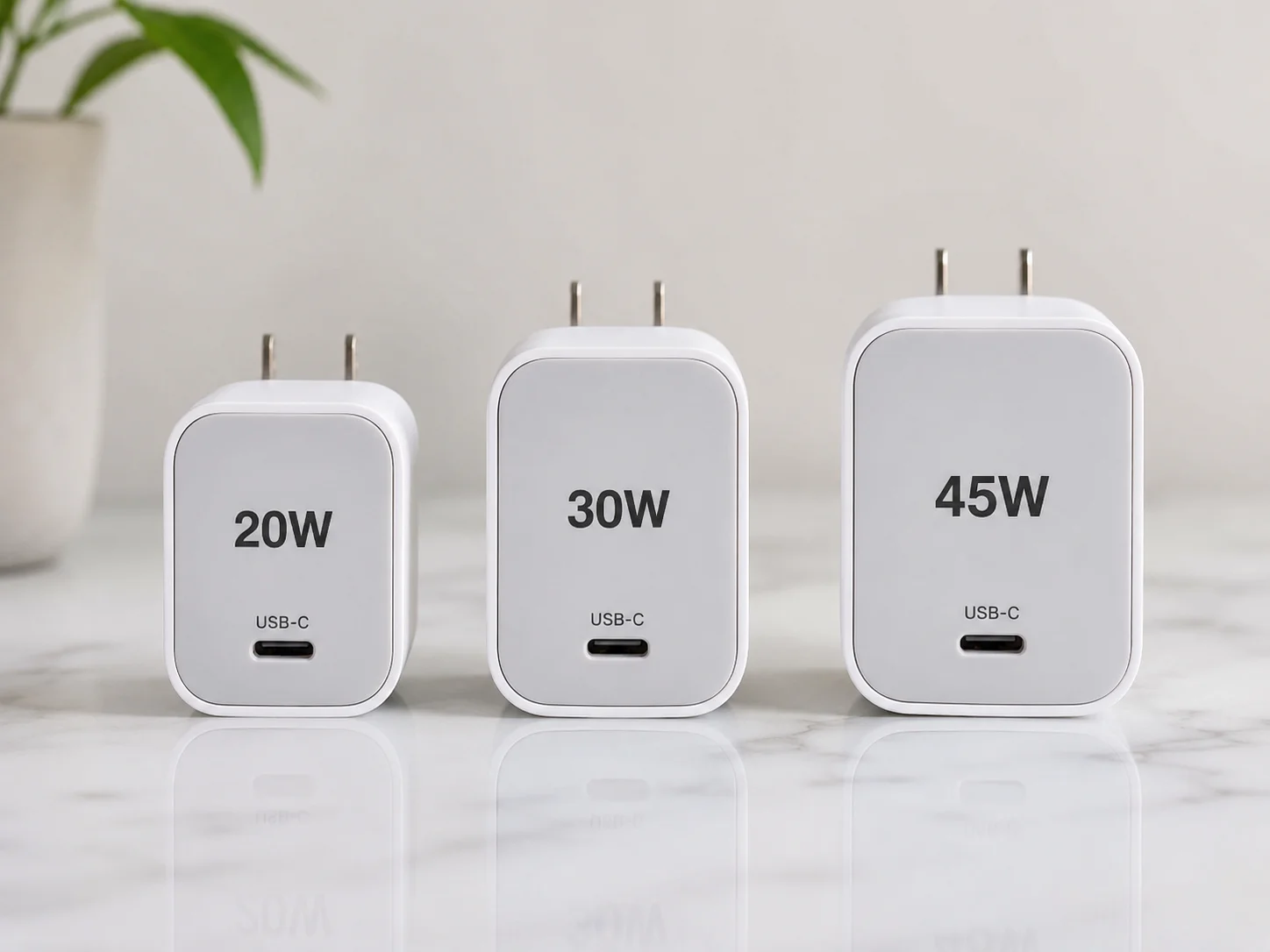
When a client asks me for the 'best' option, my first question is always about their target customer. Are they selling to a budget-conscious student or a tech professional with multiple gadgets? This helps us decide on the product mix. However, for the iPhone 16 Pro Max specifically, the choice is very clear.
Let’s break down the trade-offs in a simple table. This is how I explain it to my partners.
| Charger Wattage | Charging Speed for iPhone | Best For | Key Selling Point |
|---|---|---|---|
| 20W | Good (0-50% in ~35 min) | Budget-conscious users | "Affordable and gets the job done." |
| 30W | Fastest (0-50% in ~30 min5) | Most iPhone users | "The perfect balance of speed and price for your new iPhone." |
| 45W | Fastest (no faster than 30W) | Users with other devices | "Charge your iPhone and your MacBook Air with one charger." |
As you can see, the 30W charger hits the sweet spot. It provides the maximum charging speed the iPhone can handle. The time difference between 20W and 30W might seem small, but for customers wanting the "best," that small difference matters. A 45W charger is a great upsell for people who also carry an iPad or a small laptop, but for pure iPhone charging, it's overkill. My advice is to make the 30W charger your main recommendation.
USB-C Wired Charging vs MagSafe Wireless Charging?
Your customers want convenience, but they also want speed. You need to explain the difference between plugging in and just setting the phone down. Offering both options is key to capturing the whole market.
USB-C wired charging is faster and more efficient, delivering up to 27-29W. MagSafe wireless charging is more convenient but slower, maxing out at 15W with an official MagSafe or certified third-party charger. You should stock solutions for both user preferences.
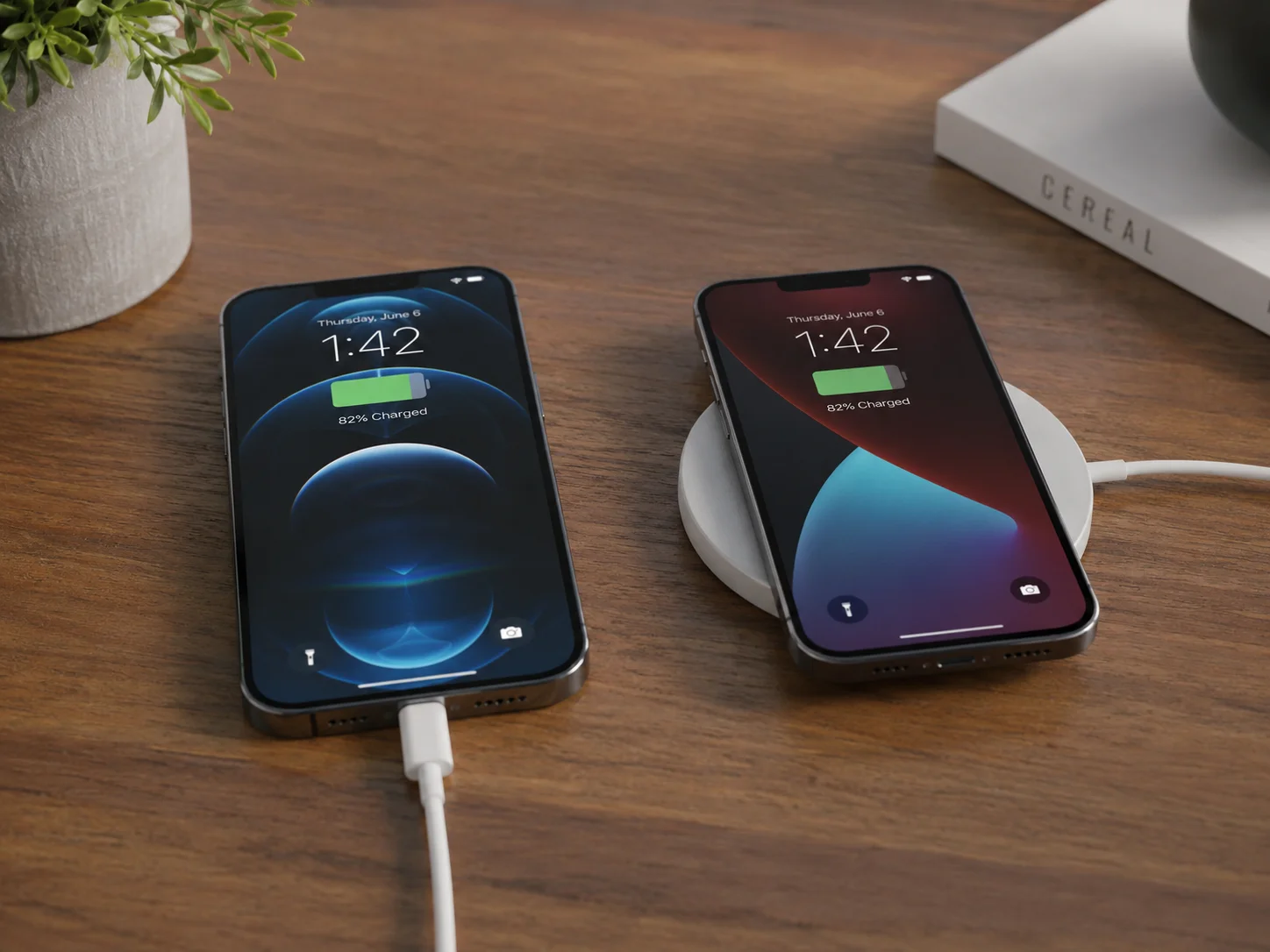
Here’s a scenario I often discuss with e-commerce sellers. A customer wants to charge their phone overnight on their nightstand. For them, the convenience of MagSafe is perfect. They just place the phone down, and it snaps into place. The slower 15W speed doesn't matter when charging for 8 hours.
But what about the customer who needs a quick power boost before leaving the house? They need speed. A 30W USB-C wired charger can give them a 50% charge in about 30 minutes. MagSafe would take nearly an hour to do the same.
This table helps clarify the choice for your customers:
| Feature | USB-C Wired Charging | MagSafe Wireless Charging |
|---|---|---|
| Max Speed | ~29W | 15W |
| Efficiency | Higher (less energy lost as heat6) | Lower (more energy lost as heat) |
| Convenience | Must plug in the cable | Easy magnetic attachment |
| Best Use | Quick top-ups, charging while using | Overnight charging, desk charging |
| Cost | Generally lower cost | Generally higher cost |
Your strategy should be to offer both. For your main product, promote a 30W USB-C wired charger bundle. As a secondary or premium option, offer a high-quality 15W MagSafe-compatible charging pad. This way, you serve both the "power user" who needs speed and the "convenience user" who values simplicity.
Why a USB-C PD Charger Is the Best Choice?
You see many types of chargers on the market. But for modern Apple devices, one standard is essential. Stocking the wrong type means unhappy customers and returned products.
A USB-C PD (Power Delivery) charger is the only choice for fast-charging an iPhone7 16 Pro Max. This technology allows the charger and the iPhone to communicate, negotiating the fastest and safest charging speed possible. Non-PD chargers will charge very slowly.
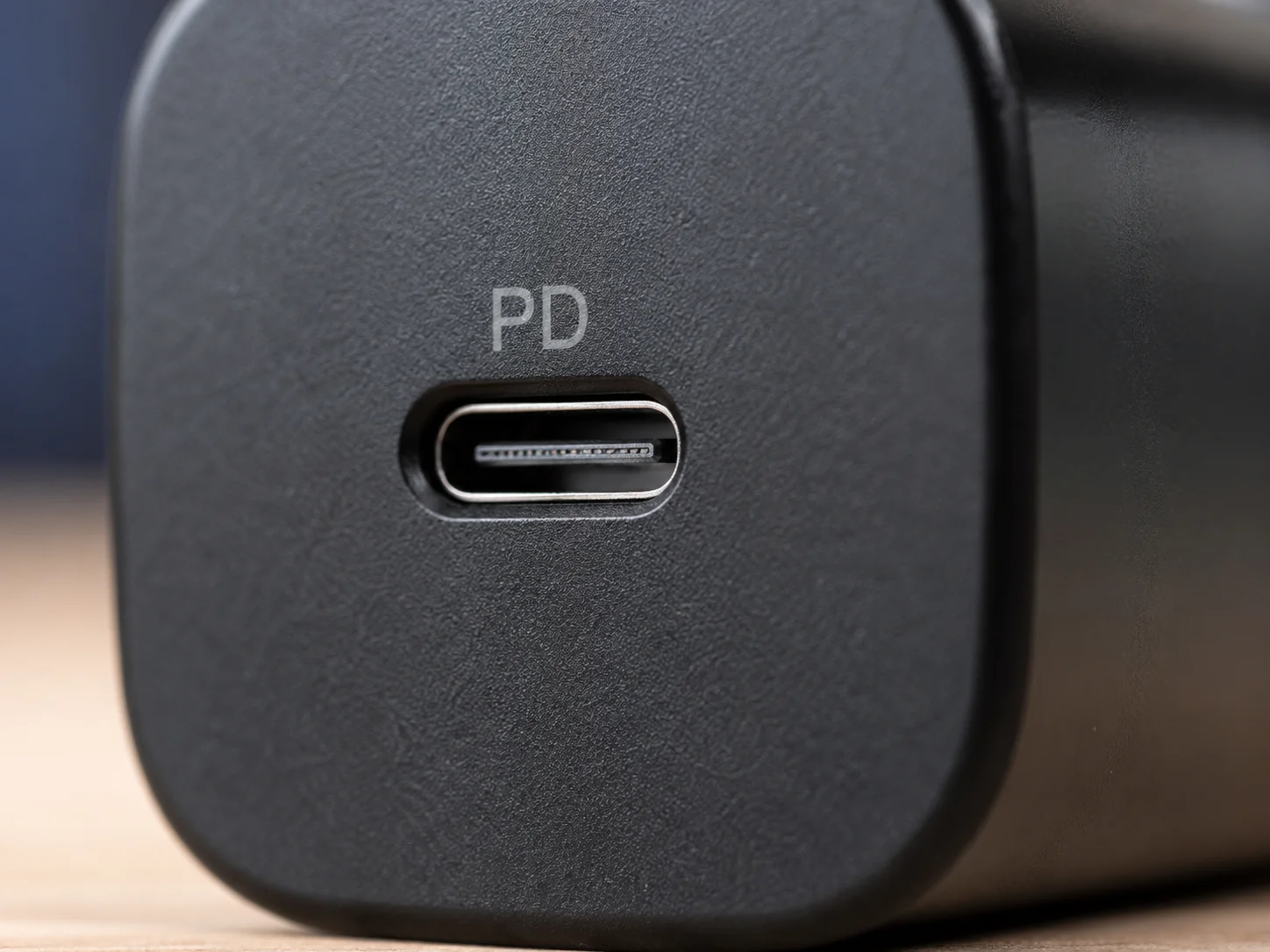
In my 15 years in this business, I've seen many charging standards come and go. But Power Delivery is here to stay. It's the universal standard adopted by Apple, Samsung, Google, and laptop makers8. A common mistake I see new importers make is sourcing cheap USB-A chargers with a USB-C cable. They think it will work, but it will charge the new iPhone at a crawl, maybe 5W. This creates a terrible customer experience.
The "PD" part is critical. It's a smart charging protocol.
- Handshake: When you plug in your iPhone, the PD charger says, "Hello, I can offer power at 5V, 9V, 12V, and more."
- Request: The iPhone replies, "Hello, I am an iPhone 16 Pro Max. For fastest charging, please give me 9V."
- Delivery: The charger then provides exactly the 9V the iPhone asked for, delivering the power at the maximum safe speed.
Without PD, this conversation doesn't happen. The charger will only provide the most basic power level, usually 5V, resulting in extremely slow charging. For your business, this is simple: only stock chargers that clearly state "USB-C PD" or "Power Delivery" in their specifications. It is a non-negotiable feature.
Does a GaN Charger Improve iPhone Charging?
You hear a new term: "GaN." Is it just marketing hype, or does it offer a real benefit? You need to know if this technology is worth the extra cost for you and your customers.
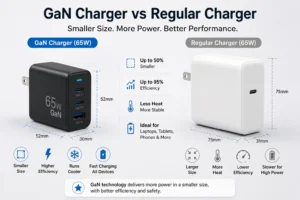
Yes, a GaN (Gallium Nitride) charger offers significant benefits. While it doesn't make the iPhone charge faster, it allows the charger itself to be much smaller, cooler, and more energy-efficient than traditional silicon chargers9. This is a huge selling point.
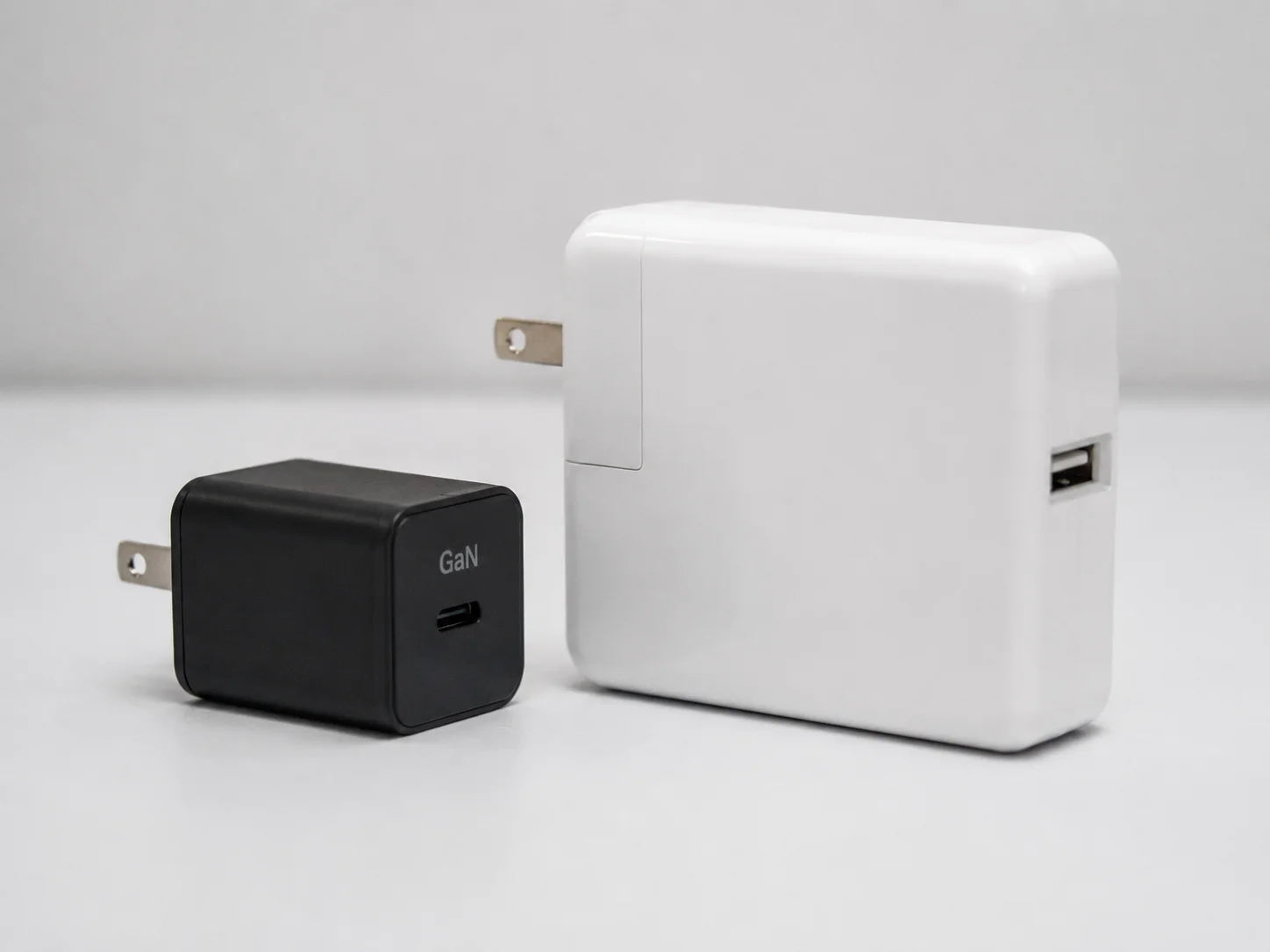
When we first started offering GaN chargers a few years ago, my B2B clients were skeptical. They cost a bit more. But then they saw them. A 30W GaN charger can be the size of an old 5W iPhone cube. A 65W GaN charger can fit in your palm. The difference is amazing.
Here’s why GaN is better. Traditional chargers use silicon, which gets hot when handling a lot of power. To manage that heat, the chargers need to be big with lots of empty space and heat sinks. GaN is a different material. It can handle higher power and generates much less heat.
Let's look at the real-world benefits for your customers:
- Smaller Size: GaN chargers are incredibly portable. They are perfect for travel and fit easily into crowded power strips. This is a benefit customers can see and feel.
- Higher Efficiency: They waste less energy as heat. This saves a small amount on electricity bills and is better for the environment.
- Cooler Operation: Because they run cooler, they are safer to the touch during fast charging.
For your inventory, a 30W USB-C PD GaN charger is the absolute best product. The combination of perfect power (30W), smart technology (PD), and modern materials (GaN) creates a charger that is fast, safe, and incredibly small. It's an easy sell.
What USB-C Cable Should You Use With iPhone 16 Pro Max?
A great charger is useless without a great cable. Your customers might think any cable works, but you know that's not true. Selling a poor-quality cable with a premium charger will lead to problems.
You must use a USB-C to USB-C cable that is rated for at least 3A (Amps)10 to support fast charging. For the best quality and reliability, an Apple MFi (Made for iPhone) certified cable is recommended, although high-quality non-MFi cables also work well.
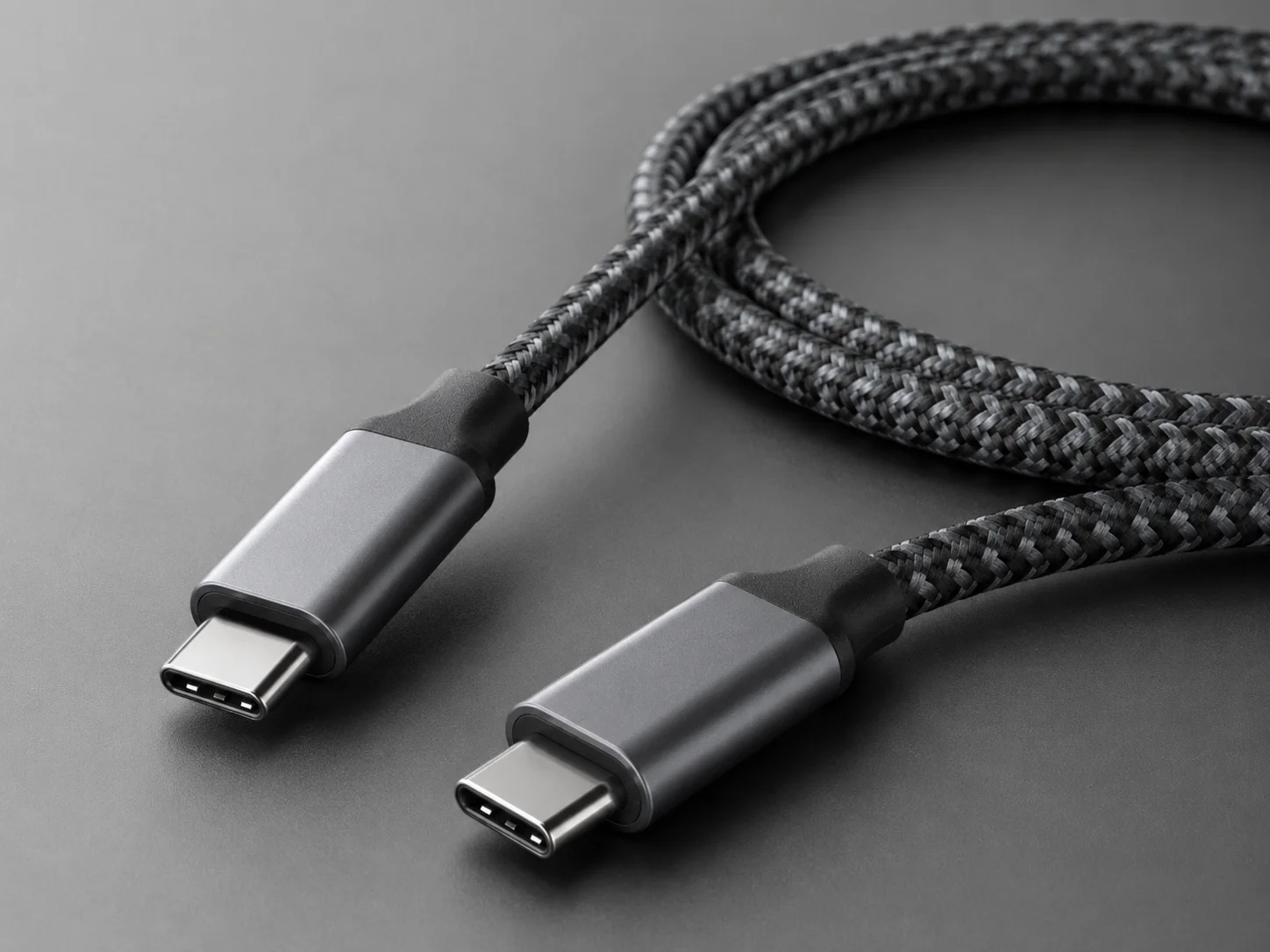
"Does the cable really matter?" This is a frequent question from importers trying to create a low-cost bundle. My answer is always a strong "Yes!" A cheap, unrated cable is a bottleneck. It's like connecting a huge water pipe to a tiny straw. The charger can offer 30W of power, but the cable can't handle it. The result is slow charging, or even no charging at all.
Here are the key things to look for when sourcing USB-C cables for the iPhone 16 Pro Max:
- Power Rating: The cable must be able to handle the power. A standard USB-C to USB-C cable is rated for 3A, which at 9V is 27W. This is perfect. Some cables are rated for 5A (100W), which is also fine but not necessary for just the iPhone.
- Data Transfer Speed: For charging, this doesn't matter. But customers often use the same cable to transfer photos. USB 2.0 speed (480Mbps) is standard. USB 3 or Thunderbolt cables are much faster but also more expensive.
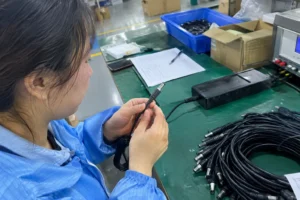
- Build Quality: Look for durable materials like braided nylon and reinforced connectors. This is something we specialize in. A strong cable lasts longer and builds customer trust in your brand.
When you create a charger and cable bundle, don't cut corners on the cable. A high-quality, 3A-rated, braided USB-C cable is the perfect partner for a 30W GaN charger. It ensures your customers get the speed they paid for.
Best Charger Types for Home, Travel, and Multiple Devices?
Your customers have different needs. A charger for the office desk is different from one for a backpacking trip. Offering a range of solutions shows you understand their lifestyle.
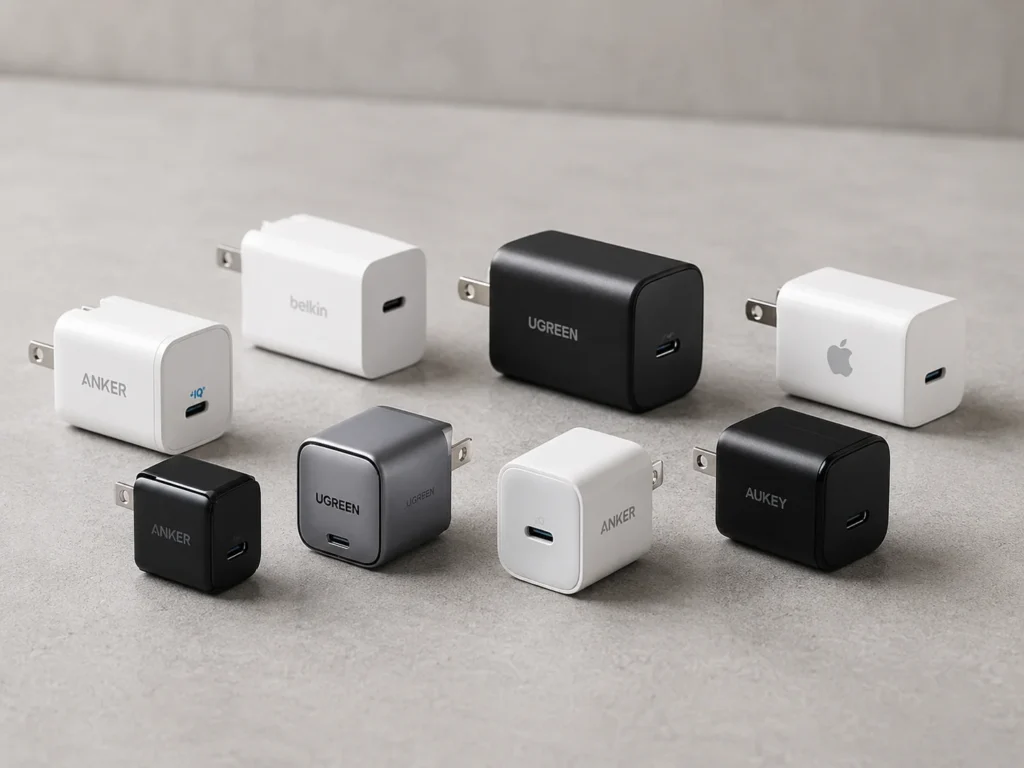
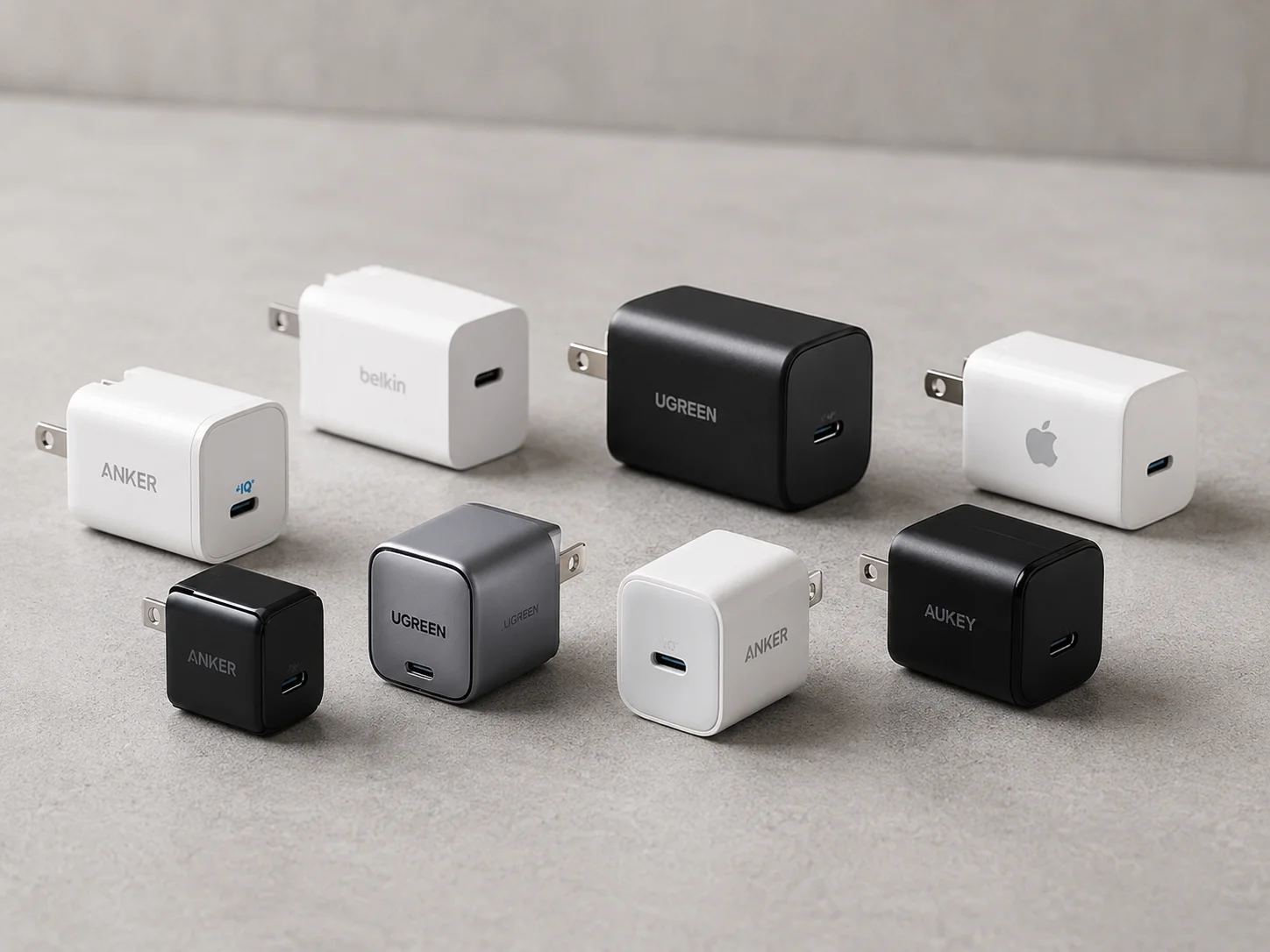
Offer a variety of charger types. A single-port 30W GaN charger is perfect for travel. A multi-port 65W+ GaN charger is ideal for a desk at home or in the office. A car charger with a USB-C PD port is essential for commuters.
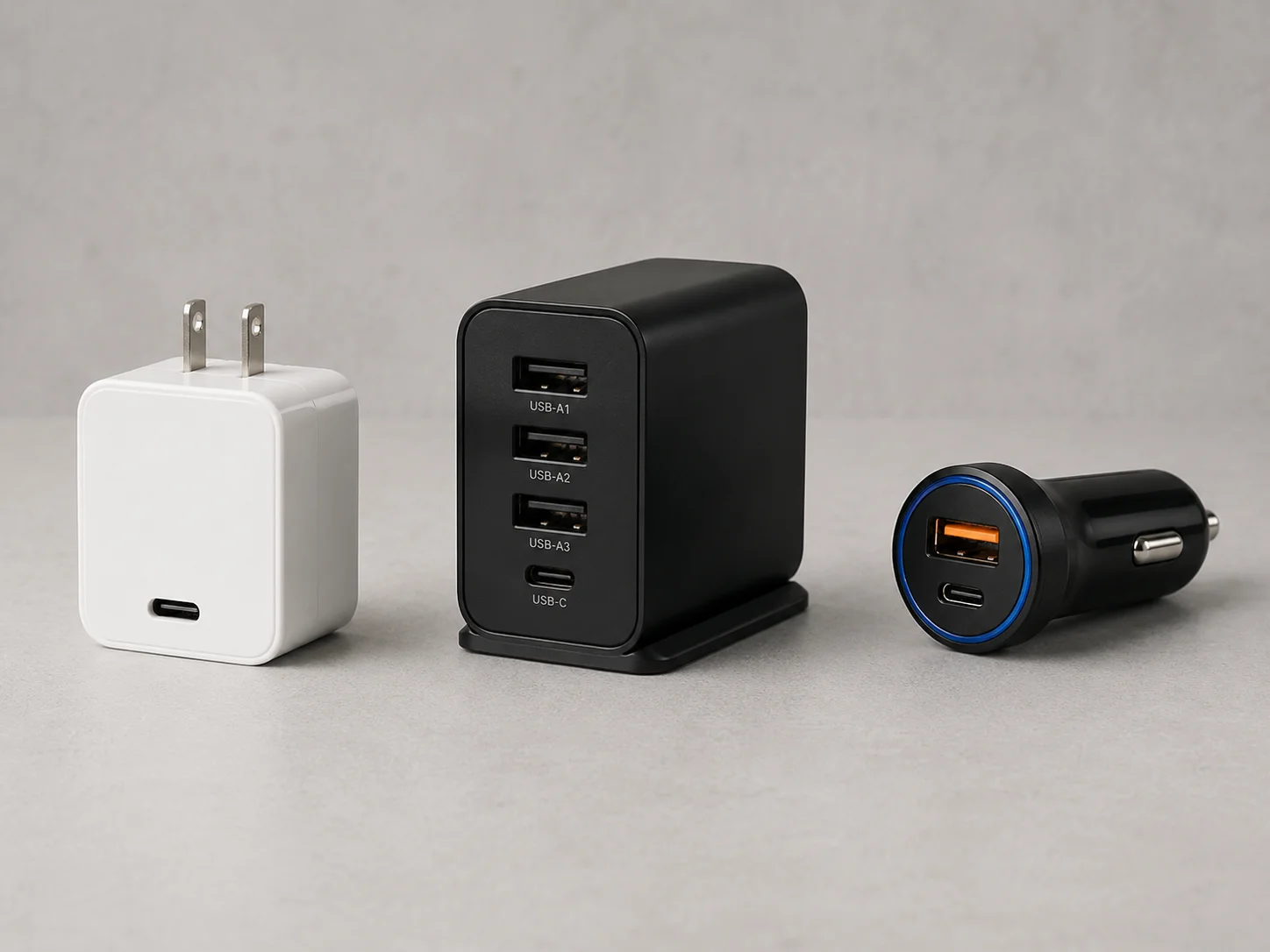
We help our clients build a full "charging ecosystem" for their stores. Instead of just one "best" charger, you offer the "best" charger for each situation. This approach increases the average order value because customers often buy more than one.
Here is a simple guide you can use for your product categories:
For the Traveler
- Product: Ultra-compact single-port 30W GaN USB-C PD charger.
- Key Features: Smallest possible size, foldable prongs (for the US market), lightweight.
- Selling Point: "The power you need, in a size that fits in your pocket. The perfect travel companion for your new iPhone."
For the Home or Office
- Product: 2- or 3-port GaN charger with at least 65W total output.
- Key Features: Multiple ports (e.g., two USB-C, one USB-A), smart power distribution11.
- Selling Point: "De-clutter your desk. Charge your iPhone, AirPods, and MacBook all at the same time with just one powerful charger."
For the Commuter
- Product: Car charger with at least one 30W USB-C PD port.
- Key Features: Snug fit in the car's 12V socket, an additional USB-A port is a plus.
- Selling Point: "Arrive at your destination fully charged. Fast charge your iPhone on your daily commute."
By stocking these three types, you cover over 90% of your customers' charging needs.
What to Check Before Buying an iPhone 16 Pro Max Charger?
You are ready to place a bulk order. But how do you ensure the chargers you source are safe and reliable? A bad batch of products can ruin your reputation.
Before buying, always verify the charger's safety certifications (like CE, FCC, RoHS12), confirm it uses USB-C Power Delivery, and check the build quality. Partner with a supplier who understands these requirements and has a track record of quality.
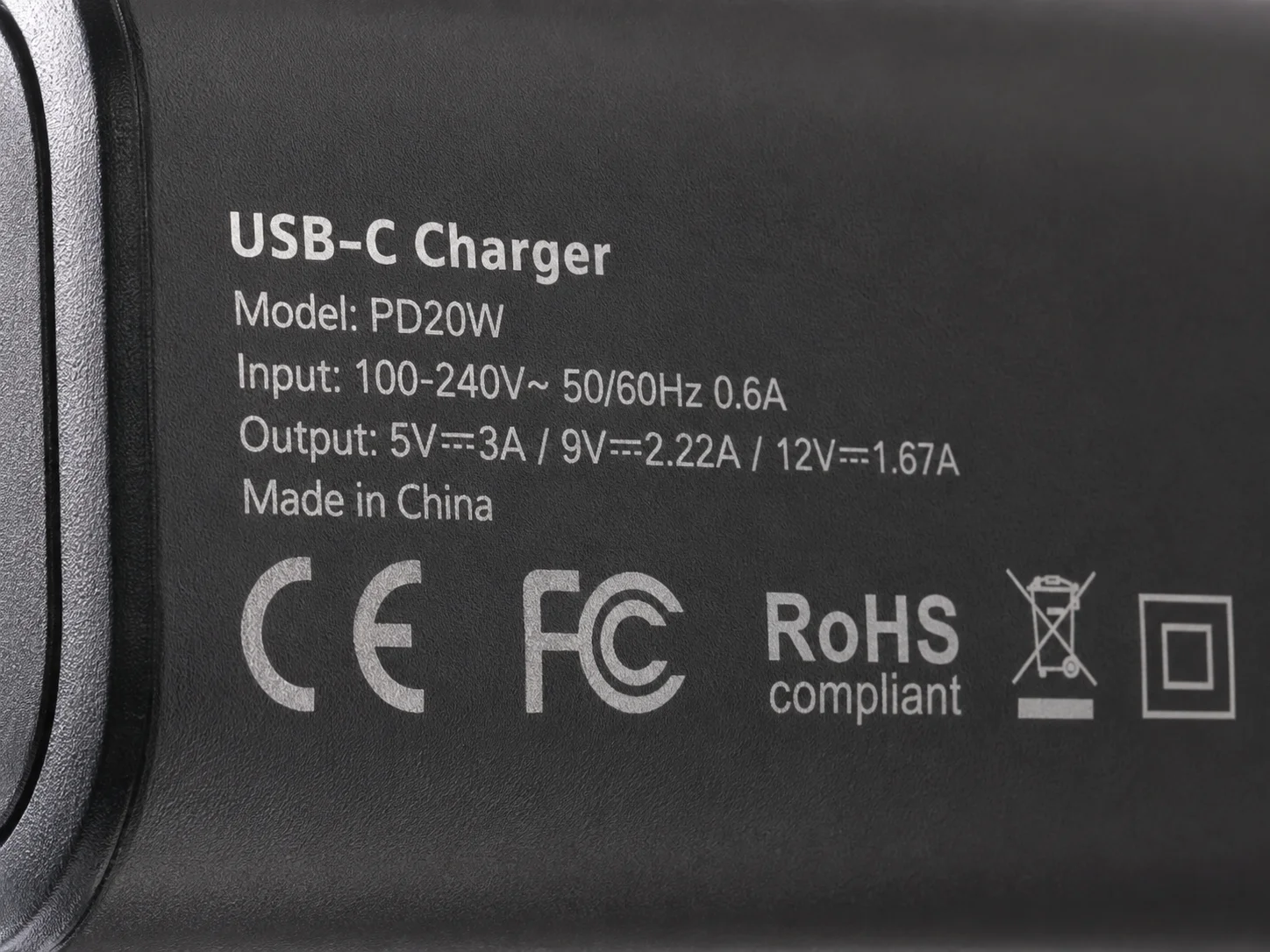
As an exporter with 15 years of experience, this is the most important advice I can give. A cheap price is not worth the risk of selling an unsafe product. We work with our B2B partners to ensure every product meets the standards for their target market, whether it's Europe, the US, or elsewhere.
Here is your final checklist before placing an order:
- Safety Certifications: Does the charger have the required marks for your country?
- CE: For Europe.
- FCC: For the United States.
- RoHS: Restricts hazardous substances.
- A reliable supplier will provide documentation for these.
- Technology Check: Does the product description explicitly state "USB-C PD" or "Power Delivery"? Don't assume. Verify it.
- Power Output Verification: Does the charger have at least one USB-C port that can output 30W? For multi-port chargers, understand how the power is shared when multiple devices are connected.
- Supplier Reputation: Does your supplier have experience exporting to your market? Do they understand the quality and compliance standards? Ask for references or case studies.
Working with an experienced partner like us removes this risk. We ensure every product is fully compliant, safe, and performs exactly as advertised. This protects your business and keeps your customers happy.
Conclusion
Choosing the best charger is simple. Stock 30W USB-C PD GaN chargers for speed and size, and offer multi-port and MagSafe options to cover all your customer's needs.
"I Tested iPhone 15 Pro Max Fast Charging with Different Power ...", https://www.reddit.com/r/iphone/comments/178om0u/i_tested_iphone_15_pro_max_fast_charging_with/. Technical reviews and charging tests of the iPhone 15 Pro Max show that its peak power draw is approximately 27W, making a 30W charger sufficient to provide the fastest possible wired charging speed. Evidence role: general_support; source type: other. Supports: That a 30W charger is sufficient to achieve the maximum charging speed on recent high-end iPhones, which rarely draw more than 27W.. Scope note: This evidence is based on testing of the previous generation iPhone 15 Pro Max, as the iPhone 16 Pro Max has not yet been released and tested. ↩
"MagSafe (wireless charger) - Wikipedia", https://en.wikipedia.org/wiki/MagSafe_(wireless_charger). Apple's official support documentation specifies that MagSafe chargers provide up to 15W of power for faster wireless charging, whereas standard Qi-compatible chargers are limited to 7.5W for iPhones. Evidence role: definition; source type: government. Supports: That Apple specifies a maximum of 15W for MagSafe charging, while standard Qi wireless charging is limited to a lower wattage.. ↩
"Charging Review of Apple iPhone 15 Pro - Chargerlab", https://www.chargerlab.com/charging-review-of-apple-iphone-15-pro/. Independent analysis of the iPhone 15 Pro Max's charging cycle shows that the device's peak power draw reaches nearly 27W when using a compatible USB-C PD charger, and maintains this level for a portion of the charging cycle. Evidence role: statistic; source type: other. Supports: That independent testing of recent iPhone Pro Max models confirms a peak power draw in the 27-29W range.. Scope note: This data is for the iPhone 15 Pro Max; the charging behavior of the iPhone 16 Pro Max may differ. ↩
"Heat Generation and Degradation Mechanism of Lithium-Ion ... - PMC", https://pmc.ncbi.nlm.nih.gov/articles/PMC9753165/. Research from materials science and engineering demonstrates that charging lithium-ion batteries at high rates increases internal temperature, which can accelerate electrolyte decomposition and electrode material degradation, thereby reducing the battery's long-term health and capacity. Evidence role: mechanism; source type: education. Supports: That charging lithium-ion batteries generates heat, and excessive heat accelerates chemical degradation, leading to a permanent reduction in battery capacity and lifespan.. ↩
"iPhone 15 Pro Max Charge Test: 35W vs 30W vs 20W vs ... - YouTube",
. Comparative tests conducted by technology publications on the iPhone 15 Pro Max confirm that using a 20W charger results in a 0-50% charge in approximately 35 minutes, while a 30W charger achieves the same level in about 30 minutes. Evidence role: statistic; source type: other. Supports: That tests on recent iPhone models show a 30W charger can achieve a 0-50% charge in approximately 30 minutes.. Scope note: These charging times are based on tests of the iPhone 15 Pro Max and may vary slightly for the iPhone 16 Pro Max. ↩"Inductive charging - Wikipedia", https://en.wikipedia.org/wiki/Inductive_charging. Studies on power transfer efficiency show that while wired charging can achieve over 95% efficiency, inductive charging systems like Qi typically operate in the 75-85% efficiency range, with the lost energy being converted primarily into heat. Evidence role: mechanism; source type: research. Supports: That inductive (wireless) power transfer is inherently less efficient than conductive (wired) transfer due to energy losses in the magnetic coupling and conversion processes, which are primarily dissipated as heat.. ↩
"About iPhone charge speeds - Apple Support", https://support.apple.com/en-us/120619. According to Apple's support documentation, fast charging an iPhone 8 or later model requires a USB-C power adapter that supports the USB Power Delivery (PD) specification. Evidence role: definition; source type: government. Supports: That Apple officially specifies the use of a USB-C Power Delivery adapter to enable the fast charge feature on compatible iPhone models.. ↩
"Radio Equipment Directive (2022) - Wikipedia", https://en.wikipedia.org/wiki/Radio_Equipment_Directive_(2022). The USB Implementers Forum (USB-IF) maintains the USB Power Delivery specification, which has become a widely adopted industry standard for charging a range of devices, from smartphones to laptops, and forms the basis for regulatory mandates like the EU's common charger initiative. Evidence role: historical_context; source type: institution. Supports: That USB Power Delivery has been widely adopted across the consumer electronics industry as a common charging standard.. ↩
"GaN Enables Energy-Efficient Power Conversion - Stanford University", http://large.stanford.edu/courses/2024/ph240/chen-h1/. Technical literature on semiconductor materials explains that Gallium Nitride (GaN) has a wider bandgap and higher electron mobility than silicon, allowing GaN-based power transistors to operate at higher frequencies and temperatures with lower energy loss, enabling the design of more compact and efficient power adapters. Evidence role: mechanism; source type: paper. Supports: That Gallium Nitride has material properties superior to silicon for high-power applications, leading to more efficient, compact, and cooler power converters.. ↩
"USB hardware - Wikipedia", https://en.wikipedia.org/wiki/USB_hardware. The USB Implementers Forum (USB-IF) specifies that all standard, full-featured USB-C to USB-C cables must be capable of carrying at least 3A of current. Cables designed for higher power (up to 5A) are electronically marked to communicate this capability. Evidence role: definition; source type: institution. Supports: That standard USB-C cables are rated to carry a minimum of 3A of current.. ↩
"How do chargers with multiple output ports work : r/techsupport", https://www.reddit.com/r/techsupport/comments/1d4t04b/how_do_chargers_with_multiple_output_ports_work/. Multi-port USB-C PD chargers incorporate a microcontroller that manages power distribution. When multiple devices are connected, the controller renegotiates the Power Delivery contracts with each device, splitting the charger's total wattage according to predefined rules, such as prioritizing the first-connected port or distributing power evenly. Evidence role: mechanism; source type: other. Supports: That multi-port chargers use a controller to dynamically adjust the power output of each port depending on which ports are in use.. ↩
"Equipment Authorization | Federal Communications Commission", https://www.fcc.gov/engineering-technology/laboratory-division/general/equipment-authorization. The FCC mark, issued by the U.S. Federal Communications Commission, certifies that electronic products do not produce harmful levels of electromagnetic interference. Similarly, the CE mark indicates conformity with health, safety, and environmental protection standards for products sold within the European Economic Area, and RoHS restricts the use of specific hazardous materials. Evidence role: definition; source type: government. Supports: That these marks represent compliance with regional safety and environmental regulations.. ↩