Your customers' phones are dying faster than ever1. Standard chargers are slow and bulky. You need a fast, compact solution that sells itself and keeps customers happy.
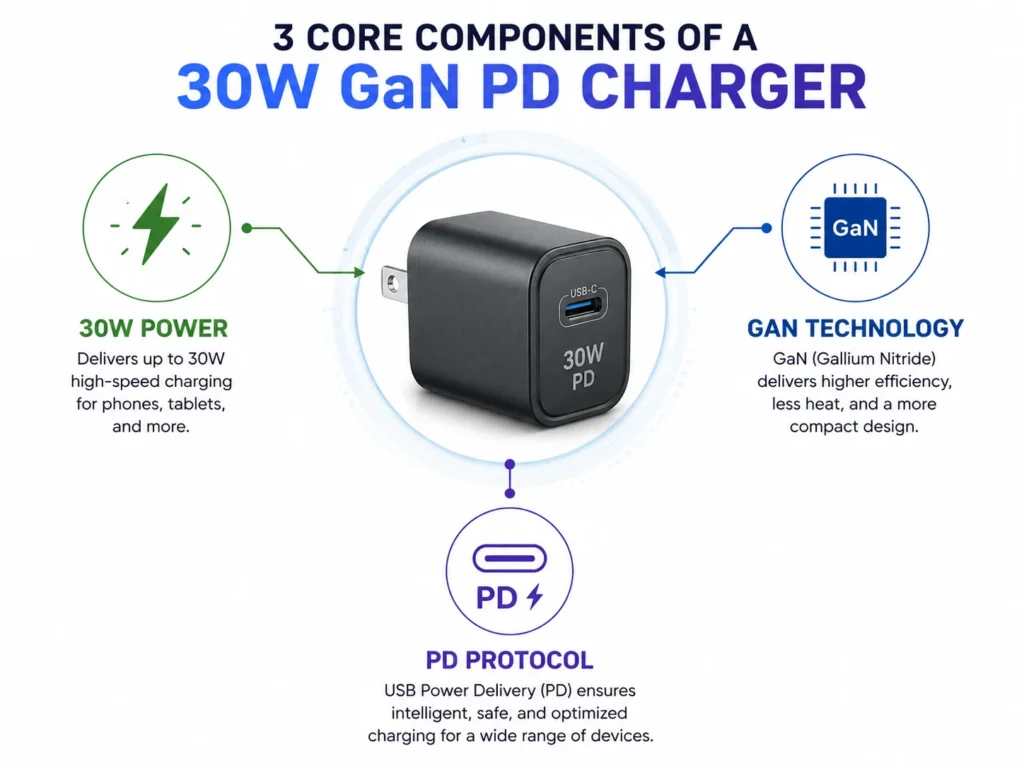
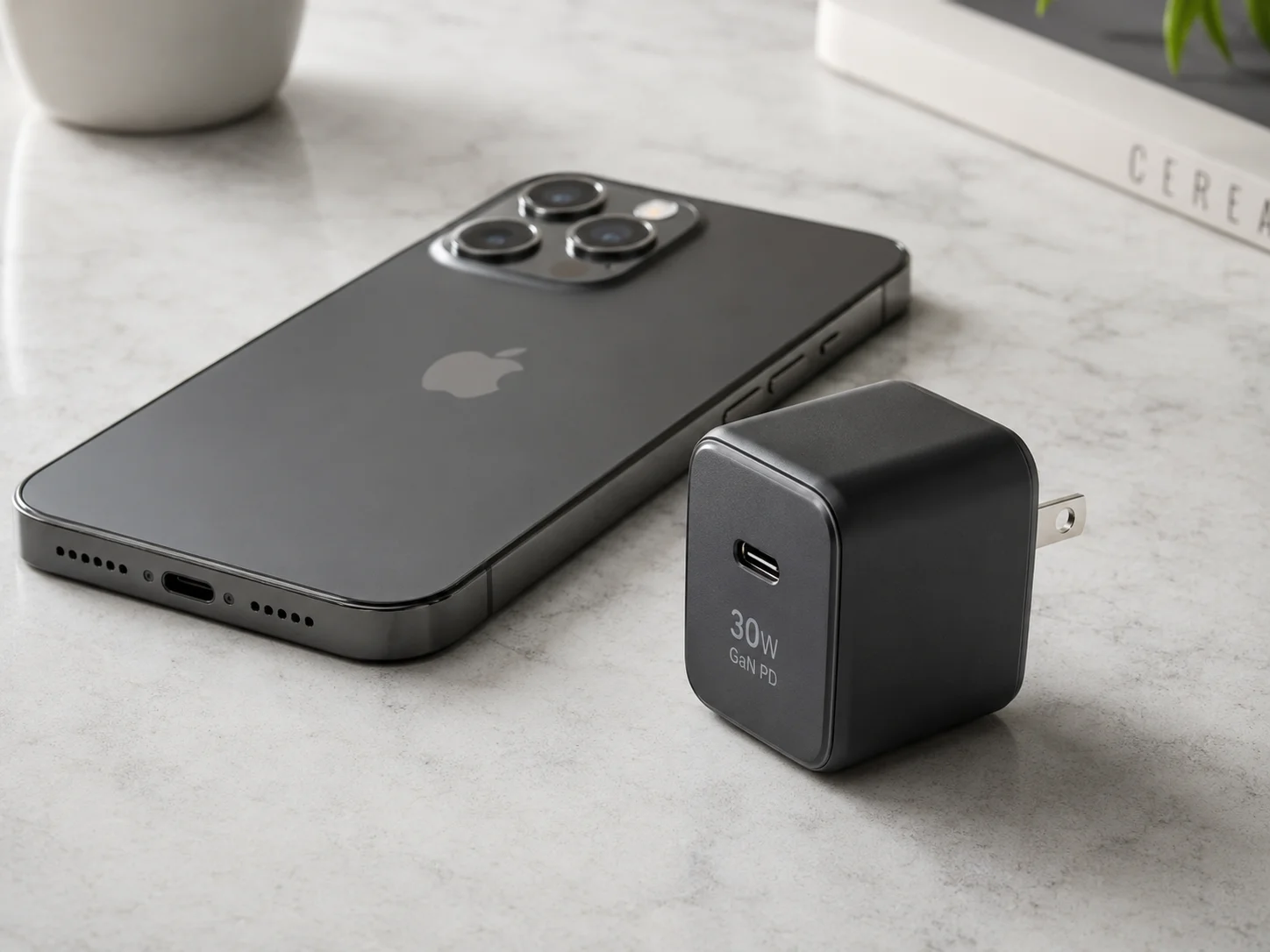
A 30W GaN PD fast charger is a small, powerful adapter that uses Gallium Nitride (GaN) for efficiency2 and USB Power Delivery (PD) for smart, fast charging3. It's ideal for modern smartphones like the iPhone 15, flagship Androids, and even some tablets and smaller laptops.
That's the quick answer. But as a B2B buyer, you need more than just a definition. You need to know if this product will actually sell in your market. For over 15 years, I've helped importers make these decisions. Let's break down what makes this charger special, and more importantly, who you should be selling it to. This information will help you decide if it's the right fit for your inventory.
What Is a 30W GaN PD Charger, really?
Confused by all the jargon like GaN and PD? You see these terms on every box, but it's hard to explain the real value to your customers.
A 30W GaN PD charger combines three key features. "30W" is its maximum power output. "GaN" (Gallium Nitride) is the material that makes it small and cool. "PD" (Power Delivery) is the smart technology that safely delivers the fastest possible charge to a device.
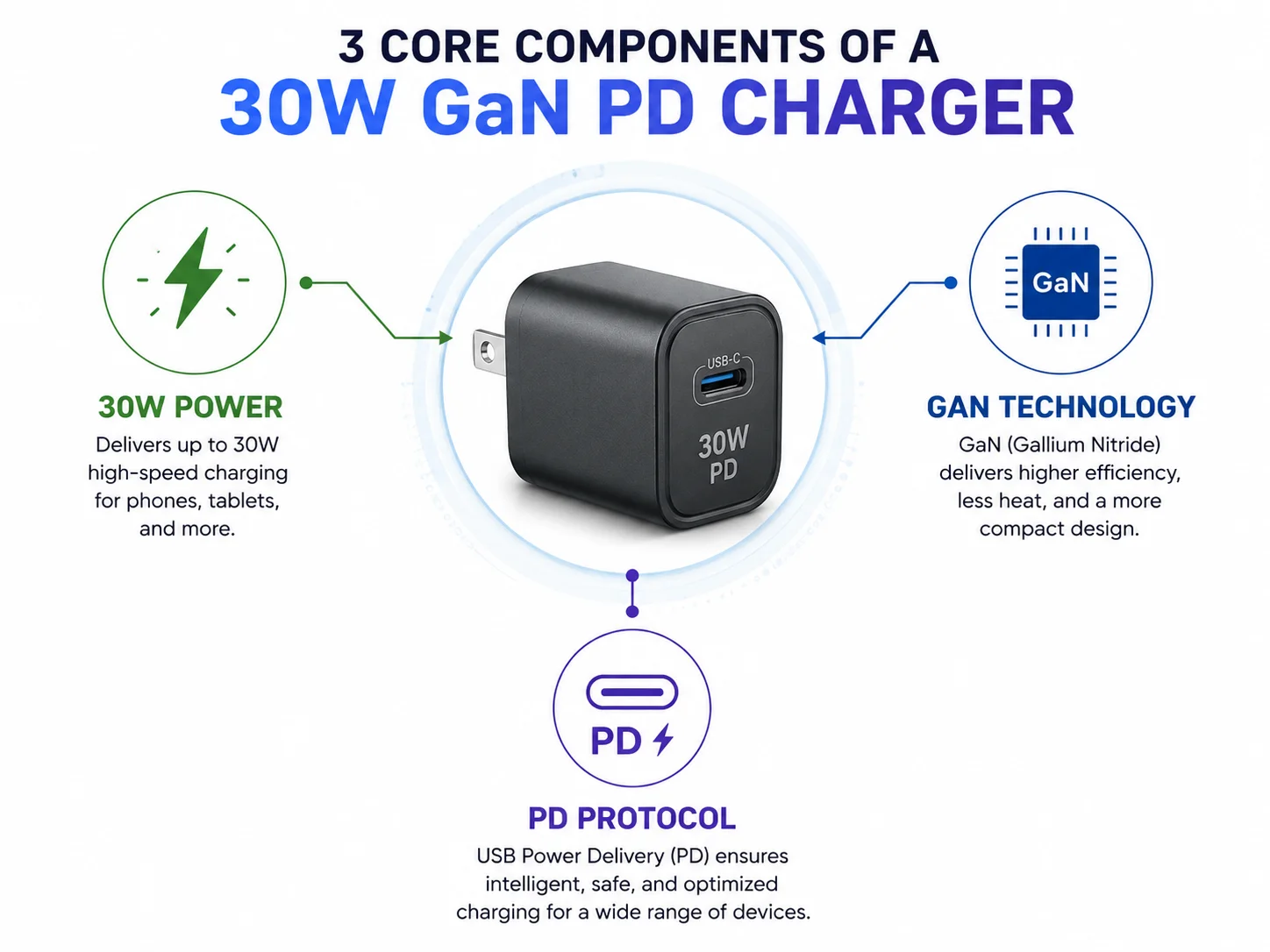
I get this question all the time from clients. They see "GaN" and "PD" and wonder if it's just marketing fluff. It's not. Let's look at the parts.
Understanding the Components
Think of it like a high-performance car engine. You have horsepower, the engine material, and the smart computer managing it all.
| Component | What It Does | Why It Matters to Your Customer |
|---|---|---|
| 30W (Wattage) | The maximum power it can deliver. | Faster charging for compatible devices. A 30W charger can power up a phone much quicker than the old 5W blocks. |
| GaN (Gallium Nitride) | A semiconductor material replacing silicon. | Creates a smaller, lighter charger that runs cooler and wastes less energy. It's the "travel-friendly" feature. |
| PD (Power Delivery) | A universal charging standard via USB-C. | It's a "smart" system. The charger and device talk to each other to pick the perfect charging speed, which is safer and better for the battery. |
So, you're not just selling a charger. You're selling speed, portability, and safety all in one package. This is a crucial selling point for customers who want the latest and greatest tech.
Why Does GaN Technology Make a 30W Charger Smaller and More Efficient?
Big, clunky chargers are a pain to carry. They get hot and waste energy. Your customers want something powerful that fits easily in their pocket or bag.
GaN (Gallium Nitride) is better at handling high voltage and heat than old silicon. This means manufacturers can use smaller components and place them closer together. The result is a compact charger that loses less energy as heat, making it more efficient and cooler to the touch.
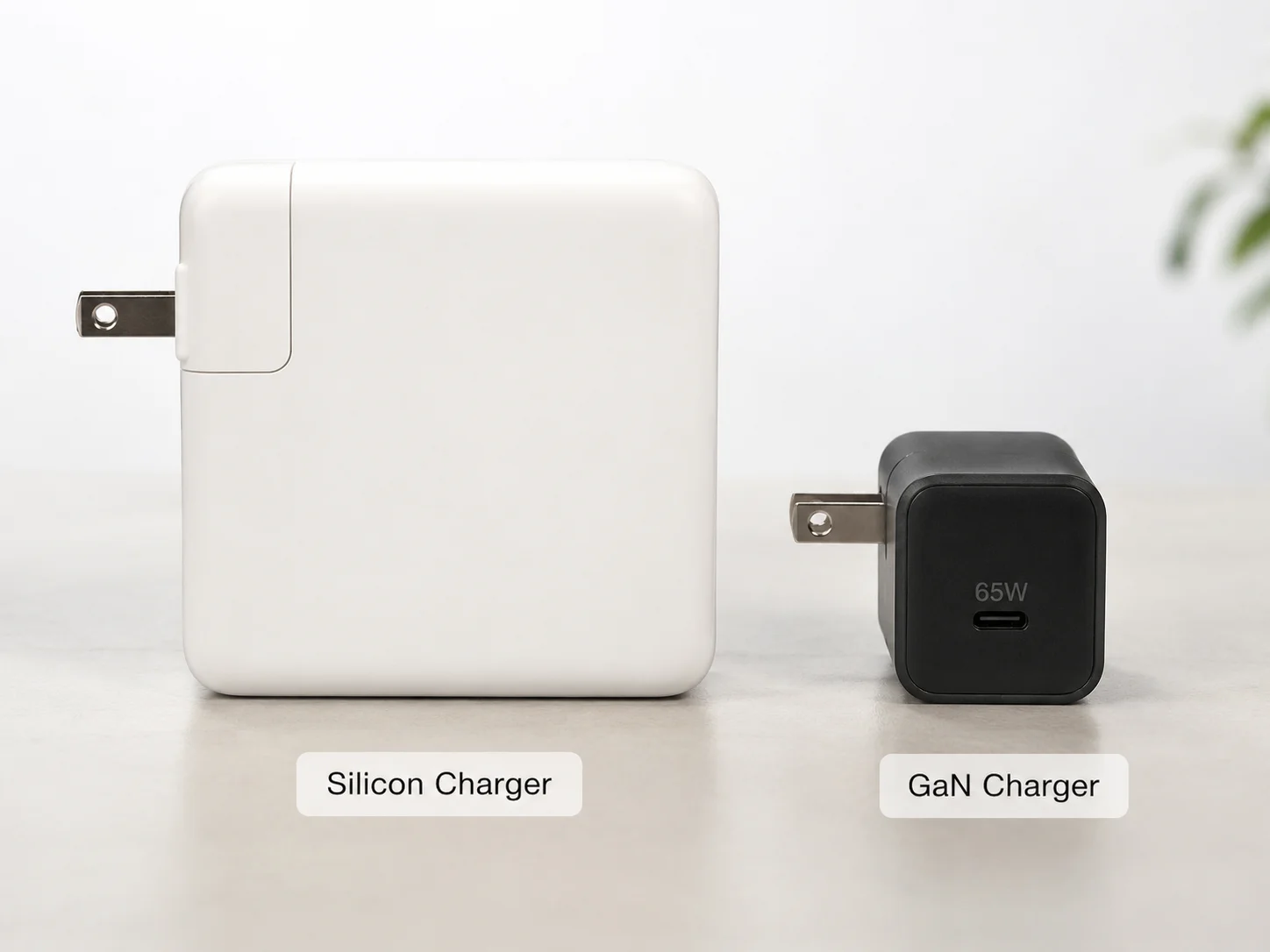
A buyer from Germany once held one of our old 30W silicon chargers and a new 30W GaN charger. He couldn't believe they had the same power. "How is this possible?" he asked. The secret is the material science.
Silicon vs. GaN: A Quick Breakdown
For decades, silicon was the standard for electronics. It's cheap and reliable. But it has limits. When you push a lot of power through it, it gets hot and needs a lot of space to cool down.
GaN is different. It's a wide-bandgap semiconductor. In simple terms, it can handle much higher electrical fields and temperatures.
- Higher Efficiency: GaN wastes less power as heat. A typical silicon charger might be 85% efficient, while a GaN charger can be over 90% efficient4. This saves a little electricity but, more importantly, means less heat.
- Smaller Size: Because GaN components run cooler, they don't need big heatsinks or lots of empty space around them. We can shrink everything down. A 30W GaN charger can be the size of a 5W Apple cube from a few years ago. This size reduction is a huge selling point for travelers and minimalists.
Which Phones, Tablets, and Other Devices Support 30W Fast Charging?
You don't want to stock a charger that nobody can use. You need to know which customers will actually benefit from 30W charging, so you can target your marketing.
A 30W charger is perfect for modern flagship phones like the iPhone 15 series, Samsung Galaxy S series, and Google Pixel phones. It's also great for tablets like the iPad Air/Pro and can even charge smaller laptops like the MacBook Air or a Chromebook.
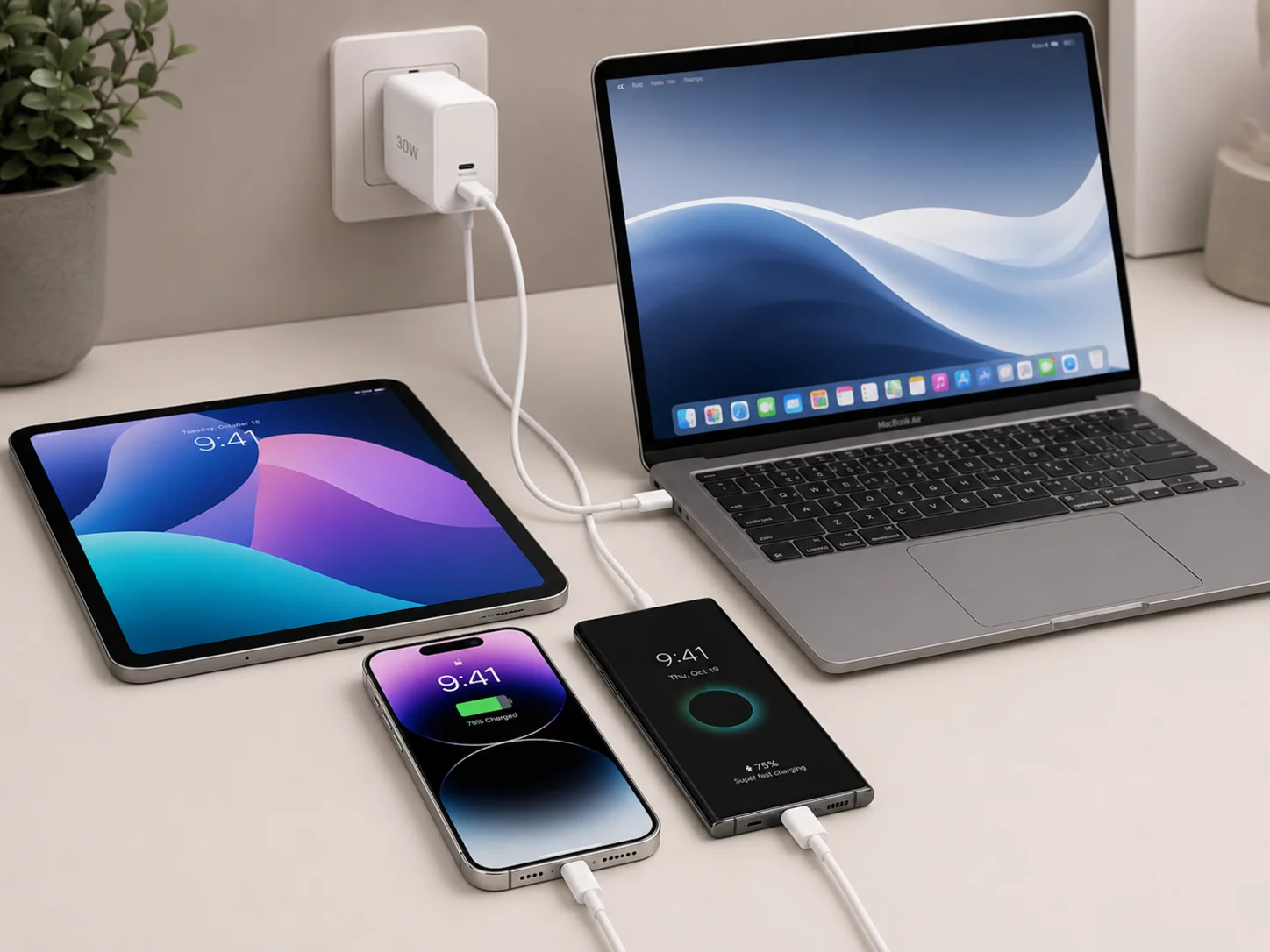
The most common question my e-commerce clients ask is, "Who is the customer for this?" They need to write product descriptions that connect with the right people. The target audience for a 30W charger is growing fast.
Key Device Categories
Here’s a simple way to think about the market for these chargers. It's not about one specific model, but about categories of users.
| Device Category | Examples | Why 30W is a Good Fit |
|---|---|---|
| Flagship Smartphones | iPhone 12-15 Pro/Pro Max, Samsung Galaxy S21+, Google Pixel 6+ | These phones can accept 25W-30W, so a 30W charger gives them the fastest possible speed. A huge upgrade from older chargers. |
| Modern Tablets | iPad Air, iPad Pro, Samsung Galaxy Tab S series | These devices have large batteries and benefit significantly from the faster charging speeds that 30W provides. |
| Ultraportable Laptops | MacBook Air (M1/M2), Dell XPS 13, Google Chromebooks | While it won't charge as fast as their original 45W or 60W bricks, a 30W charger can slowly charge these laptops or keep the battery topped up while in use. It's a great, lightweight travel option. |
Your ideal customer owns one or more of these devices. They value speed and convenience and are willing to pay for a premium charging experience.
Is a 30W Charger Faster Than a 20W Charger?
Your customers see 20W and 30W chargers side-by-side. Is the 30W version worth the extra cost? You need a clear answer to justify the price difference.
Yes, a 30W charger is faster than a 20W charger, but only if the device can accept more than 20W of power. For an iPhone 15 Pro, which can charge at around 27W5, you'll see a noticeable speed increase. For a standard iPhone 15, the difference is minimal.
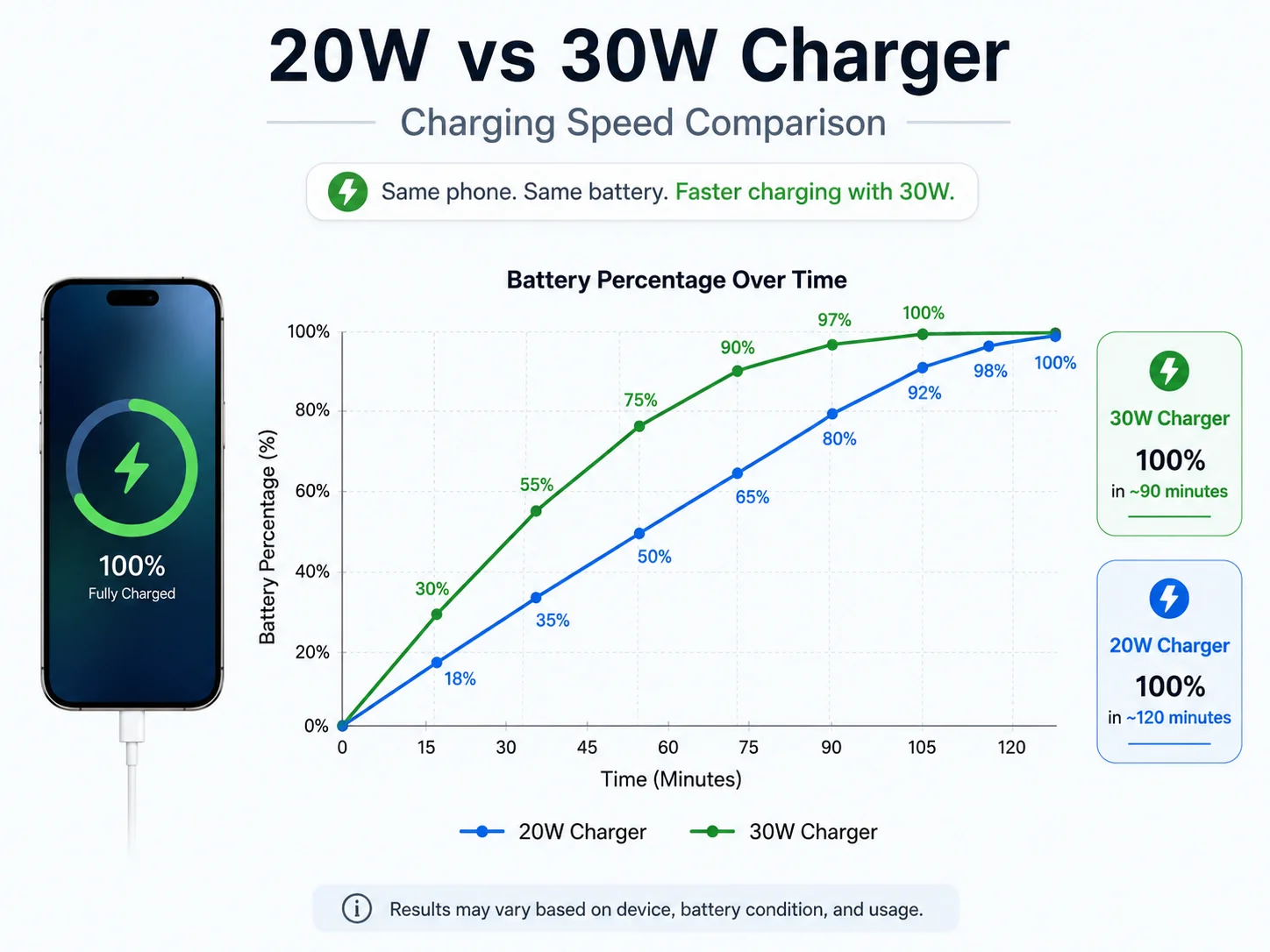
This is a classic "it depends" situation, and it's a conversation I have weekly with retail buyers. They need to decide if they should stock both 20W and 30W models. The key is understanding the "charging curve."
The Point of Diminishing Returns
A phone doesn't charge at its maximum speed the whole time. It charges fastest from 0% to about 50%, then it slows down to protect the battery6.
- For Devices Capping at ~20W: For a standard iPhone or an older Android phone, a 30W charger offers no speed benefit. The phone will only request ~20W, so the extra 10W of potential is unused. In this case, a 20W charger is more cost-effective.
- For Devices Accepting >20W: For an iPhone 15 Pro Max or a Samsung S23 Ultra, that initial 0-50% boost is where the 30W charger shines. It might save you 10-15 minutes on a full charge.
My advice to clients is this: A 20W charger is the perfect, affordable fast-charging upgrade for most people. The 30W charger is the premium option for tech enthusiasts and owners of the latest Pro/Ultra flagship phones who want every bit of speed they can get.
How Does USB Power Delivery Select the Right Charging Power?
Customers worry that a powerful charger will damage their phone's battery. This fear can stop a sale. You need to explain how modern chargers are completely safe.
USB Power Delivery (PD) is a smart charging protocol. When you plug in a device, the charger and device "talk" to each other. The device says, "I can handle X watts," and the charger provides exactly that amount. It's a digital handshake that ensures a safe, optimal charge7.
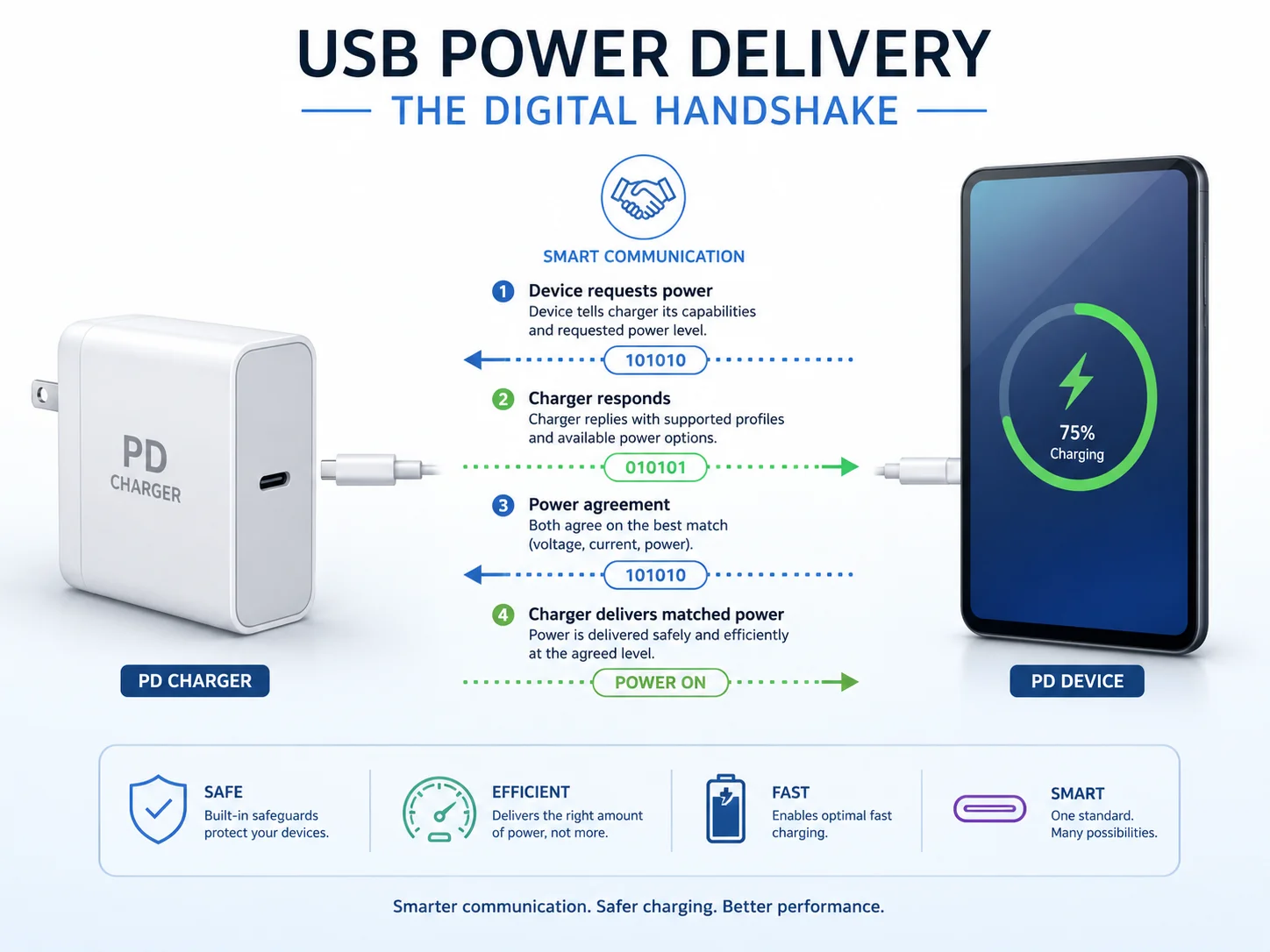
I remember the early days of fast charging. There were so many different standards, and it was a mess. A client from the US once told me, "I'm afraid to stock fast chargers because my customers will blame me if their phone dies." USB-C and Power Delivery (PD) solved this problem.
The PD "Handshake" Process
Think of it as ordering coffee. You don't just get a random cup; you tell the barista exactly what you want.
- Connection: You plug the USB-C cable into the charger and your device.
- Introduction: The charger sends out a list of its capabilities. For a 30W PD charger, this might look like: "I can provide 5V/3A, 9V/3A, 12V/2.5A, 15V/2A, or 20V/1.5A."
- Request: Your phone looks at that list and picks the fastest profile it can safely handle. An iPhone might say, "Okay, give me 9V/3A (27W)." A pair of headphones might say, "Just give me 5V/1A (5W), please."
- Delivery: The charger locks into that profile and delivers the power.
This process happens in milliseconds. It makes Power Delivery incredibly versatile and safe. It's why one 30W charger can safely power a laptop, a phone, and a small earbud case without any risk.
What Cable Should You Use With a 30W USB-C PD Charger?
You bought the perfect fast charger. But with the wrong cable, your charging speeds will crawl. Customers get frustrated, thinking the charger is broken, not the cable.
To get the full 30W speed, you need a USB-C to USB-C cable (for Android, iPad, etc.) or a USB-C to Lightning cable (for iPhones). Critically, the cable must be rated for at least 3A and 30W of power delivery8.
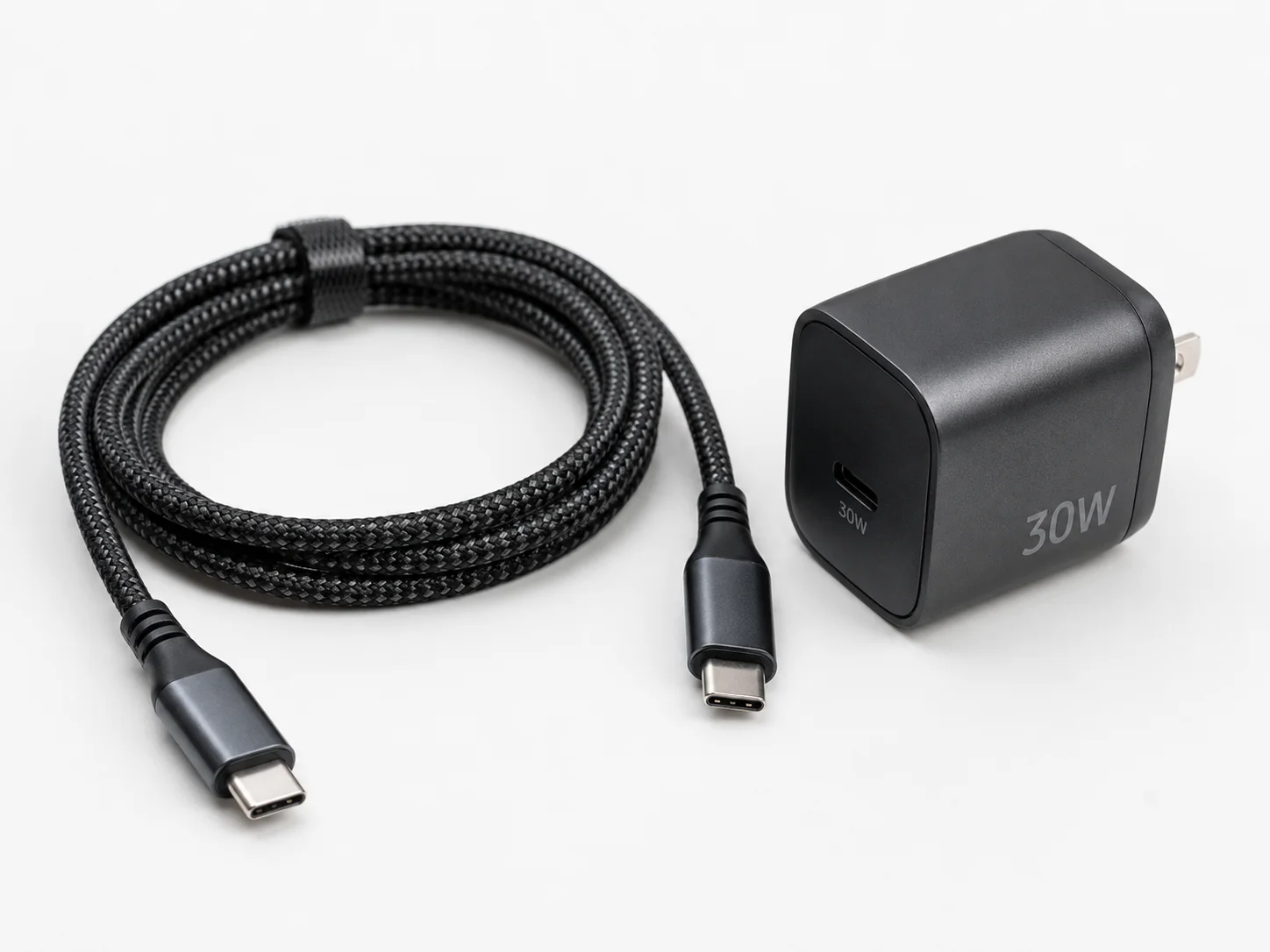
"My customer says the fast charger you sold me is slow!" This is a support ticket we've seen before. Nine times out of ten, the problem isn't the charger; it's the cable. Many B2B buyers overlook the importance of bundling or recommending the right cable.
Not All Cables Are Created Equal
A cheap, old cable is like a tiny pipe. It doesn't matter how much water pressure (power) you have; only a trickle can get through.
Here's what to look for when sourcing cables to sell alongside your 30W chargers:
| Cable Feature | Why It's Important | What to Tell Customers |
|---|---|---|
| Connector Type | USB-C to C or USB-C to Lightning. | Match the cable to the device's port. Simple but essential. |
| Power Rating | Must be rated for 30W or higher (e.g., 60W or 100W cables are fine). | An unrated cable will default to a very slow charging speed for safety. Look for "PD" or "Fast Charging" on the cable packaging. |
| E-Mark Chip9 | For power above 60W. Not strictly needed for 30W, but a sign of a high-quality cable. | A cable with an E-Mark chip communicates its capabilities to the charger, ensuring maximum speed and safety for higher-power devices. |
My advice is always to offer a tested, certified cable as a bundle. It prevents customer complaints and increases the average order value.
Is a 30W GaN Charger Safe for Lower-Power Devices?
Customers worry a 30W charger is "too strong" for their AirPods or smartwatch. They fear it will fry the battery, so they stick with slow, old chargers.
Yes, it is completely safe. Thanks to the USB Power Delivery (PD) protocol, the charger only supplies the amount of power the device requests. If your headphones only need 5W, the 30W charger will only provide 5W, not the full 30W.
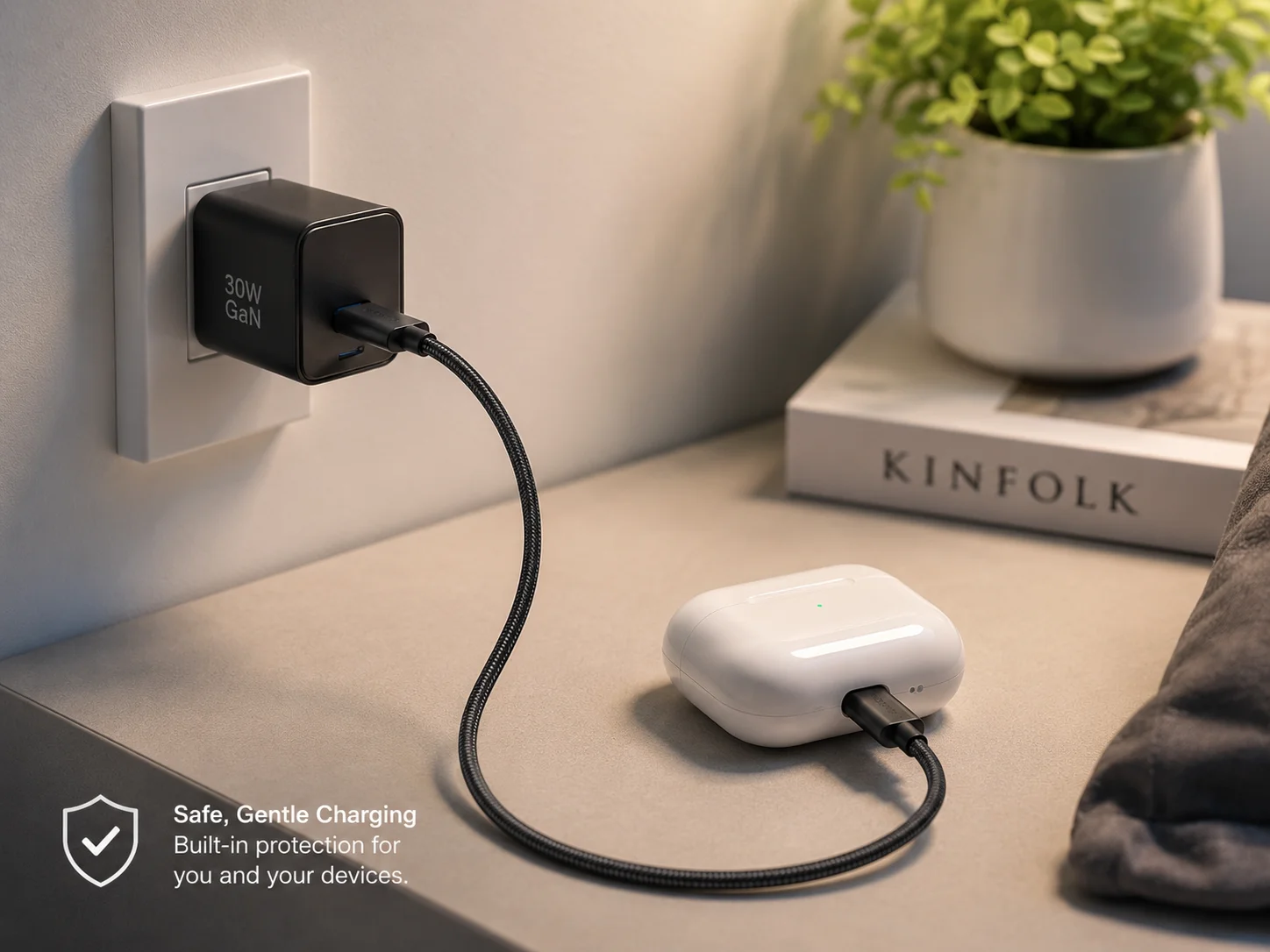
This is probably the biggest misconception I have to clear up for my clients' customers. The fear of "overpowering" a device is real, but it's based on how old, "dumb" chargers worked. Modern PD chargers are smart.
The Power is Pulled, Not Pushed
Think of your charger like a power outlet in the wall. The outlet can provide a huge amount of power (over 1500W), but your tiny phone charger only draws the 5W or 20W it needs. It doesn't explode.
A 30W PD charger works the same way. The device is in control.
- Device: iPhone 15 Pro
- Request: "I can take up to 27W."
- Charger Response: "Okay, here is 27W."
- Device: AirPods Pro case
- Request: "I only need 5W."
- Charger Response: "Understood. Here is 5W."
- Device: A Bluetooth speaker
- Request: "I'll take 10W."
- Charger Response: "You got it. Here is 10W."
This makes a 30W GaN charger an excellent "do-it-all" charger. A customer can buy one charger for their phone, tablet, and wireless earbuds, simplifying their life. This "one charger for everything" angle is a powerful marketing message for your business.
How Do You Choose a Reliable 30W GaN Fast Charger?
The market is flooded with cheap, unreliable chargers. Choosing the wrong supplier can lead to dangerous products, customer complaints, and damage to your brand's reputation.
Choose a reliable charger by checking for safety certifications like UL, CE, FCC, and RoHS10. Work with experienced suppliers who can provide testing reports. Prioritize chargers with built-in protections like over-voltage, over-current, and short-circuit protection. Don't just look at the price.
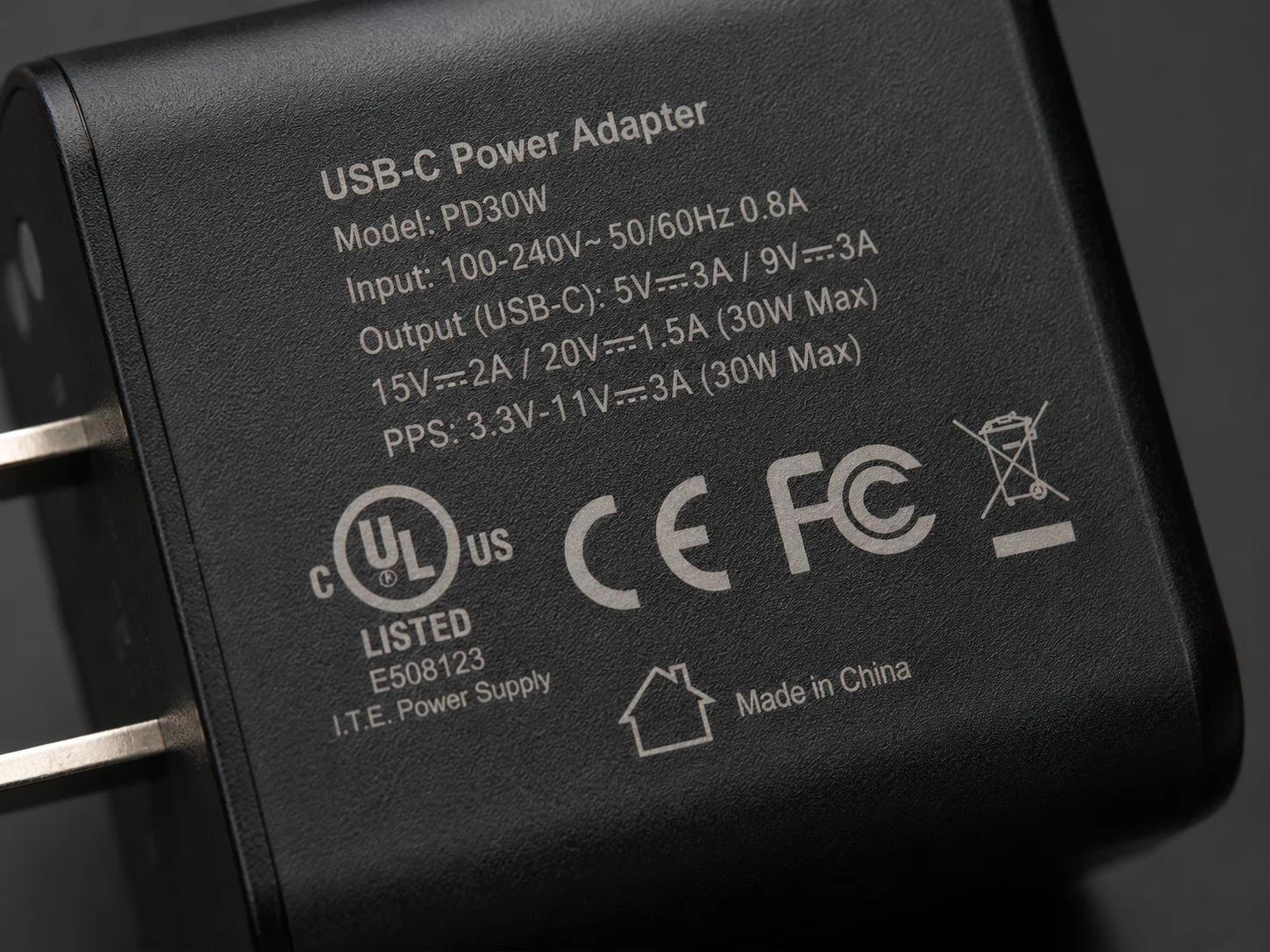
As a supplier with 15 years of experience, I've seen it all. I've seen clients who sourced the cheapest possible chargers end up with a container of unsafe, unsellable products. When you're sourcing for your business, quality and safety are not negotiable.
Your Sourcing Checklist
When you evaluate a potential supplier for 30W GaN chargers, here's what you should ask for. This is my personal checklist I share with new buyers.
| Item | What to Look For | Why It Matters |
|---|---|---|
| Safety Certifications | UL (for North America), CE (for Europe), FCC, RoHS. | These are non-negotiable legal requirements. They prove the product has been tested and is safe to sell in your target market. |
| Protection Features | Over-voltage, over-current, short-circuit, and over-temperature protection. | These are the internal safety mechanisms that prevent the charger from overheating, catching fire, or damaging a connected device. |
| Supplier Experience | Ask how long they've been making GaN chargers. Request case studies or references. | GaN is a newer technology. You want a partner who understands the manufacturing complexities, not someone who just started last month. |
| Warranty & Support | What is their policy for defects (DOA)? How do they handle returns? | A good partner stands behind their product. This protects you from financial loss and shows their confidence in their own quality control. |
A slightly higher unit cost for a certified, reliable product is an investment in your brand's reputation and long-term success.
Conclusion
A 30W GaN charger offers a compelling blend of speed, size, and safety. Understanding who it's for and how it works helps you make smarter sourcing decisions for your business.
"Daily Screen Time Among Teenagers - CDC", https://www.cdc.gov/nchs/products/databriefs/db513.htm. Data on smartphone usage shows a significant increase in daily screen time over the past decade, which contributes to batteries draining more quickly throughout the day, thereby increasing the demand for faster and more convenient charging solutions. Evidence role: statistic; source type: research. Supports: That daily smartphone usage has increased significantly, leading to batteries being depleted more quickly and increasing the demand for faster charging solutions.. Scope note: The source would support the idea of faster battery drain due to increased usage, not necessarily that the physical batteries themselves are degrading more quickly than in the past. ↩
"Gallium nitride - Wikipedia", https://en.wikipedia.org/wiki/Gallium_nitride. Gallium nitride is a wide-bandgap semiconductor material that can sustain higher voltages and operate at higher temperatures than silicon. These properties allow for the creation of smaller, lighter, and more efficient power conversion components. Evidence role: definition; source type: encyclopedia. Supports: That Gallium Nitride is a semiconductor material with properties that make it more efficient for power electronics than traditional silicon.. ↩
"USB hardware - Wikipedia", https://en.wikipedia.org/wiki/USB_hardware. The USB Power Delivery (USB PD) specification, managed by the USB Implementers Forum (USB-IF), enables a flexible power system where devices can negotiate for higher power levels over a USB-C connection, facilitating faster charging for a wide range of electronics. Evidence role: definition; source type: institution. Supports: That USB Power Delivery is a charging standard that allows for dynamic negotiation of power levels between a charger and a device over a USB-C connection.. ↩
"GaN Enables Energy-Efficient Power Conversion - Stanford University", http://large.stanford.edu/courses/2024/ph240/chen-h1/. Technical analyses and research in power electronics show that GaN-based power adapters regularly achieve higher power conversion efficiency, often surpassing 90%, compared to silicon-based designs which are typically in the 85-89% range. This higher efficiency results in less energy wasted as heat. Evidence role: statistic; source type: paper. Supports: That GaN-based power converters can achieve higher efficiency levels compared to their silicon-based counterparts.. Scope note: Specific efficiency percentages can vary based on the charger's design, load, and wattage. ↩
"iPhone 15 Pro Max Charge Test: 35W vs 30W vs 20W vs ... - YouTube",
. Independent testing by technology analysis publications confirms that iPhone 15 Pro and Pro Max models can reach peak charging speeds of approximately 27W, a figure not officially advertised by Apple. This peak speed is typically sustained during the initial phase of charging. Evidence role: statistic; source type: other. Supports: That the iPhone 15 Pro models can draw a peak power of approximately 27W when paired with a compatible USB PD charger.. Scope note: The peak wattage is only maintained for a portion of the charging cycle before it is reduced to protect the battery. ↩"BU-409: Charging Lithium-ion - Battery University", http://www.batteryuniversity.com/article/bu-409-charging-lithium-ion/. The charging process for most lithium-ion batteries uses a 'constant current, constant voltage' (CC/CV) profile. The battery charges at a fast, constant rate until it reaches a certain voltage (typically around 70-80% charge), after which the charging current is gradually reduced to prevent overcharging and minimize heat-related stress on the battery cells. Evidence role: mechanism; source type: education. Supports: That lithium-ion batteries are charged using a method where the speed is intentionally reduced at higher states of charge to prevent damage and prolong battery lifespan.. ↩
"USB-C - Wikipedia", https://en.wikipedia.org/wiki/USB-C. The USB Power Delivery specification defines a communication protocol where the power source (charger) broadcasts its available Power Data Objects (PDOs), which represent different voltage and current combinations. The connected device (sink) then evaluates these and requests a specific profile, ensuring a safe and mutually agreed-upon power transfer. Evidence role: mechanism; source type: institution. Supports: That the USB PD protocol involves a communication process where the charger advertises its power capabilities and the device requests one of the offered profiles.. ↩
"USB-C - Wikipedia", https://en.wikipedia.org/wiki/USB-C. According to the USB-C specification, standard cables that are not electronically marked are required to support at least 3A of current. This is sufficient for power delivery up to 60 watts (at 20V), which fully covers the requirements of a 30W charger. Evidence role: general_support; source type: institution. Supports: That standard USB-C cables are rated to handle up to 3 Amps of current, which is sufficient for charging up to 60W.. Scope note: The source confirms that a standard 3A cable is sufficient, reinforcing the article's point that an unrated or old, non-compliant cable may fail to deliver the proper power. ↩
"USB hardware - Wikipedia", https://en.wikipedia.org/wiki/USB_hardware. The USB Implementers Forum (USB-IF) specifies that any USB-C cable designed to support more than 3A of current (for power delivery over 60W) must contain an 'E-Mark' integrated circuit. This chip communicates the cable's capabilities, such as its current rating and vendor information, to the connected devices to ensure safe operation at higher power levels. Evidence role: definition; source type: institution. Supports: That an 'Electronically Marked' (E-Mark) chip is required in USB-C cables that are designed to carry more than 3A of current, for power delivery above 60W.. ↩
"UL Certification for Electronic Products - Tameson.com", https://tameson.com/pages/ul-certification. A UL Listing mark, issued by the independent safety science company UL (Underwriters Laboratories), signifies that a representative sample of a product has been tested against established safety standards for risks like fire and electric shock. For a power adapter, this certification provides third-party validation that its design and construction are safe for consumer use in the U.S. market. Evidence role: definition; source type: government. Supports: That a UL certification indicates a product has been independently tested to meet specific, nationally recognized safety standards.. Scope note: The source would define the purpose of the certification, not prove that any specific uncertified product is inherently unsafe, though it implies a lack of verified testing. ↩