I often see buyers lose sales because they treat watch power as a small detail. Then complaints arrive, returns rise, and margins shrink.
Apple Watch power means battery life, charging speed, power safety, and accessory quality. I look at it as a user issue and a buying risk. If power is weak, the watch feels less useful, even when the design and features look strong.
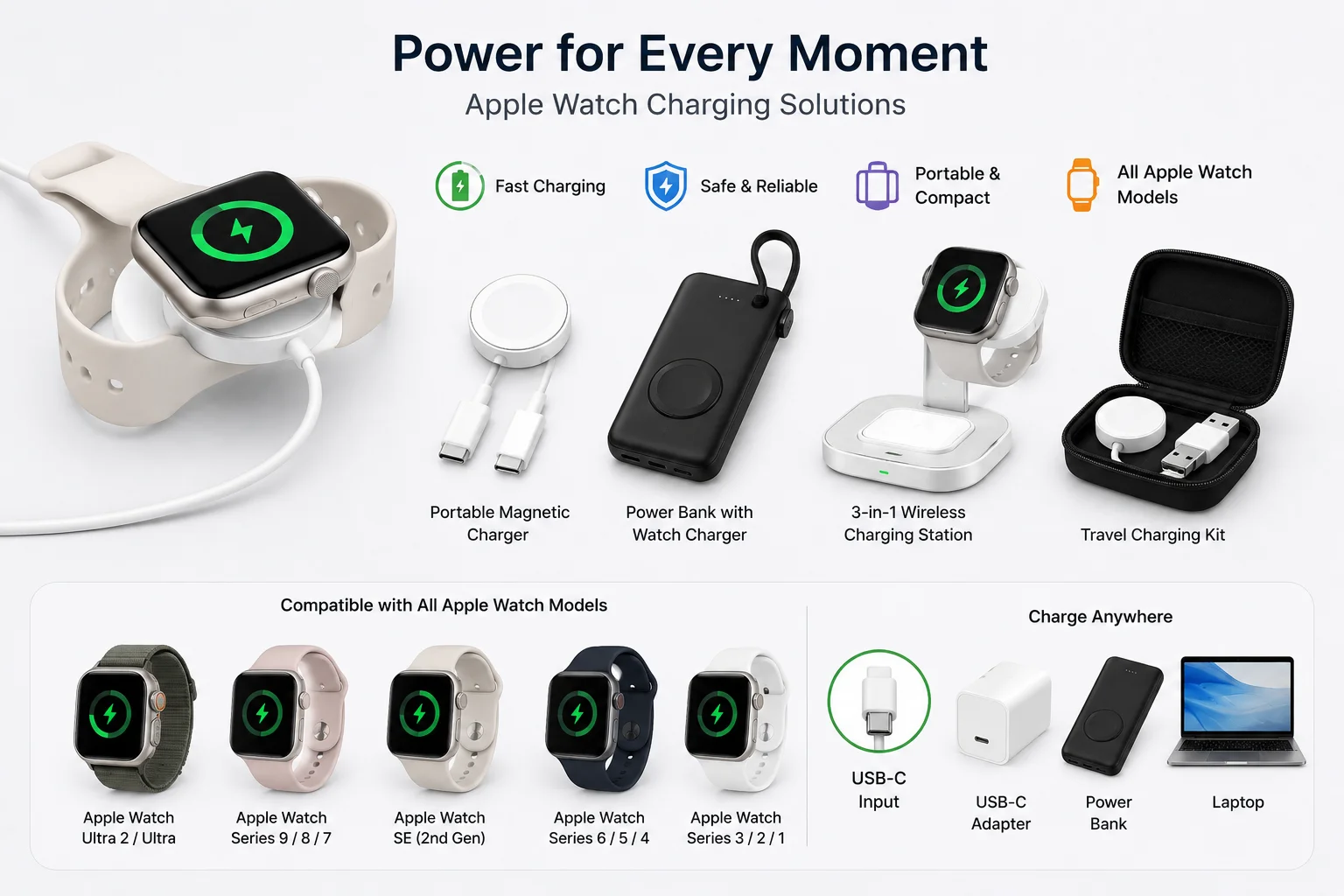
I wrote this because many buyers ask me about smartwatches, chargers, and accessories before they place an order. I work with 3C products in Shenzhen, and I have seen how one small power issue can become a big after-sales problem. So I do not only ask, “Is the product nice?” I also ask, “Can the user charge it easily, use it all day, and trust it for long-term use?” If you import or sell Apple Watch accessories, compatible chargers, or smartwatch products, I think this view will help you read the power question in a more practical way.
1. What Does Apple Watch Power Mean for Daily Users?
I see many users blame the watch first when power drops fast. Then they ignore habits, chargers, cables, and settings that also affect daily use.
Apple Watch power means how long the watch runs, how fast it charges, and how stable the charging experience feels. I judge it by real daily use, not only by the battery number on a product page.
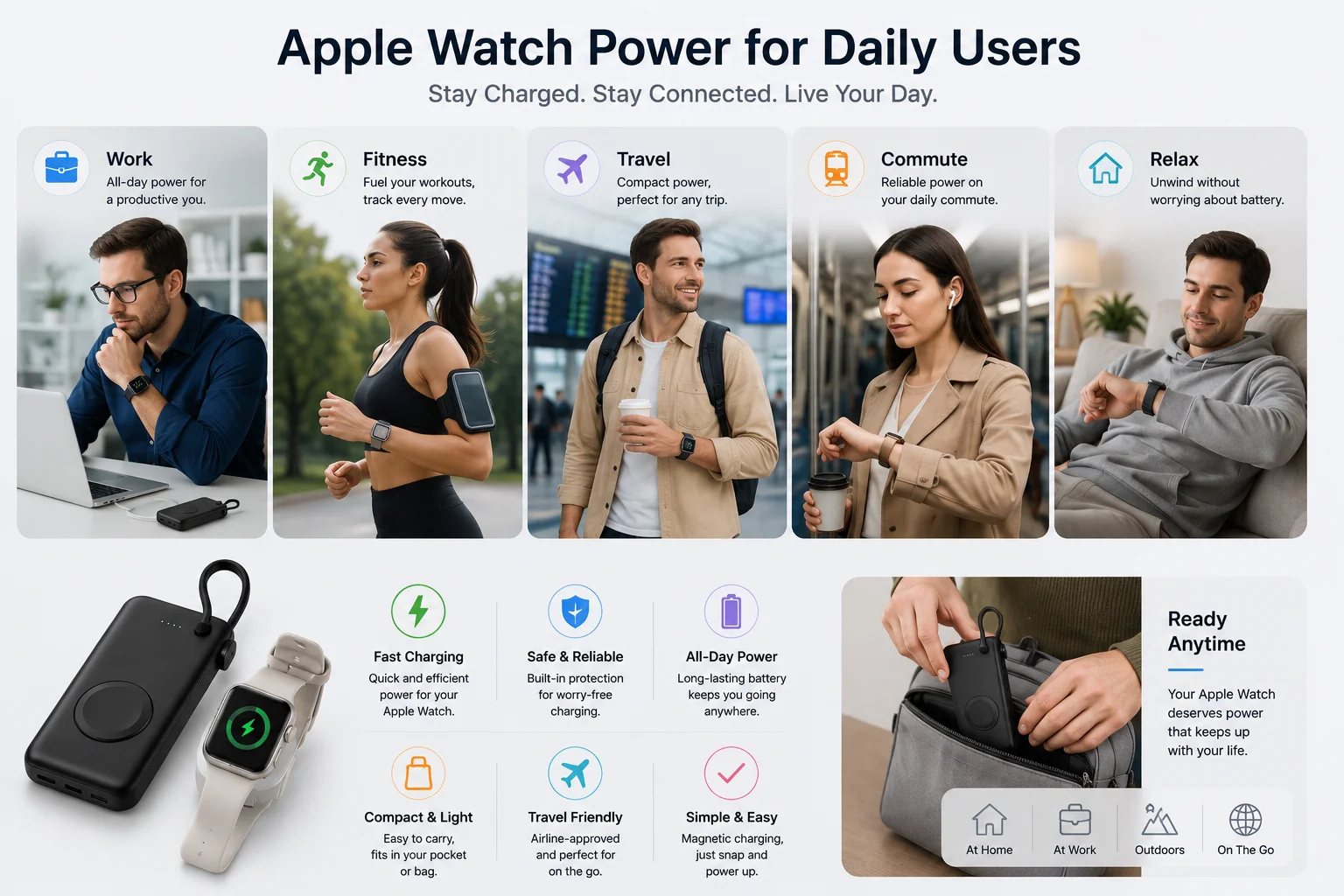
I look at power as a daily habit, not a single spec
When I speak with buyers, I often ask how their customers use the watch. Some users only check messages and time. Some users track workouts, sleep, heart rate, GPS, calls, and notifications all day. These two groups do not feel the same battery life. The same watch can feel “good” for one user and “bad” for another user.
I use a simple table when I explain this to new buyers.
| User type | Main power demand | Common complaint |
|---|---|---|
| Office user | All-day standby | Battery drops during busy notification hours |
| Fitness user | GPS and health tracking1 | Watch cannot finish long outdoor use |
| Travel user | Fast and easy charging | Charger is missing or not stable |
| Retail customer | Simple daily use | Confusion about charger and cable type |
I always remind buyers that power is part of the user promise. If the product page says “all-day use,” the customer expects less worry. If the charger feels weak, the customer may not care whether the watch itself is advanced. They only feel that the whole product failed them.
2. Battery Life Is the First Thing Buyers Care About?
I get this question almost every week. Buyers like bright screens and many features, but they worry first about battery complaints and returns.
Battery life matters because it affects trust. I see buyers compare battery life before they compare many other details. A watch with stable daily power is easier to sell, support, and recommend again.
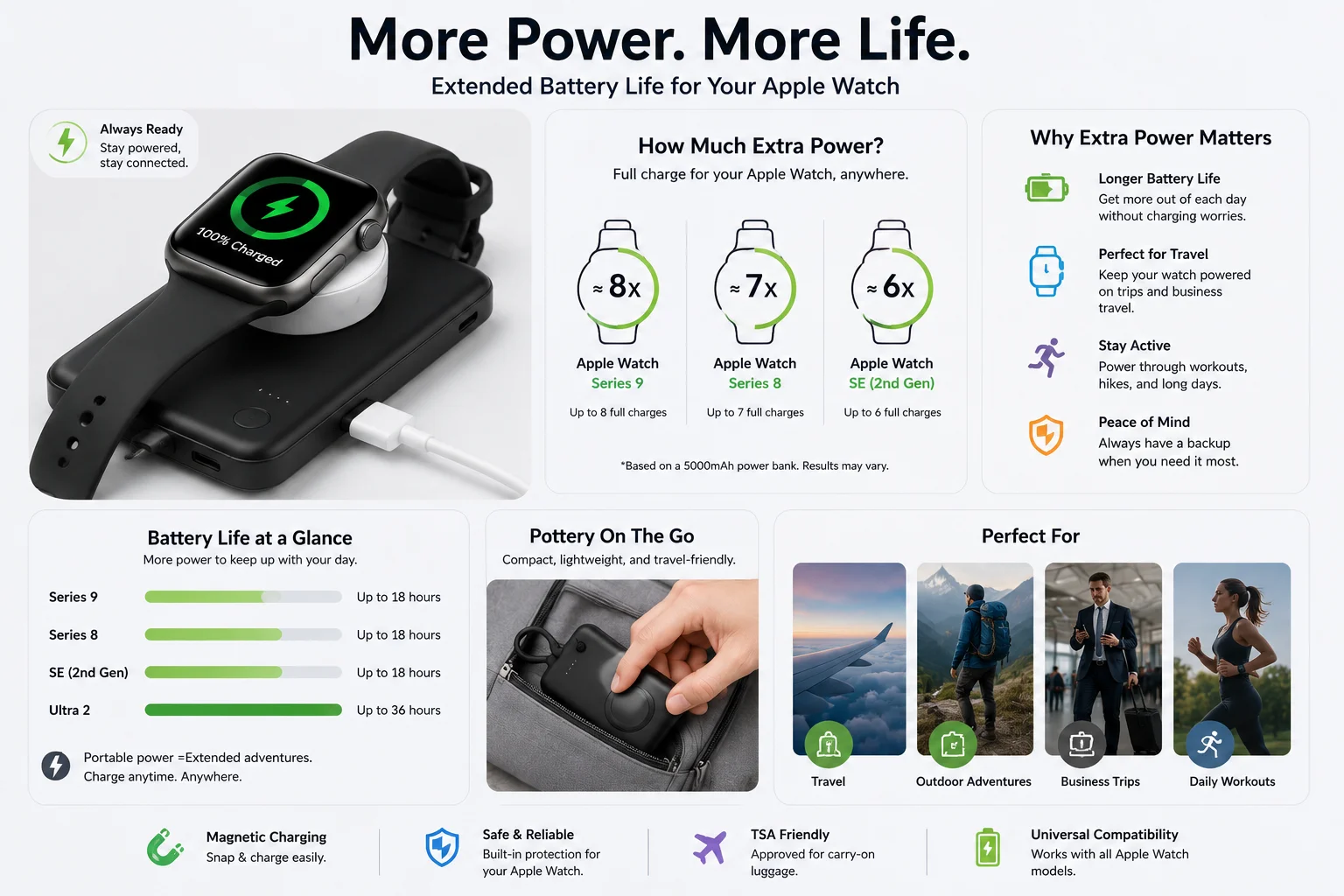
I connect battery life with sales risk
A common question I get from first-time importers is, “How many hours can it last?” I understand the question, but I also tell them that one number can mislead them. Battery life changes with screen brightness, notifications, GPS, calls, app use, and background health tracking.2 A heavy user can drain power much faster than a light user.
For B2B buyers, I think battery life is not only a user feature. It is also a return-risk issue. If the customer expects too much, the product creates conflict after sale.
| Factor | What it changes | Buyer risk |
|---|---|---|
| Screen brightness | Daily power use | Users think battery is poor |
| GPS tracking | Heavy battery drain | Sports users complain |
| Always-on display | More power use | Daily endurance feels shorter |
| Battery age3 | Long-term capacity | Returns may rise after months |
| Charging habits | Battery health | Users blame the seller |
When a client asks me for the “best option,” my first question is always about the sales channel. A marketplace seller needs clear claims because reviews matter. A retailer needs simple staff training because customers ask in store. A wholesaler needs fewer complaints because support cost can eat margin. Battery life looks like a technical topic, but I treat it as a business control point.
3. Fast Charging Makes Apple Watch More Convenient?
I have seen customers forgive average battery life when charging is quick. I have also seen them reject good products when charging feels slow.
Fast charging makes the Apple Watch more convenient because users can recover usable power in a short time. It works best when the watch, charger, cable, and adapter match the required power standard.
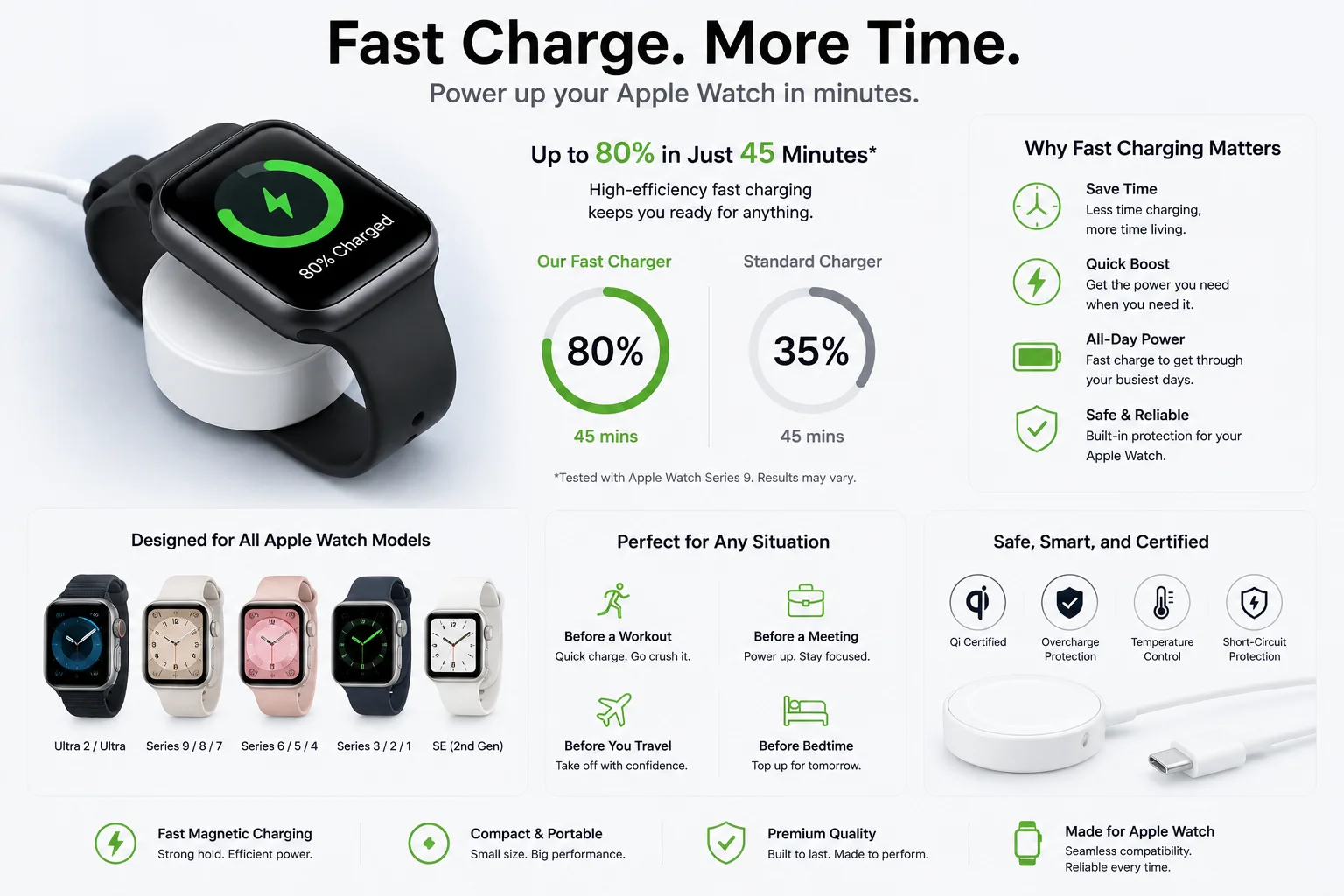
I see fast charging as a time-saving feature
Fast charging changes the user’s feeling. A customer may forget to charge the watch at night. If the watch can gain useful power during breakfast, the problem feels smaller. This is why charging speed matters so much in daily life.
But I also tell buyers not to sell fast charging as a loose promise. Fast charging depends on the full charging set.4 The magnetic charger, USB-C cable, adapter output, heat control, and watch model all matter. If one part is weak, the customer may not get the result they expect.
| Part | Why I check it | What can go wrong |
|---|---|---|
| Magnetic charger | Contact and stability | Charging stops or slows |
| USB-C cable | Power transfer | Low-quality cable heats up5 |
| Wall adapter | Output support | Charging stays slow |
| Watch model | Fast-charge support | User expects speed that is not supported |
| Packaging guide | User education | Wrong charger causes complaints |
Here’s a scenario I often discuss with e-commerce sellers. They sell compatible watch chargers at a low price. Then customers use old low-power adapters. Charging is slow. The customer leaves a bad review. The real issue is not only the charger. It is also unclear guidance. I suggest that sellers explain the needed adapter clearly in the listing, manual, and package insert.
4. Power Efficiency Depends on the Chip, Display, and Software?
I notice many buyers only ask about battery size. That is not enough. A bigger battery does not always mean better daily power.
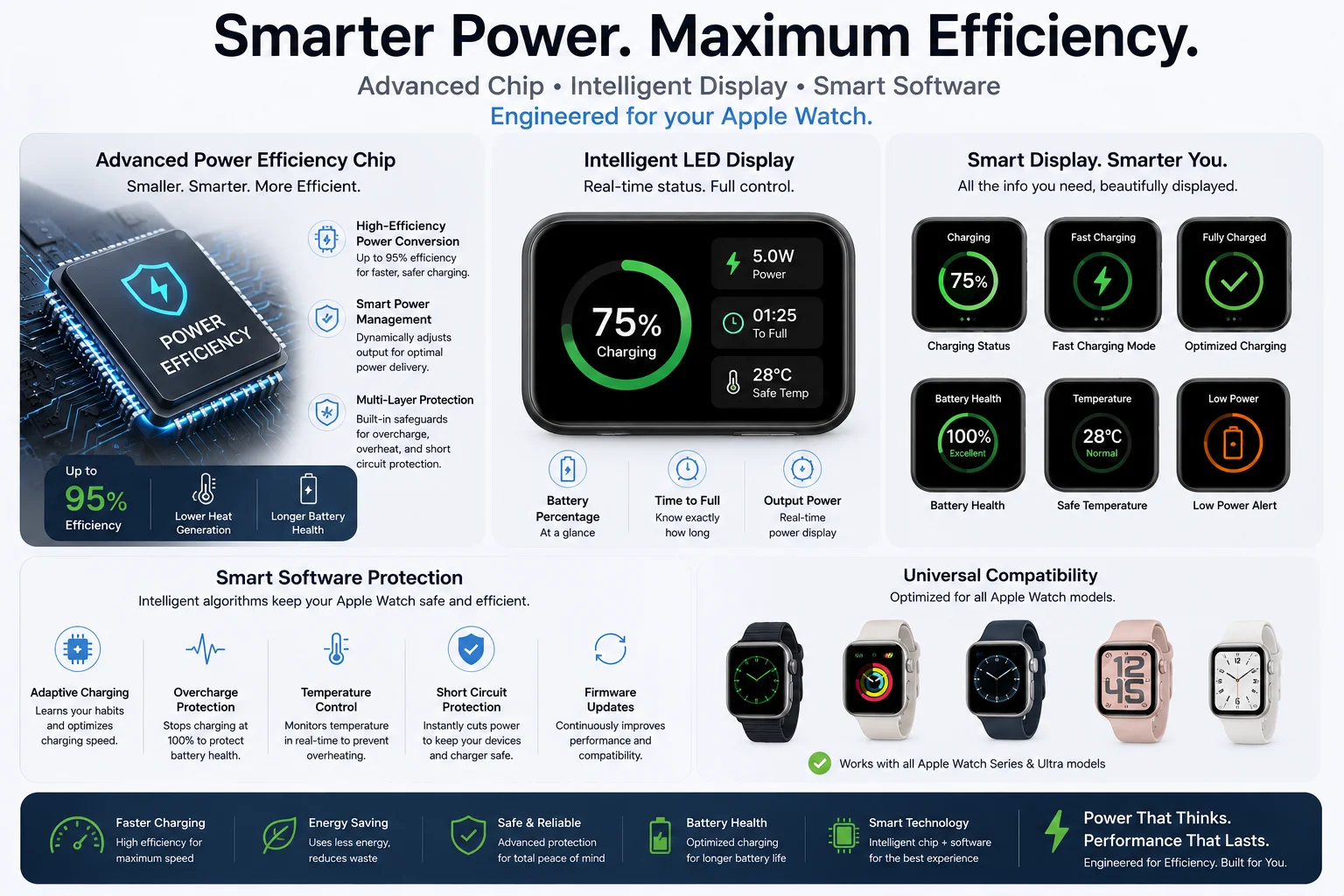
Power efficiency depends on how the chip, display, sensors, and software use energy.6 I look at efficiency because it decides how much real use a customer gets from each charge.
I compare power use like a full system
In my daily work, I do not treat power as one part. I treat it as a system. The battery stores energy. The chip uses energy. The display uses energy. The software controls energy. The charger brings energy back. If one part is not balanced, the user feels the problem.
This is also important when buyers source smartwatch products or accessories from China. Some suppliers may show a large battery capacity. That looks good at first. But if the screen is not efficient, or the software keeps too many functions active, the real user time may still be short.
| Power area | What I ask | Why it matters |
|---|---|---|
| Chip | Is it efficient in standby and active use? | It affects all-day use |
| Display | How bright is it, and does it save power? | It is a major drain point7 |
| Sensors | How often do they collect data? | Health tracking uses power |
| Software | Does it manage background tasks well?8 | Poor control wastes power |
| Charging design | Is the current stable? | It affects safety and speed |
I think buyers should ask for real test data under clear conditions. A simple “up to X hours” claim is not enough. I prefer test notes that show screen brightness, function status, and use pattern. This makes comparison more honest.
5. Apple Watch Power for Sports, Health Tracking, and Travel?
I hear many complaints from active users. They love tracking, but they do not love losing power halfway through a workout or trip.
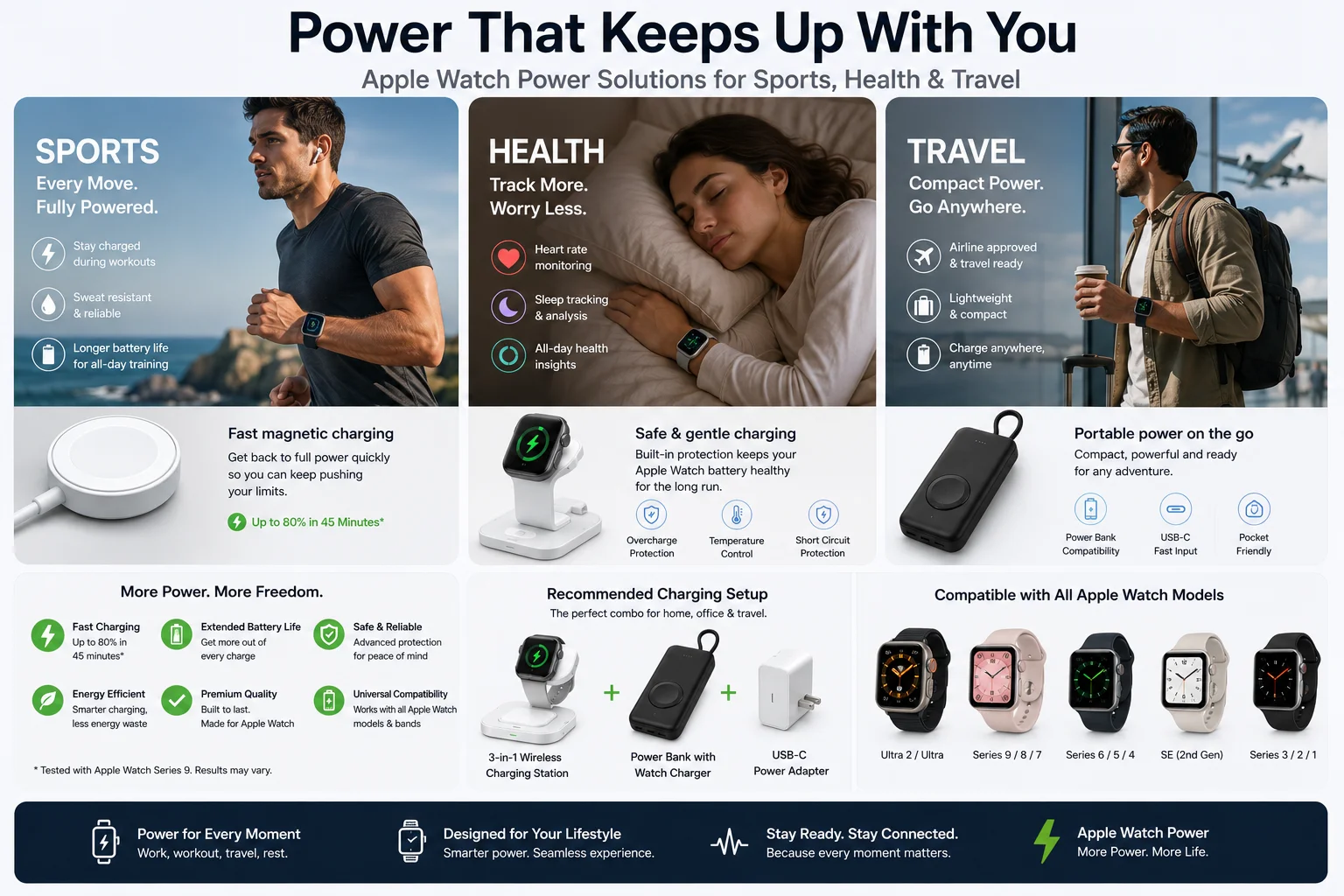
Apple Watch power matters more during sports, health tracking, and travel because these uses need GPS, sensors, screen time, and notifications. I plan charging around the user’s real movement.
I separate normal use from high-power use
I often tell buyers that sports and travel users are not average users. They may use GPS outdoors. They may track heart rate for hours. They may check maps, calls, music, and messages often. These actions use more energy than simple time checking.
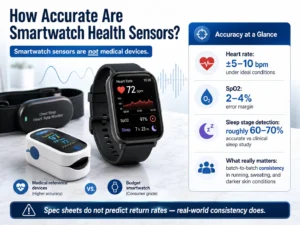
For health tracking, the issue is also about trust. If a user wears the watch for sleep tracking, they need enough power at night. If they charge it at night, they may lose sleep data. So the best habit may be short charging windows during the day. Fast charging becomes more valuable here.
| Use case | Power pressure | Useful accessory |
|---|---|---|
| Running | GPS and heart rate | Fast magnetic charger |
| Gym training | Screen and sensors | Compact travel charger |
| Sleep tracking | Overnight use | Short daytime charge setup |
| Business travel | Limited outlets | Multi-port GaN charger |
| Outdoor trips | Long use time | Power bank with safe output |
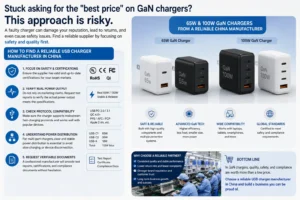
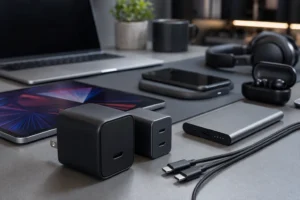
For travel, I see strong demand for compact charging kits. Many customers carry phones, earbuds, smartwatches, and tablets. They do not want many chargers. This is why GaN chargers, multi-port adapters, and reliable cables sell well in Europe and the US.9 But I always check certification, plug type, and packaging claims. Travel users need convenience, but they also need safe and stable power.
6. Charging Accessories Matter for Long-Term Use?
I have seen good watches get bad reviews because the charger failed first. The user does not separate the accessory from the watch experience.
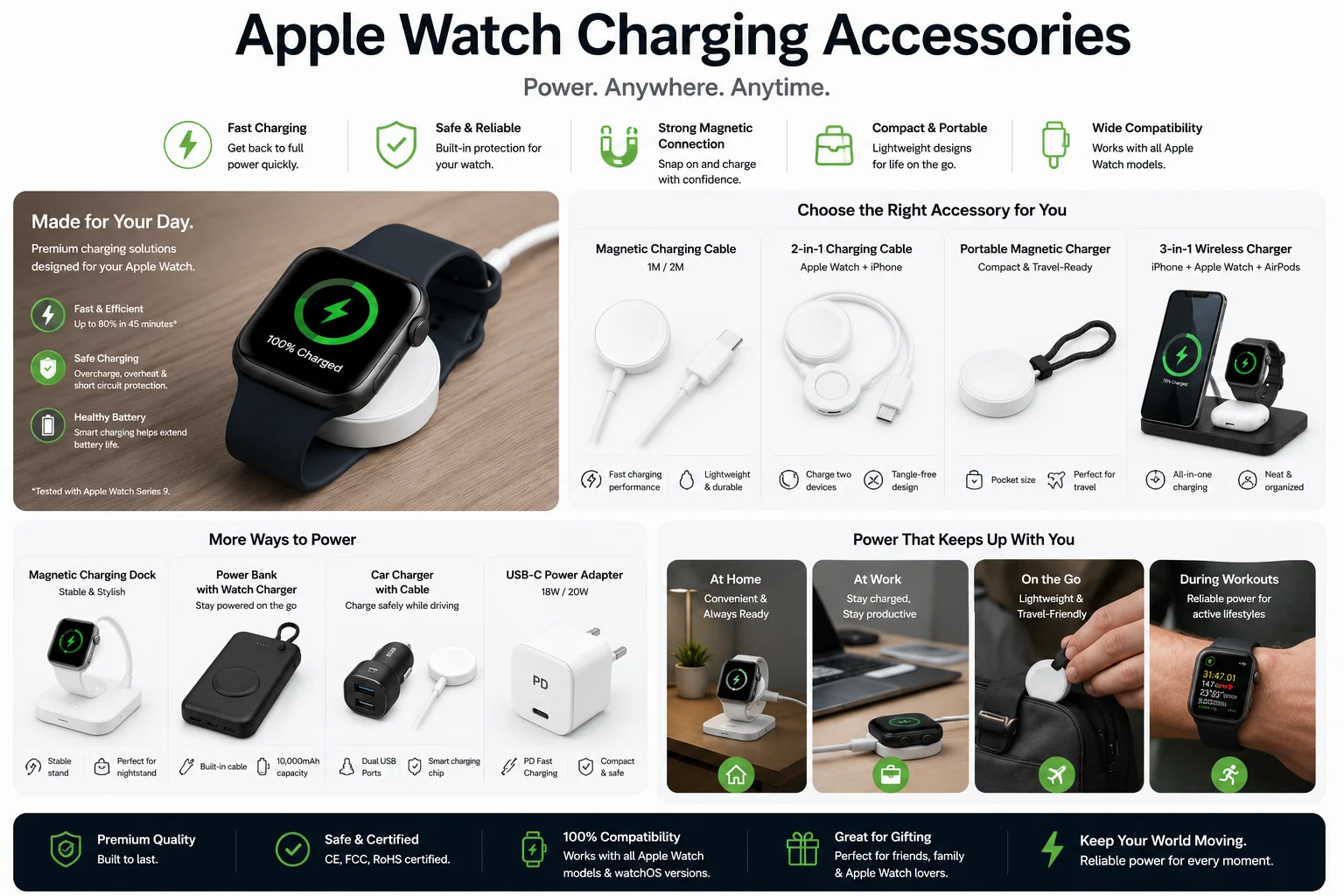
Charging accessories matter because they affect speed, safety, heat, and user trust. I always check charger quality, cable strength, magnetic alignment, certification, and packaging clarity before I recommend a product.
I treat accessories as part of the product
Many buyers focus on the main device and treat chargers as simple add-ons. I do not agree with that view. The charger is used every day. The cable is bent, pulled, packed, and moved. The magnetic head must connect well again and again. If the accessory fails, the customer sees the whole set as poor quality.
In our 3C export work, we handle USB cables, chargers, GaN chargers, TWS earphones, smartwatches, and related accessories. I have learned that small quality gaps can become large service costs. A cheap cable may save a few cents. But one bad review can cost more than that.
| Accessory point | What I check | Why I check it |
|---|---|---|
| Cable jacket | Bend resistance | Long-term use |
| Connector | Firm contact | Stable charging |
| Magnetic module | Alignment | Avoid charging breaks |
| Adapter output | Correct power | Support speed |
| Certifications | Market access | Reduce compliance risk10 |
| Manual | Clear instructions | Reduce wrong use |
For importers, I also look at MOQ and packaging. A retail buyer may need barcode labels, language manuals, and clean display packaging. An online seller may need stronger packaging for shipping. A wholesaler may care more about carton strength and mixed models. The right accessory choice depends on the channel, not only the price.
7. Common Apple Watch Power Problems and How to Avoid Them?
I often hear the same power problems again and again. Most of them are not mysterious. They come from habits, wrong chargers, or unclear product information.
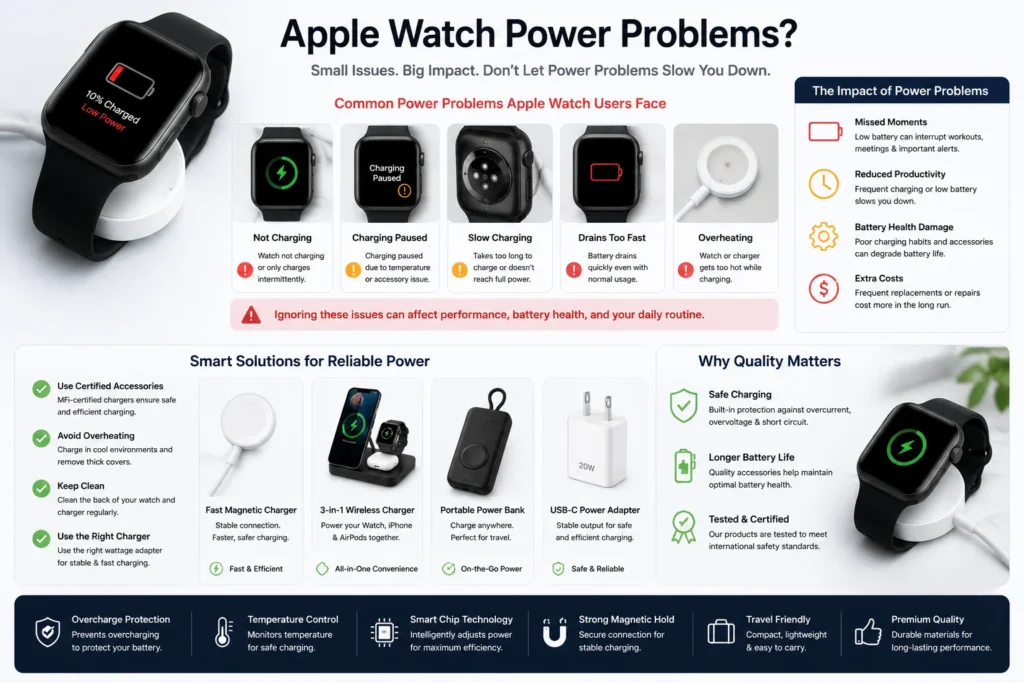
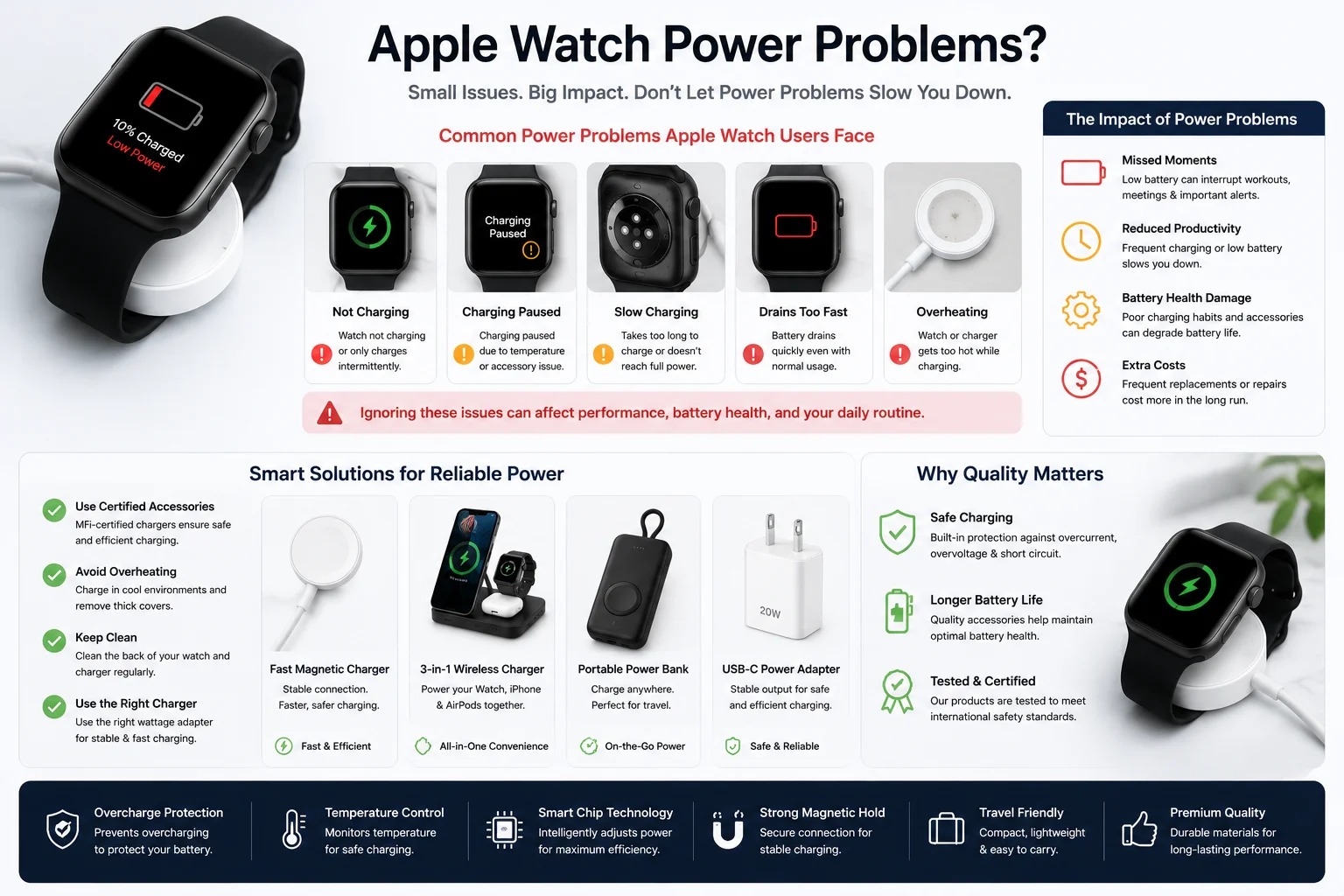
Common Apple Watch power problems include fast battery drain, slow charging, charging stops, heat, and battery aging. I avoid them by checking settings, using suitable chargers, and giving clear user guidance.
I prevent power issues before they become returns
When buyers contact me about charger or smartwatch complaints, I first ask what the user actually did. Did the user use an old adapter? Did the user turn on many notifications? Did the user charge through a weak USB port? Did the magnetic charger sit flat? These simple questions solve many cases.
I also tell sellers to prepare basic support content before sales start. A short guide can reduce many after-sales messages. It should explain charging steps, adapter needs, heat notes, and battery-saving settings. This is not exciting work, but it protects reviews.
| Problem | Likely reason | What I suggest |
|---|---|---|
| Battery drains fast | GPS, bright screen, many alerts | Adjust settings and explain use cases |
| Charging is slow | Weak adapter or wrong cable | Recommend suitable adapter |
| Charging stops | Poor magnetic contact | Keep charger flat and clean |
| Watch gets warm11 | High power use or poor airflow | Avoid covering during charge |
| Battery ages | Long-term charge cycles | Set realistic user expectations |
For B2B buyers, I think the best solution is not only better hardware. It is also better communication. If a listing promises too much, the product will disappoint. If a manual is unclear, the user will make mistakes. If support replies are slow, the complaint grows. Power problems are often technical, but the fix is often operational.
8. What Importers Should Know About Apple Watch Chargers and Accessories?
I speak with many importers who want the lowest price first. Then they ask about returns, customs, certifications, and packaging after problems appear.
Importers should check charger safety, certification, compatibility, MOQ, packaging, lead time, and after-sales terms before ordering. I treat Apple Watch accessories as a risk decision, not only a price decision.
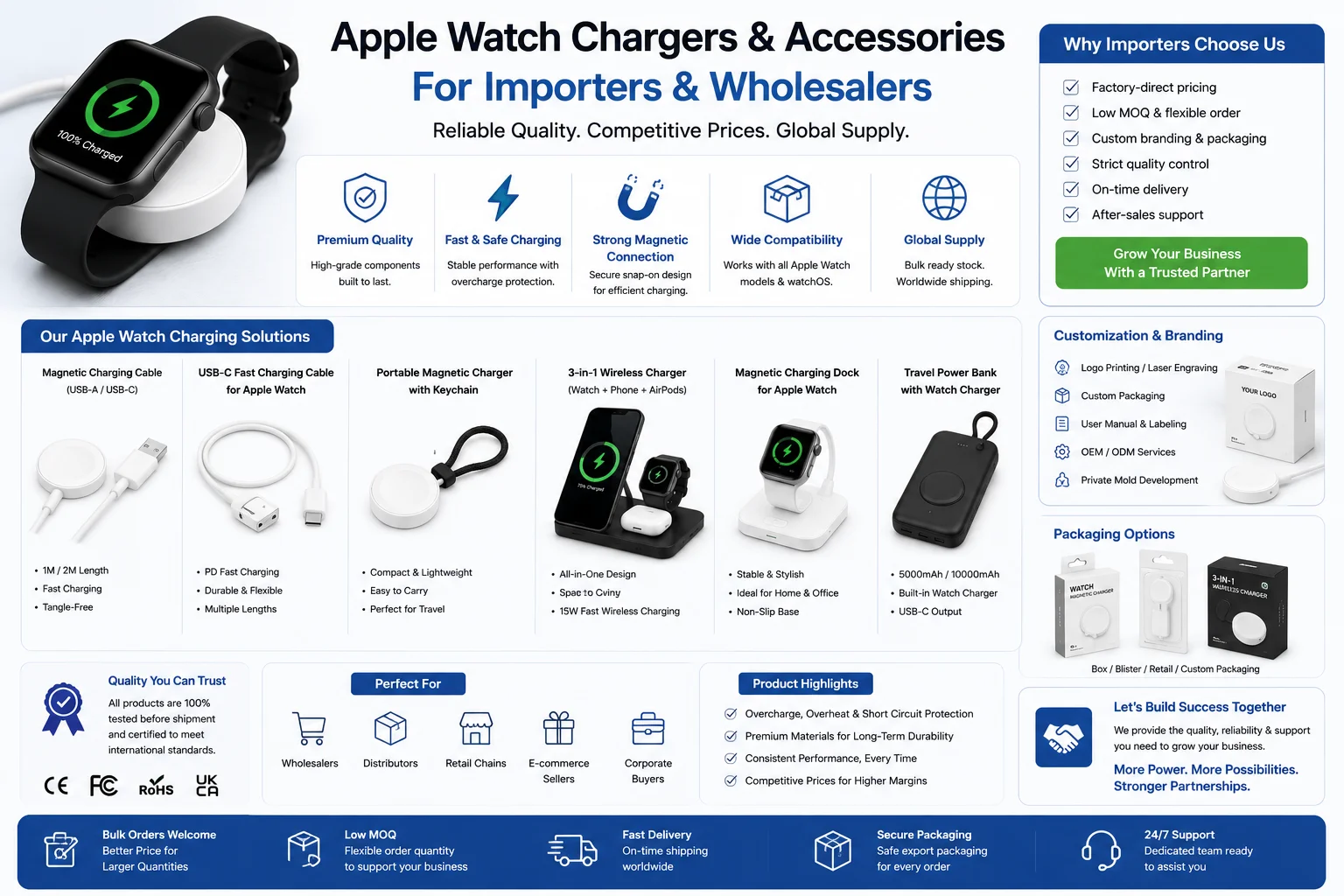
I match sourcing choices with business risk
When an importer asks for the “best” Apple Watch charger or smartwatch accessory, I do not answer with one model first. I ask about the sales channel, order quantity, brand plan, and after-sales ability. A buyer selling on Amazon needs strong packaging, clear claims, and stable reviews. A retail chain needs reliable supply and compliance documents. A wholesaler may need fast delivery and low MOQ to test demand.
I use the same thinking when buyers discuss wholesale, private label, or OEM smartwatch products. The right choice is not about which model sounds better. It is about which risk the business can afford.
| Sourcing path | What I gain | What I give up | Best fit |
|---|---|---|---|
| Wholesale | Speed and low MOQ | Less control | Market testing |
| Private label | Brand look and packaging | More marketing work | Growing sellers |
| OEM | Product control | Higher cost and longer time | Scaled brands |
A common mistake is treating private label as only logo printing. I see it as a branding job. The buyer must think about box design, language, claims, manuals, and customer support. OEM is even more serious. It may need tooling, tests, certifications, and deeper quality control.12 So I always ask buyers three questions: Do I have technical staff? What is my realistic first order volume? Does my brand really need unique hardware? These questions save money because they expose risk early.
Conclusion
I see Apple Watch power as battery, charging, accessories, and buyer risk. If I manage these parts well, I reduce complaints and protect sales.
"Validity of three smartwatches in estimating energy expenditure ...", https://pmc.ncbi.nlm.nih.gov/articles/PMC9549133/. Battery performance tests from Apple and independent reviewers show that continuous GPS use during an outdoor workout is one of the most power-intensive activities, reducing total battery life to a fraction of the advertised 'all-day' duration. Evidence role: statistic; source type: other. Supports: The claim that GPS is a high-power-demand feature.. Scope note: The exact battery life varies by watch model, cellular signal strength, and other active sensors. ↩
"Check battery health and usage on Apple Watch", https://support.apple.com/guide/watch/check-battery-health-and-usage-apd24c6cb2dd/watchos. Apple's official support pages confirm that features like the Always-On display, workout tracking with GPS, and cellular calls are significant contributors to battery drain and provide guidance on adjusting settings to extend battery life. Evidence role: general_support; source type: government. Supports: The claim that various settings and features impact battery life.. ↩
"Heat Generation and Degradation Mechanism of Lithium-Ion ... - PMC", https://pmc.ncbi.nlm.nih.gov/articles/PMC9753165/. Educational resources on battery technology explain that lithium-ion batteries, used in most consumer electronics, degrade over time due to chemical changes from repeated charge and discharge cycles, which gradually reduces their maximum charge capacity. Evidence role: mechanism; source type: education. Supports: The claim that battery capacity diminishes with age and use.. ↩
"About fast charge on Apple Watch - Apple Support", https://support.apple.com/en-us/102454. Apple's official support documentation specifies that fast charging requires a compatible Apple Watch model (Series 7 and later), an Apple USB-C Magnetic Fast Charging Cable, and a USB-C power adapter with a sufficient power rating (e.g., 18W or higher). Evidence role: definition; source type: other. Supports: The claim that fast charging requires a specific set of compatible hardware.. ↩
"The Hidden Dangers of Using Cheap Charging Cables - Cell Medics", https://cellmedics.ca/hidden-dangers-cheap-charging-cables/. Electrical safety institutions warn that uncertified or counterfeit charging cables may lack proper insulation, wire gauge, and safety components, leading to overheating during use, which can damage the device and pose a fire risk. Evidence role: mechanism; source type: institution. Supports: The claim that low-quality cables can overheat.. ↩
"[PDF] 35 Low Power/Energy Compiler Optimizations - Rutgers University", https://people.cs.rutgers.edu/~uli/CRC04.pdf. Research in mobile computing architecture shows that overall power efficiency is not determined by battery size alone, but by a system-level integration of an efficient processor (SoC), low-power display technology, and intelligent software that manages tasks and hardware states. Evidence role: mechanism; source type: paper. Supports: The claim that power efficiency is a system-level property.. ↩
"Easing Power Consumption of Wearable Activity Monitoring with ...", https://pubmed.ncbi.nlm.nih.gov/31935907/. Technical analyses of mobile device power consumption consistently identify the display as one of the most power-hungry components, with its energy usage directly related to brightness levels, screen-on time, and the use of features like always-on displays. Evidence role: statistic; source type: research. Supports: The claim that the display is a primary consumer of battery power.. Scope note: Specific percentages can vary widely between device models and usage patterns. ↩
"Importance of Background App Refresh : r/apple - Reddit", https://www.reddit.com/r/apple/comments/bv5w1b/importance_of_background_app_refresh/. Developer documentation for operating systems like Apple's watchOS details the sophisticated power management APIs and heuristics used to control background tasks, network access, and CPU usage, which are critical for preserving battery life on resource-constrained devices. Evidence role: mechanism; source type: other. Supports: The claim that software management of background tasks is important for power efficiency.. ↩
"GaN powered Chargers Market Size, Share | Outlook 2035", https://www.marketresearchfuture.com/reports/gan-powered-chargers-market-11884. Market research reports indicate a significant growth in the global market for Gallium Nitride (GaN) chargers, driven by consumer demand for smaller, more efficient, and multi-device charging solutions in regions like North America and Europe. Evidence role: statistic; source type: research. Supports: The claim that GaN chargers are a growing product category.. ↩
"Equipment Authorization – RF Device | Federal Communications ...", https://www.fcc.gov/oet/ea/rfdevice. Regulatory bodies like the European Commission (for CE marking) and the U.S. Federal Communications Commission (for FCC marks) require that electronic accessories meet specific safety and electromagnetic interference standards to be legally sold, making certification essential for market access and risk management. Evidence role: definition; source type: government. Supports: The claim that certifications are necessary to mitigate compliance risk.. ↩
"Research on fast-charging battery thermal management system ...", https://pmc.ncbi.nlm.nih.gov/articles/PMC10359346/. Device manufacturers like Apple explain that it is normal for a device to feel warm to the touch during charging, as the process of transferring energy generates heat. They also advise that charging in a well-ventilated area can help with heat dissipation. Evidence role: mechanism; source type: other. Supports: The claim that warmth during charging is a normal phenomenon.. Scope note: The source also clarifies that excessive heat could indicate an issue and may affect long-term battery health. ↩
"Original equipment manufacturer - Wikipedia", https://en.wikipedia.org/wiki/Original_equipment_manufacturer. Business and manufacturing guides define the Original Equipment Manufacturer (OEM) model as a process where a product is built to a buyer's unique specifications. This typically involves substantial upfront investment in custom tooling, rigorous product testing, and securing necessary regulatory certifications before mass production can begin. Evidence role: definition; source type: education. Supports: The claim that OEM is a complex process requiring tooling, testing, and certification.. ↩