A high speed magnetic USB Data Cable can look attractive in a product catalogue, but a broad speed claim may hide serious compatibility questions. Buyers may face slow transfers, limited charging, weak magnetic connections, or inconsistent mass-production quality. I help European and American 3C buyers compare suppliers, and I recommend verifying the complete use case before discussing price.
Quick Answer
A high speed magnetic USB data cable should be selected by verified compatibility, not by the product name alone. Buyers should confirm the USB interface, supported protocol, tested data speed, charging power, magnetic connector design, device list, customization scope, and mass-production quality controls. A supplier should provide condition-specific documentation or samples before an OEM/ODM order.
- Confirm whether the cable is intended for data transfer, charging, or both.
- Match the cable with the device ports, USB generation, protocol, and operating conditions.
- Request test evidence for the claimed data speed and power rating.
- Treat magnetic convenience as separate from speed, charging, and durability.
- Approve a production sample and written specifications before placing a larger order.
When buyers ask me, “What speed can it reach?” I first ask which devices and files they will use. When they ask, “Can it support fast charging?” I ask for the charger, phone, protocol, and power target. These questions change the product evaluation from a simple catalogue comparison into a practical supplier-verification process.
What Is a High Speed Magnetic USB Data Cable?
The term high speed magnetic USB data cable normally describes a USB Cable with a detachable or magnetic connector system that is designed to carry digital data at a stated USB performance level. However, the term alone does not identify the exact connector, protocol, data rate, power capability, or device compatibility.
A buyer should request a complete specification rather than relying on “high speed.” The specification should state the connector combination, USB generation or protocol, tested data conditions, charging limits, cable length, conductor construction, and supported devices. The magnetic function should be documented separately.
Why the product name is not enough
For example, a magnetic cable may work well for charging but offer no data transfer. Another model may support data transfer at a defined speed but not support the charging protocol required by a particular smartphone. A third model may have a high theoretical rating but perform differently when used with a longer cable, an adapter, or a device with a lower interface capability.
The main technical variables
The USB Implementers Forum USB Type-C documentation is a useful starting point for understanding official USB terminology and compliance information. I still recommend that buyers ask the supplier for product-specific evidence, because general standard information does not prove that every cable supports every feature.
How Should Buyers Verify Data Speed?
Buyers should verify a high speed magnetic USB data cable under the conditions in which customers will actually use it. The supplier should identify the connected devices, protocol, file or storage test, cable length, and test equipment. A number without conditions is not a reliable purchasing specification.
A credible verification process links the stated speed to a defined test setup. It also records whether the result is a theoretical interface rate, a measured transfer rate, or a marketing description. Buyers should avoid treating these three things as identical.
Interface speed versus practical transfer speed
USB performance is often discussed in terms of interface generations and nominal rates. The practical file-transfer result can be lower because of protocol overhead, device limitations, storage speed, operating system behavior, and other factors.[2]
| Buyer question | What it means | Evidence to request |
|---|---|---|
| What USB interface is used? | The cable’s intended connection and protocol family | Connector and protocol specification |
| What is the nominal rate? | The interface-level capability under the relevant standard | Technical datasheet or compliance information |
| What transfer result was measured? | The observed outcome in a defined test | Test report with conditions |
| Which devices were tested? | The source, destination, and storage limitations | Device model and configuration |
| Is the result guaranteed in mass production? | Whether the specification is controlled consistently | Approved sample, inspection plan, and acceptance criteria |
I do not present a supplier’s maximum number as a guaranteed customer experience unless the product documentation supports that statement. I also ask whether the magnetic connector itself is included in the tested configuration. Testing a standard cable and then adding a magnetic tip later can produce a different result.[8]
A practical buyer test
- Laptop, phone, tablet, or storage device model
- Host and receiving port
- Operating system
- Cable length
- Magnetic connector type
- File size and file type
- Transfer direction
- Start and end time
- Any disconnection or speed fluctuation
- Repeated test outcome
A single fast transfer does not establish production consistency.[7] A buyer may repeat the test with several samples from the same batch and then test samples from a later production batch. This process helps separate a good demonstration unit from a controlled product specification.
Avoiding misleading speed claims
Buyers can review the USB-IF compliance program information when they need to understand official compliance pathways. A supplier document still needs to be checked for the specific model, version, and product configuration.
Does Data Speed Prove Fast Charging?
No. A high speed magnetic USB data cable may support data transfer without meeting a buyer’s fast-charging requirement. Data performance, power delivery, charging protocol, connector design, charger output, device acceptance, and cable construction must be evaluated as separate criteria.[3]
This distinction matters because many product listings combine “high speed data” and “fast charging” in one headline. A retailer may then expect one function to prove the other. I recommend asking for an independent answer to each question before approving packaging or online content.
What controls charging performance?
- Wall charger or power adapter output
- Cable connector and conductor design
- Magnetic contact interface
- Charging protocol negotiation[4]
- Device input capability
- Cable length and electrical resistance
- Temperature and protection behavior
Questions for a charging specification
| Charging point | Buyer should confirm |
|---|---|
| Rated current or power | The documented electrical limit under stated conditions |
| Charging protocol | Supported protocol names and required charger or device conditions |
| Cable identification | Whether an electronic marker or other identification component is used where applicable |
| Connector configuration | USB-A, USB-C, magnetic tip, or another design |
| Protection features | Over-current, short-circuit, thermal, or other protection information if applicable |
| Test method | Equipment, load, duration, and acceptance limit |
| Device compatibility | Specific tested devices, not only general marketing language |
The USB-IF USB Power Delivery resources can help buyers understand the broader charging ecosystem. Buyers should also request the supplier’s actual product documentation and consult a qualified technical professional for application-specific power decisions.
Packaging and online listing advice
- Data: state the supported protocol or verified performance conditions.
- Charging: state the supported power or charging conditions only when documented.
- Compatibility: list tested or intended device categories.
- Magnetic function: explain the convenience and connection behavior without calling it proof of durability.
- Limitations: mention that the charger, device, and protocol affect the final result.
What Are the Benefits and Limitations of Magnetic Connectors?
Magnetic connectors can make a USB cable easier to attach and remove, but magnetic convenience should be evaluated separately from data performance and long-term durability. The buyer should inspect alignment, contact quality, accidental release, tip retention, contamination, and replacement arrangements before making a product claim.
Potential advantages
- Easier connection in a dark or awkward position
- A detachable tip system for selected devices
- Reduced need to insert and remove the main cable
- A visually distinctive product design
- Convenience for desks, vehicles, travel, or bedside use
Potential limitations
- The connector may separate when pulled or bent.
- Small tips may be misplaced by the user.
- Metal debris may collect around exposed contacts.[5]
- Misalignment may cause intermittent connection.
- Repeated attachment may affect contact surfaces.
- A loose tip may remain inside a device port.
- The design may be unsuitable for users who need a permanently secure connection.
- Data transfer may be more sensitive to contact quality than basic charging.[6]
Mechanical evaluation checklist
| Area | Sample evaluation |
|---|---|
| Alignment | Connect the tip repeatedly and check whether it seats correctly |
| Contact stability | Move the cable gently during charging and data transfer |
| Separation force | Confirm the intended behavior without treating one value as universal |
| Tip retention | Check whether the tip stays in the device during normal use |
| Debris exposure | Inspect contact protection and cleaning instructions |
| Cable strain relief | Bend near the connector and inspect for visible stress |
| Interchangeability | Confirm whether spare tips are compatible with the same cable |
| User instructions | Review warnings, cleaning guidance, and correct connection method |
Durability claims require defined conditions
I avoid using “military-grade,” “indestructible,” or “lifetime durable” unless a buyer has verified the exact test basis and the wording is legally appropriate for the target market. Even a strong connector can fail if the cable is pulled sideways, exposed to contamination, or used with an incompatible tip.
If durability is important, I recommend specifying the required test conditions in the purchase agreement. The conditions may include connection cycles, bending method, pull direction, environmental exposure, and electrical continuity after testing. The supplier should confirm which tests it can perform internally and which require an independent laboratory.
How Should I Compare OEM and ODM Factory Options?
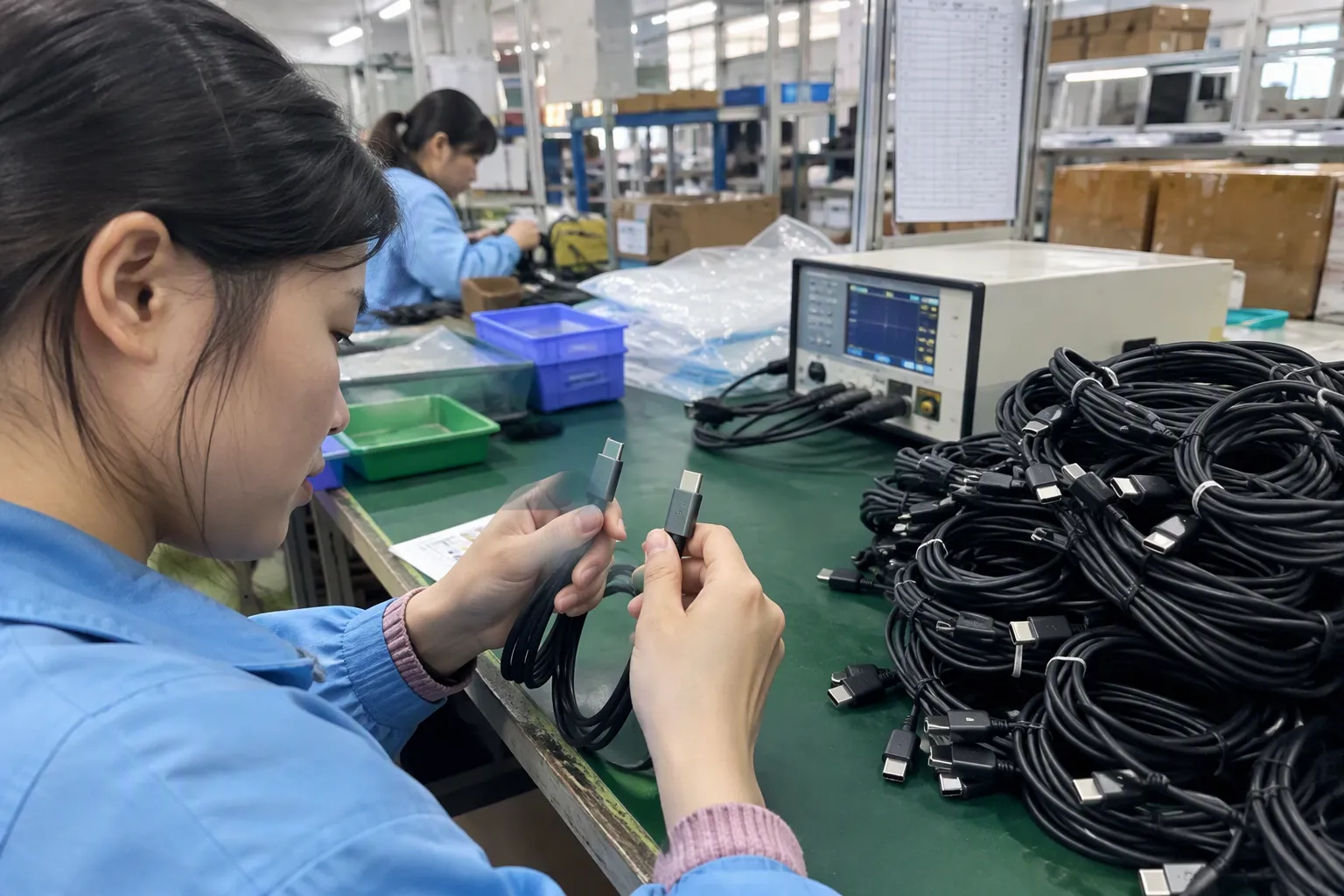
I compare OEM and ODM suppliers by separating product capability, engineering scope, quality control, and commercial execution. A factory may offer a low unit price but still be unsuitable if it cannot control the magnetic connector, data specification, packaging claims, or delivery schedule consistently.
Our company is a Shenzhen-based 3C export trading business with 15 years of experience. We work with European and American retailers, wholesalers, importers, and e-commerce sellers. In those discussions, customers usually care about more than a catalogue price. They ask about MOQ, lead time, after-sales support, customization, certification documents, and repeat-order consistency.
OEM and ODM are not the same
| Model | Typical meaning | Buyer should clarify |
|---|---|---|
| OEM | A supplier produces a defined product for the buyer’s brand or requirements | Which existing specifications can be branded or adjusted |
| ODM | A supplier offers an existing design that may be adapted for the buyer | What design changes, tooling, packaging, and technical changes are actually available |
| Private label | A buyer uses an existing product with its own branding | Whether the product specification remains unchanged |
| Custom development | A supplier changes or develops technical features | Engineering scope, tooling ownership, validation, cost, and timeline |
I do not promise internal structural customization unless the supplier’s engineering scope has been confirmed. A buyer may be able to customize color, logo, packaging, connector appearance, cable length, or included tips. Changes to internal conductors, shielding, magnetic contact structure, electronic components, or protocol capability may require engineering work and additional validation.
Supplier verification questions
- Which parts of the product are standard?
- Which parts can be changed for OEM or ODM?
- Does the quoted MOQ apply to each color, length, connector, or packaging version?
- Which specifications are guaranteed in the purchase order?
- What sample approval process is used?
- Which inspections happen before shipment?
- How are data performance and charging performance tested?
- How does the supplier control changes to components or materials?
- What is the normal lead time for samples and mass production?
- How are defects, replacement parts, and after-sales issues handled?
Documents buyers should verify
- Legal manufacturer or applicant name
- Exact model number
- Product description
- Test standard and test date
- Laboratory identity and accreditation where relevant
- Scope of the report
- Whether the report applies to the final product configuration
- Whether the document covers the target market and intended claim
A certificate for a similar cable is not automatically evidence for a magnetic data cable with different connectors or internal construction. Buyers should also confirm whether the document is current and whether the supplier is authorized to use the relevant mark.
Commercial controls matter
| Evaluation area | Low-risk indication | Warning sign |
|---|---|---|
| Specification | Written and model-specific | Broad claims only |
| Sample | Production-representative sample | Demonstration unit with unclear origin |
| Quality | Defined inspection and acceptance criteria | “We check everything” without records |
| Customization | Scope confirmed by engineering | Unlimited changes promised before review |
| Delivery | Capacity and lead time explained | Unusually short promise without basis |
| After-sales | Defect process is documented | Responsibility is unclear |
| Documents | Model-specific and verifiable | Generic or incomplete certificates |
How Can Buyers Build a Reliable OEM/ODM Specification?
A reliable OEM/ODM specification should convert marketing language into measurable requirements. I recommend creating one document that covers technical performance, physical design, packaging, inspection, documents, delivery, and after-sales responsibilities.
Start with the application
- Is it a charging accessory or a data accessory?
- Which devices will customers connect?
- Will customers transfer photos, video, documents, or data to external storage?
- Will the cable be used at home, in vehicles, offices, or retail environments?
- Does the buyer need a standard product or a differentiated design?
- Is the item sold under a private label or bundled with another product?
Specification template
| Specification group | Example requirement to define |
|---|---|
| Connector | USB-A to USB-C, USB-C to USB-C, or another approved configuration |
| Magnetic system | Tip type, orientation, retention behavior, and included accessories |
| Data | Supported protocol, test setup, and acceptance result |
| Charging | Supported power or current under defined conditions |
| Cable | Length, jacket material, color, flexibility, and strain relief |
| Compatibility | Approved device categories or tested device list |
| Branding | Logo method, position, color, and artwork approval |
| Packaging | Language, barcode, warnings, inserts, and carton requirements |
| Quality | Visual, dimensional, electrical, and functional inspection |
| Documents | Datasheet, test reports, declarations, or market-specific documents |
| Delivery | Sample date, production lead time, shipment terms, and quantity tolerance |
| After-sales | Defect definition, evidence required, and corrective-action process |
The buyer should distinguish between target values and acceptance limits. “High quality” is not an acceptance limit. “No data interruption during the agreed test” is more useful, although the complete test method still needs to be written.
Sample approval and golden sample
I recommend approving a representative sample before mass production. The approved sample should include the final connector, cable length, logo, packaging, and any included magnetic tips. A sample with different internal parts or a different connector should not be treated as the final reference.
Pre-shipment inspection
- Quantity and carton condition
- Logo and packaging accuracy
- Connector fit and magnetic alignment
- Charging and data function
- Cable length and appearance
- Continuity or electrical checks
- Accessories and labeling
- Sampling level and defect classification
Is a High Speed Magnetic USB Data Cable Suitable for Every Buyer?
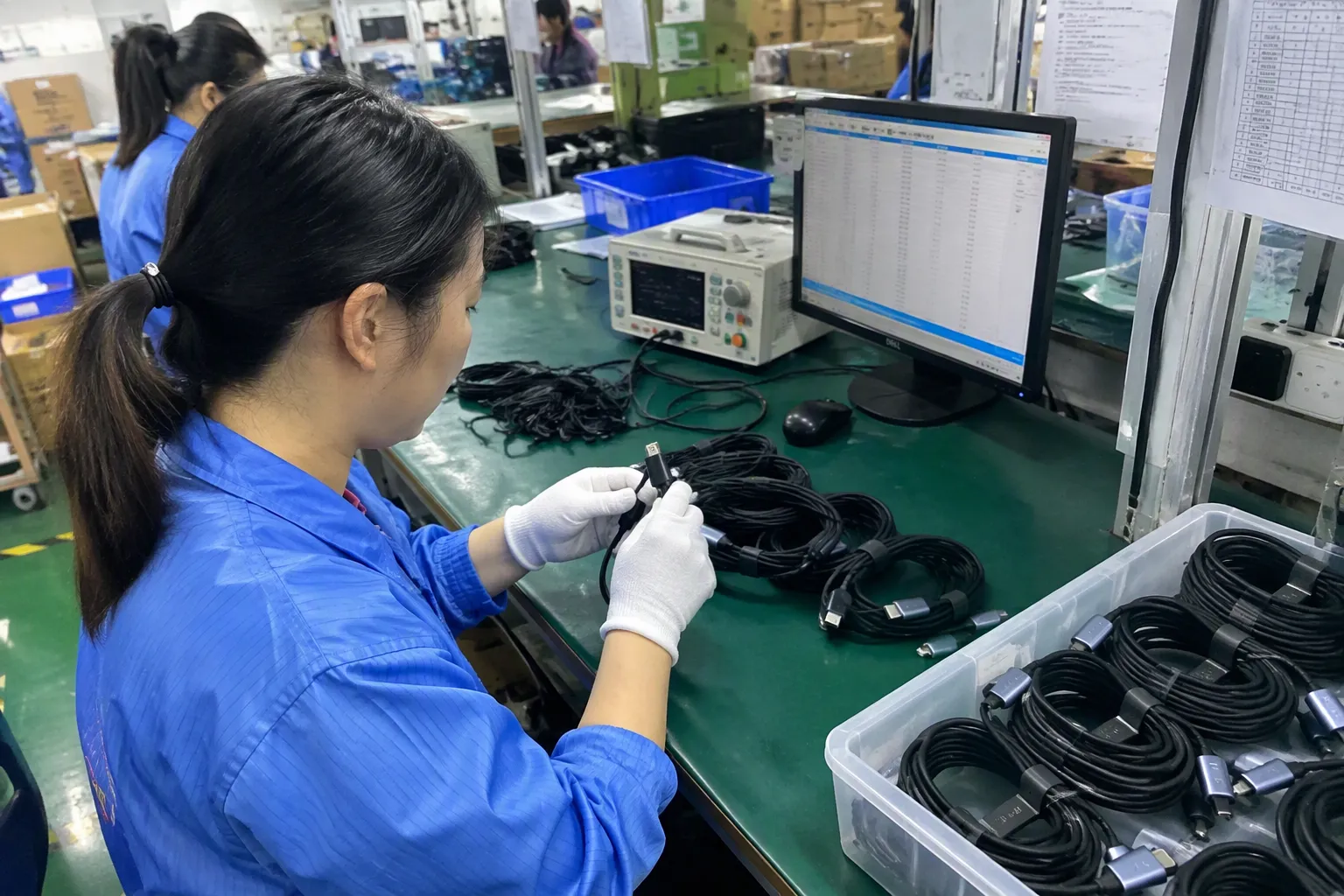
No. A high speed magnetic USB data cable is suitable when its convenience, compatibility, and commercial positioning match the buyer’s target users. A conventional fixed connector cable may be better when the application needs maximum mechanical security, simple user handling, or a clearly defined standard configuration.
Product positioning comparison
| Buyer priority | Magnetic USB data cable | Standard fixed-connector cable |
|---|---|---|
| Easy one-handed connection | Often a strong advantage | Depends on connector design |
| Detachable tips | Possible | Usually not applicable |
| Simple customer explanation | May require more instructions | Usually easier |
| Data reliability | Requires magnetic-contact verification | Fewer connection interfaces |
| Accessory differentiation | Often attractive | More conventional |
| Tip loss risk | Possible | Usually lower |
| Retail novelty | Can be higher | Depends on packaging and design |
| Compatibility message | Must be carefully explained | Often more straightforward |
When magnetic design may fit
- A visually distinctive accessory
- A convenience-focused product line
- A cable for desk or bedside use
- A multi-tip system for selected devices
- A private-label item with packaging differentiation
- A mid-range accessory with a clear user benefit
When another design may be safer
- Customers need frequent high-volume data transfer.
- The application involves strong pulling or movement.
- The product must be very simple for general retail customers.
- The buyer cannot provide clear instructions for removable tips.
- The product requires a fixed connector with minimal contact variables.
- The target price does not allow adequate inspection and support.
What Should Buyers Ask Before Placing an Order?
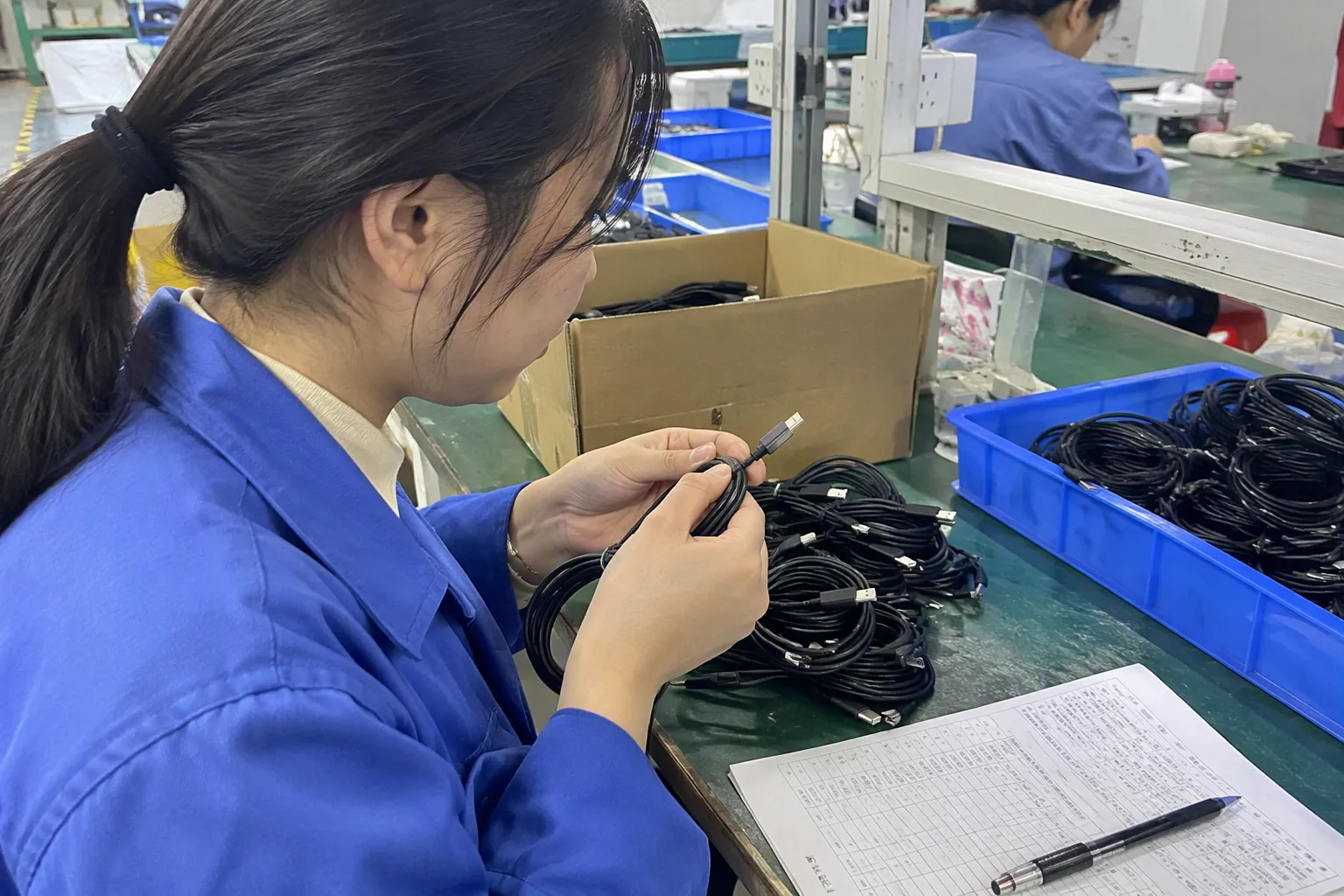
Before placing an order for a high speed magnetic USB data cable, buyers should ask for model-specific specifications, samples, test conditions, customization limits, quality controls, and commercial commitments. The supplier should explain which features are verified and which features still require confirmation.
Pre-order checklist
-
What is the exact connector configuration?
-
What data protocol or USB generation is supported?
-
What data test was performed?
-
Which devices and storage systems were used?
-
What charging power or current is documented?
-
Which charging protocols are supported?
-
Is the magnetic configuration included in the test?
-
Are there limitations related to length, adapters, or tips?
-
What magnetic tips are included?
-
Can the tips be purchased separately?
-
How should users clean or store the tips?
-
What happens if the connector separates during use?
-
What cable colors, lengths, and jacket materials are available?
-
Which parts can be changed under OEM or ODM?
-
What is the incoming-material inspection process?
-
How does the supplier test data and charging functions?
-
What sample approval process is used?
-
What are the agreed defect limits?
-
How are production changes controlled?
-
Can the supplier provide inspection records?
-
What is the MOQ per model, color, length, and package?
-
What is the sample lead time?
-
What is the mass-production lead time?
-
What quantity tolerance applies?
-
Which documents are available?
-
What is the after-sales process?
-
What payment and shipping terms apply?
A useful quotation format
| Cost item | Why it matters |
|---|---|
| Unit product price | Allows comparison of the physical product |
| Packaging | Prevents hidden retail-packaging costs |
| Logo or artwork | Shows branding charges clearly |
| Tooling or mold | Helps evaluate one-time development cost |
| Sample fee | Clarifies whether it is refundable |
| Testing or documents | Identifies market-specific compliance costs |
| Freight and delivery terms | Avoids comparing different shipping bases |
| Spare tips or accessories | Supports after-sales planning |
Frequently Asked Questions
Can a magnetic USB cable transfer data?
Some magnetic USB cables can transfer data, while others are designed only for charging. Buyers should confirm the exact model, magnetic tip configuration, supported protocol, and test conditions. A charging connection should not be assumed to provide data transfer without product-specific evidence.
Does a high speed data cable support fast charging?
Not automatically. Data transfer capability and charging capability use different specifications. The buyer should verify the supported power, charging protocol, cable construction, charger output, and device compatibility. The supplier should provide separate documentation for data and charging claims.
Is USB-C automatically high speed?
No. USB-C describes a connector form, not one guaranteed data rate or power level[1]. USB-C products can support different capabilities. Buyers should request the exact protocol, performance specification, and compatibility information for the cable under consideration.
What should an OEM buyer customize first?
I recommend starting with the target devices, connector configuration, cable length, color, logo, packaging, and required documentation. Buyers should confirm whether internal electrical or magnetic changes are available before advertising a new technical capability. Engineering scope and validation should be agreed in writing.
Which documents should a buyer verify?
The buyer should verify the exact model number, legal manufacturer or applicant, test standard, testing laboratory, document date, product configuration, and intended market. Certifications and reports are supporting documents, not automatic proof that every product claim or future production batch is compliant.
Conclusion
A high speed magnetic USB data cable should be evaluated as a complete system rather than as a product title. I recommend separating data speed, charging performance, magnetic convenience, compatibility, quality control, and supplier capability. Buyers should request condition-specific evidence, approve a representative sample, define OEM/ODM limits, and record acceptance criteria before production. My Shenzhen 3C export team can help European and American retailers, wholesalers, importers, and e-commerce sellers compare suitable models, MOQ, lead time, customization, documentation, and after-sales arrangements. Contact me to discuss your target devices and procurement requirements.
Sources
- USB Charger (USB Power Delivery)", USB Implementers Forum documentation defines USB Type-C as a connector and interface specification whose supported data rates and power functions depend on the applicable USB technology, implementation, and product requirements
- REMOTE USB PORTS A Thesis by RAKESH ROSHAN ... - OAKTrust", Research on USB throughput shows that application-level file-transfer rates are constrained by protocol overhead and by the performance of the host, peripheral, storage subsystem, and software stack, rather than being determined solely by the nominal link rate
- USB Charger (USB Power Delivery)", USB-IF specifications treat data communication and power delivery as distinct functions with separate capability and negotiation requirements, supporting the evaluation of transfer performance and charging performance as separate criteria
- USB Power Delivery", The USB Power Delivery specification describes capability exchange and power-contract negotiation between source and sink devices, indicating that supported charging power depends on the participating components and their protocol implementation
- Evaluating Water Damaged Electrical Equipment - DSPS", Studies of electrical-contact reliability report that particulate contamination can interfere with contact surfaces and, when conductive particles are present, may contribute to unstable electrical behavior or unintended conductive paths
- LVDS Owner's Manual", Research on high-speed electrical interconnects shows that contact discontinuities, impedance variation, and intermittent connections can degrade signal integrity and data-link performance; this provides a technical basis for treating high-speed data contacts as reliability-sensitive
- 6.2.2. What kinds of Lot Acceptance Sampling Plans (LASPs ...", Statistical quality-control guidance distinguishes the performance of an individual inspected unit from evidence about a production lot and uses representative sampling and process monitoring to assess consistency
- Signal integrity research of high-speed interconnection ... - PMC", High-speed interconnect research indicates that inserting additional connector interfaces can introduce contact resistance, impedance discontinuities, and loss, so performance measured for a direct cable configuration cannot automatically be transferred to a configuration containing a magnetic intermediate connection