A USB Cable manufacturer can affect your product launch, customer returns, and delivery schedule long after you approve the quotation. I often see buyers begin with the lowest unit price, then discover unclear specifications, unstable batches, or slow problem handling. I believe a better approach starts by defining the project and screening the supplier’s execution ability.
To choose a USB Cable Manufacturer, I recommend defining the cable’s use, connector type, power and data requirements, construction, packaging, target market, MOQ, and delivery date before comparing quotations. Then compare suppliers by specification accuracy, sample consistency, quality-control documents, communication, commercial terms, and after-sales responsibility. The best supplier is not automatically the cheapest or most expensive; it is the supplier that can meet your verified requirements with manageable procurement risk.
Quick Answer
- Define the required USB Cable specification before contacting suppliers.
- Ask each supplier to confirm power, data, materials, length, connectors, packaging, and applicable compliance documents.
- Compare the total procurement risk, not only the quoted unit price.
- Use samples and written specifications to check whether the supplier understands your project.
- Confirm MOQ, lead time, payment terms, inspection arrangements, and responsibility for defective goods.
- Treat certifications and test reports as documents to verify for the specific model and market.
A quotation becomes useful only when every supplier is quoting the same requirement.[4] In my experience with European and U.S. 3C buyers, many differences appear because one supplier understands a cable as a charging accessory while another assumes a data-and-power product. The sections below explain how I would reduce that uncertainty before placing an order.
How Do You Choose a USB Cable Manufacturer for Your Project?
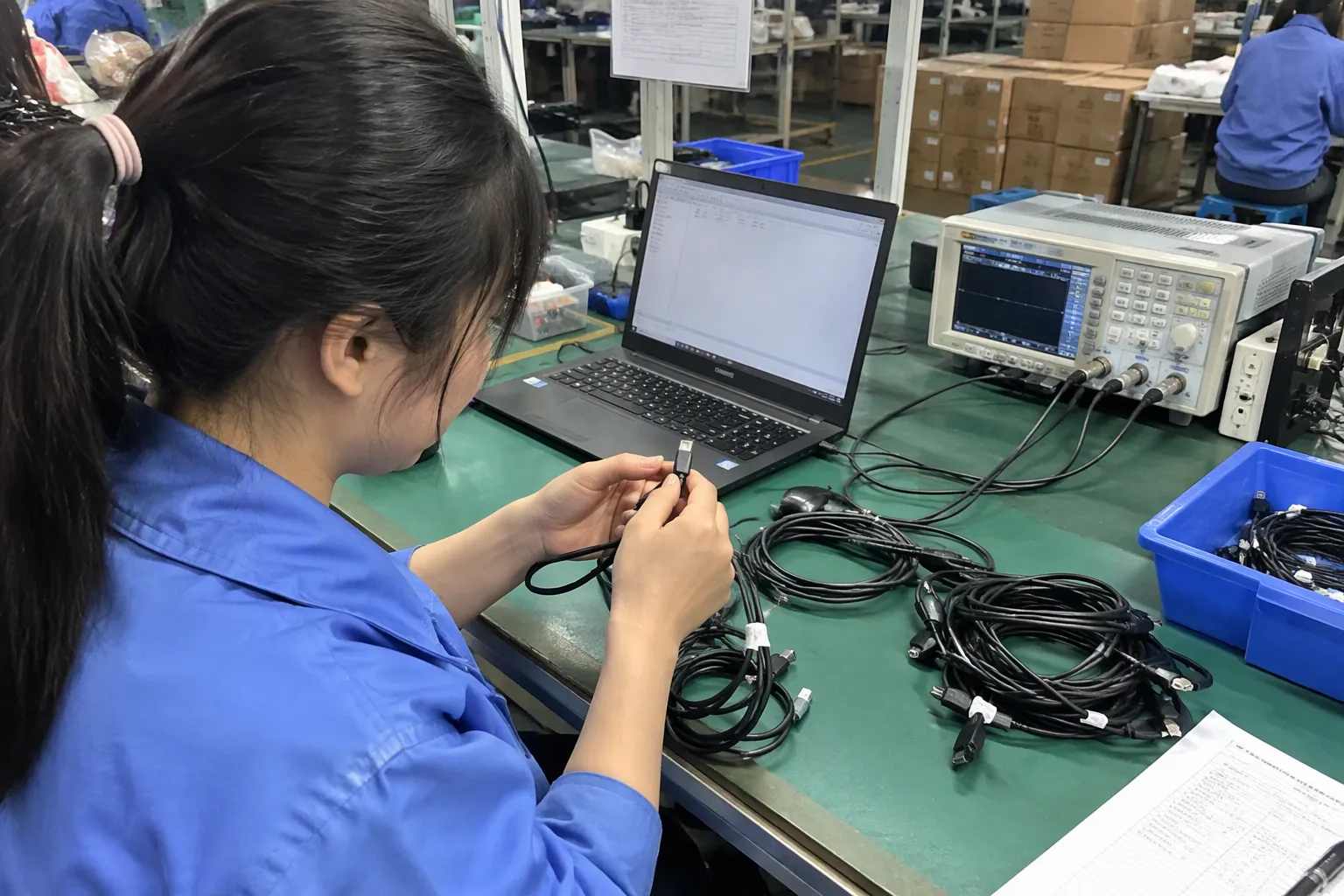
A project can lose time when the buyer starts with a catalog instead of a product brief. A supplier may offer an attractive cable, but the item may not support the required device, packaging format, or market expectation. I start with the application because the application determines which specifications matter.
I choose a USB cable manufacturer by matching the intended use with a written product specification, then checking whether the supplier can quote, sample, produce, and support that exact requirement. I ask for clear answers about connectors, cable construction, charging and data expectations, customization, MOQ, lead time, inspection, and problem resolution before I compare prices.
Start with the use case
- Will it be a basic charging cable for retail?
- Will customers use it for charging and data transfer?
- Will it be bundled with a charger, power bank, phone, tablet, or other device?
- Will the cable be sold under a private label?
- Will it be used by consumers, offices, vehicles, or another environment?
- Does the buyer need a standard stock item or a custom construction?
A cable for a promotional bundle may have different requirements from a premium retail cable. A wholesale importer may prioritize stable supply and carton efficiency. An e-commerce seller may care more about packaging, product photography, labeling, and low return risk.
Turn the requirement into a written brief
| Requirement | Questions I would record |
|---|---|
| Connector combination | USB-A to USB-C, USB-C to USB-C, Lightning-compatible, or another configuration? |
| Length | What finished length and tolerance does the project require? |
| Function | Charging only, data transfer, or both? |
| Power expectation | What supported power level does the application require and how will it be verified? |
| Appearance | Color, braid, jacket material, connector housing, logo, and finish? |
| Construction | Wire arrangement, shielding, reinforcement, and strain relief? |
| Packaging | Polybag, paper box, blister, retail carton, barcode, and language? |
| Market | Which country or region will receive the product? |
| Commercial terms | Target quantity, MOQ, target launch date, and replenishment plan? |
I do not treat a buyer’s phrase such as “fast charging cable” as a complete specification. That phrase can describe different expectations. I ask the buyer to identify the intended charger, device, and performance requirement. I then ask the supplier to state what the quoted cable is designed to support.
Compare like with like
I often see three quotations that look different even though the product names look similar. One may include retail packaging, another may include a plain bag, and a third may assume a different connector housing or quantity. I ask suppliers to quote using the same document and the same quantity tiers.
- Product code or drawing reference.
- Exact connector combination.
- Length and color.
- Functional requirement.
- Packaging requirement.
- Logo and artwork status.
- Quantity and delivery split.
- Destination and shipping assumptions.
- Required documents.
- Sample approval process.
Which USB Cable Specifications Should You Confirm?
Unclear specifications create the greatest avoidable risk because a supplier can deliver exactly what was quoted while the buyer expected something else. I treat connector shape, cable function, electrical claims, materials, and packaging as separate items. A professional supplier should be able to explain what the quotation includes and what it does not include.
Before selecting a USB cable manufacturer, I confirm connector types, cable length, charging and data requirements, materials, construction, labeling, packaging, and market-specific documentation. I also ask the supplier to identify any specification that requires a sample, test report, drawing, or customer approval rather than relying on a product name alone.
Separate connector type from cable performance
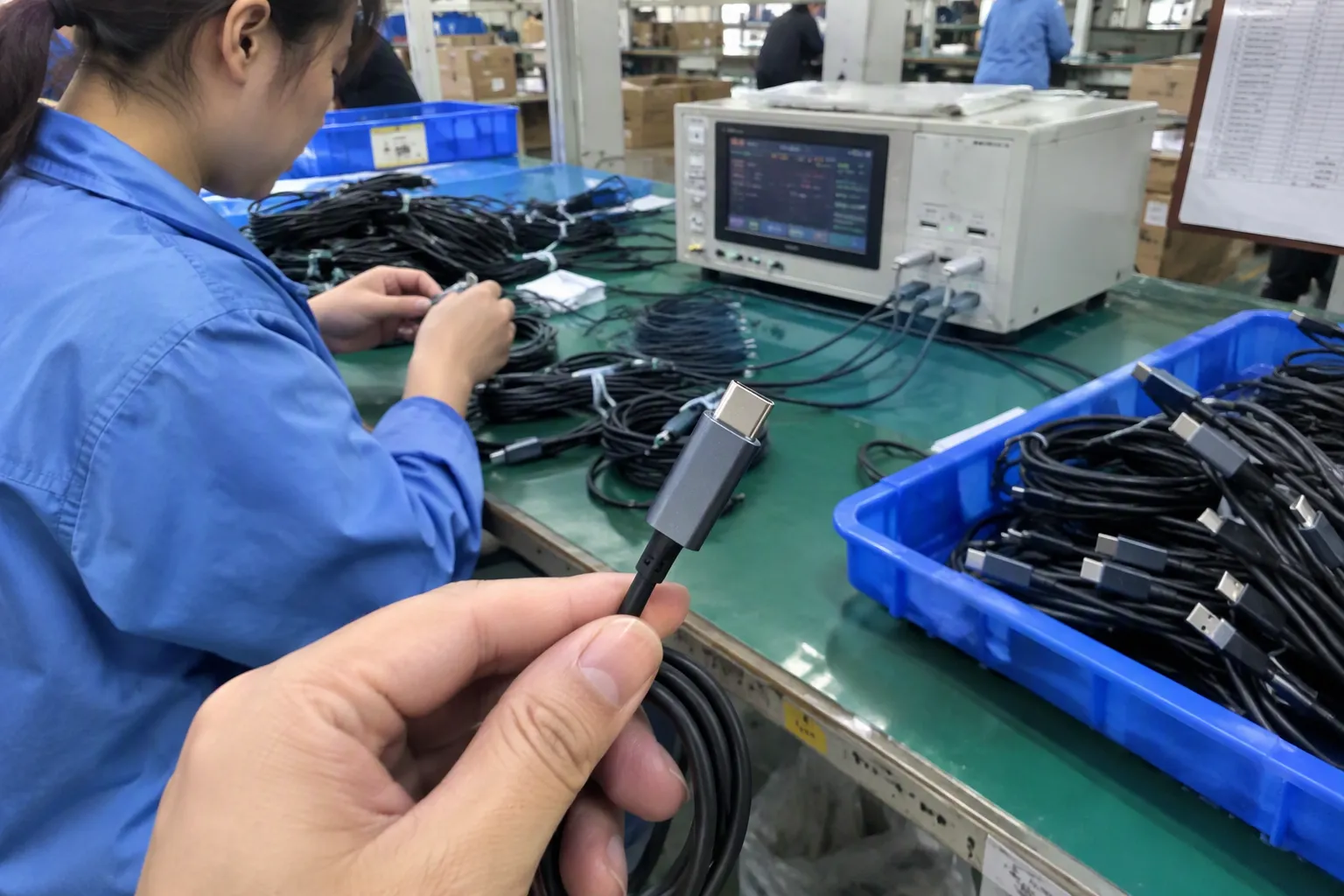
A USB-C connector does not, by itself, communicate the complete performance of a cable.[1] I ask what the cable is intended to do and which claims the supplier can support with documentation or agreed testing. I avoid accepting broad terms such as “high speed” or “high power” without a defined requirement.
- Connector type at both ends.
- Whether the cable is intended for charging, data transfer, or both.
- Required data capability, if relevant to the application.
- Supported electrical characteristics stated in a clear and appropriate way.
- Cable gauge or construction information where the project requires it.
- Shielding or reinforcement expectations.
- Outer jacket material and flexibility.
- Plug housing and strain-relief design.
- Length measurement method.
- Visual and functional acceptance criteria.
For products that depend on USB standards, I recommend reviewing information from the USB Implementers Forum and asking the supplier which specific standard or program applies to the model. I would not assume that a connector appearance proves compliance with a particular USB specification.[2]
Confirm the physical construction
The internal construction may affect flexibility, durability, electrical behavior, and cost.[3] I do not ask buyers to choose a technical construction without application guidance. I ask them to explain the usage conditions and then request the supplier’s proposed construction in writing.
- A soft cable for frequent handling.
- A stronger jacket for retail abuse.
- Reinforced strain relief near both plugs.
- A braided exterior for appearance and abrasion expectations.
- A compact connector housing for phones or cases.
- A cable that fits a specific packaging insert.
Treat claims and documents carefully
I consider certificates, declarations, and test reports as supporting documents rather than automatic proof that every product is suitable. I ask for the document number, issuing organization, model reference, date, and applicable market. I also ask whether the document covers the exact cable model, not merely a similar product family.
- Match the document to the exact model and configuration.
- Check whether the document is current.
- Confirm whether the document applies to the destination market.
- Ask who conducted the testing.
- Review any limitations or sample descriptions.
- Seek qualified compliance advice when the application or market requires it.
How Can You Compare USB Cable Manufacturers Beyond Price?
A low price can be useful when the specification and execution are equal.[5] However, I do not assume that two low quotations carry the same commercial risk. A supplier that misses the launch date, changes materials, or handles complaints poorly can create costs that do not appear in the unit-price column.[6]
I compare USB cable manufacturers by total procurement risk. I review product consistency, communication, MOQ, lead time, packaging accuracy, documentation, payment terms, inspection arrangements, and after-sales responsibility alongside price. I use the quotation as a risk document, not only as a number.
Build a total-cost view
| Cost area | Questions for the buyer |
|---|---|
| Unit price | Does the price include the same construction, packaging, and quantity? |
| Samples | Is the sample charge refundable or separate from production? |
| Tooling | Does the logo, mold, or packaging require an additional charge? |
| Freight | Will different carton sizes or weights change shipping cost? |
| Rework | Who pays if packaging, labeling, or construction does not match approval? |
| Delay | What happens if the shipment misses a retail or promotional date? |
| Returns | How will the supplier investigate and resolve confirmed product issues? |
| Cash flow | What payment schedule and balance timing apply? |
I do not assign a made-up defect rate or financial value to these risks. I ask the buyer to assess which problems would be most damaging to the project. A small price difference may matter less than a missed launch window for a seasonal promotion.
Examine quotation conditions
- Which quantity does the price apply to?
- Does the price change at different order volumes?
- Does the price include custom packaging?
- Does the price include a logo or only a standard product?
- Is the price based on a specific material or construction?
- How long is the quotation valid?
- Does the supplier reserve the right to change materials?
- What are the payment terms?
- What is the expected lead time after artwork and deposit approval?
- Does the price include export packing or local delivery?
A quotation that states “about 7–10 days” needs clarification. I ask whether the period starts after deposit, after sample approval, after artwork approval, or after all materials are available. I also ask whether the supplier can support a split shipment or repeat order.
Assess the supplier’s communication
Communication is not a soft issue in a customized cable project.[7] It is part of execution. I pay attention to whether the supplier repeats the requirement accurately, identifies missing information, and separates confirmed facts from assumptions.
That answer is more useful than an immediate low price based on an incomplete brief. I also value suppliers that explain alternatives clearly. If a requested feature increases MOQ or lead time, I want that information before approval.
In my order communications, I often find that customers ask several short questions at once. I reduce misunderstandings by putting the final points into a written confirmation. I recommend that buyers do the same, especially when several people are involved in purchasing, marketing, and logistics.
What Questions Should You Ask a USB Cable Manufacturer?
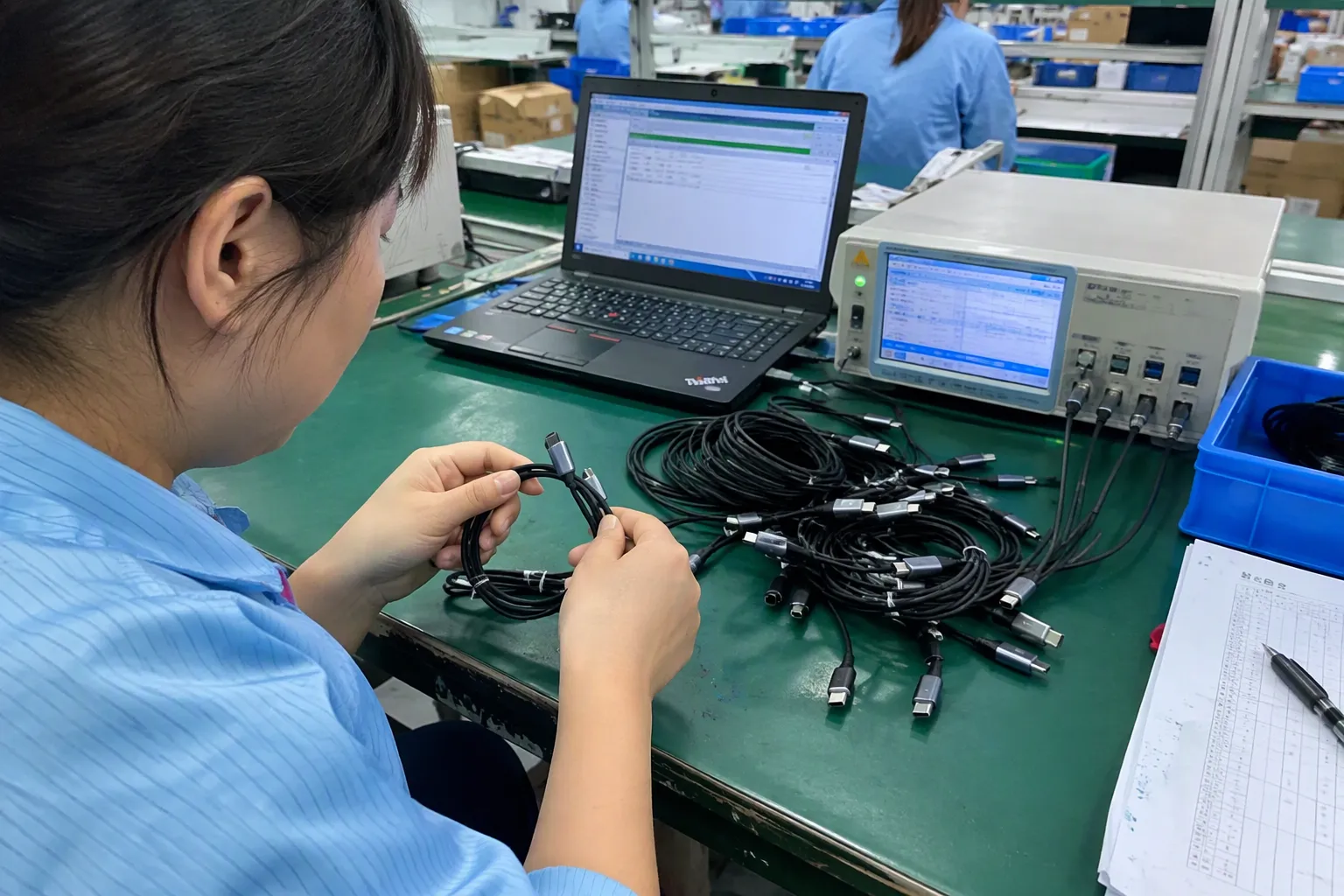
General questions rarely reveal how a supplier will manage a real order. Specific questions force the supplier to explain the product, process, and commercial conditions. I use the quotation stage as an early execution test because it shows how carefully the supplier interprets the project.
I ask a USB cable manufacturer to confirm the exact quoted model, construction, performance expectations, sample process, MOQ, lead time, packaging, documents, inspection arrangements, and problem-resolution process. I also ask the supplier to identify assumptions and exclusions instead of allowing them to remain unclear.
Questions about the product
- What exact model or product code does this quotation cover?
- Which connector combination and finished length are included?
- Is the cable for charging, data transfer, or both?
- Which performance claims can the supplier document?
- What materials and construction does the quoted item use?
- Does the production sample use the same materials as the bulk order?
- What are the available colors and customization options?
- What packaging options are available?
- Which parts can change the MOQ or lead time?
- What information does the supplier need before final confirmation?
Questions about production and quality control
- How does the supplier identify incoming materials?
- How does the supplier control connector and cable specifications?
- What checks occur during assembly?
- What final checks apply before packing?
- How does the supplier record production information?
- Can the supplier provide a pre-shipment sample or inspection arrangement?
- How does the supplier handle a failed inspection?
- How does the supplier separate approved and non-approved goods?
Questions about commercial execution
- What is the MOQ per color, length, and packaging design?
- Can the buyer mix models or colors within one order?
- What is the lead time for samples and bulk production?
- What is the repeat-order lead time?
- What are the payment terms?
- What is the carton quantity and estimated carton size?
- Can the supplier provide labeling or barcode support?
- What happens if the shipment contains confirmed nonconforming goods?
- How quickly will the supplier respond to a claim?
- Can the supplier support future design changes?
How Should You Verify Samples and Production Quality?
A sample can reveal whether the supplier understands the requirement, but one sample does not guarantee every future batch.[8] I use the sample approval process to establish a clear reference. I then ask how the supplier will control the production order against that reference.
I verify a USB cable sample by checking its appearance, dimensions, connectors, packaging, labeling, and intended function against the written specification. I record approval clearly and ask the supplier how bulk production will be matched to the approved sample. For higher-risk projects, I recommend qualified inspection or testing.
Create a sample approval record
- Supplier name and product code.
- Sample date and version.
- Connector configuration.
- Length and color.
- Packaging and artwork version.
- Agreed functional expectations.
- Photos from several angles.
- Any approved deviations.
- Open questions and responsible person.
- Approval date and approver.
Inspect what the customer will actually receive
- Are the connectors the correct type?
- Does the cable length match the agreed method of measurement?
- Does the jacket, braid, color, and logo match the approval?
- Does the strain relief look consistent?
- Does the packaging contain the correct language and barcode?
- Does the carton labeling match the purchase order?
I then match the sample to the intended application. I do not make unsupported claims based only on appearance. If the project depends on a particular power or data capability, I recommend an appropriate test by a qualified party or an agreed inspection provider.
Define acceptance before production
- Permitted cosmetic variation.
- Length tolerance.
- Connector and housing requirements.
- Logo position and print quality.
- Packaging quantity.
- Label content.
- Functional test method.
- Sampling or inspection plan.
- Procedure for handling nonconforming goods.
The exact acceptance plan should match the product, order value, and buyer’s risk tolerance. A professional inspection company or technical specialist can help the buyer select an appropriate method. I would not present a general checklist as a substitute for application-specific evaluation.
Plan for repeat orders
I ask whether the supplier will notify the buyer before changing materials, tooling, connector components, packaging, or production location. I also ask how the supplier will manage obsolete artwork and revised specifications.
For a buyer building a private-label range, change control matters. A cable may look nearly identical while its packaging, internal construction, or documented capability has changed. Written approval procedures reduce that risk.
How Do MOQ, Lead Time, and Customization Affect Supplier Selection?
A suitable USB cable manufacturer must fit the buyer’s commercial model. A supplier may offer attractive customization but require a quantity that the buyer cannot sell. Another supplier may accept a small trial order but lack the capacity or process for repeat production. I treat MOQ and lead time as product-selection issues, not administrative details.
MOQ, lead time, packaging, and customization can change the real suitability of a USB cable manufacturer. I confirm the minimum quantity by model, color, and packaging, then separate sample time, artwork time, material preparation, production time, inspection time, and shipping time.
Understand different types of MOQ
| MOQ type | What it may apply to |
|---|---|
| Product MOQ | The basic cable model or connector combination |
| Color MOQ | Each jacket or connector color |
| Logo MOQ | Printing, molding, or other branding |
| Packaging MOQ | Custom box, insert, label, or barcode |
| Material MOQ | Special braid, jacket, or cable construction |
| Order MOQ | The total value or quantity across several items |
Break lead time into stages
- Quotation and technical confirmation.
- Artwork or drawing confirmation.
- Sample production.
- Sample approval.
- Material preparation.
- Bulk assembly.
- Internal inspection.
- Buyer inspection, if required.
- Packing and dispatch.
I also ask what could extend the schedule. Artwork changes, special materials, public holidays, unexpected order volume, and inspection findings may affect the date. I do not promise a delivery date until the supplier confirms the relevant assumptions.
Match customization to sales strategy
- Stock product: Standard cable and standard packaging.
- Light customization: Logo, color, label, or retail box.
- Deep customization: New housing, special construction, custom tooling, or unusual packaging.
A retailer launching a test product may prefer light customization. A large chain or established brand may justify deeper customization after demand is proven. I ask the buyer to consider future replenishment before approving a design that depends on a high MOQ or special tooling.
How Can You Build a Safer USB Cable Supplier Shortlist?
A shortlist should contain suppliers that can meet the requirement, not simply suppliers that replied quickly. I use a staged process so that I do not spend the same amount of time on every candidate. The process also creates records that support a more defensible purchasing decision.
I build a USB cable manufacturer shortlist by screening capability first, requesting comparable quotations second, reviewing samples and documents third, and confirming commercial responsibility before the order. I keep written records of specifications, revisions, approvals, and supplier commitments throughout the process.
Use a practical screening sequence
Score the decision without pretending it is scientific
| Evaluation area | Suggested discussion |
|---|---|
| Requirement understanding | Did the supplier identify missing information? |
| Product fit | Does the proposed cable match the intended use? |
| Sample control | Can the buyer approve and reference the exact sample? |
| Commercial fit | Are MOQ, price, and packaging workable? |
| Delivery planning | Are lead-time assumptions clear? |
| Documentation | Are relevant documents available for review? |
| Communication | Are answers complete and consistent? |
| After-sales | Is responsibility for confirmed issues clear? |
I do not use a score to replace judgment. I use it to make hidden concerns visible. For example, one supplier may have the lowest price but weak answers about specification changes. Another may cost slightly more but provide a clearer approval process. The buyer can then decide which risk is acceptable.
Keep supplier communication organized
- Product specification.
- Approved sample photos.
- Packaging artwork.
- Quantity by model and color.
- Price and payment terms.
- Lead time and delivery terms.
- Required documents.
- Inspection plan.
- Contact persons.
- Claim and replacement procedure.
I have seen small wording differences create long email chains. I reduce that problem by asking the supplier to reply with a point-by-point confirmation. This approach is especially useful when a European or U.S. purchasing team communicates with a supplier through several departments.
Frequently Asked Questions
Is the cheapest USB cable manufacturer the best choice?
Not necessarily. A low quotation may reflect a different cable construction, packaging level, quantity, or commercial assumption. I compare equivalent specifications and consider potential costs from delays, rework, inconsistent goods, and difficult claims handling. I select the supplier whose verified offer fits the project risk and sales model.
What should I include in a USB cable RFQ?
I include connector types, length, intended function, performance expectations, materials, colors, logo, packaging, target quantity, destination market, required documents, MOQ, sample requirements, and target delivery date. I also ask the supplier to list exclusions and assumptions so that quotations remain comparable.
Should I request a sample before placing a bulk order?
I generally recommend a representative sample for a new supplier or customized project. I compare the sample with the written specification and record the approval. A sample does not guarantee every production batch, so I also ask about production controls and consider an appropriate inspection or testing plan.
How do I confirm whether a certification applies to my cable?
I request the complete document and check the exact model, configuration, issuing organization, date, and market scope. I do not assume that a certificate for one product proves suitability for another. I seek qualified compliance advice when the destination market or application has specific legal or technical requirements.
What MOQ is reasonable for a USB cable project?
A reasonable MOQ depends on the product, packaging, customization, materials, and supplier process. Standard stock cables often have different conditions from custom colors, logos, tooling, or retail boxes. I ask for MOQ by model, color, and packaging, then compare it with realistic sales volume and replenishment plans.
Conclusion
Choosing a USB cable manufacturer is a risk-screening decision, not a simple price comparison. I start with the actual application, create a clear specification, and request comparable quotations. I then review sample control, technical explanations, documents, MOQ, lead time, packaging, and after-sales responsibility. I treat supplier communication as evidence of execution capability, while I verify certifications and seek qualified evaluation where needed. If you are sourcing USB cables for a European or U.S. retail, wholesale, or e-commerce project, contact me with your requirements. I can help turn them into a clear quotation request and practical supplier discussion.
Sources
- Cables and Connectors", USB-IF materials distinguish the USB Type-C connector from the separately defined power-delivery, data-transfer, and cable-capability requirements, supporting the conclusion that connector appearance alone does not establish complete performance
- USB Type-C® Cable Logo Usage Guidelines", USB-IF compliance guidance indicates that formal USB compliance is established through applicable requirements and testing or certification processes, not solely through the visual presence of a USB Type-C connector
- CSC 297 Robot Construction: Wiring", Cable-engineering studies report that conductor arrangement, insulation, shielding, and reinforcement affect electrical characteristics and mechanical properties, while the associated materials and assembly processes also influence manufacturing cost
- Competitive Procurement Standards State of Washington ...", Procurement research generally finds that comparable supplier evaluation depends on common specifications, quantities, delivery assumptions, and evaluation criteria rather than on nominal prices alone
- 15.101-2 Lowest price technically acceptable source ...", Public-procurement guidance commonly separates technical acceptability from price evaluation, supporting the use of the lowest price as a meaningful discriminator only among offers that satisfy the same stated requirements
- Impacts of COVID-19 on Global Supply Chains - PMC - NIH", Research on total cost of ownership and supply-chain risk identifies logistics delays, nonconforming products, rework, returns, and disruption management as costs that may not be reflected in a supplier's unit price
- "Information Sharing, Buyer-Supplier Relationships and Firm ...", Supply-chain research associates structured information sharing and supplier coordination with improved coordination of product specifications, production activities, and problem resolution in interorganizational manufacturing
- 6.2.2. What kinds of Lot Acceptance Sampling Plans (LASPs ...", Quality-control guidance treats sample inspection as evidence about selected units, while continuing process control and statistically appropriate sampling are needed to assess consistency across production