Custom USB cables can look correct while failing the charging, data, or video task your customers expect. I often see buyers focus on the USB-C connector, outer design, or “fast charging” label first. That approach creates risk because the same connector shape can support very different performance levels[1]. I recommend defining the device use case before requesting a quotation.
Quick Answer
- I first identify the target devices and the main task: charging, data transfer, video, or several functions together.
- I ask the supplier to state supported charging capability, data performance, video support, length, construction, and testing documents in writing.
- I never treat a USB-C connector, attractive appearance, or “fast charging” wording as proof of performance.
- I match the cable specification to the charger, host device, and end device because the complete system affects the result.
- I request samples and a clear approval process before placing a large custom USB cable order.
Before ordering custom USB cables, define the exact devices and intended task, then convert that use case into written specifications for charging, data, video, construction, labeling, testing, and packaging. USB-C describes a connector family, not one guaranteed performance level[2]. I recommend verifying supplier documents and evaluating samples with qualified technical support before approving mass production.
Many purchasing problems begin with a simple assumption: if both ends use USB-C, the cable should work in the same way for every device. In my experience handling inquiries from European and American retailers, that assumption is one of the first points I clarify. The sections below show how I turn a general request into a specification that a supplier can actually quote and produce.
What Should I Check Before Ordering Custom Cables?
A vague request for “a durable fast-charging USB-C cable” does not give me enough information to select the correct product. It leaves important questions unanswered, including the customer’s devices, required cable length, data use, packaging, and approval standard. I start with the application, not the appearance.
The most useful first check is whether the cable will charge a phone, connect a laptop, transfer files, connect a monitor, or perform several tasks. I then ask the buyer to identify the charger, source device, target device, and expected user environment. This basic information helps me avoid recommending a cable that looks suitable but does not meet the intended function.
Start with the end use
| Main task | Questions I ask before quoting | Why the answer matters |
|---|---|---|
| Charging | Which devices will users charge? What charger and power level will they use? | The cable must suit the charging system and the device requirement. |
| Data transfer | Will users move files, connect storage, or synchronize devices? | Different cables can provide different data capabilities[5]. |
| Video connection | Will the cable connect a laptop, phone, dock, or display? | Video support depends on the device, port function, and cable design. |
| Combined use | Must the cable charge, transfer data, and carry video at the same time? | A basic charging cable may not satisfy a combined-use requirement. |
I also ask whether the product is intended for home users, office users, travel, retail display, or professional environments. A short cable for a power bank has a different commercial purpose from a long cable used with a laptop and monitor.
Turn marketing language into specifications
I do not leave “fast charging” or “high speed” as an open description on a purchase order. I ask the supplier to explain what the statement means for that exact model. The final specification should identify the supported performance, test basis, and limitations.
- Connector configuration, such as USB-C to USB-C or USB-A to USB-C.
- Cable length and tolerance.
- Intended charging application.
- Supported data function and stated performance category.
- Whether video or display connectivity is required.
- Outer jacket material and cable diameter.
- Bending, plug, and appearance requirements.
- Packaging, logo, labeling, and barcode details.
- Required compliance documents and test reports.
- Sample approval and pre-shipment inspection requirements.
Check the whole connection
I remind buyers that a cable is only one part of a connection. The charger, host device, end device, port function, software environment, and cable must work together[3]. A cable cannot create a function that the connected devices do not support[4].
For example, a buyer may request one cable for a laptop, phone, tablet, and monitor because every device uses USB-C. I would ask whether the buyer needs charging only or also file transfer and video output. I would then verify the device-side requirements from manufacturer documentation rather than assuming that the port supports every USB-C function.
For a useful internal reference, I often direct buyers to related content such as how to compare USB cable specifications and how to evaluate a 3C supplier. I use these resources to organize the inquiry before discussing price.
Why Does the Same USB-C Connector Not Guarantee the Same Performance?
The USB-C connector describes the physical interface and plug shape. It does not automatically confirm the cable’s charging capability, data performance, video support, or construction. I explain this point early because many purchasing errors start when appearance is used as a substitute for technical confirmation.
I have received inquiries in which the buyer sent a product photo and asked for “the same fast cable.” A photo can help confirm the visual direction, but it cannot prove the internal conductors, identification components, or supported functions. I need written requirements and, where necessary, verified technical documentation.
A connector is not a performance label
The USB Implementers Forum provides public information about USB technology and certified products through its official resources at usb.org. I use authoritative technical sources such as this for background, but I still ask the supplier to provide documents for the actual cable model under discussion. General information about a standard does not prove that every factory model supports every option within that standard.
Why “fast charging” needs clarification
“Fast charging” can mean different things in retail communication[6]. One supplier may use it to describe a cable intended for a common phone charger. Another may use it for a higher-power application. The phrase alone does not tell me enough about the operating conditions or limitations.
- The intended charger and device category.
- The stated power capability for the exact model.
- Whether any identification component is included where required[7].
- The cable length and conductor design.
- Whether the stated result depends on a particular charging system.
- Which documents support the claim.
- Which limitations should appear in the retail description.
Why data and video require separate questions
A buyer may need to connect a laptop to a monitor or docking station. In that case, a charging-only cable may not be suitable, even if it fits both ports. A retailer may also sell a cable as a phone accessory where customers expect file transfer. That requirement should be confirmed before production.
How Can I Convert a Vague Cable Request Into a Confirmed Specification?
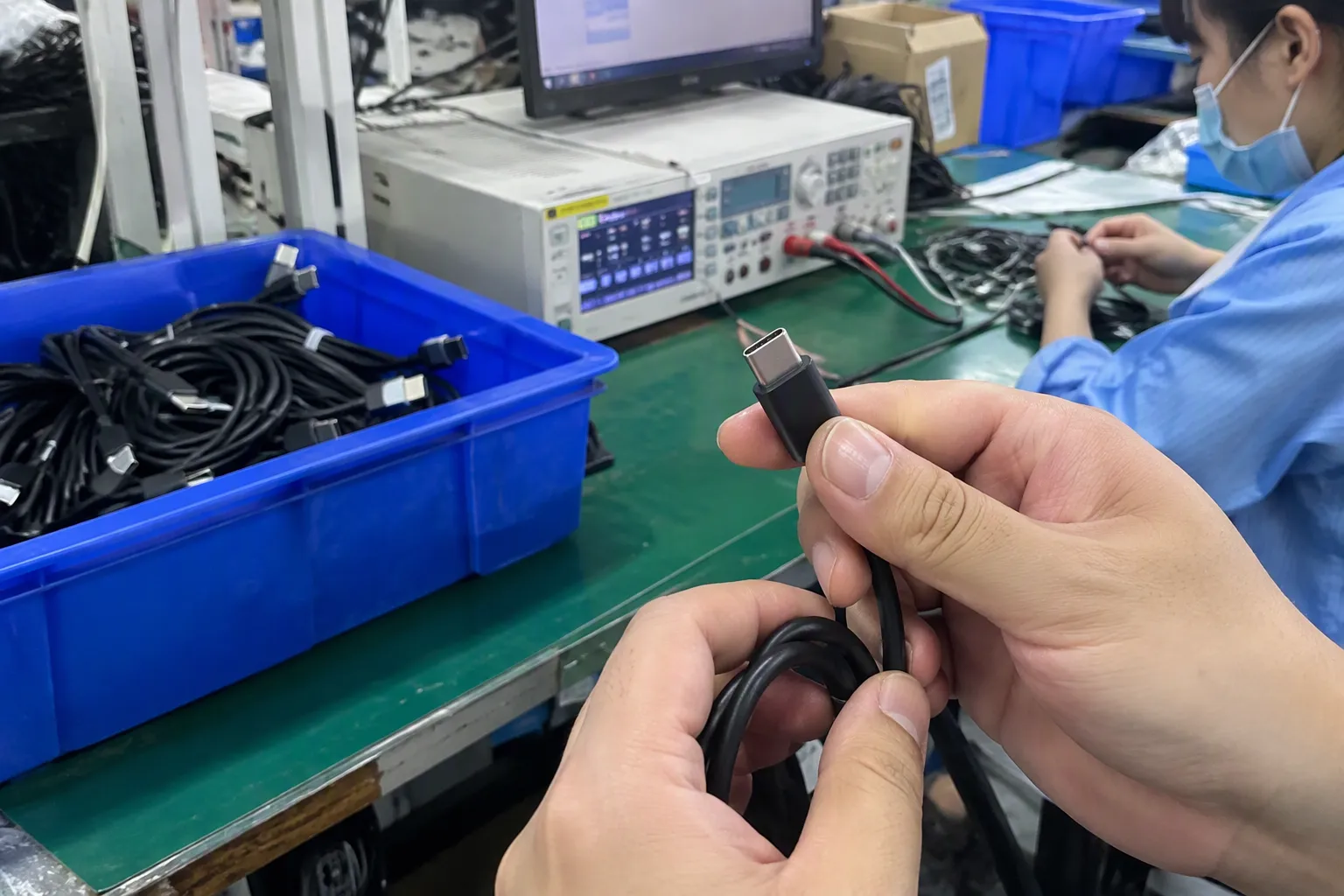
A weak inquiry usually produces several quotations that cannot be compared fairly. One supplier may quote a basic charging model, while another may quote a data-and-video model. Both may use the words “USB-C cable” and “fast charging.” I make the request more precise before comparing unit prices.
Use a specification checklist
| Specification area | Buyer should define | Supplier should confirm |
|---|---|---|
| Application | Charging, data, video, or combined use | Recommended model and limitations |
| Device set | Charger, phone, tablet, laptop, display, or other equipment | Compatibility assumptions requiring verification |
| Connector | Plug type at each end | Connector material, housing, and orientation |
| Length | Finished length and tolerance | Measurement method and tolerance |
| Performance | Required charging, data, or video function | Supporting documents and test conditions |
| Construction | Jacket, color, diameter, flexibility, strain relief | Material and production control |
| Customization | Logo, color, mold, tag, packaging | MOQ, tooling, sample charge, lead time |
| Quality | Appearance standard and inspection points | Inspection method and records |
| Compliance | Required market documents | Available reports and document scope |
| Delivery | Quantity, destination, and target date | Production schedule and shipping plan |
Separate required functions from preferred features
For example, a retailer might require USB-C to USB-C construction and a specific length for charging phones. Data transfer may be preferred. Video support may be optional because the product is not marketed for laptop-to-monitor use. Another retailer may have exactly the opposite priority.
Ask for evidence that matches the claim
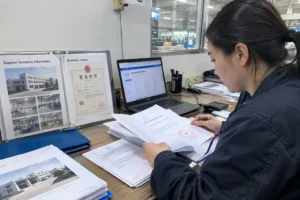
I ask for documents that relate to the actual model, not only a general company certificate. Depending on the market and product, the buyer may request test reports, material information, declarations, or other compliance documentation. The buyer should check the document issuer, model description, date, scope, and applicable market.
I do not treat a certificate as automatic proof of every performance claim. Buyers should verify certifications and reports independently and obtain qualified professional advice for application-specific compliance decisions. The European Commission’s Access2Markets portal can provide useful market-access information, but it does not replace a product-specific compliance review.
Confirm tolerances and acceptance criteria
- Finished cable length.
- Plug alignment and surface finish.
- Logo position and color.
- Jacket color and printing.
- Strain-relief shape.
- Packaging dimensions.
- Label content and barcode readability.
- Quantity tolerance.
- Defect classification for inspection.
Which Custom USB Cable Construction Details Should Buyers Review?
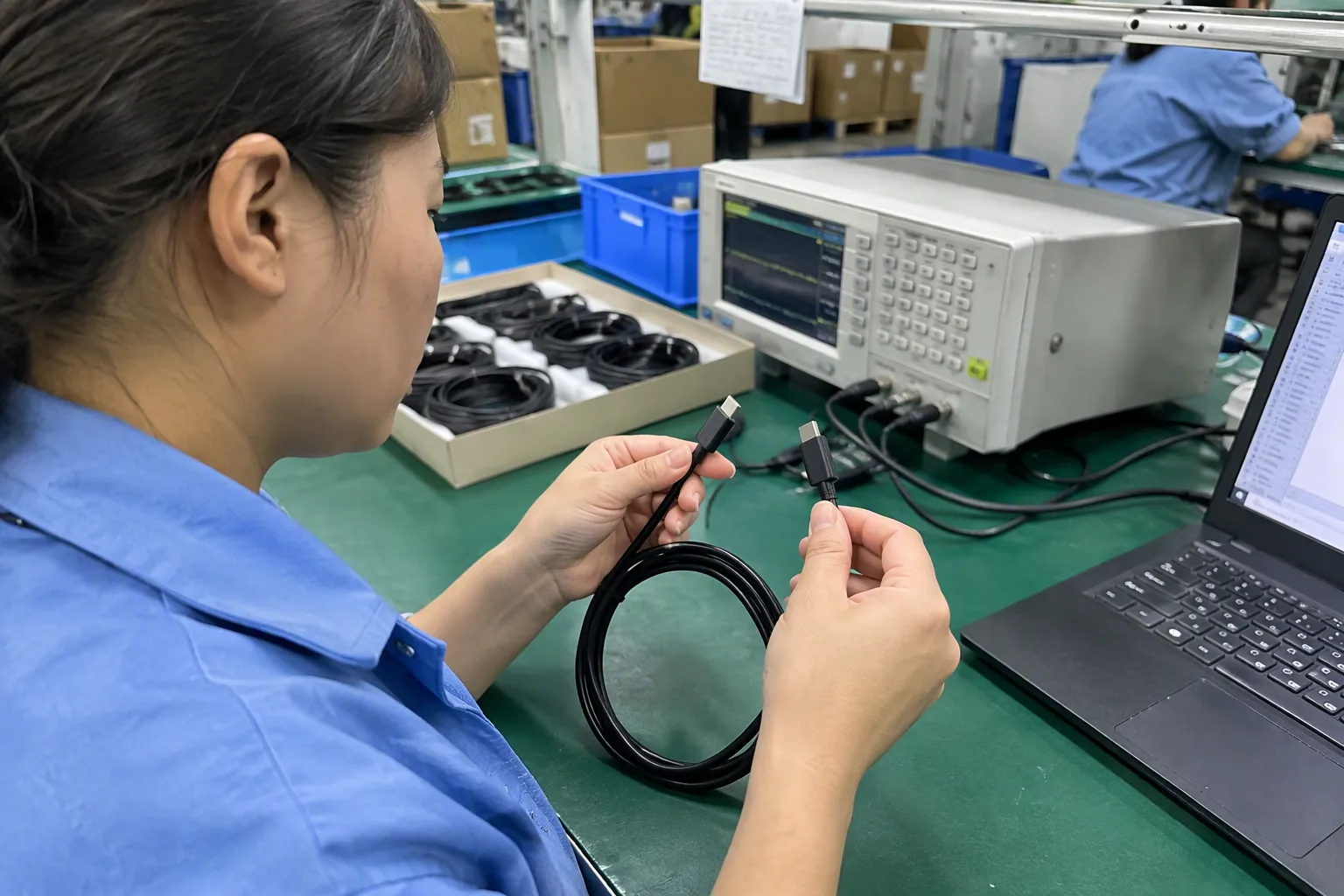
Construction affects durability, handling, appearance, and production consistency[8]. I do not recommend choosing braided fabric, a metal shell, or a particular diameter only because it looks premium. I first connect the construction to the sales channel and user environment.
For example, a cable sold in a supermarket accessory section may need strong visual appeal and clear packaging. A cable supplied to a business buyer may need consistent dimensions, private labeling, and repeatable delivery. Both products can be custom USB cables, but the quality priorities are not identical.
Review the outer jacket and flexibility
I ask whether the buyer prefers a PVC, TPE, braided, or other outer construction. I avoid presenting one material as universally best because the choice involves flexibility, tactile feel, appearance, abrasion expectations, cost, and production requirements.
- How often users will bend the cable.
- Whether the cable will be packed tightly for retail.
- Whether the jacket attracts dust or shows marks.
- Whether the color must match a brand palette.
- Whether the cable must remain flexible in a particular environment.
- Whether the design needs a visible premium appearance.
Review plugs and strain relief
The plug housing and strain relief deserve close attention. I inspect whether the housing is centered, whether the transition feels secure, and whether the design matches the approved sample. I also check whether the logo remains readable after assembly and packaging.
I do not claim that visual inspection alone proves internal durability. If the use case requires a durability target, the buyer should request an appropriate test method and result from the supplier or an independent laboratory. The test should relate to the actual design, not only to a generic product family.
Review length, packaging, and retail handling
- Hanging box, paper sleeve, polybag, or other format.
- Retail barcode and country-specific label needs.
- Logo colors and printing method.
- Instructions and language versions.
- Packaging drop or handling expectations.
- Carton quantity and shipping marks.
Compare construction priorities
| Buyer priority | Construction focus | Questions I would ask |
|---|---|---|
| Low retail price | Efficient standard construction | Which functions are essential, and which can be removed? |
| Premium appearance | Braiding, finish, housing, packaging | Can the appearance be reproduced consistently? |
| Frequent bending | Strain relief and flexible jacket | What test method and acceptance level apply? |
| Compact travel use | Short length and flexible handling | Does the design remain easy to pack and use? |
| Private label | Stable color, mold, and packaging | Is tooling required, and who owns the artwork? |
| Chain-store supply | Repeatability and documentation | Can the factory control multiple production batches? |
How Should I Evaluate a Supplier Before Placing a Custom USB Cable Order?
A suitable cable specification can still fail if the supplier cannot control samples, documents, production, and communication. I evaluate the supplier as part of the product decision. For European and American retailers, I also consider whether the supplier can manage repeated orders rather than only one attractive sample.
My company is a Shenzhen-based 3C export trading business with 15 years of export experience. We mainly support products such as USB cables, chargers, GaN chargers, TWS earphones, and smartwatches for overseas customers. I use that experience to help translate a buyer’s sales requirement into a supplier inquiry. I do not present that background as laboratory evidence or as a guarantee of compatibility.
Ask questions that reveal process control
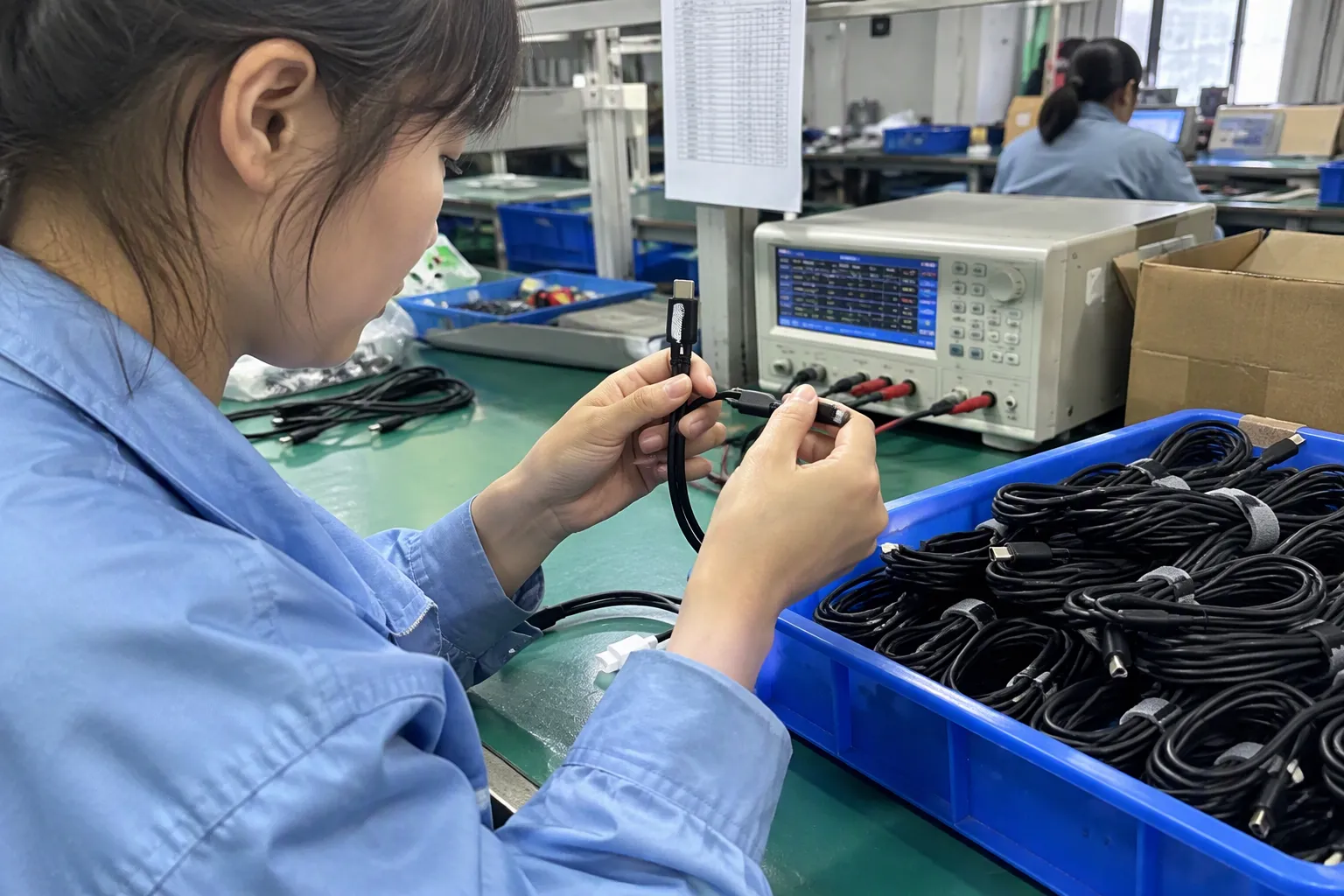
- Who confirms the technical specification?
- Who approves the sample before mass production?
- Which parts of the product are standard and which are customized?
- How does the factory control incoming materials?
- How does the factory inspect plugs, length, appearance, and packaging?
- Can the supplier provide model-specific reports or declarations?
- What happens if production does not match the approved sample?
- What are the MOQ, tooling cost, sample lead time, and production lead time?
- Can the supplier maintain the same specification for repeat orders?
- Who handles after-sales communication and claim review?
Review samples in a controlled way
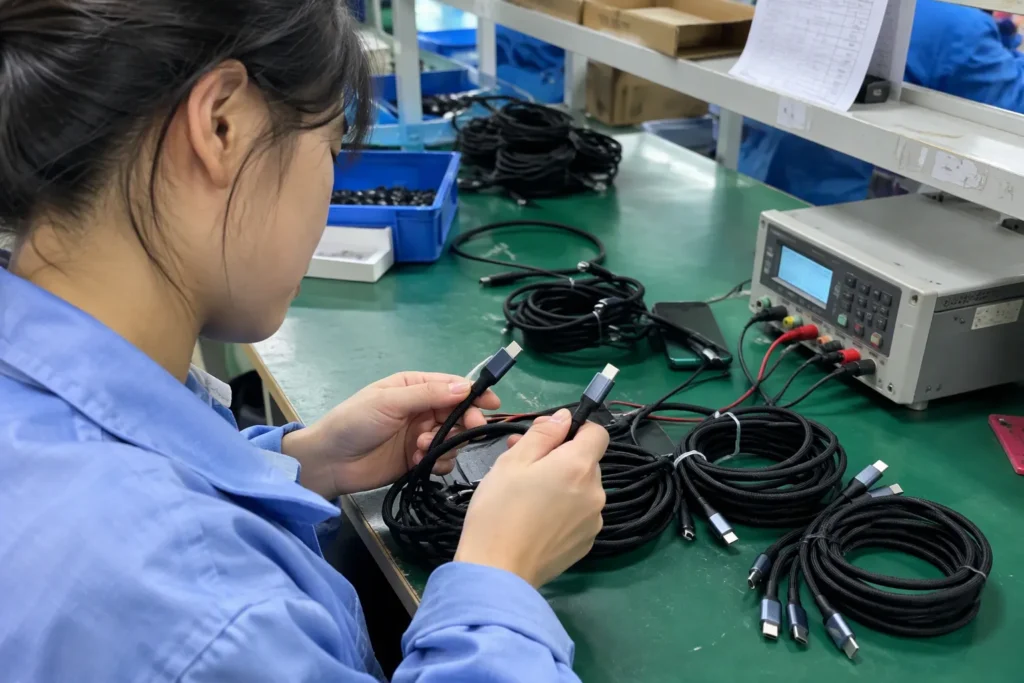
I recommend ordering a sample that represents the proposed mass-production model. The buyer should compare the sample against the written specification and record any changes. If the buyer changes the jacket, plug housing, logo, or packaging after approval, the supplier should update the document.
- Connector fit with the target devices.
- Charging behavior in the intended setup.
- Data or video function where required.
- Cable length and physical appearance.
- Flexibility and handling.
- Logo and color consistency.
- Package information.
- Basic quantity and carton details.
For critical or application-specific requirements, I recommend evaluation by a qualified technical professional or independent testing organization. I cannot guarantee that a sample tested in one device setup will work with every future device.
Treat certifications as documents to verify
Customers often ask whether a supplier has “complete certifications.” I explain that the buyer should identify which documents apply to the product, destination, and claim. A company-level document may not cover the exact cable model. A report may cover one configuration but not another customized version.
- Product model and connector configuration.
- Manufacturer or responsible company name.
- Test standard and scope.
- Report date and issuing organization.
- Whether the document covers the proposed materials and construction.
- Whether the destination market has additional requirements.
For European products, buyers can consult official EU product and market information, including the European Commission’s product safety pages. The buyer remains responsible for obtaining professional compliance advice where the application requires it.
Evaluate commercial reliability
| Supplier factor | Why I review it | What I request |
|---|---|---|
| MOQ | It affects inventory exposure | Standard and customized MOQ |
| Sample timing | It affects launch planning | Sample schedule and revision process |
| Production lead time | It affects replenishment | Normal and peak-season timing |
| After-sales process | It affects claim handling | Response time and evidence process |
| Custom tooling | It affects investment | Cost, ownership, and reuse terms |
| Repeat-order control | It affects consistency | Specification retention and batch records |
| Shipping support | It affects landed cost | Carton data and export documentation |
What Should I Confirm in the Purchase Order and Pre-Shipment Inspection?
Many buyers complete the quotation stage carefully but leave the purchase order too general. I consider the purchase order the final commercial record of what the supplier must deliver. It should reflect the approved sample and specification instead of relying on a product name such as “premium fast USB-C cable.”
The buyer should also define what happens before shipment. A pre-shipment inspection cannot replace technical design validation, but it can help identify obvious production differences in quantity, appearance, packaging, and selected specifications.
Put the important points in writing
- Exact product name and internal model number.
- Connector-to-connector configuration.
- Finished length and tolerance.
- Intended function.
- Approved performance description.
- Jacket, plug, color, logo, and packaging details.
- Required documents.
- Quantity and acceptable tolerance.
- Carton information.
- Delivery terms and target date.
- Sample reference or signed specification.
- Inspection method and claim procedure.
Build a practical inspection plan
- Carton quantity and shipping marks.
- Product count and assortment.
- Cable length.
- Connector type and orientation.
- Logo position and printing.
- Jacket color and surface condition.
- Housing assembly and visible gaps.
- Packaging and barcode.
- Selected functional checks.
- Document and label verification.
The inspection level should match the buyer’s risk and product application. I do not invent a pass rate or test level without a defined inspection plan. If the customer needs a particular standard, the buyer should state it clearly and use a qualified inspection provider where appropriate.
Control specification changes
Plan after-sales evidence
If an end customer reports a problem, I need enough information to investigate. I ask the retailer to record the cable batch, packaging, devices used, charger used, and failure description. A report saying “does not fast charge” is difficult to evaluate without those details.
How Can Retailers Position Custom USB Cables Without Misleading Customers?
A technically correct product can still create complaints if the retail description overpromises. I encourage buyers to describe the confirmed function and avoid implying universal performance. The wording should match the actual cable model, supported use case, and verified documentation.
I also check whether the package clearly explains what the cable is for. Customers need to understand whether the cable is intended for charging only, charging and data, or a broader application. Clear communication reduces returns and protects the retailer’s reputation.
Use specific, qualified product language
- “USB-C to USB-C cable for compatible charging devices.”
- “Designed for the stated data function; check device requirements.”
- “For use with compatible chargers and devices.”
- “Video function requires compatible source and display equipment.”
I only use a performance figure when the supplier has confirmed the model and the buyer has verified that the figure is suitable for the intended application. I also recommend that retailers have their compliance or legal team review market-specific claims.
Explain the limitations in simple terms
Retail packaging does not need to include a long engineering lesson. It should explain the important limitation in clear language. For example, the package can tell customers to check the charger and device requirements, or state that video support depends on compatible equipment.
Consider customer support questions
- Why does the cable fit but not display video?
- Why is charging slower with one charger?
- Why does a phone recognize the cable but not transfer files?
- Why does a long cable behave differently from a short cable?
- Why does one laptop work while another does not?
Frequently Asked Questions
Are all USB-C cables compatible with fast charging?
No. A USB-C connector does not prove a particular charging capability. I ask buyers to match the cable with the charger and device requirements, then verify the exact model specification and supporting documents. The final result can also depend on the charging system and device compatibility.
Can a USB-C charging cable transfer data?
Not necessarily. Some cables are designed mainly for charging, while others support data communication. I recommend stating the required data function in the inquiry and confirming it through model-specific documentation or suitable testing before placing a large order.
Can every USB-C cable carry video?
No. A cable that fits a USB-C port may not support the required video connection. I ask buyers to identify the source device, display, dock, and intended setup. I then recommend qualified technical verification rather than promising compatibility based only on the connector shape.
What information should I send a supplier for a custom USB cable quotation?
I send the connector configuration, target devices, intended function, length, appearance, construction, logo, packaging, quantity, destination market, target date, and document requirements. I also state which features are mandatory and which are optional. This information allows suppliers to compare the same requirement.
Should I order samples before mass production?
Yes. I recommend approving a representative sample against a written specification before mass production. The buyer should review appearance, dimensions, packaging, and the required functions in the intended setup. Critical applications may require independent testing or qualified professional evaluation.
Conclusion
I treat custom USB cables as a specification-matching project, not a connector-selection project. I first define whether the cable will charge, transfer data, carry video, or combine several functions. I then confirm the exact model, construction, documents, sample, packaging, inspection points, and retail claims in writing. A USB-C appearance or “fast charging” label is not enough. If you are selecting a supplier for a private-label cable program, I can help organize the inquiry, compare suitable options, and clarify MOQ, lead time, customization, and after-sales requirements before you place the order.
Sources
- Fix USB-C problems in Windows", A USB Type-C connector identifies the physical connector system, whereas supported power delivery, data signaling, and alternate modes depend on the relevant cable, device, and protocol specifications
- Universal Serial Bus Type-C Cable and Connector ...", USB Type-C is a reversible connector and cable interface used with multiple USB specifications and alternate modes; the connector designation alone therefore does not specify a single performance level
- USB Type-C", USB-C operation is an end-to-end interaction among source and sink devices, power equipment, cables, and supported protocols; successful connection therefore depends on the capabilities and configuration of the complete system
- What is USB-C DisplayPort (DP Alt Mode) and Why it Matters", Protocol functions conveyed through USB-C, including alternate display modes, require corresponding capabilities in the participating source and sink devices; a cable alone does not implement an unsupported device function
- Product Search", USB Type-C cables are specified for different USB data capabilities, and the usable transfer rate is constrained by the lowest applicable capability among the cable and connected devices
- Bureau of Consumer Protection", Charging performance is conditional on the charger, device, protocol, and cable, so the unqualified retail expression “fast charging” does not by itself identify a standardized power level or test condition
- Identifying USB-C E-Mark Cables", Certain USB-C cable capabilities are communicated through an electronically marked cable, whose identification information can be read by the connected power-delivery system when required by the applicable specification
- Strain-Relief: Design Tips for Durability and Aesthetic Appeal", Cable materials and connector-transition design influence mechanical properties such as flexibility, abrasion resistance, and resistance to repeated bending, which are relevant to durability and handling