When I evaluate TWS beamforming, I often see buyers focus first on microphone count or an algorithm label. That approach can create problems because a promising specification may not match real calling conditions, earbud construction, or mass-production consistency. I use a broader evaluation process that connects hardware, software, samples, and supplier validation.
Quick Answer
TWS beamforming should be evaluated as a complete system rather than as a microphone-count or algorithm feature. Buyers should review microphone position, orientation, acoustic openings, processing capability, target calling environments, sample performance, and production consistency together. I recommend asking suppliers for application-specific validation evidence and checking whether the result remains stable across production samples.
- Compare the complete microphone layout, not only the number of microphones.
- Connect algorithm claims to the actual earbud structure and chipset.
- Test calls in realistic environments, including traffic, offices, and retail spaces.
- Ask how samples and mass-production units will be checked.
- Treat supplier specifications and certifications as documents to verify, not final proof of user experience.
The main purchasing question is not simply, “How many microphones does this earbud have?” I think the better question is, “How will this design collect and process voice information in the environments my customers use, and how will the supplier keep that result consistent?” The sections below explain how I connect those questions during sample evaluation and supplier communication.
How Do Microphone Geometry and TWS Beamforming Work Together?
Many buyers face a simple comparison between two TWS samples. One sample has more microphones, while another has a different layout or smaller housing. The specification sheet may make the first product appear stronger. I avoid making that decision until I understand how each microphone is positioned and used.
Microphone geometry affects what spatial information the system can collect. Microphone position, direction, spacing, acoustic ports, earbud shape, and the user’s wearing position all influence the usefulness of TWS beamforming.[3] A higher microphone count does not automatically create better call quality.[2]
Why microphone count is only a starting point
A microphone array works with differences in the sound arriving at multiple microphones.[1] Those differences can include timing, level, and direction-related information. The processing system uses the available information to emphasize some sound sources and reduce others.
In practical buying work, I do not need to treat the earbud as a laboratory project to recognize the main risk. If two microphones sit in positions that provide limited useful separation, adding a third microphone may not deliver the improvement that a buyer expects. The microphone openings may also be partly blocked by the housing, a mesh, dirt, moisture, or an incorrect assembly position.
- How many microphones are active during calls?
- Which microphones are used for voice pickup?
- Where is each microphone located on the earbud?
- What direction does each acoustic opening face?
- Does the left or right earbud use a different arrangement?
- Does the design change between different shell sizes or models?
- Which chipset and voice-processing functions support the array?
- How does the supplier verify correct microphone assembly?
Geometry includes the earbud structure
I pay attention to the full acoustic path. A microphone can have a suitable nominal position, but the result may change if the opening is narrow, angled, covered by adhesive, or placed too close to other components. The housing can also influence how wind and external sound reach the microphone.[4]
The earbud’s wearing position adds another variable. A stem-style product, a compact in-ear product, and an open-ear product expose their microphones to different conditions. The user’s ear shape, insertion depth, and fit also change the relationship between the microphone and the voice source.
I therefore prefer suppliers who explain design decisions in product-specific terms. “This model uses four microphones” is not enough. I want to know what role each microphone plays and how the supplier checks the acoustic openings during assembly.
A practical comparison
| Evaluation point | What the specification may show | What I still need to verify |
|---|---|---|
| Microphone count | Total number of microphones | Active microphones during calls and their individual roles |
| Position | A basic product diagram | Actual location, orientation, and acoustic opening condition |
| Chipset | Chip or platform name | Whether the software configuration supports the stated design |
| Algorithm | Marketing or feature label | Performance in the intended calling environments |
| Housing | Product photos or drawings | Effects of fit, wind exposure, mesh, and assembly variation |
| Sample result | One demonstration unit | Whether multiple units show comparable behavior |
What Should Buyers Ask About TWS Beamforming Algorithms?
Algorithm names can make a product sound advanced, but I treat them as part of a system rather than as an independent quality ranking. A supplier may use terms such as beamforming, environmental noise reduction, voice enhancement, or artificial-intelligence noise reduction. Those terms require context before I use them in a purchasing decision.
A TWS beamforming algorithm should be assessed with the microphone arrangement, chipset, firmware, earbud acoustics, and target environment. Buyers should ask what the algorithm is designed to do, how it was configured for the product, and how the supplier validated the result.
Algorithm labels do not replace validation
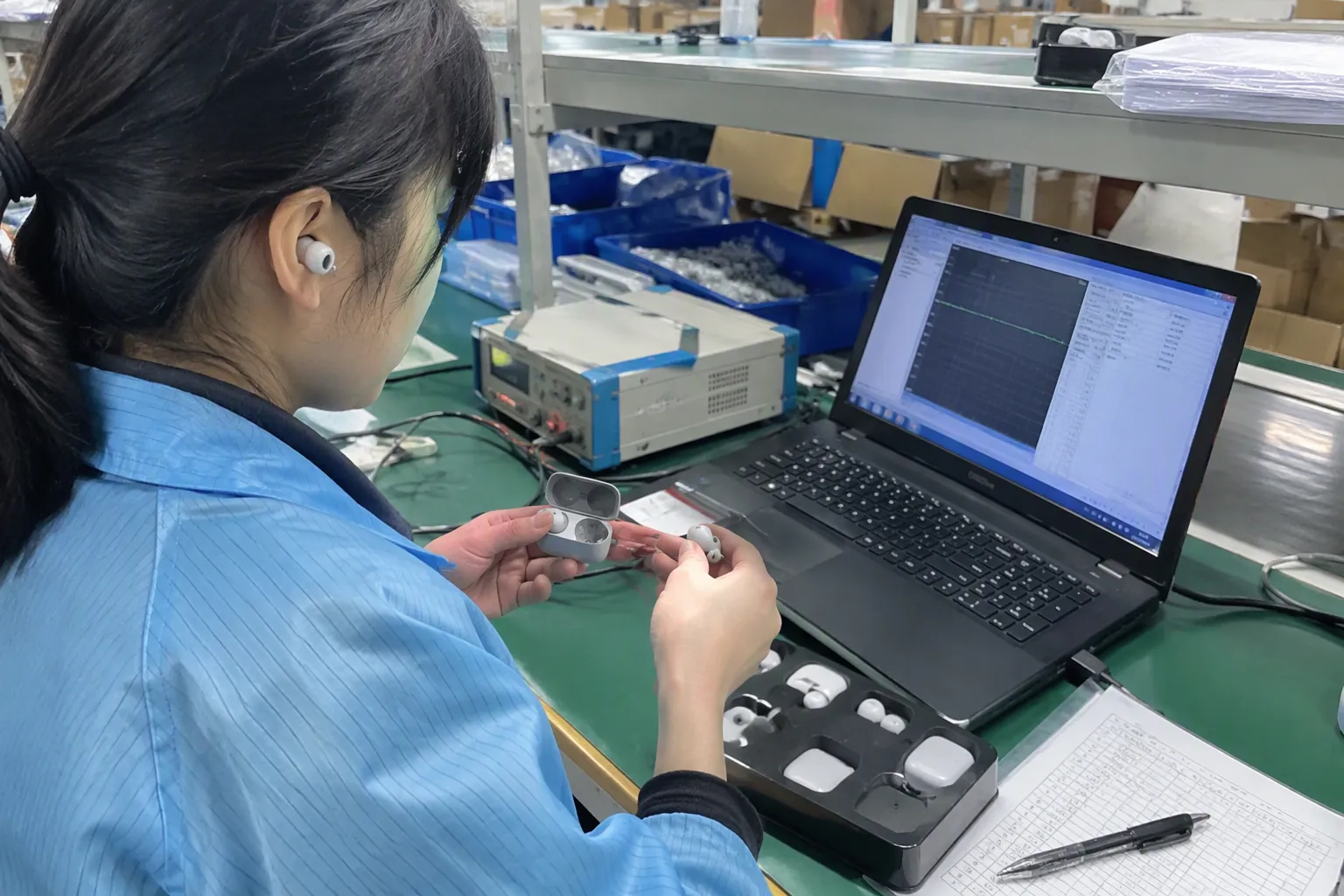
An algorithm processes the signals that the hardware provides.[5] If the microphone arrangement does not collect useful spatial information, the algorithm cannot be judged separately from that limitation. If the algorithm is tuned for one environment, the result may also change in another environment.[6]
- Is the processing performed in the earbud, the phone, or both?
- Does the system use one earbud or both earbuds during a call?
- Does the call mode change when the user wears only one earbud?
- Which voice-processing functions are active at the same time?
- Does the firmware version affect the call result?
- Was the design tuned for wind, traffic, office noise, or another condition?
- Can the supplier provide a controlled comparison with a reference product?
The target environment changes the buying decision
A product intended for quiet home calls faces a different challenge from one used by delivery workers, commuters, retail employees, or customers who frequently call outdoors. A model that performs acceptably in a quiet room may not produce the same experience near road noise or strong wind.
- Indoor home and office calls
- Public transport or roadside calls
- Retail and warehouse environments
- Outdoor walking with wind exposure
- Calls in a shared workspace
- Single-earbud operation
- Long calls with changing wearing position
How I read a supplier’s test material
I look for test conditions rather than impressive wording. A recording should identify the environment, distance, speaking direction, background noise, device mode, and firmware version. A report should identify the sample and date. If the supplier cannot provide all of these details, I treat the material as an informal demonstration.
I also listen for artifacts. Aggressive processing may make background noise appear lower while making the speaker’s voice sound unnatural, clipped, metallic, or intermittent. I do not declare a technical failure based on one listening session, but I record the issue and ask the supplier to investigate.
For external technical background, I may refer buyers to resources from the Bluetooth SIG and the ITU-T Recommendations database. These sources help explain standards and communications concepts, but they do not certify that a particular commercial earbud will deliver a specific user experience.
How Should Sample Testing Measure TWS Beamforming?
A sample can reveal design weaknesses that a specification sheet cannot show. I have seen customers compare screenshots, feature lists, and short supplier videos before they have tested the product in a structured way. That process often creates unnecessary arguments because each person is judging a different condition.
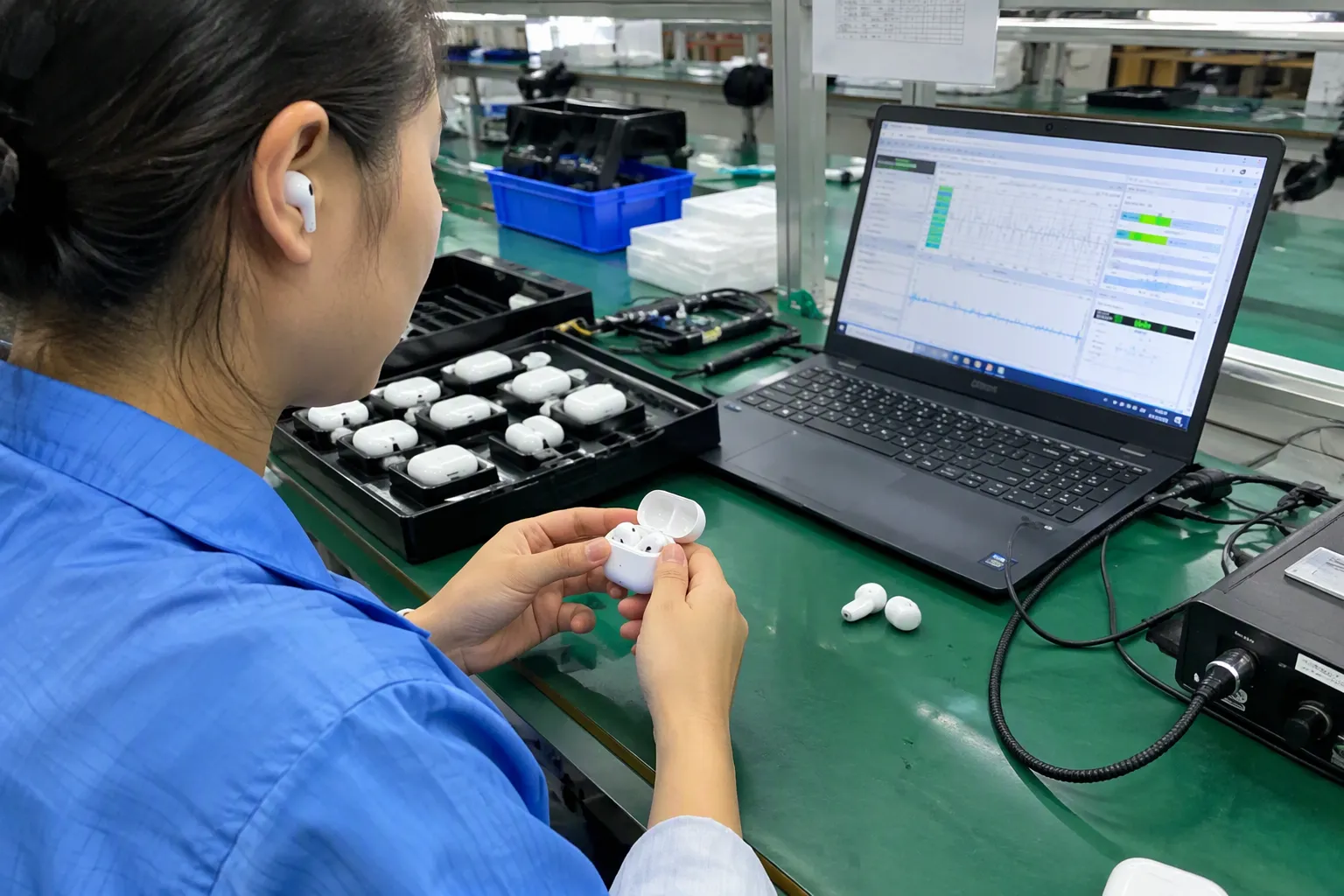
Sample testing for TWS beamforming should use repeatable call scenarios, multiple units, consistent recording methods, and clear acceptance criteria.[7] Buyers should assess voice intelligibility, unwanted noise, interruptions, wind behavior, single-earbud use, and variation between samples instead of relying on one demonstration.
Start with a test brief
| Test category | Example question |
|---|---|
| Voice clarity | Can the other party understand normal speech without repeated questions? |
| Background noise | Does the voice remain usable when steady noise is present? |
| Wind | Does outdoor movement create severe distortion or interruptions? |
| Direction | Does turning the head change the call result? |
| Wearing mode | Does performance change when only one earbud is used? |
| Stability | Do several units behave in a similar way? |
| User comfort | Does the fit remain stable during normal movement? |
| Connectivity | Does the call remain stable with the intended phone models? |
I avoid presenting these categories as a universal laboratory standard. They are purchasing checkpoints. A professional test laboratory or qualified acoustics engineer should handle application-specific claims that require formal measurement.
Use a simple but controlled comparison
- The same phone model and operating system
- The same call application
- Similar speaking distance and voice level
- The same room or outdoor location
- The same earbud wearing position
- The same wind or background-noise condition
- The same firmware version during a test round
I also record which person is speaking and which person is listening. A listener’s expectation can influence the result, so I ask more than one person to review recordings when possible. I document observations with specific descriptions, such as “voice becomes intermittent when walking into wind,” instead of “noise reduction is bad.”
Test more than one sample
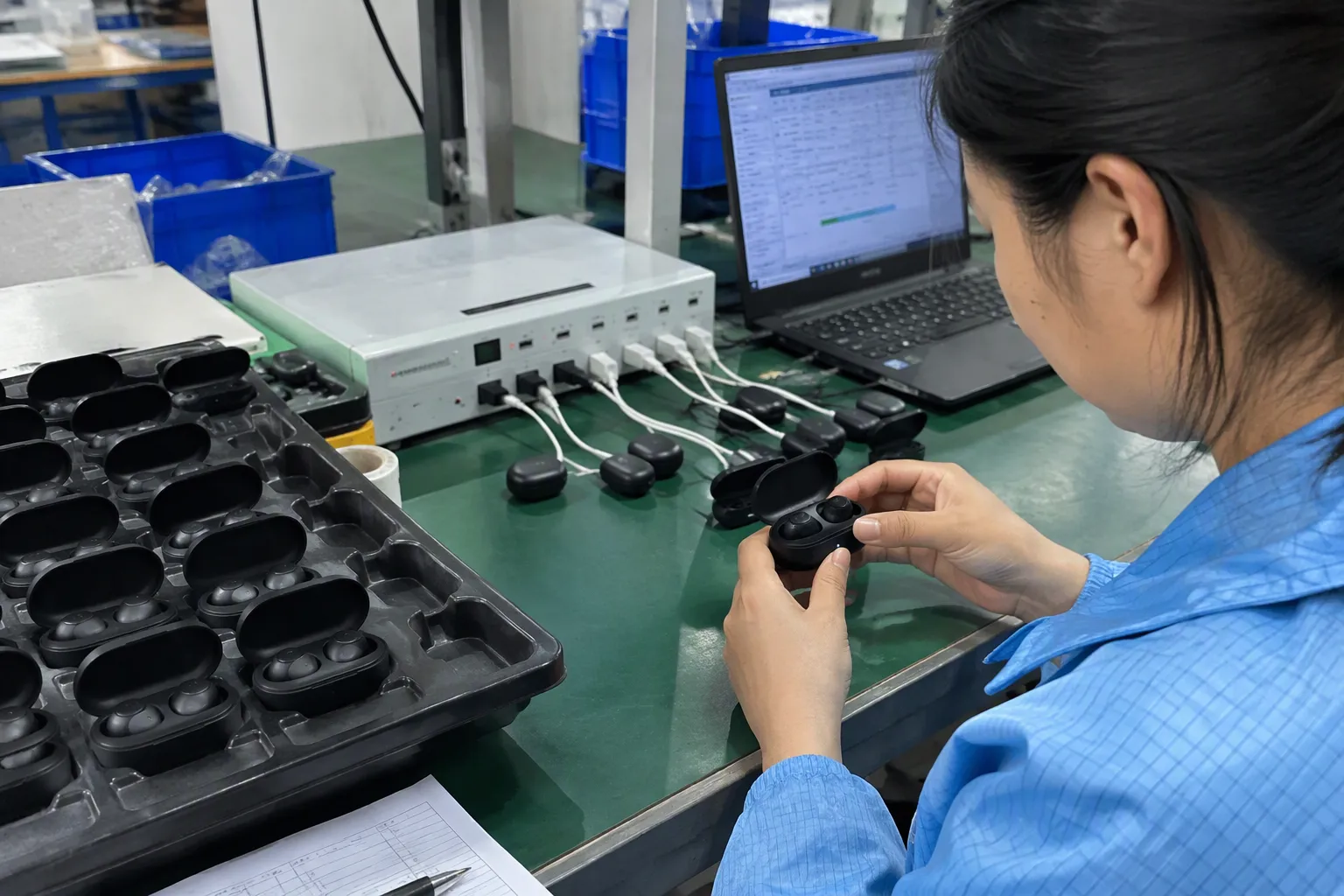
One sample can represent a successful build, an early engineering unit, or a unit selected for demonstration.[8] It cannot establish production consistency by itself. I recommend requesting several samples from the same batch when the purchase decision depends heavily on calling quality.
For a larger order, I ask the supplier how they plan to control the relevant assembly points. The supplier may use functional audio checks, component verification, acoustic inspection, firmware control, or another method. I do not assume that a factory uses a particular process unless the supplier documents it.
Separate subjective and objective evidence
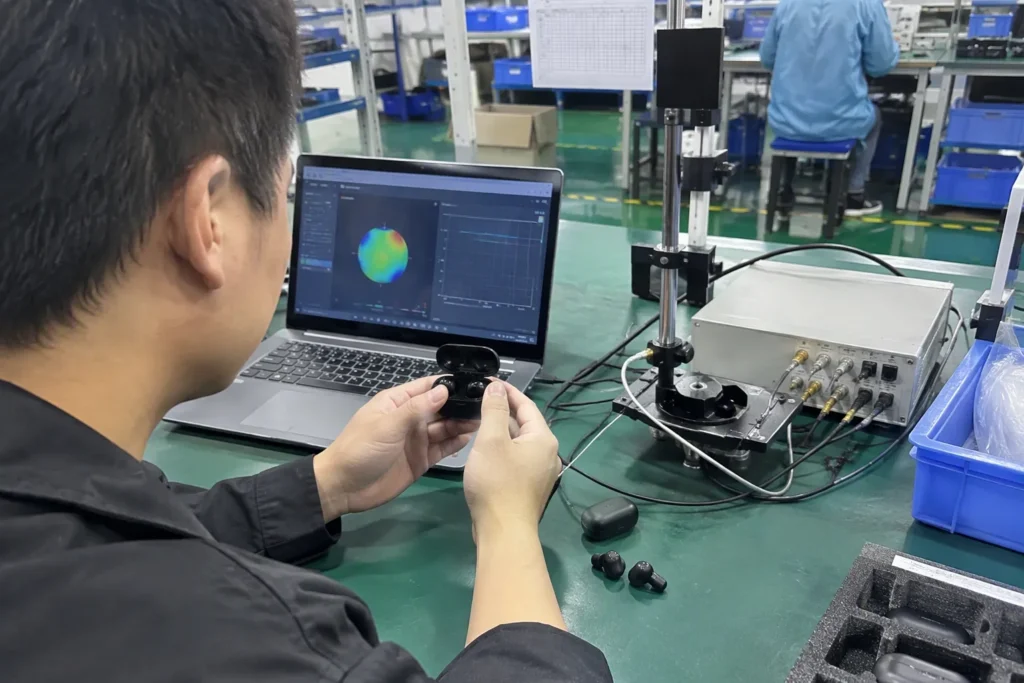
Subjective listening is important because customers experience calls through human hearing. However, listening alone can be difficult to reproduce. Objective checks may include frequency response, sensitivity, distortion, noise floor, or other acoustic measurements, depending on the product and test equipment.
I do not invent pass limits for these measurements. The correct limit depends on the design, application, test method, and buyer’s quality agreement. I ask the supplier or an independent laboratory to define the method before using the result as a contractual requirement.
The IEC webstore and relevant national or international standards can help buyers identify formal measurement references. I still recommend qualified professional evaluation when a buyer needs a defensible technical specification.
What Does Production Tolerance Mean for TWS Beamforming?
Production tolerance is often misunderstood in TWS discussions. Buyers may ask for a single tolerance number for microphone placement or algorithm performance. In reality, several variables can influence the final result, and the acceptable range depends on the specific design and validation method.
Production tolerance means controlling the variation that can affect the complete TWS beamforming system. It may include microphone placement, acoustic openings, housing parts, component performance, assembly, firmware, and testing. A tolerance should come from engineering validation and a defined inspection method, not from an invented target.
Identify the variables first
Mechanical variables
Electronic variables
Software variables
Firmware version, DSP settings, calibration data, and mobile compatibility can influence call behavior. A buyer should record the approved firmware version in the sample and purchase documentation. A later software change can make a previously approved sample difficult to compare with mass production.
User and environment variables
Ask for a control plan
- Which feature is critical to voice pickup?
- What tool or method checks that feature?
- At what stage does the inspection happen?
- How often does the factory inspect it?
- What happens when a result falls outside the internal limit?
- Does the factory keep records by batch?
- Can the buyer review a sample inspection record?
- How does the supplier control firmware and component changes?
Production approval should be gradual
- Engineering sample: Confirm the basic design and use case.
- Pilot or pre-production sample: Check assembly readiness and early variation.
- Mass-production sample: Compare with the approved reference.
- Pre-shipment inspection: Verify appearance, function, packaging, and agreed tests.
- Post-delivery feedback: Track returns, complaints, and recurring call issues.
I do not promise that every production unit will behave identically. No responsible supplier should make that promise without a defined test method and acceptance range. Instead, I look for evidence that the factory understands the important variables and has a practical way to monitor them.
How Can Buyers Compare TWS Beamforming Suppliers?
A good design can still become a difficult purchase if the supplier cannot communicate clearly, control changes, or support after-sales issues. I evaluate the supplier’s technical explanation together with MOQ, lead time, customization ability, quality documents, and service response.
Buyers should compare TWS beamforming suppliers on evidence and process, not on feature labels alone. A suitable supplier should explain the product configuration, provide representative samples, document agreed specifications, communicate changes, and support quality investigation after delivery.
Use an evidence-based supplier scorecard
| Supplier factor | Questions I ask | Evidence to request |
|---|---|---|
| Product configuration | Does the sample match the offered version? | Detailed specification and sample record |
| Voice-call design | How are microphones and processing configured? | Product explanation and relevant test material |
| Sample consistency | Do several units behave similarly? | Multi-sample evaluation |
| Quality control | What does the factory inspect? | Inspection plan or quality records |
| Change control | How are component and firmware changes communicated? | Written change procedure |
| Certifications | Which documents apply to this exact model? | Current certificates and test reports |
| Customization | Can the supplier manage logo, color, packaging, or firmware requests? | Sample approval process and timeline |
| Commercial support | Can the supplier meet MOQ and delivery needs? | Quotation, production plan, and service terms |
| After-sales | How are defects investigated and replaced? | Warranty and claim-handling process |
I treat certifications as important compliance documents, but I verify the model number, applicant, validity, test scope, and issuing organization. A certificate for one product does not automatically cover another product with a similar appearance.
Communication quality is a technical indicator
During sample evaluation, I notice how the supplier responds to difficult questions. A supplier does not need to promise perfect call quality. I prefer a supplier who states the operating conditions, explains limitations, and proposes a test plan.
- The supplier only repeats “AI noise cancellation” without explaining the configuration.
- The supplier refuses to identify the sample firmware.
- The supplier provides a single edited audio clip as proof.
- The supplier cannot explain how production units are checked.
- The supplier changes the microphone or chipset without written approval.
- The supplier offers a performance guarantee without a test method.
- The supplier avoids discussing single-earbud or outdoor use.
Connect technical review with commercial requirements
- Will the approved microphone and chipset remain available for the expected order period?
- Does customization change the housing or acoustic openings?
- Does a new color require a new production sample?
- Will a packaging change affect the declared model information?
- Can the supplier maintain the same firmware across repeat orders?
- What is the process for handling customer complaints about call quality?
- Which documents are available for the exact shipped model?
How Should TWS Beamforming Claims Appear in Product Marketing?
Retailers and e-commerce sellers need attractive product descriptions, but unclear technical wording can create customer expectations that the product cannot consistently meet. I recommend using specific, supportable language and avoiding absolute claims.
TWS beamforming marketing should describe the supported product feature without promising universal noise removal or perfect voice clarity. Claims should match verified documentation, the approved hardware and firmware, and the environments used during evaluation.
Use careful claim language
Match the claim to the buyer’s market
European and North American buyers may have different channel expectations, return policies, and product documentation requirements. I ask the supplier to provide current documents for the actual model and intended market. Buyers should also review applicable requirements with qualified compliance professionals.
Useful external starting points include the European Commission’s CE marking guidance, the U.S. FCC equipment authorization information, and the European Commission RoHS policy information. These sources explain regulatory frameworks, but they do not replace product-specific legal review.
Keep marketing and quality documents aligned
- Approved product model
- Microphone configuration
- Chipset and firmware version
- Packaging and printed claims
- Test conditions
- Sample approval date
- Applicable certificates and reports
- Agreed inspection points
- Change-approval procedure
How Can I Build a Practical TWS Beamforming Approval Process?
The final decision should combine technical evidence, commercial fit, and supplier capability. I do not expect a buyer to become an algorithm specialist. I do expect the buyer to establish a process that makes weak evidence visible before a large order.
A practical TWS beamforming approval process defines the use case, compares representative samples, records hardware and firmware details, checks supplier controls, verifies documents, and sets a clear method for handling production variation. Qualified professionals should review application-specific acoustic, regulatory, and contractual requirements.
My recommended approval sequence
1. Define the customer scenario
2. Request product-specific information
I ask for the microphone count, arrangement, chipset, firmware version, product drawings where available, and applicable compliance documents. I do not accept a general platform presentation as a substitute for product-specific information.
3. Evaluate several samples
4. Ask for a production-control explanation
5. Approve the exact version
6. Confirm commercial terms
7. Review early market feedback
A final buyer checklist
- Does the product suit the intended calling environments?
- Does the microphone geometry support the stated design explanation?
- Has the buyer tested real samples rather than only reviewing a sheet?
- Has the buyer compared more than one unit?
- Is the firmware version recorded?
- Does the supplier explain its production controls?
- Are certificates and test reports valid for the exact model?
- Is there a written change-control process?
- Are marketing claims limited to verified performance?
- Does the after-sales process cover call-quality complaints?
Frequently Asked Questions
Does more microphones always mean better TWS beamforming?
No. More microphones can provide additional signal information, but the result depends on position, orientation, acoustic openings, chipset capability, software configuration, housing design, and the calling environment. I recommend comparing the complete system and testing representative samples.
What information should a TWS supplier provide about beamforming?
I ask for the microphone count and layout, active call microphones, chipset, firmware version, product-specific test conditions, and production-control method. The supplier should also identify the exact model covered by certificates and test reports. A general algorithm label is not enough evidence.
How many samples should buyers test?
There is no universal number for every product or order. I recommend testing more than one unit and comparing samples from an appropriate production stage. Buyers should increase the validation scope when calling performance is a key selling point or when customization changes the housing or electronics.
Can a laboratory report guarantee good everyday calls?
No. A laboratory report can provide useful evidence under defined conditions, but everyday performance also depends on wearing position, phone model, wind, background noise, firmware, and user behavior. Buyers should review the test method and add realistic use-case testing.
Should buyers specify a microphone-placement tolerance in the purchase contract?
They should discuss critical dimensions and inspection methods with the supplier, but they should not invent a tolerance without engineering support. The suitable limit depends on the design and measurement method. A qualified acoustics or manufacturing professional can help define an appropriate requirement.
Conclusion
I evaluate TWS beamforming as a combination of microphone geometry, signal processing, earbud structure, firmware, use case, and production control. Microphone count and algorithm names can help start a discussion, but neither one proves reliable calling performance. I recommend structured sample testing, multi-unit comparison, document verification, and a clear supplier change-control process. If you are sourcing or customizing TWS earbuds for European or North American markets, I can help organize the product questions, sample review, MOQ, lead-time, certification, and after-sales discussion before you place a larger order.
Sources
- Beamforming Microphone Array", A microphone array can exploit differences in the signals recorded at spatially separated microphones, including relative delay and level, to estimate or emphasize sound arriving from particular directions
- Geometry descriptors of irregular microphone arrays related to ...", Research on microphone arrays indicates that performance depends on array geometry, spacing, calibration, processing, and acoustic conditions; microphone count alone is therefore not a sufficient predictor of speech-enhancement quality
- VibOmni: Towards Scalable Bone-conduction Speech ...", Studies of wearable and microphone-array systems show that sensor geometry and the acoustic path between the sound source and microphones affect the spatial information available for speech enhancement
- Experimental Investigation of a Tubular Front Cavity for Wind ...", Microphone wind sensitivity is affected by airflow at the transducer and by the surrounding enclosure and port geometry, making housing design relevant to outdoor speech capture
- Advances in Microphone Array Processing and ...", Beamforming algorithms operate on the signals recorded by the array, so their attainable performance is conditioned by the microphones, acoustic paths, array geometry, and signal quality supplied by the hardware
- Progress made in the efficacy and viability of deep-learning ...", Speech-enhancement performance is commonly evaluated as condition-dependent because changes in noise type, direction, reverberation, or source geometry can alter the effectiveness of a tuned processing system
- Improving Reproducibility in Research: The Role of ... - PMC", Measurement guidance treats defined procedures, controlled conditions, repeatability assessment, representative specimens, and prespecified acceptance criteria as important for producing interpretable and comparable test results
- Manufacturing and Production | - Quality Control Manager", Statistical quality-control principles distinguish evidence from an individual unit from evidence about a production population; a single or specially selected sample cannot generally establish the distribution of manufacturing performance