Quick Answer
A Type E connector can create confusion when buyers are sourcing chargers, power adapters, or other 3C products for Europe. The term sounds like a device-side charging connector, which can lead to incorrect product specifications, mismatched plug versions, and avoidable returns. I use it as a mains plug and socket compatibility term, not a USB port term.
A Type E connector usually refers to the French-style AC mains plug and socket system used for wall-power connection.[1] It is not a USB, USB-C, Lightning, or other data and charging port on a device.[2] Buyers should confirm the destination outlet system, grounding arrangement, electrical rating, labeling, and required documentation before ordering a Type E plug version.
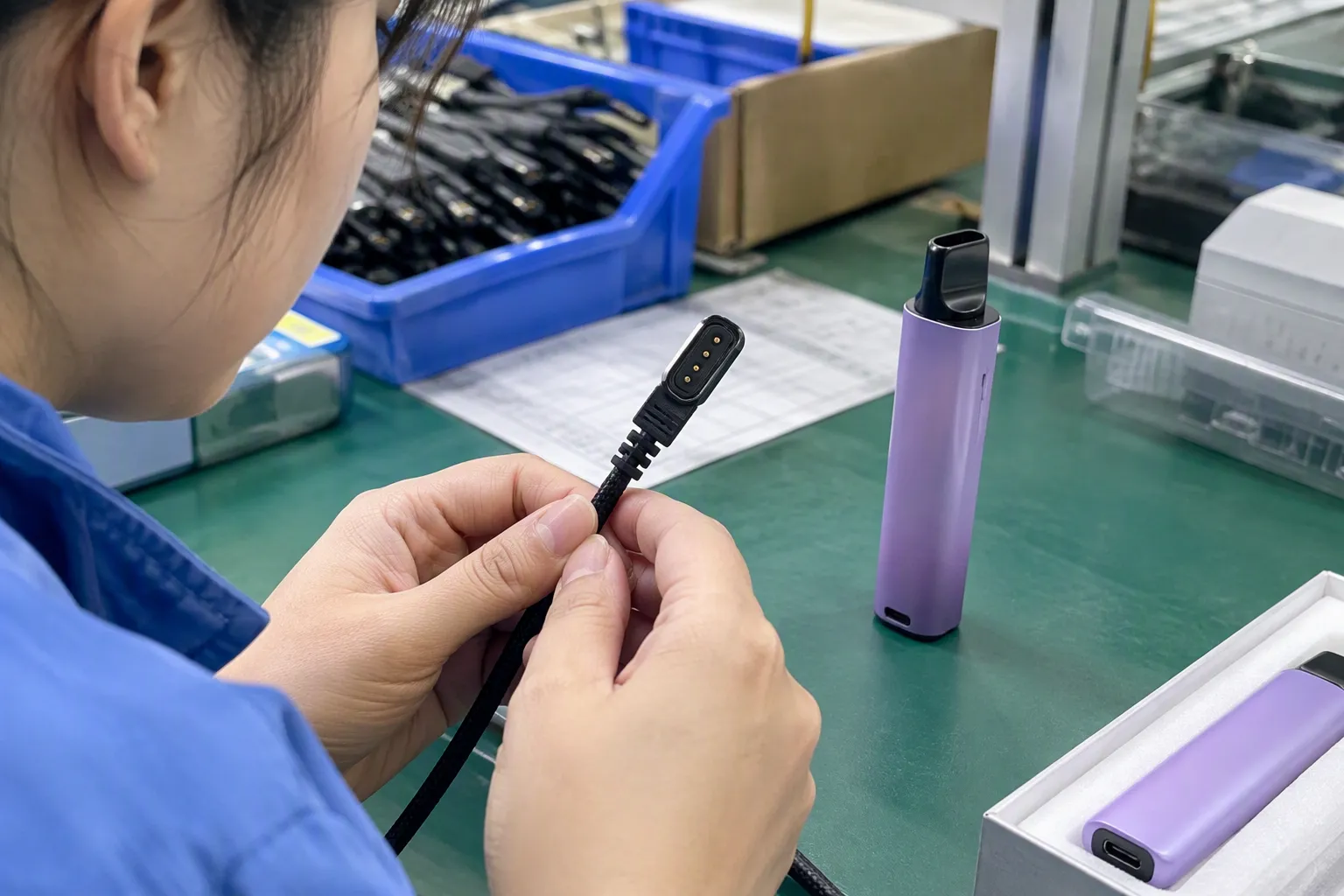
In our Shenzhen export work, I often see buyers ask whether a Type E connector means USB Type-C, a two-pin European plug, or a special charging port. Those questions are understandable. However, a correct answer requires more than looking at the two round pins. The grounding design and destination-market requirements matter.
Why Is a “Type E Connector” Not a Device Data or Charging Port?
When a product listing uses the term “connector,” buyers may assume it refers to a port on the charger, cable, earbud case, smartwatch, or another electronic device. That assumption can create a specification gap. A buyer may approve a USB-C charging interface while the supplier is actually discussing the wall plug fitted to the charger.
A Type E connector is not a device-side data or charging port because it describes an AC mains plug/socket format. USB-C, USB-A, Lightning, Micro-USB, and similar interfaces connect devices for charging or data transfer.[3] A Type E plug connects a power adapter or appliance to a compatible wall outlet, subject to grounding and electrical requirements.
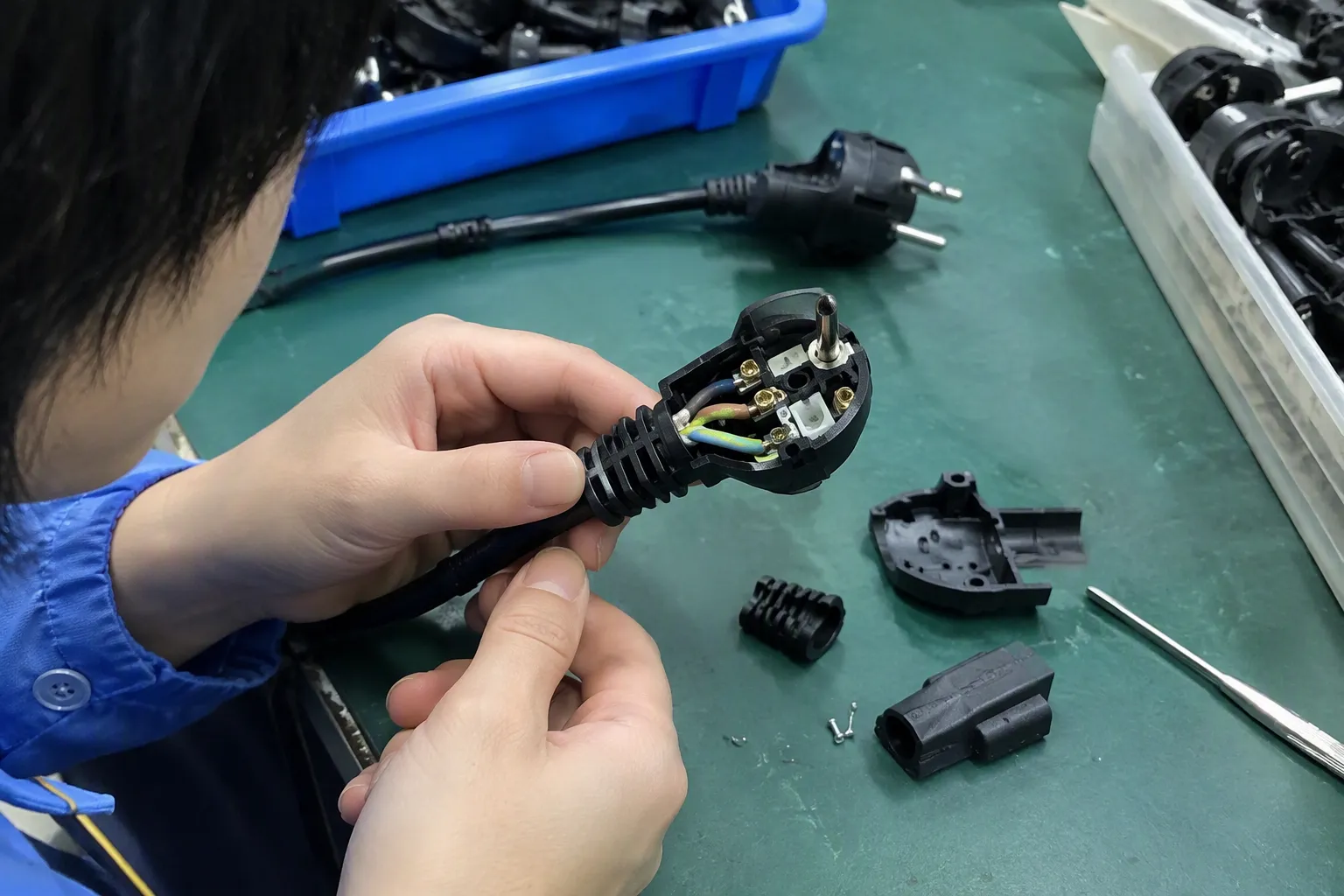
Start With the Correct Product Language
I recommend that buyers separate a charger’s specifications into two categories:
-
Input-side specifications
These describe how the charger receives mains electricity from the wall outlet. They include:- Plug type or plug version
- Input voltage range
- Frequency range
- Grounding design
- Input power rating
- Plug material and construction
- Applicable market labeling and documentation
-
Output-side specifications
These describe how the charger delivers power to a device. They include:- USB-A, USB-C, or other output ports
- Output voltage and current profiles
- Maximum output wattage
- Charging protocol support
- Cable compatibility
- Port count
- Device charging behavior
This distinction sounds basic, but it prevents many sourcing mistakes. A buyer might ask us, “Does this charger have a Type E connector?” In a specification-confirmation conversation, I would first clarify whether the buyer means the wall plug or the device charging port. These are different product features with different quality-control checks.
For example, a 65 W GaN charger can have:
| Product Feature | Example Specification | What It Means for the Buyer |
|---|---|---|
| Wall plug | Type E plug version | Determines whether the charger can physically connect to the intended outlet system |
| AC input | Manufacturer-stated input range | Must be reviewed against the target market and product documentation |
| Device output | USB-C output port | Determines which cables and devices can connect |
| Charging protocol | Manufacturer-stated supported protocols | Affects charging compatibility and performance |
| Grounding | Plug and socket design | Must be assessed for the actual plug construction and intended outlet system |
A Type E connector therefore belongs to the first category. It is part of the charger’s mains-input configuration. It does not tell the buyer whether the charger has USB-C, whether it supports a particular fast-charging protocol, or whether it will charge a laptop, phone, TWS earbud case, or smartwatch at the desired speed.
What Physically Defines a Type E Plug Arrangement?
The two round pins are often the first feature buyers notice. However, two round pins alone do not fully define a Type E plug version.[5] The grounding arrangement is the key physical decision point.
The Type E system is commonly associated with a socket that includes a protruding earth pin.[4] A compatible plug design generally includes an opening or provision that accommodates that socket-side grounding pin. This detail is important because buyers cannot reliably confirm Type E suitability from a front-view product image showing only two pins.
I suggest that buyers request clear images of:
- The front face of the plug
- The rear and side profile of the plug
- The grounding opening or contact arrangement
- The plug dimensions, when relevant
- The molded markings on the plug or adapter body
- The product label
- The retail package and plug-version label
A supplier photo may show a round-pin plug that appears “European,” but that description is too broad for purchasing approval. Some suppliers use informal wording such as “EU plug,” “Euro plug,” or “European plug.” These labels can be useful for early discussions, but they should not replace a confirmed plug drawing, approved sample, or complete product specification.
A plug shape is not a complete compatibility statement. The target outlet, grounding arrangement, rated use, documentation, and final product configuration all need review.
In our experience, this is especially relevant for online sellers and retail importers. A product title may say “EU plug,” while the product image, packaging, warehouse SKU, and shipped plug version are not aligned. That can cause customer complaints even when the electronic charger itself works correctly.
Why “European Plug” Is an Incomplete Specification
I do not recommend treating “European plug” as a precise technical requirement. Europe includes multiple plug and socket systems, local practices, product rules, and retailer expectations.[6] A Type E connector may be appropriate for a relevant market, but buyers should not assume that it works identically in every European outlet[7] or that every visually similar plug is interchangeable.
The safer approach is to define the order by destination and intended sales channel.
For each SKU, I recommend documenting:
- Destination country or countries
- Intended customer channel, such as retail, wholesale, or e-commerce
- Required plug version
- Grounding requirement
- Charger input rating stated by the manufacturer
- Product power rating
- Required labeling language
- Packaging requirements
- Applicable compliance documents to be reviewed
- Sample approval requirement
- Final inspection checkpoints
This process is not unnecessary paperwork. It gives the purchasing team, supplier, quality-control team, and warehouse team the same reference point.
For example, a buyer sourcing a TWS earbud charging set may only focus on the USB cable in the box. However, if the set includes an AC adapter, the plug version becomes a separate commercial and quality decision. If the buyer later changes from one destination market to another, the supplier may need to change the adapter plug, packaging artwork, carton marks, documentation set, or retail labeling.
A clear purchase order should not simply state:
- “EU charger required”
A stronger purchase order can state:
- “AC adapter: approved Type E plug configuration for the named destination market.”
- “Supplier to provide product photos showing the grounding arrangement.”
- “Supplier to provide manufacturer documentation for the specified electrical rating.”
- “Final sample must match approved plug version and packaging artwork.”
- “No plug substitution without written buyer approval.”
I have found that simple wording like this reduces misunderstandings. It also makes pre-shipment inspection more practical because the inspector has a defined plug version to verify.
How Buyers Should Confirm Type E Connector Compatibility Before Ordering
A Type E connector decision should happen before production, not after the goods reach the destination warehouse. Buyers should use a short but disciplined verification sequence.
1. Confirm the destination market and actual outlet system
The first question is not “Do you have an EU plug?” The first question is:
“Which destination market and outlet system is this SKU intended for?”
A retailer may sell into one country only. An e-commerce seller may ship across several countries from one fulfillment center. A wholesaler may distribute through multiple importers. Each model creates a different level of plug-version risk.
Buyers should also consider whether the product is for:
- Fixed domestic retail sale
- Cross-border online sale
- Hotel, travel, or promotional use
- Professional resale
- A bundled electronics set
- Replacement accessories
- Gift-box retail packaging
The more markets a single SKU serves, the more important it becomes to avoid vague “Europe-wide” plug claims.
2. Verify the actual plug construction
Ask for photos, drawings, and samples. I would not rely only on a sales quotation or a catalog image.
The supplier should identify the exact plug version used on the final product. The buyer should review the shape, pin arrangement, grounding provision, and molded body markings. If the product uses a detachable AC cable, then the cable-end plug and the power-supply input connection both require review.
For chargers with a built-in plug, inspect whether the plug is:
- Fixed
- Foldable
- Interchangeable
- Supplied with an adapter
- Packaged as a regional variant
Each design changes the quality-control approach. A foldable plug may need additional mechanical checks. An interchangeable plug system may need tighter SKU control so that the correct regional head is packed. A travel adapter should not be treated as identical to a dedicated Type E plug charger unless the buyer has evaluated that product configuration for the intended use.
3. Check electrical ratings against manufacturer documentation
A plug is not only a shape. The complete product must have an appropriate electrical design for its stated use. Buyers should ask the manufacturer or supplier for the relevant documents and product markings, then have qualified personnel assess whether they meet the requirements of the intended market and application.
The review should include:
| Review Area | Why It Matters |
|---|---|
| Input voltage and frequency range | The product must be suitable for its intended mains supply conditions[8] |
| Maximum input power | The plug and adapter design must align with the product’s stated load |
| Grounding design | The plug/socket arrangement must be consistent with the product configuration |
| Product label | Markings should match the approved product and destination-market plan |
| Instruction manual | Safety information and language requirements may affect retail readiness |
| Test reports or declarations | Buyers should verify that documents apply to the actual model and product version |
| Factory quality records | These can support consistency checks, but they do not replace market-specific evaluation |
I want to be careful here: we are experienced in export product communication and supplier coordination, but we are not an electrical laboratory or certification authority. We encourage buyers to verify applicable requirements with qualified compliance professionals, testing bodies, legal advisors, or local market specialists where needed.
4. Confirm certifications and compliance documents for the exact SKU
Buyers should never assume that a document for one charger automatically covers another charger with a different power rating, plug version, enclosure, cable, or internal design. Product documentation should match the actual model being purchased.
When I help organize product information for overseas buyers, I recommend checking:
- Model number
- Revision number, if used
- Rated input and output
- Plug version
- Product photos in the document set
- Manufacturer name and address details
- Test report scope
- Date and validity considerations
- Label and packaging references
- Destination-market applicability
A document may be authentic but still not be relevant to the exact product configuration. That is why buyers should compare the document details with the sample, specification sheet, and final purchase order.
5. Approve a sample before mass production
A physical sample remains one of the most useful sourcing controls. Photos can help, but a sample allows the buyer or a qualified local reviewer to assess the practical fit, finish, labeling, packaging, and overall presentation.
For a Type E connector version, the sample review can include:
- Plug fit in the intended outlet type, where appropriate and safely evaluated
- Grounding arrangement
- Charger body quality
- Pin alignment and molding quality
- Product markings
- Cable and port configuration
- Package plug-version identification
- Manual content
- Barcode and SKU accuracy
The sample should be retained as a golden sample. The buyer and supplier should both understand that the production order must match the approved version. If a component changes, the buyer should request a revised sample or documented change approval.
Common Type E Connector Sourcing Mistakes
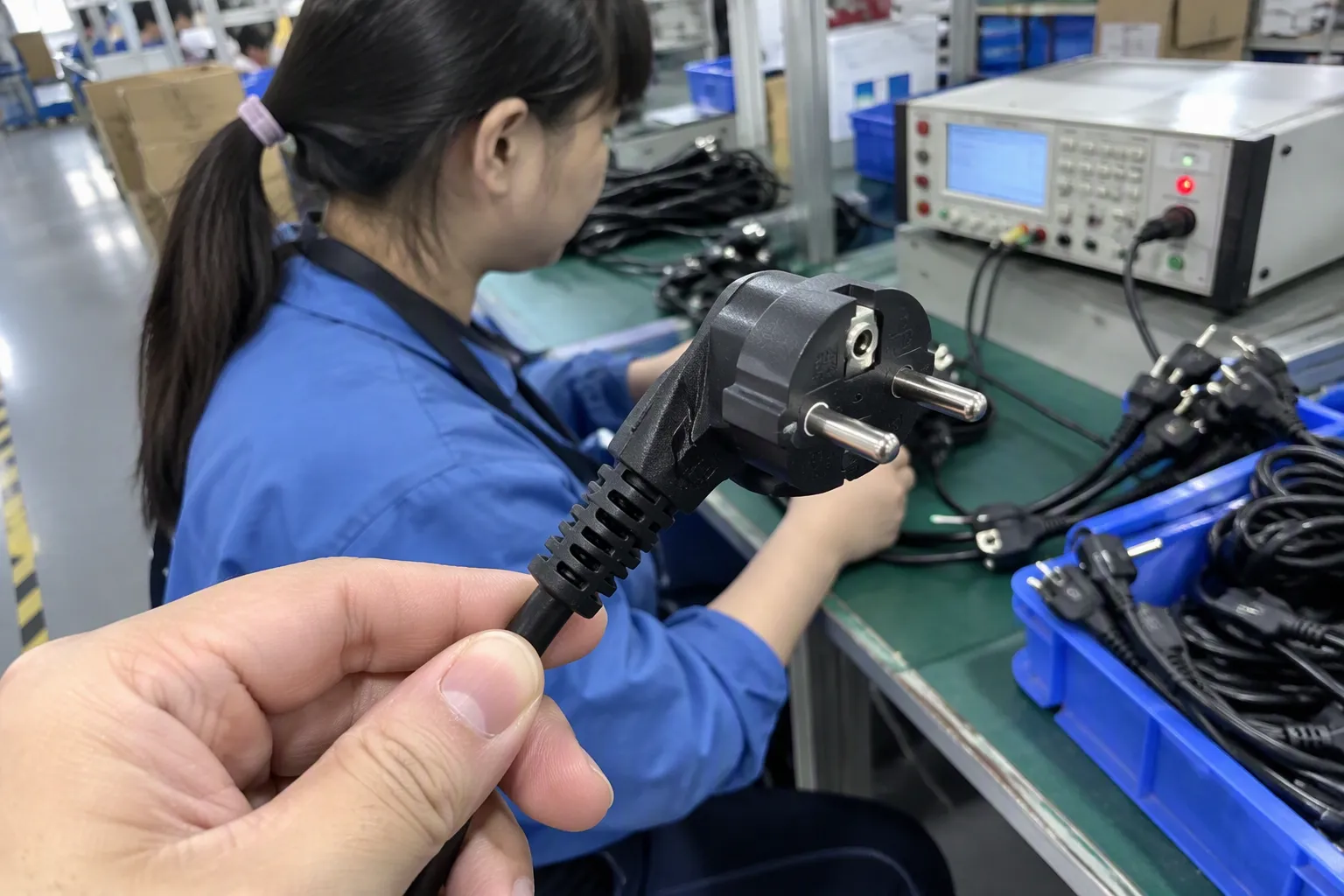
The most frequent mistakes are usually not complex engineering problems. They are communication problems.
Mistake 1: Using “Type E” and “USB-C” as if they mean the same thing
A buyer may need a USB-C charger with a Type E wall plug. That is a valid combination, but each part should be stated separately.
A clearer product request is:
- “65 W charger with USB-C output port and Type E AC plug version.”
This wording tells the supplier what the device-facing connection is and what the wall-facing connection is.
Mistake 2: Approving only a front-view image
A front-view image may show two round pins, but it may not show the grounding provision or the plug profile. Buyers should request multiple angles and, when the order value justifies it, a physical sample.
Mistake 3: Treating an “EU plug” label as a final specification
“EU plug” may be a commercial shorthand. It is not enough for a purchase order that needs a defined regional configuration. The buyer should name the required plug version and destination market.
Mistake 4: Ignoring packaging and warehouse SKU control
A correct Type E connector can still become a sales problem if the packaging says another plug version or if the warehouse picks mixed regional SKUs. Retailers and e-commerce sellers should use distinct SKU codes, carton marks, and product photos for each plug variant.
Mistake 5: Reviewing compliance papers after production
Documentation should be part of supplier evaluation and sample approval. If the buyer waits until production is complete, a mismatch may become expensive to correct.
A Practical Supplier Checklist for Type E Plug Products
Before confirming an order for chargers, GaN adapters, smart devices with power supplies, or bundled 3C accessories, I suggest sending suppliers a structured checklist.
| Checkpoint | Buyer Question |
|---|---|
| Destination | Which country or sales region is this product for? |
| Plug type | Is the quoted product specifically a Type E connector version? |
| Grounding | What is the plug’s grounding arrangement? |
| Product photos | Can the supplier provide front, rear, and side images? |
| Electrical label | Does the label match the quoted model and rating? |
| Documentation | Which manufacturer documents apply to this exact SKU? |
| Packaging | Does the box identify the correct plug version? |
| MOQ | What is the minimum order quantity for this plug variant? |
| Lead time | Does a regional plug version affect production timing? |
| Sample | Can the buyer approve a sample before mass production? |
| QC | Can the final inspection include plug-version and label checks? |
| Change control | Will the supplier obtain written approval before any plug substitution? |
This checklist is useful because it turns a vague product request into verifiable points. It also supports supplier comparison. Two suppliers may quote a similar charger at different prices, but the lower price may not include the same plug version, packaging control, documentation support, or sample process.
For importers, the best supplier is not always the supplier with the lowest unit price. A stronger choice may be the supplier that can clearly identify the product version, provide consistent production information, support inspection requirements, and communicate quickly when a specification question appears.
Frequently Asked Questions
Is a Type E connector the same as USB-C?
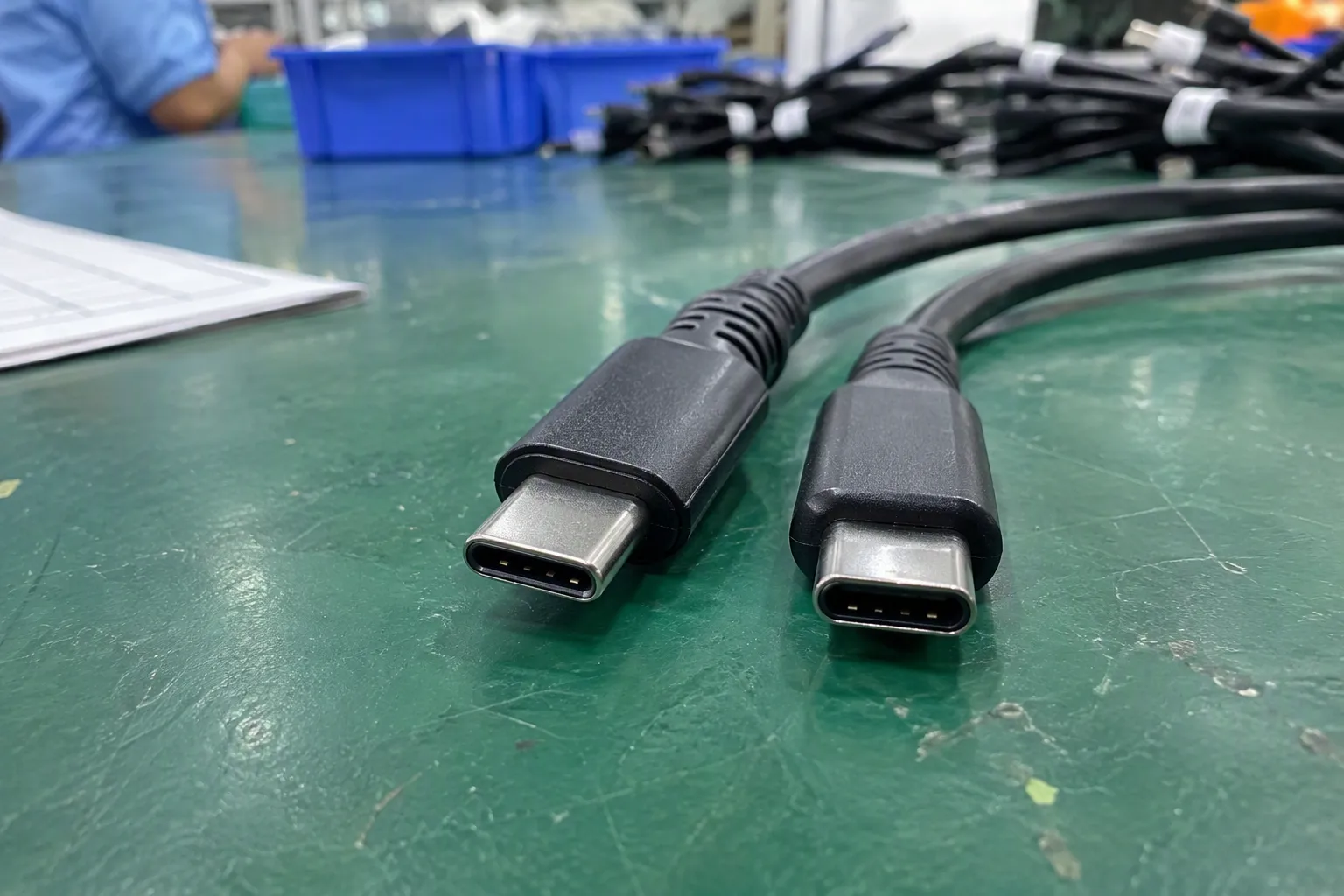
No. A Type E connector generally refers to a wall-power plug and socket arrangement, while USB-C is a device-side connection used for charging and data transfer. A charger can have both a Type E mains plug and one or more USB-C output ports.
Does a two-pin plug automatically mean it is a Type E plug?
No. Two round pins alone do not confirm Type E compatibility. The grounding arrangement, plug construction, intended socket system, and manufacturer specification should all be checked. Buyers should request detailed photos and an approved sample rather than relying on a front-view image.
Is a Type E connector a universal European plug?
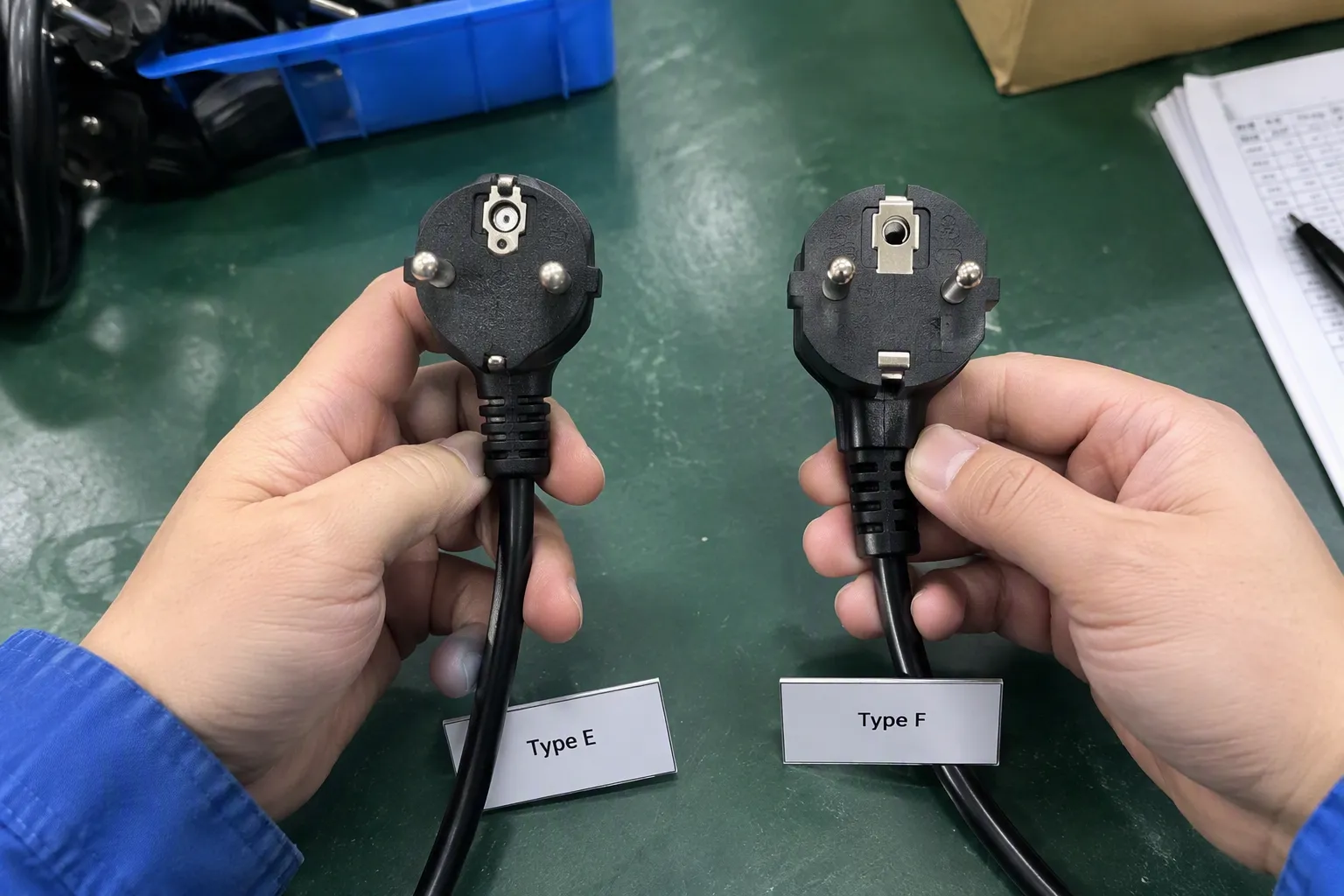
No. Buyers should not treat Type E as a universal European plug specification. European markets have different outlet systems and local requirements. The destination country, actual outlet type, product design, and applicable documentation should be verified before placing an order.
What should I ask a supplier before ordering a Type E charger?
Ask for the destination-market plug version, clear plug photos, grounding details, product label, electrical ratings, applicable manufacturer documentation, packaging artwork, MOQ, lead time, and a pre-production sample. You should also specify that no plug-version substitution is allowed without written approval.
Do I need to verify certifications for a Type E plug product?
Yes. Buyers should verify that any certifications, declarations, test reports, and labeling apply to the exact model, power rating, plug version, and intended market. A qualified compliance professional or relevant testing body should review application-specific requirements when necessary.
Conclusion
A Type E connector is a regional AC mains plug and socket compatibility term, not a USB or device charging port. For buyers sourcing chargers and other 3C products, the safest approach is to confirm the destination market, grounding design, electrical ratings, documentation, packaging, and approved sample before production. We support overseas buyers with clear regional SKU communication, plug-version confirmation, product sourcing, and quality-control coordination for chargers, cables, GaN adapters, TWS earbuds, smartwatches, and related 3C products.
Sources
- World plugs", References on national AC plug and socket systems describe Type E as the French-style mains configuration, characterized by round line and neutral pins and an earth-contact arrangement for connection to wall outlets
- Document Library", USB-IF documentation defines USB Type-C as a device interconnect supporting data and power delivery; this is categorically distinct from Type E, which is a mains plug-and-socket format
- USB Charger (USB Power Delivery)", USB specifications provide for data communication and power transfer over USB connections, while Apple technical documentation describes Lightning-equipped devices and accessories as supporting charging and data synchronization where implemented
- Power plug & outlet Type E", Technical descriptions of Type E identify a socket-side protruding earth pin, with compatible plugs incorporating a corresponding aperture or earth-contact provision
- Electrical Plugs: Types, Standards & Uses", Comparative references on AC plug systems show that round pins occur in more than one plug type; Type E identification additionally depends on its specific earthing arrangement and dimensional compatibility
- plugs sockets in Europe", Country-by-country mains-electricity references document the coexistence of several plug and socket systems across Europe, so the label “European plug” does not uniquely specify a physical configuration
- What is Type E & Type F Plug ? What is CEE7/7 Plug ?", References on European mains connectors distinguish Type E from other regional systems and explain that cross-compatibility depends on the particular plug and socket geometry, including earthing contacts
- Design Protocols Via IEC 61558 for Power Supplies", Electrical-safety frameworks for low-voltage equipment require equipment to be designed and assessed so that, when properly installed and maintained, it is safe under its intended operating and supply conditions