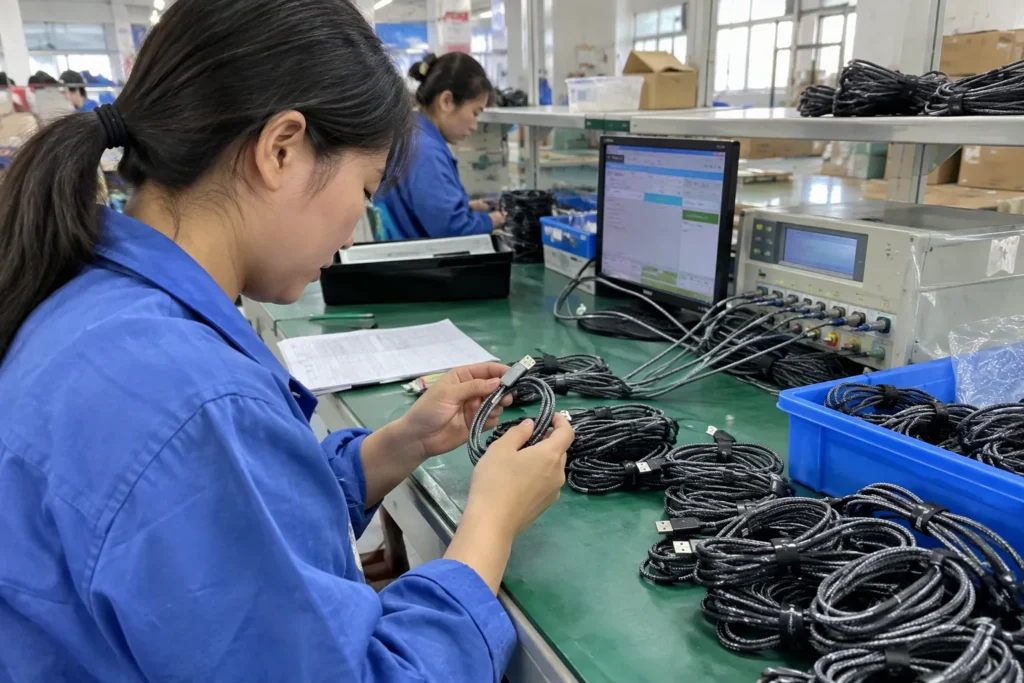
A braided USB Cable Manufacturer can help a private-label buyer create a more attractive product, but the braided covering alone does not solve the main sourcing risks. I often see buyers focus first on the fabric color and logo while overlooking the conductor, connector, testing, packaging, and batch consistency. A clearer specification and supplier review process can reduce complaints later.
Quick Answer
A reliable Braided USB Cable manufacturer should provide more than a decorative outer layer. I recommend that private-label buyers evaluate the complete cable construction, charging and data requirements, testing evidence, sample approval process, packaging, MOQ, lead time, and quality controls. Buyers should also confirm that every performance claim is supported by defined specifications or documented verification.
A braided cable can look premium on a retail shelf, but appearance does not prove electrical performance or long-term reliability. In this article, I explain how I would assess a supplier for a European or American private-label program, from the first quotation to production approval and shipment.
What Should Buyers Expect From a Braided USB Cable Manufacturer?
Many buyers begin with a simple request: “Please quote a durable braided USB cable with our logo.” That request is understandable, but it leaves too many technical and commercial questions unanswered. I have handled many USB cable inquiries where the first quotation changed significantly after the buyer clarified the connector, charging, data, packaging, and testing requirements.
A braided USB cable manufacturer should help convert a general product idea into a written specification. The supplier should explain which materials and construction options are available, which requirements need confirmation, and which claims require testing or professional review.
From appearance to a complete specification
Why the first quotation is not the final decision
A quotation can compare price, but it cannot independently prove that two cables are equivalent. Two products may both be described as “nylon braided USB-C cables,” while their internal conductors, connector materials, wire gauges, shielding, power capability, data rate, and test conditions differ.
- What are the connector types at both ends?
- Is the cable intended for charging, data transfer, or both?
- What power level does the buyer expect?
- Does the cable need to support a particular USB specification?
- What length and tolerance are required?
- What materials are used for the conductor, insulation, shield, and jacket?
- What packaging format does the retailer need?
- What is the proposed MOQ for custom branding and packaging?
- Which test reports or quality records are available for verification?
The USB Implementers Forum provides information about USB specifications and certification programs through its official website at usb.org. I would use that source when checking whether a proposed USB claim is precise enough. I would not treat a general supplier statement such as “supports fast charging” as a complete technical specification.
Does Braided Construction Prove Cable Durability?
Braided construction can improve the surface feel, appearance, and resistance to some forms of external wear[1], but it does not prove that a cable will perform reliably over time. I consider the braid one part of the construction rather than a durability certificate. The internal conductor, insulation, connector assembly, strain relief, and test method also affect practical service life.[2]
A cable should not be described as “durable,” “bend-resistant,” or “long-life” unless the supplier defines the basis for the claim.[3] That basis may include a documented test method, sample size, test conditions, acceptance criteria, and production records. Buyers should request evidence and arrange qualified evaluation where the application requires it.
The parts that influence reliability
| Cable area | Questions for the supplier | Why it matters |
|---|---|---|
| Outer braid | What fiber or textile is used? How is it fixed over the jacket? | It affects appearance, surface wear, and flexibility |
| Outer jacket | What polymer is used and what is its thickness or design basis? | It protects the internal structure |
| Conductors | What conductor material and construction are used? | It affects resistance, power delivery, heating, and data performance |
| Insulation | How are individual wires insulated? | It helps prevent short circuits and signal problems |
| Shielding | Is shielding included where applicable? | It can influence signal integrity and interference control |
| Connector | What materials and assembly method are used? | The connector is exposed to insertion, pulling, and bending forces |
| Strain relief | How does the connector transition into the cable? | This area often receives concentrated mechanical stress |
Bending and lifecycle testing
- What bending angle was used?
- What force or load was applied?
- What bend radius was used?
- What movement speed and frequency were used?
- Was the cable energized during the test?
- What counted as failure?
- How many samples were tested?
- Was the test performed on development samples or production samples?
A supplier may have internal testing, but I would request the relevant record rather than relying on a marketing description. If the cable is intended for demanding commercial use, I would also recommend independent or qualified professional testing. I am a sourcing and specification guide, not a laboratory, so I would not make an independent durability conclusion without documented evidence.
Common retail risk
A cable can look excellent when a buyer receives a sample. Problems may appear later if the connector loosens, the jacket separates near the plug, or the cable does not deliver the expected charging or data performance. Those issues can result in returns and poor reviews even when the braid remains visually intact.[4]
How Should Buyers Define Charging and Data Requirements?
A vague request for a “fast charging USB cable” creates avoidable confusion. Buyers should define the connector combination, intended devices, charging expectation, data requirement, and applicable specification before asking a braided USB cable manufacturer for a final quotation.
The correct cable depends on the complete system, including the charger, device, protocol, power source, and cable design.[5] I recommend that buyers use precise language and ask suppliers to identify what has been verified rather than accepting broad performance claims.
Separate the main performance questions
1. Connector configuration
2. Charging requirement
- What nominal voltage and current are expected?
- Does the product need to support a particular charging protocol?
- Does the cable need an electronically marked cable design?
- Is the requested power level suitable for the connector and cable construction?
- Does the supplier have test evidence for the stated performance?
The buyer should ask the supplier to distinguish between electrical capability, protocol compatibility, and marketing language. A cable may carry power without supporting every charging feature that a retailer associates with “fast charging.”[6]
3. Data requirement
The buyer should state whether the cable is for charging only or for charging and data. If data is required, the buyer should specify the expected data category or transfer performance and request verification. The phrase “data cable” is not sufficiently detailed for a private-label specification.[8]
A practical requirement template
| Requirement | Example buyer instruction |
|---|---|
| Cable type | USB-C to USB-C |
| Length | 1.0 m finished length, with stated tolerance |
| Main use | Smartphone and tablet charging, plus data transfer |
| Charging | State required power and protocol conditions for confirmation |
| Data | State required data performance or intended specification |
| Exterior | Woven braid, defined color, molded connector housing |
| Branding | Logo method, position, color, and artwork file |
| Packaging | Retail box, sleeve, or recyclable paper package |
| Testing | Supplier test records and agreed pre-shipment inspection |
| Commercial terms | MOQ, sample cost, production lead time, warranty process |
Claims that need careful wording
A retailer should make sure the product packaging matches the verified specification. Buyers may also need to consider applicable market requirements, packaging rules, and product safety obligations in each sales region. A supplier’s certification statement should be treated as a document to verify, not as a conclusion that the product automatically meets every legal requirement.
How Does Private Labeling Change the Supplier Evaluation?
Private labeling is more than adding a logo to an existing cable. It creates a specific product version that the buyer must be able to reorder consistently. I recommend evaluating whether the supplier can control the approved specification, packaging, artwork, production schedule, inspection process, and after-sales response.
A braided USB cable manufacturer may offer many customization options, but every extra option can affect MOQ, cost, lead time, and quality control. Buyers should decide which changes are commercially important before requesting a final offer.
What private-label buyers usually need to approve
- Product drawing or specification sheet
- Cable length and tolerance
- Connector appearance and dimensions
- Braid material and color reference
- Logo artwork and application method
- Packaging artwork and dimensions
- Label information and barcode details
- Carton packing information
- Inspection points and acceptance criteria
- Agreed sample and production approval records
This file helps prevent a common problem: the buyer approves a sample visually, but the production team receives incomplete instructions. A professional supplier should be able to explain how the approved version will be controlled during production.
Customization options and their commercial effect
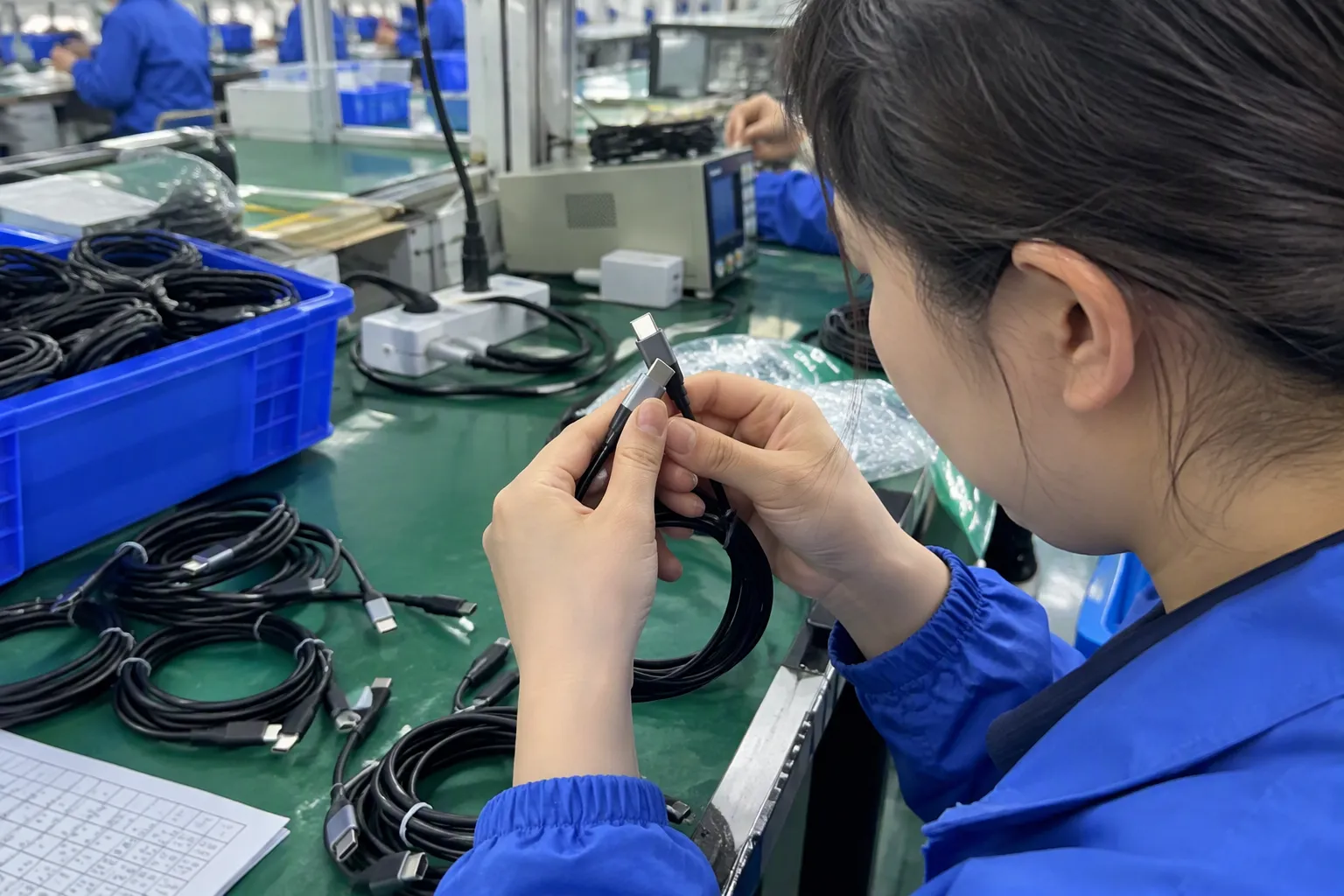
| Customization | Buyer benefit | Possible project effect |
|---|---|---|
| Braid color | Supports brand identity | May increase MOQ if the color is not standard |
| Connector housing | Creates a distinctive appearance | May require a new mold or tooling charge |
| Logo on housing | Improves brand visibility | Requires artwork approval and position control |
| Woven label | Adds retail identification | Adds a component and inspection point |
| Retail packaging | Supports shelf presentation | Requires artwork, proofing, and packaging MOQ |
| Cable length | Matches a specific use case | May change material cost and packing dimensions |
| Mixed color set | Creates a product range | May complicate production planning and carton packing |
I have found that buyers get clearer quotations when they separate must-have requirements from nice-to-have features. A custom connector mold may look attractive, but a retailer may gain more value from stable quality, realistic lead time, and clear packaging execution.
Sample approval is a control point
- Connector fit and finish
- Braid uniformity
- Cable length
- Logo position and color
- Packaging dimensions
- Printed claims
- Charging and data performance against the agreed requirement
- Basic visual and workmanship standards
The supplier should clarify whether the sample is made using the same materials and process intended for mass production. A handmade sample may not represent the final production method. If the sample differs from the production version, the buyer should document the differences and approve them deliberately.
MOQ and repeat orders
Private-label buyers should ask whether the MOQ applies per color, per connector design, per length, or per packaging version. A quoted MOQ of 1,000 pieces may actually become 1,000 pieces per color and per specification.
I recommend asking for a repeat-order process as well. The supplier should explain how it will identify the approved version, retain the artwork, and manage any material or component change. A buyer should request advance notice for changes that could affect performance, appearance, compliance documents, or packaging.
How Can Buyers Compare Braided Cable Manufacturers?
Price is important, but I would not compare suppliers by unit price alone. A lower quotation may exclude testing, packaging control, inspection, tooling, or the commercial support needed to complete the project. I recommend using a weighted evaluation that combines technical clarity, quality evidence, execution capability, and commercial fit.
A practical supplier scorecard
| Evaluation area | Questions I would ask | Suggested importance |
|---|---|---|
| Specification clarity | Can the supplier document materials and performance requirements? | High |
| Sample control | Can the supplier produce and identify an approved sample? | High |
| Testing evidence | Are test conditions and reports available for review? | High |
| Batch consistency | How are incoming materials and finished goods checked? | High |
| Customization | Can the supplier control logo, color, connector, and packaging changes? | Medium |
| MOQ and pricing | Does the commercial offer fit the buyer’s sales plan? | Medium |
| Lead time | Does the schedule include artwork, sampling, production, and inspection? | High |
| Communication | Can the supplier clarify technical and commercial questions? | Medium |
| After-sales process | Is there a documented way to handle defects or complaints? | High |
The percentages will vary by business. A chain-store program may assign more weight to consistency and documentation. An online seller testing a new product may place more weight on MOQ and packaging flexibility.
Documents buyers should verify
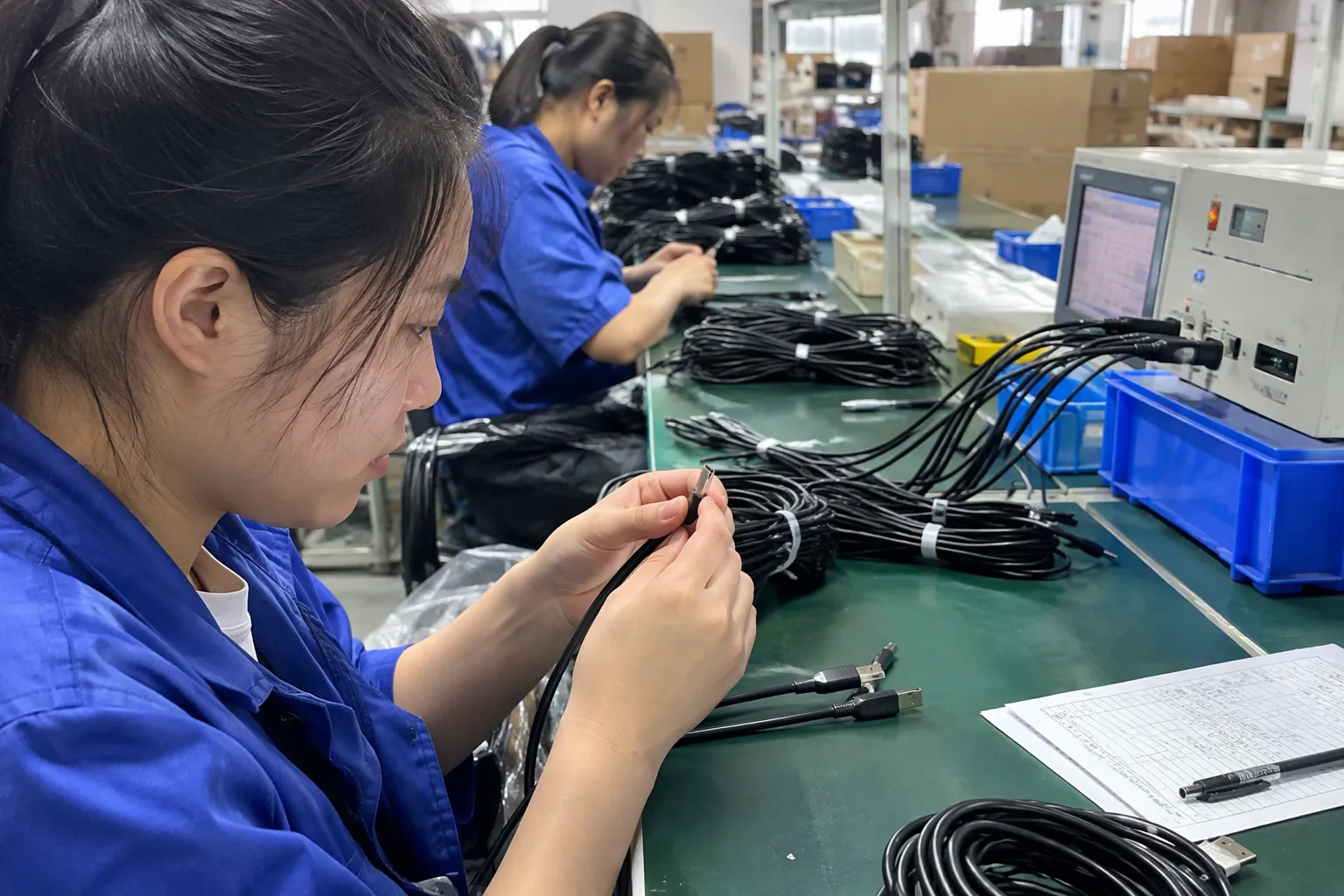
- Product specification sheet
- Material information
- Test reports
- Factory quality records
- Applicable declaration or compliance documentation
- Packaging and labeling information
- Inspection records
- Warranty or defect-handling terms
The buyer should verify the document holder, product scope, model number, dates, laboratory or issuing organization, and applicable market. A certificate for one model does not automatically cover every customized version. Buyers should also obtain qualified regulatory advice when the product or destination market creates specific obligations.
The European Commission’s Access2Markets portal provides trade and market information that can help businesses review import requirements. I would use official market resources alongside advice from a qualified compliance professional.
Supplier communication as a quality signal
I pay attention to how a supplier handles an unclear requirement. A responsible response may say, “We need to confirm the charging protocol and test basis before we promise that feature.” That answer is more useful than an immediate unsupported guarantee.
I also look for consistency between the quotation, sample, packaging artwork, and production documents. If each document uses different descriptions, the buyer should stop and reconcile them before placing an order.
How Should Buyers Control Production and Pre-Shipment Quality?
Even after a supplier passes the initial evaluation, the buyer still needs production controls. I recommend agreeing on inspection points before the purchase order is finalized. These controls help the buyer compare the shipped product with the approved sample and written specification.
A private-label cable program can fail through small inconsistencies. The cable may have the correct braid but the wrong logo position, mixed packaging, incorrect length, or a connector version that was never approved. Clear inspection criteria reduce ambiguity.
Suggested inspection categories
Packaging and identity
- Correct brand and model
- Correct barcode and labeling
- Correct language and market information
- Correct quantity per inner box and export carton
- No mixed versions in one carton unless specifically approved
Visual workmanship
- Braid coverage and color consistency
- Connector housing finish
- No obvious cracks, loose components, or sharp edges
- Logo position and print quality
- Cable length and appearance
- Consistent strain-relief molding
Functional checks
Documentation
The exact sampling plan should be agreed by the buyer, supplier, and qualified inspection provider. I would not invent an acceptance level or claim that one inspection method is suitable for every product program.
Production sample versus approval sample
The buyer should consider a production sample or first-article check when the project includes new tooling, special packaging, or a custom connector. This check can reveal differences between the development sample and the mass-production process.
I would compare the production sample with the approved reference in a controlled way. I would record differences instead of relying on memory or photographs. The buyer should also confirm whether any substitute component has been used. Substitution without approval can change the product’s appearance or performance.
Handling defects and returns
- How the buyer reports a defect
- What evidence the supplier needs
- How samples are retained
- How replacement or credit decisions are made
- Whether transport costs are included
- How repeated defects trigger corrective action
- How customer complaints are traced to a production batch
Which Commercial Terms Matter in a Private-Label Cable Program?
A technically suitable cable can still become a poor business decision if the MOQ, lead time, packaging cost, or after-sales terms do not fit the buyer’s sales model. I recommend reviewing commercial terms at the same time as technical specifications rather than waiting until the purchase order.
For European and American retailers, wholesalers, and e-commerce sellers, delivery reliability and repeat-order consistency often matter as much as the initial unit price. I use a total landed-cost view when comparing offers.
Questions to include in the quotation
- Product unit price
- Custom color cost
- Logo application cost
- Tooling or mold cost
- Sample fee
- Packaging cost
- Artwork or proofing cost
- Inspection cost
- Shipping terms
- Payment terms
- Replacement or warranty terms
| Project stage | What the buyer should confirm |
|---|---|
| Artwork review | Number of revisions included and approval method |
| Sample production | Sample quantity, sample lead time, and material basis |
| Tooling | Tooling ownership, timing, and reuse conditions |
| Raw material preparation | Whether special braid color or packaging is stocked |
| Mass production | Production days after final approval |
| Inspection | Inspection timing and access to records |
| Packing and dispatch | Carton completion and shipping readiness |
Total cost versus unit price
After-sales support
A written process is preferable to a general promise of “good after-sales service.” The buyer should keep samples, inspection records, and shipment information so that any complaint can be investigated efficiently.
What Is a Sensible Selection Process for a Braided USB Cable Manufacturer?
I recommend a staged process instead of choosing a supplier after one quotation. The process does not need to be complicated, but each stage should answer a different risk question. This approach helps buyers avoid approving an attractive product before understanding its limitations.
A braided USB cable manufacturer should be willing to work through clarification, sampling, verification, and production control. If the supplier resists basic documentation or cannot explain what it has tested, the buyer should treat that as a sourcing concern.
Stage 1: Define the commercial purpose
Stage 2: Issue the same brief to several suppliers
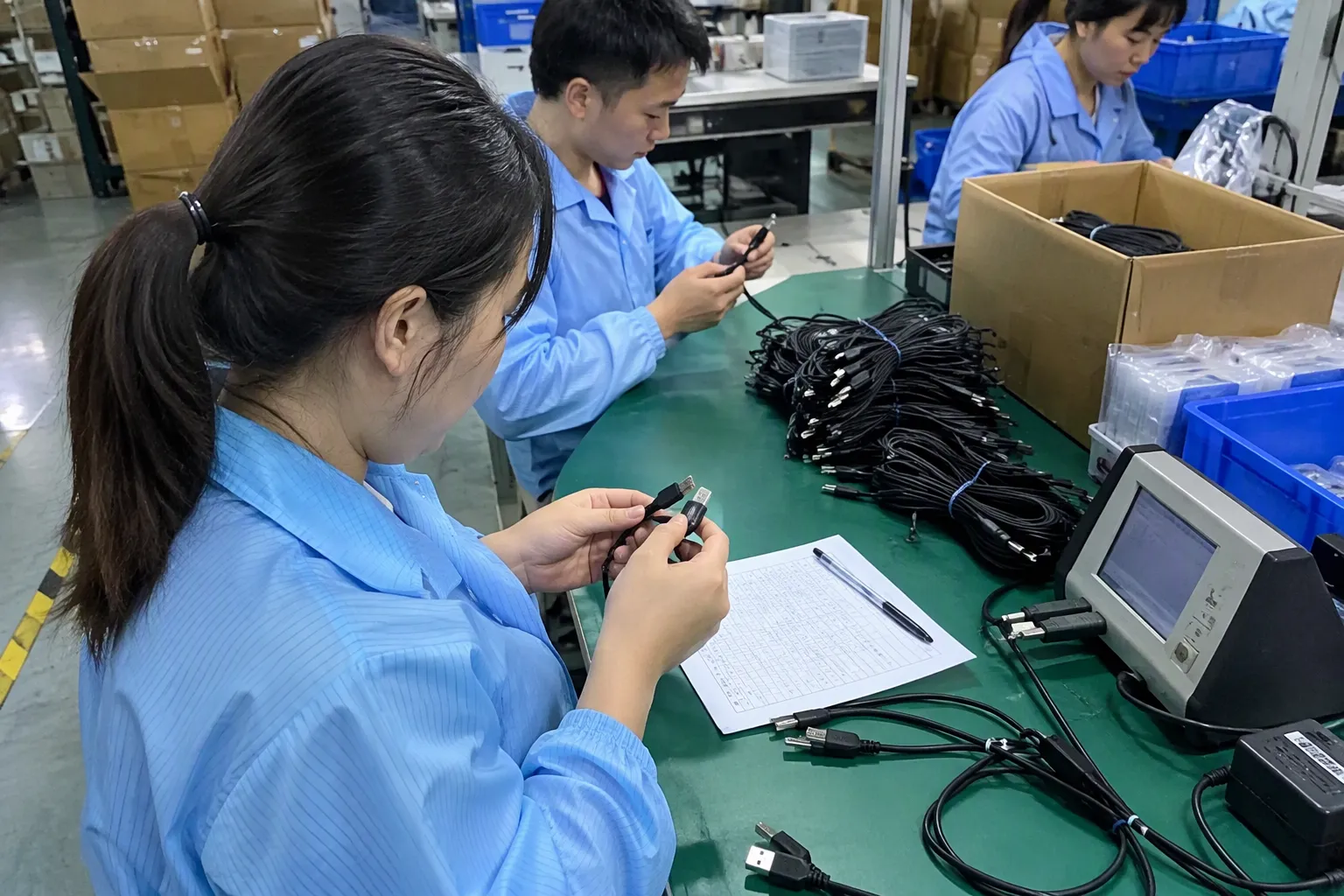
The buyer should send the same core requirement to each shortlisted supplier. This makes the replies easier to compare. The buyer can still invite alternative proposals, but the supplier should identify every deviation from the original brief.
Stage 3: Review samples critically
I would inspect the sample in normal use and compare it with the written requirement. I would not judge only the braid color or softness. I would also review connector fit, cable flexibility, logo execution, packaging, and the stated charging or data function.
Where the application carries material safety or performance risk, I would use a qualified testing organization or technical professional. The buyer should retain the test scope and report with the product file.
Stage 4: Approve the specification
The buyer should approve one controlled version. The approval should identify the model, revision, materials, connector design, packaging, and claims. The buyer should avoid approving a sample with a message such as “looks good” because that message leaves too much room for interpretation.
Stage 5: Monitor production and shipment
Stage 6: Review the first order
Frequently Asked Questions
Is a braided USB cable automatically more durable?
No. Braiding can provide a useful outer finish and may help with certain types of surface wear, but it does not prove the reliability of the conductor, insulation, connector, or strain relief. I recommend asking for defined test conditions and documented evidence before using durability claims in retail materials.
What should I ask a braided USB cable manufacturer before ordering?
I would ask about the complete construction, charging and data specifications, connector design, test methods, sample-production consistency, MOQ, lead time, packaging, inspection, and after-sales process. I would also request documents that identify the exact model and scope rather than accepting general certification or quality statements.
Does USB-C mean that a cable supports fast charging and high-speed data?
No. USB-C describes a connector family and does not, by itself, define every charging or data capability.[7] The buyer should specify the required power, protocol conditions, and data performance, then request product-specific verification from the supplier.
How can I reduce private-label cable returns?
I would reduce risk by approving a detailed specification, checking a representative sample, defining packaging and performance claims, inspecting production, and keeping a clear complaint process. I would also make sure retail descriptions do not promise more than the product’s documented capability.
Should I order a small trial quantity first?
A trial order can be useful when the product is new, the supplier is untested, or the sales forecast is uncertain. The buyer should still define the specification and quality expectations before the trial. A small order does not replace technical review, but it can limit commercial exposure before a larger launch.
Conclusion
Choosing a braided USB cable manufacturer requires more than comparing braid colors, logos, and unit prices. I recommend evaluating the full cable construction, charging and data requirements, test evidence, sample approval process, packaging, MOQ, lead time, and production controls. Buyers should treat certifications and performance claims as documents to verify, not automatic proof of suitability. I have helped clarify these questions for international 3C buyers, and I can support your team with specification review, sampling, private-label packaging, and supplier coordination for your next USB cable project.
Sources
- Abrasion resistance of two types of nonabsorbable braided ...", Research on braided textile coverings indicates that braid structure and fiber properties can affect resistance to external abrasion and mechanical wear
- A study of expected lifetime of XLPE insulation cables working ...", Reliability studies of flexible electrical assemblies identify conductor fatigue, insulation damage, connector transitions, and mechanical loading as factors that can contribute to service failure
- FTC Policy Statement Regarding Advertising Substantiation", Consumer-protection guidance generally requires objective performance claims to be supported by competent and reliable evidence appropriate to the claim
- The impact of online reviews in the presence of customer returns", Consumer research has associated perceived product failures with dissatisfaction, return behavior, and more negative post-purchase evaluations
- USB Charger (USB Power Delivery)", USB Power Delivery documentation describes charging capability as a negotiated interaction among the power source, sink device, cable characteristics, and applicable protocol rules
- USB Charger (USB Power Delivery)", USB technical documentation distinguishes a cable's ability to conduct power from its support for particular charging protocols, current ratings, and negotiated power modes
- Cables and Connectors", USB-IF documentation distinguishes the USB Type-C connector and cable specification from the separate USB data-transfer and power-delivery capabilities that a product may implement
- Signal integrity research of high-speed interconnection ... - PMC", USB documentation assigns cable and product capabilities through specific data-rate, signaling, and power requirements rather than through the generic description “data cable.”