When I help buyers compare a USB-C to USB-C cables manufacturer in China, I often see the same problem: the connector looks familiar, but the required performance is unclear. That confusion can lead to returns, complaints, and delayed launches. I reduce the risk by matching the cable specification, quality controls, customization, MOQ, and delivery plan to the real selling application.
Quick Answer
The best USB-C to USB-C cables manufacturer in China is not automatically the supplier with the lowest quotation. I recommend choosing a supplier that can document the required charging power, data performance, construction, testing process, packaging, MOQ, lead time, and after-sales plan. Buyers should approve a representative sample and verify applicable compliance documents before placing a larger order.
I have handled USB cable quotations and after-sales questions for European and American retailers, wholesalers, importers, and e-commerce sellers. In those conversations, the difficult part is rarely finding a cable with two USB-C connectors. The difficult part is defining what the cable must do consistently after it reaches the customer.
What Should I Check Before Contacting a USB-C Cables Manufacturer China?
A vague inquiry produces a vague quotation. If I ask only for a “good USB-C cable with a competitive price,” I may receive several offers that cannot be compared fairly. I first convert the intended use into a short, measurable purchasing brief.
Before I contact a USB-C cables manufacturer in China, I define the device type, cable length, charging requirement, data requirement, construction, target market, packaging, expected order volume, and delivery date. I also ask the supplier which specifications are documented, which are only requested options, and which require independent verification.
Start with the use case
The same USB-C to USB-C cable may be sold with a phone, tablet, laptop, power bank, charger, monitor, or car accessory. Each application can create a different commercial expectation.
- Higher power delivery capability
- Cable marking or identification requirements
- Connector and strain-relief durability
- Data transfer expectations
- Possible display or docking use
I do not assume that one product specification fits both cases. I ask the buyer to describe the devices that customers will connect. I also ask whether the cable will be included with another product or sold as a standalone accessory.
Build a purchasing specification
| Purchasing point | Question to answer |
|---|---|
| Connector | Is the cable USB-C to USB-C, and are both plugs required to support the intended use? |
| Length | Will the buyer sell 0.5 m, 1 m, 1.5 m, 2 m, or another length? |
| Charging | What power level does the target device and charger require? |
| Data | Is the cable intended for basic synchronization or a specified data rate? |
| Video | Does the application require display output or another alternate mode? |
| Construction | Is the priority flexibility, durability, compact size, appearance, or price? |
| Customization | Are logo, color, packaging, label, or molded parts required? |
| Quantity | What is the trial order and expected repeat volume? |
| Market | Which countries will receive the product? |
| Timing | When must the goods be ready for shipment? |
The buyer does not need to be an electrical engineer to prepare this information. The buyer does need to avoid leaving important claims open to interpretation. I can then ask the supplier for a product recommendation instead of comparing disconnected price sheets.
Ask for documents, not only descriptions
I treat phrases such as “fast charging,” “high speed,” and “premium quality” as starting points, not final specifications. I ask the supplier to provide a technical data sheet, sample information, packaging details, and available test or compliance documents.
The documents should match the proposed model. A general company certificate does not automatically prove that every cable specification or finished batch is suitable for the buyer’s application.[6] Buyers should review the scope, model references, issuing organization, dates, and test conditions. Where the product carries a regulated claim, the buyer should consider independent verification or qualified professional advice.
Does USB-C Define Charging and Data Performance?
Many first-time buyers assume that USB-C describes the complete performance of a cable. It does not. USB-C mainly describes the connector and interface family.[1] Two USB-C to USB-C cables can have different charging, data, construction, and identification characteristics.
USB-C alone does not define charging power, data speed, or video capability.[2] I recommend specifying each performance requirement separately and asking the USB-C to USB-C cables manufacturer in China to confirm the exact model, conditions, and supporting documentation.
Charging and power delivery
A cable used for charging has to be evaluated together with the charger, source device, receiving device, and any relevant power-delivery negotiation.[3] The cable is only one part of that system.
- The intended maximum charging power.
- The devices that will be connected.
- Whether the cable needs a specific identification component.
- Whether the cable must support a particular USB Power Delivery application.
- Whether the quoted performance applies to every length and construction.
- Whether the supplier can provide model-specific evidence.
A supplier may offer several versions that look almost identical. The internal design, conductor arrangement, identification, and component selection may differ. I therefore avoid treating the outer braid or connector shell as proof of charging performance.
Buyers can review the USB Implementers Forum information about USB Type-C and USB Power Delivery at usb.org. The official specifications are technical documents, so a buyer should use qualified technical support when an application has safety or system-level consequences.
Data transfer is a separate requirement
A cable described as suitable for fast charging may still be intended only for basic data use, or it may not be marketed for data at all.[4] I do not present fast charging as automatic evidence of high-speed data.
- The claimed data rate or data category
- The host and device conditions used for the claim
- Whether the result depends on cable length
- Whether the cable supports the required signaling arrangement
- Whether the specification applies to the complete production model
A seller should also consider how the claim will appear on the retail package. “Fast data” is unclear unless the seller can explain what it means. Clearer wording reduces customer confusion and makes product comparison easier.
Video and alternate modes require extra care
Some customers want a USB-C cable for a monitor, docking station, tablet, or laptop. In that situation, a standard charging cable may not be suitable. Display output can depend on the devices, ports, protocol support, cable construction, and system configuration.[5]
I ask the buyer to identify the exact source and display equipment before requesting a quotation. I also ask whether the supplier has a model specifically intended for that application. I do not recommend using a general charging cable as a substitute without confirmation.
| Cable positioning | Charging claim | Data claim | Video claim | Suitable sales message |
|---|---|---|---|---|
| Basic charging cable | State confirmed level | State only if confirmed | Do not imply | Everyday charging |
| Charging and synchronization cable | State confirmed level | State confirmed category | Do not imply unless tested | Charging and data transfer |
| Higher-performance cable | State confirmed level | State confirmed speed | Confirm separately | Device-specific performance |
| Display-oriented cable | Confirm system use | Confirm separately | Confirm with source and display | Application-specific connectivity |
How Can I Compare Cable Construction and Quality?
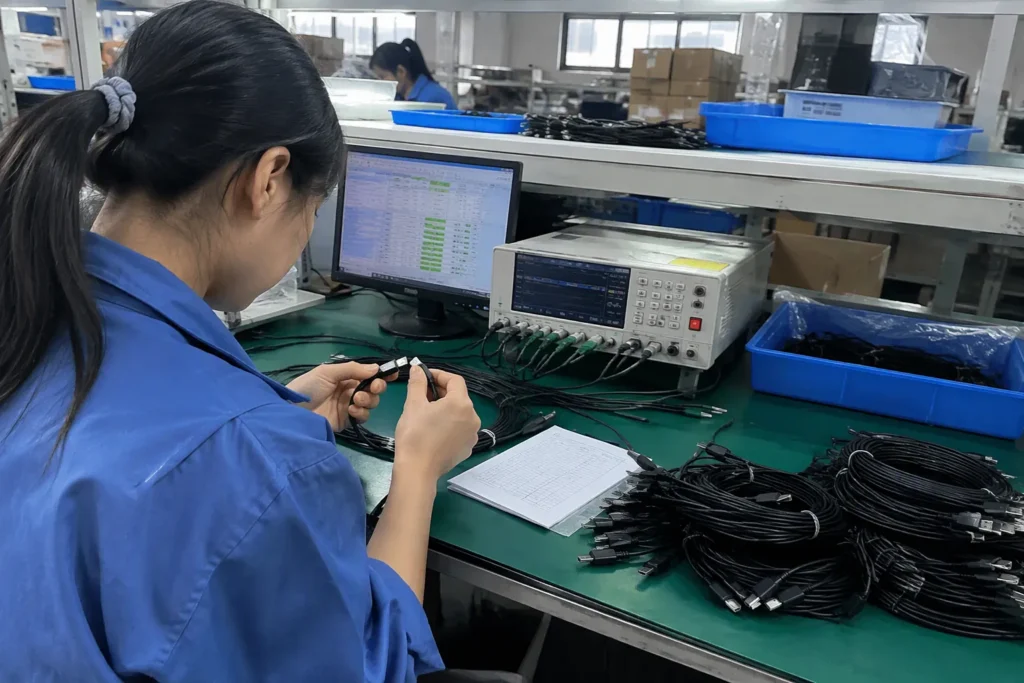
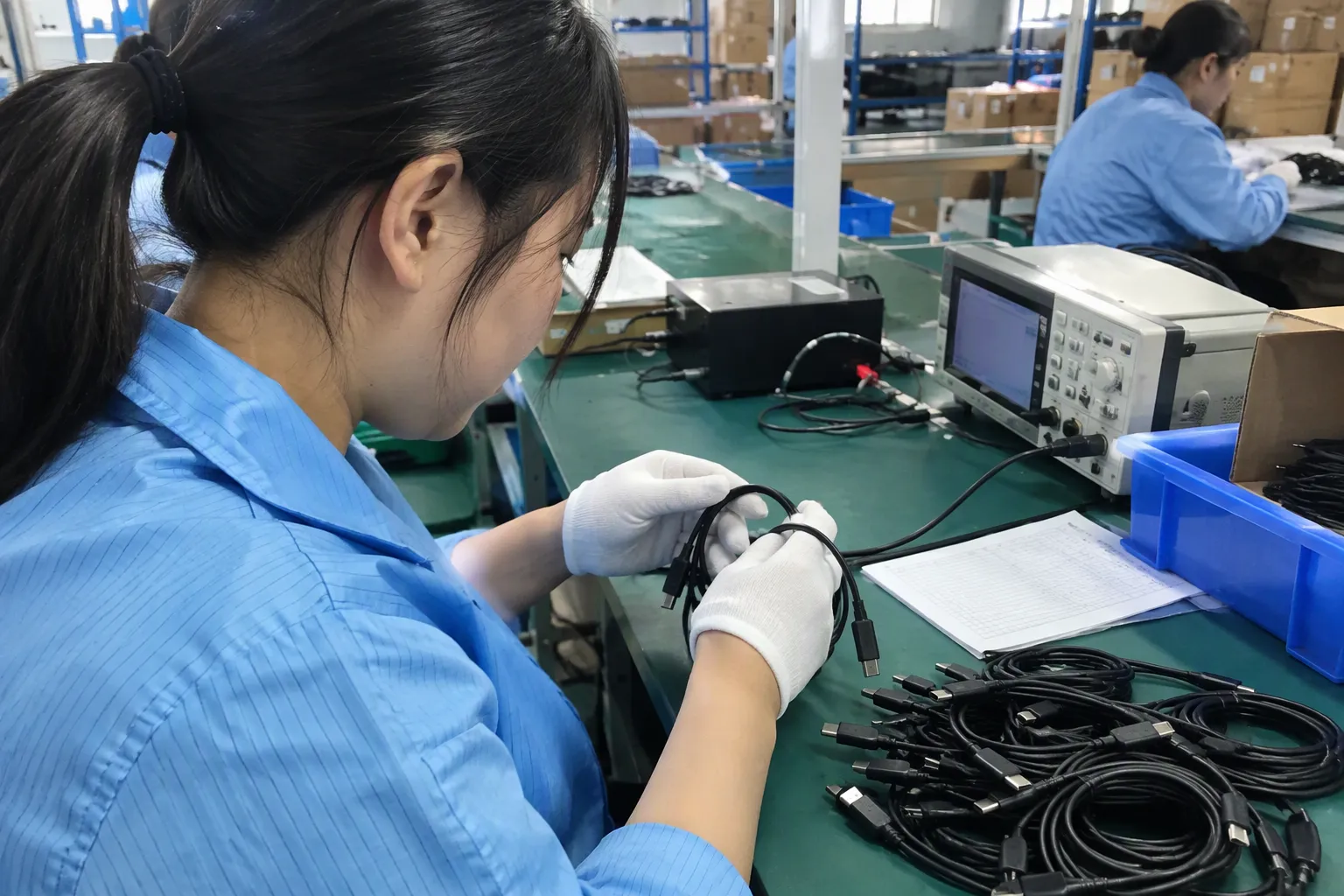
A low unit price can look attractive until the buyer calculates replacement cost, customer complaints, marketplace penalties, and lost shelf space. I compare the complete construction and quality-control plan rather than comparing only length and appearance.
To compare cable quality, I examine conductor and insulation information, connector assembly, shielding or reinforcement where relevant, strain relief, flexibility, batch consistency, packaging, and inspection records. I also match the construction to the target price point instead of assuming that the most expensive design is always necessary.
What affects the commercial result?
- Conductors and their arrangement
- Insulation and outer jacket
- Connector shell and contact assembly
- Internal identification components, where required
- Shielding or reinforcement, where relevant
- Strain relief at both ends
- Molding quality
- Braided, silicone, PVC, or other outer construction
- Label and packaging accuracy
I do not expect a sales quotation to include every factory detail immediately. I do expect the supplier to explain the important differences between product versions. If two models have a large price gap, I ask what creates that gap.
For example, a braided cable may have a different appearance and abrasion profile from a simple PVC cable. However, the braid alone does not prove higher charging power, faster data, or better batch consistency. The commercial decision depends on the intended customer and the evidence available for the complete model.
Sample approval should be specific
- Model code
- Color and length
- Connector appearance
- Logo position and finish
- Packaging version
- Printed performance claims
- Cable flexibility and basic visual quality
- Test requirements agreed with the supplier
- Any permitted tolerance or substitution rule
If a buyer approves one sample but leaves the model code unclear, the later purchase order may not identify the approved version accurately. I have seen this become an avoidable source of confusion during production communication.
Quality documents need context
It may not prove that every finished cable in a future shipment will have identical performance.[7] I recommend that buyers connect documents to the purchase order, approved sample, incoming inspection plan, and shipment inspection where the order value justifies it.
Plan for complaints before the first shipment
A supplier with a clear response process may be more valuable than one with a slightly lower price but poor communication. The final choice should consider total commercial risk.
Which USB-C Cable Specifications Should I Request?
Buyers often request a price before deciding which specification they need. That approach makes it difficult to compare proposals and can lead to a product that is technically unclear or commercially mispositioned.
I recommend requesting a structured specification sheet from the USB-C to USB-C cables manufacturer in China. The sheet should separate connector, length, charging, data, video, materials, customization, packaging, testing, MOQ, and delivery information.
A practical quotation template
| Item | Buyer requirement | Supplier response |
|---|---|---|
| Product code | Buyer-defined or supplier model | Confirm exact code |
| Cable type | USB-C to USB-C | Confirm |
| Length | Example: 1 m | Include tolerance if relevant |
| Power | Required application level | State conditions and evidence |
| Data | Basic or defined speed | State separately |
| Video | Required or not required | Confirm or exclude |
| Jacket | PVC, braid, silicone, or other | State material |
| Connector finish | Standard or customized | Provide drawing or photo |
| Color | Standard or Pantone target | Confirm available option |
| Logo | None, print, laser, or mold | Confirm method |
| Packaging | Polybag, box, blister, or custom | Confirm artwork process |
| MOQ | Trial and repeat quantity | State separately |
| Lead time | Sample and mass production | State from approval date |
| Documents | Available compliance and test files | List model scope |
| Warranty or remedy | Commercial arrangement | State in writing |
Consider total landed cost
- Product price
- Custom packaging
- Mold or tooling charges
- Sample and courier cost
- Inspection cost
- Freight and insurance
- Import taxes or duties
- Payment charges
- Warehouse handling
- Expected replacement or complaint cost
A lower-priced cable can become more expensive if the buyer receives inconsistent batches or must replace products in several countries.[8] I do not assign an invented failure rate to any supplier. Instead, I recommend that buyers use their own return data, inspection findings, and risk assumptions.
Do not over-specify without a market reason
Higher specifications can raise cost, packaging complexity, and customer expectations. A retailer selling a basic cable may not benefit from paying for features that its customers do not need. An e-commerce seller with a premium device bundle may need stronger documentation and more precise claims.
- Entry tier: Focus on dependable everyday charging and simple packaging.
- Mainstream tier: Add better construction, stronger presentation, and confirmed synchronization.
- Premium or application-specific tier: Define power, data, video, materials, and documentation in greater detail.
How Do I Evaluate a USB-C to USB-C Cables Manufacturer in China?
A supplier evaluation should cover execution as well as samples. A supplier may show a good sample but still struggle with communication, packaging control, production scheduling, or repeat consistency.
I evaluate a USB-C to USB-C cables manufacturer in China through sample quality, specification clarity, response speed, MOQ, lead time, customization ability, document availability, production communication, and after-sales handling. I then confirm the final requirements in writing before production.
Compare suppliers with a weighted checklist
| Evaluation area | Basic question | Suggested importance |
|---|---|---|
| Technical fit | Does the model match the use case? | High |
| Sample quality | Does the sample match the requested construction? | High |
| Specification control | Can the supplier identify the exact model? | High |
| Quality communication | Can the supplier explain inspection and corrective action? | High |
| Lead time | Can the supplier meet the launch schedule? | High |
| MOQ | Does the quantity suit a trial order? | Medium |
| Customization | Can the supplier support packaging and branding? | Medium |
| Documentation | Are relevant documents available for review? | Medium to high |
| Price | Is the offer competitive after comparing like for like? | Medium |
| After-sales | Is there a clear remedy process? | High |
Factory-direct is not the only question
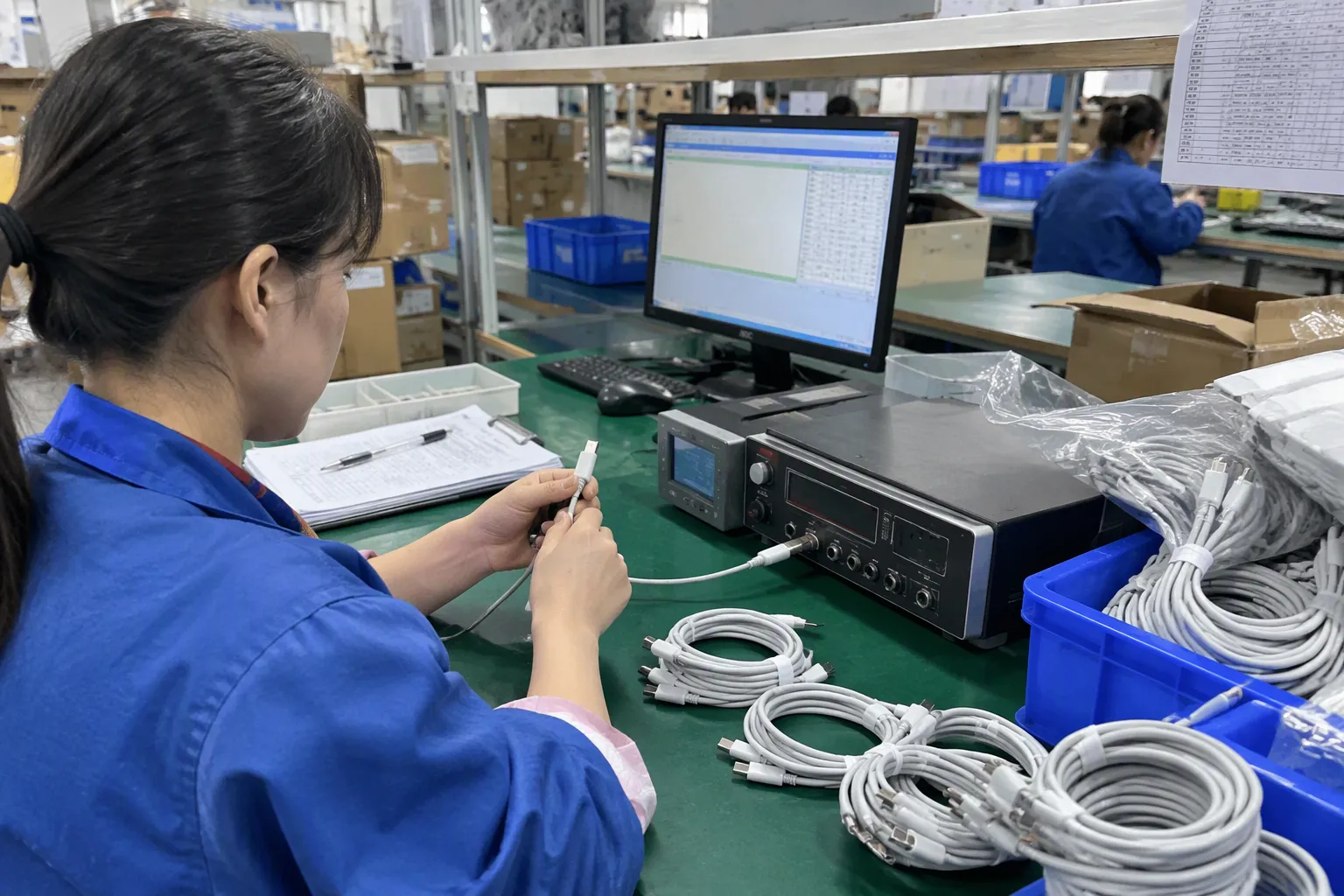
Some buyers ask whether a company is a factory or a trading company. That information can matter, but it does not answer every procurement question. A buyer still needs to know who controls the approved specification, who communicates with the production site, who manages inspection, and who handles after-sales issues.
A specialized export supplier may coordinate several product categories and offer useful support in packaging, shipping, and communication. A factory may have stronger control over a specific production process. The buyer should assess the actual supply arrangement and documented responsibilities rather than relying on a label.
In my own work, I focus on whether I can give the customer a clear answer, maintain the agreed product details, and follow up when a question appears after shipment. That practical execution often matters more than a simple “direct” claim.
Ask operational questions
- Who will approve the final specification?
- What happens if a component changes?
- How does the supplier notify buyers about changes?
- What is the sample lead time?
- What starts the mass-production lead time?
- Can the supplier support a small trial order?
- How does the supplier control custom packaging?
- What inspection takes place before shipment?
- What information appears on the carton and product label?
- How are performance complaints investigated?
Use a controlled purchase order
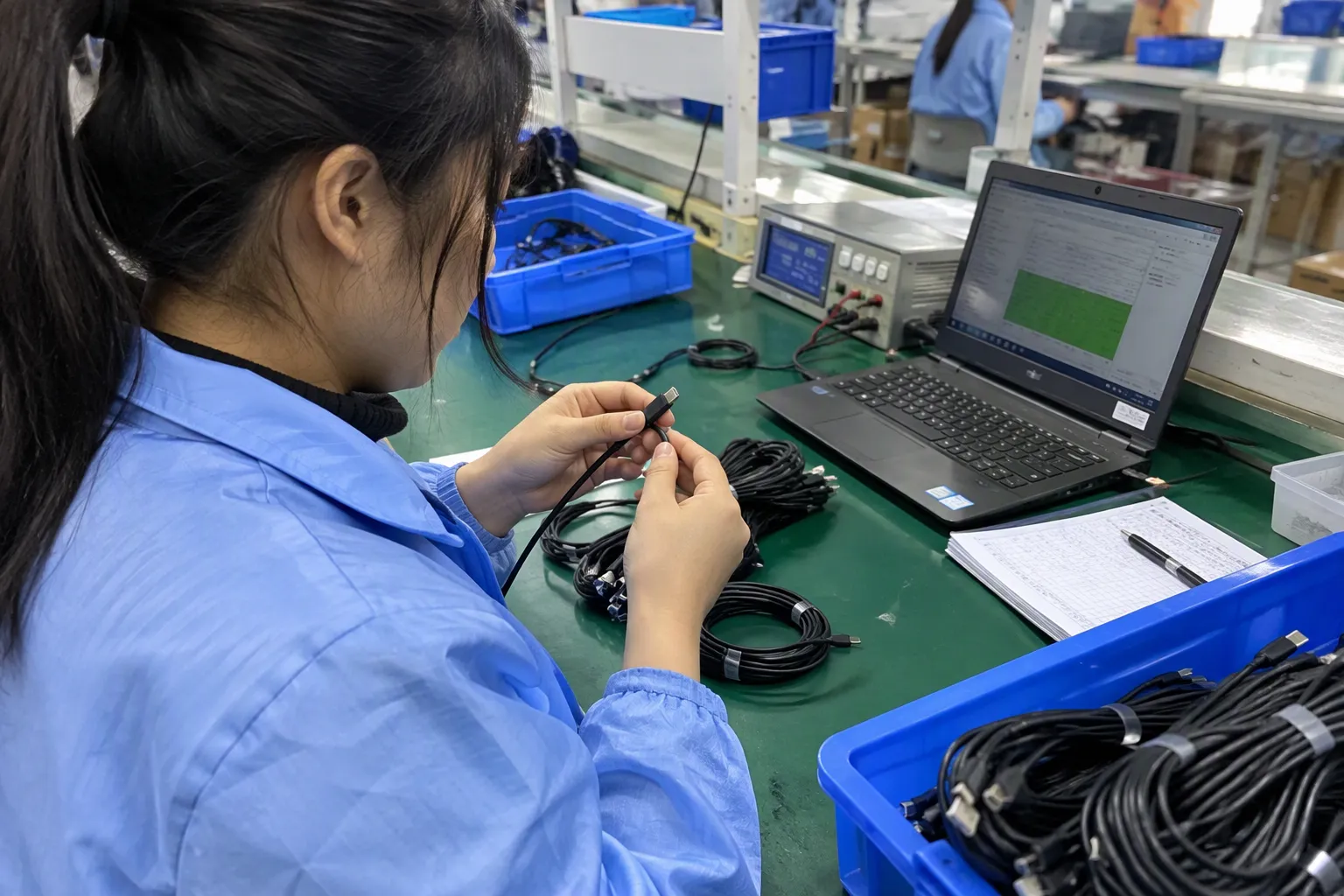
- Approved product code
- Final artwork
- Length and color
- Construction description
- Confirmed performance claims
- Packaging quantity
- Carton details
- Inspection requirements
- Shipping marks
- Delivery date or lead-time basis
- Remedy for nonconforming goods
I also ask the buyer to keep the approved sample or clear sample photos with the order file. This creates a practical reference if the parties later discuss a visible difference.
How Should I Manage MOQ, Customization, and Delivery?
MOQ and lead time can determine whether a product is commercially viable, especially for a new e-commerce listing or a retail test. Buyers also need to understand that customization can affect cost and timing even when the cable itself is a standard model.
I manage MOQ, customization, and delivery by separating sample, trial-order, and repeat-order requirements. I confirm artwork, tooling, packaging, production timing, inspection, and shipping arrangements before I promise a launch date to my customer.
MOQ is a commercial variable
- Standard cable and standard packaging
- Custom logo on an existing model
- Custom color
- Custom connector mold
- Custom retail box
- A new cable construction
- A special performance requirement
I ask for the MOQ by customization level. A buyer may accept a standard color for a trial order and move to a custom color after sales are proven. This staged approach can reduce inventory risk.
Custom packaging needs a timeline
- Confirming the product claims
- Preparing artwork
- Checking translations and market requirements
- Reviewing dielines
- Approving a digital proof
- Producing printed packaging
- Matching the packaging to the final product
- Completing packing and carton inspection
I encourage buyers to avoid printing broad technical claims before the cable specification is confirmed. A package that says “high-speed data” or “video support” creates a customer expectation that the seller must be able to support.
European buyers should also review the requirements that apply to their own product, packaging, environmental, and importer responsibilities. The European Commission’s common charger information is a useful starting point for understanding the broader USB-C policy context, but it does not replace product-specific legal advice.
Set realistic delivery dates
- Sample preparation time
- Artwork approval time
- Packaging production time
- Component preparation time
- Mass-production time
- Inspection time
- Export documentation time
- Transit time
The supplier should state when the lead-time clock starts. “Fifteen days delivery” can mean fifteen production days after deposit and artwork approval, not fifteen days from the first inquiry.
What Should I Verify Before Mass Production?
The final pre-production review is where I try to prevent small misunderstandings from becoming expensive inventory problems. Buyers should verify the commercial and technical details together.
Before mass production, I verify the approved sample, model code, performance claims, packaging artwork, quantity, inspection plan, documents, and delivery terms. I ask the USB-C to USB-C cables manufacturer in China to confirm any change from the quotation or sample in writing.
Use a pre-production approval list
- Product name and model code
- Cable length and tolerance
- Color and surface finish
- Connector appearance
- Logo method and position
- Jacket material and appearance
- Packaging text and barcode
- Master carton quantity
- Confirmed charging statement
- Confirmed data statement
- Video statement, if any
- Sample reference
- Production quantity
- Inspection timing
- Delivery destination
- Commercial remedy
Review claims carefully
- Measured or descriptive
- Applicable to the complete cable
- Applicable to the requested length
- Dependent on another device
- Supported by a test report
- Suitable for the intended retail market
If a document is available, I check whether it identifies the same model. I also check whether the test method and date are relevant. Buyers should verify regulatory obligations with qualified professionals, especially when selling across different jurisdictions.
Useful sources include the USB-IF compliance and certification information and the IEC webstore for applicable international standards. These sources help buyers understand official frameworks, but a link to a standard does not prove that a particular supplier’s product complies.
Arrange inspection according to risk
For a small trial order, a buyer may perform internal checks on quantity, packaging, visible defects, and basic function. For a large or customized order, the buyer may consider third-party inspection or a more formal quality plan.
I do not claim that one inspection plan suits every buyer. I recommend that buyers ask a qualified inspection provider or technical professional to define application-specific tests when the risk justifies the cost.
Frequently Asked Questions
Is every USB-C to USB-C cable the same?
No. USB-C describes the connector format, but cables can differ in charging capability, data performance, construction, identification, length, and intended use. I recommend comparing model-specific specifications instead of comparing connector type or outer appearance alone.
Can a fast-charging USB-C cable transfer data quickly?
Not automatically. Fast charging and high-speed data are separate claims. I ask the supplier to confirm both requirements independently and to provide supporting specifications or test evidence for the exact model being quoted.
What MOQ should I expect from a Chinese USB-C cable supplier?
MOQ depends on the model, color, packaging, logo method, and production arrangement. Standard items usually offer more flexibility than new molds or highly customized packaging. I ask suppliers for separate sample, trial-order, and repeat-order quantities.
Should I request certification documents?
You should request relevant documents and verify their scope, model reference, issuing organization, and validity. A certificate can support evaluation, but it does not automatically prove that every future batch is stable or suitable for every application.
How long does USB-C cable production take?
The timeline depends on sample approval, components, customization, packaging, order quantity, inspection, and shipping. I ask the supplier when the lead-time clock starts and request separate estimates for samples, packaging, mass production, and transit.
Conclusion
Choosing a USB-C to USB-C cables manufacturer in China requires more than comparing connector style and unit price. I recommend defining the real charging, data, video, construction, packaging, MOQ, and delivery requirements first. I then compare suppliers on technical fit, documentation, execution, quality communication, and after-sales support. If you are sourcing USB cables, chargers, GaN chargers, TWS earbuds, or smartwatches for the European or American market, contact me with your target specification and sales plan. I can help organize the supplier comparison and quotation process.
Sources
- Universal Serial Bus Type-C Cable and Connector ...", The USB Implementers Forum describes USB Type-C as a connector and cable specification whose supported functions depend on the applicable USB protocols and device implementation
- USB-C Cable Guide: Power, Data Speed, and Video", USB-IF technical documentation distinguishes the Type-C connector specification from the USB, USB Power Delivery, and alternate-mode capabilities that may be implemented through it
- USB PD Power Negotiations", USB Power Delivery specifications describe charging as a negotiated interaction between source and sink devices, with cable characteristics also affecting the permitted power configuration
- What Is USB-C (Type-C)? Advantages Explained & How to ...", USB-IF guidance treats cable power capability and data-transfer performance as distinct attributes, so a charging designation alone does not specify a cable's data rate
- What is USB-C DisplayPort (DP Alt Mode) and Why it Matters", VESA and USB-IF documentation indicate that video transmission over USB Type-C depends on compatible DisplayPort Alternate Mode implementations in the connected devices and the associated cable and configuration
- General Certificate of Conformity", Conformity-assessment guidance requires certificates and test reports to be interpreted within their stated scope, product identification, standards, and assessment conditions rather than as unrestricted evidence for all products or batches
- Testing and Labeling Pertaining to Product Certification", Quality-assurance literature distinguishes sample-based test evidence from demonstrated control of production variation across an entire manufacturing batch
- an interactive model of appraisal, prevention and failures", Quality-management research commonly separates purchase price from the downstream costs of internal and external failure, including returns, replacement, warranty handling, and customer complaints