Quick Answer
Locking USB connectors can solve a common industrial problem: a cable that disconnects when equipment moves, vibrates, or experiences accidental pulling. I often see buyers focus on the word “locking” and assume it proves overall durability. The better approach is to match the retention method, USB performance, environmental protection, and supplier evidence to the actual application.
Locking USB connectors help reduce accidental cable disconnection by adding a mechanical retention feature between the plug and receptacle.[1] They may suit equipment exposed to vibration, cable movement, or limited access.[2] However, a locking structure alone does not prove waterproofing, dust protection, shock resistance, service life, or industrial suitability.[3] Buyers should verify the complete specification and test documentation.
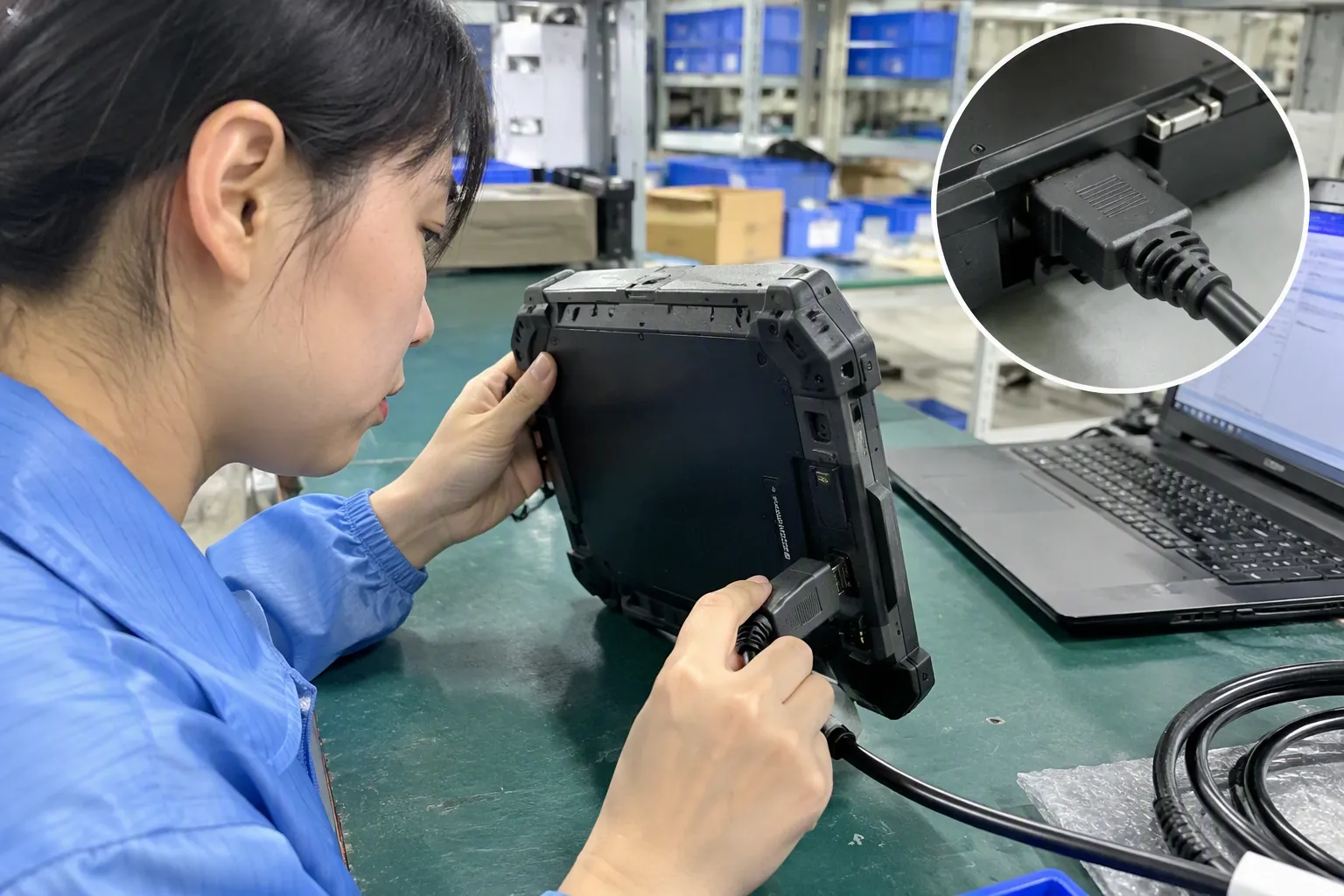
The key question is not simply whether a connector locks. I recommend asking what the locking feature must withstand, how often the connector will be mated, and which USB functions the equipment needs. These questions help purchasers avoid a product that looks suitable but does not match the port design or working environment.
Locking USB Connectors in Industrial Applications: What Do They Solve
A loose USB cable can interrupt data transfer, charging, maintenance, or device operation.[4] In a factory, control cabinet, inspection system, kiosk, or test station, even a short interruption can create extra troubleshooting work. I therefore treat mechanical retention as one part of a wider connector evaluation, not as a complete quality claim.
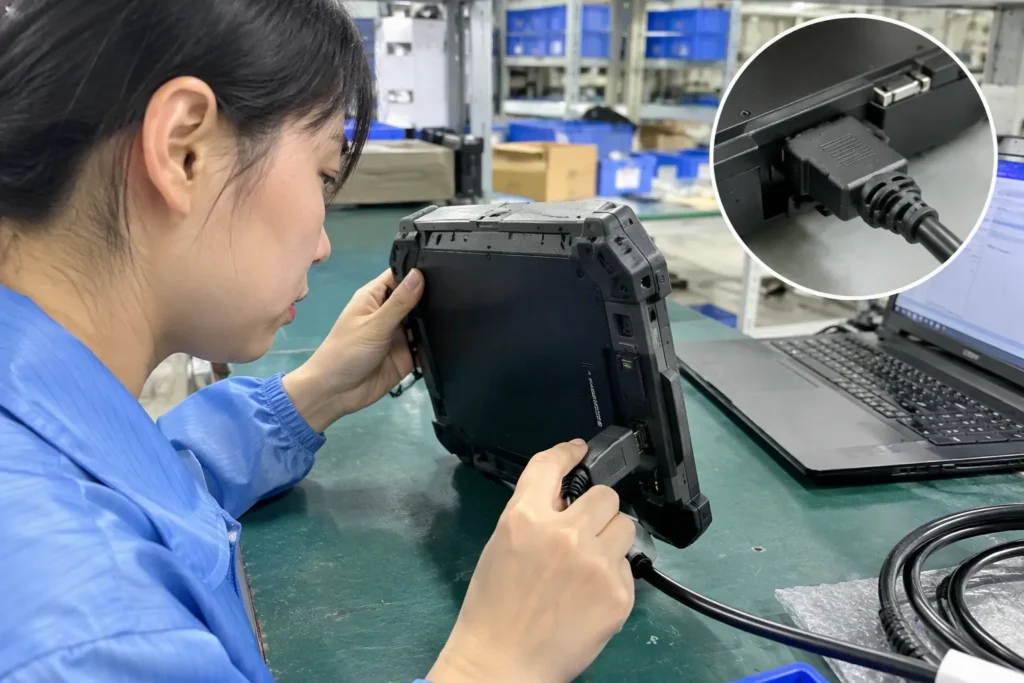
Locking USB connectors use a mechanical feature, such as a screw thread, latch, bayonet structure, or panel-retention design, to improve plug retention. They are useful when vibration, movement, cable pulling, or difficult access creates a disconnection risk. The correct design still depends on compatibility, electrical performance, environmental conditions, and documented testing.
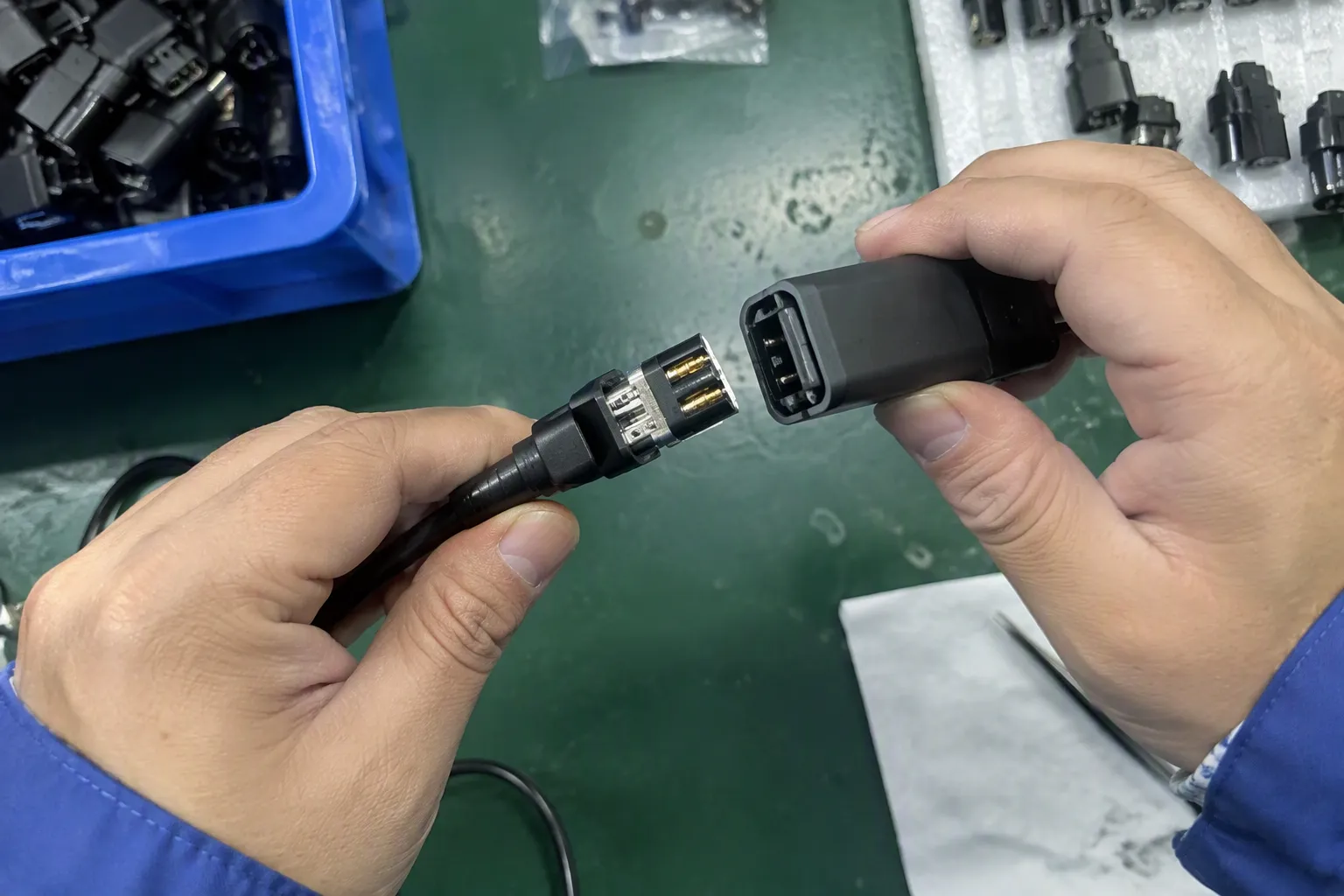
What does the locking mechanism actually do?
A standard USB connection normally depends on the friction and geometry between the plug and receptacle.[5] That arrangement works well for many office, consumer, and light commercial products. It may be less suitable when the cable is repeatedly pulled, moved, or exposed to vibration.
A locking design adds another retention method. Depending on the product, that method may include:
- Threaded locking: The plug or cable assembly uses screws that engage with a matching receptacle.
- Latch retention: A spring-loaded latch engages with a compatible housing.
- Bayonet or twist-lock retention: The user inserts and rotates the plug to secure it.
- Panel-mount retention: The receptacle is fixed securely to equipment, reducing movement at the port.
- Screw-lock cable construction: The cable includes fastening hardware that must match the port exactly.
These systems do not all provide the same holding force or user experience. A threaded connector may provide a more deliberate connection, but it can take longer to install and remove. A latch may support faster maintenance, but it requires a compatible locking profile and sufficient clearance.
I ask suppliers to identify the locking method clearly in the product drawing. A product title such as “secure USB cable” does not tell me whether the plug locks to the receptacle, whether the receptacle locks to the panel, or whether the cable only has stronger strain relief.
Mechanical retention is not the same as protection
This distinction causes many purchasing misunderstandings. A connector may resist accidental unplugging while still having an open or unsealed interface. The following features address different risks:
| Requirement | Feature that may address it | What buyers should verify |
|---|---|---|
| Accidental disconnection | Thread, latch, bayonet, or retention clip | Mating design, holding method, and compatible parts |
| Water or moisture exposure | Sealing gasket, overmold, sealed housing, rated interface | Ingress protection rating and test conditions |
| Dust exposure | Sealed interface and appropriate housing | Stated dust rating and test evidence |
| Cable bending | Strain relief and suitable cable jacket | Bend radius, construction, and application guidance |
| Vibration | Mechanical retention plus suitable mounting and cable support | Vibration test method and installation conditions |
| Electrical noise | Shielding, grounding, and appropriate cable construction | Shielding design and system-level evaluation |
| Long service life | Material selection, contact design, and cycle testing | Mating-cycle data and test report |
I do not describe a connector as waterproof only because it has a threaded shell. I also avoid calling a product shock-resistant or industrial-grade unless the manufacturer provides a relevant rating, standard, or test result. Buyers should treat certification files and test reports as documents to verify, not as substitutes for application engineering.
Which application conditions matter most?
I usually start with the equipment rather than the connector catalogue. The same USB interface can face very different conditions in a fixed control panel, a mobile diagnostic instrument, and a warehouse scanning station.
Important questions include:
-
Will the equipment vibrate?
Continuous vibration can place stress on the plug, receptacle, cable, and panel.[6] A locking mechanism may improve retention, but the whole assembly still needs suitable mounting and cable support. -
Can someone pull or trip over the cable?
A locking connection may reduce accidental unplugging, but it may also transfer force into the receptacle or equipment panel. Strain relief and cable routing remain important. -
How often will operators mate and unmate the cable?
A service port used several times each day has different needs from a cable installed once during production. -
Is there enough installation space?
A screw-lock design may need room for a tool, fingers, or rotating hardware. A short panel depth may limit the available options. -
Who will perform maintenance?
A complex locking system may slow replacement if operators need quick access. A simple latch may be more practical when maintenance frequency is high. -
What does the equipment actually require electrically?
USB version, data rate, power delivery, current, shielding, and cable length should be confirmed separately from mechanical retention.
USB speed and current still matter
A connector can fit mechanically and still fail the electrical requirement. I recommend confirming the complete signal and power path, including the connector, cable, receptacle, host device, and peripheral.
For example, a buyer may request a USB-C locking cable because the equipment uses a USB-C port. That request is not enough by itself. The buyer may also need to confirm:
- USB 2.0, USB 3.x, or another supported protocol
- Required data-transfer rate
- Charging or power-delivery requirements
- Maximum current and voltage
- Cable length and signal integrity
- Reversible plug orientation
- Alternate-mode requirements, if applicable
- Shielding and grounding arrangement
- Compatibility with the equipment’s existing receptacle
A locking USB cable cannot create a higher USB performance level than the connected system supports.[7] It also cannot guarantee power delivery if the host, cable, and device do not negotiate or support the required profile.[8]
I have seen product inquiries that list only “USB-C, fast charging, industrial.” I would ask for the exact electrical requirement before recommending a format. A distributor may also need this information to avoid writing a product description that overpromises performance.
Compatibility includes the mating component
A locking plug usually needs a matching receptacle. A standard USB port may accept the electrical plug but not provide the mechanical structure required for locking. This point is especially important when a buyer wants to upgrade an existing product without changing the equipment enclosure.
I suggest checking these items together:
- Plug and receptacle type
- Connector gender and orientation
- Locking thread or latch dimensions
- Keying and alignment features
- Panel cutout
- Mounting method
- Rear clearance
- Screw spacing, if applicable
- Contact arrangement
- Cable exit direction
- Dust cap or protective cover compatibility
A drawing with tolerances is more useful than a catalogue photograph. I ask suppliers for dimensional drawings in PDF or CAD format when the connector must fit a custom housing. I also ask whether the listed dimensions describe the connector body, the mounting flange, or the full cable assembly.
Does a locking USB connector provide waterproofing?
No. A mechanical lock and an environmental seal perform different functions. A threaded connection may hold the plug in place, but moisture can still enter through the mating interface, cable entry, or rear termination unless the product includes a suitable sealing design.
If the application involves water, cleaning spray, condensation, outdoor exposure, or fine dust, I recommend requesting:
- The stated IP rating, if one applies
- The exact test standard and test conditions
- Whether the rating covers the mated connector only
- Whether the cable entry is included in the rating
- Whether a protective cap is required when unmated
- The operating temperature range
- Evidence for salt spray, humidity, or chemical exposure, if relevant
The rating may apply only to a specific configuration. A connector with a sealed receptacle may not retain the same protection after a different cable is fitted. Buyers should also confirm whether the equipment enclosure, mounting panel, and cable gland preserve the intended protection level.
How should buyers compare common locking styles?
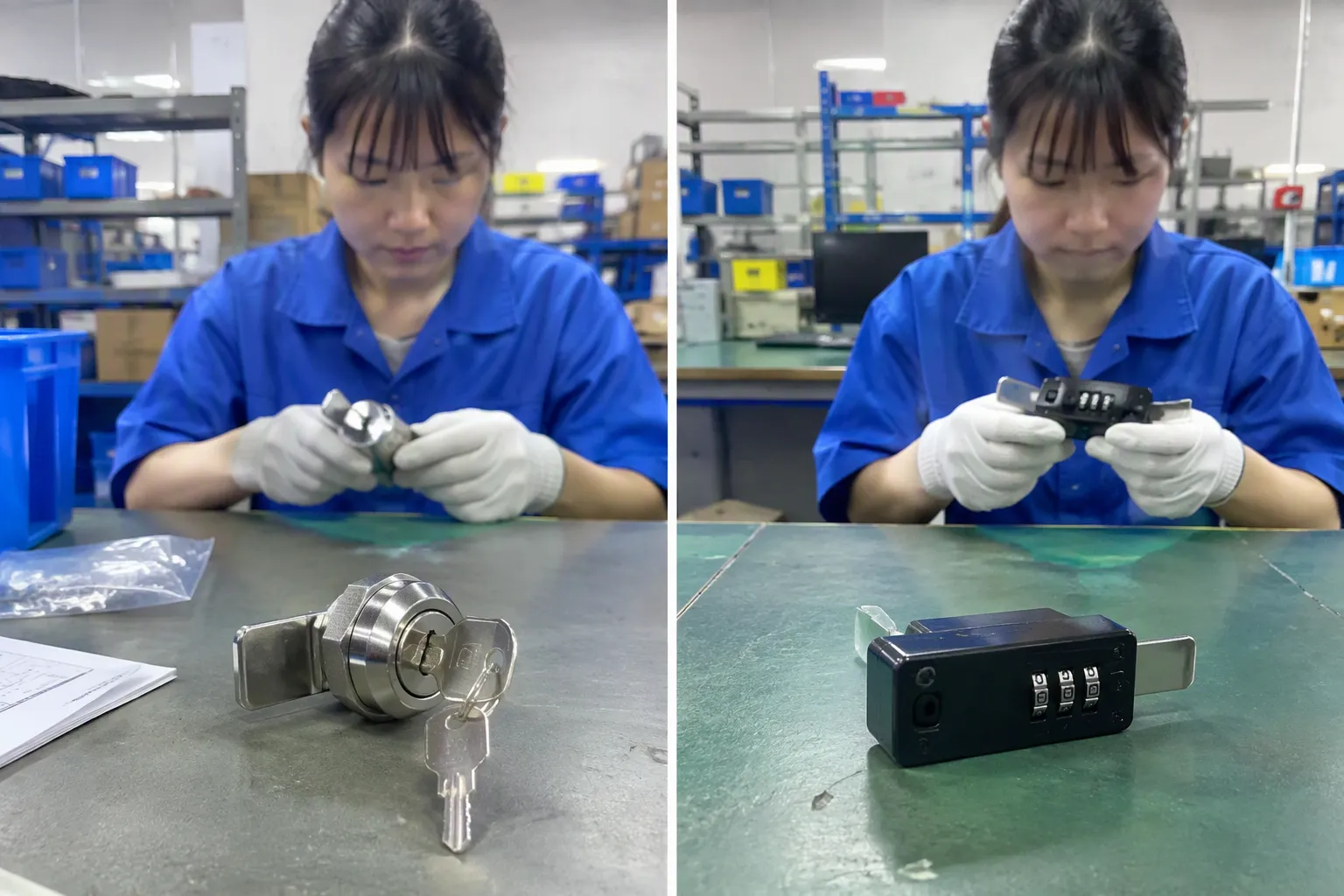
No single locking structure suits every installation. I use the following comparison as an initial procurement guide, not as a substitute for engineering review.
| Locking style | Possible advantages | Possible limitations | Suitable questions |
|---|---|---|---|
| Threaded | Deliberate retention and clear engagement | Slower mating; needs space and matching thread | Can operators access and tighten it correctly? |
| Latch | Faster connection and release | May need precise alignment; latch can be exposed | Is the latch protected from impact or snagging? |
| Bayonet or twist-lock | Quick quarter-turn style operation | Requires compatible interface and orientation | Does the enclosure allow rotation? |
| Panel-mount receptacle | Can improve port stability | Does not automatically secure the cable plug | Does the plug have a matching retention feature? |
| Retention clip or bracket | Can support retrofit situations | May be application-specific | Is the clip approved for the connector and enclosure? |
I would not select a thread size or locking style based only on a product image. The plug and receptacle must be treated as one mating system.
What documentation should a supplier provide?
A supplier’s documentation helps the buyer compare products and communicate accurately with customers. I normally request a package that includes:
- Product datasheet
- Dimensional drawing
- Mating connector information
- Electrical ratings
- USB protocol or performance statement
- Temperature range
- Materials and plating information, where relevant
- Mating-cycle information
- Environmental rating and test conditions
- Available certifications and declarations
- Quality-control or inspection records
- Sample approval and change-control process
I also ask whether the documentation applies to the exact model. A supplier may have several similar USB connectors with different contacts, shells, cable lengths, or sealing structures. A certificate for one model should not automatically be applied to another model.
Certifications should be reviewed against the destination market and product configuration. European and American buyers may request different declarations, test reports, or material information depending on the equipment and sales channel. I can help coordinate these documents during sourcing, but I would not present a supplier document as my own laboratory result.
A practical verification checklist
Before placing a production order, I recommend creating a short approval checklist. It can prevent a low-cost connector from becoming an expensive enclosure or service problem.
Mechanical checklist
- Does the plug lock to the receptacle?
- Does the receptacle mount securely to the equipment?
- Does the locking method match the available space?
- Does the cable exit in the required direction?
- Can the operator mate and release it safely?
- Does the design include strain relief?
- Does the assembly tolerate the expected cable movement?
Electrical checklist
- Is the USB connector type correct?
- Is the required data speed supported?
- Is the current and voltage rating suitable?
- Does the cable length meet the system requirement?
- Are shielding and grounding appropriate?
- Does the complete assembly support the intended protocol?
Environmental checklist
- Is a stated IP rating required?
- Does the rating cover the mated assembly?
- Is the temperature range suitable?
- Will the connector face chemicals, oil, humidity, dust, or cleaning processes?
- Are protective caps needed when the connector is not in use?
- Is there test evidence for vibration or other special conditions?
Supply and quality checklist
- Is the exact model clearly identified?
- Are samples from the same construction as production units?
- Are inspection criteria agreed before mass production?
- Is the MOQ suitable for the buyer’s launch plan?
- Can the supplier meet the requested lead time?
- Does the supplier control component changes?
- Are replacement units and after-sales support available?
I often recommend approving both a sample and the supplier’s written specification. If the sample has a different cable jacket, shell, or locking screw from the production quotation, the buyer should resolve that difference before confirming the order.
How should distributors describe these products?
Distributors and e-commerce sellers need careful wording. A listing that says “waterproof industrial USB connector” may create a compliance or customer-service problem if the supplier has only confirmed mechanical locking.
More accurate wording could include:
- “USB connector with threaded retention”
- “Locking USB-C cable for compatible equipment”
- “Panel-mount USB receptacle with specified environmental rating”
- “USB cable designed to reduce accidental disconnection”
- “Verify mating receptacle and electrical compatibility before purchase”
The product page should state what is known and identify what the buyer must confirm. I would include the connector type, locking method, cable length, supported USB specification, rated current, operating temperature, and any verified environmental rating. I would avoid broad claims such as “indestructible,” “military-grade,” or “fully waterproof” without specific evidence.
When is a locking design unnecessary?
A locking interface can add cost, installation time, and sourcing complexity. If the cable sits inside a protected enclosure, experiences little movement, and is rarely touched, a standard connector with suitable strain relief may be enough.
I would consider a locking design more strongly when:
- Equipment vibration may loosen a normal plug
- Operators frequently move the cable
- An accidental disconnect could interrupt a process
- The port is difficult to access after installation
- The connector is exposed to routine handling
- The equipment uses a dedicated service or diagnostic connection
- The design team needs a controlled mating orientation
I would consider a standard interface when:
- The cable is fully protected and strain-relieved
- Operators need rapid replacement
- The equipment has no meaningful movement
- The system already includes another reliable retention method
- The additional locking hardware does not justify its cost or space
The final decision belongs to the equipment designer or qualified engineer. My role in supplier evaluation is to help make the requirements clear, comparable, and documented.
Frequently Asked Questions
Are locking USB connectors suitable for all industrial equipment?
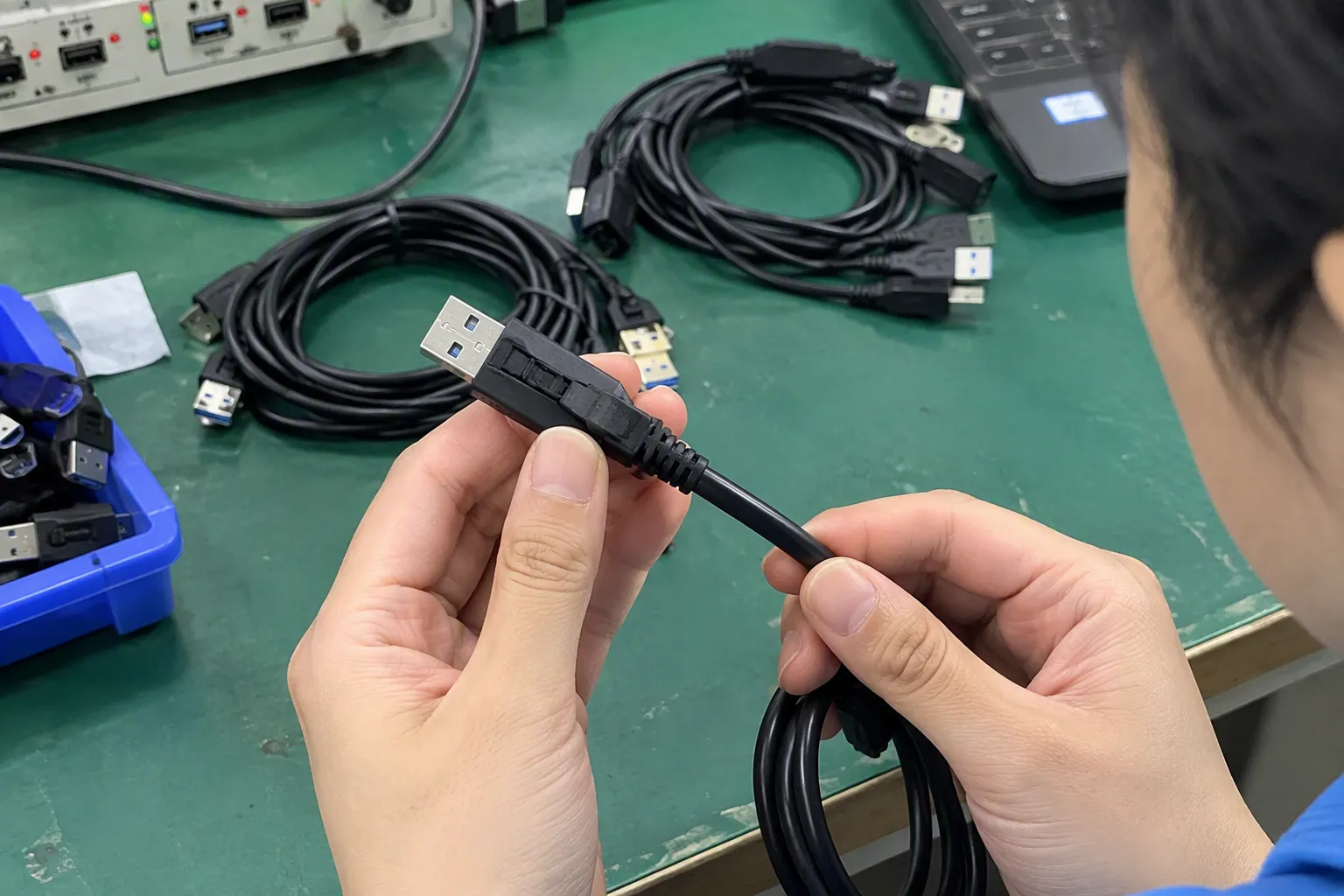
No. A locking USB connector may suit equipment exposed to movement, vibration, or accidental cable pulling, but the correct choice depends on the application. I recommend checking the mechanical interface, USB performance, installation space, environmental conditions, and supplier test documents before approval.
Does a threaded USB connector mean it is waterproof?
No. Threaded hardware primarily provides mechanical retention. Waterproofing requires an appropriate sealing structure and a verified ingress protection rating for the relevant configuration. Buyers should check whether the rating applies to the mated connector, cable entry, protective cap, and complete equipment assembly.
Can I use a locking USB-C cable with a normal USB-C port?
Sometimes, but not always. The cable may fit electrically while the locking feature has nothing to engage with. The equipment must have a compatible locking receptacle, bracket, or retention structure. Buyers should compare the plug and receptacle drawings before ordering.
What information should I send to a connector supplier?
I would send the connector type, equipment port details, required USB version, data rate, power requirement, cable length, installation dimensions, environmental conditions, mating frequency, locking preference, target quantity, and destination market. Photos help, but a drawing or sample gives the supplier better information.
Should buyers request certification documents?
Yes, when the application or market requires them. Buyers should request documents for the exact model and configuration, then verify the issuing body, scope, date, and applicable standard. A certificate should support the procurement decision, but it should not replace a qualified application review.
Conclusion
Locking USB connectors can improve cable retention when industrial equipment faces vibration, movement, difficult access, or accidental pulling. I do not treat the locking feature as proof of waterproofing, dust protection, shock resistance, or long-term reliability. Buyers should evaluate the complete mating system, electrical requirements, environmental conditions, installation space, documentation, and supplier controls. If you are sourcing USB cables or connector assemblies for European or American markets, contact me with your application requirements so I can help compare suitable suppliers, samples, MOQ, lead time, customization, and verification documents.
Sources
- Connector Contact Retention Guide", A connector-engineering study describes supplementary retention mechanisms as reducing the likelihood of unintended separation by adding mechanical resistance beyond the frictional engagement of the electrical interface
- What Makes an Industrial Connector Reliable? Key Factors ...", An engineering reference identifies vibration, cable movement, and accessibility as application factors that can influence the selection of connector retention and mounting arrangements
- IP-Rated Connectors – Choose the Right Protection", International protection and connector-testing standards treat mechanical retention, ingress protection, environmental resistance, and endurance as separate characteristics requiring separate definitions or tests
- Trezor Device Disconnected: Intermittent Detection", Technical analyses of USB links identify loss of electrical continuity or intermittent contact as a cause of disrupted communication and interruption of connected-device power functions
- Universal Serial Bus Type-C Cable and Connector ...", The USB connector specification describes the plug-and-receptacle interface, including the geometric engagement and mechanical retention requirements used by the standard connection
- A Study of Vibration-Induced Fretting Corrosion for Electrical ...", Vibration studies of electrical connectors associate repeated dynamic loading with relative movement, contact degradation, and stress transmitted through the connector and its mounting assembly
- USB in a NutShell - Chapter 1 - Introduction", USB technical documentation defines link operation through the capabilities and negotiated modes of the connected system; a mechanical locking feature does not alter the protocol or signaling limits
- USB PD Power Negotiations", The USB Power Delivery specification describes power contracts as the result of communication and capability negotiation among compatible source, sink, and cable components