Quick Answer
Apple MFi and USB-C accessory claims can become a procurement problem when a supplier uses “USB-C,” “USB-IF certified,” “USB PD,” and “MFi-certified” as if they mean the same thing. Importers should identify the accessory’s actual function, whether it uses MFi-licensed technology or components, the exact SKU, supplier identity, and the evidence behind each claim before placing an order.
Not every USB-C accessory automatically falls within MFi. Apple’s public FAQ excludes USB-C charging accessories and USB Device Class accessories that do not use MFi-licensed technologies or components, while accessories implementing iAP2 over USB and vehicles supporting CarPlay over USB are included. Buyers should establish which function is involved, then request product-specific evidence. USB-IF certification, USB Power Delivery, MFi, and market-specific compliance are separate review questions. Apple MFi FAQ
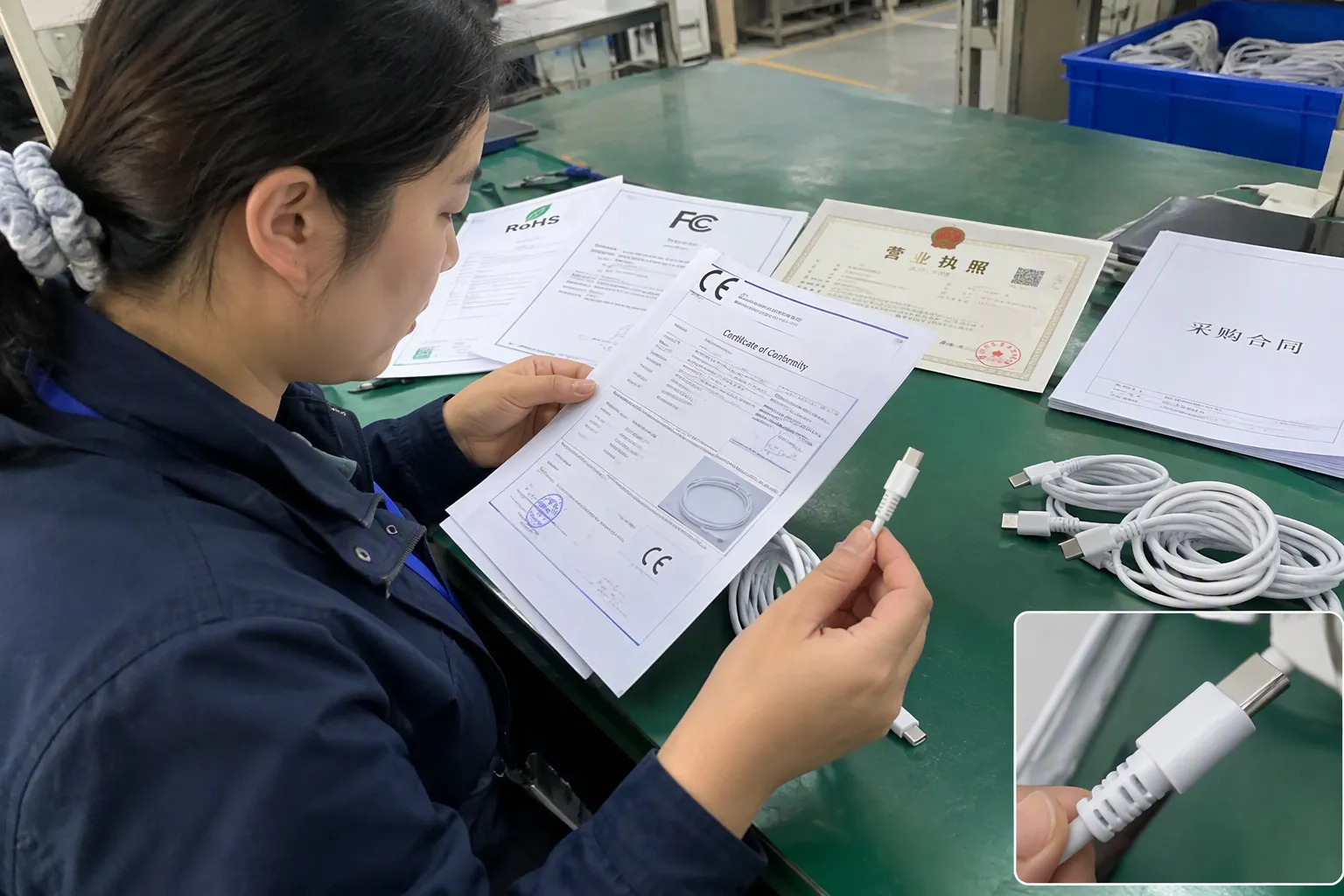
The main purchasing decision is not whether a supplier can say “MFi.” The decision is whether the specific product can be legally and commercially described, listed, imported, and resold with evidence that survives customer, platform, or internal compliance review. I use a layered review because each layer answers a different question.
Apple Program Requirements: What Public Apple Sources Confirm
Many buyers feel pressure to accept a certification claim quickly when a product is trending or a customer needs a short delivery time. That pressure increases when a supplier sends a polished PDF with an Apple-related logo. I recommend slowing the process down and separating the claim into verifiable parts before discussing price or mass production.
When Is MFi Relevant?
The Apple MFi FAQ describes MFi as a program for accessories using Apple’s MFi-licensed technologies or components. It explicitly states that USB-C charging accessories and USB Device Class accessories without those technologies or components do not need to join MFi. It also identifies iAP2 over USB and CarPlay over USB as included examples. A connector shape or compatibility phrase alone does not decide the program scope.
Apple’s How It Works page describes a Product Plan for an accessory integrating MFi technology, development and testing, certification using Apple’s tools with production-ready samples and packaging submitted for review, and manufacturing and sales after completion of certification approved by Apple. This is the public program overview, not a certification decision about a quoted supplier or SKU.
What About Ordinary USB-C and USB PD Accessories?
Apple’s USB-C guidance for iPhone says charging cables and power adapters compliant with the USB-C standard, including USB Power Delivery, are available from Apple and other manufacturers. Its data-transfer guidance also permits compliant third-party USB-C cables. This does not mean every cable supports every data rate, power level, or Apple-specific function.
USB-IF describes USB Power Delivery as a power-delivery specification. Supporting USB PD is not the same as completing USB-IF certification and is not itself evidence of MFi certification. Where MFi-licensed technology is involved, confirm the applicable program path with the responsible MFi licensee rather than assuming ordinary USB-C guidance answers the whole question.
What Can a Buyer Independently Verify?
Apple’s FAQ explains that an accessory appears in its MFi Licensed Accessories search after completing certification requirements and either being opted in by the manufacturer or reported to Apple as sold or distributed. The search covers listed technologies; it is not a complete public registry of every possible accessory. A matching listing can support a claim, but a missing listing alone does not prove that a product is uncertified. Request clarification from the responsible licensee when scope or identity remains unresolved.
For distributors and resellers of finished MFi goods, Apple’s FAQ says they do not themselves need to join the program and should source the goods from an authorized MFi manufacturer. The licensee is responsible for the relevant program requirements. Company participation, manufacturing authorization, and an individual product’s completed certification should not be treated as interchangeable claims.
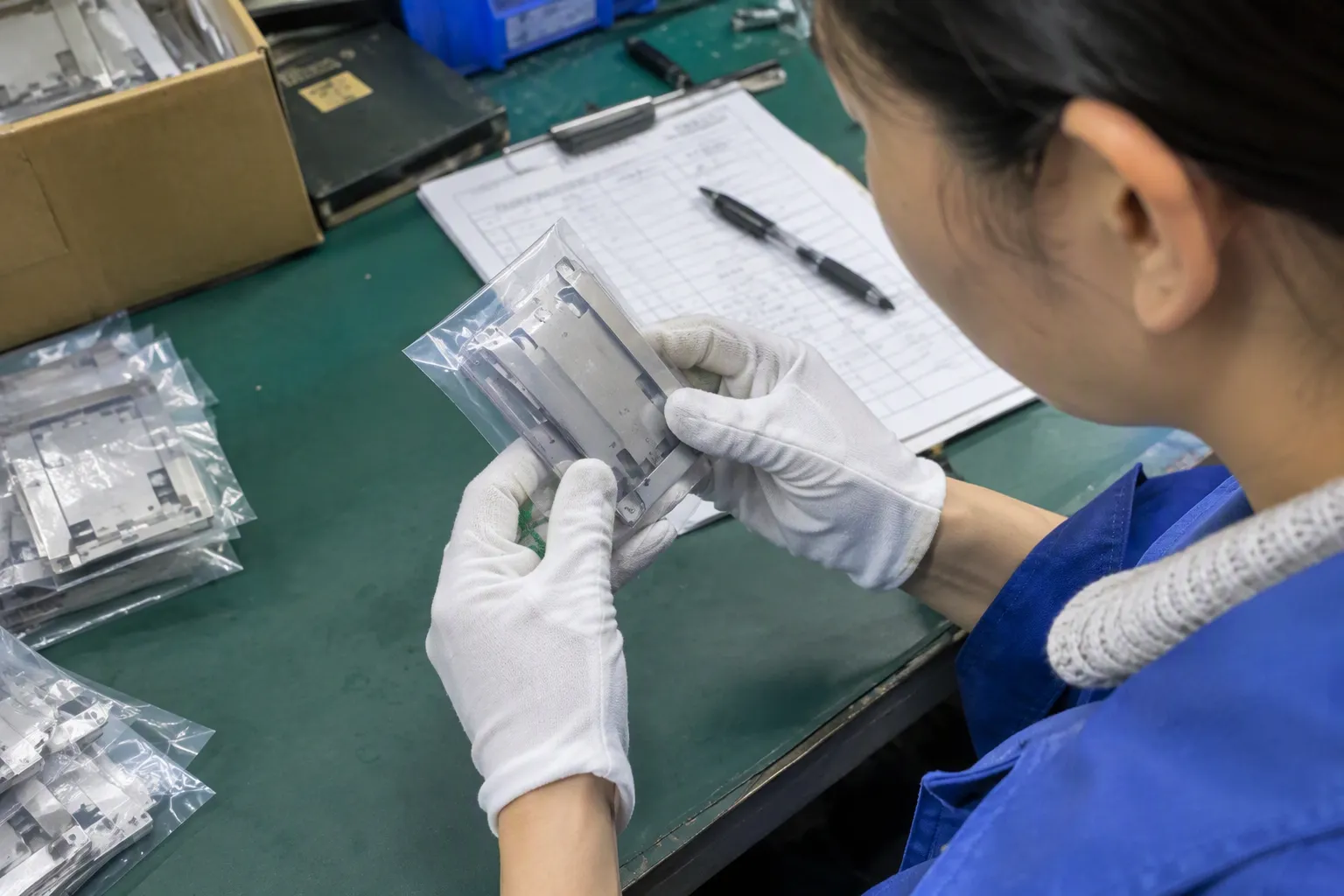
Public Apple documents do not independently verify a supplier’s quoted BOM, firmware, production site, or sample-to-batch consistency. Request non-confidential evidence that the supplier can legitimately share; some program information is confidential. Until the evidence is checked, those details remain supplier or manufacturer representations rather than facts independently confirmed by KingFuji.
KingFuji / Buyer Procurement Checks — Not Apple Program Requirements
The following checklists are buyer-side procurement practices, not an Apple-mandated checklist or a claim that KingFuji can certify an accessory. Buyers should match the quoted SKU, sample, production version, packaging, and supporting documents; define change controls; and assign product-specific compliance questions to a qualified reviewer.
Four Claims That Buyers Must Keep Separate
I normally divide supplier discussions into four evidence groups.
| Claim or document group | Main question | What it does not prove |
|---|---|---|
| USB-C interface or technical compliance | Does the product use the interface and relevant technical design correctly? | It does not automatically prove Apple authorization. |
| USB-IF certification | Has the relevant product or design passed an applicable USB-IF certification process? | It does not automatically prove MFi authorization or general market compliance. |
| Apple MFi program and product evidence | Where licensed technology is involved, what evidence supports the responsible licensee and the exact product’s program status? | Company participation is not proof that every SKU is certified, and MFi does not replace market-specific compliance review. |
| General product compliance | Can the product meet applicable market requirements for safety, EMC, radio, battery, chemicals, labeling, and other matters? | It does not automatically prove Apple MFi status. |
I use this table during supplier screening because it prevents one certificate from being treated as a universal approval. A document can be genuine and still be irrelevant to the product claim the buyer wants to make.
What Product Details Must Match?
The evidence should match the physical and commercial product. At minimum, I would compare:
- Brand and legal manufacturer or supplier identity; verify any claimed authorization separately
- Exact model number and product family
- Product category and intended function
- Connector arrangement and cable configuration
- Chipset, controller, or authentication-related component where relevant
- Firmware version or software behavior where relevant
- Electrical ratings and advertised performance
- Packaging, labeling, and online sales language
- Production site or responsible manufacturer
- Document issue date, validity, and certification scope
A common procurement mistake occurs when a supplier provides a document for a product family but quotes a different model. The outer housing may look identical, but the internal board, chipset, cable length, firmware, or connector configuration may have changed. I would not treat visual similarity as technical identity.
Does “USB-C” Mean “MFi-Certified”?

No. A USB-C connection does not establish MFi certification. Refer to the Apple MFi FAQ for the licensed-technology boundary. USB-IF Product Search is a separate source for products listed through USB-IF’s compliance program; it is not an Apple authorization register. Verify each claimed program against the exact product and scope. For broader cable sourcing questions, use the USB cable procurement guide for importers and distributors.
A supplier may use all three terms in one listing because the terms help the product appear more credible. I would ask the supplier to explain each term separately and provide the corresponding evidence. If the supplier cannot explain the difference, I would treat the claim as incomplete until a qualified compliance professional reviews it.
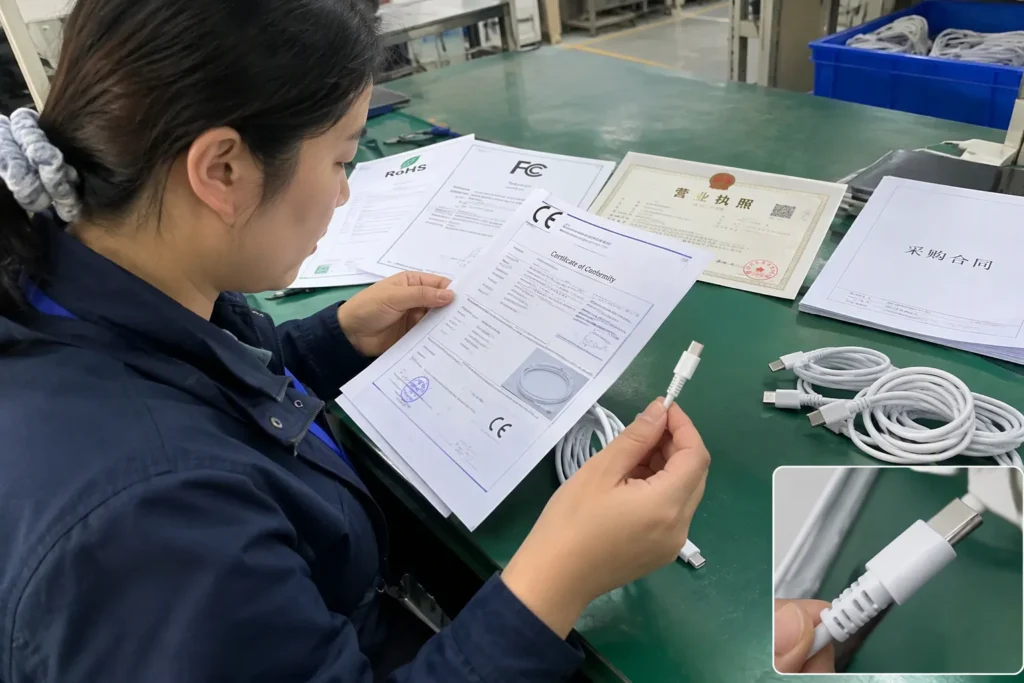
How Should Importers Handle Supplier Documents?
I suggest creating a document register before approving a sample. The register can include:
- Document title
- Issuing organization
- Holder or manufacturer name
- Product model
- Test or authorization scope
- Issue date
- Expiry or validity information
- File version
- Related sample or production batch
- Verification status
- Person responsible for follow-up
I also ask suppliers to confirm in writing that the documents relate to the quoted production version. This confirmation does not replace independent verification, but it creates a clearer procurement record.
A supplier may say, “Our factory has MFi,” without stating whether the claim refers to a licensee, an authorized manufacturing role, or the quoted product. Request the legal entity, its role, the exact model, and the evidence the licensee can share. Do not treat a company-level statement as proof of every SKU’s certification.
Which Questions Should I Send to a Supplier?
I would use questions such as these:
- What is the exact model number covered by the claimed authorization?
- What is the legal name of the certificate or authorization holder?
- Is the quoted factory the same entity named in the document?
- What Apple-compatible function does the product claim to support?
- Which current Apple source confirms the relevant requirement?
- Does the production sample use the same PCB, chipset, firmware, and cable configuration?
- Has the product changed since the document was issued?
- Which claims may appear on the packaging and product listing?
- Can the supplier provide a document showing the relevant scope without hiding key fields?
- What happens if the buyer’s platform or customer rejects the claim?
These questions help me distinguish a real document from a general marketing statement. I would not request or publish confidential program information. I would ask for enough evidence to verify the commercial claim and would involve an appropriate compliance specialist when the issue is unclear.
Why Do the Sample and BOM Matter?
As a buyer-side procurement check, match documents to the quoted model and proposed production configuration. A supplier may substitute a controller, cable, component, or firmware version after sample approval. Request change notification and ask the responsible manufacturer or qualified reviewer whether the change affects the relevant evidence. These controls are procurement recommendations, not a statement of an Apple-specific BOM or firmware rule.
I recommend linking the approved sample to the purchasing record. The file should include photographs, model markings, packaging, basic specifications, and, where commercially appropriate, a controlled BOM or component statement. The buyer may not need every confidential component detail, but the supplier should identify changes that could affect the claimed function or compliance status.
A practical control system can use three stages:
Stage One: Desk Review
I review the supplier’s product description and documents before requesting a large sample order. I look for inconsistent names, copied logos, unclear model numbers, and claims that combine unrelated certifications.
Stage Two: Sample Match
I compare the physical sample with the documents and the quoted specification. I check connectors, markings, cable length, housing, ratings, packaging, and advertised Apple compatibility. I record the sample photographs.
Stage Three: Pre-Production Confirmation
I ask the supplier to confirm that the mass-production version will match the approved sample. I also define a change-notification requirement for the BOM, firmware, factory, packaging, or key components.
This process cannot guarantee that a document is valid. It does create a stronger basis for escalation and supplier accountability.
What Other Compliance Documents May Be Relevant?
MFi review should not replace a product-specific and market-specific compliance review. As procurement planning, identify the destination market, power source, wireless function, battery, packaging, and sales channel, then ask a qualified reviewer which obligations and documents apply. The following are topics to assess where relevant, not a universal list of documents required for every USB-C product:
- Electrical safety
- Electromagnetic compatibility
- Radio requirements for wireless products
- Battery transport and product safety
- Chemical and environmental obligations
- Energy-related requirements where applicable
- Packaging and labeling
- User instructions and warnings
- Country or state-specific obligations
- Retailer or marketplace documentation rules
The exact list requires product-specific and market-specific evaluation. Treat a declaration or test report according to its stated scope and assign unresolved questions to a qualified reviewer; do not describe one document as “complete compliance.” This is a buyer-side screening principle, not an Apple program requirement.
This point matters for USB-C chargers and GaN chargers. Buyers should confirm that the reviewed evidence covers the exact model, ratings, relevant variants, and intended markets. A supplier’s general statement that the factory has “all certifications” does not answer those questions. The USB-C charger specification-sheet guide can help organize input ratings, output profiles, and model-specific buyer questions; it is not a substitute for certification or regulatory review.
How Should Buyers Review Online Product Claims?

I advise buyers to compare three versions of the product claim:
- The supplier’s quotation
- The product packaging
- The intended online listing or retail description
The wording should not promise more than the evidence supports. Terms such as “official,” “certified,” “approved,” “licensed,” or “fully compatible” can create a higher verification burden. The same issue applies to phrases such as “for iPhone,” “for iPad,” or “Apple certified.”
Apple’s third-party trademark guidelines allow certain accurate referential compatibility wording subject to conditions and prohibit use that implies false endorsement or affiliation. Apple logos and graphic symbols require the relevant written permission; an MFi badge has its own program conditions. Buyers should review product photographs, packaging, and listings with the responsible licensee or legal adviser rather than relying on supplier artwork. Saying “compatible with” does not by itself prove certification.
What Should the Purchase Contract Say?
I recommend adding product-document controls to the purchase order or supply agreement. The contract can require the supplier to:
- Supply the approved model and production version
- Maintain the stated component and firmware configuration
- Notify the buyer before material changes
- Provide updated documents when relevant
- Avoid unsupported certification or compatibility claims
- Cooperate with reasonable verification requests
- Accept responsibility for inaccurate documents supplied by the supplier
- Support investigation of customer or platform complaints
- Agree on replacement, refund, or corrective action procedures
The exact legal wording should come from a qualified contract professional. I use these provisions as commercial controls, not as a substitute for legal advice.
What Are the Main Procurement Red Flags?
I would pause an order when I see any of the following:
- The supplier sends only a logo or screenshot.
- The model number does not match the quotation.
- The certificate names a different company.
- The document covers a different connector or product function.
- The supplier refuses to identify the production factory.
- The document is old, undated, cropped, or impossible to verify.
- The supplier claims that every USB-C product is MFi-certified.
- The supplier says that USB-IF certification replaces Apple authorization.
- The sample and production version are not controlled.
- The supplier pressures the buyer to order before document review.
- The marketing claim is stronger than the technical evidence.
- The supplier cannot explain what changed after the document was issued.
One red flag does not prove misconduct. It does show that the buyer needs more information. I prefer a documented pause to a batch dispute after goods arrive.
How Can Importers Build a Simple Approval Checklist?
The following is a buyer-side approval record, not Apple’s certification checklist. Use a status system that records both evidence and unresolved supplier representations:
| Review item | Pass condition | Status |
|---|---|---|
| MFi applicability | Accessory function and use of licensed technology assessed against public Apple guidance; unresolved scope referred to the responsible licensee | Open / Pass |
| Product identity | Model, supplier, and production version match | Open / Pass |
| Apple-related claim | Exact product evidence reviewed; distinguish a public match from supplier representation and unresolved program status | Open / Pass |
| USB claim | Applicable USB-IF evidence is relevant and current | Open / Pass |
| General compliance | Market-specific review is complete or assigned | Open / Pass |
| Sample control | Approved sample matches the proposed production version | Open / Pass |
| Marketing | Listing, packaging, and logos have been reviewed | Open / Pass |
| Contract | Change notification and remedy terms are recorded | Open / Pass |
| Final approval | Responsible buyer or compliance reviewer signs off | Open / Pass |
I would not use “Pass” simply because a supplier answered by email. I would record the evidence and identify who made the decision. If a requirement remains uncertain, I would mark it “Open” and avoid placing an irreversible order.
How Does This Review Protect Retailers and E-Commerce Sellers?
A weak review can create several commercial problems:
- A marketplace may request documents that the seller cannot provide.
- A retail customer may reject a delivery because the documents do not match.
- A customs or compliance inquiry may expose inaccurate product descriptions.
- A product recall or complaint may become harder to investigate.
- A seller may need to remove listings and absorb return costs.
- A supplier may deny responsibility because the purchase order did not define the claim.
A strong review does not eliminate every risk. It gives the importer better control over those risks. It also helps the buyer compare suppliers on more than unit price. A supplier that answers technical questions clearly may offer better long-term value than a cheaper supplier with uncertain documentation.
KingFuji’s role in this article is buyer-side sourcing and document organization, not Apple program approval. This article is independent and has not been reviewed, authorized, sponsored, or endorsed by Apple. It does not represent KingFuji as an Apple-authorized manufacturer, licensee, auditor, or certification body. Where MFi technology is involved, program questions should be confirmed with the responsible licensee through the applicable Apple process.
What Should Buyers Do When the Supplier Cannot Prove the Claim?
The buyer should not automatically assume that the product is unsafe or illegal. The buyer should treat the claim as unverified. The next step depends on the product and intended sales channel.
I would consider these options:
- Remove the unsupported Apple-related claim.
- Ask the supplier for a product with a verifiable authorization path.
- Request an independent compliance review.
- Change the product specification or sales function.
- Use a different supplier.
- Delay the order until the documentation is complete.
The buyer should also calculate the cost of uncertainty. A lower factory price may not compensate for listing suspension, customer returns, replacement freight, testing, legal review, or damaged retailer relationships.
I would never advise a buyer to copy a certificate from another model or to continue using a logo because “the factory has always used it.” Certification and authorization claims should remain tied to the evidence.
Frequently Asked Questions
Does Every USB-C Accessory Need MFi?
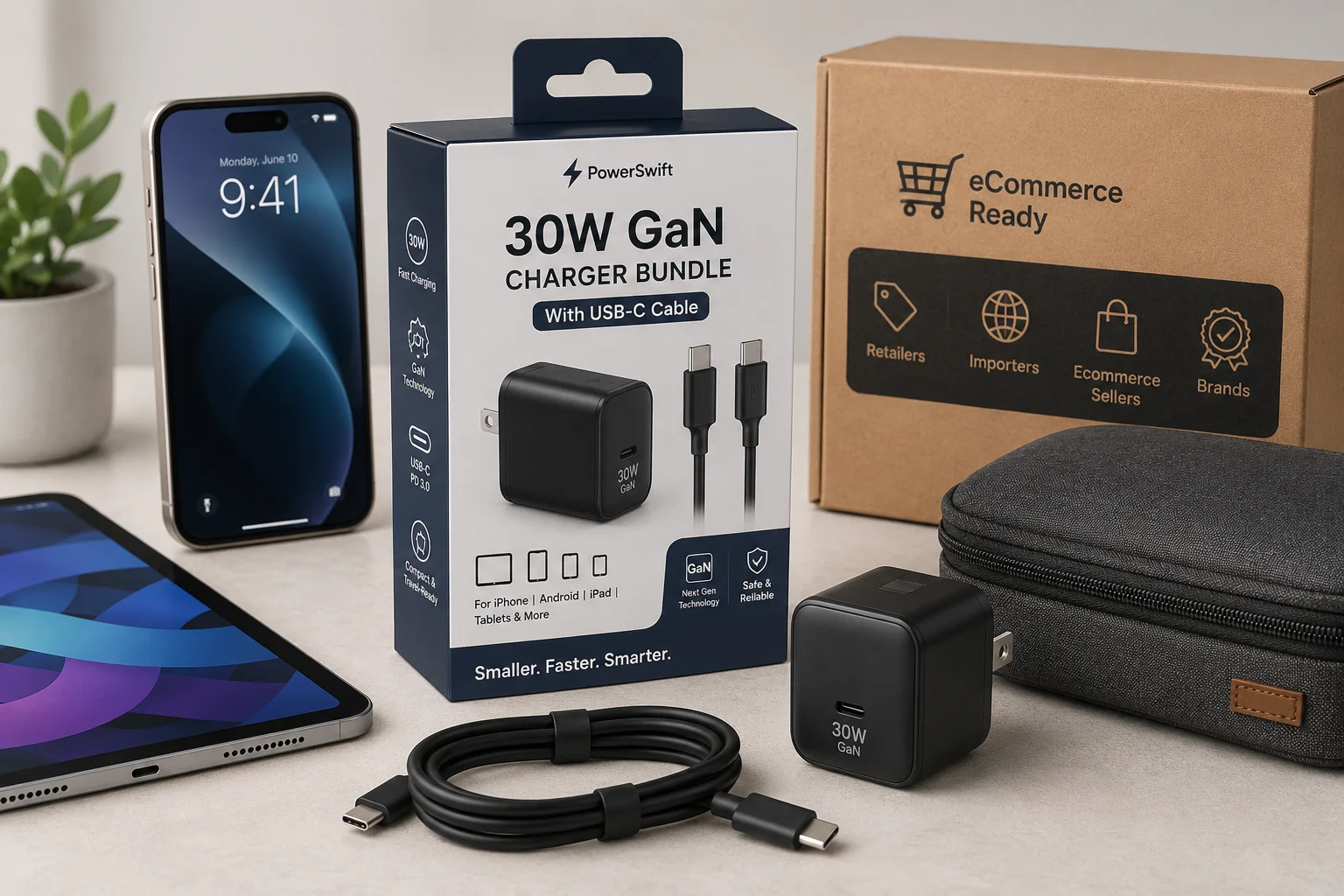
No. Apple’s public FAQ excludes USB-C charging accessories and USB Device Class accessories that do not use MFi-licensed technologies or components, but includes examples such as iAP2 over USB and CarPlay over USB. Verify the actual technology and function rather than deciding from the connector or a compatibility phrase alone. Ask the responsible licensee to resolve product-specific uncertainty.
Is USB-IF certification the same as Apple MFi authorization?
No. USB-IF certification and Apple MFi authorization are separate matters. USB-IF evidence may support a technical interface or performance claim, while MFi status concerns an Apple accessory program and its relevant scope. Neither document automatically replaces general safety, EMC, battery, radio, or environmental compliance.
Can a supplier’s MFi logo prove that a product is authorized?
No. A logo is only a claim unless the buyer can connect it to the exact product, supplier identity, function, and current supporting evidence. I would also check whether the logo is permitted for the intended packaging and sales description. Buyers should not rely on artwork, screenshots, or old documents alone.
What should I do if the model number differs from the certificate?
I would stop the approval process and ask the supplier to explain the difference. The buyer should request evidence covering the exact model or obtain a qualified assessment of whether the products are technically identical. I would not assume that a similar housing or product family makes the document applicable.
When Should Buyers Recheck Program Applicability and Supplier Evidence?
Recheck when the product function, licensed technology, responsible supplier, hardware or firmware representation, packaging claim, or intended market changes. Use public Apple sources for publicly stated program scope, and request confirmation from the responsible licensee for product-specific questions that are not publicly verifiable. Treat any informal version or update claim as unverified unless an authoritative source supports it.
Conclusion
Importers should first determine whether MFi-licensed technologies or components are involved, rather than treating every USB-C accessory as an MFi product. Keep USB-IF certification, USB Power Delivery, MFi program status, and market-specific compliance separate. As buyer procurement practice, match the quoted model, sample, production representations, documents, and marketing language, and keep unresolved claims marked as unverified. KingFuji can help organize sourcing questions and supplier-document review; that support is not Apple certification, authorization, or endorsement.
Sources
- Apple MFi FAQ — Licensed technologies, qualified USB-C and USB Device Class exclusions, reseller roles, confidentiality, and public accessory-search conditions.
- Apple MFi: How It Works — Public product-plan, development, certification, mass-production, and badge overview.
- Apple Support: Charge and Connect With the USB-C Connector on Your iPhone — Use of compliant USB-C cables and adapters from Apple and other manufacturers, including USB Power Delivery.
- Apple Guidelines for Using Trademarks and Copyrights — Conditional referential compatibility wording, restrictions on logos, and prohibition on false affiliation or endorsement.
- USB-IF: USB Charger / USB Power Delivery — USB PD power-delivery scope and USB-IF compliance/logo context; not Apple program approval.
- USB-IF Product Search — Products listed through USB-IF’s compliance program; not an MFi registry.
Buyer checklists and commercial controls in this article are procurement recommendations. The sources do not certify the quoted supplier, SKU, BOM, firmware, production batch, or KingFuji.
Apple is a trademark of Apple Inc., registered in the U.S. and other countries and regions.