USB Power Delivery is often treated as a simple fast-charging label, but that assumption can create product mismatches, returns, and customer complaints. I have seen buyers focus on wattage while overlooking the device, cable, and charging protocol. A better approach is to evaluate the complete charging setup and verify whether all parts support the intended use.
USB Power Delivery, or USB PD, is a charging and power-negotiation protocol[1] that allows compatible devices, chargers, and cables to communicate about available power. USB-C is the connector shape, not proof of USB PD[2]. A reliable buying decision requires checking the charger’s output, the device’s input requirements, the cable’s supported power level, and the relevant product documentation.
I use this complete-system view when discussing chargers and cables with brands, importers, retailers, and e-commerce sellers. The technical explanation is useful, but the commercial question matters just as much: will the proposed product deliver a credible charging experience for the devices customers actually use?
Quick Answer
- USB Power Delivery is a power-negotiation protocol, not simply another name for USB-C.
- A USB-C connector can exist without USB PD or high-speed charging support.
- Wattage alone does not guarantee faster charging, because the device may accept less power.
- Buyers should verify the charger, device, cable, connector, and intended charging scenario together.
- Clear specifications help reduce mismatched purchases, returns, and after-sales disputes.
- Brands should request product documentation and qualified technical evaluation before making device-specific performance claims.
What Does USB Power Delivery Mean?
Many product listings use “USB-C,” “fast charging,” and “PD” as though they mean the same thing. They do not. This loose wording can make it difficult for a retailer to compare products or for a customer to understand what a charger will actually do.
USB Power Delivery is a communication and power-management standard associated with USB charging. A compatible source and sink can negotiate an appropriate power level[3] instead of relying only on a fixed, basic charging arrangement. However, the result still depends on the capabilities of every part in the chain.
USB PD can matter when I evaluate a wall charger, travel charger, power bank, laptop adapter, or charging cable for a customer. I need to know more than the connector type. I need to understand the intended devices, output ports, power profiles, cable requirements, and product documentation.
USB-C and USB PD Are Different

USB-C describes a physical connector and port design. USB PD describes a power-delivery protocol that may operate through a compatible USB-C connection. A product can have a USB-C port without offering USB PD, and a USB-C cable can differ in its power and data capabilities.
- Whether the product must support USB PD.
- The required output power.
- The number of ports used at the same time.
- The target devices.
- The cable type and supported current.
- Whether the product needs region-specific plugs or documentation.
- Which claims can appear on the packaging and sales page.
I often recommend that buyers create a short compatibility matrix before requesting samples. The matrix can include the charger, cable, phone, tablet, laptop, game console, or other intended device. This approach makes gaps easier to identify before mass production.
What Happens During Power Negotiation?
In simple terms, a compatible charging source advertises available power options, and the connected device requests a suitable option. The source then provides power according to the negotiated conditions and the limits of the system. The device remains responsible for controlling how much power it accepts[4].
This does not mean that every USB PD charger automatically identifies every device perfectly in every situation. Product implementation, port design, firmware, cable construction, thermal conditions, and device requirements can all affect the result[5]. I therefore treat protocol support as an important capability, not as universal proof of compatibility.
The USB Implementers Forum provides technical information about USB specifications and certified products through its official resources. Buyers can review USB-IF information and should request the applicable documentation from their supplier before using a compliance or certification claim in commercial material.
Why Does USB Power Delivery Matter to Buyers?
A charger can look attractive in a catalogue and still create problems after launch. A high wattage number may attract attention, but it does not explain how the product behaves with a mixed customer base. Some customers may connect a phone, while others may connect a tablet, laptop, earbuds, or more than one device at the same time.
For retailers and importers, this difference affects product selection, packaging, online descriptions, customer expectations, and support costs. I have found that clear specifications at the beginning of a project are usually easier to manage than corrections after a product reaches the market.
The Complete Charging System
- The cable
The cable must be appropriate for the required power level and connector arrangement. Not every USB-C cable supports the same current or charging performance[6].
A fifth factor is sometimes overlooked: the product description. If a listing says that a charger is suitable for a particular laptop or can deliver a certain charging experience, the seller should have a reasonable documentation and verification basis for that statement.
Why Higher Wattage Is Not Enough
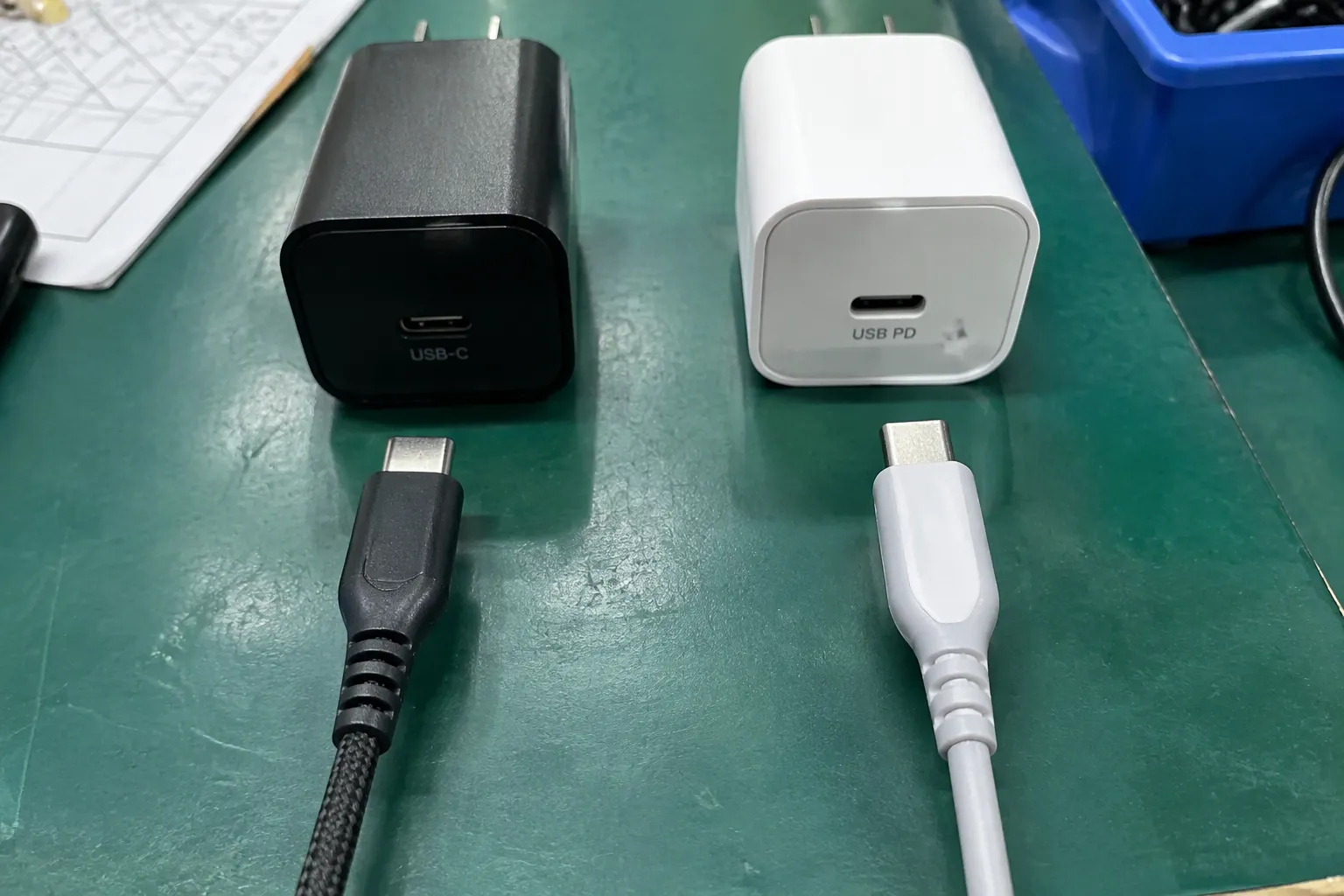
Suppose a charger offers a high maximum output. A compatible laptop might use a substantial portion of that power, but a phone may accept much less. The phone’s charging system, battery condition, temperature, software, and charging stage can also influence actual power.
A charger with a larger rating can provide headroom, but it cannot force a device to accept more than the device is designed to use[7]. The customer may also use a cable that is not appropriate for the desired power level. In that case, the charger’s headline wattage does not describe the complete experience.
| Buyer question | Why it matters |
|---|---|
| What is the charger’s maximum output? | It defines the upper capability of the source under stated conditions. |
| What can the device accept? | The device may draw less than the charger can provide. |
| What can the cable support? | The cable can affect whether the intended power level is available. |
| Are multiple ports used? | Shared output can change available power between ports[8]. |
| Is the claim documented? | Documentation helps support packaging and sales-page wording. |
This is why I avoid describing a product as universally “the fastest” without a defined device and test condition. Buyers need technically accurate language that matches the actual product configuration.
How Do USB-C, USB PD, and Fast Charging Differ?
These terms often appear together, but they answer different questions. USB-C identifies a connector family. USB PD identifies a power-negotiation protocol. Fast charging is a broad commercial description that can refer to different technologies, power levels, and device-specific systems.
A useful product brief separates physical design, electrical capability, protocol support, and marketing language. I use this separation when discussing sample requirements with manufacturing partners.
A Practical Terminology Table
| Term | What it generally describes | What it does not prove |
|---|---|---|
| USB-C | A connector and port format | USB PD, a specific wattage, or universal fast charging |
| USB Power Delivery | A power-negotiation protocol | Compatibility with every USB-C device |
| Fast charging | A broad performance or marketing description | A single universal charging speed |
| Charger wattage | The stated maximum or available power | The device’s actual charging rate |
| USB-C cable | A cable using USB-C connector(s) | Equal current, data, or PD capability across all models |
This language matters in international sales. European and North American buyers may compare products across marketplaces where similar words have different meanings. A supplier should provide a structured specification sheet instead of relying on a short marketing phrase.
How Cable Capability Enters the Decision
The cable is not only an accessory. It forms part of the power path. Cable construction, connector quality, current capability, length, and any identification components can influence the suitable application. A basic cable may be adequate for one charging scenario but unsuitable for another.
I do not assume that every cable marked USB-C supports the same power level. I ask for the cable’s intended specification and supporting documentation. If a buyer wants to bundle a charger with a cable, I recommend reviewing the pair as one commercial product rather than treating the cable as an afterthought.
- Whether the cable is included.
- The connector configuration.
- The supported charging application.
- Whether the cable is intended for higher-power use.
- Any limits on data transfer or other functions.
- Which claims depend on a specific charger or device.
How Should Buyers Evaluate a USB Power Delivery Charger?
The best evaluation starts with the intended product range, not with the largest number in a catalogue. A retailer selling phone accessories may need a different charger portfolio from a distributor serving business laptop users. A general-purpose product can be useful, but its claims still require clear limits.
I recommend a staged procurement process. First, define the application. Next, request a complete specification. Then, review samples and documentation. Finally, confirm the wording that will appear in packaging and online listings.
Step 1: Define the Intended Devices
- Smartphones and tablets.
- Ultrabooks and business laptops.
- Handheld game consoles.
- Headphones and smartwatches.
- Cameras and other portable electronics.
- Several devices connected at the same time.
I ask whether the product is intended for one device at a time or shared household, office, travel, or retail use. This distinction can influence output allocation and the wording of the sales material.
Step 2: Request a Complete Output Specification
- Input voltage and frequency range.
- Port types and number of ports.
- USB PD support, if claimed.
- Available output profiles.
- Maximum single-port output.
- Combined output when several ports operate.
- Protection features listed in the product documents.
- Operating temperature information where available.
- Applicable regional product documentation.
- Packaging and marking requirements.
The supplier should distinguish between maximum theoretical output, port-specific output, and shared output. These figures can be commercially important, especially when a customer expects to charge a laptop and phone together.
Step 3: Review the Cable and Device Relationship
A charger sample should be reviewed with the cable configuration that the customer will actually receive or commonly use. If the product is sold without a cable, the listing should avoid implying that every cable will produce the same result.
I also recommend checking the device manufacturer’s own charging information. The charger supplier can explain the charger’s capabilities, but the device maker controls the device’s input design and supported charging behavior. Device-specific performance should therefore be verified through relevant product documentation or qualified evaluation.
Step 4: Align Marketing Claims With Evidence
| Claim type | Example of suitable approach |
|---|---|
| Product specification | State the documented port and output capability. |
| Compatibility guidance | Identify tested or documented device categories carefully. |
| Performance promise | Use only when the test method and conditions are defined. |
I avoid claims such as “charges every laptop” or “works at full speed with all USB-C devices.” Such wording is difficult to support and can create avoidable disputes. More precise wording may explain that the charger is designed for compatible USB PD devices and that actual charging depends on device and cable capability.
Step 5: Confirm Quality-Control Points
- Correct port labeling.
- Correct output information on the label and packaging.
- Stable assembly and connector fit.
- Cable inclusion and cable model consistency.
- Sample-to-production consistency.
- Appearance and printing quality.
- Required safety and market documentation.
- Packaging language for the destination market.
Certification documents are not a substitute for product verification. Buyers should check the document scope, model reference, issuing organization, validity, and destination-market relevance. A qualified professional should review application-specific compliance questions.
What Product and Supplier Risks Should Buyers Watch?
USB Power Delivery creates technical opportunities, but it also creates more ways for an unclear specification to become a commercial problem. I see the largest risk when a buyer selects a product from a headline number and fills in the missing details later.
The supplier relationship matters because the buyer needs accurate information before purchase orders, packaging approval, and market launch. A capable supplier should be willing to discuss the limits of a product rather than promise universal results.
Common Procurement Risks
6. Treating a certificate as a complete quality guarantee
A document may relate to a specific model, market, or test scope. The buyer should verify the document rather than using a broad phrase such as “fully certified” without checking details.
A Supplier Evaluation Checklist
- Which exact models support USB PD?
- Which ports support the claimed protocol?
- What output is available from each port?
- How does the output change when several ports are used?
- Which cable model is included or recommended?
- What device categories are covered by the available documentation?
- Which tests were performed, and under what conditions?
- Can the supplier provide a sample with the intended packaging?
- How does the supplier control model changes during production?
- What inspection records will be available before shipment?
The answers do not replace independent technical review, but they reveal how clearly the supplier understands the product. I value suppliers that can explain limitations in plain language because accurate limitations are easier to manage than an overpromised product.
Linking Technical Clarity to Commercial Results
- Fewer unsuitable customer purchases.
- More accurate comparison between competing products.
- Better product-page content.
- Lower risk of returns caused by misunderstanding.
- Easier customer-service training.
- More consistent private-label packaging.
- Better communication between the buyer, supplier, and inspection team.
For my own product-development work, I see the specification as a shared reference point. It connects sampling, production coordination, quality control, packaging, and after-sales support. When a specification leaves out cable or multi-port conditions, those omissions can appear later as customer complaints.
How Should USB Power Delivery Products Be Described for Sale?
A technically correct product can still perform poorly in the market if its description is vague. Online shoppers often scan the title first, then look for wattage, port type, compatibility, and included accessories. A seller should provide enough information to support a sensible decision without promising more than the product can deliver.
I recommend using plain language and separating confirmed specifications from general compatibility guidance. A product page should also tell the customer what is not included or what conditions apply.
Better and Riskier Wording
| Riskier wording | More careful wording |
|---|---|
| Charges all USB-C devices at full speed | Designed for compatible USB-C and USB PD devices; actual performance depends on the device and cable |
| Universal fast charger | Multi-device charger with documented output options |
| 100W charging for every laptop | Up to the stated maximum under the specified port and compatibility conditions |
| Any USB-C cable works | Use a cable suitable for the required power level |
| Fastest charging available | Supports the listed charging protocol and output capability |
The second column may look less dramatic, but it gives the customer a more credible expectation. This approach is especially useful for private-label brands that want to build trust in European and North American markets.
Information I Would Put on a Product Page
- Product type and number of ports.
- USB-C port function.
- USB PD support, where documented.
- Maximum output by port.
- Combined output rules.
- Cable inclusion and connector type.
- Intended device categories.
- Important compatibility limitations.
- Input and regional plug information.
- Warranty or after-sales process.
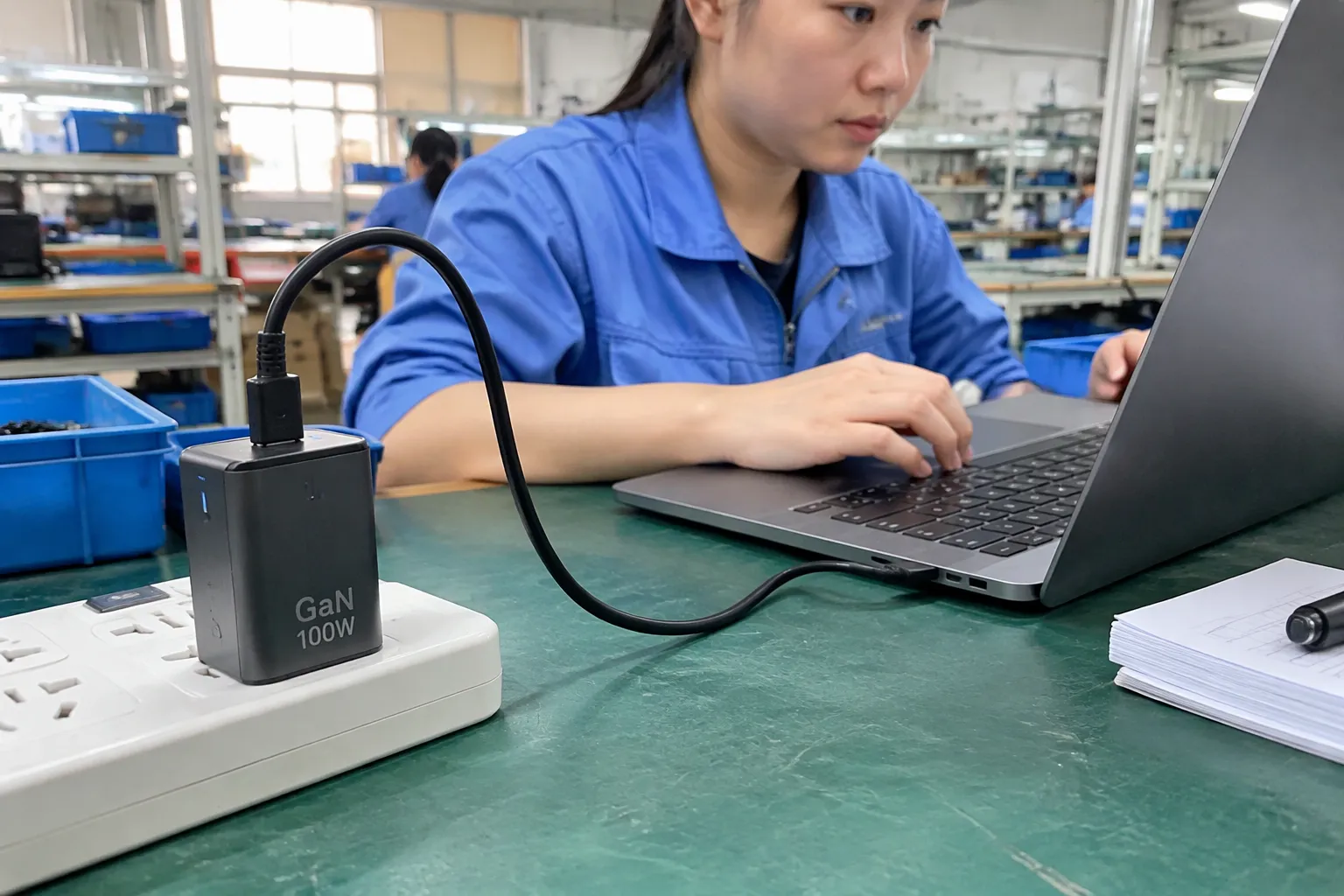
I would also keep the product title and specification table consistent. If the title says “100W USB PD charger” but the table does not explain which port provides that output, customers may interpret the claim too broadly.
Internal Links and Buyer Education
- How to choose a USB-C charging cable
- USB charger quality-control checklist
- OEM and ODM charging accessories
These pages can explain product limits before a customer contacts support. They can also help a buyer’s sales team answer common questions without reducing every issue to a wattage comparison.
How Can Brands Build a Better USB Power Delivery Sourcing Process?
A reliable sourcing process treats USB Power Delivery as part of product architecture, not as a final marketing label. The buyer, supplier, quality team, and packaging team should use the same approved information.
I have found that a small amount of planning before sampling can prevent repeated revisions later. It can also make supplier comparisons fairer because every supplier responds to the same technical brief.
Build a Product Requirement Document
- Target markets.
- Intended devices.
- Charger form factor.
- Port configuration.
- Required output capability.
- Cable requirements.
- Branding and packaging.
- MOQ and forecast.
- Target lead time.
- Required inspection stages.
- Documentation and certification items to verify.
- Acceptable claims for online sales.
Use a Sample Approval Checklist
- The exact model number.
- The physical port layout.
- The label and printed output information.
- The included cable model.
- The packaging wording.
- The supplier’s output specification.
- The device categories used for evaluation.
- Any observed limits during multi-port use.
- Open questions requiring professional review.
- The approved reference sample for production.
Coordinate Production and Quality Control
During production, the quality team should confirm that the mass-produced item matches the approved specification. Useful controls can include visual inspection, model verification, label review, accessory matching, and appropriate electrical or functional checks defined by the project.
The exact inspection method depends on the product, market, and qualified test requirements. I do not treat a general supplier statement as a replacement for professional compliance evaluation. Buyers should use qualified laboratories or technical professionals when the application requires formal testing or market-specific conclusions.
Manage Changes After Approval
A charger supplier may change a component, cable source, housing, or production location. Any change that could affect output, compatibility, safety, or documentation should go through a controlled approval process.
- Will the supplier notify us before a material change?
- Will the model number remain the same?
- Does the documentation still apply?
- Is a new sample required?
- Does the packaging claim need revision?
Frequently Asked Questions
Is USB-C the same as USB Power Delivery?
No. USB-C describes a connector and port format, while USB Power Delivery describes a power-negotiation protocol. A USB-C product may or may not support USB PD. I recommend checking the exact charger, cable, and device specifications instead of inferring capability from the connector shape.
Does a higher-wattage USB PD charger charge every device faster?
No. The device controls how much power it accepts, and the cable must also support the intended charging setup. A higher-wattage charger can provide additional capacity, but it does not guarantee a faster result for every phone, tablet, laptop, or accessory.
Do all USB-C cables support the same USB PD power level?
No. USB-C cables can differ in power capability, data performance, construction, and identification features. Buyers should request the exact cable specification and avoid treating an unspecified USB-C cable as equivalent to a cable selected for a particular power application.
Can I claim that a USB PD charger is compatible with a specific laptop?
Only when the claim has a reasonable documentation or evaluation basis. The laptop may have specific input requirements, and actual performance can depend on the charger port, cable, operating conditions, and device model. Buyers should verify the claim with appropriate technical sources.
What should an importer ask a USB PD charger supplier?
An importer should ask for the exact model, port-by-port output information, combined-output behavior, supported protocol information, recommended cable details, product documentation, and quality-control process. The importer should also verify any certification or market-compliance documents before using related claims.
Conclusion
USB Power Delivery is more than a USB-C connector or a large wattage number. I recommend evaluating the charger, device, cable, port configuration, documentation, and intended use as one complete system. This approach helps brands, retailers, wholesalers, and e-commerce sellers make more credible product claims and reduce compatibility-related returns. When sourcing USB Power Delivery products, request clear specifications, approve representative samples, and use qualified professional evaluation for application-specific decisions. Contact our OEM/ODM team to discuss charger, cable, sampling, quality control, and private-label supply requirements.
Sources
- USB Power Delivery", The USB Implementers Forum defines USB Power Delivery as a USB protocol that enables connected source and sink devices to negotiate power capabilities and operating conditions
- USB Charger (USB Power Delivery)", USB-IF documentation treats USB Type-C as a connector and cabling specification, while USB Power Delivery is a separate protocol whose support depends on the product implementation
- USB Power Delivery", USB Power Delivery specifications describe capability exchange between a source and sink followed by negotiation of a power contract governing the delivered voltage and current
- USB Power Delivery", USB Power Delivery documentation assigns the sink a role in requesting an operating power level from the source's advertised capabilities, subject to the device's implementation and limits
- 240W USB-C PD 3.1 Adapter Production Validation Guide", Engineering analyses of USB-C and USB Power Delivery systems identify device implementation, cable characteristics, thermal limits, and control logic as factors that can constrain delivered charging power
- Universal Serial Bus Type-C Cable and Connector ...", USB-IF specifications distinguish USB Type-C cable current capabilities and define identification mechanisms used to communicate higher-current cable characteristics
- Battery Chargers", Technical accounts of USB charging systems describe delivered power as constrained by the receiving device's negotiated input capability and power-management controls, so a higher-rated source does not necessarily increase device power intake
- Using Your Multi-Port Charger Correctly: Tips to Avoid ...", Engineering documentation for multi-port power supplies shows that some designs allocate a shared power budget among active ports, which can reduce the output available at an individual port when additional devices are connected