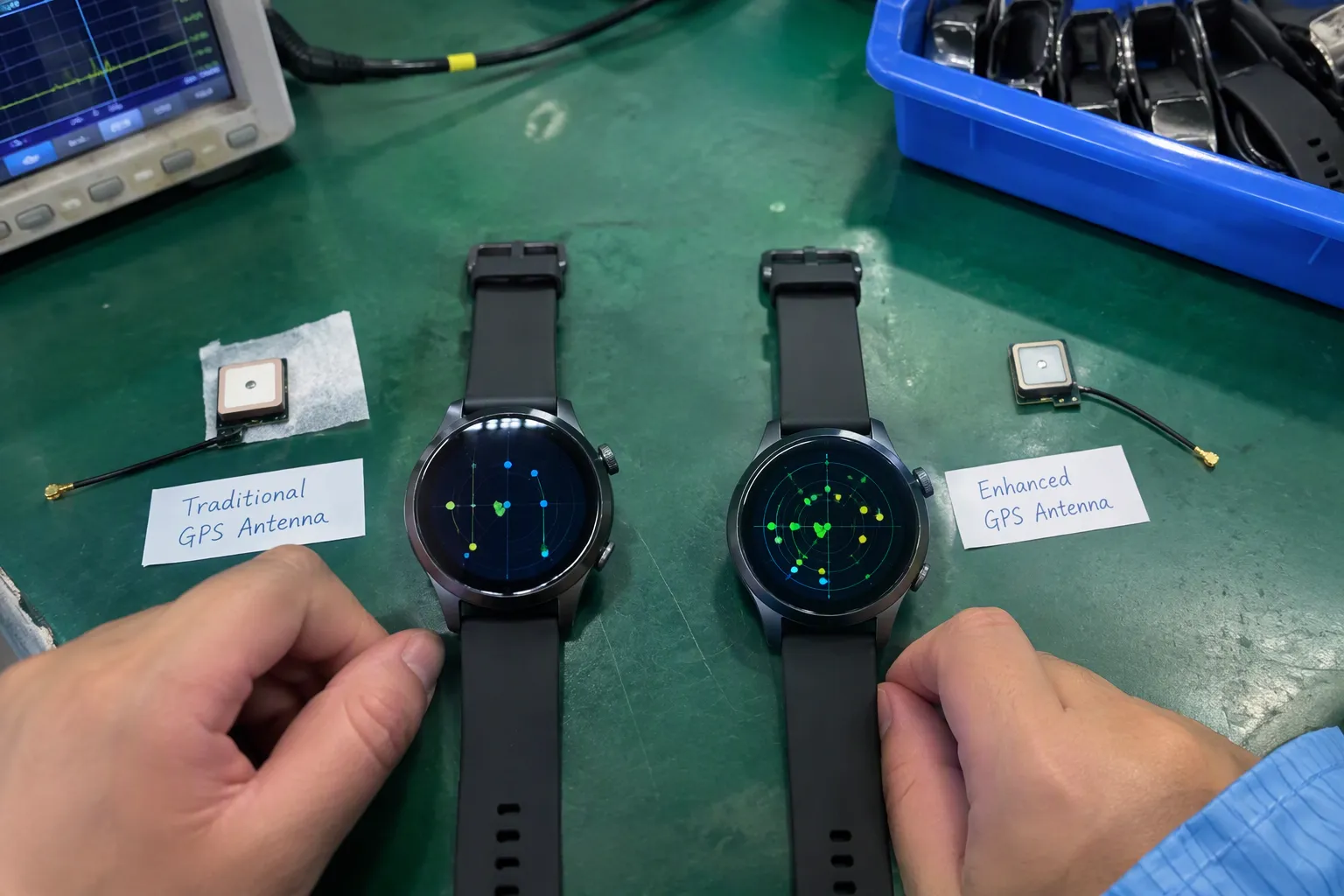
Smartwatch GPS antennas are often judged too quickly by their spec sheet, but that misses the real problem. In my experience working with 3C buyers, the issue is not only signal gain. The real challenge is how body loss, enclosure layout, and field testing interact once the watch sits on a human wrist outdoors.
The best smartwatch GPS antenna choice is the one that still performs after body loss, internal layout limits, and real-world wrist use are considered together. A stronger antenna alone does not guarantee better GPS.[1] Buyers should evaluate antenna placement, nearby materials, and outdoor field test results before they approve a design or supplier.
If you are a brand owner or product manager, this is where launches often go off track. The lab sample looks fine, then the first retail units get worn differently, tested in different cities, or packaged inside a tighter enclosure. That is when small layout choices become return risk, customer complaints, and avoidable rework.
Quick Answer
- Do not buy a smartwatch GPS antenna based on spec sheet strength alone.
- Body loss matters because the wrist and hand can reduce usable GPS performance.[2]
- Layout matters because metal parts, battery placement, and stack-up can block or detune the antenna path.
- Field tests should simulate real wearing conditions, not just bench or fixed-position tests.
- The safest buying approach is to review antenna design, enclosure constraints, and outdoor validation together.
Why do smartwatch GPS antennas fail in real use?
A smartwatch GPS antenna can look acceptable on paper and still disappoint in the field. That happens when the design is evaluated in isolation. The watch does not operate in free space.[3] It sits against skin, moves with the arm, and shares room with battery cells, displays, PCBs, and sometimes metal decorative parts.
Why the problem is bigger than “signal strength”
When buyers ask me whether a smartwatch GPS antenna is “strong enough,” I usually push the conversation one step earlier. I ask where the antenna sits, what the enclosure is made of, and how the product will be worn. Those questions matter because GPS performance depends on the full RF path, not only the antenna element.
A few practical factors can change results quickly:
- Wrist proximity can absorb or distort part of the signal.
- Case geometry can block the antenna’s effective radiation pattern.
- Internal components can create detuning or shielding effects.
- User behavior can change orientation and sky visibility.
In other words, the watch can lose performance simply because the body becomes part of the system. That is why I treat antenna selection as a product integration decision, not a standalone component purchase.
What buyers usually miss early
Many teams focus on the same checklist:
- antenna type
- claimed gain
- module cost
- MOQ
- sample lead time
That list is useful, but it is incomplete. I think the missing step is to ask, “What happens when the watch is worn by a real person for 30 minutes outdoors?” That question often exposes the real risk earlier than a spec comparison does.
If you are already comparing wearable parts, it helps to read related product evaluation topics like smart wearable component sourcing and how to compare custom 3C suppliers.
How does body loss affect smartwatch GPS antennas?
Body loss is one of the most important reasons smartwatch GPS antennas behave differently on the wrist than in test setups. The human body absorbs and reflects RF energy.[4] That means the same watch can work better on one wrist position and worse on another.
What body loss means in practical terms
Body loss is the reduction in signal quality caused by the user’s body absorbing or blocking part of the radio path. For a smartwatch, the body is very close to the antenna, so the effect is not minor. It is part of the design problem.
From a buyer’s point of view, the key point is simple:
A smartwatch GPS antenna must be evaluated as part of a worn product, not as a loose component.
Why wrist orientation changes performance
A person’s wrist is not a fixed mounting platform. It moves through:
- walking
- arm swinging
- looking at the watch
- running
- turning the wrist inward or outward
Each posture changes the antenna’s relationship to the sky and to the body. That is why one sample can appear stable in a limited demo but become inconsistent in everyday use.
Body loss factors I ask suppliers about
When I review smartwatch GPS antenna options with customers, I usually ask these questions:
- Is the antenna placed farther from the skin-facing side?
- Does the enclosure use metal accents that can increase shielding?
- Is there enough separation from the battery and display?
- Has the design been checked with the watch actually strapped to a wrist?
- Were tests done while walking or only while stationary?
Simple comparison: lab assumption vs. worn reality
| Topic | Lab-style assumption | Worn smartwatch reality |
|---|---|---|
| Antenna environment | Open and stable | Close to skin, moving, and partially blocked |
| Orientation | Controlled and repeatable | Changes constantly during use |
| Signal path | Mostly unobstructed | Affected by body loss and enclosure geometry |
| Result interpretation | Spec sheet looks reliable | Outdoor experience may differ a lot |
Body loss is not something I treat as a side note. I treat it as one of the first design constraints. If a supplier ignores it, I usually expect later trouble in product validation.
How should smartwatch antenna layout be evaluated?
The layout inside a smartwatch is usually the real source of success or failure. Even a decent GPS antenna can underperform if the internal arrangement is cramped or poorly balanced. In smartwatches, layout is a system issue.
Why layout affects GPS more than buyers expect
A smartwatch contains many parts competing for space. The antenna must coexist with:
- battery
- display assembly
- main PCB
- buttons and crown structures
- decorative metal parts
- charging contacts
- speaker or vibration components
Every one of those parts can influence the antenna path. Some can shield the antenna. Some can detune it. Some can reduce available radiation space.
What I look for in a practical layout review
When I speak with customers, I usually recommend a simple internal review of these points:
- Antenna position relative to the wrist
- The antenna should not sit in the most heavily absorbed area if the design allows better placement.
- Distance from metal
- Ground plane interaction
- The PCB and ground structure can help or hurt depending on implementation.
- Battery placement
- A large battery can become a blocker if the layout is too tight.
- Stack-up thickness
- Even small changes in thickness can change RF behavior.
Common layout trade-offs
| Layout choice | Possible upside | Possible risk |
|---|---|---|
| More compact internal packing | Smaller watch body | More interference and reduced antenna room |
| Metal-looking premium case | Better market appeal | Higher risk of RF blockage |
| Larger battery | Better runtime | Less room for antenna separation |
| Centralized PCB stack | Easier assembly | More crowding around RF-sensitive areas |
Why I prefer early layout review
I have seen buyers try to fix antenna problems too late. They choose a case design first, then expect the antenna to solve the rest. That usually creates compromise. The smarter path is to review layout before tooling is locked.
If the product is still in development, I recommend aligning the design with broader sourcing decisions such as 3C product customization planning and wearable packaging and fulfillment planning. That keeps RF risk from being treated as an afterthought.
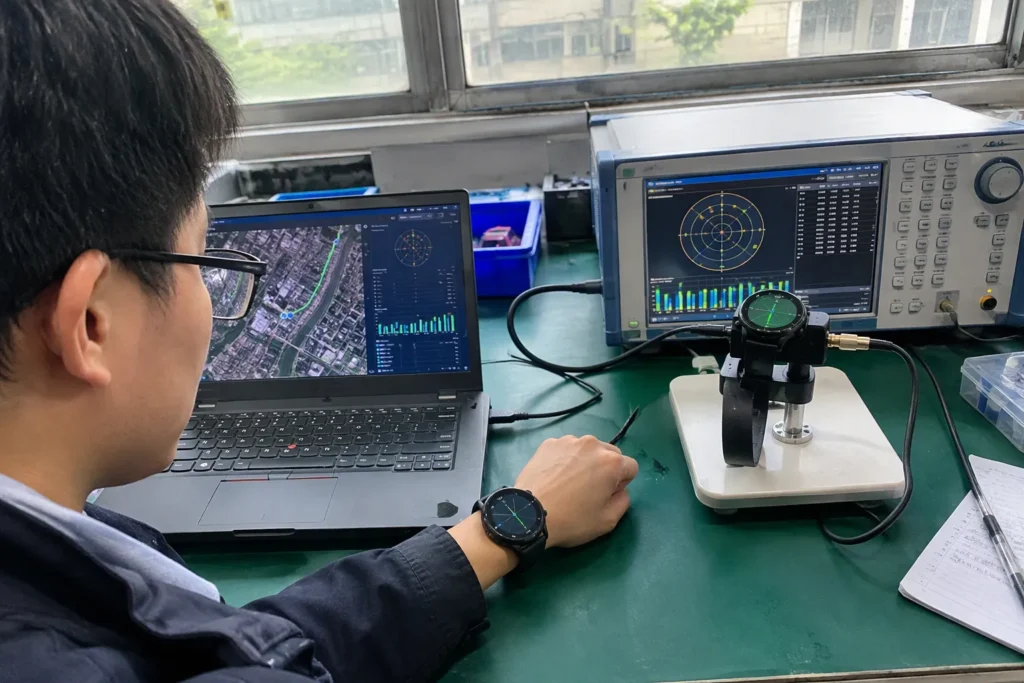
What does realistic field testing look like for smartwatch GPS antennas?
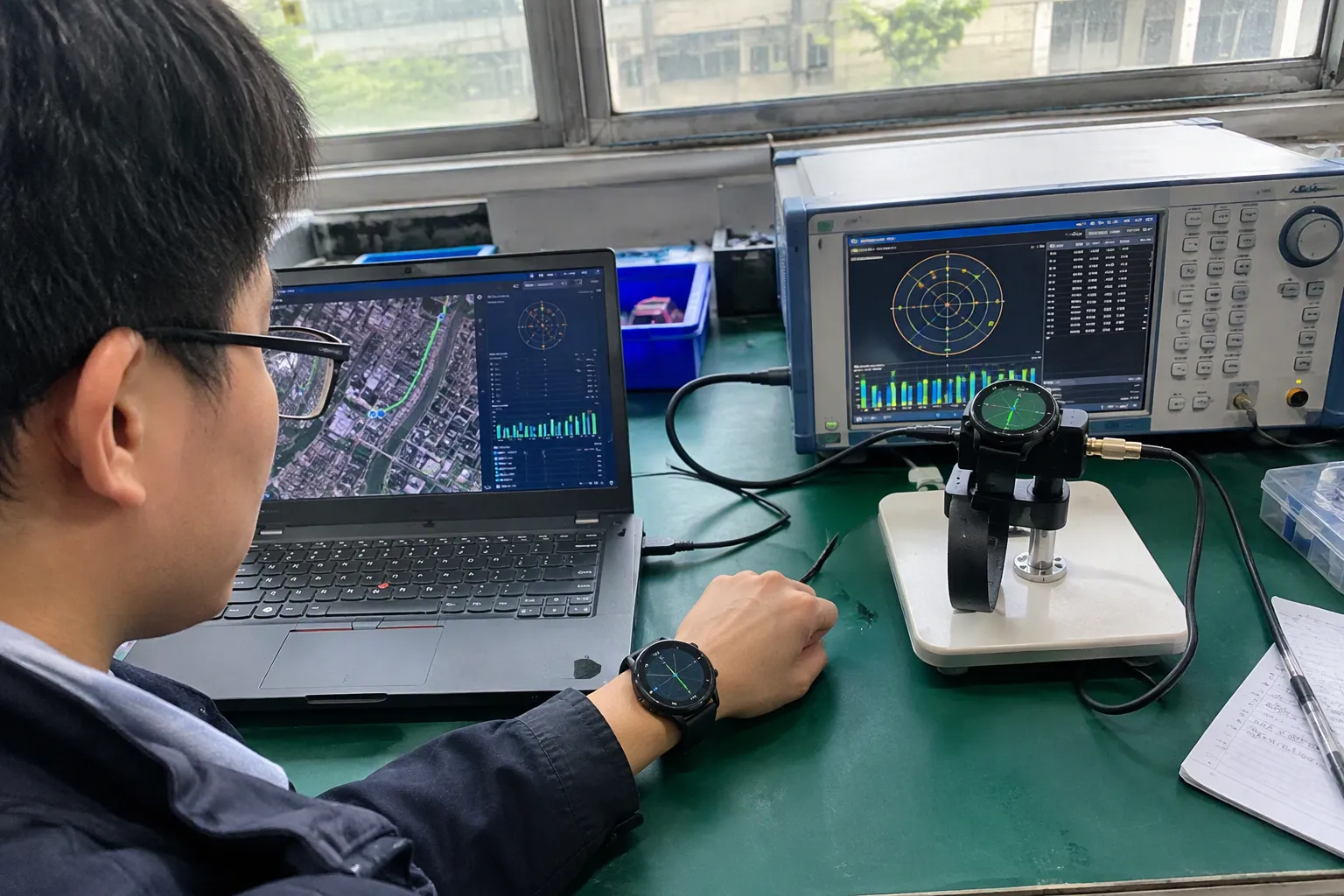
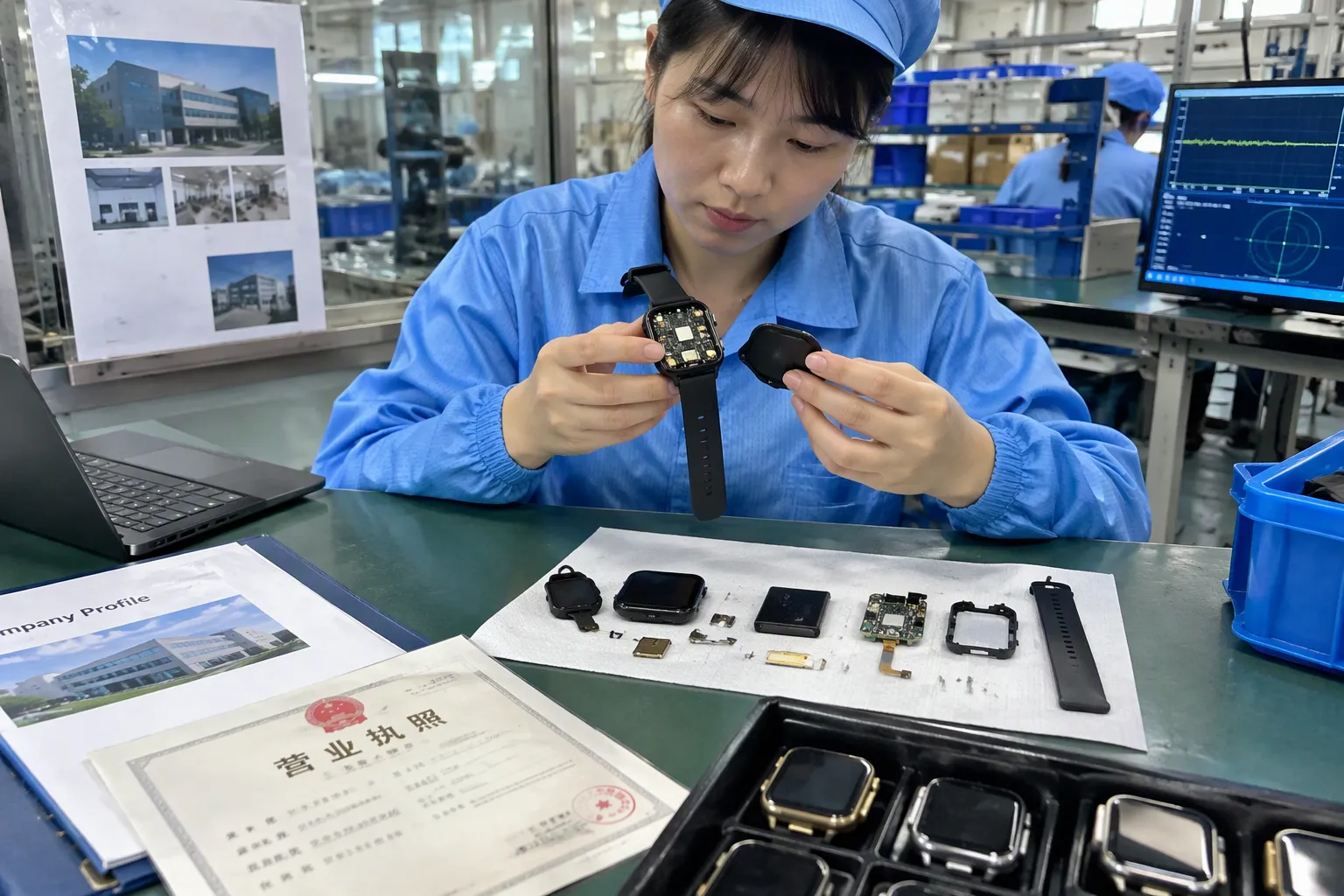
Field testing is where theory becomes business reality.[6] If the test does not reflect how the watch is actually worn, the results can be misleading. For smartwatch GPS antennas, I care much less about a perfect-looking demo and much more about repeatable outdoor behavior.
Why field testing matters more than bench testing
Bench tests can help a team compare designs, but they do not fully capture:
- body loss
- wrist movement
- walking or running motion
- urban signal blockage
- different sky visibility
- user-specific wearing habits
That is why field testing should be used to validate the real user experience, not just to confirm that the antenna exists and receives a signal.
What a useful field test should include
I suggest tests that reflect everyday use:
- Outdoor walking test
- Stationary test with the watch worn on wrist
- Movement test with arm swing
- Urban area test with partial obstruction
- Open-sky test for baseline comparison
A practical test checklist
| Test element | Why it matters |
|---|---|
| Watch worn on wrist | Captures body loss |
| Multiple wrist angles | Shows orientation sensitivity |
| Motion during test | Reveals instability under movement |
| Different outdoor environments | Exposes performance variation |
| Multiple samples | Helps separate design issue from unit-to-unit variation |
What buyers should ask suppliers to provide
I think the best suppliers are usually clear about what the test does and does not prove. Buyers should ask for:
- test conditions
- sample count
- wearing method
- test location type
- comparison criteria
- pass/fail logic
That kind of documentation is more useful than a vague claim like “excellent GPS performance.” It gives the buyer something to evaluate.
For reference, GPS performance terminology and signal concepts are often explained through official sources such as the GPS.gov educational materials and receiver guidance from u-blox or Qualcomm technical notes. I recommend treating those as background references, not as proof that a specific smartwatch design will perform well in your market.
If you want a broader sourcing framework, I also recommend reading how to evaluate product quality before mass production.
How should buyers compare smartwatch GPS antenna solutions?
Buyers often compare antenna solutions too narrowly. They focus on one line item, then miss the system-level consequences. I think the comparison should include commercial, mechanical, and validation factors together.
The comparison buyers actually need
| Evaluation area | Question to ask | Why it matters |
|---|---|---|
| Antenna type | Does this antenna fit the enclosure? | A good part can fail in the wrong housing |
| Body loss risk | How close is the antenna to skin contact? | Wrist wear changes signal behavior |
| Layout fit | Can the internal stack support it? | Space constraints often drive compromise |
| Validation | Was field testing done in realistic use cases? | Lab results may overstate performance |
| Supply readiness | Can the supplier support MOQ and timeline? | A good design still has to ship on time |
What I tell product teams to avoid
I usually warn teams against these mistakes:
- Choosing the lowest-cost option before checking real wear behavior
- Assuming one “stronger” antenna solves a poor enclosure
- Accepting indoor or bench-only validation as final proof
- Ignoring the difference between prototype success and mass-production consistency
- Treating certification documents as the same thing as user-experience evidence
A simple decision rule
If two smartwatch GPS antenna options look similar, I would usually favor the one that gives me:
- clearer layout compatibility,
- better real-wear field testing,
- easier manufacturing consistency,
- and fewer hidden trade-offs in the enclosure.
That approach is more conservative, but it reduces return risk. For retail and ecommerce brands, that often matters more than chasing a spec that is hard to reproduce at scale.
How can suppliers reduce launch risk with smartwatch GPS antennas?
Launch risk usually comes from uncertainty. If a supplier cannot explain layout constraints, body loss impact, or field validation clearly, the buyer inherits that uncertainty. I think the best supplier relationship is one where both sides understand what is being verified and what still needs confirmation.
What a responsible supplier should be able to discuss
A strong supplier should be able to explain:
- antenna placement options
- enclosure material impact
- sample-to-mass-production consistency
- test conditions used for validation
- known trade-offs in the design
They do not need to promise perfection. In fact, I trust suppliers more when they clearly state limits. That usually signals a more mature development process.
Procurement questions I would ask before approval
- What is the expected impact of wrist wear on GPS behavior?
- Which parts of the enclosure are most sensitive to RF interference?
- What changed between sample builds and mass production?
- What field test method was used, and who wore the device?
- What is the correction plan if performance drops after tooling?
Why this matters for channel buyers
For retail chains, wholesalers, and ecommerce sellers, weak GPS performance becomes more than a technical issue. It can affect:
- returns
- reviews
- customer support load
- brand trust
- repeat purchase rates
That is why I treat smartwatch GPS antenna validation as part of commercial risk control, not just engineering review.
What should you verify before placing an order?
Before I place an order for a smartwatch with GPS features, I want to see more than a component list. I want a practical validation story. That story should connect the antenna, the layout, and the field test.
My pre-order checklist
- Confirm the watch will be tested while worn
- Review antenna placement relative to skin-facing surfaces
- Check for metal or battery interference in the layout
- Ask for realistic outdoor test conditions
- Compare more than one sample if possible
- Review supplier documentation against the actual product structure
A final buyer mindset
A smartwatch GPS antenna is not a standalone selling point. It is a part of a system that includes the enclosure, the internal stack, and the way the customer actually wears the watch. If I keep that perspective, I usually make better sourcing decisions and avoid false confidence from spec sheets.
Frequently Asked Questions
Is a stronger smartwatch GPS antenna always better?
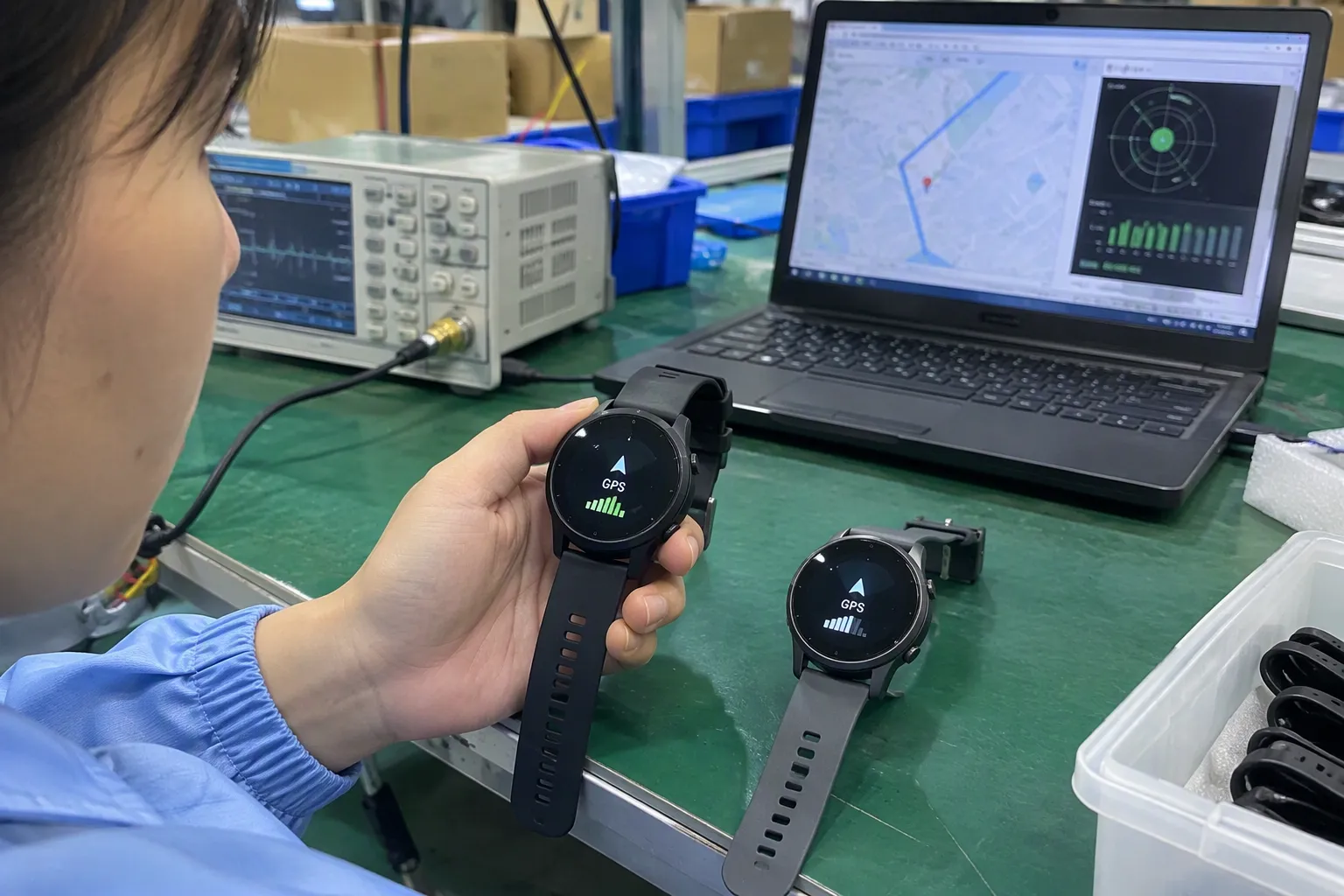
No. A stronger smartwatch GPS antenna does not automatically improve real-world performance. Body loss, enclosure design, and wrist orientation can all reduce the benefit. I always look at the full product structure before I judge antenna quality.
Why does body loss matter so much in smartwatch GPS testing?
Body loss matters because the watch sits very close to the skin. The human body can absorb and block part of the GPS signal.[7] That makes worn testing more important than bench testing for any smartwatch GPS antenna decision.
What is the most common layout mistake in smartwatch GPS design?
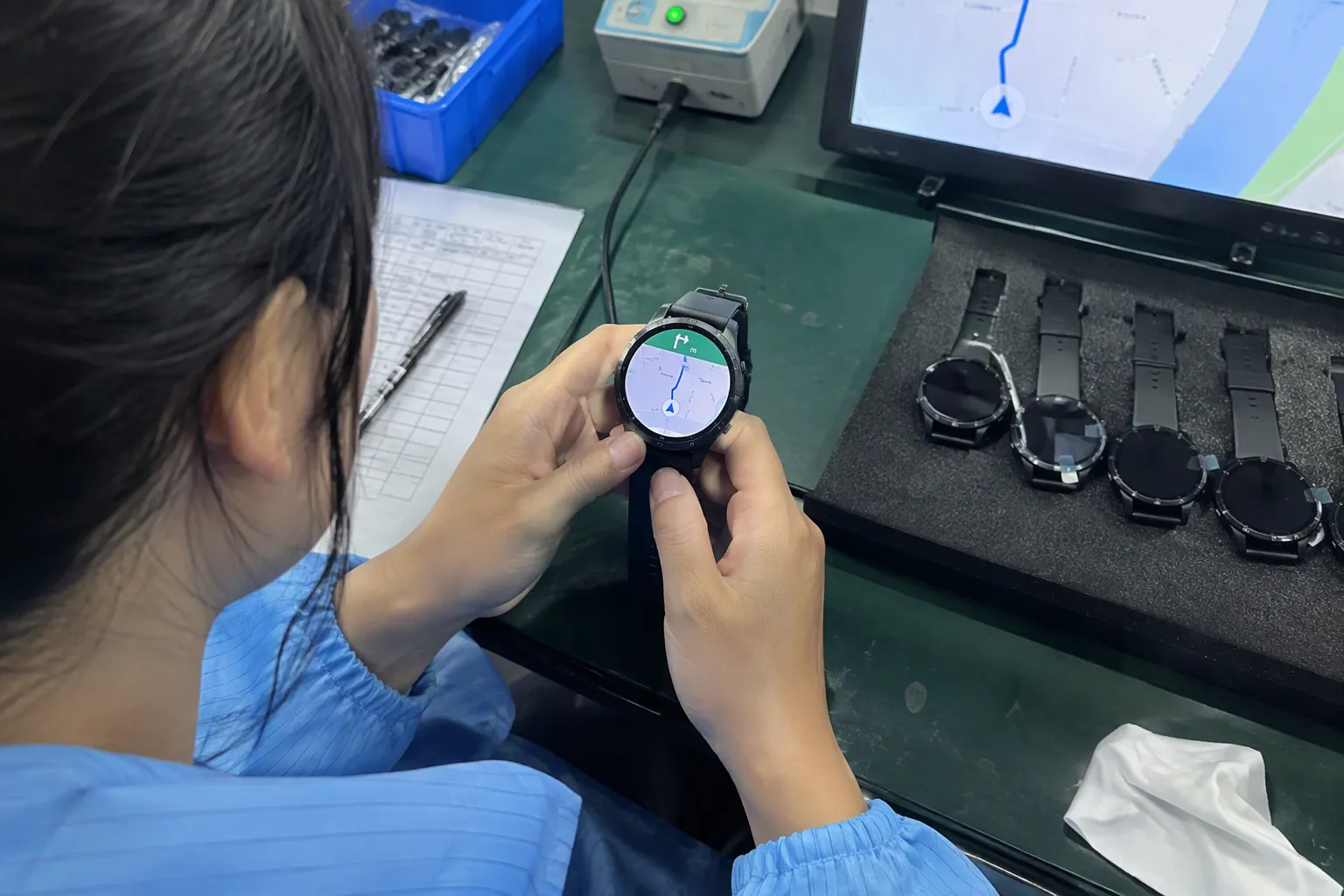
The most common mistake is crowding the antenna with metal parts, the battery, or other internal components. That can reduce radiation space or detune the antenna. A compact design may look good physically, but it can hurt GPS performance.
How should I ask a supplier about field testing?
I would ask where the test was done, how the watch was worn, how many samples were tested, and whether the test included movement. Those details help me judge whether the results reflect real use or only controlled conditions.
Can I rely on lab results when choosing a smartwatch GPS antenna?
Lab results are useful, but I would not rely on them alone. Lab data can help with comparison, but outdoor use on a wrist is different. I prefer to use lab results as a starting point and then confirm them with realistic field testing.
Conclusion
Smartwatch GPS antennas only look simple from the outside. In practice, the real decision comes down to body loss, layout, and field testing working together. If I focus only on antenna strength, I miss the conditions that actually shape user experience. If I review the watch as a worn system, I reduce launch risk and choose with more confidence. If you are sourcing smartwatch products for欧美 markets, I can help you evaluate the right GPS-related build path, compare suppliers, and plan a more realistic validation process.
Sources
- Advancements in Wearable Antenna Design - PMC - NIH", RF literature commonly shows that nominal antenna strength alone does not determine end-device GPS performance, because detuning, nearby materials, and receiver integration can materially change results; this provides general technical context for smartwatch sourcing decisions
- Human Exposure Assessment to Wearable Antennas - PMC", Research on body-area and wearable antennas supports that close placement to the wrist or hand can attenuate and distort RF energy, reducing usable signal quality; this is relevant to smartwatch GPS evaluation
- Analysis on the Effects of the Human Body on the ... - PMC - NIH", Wearable RF studies indicate that body-worn devices do not behave as free-space antennas, since the human body and nearby structures alter propagation and reception conditions; this is background context for smartwatch GPS testing
- Possible Effects of Radiofrequency Electromagnetic Field ...", Established RF and biomedical engineering sources describe the human body as a lossy, reflective medium for nearby radio signals, which helps explain body loss in wearable devices
- Influence of Steel Mesh on Magnetic Proximity Detection ...", Antenna engineering sources show that metal in close proximity can detune resonant behavior and reduce radiation efficiency, making it a relevant constraint for smartwatch enclosure design
- Wearable Devices in Clinical Trials: Hype and Hypothesis - PMC", Wearable device research supports using field validation in addition to laboratory checks, because bench tests may not reproduce motion, body coupling, or outdoor propagation conditions
- A "GPS for inside your body"", Studies of body-worn positioning systems support that the human body can attenuate or shadow GPS signals, making worn-device testing more informative than isolated receiver checks