Quick Answer
LiFePO4 vs lithium-ion power banks is a question I hear often when buyers want the right balance of safety, portability, and long-term value. The problem is that many listings make the choice look simple. That creates risk when the wrong chemistry leads to heavier products, weaker margins, avoidable complaints, or compliance friction.
LiFePO4 vs lithium-ion power banks is not a “which is better” question. It is a “which is better for the use case” question. LiFePO4 usually gives buyers a stronger safety perception and longer cycle life, while lithium-ion usually gives better energy density, lighter weight, and a slimmer form factor.[1] The right choice depends on the target market, shipping requirements, expected usage, and the supplier’s quality control, not chemistry alone.
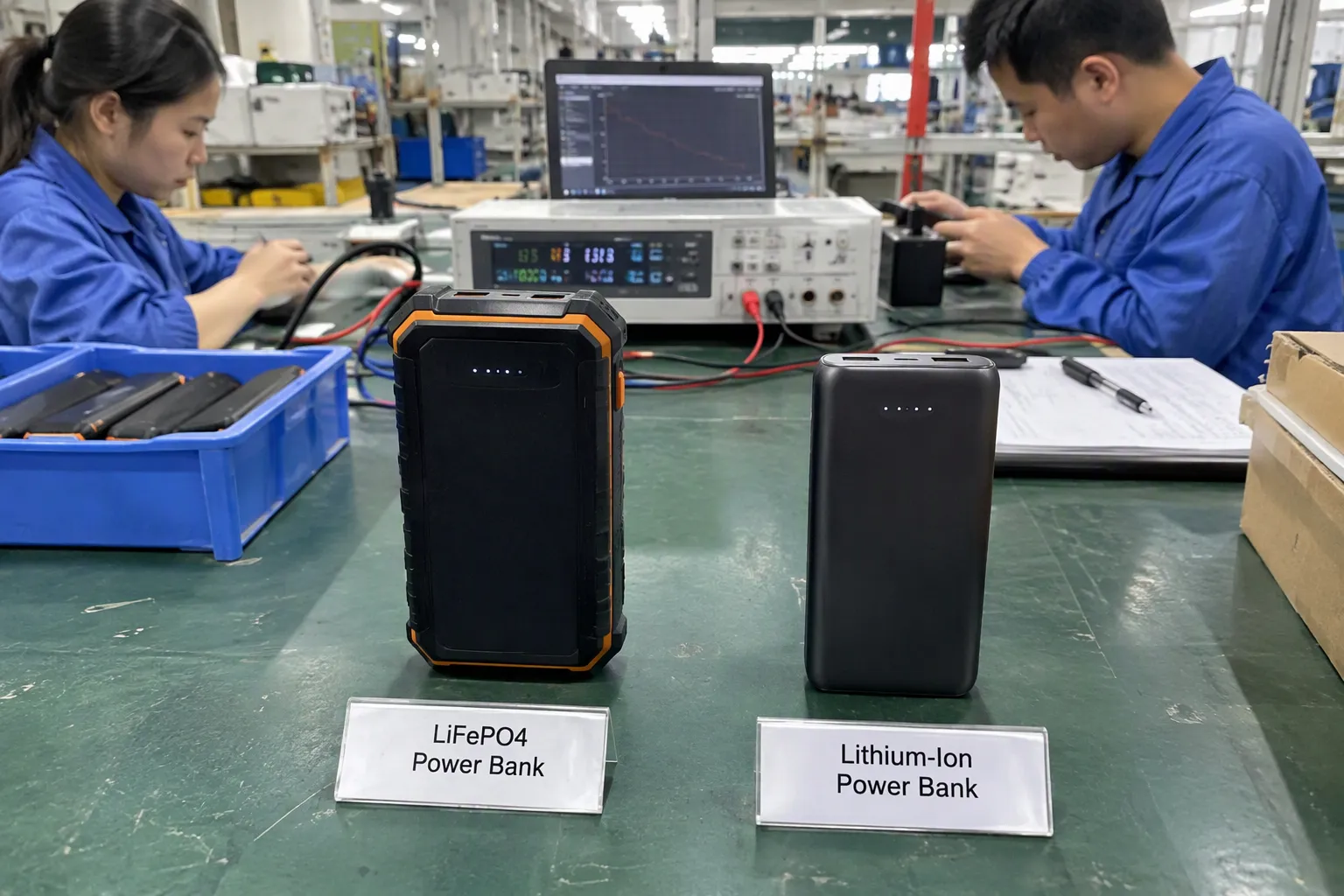
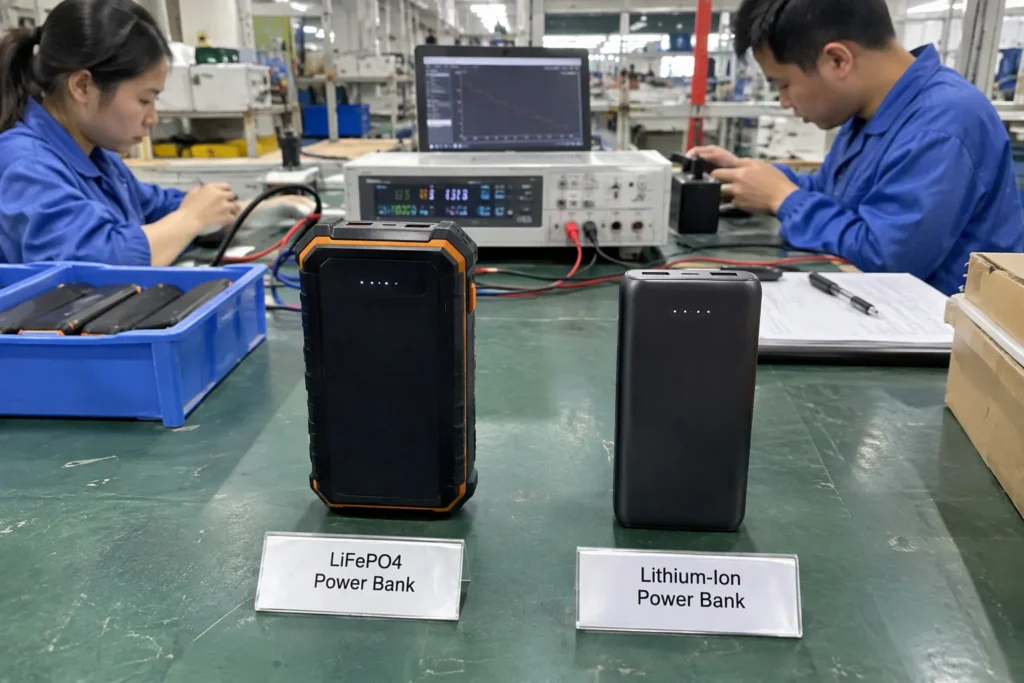
When I talk with retailers and e-commerce sellers, the same concerns come up again and again: What will customers feel in hand? What will shipping teams worry about? How many returns will we face after a year? Those are the real questions behind LiFePO4 vs lithium-ion power banks, and they deserve a practical answer.
LiFePO4 Lithium-Ion Power Banks: Safety, Weight, and Cycle-Life Trade-Offs
When a buyer asks about LiFePO4 lithium-ion power banks, the issue is usually not chemistry in isolation. The real problem is mismatch. A product can look great on a spec sheet but still disappoint if it is too heavy, too bulky, too expensive, or too sensitive for the intended channel. That mismatch can hurt sell-through and increase support issues.
The short answer is simple: LiFePO4 lithium-ion power banks trade compactness for perceived safety and endurance, while lithium-ion power banks usually trade some longevity and safety margin for lower weight and better portability. The decision should come from application, not from a one-size-fits-all claim.
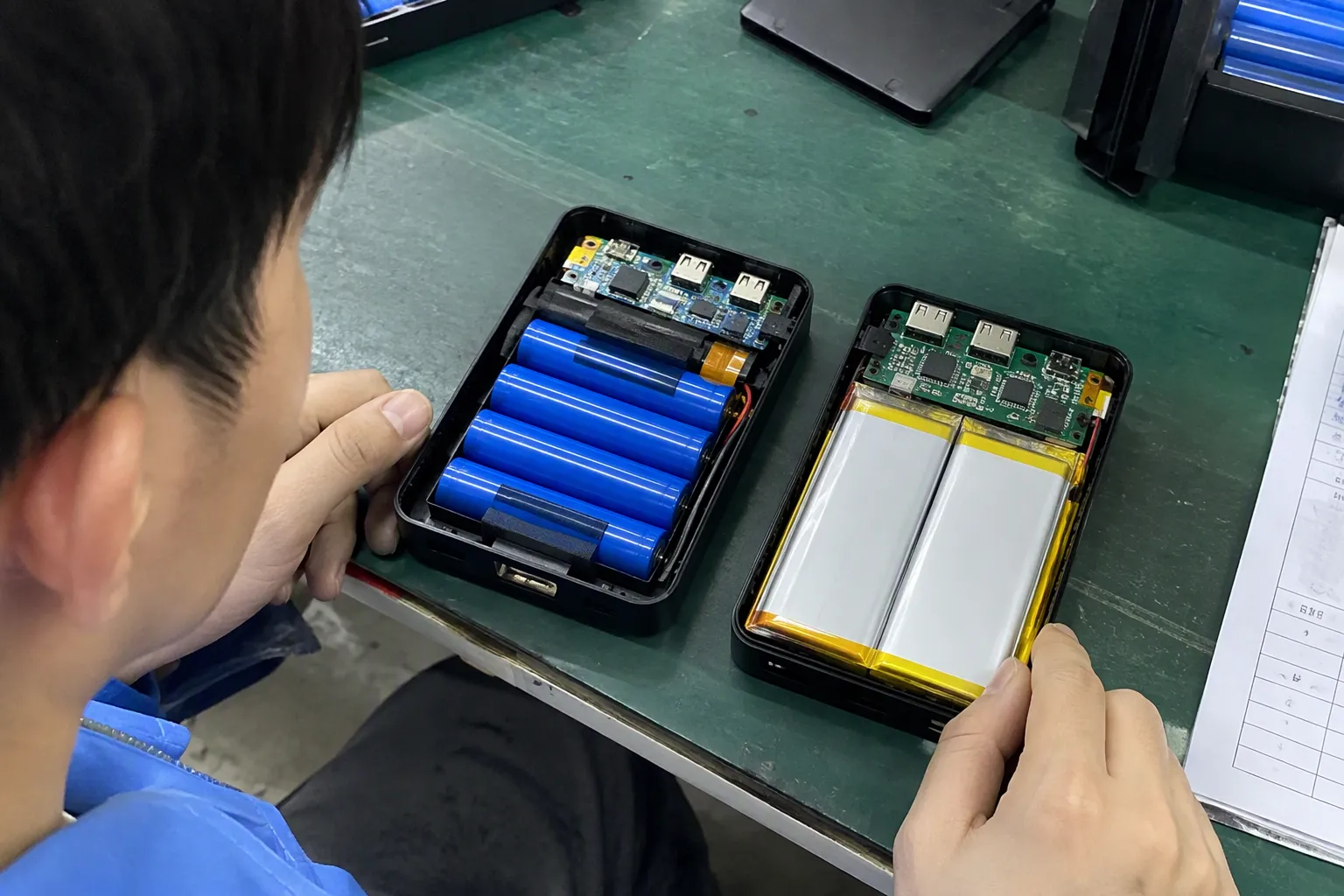
I have noticed that many buyers initially focus only on capacity, such as 10,000 mAh or 20,000 mAh. But capacity alone does not tell the full story. The actual purchase decision also depends on:
- product weight and pocketability
- shipping and storage constraints
- expected charging frequency
- return risk and customer education burden
- document quality, test reports, and factory consistency
If I were sourcing for a European or American channel, I would not ask, “Which chemistry wins?” I would ask, “Which chemistry fits the customer promise I want to make?” That shift usually leads to better sourcing decisions.
LiFePO4 Power Banks: Are They Safer for Buyers
The safety conversation around LiFePO4 power banks often starts with a reasonable concern: buyers want fewer heat complaints, fewer battery-related fears, and fewer transport problems. That concern is valid. LiFePO4 is generally associated with stronger thermal stability and a lower tendency toward thermal runaway than many standard lithium-ion chemistries.[2] Still, I would never describe any battery product as risk-free.
The answer is that LiFePO4 power banks are often viewed as safer in many practical scenarios, but safety still depends on the full product design, charging circuit, cell quality, and manufacturing control. Chemistry helps, but it does not replace good engineering and verification.
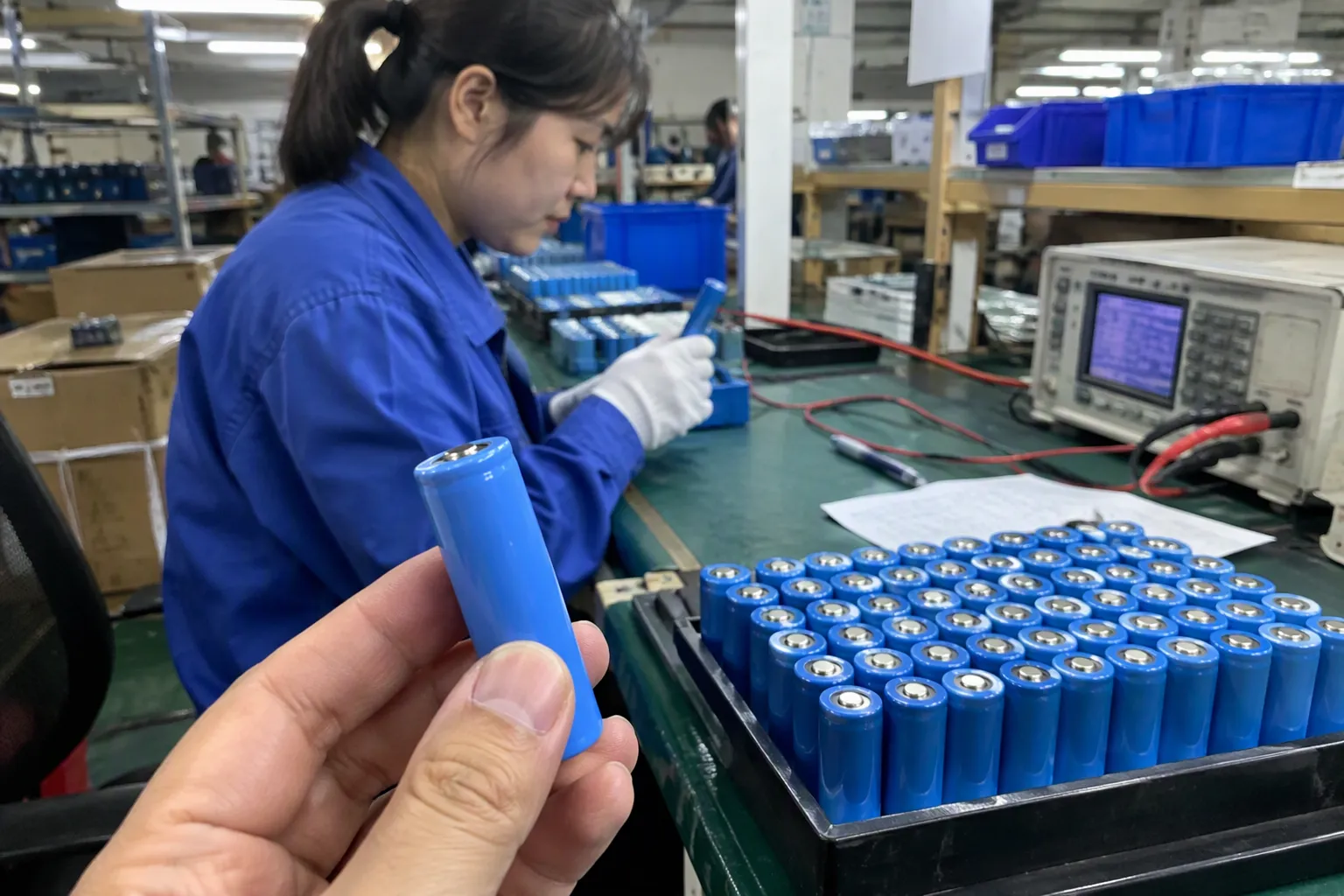
What buyers usually mean by “safer”
In procurement discussions, “safer” often means one or more of the following:
- lower heat buildup during charging
- less customer anxiety about battery incidents
- reduced chance of returns tied to swelling or overheating
- easier internal approval from compliance or merchandising teams
Those are commercial outcomes, not just technical ones. A safer-sounding product can reduce friction in sales channels, especially when the target customer is cautious about battery products.[5]
What LiFePO4 does and does not solve
LiFePO4 can help with thermal stability, but it does not remove the need for:
- proper battery management system design
- reliable charging protection
- accurate capacity labeling
- correct enclosure design
- routine factory testing
I have seen buyers assume the chemistry alone will protect them from complaints. That assumption is too optimistic. A poorly assembled LiFePO4 product can still cause issues. A well-built lithium-ion product can still perform reliably.
How I would evaluate safety as a buyer
I would look at:
- cell source consistency
- protection board quality
- overcharge and short-circuit protection
- temperature management during fast charging
- packaging and transport documentation
- quality-control checks at the factory
If a supplier cannot explain these points clearly, I treat that as a warning sign. Chemistry is only one layer of the safety story.
Lithium-Ion Power Banks: Why Are They Usually Lighter
Lithium-ion power banks remain popular for one main reason: they usually deliver more energy in less space and less weight. That matters a lot in retail, travel, and mobile accessory categories where customers compare products in their hand, in their bag, and on a shelf.[3] A heavier unit can feel more durable, but it can also feel less convenient.[4]
The answer is that lithium-ion power banks are usually lighter and more compact because lithium-ion chemistry offers higher energy density, which helps manufacturers build slimmer portable chargers. That makes them easier to carry, easier to merchandise, and often easier to price competitively.

Why weight matters more than many buyers expect
For e-commerce, weight affects more than comfort. It affects:
- customer perception on product pages
- shipping cost calculations
- bundle viability
- drop-shipping margins
- return reasons such as “too bulky” or “not travel-friendly”
A power bank that feels too heavy for its capacity can create disappointment even if it works well. That is why lithium-ion is often the default choice for mainstream portable chargers.
The trade-off behind the lighter form factor
The weight advantage does not come for free. In buyer discussions, I usually frame it like this:
- lighter product: easier to carry, easier to sell as an everyday accessory
- more compact product: better for travel and impulse purchase
- possible trade-off: shorter cycle life or more sensitivity depending on design and usage patterns
That is not a reason to avoid lithium-ion. It is a reason to position it correctly. If the customer values slim design and portability more than maximum longevity, lithium-ion often makes sense.
When lithium-ion is the stronger commercial fit
Lithium-ion often fits best when the buyer wants:
- mass-market appeal
- slim pocketable design
- lower unit cost at scale
- broad compatibility with consumer expectations
- a familiar product format for online listings
In other words, lithium-ion is not just a technical choice. It is a merchandising choice too.
LiFePO4 vs Lithium-Ion Power Banks: Which Lasts Longer in Real Use
Cycle life is one of the most misunderstood selling points in this category.[6] Many listings mention a large number of cycles, but buyers rarely ask the most important follow-up question: “What does that mean for my customer after six months or two years?” That is where the real value sits.
The answer is that LiFePO4 vs lithium-ion power banks usually comes down to a longer cycle-life potential for LiFePO4 and a lighter, more compact design for lithium-ion, but the real business impact is how quickly the product degrades in typical customer use. A cycle-life claim only matters if it translates into fewer replacements and lower after-sales burden.

Cycle life is not the same as product life
A battery may retain usable capacity over many cycles, but the final customer experience depends on more than chemistry.[7] The actual life of a power bank also depends on:
- charging habits
- heat exposure
- storage conditions
- fast-charging frequency
- enclosure quality
- quality of the charging electronics
So, I do not recommend using cycle life as a stand-alone buying rule. It is a useful indicator, but it should be translated into commercial outcomes.
How buyers should think about cycle life
A practical way to compare products is:
- LiFePO4: often better if the product is expected to be used heavily and repeatedly
- Lithium-ion: often fine if the product is expected to be used more casually or replaced sooner
- Both: can fail early if the supplier uses weak cells or poor protection components
In B2B buying, I care less about the maximum theoretical number and more about likely customer behavior. For example:
- a retail customer may charge a power bank once a week
- a travel buyer may use it in bursts
- a promotional buyer may use it occasionally and replace it within a year
Those patterns change the value equation.
The hidden cost of poor cycle performance
If a power bank degrades too quickly, the buyer may face:
- more warranty claims
- more negative reviews
- more retailer chargebacks
- more customer service workload
- weaker repeat orders
That is why I say cycle life is not a lab trophy. It is a cost-control variable.
How Should Buyers Choose Between LiFePO4 and Lithium-Ion Power Banks?
Many buyers want a simple recommendation, but the best answer depends on channel and usage. I usually start with the customer promise. If the product needs to be ultra-portable and easy to carry every day, lithium-ion often fits better. If the product must support heavier use and stronger safety perception, LiFePO4 may be more attractive.
The answer is that buyers should choose LiFePO4 vs lithium-ion power banks by matching chemistry to the sales channel, customer expectation, and after-sales tolerance. The chemistry should support the business model, not fight it.
A simple decision table I use with buyers
| Buyer priority | LiFePO4 power bank | Lithium-ion power bank |
|---|---|---|
| Safety perception | Stronger fit | Acceptable with good design |
| Weight and slimness | Usually weaker fit | Usually stronger fit |
| Cycle-life focus | Stronger fit | Moderate fit |
| Mass-market retail appeal | Sometimes niche | Usually stronger fit |
| Travel-friendly positioning | Can be less convenient | Usually better |
| Lower return risk from wear | Potential advantage | Depends on quality |
Best-fit scenarios for LiFePO4
I would lean toward LiFePO4 when:
- the buyer wants a more durable long-use product
- the channel is sensitive to battery safety messaging
- the product can tolerate a heavier build
- the customer is less focused on pocket size
Best-fit scenarios for lithium-ion
I would lean toward lithium-ion when:
- slim design is a selling point
- the customer expects a light, mainstream portable charger
- price and space efficiency matter
- the product must compete in crowded retail or online listings
My practical rule
If the product is sold as “everyday carry,” weight often matters more. If the product is sold as “long-service utility,” cycle life and thermal confidence often matter more. That is the framing I find most useful in supplier selection conversations.
What Should Trade Buyers Verify Before Ordering?
This is the section that many buyers skip, and it is usually the most expensive mistake. A chemistry decision is only useful if the supplier can support it with stable production, honest labeling, and credible documents. Certification matters, but it is not the whole answer.
The answer is that trade buyers should verify battery cell consistency, protection design, shipment documentation, and factory quality control before ordering LiFePO4 vs lithium-ion power banks. That verification helps reduce returns, transport friction, and mis-selling risk.
What I ask suppliers first
When I evaluate a new power bank model, I usually ask for:
- cell type and cell source
- protection board details
- capacity and rated output specifications
- test reports and compliance files
- sample consistency across units
- packaging and transport documentation
- warranty policy and after-sales process
I do not treat a certificate as a final answer. I treat it as one document in a broader verification process.
Why document quality matters in export channels
For Europe and the United States, buyers often need a product that fits retail, marketplace, and logistics requirements at the same time.[8] That means the supplier should be able to support:
- labeling accuracy
- stable batch production
- clear battery specifications
- packaging that matches shipping rules
- responsive problem handling
A useful supplier comparison checklist
| Evaluation area | What to confirm | Why it matters |
|---|---|---|
| Cell quality | Consistent source and batch control | Reduces variation |
| Protection circuit | Overcharge, overcurrent, short protection | Supports safer use |
| Product testing | Sample checks and pre-shipment inspection | Catches defects early |
| Compliance docs | Relevant reports for target market | Reduces import and listing risk |
| After-sales | Warranty process and response time | Lowers buyer burden |
My experience-based caution
I have seen buyers focus too heavily on a single feature such as “LiFePO4” or “fast charging.” Then they discover the real issue is inconsistent output, poor assembly, or weak support. That is why I always recommend a full supplier review, especially when the product is going into a retail or e-commerce channel with visible customer feedback.
How Do Compliance and Shipping Concerns Affect the Choice?
Battery products always carry more logistics attention than non-battery accessories. That does not mean a product is difficult to ship by default, but it does mean the chemistry, packing, labeling, and documentation must be taken seriously. Buyers who ignore this often face avoidable delays.
The answer is that compliance and shipping concerns can influence LiFePO4 vs lithium-ion power banks, but they should be handled through proper documentation and supplier coordination rather than assumptions about chemistry alone. Buyers should verify the exact documents for the destination market and transport mode.
What matters in practice
For trade buyers, the practical questions usually include:
- Is the product labeled correctly?
- Do the documents match the exact model?
- Does the packaging support the intended shipping method?
- Does the supplier understand marketplace and importer requirements?
- Are the battery details consistent across sample, spec sheet, and carton?
Why this affects commercial performance
If shipping gets delayed or documentation is incomplete, the buyer may lose:
- launch timing
- seasonal sales
- inventory turnover
- customer trust
That is why I always tell buyers to treat compliance as part of sourcing, not an afterthought.
The right mindset
A safer chemistry does not automatically create a smoother shipment. A lighter chemistry does not automatically make the product easier to clear. The real goal is to reduce friction across the full chain:
- sourcing
- inspection
- freight
- customs
- retail listing
- after-sales
That is the true business case behind chemistry selection.
Frequently Asked Questions
Is LiFePO4 always safer than lithium-ion in power banks?
No. LiFePO4 is generally considered more thermally stable, but the full product still depends on cell quality, protection design, assembly, and usage conditions. Buyers should verify documents and sample performance rather than assuming chemistry alone guarantees safety.
Why are lithium-ion power banks usually lighter?
Lithium-ion chemistry typically offers higher energy density, so manufacturers can build smaller and lighter power banks for the same approximate capacity. That is one reason lithium-ion remains common in portable consumer products.
Does LiFePO4 always last longer than lithium-ion?
Often yes in cycle-life potential, but real-world life also depends on charging habits, heat, storage, and the quality of the battery management system. A poor design can shorten life regardless of chemistry.
Which power bank type is better for e-commerce?
It depends on the product positioning. Lithium-ion is usually better for slim, mainstream, highly portable listings. LiFePO4 can be better when durability and safety perception matter more than size and weight.
What should I verify before ordering from a supplier?
I would verify cell source, protection circuit design, product test reports, labeling, packaging, shipment documents, and after-sales terms. I also recommend checking sample consistency across multiple units before confirming a larger order.
Conclusion
LiFePO4 vs lithium-ion power banks is not a simple chemistry contest. It is a sourcing decision shaped by safety perception, weight, cycle life, compliance, and end-customer expectations. In my view, LiFePO4 usually fits better when durability and reassurance matter most, while lithium-ion usually fits better when slimness and portability drive the sale. For B2B buyers, the safest choice is the one that matches the channel and reduces returns, complaints, and transport friction. If you are evaluating a power bank project, I can help you compare the options and source a model that fits your market.
Sources
- Lithium-Ion Battery - Clean Energy Institute", A technical review or academic source should support that LiFePO4 generally offers better thermal stability and cycle-life potential, while common lithium-ion chemistries typically provide higher energy density and lower mass for a given capacity
- Comparative study on the thermal runaway characteristics of ...", A peer-reviewed battery safety source should support that LiFePO4 is generally more thermally stable and less prone to thermal runaway than many layered oxide lithium-ion chemistries
- Consumer product portability as related to warranty rulemaking", A consumer-behavior study should support that weight and portability affect how buyers assess portable products, especially in retail and travel contexts
- Reflections on the Cloak of Convenience - PMC - NIH", A scholarly source should support that weight can influence perceived sturdiness or quality while also reducing convenience in portable consumer products
- Consumer Trust in Food and the Food System: A Critical Review", A research source should support that perceived safety can affect buyer confidence and channel acceptance, particularly for battery-related consumer goods
- (PDF) Life cycle concept in marketing research", A research source should support that cycle-life ratings are often misunderstood or interpreted inconsistently in battery marketing and purchasing contexts
- A study of the factors that affect lithium ion battery ...", A peer-reviewed battery aging source should support that real-world service life depends on more than chemistry, including temperature, charging habits, storage, and protection design
- EU Batteries Regulation 2023", Government or international transport guidance should support that battery products can face overlapping retail, marketplace, and logistics requirements in Europe and the United States Related KingFuji products: DX390 Fast Magnetic Wireless Power Bank · A27-2 Wireless-Charging Power Bank · CD-16 High-Capacity Fast-Charging Power Bank · MF-BD2 Portable Fast-Charging Power Bank · A10PRO 10000mAh power bank with built-in cables · H007 20000mAh 45W USB-C fast-charging power bank