Quick Answer
Integrated vs Discrete GaN Power Stages can create a difficult OEM decision. I know buyers must balance efficiency, thermal performance, development time, supply stability, and unit cost. A poor choice can increase redesign work or field risk.
I recommend comparing the complete power system, supplier support, and production plan instead of choosing only from a component headline.
Integrated and discrete GaN power stages can both suit OEM power designs. An integrated stage usually reduces component count, layout work, and development time, while a discrete stage can provide more flexibility for optimization, sourcing, and future revisions. The right choice depends on power rating, switching requirements, thermal design, production volume, engineering resources, and the supplier’s ability to provide reliable technical documentation.
I often see buyers begin with the question, “Which option is more advanced?” That question is too narrow. The better question is, “Which architecture gives my product the most controlled risk at the required cost and performance?” The following guide explains the practical trade-offs that OEMs, importers, and 3C product brands should review before approving a design or supplier.
Integrated Discrete Power Stages: Which Decision Fits an OEM
An OEM can lose time when the power stage decision is made before the product requirements are clear. I prefer to start with the complete application: charger, adapter, power module, or consumer device. I then compare electrical targets, mechanical limits, production needs, and supplier evidence.
An OEM should choose an integrated GaN power stage when compact size, faster development, lower component count, and simplified layout are the main priorities. A discrete GaN power stage may be better when the engineering team needs detailed control of the power loop, gate drive, thermal path, component sourcing, or future product revisions. Buyers should verify the full design and test documentation for either option.

What does “integrated” mean in a GaN power stage?

I use “integrated” to describe a power-stage solution where important switching functions are combined in one package or tightly specified module. The exact contents vary by supplier and product family. One device may combine a GaN transistor with a driver. Another solution may include additional control or protection functions. Buyers should never assume that every “integrated” product contains the same functions.
An integrated design can offer several practical advantages:
- Fewer external components around the switching section.
- Shorter internal connections between the switch and driver.
- Simpler PCB placement for some reference designs.
- Faster engineering evaluation when the supplier provides complete application material.
- More predictable assembly work when the approved bill of materials is stable.
- Potentially smaller board area, depending on the package and surrounding components.
These benefits matter in compact 3C products. A USB-C charger, travel adapter, or multi-port charging product may have limited PCB space. A smaller switching section can help the designer manage other parts, such as connectors, transformers, protection devices, and output filtering.
However, integration does not automatically guarantee a better final product. The OEM still needs to check the switching frequency, voltage range, current behavior, thermal resistance, protection response, package limitations, and recommended layout. I would also ask whether the supplier provides a tested reference design for the intended topology and operating range.
What does “discrete” mean in this comparison?
A discrete GaN power stage normally separates the GaN transistor, gate driver, controller, sensing elements, and other supporting components. The exact structure depends on the circuit. This approach gives the engineering team more control, but it also creates more design responsibility.
A discrete approach may help when the OEM needs to:
- Select a preferred controller from an existing platform.
- Adjust the gate-drive strategy.
- Change the switching device without replacing the whole power-stage package.
- Optimize the thermal path for a specific enclosure.
- Use existing production knowledge from a mature silicon or power-supply design.
- Create several power levels from a related architecture.
- Compare multiple approved vendors during sourcing.
I would not describe discrete power stages as old-fashioned. They can be a deliberate choice for products that need customization or long-term platform control. The disadvantage is that the design team must manage more interfaces. Layout, parasitic effects, gate-drive behavior, protection coordination, and electromagnetic compatibility can require additional engineering work.
Which option usually reduces development effort?
An integrated stage often reduces the number of design decisions. It may also allow the OEM to start from a supplier reference design. That can be helpful for a company that has limited internal power electronics resources or wants to launch a product quickly.
Still, development effort depends on more than the device count. I would evaluate the supplier package before I count any claimed time savings. Useful material may include:
- Electrical specifications with clear test conditions.
- Recommended PCB layout.
- Reference schematics.
- Thermal guidance.
- Evaluation-board results.
- Application notes.
- Protection behavior.
- Production test recommendations.
- Reliability and quality documentation.
- A named technical contact.
A supplier that provides only a short product sheet may not reduce development risk. An integrated device with incomplete application support can create more uncertainty than a discrete solution supported by a capable engineering team.
I have found that procurement teams sometimes compare two quotations without comparing the engineering package. That method can produce a misleading result. A lower unit price may become expensive if the buyer must spend more time debugging the layout, changing the transformer, investigating abnormal noise, or repeating compliance testing.
How should an OEM compare flexibility and control?
A discrete GaN design usually gives the OEM more control over individual parts. This control can support product families. For example, an engineering team may want to keep one controller platform while testing different switching devices for different power levels. A discrete architecture may make that development path more accessible.
An integrated stage may offer less component-level freedom. The OEM may need to accept the supplier’s internal combination of switch, driver, and protection functions. That limitation is not necessarily a problem. Many products benefit from a controlled, repeatable design. The important point is that the buyer should understand what can and cannot change.
| Evaluation point | Integrated GaN power stage | Discrete GaN power stage |
|---|---|---|
| Component count | Often lower | Usually higher |
| Layout responsibility | May be simpler, but still critical | More detailed control and more layout work |
| Development speed | Often favorable with good reference designs | May require more engineering time |
| Circuit flexibility | More limited by the selected device | Generally higher |
| Sourcing strategy | May depend on one integrated source | May allow separate approved sources |
| Thermal design | Depends strongly on package and PCB | More options for device and heat path |
| Debugging | Fewer interfaces, but less internal visibility | More accessible at individual stages |
| Platform reuse | Can be efficient for a fixed design | Can support wider customization |
| Initial BOM review | Often simpler | Requires more component coordination |
| Long-term change control | May depend on one device revision | May permit individual substitutions, subject to validation |
I would treat this table as a starting point rather than a final selection tool. The right result changes with the application and supplier.
Which architecture is better for thermal management?
Thermal performance depends on the complete power path. The package, PCB copper, component placement, airflow, enclosure, switching conditions, transformer, rectifier or synchronous stage, and output load all affect the result. I would not approve a design based only on a headline efficiency number.
An integrated package can reduce the physical distance between parts. That may help the designer control some high-frequency connections. However, the package may also concentrate heat in a small area. The PCB must provide an appropriate thermal path, and the enclosure must allow the heat to leave the product.
A discrete design can offer more freedom in placing the switching device and driver. The OEM may be able to select a package that suits the intended heat-spreading method. Yet the extra connections can introduce layout challenges. The designer must manage the high-current loop and gate-drive loop carefully.
For supplier evaluation, I would request test information under conditions that resemble the final product:
- Input voltage range.
- Output voltage and load.
- Ambient temperature.
- Enclosure condition.
- Switching frequency.
- Cooling method.
- Test duration.
- Measurement equipment and points.
- Protection or derating behavior.
A result measured on an open evaluation board may not represent performance inside a compact retail charger. I would also ask whether the test uses the final transformer, PCB, firmware, and enclosure. If those items are different, I would treat the result as an engineering reference rather than a production guarantee.
How do integrated and discrete stages affect manufacturing?

Manufacturing buyers often focus on the bill of materials, but the assembly process also matters. An integrated stage may simplify purchasing and placement because it combines several functions into one approved part. That can reduce the number of line items and make the approved BOM easier to manage.
A discrete design can increase the number of placements and inspection points. The manufacturing team may need tighter control of component orientation, solder quality, thermal pads, and high-voltage spacing. These requirements do not make a discrete design unsuitable. They simply require clear production instructions and inspection criteria.
I recommend that an OEM review these manufacturing questions before design approval:
- Does the package match the factory’s assembly capability?
- Does the PCB require special pad design or void control?
- Does the supplier specify acceptable soldering conditions?
- Can the factory inspect the important joints?
- Does the design require manual rework?
- Are substitute components controlled through written approval?
- Does the factory have a functional test for the power stage?
- Can the supplier support failure analysis if a batch shows abnormal behavior?
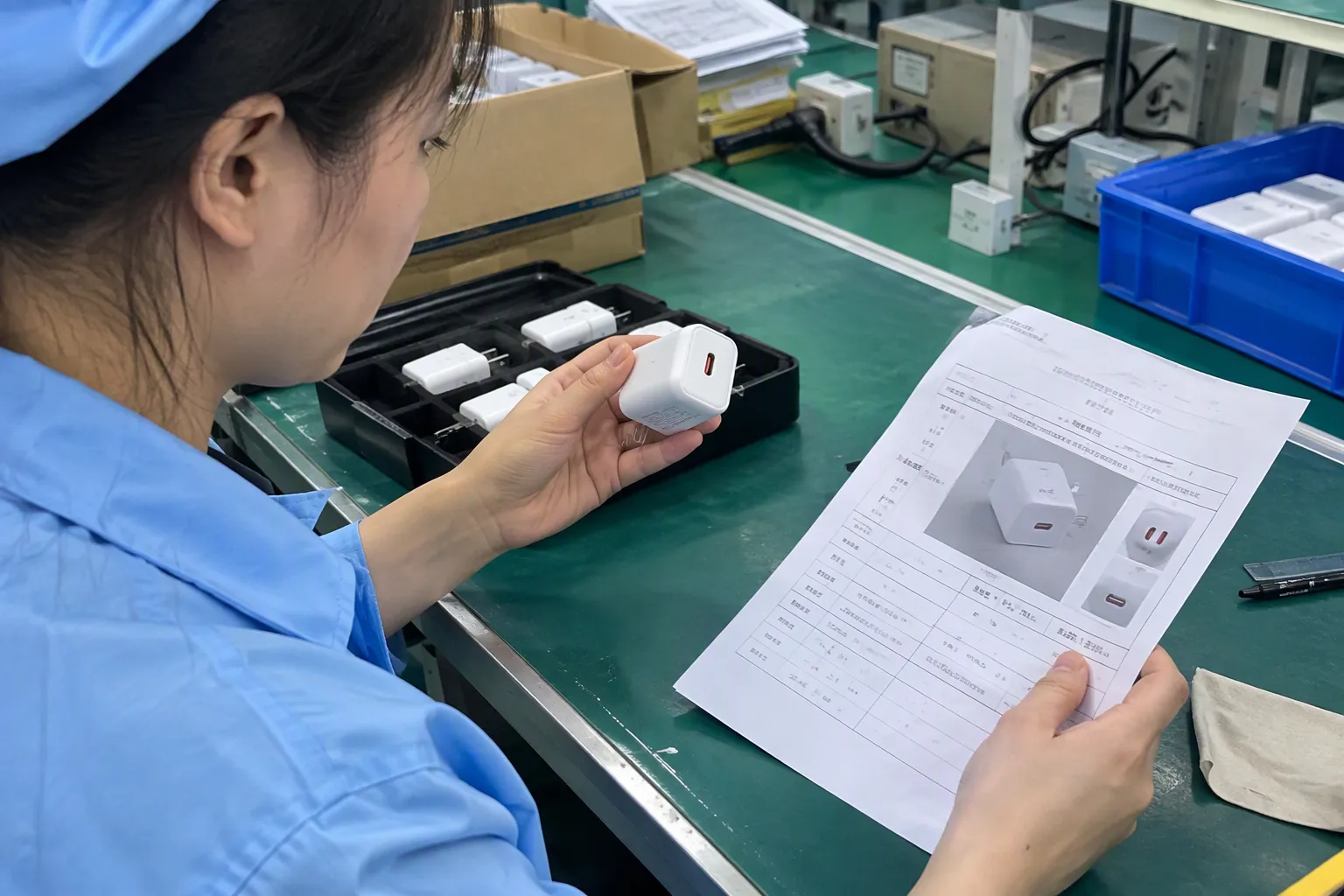
For a 3C charger or adapter, the buyer should connect component selection with production quality. The best semiconductor architecture still needs a controlled assembly process. I would ask the factory to show how it controls incoming materials, first-article approval, in-process inspection, and final functional testing. I would also request production samples rather than relying only on a laboratory prototype.
What should procurement teams ask about supply continuity?
An integrated stage can simplify the BOM, but it may also create dependence on one particular part. If that part becomes unavailable, the OEM may need to redesign the power section. A discrete design may offer more opportunities for qualified alternatives, but those alternatives still require electrical and safety validation.
Neither architecture removes supply-chain risk. I would evaluate the supplier’s commercial and technical controls together:
- Does the supplier provide a clear part number and revision history?
- Does the quoted component have a stable production status?
- Can the supplier explain its normal lead-time range?
- Does the supplier control unauthorized substitutions?
- Are alternative sources available?
- Would a second source require a new PCB or transformer?
- Does the manufacturer communicate engineering changes?
- Can the supplier hold materials for a confirmed production plan?
- What MOQ applies to the selected device and finished product?
For our own 3C export work, I know that customers often balance price with MOQ and delivery timing. A technically attractive component does not help if the product cannot be replenished at the required speed. I prefer to discuss expected annual demand, launch quantity, forecast visibility, and acceptable substitution rules before final quotation.
A buyer should also separate the semiconductor supply decision from the finished-product supplier decision. A trading company may coordinate the finished charger or adapter, while the factory manages the internal component chain. The buyer still needs written evidence of the approved configuration and a process for handling any change.
How does the choice affect customization?
Integrated stages can work well for standard product platforms. An OEM may select an existing charger design, adjust the housing, change the plug, add branding, or modify the output interface. A proven design can support a faster private-label program when the required power range and market requirements are already covered.
Discrete stages may suit deeper customization. The OEM may want a unique enclosure, special thermal limits, a different output profile, or a family of related products. The engineering team may accept more development work in exchange for greater control.
I would ask the supplier to classify customization into three levels:
Level one: cosmetic customization
This may include:
- Logo printing.
- Housing color.
- Packaging.
- Label design.
- Cable length.
- Retail instructions.
Level two: configuration customization
This may include:
- Plug type.
- Port combination.
- Output arrangement.
- Cable specification.
- Firmware or display behavior, where applicable.
- Regional packaging and markings.
Level three: electrical redesign
This may include:
- New power rating.
- New topology.
- Different controller.
- Different transformer.
- New thermal solution.
- Major PCB revision.
The third level requires a different quotation and validation process. I would not treat it as a simple OEM branding order. The buyer should agree on samples, test stages, tooling, engineering fees, MOQ, lead time, and ownership of design files before production begins.
What documentation should buyers verify?
I treat certificates and declarations as documents to verify, not as substitutes for evaluation. A supplier may describe a product as fully certified, but the buyer should check the document scope, model number, manufacturer name, test standard, date, and applicable market.
For an OEM power product, I would organize the document review into four groups.
1. Product identity
The buyer should confirm that the documents refer to the exact product or a clearly defined product family. A report for one model may not automatically cover another model with a different PCB, enclosure, power rating, or component set.
2. Electrical and safety evidence
The buyer should request relevant reports or declarations for the intended market and product configuration. The buyer should also confirm whether the test sample matches the planned production BOM.
3. Quality-system evidence
A factory may present quality-management certificates or audit records. I would verify the issuing organization, validity period, site address, and scope. A certificate does not remove the need for factory inspection and production controls.
4. Change-control evidence
The supplier should explain how it manages changes to the GaN device, driver, controller, transformer, PCB, housing, or packaging. A component change can affect thermal behavior, electromagnetic performance, and safety results. The buyer should require approval before any material change enters production.
I would keep this evidence in the product file. That record can support future purchasing, retailer reviews, market documentation, and supplier audits.
Which commercial factors should enter the final decision?
The lowest component price rarely represents the lowest total cost. I recommend calculating the total product cost across development, manufacturing, testing, inventory, and after-sales support.
A practical comparison can include:
| Cost category | Questions I would ask |
|---|---|
| Device price | Is the quote based on a stable production part? |
| External BOM | Does integration reduce or increase supporting components? |
| PCB cost | Does the architecture require more layers, copper, or special processing? |
| Engineering cost | How much internal or supplier development is required? |
| Testing | Will the design require additional prototypes or compliance work? |
| Manufacturing | Does assembly require special controls or rework? |
| Inventory | What MOQ and lead time apply to the critical parts? |
| Warranty | Could thermal or layout uncertainty increase field returns? |
| Change cost | What happens if the selected part is discontinued? |
| Customization | Which changes are included in the quotation? |
I often ask customers to compare three scenarios rather than two: an integrated design, a discrete design, and a proven alternative platform. This wider comparison can reveal that the best commercial choice is not the newest architecture. A standard, well-supported design may be better for a retailer that values predictable delivery and stable replenishment.
At the same time, a buyer should not reject GaN technology only because the initial unit price appears higher than a conventional alternative. The final product may benefit from size, weight, efficiency, or market positioning. The buyer needs application-specific engineering and commercial calculations before making that claim.
A practical OEM decision process
I would use the following process for a first comparison.
-
Define the product target.
Record input range, output requirements, power level, port arrangement, enclosure dimensions, operating temperature, target market, and expected production quantity. -
Set non-negotiable limits.
Separate mandatory requirements from desirable features. These may include size, thermal limits, lead time, MOQ, price, customization, or an existing factory process. -
Request both technical and commercial documents.
Ask for the datasheet, reference design, test conditions, BOM summary, quotation, sample lead time, MOQ, and change-control procedure. -
Review the complete power path.
Do not evaluate the GaN stage separately from the controller, transformer, rectifier, output stage, protection circuit, PCB, and enclosure. -
Test representative samples.
Use the planned housing, load conditions, cable, and production-intent components whenever possible. -
Review manufacturing readiness.
Confirm assembly capability, inspection methods, functional testing, incoming quality checks, and traceability. -
Approve the configuration in writing.
Record the exact model, revision, BOM, PCB version, packaging, labels, and accepted test criteria. -
Plan for future supply.
Discuss forecast, replenishment, safety stock, alternative parts, and engineering-change notification.
This process helps me keep the discussion practical. I do not need every buyer to become a GaN device specialist. I do need the buyer, factory, engineer, and supplier to work from the same technical and commercial information.
Frequently Asked Questions
Are integrated GaN power stages always more efficient?


No. Efficiency depends on the complete circuit, switching conditions, layout, magnetics, control method, load, thermal environment, and testing method. Integration may support a compact design, but it does not guarantee a specific system result. I recommend comparing measured results from representative prototypes under clearly stated conditions.
Are discrete GaN power stages better for customized OEM products?
A discrete stage can offer more control over individual components, which may help with deeper customization. However, it also increases design responsibility and validation work. I would select it when the OEM has a clear reason to control the driver, switch, thermal path, or platform architecture.
Which option is easier for a small 3C brand to adopt?
An integrated stage may be easier when the supplier provides a mature reference design and the product requirements fit that design. A small brand should still verify samples, documentation, safety evidence, production quality, MOQ, and after-sales support. A simple architecture does not remove the need for professional evaluation.
Can an OEM replace an integrated GaN stage with a discrete design later?


A direct replacement is not guaranteed. The PCB, layout, controller behavior, transformer, protection circuits, thermal path, and test results may all change. I would treat the change as a new engineering project and require design review, prototype testing, and application-specific validation.
What should I ask a GaN charger supplier before placing an order?
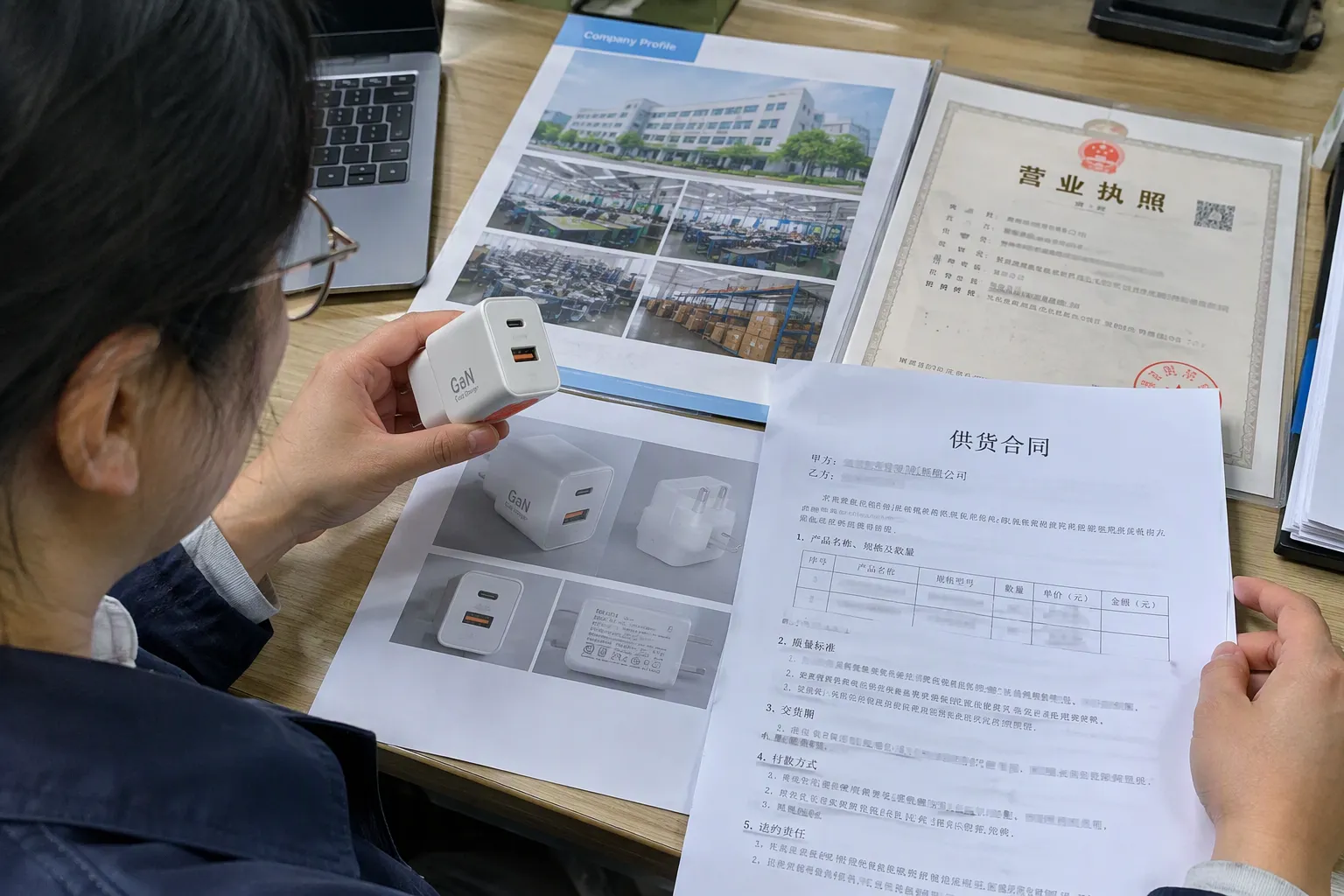

I would ask for the exact product configuration, rated input and output conditions, sample test data, reference design or technical summary, BOM change policy, MOQ, lead time, warranty process, factory quality controls, and relevant certification documents. I would also ask how the supplier handles unauthorized component substitutions.
Conclusion
Integrated vs Discrete GaN Power Stages is not a simple contest between a newer option and a more flexible option. I see the best decision as a balance of power targets, layout capability, thermal design, customization, manufacturing control, supply continuity, and total cost. Integrated stages can support compact, faster-to-market products, while discrete stages can provide useful design freedom. I can help buyers compare suitable 3C power products, samples, MOQ, delivery, customization, and supplier documentation for their target market.