Packaging EPR is becoming a launch-planning issue for 3C brands, not a formality to handle after shipment. When buyers lack material weights, packaging layers, or a clear responsible party, registration can delay market entry and create unexpected costs. I help buyers organize supplier information early, so they can evaluate compliance risk before placing orders.
Packaging EPR for 3C brands should be planned before products enter a target market.[1] Buyers should identify the responsible party, collect packaging data by material and layer, verify local registration and reporting requirements, and build fees into the landed-cost model. The exact obligation depends on the country, sales channel, product flow, and local rules.[2]
Quick Answer
- Start with packaging data, not only product photos or carton quantities.
- Separate primary, secondary, and transport packaging for each product or product family.
- Confirm responsibility locally because the exporter, brand owner, importer, distributor, or marketplace may not have the same role in every country.
- Treat registration, reporting, compliance scheme, and material charges as separate budget items.
- Verify current rules, deadlines, minimum charges, and reporting periods with the relevant authority or qualified local adviser before launch.
Packaging EPR can look simple when a buyer has only one charger or USB cable to review. The work becomes more detailed when the same product has several colors, retail boxes, bundled accessories, promotional inserts, and different shipment routes. The sections below explain how I would organize the decision before an order is approved.
What Packaging EPR Data Should 3C Brands Collect?
Incomplete packaging records create problems because a supplier’s product quotation rarely contains all the information needed for EPR reporting. A buyer may know the carton count and total shipment weight but still lack the material breakdown required by a local system.
A practical Packaging EPR dataset should connect each sellable product to its packaging layers, material categories, unit weights, quantities, and destination market.[3] The dataset should also identify transport packaging and explain which values are measured, estimated, or supplied by another party.
Start with the sellable unit
I recommend creating one packaging record for each sellable SKU or clearly defined product family. A 20W charger in a paper box may use different packaging from a 65W GaN charger in a larger box. A TWS earbud set may include a retail carton, molded insert, protective film, charging case, manual, cable bag, and shipping protection.
| Data field | Practical question |
|---|---|
| SKU or model | Which exact product does this record describe? |
| Market | Which country will receive or sell the product? |
| Sales unit | Is the figure based on one retail unit, one bundle, or one master carton? |
| Packaging layer | Is the item primary, secondary, or transport packaging? |
| Material | Is it paper, cardboard, plastic, glass, aluminium, steel, wood, or a composite? |
| Weight | What is the weight per item or per sales unit? |
| Quantity | How many units are expected during the reporting period? |
| Evidence | Was the value weighed, calculated, estimated, or copied from a supplier declaration? |
| Revision date | When was the packaging specification last checked? |
This structure prevents one common mistake: treating the product’s total shipping weight as packaging data. A charger contains electronic components, plastics, copper, and other product materials. Those materials do not automatically become packaging materials just because they appear on a freight document.
Separate the packaging layers
1. Primary packaging touches or directly protects the product sold to the consumer.[4] 2. Secondary packaging groups or presents several units.[5] 3. Transport packaging protects goods during storage and delivery.[6]
The exact legal treatment can depend on local definitions, so I do not use this three-part structure as a substitute for local verification. I use it as a practical starting point for organizing records.
- A paper retail sleeve.
- A plastic hanging tab.
- A small protective film.
- A printed paper insert.
- A master carton.
- Carton tape.
- Pallet wrap.
- Pallet strapping.
- A pallet, if applicable to the reporting model.
Ask for measured values where possible
I prefer measured packaging weights when the order volume justifies the work. A basic internal check can involve separating representative packaging components and weighing them with a suitable scale. This is not a legal certification or laboratory assessment. It is a way to identify obvious gaps before data reaches a reporting process.
I have seen document-preparation discussions become slow when a buyer sends only photographs of a retail box and asks for an exact material calculation. Photos help identify components, but they do not reliably show weight, material composition, adhesive content, coating, or the treatment of a composite item.[7]
Record changes after customization
I suggest linking packaging data to the purchase order and artwork revision. The supplier should confirm whether the approved packaging sample matches the recorded information. This simple step can prevent an old data sheet from being used for a new packaging design.
Who Is Responsible for Packaging EPR in a 3C Supply Chain?
Responsibility is not determined by the factory location alone.[8] The correct party can change according to the country, brand arrangement, importer of record, sales channel, and whether the seller is established in the target market.
The responsible party for Packaging EPR must be confirmed for each target market and sales model. Buyers should map who places packaged goods on the market, who imports them, who owns the brand, who sells to the consumer, and whether a marketplace or local representative has a defined role.
Use a responsibility map
| Supply-chain question | Why it matters |
|---|---|
| Where is the product manufactured? | Manufacturing location does not automatically decide the EPR duty. |
| Who owns the brand? | Brand ownership can matter in some market structures. |
| Who imports the packaged goods? | Import arrangements may affect the party placing goods on a market. |
| Who sells to the consumer? | Direct e-commerce and wholesale distribution can create different flows. |
| Is the seller established locally? | Local establishment can affect registration or representative arrangements. |
| Does a marketplace provide compliance support? | A marketplace service may not cover every product, country, or reporting duty. |
| Who controls packaging design? | Design control helps identify where accurate data should come from. |
| Who keeps the evidence? | A reporting party needs access to records and supporting documents. |
I do not tell every US or European brand that the exporter must register. That answer can be wrong. I also do not assume that a marketplace removes every obligation. A buyer needs a country-by-country review.
Compare common sales models
| Sales model | Parties to review | Main planning concern |
|---|---|---|
| Chinese supplier sells to an EU importer | Supplier, importer, brand owner, distributor | The importer or another local party may have reporting responsibilities. |
| US brand sells through its own local entity | Brand owner, local entity, fulfilment provider | The local entity may need records and registration. |
| Non-local seller uses a marketplace | Seller, marketplace, local representative, consumer | The marketplace’s role and coverage must be confirmed. |
| Brand sells wholesale to a local distributor | Brand, importer, distributor, retailer | The contract should define data, reporting, and evidence responsibilities. |
| Retailer buys private-label goods | Retailer, brand owner, importer, supplier | Private-label control may affect the responsibility analysis. |
- Register, if registration is required.
- Appoint a local representative, if applicable.
- Join a compliance scheme, if applicable.
- Collect packaging data.
- Submit reports.
- Pay charges.
- Keep records.
- Respond to authority or scheme questions.
- Notify the other parties when packaging changes.
Ask local questions early
- Which party is treated as responsible under this exact sales model?
- Does the obligation apply to the brand, importer, seller, distributor, or another role?
- Does the rule change for distance selling or marketplace sales?
- Does the party need a local establishment or representative?
- What records must be retained?
- Does the registration cover one brand, one entity, one market, or multiple categories?
- What happens if the business changes importer or fulfilment arrangements?
The European Commission’s packaging and packaging waste policy information provides useful background, but it does not replace country-level advice. National implementation can differ in definitions, registration routes, reporting calendars, and financial obligations.
How Should Brands Plan Packaging EPR Registration?
Registration should be treated as an operational workflow. A buyer that waits until goods are ready to ship may discover that the responsible entity, supporting documents, or packaging dataset is not ready.
A sound Packaging EPR registration process begins with the target market and sales model. It then moves through responsibility allocation, data preparation, document review, submission, confirmation, reporting setup, and change control. Buyers should verify each step using current local instructions.
A practical registration sequence
1. Define the market and channel
The brand should list each destination country separately. “Europe” is too broad for a registration plan. The team should also identify whether sales are wholesale, retail, direct-to-consumer, marketplace-based, or fulfilled by a third party.
2. Identify the responsible entity
3. Build the packaging dataset
4. Check required documents
Depending on the market and route, the process may involve company documents, tax or business details, brand information, power of attorney, supplier data, or evidence of participation in a relevant system. I treat each document request as market-specific.
5. Confirm the submission route
The responsible party may submit directly, use a compliance organization, appoint a service provider, or follow another approved process. The buyer should verify what the service includes and what remains with the business.
6. Save confirmation and reporting instructions
A registration number or confirmation email is not the end of the workflow. The company should save the approved details, reporting calendar, data format, payment instructions, and contact information.
7. Create a recurring review
What suppliers should provide
- Packaging bill of materials.
- Material category for each component.
- Net weight per packaging component.
- Unit of measurement.
- Product-to-packaging relationship.
- Inner and master carton details.
- Pallet and protective material details where relevant.
- Product variant and packaging revision.
- Sample or weighing method.
- Packaging artwork reference.
- Date of the last update.
- Contact person who can explain the data.
Connect registration with procurement
| Procurement stage | Packaging EPR control |
|---|---|
| Supplier quotation | Ask whether packaging weights and materials are available. |
| Sample approval | Record the packaging configuration and revision. |
| Purchase order | Require notification before packaging changes. |
| Pre-shipment review | Check product quantity and packaging version. |
| Shipment file | Retain carton, pallet, and packaging records. |
| Post-launch review | Compare forecast volume with actual sales or imports. |
This approach makes compliance part of normal quality control. It also supports other commercial tasks, such as freight estimation, carton optimization, recycling instructions, and landed-cost calculation.
Use external sources carefully
I recommend starting with the relevant national authority or official register. For example, Germany’s LUCID Packaging Register publishes official information for its system. France’s ADEME packaging information provides official sector context. These sources help buyers identify the correct route, but a company should still check whether its facts match the current local requirements.
How Can Brands Plan Packaging EPR Fees?
A single “EPR registration fee” rarely describes the full cost. The budget may include registration, representation, compliance scheme participation, reporting support, material-based charges, administration, data preparation, and internal time.
Packaging EPR fees should be planned as a scenario using local rules, material weights, forecast quantities, reporting periods, and applicable service charges. Buyers should separate fixed costs from variable costs and avoid treating an informal quote as a universal legal tariff.
Separate the cost categories
- Administrative costs
These may include registration, account setup, document review, local representation, or service-provider administration. The exact items depend on the market and provider.
Build a scenario instead of one number
This is only a budgeting structure. It is not a universal calculation formula. The buyer must confirm whether the local system uses weight, material category, units, minimum charges, thresholds, scheme rates, taxes, or other factors.
| Scenario | Assumption | Management use |
|---|---|---|
| Low | Lower sales forecast and lighter approved packaging | Tests minimum budget exposure. |
| Base | Most realistic product and sales plan | Supports purchase approval. |
| High | Higher volume, extra variants, or heavier packaging | Shows reserve needed for growth. |
For a TWS earbud brand, the base scenario might include the retail box, paper insert, charging cable bag, master carton, and expected sales units. For a USB cable range, the main uncertainty may come from several packaging formats rather than the cable itself.
Do not confuse shipment quantity with market quantity
- Whether the system uses units sold, units imported, or another basis.
- Whether packaging is reported when placed on the market or at another point.
- Whether unsold inventory is treated differently.
- Whether transport packaging follows the same reporting route.
- Whether returns, replacements, samples, or promotional units count.
- Whether a minimum charge applies.
I would keep the calculation evidence with the purchase order and sales forecast. If actual volume changes significantly, the business can update the scenario rather than discovering the difference at the end of the year.
Reduce cost through packaging design
- Box dimensions and empty space.
- Excessive plastic film.
- Unnecessary inserts.
- Mixed-material components.
- Separate promotional packaging.
- Oversized shipping cartons.
- Reusable transport packaging.
- Packaging standardization across product variants.
A smaller box can reduce material use and freight volume. However, packaging engineering and product-protection testing should be completed by qualified professionals where damage risk is material. A cheaper packaging format that increases returns can create a larger commercial loss.
What Packaging EPR Data Should Buyers Request from Suppliers?
Buyers should request a SKU-level packaging declaration that identifies each packaging component, its material, weight, layer, quantity, and evidence source. They should also ask suppliers to confirm the packaging version and notify them before any change.
Use a supplier questionnaire
- What packaging is supplied with one retail unit?
- What packaging is added to an inner carton?
- What packaging is added to a master carton?
- What packaging is used only for transport?
- What is the weight of each component?
- What is the material category of each component?
- Does any component combine materials that cannot be easily separated?
- Are labels, tape, windows, films, or protective bags included?
- Does the declared weight include printing or coatings?
- Are the values measured from a production sample?
- Which packaging artwork or sample does the declaration match?
- When will the supplier update the declaration?
Example of a basic data sheet
| Component | Layer | Material category | Weight per unit | Evidence | Revision |
|---|---|---|---|---|---|
| Retail carton | Primary or applicable local category | Paper/cardboard | Supplier value | Production sample | Artwork A |
| Product film | Primary or applicable local category | Plastic | Supplier value | Sample estimate | Artwork A |
| Manual | Primary or applicable local category | Paper | Supplier value | Scale check | Artwork A |
| Inner carton | Secondary | Cardboard | Supplier value | Carton specification | Carton B |
| Master carton | Transport | Cardboard | Supplier value | Carton specification | Carton B |
| Pallet wrap | Transport | Plastic | To verify | Warehouse record | Shipment plan |
Resolve unclear materials
Suppliers may use commercial terms such as “paper box,” “eco bag,” or “recyclable insert.” These terms are not enough for a reliable dataset. I would ask for a more specific description, such as coated paperboard, plastic film, expanded material, or a composite structure, while recognizing that local reporting categories may use different names.
The buyer should not infer recyclability from a marketing statement. A claim about recycled content or recyclability may require separate evidence, and it may not answer the question of how the packaging is classified for reporting.
Make the declaration part of quality control
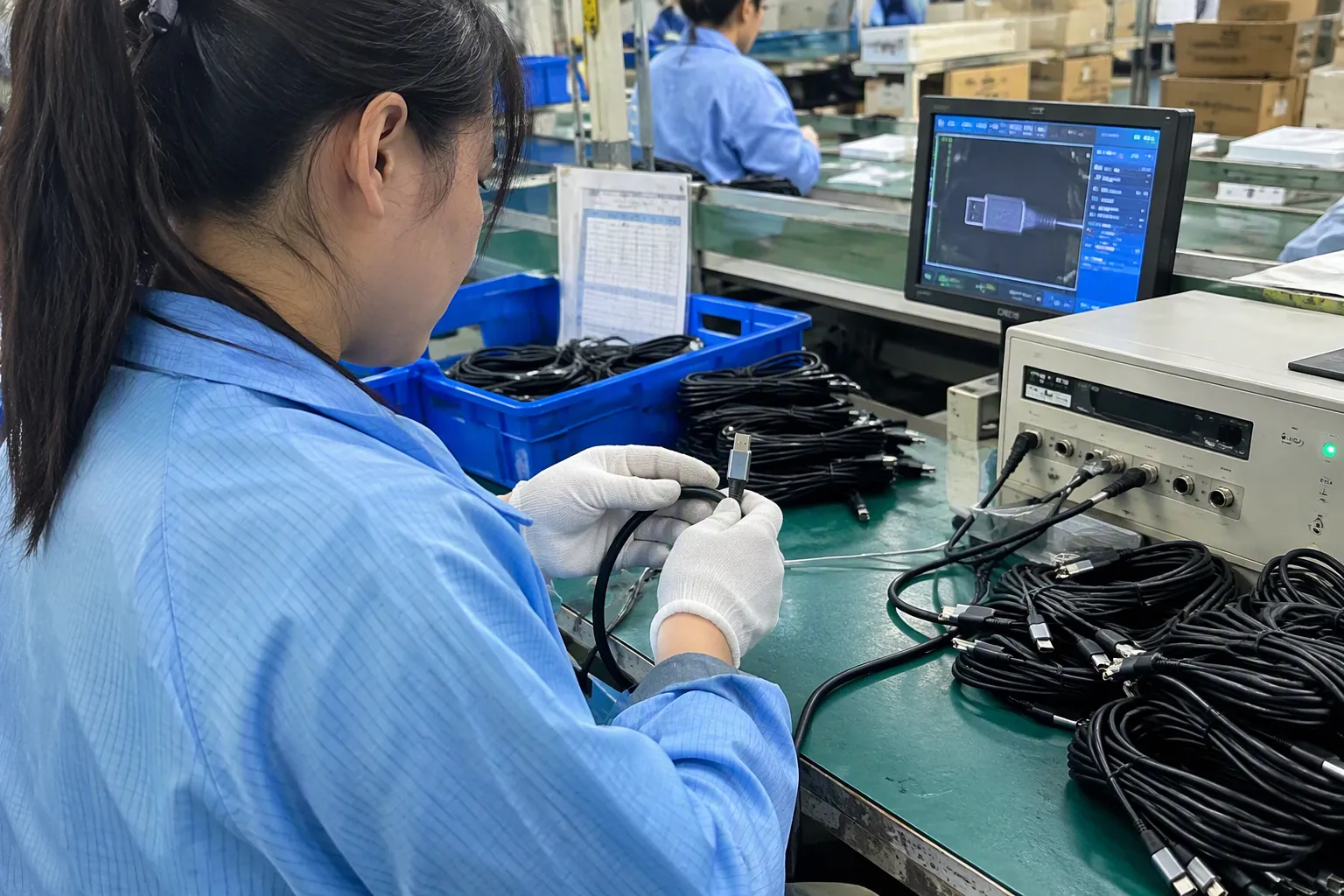
This method is especially useful for private-label products. A supplier may change a box supplier, paper thickness, insert, or protective film without changing the product model. The packaging file should be revised when the physical configuration changes.
How Can 3C Brands Reduce Packaging EPR Launch Risk?
A registration may be completed and still leave the business exposed if data, contracts, forecasts, and product changes are not controlled. Launch risk often comes from small gaps that appear harmless when viewed separately.
Brands can reduce Packaging EPR risk by using a pre-launch gate that checks market, responsibility, data, documents, fees, and change control. The gate should be completed before the product is ordered for the target market, with local professional review where the facts are uncertain.
Use a six-part launch gate
- Market: Which country or countries will receive the packaged product?
- Sales model: Who sells, imports, distributes, or fulfils the product?
- Responsible party: Which entity has confirmed its role under local rules?
- Data: Are packaging materials and weights complete for the approved version?
- Registration and reporting: Is the submission route confirmed, and is the reporting calendar recorded?
- Budget: Are fixed and variable costs included in the landed-cost or margin model?
Identify common red flags
- The supplier sends only packaging photographs.
- The data sheet gives one combined packaging weight.
- The packaging declaration has no SKU or revision number.
- The importer and brand owner disagree about responsibility.
- A marketplace provider gives a general statement without country coverage.
- A service provider offers a fixed price without explaining inclusions.
- The business forecasts only shipment cartons, not the applicable reporting quantity.
- The approved artwork differs from the packaging used in production.
- The company has no owner for recurring reports.
- The team assumes that one registration covers every European market.
Create a responsibility matrix
| Task | Brand | Supplier | Importer/distributor | Service provider |
|---|---|---|---|---|
| Confirm target market | Lead | Support | Support | Advise |
| Provide packaging weights | Review | Lead | Support | Check format |
| Determine legal role | Participate | Provide facts | Participate | Advise locally |
| Submit registration | As agreed | Usually data support | As agreed | If appointed |
| Report quantities | Provide forecast | Provide shipment data | Track market flow | If appointed |
| Approve packaging changes | Lead | Notify | Review impact | Update records |
| Retain evidence | Lead | Retain source data | Retain local records | Retain service file |
Review margin impact
- Low unit price.
- Heavy cardboard packaging.
- Several packaging layers.
- Many European destinations.
- Frequent product variants.
- Small order quantities.
- High return or replacement rates.
- A distributor margin that was fixed before compliance costs were known.
I would rather see a buyer reserve a clearly explained contingency than receive an attractive quotation that excludes recurring obligations. The contingency should be updated after the local route and packaging dataset are verified.
Frequently Asked Questions
Is Packaging EPR the same in every European country?
No. European countries can implement packaging extended producer responsibility through different registers, compliance organizations, definitions, reporting periods, and responsible-party rules. I recommend treating every target country as a separate workstream and checking current information from the relevant national authority.
Does the Chinese exporter automatically handle Packaging EPR?
No. The exporter may provide essential packaging data, but the responsible party depends on the destination country and sales model. The importer, brand owner, local seller, distributor, marketplace seller, or another entity may have a role. I recommend documenting the supply chain and confirming the position locally.
Are product photos enough for Packaging EPR reporting?
No. Photos can help identify packaging components, but they usually do not prove material category or weight. Buyers should request a SKU-level declaration with packaging layers, material information, weights, quantities, evidence sources, and revision details.
Can a marketplace complete Packaging EPR obligations for a brand?
A marketplace may offer compliance support in some markets, but coverage can vary by country, product category, seller status, and service agreement. I would ask exactly which registration, reporting, payment, and record-retention tasks the marketplace handles and which tasks remain with the seller.
How early should a brand plan Packaging EPR?
I recommend starting during supplier selection or packaging design, before the purchase order is finalized. Early planning gives the brand time to identify the responsible party, collect accurate data, compare packaging options, verify the registration route, and include likely costs in the commercial model.
Conclusion
Packaging EPR for 3C brands is best managed as a pre-launch procurement and data project. I would begin with SKU-level packaging records, separate packaging layers, map the supply-chain responsibility, verify the local registration route, and model fees under realistic volume scenarios. Buyers should not rely on product photos, total shipment weight, or a generic service quote. If you are sourcing USB cables, chargers, GaN chargers, TWS earbuds, or smartwatches, I can help organize supplier packaging information and prepare the documents needed for a more controlled buyer review.
Sources
- [Extended Producer Responsibility (EPR): The Future of ...", )-the-future-of-packaging. Official producer-responsibility guidance establishes that businesses may need to determine their role and complete applicable registration and reporting requirements in connection with placing packaging on a national market](https://erb.umich.edu/about/erb-news/extended-producer-responsibility-(epr)
- [EXTENDED PRODUCER RESPONSIBILITY (EPR) AND ...", )1/en/pdf. European institutional documentation describes packaging extended producer responsibility as a framework implemented through national measures, with applicable duties and responsible actors determined by the relevant market and transaction structure](https://one.oecd.org/document/ENV/WKP(2019)
- Check what to report for EPR for packaging as a large ...", Producer-responsibility reporting guidance commonly requires packaging quantities to be recorded by relevant material categories and reporting units, making product-linked weight and quantity records a useful basis for preparing submissions
- PRIMARY, SECONDARY & TERTIARY PACKAGING ...", Packaging terminology references generally define primary packaging as the packaging in direct contact with, or immediately surrounding, the product offered to the consumer
- PRIMARY, SECONDARY & TERTIARY PACKAGING ...", Packaging technology references generally describe secondary packaging as packaging that groups multiple primary packages or presents them for distribution or sale
- Packaging/Container Guidance | I-WASTE DST | US EPA", Packaging and logistics literature defines transport packaging as packaging primarily designed to protect goods during handling, storage, and distribution rather than to present them directly to the final consumer
- Science-Based Risk Assessment for the Categorization ... - PMC", Packaging measurement literature indicates that material composition and component mass are determined through physical measurement, technical specifications, or analytical testing rather than visual inspection alone
- Extended Producer Responsibility (EPR) - EEAS", Producer-responsibility guidance assigns packaging obligations according to the regulated actor’s role in supplying or placing packaged goods on the relevant market, which may include importers, brand owners, sellers, or distributors rather than the overseas factory
Related reading: