Finding a reliable TWS earbuds supplier can be tough. You face high complaint rates, which hurts your brand. I will help you find a partner who delivers quality products consistently.
The best way to find a reliable TWS earbuds manufacturer in China is to look beyond just the price. You must focus on chipset stability, real battery life, and clear call quality. This ensures you get a product that customers love and helps you avoid costly returns.
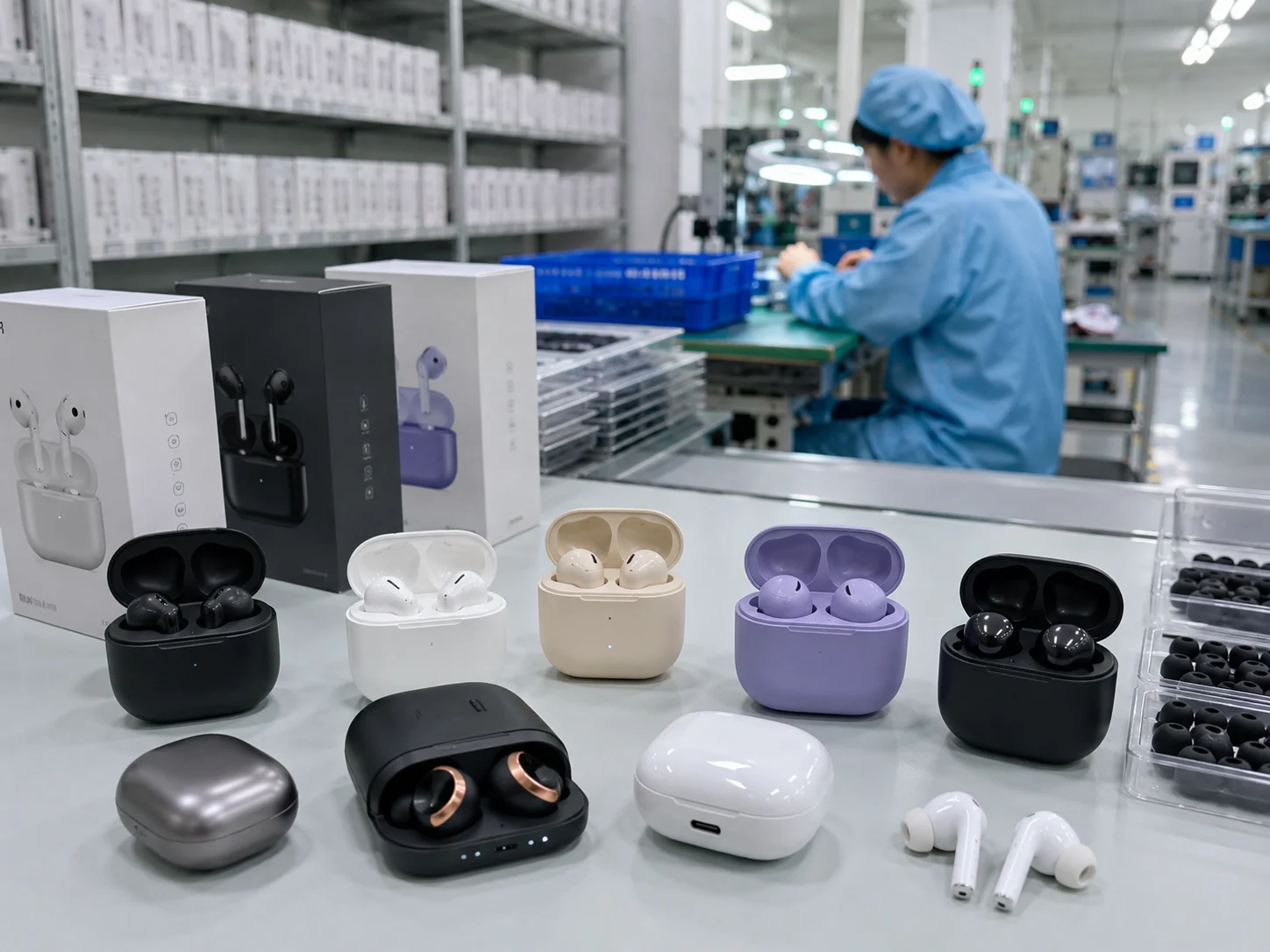
I've been in the electronics export business for 15 years from Shenzhen. Many buyers come to us after getting burned by other suppliers. They think TWS earbuds are simple, like USB cables, but they are not. They are complex mini-computers for your ears1. When you're ready to find a real partner, not just a cheap price, this guide will show you what truly matters. Let's get started.
1. Why Choose a TWS Earbuds Manufacturer in China?
Are you struggling to find quality TWS earbuds that don't lead to endless customer complaints? Sourcing from China seems like the solution, but it can feel like a minefield.
Choosing a TWS manufacturer in China gives you access to the world's largest electronics ecosystem2. This means competitive pricing, endless variety, and fast innovation. The key is to find a partner who helps you navigate this complex market, not just a factory that gives you a price.
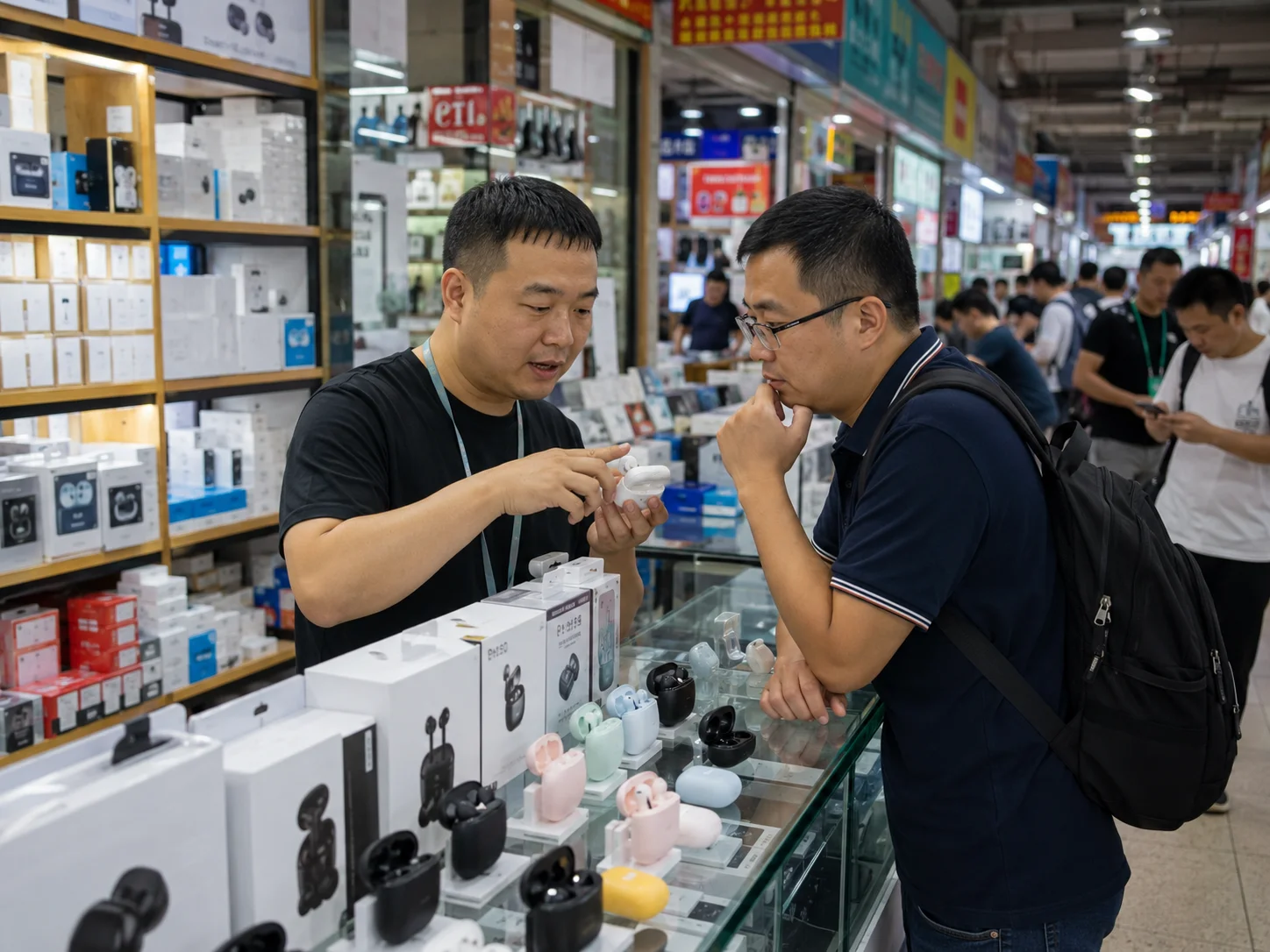
When buyers search for "TWS earbuds manufacturer in China," they are not just looking for a factory. They are looking for a solution. From my experience, they are usually dealing with problems like earbuds that won't connect, batteries that die too quickly, or terrible call quality. These issues lead to returns and damage their brand's reputation.
A good Chinese partner understands this. We know that a TWS earbud involves many parts:
- Bluetooth chip
- Battery and charging case
- Speaker and microphone
- Noise cancellation technology
- Software and pairing stability
A cheap price often means a supplier cut corners on one of these parts. A common question I get is, "How much for AirPods style earbuds?" A better question is, "What chipset are you using to ensure stable connection?" or "How do you test your battery life to guarantee the hours you claim?" The real value of a Chinese manufacturer isn't just the low cost; it's the expertise to build a reliable product within your budget.
2. OEM vs ODM: Which Option Fits Your Business Better?
You want to build your own brand, but you're not sure where to start. OEM, ODM, or just wholesale? Making the wrong choice can cost you time and money.
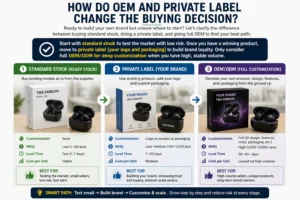
The choice between Wholesale, Private Label (a form of ODM), and OEM is about managing risk. Start with wholesale to test the market, use private label to build your brand with a proven product, and only move to OEM when you have scale and specific design needs.
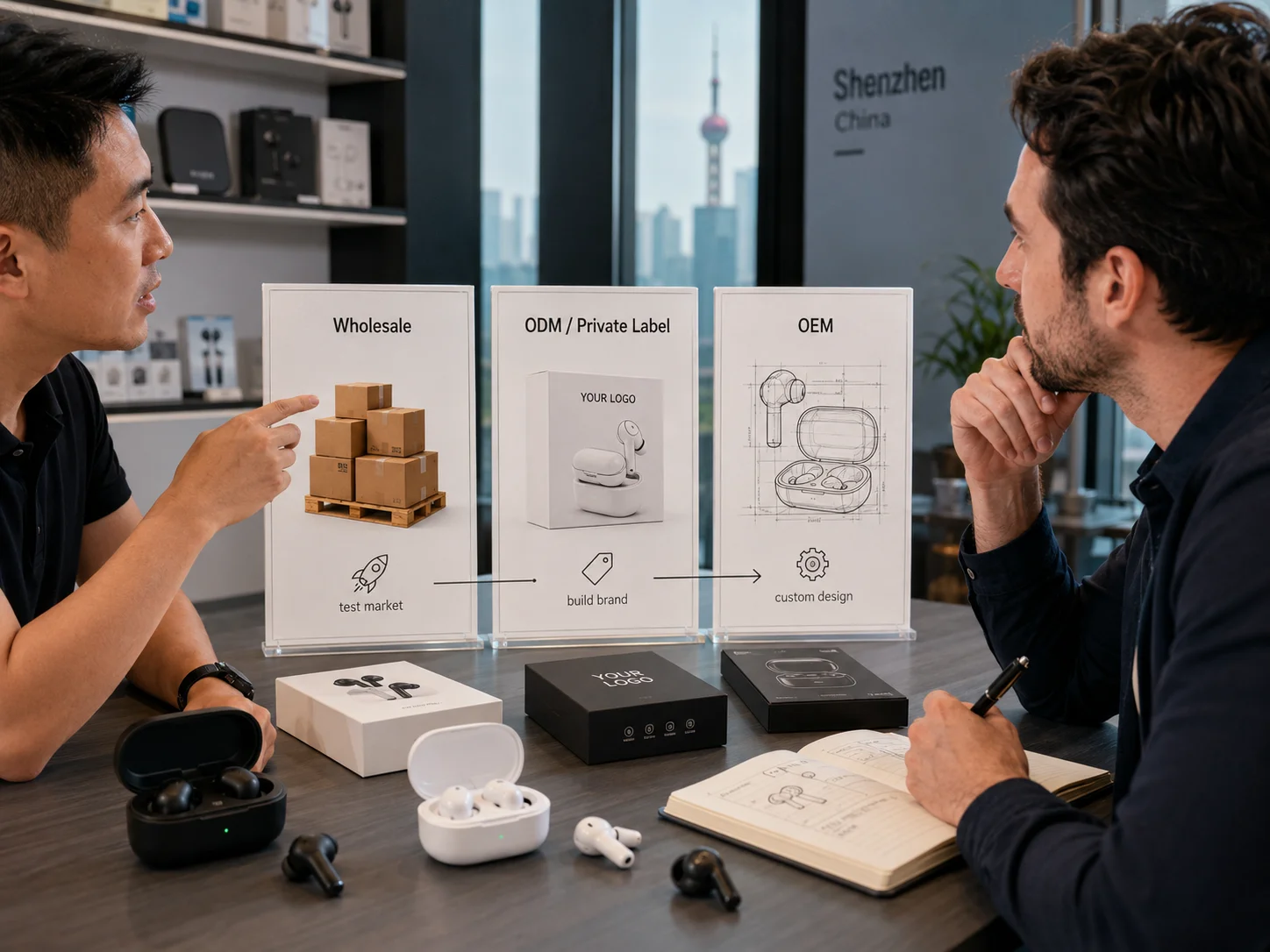
Many buyers think they need to jump straight to OEM to build a brand. This is a common and costly mistake. Based on hundreds of conversations with clients, I always suggest a path based on their business stage and risk tolerance. It's not about which model is "best," but which is right for you now.
Here's a simple way I explain it to my customers:
| Sourcing Model | Best For... | Risk Level | Key Advantage | My Advice |
|---|---|---|---|---|
| Wholesale | New sellers, Market testing | Low | Low MOQ, Fast delivery, Minimal investment | Buy small quantities of a few models. See what sells, don't guess. |
| Private Label | Growing sellers, Brand building | Medium | Brand identity, Higher perceived value | Once a model sells well, put your logo and custom packaging on it. |
| OEM/ODM | Scaled businesses, Unique products | High | Full customization, Market differentiation | When you have large, stable orders and need a unique feature or design. |
The safest path is clear: Wholesale -> Private Label -> OEM. Start by buying our standard, in-stock models to see what your customers actually want. Is it the cheap and cheerful model, or the one with better ANC? The sales data will tell you. Then, once you have a winner, we can add your logo and create custom packaging (private label). This builds your brand without the massive upfront cost and risk of a full OEM project.
3. What Specs Matter Most for Wholesale TWS Earbuds?
You're looking at spec sheets with dozens of features. It's confusing, and you worry you'll focus on the wrong things. This leads to buying a product that sounds good on paper but doesn't sell.
For wholesale TWS earbuds, forget most of the specs. Focus on these six things that actually drive sales and reduce complaints: appearance, connection stability, real battery life, clear call quality, sound quality, and comfort.
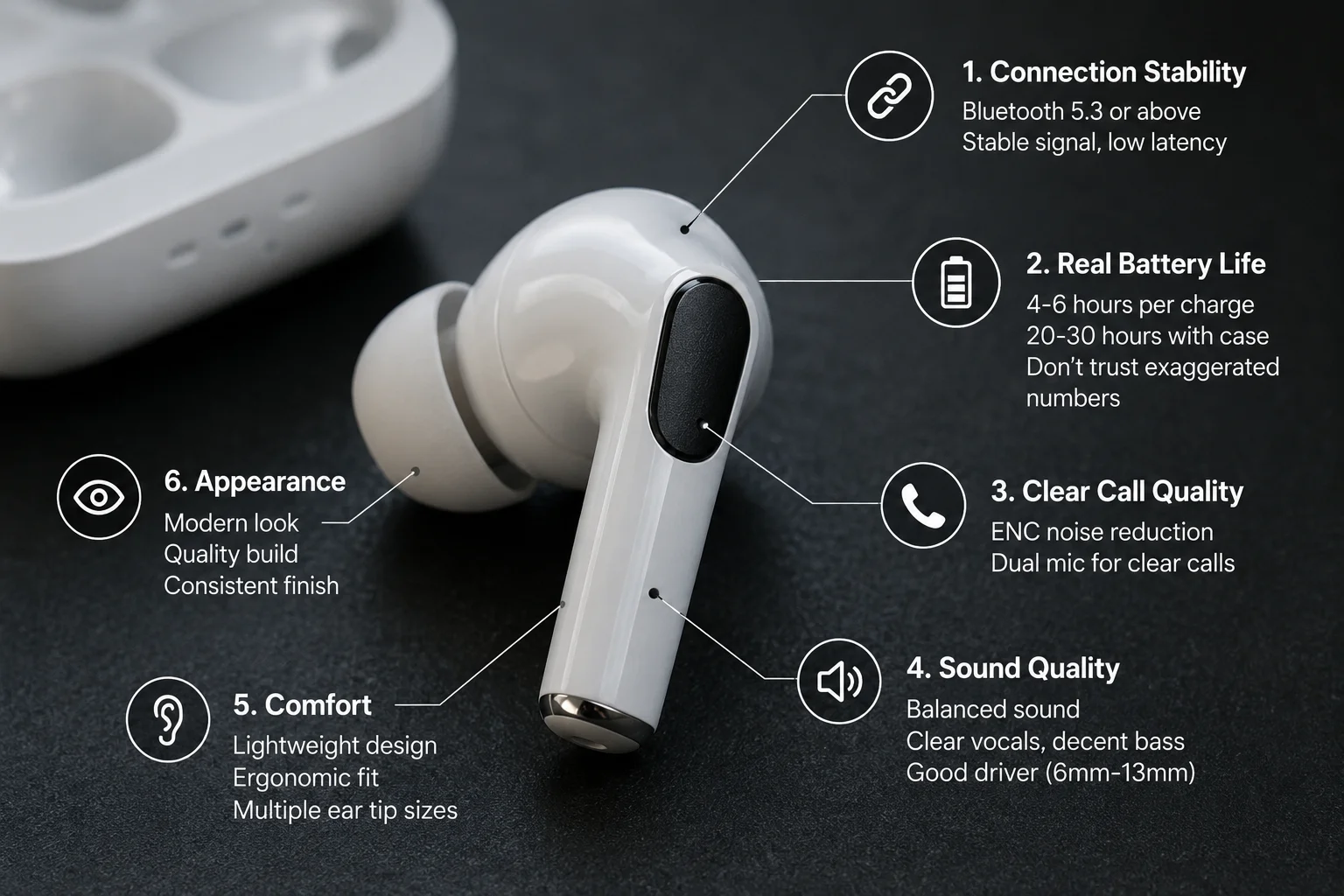
I've seen buyers spend weeks comparing technical data that customers will never notice. In reality, the success of a TWS earbud comes down to a few core experiences. Get these right, and you'll have a winning product.
Key Features That Actually Sell
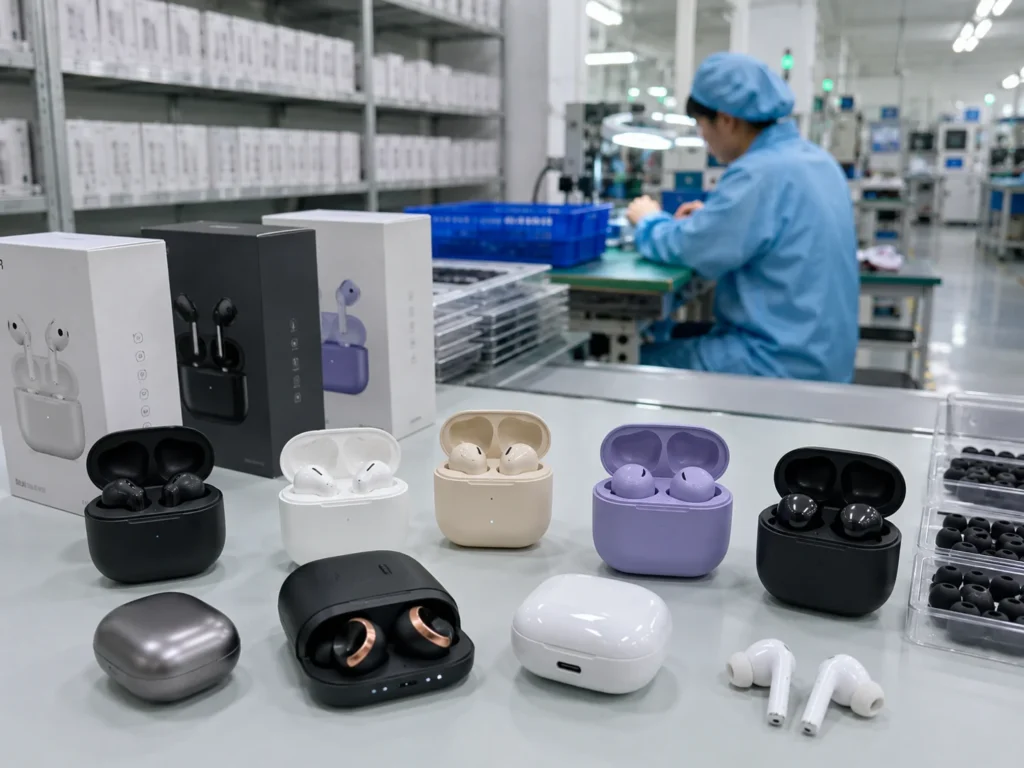
- Appearance and Packaging: This is the first thing a customer sees. Does it look cheap or premium? Is the charging case a cool design? In a retail store, the box and the look of the product determine if a customer even picks it up.
- Chipset and Connection Stability: Many low-cost earbuds have connection problems. They drop calls, the left and right sides don't sync, or they are hard to pair. The Bluetooth version number (e.g., 5.3) is less important than the quality of the chipset and the software tuning.3
- Real Battery Life: The box might say "30 hours," but is that for one charge or with the case? You need to know the single playtime and the total playtime. We always clarify this to avoid misleading customers.
- Sound Quality: You don't need to be an audio expert. Just listen. Does the bass sound weak? Is the sound tinny or harsh at high volume? A "good enough" sound for the price point is crucial.
- Call Quality (ENC): This is a huge, often-overlooked factor.4 Many buyers test music but not phone calls. If the microphone is bad and the person on the other end can't hear you, your customer will complain.
- Comfort: If the earbud hurts after 30 minutes, it doesn't matter how good it sounds. The weight, shape, and ear tip material all contribute to comfort.
4. How to Check Sound Quality, Battery Life, and Bluetooth Stability?
You receive a sample that seems great, but you're afraid the bulk order won't be the same. You need a simple, reliable way to test the key functions that cause the most customer complaints.
Test samples in real-world conditions. Check stability by pairing with multiple phones and walking away. Verify battery life by playing music at 70% volume until it dies. Test call quality in a noisy environment, not a quiet office.
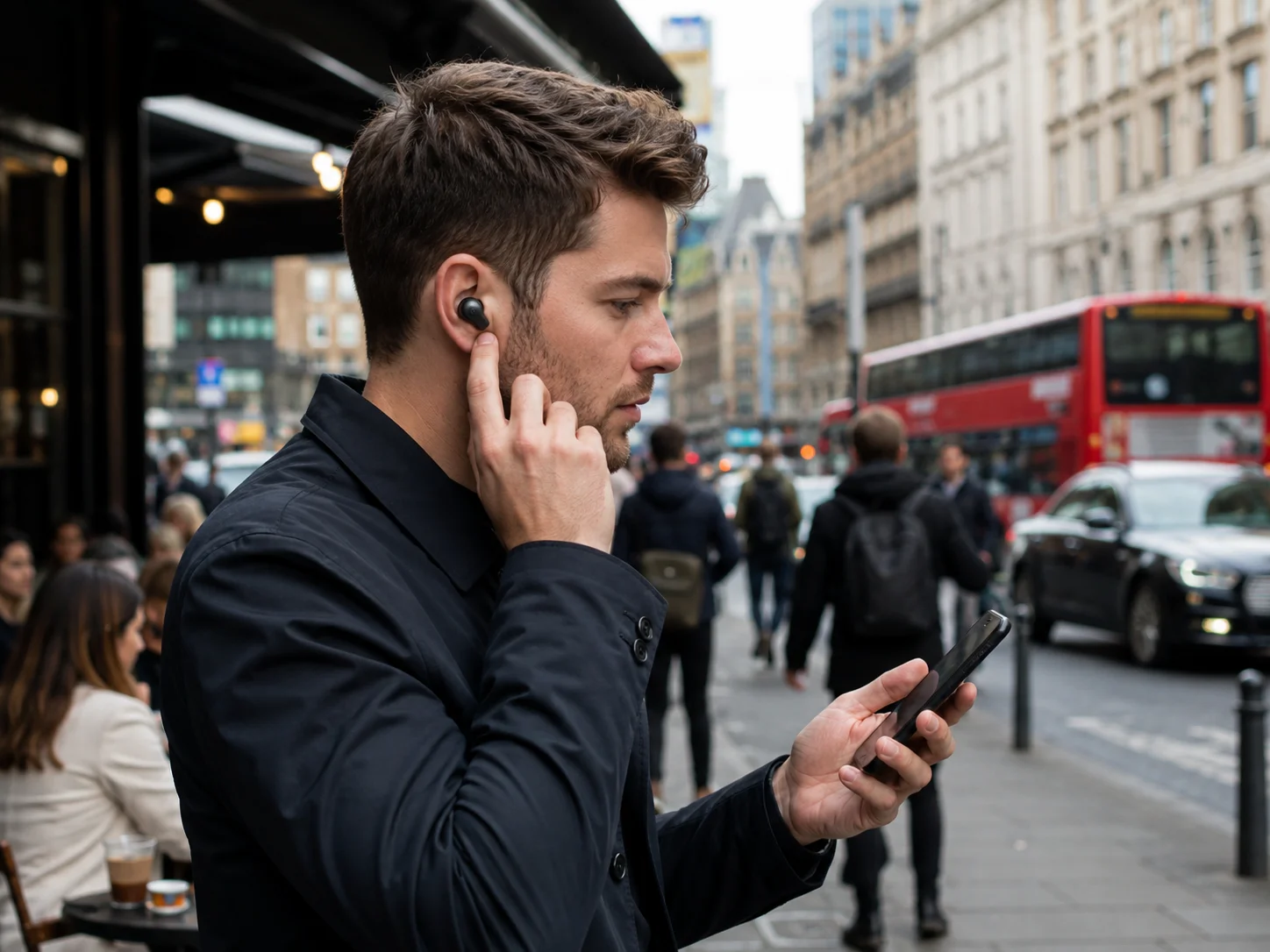
Relying on the spec sheet is a mistake. As a manufacturer, we encourage our clients to test our products rigorously because we are confident in our quality. Here is the simple testing process I recommend to all my buyers.
Your Simple Testing Checklist:
-
Bluetooth Stability:
- Pair the earbuds with your phone. Put the phone in your pocket and walk around. Does the connection drop?
- Connect to an iPhone, then an Android phone, then a laptop. Does it pair easily with all of them?
- Play a YouTube video. Is there a noticeable delay between the video and the audio (latency)5?
-
Battery Life:
- Charge the earbuds and case to 100%.
- Play music at 70% volume.6 Time how long it takes for the earbuds to die. Does it match the "single playtime" we promised?
- Use the case to recharge the earbuds. How many full charges do you get? This confirms the "total battery life."
-
Sound and Call Quality:
- Listen to a song with good bass and clear vocals. Does it sound balanced, or is it tinny and weak?
- Make a phone call to a friend while walking outside near a busy street. Ask them: "Can you hear me clearly, or does it sound like I'm far away or in a tunnel?" This tests the microphone and ENC (Environmental Noise Cancellation) for calls.
This kind of real-world testing tells you more than any technical document ever could.
5. What Certifications and Compliance Should Buyers Confirm?
You found a great product, but can you legally sell it in your country? Ignoring certifications is a huge risk that can get your shipment stopped at customs or lead to fines.
Before placing an order, confirm the manufacturer has the necessary certifications for your target market. For Europe, you need CE and RoHS. For the US, you need FCC.7 A Bluetooth BQB listing is also crucial for proving it's a legitimate Bluetooth device.8
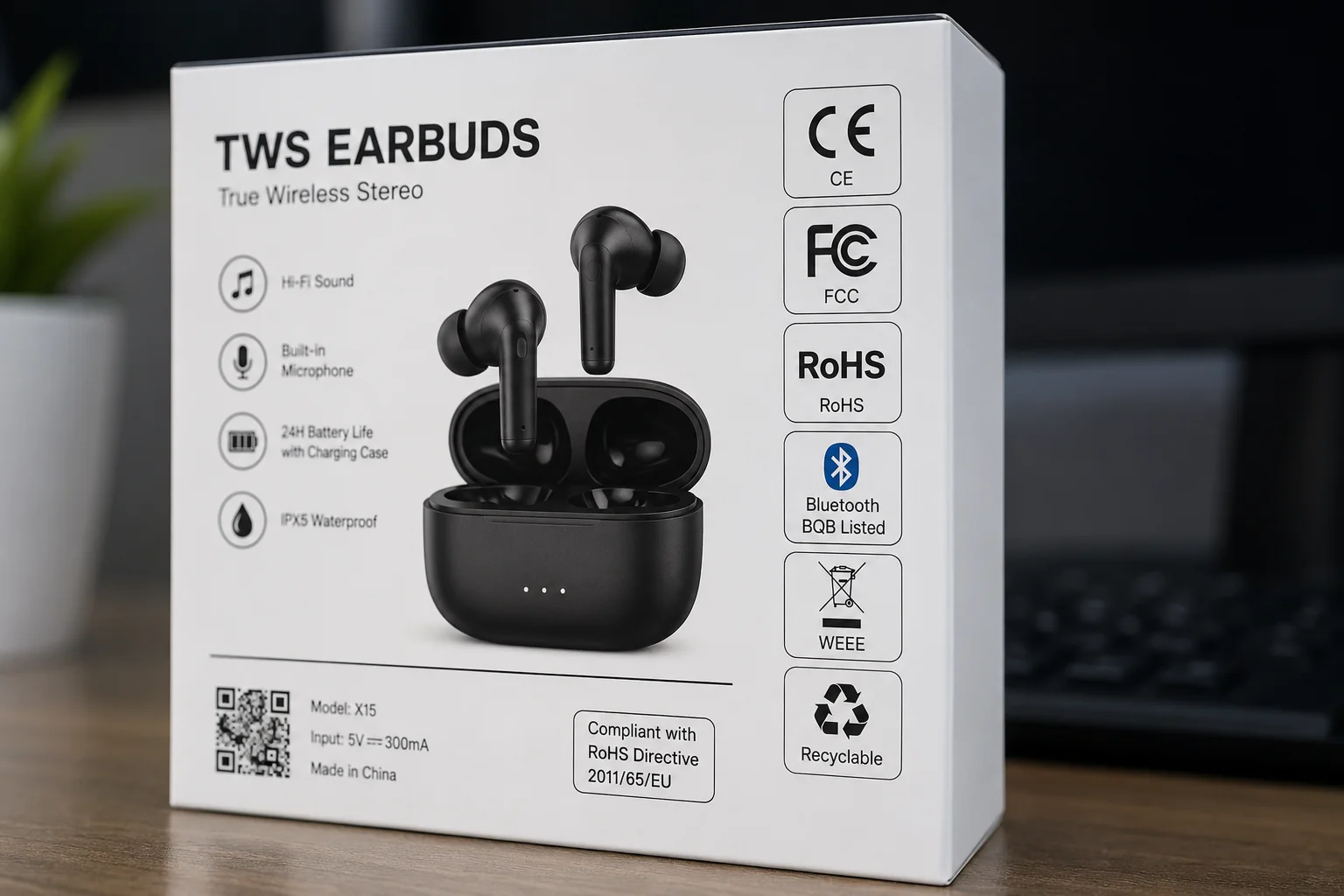
Certifications are not just bureaucratic paperwork; they are a guarantee of safety and quality. They prove that the product has been tested to meet specific standards for electronic interference, hazardous materials, and wireless performance. A supplier who can't provide these documents is a major red flag. They are likely cutting corners on components, which could lead to product failures or legal trouble for you.
Here's a quick guide to the most common certifications we provide:
| Certification | What It Is | Why It Matters |
|---|---|---|
| CE | A mark for products sold in the European Economic Area. | Confirms product meets EU safety, health, and environmental rules. |
| FCC | A mark for electronic products sold in the United States. | Ensures the product's radio frequency doesn't interfere with others. |
| RoHS | Restriction of Hazardous Substances. | Proves the product is free from specific harmful materials like lead. |
| BQB | Bluetooth Qualification Body listing. | Confirms the product uses a licensed Bluetooth design. Avoids legal issues. |
When you ask a supplier for their certifications, don't just accept a "yes." Ask for the actual report or certificate number. A professional manufacturer like us will have these documents ready for you. It shows we are serious about quality and your success in your market.
6. How to Evaluate MOQ, Packaging, Logo, and Lead Time?
You're ready to move from testing to placing a real order. But the details of MOQ, packaging, and lead time can be confusing and a point of friction with suppliers.
Treat MOQ, packaging, and lead time as a single negotiation. A higher order quantity often gives you more flexibility on custom packaging and a better price. Always confirm these details in writing before sending any payment.
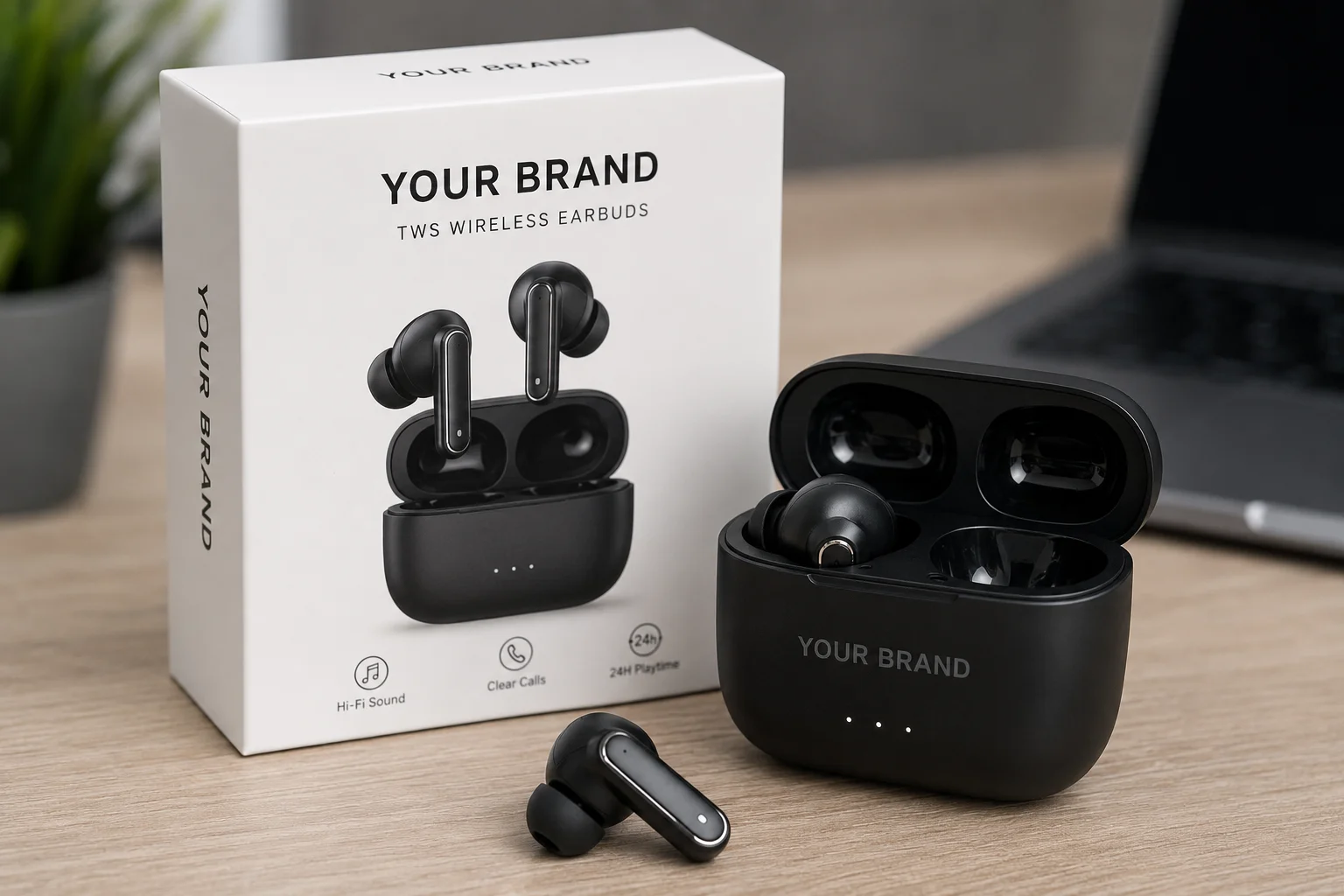
These four elements are where a standard order becomes your order. As a buyer, you need to understand how they connect. From my experience, new buyers often make the mistake of focusing on just one, like getting the lowest MOQ, without realizing it affects everything else.
Here's how I advise my clients to think about it:
- MOQ (Minimum Order Quantity): For standard, non-logo products, our MOQ is very low because we have them in stock. If you want to add your logo or change the packaging, the MOQ will be higher. This is because we have to set up printing machines and order custom boxes, which have their own minimums from our suppliers.
- Packaging and Logo: This is your chance to build your brand. We can print your logo on the earbuds, the charging case, and the retail box. We can also design a brand new box for you. Just remember, the more custom you go, the higher the MOQ might be. Start simple: a logo on a standard box is a great first step.
- Lead Time: This is the time from when you place your order to when it's ready to ship. A standard stock order can be ready in a few days. A private label order with your logo might take 2-3 weeks. A full OEM order with a new design could take months.9 Be realistic about your timeline.
Always get a production sample—a final version of your customized product—to approve before we start the full production run. This prevents any surprises.
7. What Are Common Mistakes Buyers Make When Comparing TWS Suppliers?
You're comparing quotes from several TWS suppliers, and the prices are all over the place. It's tempting to just pick the cheapest one, but you have a feeling it's not that simple.
The biggest mistake is choosing a supplier based on price alone. Cheap prices often mean poor components, fake specs, and no after-sales support. A better approach is to evaluate a supplier's transparency, testing process, and communication.
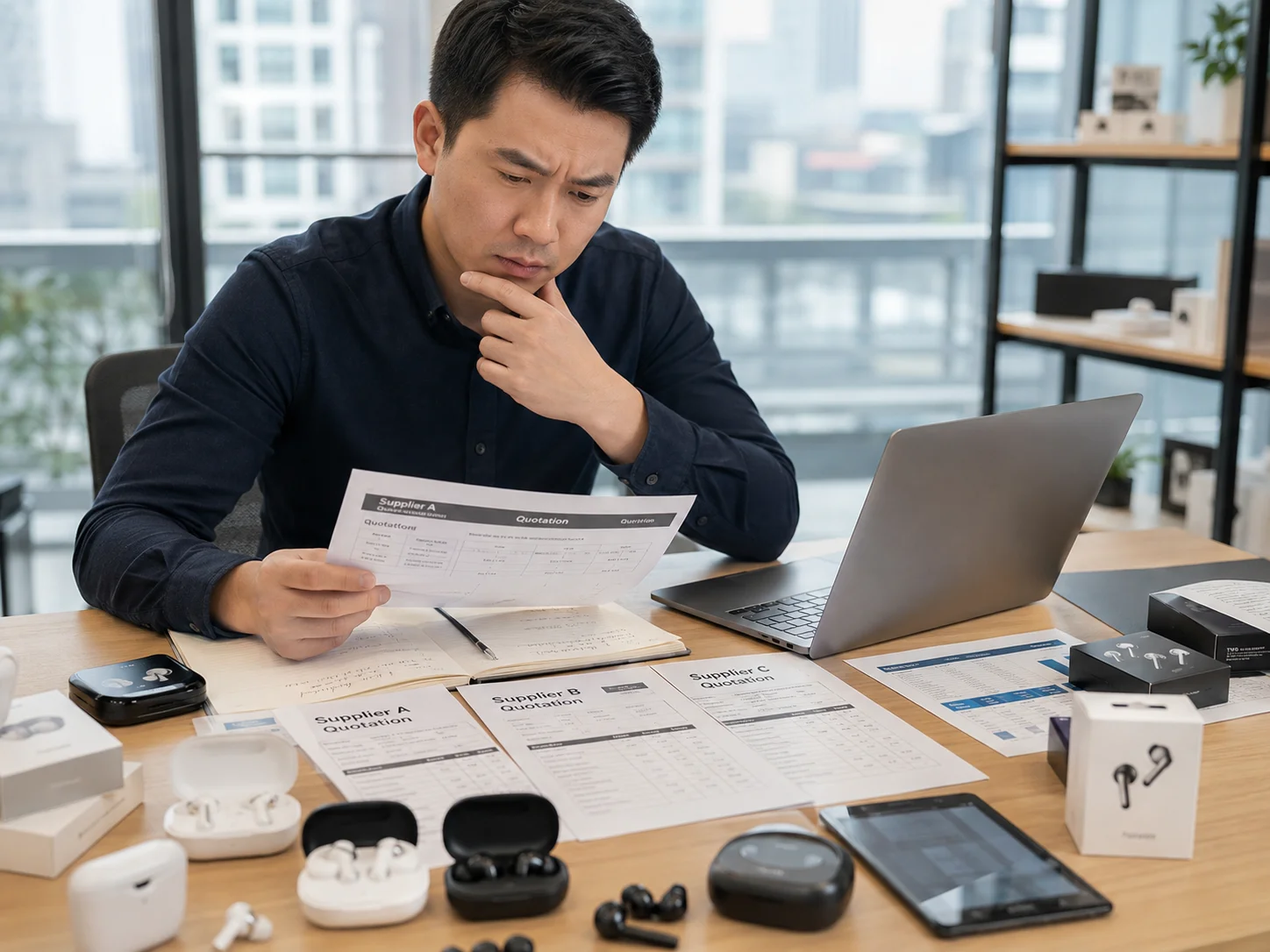
I have seen this happen hundreds of times. A buyer comes to me after a bad experience. They chose a supplier who promised an amazing price for ANC earbuds, only to find out the ANC was fake, the battery life was half of what was advertised, and 20% of the units were defective. They saved money on the invoice but lost it all on returns and a damaged reputation.
Here are the most common mistakes I see and how to avoid them:
-
Mistake: Focusing Only on Price.
- Reality: Price is a reflection of component quality. A $5 earbud cannot have the same quality battery, chipset, and speaker as a $15 earbud.10
- What to do instead: Ask why a price is low. Ask for a component breakdown. A good supplier can explain their pricing.
-
Mistake: Believing the Spec Sheet.
- Reality: It's easy to write "Real ANC" or "40-hour battery" on a spec sheet. Many small factories lie.
- What to do instead: Test everything yourself. Verify battery life, call quality, and connection stability with your own sample testing. Ask for test videos.
-
Mistake: Not Asking About After-Sales Support.
- Reality: Even with the best quality control, a small percentage of electronics will have issues.
- What to do instead: Ask the supplier: "What is your warranty policy? How do you handle defective units?" A reliable partner has a clear process for replacing or crediting faulty products. A bad partner will disappear after they have your money.
8. What Is Your Final Buying Advice: Start Small, Test Quality, Then Scale Safely?
You've learned a lot, but you're looking for one simple takeaway. What is the single best strategy for successfully sourcing TWS earbuds from China without losing your money?
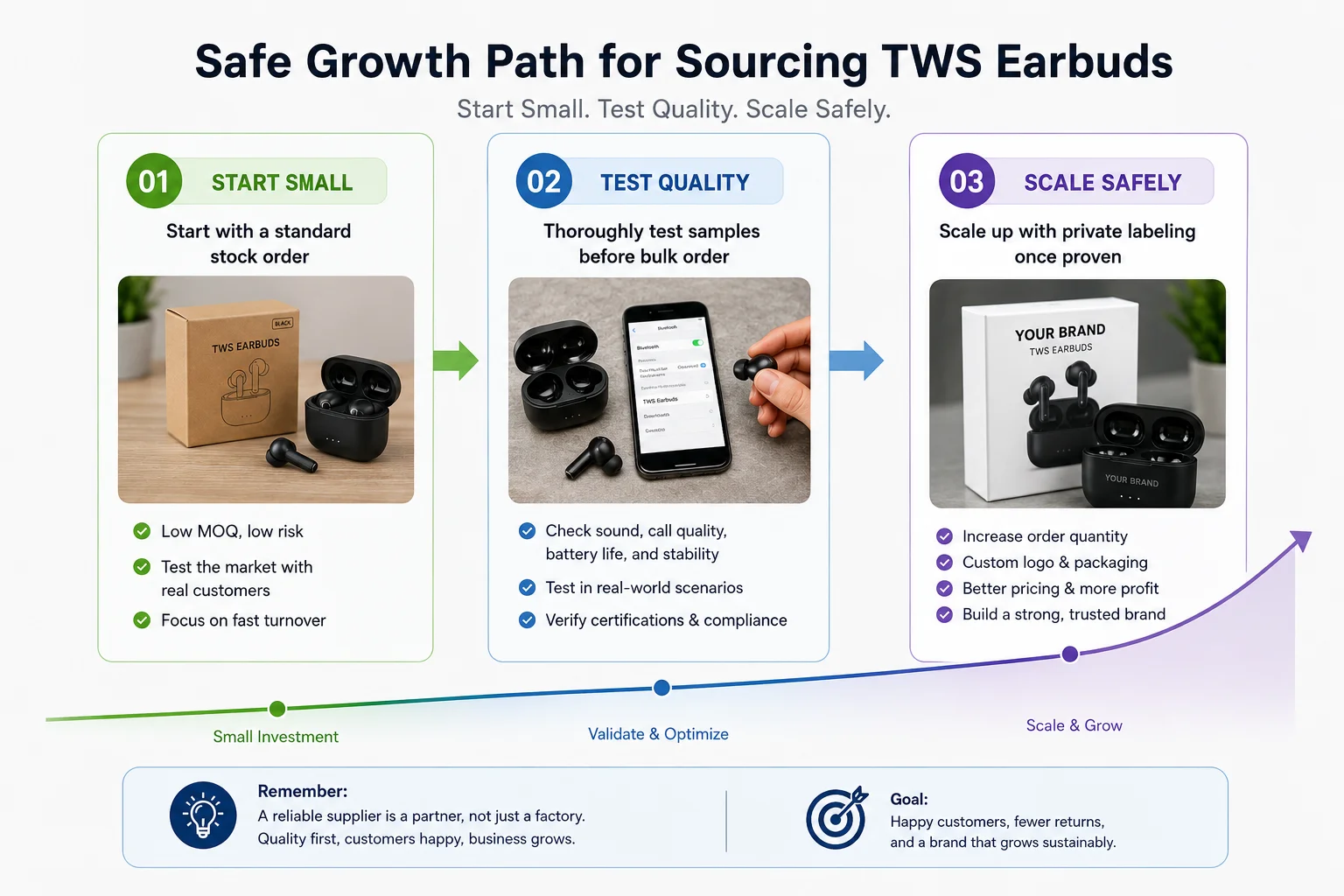
My final advice is this: Start small with a standard stock order to test the market. Test the samples thoroughly for quality. Once you find a model that sells well and has few complaints, scale up with private labeling.
The TWS earbud business is full of opportunity. It has higher profit margins than simple cables and chargers.11 But it's also full of risks. The product is complex, and customers have high expectations. Chasing the lowest price is a race to the bottom that ends in customer complaints and dead inventory.
The most successful clients I've worked with over the past 15 years follow a simple, patient strategy.
- Test the Market: Don't assume you know what will sell. Buy a small quantity of a few different models. Maybe a basic, low-cost model, a mid-range model with a cool display case, and an ANC model. Let your sales data tell you what your customers actually want.
- Verify Quality: Once you have a potential winner, order a few more samples and live with them. Use them every day for a week. Do they stay connected? Is the battery life consistent? Do they feel cheap?
- Build Your Brand: When you have a stable, proven product, it's time to build your brand. We can help you add your logo to the product and create custom packaging. Now, you're not just selling an earbud; you're selling your earbud.
- Scale with a Partner: The goal is to find a reliable model and a reliable manufacturer and build a long-term business. True profit comes from repeat customers and repeat orders.
Remember this simple rule: the appearance makes the first sale, but quality determines if the customer will ever buy from you again.
Conclusion
Sourcing TWS earbuds successfully means prioritizing reliability, testing, and finding a true partner. Start small, validate your product in the market, and then scale your brand with confidence.
"TWS Bluetooth headset: Working, and Core Components", https://www.ntchip.com/electronics-news/tws-bluetooth-headset-working-and-core-components. A technical article or teardown analysis can detail the integrated circuits (SoC), sensors, multiple microphones, and software algorithms within a modern TWS earbud, supporting the assertion of their complexity by showing they contain many functional elements of a small computer. Evidence role: mechanism; source type: paper. Supports: The claim that TWS earbuds are technologically complex.. ↩
"Electronics industry in China - Wikipedia", https://en.wikipedia.org/wiki/Electronics_industry_in_China. A report from a market research firm or an economic institution can provide statistics on China's share of global electronics manufacturing and supply chain, supporting the claim about the scale of its ecosystem. Evidence role: statistic; source type: research. Supports: The claim that China possesses the world's largest electronics ecosystem.. ↩
"Chipset vs Module Bluetooth LE Solutions: The Ultimate Guide", https://novelbits.io/chipset-vs-module-bluetooth-le-solutions-the-ultimate-guide/. A technical article or white paper from an audio engineering publication can explain that while Bluetooth versions define a set of capabilities, the specific implementation by the chipset manufacturer and subsequent software tuning are critical for achieving reliable performance, supporting the claim that these factors are often more important than the version number alone. Evidence role: mechanism; source type: paper. Supports: The claim that chipset and software are more critical to stability than the Bluetooth version number alone.. ↩
"A Survey of Earable Technology: Trends, Tools, and the Road Ahead", https://arxiv.org/html/2506.05720v1. A consumer survey or market research report can provide data on the most important features for TWS earbud users or the most common reasons for returns, potentially showing that call quality is a significant factor in user satisfaction and a frequent source of complaints. Evidence role: statistic; source type: research. Supports: The claim that call quality is a significant and frequently problematic aspect of TWS earbuds.. ↩
"Let's talk about the audio latency on Bluetooth headphones - Reddit", https://www.reddit.com/r/headphones/comments/ugrsea/lets_talk_about_the_audio_latency_on_bluetooth/. A technical encyclopedia or audio technology website can define audio latency as the delay between a sound being generated by a source and it being heard by the user, and explain that high latency in Bluetooth devices can cause a noticeable desynchronization with video, which negatively impacts the user experience. Evidence role: definition; source type: encyclopedia. Supports: The definition of latency and its importance for wireless audio.. ↩
"[PDF] Battery Testing, Analysis and Design - Department of Energy", https://www.energy.gov/sites/prod/files/2014/05/f15/APR13_Energy_Storage_e_IV_Battery_Tstg_Design_2.pdf. A publication from a product review outlet or a standards organization can describe common methodologies for testing headphone battery life, noting that playback at a standardized volume level (often between 50% and 75%) is a typical practice to ensure comparable results. Evidence role: general_support; source type: other. Supports: The use of a standardized volume level for battery testing.. Scope note: The exact percentage may vary, but the principle of using a consistent, moderate volume is standard. ↩
"Wireless Devices and Health Concerns", https://www.fcc.gov/consumers/guides/wireless-devices-and-health-concerns. Official guidance from the European Commission and the U.S. Federal Communications Commission confirms the legal requirements for placing electronic products on the market, stating that CE marking (which includes RoHS compliance) is mandatory in the EEA and FCC authorization is required for radio-frequency devices in the US. Evidence role: general_support; source type: government. Supports: The legal requirement for CE, RoHS, and FCC certifications in their respective markets.. ↩
"Bluetooth BQB certification", https://www.ntek.org.cn/en/208/150-475.html. Documentation from the official Bluetooth SIG website explains that the Bluetooth Qualification Process (leading to a BQB listing) is a mandatory step for any product using Bluetooth technology to ensure interoperability and compliance with the Bluetooth license agreement, thereby preventing potential legal issues. Evidence role: definition; source type: institution. Supports: The role and mandatory nature of Bluetooth BQB listing.. ↩
"Electronics manufacturing services - Wikipedia", https://en.wikipedia.org/wiki/Electronics_manufacturing_services. A manufacturing industry guide or a paper on new product introduction (NPI) can outline the typical phases of an OEM project, including industrial design, mold creation (tooling), engineering validation, and production ramp-up, showing that the cumulative time for these stages often extends to several months. Evidence role: general_support; source type: research. Supports: The multi-month timeline for a typical OEM electronics project.. ↩
"What is the actual cost to manufacture headphones? Does anyone ...", https://www.reddit.com/r/headphones/comments/2a5294/what_is_the_actual_cost_to_manufacture_headphones/. A product teardown report from a market analysis firm can provide a bill of materials (BOM) cost analysis for various TWS earbuds, demonstrating that premium models allocate a significantly higher budget to key components like the Bluetooth SoC, battery, and audio drivers compared to low-cost alternatives. Evidence role: case_reference; source type: research. Supports: The link between earbud price and component cost/quality.. ↩
"on Consumer Electronics Industry Profitability - CSI Market", https://csimarket.com/Industry/industry_Profitability_Ratios.php?ind=1012. A market research report or business analysis of the consumer electronics accessories market can provide data on the average retail markup and profit margins for different product categories, potentially showing that more complex products like TWS earbuds command higher margins than commoditized items like cables and chargers. Evidence role: statistic; source type: research. Supports: The claim that TWS earbuds offer higher profit margins compared to more basic electronic accessories.. Scope note: Profit margins can vary widely based on brand, volume, and sales channel. ↩