Sourcing 3C electronics from China feels risky. You worry about quality fades, shipping delays, and losing money. You need a way to separate reliable partners from bad ones.
To audit a 3C electronics factory in China, you must match the factory's capabilities to your specific product needs and business model. Skip generic checklists. Ask for real evidence of past quality control reports and focus on process transparency rather than just looking at basic certifications.
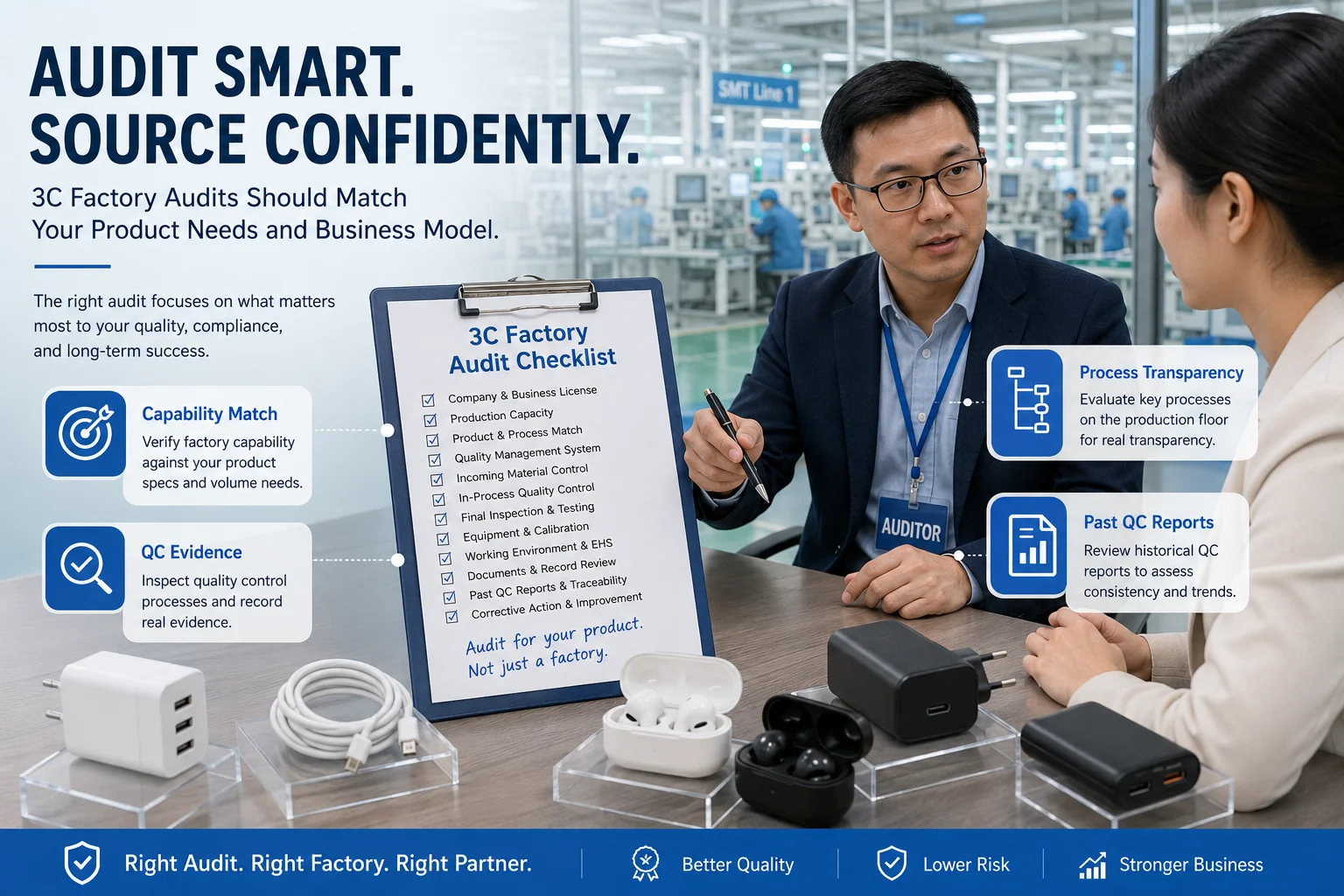
I have helped hundreds of Western buyers source products from Shenzhen over the past 15 years. A common question we hear from first-time buyers is how to properly check a factory. Many buyers think they just need a long list of questions. What we have learned is that the most successful partnerships focus on targeted risk assessment instead of a generic checklist. Let me share what actually matters when you review a 3C electronics supplier.
Why Factory Audits Matter When Sourcing 3C Electronics from China?
Choosing the wrong supplier ruins your product launch. You face customer returns and damaged brand reputation. A proper audit prevents these expensive mistakes before they happen.
Factory audits matter because they reveal the true daily operations of a supplier, not just their sales pitch1. They help you verify if the factory can consistently meet your quality standards, manage your order volume, and deliver on time without unexpected production issues.
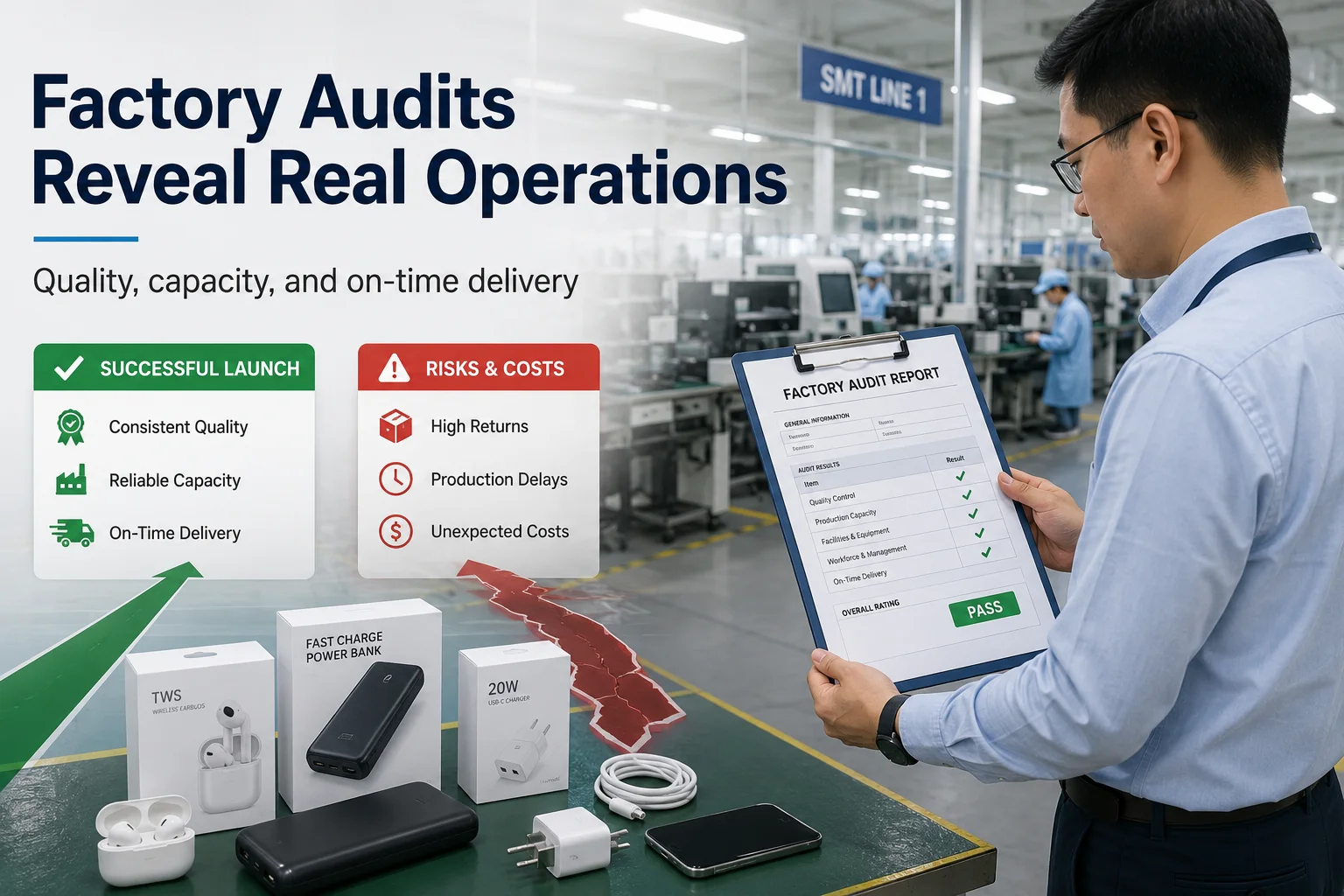
I often tell buyers that an audit is not just a pass or fail test. It is a partner-matching process. You need to find a supplier whose communication style and problem-solving approach align with yours. A common mistake is looking for a perfect facility. Instead, you should look for evidence of process control and transparency. Your business model dictates your audit priorities. A high-volume, low-margin retailer has different risk tolerances than a premium brand. You must focus on verifying if the factory can meet your specific market tier. You do not need some abstract standard of perfection. You need a factory that fits your exact needs.
Matching Business Models to Audit Goals
Here is a simple breakdown of how different business models change your audit focus:
| Business Model | Primary Audit Focus | Risk Tolerance |
|---|---|---|
| High-Volume Retailer | Production capacity, cost control, lead times | Accepts minor cosmetic flaws if function is perfect |
| Premium Brand | Strict QC processes, premium materials, R&D | Zero tolerance for defects |
| E-commerce Seller | Fast shipping, trending designs, low MOQ | Medium tolerance, focuses on speed to market |
When you understand your own needs, you can ask the right questions during the audit.
Trading Company vs Real Factory: What Buyers Should Check First?
Many sellers pretend to own a factory. You waste time talking to middlemen who lack production control. You need to know exactly who makes your goods.
To check if a supplier is a real factory or a trading company, ask for their business license and look at the scope of business2. Also, request a live video tour of the production floor during working hours to see actual manufacturing activities.
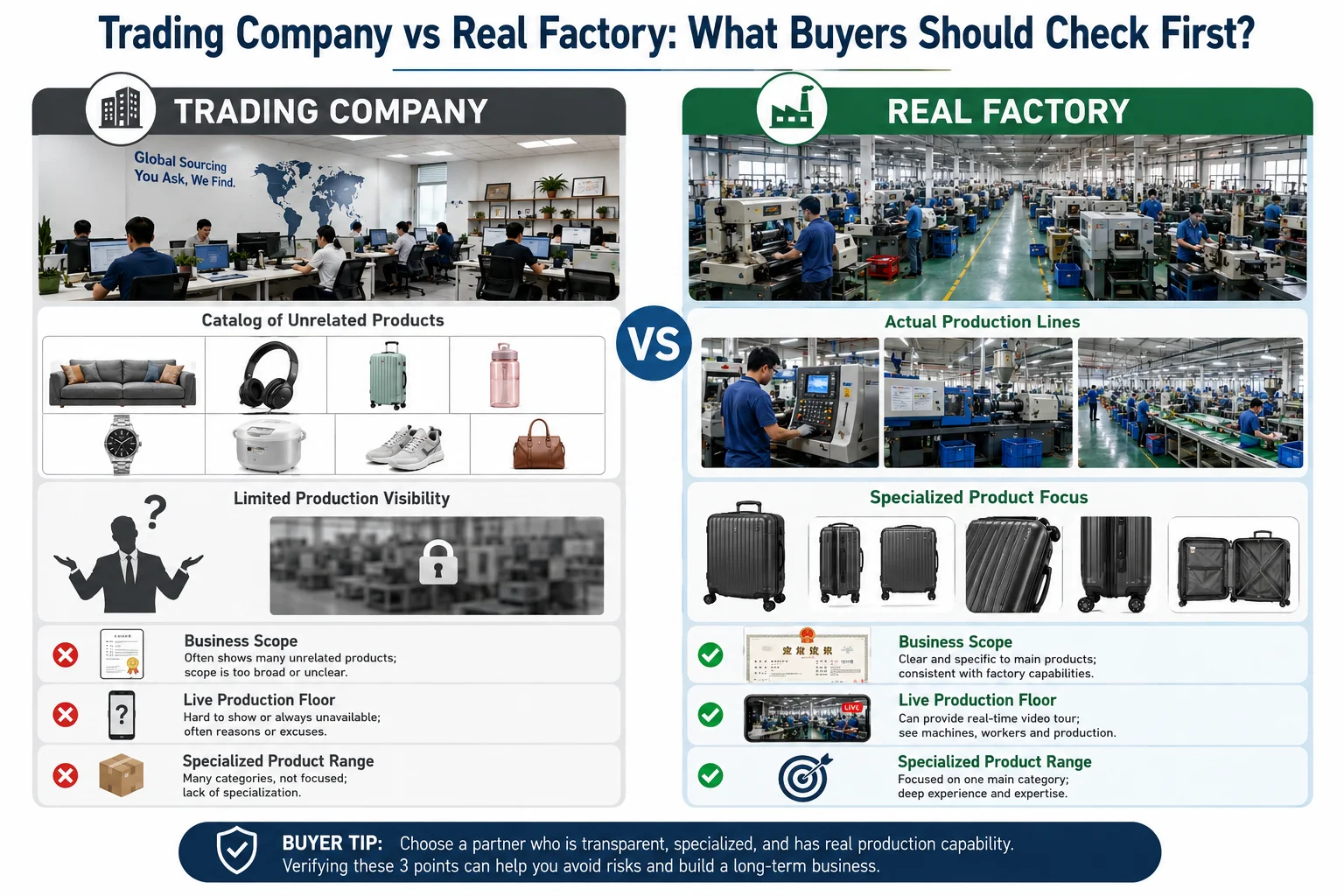
In my 15 years of experience, I have seen many buyers get confused about this. Trading companies offer great value. We provide a wide product range and handle complex supply chains. However, you still need to know where your items are made. You must check the actual production site. A common question we hear from buyers is how to tell the difference. You should not just ask if they are a factory. You should ask for evidence. A real factory has specific machinery, production lines, and workers on site. A trading company often has a showroom and an office. We are a trading company, but we always show our buyers the partner factories we use. Transparency is the key.
Distinguishing Key Evidence
Here is how you can check the facts:
| Verification Step | Real Factory Evidence | Trading Company Evidence |
|---|---|---|
| Business License | Scope includes "manufacturing" | Scope includes "wholesale" or "sales" |
| Video Tour | Shows noisy machines and assembly lines | Shows office desks and sample rooms |
| Factory Layout | Has clear raw material and finished goods areas | Usually lacks warehouse space for production |
Business License, ISO 9001, Certifications, and Company Background Review?
Fake certificates flood the market.3 You risk buying non-compliant products that customs will seize. You must verify company documents before placing any order.
When reviewing a factory's background, do not just ask if they have ISO 9001. Ask to see the actual certificate and verify its validity online. Check the business license for the establishment date and legal representative to ensure you deal with a legitimate entity.
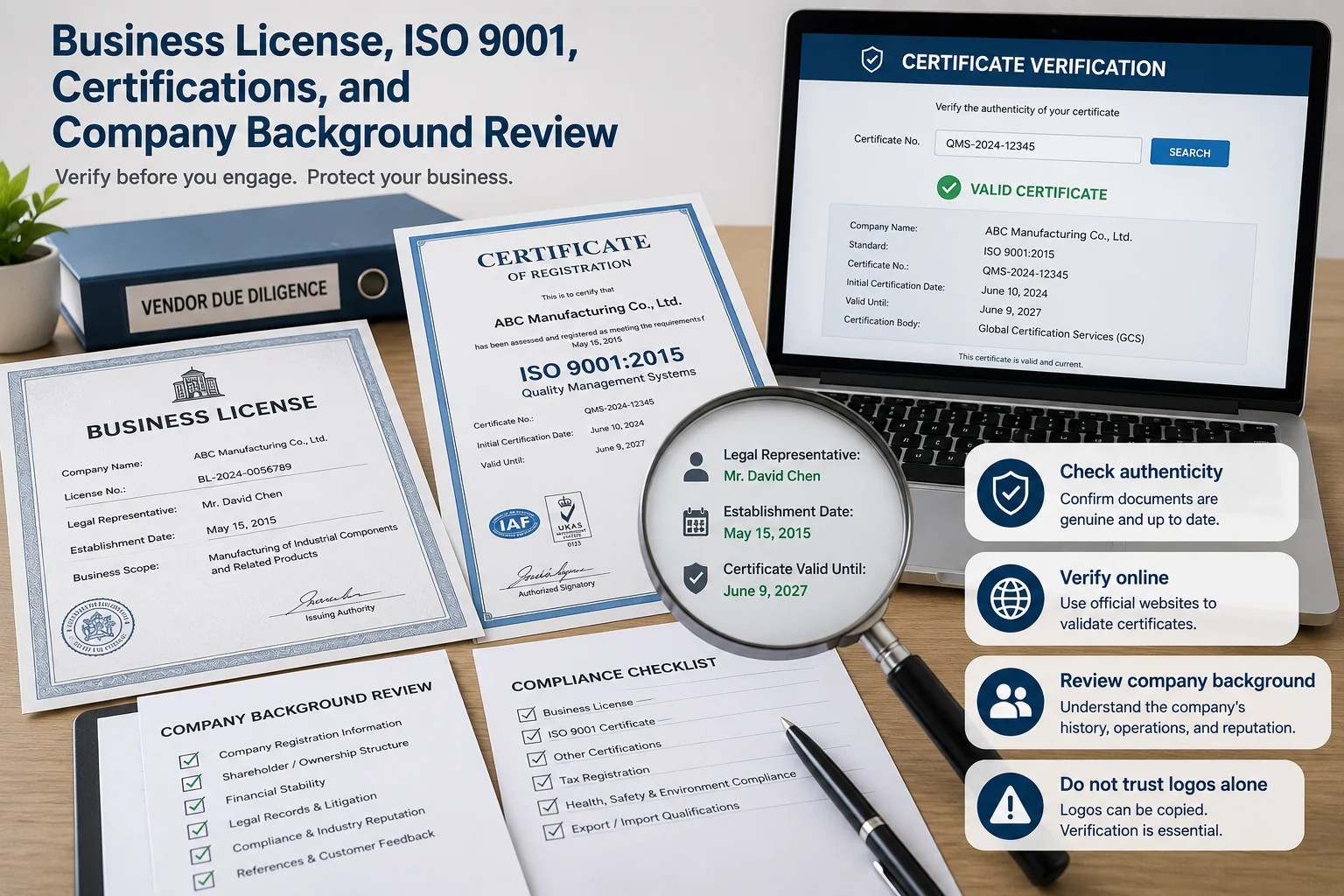
Many buyers just ask, "Do you have ISO 9001?" This is not enough. You need to shift from asking to seeing. Ask them to show you recent quality control reports for a product similar to yours. This turns a simple certificate check into a practical evaluation of their day-to-day processes. For 3C electronics, certifications are critical. If you sell in Europe or the US, you need CE, FCC, and RoHS4. You should ask for the Test Report, not just the certificate. The test report shows exactly which standards the product passed.5
Verifying Document Validity
Here is what you should look for in company documents:
| Document Type | What to Check | Why It Matters |
|---|---|---|
| Business License | Registered capital, year of establishment | Shows financial stability and company history |
| ISO 9001 Certificate | Scope of certification and expiry date | Proves they have a basic quality management system6 |
| Product Test Reports | Lab name, product model, tested parameters | Verifies the actual product meets your market standards |
You can always ask your supplier to send a clear scan of these documents.
R&D Team, Engineering Support, PCBA Capability, and Product Development Strength?
Generic products fail to stand out. You need custom features to win market share. A factory without engineers cannot turn your ideas into reality.
To evaluate R&D strength, ask how many engineers they have and request examples of past PCBA designs. A strong factory will show you their prototype development process and explain how they solve technical issues during the initial product design phase.
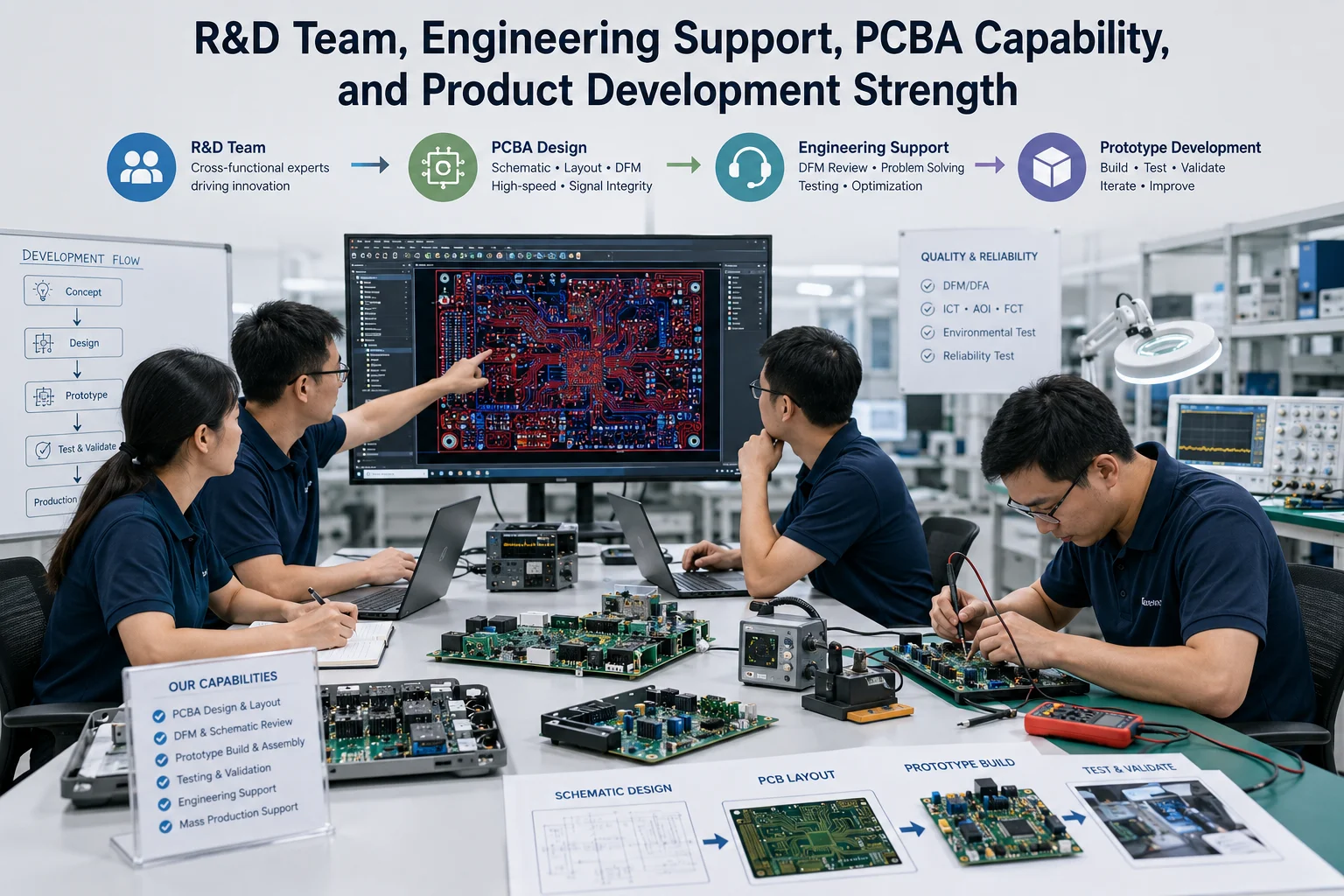
Auditing for a simple USB cable is fundamentally different from auditing for a complex TWS earbud.7 The first step is to define product-specific quality and compliance requirements. If you buy TWS earbuds, you need a factory with strong PCBA capability and good engineers. If you buy USB cables, you just need good assembly workers. When you review R&D, you should look at their engineering support. Do they have an in-house team? Can they modify a circuit board to meet your specific needs? You should ask to see their past projects.
Assessing Product-Specific Engineering
Here is a basic guide to R&D evaluation:
| Product Type | Key R&D Requirement | Question to Ask |
|---|---|---|
| USB Cables | Tooling design, material sourcing | Can you make a custom mold for the connector? |
| GAN Chargers | Circuit design, safety compliance | Do you have engineers for GAN chipset integration? |
| TWS Earbuds | Acoustic tuning, PCBA layout | Can you adjust the Bluetooth firmware for our app? |
| Smart Watches | Software UI, sensor integration | What is your process for testing sensor accuracy? |
This approach helps you understand their true product development strength.
Production Lines, Aging Test Room, QC Process, and Reliability Testing?
Products break easily without strict testing. You face high return rates and angry customers. You must confirm the factory tests every single item before shipping.
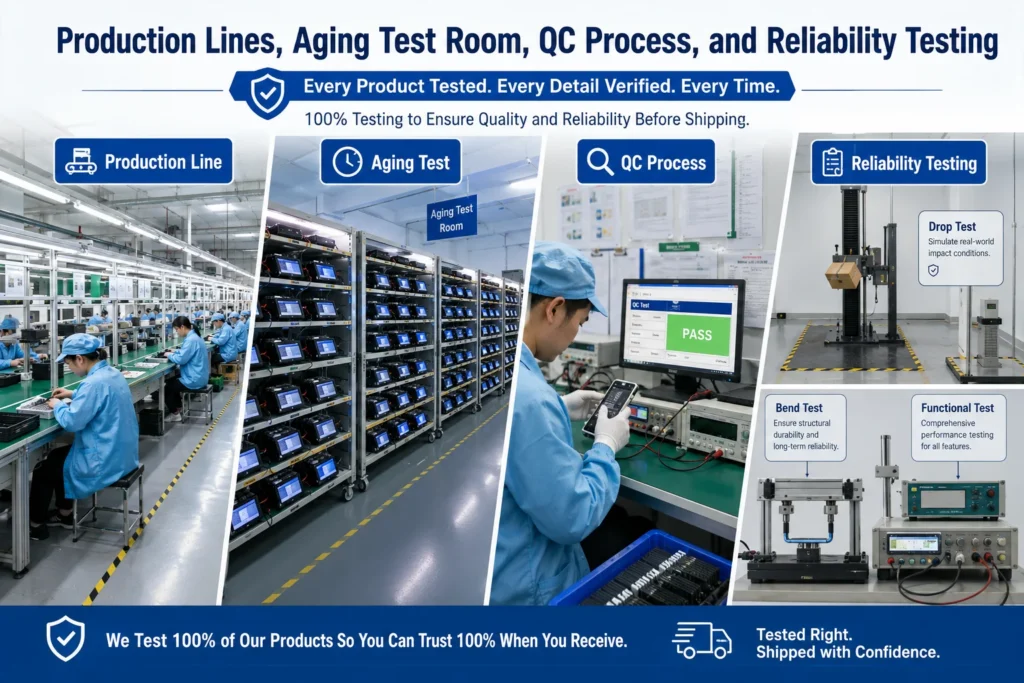
Check if the factory has an aging test room and clear QC stations on the production lines. Ask to see their reliability testing procedures, such as drop tests and bend tests, to ensure the products can survive daily consumer use without failing.
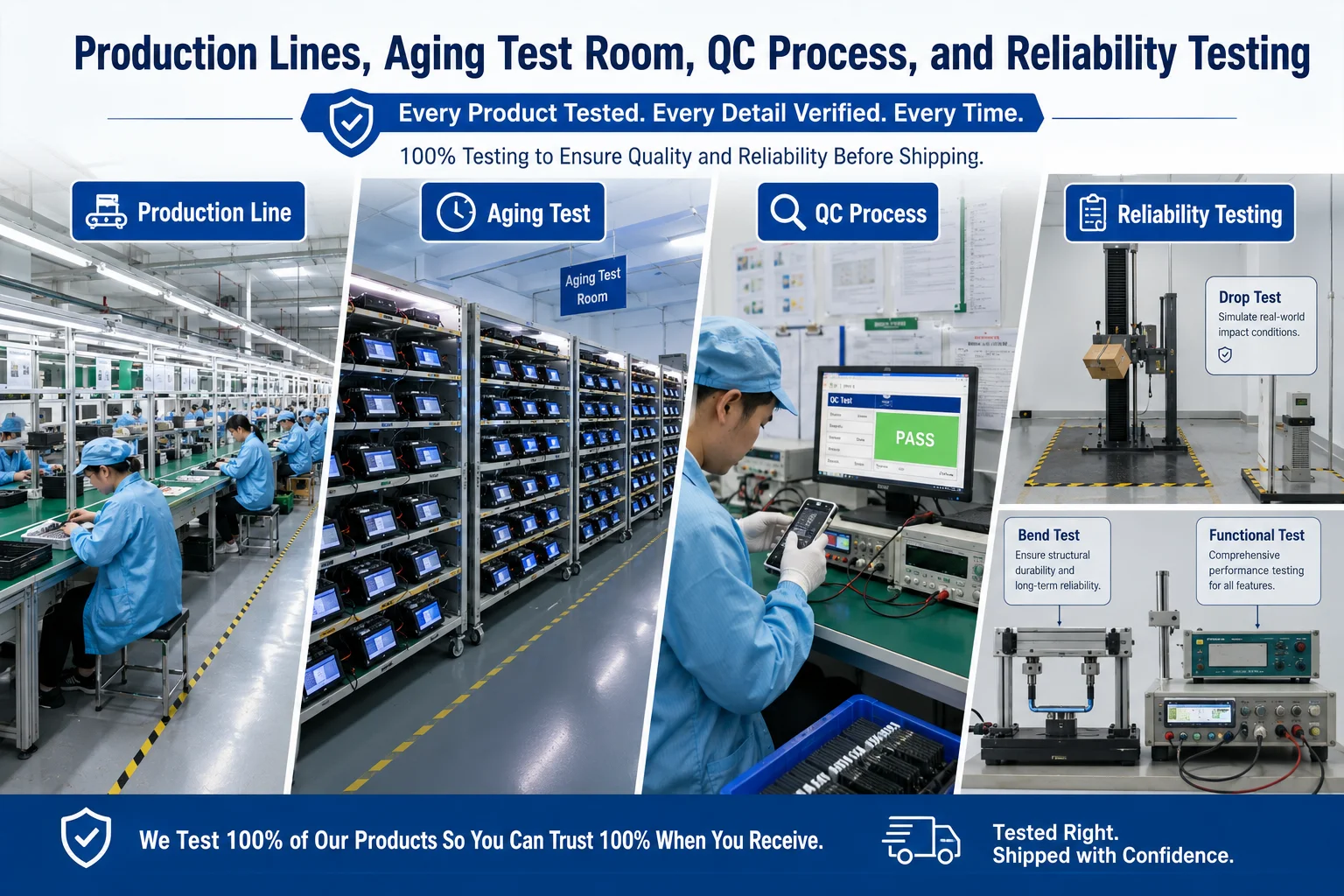
A clean production line is good, but a controlled QC process is better. You need to see how they handle defects. Do they just throw bad products away, or do they record the issues and fix the root cause? What we have learned is that the most successful partnerships focus on process control. You should ask the supplier to show you their daily QC reports. Look for an aging test room. For chargers and smartwatches, every unit must go through an aging test8. This ensures the battery and circuit board will not fail after a few days of use.
Evaluating the QC Workflow
Here is what a good reliability testing process looks like:
| Test Stage | Equipment Needed | Purpose |
|---|---|---|
| Incoming Quality Control (IQC) | Material inspection tools | Checks raw components before assembly9 |
| In-Process QC (IPQC) | Visual aids, testing jigs | Catches defects during assembly |
| Aging Test Room | High-temperature racks | Tests electrical stability over time |
| Final Quality Control (FQC) | Full functional testers | Ensures the final product works perfectly |
When you see these stations in person or via video, you know the factory takes quality seriously.
Sourcing Transparency: Components, Chipsets, Batteries, and Key Materials?
Hidden cheap parts cause battery fires.10 You risk legal trouble and product bans. You must know exactly what materials go inside your products.
To ensure sourcing transparency, ask the factory for a Bill of Materials (BOM) that lists the exact brands of chipsets and battery cells. Verify that they use approved suppliers for critical components to prevent quality fade and ensure product safety.
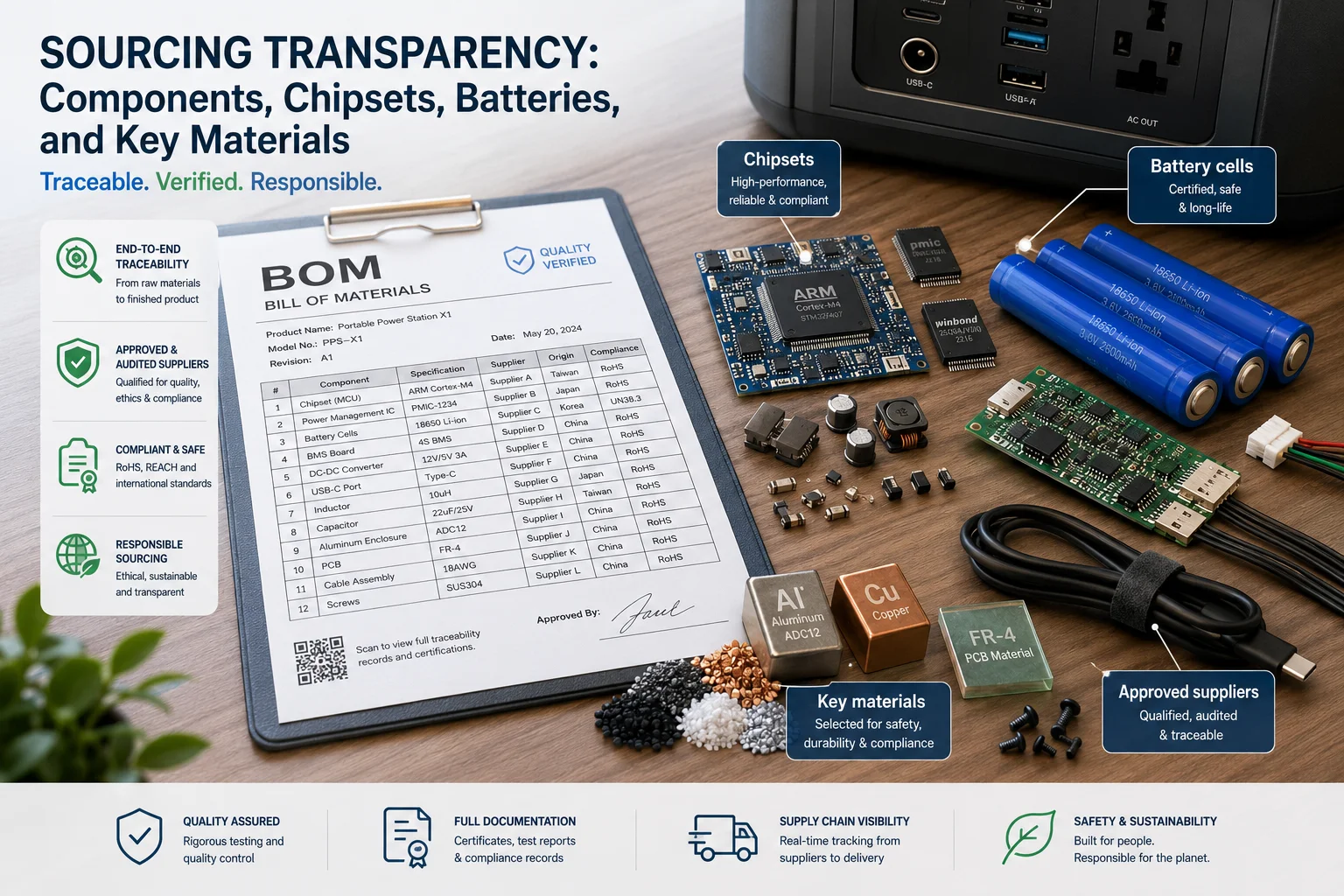
Quality fade happens when a factory slowly replaces good materials with cheaper ones after the first few production runs.11 To stop this, you need sourcing transparency. You must know where they get their key materials. This is especially true for batteries and main chipsets. I always tell buyers to ask for a detailed BOM. You do not need to know every single screw. But you must know the brand of the battery cell, the supplier of the main IC, and the type of plastic used for the shell.
Tracking Critical Materials
Here is how you can track key components:
| Component | Risk Level | Transparency Requirement |
|---|---|---|
| Battery Cells | High (Fire hazard) | Require exact brand and model |
| Main Chipsets/ICs | High (Functionality) | Require original brand, not generic clones |
| PCBA Boards | Medium (Durability) | Ask for thickness and copper weight |
| Plastic Shells | Low (Cosmetic) | Specify material grade like ABS or PC |
When the factory agrees to declare these components, they know you are watching. This builds a foundation of trust.
Live Video Tours, On-Site Checks, and Third-Party Factory Audits Explained?
Travel costs are high and time is short. You cannot visit every supplier in person. You need flexible ways to verify a factory from afar.
You can verify a factory through live video tours using a smartphone, on-site checks by yourself, or hiring a third-party inspection company. Live tours offer a quick look at daily operations, while third-party audits provide detailed reports on the factory's compliance and capacity.
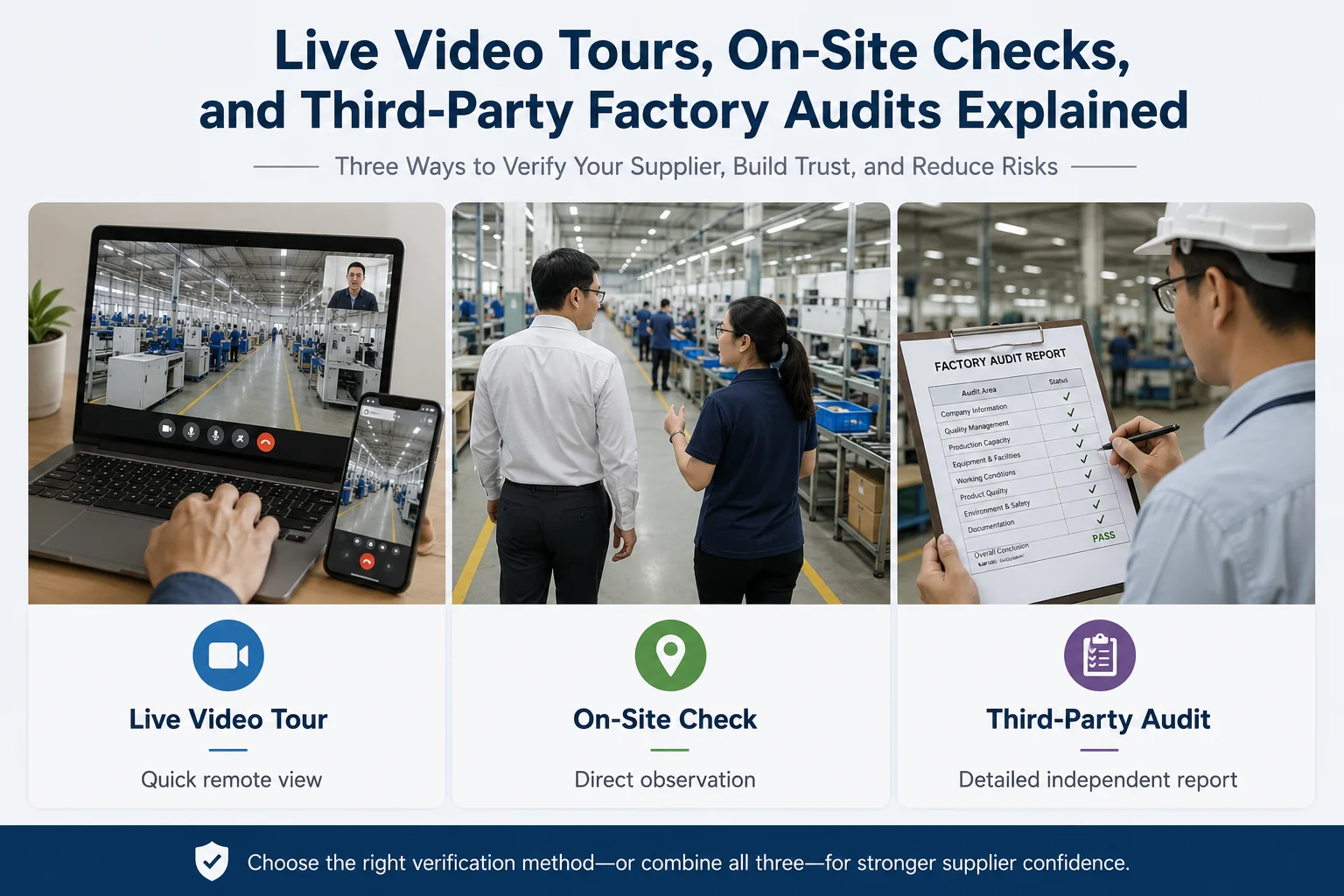
A common question we hear from first-time buyers is whether a video tour is enough. A live video tour is a great first step. It proves the factory exists and has basic equipment. However, it does not replace a full audit. If you plan to place a large order, you should invest in a third-party factory audit. A third-party auditor will check the fire exits, working hours, and quality records in detail.12 They give you a standardized report. You can use this report to compare different factories objectively.
Comparing Verification Methods
Here is a comparison of your verification options:
| Verification Method | Cost | Time Required | Best Used For |
|---|---|---|---|
| Live Video Tour | Free | 30 minutes | Initial screening and confirming the factory is real |
| Third-Party Audit | $300 - $500 | 1 to 2 days | Deep dive into QC processes and compliance before a big order |
| On-Site Visit | High (Travel) | 3 to 5 days | Final confirmation and building a long-term relationship |
Choose the method that fits your budget and order size.
How to Choose a Reliable 3C Electronics Manufacturer in China?
Too many choices make the decision hard. You fear picking a partner that will disappoint you later. You need a clear way to make the final choice.
To choose a reliable manufacturer, match their capabilities to your specific product and business model. Look for a partner who communicates clearly, shows transparency in their processes, and provides solid evidence of quality control rather than just making empty promises.
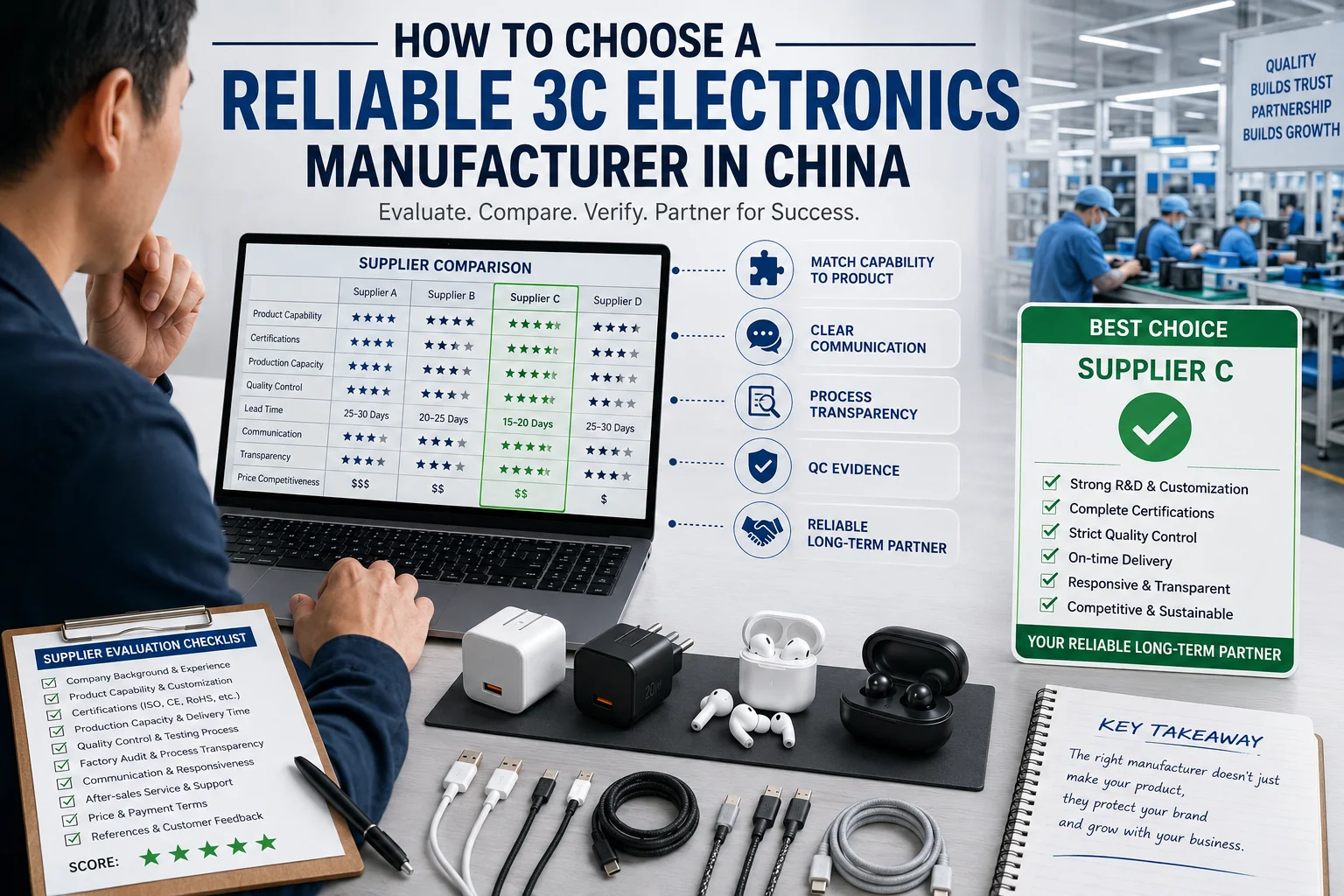
The one-size-fits-all audit checklist is a myth. You cannot use the same list for a simple USB cable and a complex smartwatch. Your business model also dictates your audit priorities. You must find a supplier who fits your specific needs. What we have learned is that the most successful partnerships focus on transparency and problem-solving. A good supplier will tell you when they cannot do something. They will offer alternative solutions. You should look for a partner, not just a vendor.
Final Selection Criteria
Here is a final checklist for your decision:
| Evaluation Area | What to Look For |
|---|---|
| Communication | Fast replies, clear answers, good English |
| Transparency | Willingness to show video tours, BOM, and QC reports |
| Capability | Machines and workers that match your product type |
| Attitude | Proactive problem solving and honest feedback |
When you find a supplier who scores well in these areas, you have found a reliable partner.
Conclusion
Auditing a 3C electronics factory is about matching capabilities to your needs. Focus on evidence, transparency, and clear communication to build a successful and safe sourcing partnership.
"Operational Transparency: Make Your Processes Visible to ...", https://www.hbs.edu/faculty/Pages/item.aspx?num=55804. Supply chain management research suggests that on-site audits are a critical mechanism for reducing information asymmetry, allowing buyers to verify the actual operational capabilities of suppliers rather than relying on marketing claims. Evidence role: general_support; source type: paper. Supports: The effectiveness of factory audits in revealing true supplier operations. ↩
"Explained: China Company Business Scope", https://www.chinacheckup.com/blog/china-company-business-scope. Corporate registration in China requires a business license that explicitly defines the scope of business, listing activities such as 'manufacturing' or 'wholesale/sales,' which allows buyers to legally differentiate between factories and trading companies. Evidence role: mechanism; source type: government. Supports: How to use a Chinese business license to distinguish manufacturing and trading entities. Scope note: The presence of a manufacturing scope on a license does not guarantee the entity owns the specific production facility being audited. ↩
"A Supply Chain Management Perspective on Mitigating the Risks of ...", https://a-capp.msu.edu/article/a-supply-chain-management-perspective-on-mitigating-the-risks-of-product-counterfeiting/. Supply chain risk research indicates that fraudulent and counterfeit compliance certificates are a documented occurrence in international electronics sourcing, posing significant regulatory and safety risks. Evidence role: statistic; source type: research. Supports: The prevalence of counterfeit compliance certificates in supply chains. Scope note: The exact proportion of fake certificates varies by product category and region, making precise quantification difficult. ↩
"Equipment Authorization | Federal Communications Commission", https://www.fcc.gov/engineering-technology/laboratory-division/general/equipment-authorization. The US Federal Communications Commission and the European Commission mandate that electronic products meet specific electromagnetic compatibility and hazardous substance restrictions before entering their respective markets, denoted by FCC, CE, and RoHS marks. Evidence role: definition; source type: government. Supports: The regulatory requirements for CE, FCC, and RoHS compliance. ↩
"Conditions and Requirements for Testing Component Parts ...", https://www.federalregister.gov/documents/2010/05/20/2010-11370/conditions-and-requirements-for-testing-component-parts-of-consumer-products. In product compliance, while a certificate indicates adherence to a standard, a detailed test report is issued by an accredited laboratory documenting the specific test methods, measured parameters, and pass/fail criteria utilized. Evidence role: definition; source type: education. Supports: The difference between a test report and a compliance certificate. ↩
"Quality management systems: An introduction - ISO", https://www.iso.org/quality-management/what-is-qms. The International Organization for Standardization (ISO) defines ISO 9001 as the international standard that specifies requirements for a quality management system, helping organizations ensure they meet customer and regulatory requirements. Evidence role: definition; source type: institution. Supports: The definition and purpose of ISO 9001 certification. ↩
"Product Complexity: A Definition and Impacts on Operations", https://ecommons.udayton.edu/context/mis_fac_pub/article/1095/viewcontent/Product_Complexity_A_Definition_and_Impacts_on_Operations.pdf. Procurement literature indicates that increased product complexity necessitates more rigorous supplier evaluation, as multi-component devices like TWS earbuds present higher integration risks and engineering dependencies than simple assemblies like USB cables. Evidence role: mechanism; source type: paper. Supports: How product complexity dictates supplier audit requirements. ↩
"Burn-In - Integration and Test > Thermal Testing - S3VI - NASA", https://s3vi.ndc.nasa.gov/ssri-kb/topics/47/. Electronics manufacturing guidelines recommend burn-in or aging tests for power supplies and battery-operated devices to screen out early failures, though the 100% testing rate depends on specific product risk profiles. Evidence role: expert_consensus; source type: research. Supports: Industry standards for aging tests in electronics. Scope note: The necessity of 100% testing varies by product type and client specifications rather than being a universal regulatory mandate. ↩
"What Is Incoming Quality Control? Why It's Important? - Qualityze", https://www.qualityze.com/blogs/incoming-quality-control. Incoming Quality Control (IQC) is the recognized phase in manufacturing where raw materials and components are physically and functionally inspected before entering the assembly line, preventing defective inputs from progressing. Evidence role: definition; source type: encyclopedia. Supports: The definition of Incoming Quality Control (IQC). ↩
"[PDF] Lithium-ion Battery Safety - OSHA", https://www.osha.gov/sites/default/files/publications/OSHA4480.pdf. Research indicates that substandard materials and manufacturing defects in lithium-ion batteries can lead to thermal runaway, a primary cause of fires in consumer electronics. Evidence role: mechanism; source type: research. Supports: The mechanism by which poor quality components cause battery fires. ↩
"'Quality Fade': China's Great Business Challenge", https://knowledge.wharton.upenn.edu/podcast/knowledge-at-wharton-podcast/quality-fade-chinas-great-business-challenge/. Supply chain management literature defines 'quality fade' as the practice where suppliers gradually reduce product quality over time to cut costs after an initial period of building trust with the buyer. Evidence role: definition; source type: paper. Supports: The definition and mechanism of 'quality fade' in manufacturing. ↩
"New York's Inter-Agency Fire Safety Working Group | NYSERDA", https://www.nyserda.ny.gov/All-Programs/Energy-Storage-Program/New-York-Inter-Agency-Fire-Safety-Working-Group. Established social compliance audit standards, such as SMETA, typically require auditors to verify fire exit accessibility, adherence to labor laws regarding working hours, and the maintenance of quality records. Evidence role: general_support; source type: institution. Supports: The standard scope of third-party factory audits. Scope note: Audit scopes vary significantly depending on the specific framework selected, and a standard compliance audit may not substitute for a technical quality assessment. ↩