Quick Answer
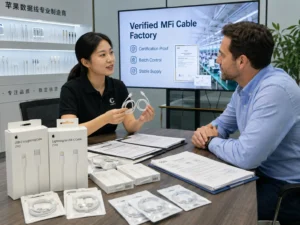
A finding-network tracker can look like a simple private-label opportunity, but the sourcing risk starts when buyers assume a supplier’s “supports Find My[1]” claim means the product is ready for any brand and market. That assumption can lead to delayed launches, unusable inventory, or unclear compliance responsibility. I recommend validating ecosystem access, documentation, ownership, and customization limits before ordering samples.
A finding-network tracker is only OEM-ready when the supplier can show which network authorization, product model, market documents, and customization scope apply to your specific project. A supplier’s compatibility claim does not automatically prove platform approval, legal compliance, or permission to sell the tracker under your brand. Buyers should confirm approval ownership, covered model numbers, branding limits, firmware restrictions, MOQ, lead time, and responsibility before sampling or production.

The tracker category is becoming more attractive for e-commerce sellers, promotional-product buyers, and private-label brands. However, it also combines hardware, mobile ecosystems, wireless functions, batteries, packaging, and brand responsibility. I find that buyers get better results when they treat the project as a controlled procurement decision rather than a low-cost commodity purchase.
Why Is a Finding-Network Tracker Not OEM-Ready Just Because a Supplier Says It “Supports Find My”?
A supplier may say that a finding-network tracker “supports Find My,” but that short statement can hide important details. Buyers may order based on a product listing, then discover that the platform access belongs to another brand, the approval covers a different model, or the proposed customization changes the product’s original status. The solution is to separate the claim into clear questions before moving forward.
A finding-network tracker is not automatically OEM-ready because “supports Find My” may refer only to a technical capability or a supplier-provided product configuration. Buyers still need to verify the exact network, the authorization holder, the covered model, the intended market, and whether private labeling or product changes are allowed. Cosmetic branding, new firmware, a revised enclosure, and hardware changes can create very different approval and compliance responsibilities.[5]

“Network Compatible” Is Not the Same as “Platform Authorized”
In tracker sourcing conversations, I often see three different claims treated as if they mean the same thing:
- The product can technically communicate with a particular ecosystem.[2]
- The product or supplier has access to a platform or finding network.
- The product has documents relevant to sale in a specific destination market.
These claims can overlap, but they should not be assumed to be interchangeable.
For example, a supplier may provide screenshots showing that a tracker appears in an app. That material may help a buyer understand the proposed user experience. However, it does not by itself confirm who has the right to market the product under a new brand, whether the exact model is approved, or whether the approval remains valid after modifications.
A supplier may also show a test report, declaration, certificate, battery document, or wireless-related document. Those records may be relevant to a sourcing review. However, one document does not automatically prove that every legal, platform, labeling, and market-access requirement has been met.
I treat supplier documents as evidence to review, not as a final global sales authorization.
The practical question is not simply, “Does this tracker support the network?” The better question is:
“Can this exact tracker, in this configuration, under my brand, be responsibly sold in my target market and used in the intended ecosystem?”
That question is broader, but it protects the buyer from making a decision based on a single marketing phrase.
The Four Areas I Separate During Supplier Discussions
When KingSourcing reviews quotations or discusses an OEM tracker project with suppliers, we separate the project into four areas.
| Review area | Buyer question | Why it matters |
|---|---|---|
| Network functionality | Which finding network or mobile ecosystem does the tracker use? | The answer defines the expected customer experience and compatibility limits. |
| Platform authorization | Who holds the relevant authorization or program access? | Approval ownership may affect branding, product listing, and launch eligibility. |
| Product scope | Which exact model number, hardware version, firmware version, and configuration are covered? | A similar-looking tracker may not be the same approved product.[4] |
| Market compliance | Which documents relate to the intended destination market? | Requirements can vary by country, product function, battery type, labeling, and importer role.[3] |
This approach is useful because suppliers often use broad commercial language. A phrase such as “Find My compatible” may be understood differently by a factory salesperson, a buyer, a marketplace team, and a compliance professional.
I do not recommend accusing suppliers of being misleading simply because their wording is broad. Many suppliers are focused on manufacturing and may not be responsible for every downstream platform, legal, or importer requirement. Still, buyers need precise answers before they commit money to tooling, packaging, inventory, or launch dates.
Ask Who Owns the Approval or Authorization
Approval ownership is one of the most important questions in a finding-network tracker project. If the relevant ecosystem authorization belongs to the supplier, a third party, an existing brand, or a platform partner, the buyer needs to understand what that means for a private-label launch.
I would ask the supplier questions such as:
- Who is the approval holder for the proposed tracker?
- Is the approval tied to the factory, a trading company, a chip provider, a platform partner, or another brand?
- Does the authorization cover the exact model shown in the quotation?
- Is the buyer’s logo or brand permitted under the existing arrangement?
- Does a new brand name require a separate process, review, or agreement?
- Is the product listing, app connection, or ecosystem enrollment controlled by the supplier?
- Can the buyer continue selling the product if the supplier relationship changes?
- Does the authorization remain valid if the product housing, packaging, firmware, or electronics change?
These questions may feel detailed at the quotation stage. However, they are less expensive to ask before sampling than after inventory has been produced.
A buyer should also request that the supplier identify the product using consistent references. A product image alone is not enough. I prefer to see clear references to:
- Supplier name and factory name, where available
- Product model number
- Hardware revision
- Firmware version, where relevant
- Battery type or battery configuration
- Wireless functions
- Proposed color, shell, and accessory configuration
- Target market
- Proposed buyer brand and packaging scope
The goal is not to create unnecessary paperwork. The goal is to prevent a situation where the sample, documents, quotation, and finished production order refer to slightly different products.
Private Label, Cosmetic Customization, and Deep OEM Are Different Projects
Many buyers use the term “OEM” for any branded product. In practice, I separate at least three levels of customization because each level can change cost, lead time, documentation needs, and risk.
| Project type | Typical changes | Common sourcing impact |
|---|---|---|
| Private label | Logo on product, standard packaging, barcode label | Usually the simplest route, but buyers still need written confirmation of brand and ecosystem limits. |
| Cosmetic customization | New colors, printed graphics, packaging inserts, accessory changes, revised outer box | May affect MOQ, material confirmation, packaging tests, and document alignment. |
| Deep OEM or ODM | New enclosure, changed dimensions, new battery design, revised electronics, new firmware, app changes | May require engineering review, new validation, longer lead time, higher MOQ, and new approval or compliance assessment. |
A logo on a standard tracker is not the same as a new tracker design. A custom enclosure is not the same as a packaging insert. Firmware changes are not the same as printing a logo on a retail box.
This distinction matters because some buyers begin with a simple branding request and then add changes gradually:
- “Can we use our own logo?”
- “Can we make the tracker thinner?”
- “Can we change the button position?”
- “Can we use a different battery?”
- “Can you add a different sound?”
- “Can you remove the existing app instructions?”
- “Can we change the pairing flow?”
- “Can you use our own mobile app?”
Each change can affect the original supplier configuration. Even when a supplier agrees commercially, the buyer should not assume that the prior platform materials, reports, or documents automatically cover the revised product.
Why Firmware and App Control Need Extra Attention

A tracker may need to pair with an ecosystem, update certain settings, display device information, or provide alerts. If the supplier controls the firmware or app connection, the buyer needs clarity on ongoing support and change control.
I would ask:
- Who controls the firmware version used in mass production?
- Can the supplier change firmware after the buyer approves the sample?
- Is there a version-control record for the approved production configuration?
- Does the buyer receive documentation for user setup and troubleshooting?
- Who handles platform changes that affect customer use?
- Does the supplier provide after-sales technical support?
- Can the supplier or platform operator disable, limit, or change a service?
- Is the buyer allowed to use the supplier’s instructions, screenshots, product descriptions, or app-related trademarks?
These are commercial and operational questions, not only technical questions. A buyer may have a good physical product but still face customer complaints if setup instructions are unclear or the product experience changes after launch.
For e-commerce sellers, this can become a listing and returns issue. Marketplace customers often expect a tracker to work immediately.[8] If the product description implies a feature that the buyer cannot document or support, the buyer may face avoidable account, review, or refund pressure.
Verify Documents, but Do Not Overstate What They Prove
A responsible sourcing process includes document review. However, buyers should be careful about how they interpret supplier-provided files.
A supplier may provide documents that relate to:
- Product safety or electrical testing
- Wireless or radio-related testing
- Battery transport or battery material information
- Material declarations
- Packaging specifications
- Factory quality systems
- Platform-related materials
- Product test reports
- Previous customer documentation
These records can be useful. Yet a document should be checked against the actual project.
I recommend comparing each document with the proposed purchase order and sample specification. The buyer should look for matching details such as model number, product description, date, issuing body, report scope, and product configuration.
Here are practical checks I would include in a document-review list:
| Checkpoint | What to verify |
|---|---|
| Product identity | Does the document name match the quoted tracker model? |
| Scope | Does it cover the same hardware, wireless function, battery, and configuration? |
| Date and status | Is the document current enough for the project and market requirement? |
| Holder | Is the named company connected to the proposed supplier or approval owner? |
| Brand relevance | Does the document permit or address the buyer’s brand, if that matters? |
| Market relevance | Is the document relevant to the intended country or region? |
| Customization effect | Could logo, packaging, housing, firmware, or hardware changes alter the scope? |
I also recommend that buyers confirm current platform rules through official channels and consult qualified compliance professionals for application-specific decisions. A sourcing company can help organize supplier information and identify gaps, but it should not replace legal, technical, laboratory, or official platform confirmation.
Build the Finding-Network Tracker Project in the Right Order
The wrong sequence usually starts with price: find the cheapest tracker, add a logo, then ask about certification later. That route can create expensive rework.
A better sequence starts with the commercial purpose and intended user ecosystem.
Step 1: Define the target market and customer expectation
First, identify where the tracker will be sold and who will use it.
Important questions include:
- Which countries or regions will receive the product?
- Which phone ecosystem do customers use?
- Is the tracker for keys, luggage, wallets, pets, promotional use, or another purpose?
- Will the product be sold as a standalone item, bundle, gift, or retail package?
- Will the buyer sell through Amazon, Shopify, retail stores, distributors, or another channel?
- What support information will customers need?
This stage helps prevent a mismatch between a supplier’s standard tracker and the buyer’s actual sales plan.
Step 2: Screen suppliers for the correct capability
The next step is not simply collecting the lowest quotation. I would compare suppliers based on whether they can provide clear and consistent answers.
Useful supplier-screening areas include:
- Factory or trading-company role
- Experience with similar tracker categories
- Available standard models
- Sample availability
- Product documentation process
- Branding options
- Packaging capability
- Quality-control process
- Production capacity
- Communication quality
- Lead-time assumptions
- Ability to explain customization boundaries
At KingSourcing, we often find that supplier responsiveness is itself an important indicator. A supplier that cannot identify the model, approval holder, or customization limits during the quotation stage may create more uncertainty later.
Step 3: Confirm documentary evidence before approving a sample path
Before investing in a branded sample, buyers should request the relevant information for the proposed standard model. This does not mean every project needs the same documents. The required review depends on the market, configuration, and sales channel.
However, the buyer should have enough information to decide whether the product is worth sampling.
A practical sample-stage checklist may include:
- Product quotation with model number
- Customization description
- Product photos or drawings
- Supplier explanation of ecosystem compatibility
- Approval or authorization ownership explanation
- Available documents for the proposed product configuration
- Estimated MOQ for standard and customized versions
- Sample cost and sample lead-time estimate
- Production lead-time estimate
- Packaging specification
- Warranty and after-sales arrangement
- Quality-control standards
Step 4: Lock the sample specification before production
The approved sample should become a reference point for production. I recommend recording the buyer-approved details in a simple specification sheet.
The sheet can include:
- Product name and model
- Approved color and finish
- Logo artwork location and size
- Packaging artwork version
- Accessories and user manual
- Battery configuration
- Functional requirements
- Cosmetic acceptance standards
- Labeling requirements
- Carton packing details
- Inspection requirements
- Approved firmware or configuration reference, where relevant
This process is valuable for multi-SKU orders. It is also useful when a buyer orders from several Chinese factories and consolidates shipments. Clear specifications reduce confusion between the sourcing stage, factory stage, inspection stage, and shipping stage.
Step 5: Plan production, inspection, and shipping as one workflow
A finding-network tracker is not finished when the factory says production is complete. Buyers also need to consider inspection, packaging verification, carton marks, consolidation, warehousing, and shipping coordination.
For a private-label project, I would pay particular attention to:
- Logo placement and print quality
- Product color consistency
- Packaging language and barcode accuracy
- Included accessories
- User instruction accuracy
- Product quantity
- Carton count and labeling
- Basic functional checks within the agreed inspection scope
- Packaging condition before shipment
- Separation of approved and rejected units
KingSourcing can support supplier sourcing, quotation comparison, sample coordination, factory communication, production follow-up, quality inspection, 1-by-1 product checking where appropriate, packaging checks, warehousing, and multi-supplier consolidation. The exact inspection scope should always be agreed in advance, especially for products with ecosystem, firmware, battery, or market-specific requirements.
Finding-Network Tracker FAQs
Can I put my logo on a finding-network tracker and sell it immediately?
Not necessarily. A logo-only project may be simpler than deep OEM, but buyers should still confirm whether the supplier’s ecosystem authorization, product documentation, packaging materials, and sales arrangement allow use under the buyer’s brand. The exact answer depends on the model, platform arrangement, market, and customization scope.
Does a supplier certificate prove that a finding-network tracker is approved for every market?

No. A supplier certificate or test report may be relevant to a specific product, test scope, company, or market. It does not automatically prove global sales authorization, platform acceptance, or coverage for a modified private-label version. Buyers should verify relevance with qualified professionals and official sources.
What is the difference between private label and OEM for tracker products?
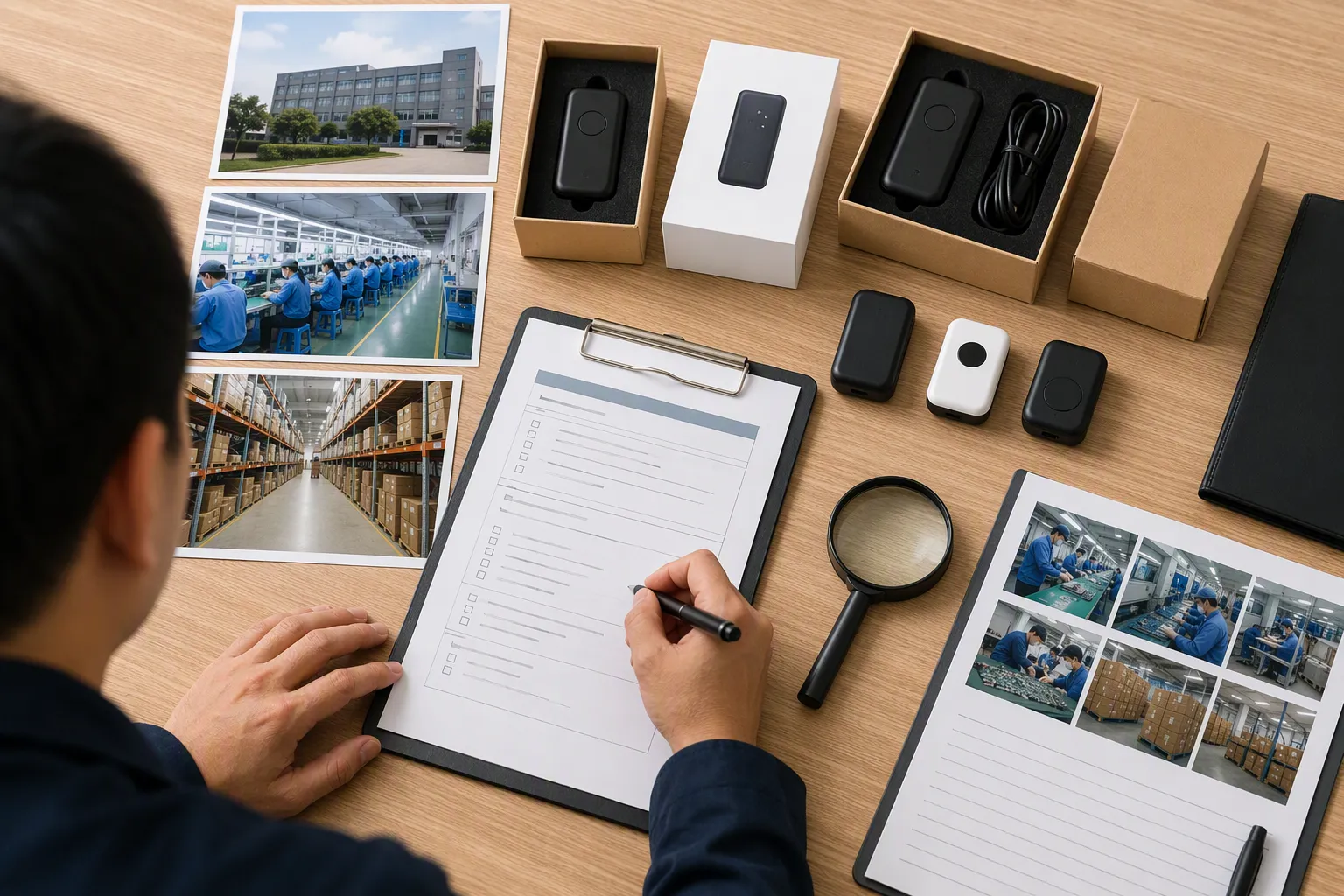
Private label usually means applying a buyer’s logo or standard packaging to an existing product. OEM can involve wider changes, such as colors, enclosure design, firmware, accessories, or packaging. Deep OEM or ODM changes can affect MOQ, lead time, engineering work, documentation, and approval risk.[6]
What should I ask a tracker supplier before ordering samples?
Ask for the exact model number, available customization options, approval or authorization holder, covered product configuration, ecosystem compatibility details, MOQ, sample lead time, production lead time, packaging options, and available documents. You should also ask whether your planned branding or product changes affect the existing arrangement.
Can a sourcing agent confirm platform approval or legal compliance?
A sourcing agent can help collect supplier information, compare quotations, review document consistency, coordinate samples, and identify questions that need clarification. However, a sourcing agent should not be treated as an official platform authority, testing laboratory, legal adviser, or compliance certifier. Buyers should seek qualified advice for their specific market and application.
Conclusion: Plan Your Finding-Network Tracker Before You Buy
A finding-network tracker should be evaluated as a connected product project, not just a logo-printing exercise. I recommend separating ecosystem compatibility, authorization ownership, market documents, and customization impact before approving samples or paying for production. The safest route is to define your market and user ecosystem first, verify supplier capability and evidence next, then confirm branding, specifications, commercial terms, inspection, and shipping plans. If you are sourcing a tracker from China, KingSourcing can help you screen suppliers, compare quotations, coordinate samples, review available documents, manage production, inspect goods, and consolidate shipments with greater control.
Sources
- Find My | Apple Developer Forums", Apple’s Find My network accessory-program materials describe a controlled manufacturer ecosystem with product and program requirements, so technical use of compatible wireless hardware alone does not establish authorization to market an accessory under a separate brand
- Bluetooth – Compliance, Testing, and Qualification", Bluetooth SIG guidance distinguishes Bluetooth qualification from jurisdiction-specific regulatory obligations, illustrating that technical interoperability or protocol qualification is not equivalent to all product-authorization and market-access requirements
- Radio Equipment Directive (RED)", European Union product-compliance guidance identifies radio equipment, labeling and traceability, conformity assessment, and importer responsibilities as relevant elements of placing covered products on the EU market; battery rules may impose additional obligations
- Equipment Authorization | Federal Communications Commission", Equipment-authorization guidance requires regulated devices to be identified and evaluated within a defined authorization scope; changes to an authorized device may require further assessment, meaning visual similarity alone is not evidence that two configurations share the same approval status
- Equipment Authorization | Federal Communications Commission", Radio-equipment authorization rules recognize that changes to an approved device, including changes affecting its radio-frequency characteristics or compliance-relevant design, can trigger additional evaluation or authorization procedures
- [PDF] Design Controls - FDA", Quality-system guidance on design controls treats design changes as controlled activities requiring documentation and, where appropriate, verification and validation, supporting the need to reassess a substantially customized product rather than relying solely on the original configuration
- NIST Cybersecurity for IoT Program", Connected-device cybersecurity guidance identifies firmware, software components, and update mechanisms as factors that can affect a device’s functionality and security throughout its lifecycle after deployment
- An empirical study on the collaborative usability of age ... - PMC", Consumer-IoT usability research reports that setup and onboarding difficulties can materially affect user satisfaction and successful adoption, providing context for treating clear setup documentation as a commercial risk-control measure