USB Cable Wholesale decisions often look simple because buyers can compare connector types, lengths, and prices quickly. However, a cable that looks suitable in a quotation may not match the customer’s charger, device, charging target, data requirement, or sales channel. I help buyers turn vague cable requests into clear purchase specifications before they commit to volume.
Quick Answer
The best USB Cable Wholesale choice depends on the complete application, not only the connector or unit price. I recommend confirming the connected devices, charger output, required charging performance, data speed, cable construction, packaging, target market, MOQ, lead time, and after-sales plan. Buyers should also separate supplier-stated specifications from supporting documents and independently verified test results before placing a large order.
- Confirm the device, charger, use case, and charging target first.
- Treat “fast charging” and “data cable” as incomplete descriptions.
- Request a written specification sheet and representative samples.
- Evaluate quality consistency, packaging, MOQ, lead time, and supply continuity.
- Check relevant market documentation with qualified professionals when necessary.
- Approve a production sample before committing to regular wholesale orders.
A practical sourcing process reduces more than technical uncertainty. It also reduces returns, negative reviews, delayed launches, and disputes about what the supplier promised. In the sections below, I explain the questions I use when reviewing cable inquiries for retailers, distributors, and importers in Europe and North America.
How Should I Define a USB Cable Wholesale Requirement?
A vague request creates risk because different products can share the same connector name. When a buyer asks for a Type-C cable in a certain length, I still do not know which devices it will connect, how much power it must carry, or whether the buyer needs reliable data transfer. I always start by building a purchase specification.
The first USB Cable Wholesale step is to document the connected devices, charger, required power, data function, physical design, packaging, target market, and commercial conditions. Connector type and length are only part of that specification. A supplier can recommend a more appropriate construction after these variables are clear.
A quotation example from normal sourcing work

I have seen inquiries that specified only a connector combination and cable length. That information was not wrong, but it was incomplete. In the follow-up conversation, the important variables were the customer’s phone models, the wattage of the charger already sold in the customer’s stores, whether the cable would be bundled with a charger, and whether the customer wanted a retail-ready package.
Those questions changed the product discussion. The buyer did not need the cheapest cable with the correct-looking ends. The buyer needed a cable that fit an existing accessory range and created fewer compatibility complaints. I describe this as a quotation pattern, not as a universal industry statistic or a laboratory result.
A simple specification template
| Specification area | Questions for the buyer |
|---|---|
| Connector ends | What are the source and device-side connectors? |
| Device use | Which device models or product categories are involved? |
| Power | What charger output and charging target are expected? |
| Data | Is charging only required, or is data transfer important? |
| Length | What working distance is needed, and will length affect usability? |
| Construction | Is flexibility, reinforcement, compact storage, or appearance important? |
| Packaging | Bulk, polybag, card, blister, box, or custom packaging? |
| Market | Which countries and sales channels will receive the product? |
| Commercial terms | MOQ, target price, lead time, forecast, and customization? |
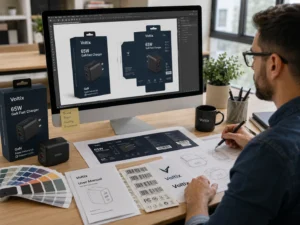
I also recommend creating an approval document before production. That document should state the agreed connector, length, materials, appearance, packaging, labeling, and performance claims. The supplier’s quotation should not be the only record of the agreement.
For buyers who are also sourcing chargers, I suggest comparing the cable and charger as one system. My related USB charger wholesale guide can help buyers ask similar questions about output, packaging, and supplier documentation.
Which USB Cable Wholesale Specifications Matter Most?
The most important specifications are the ones that affect actual use and commercial risk. Buyers should review power capability, data performance, construction, materials, length, connector quality, and compatibility claims together. A single label such as “fast charging” does not provide enough information for a responsible wholesale decision.
Power performance needs a specific description
A cable forms part of a charging path that includes the power source, charger, cable, device, and sometimes a protocol or system requirement.[1] The cable cannot guarantee the final charging result by itself. I therefore ask buyers to identify the intended charger and device combination.
- Intended current or power capability
- Charger output and device input requirements
- Cable length and conductor construction
- Connector design and condition
- Whether the buyer requires a particular protocol or electronic feature
- Whether the claim has been supported by a test report or only stated by the supplier
“Data cable” also needs clarification
A data cable may support more than charging, but the label does not tell the buyer the actual data performance.[2] I ask whether the customer needs basic synchronization, file transfer, peripheral connectivity, or a defined data speed. The buyer should request the supplier’s stated specification and identify how that specification was established.
- Whether both connected devices support the expected data function
- Whether the source port and device port have matching capabilities
- Whether cable length or construction is relevant to the intended use
- Whether the product listing will make a specific speed claim
- Whether sample testing is needed with the buyer’s own devices
Construction affects shelf life and customer experience
A cable may fail because of repeated bending, pulling, twisting, connector stress, poor strain relief, or inconsistent assembly.[3] I review the visible and functional construction rather than judging quality by braid texture alone.
| Feature | What I ask the supplier | Why it matters |
|---|---|---|
| Conductor design | What construction and stated capability are offered? | It affects electrical performance and consistency. |
| Outer jacket | Which material and finish are specified? | It affects flexibility, abrasion resistance, and appearance. |
| Strain relief | How is the connector-to-cable joint reinforced? | It may reduce stress during repeated use. |
| Connector shell | What material, plating, and assembly details are stated? | It affects fit, appearance, and durability. |
| Cable length | What tolerance is accepted? | It supports consistent packing and customer expectations. |
| Identification | Is there a model or batch reference? | It helps with traceability and repeat orders. |
I do not treat a thicker cable, braided jacket, aluminum shell, or attractive color as proof of better performance. These features can support a product position, but the buyer still needs to confirm the electrical and mechanical requirements.[4]
Use documents carefully
Supplier specification sheets, declarations, test reports, and certification documents can help a buyer evaluate a product. They do not automatically prove that every production batch will perform identically or that the cable is suitable for every market and device.[5] I recommend checking the document issuer, product model, test scope, date, and relationship to the quoted item.
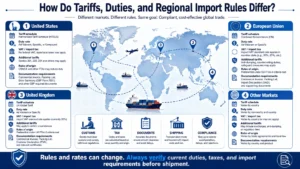
For European and North American buyers, the correct documentation depends on the product, packaging, market, and claim. I recommend reviewing current requirements with the importer’s compliance adviser or another qualified professional. Useful starting points include the USB Implementers Forum for USB-related technical and certification information and the European Commission’s CE marking information. These sources support research, but they do not replace product-specific evaluation.
How Can I Compare USB Cable Wholesale Options?
Price comparisons are useful only after the products are technically comparable. I have found that buyers often compare two unit prices before confirming whether the cables have the same power description, data function, materials, packaging, inspection standard, and warranty arrangement. That approach can make an apparently cheaper product more expensive after launch.
A reliable comparison should include specifications, verification, commercial terms, and channel risk. I recommend using a written comparison table and recording which details are confirmed, stated, sampled, or still open.
Compare like with like
| Comparison point | Option A | Option B | Buyer decision |
|---|---|---|---|
| Connector combination | Confirm model | Confirm model | Avoid assuming similar names mean identical fit. |
| Length tolerance | State tolerance | State tolerance | Check packing and customer expectations. |
| Power description | Written claim | Written claim | Request evidence and application details. |
| Data function | Charging only or specified data | Charging only or specified data | Match the actual device use. |
| Jacket and strain relief | Documented construction | Documented construction | Review durability requirements. |
| Packaging | Bulk or retail-ready | Bulk or retail-ready | Include packing labor and shelf presentation. |
| MOQ | Quantity and model mix | Quantity and model mix | Consider inventory exposure. |
| Lead time | Sample and mass production | Sample and mass production | Match the launch schedule. |
| Quality process | Inspection plan | Inspection plan | Ask how defects are identified. |
| After-sales | Remedy and response time | Remedy and response time | Estimate operational risk. |
Use a weighted buying decision
| Evaluation area | Example weight |
|---|---|
| Application fit | 25% |
| Performance and consistency | 20% |
| Quality control and documentation | 15% |
| Total landed cost | 15% |
| Delivery and supply continuity | 10% |
| Packaging and customization | 10% |
| Communication and after-sales | 5% |
These percentages are examples, not a universal formula. A discount retailer may give more weight to landed cost and packaging. A specialist electronics distributor may give more weight to performance documentation and continuity. A new product launch may give more weight to lead time and sample approval.
Understand landed cost
- Product price
- Custom packaging and artwork
- Inspection or testing cost
- Freight, insurance, duties, and import charges
- Warehousing and handling
- Payment and currency costs
- Expected defect replacement
- Customer service and return processing
- Cost of delayed delivery or missed launch dates
A low-priced cable can create a poor result if the product generates returns or damages the buyer’s store reputation.[6] I do not assume that every inexpensive product will fail. I simply recommend that buyers test whether the price difference is supported by a comparable specification and quality process.
Ask how the supplier controls repeat orders
A sample is an important checkpoint, but a sample alone does not guarantee future production.[7] I ask how the supplier records the approved model, materials, packaging, and inspection requirements. I also ask how changes are communicated if a component or factory process changes.
- Sample identification and photographs.
- Written performance and appearance requirements.
- Packaging and labeling approval.
- Pre-shipment inspection criteria.
- Defect handling and replacement terms.
- Change-control communication.
- A process for addressing customer complaints.
How Should I Evaluate a USB Cable Wholesale Supplier?
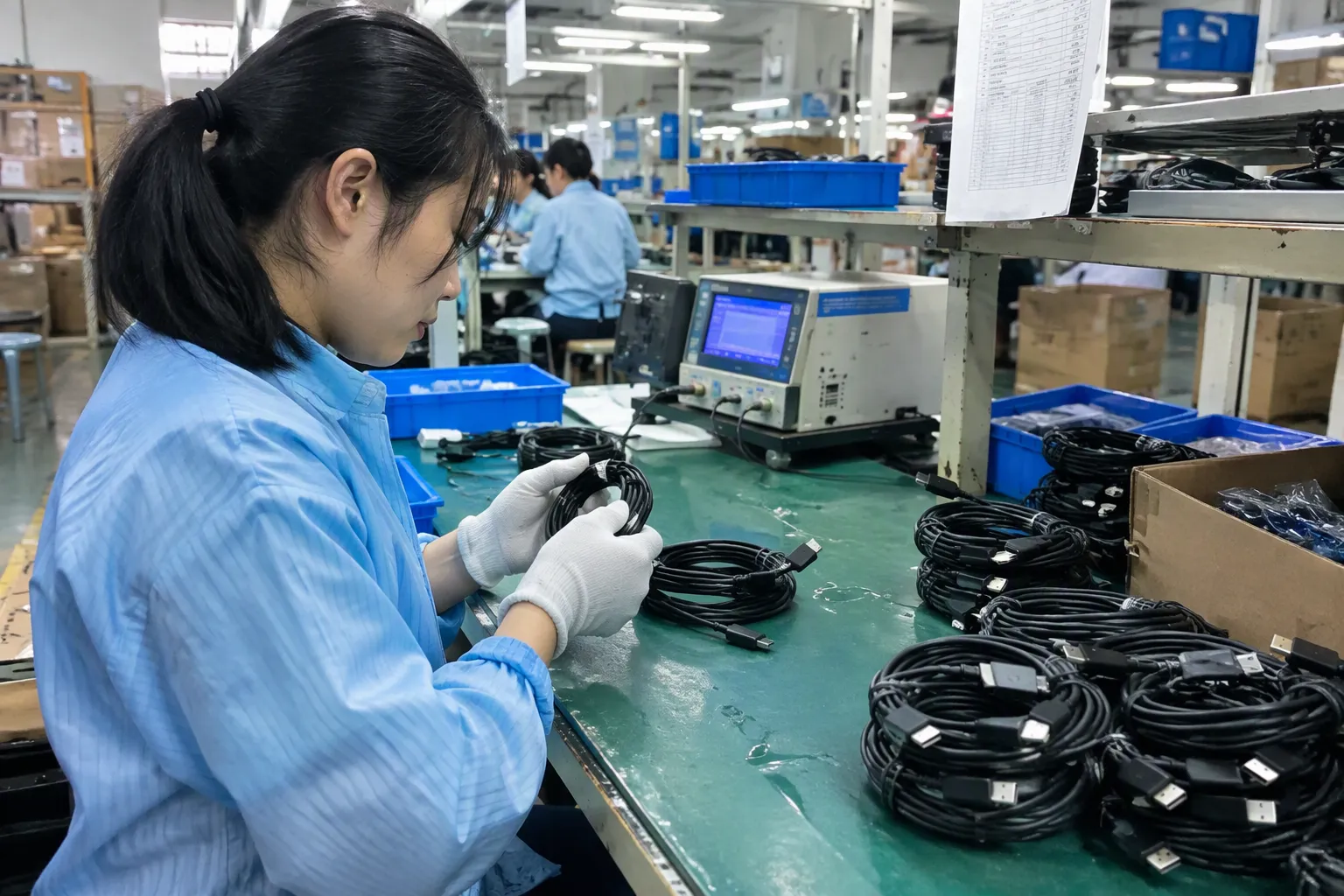
A capable supplier should do more than send a price list. The supplier should ask useful questions, explain what the quotation includes, provide consistent samples, and identify what still requires confirmation. I regard communication quality as part of supplier evaluation because unclear specifications often become commercial disputes later.
The right supplier evaluation covers product knowledge, manufacturing control, documentation, customization, delivery, and after-sales support. Buyers should verify important claims instead of treating a polished catalog or certificate image as conclusive evidence.
Questions I ask during supplier screening
- Which factory will produce the cable?
- Is the quoted item a standard model or a custom design?
- Which specifications are fixed, and which can change?
- How does the supplier inspect incoming materials and finished goods?
- What sample is available for approval?
- Can the supplier provide a batch or model reference?
- What packaging and labeling options are available?
- What is the MOQ for each model, color, and package?
- What is the normal sample and production lead time?
- How does the supplier handle defects or specification deviations?
- Which documents relate specifically to the quoted model?
- How will the supplier notify the buyer about production changes?
Certifications and documents require context
Our company has experience exporting 3C products to European and North American customers, and we often help buyers organize product information. However, I do not present our commercial experience as independent laboratory testing. I also do not treat a certificate as a blanket approval for every cable, package, market, or sales claim.
- The exact product model and construction covered
- The testing organization or document issuer
- The test date and stated standard
- Whether the document applies to a component or finished product
- Whether the document is current and relevant to the destination market
- Whether the importer has additional responsibilities
The U.S. Consumer Product Safety Commission provides useful business guidance for companies placing consumer products on the U.S. market. European importers can also review guidance from the European Commission. I recommend professional compliance advice for application-specific decisions.
Quality control should be visible in the process
- Incoming material inspection: checking components and materials against the purchase requirement.
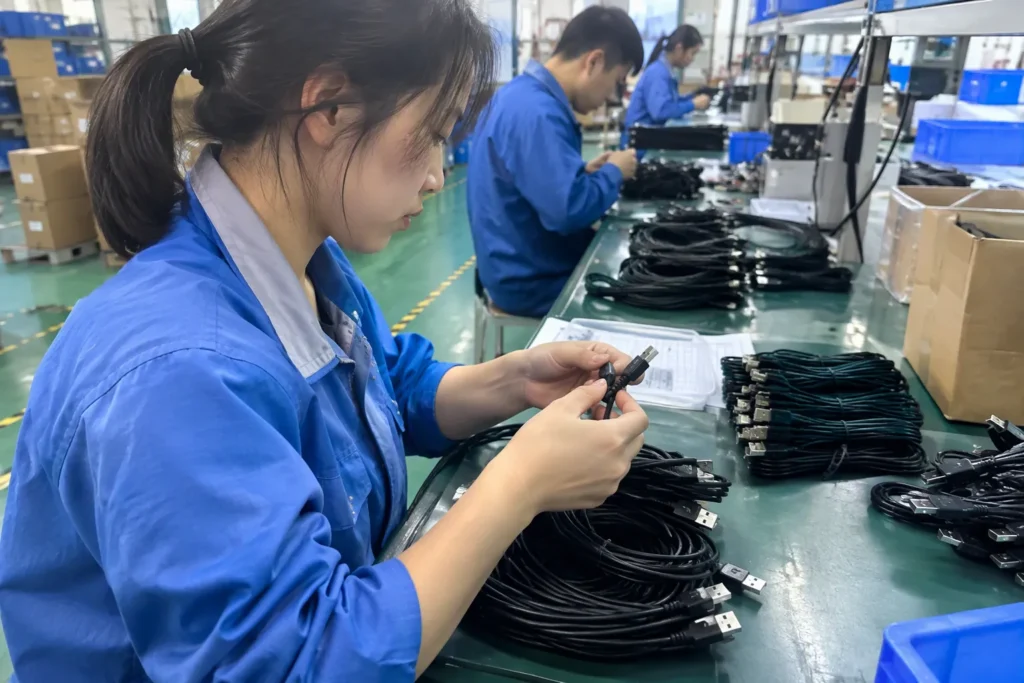
- In-process inspection: checking assembly, soldering, molding, connector fit, or appearance during production.
- Finished product inspection: checking dimensions, appearance, function, packaging, and labeling.
- Pre-shipment inspection: sampling packed goods before dispatch.
- Complaint analysis: recording defects and identifying corrective action.
The buyer should ask which checks are actually performed, how results are recorded, and what happens when products fail a requirement. I would rather receive a clear, limited answer than a broad claim that a factory has “strict quality control” without supporting detail.
Communication protects customized orders
Custom colors, logos, retail cards, barcodes, language panels, and packaging inserts can introduce errors. I recommend using an approved artwork file and a written packing specification. The buyer should confirm carton marks, inner quantities, outer carton dimensions, and labeling before mass production.
For retailers and e-commerce sellers, product content also matters. The listing should not promise a charging speed, data function, or universal compatibility that the approved product cannot support. The sales description, packaging, and specification sheet should use consistent language.
How Do MOQ, Lead Time, and Customization Affect USB Cable Wholesale?
A cable can meet the technical requirement and still be commercially unsuitable. MOQ, production time, packaging requirements, forecast accuracy, and reorder flexibility determine how much inventory risk the buyer carries. I review these terms early because they can change the real cost of a sourcing program.
A good USB Cable Wholesale plan matches the product format to the sales channel. Standard bulk goods may suit a distributor, while a retail chain may need custom packaging and barcode control. Buyers should calculate the inventory commitment before approving customization.
MOQ is more than a factory number
| Order type | Typical commercial advantage | Main risk to review |
|---|---|---|
| Standard bulk cable | Lower setup complexity | Less shelf differentiation |
| Standard cable with logo | Brand visibility | Logo setup and approval timing |
| Custom color | Stronger brand identity | Higher stock risk |
| Custom retail package | Better store presentation | Artwork, packaging MOQ, and longer lead time |
| Multi-model program | Broader product range | More inventory and forecast complexity |
Lead time needs separate milestones
I distinguish between sample preparation, artwork approval, packaging production, cable production, inspection, and shipping. A supplier’s “lead time” may refer only to cable production. The buyer should ask for a milestone schedule.
Build a realistic forecast
I have worked with buyers who wanted a new product quickly but were still deciding the final package and quantity. That situation is common, but the buyer should recognize the trade-off. More customization usually requires more preparation and creates more inventory exposure.[8]
- A smaller standard-product launch.
- A controlled retail test.
- Customer feedback and return monitoring.
- A forecast based on actual sales.
- Custom packaging or expanded color selection after demand is clearer.
After-sales terms should be written
A supplier should explain how it handles confirmed defects, missing quantities, packaging errors, and specification deviations. The buyer should ask about evidence requirements, response timing, replacement arrangements, and responsibility for freight where appropriate.
I avoid promising a particular remedy before the product, contract, and evidence process are clear. However, I do recommend putting the agreed process in writing. A clear after-sales arrangement protects the buyer and gives the supplier a fair opportunity to investigate the issue.
How Can I Approve and Manage a USB Cable Wholesale Order?
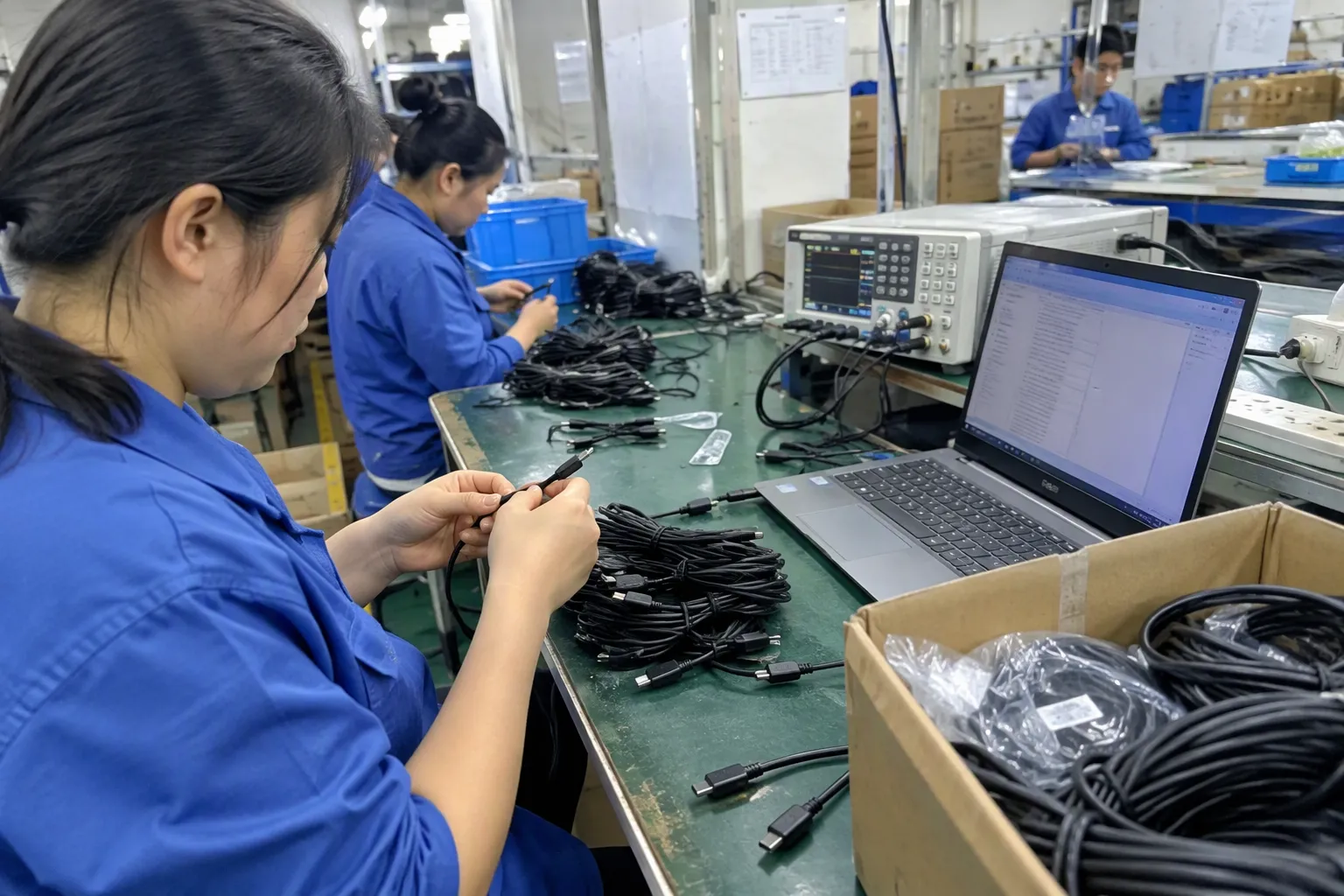
A strong sourcing decision ends with controlled approval, not with the purchase order alone. I recommend approving a representative sample, confirming the commercial specification, and defining inspection points before production. This process helps buyers manage quality without assuming that one sample proves every future batch.
USB Cable Wholesale order management should connect the approved product to the quotation, purchase order, packaging artwork, inspection plan, and shipment records. The buyer should preserve these documents for reorders and complaint handling.
Create an approval pack
- Product photographs from several angles
- Connector and cable length specification
- Stated power and data requirements
- Materials and construction notes
- Color reference
- Packaging artwork
- Barcode and label information
- Carton packing details
- Sample approval date and reference
- Inspection requirements
- Accepted deviations, if any
Test the intended use
The buyer should test samples with the actual charger and device combinations whenever possible. A general office test may not represent the consumer’s use. The buyer should record the test conditions, including the charger, device, cable length, and function checked.
- Physical fit and connector insertion
- Charging behavior with intended equipment
- Data connection where required
- Cable flexibility and handling
- Strain relief appearance
- Length and labeling
- Packaging and retail presentation
Define production inspection
The buyer should decide what will be inspected and at what stage. A pre-shipment inspection may review appearance, quantity, packaging, dimensions, labels, and selected functional checks. The inspection scope should be written so the supplier understands the acceptance criteria.
For higher-risk or customized programs, the buyer may consider independent inspection or specialized testing. The appropriate approach depends on the product claim, market, order value, and business risk. A qualified inspection or compliance provider can advise on the correct method.
Monitor repeat orders
A supplier can change materials, processes, or packaging for practical reasons. I recommend asking the supplier to notify the buyer before any change that may affect fit, performance, appearance, documentation, or packaging. The buyer can then decide whether a new sample or test is needed.
Frequently Asked Questions
Is a Type-C connector enough to choose a USB cable?
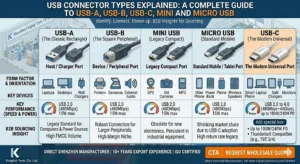
No. A Type-C connector describes an interface shape, not the complete power, data, construction, or compatibility requirement. I recommend confirming the connected devices, charger, intended charging target, data function, cable length, and relevant documentation before approving a wholesale cable.
How do I verify a fast-charging USB cable?
I first identify the charger and device combination, then ask the supplier for the stated power capability and supporting information. I also test a representative sample under the intended conditions. Supplier claims and documents are useful inputs, but they should not be treated as independent proof without appropriate verification.
Should I buy the cheapest USB cable wholesale option?
I would compare total landed cost and channel risk rather than unit price alone. A low price may be reasonable when specifications and quality controls are comparable. However, compatibility complaints, returns, delayed delivery, and inconsistent reorders can increase the real cost.
What information should I request from a USB cable supplier?
I request a written specification, model reference, connector and length details, power and data claims, construction information, packaging options, MOQ, lead time, sample availability, inspection process, relevant documents, and after-sales terms. I also ask which information is confirmed and which remains subject to testing or approval.
How can I reduce risk on a first wholesale order?
I recommend starting with a clear specification, ordering representative samples, testing the intended device and charger combinations, approving packaging, and using written inspection criteria. A standard product with limited customization may reduce initial inventory risk while the buyer evaluates demand and customer feedback.
Conclusion
USB Cable Wholesale sourcing should begin with the buyer’s real application, not with a connector name or attractive unit price. I recommend confirming the device, charger, power and data requirements, construction, market, packaging, MOQ, lead time, and after-sales process. Buyers should distinguish supplier-stated specifications, supporting documents, and independently verified results. My team can help retailers, wholesalers, and importers turn an incomplete cable inquiry into a practical specification and quotation for review.
Sources
- USB Charger (USB Power Delivery)", USB Power Delivery documentation describes charging as a negotiated interaction between a power source and sink, with the cable and device capabilities constraining the available power; this supports treating charging performance as a system property rather than as a cable-only characteristic
- Cables and Connectors", USB-IF materials distinguish USB connector types from USB technology revisions and their associated performance capabilities, supporting the conclusion that a generic “data cable” label does not establish a specific transfer rate
- Mechanical Properties and Fatigue Life Analysis of Motion ...", Studies of flexible electrical cables and connector assemblies report that cyclic bending, tensile loading, and stress concentration near terminations can accelerate fatigue or conductor and interface failure, supporting the article’s mechanical-risk explanation
- About Visual Quality Standards", Reliability engineering literature treats material appearance and nominal construction features as insufficient substitutes for electrical measurements and controlled mechanical testing, supporting the need for requirement-specific verification
- General Use Products: Certification and Testing", European Commission conformity-assessment guidance explains that technical documentation and declarations relate to specified products and applicable requirements, while manufacturers remain responsible for conformity of products placed on the market; this supports treating documents as scoped evidence rather than universal proof
- The impact of online reviews in the presence of customer returns", Research on the cost of poor quality identifies warranty handling, returns, service activity, and lost customer value as costs that may arise after purchase, supporting a total-cost comparison rather than a unit-price-only comparison
- The management of good manufacturing practice (GMP ... - PMC", Manufacturing quality-control guidance distinguishes sample inspection from process control and ongoing conformity verification, supporting the conclusion that one approved sample cannot by itself establish uniformity across subsequent production
- Cutting Edge: Production", Operations-management research on customization and product variety links additional variants and setup requirements with greater planning complexity and inventory risk, supporting the article’s caution about customized wholesale programs