I watched a buyer lose $15,000 on a shipment of "certified" smartwatches that got held at customs. The issue was not the factory. It was a simple, avoidable mistake he made months earlier during the supplier chat.
Many buyers focus only on unit price and certification logos. This guide shows you the five real mistakes—from total cost blindness to vague specs—that I see in my daily sales talks. Fix these, and you stop gambling. You build a system for safe, profitable imports.
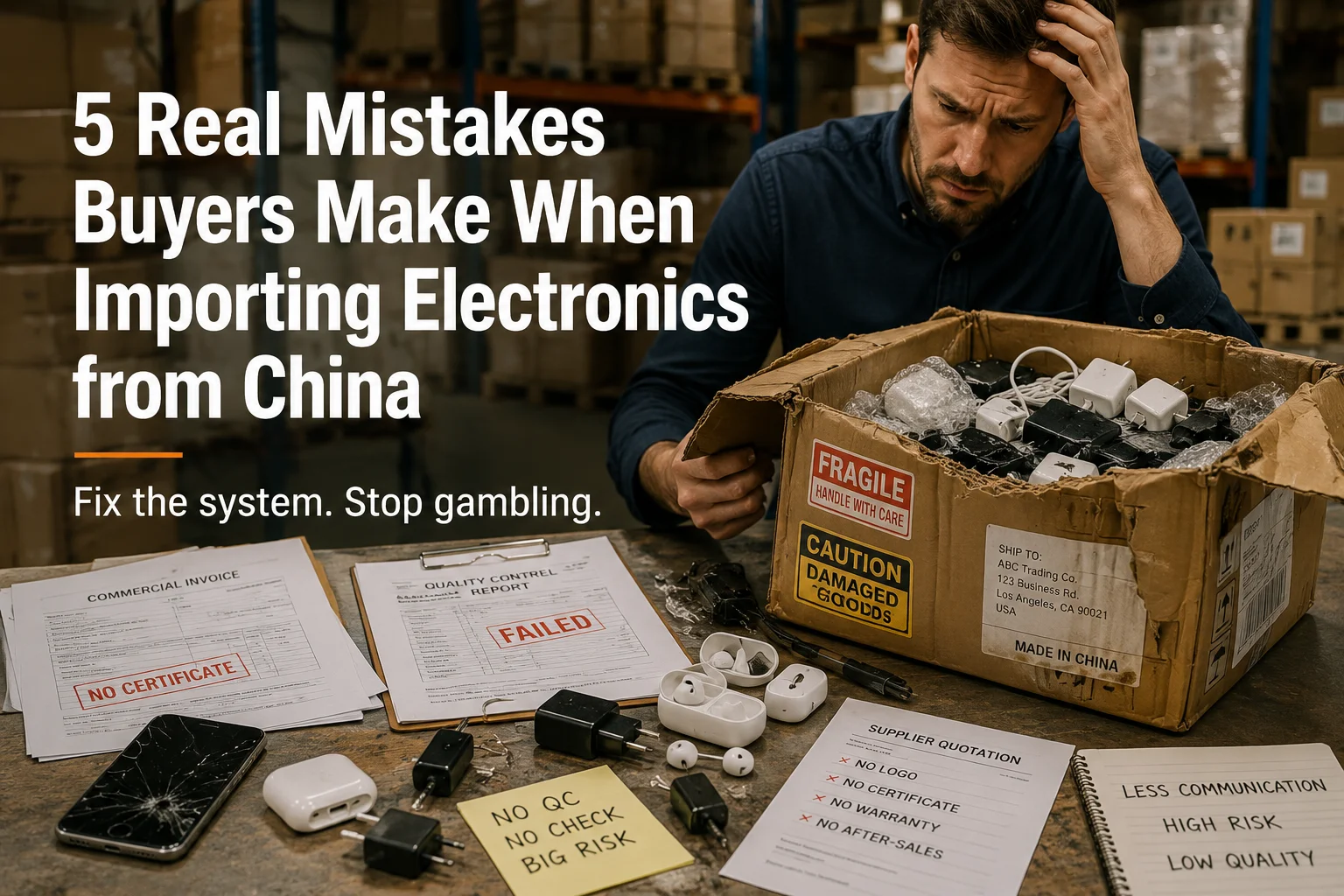
I often tell new clients that importing electronics is not about finding the cheapest listing. It is about controlling risk. Over 15 years of handling inquiries for USB cables, GaN chargers, and TWS earbuds from Shenzhen, I have seen the same patterns again and again. Let me walk you through the five mistakes, plus the checks I recommend, so you can source like a pro.
Why Does Importing Electronics from China Require Careful Supplier Selection?
Buyers often think any supplier with a product photo can deliver. Then they get a shipment with dead batteries and no after-sale support. The frustration is real.
Choosing a supplier is not a transaction. It is a risk audit. The right partner keeps you safe on certifications, quality stability, and delivery. The wrong one costs you not just money, but customer trust you spent years building.
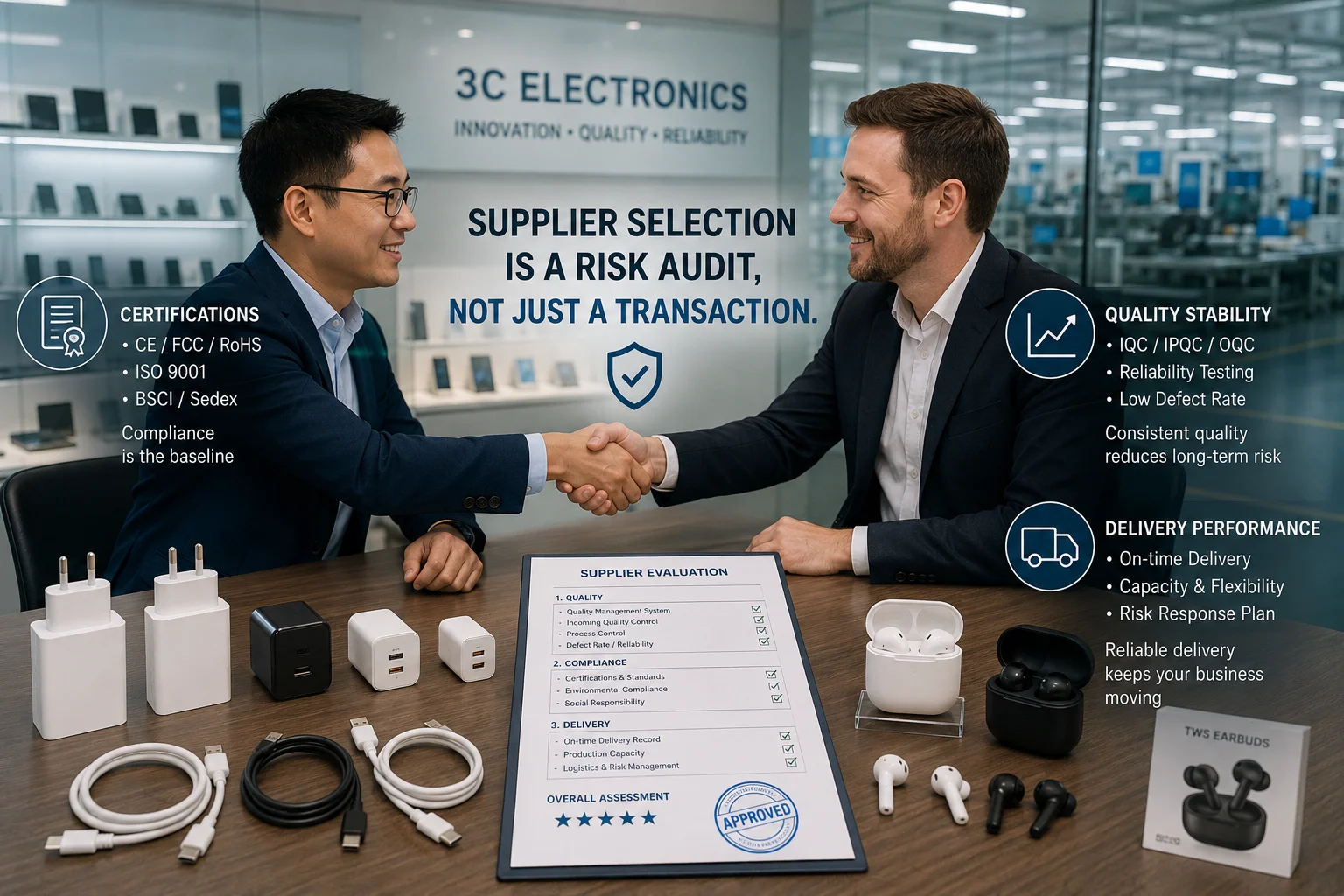
I see this gap every week. A US e-commerce seller sent me a message last month. He was angry because his UK customers returned 20% of a TWS earbud order. The sound cut out. He showed me the chat. He had asked the supplier only three things: price, MOQ, and a certificate photo. No test reports. No spec sheet definition. No talk about the Bluetooth chipset. In his mind, he vetted the supplier. But in reality, he only screened for willingness to say yes. Real supplier selection starts when you stop looking for a seller and start looking for a transparent partner. A partner answers detailed questions about chipset models, battery capacities, and bend-test ratings before you send money. A partner can explain the difference between a CE self-declaration and an NB-verified report1. Without that depth, you are just hoping.
Is Ignoring Certifications the Fastest Way to Lose Your Shipment?
A client once told me, "It's fine, the factory said it's CE certified." Three weeks later, his box of chargers got destroyed at Rotterdam port. The test report he never asked for had an invalid lab code.
Certifications are not a yes/no sticker. You need to verify the full test report, check the lab's accreditation, and confirm your product model is listed. Without this, your shipment can be detained, refused, or worse—become unsellable inventory.
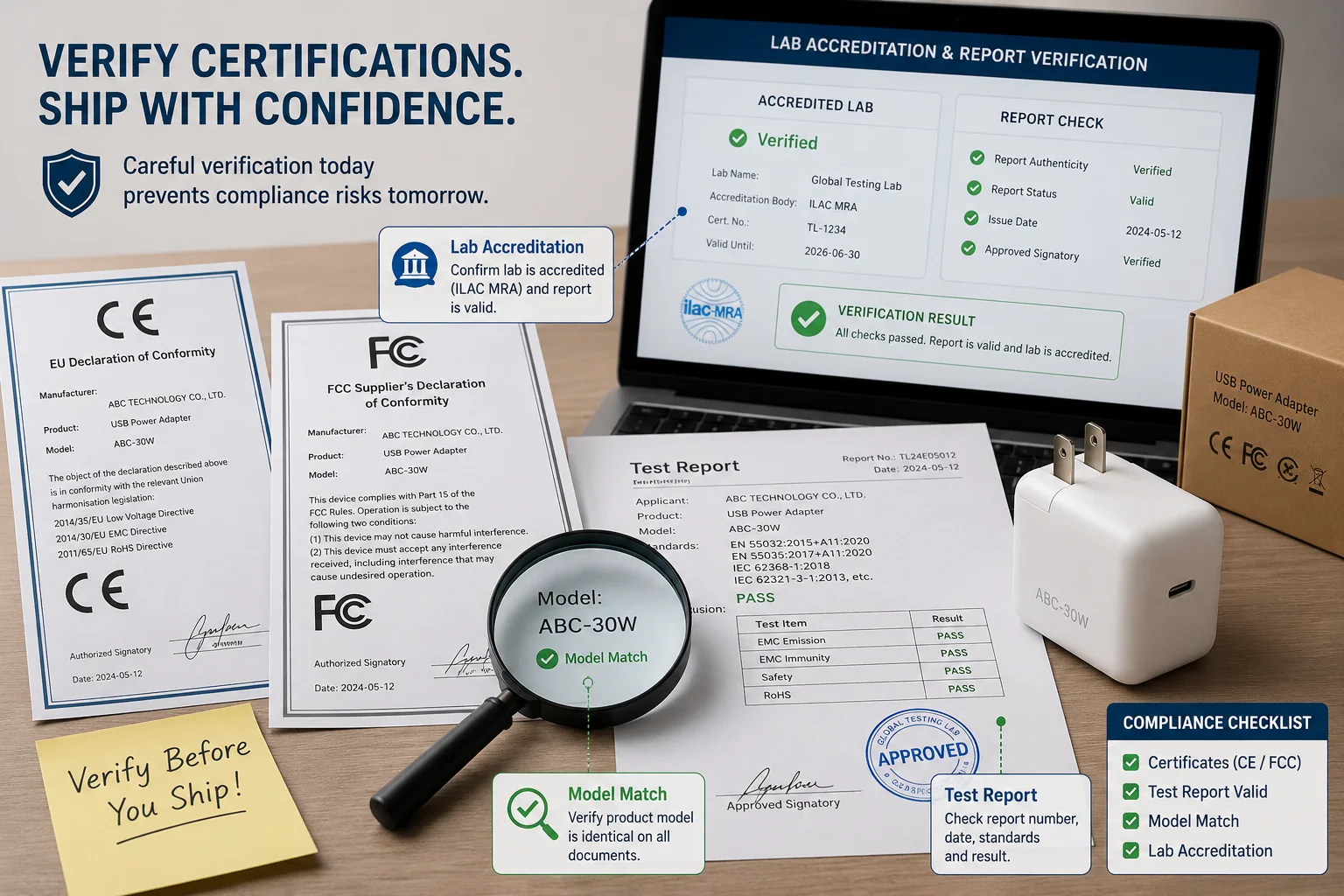
I always tell buyers to treat certifications like a contract, not a logo. For example, when a buyer asks me about a GaN charger for Germany, I do not just send a photo of the CE mark. I give them the actual test report PDF. I point to the laboratory name and its A2LA or equivalent accreditation2. I show them the first page where it lists the exact model number and technical specs. This has saved countless clients from nasty surprises. Without this step, a supplier could give you a certificate for a similar product, or a report that expired, or a test from a non-accredited lab. The EU market has strict requirements for documentation. I also remind buyers that RoHS and WEEE are mandatory for electronics in Europe3. One buyer forgot to ask for WEEE registration and had his Amazon listing suspended4. A simple request for the registration number earlier would have prevented it. Ask for the paperwork early. If the supplier gets evasive, that is your signal to walk away.
Why Does Chasing the Lowest Price Create a Bigger Financial Drain?
A buyer once celebrated finding a GaN charger for $3.50. Six months later, he had spent $4,000 on returns, shipping replacements, and a damaged reputation. His "cheap" purchase turned into his most expensive lesson.
Low unit price hides costs from rework, returns, and customer service5. You must calculate total cost of ownership: tooling, certifications, logistics, duties, and the cost of fixing quality failures. A $0.50 higher unit price from a stable supplier often saves you dollars in the long run6.
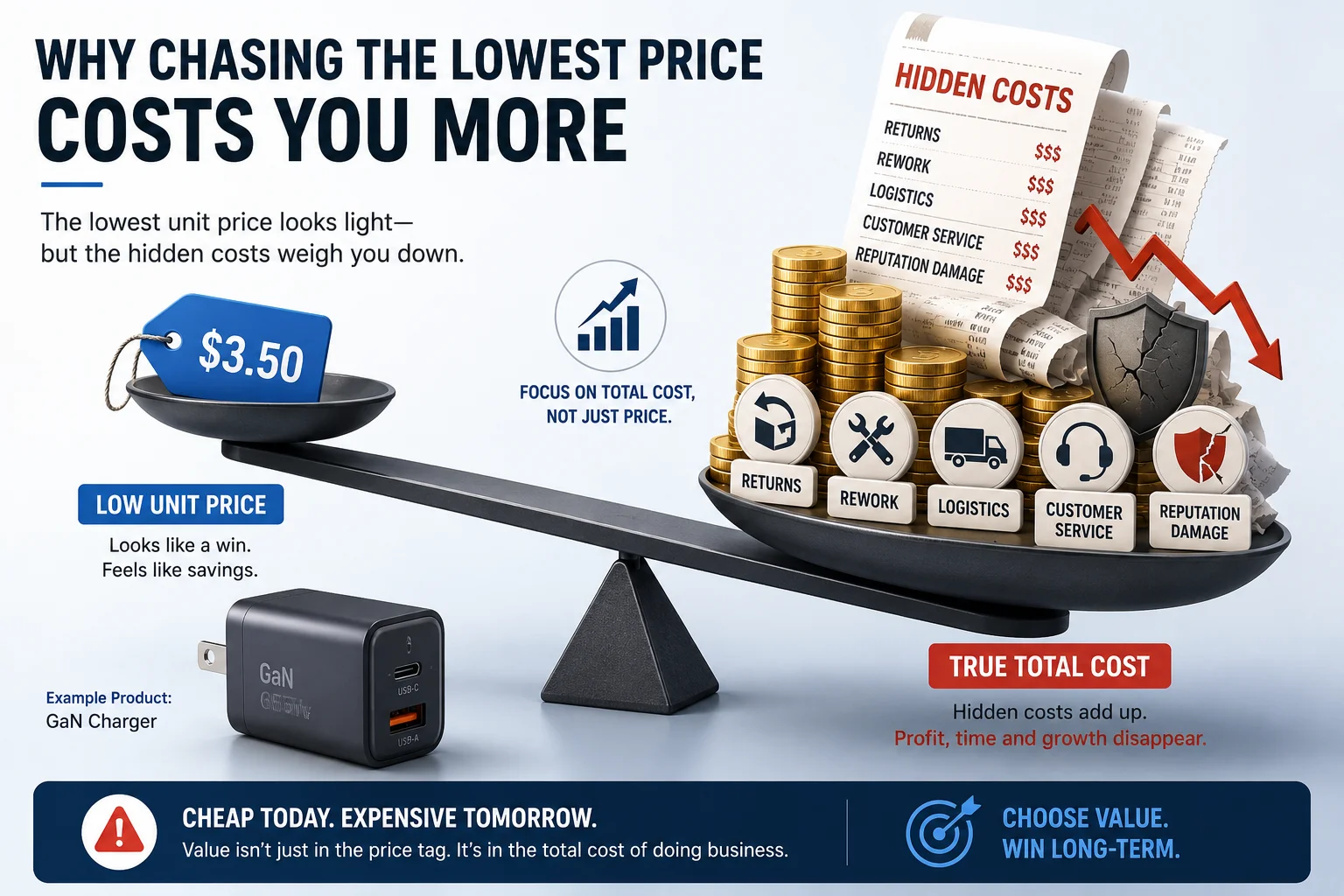
In my sales conversations, when a buyer only asks "best price," I pause. I know they are likely missing the bigger math. I then walk them through a simple calculation. Take a TWS earbud. Supplier A offers $8.50 with generic packaging, no quality check video, and vague answers about battery life. Supplier B offers $9.50 but includes a full audio and battery test per unit, a detailed report, and customized packaging support. The real cost difference shows up later. Supplier A's shipment might have 15% defective units. That means returns, Amazon removal fees, negative reviews, and time spent on angry emails. All that costs far more than the $1 you saved. I had one US retailer who sourced USB-C cables at the lowest possible price. The cables looked fine but failed power delivery after a month. The total losses from replacements and brand damage were five times the initial order value. My advice is simple: ask for a breakdown, not just a price. A reliable supplier can explain where the cost goes. That clarity is what saves your profit margin.
What Happens When You Skip the Sample and Detailed Spec Sheet?
"I trust you, send the order." That sentence from a European buyer made me call him immediately. Without a pre-production sample and a locked spec sheet, he was opening a door to a dispute he could never win.
Skipping samples is a bet against reality. You must define and approve a pre-production sample with a written specification sheet. This sheet should lock in everything: chipset model, battery capacity, connector type, weight, and even the manual's language. Only then can your QC team hold the factory accountable.
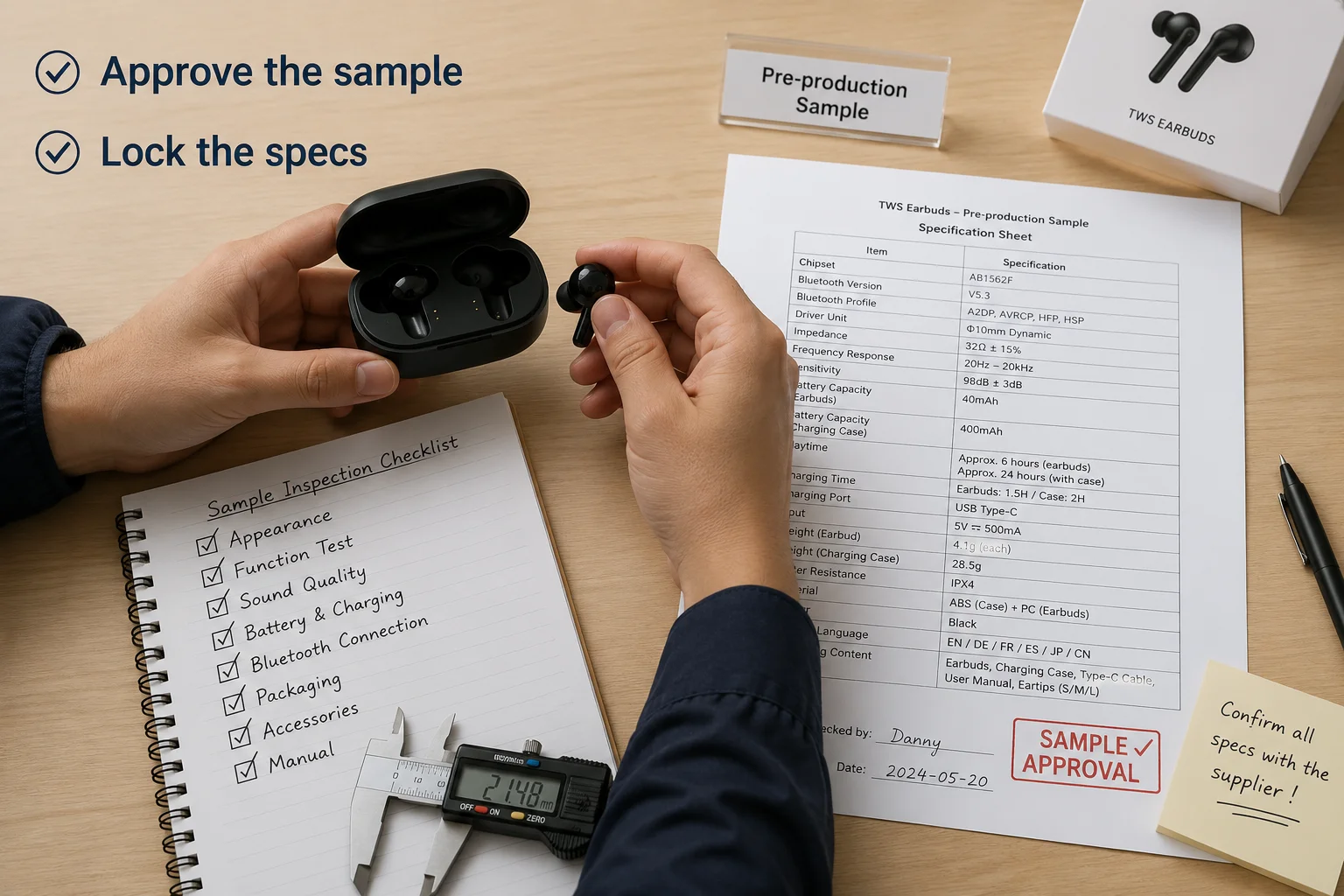
I see this error most often with TWS earbuds and smartwatches. A buyer says "high-quality earbuds" and the supplier thinks "the most common configuration." Then the buyer receives earbuds with a cheap JL chipset instead of the Qualcomm he expected. The argument is impossible to win because "high-quality" was never defined. That is why I always push buyers to create a simple spec sheet. For TWS earbuds, you must write down: Bluetooth version and chipset, battery mAh for each bud and the case, charging port type, audio codecs supported, and even the standby time. For a smartwatch, specify the screen type, strap material, IP rating, and sensor list. I once helped a buyer in the Netherlands who sent me his spec sheet. It was just five lines, but it was precise. When the factory delivered a sample that used a different touch panel, he pointed to the sheet and got a re-make with no extra charge. That is the power of written clarity. A sample without a spec sheet is just a product you happen to like. A sample with a spec sheet is a standard you enforce.
How Do MOQ, Lead Time, and Packaging Misunderstandings Destroy Your Timeline?
I had a client who planned a product launch for Father's Day. He found a supplier with an MOQ of 500 units and a stated lead time of 20 days. He placed the order. It arrived 42 days later. He missed the whole season.
You cannot read MOQ and lead time as firm promises. They shift with material availability, customization needs, and packaging complexity. Always ask: "What is the lead time after the sample is approved?" And break down packaging into exact materials, inserts, and testing impact on the schedule.
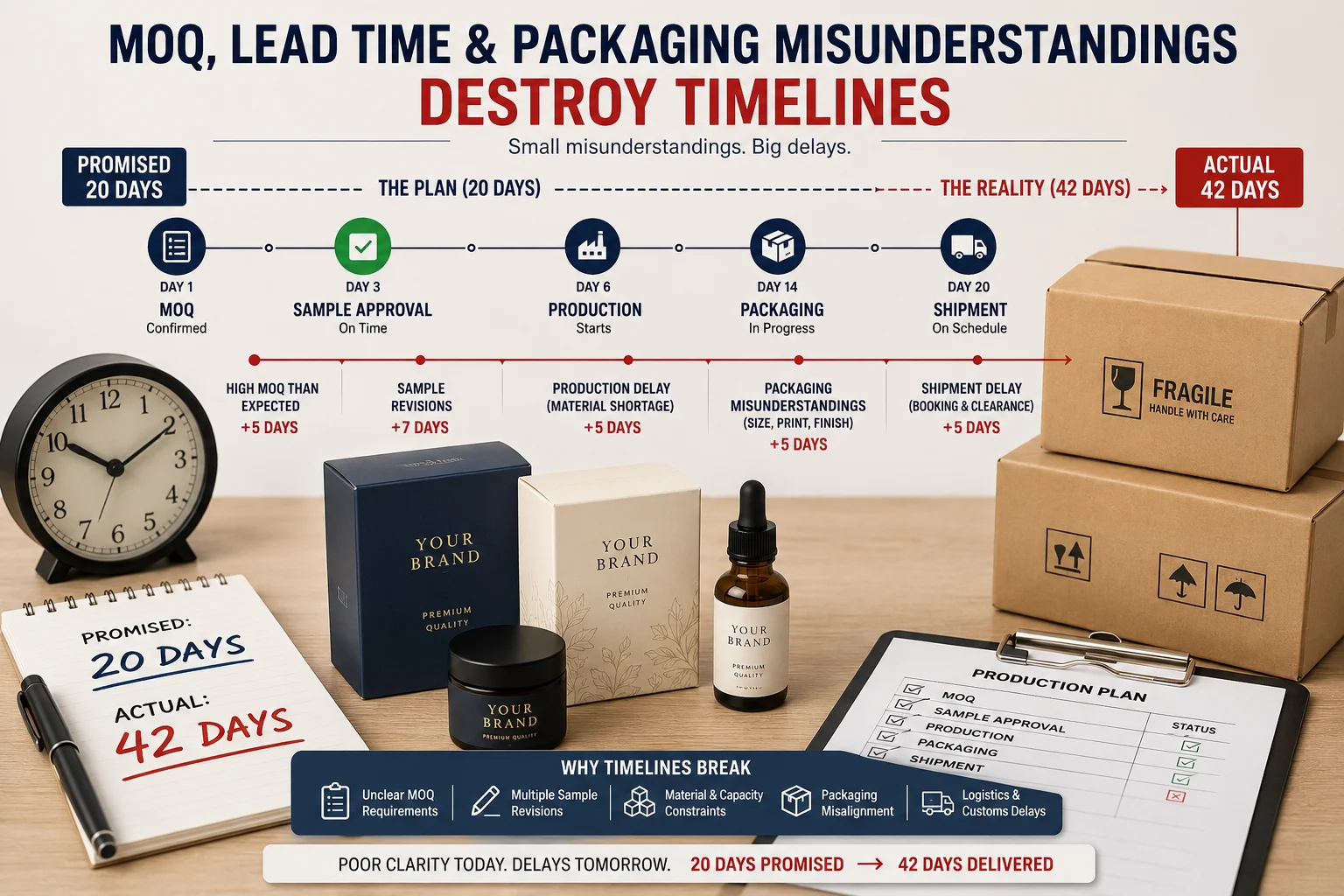
In Shenzhen, a factory's lead time often starts only after the pre-production sample approval and the deposit are confirmed. If your sample review takes two weeks, add that. If your packaging needs a custom color box with foam inserts, add another week for die-cutting and printing verification. I also see buyers ignore the real meaning of MOQ. For custom products, the MOQ may be driven by the printed circuit board assembly minimum or the injection mold output7. One buyer wanted 200 custom-branded GaN chargers. The factory said MOQ was 1000. He thought they were being difficult. I explained that the mold cost alone made a small run impossible without a huge loss. We worked together to find stock chargers with laser engraving as a middle ground, keeping his project on time. The lesson: when you ask about MOQ and lead time, do not stop at the number. Ask "why." The answer tells you if the supplier understands their own production and if they can plan with you.
Why Is Setting Clear QC Standards Before Mass Production a Non-Negotiable?
A buyer once told me, "I checked the sample, it's good. Just make more." He assumed the factory would maintain the same care. When the container arrived, the soldering was messy, and the plastic finish was duller. He had no written standard to reference.
QC without a standard is just an opinion. You must define acceptable defect levels, known as AQL, and a checklist of critical tests. For USB cables, that means bend angle and power delivery validation. For earbuds, it means audio dropout range and button life. You measure quality against a document, not a memory.
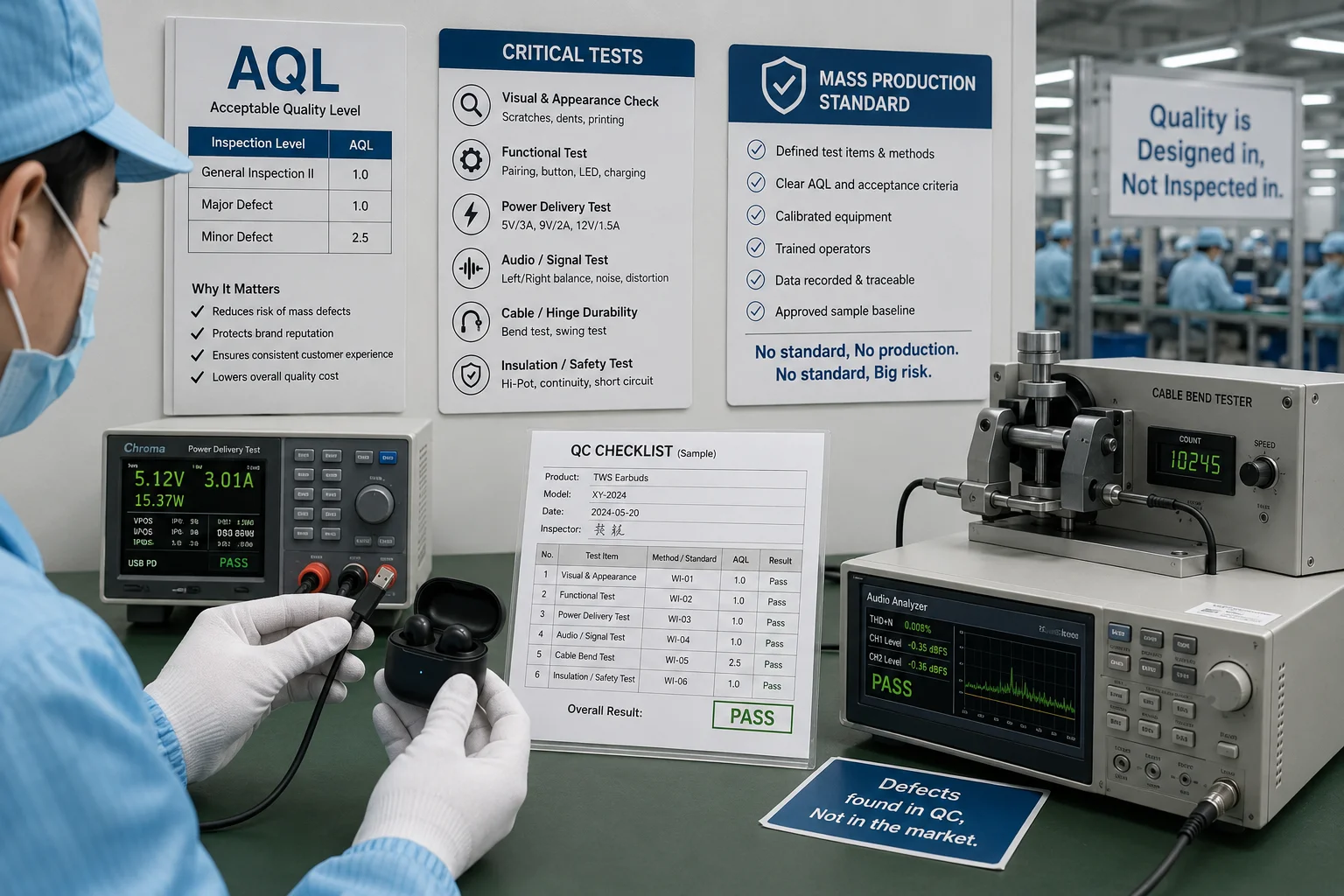
During my years of working with buyers, I have built a simple rule. No mass production starts without a simple quality inspection checklist shared with the factory. This checklist covers cosmetics, functionality, and packaging. I teach clients to define "major defects" that would cause a customer return. For a wireless charger, a major defect is not charging or a cracked case. A minor defect might be a slight scuff on the bottom. We also agree on an AQL standard, like 1.0 for major defects8. Then, before shipment, we can hire a third-party inspection company like Bureau Veritas or SGS and tell them exactly what to check. This takes the emotion out of the argument. When a factory knows you have a written standard and an independent inspector, their internal quality control improves9. I remember a buyer from Canada who implemented this for a smartwatch order. The first inspection failed because the heart rate sensor accuracy was off. We caught it, the factory fixed the firmware, and the re-inspection passed. Without the checklist, that flaw would have reached customers. A clear QC plan turns a gamble into a repeatable process.
What Payment Terms and Shipping Checks Keep Your Money Safe?
I once heard a buyer say, "I paid 100% upfront because the price was amazing." I lost sleep for him. He didn't negotiate terms that protect his cash, and he didn't verify who handles the customs clearance risk.
Never pay 100% before inspection. Use a term like 30% deposit and 70% after inspection approval or against the bill of lading copy. Always clarify your Incoterms. FOB means the supplier's risk ends when goods pass the ship's rail10. Know who arranges the freight and insurance, and always track the shipment with a reliable forwarder who understands electronics classification.
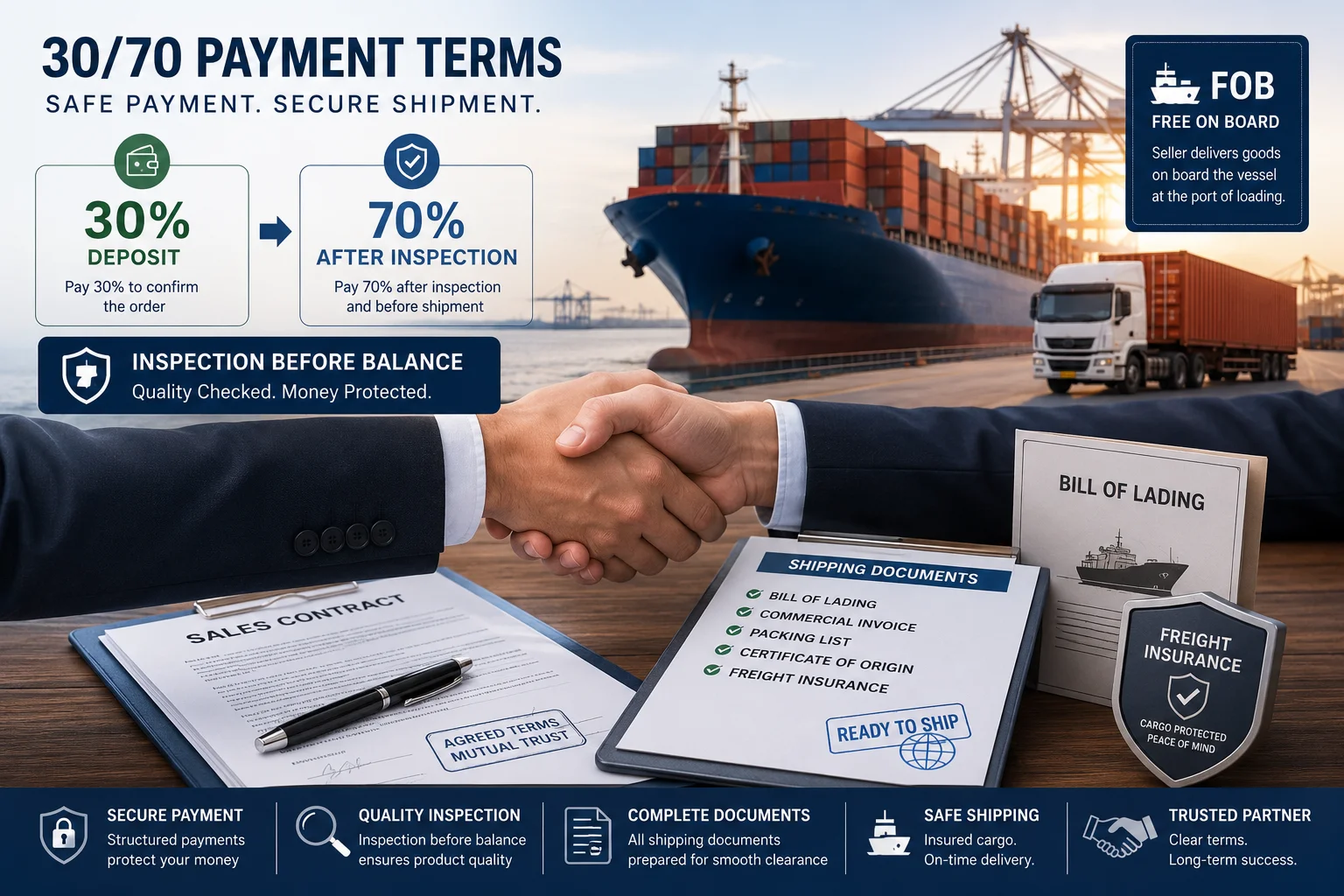
In my daily work, I guide buyers toward safer payment terms. A 30/70 split with balance against inspection report is standard for new partners11. This motivates the supplier to fix issues before shipment. If they only accept 100% upfront, I see that as a big red flag. For shipping, I always recommend asking a forwarder for advice early. Electronics have specific HS codes and may need extra certification for import12. A good forwarder checks the HS code against the product and the destination country rules. I had a client who imported power banks. The forwarder caught that the supplier had listed an incorrect HS code that would have caused a 15% duty hike. That small check saved thousands. Also, do not forget insurance. I suggest buyers insure the cargo for the full invoice value. For a few dollars, you protect against loss or damage in transit. These steps are not complicated. They are simple habits that separate experienced importers from hopeful ones.
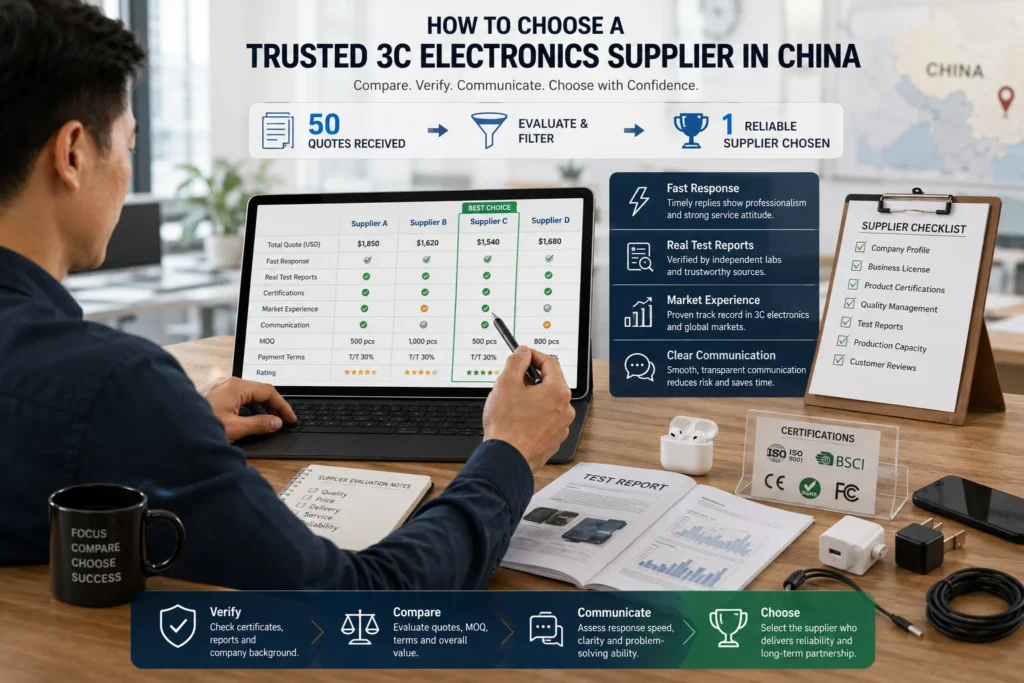
How Do You Choose a Trusted 3C Electronics Supplier in China?
A buyer once emailed me: "I have 50 quotes. How do I pick one?" He was exhausted. The suppliers all sent similar pictures and promises. He needed a filter that went deeper than price and product.
A trusted supplier answers your spec questions quickly and with proof. They share real test reports, not just logos. They talk about past orders for your market honestly, even if it's not a huge number. They ask questions about your sales channel because they want to help you succeed, not just sell you boxes. Check their communication responsiveness at the inquiry stage. It predicts how they will act when a problem happens.
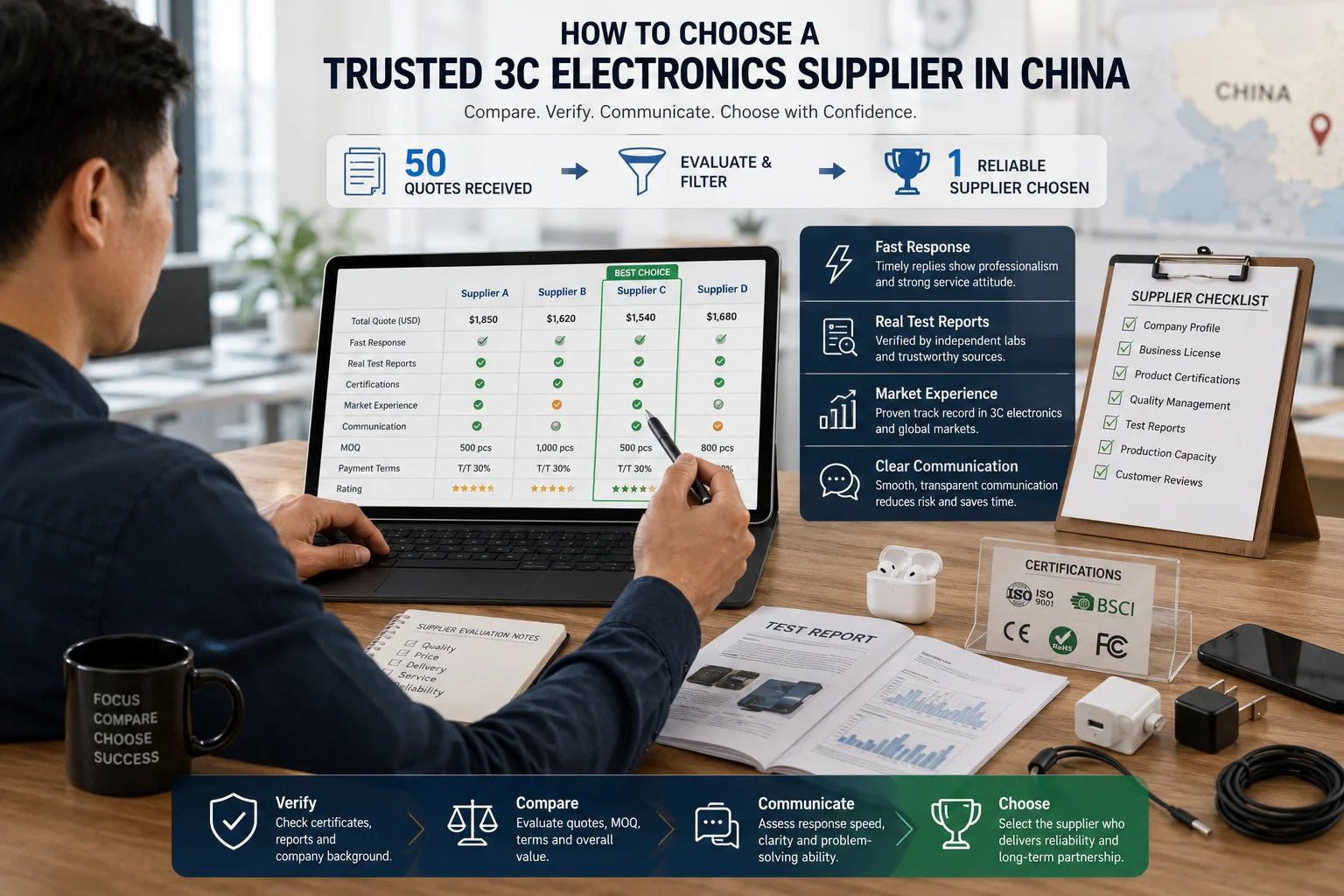
My filter is simple. I watch the first three emails. A trustworthy supplier does not just say "yes" to everything. They point out when a requested specification might cause a problem. For example, a buyer wanted a USB-C cable with a chipset that the supplier knew had a high defect rate. A good supplier says, "This chipset has a known issue; we recommend this alternative that costs the same but is more stable." That honesty is gold. I also look at how they handle the sample shipment. Do they send it on time with a detailed packing list? Do they follow up to check if I received it? One of my long-term partners in Shenzhen always includes a small card with the sample that lists the contact person for after-sales support. It is a small gesture, but it shows they think about the long term. I tell buyers to ask for references from clients who sell in your region. Even if the supplier cannot share full details, they should be able to talk about their experience with EU or US regulations. Trust is built on demonstrated expertise, not on a polished Alibaba profile. Choose the supplier who educates you, not the one who pressures you with a discount deadline.
Conclusion
Stop guessing, start verifying. The safest import is built on spec sheets, test reports, QC checklists, and partners who answer your real questions—not the cheapest price, but the best risk-adjusted value.
"Conformity Assessment of Medical Devices: An Overview from a ...", https://pmc.ncbi.nlm.nih.gov/articles/PMC12821529/. The European Commission's CE marking guidelines distinguish between products that can be self-declared by the manufacturer and those requiring conformity assessment by a Notified Body, depending on the applicable EU directive and product risk classification. Evidence role: definition; source type: government. Supports: Distinction between CE self-declaration and Notified Body conformity assessment. Scope note: Whether a Notified Body is required depends on the specific directive and product category. ↩
"Effect of Accreditation on Accuracy of Diagnostic Tests ... - PMC", https://pmc.ncbi.nlm.nih.gov/articles/PMC5339093/. The American Association for Laboratory Accreditation (A2LA) and similar bodies provide accreditation to testing laboratories in accordance with ISO/IEC 17025, ensuring that test reports meet internationally recognized competence standards for accuracy and reliability. Evidence role: definition; source type: institution. Supports: Laboratory accreditation like A2LA ensures test report competence. Scope note: Accreditation requirements may vary by destination market and product certification scheme. ↩
"European Union Reduction of Hazardous Substances RoHS and ...", https://www.waru.edu/artifact/european-union-reduction-hazardous-substances-rohs-and-waste-electrical-and-electronic. The European Commission's official documentation confirms that the Restriction of Hazardous Substances (RoHS) Directive and the Waste Electrical and Electronic Equipment (WEEE) Directive establish mandatory compliance requirements for electronic products placed on the EU market. Evidence role: definition; source type: government. Supports: RoHS and WEEE are mandatory EU regulatory frameworks for electronics. Scope note: Specific obligations vary by product category and member state implementation. ↩
"Secure Your Amazon Pan-EU Sales: A Guide to Full EPR ...", https://deutsche-recycling.com/blog/ensure-full-compliance-for-amazon-pan-eu-program/. Amazon's EU marketplace policies require sellers of electrical and electronic equipment to comply with WEEE Directive obligations, and listings may be suspended if sellers cannot provide valid WEEE registration numbers to demonstrate compliance. Evidence role: case_reference; source type: government. Supports: Amazon enforces WEEE compliance for electronics listings in EU markets. Scope note: Enforcement practices and specific requirements may vary by Amazon marketplace and product category. ↩
"Cost of Quality - Simfoni", https://simfoni.com/glossary/cost-of-quality/. Procurement research on the cost of poor quality demonstrates that selecting suppliers based primarily on unit price can lead to significant downstream costs including rework, returns, warranty claims, and customer service expenses that often exceed initial savings. Evidence role: mechanism; source type: research. Supports: Low unit prices can mask quality-related costs that exceed initial savings. Scope note: The magnitude of hidden costs varies by product type, defect rate, and market conditions. ↩
"[PDF] Reducing the Costs of Poor Quality: A Manufacturing Case Study", https://scholarworks.waldenu.edu/cgi/viewcontent.cgi?article=6608&context=dissertations. Research in supply chain management indicates that total cost of ownership models, which incorporate quality failure costs, returns, and warranty expenses, often demonstrate that higher-priced suppliers with better quality controls yield lower overall costs. Evidence role: mechanism; source type: research. Supports: Total cost of ownership models incorporate quality-related costs beyond unit price. Scope note: The specific cost differential cited is illustrative and varies by product and market conditions. ↩
"Panel Requirements for PCB Assembly - Sierra Circuits", https://www.protoexpress.com/kb/panel-requirements-for-pcb-assembly/. Manufacturing engineering principles indicate that minimum order quantities for custom electronic products are often determined by production setup economics, including PCB assembly panel utilization and injection molding cavity constraints, which make small production runs cost-prohibitive. Evidence role: mechanism; source type: education. Supports: Manufacturing process constraints drive MOQ requirements for custom electronics. Scope note: Specific MOQ thresholds vary by product complexity and manufacturer capabilities. ↩
"[PDF] ISO 2859-1 - UNT Chemistry", https://chemistry.unt.edu/~tgolden/courses/iso2859-1.pdf. The ISO 2859-1 standard defines Acceptance Quality Limit (AQL) as the worst tolerable process average for acceptance sampling; AQL 1.0 is commonly applied for major defects in consumer electronics inspection per international sampling procedures. Evidence role: definition; source type: institution. Supports: AQL standards and typical thresholds for major defects. Scope note: AQL levels should be adjusted based on product type, end-user expectations, and contractual agreements. ↩
"Indoor Air Quality | US EPA", https://www.epa.gov/report-environment/indoor-air-quality. Studies in quality management and supply chain oversight suggest that documented quality standards and third-party inspection requirements can incentivize suppliers to maintain higher internal quality control, as the cost of failed inspections creates accountability. Evidence role: mechanism; source type: research. Supports: Independent inspection and written standards improve supplier quality behavior. Scope note: The magnitude of improvement varies by supplier maturity and market conditions. ↩
"Know Your Incoterms - International Trade Administration", https://www.trade.gov/know-your-incoterms. According to the International Chamber of Commerce's Incoterms 2020 rules, under FOB (Free On Board), the seller's risk and responsibility for the goods transfer to the buyer once the goods are loaded on board the vessel at the named port of shipment. Evidence role: definition; source type: institution. Supports: FOB Incoterms definition and risk transfer point. Scope note: The 'ship's rail' concept was formally replaced in Incoterms 2010; current rules define transfer at the point of loading on board. ↩
"Methods of Payment", https://www.trade.gov/methods-payment. International trade finance guidance indicates that split payment terms, typically 30% deposit with 70% balance due upon inspection or shipment, are widely used practices in manufacturing trade to balance supplier cash flow needs with buyer risk management. Evidence role: expert_consensus; source type: institution. Supports: Split payment terms are common in international manufacturing trade. Scope note: Payment terms vary by industry, relationship maturity, and regional trade customs. ↩
"Frequently Asked Questions (FAQS) about Tariff ...", https://www.usitc.gov/harmonized_tariff_information/frequently_asked_questions. The World Customs Organization's Harmonized System provides specific classification codes for electronic products, and many countries impose additional certification or documentation requirements for electronics imports based on these classifications. Evidence role: general_support; source type: institution. Supports: Electronics have specific HS classifications and import requirements. Scope note: Specific certification requirements vary by destination country and product type. ↩