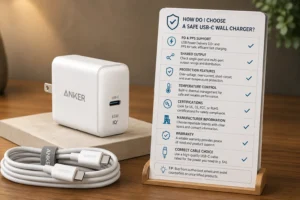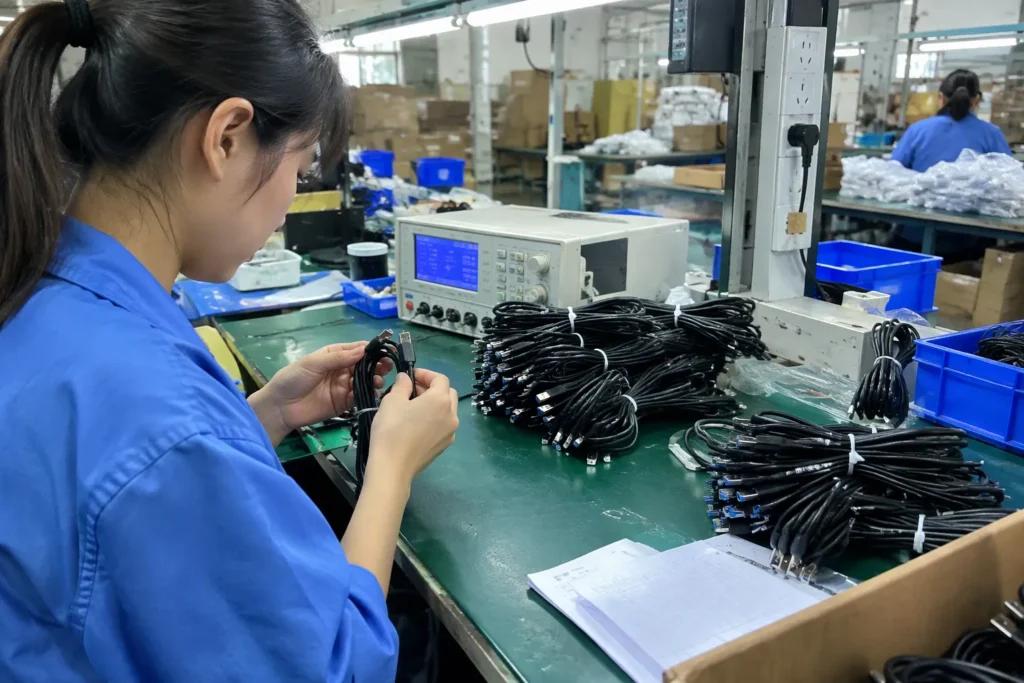
A High-Quality Custom & OEM Charging Cable Manufacturer can help a retailer launch a reliable product, but the wrong supplier can create compatibility complaints, delayed orders, and costly returns. I have seen buyers start with a low quotation before defining the device, power, connector, and packaging requirements. That approach often creates avoidable problems.
A high-quality custom or OEM charging cable manufacturer should be selected by matching the cable’s construction, power requirements, connector type, customization details, production consistency, MOQ, lead time, and after-sales process to the buyer’s application. Certifications and samples should be verified, but neither certification nor price alone proves compatibility, durability, or stable mass production.
Quick Answer
- I recommend defining the cable’s devices, connectors, power, length, usage environment, and target market before comparing quotations.
- I compare conductor construction, shielding, connector assembly, strain relief, jacket material, and declared electrical specifications.
- I treat certifications as evidence for a particular compliance scope, not as automatic proof of durability or compatibility.
- I approve a representative sample and confirm that the supplier can reproduce the same specification in mass production.
- I evaluate MOQ, customization, lead time, inspection, warranty handling, and return risk together with unit price.
When I discuss charging cables with European and North American retailers, wholesalers, and e-commerce sellers, I usually begin with questions rather than a quotation. The important issue is not simply finding a factory that can print a logo. The important issue is finding a product and supplier combination that fits the buyer’s commercial plan.
What Defines a High-Quality Custom Charging Cable Manufacturer?
A buyer can lose money when “high quality” means only a thick cable, a high price, or an attractive package. The better approach is to define quality as a combination of application fit, construction, electrical performance, appearance, consistency, and supplier control. Each part should be checked against the intended use.
A high-quality custom charging cable manufacturer should help the buyer convert a general idea into a controlled product specification. That specification should cover connector types, charging requirements, cable length, materials, appearance, labeling, packaging, test documents, and acceptance criteria. The supplier should also explain which points require verification before mass production.
Quality starts with the use case
- Is it intended for smartphones, tablets, laptops, power banks, earbuds, watches, or mixed devices?
- Will consumers use it at home, in cars, offices, hotels, stores, or travel situations?
- Does the product need basic charging, data transfer, high-power charging, or a combination?
- Will the cable be sold as a standalone accessory or bundled with a charger?
- Does the buyer need a premium retail product, a promotional item, or a private-label everyday cable?
These answers affect the specification. A short cable for a power bank has a different commercial purpose from a long desktop cable. A cable intended to support a high-power USB-C charging system requires more careful specification than a basic low-power accessory.[2] I avoid recommending one universal cable for every device because the use case determines what should be verified.
Construction matters, but thickness is not enough
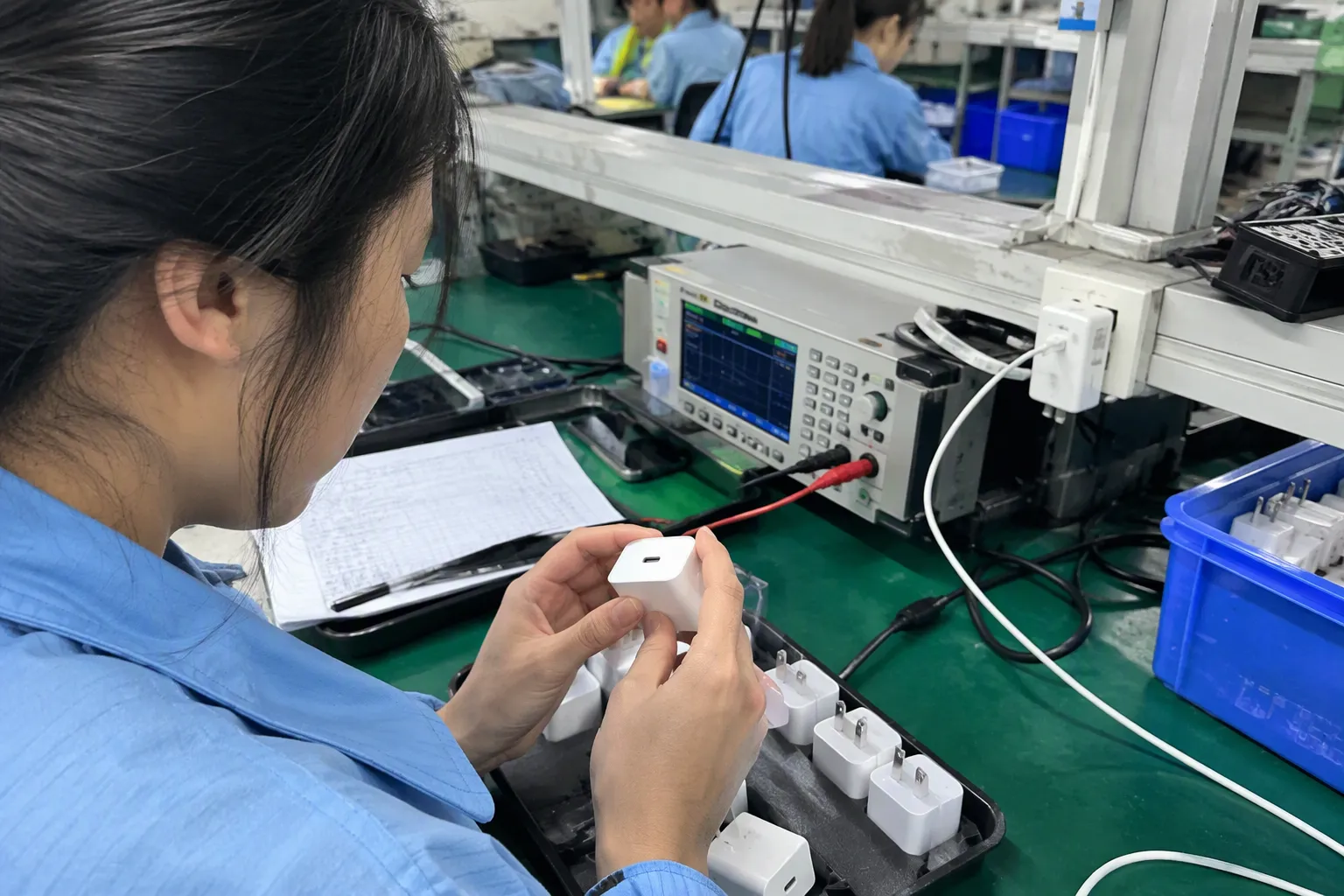
A thicker outer jacket may improve the product’s appearance or resistance to bending, but it does not automatically confirm better electrical performance.[1] I ask suppliers to describe the relevant construction rather than relying on phrases such as “premium quality” or “fast charging.”
- Conductor design: The supplier should state the relevant conductor material and size where this information affects the intended application.
- Insulation and jacket: The material should suit the expected flexibility, temperature conditions, and market requirements.
- Shielding: Shielding may matter for certain data and signal applications, but the buyer should confirm the actual design and test scope.[3]
- Connector assembly: The shell, contacts, molding, soldering, and internal reinforcement can affect fit and service life.
- Strain relief: The transition between cable and connector deserves attention because repeated bending can stress this area.[4]
- Identification: Markings, labels, packaging information, and model numbers should match the approved specification.
Consistency is part of quality
A sample can look excellent while later production differs.[5] For this reason, I treat sample approval as the beginning of quality control rather than the final step. The approved sample should be identified clearly, and the supplier should record the relevant materials, dimensions, colors, logos, packaging, and functional requirements.
- Which specifications are critical and which are cosmetic preferences.
- How the supplier controls incoming materials.
- Whether the production version will use the same approved components.
- How the supplier handles a component substitution.
- Which inspections happen before shipment.
- What evidence the buyer will receive if a problem occurs.
When I follow production communication for export orders, small misunderstandings often create bigger problems than the manufacturing process itself. A logo position, connector color, cable length, or packaging insert can differ if the approved details are not written in one controlled document.
How Should I Define the OEM Charging Cable Specification?
An OEM cable quotation is only useful when different suppliers are quoting the same product. If one supplier assumes a basic charging cable and another assumes a higher-performance version, the prices cannot be compared fairly. I recommend preparing a short specification sheet before requesting offers.
A clear OEM charging cable specification should state the device application, connector combination, charging and data requirements, length, appearance, packaging, labeling, target market, quantity, and verification documents. The supplier should identify any point that remains uncertain instead of silently making assumptions.
Core specification checklist
| Specification group | Questions I ask before quotation |
|---|---|
| Application | Which devices will use the cable? What is the expected use environment? |
| Electrical | Is the cable for charging, data transfer, or both? What power level must be supported? |
| Mechanical | What connector types, length, flexibility, jacket, and strain relief are required? |
| Branding | Which logo, color, marking, packaging, manual, and retail presentation are needed? |
| Commercial | What quantity, MOQ, target price, delivery date, and inspection process apply? |
The connector description should be precise. For example, “USB-C cable” may describe several different products with different device ends, data functions, power expectations, and market positioning. I ask buyers to list both ends and to describe whether the cable is intended for USB-C to USB-C, USB-A to USB-C, USB-C to a device-specific connector, or another configuration.
Separate charging requirements from data requirements
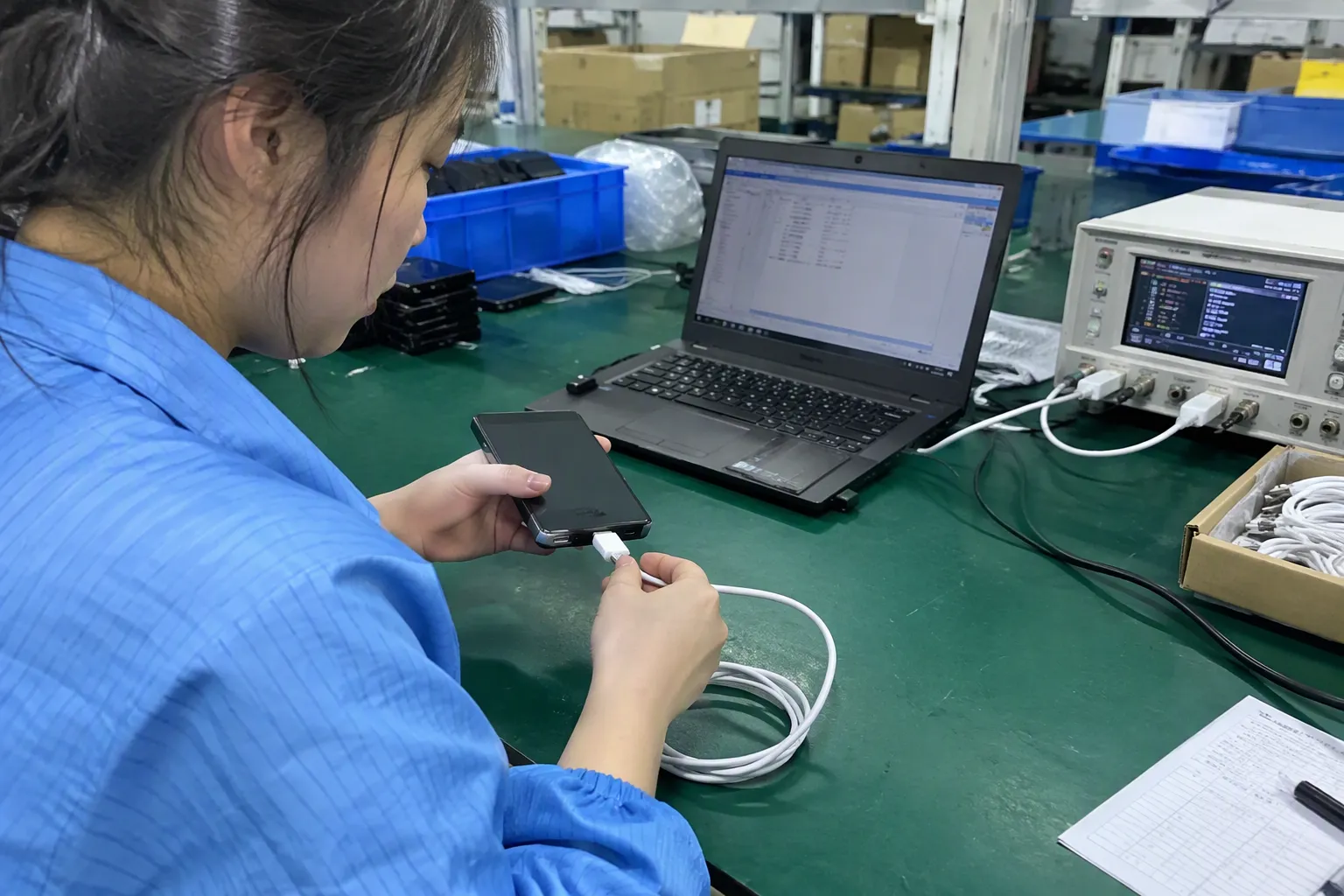
Many product descriptions use “fast charging” without explaining what that means. I recommend recording the intended charger, device, and charging protocol requirements where relevant. The cable may be only one part of the charging system.[8] The charger, device, connector, cable, and protocol all influence the actual result.[6]
Data performance also needs separate treatment. A cable that charges a device may not offer the same data capability as a cable designed for a specified data rate.[7] I therefore ask the supplier to state whether data transfer is required and what evidence supports the claim. I do not assume that a visually similar cable has identical internal construction.
Consider regulatory and market requirements
European and North American buyers should identify the destination market before finalizing the product. Requirements can depend on the product type, claims, packaging, materials, and sales channel. The European Commission’s information on the common charger initiative is a useful starting point for businesses selling covered electronic devices in the EU: European Commission common charger information.
I also recommend checking applicable obligations with a qualified compliance professional. A supplier may provide documents, but the importer or brand owner should understand the scope and validity of those documents. The buyer should not copy a certificate from one model to another without confirming that the product, manufacturer, and covered requirements match.
Make customization measurable
- Logo method, size, position, and color.
- Cable and connector color using an agreed reference.
- Retail box, polybag, paper card, barcode, and carton markings.
- Language requirements for the package and instructions.
- Accessory contents and quantity per carton.
- Required private-label model number.
- Artwork approval process.
- Sample approval deadline.
Which Construction and Performance Details Should I Compare?
Buyers often compare charging cables by appearance because internal construction is difficult to see. That can be risky. I compare declared specifications, sample performance, connector fit, finish, flexibility, and inspection evidence. I also consider whether the supplier can explain the product without making unsupported claims.
The right cable depends on the application. A cable for ordinary mobile charging may not need the same design as one intended for a higher-power device or a demanding data application. I recommend comparing products by defined requirements instead of using “premium” as the main technical description.
Electrical and functional checks
- Connector continuity and correct wiring.
- Charging function with representative devices and chargers.
- Data transfer function if the product claims data capability.
- Voltage and current suitability for the intended application.
- Connector insertion and fit with representative devices.
- Basic insulation or safety checks where applicable.
- Visual inspection of molding, contacts, and cable jacket.
- Packaging and labeling conformity.
Mechanical details and daily use
- The feel and flexibility of the jacket.
- The transition between the connector and cable.
- The alignment and finish of the connector shell.
- The fit of the plug in representative devices.
- The stability of any decorative sleeve or braiding.
- The resistance of the package to crushing during shipment.
- The clarity of the model and specification marking.
Comparing common product positions
| Product position | Typical buyer objective | Points to verify | Main commercial risk |
|---|---|---|---|
| Basic everyday cable | Competitive retail or wholesale price | Essential charging function, appearance, packaging | High price pressure and returns if compatibility is unclear |
| Reinforced cable | Better perceived durability | Strain relief, jacket, connector assembly, evidence for claims | Higher cost without a clear customer benefit |
| Premium branded cable | Retail differentiation | Materials, design consistency, packaging, documentation | Brand damage if the premium claim is not supported |
| Multi-function cable | Charging plus data or multiple uses | Exact functions, device support, labeling, instructions | Customer confusion and broad compatibility claims |
| Promotional cable | Low-cost marketing distribution | Logo quality, minimum order, delivery, basic function | Inconsistent branding or unsuitable user expectations |
Use a controlled sample process
I recommend requesting samples from the proposed production version, not only a showroom sample. The buyer should record the sample date, model number, color, length, packaging, and key observations. If the buyer approves changes through email or messaging, those changes should be transferred into a final approval document.
- Visual inspection under normal retail lighting.
- Connector fit with the intended device types.
- Charging and data checks that match the product claim.
- Review of markings, logo, and package details.
- Basic handling by several users if the product is consumer-facing.
- Comparison against the written specification.
- Written approval or a list of required corrections.
I recommend professional laboratory testing when the market, product claim, or risk level requires it. My role as a sourcing and product-selection practitioner is to help organize the requirements and supplier evidence. I do not replace an accredited laboratory or qualified engineer.
How Do Certifications and Test Documents Help Buyers?
Certifications can reduce uncertainty, but they do not remove the need for product verification. A certificate normally relates to a defined product, manufacturer, test scope, and date. It may not prove that every future batch has identical construction or that the cable works with every device.
A buyer should ask what each document covers, who issued it, which model it identifies, and whether the document can be independently checked. I recommend treating certifications as one part of a wider evidence package that also includes samples, specifications, inspection records, and supplier communication.
Documents should match the actual product
- Legal manufacturer name and address.
- Exact product model or family.
- Product description and connector configuration.
- Applicable standard, directive, or test requirement.
- Test laboratory or issuing organization.
- Issue date and validity information where relevant.
- Report number or verification reference.
- Any limitations or exclusions.
Certification does not equal durability
A buyer still needs an application-specific evaluation. The supplier should provide evidence for the claims used in the listing, package, and sales material. I discourage broad statements such as “works with all devices” unless the buyer has a credible basis for that wording.
Build a practical evidence file
- Final technical specification.
- Approved sample photographs.
- Artwork and packaging approval.
- Supplier quotation and commercial terms.
- Compliance documents relevant to the destination market.
- Inspection requirements.
- Production and shipment records.
- Complaint and corrective-action history.
How Should I Compare Charging Cable Suppliers and OEM Risks?
Supplier selection is a total-risk decision. A low unit price can become expensive when the MOQ is unsuitable, the lead time is unreliable, the sample differs from production, or customer returns increase. I compare the supplier’s ability to manage the complete order rather than only the factory quotation.
A suitable charging cable supplier should communicate clearly, document the product, explain limitations, and provide a workable process for sampling, production, inspection, shipment, and after-sales handling. I recommend verifying these points before committing to a large order.
Compare the full commercial picture
| Evaluation factor | Questions for the supplier | Why I consider it important |
|---|---|---|
| MOQ | What is the MOQ per model, color, logo, and package? | A low unit price may be unusable if inventory is too large |
| Sampling | How long does sampling take? What changes are included? | The buyer needs time to confirm fit and appearance |
| Lead time | When does production time begin? What can delay shipment? | Retail launches depend on realistic dates |
| Customization | Which parts can be customized and at what cost? | OEM scope affects both price and execution risk |
| Quality control | What is inspected and what records are available? | Buyers need evidence beyond verbal assurance |
| Substitution policy | How are component or material changes approved? | Unapproved changes can affect performance and compliance |
| After-sales | How are defects, shortages, or complaints handled? | A clear process limits commercial disputes |
| Reordering | Can the supplier maintain the approved model? | Repeat orders require specification stability |
Review supplier communication before placing an order
The quotation process itself provides useful information. I notice whether a supplier asks sensible questions about the device, power, length, packaging, and destination market. A supplier that gives an instant price without clarifying the product may be quoting an assumption.
- Answers technical questions directly.
- Separates confirmed facts from estimates.
- Identifies information that requires verification.
- Uses consistent model numbers.
- Records revisions clearly.
- Explains sample and production timing.
- Accepts reasonable inspection arrangements.
- Provides a contact for after-sales issues.
Manage OEM ownership and repeat orders
OEM buyers should clarify who owns the artwork, packaging files, model number, and approved specifications. They should also understand which components are standard and which are specific to the order. A buyer may not need exclusive production, but the buyer does need control over the approved version.
- Whether the supplier can reuse the design for other customers.
- How the buyer’s artwork and files are stored.
- Whether a new quotation applies to the same specification.
- How price changes are handled.
- What happens if a component becomes unavailable.
- Whether the buyer must approve a revised sample.
- How old packaging is handled after a design change.
Plan inspection and acceptance before production
For higher-risk orders, I recommend discussing third-party inspection or qualified testing. The inspection method and sample quantity should be appropriate for the order and product. I avoid presenting a single inspection approach as universally correct because the buyer’s risk tolerance and market obligations differ.
The purchase agreement should also address what happens if the goods do not meet the approved specification. Possible remedies may include rework, replacement, credit, discount, or another agreed solution. A professional buyer should have these terms reviewed when the order value or brand risk is significant.
What Should I Ask Before Ordering a Custom OEM Cable?
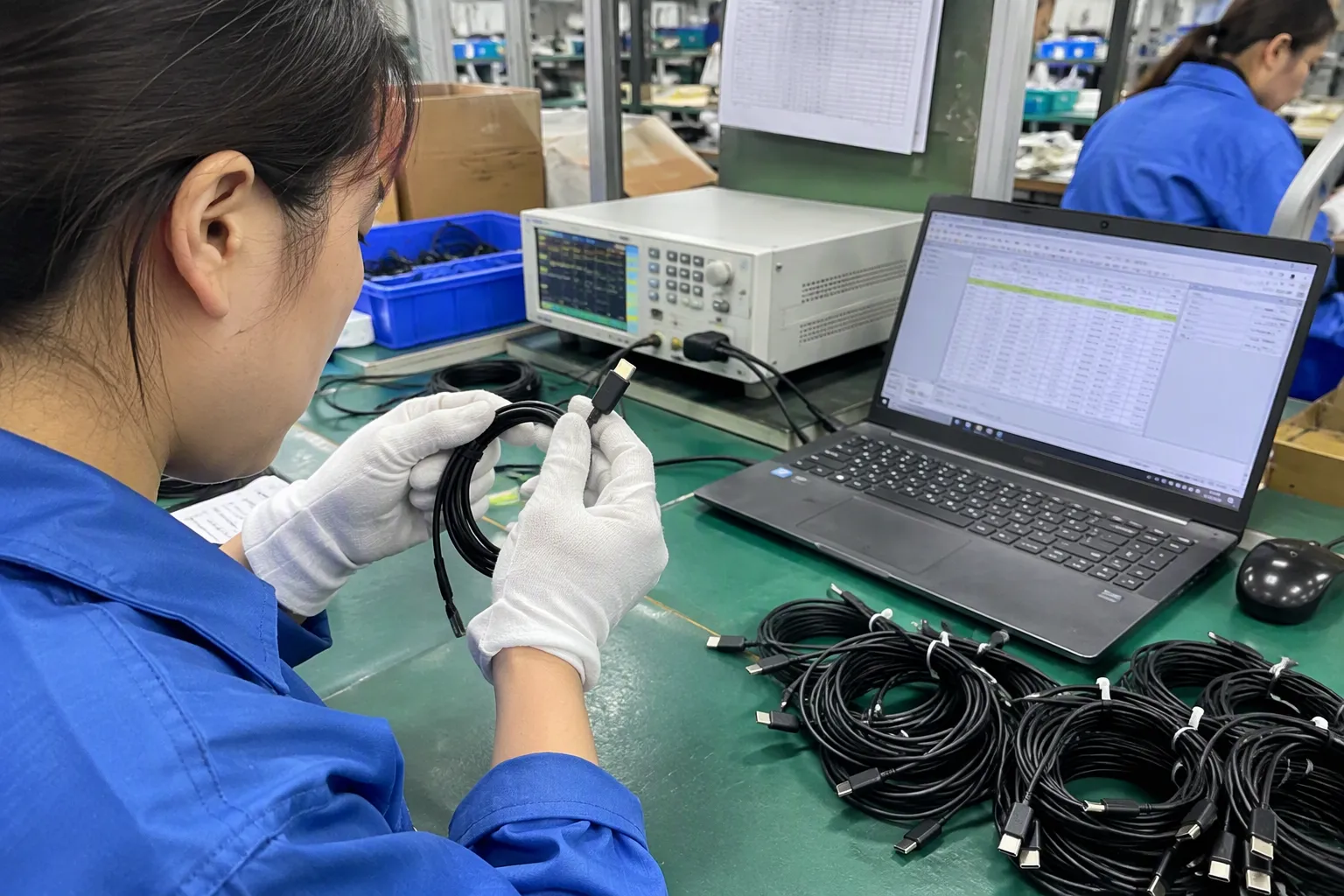
The final supplier meeting should produce clear answers, not just a lower price. I recommend asking questions that connect product performance with manufacturing control and commercial responsibility. A supplier does not need to promise everything. The supplier does need to identify what can be provided and what must be verified.
Product and sample questions
- Which devices and chargers were used for the supplier’s sample check?
- Is the cable intended for charging only, or for charging and data?
- What exact power and data claims can the supplier support?
- What are the connector types, cable length, materials, and model number?
- Which components are critical to the approved specification?
- How will the supplier prevent unauthorized substitutions?
- Can the supplier provide a production-representative sample?
- Which sample changes will affect price or lead time?
Production and delivery questions
- What is the MOQ for the exact customized version?
- What is the realistic production lead time after artwork and sample approval?
- When does the lead-time clock begin?
- Which information can delay production?
- How will the supplier report a production problem?
- What pre-shipment inspection is available?
- How will the goods be packed for international transport?
- Which shipping documents will be supplied?
- What is the procedure for shortages or damaged cartons?
Because we work with customers in Europe and North America, I pay attention to the difference between factory completion and arrival at the buyer’s warehouse. A quotation should not make the buyer assume that production completion equals delivery. The buyer should confirm the shipping terms, transport method, document timing, and any importer responsibilities.
After-sales and reorder questions
- The reporting period for visible defects and shortages.
- The evidence required for a functional complaint.
- How samples will be returned or reviewed.
- The process for root-cause investigation.
- The remedy for confirmed nonconforming goods.
- The contact person for urgent issues.
- How corrective actions will be recorded.
- How the approved specification will be protected on repeat orders.
I do not promise that every complaint will be caused by manufacturing. Device compatibility, user handling, charger selection, transport damage, and inaccurate listings can also contribute. A good after-sales process separates these causes instead of assigning blame immediately.
Frequently Asked Questions
What is the difference between an OEM and a custom charging cable?
An OEM charging cable usually refers to a product made for a buyer’s brand or specification. Customization may include the cable design, connector combination, color, logo, length, packaging, and labeling. I recommend confirming the exact OEM scope because suppliers use these terms differently.
Is a thicker charging cable always better?
No. A thicker cable may support a particular construction or provide a stronger visual impression, but thickness alone does not prove better charging, data performance, durability, or compatibility. I compare the complete specification with the intended device, power requirement, usage environment, and evidence supplied by the manufacturer.
Do charging cable certifications guarantee product quality?
No. A certification or test document normally covers a defined product and compliance scope. It does not automatically guarantee long-term durability, universal device compatibility, stable mass production, or accurate marketing claims. I recommend verifying the document, approving a representative sample, and arranging suitable inspection.
What information should I provide when requesting an OEM cable quotation?
I would provide the device application, connector types, charging and data requirements, cable length, color, materials, logo, packaging, destination market, quantity, target delivery date, and required documents. Clear information helps suppliers quote the same product and reduces later revisions.
How can I reduce risk when placing a first order?
I recommend starting with a documented specification, requesting a production-representative sample, checking the relevant claims, confirming the supplier’s MOQ and lead time, and agreeing on inspection and after-sales procedures. A qualified professional should review application-specific safety and compliance questions.
Conclusion
Choosing a High-Quality Custom & OEM Charging Cable Manufacturer requires more than comparing unit prices or collecting certificates. I recommend starting with the use case, then defining the connector, power, data, length, construction, packaging, documentation, and acceptance criteria. I also compare MOQ, lead time, sample consistency, inspection, substitution control, and after-sales support. As a Shenzhen-based 3C trading company with 15 years of export experience, I help international buyers clarify requirements, compare suitable options, coordinate samples, and manage order communication. Contact me to discuss your OEM cable specification and sourcing needs.
Sources
- TECHNICAL SPECIFICATIONS", Engineering studies of wire and cable construction distinguish the electrical characteristics of conductors and insulation from the mechanical characteristics of the outer jacket, supporting the view that jacket thickness alone is not a sufficient indicator of electrical performance
- USB Charger (USB Power Delivery)", USB-IF specifications define different electrical and identification requirements for USB Type-C cables and USB Power Delivery operating conditions, supporting the need to specify cable capability when higher power is involved
- Electromagnetic compatibility issues in hybrid wired and ...", Research on electromagnetic compatibility describes cable shielding as a design measure that can reduce interference coupling and improve signal integrity under specified conditions, supporting its relevance to some data applications
- NASA-STD-8739.4A PDF", Flex-fatigue research on cable assemblies identifies repeated bending and stress concentration near terminations as factors that can contribute to conductor, insulation, or connection failure, supporting attention to the cable-to-connector transition
- Q7A Good Manufacturing Practice Guidance for Active ...", Quality-control literature treats process variation, material variation, and uncontrolled changes as sources of divergence between a reference specimen and subsequent production, supporting the need for production controls and verification
- PD Charging 101: What Is USB-C Power Delivery & How It ...", USB Power Delivery documentation describes charging as a negotiated interaction among power sources, sinks, cables, and defined protocol capabilities, supporting the article’s systems-level characterization of charging performance
- How to easily tell whether a USB-C cable is data-only, ...", USB-IF documentation distinguishes USB Type-C connector use from the specific data-rate and power capabilities declared or supported by a cable, supporting the separation of charging and data requirements
- Charge Your Device", Technical analyses of USB charging systems treat the cable, power source, and receiving device as interconnected components whose ratings and communication determine delivered power, supporting evaluation of the cable within the complete system