Objective TWS call-quality testing can help buyers compare wireless earbuds, but a high score does not guarantee clear calls for every customer. A promotional result may look reassuring while actual performance changes in a quiet room, office, street, or vehicle[1]. I use testing information as a starting point, then compare samples against the buyer’s real sales scenario.
Quick Answer
- Use TWS call-quality testing scores as screening evidence, not as a universal guarantee.
- Treat quiet indoor and ordinary office tests as a minimum comparison baseline.
- Ask suppliers to identify the test scene, equipment, date, sample version, and scoring method.
- Compare physical samples before placing a larger purchase order.
- Test the same model in the environments that your customers are most likely to use.
- Record call clarity, background noise behavior, connection stability, and user feedback separately.
TWS call-quality testing can show how a product performs in a defined environment, but it cannot predict every real-world call[2]. Buyers should use the score to shortlist models, request supporting test information, and then validate production samples in quiet indoor, office, and relevant outdoor conditions before procurement.
A score becomes more useful when I understand what sits behind it. I need to know which scene was tested, who conducted the test, which sample was used, and whether the result came from a supplier document or an independent source. The following framework helps retailers, wholesalers, and e-commerce sellers turn limited test information into a more practical purchasing decision.
Why Does TWS Call-Quality Testing Need Context?
Many buyers receive a product sheet that includes terms such as ENC, AI noise reduction, multiple microphones, or a strong call-quality score. Those details can help start a discussion, but they do not tell me exactly how the earbuds will perform for every user. The risk appears when a buyer treats one result as a complete product verdict.
A score describes a test condition
- A quiet indoor room
- A standard office
- A controlled noise source
- A particular phone or operating system
- One software or firmware version
- A specific earbud sample
- One distance between the speaker and the phone
- One scoring method or test duration
If any of these conditions change, the listening experience can also change[3]. That does not make the original score useless. It means that the score answers a narrower question than many product listings suggest.
For example, a test may indicate that a caller’s voice was understandable in a quiet room. That evidence may support indoor office use. It does not automatically prove that the same model will deliver equally clear speech beside a busy road or inside a moving vehicle.
“Good call quality” is scenario-dependent
I do not treat good call quality as a fixed attribute that exists in the same way for every customer[4]. I treat it as an outcome created by the product, the environment, the phone connection, the user’s fit, and the expectations of the person on the other end of the call.
A wholesale customer may sell earbuds to office workers. Another customer may focus on commuters, delivery workers, or students. Both customers may use the same phrase, “good call quality,” while describing different commercial requirements.
| Buyer scenario | Practical question | Suitable first test |
|---|---|---|
| Quiet home use | Can both speakers understand normal conversation? | Quiet indoor call |
| Office use | Does ordinary background speech interfere with the call? | Shared office or meeting-room call |
| Commuting | Does the voice remain understandable near traffic? | Controlled outdoor comparison |
| Retail customer support | Can the user speak for a longer call without repeated complaints? | Extended call with several phones |
| E-commerce mass market | Does the product meet a broad range of ordinary expectations? | Multiple scenes and sample units |
I separate evidence from interpretation
In my product selection and supplier discussions, I often see a difference between what a document says and what a buyer assumes it means. A supplier-reported result can be a useful reference. I still ask whether the document identifies the model version and testing conditions.
I also avoid using labels as proof. A microphone count, an ENC label, or a phrase such as “AI call noise cancellation” may describe a design feature or marketing position. None of those terms alone proves that a caller will hear a clear voice in a specific environment.
Which Test Scenes Should Buyers Use First?
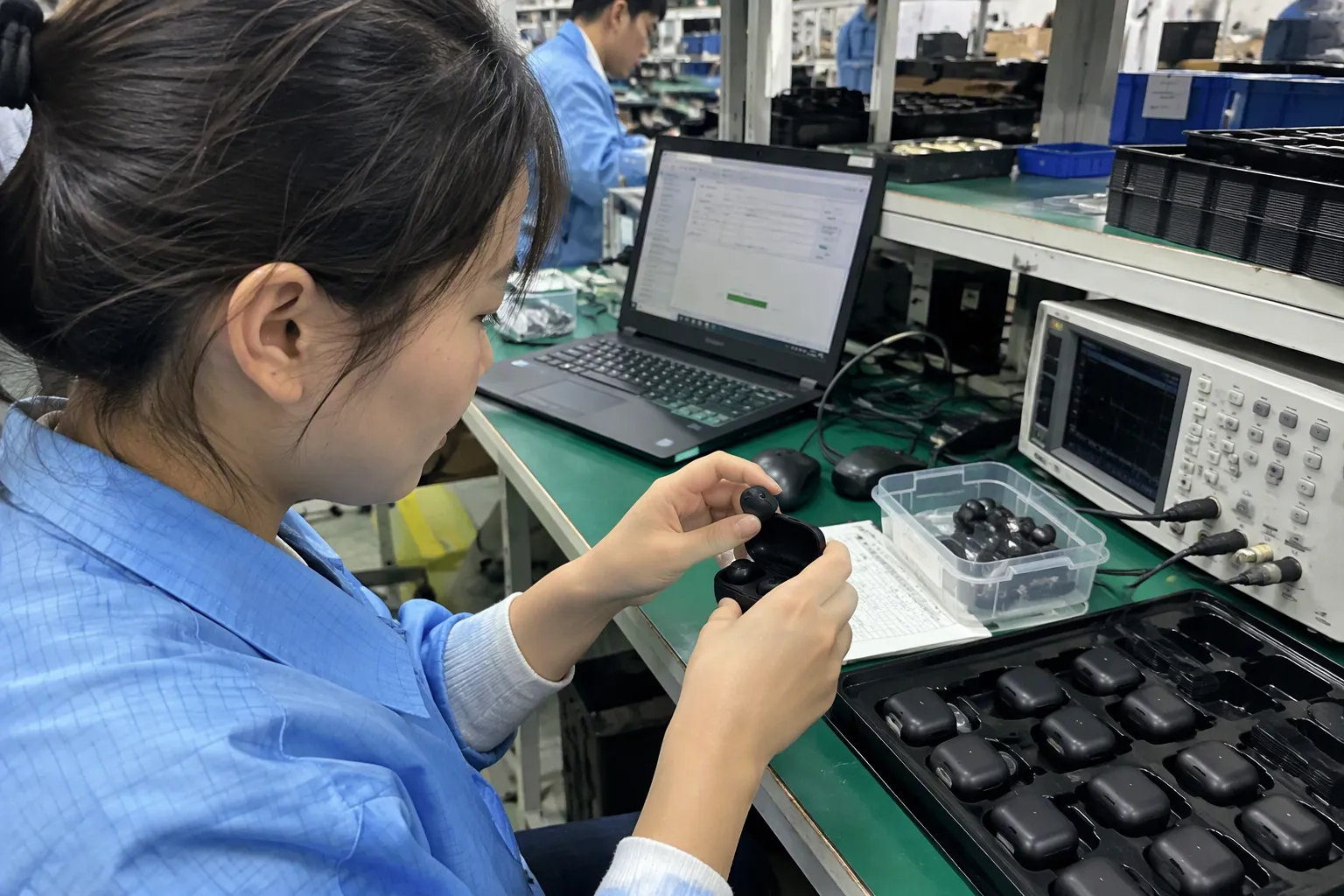
A buyer needs a practical baseline before investing time in difficult scenarios. I usually begin with a quiet indoor test and an ordinary office test because these scenes are simple to repeat and useful for comparing samples. However, I do not present them as complete validation.
The quiet indoor baseline
- The voice sounds understandable to the receiving party
- The left and right earbuds behave consistently
- The connection remains stable during a normal call
- The speaker experiences obvious interruptions
- The product has a basic fit or handling issue
- The sample produces unexpected echo or distortion
The ordinary office baseline
An office environment adds realistic but manageable conditions. Background voices, keyboard sounds, ventilation, and movement can affect how the caller perceives the conversation. The scene does not need to become a formal laboratory exercise. I need to document the conditions clearly and repeat them consistently.
- The room type and approximate background activity.
- The phone model and operating system.
- The TWS model and firmware version, if available.
- Whether the earbuds were fully charged.
- The call platform, such as a mobile call or approved meeting application.
- The person listening on the receiving side.
- Any repeated words or phrases that became difficult to understand.
Why difficult scenes come later
Outdoor traffic, wind, cafés, public transport, and busy retail spaces create more variables. Those scenes can be highly relevant, but they are more difficult to reproduce. Weather, traffic level, distance, phone position, and user movement may change between tests.
I do not reject those tests. I use them after establishing a basic indoor comparison. Otherwise, a buyer may struggle to determine whether a difference came from the earbuds or from inconsistent surroundings.
A simple baseline matrix
| Scene | Purpose | What I would not conclude |
|---|---|---|
| Quiet room | Establish basic speech clarity and stability | Universal call performance |
| Ordinary office | Compare performance with normal background activity | Guaranteed performance in heavy noise |
| Café or shop | Explore common commercial use | A fixed ranking for all locations |
| Street or transport area | Examine a relevant higher-noise scenario | Laboratory-equivalent evidence |
| Wind exposure | Investigate a specific customer concern | Guaranteed outdoor results in all weather |
A supplier and buyer can gain useful information from this staged approach. The key is to label each result honestly. “Passed our quiet-room comparison” is more precise than “best call quality everywhere.”
How Should Buyers Read Call-Quality Scores?
A score can simplify a large amount of information, but it can also hide important differences. I read the score as a summary of a defined method. I then look for the evidence and limitations behind it.
Questions I ask about every score
- Who performed the test? Was it the supplier, a factory laboratory, a third-party facility, or another organization?
- What was tested? Did the document identify the exact model, sample revision, and firmware?
- What scene was used? Did the test involve quiet speech, office noise, traffic, wind, or another condition?
- What was measured? Did the score represent speech intelligibility, listener preference, a pass/fail result, or an internal rating?
- How many samples were included? One sample cannot show production consistency[6].
- When was the test completed? Older evidence may not describe the current component or software version.
- Can the supplier repeat the test? A repeatable method is more useful for sample comparison.
- Does the document identify limitations? Honest limitations increase the value of the evidence.
Supplier-reported results and independent evidence
I distinguish clearly between supplier-reported results and independent testing. Supplier information can help me shortlist products and discuss the intended performance. It may also explain why a factory recommends one model for office use rather than outdoor use.
I do not present supplier-reported scores as independently verified research. Buyers should inspect original documents and confirm what the certification or report actually covers. Certifications and laboratory reports should be checked for the issuing body, scope, date, model identity, and applicable standard.
The International Telecommunication Union publishes recommendations in its P-Series materials, which cover areas related to speech quality and transmission performance. Buyers can review the official ITU source when a supplier refers to a formal speech-quality method: ITU-T P-Series Recommendations.
Bluetooth product qualification is also a separate issue. A product’s Bluetooth qualification status does not, by itself, establish a particular call-quality outcome. Buyers can consult the official Bluetooth SIG qualification information when checking product documentation.
Why one number can mislead
- Model A may sound natural indoors but lose clarity in an office.
- Model B may reduce some background sound but produce a less natural voice.
- Model C may perform well on one phone but show instability with another.
- Model D may perform acceptably on the first sample but vary across units.
A practical scorecard
| Evaluation item | Rating method | Procurement meaning |
|---|---|---|
| Speech understanding | Clear, mostly clear, difficult, or unclear | Shows whether the conversation is usable |
| Background interference | Low, moderate, or high | Indicates the need for scenario testing |
| Voice naturalness | Natural, acceptable, or processed | Helps predict user preference |
| Connection stability | Stable, occasional interruption, or unstable | Highlights phone and firmware checks |
| Sample consistency | Similar or noticeably different | Supports or weakens confidence in production |
| Evidence quality | Supplier report, third-party report, or buyer test | Defines how much weight to give the result |
How Can Buyers Validate TWS Call-Quality Testing With Samples?
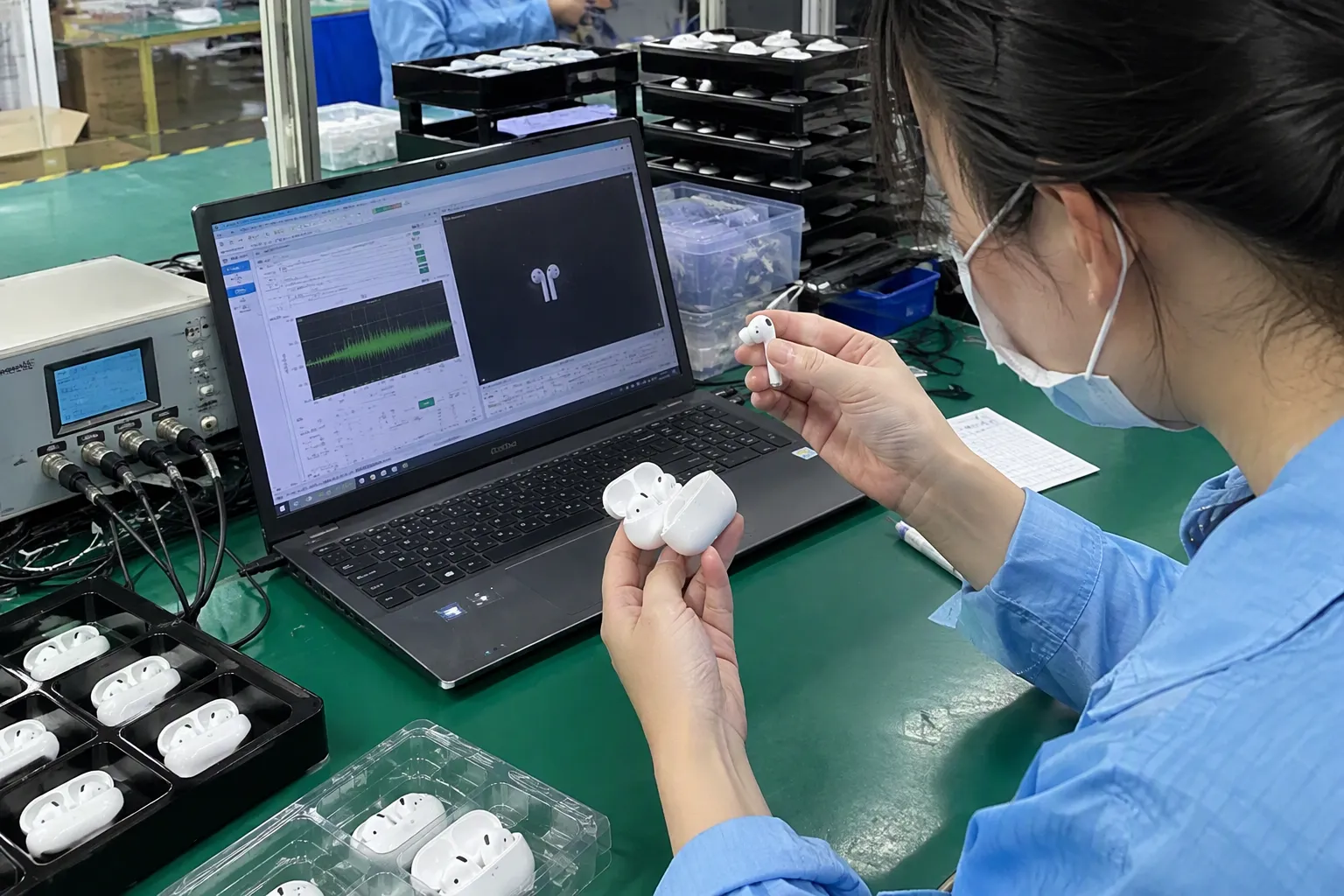
A sample test is the point where a product claim becomes a purchasing question. I cannot replace professional application-specific evaluation, but I can help a buyer create a repeatable comparison before a larger order.
Start with a written test brief
- Main selling region
- Expected customer use
- Primary phone platforms
- Indoor or outdoor priority
- Desired price range
- Target order quantity
- Required delivery window
- Return or after-sales expectations
- Whether private label or packaging customization is needed
This step prevents the buyer from selecting a model only because it has an attractive specification sheet. A low-cost office product and a commuter-focused product may require different compromises.
Compare samples fairly
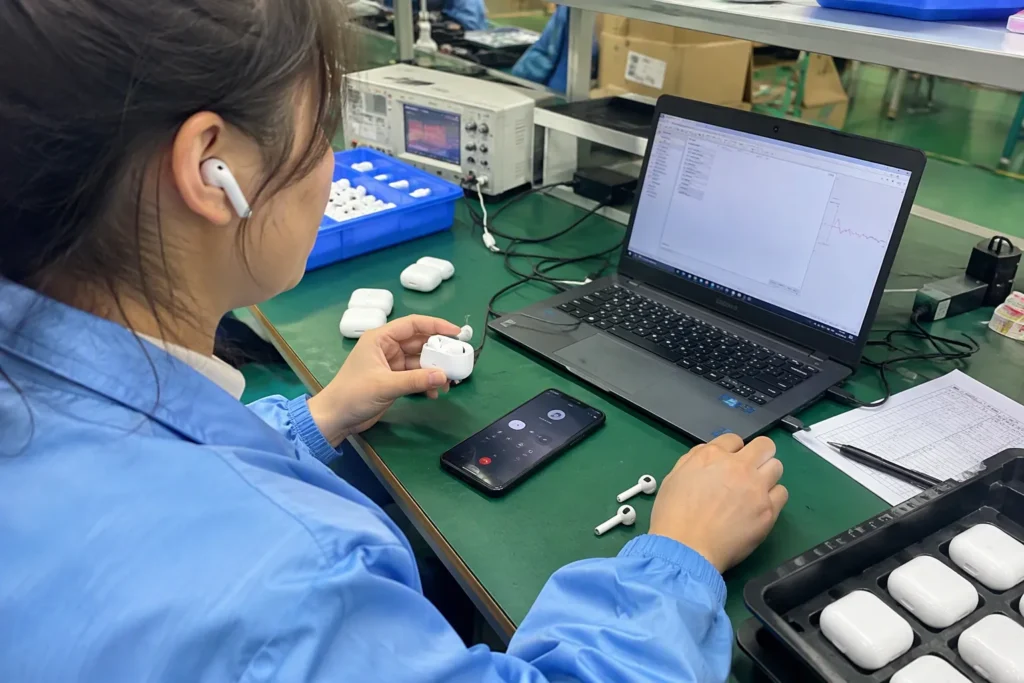
I use the same basic process for every candidate. I keep the call duration, phone position, scene, and receiving listener as consistent as possible. I test more than one sample when the purchase decision is important.
- Charge all samples according to the supplier’s instructions.
- Pair each model with the same phone types where practical.
- Confirm the firmware or app status.
- Make a quiet-room call.
- Repeat the call in an ordinary office.
- Introduce one relevant higher-noise scene.
- Ask the receiving listener to describe clarity without seeing the model.
- Repeat the process with another sample unit.
- Record observations immediately.
- Send the findings to the supplier and request a response.
The blind listening step can reduce the effect of brand expectations[5]. I do not need to build a formal scientific study for a procurement comparison, but I should avoid changing several variables at once.
Record limitations, not only strengths
- Speech remained understandable in a quiet room.
- The receiving listener noticed more background sound in the office.
- One sample had a short interruption during pairing.
- The outdoor result was difficult to compare because traffic levels changed.
- The second unit sounded different from the first.
Supplier communication after the test
I treat the supplier’s response as part of supplier evaluation. A responsible supplier should be able to discuss the result without promising impossible performance. I ask whether the sample matches current production and whether the factory can control the relevant components and assembly process.
My experience with TWS product selection and pre-shipment communication has shown me that these questions often matter as much as the initial product claim. A product may look suitable, but a buyer still needs a clear process if production samples differ from the approved sample.
What Are the Main Limitations of TWS Call-Quality Testing?
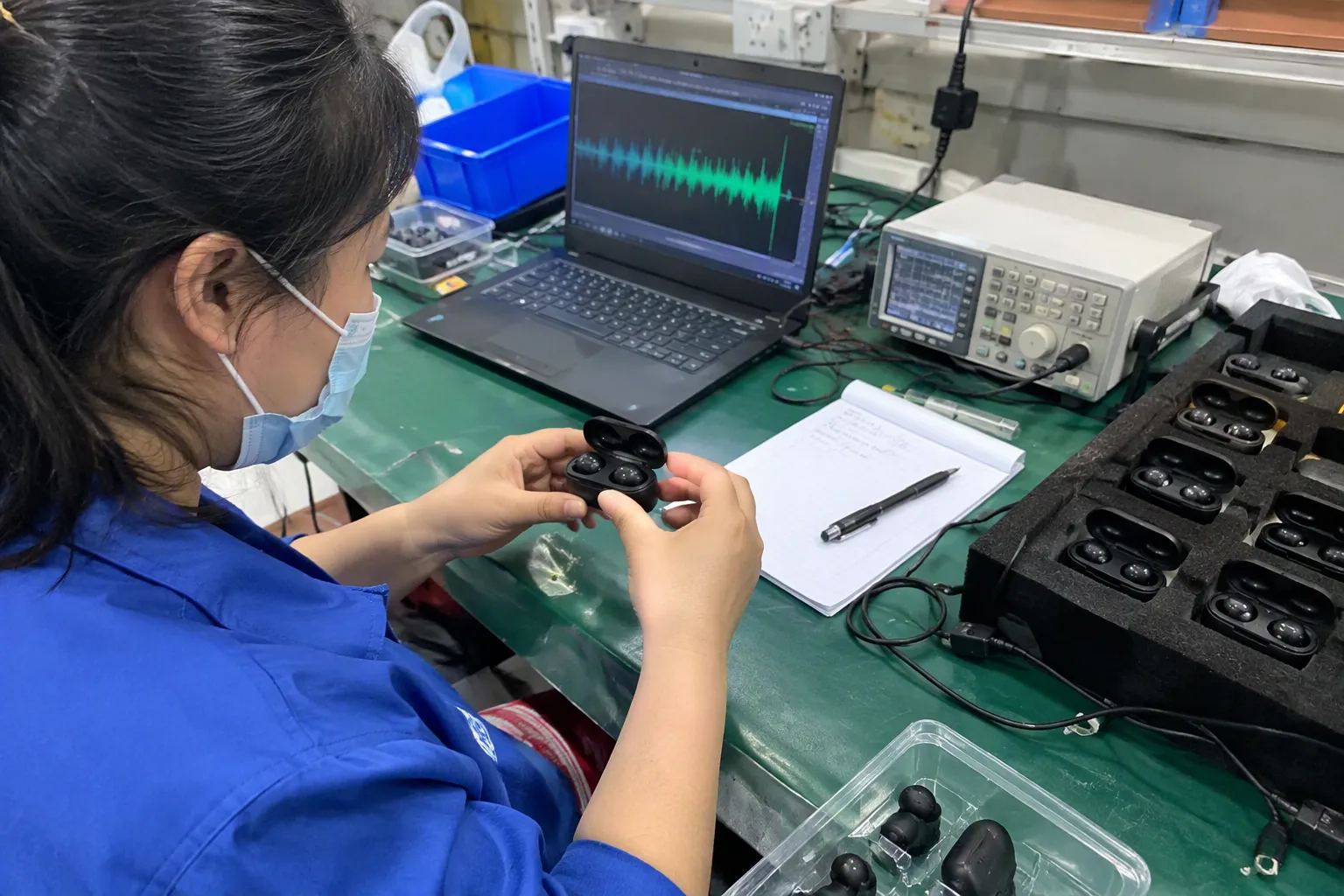
No practical buyer test can represent every user, phone, location, and network condition. Recognizing those limits does not make testing less valuable. It helps me avoid making a stronger claim than the evidence supports.
Environment changes quickly
A street test may have changing traffic. An office may become quieter or louder during the call. Wind can change direction. A café may have music at one moment and conversation at another. These factors make exact repetition difficult.
I can reduce this problem by documenting the scene and using a comparison model in the same session. I should not compare one model outdoors on a windy day with another model indoors on a quiet day.
Phones and software can affect the result
The earbuds do not operate alone[7]. The phone, operating system, Bluetooth connection, call application, firmware, and network can all be relevant to the user experience. I do not assume that a result from one phone applies identically to every phone.
A buyer who sells across Europe and North America may want to include common customer phone categories in sample checks. The buyer does not need to test every device. The buyer should identify the most commercially important combinations and state the limits of the test.
Human listeners hear differently[8]
- Could you understand every sentence?
- Did any words disappear?
- Did the voice sound natural?
- Did background noise become distracting?
- Did the call feel comfortable after several minutes?
- Would you accept this performance at the intended retail price?
Production consistency remains separate
A sample test describes the tested units. It does not automatically confirm that every mass-production unit will sound identical. Component sourcing, assembly, calibration, firmware, and quality-control procedures can influence consistency.
This is why I include sample approval and pre-shipment inspection in the procurement conversation. A buyer should define what happens if the delivered units differ materially from the approved sample.
Labels do not replace evidence
Terms such as “ENC,” “noise cancellation,” “AI microphone,” or “premium calling” may be useful search terms. They are not complete evaluation criteria. I ask the supplier to connect the label to a specific test condition and customer scenario.
| Evidence type | Useful for | Limitation |
|---|---|---|
| Marketing claim | Initial product discovery | May lack method and scope |
| Supplier test result | Shortlisting and discussion | Requires verification |
| Third-party report | Stronger documented comparison | May cover only one configuration |
| Buyer sample test | Application fit | Limited by scene and listener |
| Production inspection | Consistency and conformity checks | Does not recreate every user environment |
| Customer feedback | Market learning after launch | Can be subjective and delayed |
How Should TWS Call-Quality Testing Influence Supplier Selection?
A suitable supplier does more than provide a score. The supplier should help the buyer understand the model’s intended use, limitations, sample status, customization options, lead time, and after-sales process.
Evaluate the supplier’s answers
I pay attention to whether the supplier answers specific questions directly. A strong response may include a test scene, sample identity, and a willingness to repeat the comparison. A weak response may repeat promotional terms without clarifying the evidence.
- Product recommendation based on the buyer’s target market
- Sample preparation
- Packaging and logo customization
- Certification document review
- MOQ discussion
- Production schedule
- Pre-shipment communication
- Inspection coordination
- Defect and warranty handling
- Reorder support
The buyer should verify all certifications and compliance documents independently or through qualified professionals. A document must match the exact product and market requirement. A general supplier statement is not enough.
Balance call quality with commercial requirements
| Procurement factor | Questions for the supplier |
|---|---|
| Call performance | Which scenes support the claim? |
| Unit consistency | How does the factory check production units? |
| MOQ | Can the buyer start with a manageable quantity? |
| Lead time | What is the realistic production and shipping schedule? |
| Customization | Can the supplier modify logo, color, or packaging? |
| Documentation | Are current documents available for the exact model? |
| Warranty | What replacement or credit process applies? |
| Communication | Who manages approvals and production updates? |
I have seen buyers focus heavily on one feature while overlooking delivery or after-sales risk. A product that performs acceptably but arrives late may still create a commercial problem. I therefore place call-quality evidence inside a wider supplier scorecard.
Build a decision rule
- Reject a model if it fails basic quiet-room clarity.
- Continue only if the supplier can identify the current sample and production version.
- Compare shortlisted models in an ordinary office.
- Add one customer-relevant difficult scene.
- Approve only when the performance fits the intended positioning and price.
- Record limitations in the product description and internal sales guidance.
- Confirm inspection and after-sales arrangements before ordering.
Use honest product positioning
If a model performs best in quiet indoor conditions, the seller should position it accordingly. The seller should not imply that the earbuds guarantee clear calls in every noisy location. Honest positioning can reduce customer disappointment and make support conversations more manageable.
For buyers exploring wholesale options, I recommend connecting this assessment with a broader TWS earbuds wholesale evaluation process. Buyers can also review a practical pre-shipment inspection checklist before approving production.
Can a Buyer Create a Practical TWS Call-Quality Testing Plan?
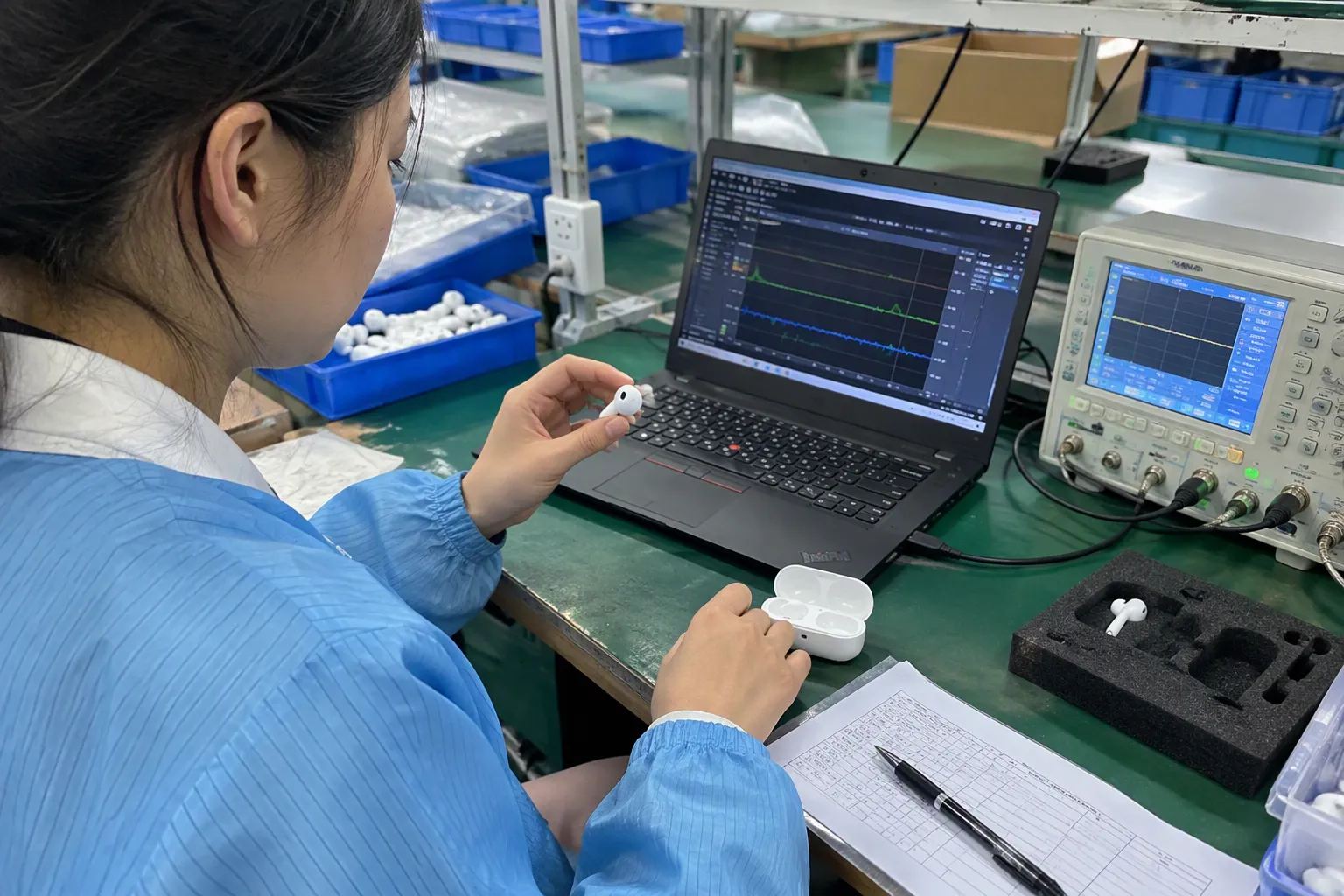
A repeatable plan does not need expensive equipment to provide useful procurement evidence. The plan needs a clear purpose, consistent conditions, written observations, and an honest statement of scope.
Recommended minimum plan
Keep a simple record
| Field | Example entry |
|---|---|
| Model | Exact model name and revision |
| Sample number | Unit 1, Unit 2, Unit 3 |
| Date | Test date |
| Phone | Device and operating system |
| Firmware | Version or “not provided” |
| Scene | Quiet room, office, or outdoor location |
| Call method | Mobile call or specified application |
| Listener | Person receiving the call |
| Result | Clear, acceptable, difficult, or unclear |
| Notes | Specific words, interruptions, or background issues |
| Follow-up | Supplier response and agreed action |
Know when to involve professionals
A buyer should seek qualified professional evaluation when the product will be sold for a specialized application, when a formal performance claim is planned, or when regulatory and contractual requirements apply. A basic buyer comparison cannot replace a formal test method or an application-specific assessment.
The buyer should also review local product, labeling, safety, and market-entry requirements with an appropriate professional. The relevant requirements can differ by product configuration, destination, sales channel, and claim language.
What the plan can and cannot prove
-
Compare shortlisted samples
-
Identify obvious differences
-
Check whether a supplier claim deserves more discussion
-
Match a product to a target use case
-
Improve product descriptions
-
Reduce avoidable procurement risk
-
Perfect performance in every environment
-
Identical results on every phone
-
Permanent performance after every firmware update
-
Complete production consistency from a small sample
-
Compliance with every regional requirement
-
A universal market ranking
Frequently Asked Questions
Does a high TWS call-quality score guarantee clear calls?
No. A high score describes performance under a particular test method and environment. The result may help buyers shortlist a model, but buyers still need to check the test conditions and compare samples in the environments that match their target customers.
Is quiet-room testing enough for TWS earbuds?
Quiet-room testing is a useful minimum baseline, but it is not enough for every purchase. It can reveal basic speech clarity and connection problems. Buyers should add ordinary office testing and at least one relevant higher-noise scenario before making a larger procurement decision.
Do more microphones prove better call quality?
No. A microphone count or ENC label does not independently prove that callers will hear a clearer voice. Buyers should request supporting evidence and conduct sample comparisons. The practical result matters more than the feature label by itself.
Should I trust a supplier’s call-quality report?
A supplier report can provide useful preliminary evidence, but buyers should verify the model, sample version, date, test scene, method, and scope. Buyers should treat the result as supplier-reported information unless an independent, suitable test supports it.
How many TWS samples should a buyer test?
There is no universal number for every purchase. I prefer testing more than one unit for an important decision because one sample cannot show likely production variation. The buyer should choose a sample quantity that fits the order value, risk, and intended application.
Conclusion
Objective TWS call-quality testing is valuable when I use it as evidence rather than as a universal verdict. A score can help me shortlist models, ask better supplier questions, and organize sample comparisons. Quiet indoor and ordinary office tests provide a practical baseline, but they cannot represent every customer environment. I recommend matching the test scenes to the intended market, recording limitations, verifying documents, and confirming production controls before ordering. If you are sourcing TWS earbuds for Europe or North America, contact us to discuss samples, MOQ, customization, delivery, and pre-shipment support.
Sources
- Hearing Aid Technology to Improve Speech Intelligibility in ...", Studies of speech communication in noise show that background sound and changing acoustic conditions can affect intelligibility and perceived communication quality, supporting the contextual nature of earbud call testing
- The Quest for Ecological Validity in Hearing Science - PMC", Speech-quality assessment standards distinguish controlled test results from performance in variable user environments, supporting the conclusion that a bounded test result is not a universal prediction of field performance
- Epidemiological exploration of the impact of bluetooth headset ...", Studies of wireless audio and speech-transmission systems indicate that device configuration, software state, radio conditions, and measurement protocol can influence observed performance, supporting the need to specify test conditions
- Research on the influence of perceived quality on users ...", Subjective speech-quality research treats perceived communication quality as an evaluated outcome influenced by listening conditions and user judgments rather than as a context-free product property
- The neuroscience of placebo effects: connecting context ...", Research on blinded subjective audio evaluation indicates that concealing product identity can reduce the influence of expectations and branding on listener judgments
- 7 CFR Part 43 -- Standards for Sampling Plans", Quality-control guidance distinguishes the characteristics of an individual inspected unit from evidence about lot-level conformity, supporting the limitation of drawing production-consistency conclusions from one sample
- Epidemiological exploration of the impact of bluetooth headset ...", End-to-end voice-communication research treats perceived call quality as the result of interacting endpoint, software, transmission, and network components rather than of the headset in isolation
- BS.1116-1 - Methods for the subjective assessment of ...", Subjective speech-assessment studies report variability among listeners in judgments of intelligibility and quality, supporting the use of multiple evaluators or repeated observations when practical